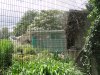
I think the reason why the camels were relocated from the children's zoo to the Casson was that they were large mammals in an attempt to replace the elephants in some way,so the enclosure wouldn't look empty. I am old enough to remember when the camels, both Bactrian and Dromedary lived on the Cotton terraces, along with llama, alpaca, vicuna and guanaco.
You are using an out of date browser. It may not display this or other websites correctly.
You should upgrade or use an alternative browser.
You should upgrade or use an alternative browser.
ZSL London Zoo ZSL London Zoo News 2012
- Thread starter volvox
- Start date

New Camel Enclosure
I completely agree.
I think the reason why the camels were relocated from the children's zoo to the Casson was that they were large mammals in an attempt to replace the elephants in some way,so the enclosure wouldn't look empty.
I completely agree.
New Camel Enclosure
...and I think is also the reason they want to keep them now.
I think the reason why the camels were relocated from the children's zoo to the Casson was that they were large mammals in an attempt to replace the elephants in some way,so the enclosure wouldn't look empty.
I completely agree.
I think the reason why the camels were relocated from the children's zoo to the Casson was that they were large mammals in an attempt to replace the elephants in some way
...and I think is also the reason they want to keep them now.
IanRRobinson
Well-Known Member
Taking a deep breath, I think that the following is the complete and utter history of camel housing at London Zoo.
So the reference to a "long association of camels with the Children's Zoo "described in what was probably rather an expensive bid submission doesn't make much sense. Personally I'd have substituted the elephants with a mixed exhibit of Malay tapirs, siamangs and binturongs in 2001, but that's just me and my little quirks..
- The Clock Tower, from the very early days up to World War II.
- The Deer & Cattle Sheds from ca 1940 to the early 1960s
- The easternmost house on the Cotton Terraces from 1962 to 1993
- The building at the back of the coatis at the East End of the Children's Zoo, opposite the Blackburn Pavilion from 1993 to 2001.
- From 2001 to date, ie after the departure of the elephants, on the South side of the Casson Paviion.
So the reference to a "long association of camels with the Children's Zoo "described in what was probably rather an expensive bid submission doesn't make much sense. Personally I'd have substituted the elephants with a mixed exhibit of Malay tapirs, siamangs and binturongs in 2001, but that's just me and my little quirks..

sooty mangabey
Well-Known Member
A few years ago, a friend lent me a DVD of Great Zoos of the World, a programme that came out in 1969. .
In an interesting discussion this is perhaps the most interesting comment of all! Do you have any episodes other than that which focused on London Zoo?
Personally I am pleased that the camels are staying at the zoo, they are a popular animal with the visitors and will occupy a part of the zoo that could do with livening up, this space vacated by them at the Casson will be utilised by forming part of the new tiger exhibit, times marches on and passes very quickly, let's try to be optimistic about the future, it's true that the Clore did house a large number of small mammals in its day, but I don't think we would wish to see this today, row after row of small glass enclosures,some housing animals in the singular only, mind you it certainly does not seam like forty years ago since it opened, I think it is a good thing that we are proud of the many species that London has housed in the past, but attitudes in keeping animals have fortunately changed since the days of small bear dens on the Mappins and rows of small cages housing birds of prey with dead rats lying on the floor.
Taking a deep breath, I think that the following is the complete and utter history of camel housing at London Zoo.
- The Clock Tower, from the very early days up to World War II.
- The Deer & Cattle Sheds from ca 1940 to the early 1960s
- The easternmost house on the Cotton Terraces from 1962 to 1993
- The building at the back of the coatis at the East End of the Children's Zoo, opposite the Blackburn Pavilion from 1993 to 2001.
- From 2001 to date, ie after the departure of the elephants, on the South side of the Casson Paviion.
Thanks for that.
Personally I'd have substituted the elephants with a mixed exhibit of Malay tapirs, siamangs and binturongs in 2001, but that's just me and my little quirks..
Well you never know you may now get your wish as there looks like there are going to be Malayan Tapir there and I'm sure I've read somewhere about some primates somewhere in Tiger Territory!

Since the tapir are going there now, i wouldve thought they would have been a more logical replacement at that time. The camels were never going to be an adequate replacement for elephants,but very few species would be in the publics view.i suspect many ignored the camels more than they would have done elsewhere in the zoo because of their disappointment at not finding elephants.too late now, but maybe elderly,non breeding or surplus male rhino wouldve been a possibility.Taking a deep breath, I think that the following is the complete and utter history of camel housing at London Zoo.
- The Clock Tower, from the very early days up to World War II.
- The Deer & Cattle Sheds from ca 1940 to the early 1960s
- The easternmost house on the Cotton Terraces from 1962 to 1993
- The building at the back of the coatis at the East End of the Children's Zoo, opposite the Blackburn Pavilion from 1993 to 2001.
- From 2001 to date, ie after the departure of the elephants, on the South side of the Casson Paviion.
So the reference to a "long association of camels with the Children's Zoo "described in what was probably rather an expensive bid submission doesn't make much sense. Personally I'd have substituted the elephants with a mixed exhibit of Malay tapirs, siamangs and binturongs in 2001, but that's just me and my little quirks..
Since the tapir are going there now, i wouldve thought they would have been a more logical replacement at that time. The camels were never going to be an adequate replacement for elephants,but very few species would be in the publics view.i suspect many ignored the camels more than they would have done elsewhere in the zoo because of their disappointment at not finding elephants.too late now, but maybe elderly,non breeding or surplus male rhino wouldve been a possibility.
I personally wouldn't have liked to see a rhino there and surely it would have gone against what they were trying to achieve when they moved the elephants to Whipsnade.
I wouldn't underestimate how much people (especially children) like camels though (however, I'm not suggesting more than elephants).
I personally wouldn't have liked to see a rhino there and surely it would have gone against what they were trying to achieve when they moved the elephants to Whipsnade.
I wouldn't underestimate how much people (especially children) like camels though (however, I'm not suggesting more than elephants).
No, nothing on earth could replace the elephants

In an interesting discussion this is perhaps the most interesting comment of all! Do you have any episodes other than that which focused on London Zoo?
Hello Sooty Mangabey
Anthony Smith did a series about zoos and the only zoo with more than one programme was San Diego. Great Zoos of the World - Episode Guide - MSN TV lists the zoos he visited. The programme about London Zoo was a bit later than 'The Zoo in Winter', which was narrated by Jonathan Miller and was repeated a few months ago. I don't know if my friend has any more DVDs from 'Great Zoos of the World', but the London one is the only one I've seen since I first watched the series over 40 years ago.

Taking a deep breath, I think that the following is the complete and utter history of camel housing at London Zoo.
So the reference to a "long association of camels with the Children's Zoo"described in what was probably rather an expensive bid submission doesn't make much sense.
- The Clock Tower, from the very early days up to World War II.
- The Deer & Cattle Sheds from ca 1940 to the early 1960s
- The easternmost house on the Cotton Terraces from 1962 to 1993
- The building at the back of the coatis at the East End of the Children's Zoo, opposite the Blackburn Pavilion from 1993 to 2001.
- From 2001 to date, ie after the departure of the elephants, on the South side of the Casson Paviion.
I certainly agree with you, Ian, that there really isn’t a "long association of camels with the Children's Zoo".
For the sake of completeness, though, it is probably worth adding that, prior to the Cotton Terraces, camels were also kept for a time in the old Antelope House. I can certainly remember seeing them in this building, as well as the old Deer & Cattle Sheds, when I was a very small child.
A few years ago, a friend lent me a DVD of Great Zoos of the World, a programme that came out in 1969.
In an interesting discussion this is perhaps the most interesting comment of all! Do you have any episodes other than that which focused on London Zoo?
I have a copy of this episode on DVD too. I suspect that “Dassie rat’s” friend and I both acquired our copies from the same source.
Sadly, to the best of my knowledge, none of the other episodes still exist. I would love to be proved wrong, though, as I would very much like to see the other episodes again too.
“Sooty” let me know if you would like to borrow my copy of this DVD.


johnstoni.
Well-Known Member
Seems pointless not to combine the camel enclosure site with the donkey/llama paddock, there should be no reason why they wouldn't mix, and all would have more space together than apart.
London Zoo on TV
On the subject of London Zoo on television there is a second series of the ITV documentary The Zoo which is going to be broadcast on ITV prime time Sunday nights. I think it's going to be Sunday 29th July and Sunday 5th August.
Also book-wise there is going to be a 2nd Edition of the book London Zoo from Old Photographs 1852-1914 brought out in July. The author John Edwards is now working on his next project 1915-1960 The War Years.
On the subject of London Zoo on television there is a second series of the ITV documentary The Zoo which is going to be broadcast on ITV prime time Sunday nights. I think it's going to be Sunday 29th July and Sunday 5th August.
Also book-wise there is going to be a 2nd Edition of the book London Zoo from Old Photographs 1852-1914 brought out in July. The author John Edwards is now working on his next project 1915-1960 The War Years.

singyouhome
New Member
I actually doubt Volvox was given the real answer. Rockhopper and macaroni hybrids are sometimes found in the wild but, as you say, all the individuals of 'crested' penguin species were male, and are kept without issue alongside humboldt and African penguins in other collections where they breed. There is no risk of interbreeding.
If the two missing macaroni penguins died, I strongly suspect the zoo wanted to avoid a further PR disaster following the criticism in the national press of the husbandry (and losses) of penguins in the previous two exhibits. So, if they lost a couple of macaronis, I imagine they'd want to create some reason to need to move the rest of the group in case they all died.
It makes no sense that the small group of Jackass penguins remain if fear of hybridisation is sufficient to remove some species from the exhibit. I believe these are 2010(?)-hatched birds which are tame, and therefore hand-feed during the 'shows', along with the male rockhopper penguin.
Its just a shame it didn't work out, it would have been great for such an excellent enclosure to have hosted a breeding group of macaroni penguins. I sincerely hope they build up the rockhopper group with new birds as I believe the issue with previous losses was down to foxes, and the new exhibit appears very well fox-proofed. However, I hope they don't move the existing Whipsnade rockhoppers as they are breeding almost yearly at Whipsnade currently.
The macaronis were moved to Living Coast because they have a constant supply of cool, fresh, saltwater which is what they need and like. They are all doing well there and there were 5 that were moved from London. London couldn't provide enough saltwater for them therefore they decided to move them to somewhere where they would be more comfortable and happy in their environment. They are all doing well and are happy in their new home. The rest of the penguins at London all seem happy and the two new chicks look lovely.
New Facilities for some of their Predatory Bird Species
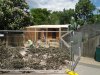
Ha, so I did get part of this right! They are building new facilities for some of their predatory bird species near to where the tigers are at the moment!
It's looking quite good, a good use of a small straight part of the unsightly concrete shelter from Animal Adventure to near the tigers, I assume because they are basically adding wooden walls to it they didn't need planning permission, as I can't find any plans (if anyone does have any plans of it I would love to see them).
The Anoas have already moved to Into Africa the Pygmy Hippos are expected to follow. The birds, I think they said will move to a new aviary I think being built where the birds of prey are (it's quite ironic I've forgotten this part as it was my question where were the existing animals going!)
Ha, so I did get part of this right! They are building new facilities for some of their predatory bird species near to where the tigers are at the moment!
It's looking quite good, a good use of a small straight part of the unsightly concrete shelter from Animal Adventure to near the tigers, I assume because they are basically adding wooden walls to it they didn't need planning permission, as I can't find any plans (if anyone does have any plans of it I would love to see them).