The under water viewing was something different at the time also the under ground room for the impressive looking filtration.The Whipsnade Dolphinarium was constructed in 1972. As you say, it was originally called the Water Mammals Building and has only exhibited bottle-nosed dolphins and California sealions.
You are using an out of date browser. It may not display this or other websites correctly.
You should upgrade or use an alternative browser.
You should upgrade or use an alternative browser.
ZSL Whipsnade Zoo ZSL Whipsnade Zoo News 2023
- Thread starter JP1996
- Start date
- Status
- Not open for further replies.

Article on the baby Porcupine
Spiky New Addition born at Whipsnade Zoo | Whipsnade Zoo
One of these days I’ll see them!
Spiky New Addition born at Whipsnade Zoo | Whipsnade Zoo
One of these days I’ll see them!
Sloth bears sadly just died due to old age and other medical conditions and Whipsnade didn’t want to continue holding the species …
I always thought the sealion house was going to be a avery for the bird of the world display to keep and train the birds more centrally at whipsnade and not have to transport them in a van to the show daily…birds of the world and back but I may be wrong….
I always thought the sealion house was going to be a avery for the bird of the world display to keep and train the birds more centrally at whipsnade and not have to transport them in a van to the show daily…birds of the world and back but I may be wrong….

Lafone
Well-Known Member
Does anyone know what happened to the Sloth Bears? And what are they converting the Sea Lion House into?
The sea lion house is being converted into covered seating.
Lafone
Well-Known Member
Fun day out at Whipsnade today, was hoping to see the red panda cubs but naturally they remained hidden all day (including in several hours hanging about the enclosure in the afternoon before closing), though did see the parents. Weather was lovely though and the zoo was quiet. Had super sightings of the lions and the chimps early on.
AJMC mentioned there were plans for glass viewing of the Langur and Babirusa enclosure from the new path to monkey forest and they are happening ...frames for the glass were being installed today. The enclosure was shut off for the animals (they can still access the other smaller space) and the rear fencing had been removed in two places. You can make out the frames going up in the back of the photos.


Work has progressed well on the new path in the former emu space too

and the building now shows clearly over the langur house with the new walls going in.
The covers around the sealion house are now all gone leaving some of the old space visible as demolition progresses

The house is now entirely gone, the pool area and concrete / rock surround remains.
Elsewhere a couple of new shelters have gone into the Cheetah enclosures

More space for them for the winter (one of these in each of the two enclosure spaces) but a bit potting shed looking.
Edited to add there is quite a bit of repair work going on for winter (and some tree felling near the elephants) and the wooden walkways and platforms for the tiger enclosure are shut off (the main one with the school meeting point sign is open but the walkway along the edge of the enclosure and the platform past the bridge were fenced off). Probably a good move as the wood has been getting a bit bouncy lately.
AJMC mentioned there were plans for glass viewing of the Langur and Babirusa enclosure from the new path to monkey forest and they are happening ...frames for the glass were being installed today. The enclosure was shut off for the animals (they can still access the other smaller space) and the rear fencing had been removed in two places. You can make out the frames going up in the back of the photos.
Work has progressed well on the new path in the former emu space too
and the building now shows clearly over the langur house with the new walls going in.
The covers around the sealion house are now all gone leaving some of the old space visible as demolition progresses
The house is now entirely gone, the pool area and concrete / rock surround remains.
Elsewhere a couple of new shelters have gone into the Cheetah enclosures
More space for them for the winter (one of these in each of the two enclosure spaces) but a bit potting shed looking.
Edited to add there is quite a bit of repair work going on for winter (and some tree felling near the elephants) and the wooden walkways and platforms for the tiger enclosure are shut off (the main one with the school meeting point sign is open but the walkway along the edge of the enclosure and the platform past the bridge were fenced off). Probably a good move as the wood has been getting a bit bouncy lately.
Last edited:
I’m glad they are still putting the glass viewing windows in, that will really help make that new path a good place to walk.
Strathmorezoo
Well-Known Member
A bit of a potting shed to us humans but hopefully a lovely warm des_res for the cheetahsFun day out at Whipsnade today, was hoping to see the red panda cubs but naturally they remained hidden all day (including in several hours hanging about the enclosure in the afternoon before closing), though did see the parents. Weather was lovely though and the zoo was quiet. Had super sightings of the lions and the chimps early on.
AJMC mentioned there were plans for glass viewing of the Langur and Babirusa enclosure from the new path to monkey forest and they are happening ...frames for the glass were being installed today. The enclosure was shut off for the animals (they can still access the other smaller space) and the rear fencing had been removed in two places. You can make out the frames going up in the back of the photos.
Work has progressed well on the new path in the former emu space too
and the building now shows clearly over the langur house with the new walls going in.
The covers around the sealion house are now all gone leaving some of the old space visible as demolition progresses
The house is now entirely gone, the pool area and concrete / rock surround remains.
Elsewhere a couple of new shelters have gone into the Cheetah enclosures
More space for them for the winter (one of these in each of the two enclosure spaces) but a bit potting shed looking.
Edited to add there is quite a bit of repair work going on for winter (and some tree felling near the elephants) and the wooden walkways and platforms for the tiger enclosure are shut off (the main one with the school meeting point sign is open but the walkway along the edge of the enclosure and the platform past the bridge were fenced off). Probably a good move as the wood has been getting a bit bouncy lately.
Lafone
Well-Known Member
I’m glad they are still putting the glass viewing windows in, that will really help make that new path a good place to walk.
Yes I thought of the conversation on here where you’d said about the windows as soon as I saw them!

Kalaw
Well-Known Member
Visited today for the second time this year, and the ninth in my lifetime. Another wonderful visit to my favourite zoo, and I have quite a lot to comment on!
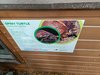
First things first, I have some exciting news to report on - the zoo now has an enclosure for Spiny Turtles in the Butterfly House. For quite some time, they have been held off-display in the Discovery Centre, but for the first time since the Centre closed down many years ago, visitors can see them (I say that, but I had no luck whatsoever finding the turtles in their very densely planted enclosure, although two visitors claimed which they had seen a pair of them earlier on in the day). Not sure if this is a permanent home, or a temporary one as they await a new one in the Reptile House, but the latter is certainly possible, as it is just an enclosed portion of the Butterfly House with an additional heat lamp, so it should be very easy to build and take down.
It isn't a visit to Whipsnade without discovering something you didn't realise was there in this massive zoo, and in this case, it was the realisation that the now-closed Bird Garden is still teeming with captive birds. I highly doubt that it is brand new, but I have never seen it before - essentially, the entire Garden has been made offshow, barring a Magpie-Goose enclosure, which is at the very front of the exhibit and as such visible. Even still, there are several viewpoints from where you can get distant views of the birds. A selection of rare and Endangered birds are on-display, with the enclosure serving not, as I had initially expected, as a holding area for the animals used in Birds of the World flight shows, but rather as a centre for rarer species whose breeding habitats are to be studied with the eventual aim of releasing them to the wild, I believe. Sadly, I only discovered this exhibit as I was leaving, so I couldn't admire the distant birds properly or read the signage in detail, but I would be fascinated to hear any more information on the exhibit.
The new Francois' Langur and Babirusa enclosure is brilliant. The trees and other climbing apparatus appears far larger and more impressive in person than in photos, and it certainly offered adequate climbing for the animals, which I feared wouldn't be the case. Sadly, neither species planned on actually using the exhibit, with the langurs (including the adorable baby) staying indoors, and the babirusa in a separate, wooded area at the back. Monkey Forest seems to necessitate the construction of some very large buildings, which look to include multiple stables and a sheltered viewing area - very promising. The Przewalski's Horse, who were moved into Passage through Asia as a result, were very entertaining, bounding through their field at high speeds, and eventually making their way towards what appears to be a separate lawn that the camels they share with cannot access.
The other highlight was seeing the Red Panda cubs. They were hiding in a privet bush, with occasional views through the gaps in the bush - a keeper informed us which that is their preferred hiding spot. The Mangalica Pigs in the Children's Zoo were lovely, their 'wool' appearing far more pronounced than on the new, and rather young, individuals at London Zoo.
It was lovely to see Tapon (Pygmy Hippo) active, as neither of London's really are, but seeing the two monstrous Common Hippos more adventurous than ever before, both in the pool at the same time only to head outdoors and explore their paddock later on, was a real treat, too. Great views of the Patagonian Mara and Chinese Water Deer, but only one Bennett's Wallaby, sadly. White Rhinos came closer than ever, and I cannot recommend the Aardvark talk, which allows for good views of the animals outside, enough. Another highlight was the African Lions, who seem to be settling in wonderfully, allowing for the predator-prey setup with the Ostrich to actually work, with them visible in the hillside from several other parts of the zoo.
All in all, a wonderful visit to my favourite zoo!


First things first, I have some exciting news to report on - the zoo now has an enclosure for Spiny Turtles in the Butterfly House. For quite some time, they have been held off-display in the Discovery Centre, but for the first time since the Centre closed down many years ago, visitors can see them (I say that, but I had no luck whatsoever finding the turtles in their very densely planted enclosure, although two visitors claimed which they had seen a pair of them earlier on in the day). Not sure if this is a permanent home, or a temporary one as they await a new one in the Reptile House, but the latter is certainly possible, as it is just an enclosed portion of the Butterfly House with an additional heat lamp, so it should be very easy to build and take down.
It isn't a visit to Whipsnade without discovering something you didn't realise was there in this massive zoo, and in this case, it was the realisation that the now-closed Bird Garden is still teeming with captive birds. I highly doubt that it is brand new, but I have never seen it before - essentially, the entire Garden has been made offshow, barring a Magpie-Goose enclosure, which is at the very front of the exhibit and as such visible. Even still, there are several viewpoints from where you can get distant views of the birds. A selection of rare and Endangered birds are on-display, with the enclosure serving not, as I had initially expected, as a holding area for the animals used in Birds of the World flight shows, but rather as a centre for rarer species whose breeding habitats are to be studied with the eventual aim of releasing them to the wild, I believe. Sadly, I only discovered this exhibit as I was leaving, so I couldn't admire the distant birds properly or read the signage in detail, but I would be fascinated to hear any more information on the exhibit.
The new Francois' Langur and Babirusa enclosure is brilliant. The trees and other climbing apparatus appears far larger and more impressive in person than in photos, and it certainly offered adequate climbing for the animals, which I feared wouldn't be the case. Sadly, neither species planned on actually using the exhibit, with the langurs (including the adorable baby) staying indoors, and the babirusa in a separate, wooded area at the back. Monkey Forest seems to necessitate the construction of some very large buildings, which look to include multiple stables and a sheltered viewing area - very promising. The Przewalski's Horse, who were moved into Passage through Asia as a result, were very entertaining, bounding through their field at high speeds, and eventually making their way towards what appears to be a separate lawn that the camels they share with cannot access.
The other highlight was seeing the Red Panda cubs. They were hiding in a privet bush, with occasional views through the gaps in the bush - a keeper informed us which that is their preferred hiding spot. The Mangalica Pigs in the Children's Zoo were lovely, their 'wool' appearing far more pronounced than on the new, and rather young, individuals at London Zoo.
It was lovely to see Tapon (Pygmy Hippo) active, as neither of London's really are, but seeing the two monstrous Common Hippos more adventurous than ever before, both in the pool at the same time only to head outdoors and explore their paddock later on, was a real treat, too. Great views of the Patagonian Mara and Chinese Water Deer, but only one Bennett's Wallaby, sadly. White Rhinos came closer than ever, and I cannot recommend the Aardvark talk, which allows for good views of the animals outside, enough. Another highlight was the African Lions, who seem to be settling in wonderfully, allowing for the predator-prey setup with the Ostrich to actually work, with them visible in the hillside from several other parts of the zoo.
All in all, a wonderful visit to my favourite zoo!
Attachments
Lafone
Well-Known Member
Visited today for the second time this year, and the ninth in my lifetime. Another wonderful visit to my favourite zoo, and I have quite a lot to comment on!
First things first, I have some exciting news to report on - the zoo now has an enclosure for Spiny Turtles in the Butterfly House. For quite some time, they have been held off-display in the Discovery Centre, but for the first time since the Centre closed down many years ago, visitors can see them (I say that, but I had no luck whatsoever finding the turtles in their very densely planted enclosure, although two visitors claimed which they had seen a pair of them earlier on in the day). Not sure if this is a permanent home, or a temporary one as they await a new one in the Reptile House, but the latter is certainly possible, as it is just an enclosed portion of the Butterfly House with an additional heat lamp, so it should be very easy to build and take down.
It isn't a visit to Whipsnade without discovering something you didn't realise was there in this massive zoo, and in this case, it was the realisation that the now-closed Bird Garden is still teeming with captive birds. I highly doubt that it is brand new, but I have never seen it before - essentially, the entire Garden has been made offshow, barring a Magpie-Goose enclosure, which is at the very front of the exhibit and as such visible. Even still, there are several viewpoints from where you can get distant views of the birds. A selection of rare and Endangered birds are on-display, with the enclosure serving not, as I had initially expected, as a holding area for the animals used in Birds of the World flight shows, but rather as a centre for rarer species whose breeding habitats are to be studied with the eventual aim of releasing them to the wild, I believe. Sadly, I only discovered this exhibit as I was leaving, so I couldn't admire the distant birds properly or read the signage in detail, but I would be fascinated to hear any more information on the exhibit.
The new Francois' Langur and Babirusa enclosure is brilliant. The trees and other climbing apparatus appears far larger and more impressive in person than in photos, and it certainly offered adequate climbing for the animals, which I feared wouldn't be the case. Sadly, neither species planned on actually using the exhibit, with the langurs (including the adorable baby) staying indoors, and the babirusa in a separate, wooded area at the back. Monkey Forest seems to necessitate the construction of some very large buildings, which look to include multiple stables and a sheltered viewing area - very promising. The Przewalski's Horse, who were moved into Passage through Asia as a result, were very entertaining, bounding through their field at high speeds, and eventually making their way towards what appears to be a separate lawn that the camels they share with cannot access.
The other highlight was seeing the Red Panda cubs. They were hiding in a privet bush, with occasional views through the gaps in the bush - a keeper informed us which that is their preferred hiding spot. The Mangalica Pigs in the Children's Zoo were lovely, their 'wool' appearing far more pronounced than on the new, and rather young, individuals at London Zoo.
It was lovely to see Tapon (Pygmy Hippo) active, as neither of London's really are, but seeing the two monstrous Common Hippos more adventurous than ever before, both in the pool at the same time only to head outdoors and explore their paddock later on, was a real treat, too. Great views of the Patagonian Mara and Chinese Water Deer, but only one Bennett's Wallaby, sadly. White Rhinos came closer than ever, and I cannot recommend the Aardvark talk, which allows for good views of the animals outside, enough. Another highlight was the African Lions, who seem to be settling in wonderfully, allowing for the predator-prey setup with the Ostrich to actually work, with them visible in the hillside from several other parts of the zoo.
All in all, a wonderful visit to my favourite zoo!
View attachment 660670 View attachment 660671
Great news on the turtles I didn’t go in the butterfly house yesterday but will definitely be making time next trip!
I think the fence in the main enclosure for the langurs / babirusa would still have been down so they couldn’t go in it. Unless they finished the windows but it didn’t look like they’d complete yesterday. The babirusa have been using it though I’m yet to see the langurs further than the chippings.

Just back from an enjoyable few hours at whipsnade, haven't been for a few weeks so was nice to get back up there. Like others have said the monkey forest area is coming along nicely I was amazed at how big its going to be.
Not seen it mentioned but looks like 2 yaks have been born recently not sure how old but can't be more then a few weeks I would say.
Very sad to see no sealion house, like so many others it was a big part of mine and my children's memories of a trip to whipsnade, the covered seating area that it is becoming looks massive and just feel so much could have been done with this area, all the times I have been to whipsnade never felt seating was an issue.
Another highlight was seeing the male bongo out and about, normally I don't have much luck seeing him, really hope he gets a mate soon.
All in all a great vist.
Not seen it mentioned but looks like 2 yaks have been born recently not sure how old but can't be more then a few weeks I would say.
Very sad to see no sealion house, like so many others it was a big part of mine and my children's memories of a trip to whipsnade, the covered seating area that it is becoming looks massive and just feel so much could have been done with this area, all the times I have been to whipsnade never felt seating was an issue.
Another highlight was seeing the male bongo out and about, normally I don't have much luck seeing him, really hope he gets a mate soon.
All in all a great vist.
Very sad to see no sealion house, like so many others it was a big part of mine and my children's memories of a trip to whipsnade, the covered seating area that it is becoming looks massive and just feel so much could have been done with this area, all the times I have been to whipsnade never felt seating was an issue.
Personally I don’t see why they couldn’t have put a roof over the two old elephant show arenas. Both already have ready-made seating and have been redundant for years. A much cheaper solution.
They have updated the map on the website.
Now has the langurs and babirusa on it plus red crowned cranes, gemsbok and Blesbok
Map | Whipsnade Zoo
Now has the langurs and babirusa on it plus red crowned cranes, gemsbok and Blesbok
Map | Whipsnade Zoo
Kalaw
Well-Known Member
Looks excellent, especially the cranes and langurs, but the babirusa model being essentially a recoloured version of the wild boar one that does nothing to resemble the animals whatsoever feels very lazy to me.They have updated the map on the website.
Now has the langurs and babirusa on it plus red crowned cranes, gemsbok and Blesbok
Map | Whipsnade Zoo
I also can’t help but wonder why the gaur, warty pigs, Rhea and wattled crane still aren’t shown, as I feel they would be of interest to many visitors. Nice to see that the lake is no longer mislabelled as still holding pelicans, but it also seems to suggest which there are no birds on the lake whatsoever anymore, which of course is not true.
Last edited:
Looks excellent, especially the cranes and langurs, but the babirusa model being essentially a recoloured version of the wild boar one that does nothing to resemble the animals whatsoever feels very lazy to me.
I also can’t help but wonder why the gaur, warty pigs, Rhea and wattled crane still aren’t shown, as I feel they would be of interest to many visitors. Nice to see that the lake is no longer mislabelled as still holding pelicans, but it also seems to suggest which there are no birds on the lake whatsoever anymore, which of course is not true.
I’ve often wondered why the Gaur and Warty Pigs aren’t on the map.
Are the pelicans no longer at the zoo? I assumed they were moved off show
Kalaw
Well-Known Member
Now that you mention it, the zoo's annual report from January does state that there is still a single male at the zoo held offshow, although of course there is a chance that things have changed in the time since.Are the pelicans no longer at the zoo? I assumed they were moved off show
Lafone
Well-Known Member
Now that you mention it, the zoo's annual report from January does state that there is still a single male at the zoo held offshow, although of course there is a chance that things have changed in the time since.
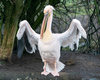
Last time I saw one to photograph was 8th Jan this year. I miss seeing the pelicans on the lake. Was a lovely stroll back and forth from there to the flamingoes, particularly in the rain. Get my pelican fix at CWP but I miss them all the same.
Attachments

Whipsnade Zoo - Two baby yaks have been born at Whipsnade...
2 yaks have been born - a female and male. In tradition of naming the yaks at the zoo after Harry Potter characters, they have been promptly named "Tonks" and "Cedric".
2 yaks have been born - a female and male. In tradition of naming the yaks at the zoo after Harry Potter characters, they have been promptly named "Tonks" and "Cedric".
- Status
- Not open for further replies.