I've decided to write up my latest zoo/wildlife trip, might encourage me to write up other things in the future! I usually try and do at least one of these things a year, usually zoos combined with a bit of wildlife watching. I decided to go to Kent this time, largely because I've only lived in the south east of England since summer, so I'm enjoying exploring a new area of Britain. I also end up in Kent quite a lot for work, but it's not an area I know at all. My memories of Kent were pretty much from childhood - eating a massive full English breakfast in a greasy spoon in Dover because our ferry was delayed, eating a massive full English breakfast sitting on the ferry trapped for 8 hours because there were gale force winds, and of course the tractor and trailer which took you through the herd of bison at Port Lympne. So to address this, I decided to organise a small holiday to Kent.
When deciding on which zoos/reserves to visit, Wingham was pretty much the first place to get scribbled down. They seem to have made a lot of progress in the last year or so I've been following them, and they've got a lot of interesting species. In contrast to the next two places, they also make a strong effort to showcase some taxonomic diversity. For the nostalgia, Port Lympne went on the list, as did Howletts as I thought it would make for an interesting comparison, and a quick look on ZTL revealed that the parks (they aren't zoos remember) did showcase some different species. Finally I added Wildwood, partly because I'm a sucker for zoos which showcase British wildlife, and because I thought it would be a nice thing to add in to a day with one of the other zoos. For reserves, I decided to visit RSPB Dungeness in the south, and Stodmarsh in the north. Both were closeish to zoos, and so could be visited in the same day.
With a rough outline of ideas, which naturally got swapped around over the weekend, I headed for Port Lympne on Saturday morning.
[the below for PL is taken and edited from my PL review, the rest of the text will be novel I promise!]
Port Lympne 24.02.2018
I spent a good 6 hours at Port Lympne braving the Baltic winds. Unfortunately with the weather there were a lot of no shows, though most of these were semi-nocturnal (Owston's palm civet is not something I'd have expected to see given the cold!) so I wasn't too put out by this, fortunately the sun was beaming all day which encouraged a couple of species to poke their noses out. Initial impressions weren't amazing, nothing was out in the enclosures near the Safari vehicles, and they delayed the departure of the first vehicle by 30 mins because of 'technical issues', though I felt like they were delaying it so there were more than a handful of people on the vehicle, perfectly reasonable but I'd rather have known beforehand so I could walk around one of the loops! Still, the baboons, lemurs and wild cat began to emerge before we departed which was grand, and the views over to the coast were stunning.
The Safari was a considerable upgrade from the old tractor and trailer I vaguely remember, however unfortunately the comms system was broken so there was barely any commentary on this run. Coupled with the (admittedly new) driver's reluctance to stop, and the general lack of animals due to the cold the first Safari wasn't amazing. Did get a great view of the local fox though! Great to see so many lechwe and deer species, the blesbok were lovely as well (apparently the 2 females are new). It's always difficult to decide where to sit on such things as this, left or right, front or back? As the trailer was going to be full, which would stop me from shifting positions as I pleased (not that I would do such a thing on a moving vehicle...), I went for the back left. Not a bad decision, the main route around the African paddock is anti-clockwise, so the left gets the best views. Unfortunately this then works poorly for the clockwise Asian section, but there wasn't too much to see in this area anyway.
I took the first stop off from the safari so I could wander back to Basecamp via the carnivores and primates, unfortunately most species were still inside and refusing to pop out and say hi. Though the enclosures were by and large fantastic, the way they are orientated relative to the paths is infuriating for a photographer (a very personal criticism I know) - being a distance from the path with heavy, reflective mesh at an irritating tangent so you struggle to be at a right angle to the mesh doesn't make for a great picture taking environment. The obvious benefit of this is you put the damn camera down and actually enjoy the animals! Lots of great enclosures here, a very special shoutout to the Pallas cat enclosure which was fantastic, combining the natural elements of their rocky habitat with some verticality to give them a vantage point from which to judge people. Alas, it was snugged up inside.
My impression as I boarded the Safari back to basecamp, having gone past countless empty encloses and paddocks, was that I'd come on a stupid day, and my largely unimpressed state was due to the weather. However, god knows what they put into the water supply (joke, animal rights activists), but at about 1300 everything suddenly decided to come out and play. The empty paddocks suddenly contained rhinos, bison and Przewalski's horses, and the second run through the Safari, with a working tannoy, was much more productive.
On the second safari there was a lot more to see. Everything was out and about in South America, as were the giraffes much to my fellow safari-goers enjoyment. The takin were miles away sadly (takin rule), so no baby photos for me. The mixed rhino-cheetah exhibit (which was empty on my first run) was interesting, my initial gut feeling about mixing carnivores and herbivores (though it's the cheetah I was worried about!) was very much in the negative, but the more I thought about it the more I thought this was a reflection of my mammalian biases, I don't really have any major issues with Budapest's mixed aviary with Bateleur eagles, griffon vultures, Waldrapp ibis and White-faced Whistling Ducks, though I have heard that other, similar exhibits have had their issues. I guess if there aren't any major issues regarding stress, and they have seperate areas if they want to avoid one another, then it's a good way of doing it for non-breeding animals. Unfortunately, though it's nice to 'tick' a lot of species on the Safari, you just can't spend time enjoying the animals, there was no chance of watching the wild dogs or the various ungulates in the African section. Still, it's a great experience and was thoroughly entertaining.
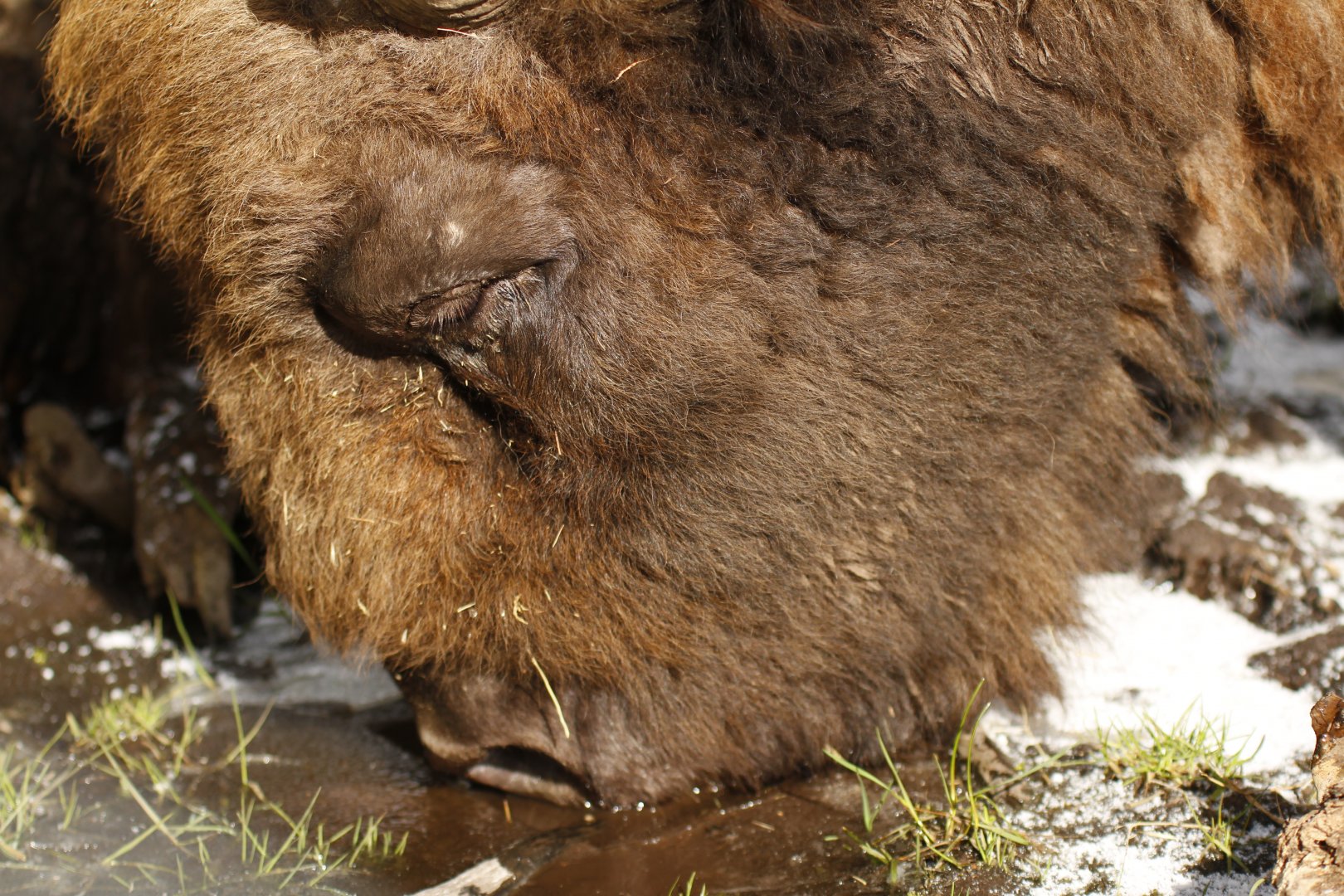
As an aside, the commentary was all over the place. Though generally good, the bison were apparently south American, and looked "like mini woolly mammoths", antelopes were occasionally called deer, and some factually incorrect science was discussed regarding the albino lechwe. But, nice to be shown around by people who love their jobs and really care about giving people a good experience.
On my final walk around critters began to really show themselves. I was lucky enough to have great interactions with the Pallas cat, rusty spotted cat and Malayan tapir, watching the European bison fighting and larking about, and watching the various rhinos scampering around.
So final impressions were very positive. Though I may or may not agree with the philosophy behind the park, there's no denying that there are some very special species kept in fantastic enclosures. Great day overall.
RSPB Dungeness
Leaving PL in the afternoon gave me a chance to head down to RSPB Dungeness to enjoy the setting winter sun whist birdwatching, which worked out pretty well. Though I had a good wander around, unfortunately there was very little to see, most of the birds hunkered down to keep out of the cold. Though there were reports of glaucous and Mediterranean gulls amongst the mixed species flock on the islands, for the life of me I couldn't see any. Ducks were also few and far between: some small locks of widgeon on the entrance drive, distant pochard, gadwall, teal, tufted and shoveller. Fortunately there were a huge number of cormorants to sustain my interest. Around 10% of the adults had the really extensive white heads and throats consistent with the southern race sinensis, but I have no idea if that's what they were, or if they were just older birds.
On my way to the next hide a silhouetted raptor flew above the bank before quickly dropping again. "I'll be damned if that wasn't a marsh harrier" thought I, but after waiting around for a while, camera poised, it didn't reappear. When I got to the next hide it was somewhat of a surprise to see it full of half a dozen people, when I'd only seen one other person on the reserve. Turned out they were watching not only the marsh harrier which had displaced the one I had briefly seen, but they were also watching a slavonian grebe which was mooching around about 150m away. This was pretty exciting, not only because this was a lifer for me, but because it was close enough to actually see the distinguishing features through the camera, and happened to be very close to a great crested grebe, allowing for a direct comparison.
Eventually the male harrier, which had gone to ground almost immediately after I'd entered the hide, rose, allowing me to take some nice pictures before it caught the wind and shot off at a heck of a pace. The rest of the afternoon was largely spent with me trying and failing to catch up with the harrier again, before the sun set and I called it a day.
Tomorrow - Wingham and Stodmarsh
When deciding on which zoos/reserves to visit, Wingham was pretty much the first place to get scribbled down. They seem to have made a lot of progress in the last year or so I've been following them, and they've got a lot of interesting species. In contrast to the next two places, they also make a strong effort to showcase some taxonomic diversity. For the nostalgia, Port Lympne went on the list, as did Howletts as I thought it would make for an interesting comparison, and a quick look on ZTL revealed that the parks (they aren't zoos remember) did showcase some different species. Finally I added Wildwood, partly because I'm a sucker for zoos which showcase British wildlife, and because I thought it would be a nice thing to add in to a day with one of the other zoos. For reserves, I decided to visit RSPB Dungeness in the south, and Stodmarsh in the north. Both were closeish to zoos, and so could be visited in the same day.
With a rough outline of ideas, which naturally got swapped around over the weekend, I headed for Port Lympne on Saturday morning.
[the below for PL is taken and edited from my PL review, the rest of the text will be novel I promise!]
Port Lympne 24.02.2018
I spent a good 6 hours at Port Lympne braving the Baltic winds. Unfortunately with the weather there were a lot of no shows, though most of these were semi-nocturnal (Owston's palm civet is not something I'd have expected to see given the cold!) so I wasn't too put out by this, fortunately the sun was beaming all day which encouraged a couple of species to poke their noses out. Initial impressions weren't amazing, nothing was out in the enclosures near the Safari vehicles, and they delayed the departure of the first vehicle by 30 mins because of 'technical issues', though I felt like they were delaying it so there were more than a handful of people on the vehicle, perfectly reasonable but I'd rather have known beforehand so I could walk around one of the loops! Still, the baboons, lemurs and wild cat began to emerge before we departed which was grand, and the views over to the coast were stunning.
The Safari was a considerable upgrade from the old tractor and trailer I vaguely remember, however unfortunately the comms system was broken so there was barely any commentary on this run. Coupled with the (admittedly new) driver's reluctance to stop, and the general lack of animals due to the cold the first Safari wasn't amazing. Did get a great view of the local fox though! Great to see so many lechwe and deer species, the blesbok were lovely as well (apparently the 2 females are new). It's always difficult to decide where to sit on such things as this, left or right, front or back? As the trailer was going to be full, which would stop me from shifting positions as I pleased (not that I would do such a thing on a moving vehicle...), I went for the back left. Not a bad decision, the main route around the African paddock is anti-clockwise, so the left gets the best views. Unfortunately this then works poorly for the clockwise Asian section, but there wasn't too much to see in this area anyway.
I took the first stop off from the safari so I could wander back to Basecamp via the carnivores and primates, unfortunately most species were still inside and refusing to pop out and say hi. Though the enclosures were by and large fantastic, the way they are orientated relative to the paths is infuriating for a photographer (a very personal criticism I know) - being a distance from the path with heavy, reflective mesh at an irritating tangent so you struggle to be at a right angle to the mesh doesn't make for a great picture taking environment. The obvious benefit of this is you put the damn camera down and actually enjoy the animals! Lots of great enclosures here, a very special shoutout to the Pallas cat enclosure which was fantastic, combining the natural elements of their rocky habitat with some verticality to give them a vantage point from which to judge people. Alas, it was snugged up inside.
My impression as I boarded the Safari back to basecamp, having gone past countless empty encloses and paddocks, was that I'd come on a stupid day, and my largely unimpressed state was due to the weather. However, god knows what they put into the water supply (joke, animal rights activists), but at about 1300 everything suddenly decided to come out and play. The empty paddocks suddenly contained rhinos, bison and Przewalski's horses, and the second run through the Safari, with a working tannoy, was much more productive.
On the second safari there was a lot more to see. Everything was out and about in South America, as were the giraffes much to my fellow safari-goers enjoyment. The takin were miles away sadly (takin rule), so no baby photos for me. The mixed rhino-cheetah exhibit (which was empty on my first run) was interesting, my initial gut feeling about mixing carnivores and herbivores (though it's the cheetah I was worried about!) was very much in the negative, but the more I thought about it the more I thought this was a reflection of my mammalian biases, I don't really have any major issues with Budapest's mixed aviary with Bateleur eagles, griffon vultures, Waldrapp ibis and White-faced Whistling Ducks, though I have heard that other, similar exhibits have had their issues. I guess if there aren't any major issues regarding stress, and they have seperate areas if they want to avoid one another, then it's a good way of doing it for non-breeding animals. Unfortunately, though it's nice to 'tick' a lot of species on the Safari, you just can't spend time enjoying the animals, there was no chance of watching the wild dogs or the various ungulates in the African section. Still, it's a great experience and was thoroughly entertaining.
As an aside, the commentary was all over the place. Though generally good, the bison were apparently south American, and looked "like mini woolly mammoths", antelopes were occasionally called deer, and some factually incorrect science was discussed regarding the albino lechwe. But, nice to be shown around by people who love their jobs and really care about giving people a good experience.
On my final walk around critters began to really show themselves. I was lucky enough to have great interactions with the Pallas cat, rusty spotted cat and Malayan tapir, watching the European bison fighting and larking about, and watching the various rhinos scampering around.
So final impressions were very positive. Though I may or may not agree with the philosophy behind the park, there's no denying that there are some very special species kept in fantastic enclosures. Great day overall.
RSPB Dungeness
Leaving PL in the afternoon gave me a chance to head down to RSPB Dungeness to enjoy the setting winter sun whist birdwatching, which worked out pretty well. Though I had a good wander around, unfortunately there was very little to see, most of the birds hunkered down to keep out of the cold. Though there were reports of glaucous and Mediterranean gulls amongst the mixed species flock on the islands, for the life of me I couldn't see any. Ducks were also few and far between: some small locks of widgeon on the entrance drive, distant pochard, gadwall, teal, tufted and shoveller. Fortunately there were a huge number of cormorants to sustain my interest. Around 10% of the adults had the really extensive white heads and throats consistent with the southern race sinensis, but I have no idea if that's what they were, or if they were just older birds.
On my way to the next hide a silhouetted raptor flew above the bank before quickly dropping again. "I'll be damned if that wasn't a marsh harrier" thought I, but after waiting around for a while, camera poised, it didn't reappear. When I got to the next hide it was somewhat of a surprise to see it full of half a dozen people, when I'd only seen one other person on the reserve. Turned out they were watching not only the marsh harrier which had displaced the one I had briefly seen, but they were also watching a slavonian grebe which was mooching around about 150m away. This was pretty exciting, not only because this was a lifer for me, but because it was close enough to actually see the distinguishing features through the camera, and happened to be very close to a great crested grebe, allowing for a direct comparison.
Eventually the male harrier, which had gone to ground almost immediately after I'd entered the hide, rose, allowing me to take some nice pictures before it caught the wind and shot off at a heck of a pace. The rest of the afternoon was largely spent with me trying and failing to catch up with the harrier again, before the sun set and I called it a day.
Tomorrow - Wingham and Stodmarsh