NUMBER SEVENTY-EIGHT: My what big eyes you have
- Animal: Ophthalmosaurus
- Name Pronunciation: Of-fal-moe-sore-us
- Name Meaning: "Eye lizard"
- Named By: Harry Govier Seeley - 1874
- Species: O. icenicus (type species)
- Classification: Life, Eukaryota, Animalia, Chordata, Vertebrata, Gnathostomata, Osteichthyes, Sarcopterygii, Tetrapodomorpha, Tetrapoda, Reptiliomorpha, Amniota, Sauropsida, Ichthyosauromorpha, Ichthyopterygia, Ichthyosauria, Ophthalmosauridae, Ophthalmosaurinae
- When: ~ 165,000,000 B.C.E. to 160,000,000 B.C.E. (Callovian stage of the Middle Jurassic epoch to the Oxfordian stage of the Late Jurassic epoch)
- Where: Europe (England, France, and Greenland) and North America (Mexico and Wyoming)
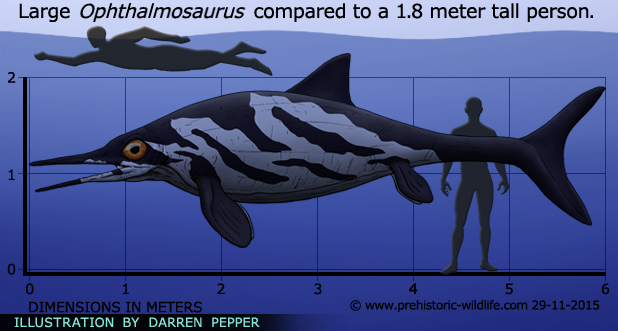
- Size: 19.5 feet (6 m) long
- Diet: Carnivore (ammonites, fishes, and squid-like belemnites)
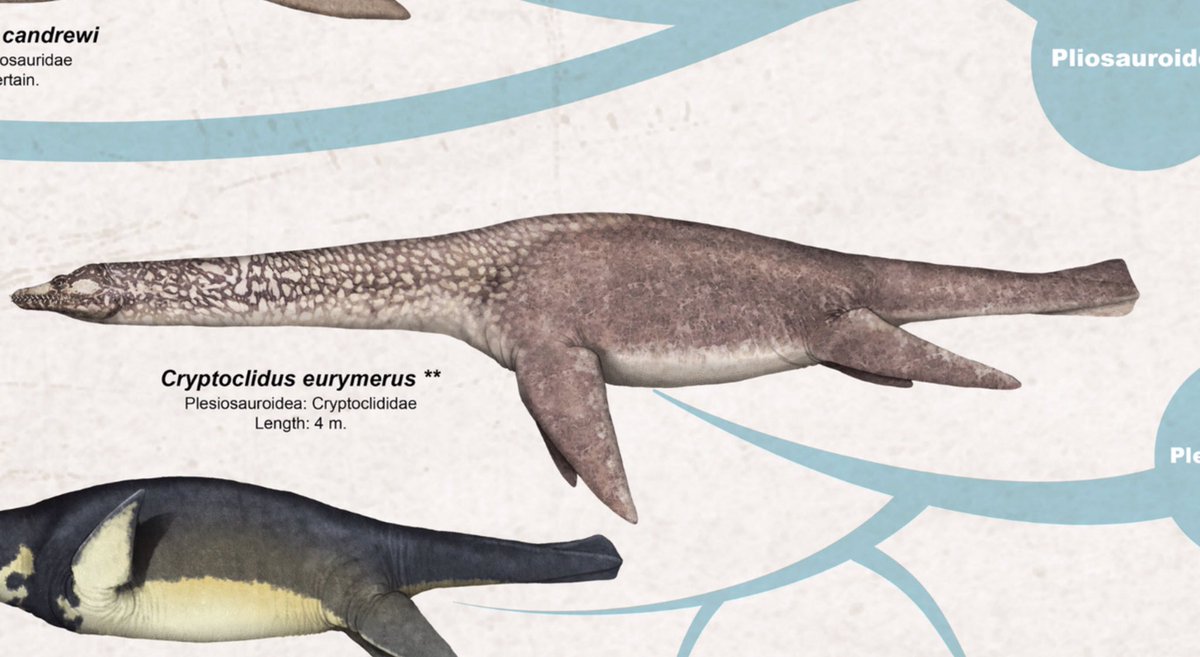
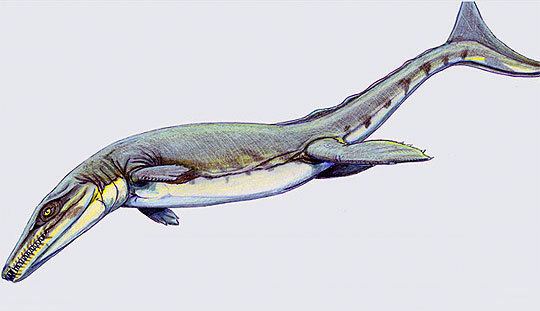
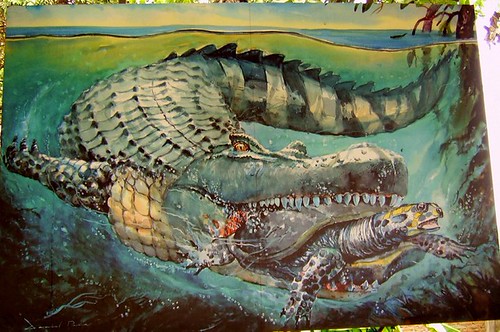
- 3 Contemporaries: Cryptoclidus eurymerus (plesiosauroid), Liopleurodon ferox (pliosaurid), and Tyrannoneustes lythrodectikos (crocodyliform)
- Pop Culture Appearances: Walking with Dinosaurs (1999) - episode 3: "Cruel Seas"
Ichthyosauria was a group of marine reptiles that arose around 250 million years ago (Early Triassic) and died out about 90 million years ago (Late Cretaceous). They were air-breathing, warm-blooded, and may have had a layer of blubber for insulation. They have no close living relatives but are distantly related to saurians (Sauria) like the tuatara, squamates, turtles, and archosaurs.
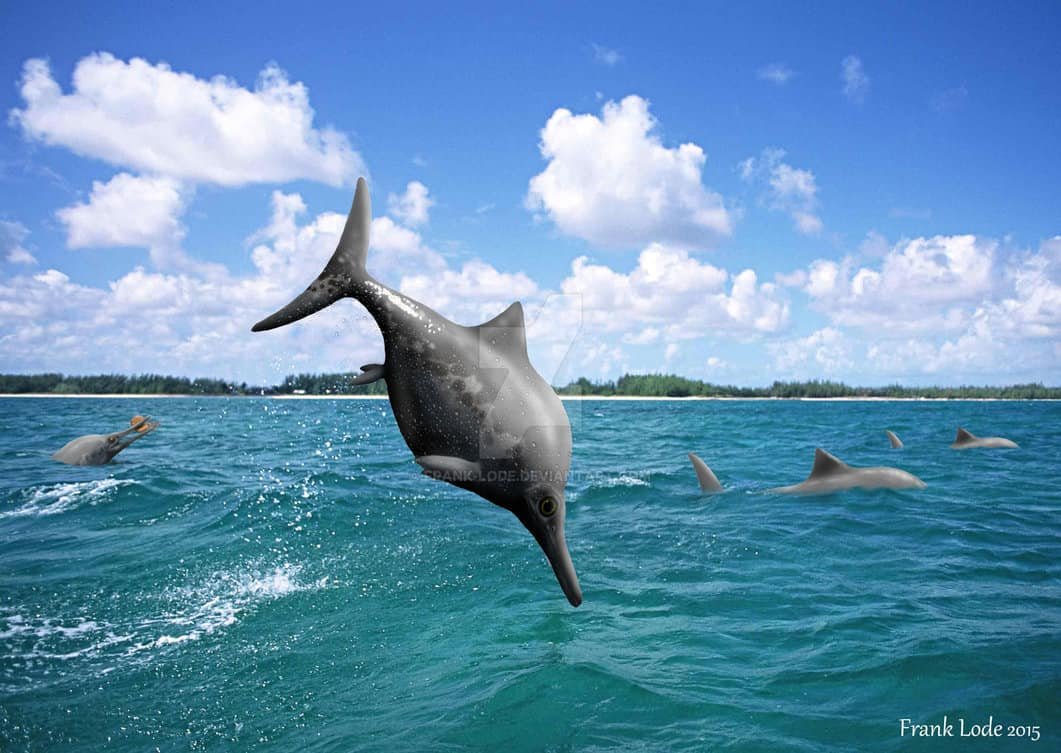
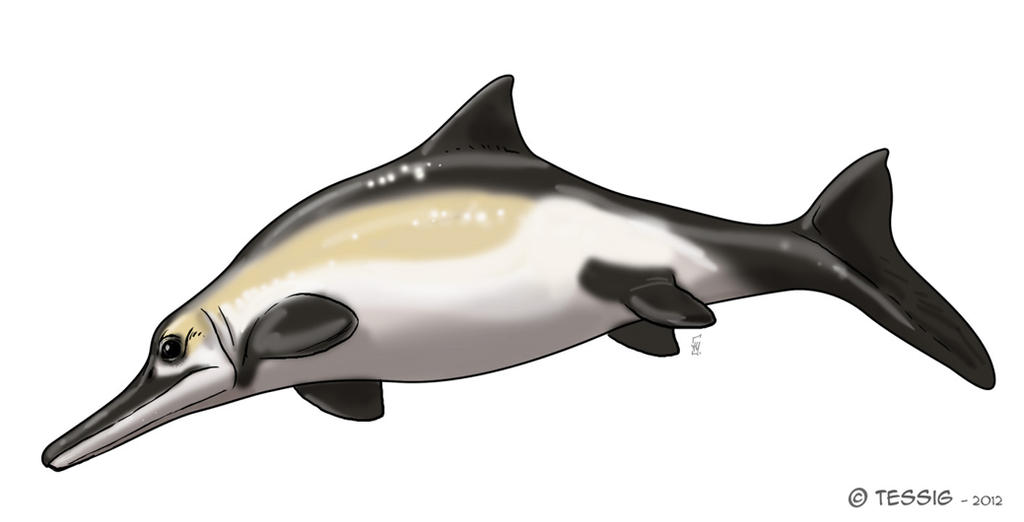
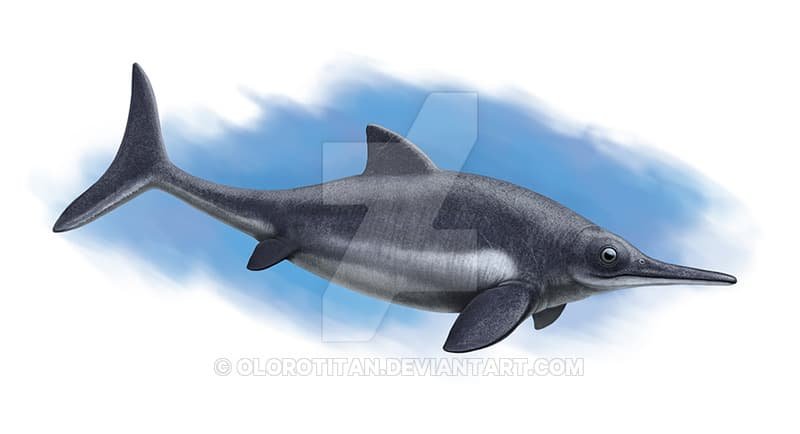
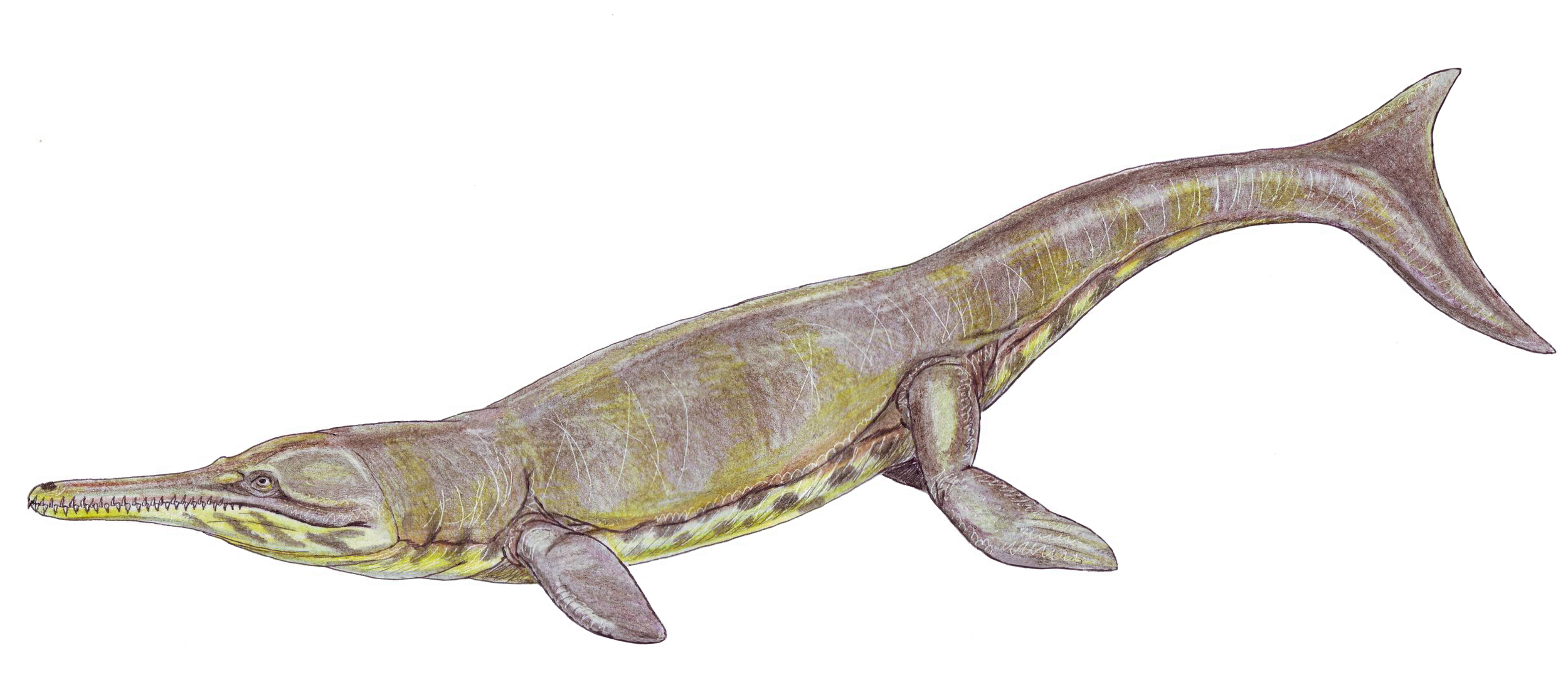
Ophthalmosaurus had a tear-drop-shaped body and a caudal fin shaped like a half-moon. Its fore fins were more developed than the hind ones, which suggests that the frontlimbs did the steering while the tail did the propelling.
Ophthalmosaurus' chief claim to fame is its enormous eyes (some reaching about 9 inches or 22.86 cm in diameter) which were extremely large in proportion to its body. The eyes occupied almost all of the space in the skull and were protected by bony plates (sclerotic rings), which most likely assisted to maintain the shape of the eyeballs against water pressure at depth. The size of the eyes and the sclerotic rings suggests that
Ophthalmosaurus hunted at a depth where there was little to no light or that it may have hunted at night when prey was more active. Like other ichthyosaurs,
Ophthalmosaurus gave birth to its pups tail-first to avoid drowning them. Skeletons of unhatched young have been found in over fifty females on fossil finds, and litter sizes ranged from two to eleven pups. Whether ichthyosaurs provided parental care, like some other marine reptiles such as plesiosaurs, is currently unknown. Calculations suggest that an adult
Ophthalmosaurus could stay submerged for approximately 20 minutes or more. The swimming speed of
Ophthalmosaurus has been estimated at 5.5 mph (2.5 m/s) or greater, but even assuming a conservative speed of 2.2 mph (0.98 m/s), an
Ophthalmosaurus would be able to dive to 2,000 feet (600 m) and return to the surface within 20 minutes. Scientists have found evidence of the bends in the bone joints of
Ophthalmosaurus skeletons, possibly caused by evasive tactics. Modern cetaceans have been known to get the bends when they ascend rapidly to escape predators.
(Below:
Ophthalmosaurus as it appears in
Walking with Dinosaurs)
(Below:
Cryptoclidus eurymerus)
(Below:
Liopleurodon ferox)
(Below:
Tyrannoneustes lythrodectikos)
(Below: Clip from
Walking with Dinosaurs about
Ophthalmosaurus) (please note the the
Liopleurodon at end is WAY over-sized)
Picture and Information Resources: