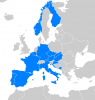
Snowleopard's 2019 Road Trip: Netherlands, Belgium, France & Germany

Personally I do actually enjoy these "feeding talk" situations where a keeper just feeds the animal under his or her care and talks about them. I might even enjoy them as much if not more than big flashy shows where the entire visitor population congregates in one area...


I used to do quite a lot of Ape (gorilla mainly) photography and know from experience the best opportunities for photographs are just before a 'talk and feed' session, while the Apes are alert and expectantly waiting, and closer to the barrier. This 'window' ended as soon as they received the first mouthfuls of food though!
 
I used to do quite a lot of Ape (gorilla mainly) photography and know from experience the best opportunities for photographs are just before a 'talk and feed' session, while the Apes are alert and expectantly waiting, and closer to the barrier. This 'window' ended as soon as they received the first mouthfuls of food though!

That is definitely to a large extent the case with the gorillas and their feedings at GaiaZoo and Apenheul, which I believe Snowleopard is yet to visit, although both zoos have a specific viewing area for the gorilla feedings and some of the gorillas there do remain well visible during the feedings.
 
That is definitely to a large extent the case with the gorillas and their feedings at GaiaZoo and Apenheul, which I believe Snowleopard is yet to visit, although both zoos have a specific viewing area for the gorilla feedings and some of the gorillas there do remain well visible during the feedings.

Yes, I've been to Apenheul... what I meant is once they start actually eating you don't get any good shots anymore as they are either chewing food or searching the ground for more...;) some people like to photo that but not me.
 
DAY 12: Thursday, July 25th (3 zoos)

After visiting a trio of famous Belgian zoos in the form of Antwerp, Planckendael and Pairi Daiza, which are all totally different from each other and arguably three of the better zoos in all of Europe, I was almost done with Belgium but a couple of small places remained on my itinerary.

I drove from Pairi Daiza, one of Europe’s biggest and most popular zoos, for 1.5 hours northeast to the Belgian city of Liege. This would be a day of 3 nations, and almost 4 zoos…

Zoo/Aquarium # 32: Liege Aquarium-Museum (Liege, BE)

Right in downtown Liege, in a grand old building that looks mightily impressive from the edge of the canal, sits this structure that is only 7 Euros to enter. The whole bottom floor is the Aquarium area, with a count of 44 tanks in total. There is a floor-to-ceiling shark exhibit with a trio of Black-tipped Reef Sharks that are clearly too big for their accommodation, plus the tank is a rectangular shape which is highly unusual for sharks. There is also a large tank that looks as if it was once a touch tank, but the water has been deliberately drained just enough so that visitors cannot reach in and get at the inhabitants. All of the other remaining tanks are in a single curved room, with exhibits lining the sides in an old-fashioned setup. Species that I will highlight are the following: Dusky Grouper, Giant Spotted Grouper, Remora, Red Scorpionfish, Large Spotted Dogfish, Thornback Ray, Deep-snouted Pipefish, Big-belly Seahorse, Yellow Seahorse, Green Moray Eel, Snowflake Moray Eel, Common European Eel, West African Lungfish and Common Octopus. It’s a predictable Aquarium with nothing spectacular anywhere.

There is a separate, small museum section with a stuffed Thylacine, a Charles Darwin bust, a stuffed ‘Huia’ (now extinct) and a bunch of other seemingly random objects that do eventually tie into an evolutionary theme. On a separate level of the building is a sprawling set of 4 rooms with a tremendous amount of taxidermy items. None of the labels or signs are in English, beyond a rudimentary name like ‘Pine Marten’, which meant that I didn’t hover for a great deal of time. Some zoo nerds probably like antiquated museums but after seeing so many zoos each day a series of glass-enclosed dead animals is not very thrilling. The entire time I was there, in 4 spacious rooms, I did not see a single individual come inside, even though the Aquarium on the bottom floor with its 44 tanks was very busy. People just don’t care about old-fashioned museums these days, especially ones lacking modern, interpretative material. If one was into that kind of thing, then the Liege Aquarium-Museum could be a full-day outing as it has a tremendous amount of minutia to study.

I then drove 30 minutes south to my first drive-through safari zoo of the trip.

Zoo/Aquarium # 33: Safari Parc Monde Sauvage (Wild Safari World Park) (Aywaille, BE)

This facility opened in 1962 and the staff members tell you right at the gate that for a large fee you can ‘be in Africa’. That sounded exciting and so I drove through the gate and the first 30 minutes is a drive-through safari where you take your own vehicle through. The other option is a 45-minute safari on a cute little kiddie safari land train and I quickly bypassed that option. The species list for the African zone is actually quite impressive and I saw almost all of the animals. Those include: African Elephant (separate, very small paddock that is almost criminally tiny), Giraffe (also a separate paddock), Ostrich, Greater Kudu, Sable Antelope, Roan Antelope, Common Eland, Defassa Waterbuck, Scimitar-horned Oryx, Bontebok, Impala, Watusi Cattle, Brindled Gnu, Nyala, Plains Zebra, Common Hippo (separate, muddy pool) and White Rhino (separate, small, dusty paddock). Other than the elephants, rhinos, hippos and giraffes, the rest of the animals are in the same area as the vehicles and while I don’t normally like this sort of thing, I was especially pleased to see both the Sable and Roan Antelope…rarities in North American zoos.

There is a very small drive-through Asian loop with Barasingha, Kiang, Asian Water Buffalo, Nilgai, Bactrian Camel and Yak. A third and final drive-through is via South American critters, with Coati in a separate exhibit and then Capybara, Llama, Rhea, Red-legged Seriema, Lowland Tapir and Mara in the drive-through…plus Maned Wolf on the signs. Would they really be in with all the rest of the critters and people in cars? I couldn’t see any kind of side exhibit for that species.

After the 30-minute safari, there is a substantial walking section that goes through some thick forest. The zoo’s map is junky because it is so tiny, and visitors should be handed magnifying glasses to figure out what the hell they are looking at. I spent 1.5 hours walking around and thus more than two hours inside this zoo in total, proving that it is a park of some substance. For one thing, there are Polar Bears out in the Belgian countryside! There is a rather rundown, outdated, typical Polar Bear-looking enclosure that I shrugged at, but going around the corner I was shocked to see that the zoo had obviously more than doubled the size of the space available to the bears by enclosing a thick strand of woods with fencing. I saw 3 Polar Bears in total, with two of them lounging around in the dirt and looking rather like European Brown Bears. What an extraordinary sight! A fenced-off chunk of forest, perfect for Grizzlies, is actually a Polar Bear exhibit and their dirty white coats stood out in the gloom. (Check the gallery for photos, which can be said for all of the 33 zoos that I’ve visited so far on this trip)

After the surprise of seeing Polar Bears in a woodland environment, I passed an Asiatic Black Bear exhibit (decent), a large field with zero trees that contained at least 5 European Brown Bears and thus the zoo has a trio of bear exhibits as the very first thing visitors see on the walking trail. Up next is an excellent habitat for Humboldt Penguins, with a green lawn, a deep pool and a small underwater viewing section set inside a cool cave. American Bison have several acres to roam and visitors then progress into a forest. There can be found a walk-in Prairie Dog exhibit, a Red Panda enclosure, a big cage with mock-rock viewing for a couple of Striped Skunks and at least 8 or more Raccoons. That was entertaining! There are Wolves up next, and then visitors emerge out of the forest into a primate zone that includes islands for three species of lemur (Ring-tailed, Red Ruffed, Black and White Ruffed) and then even larger island habitats for Chimpanzees, orangutans and Lion-tailed Macaques. Those last few exhibits aren’t great, but they are adequate and not a detriment to the park. Elsewhere is a small Tropical House section, some ungulates like Moose and various antelope, and some big cats.

This being a European zoo, a substantial bird of prey zone is almost a must and here is a species list for Monde Sauvage: Secretary Bird, Andean Condor, Steppe Eagle, White-tailed Eagle, Bald Eagle, Eastern Imperial Eagle, Ruppell’s Vulture, Griffon Vulture, Himalayan Vulture, Cinereous Vulture, Egyptian Vulture, White-backed Vulture, Bengal Eagle-owl, Spectacled Owl, Brown Wood Owl, Snowy Owl, Barn Owl (normal coloured), Barn Owl (melanistic version), Great Grey Owl, Saker Falcon, Caracara and at least half-a-dozen other species that I could not identify as they were in the ‘bird show area’ which is closed to the public when there isn’t a performance.

Kasteelpark Born (Born, NL) – NON-VISIT

I arrived at this tiny Dutch zoo in the afternoon, during a heatwave that has struck western Europe to a ‘fierce degree’, and I was only a few steps in and admiring some aviaries when I was asked to leave! The reason being was the extreme heat, the lack of visitors, and all but one of the employees was heading home. I wasn’t sure whether I should be outraged, scandalized or demand a private tour at a later date (I’m totally joking here), but nevertheless I had to leave and since I hadn’t paid yet there was no need for reimbursement. Having seen only a couple of aviaries and a Fallow Deer paddock from the road, I’m not going to count this zoo in my all-time total. It is a non-visit and the third one of those on this trip. Who could possibly have imagined a zoo closing because it’s too hot outside?

Zoo/Aquarium # 34: Wildpark Gangelt (Gangelt, DE)

Here is a prime example of a classic German ‘wildpark’, with indigenous fauna on display in natural exhibits set in a thick forest. I enjoyed a full two hours rambling around in the woods, and with the heat and humidity I had much of the park to myself. There is a nice selection of birds of prey, and an impressive list of European animals. European Brown Bear, Wolf, Eurasian Lynx, European Wildcat, Red Fox, European River Otter, Pine Marten, European Mink, Raccoon, Alpine Marmot, European Wild Boar, Alpine Ibex, Chamois, Wisent, Moose, Tarpan, Red Deer and various colour forms of Fallow Deer.

I had a great time at Wildpark Gangelt, with some fantastic moments because all of the animals came over to where I was viewing them. This is the one huge flaw with the place, as it leaves a bad taste to know that visitors feed all the animals in the park. Due to that reason, the bears came lumbering over to see what I had to offer, the Alpine Marmots popped up from their burrows, an otter and a marten both looked up to say hello, etc. It destroys the image of nature when the ‘wild’ critters are eager for handouts. The two highlights would be when a keeper threw some food into the densely-planted Eurasian Lynx exhibit and one of the cats emerged from the undergrowth. Apparently, the park has 7 Lynx (1.3.3) even though I only saw the one. That illustrates just how effective the exhibit is in terms of hiding opportunities for the felines. The other highlight was seeing a herd of Chamois, some right up at the fence and getting their backs scratched from me, as that species is practically unheard of in North American zoos.

I then drove 30 minutes to the Netherlands and the tiny village (pop. 2,000) of Thorn. There I met @Stefan Verhoeven and I spent the night at his house. What a generous man! We’d obviously never met before and he simply offered me a room before I left Canada after he saw my potential trip plans on ZooChat. I asked him if I could shed some light on him and he was fine with it. Stefan is 38 years old, a qualified veterinarian, and he has a dog and hundreds of finches in a nice aviary in his backyard. We went walking down the main street of the village and the first restaurant we tried to enter was closed due to the heat…then the second restaurant was also closed due to the extreme heat…but on the third try we were relieved to find somewhere nice and we had a great meal.
 
Last edited:
If your vehicle breaks down while in Europe, is it mandatory to wear a bright orange/yellow/red vest?
At least in these countries, it is (given certain circumstances).
 

Attachments

  • WarnwesteEuropa.png
    WarnwesteEuropa.png
    10.2 KB · Views: 14
I love how you refer to zoo inmates as 'critters' !!:D

The Thylacine taxidermy in Liege sounds interesting. Wasn't aware there was one there...
 
I tend to agree with both "Maguari" and "TeaLovingDave" about Pairi Diaza.

Pairi Diaza certainly has an amazing collection of animals with many rarely seen species so a visit is always exciting. However, I don't like the excessive theming which, I find, detracts from the animal collection.

As a zoo, I much prefer Antwerp which would definitely feature in my top ten European zoos.
How do you define "excessive theming"? Can theming, if done well, ever be "excessive"? In my mind, it cannot. I love theming! I love it when a zoo will give me the feel of being in another place on Earth, where the animals displayed come from.

I love how you refer to zoo inmates as 'critters' !!:D
I don't mean to make a big deal about it, but why do you call zoo animals "inmates". The dictionary definition of "inmate" is: "a person confined to an institution such as a prison or hospital". In general, most people think of "inmates" the same as "prisoners". I just think we are conceding to the zoo-haters (IDA, PETA, Hancocks) when we call the zoo animals we love "inmates" or "prisoners", conceding that zoos are "animal prisons". Sure, the zoo animals are confined, but just the same as the pets we love or even our small children. I prefer to think of zoos not as "animal prisons", but rather "animal resorts" where the animals live a life of luxury, being lovingly cared for by the zookeepers.
 
How do you define "excessive theming"? Can theming, if done well, ever be "excessive"? In my mind, it cannot. I love theming! I love it when a zoo will give me the feel of being in another place on Earth, where the animals displayed come from.

But can you honestly claim that you have ever stood in even a well-themed zoo (and I am of the view that theming *can* be good) and genuinely felt like you were in any place other than a zoo in a Western city? I sometimes like the decorations, but the premise itself is ridiculous.
 
Those include: African Elephant (separate, very small paddock that is almost criminally tiny), Giraffe (also a separate paddock), Ostrich, Greater Kudu, Sable Antelope, Roan Antelope, Common Eland, Defassa Waterbuck, Scimitar-horned Oryx, Bontebok, Impala, Watusi Cattle, Brindled Gnu, Nyala, Plains Zebra, Common Hippo (separate, muddy pool) and White Rhino (separate, small, dusty paddock).

Minor correction - Blesbok :)

How do you define "excessive theming"? Can theming, if done well, ever be "excessive"? In my mind, it cannot. I love theming! I love it when a zoo will give me the feel of being in another place on Earth, where the animals displayed come from.

I'd argue that if anywhere counts as excessively themed it would most certainly be Pairi Daiza :p can't think of any other zoological collections which feel the need to put deformed human remains on-display in their underground bat crypts and aquarium buildings, for instance!
 
I'd argue that if anywhere counts as excessively themed it would most certainly be Pairi Daiza :p can't think of any other zoological collections which feel the need to put deformed human remains on-display in their underground bat crypts and aquarium buildings, for instance!

They seriously do that? That is pretty gross and creepy.

And do you mean actual remains or just creepy props?
 
DAY 13: Friday, July 26th (4 zoos)

Yesterday marked the end of ‘leg two’ of my trek visiting innumerable zoos within western Europe. If faithful readers will remember, ‘leg one’ was a full week in the Netherlands and I toured 22 zoos. ‘Leg two’ was 5 days mainly in Belgium, and I just finished touring 9 Belgian zoos, 2 zoos in France and a Wildpark zoo in Germany in those 5 days. That puts me at 34 zoos in total. Now, ‘leg three’ will see me visit a couple of Dutch zoos today, but essentially I’m in Germany for a full week and I’ll be visiting the usual suspects in the Ruhr Valley, along with the odd, obscure little German zoo as a Snowleopard trip would never be complete without digging up some puny zoos that no one has ever visited before. Ha!

Today I said goodbye to @Stefan Verhoeven and I visited 4 zoos that were all remarkably close to each other, even though they were spread between two nations. I left Thorn, in the Netherlands, and drove 45 minutes to a small German city.

Zoo/Aquarium # 35: Alsdorf Tierpark (Alsdorf, DE)

Here is a small, free, community zoo that I toured very early in the morning. There is a central block of exhibits for Meerkats, Prairie Dogs, Common Marmosets and Raccoons, and not much else. There are Fallow Deer and Mouflon in spacious paddocks, some bird of prey aviaries and some barnyard animals. I explored the park for a while as I had time on my hands, but otherwise this whole zoo could be toured in a very speedy time.

I then drove 15 minutes back into the Netherlands for my next stop.

Zoo/Aquarium # 36: GaiaZOO (Kerkrade, NL)

This zoo opened in 2005 and it is a superb zoological park. Having won awards for its beautiful grounds and scenic layout, the zoo is proud of its status as a well-maintained facility. There are signs promoting the zoo as a place to come and rest while enjoying nature and I spent 4 hours here and was genuinely impressed. The exhibits are naturalistic and pound-for-pound this zoo has some of the highest quality exhibits that I’m likely to see on this entire trip. There are 4 biomes: Limburg (southern Netherlands), Taiga, Rainforest and Savanna and more than 500,000 annual visitors enjoy the 62 acres/25 hectares in the very southern section of the Netherlands…just a few minutes north of Belgium and a few minutes west of Germany.

Taiga: I followed the numbered route on the map, and this is the first part of the zoo. There is a brilliant Barbary Macaque exhibit that is larger and far superior to probably 90% of the gorilla exhibits that I’ve ever seen as it’s a veritable forest for the monkeys to explore. What a knockout first exhibit, but there’s more because the path takes visitors through a large aviary, past Raccoons, Striped Skunks and Grey Wolves, then an aviary with various owls and past an overlook into habitats for Wolverines, Reindeer and Muskox. I saw a couple of Eurasian Lynx chasing each other through their outstanding exhibit, and then there is a slice of nature that is actually a European Beaver pond right next door. There is a second walk-through aviary, this time with vultures as the main attraction, and then Bactrian Camels, Przewalski’s Horses and Reeves’ Muntjacs represent hoofstock, with Red Pandas in a very spacious habitat that they share with muntjacs. Eurasian Otters and European Mink are also found here and the Taiga section, from start to finish, is truly outstanding. It winds from one side of the zoo to the other, encompassing more than a third of the entire grounds.

Limburg: The southernmost Province in the Netherlands is called Limburg, and the zoo has a small assortment of creatures from that part of the world. There is a new building called the Limburg House (2018), with taxidermy specimens on the top floor and a few native critters (including Fire Salamanders) on the bottom floor. There is a focus on the conservational aspect of GaiaZOO, with outdoor, covered exhibits for Fire Salamanders and Hazel Dormice. The small Limburg region is also the central hub of the zoo, with a fine-looking Dutch farmyard setup, the zoo’s very nice restaurant, and a huge yet dusty ‘DinoDome’ indoor playground.

Savanna: This area has a series of exhibits that would probably look better as one large, African vista rather than have the enclosures broken up into different sections. White Rhinos are there (the zoo’s map actually says Northern White Rhinos), plus Rothschild Giraffes, Greater Kudu, Springbok (including an ultra-rare black specimen), Ostrich, Meerkats (two separate exhibits) and Indian Crested Porcupines. There is a huge African Wild Dog exhibit, an adequate and rather lush Lion habitat, and Bat-eared Foxes in a totally overgrown yard. Brand-new in 2019 is a Savanna playground for kids, an African Lodge restaurant and a very large aviary for 400 flamingos…all squawking away in the corner as they seem to still be getting used to the space as I believe that they came over from Walsrode earlier this year.

Rainforest: The highlight here is the Lowland Gorilla/Black Crested Mangabey exhibit, with its incredibly minimal barriers. There is no hotwire around a moated area and at the nearest point I estimate that there is perhaps a 12-foot gap from one side to the other. Could not an excited male gorilla, running down the hill in the enclosure, perhaps leap such a gap and clear the water? Probably not…but it just seems such a nonchalant manner to contain great apes. The zoo has 9 gorillas and quite a few mangabeys and yet again a European zoo has made the brilliant decision to showcase gorillas in a mixed-species environment and it works beautifully here. Apart from those two, there are another 8 primate species in excellent habitats. A walk-through with Squirrel Monkeys and Red Howler Monkeys (although I failed to see the latter) was a thrill, as was seeing a couple of Woolly Monkeys in an enclosure that they were sharing with a group of Capybara. Pygmy Hippos, with underwater viewing, were great, as were rarities such as Common Cusimanse, White-lipped Peccary and Bush Dog, all very rare in North American zoos. A spacious walk-through waterfowl aviary is a highlight, and a small building with a superb Green Anaconda exhibit is worth checking out.

GaiaZOO is a really terrific zoo and before my trip I’d heard that it was one of the best zoos in the country. It punches above its weight as it’s really a half-day experience, but when the immersive exhibits are as impressive as the ones found here then there really is very little to complain about. I’ve heard this zoo being called a ‘politically correct’ zoo, because the grounds are divided into biomes and many of the exhibits are so lush that it’s difficult to find all of the animals. I had a few no-shows (Red Pandas, Wolverines, beavers and otters) but that’s part of the deal when a zoo creates natural-looking enclosures with plenty of hiding places for the inhabitants.

Literally 5 minutes away from GaiaZoo is a weird zoo called Mondo Verde.

Zoo/Aquarium # 37: Mondo Verde (Landgraaf, NL)

This zoo opened in 2002 and is practically right next to GaiaZOO but is a world away from it in tone and exhibit quality. This zoo is also a theme park, with a small rollercoaster ride, a water boat ride, a large arcade room and many ‘worlds’ represented via buildings, signs or various structures. For example, there is an English section with an estate maze, an Australian zone with macropods, a Chinese garden, a Japanese garden, plus Brazil, Italy, Portugal, Spain and other nations all represented across the extensive grounds.

In terms of animals, there are two significant structures that cater almost entirely to birds. Right near the entrance is a big Tropical House, with many free-flying birds in all directions. There are a couple of fish ponds, bats are labeled, and many enclosed aviaries that are for the most part too small for their inhabitants. The bird collection is impressive and here are a few highlighted species: Greater Flamingo, Kookaburra, Guyana Toucanet, Rhinoceros Hornbill, Silvery-cheeked Hornbill, Rufous Hornbill, Southern Ground Hornbill, Salmon-crested Cockatoo, African Grey Parrot, Grey Plantain Eater, White-cheeked Turaco and many others.

The other major animal destination is a large aviary that is 1.5-acres/0.6 hectares and the sign outside states “nowhere in Europe will you find a bigger free flight aviary than here”. A boastful statement, considering what Doue la Fontaine has done? The aviary’s inhabitants are waterfowl, with many ibises, ducks and geese and the largest species being Demoiselle Cranes.

After the big Tropical House and the huge walk-through waterfowl aviary, there isn’t a great deal else in terms of animals. I saw a couple of Sri Lankan Leopards in a decent pair of exhibits with many enormous tree trunks for climbing inside of the traditional cages. There is a white Tiger, at least 3-4 white Lions, a walk-through Ring-tailed Lemur Exhibit, my daily dose of capuchins and a White-handed Gibbon island with the apes hooting up a storm in reaction to loud cheers from the nearby rides. There are some Fallow Deer, Bactrian Camels, a walk-through macropod zone, plus at least 5 or 6 crane species around the park. The whole place has more glitz than substance but its close proximity to GaiaZOO makes it difficult to ignore for a zoo enthusiast.

It was time to head back into Germany and 30 minutes away was my final stop.

Zoo/Aquarium # 38: Aachener Zoo (Aachen, DE)

This zoo opened in 1966 and has 400,000 annual visitors on its 22 acres/9 hectares (although a large lake takes up at least 20% of that total). It’s what is probably a stereotypical mid-sized German zoo, which means that it’s well run and worth seeing even though years down the road it might not be truly memorable. The first impression, following the numbers on the map, isn’t a great one as a downhill slope leads visitors past a motely assemblage of Alpacas, Maras, Cotton-top Tamarins, Rheas, Squirrel Monkeys and a large group of domestic animals in a barnyard setting. Things improve with a lush Coati exhibit, a spacious and very nice Cheetah habitat, and then a forested Eurasian Lynx exhibit with at least 4 of those cats. My daily does of Lynx is in contrast to my daily dose of Bobcats on my North America road trips. Are there no Bobcats over here?

There are Meerkats, yet another terrific Red Panda exhibit (a theme in western Europe), a large Serval exhibit with at least 4 of the cats, camels, Ankole Cattle, Raccoons and Small-clawed Otters sharing the same enclosure, Maned Wolves, a big Bearded Vulture aviary, Alpine Marmots and Barbary Macaques to name just a few. When I was about halfway around the zoo the rain came down in a drizzly fashion, thunder cracked, and lightning flashed…it seemed as if I was having a flashback to that small, rural Dutch zoo called Faunapark Flakkee earlier in the trip. One cool thing about the incoming storm was the effect that it had on the animals. The two Cheetahs were racing around their exhibit, the macaques were banging on their fence, and I headed for the exit after seeing the last few exhibits in pouring rain.

I drove 2 hours in total and saw 4 zoos all within spitting distance of each other. Hypothetically, if I had begun the morning in Alsdorf, Germany, then it would literally have been 50 minutes of driving for the whole day and 4 zoos added to my lifetime total. It’s amazing how physically close zoos are to each other in western Europe.
 
@snowleopard
Regarding GaiaZoo, the beavers there are not European beavers but North American beavers. The signage at the park only says "Castor species" rather than Castor fiber or Castor canadensis but at least according to Zootierliste they are North American beavers.

As far as the flamingos go, not all 400 individuals have yet been transferred. About 70 have yet to be transported for reasons that were not communicated. 330 flamingos is however still the most I have so far seen in one place at one time and it is quite impressive nonetheless.

I agree with you that GaiaZoo is a terrific zoo with impressive naturalistic habitats. That does mean that some species will not be the easiest to spot, or that even some large species will be a no-show but that doesn't bother me that much. Given how likable the zoo is and its relatively close proximity to Belgium I visit the place a few times a year and we hold a membership there.

Did you see the Darwin's rheas roaming free in the squirrel monkey forest? That is another one I don't think you're likely to have seen in North America before.

I visited GaiaZoo just 5 days prior to your visit and I was quite impressed by the new developments since my spring visit (mostly the flamingo aviary). I am still working on processing my images from that visit, but I plan to post another big bunch of photos from that zoo in the gallery as soon as possible, as I did recently with the images from my spring visit.

With regards to Mondo Verde, I agree that it is a weird place where animals don't seem to be a true priority, with sometimes really odd decorations and with some poor exhibits. Did they still have that nasty side-room to the tropical hall with amateuristic bird raising cages and some disgusting terrariums?
 
Zoo/Aquarium # 34: Wildpark Gangelt (Gangelt, DE)

Here is a prime example of a classic German ‘wildpark’, with indigenous fauna on display in natural exhibits set in a thick forest. I enjoyed a full two hours rambling around in the woods, and with the heat and humidity I had much of the park to myself. There is a nice selection of birds of prey, and an impressive list of European animals. European Brown Bear, Wolf, Eurasian Lynx, European Wildcat, Red Fox, European River Otter, Pine Marten, European Mink, Raccoon, Alpine Marmot, European Wild Boar, Alpine Ibex, Chamois, Wisent, Moose, Tarpan, Red Deer and various colour forms of Fallow Deer

I had a great time at Wildpark Gangelt, with some fantastic moments because all of the animals came over to where I was viewing them. This is the one huge flaw with the place, as it leaves a bad taste to know that visitors feed all the animals in the park. Due to that reason, the bears came lumbering over to see what I had to offer, the Alpine Marmots popped up from their burrows, an otter and a marten both looked up to say hello, etc. It destroys the image of nature when the ‘wild’ critters are eager for handouts. The two highlights would be when a keeper threw some food into the densely-planted Eurasian Lynx exhibit and one of the cats emerged from the undergrowth. Apparently, the park has 7 Lynx (1.3.3) even though I only saw the one. That illustrates just how effective the exhibit is in terms of hiding opportunities for the felines. The other highlight was seeing a herd of Chamois, some right up at the fence and getting their backs scratched from me, as that species is practically unheard of in North American zoos.

I’m am so happy you made it to Wildpark Gangelt! I have visited many of the zoos you’ve toured so far (although not Gaia Zoo as it opened the year after I left Belgium) and as I’ve followed your progress I have wanted to post and say “you’re 45 miles from Gangelt! You must go to Gangelt!”

I think I may have posted early on a recommendation for you to visit the park. It was my absolute favorite place to spend a few hours 15 years ago and I must have visited the park 30 times in three years. I loved it in the spring when the Mouflon, Ibex, Red and Fallow Deer were having their young. I remember one day a few adventurous Wild Boar piglets has wiggled out of their enclosure and a staff member encouraged a couple of visitors to grab the squealing little piglets and help put them back into the enclosure.

I enjoyed the fall, when the leaves were turning color (more muted than my native New England) and the stags and bucks were in full crown and voice. I loved the early winter when the dim afternoon light filtered through the trees and the dark winter coats of the animals would contrast the bright white of their exhalations. The winter light was amazing to me...my time in Belgium was a far north as I’d ever lived until I moved to Alaska and I was born in Aroostock County Maine! Differences in climate aside between a northern Maine town tucked in on three sides by Canada and the relatively mild, mostly snow-free, damp of the Low Countries.

Regarding feeding the animals, when I first started visiting in 2001, visitors would bring in fruits and veggies to feed the animals. By the end of 2002 the park had posted signs in English, Dutch, and German telling visitors to only feed the animals from the feed bags provided at the park entrance. I never really thought the feeding as a bad thing and I just didn’t dwell on how the cafe serving wild game dishes on the park grounds fit into the park’s business model.

The “native species” Game Park is my favorite type of zoo and I always thought Gangelt was one of the best. Han-Sur-Lesse and Northwest Trek being other examples.
 
Last edited by a moderator:
It punches above its weight as it’s really a half-day experience

I think that's fair - a very enjoyable half-day zoo is how I remember it.


The whole place has more glitz than substance but its close proximity to GaiaZOO makes it difficult to ignore for a zoo enthusiast.

I've managed to! :D

The one time I've been to GaiaZoo we went straight to Aachen for the afternoon. Maybe I'll take a look at Mondo Verde next time. Suspect I won't be following you to Alsdorf though!


My daily does of Lynx is in contrast to my daily dose of Bobcats on my North America road trips. Are there no Bobcats over here?

There are Bobcats, but vanishingly few compared to the number of L. lynx.


I drove 2 hours in total and saw 4 zoos all within spitting distance of each other. Hypothetically, if I had begun the morning in Alsdorf, Germany, then it would literally have been 50 minutes of driving for the whole day and 4 zoos added to my lifetime total. It’s amazing how physically close zoos are to each other in western Europe.

You may now come to understand how boggling it is to a European that the state of, say, Georgia, has so few animal attractions..! Where are they all?
 
How do you define "excessive theming"? Can theming, if done well, ever be "excessive"? In my mind, it cannot. I love theming! I love it when a zoo will give me the feel of being in another place on Earth, where the animals displayed come from.

I don't know if you've had a chance to see Land of the Lions at London as yet. That is certainly an example of excessive theming to my mind, where it actually becomes an impediment to the visitor experience - navigation is difficult, viewing is impaired in places - to say nothing of the amount of space it takes up on a limited site.

Hannover's Asian area would be an example of the theming actually impeding the animal husbandry.


But can you honestly claim that you have ever stood in even a well-themed zoo (and I am of the view that theming *can* be good) and genuinely felt like you were in any place other than a zoo in a Western city? I sometimes like the decorations, but the premise itself is ridiculous.

I think there is exactly once that I've genuinely thought "wow, this is like I'm really there" - my first visit to Masoala at Zurich. Under the canopy there the recreation of a rainforest reserve is pretty convincing. Of course, this is achieved more or less exclusively by planting and landscaping, and less by cultural theming - maybe that's significant.

Actually, Yukon Bay at Hannover does come close in places - but the penguin ship kind of kills the mood.
 
I think there is exactly once that I've genuinely thought "wow, this is like I'm really there" - my first visit to Masoala at Zurich. Under the canopy there the recreation of a rainforest reserve is pretty convincing. Of course, this is achieved more or less exclusively by planting and landscaping, and less by cultural theming - maybe that's significant.

Actually, Yukon Bay at Hannover does come close in places - but the penguin ship kind of kills the mood.

See, I thought Yukon was fantastic, but I never once for a moment forgot that I was in Germany.
 
See, I thought Yukon was fantastic, but I never once for a moment forgot that I was in Germany.

I don't know if you can ever be expected to forget that though - the best that can be hoped for is for it to be 'like' being there - and in my experience that's very rare in itself. Does anyone actually forget where they are because the theming's so good? Are we just catastrophically unimaginative?

(although maybe it's like people who say that a cameo in a film or whatever 'took them out of the story' - I'm always left wondering how people are so into a film that they forget they're watching a film at all - surely the fact all the people are stuck in a screen is the giveaway there? Or does my mind just work differently to other people's? I get engrossed but I'm always aware that a book, film or play is a book, film or play, however good it is.)
 
How do you define "excessive theming"? Can theming, if done well, ever be "excessive"? In my mind, it cannot. I love theming! I love it when a zoo will give me the feel of being in another place on Earth, where the animals displayed come from.
We're all entitled to our own opinions and we'll have to agree to disagree about the merits of theming.

I've never encountered a zoo exhibit that gives me "the feel of being in another place on Earth, where the animals displayed come from". And I very much doubt I ever will.

Personally, I have no interest whatsoever in seeing imitation Indian street markets or mock Canadian mining towns or, indeed, any other spurious non-zoological exhibit. I suspect I'm in the minority here but I consider such peripheral displays a waste of space that should, more usefully, be used for animal exhibits.
 
Last edited:
Back
Top