The top 10 most beautiful Passerine birds in your opinion.

I thought I would nominate five birds I see frequently, and five from my travels. Each species is from a different family.

The first five I have all seen from my kitchen window, and it would be easy to see them daily if I wanted.

1. Eastern Yellow Robin. It's bright yellow breast flashes as you walk towards it along bush paths. While there are some more sombre plumed species, most Australian robins come across with brilliant red or yellow breasts. I remember growing up with stories of "robin red-breast" and was disappointed when I eventually saw the European version, which cannot compete with brilliant reds of the flame and scarlet robins or the sheer beauty of the rose and pink robins. The eastern yellow is my resident species, and it give my heart a lift every time I see it.

2. Spotted Pardalote. Pardalotes as a family are endemic to Australia. They are tiny birds and are usually found high up in trees so can be difficult to observe. Spotted pardalotes do come down and dance around feeding, often only a metre or two away. They are stunningly beautiful in a way that is impossible to describe, with delicate markings as though decorated by some careful artist.

3. New Holland Honeyeater. As far as I remember, this would be the first bird I identified from a field guide, a tiny handbook produced by the Gould League of birds common in our area. They have black plumage with white markings and flashes of gold. A beautiful representative of this typically Australian family.

4. Magpie Lark. I grew up with these constantly in our suburban garden, when we knew them as "mudlarks". They are not larks but members of the monarch flycatcher family, albeit large members compared with other monarch flycatchers. They are very neat birds with attractive black and white plumage. Fond childhood memories.

5.Gray Shrikethrush. A handsome bird with a solid light gray plumage, it has the most beautiful and melodic calls. It belongs to the whistler family, another typical Australian family.

I'm going to come back to the other five tomorrow.
 
I thought I would nominate five birds I see frequently, and five from my travels. Each species is from a different family.

The first five I have all seen from my kitchen window, and it would be easy to see them daily if I wanted.

1. Eastern Yellow Robin. It's bright yellow breast flashes as you walk towards it along bush paths. While there are some more sombre plumed species, most Australian robins come across with brilliant red or yellow breasts. I remember growing up with stories of "robin red-breast" and was disappointed when I eventually saw the European version, which cannot compete with brilliant reds of the flame and scarlet robins or the sheer beauty of the rose and pink robins. The eastern yellow is my resident species, and it give my heart a lift every time I see it.

2. Spotted Pardalote. Pardalotes as a family are endemic to Australia. They are tiny birds and are usually found high up in trees so can be difficult to observe. Spotted pardalotes do come down and dance around feeding, often only a metre or two away. They are stunningly beautiful in a way that is impossible to describe, with delicate markings as though decorated by some careful artist.

3. New Holland Honeyeater. As far as I remember, this would be the first bird I identified from a field guide, a tiny handbook produced by the Gould League of birds common in our area. They have black plumage with white markings and flashes of gold. A beautiful representative of this typically Australian family.

4. Magpie Lark. I grew up with these constantly in our suburban garden, when we knew them as "mudlarks". They are not larks but members of the monarch flycatcher family, albeit large members compared with other monarch flycatchers. They are very neat birds with attractive black and white plumage. Fond childhood memories.

5.Gray Shrikethrush. A handsome bird with a solid light gray plumage, it has the most beautiful and melodic calls. It belongs to the whistler family, another typical Australian family.

I'm going to come back to the other five tomorrow.

This is brilliant reading @MRJ and certainly conveys the personal significance of some of these species for you.

Eastern yellow robin, does look superficially a little like a Eurasian robin but I can totally understand why you found the "robin red breast" underwhelming when compared to this bird as it is very beautiful.

Spotted pardalote looks to be a beautiful little bird, love the contrast of the white speckled plumage of the wings and back, the vibrant yellow throat and the red tail feathers, they do indeed look like they have been decorated by an artist.

New Holland honey eater. I love the striking black and white markings and contrast of the yellow of the wings. Somehow in pictures they give the impression of being quite an intelligent or curious little bird too.

Magpie lark, I think this is the species on your list that I find to be the most beautiful looking. There is something about the plumage black and white birds that I find to be very aesthetically attractive. In the pictures of these that I am finding on google images this species seems to have quite a strut to it and I bet it has quite a lot of character too.

Grey shrike thrush, it is quite a plain looking bird but from experience these often tend to have most beautiful calls and though I've never heard this bird sing the way you describe its call as being melodic makes me think it must be quite something to hear.
 
Last edited:
  • Like
Reactions: MRJ
So continuing from my previous post, here are five passerines from my travels, chosen as much for the moment as for their beauty, because honestly I have seen so many beautiful birds trying to pick the "most beautiful" is impossible. Again, all are from different families.

6. In Australia, Corvids are all large, big billed black birds, crows and ravens. Jays are unknown and magpies are large black and white crowlike birds who belong to an entirely different family. Growing up I didn't know Corvid magpies and jays existed. It wasn't until a trip to London in 2013 and a visit to the London Wetlands Centre that I saw my first Eurasian magpie. A beautiful bird I think possibly underappreciated because of familiarity by those in the antipodean north.

7. Weavers are familiar birds and I kept and bred Madagascar weavers as a boy. However I didn't see weavers in the wild until a trip to southern Africa in 2018. The first and most commonly seen was the stunning Southern red bishop. This trip is important because it it the trip that finally inspired me to start keeping a record of the animals I have seen in the wild.

8. A trip to Queensland later in 2018 included a stay at O'Reillys in Lamington National Park as a wedding anniversary treat. For those who don't know this is a famous lodge in the middle of the rainforest. They are set up for birdwatching with many habituated birds and a treetops walkway. One of the activities they have is a bird show in a large adjacent clearing overlooking the valley below and rimmed by rainforest. Waiting for the show I was more than entertained by regent bowerbirds flying across the rim of the forest, flashes of gold against the green, a magnificent sight.

9. March last year I had a business trip to North America which ended in Toronto, so I took a couple of days to go birding. One venue was High Park in the suburbs. There was still plenty of snow and ice on the ground which proved a challenge to someone with my background. High Park has a small zoo, which basically consists of a row of pens lining both sides of a road that runs down a hill. I decided to walk down the pedestrian path, mostly consisted of steps, that ran alongside. Bad mistake. It was deadly icey and I couldn't leave it because of the snow bank that had been pushed up between it and the road. Never before in visiting a zoo or while birding had I felt my life was in danger. Finally I made it to the bottom and was rewarded with a small flock of northern cardinals. I was too early for most migrants but these birds had obviously just arrived with the males resplendent in their breeding plumage.

10. May last year we visited West Bali National Park as part of developing our Indonesian birds program. We had spent the morning observing Bali starlings in a protected area of the park when we were driving down a track in an open vehicle. Suddenly about half a dozen black-shouldered starlings flew in from behind us around the vehicle then landed in a tree in front of us. To see both species of critically endangered starling in the same area around the same time was a wonderful experience.

And finally a bonus from our trip to Sri Lanka at the beginning of the year. Sri Lanka has an abundance of easily seen and beautiful passerines, possibly none more so than the resident Asian paradise flycatcher. However each northern winter a white morph of this species migrates from China to wait out the colder months. One of the highlights of the trip was watching some of these birds across a lake dive down from trees to skim across the top of the lake for insects, their white ribbon tails streaming along behind.
 
Part 3 of my personal list of most beautiful passerine birds, this time the list of songbirds I've taken care for myself :
- Superb sunbird - Cinnyris superbus. The name already says it, a wunderfull bird ! And a species through which I won a crate of beer ( at a time I still drank ( sometimes ) alcohol ). The curator of the park had bought a pair of sunbirds under another name ( don't know anymore which species he thought it was ) but by seeing these birds I knew it was a pair of Superb sunbirds and we made a bet. With the help of a lot of books I proofed to be right and the crate of beer was mines :).

superb sunbird -pair.png

- Long-tailed broadbill - Psarisomus dalhousiae. Among the Broadbills there are a number of real beautiful species. Next to the Green broadbill which I also took care for and realy loved, the Long-tailed must be the most beautiful of the species I took care for. At the end of the 1980 / beginning of the 1990s large numbers were imported into Europe and I took care for them at both Walsrode and Pairi Daiza.
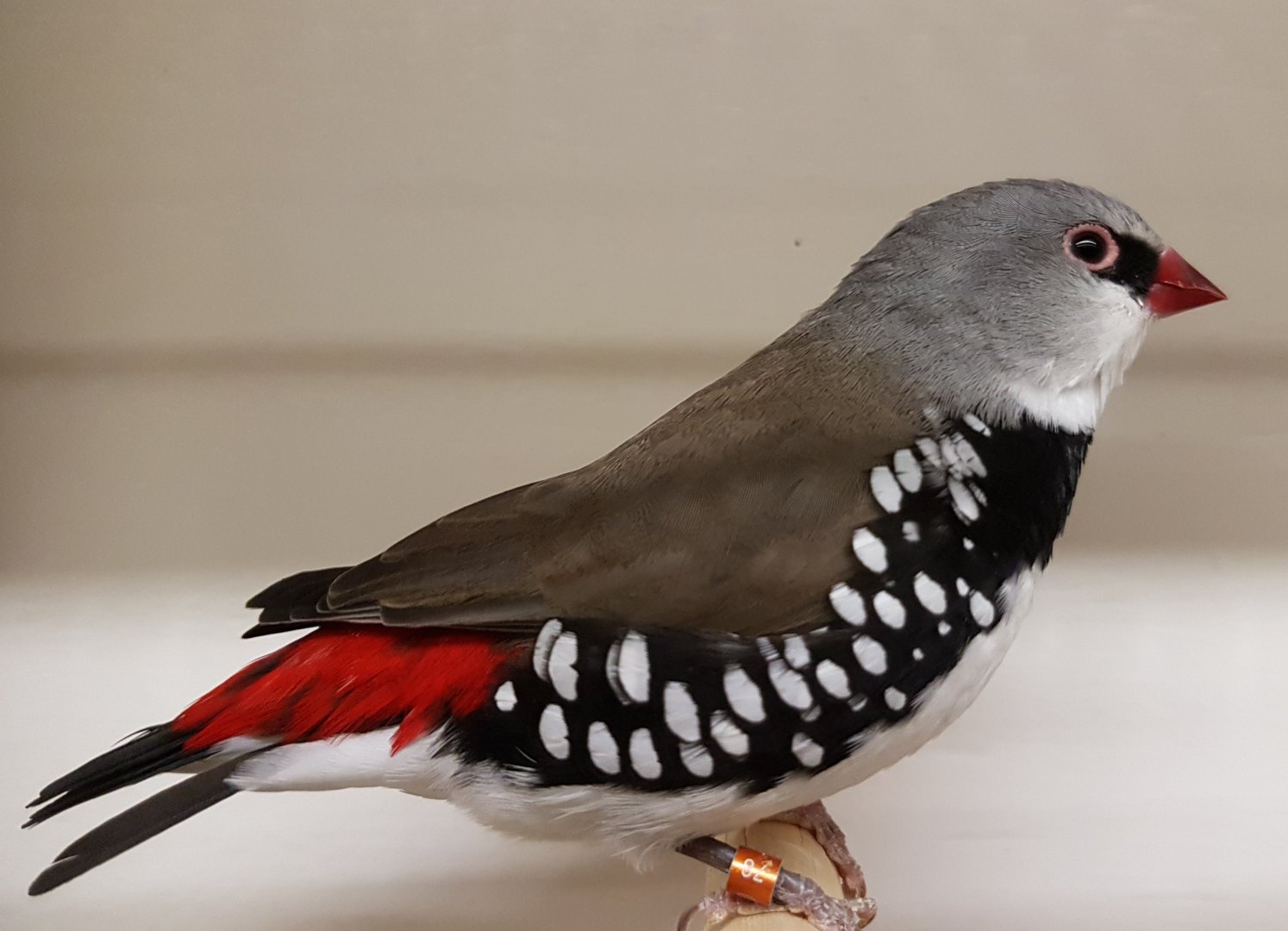
- Diamond firetail - Stagonopleura guttata. Here again the name says it all, a real gem ! Took care for them at private collections, at Walsrode and at Tierpark Gettorf.


- Blue whistling thrush - Myophonus caeruleus. The blue of this species ( at least in the male ) is REAL blue when the sun is shinning on it ! I was so lucky to take care for a single male at the small park Taman Indonesia ( the Netherlands ) at the end of the 1990s / beginning 2000s.
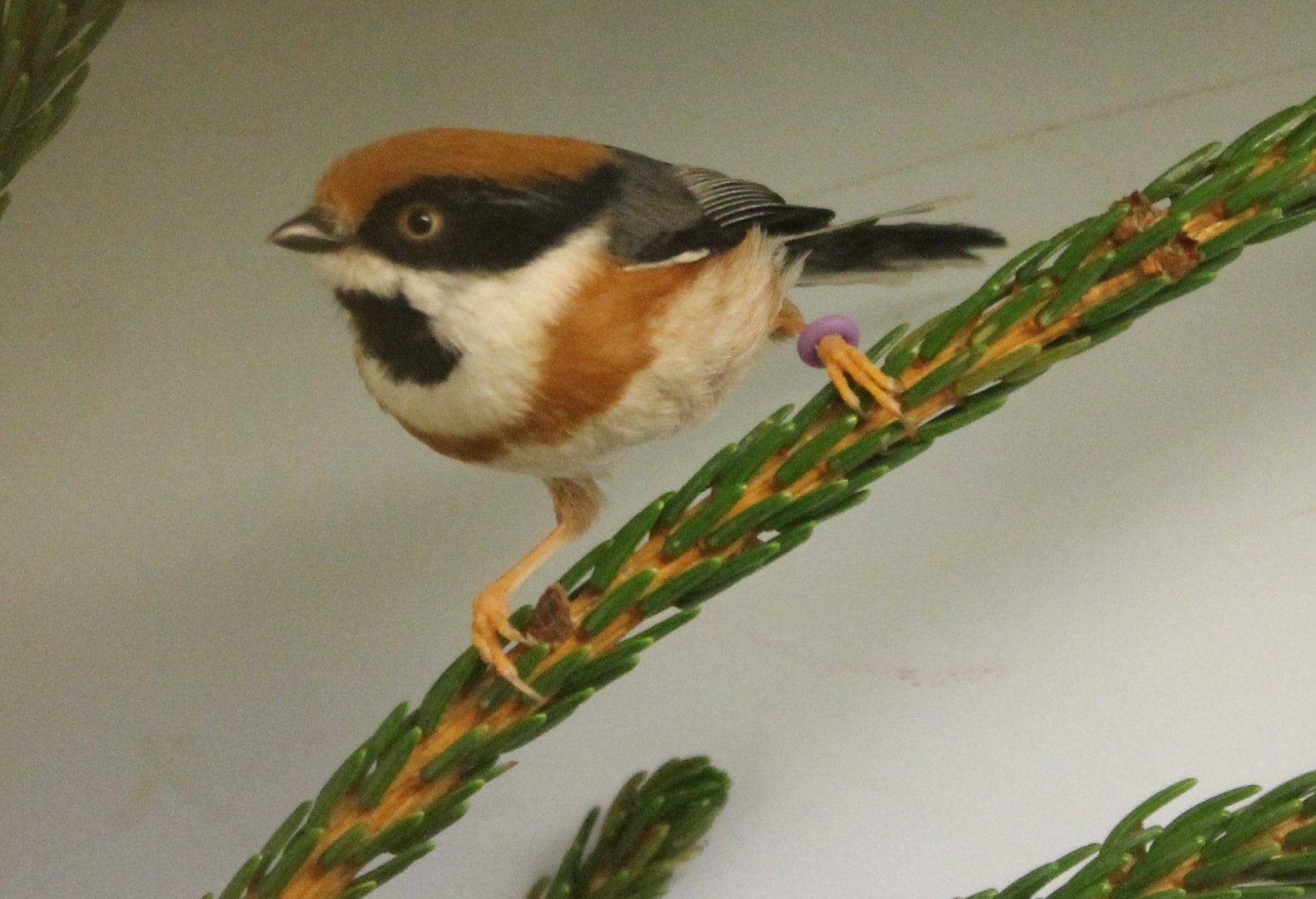
- Black-throated bushtit - Aegithalos concinnus. Wunderful birds which are always active and observing a small group of these birds in a well-planted enclosure is a real pleasure ! Took care for several of them at Walsrode.


- Scaly-breasted bulbul - Pycnonotus squamatus. Among the bulbuls there are a number of species which are not realy beautiful but also species which realy look great. The Scaly-breasted bulbul surtainly belong to this last group and I was so lucky to take care for a pair at a private collection in the Netherlands in the 1980s
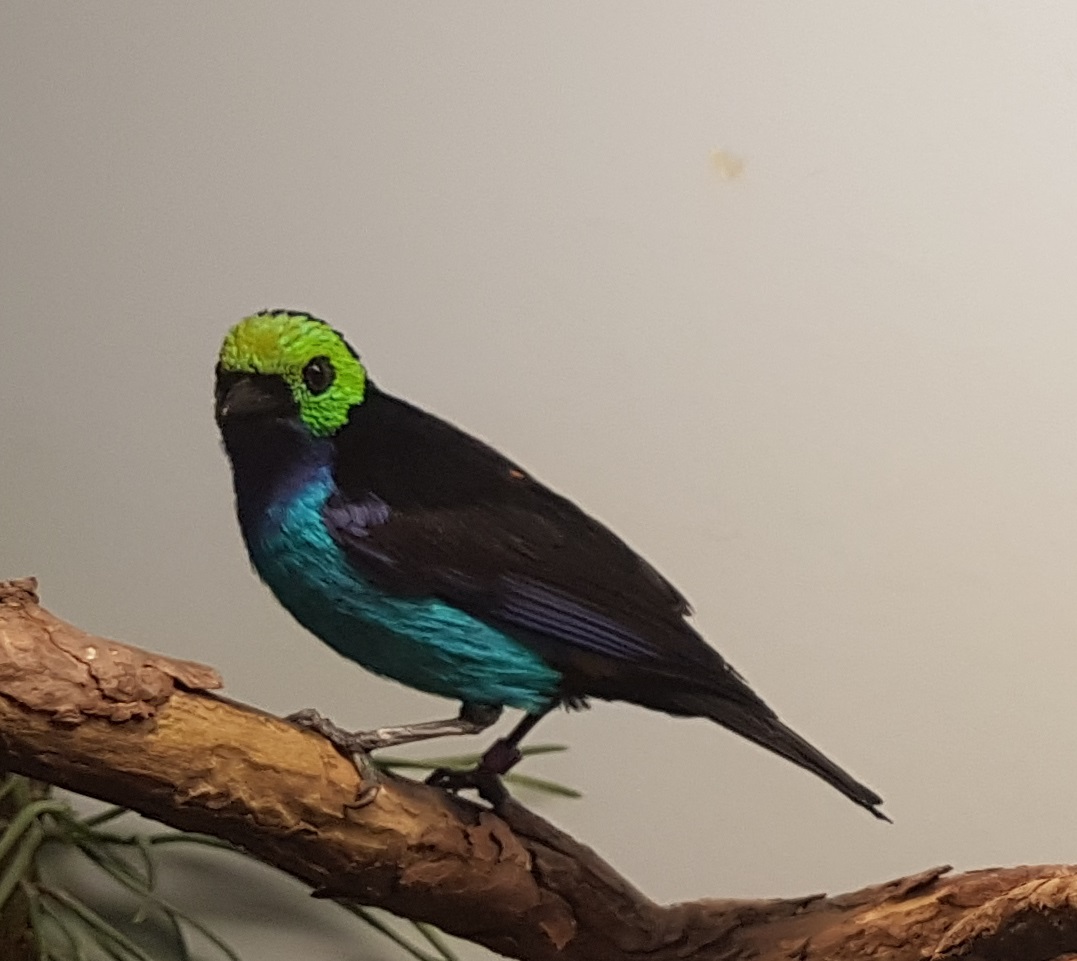
- Paradise tanager - Tangara chilensis. As said in earlier posts Tanagers are among the most colorful birds and the Paradise tanager must be IMO ( one of ) the most beautiful of them ! Took care for this species ( and a good number of other also beautiful Tanager-species ) at Walsrode back in the 1980s.


- White-crested helmetshrike - Prionops plumatus. Among the ( Helmet / Bush and 'normal' ) shrikes there are a number of species with bright colors but this species is proof that a bird with 3 simple colors ( white, black and yellow ) can be so beautiful that it is in my eyes more beautiful then any other shrike ! Took care for a small group of 3 at Walsrode.
- Emerald glossy starling - Lamprotornis iris. When the sun is shinning on any Glossy starling they belong all to the most beautiful and colorful birds you can imagine. Very difficult to choose my favorite with species like Amethyst, Golden-breasted, Purple, Splendid or Superb glossy starlings but I go for the Emerald glossy starling for which I took care at Walsrode.
- Pompadour cotinga - Xipholena punicea. Taken care for a good number of Cotinga's and many of them look either weird ( Long-wattled umbrellabird, Bare-throated and Bearded bellbird ), weird and beautiful ( Cock of the Rock ) or beautiful ( Lovely, Sprangled, Pompadour cotinga's ). Because this thread is about the most beautiful I'll go for the Pompadour cotinga because the male in good condition can compete with any other of the already mentioned beautiful species !

4-9-2013_003 Pompadour cotinga.jpg

Of course this is only a small selection and if I had the possibility to name 50 ( or 100 ) species I guess I would also be able to make a nice list because in this part 3 I even didn't mention any Birds of paradise, no Pitta's, no Leafbirds, no Flycatchers, no Flowerpiercers, no Chats, no Robins, no Corvids, no Minivets, no Nuthatchs, no Honeycreepers and so on and so on !
 

Attachments

  • superb sunbird -pair.png
    superb sunbird -pair.png
    411 KB · Views: 12
  • 4-9-2013_003 Pompadour cotinga.jpg
    4-9-2013_003 Pompadour cotinga.jpg
    115.1 KB · Views: 13
So continuing from my previous post, here are five passerines from my travels, chosen as much for the moment as for their beauty, because honestly I have seen so many beautiful birds trying to pick the "most beautiful" is impossible. Again, all are from different families.

6. In Australia, Corvids are all large, big billed black birds, crows and ravens. Jays are unknown and magpies are large black and white crowlike birds who belong to an entirely different family. Growing up I didn't know Corvid magpies and jays existed. It wasn't until a trip to London in 2013 and a visit to the London Wetlands Centre that I saw my first Eurasian magpie. A beautiful bird I think possibly underappreciated because of familiarity by those in the antipodean north.

7. Weavers are familiar birds and I kept and bred Madagascar weavers as a boy. However I didn't see weavers in the wild until a trip to southern Africa in 2018. The first and most commonly seen was the stunning Southern red bishop. This trip is important because it it the trip that finally inspired me to start keeping a record of the animals I have seen in the wild.

8. A trip to Queensland later in 2018 included a stay at O'Reillys in Lamington National Park as a wedding anniversary treat. For those who don't know this is a famous lodge in the middle of the rainforest. They are set up for birdwatching with many habituated birds and a treetops walkway. One of the activities they have is a bird show in a large adjacent clearing overlooking the valley below and rimmed by rainforest. Waiting for the show I was more than entertained by regent bowerbirds flying across the rim of the forest, flashes of gold against the green, a magnificent sight.

9. March last year I had a business trip to North America which ended in Toronto, so I took a couple of days to go birding. One venue was High Park in the suburbs. There was still plenty of snow and ice on the ground which proved a challenge to someone with my background. High Park has a small zoo, which basically consists of a row of pens lining both sides of a road that runs down a hill. I decided to walk down the pedestrian path, mostly consisted of steps, that ran alongside. Bad mistake. It was deadly icey and I couldn't leave it because of the snow bank that had been pushed up between it and the road. Never before in visiting a zoo or while birding had I felt my life was in danger. Finally I made it to the bottom and was rewarded with a small flock of northern cardinals. I was too early for most migrants but these birds had obviously just arrived with the males resplendent in their breeding plumage.

10. May last year we visited West Bali National Park as part of developing our Indonesian birds program. We had spent the morning observing Bali starlings in a protected area of the park when we were driving down a track in an open vehicle. Suddenly about half a dozen black-shouldered starlings flew in from behind us around the vehicle then landed in a tree in front of us. To see both species of critically endangered starling in the same area around the same time was a wonderful experience.

And finally a bonus from our trip to Sri Lanka at the beginning of the year. Sri Lanka has an abundance of easily seen and beautiful passerines, possibly none more so than the resident Asian paradise flycatcher. However each northern winter a white morph of this species migrates from China to wait out the colder months. One of the highlights of the trip was watching some of these birds across a lake dive down from trees to skim across the top of the lake for insects, their white ribbon tails streaming along behind.

Brilliant post @MRJ and apologies for my late reply to it.

Regarding the Eurasian magpies, I agree they are beautiful birds and in fact I think I like the magpie tanager here in Brazil precisely because of its resemblance to the true magpie. What I find strange though is that you only saw one of these so comparatively recently as I would have thought that you saw one during the time you spent in Jersey.

The Southern red bishop is another beautiful little bird. I love the colours, there is something immediately eye catching about birds with bright red plumage whether they be weavers or tanagers.

What a treat to have seen a regent bowerbird on your wedding anniversary ! Such a striking bird with that vibrant yellow and pitch black plumage but then again all bowerbirds have a charisma unique to them.

I can definitely understand how rewarding seeing those cardinals were after your brush with danger, kind of life affirming right? Personally I have seen this bird many times in Mexico and I never stopped marvelling at their beauty each and every time.

That is awesome that you were able to see both of these critically endangered birds on the same day. They are both beautiful of course but the bali starling is definitely my favourite. After having read quite a lot about their conservation I would dearly like to see one in the wild one day, it would be a wish come true.
 
Last edited:
Part 3 of my personal list of most beautiful passerine birds, this time the list of songbirds I've taken care for myself :
- Superb sunbird - Cinnyris superbus. The name already says it, a wunderfull bird ! And a species through which I won a crate of beer ( at a time I still drank ( sometimes ) alcohol ). The curator of the park had bought a pair of sunbirds under another name ( don't know anymore which species he thought it was ) but by seeing these birds I knew it was a pair of Superb sunbirds and we made a bet. With the help of a lot of books I proofed to be right and the crate of beer was mines :).

View attachment 466952

- Long-tailed broadbill - Psarisomus dalhousiae. Among the Broadbills there are a number of real beautiful species. Next to the Green broadbill which I also took care for and realy loved, the Long-tailed must be the most beautiful of the species I took care for. At the end of the 1980 / beginning of the 1990s large numbers were imported into Europe and I took care for them at both Walsrode and Pairi Daiza.
- Diamond firetail - Stagonopleura guttata. Here again the name says it all, a real gem ! Took care for them at private collections, at Walsrode and at Tierpark Gettorf.


- Blue whistling thrush - Myophonus caeruleus. The blue of this species ( at least in the male ) is REAL blue when the sun is shinning on it ! I was so lucky to take care for a single male at the small park Taman Indonesia ( the Netherlands ) at the end of the 1990s / beginning 2000s.
- Black-throated bushtit - Aegithalos concinnus. Wunderful birds which are always active and observing a small group of these birds in a well-planted enclosure is a real pleasure ! Took care for several of them at Walsrode.


- Scaly-breasted bulbul - Pycnonotus squamatus. Among the bulbuls there are a number of species which are not realy beautiful but also species which realy look great. The Scaly-breasted bulbul surtainly belong to this last group and I was so lucky to take care for a pair at a private collection in the Netherlands in the 1980s
- Paradise tanager - Tangara chilensis. As said in earlier posts Tanagers are among the most colorful birds and the Paradise tanager must be IMO ( one of ) the most beautiful of them ! Took care for this species ( and a good number of other also beautiful Tanager-species ) at Walsrode back in the 1980s.


- White-crested helmetshrike - Prionops plumatus. Among the ( Helmet / Bush and 'normal' ) shrikes there are a number of species with bright colors but this species is proof that a bird with 3 simple colors ( white, black and yellow ) can be so beautiful that it is in my eyes more beautiful then any other shrike ! Took care for a small group of 3 at Walsrode.
- Emerald glossy starling - Lamprotornis iris. When the sun is shinning on any Glossy starling they belong all to the most beautiful and colorful birds you can imagine. Very difficult to choose my favorite with species like Amethyst, Golden-breasted, Purple, Splendid or Superb glossy starlings but I go for the Emerald glossy starling for which I took care at Walsrode.
- Pompadour cotinga - Xipholena punicea. Taken care for a good number of Cotinga's and many of them look either weird ( Long-wattled umbrellabird, Bare-throated and Bearded bellbird ), weird and beautiful ( Cock of the Rock ) or beautiful ( Lovely, Sprangled, Pompadour cotinga's ). Because this thread is about the most beautiful I'll go for the Pompadour cotinga because the male in good condition can compete with any other of the already mentioned beautiful species !

View attachment 466953

Of course this is only a small selection and if I had the possibility to name 50 ( or 100 ) species I guess I would also be able to make a nice list because in this part 3 I even didn't mention any Birds of paradise, no Pitta's, no Leafbirds, no Flycatchers, no Flowerpiercers, no Chats, no Robins, no Corvids, no Minivets, no Nuthatchs, no Honeycreepers and so on and so on !

I've really enjoyed reading this comment of the favourite passerines that you've cared for and your memories and the personal significance of these @vogelcommando.

You have clearly looked after some really beautiful species over the years and I imagine that it has been a wonderful and enriching career that was well spent.

The pompadour cotinga is a gorgeous looking passerine (I really like species with red plumage) and I can quite understand why it made the top 10 birds you have worked with. What is the temperament of this bird in captivity what have your experiences with working with it been like ?

The White-crested helmetshrike I find to be a strange but interesting looking bird with that enlarged yellow ring around its eye and that bizarre looking crest. I'll admit that I had never heard of this bird until reading of it in your comment so that is great and I've learned something new.

The black throated bushtit is another species I'd never heard of and this is also an interesting looking bird and rather cute too. In fact from the google images I'm looking at it sort of reminds me of a childrens toy as it has a strange unreality to its look.

Very much agree about the beauty of the paradise tanager. I absolutely love tanagers of any kind but as I've mentioned them quite a lot in this thread already I'll swiftly move on to some of the other species you've covered.

Blue whistling thrush, what a beautiful looking bird ! It looks rather like a Eurasian black bird at first glance but then you see that beautiful blue sheen in the plumage and it could never be mistaken for one. What are these like to work with in terms of temperament ?

Long tailed broadbill, the name doesn't quite capture the beauty of this species does it ? I think this is probably my favourite species of the ones on this particular list of yours. I love the way this little bird looks, the green plumage , the oversized looking head with yellow feathers, such a gorgeous bird.
 
Last edited:
I think I’ve probably done this already. If so, let’s try again....
Red-billed Blue Magpie
Grey Wagtail
Rufous-bellied Niltava
Asian Fairy Bluebird
Golden-breasted Starling
Common Redstart
Long-tailed Widowbird
Splendid Sunbird
Bali Starling
Red-cheeked Cordon Bleu
 
I think I’ve probably done this already. If so, let’s try again....
Red-billed Blue Magpie
Grey Wagtail
Rufous-bellied Niltava
Asian Fairy Bluebird
Golden-breasted Starling
Common Redstart
Long-tailed Widowbird
Splendid Sunbird
Bali Starling
Red-cheeked Cordon Bleu

@FBBird you did do a list before but this was one entirely of African starlings so this one you sent just now is much better.

First of all, I know you have worked with this species, so I have to ask you what is it like to work with the Bali starling ?

What are their personalities / temperaments like in captivity ?

Regarding your list there are a couple of species on here that I don't think have been mentioned so far so I'll focus on these.

The rufous bellied niltava is gorgeous, hadn't heard of the species before until reading your comment. Striking orange breast plumage and blue head, wings and tail feathers. I just read that the scientific name of this species is a Latinised version of the Hindi word for beautiful "Sundar" which seems a very appropriate name given this birds beauty.

Red-cheeked Cordon Bleu is a different one, fascinating colours to its plumage (those red "cheek" markings), I don't find it beautiful but it certainly is a curious looking little finch indeed.

The grey wagtail is an interesting choice, I'm sure it wouldn't make many peoples list but I can see why it has made yours as it is beautiful. Have seen it and other wagtail species many times in Europe and they are engaging little birds to watch.

The long tailed widowbird is a very curious looking bird (with a rather sinister name too) with those gigantic tail feathers that are almost quetzal like. The black glossy plumage is lovely and it is really quite beautiful in a gothic way I suppose.

The common redstart is another interesting one that hasn't appeared on anyones list so far I dont think. The males are quite striking looking birds with that chestnut coloured chest and black head plumage. Interesting to read that this is another species that migrates to a wintering range in Africa .
 
Last edited:
Brilliant post @MRJ and apologies for my late reply to it.

Regarding the Eurasian magpies, I agree they are beautiful birds and in fact I think I like the magpie tanager here in Brazil precisely because of its resemblance to the true magpie. What I find strange though is that you only saw one of these so comparatively recently as I would have thought that you saw one during the time you spent in Jersey.

The Southern red bishop is another beautiful little bird. I love the colours, there is something immediately eye catching about birds with bright red plumage whether they be weavers or tanagers.

What a treat to have seen a regent bowerbird on your wedding anniversary ! Such a striking bird with that vibrant yellow and pitch black plumage but then again all bowerbirds have a charisma unique to them.

I can definitely understand how rewarding seeing those cardinals were after your brush with danger, kind of life affirming right? Personally I have seen this bird many times in Mexico and I never stopped marvelling at their beauty each and every time.

That is awesome that you were able to see both of these critically endangered birds on the same day. They are both beautiful of course but the bali starling is definitely my favourite. After having read quite a lot about their conservation I would dearly like to see one in the wild one day, it would be a wish come true.
In fact when when attending Jersey I also spent three weeks in the UK and a week on the west coast of the USA. The only wild bird I remember was a hummingbird at San Diego Zoo and the only wild mammal was a hedgehog in the grounds of the training centre. That was in 1996 and I did not start my list till 2018.
 
In fact when when attending Jersey I also spent three weeks in the UK and a week on the west coast of the USA. The only wild bird I remember was a hummingbird at San Diego Zoo and the only wild mammal was a hedgehog in the grounds of the training centre. That was in 1996 and I did not start my list till 2018.

Wow, but then again I imagine that the course was very intensive so your attention may have been focused on the material being learned and less on the surroundings.
 
Wow, but then again I imagine that the course was very intensive so your attention may have been focused on the material being learned and less on the surroundings.
I was also travelling with others, first time in both locations, visited lots of zoos but also museums, castles, old houses, etc etc, didn't have binoculars or a field guide. I would have noticed any flying past and enjoyed that but they just don't stand out in my memory.
 
I was also travelling with others, first time in both locations, visited lots of zoos but also museums, castles, old houses, etc etc, didn't have binoculars or a field guide. I would have noticed any flying past and enjoyed that but they just don't stand out in my memory.

Thats fair enough, I totally understand.

Here is a question for you relating to your work at your zoo.

What have been the favourite passerine birds that you have held / worked with there over the years?
 
I've really enjoyed reading this comment of the favourite passerines that you've cared for and your memories and the personal significance of these @vogelcommando.

You have clearly looked after some really beautiful species over the years and I imagine that it has been a wonderful and enriching career that was well spent.

The pompadour cotinga is a gorgeous looking passerine (I really like species with red plumage) and I can quite understand why it made the top 10 birds you have worked with. What is the temperament of this bird in captivity what have your experiences with working with it been like ?

The White-crested helmetshrike I find to be a strange but interesting looking bird with that enlarged yellow ring around its eye and that bizarre looking crest. I'll admit that I had never heard of this bird until reading of it in your comment so that is great and I've learned something new.

The black throated bushtit is another species I'd never heard of and this is also an interesting looking bird and rather cute too. In fact from the google images I'm looking at it sort of reminds me of a childrens toy as it has a strange unreality to its look.

Very much agree about the beauty of the paradise tanager. I absolutely love tanagers of any kind but as I've mentioned them quite a lot in this thread already I'll swiftly move on to some of the other species you've covered.

Blue whistling thrush, what a beautiful looking bird ! It looks rather like a Eurasian black bird at first glance but then you see that beautiful blue sheen in the plumage and it could never be mistaken for one. What are these like to work with in terms of temperament ?

Long tailed broadbill, the name doesn't quite capture the beauty of this species does it ? I think this is probably my favourite species of the ones on this particular list of yours. I love the way this little bird looks, the green plumage , the oversized looking head with yellow feathers, such a gorgeous bird.

About the temperament of the Pompadour cotinga ( and the Lovely and Sprangled aswell ): they are ( at least the ones I took care for ) nice and calm birds and can be kept with equal sized birds without problems. Also smaller but quicker birds like tanagers and honeycreepers can be kept with them but I'm afraid that when these smaller want to start a breeding attemp, the cotingas can become a danger for the eggs and young.
With the equal sized birds we always avoided to place 2 species with the same kind of colloration together so no other blue species with the Sprangled cotinga and no redish / purple species with the Pomadour cotingas because we have had bad experience with other species with the same color housed together ( not cotingas ). Food is not a problem and a good fruit mixture and some insectfood kept them in perfect condition. Important is a temperature of at least 22 degrese Celcius and a well planted aviary.
Modern feeding mixtures espec. for softbills are nowadays avaible and breeding-results with even the most delicate species are archieved ! At Walsrode the species is bred now almost every year :).

The Blue whistling thrush : At Taman Indonesia ( the Netherlands ) a single male was kept in a large outdoor aviary, well planted with a lot of thick branches at the bottom and a nice waterfall.
The single bird I took care for was a quite aggresive birds and before I took care for it had already killed several smaller songbirds ( other thrush-species, sibias, warblers ) so at the time I cared for it, it was only kept with Red-billed blue magpies and later with a pair of Laughing kookaburras. A good insectfood-mix was fed to this bird.

Hopes this information helps you.
 
Here my second list of Top 10 most beautiful songbirds, this time the species I've not seen sofar alive but which are high on my wish-list !
- Silver-breasted broadbill - Serilophus lunatus. I've seen already a number of Broadbill-species and taken care for 2 species but this one I haven't seen alive sofar. There seem to be some around in the privat sector in Europe so who knows..
- Red warbler - Cardellina rubra. A beautiful species but during my trip through Mexico I missed to visit the areas in which this species is found so a reason more to return to Mexico... one day...
- Black-headed bunting - Emberiza melanocephala. A wunderfull species ( like a number of other bunting-species ) and maybe even not belonging on this list because in the 1970s / 1980s it should have been avaible in the Belgium bird-trade which I visited with some regularity in those days but due to the huge number of birds and species I can't tell and remember having seen this species... :

View attachment 466695

- Crescent-faced ant pitta - Grallaricula lineifrons. A beautiful and funny-looking species from a family almost unknown in public ( and private ) collections and also in the wild they seem to be difficult to observe. Hope to see at least one one day !
- White-plumed antbird - Pithys albifrons. Great species from what I've seen on photos. It seemed to have been kept in captivity but seemed to do not very well. Conclusion : I have to go to South America to see this ( and a lot of other ) species ! :

View attachment 466696
( stamp of a White-plumed antbird )

- White-headed robin chat - Cossypha heinrichi. Member of a well-known genus from which a good number of species are well-known and bred in good numbers in captivity and from which I also already took care for and bred with several species. This species with its complete white head looks a little different, is much rarer and complete unknown from captivity.
- Flame bowerbird - Sericulus ardens. The most beautiful bowerbird which is almost unknown in captivity and sofar I've only heared that the now closed Al Wabra Center bred it succesfully. Hopefully a zoo or birdpark will try to obtain the species in the future and give us the change to see this species alive.

View attachment 466697

- Red-eared firetail - Stagonopleura oculata. In the family of the Estrildidae there is a large number of realy beautiful species and many of them are well-known aviary-birds. The Red-eared firetail is one of the few exeptions and outside of Australia almost ( or completely ? ) unknown.
- White-capped tanager - Sericossypha albocristata. From the Tanager-family I've taken care for a good number of species and have seen an even larger number of species but this species is still lacking from my list. The combination of the white, red, blue and black colloration makes it a very special bird and when I went to South America for the ant pittas and antbirds I also will try to locate this species ;) !
- Gurney's pitta - Hydrornis gurneyi. Taken care for a number of pitta-species, seen a lot of other species and most of them are realy beautiful. This species is not only beautiful but also threatened but has been in the European bird-trade untill the late 1970s / beginning 1980s and maybe I've even seen it.... unnoticed :( !

View attachment 466698

Of course there are many, many more species which are beautiful and which I've not seen sofar but this is just a small selection of the ones I'm keen to see one day !

Al Wabra's bowerbirds went to Wisbroek, which shouldn't be too far from where you live.
 
About the temperament of the Pompadour cotinga ( and the Lovely and Sprangled aswell ): they are ( at least the ones I took care for ) nice and calm birds and can be kept with equal sized birds without problems. Also smaller but quicker birds like tanagers and honeycreepers can be kept with them but I'm afraid that when these smaller want to start a breeding attemp, the cotingas can become a danger for the eggs and young.
With the equal sized birds we always avoided to place 2 species with the same kind of colloration together so no other blue species with the Sprangled cotinga and no redish / purple species with the Pomadour cotingas because we have had bad experience with other species with the same color housed together ( not cotingas ). Food is not a problem and a good fruit mixture and some insectfood kept them in perfect condition. Important is a temperature of at least 22 degrese Celcius and a well planted aviary.
Modern feeding mixtures espec. for softbills are nowadays avaible and breeding-results with even the most delicate species are archieved ! At Walsrode the species is bred now almost every year :).

The Blue whistling thrush : At Taman Indonesia ( the Netherlands ) a single male was kept in a large outdoor aviary, well planted with a lot of thick branches at the bottom and a nice waterfall.
The single bird I took care for was a quite aggresive birds and before I took care for it had already killed several smaller songbirds ( other thrush-species, sibias, warblers ) so at the time I cared for it, it was only kept with Red-billed blue magpies and later with a pair of Laughing kookaburras. A good insectfood-mix was fed to this bird.

Hopes this information helps you.

Thank you for the comment @vogelcommando !

I found it really interesting, the cotinga care and temperament that you mention didn't really come as much suprise but one thing that really suprised and shocked me is the blue whistling thrush.

I wasn't really expecting to hear that :confused:

That is incredible that it killed a number of smaller song birds...Why did this inter-species aggression happen ?

Does this thrush species have a very strong territorial instinct ? o_O
 
Thank you for the comment @vogelcommando !

I found it really interesting, the cotinga care and temperament that you mention didn't really come as much suprise but one thing that really suprised and shocked me is the blue whistling thrush.

I wasn't really expecting to hear that :confused:

That is incredible that it killed a number of smaller song birds...Why did this inter-species aggression happen ?

Does this thrush species have a very strong territorial instinct ? o_O

As said the killing by the whistling thrush happened before I took care for the species and I know this only because the owner told me. I guess however that the species indeed has strong territorial behaviour. In the period I took care for it it wasn't aggresive at all and even a little shy.
 
As said the killing by the whistling thrush happened before I took care for the species and I know this only because the owner told me. I guess however that the species indeed has strong territorial behaviour. In the period I took care for it it wasn't aggresive at all and even a little shy.

Interesting, nevertheless and thank you for sharing !

It is a very beautiful species indeed.
 
Yes I have :). First at a privat collection of a friend, then at Walsrode, at Tierpark Gettorf ( both Germany ) then at Pairi Daiza ( Belgium ) and the last ones I took care for were at Taman Indonesia. Bred them at all collection exept Gettorf.
Like most starling they realy can be bullies ( = a**holes ) and hunt and even kill other smaller and equal-sized birds. Its IMO therefor best to house them in breeding-aviaries without other birds.
If you want to keep them with other birds then its best to house them in very large, well planted halls.
 
Thank you for the comment @vogelcommando !

I found it really interesting, the cotinga care and temperament that you mention didn't really come as much suprise but one thing that really suprised and shocked me is the blue whistling thrush.

I wasn't really expecting to hear that :confused:

That is incredible that it killed a number of smaller song birds...Why did this inter-species aggression happen ?

Does this thrush species have a very strong territorial instinct ? o_O
 
Back
Top