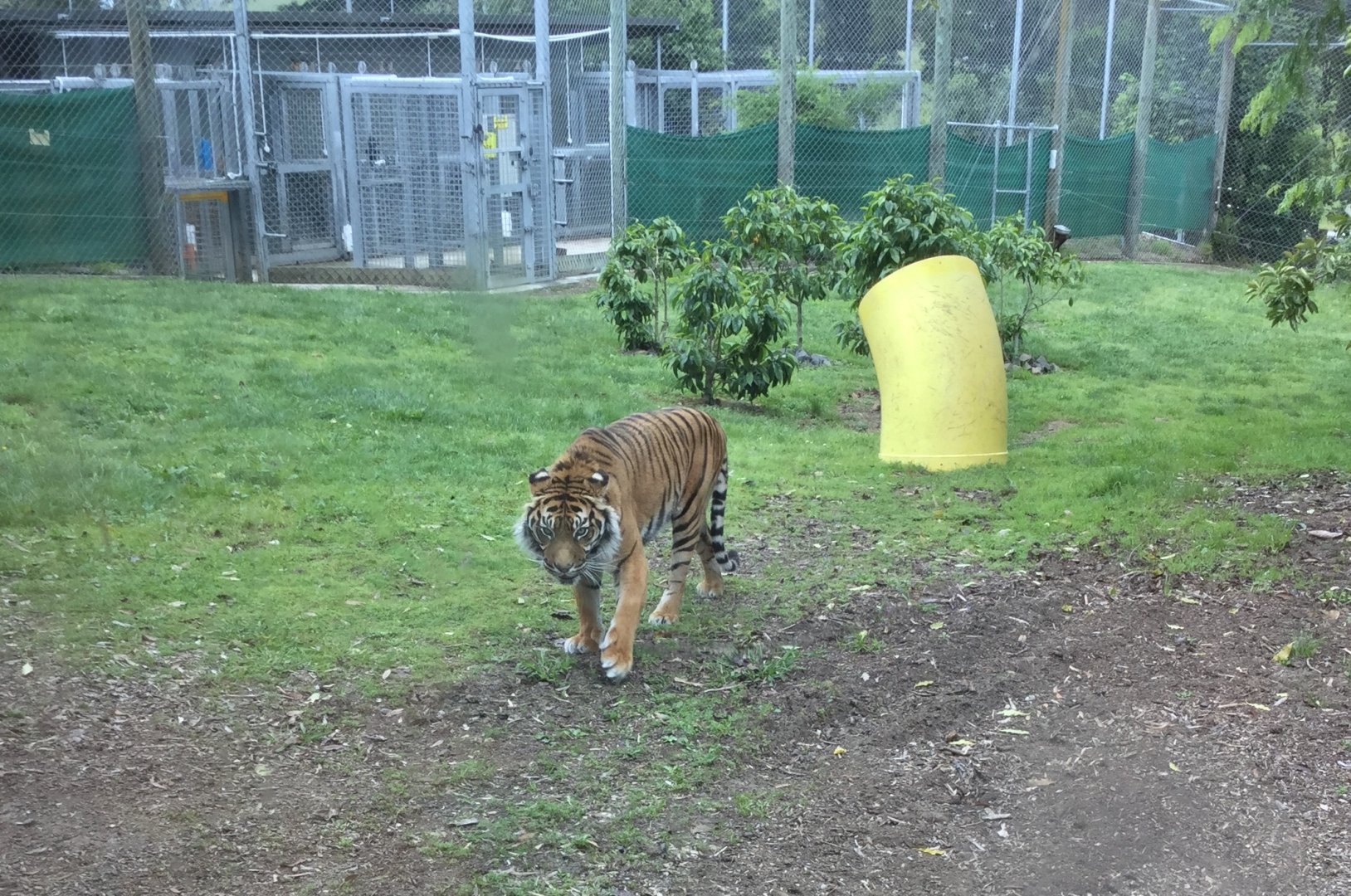
Thesis on Chronic Kidney Disease in Felids Held in Australian Zoos
@steveroberts found a thesis on Chronic Kidney Disease in felids held in Australian zoos last week and kindly passed it on to me.
I have gone through this very extensive thesis and pulled out what I think are some relative pieces of information regarding felids in Australian zoos. I'd encourage anyone wanting a more comprehensive overview to read through it themselves in it's entirety if they have time:
Chronic Kidney Disease in Non-Domestic Felids in Australian Zoos
Introduction:
Data collection occurred between 2012 and 2015, from ten Australian zoos: Taronga Zoo, Taronga Western Plains Zoo, Werribee Open Range Zoo, Melbourne Zoo, Mogo Zoo, Dreamworld, National Zoo and Aquarium, Perth Zoo, Adelaide Zoo and Monarto Zoo.
Note: the term 'Australian zoos' is therefore not to be regarded as an all encompassing term, as in this context, it refers only to the ten zoos listed above.
Felids Held:
Species identified as having lived in Australian zoos over the past fifty years were: African and Asiatic lions, and lions of undetermined sub-species; Bengal, Sumatran, Amur, and hybrid (Bengal x Sumatran, Bengal x Amur) tigers; bobcats; caracals; cheetahs; clouded leopards; cougars; fishing cats; jaguars; jaguarundis; leopard cats; leopards and Persian leopards; Northern lynx; ocelots; servals; snow leopards; and Asian (Temminck’s) golden cats.
There were three species of small cats documented to have been kept in Australian zoos – Geoffroy’s cat (Leopardus geoffroyi geoffroyi), Pallas cat (Felis manul), and jungle cat (Felis chaus) – and two tiger/lion hybrid individual felids (Panthera) which were not included in this study due to a lack of detailed clinical records.
On Page 42, there's a census of felids kept at Australian zoos between 1965 and 2015. During this time period, there was three Clouded leopard, eight Asian lions (three males; five females), 19 Persian leopards, 32 Jaguar and a staggering 98 Leopard cat (71 of which died before the age of 30 days) held at these 10 zoos.
Prolific breeders, such as leopard cats (Felis bengalensis), cougars (Puma concolor) and lions (Panthera leo spp.) had high counts of both cub births and deaths, particularly in the decades prior to 1995, before reliable contraceptive methods via hormonal implants were available, and when euthanasia of surplus animals for curatorial reasons was necessary for population control.
Sumatran Tigers:
In Australia, congenital vestibular disease in Sumatran tiger cubs, due to a profound founder effect, has been documented and it was calculated in 1986 that the entire global captive zoo population of Sumatran tigers was founded on 17 individuals.
The Sumatran Tiger Endangered Species Program recognises the problems of maintaining genetic diversity and reducing founder effect in the remaining population, and Sumatran tigers are considered beyond breeding age at 17 years for males and 15 years for females therefore every effort is made to maximise their breeding potential in this period.
Reported causes of death in felids less than 2 years of age included intestinal obstruction due to a foreign body (piece of rubber tyre, Sumatran tiger), drowning in an enclosure moat (Sumatran tiger). I believe the first tiger mentioned was Satri (born 2008), who died as an adolescent at Perth Zoo. The second was Nakal (born 2006), who drowned at Melbourne Zoo in 2008.
Sumatran tiger cub mortality rates have declined from a peak of 47% in 1985–1994 to 15% in 2005–2015.
Shiva (born 1985) died of CKD at Taronga Zoo in March 2002.
Selatan (born 1990) died of CKD at Taronga Western Plains Zoo in May 2012. She was speyed in 2007 after contracting pyometra.
Asiatic Lions:
Eight Asiatic lions have been held in Australian zoos. These included three males and five females. The age at death (and cause) of four of the Asian lions were listed as:
Male - died September 2002 aged 20.9 years (CKD)
Male - died June 1999 aged 15.9 years (senescence)
Female - died August 2002 aged 19.1 years (CKD)
Female - died September 1993 aged 10.3 years (misadventure/killed by exhibit mate)
A full Taxon Report is given for one of these lions (a male named Kutch):
1.0 Kutch
Born at Zoo Knoxville 01/07/1983
Sent to Baton Rouge Zoo 18/03/1984
Sent to Taronga Western Plains Zoo 04/06/1989
Sent to Taronga Zoo 31/08/1993
Sent to Taronga Western Plains Zoo 13/06/1996
Sent to Taronga Zoo 23/09/1996
Sent to Taronga Western Plains Zoo 12/05/1999
Died at Taronga Western Plains Zoo 15/06/1999
Additional Info:
Taronga Zoo's male Clouded leopard, Samar, died in September 2004 of Renal lymphoma.
Taronga Zoo's male Temminck's golden, Nugi, died in November 2002 of Hydrothorax.
Taronga Zoo had 1.2 Fishing cat between 2012 and 2015 - a male born 15/05/2003; and two females born 12/01/2002 and 17/10/2003.
There was a note of infanticide due to conspecific aggression in Temminck's golden cat. A litter of two kittens was born at Melbourne Zoo in 1972, which mysteriously died the same day at 11 weeks of age; followed by another litter of two in 1973, which died a day apart at four months of age. The death of a litter on the same day (or a day apart) is nothing unusual during the first week of life; but the death of an entire litter that has survived the neonate stage implies an event took place. I had suspected their deaths were due to being introduced to the sire, as husbandry in this species may not have been aware of the dangers unfamiliar adults posed to kittens.