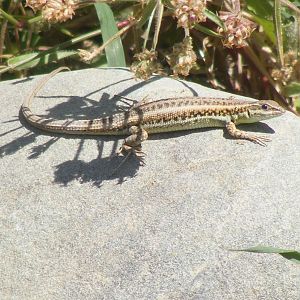
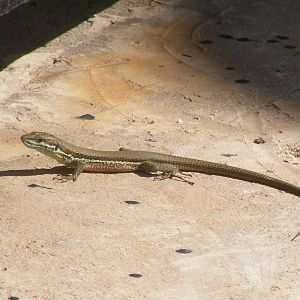
The Zoochat Photographic Guide to the Amphibians and Reptiles of Europe

Algyroides


Fitzinger's Keeled Lizard
(Algyroides fitzingeri)

Endemic to Corsica, Sardinia and adjacent offshore islets. The species occurs in a wide range of habitats, including well-vegetated forest margins and cultivated land, Mediterranean maquis, sparsely-vegetated rocky outcrops and drystone walls, and tends to prefer areas close to water. Although commonplace and diurnal, the species is reclusive when compared to sympatric lacertids.

Monotypic; no photographs of this taxon are present within the Zoochat gallery.


Spanish Keeled Lizard
(Algyroides marchi)

Endemic to a small area of southeast Spain, with a range comprising several small isolated populations throughout the Alcaraz, Cazorla and Segura mountain ranges. The species prefers to inhabit humid rocky habitats in and around woodland, generally close to mountain streams, springs or rapids, however at higher altitudes it may be found on exposed or sparsely-vegetated rocky slopes. The species is classified as Endangered by the IUCN as a result of the highly-fragmented and restricted range, and a continued increase in the rate of habitat loss and degradation.

This species is currently classified as monotypic, although there appears to be a high level of genetic diversity between populations; no photographs of this taxon are present within the Zoochat gallery.


Greek Keeled Lizard
(Algyroides moreoticus)

Endemic to the Peloponnesus and the immediately adjacent Ionian Islands in southern Greece. The species occurs in a wide range of habitats, such as olive groves, open woodland, agricultural pasture, drystone walls and ruins, and tends to prefer relatively humid areas where it can hide among leaf-litter, undergrowth and brushwood.

Monotypic; no photographs of this taxon are present within the Zoochat gallery.


Dalmatian Keeled Lizard
(Algyroides nigropunctatus)

This species extends throughout much of the eastern Adriatic and Ionian coastline, from the extreme northeast of Italy and adjacent western Slovenia in the north to west-central Greece in the south, extending as far as the Gulf of Corinth and the Ionian Islands. Populations extend patchily inland in North Macedonia and southern Serbia. The species tends to occur in relatively shady habitats such as open woodland, orchards, well-vegetated boulder fields and cliff faces, and Mediterranean shrub, and prefers to inhabit locations close to water.

Two subspecies have been described, as follows:

A. n. kephallithacius
- occurs throughout the Ionian Islands and ajacent Greek mainland.
A. n. nigropunctatus - occurs throughout remainder of range.

No photographs of this taxon are present within the Zoochat gallery.
.
 
Anatololacerta


Anatolian Rock Lizard
(Anatololacerta anatolica)

Within Europe, the range of this species is restricted to the Greek islands of Samos and Ikaria in the southeast Aegean Islands; beyond here, the species extends throughout much of western Anatolia. The species tends to occur on rocky outcroppings within open woodland and Mediterranean forest, but may also occur within areas of human habitation.

Monotypic; no photographs of this taxon are present within the Zoochat gallery.


Budak's Rock Lizard
(Anatololacerta budaki)

Within Europe, the range of this species is restricted to Kastellorizo, off the southern coastline of Turkey; beyond here the species extends throughout southwest and south-central Anatolia.
The species tends to occur within Mediterranean woodland, exposed rocky areas, cultivated agricultural land and orchards.

Two subspecies are recognised, of which one occurs in Europe as follows:

A. b. budaki
- within Europe, restricted to Kastellorizo; beyond here, found throughout south-central Anatolia.

No photographs of this taxon are present within the Zoochat gallery.


Pelasgian Rock Lizard
(Anatololacerta pelasgiana)

Within Europe, the range of this species is restricted to Rhodes and immediately-adjacent islands within the Dodecanese; beyond here, the species extends throughout much of southwest Anatolia. The species tends to occur on rocky outcroppings within open woodland and Mediterranean forest, but may also occur within areas of human habitation.

Monotypic; no photographs of this taxon are present within the Zoochat gallery.
.
 
Archaeolacerta


Bedriaga's Rock Lizard
(Archaeolacerta bedriagae)

Endemic to the Corsica, Sardinia and adjacent offshore islets; the species exhibits a strong preference for occupying areas of bare rock such as cliff faces, coastal rock outcrops, drystone walls and ruins, with most populations occupying mountain ranges above the treeline. However, it seldom ventures far from water, and will often retreat into streams or similar bodies of water when alarmed.

Three subspecies have been historically described, although preliminary genetic data suggests that these are of questionable validity, with two genetic clades visible in the mountains of Corsica, and in the Corsican lowlands and throughout Sardinia respectively. However, until this is clarified the three subspecies are still regarded as valid by the IUCN, and are as follows:

A. b. bedrigae
- Endemic to Corsica
A.b. sardoa - Endemic to central Sardinia
A.b. paessleri - Endemic to northern Sardinia and adjacent offshore islets.

No photographs of this taxon are present within the Zoochat gallery.
.
 
Dalmatolacerta


Sharp-snouted Rock Lizard
(Dalmatolacerta oxycephala)

Endemic to the eastern Adriatic coastline of southern Croatia and Montenegro, inland into southern Bosnia–Herzegovina and northernmost Albania, and throughout the islands of southern Croatia. The species is fairly adaptable, occurring from sea level to the high mountains of the Dinaric Alps, and tends to occur in habitats marked by open, bare rock surfaces such as rocky shores, limestone crags and cliff faces, and sun-exposed walls and buildings in areas of human habitation.

Two subspecies are currently recognised; however, preliminary genetic results suggest that populations in the southern Croatian islands and the mainland around Dubrovnik have been genetically isolated from the nominate race for five million years and may merit subspecific status.

D. o. oxycephala
- occurs in southern Croatia, coastal Bosnia-Herzegovina, and adjacent islands.
D. o. tomasinii - occurs in southern Bosnia-Herzegovina, Montenegro and northernmost Albania.

Photo by @TeaLovingDave (subspecies unclear)

full

.
 
Last edited:
Darevskia


Crimean Rock Lizard
(Darevskia lindholmi)

Endemic to the mountains of the southeast Crimean Peninsula; the species tends to occupy rocky, exposed terrain, but also inhabits woodland and stream margins.

Monotypic; no photographs of this taxon are present within the Zoochat gallery.


Meadow Lizard
(Darevskia praticola)

Within Europe, the range of this species extends patchily and discontinuously throughout the central and eastern Balkans, the extreme northeast of Greece and Thracian Turkey; beyond here, a disjunct population exists throughout the Caucasus and the southern coastline of the Caspian Sea. The species tends to occur in open woodland and forest margins in hilly terrain, and associated meadows and fields, preferring areas with plenty of leaf litter and low-lying vegetation due to a reclusive and highly-terrestrial lifestyle.

Two subspecies are recognised, one of which is present within Europe:

D. p. hungarica
- occurs throughout the European range of the species.

No photographs of this taxon are present within the Zoochat gallery.
.
 
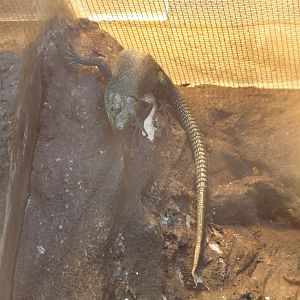
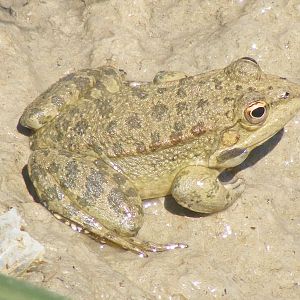
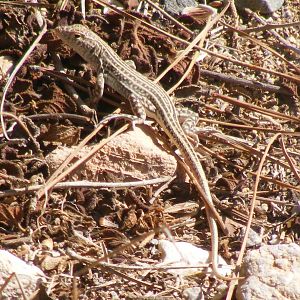
Managed to fill two gaps with shots I took at Wroclaw last year; as such this thread now depicts West Canary Skink and Sharp-snouted Rock Lizard :) with the images inserted into the relevant location. I've also uploaded a few other shots from the Wroclaw vivarium for future use.

 
Dinarolacerta


Prokletije Rock Lizard
(Dinarolacerta montenegrina)

Endemic to the humid southern slope of the Prokletije mountain massif in eastern Montenegro and adjacent northern Albania; the species tends to be restricted to debris fields and bare rocky outcroppings in karstic landscapes with nearby access to glacial lakes and streams.

Monotypic; no photographs of this taxon are present within the Zoochat gallery.


Mosor Rock Lizard
(Dinarolacerta mosorensis)

Endemic to the southwestern Dinaric Alps of coastal south Croatia, southern Bosnia-Herzegovina, and western Montenegro; the species prefers to occupy rocky outcroppings within open woodland at lower elevations, and areas of bare and exposed karst limestone at higher elevations.

Monotypic; no photographs of this taxon are present within the Zoochat gallery.
.
 
Eremias


Steppe-runner
(Eremias arguta)

Within Europe, the range of this species extends from eastern Romania and Moldova throughout central and eastern Ukraine and the Crimea into southwest Russia; beyond here, the species occurs throughout much of the Caucasus and Central Asia. The species tends to occur in dry, lowland habitats with loose or sandy substrate, sparse vegetation cover and large areas of bare ground, such as beaches, sand dunes, semi-desert and steppe. Highly diurnal but quite reclusive, and sometimes fossorial.

Six subspecies are currently recognised, of which one occurs within Europe as follows:

E. a. deserti
- occurs throughout the European range of the species.

Photo by @Fishapod (wet specimen of unspecified subspecies)

full

.
 
Gallotia


Atlantic Lizard
(Gallotia atlantica)

Endemic to Lanzarote and Fuerteventura in the eastern Canary Islands; the species occurs in a wide range of habitats throughout this range, including coastal sand dunes, Mediterranean scrub, open dry forest, agricultural pasture and rocky shorelines.

Two subspecies are currently recognised as follows:

G. a. atlantica
- endemic to Lanzarote
G. a. mahoratae - endemic to Fuerteventura

Photo by @Kakapo (G. a. atlantica)

full


Gran Canaria Giant Lizard
(Gallotia stehlini)

Endemic to Gran Canaria in the central Canary Islands, with introduced populations recorded from Fuerteventura; the species occurs in a wide range of habitats including open agricultural pasture, Mediterranean scrub and rocky humid gorges, but is absent from forested and heavily-vegetated areas.

The species is currently classified as monotypic.

Photo by @devilfish

full


Simony's Lizard
(Gallotia simonyi)

Endemic to El Hierro in the southwest Canary Islands; previously recorded throughout the island and surrounding islets, but now restricted to a tiny 4 hectare area of sparsely-vegetated cliff faces in the mountains of the northeast, and a handful of scattered reintroduced populations in the west. The species is classified as Critically Endangered by the IUCN due to continued habitat loss, fragmentation of remaining populations and persecution by feral cats.

Two subspecies are currently recognised, one of which was extirpated in the 1930s:

G. s. simonyi
- now extinct; formerly occurred on the offshore islet of Roque Chico de Salmor
G. s. machadoi - occurs in northeast El Hierro

No photographs of this taxon are present within the Zoochat gallery.


La Gomera Giant Lizard
(Gallotia bravoana)

Endemic to La Gomera in the western Canary Islands; the species formerly occurred throughout the island, but when described from subfossil material in 1985 was believed to have been entirely extirpated by the mid-1800's. However, a tiny remnant population was rediscovered in 1999, restricted to a pair of isolated and sparsely-vegetated dry cliff faces in a one-hectare area within the Parque Rural de Valle Gran Rey in the west of the island. The species is classified as Critically Endangered by the IUCN due to severe population fragmentation, low numbers of breeding adults and the risk to extant populations posed by predation by feral cats and rock falls in the remaining habitat.

Monotypic; no photographs of this taxon are present within the Zoochat gallery.


La Palma Giant Lizard
(Gallotia auaritae)

Endemic to La Palma in the northwest Canary Islands; the species is known only from fossil and sub-fossil remains, and is presumed to have been extirpated at some point within the last 500 years with the proximate cause assumed to have been predation by humans and feral cats, and habitat destruction; however, due to sightings of giant lacertids on La Palma in 2007 which are potentially assignable to this taxon the species is currently classified as Critically Endangered (Possibly Extinct) by the IUCN.

Monotypic; no photographs of this taxon are present within the Zoochat gallery.


Tenerife Speckled Lizard
(Gallotia intermedia)

Endemic to Tenerife in the central Canary Islands; the species was discovered in 1996 and is restricted to a handful of scattered and highly fragmented populations on the western and extreme southern coastlines of the island, although the species is presumed to have historically ranged throughout the island. The species occurs in sparsely-vegetated and rocky coastal habitats and boulder fields. Currently classified as Critically Endangered by the IUCN due to the limited and highly-fragmented range of the species, low population and the risk of inbreeding depression within populations.

Monotypic; no photographs of this taxon are present within the Zoochat gallery.


Boettger's Lizard
(Gallotia caesaris)

Endemic to El Hierro and La Gomera in the western Canary Islands, with introduced populations scattered throughout several of the other islands and also in Madeira; the species tends to occur in a wide range of habitats including agricultural land, Mediterranean shrub, open grassland and areas of human habitation, but is scarce in woodland and forest.

Two subspecies are currently recognised as follows:

G. c. caesaris
- endemic to El Hierro
G. c. gomerae - endemic to La Gomera

No photographs of this taxon are present within the Zoochat gallery.


Tenerife Lizard
(Gallotia galloti)

Endemic to Tenerife and La Palma; the species occupies a wide range of habitats across this range, including open areas, rocky uplands, Mediterranean shrubland and associated drystone walls in cultivated land, but is scarce in woodland and forest.

Four subspecies are currently recognised as follows:

G. g. eisentrauti
- endemic to northern Tenerife
G. g. galloti - endemic to central and southern Tenerife
G. g. insulanagae - endemic to Roque de Fuera de Anaga, off the northeastern coastline of Tenerife
G. g. palmae - endemic to La Palma

Photo by @Maguari (G. g. eisentrauti)

full


Photo by @vogelcommando (G. g. galloti)

full

.
 
Hellenolacerta


Greek Rock Lizard
(Hellenolacerta graeca)

Endemic to the Peloponnesus of southern Greece; the species tends to occur in upland or coastal habitats close to water bodies, such as open woodland and adjacent fields and pasture, and well-shaded areas of rock and scree.

The species is currently regarded as monotypic.

Photo by @TeaLovingDave

full

.
 
Iberolacerta


Aran Rock Lizard
(Iberolacerta aranica)

Endemic to the Mauberme massif of the central Pyrenees and surrounding foothills; the species is restricted to rocky alpine habitats, such as stony meadows, rock outcrops and gravelly slopes, generally close to bodies of water such as mountain brooks, lakes or waterfalls. Classified as Endangered by the IUCN due to population fragmentation and ongoing habitat loss and degradation.

Monotypic; no photographs of this taxon are present within the Zoochat gallery.


Aurelio's Rock Lizard
(Iberolacerta aurelioi)

Endemic to a tiny region of the central Pyrenees at the confluence of the French, Spanish and Andorran borders; the species is largely restricted to purely rocky terrain marked by large boulder fields and scant vegetation within south-facing glaciated valleys. Classified as Endangered by the IUCN due to severe population fragmentation and ongoing habitat loss and degradation.

Monotypic; no photographs of this taxon are present within the Zoochat gallery.


Pyrenean Rock Lizard
(Iberolacerta bonnali)

Endemic to the central Pyrenees of Spain and France; the species occurs within rocky crags and boulder fields in alpine and subalpine habitats, generally close to alpine meadows and glacial lakes.

Monotypic; no photographs of this taxon are present within the Zoochat gallery.


Cyren's Rock Lizard
(Iberolacerta cyreni)

Endemic to the central mountain system of Spain in the Sierra de Bejar, Sierra de Gredos, La Serrota and Sierra del Guadarrama; the species tends to occur in humid, rocky areas close to the tree line, often consisting of sparsely-vegetated slopes and boulder fields.

Two subspecies are currently recognised:

I. c. castilliana
- occurs in the Sierra de Bejar, Sierra de Gredos and La Serrota
I. c. cyreni - occurs in the Sierra del Guadarrama

No photographs of this taxon are present within the Zoochat gallery.


Leonese Rock Lizard
(Iberolacerta galani)

Endemic to a small area of the Montes de León in northwestern Spain; the species occurs throughout the sparsely-vegetated subalpine rock fields above the tree line, particularly close to glacial lakes.

Monotypic; no photographs of this taxon are present within the Zoochat gallery.


Horvath's Rock Lizard
(Iberolacerta horvathi)

This species extends patchily and in a fragmented distribution of disjunct populations throughout northeastern Italy and adjacent southern Austria, and into the Adriatic coastline of Slovenia and northwest Croatia; occurs in a range of rocky habitats throughout this range, including cliffs, karstic pavements, boulder fields and alpine scrub, but may also occur in open woodland.

Monotypic; no photographs of this taxon are present within the Zoochat gallery.


Martinez-Rica's Rock Lizard
(Iberolacerta martinezricai)

Endemic to Peña de Francia and immediately-adjacent regions of the Sierra de Francia in central Spain; the species is largely restricted to the rocky outcroppings and boulder fields at the peak, with some populations occurring in the high forests on the southern flanks of the mountain. Classified as Critically Endangered by the IUCN due to the extremely limited range, rapid rate of decline in an already tiny population, and habitat disturbance.

Monotypic; no photographs of this taxon are present within the Zoochat gallery.


Iberian Rock Lizard
(Iberolacerta monticola)

This species occurs patchily throughout northwest Spain and north-central Portugal in a number of highly-fragmented disjunct populations; the species tends to occur in humid rocky habitats close to the tree line, particularly in and around boulder fields and sub-alpine scrub, but in the Galician lowlands the species tends to occur in rocky outcroppings, drystone walls and ruins in forested habitats close to streams and brooks.

Three subspecies are currently recognised, as follows:

I. m. astur
- endemic to the northern Montes de León and the Sierra de Gistredo in northwest Spain
I. m. cantabrica - occurs in the Cantabrian Mountains and Galician Massif in northwest Spain
I. m. monticola - endemic to the Serra da Estrela in Portugal

No photographs of this taxon are present within the Zoochat gallery.
.
 
Not touched this one in almost a year - my head of steam was somewhat taken out of me by the burgeoning pandemic and resulting cancellation of a trip thrrough which I had planned to pick up rather a lot of missing species for this thread - but I have been looking through the gallery for useful images to get it started again :)
 
Lacerta


Sand Lizard
(Lacerta agilis)

Within Europe, this species occurs from northwest France, Belgium and the Netherlands in the west, throughout much of western and central Europe, to western Russia and the Crimea in the east, with patchy populations present within the Pyrenees, Italian Alps and Great Britain; beyond here, the species extends throughout the Caucasus, Central Asia and Siberia. The species tends to occur in dry, open habitats close to vegetation cover, such as dunes, moorlands and forest margins, but also inhabits human-modified environments such as quarries, hedgerows and roadsides.

Up to eleven subspecies have been variously recognised, of which seven are recognised within Europe as follows:

L. a. agilis - occurs throughout western and west-central Europe.
L. a. argus - occurs throughout east-central and eastern Europe.
L. a. bosnica - endemic to mountain ranges within the Balkan Peninsula
L. a. chersonensis - occurs throughout Ukraine and Romania, extending into eastern Poland.
L. a. exigua - endemic to the mountains of northern Crimea
L. a. tauridica - endemic to the mountains of southern Crimea.
L. a. garzoni - endemic to the Pyrenees.

Photograph by @AWP (L. a. agilis)

full


Photograph by @nikola (L. a. argus)

full


Western Green Lizard (Lacerta bilineata)

This species extends throughout much of western and southern Europe from France, the Channel Islands and northern Spain in the west to Italy and westernmost Slovenia in the east, with patchy populations occurring in western Germany; the species tends to occur in a wide range of habitats, usually close to water and dense vegetation with plenty of warm basking areas, particularly forest edges and the south-facing slopes of vineyards.

The precise taxonomy of this species and the closely related Eastern Green Lizard is still in a state of some flux; however it would appear only two subspecies are valid:

L. b. bilineata
- extends throughout the range of this species, barring those areas occupied by:
L. b. calabria - endemic to Calabria in southern Italy, and Sicily.

Photograph by @Merintia (L. b. bilineata)

full


Tinos Green Lizard
(Lacerta citrovittata)

Endemic to Tinos in the Cyclades Islands of the Aegean. The species tends to be associated with dense vegetation, particularly hedgerows, overgrown meadows, and mature dune habitats, and also disturbed areas close to human habitation such as ruins, dry-stone walls and vineyards.

Monotypic; no photographs of this taxon are present within the Zoochat gallery.


Rhodos Green Lizard
(Lacerta diplochondrodes)

Within Europe, this species occurs throughout the islands of the northeast Aegean and Dodecanese, Thracian Turkey and the Black Sea coastline of Bulgaria and Romania; beyond here, the species extends into western Anatolian Turkey. The species tends to be associated with dense vegetation, particularly hedgerows, overgrown meadows, and mature dune habitats, and also disturbed areas close to human habitation such as ruins, dry-stone walls and vineyards.

The precise taxonomy of this species - formerly included within Balkan Green Lizard - is in some flux; however it appears that four subspecies are valid, of which three occur within Europe as follows:

L. d. diplochondrodes
- endemic to Rhodes and surrounding islands of the Dodecanese.
L. d. cariensis - occurs throughout the islands of the northeast Aegean; beyond here, extends into western Anatolian Turkey.
L. d. dobrogica - occurs throughout Thracian Turkey and the Black Sea coastline of Bulgaria and Romania.

Photograph by @vogelcommando (L. d. dobrogica)

full


Schreiber's Green Lizard
(Lacerta schreiberi)

This species is endemic to the northwest Iberian Peninsula, where it occurs patchily throughout the Sistema Central, with isolated populations throughout coastal Portugal and the Montes de Toledo and Sierra de Guadelupe in south-central Spain; the species tends to inhabit lush, green areas close to water, such as forest clearings, woodland edges and overgrown pasture, but also occurs in and around human settlements, with high-altitude populations preferring barren, rocky slopes near streams.

Monotypic; no photographs of this taxon are present within the Zoochat gallery.


Balkan Green Lizard
(Lacerta trilineata)

This species occurs throughout much of the western and southern Balkans, from northern Croatia in the north, along the Adriatic coastline to the Peloponnese and adjacent regions of southern Greece, and into the Cyclades and Crete; populations in the southeast Balkans, the Dodecanese and North Aegean Islands, and the Black Sea coastline have been assigned to other species, as have populations in western Anatolia. The species tends to be associated with dense vegetation, particularly hedgerows, overgrown meadows, and mature dune habitats, and also disturbed areas close to human habitation such as ruins, dry-stone walls and vineyards.

As noted, the taxonomy of this species is in a state of some flux, with several previously-recognised subspecies now regarded as distinct, and the precise status of others still unclear. Currently, four subspecies are accepted as follows:

L. t. hansschweizeri
- endemic to the Cyclades and Sporades
L. t. major - occurs throughout the western Balkans from northern Croatia to the Peloponnesus and adjacent Ionian and Aegean islands.
L. t. polylepidota - endemic to Crete
L. t. trilineata - endemic to southern Greece outside the Peloponnesus

Photograph by @vogelcommando (L. t. trilineata)

full


Eastern Green Lizard (Lacerta viridis)

Within Europe, this species occurs throughout much of east-central and eastern Europe, and south throughout the Balkans, extending as far east as central Ukraine, with isolated populations scattered patchily throughout eastern Germany, Poland, Austria and the Czech Republic; beyond here, the species also occurs in northern Anatolian Turkey. Occurs in a wide variety of habitats, with populations further sound tending to be more generalistic; most often found in scrubland, overgrown fields and gardens, forest edges and south-facing vineyards.

The precise taxonomy of this species and the closely-related Western Green Lizard is still in a state of some flux; however, it currently appears that five subspecies are valid, of which three occur within Europe:

L. v. viridis
- occurs throughout the European range of the species, barring those populations described below.
L. v. meridionalis
- within Europe, occurs within Greek and Turkish Thrace, immediately-adjacent Greek Islands, and possibly the Black Sea coastline of Bulgaria and Romania.
L. v. guentherpetersi - endemic to the Dirfis Mountains on Euboea

Furthermore, a population of undetermined taxonomic status occurs along the eastern Adriatic coastline of the Balkans.

Photograph by @nikola (L. v. viridis)

full
 
Ophisops


Snake-eyed Lizard
(Ophisops elegans)

Within Europe, the range of this species is restricted to northeast Greece, southeast Bulgaria and Thracian Turkey, and extending throughout the islands of the eastern Aegean and Dodecanese into Cyprus; beyond here, the species extends throughout Turkey, the Middle East and Caucasus into the Indian Subcontinent. The species tends to occur in a wide variety of warm, dry habitats usually typified by scattered scrubby bushes, trees and other vegetation, rocky slopes and bare ground.

Seven subspecies are recognised, of which three occur within Europe as follows:

O. e. ehrenbergi
- within Europe, occurs throughout the Dodecanese; beyond here this subspecies extends throughout Anatolian Turkey and the Middle East.
O. e. macrodactylus - occurs throughout the islands of the eastern Aegean into the mainland European range of the species
O. e. schlueteri - endemic to Cyprus.

Photograph by @Mo Hassan (O. e. schlueteri)

full

.
 
Last edited:
Phoenicolacerta


Troodos Lizard
(Phoenicolacerta troodica)

Endemic to Cyprus; occurs in Mediterranean shrubland and warm, rocky areas throughout the island, possibly extending into areas of human habitation.

Monotypic.

Photo by @Mo Hassan

full

.
 
Last edited:
I have pictures of both of these (plus some other Cyprus herps that may not be in the gallery) - I'll check and upload tonight!

Any and all Cyprus herps - and any other herps you may have photographed elsewhere - will be more than welcome!
 
I just uploaded six pictures of Cypriot herps to the gallery :)

Thanks to the above, the following species are now represented in prior posts:

Cyprus water frog (Pelophylax cypriensis)


Schreiber's Fringe-fingered Lizard (Acanthodactylus schreiberi)


Snake-eyed Lizard (Ophisops elegans)


Troodos lizard
(Phoenicolacerta troodica)


Further images will be included as and when needed :)
 
Ablepharus


European Snake-eyed Skink
(Ablepharus kitaibelii)

Within Europe, the range of this species extends throughout the central and eastern Balkans into Greece and the islands of the Aegean Sea in the south and Thracian Turkey in the east, with patchily-distributed disjunct populations extending north into Hungary and south-central Slovakia; beyond here, the species extends throughout western Anatolian Turkey. The species occurs in a wide range of habitats, generally in drier areas providing plenty of leaf litter and low-lying vegetation such as forest margins and adjacent meadows and hillsides.

Four subspecies are recognised:

A. k. kitaibelii - occurs throughout the Aegean Islands and Thracian Turkey; also extends into western Anatolia.
A. k. fabichi - endemic to several small islets off the Cretan coastline and other islands in the southeast Aegean.
A. k. fitzingeri - occurs throughout the southwest Balkans and Greece, and also into the Cyclades and Ionian Islands, and north into Hungary and Slovakia.
A. k. stepaneki - occurs throughout the central and eastern Balkans, as far east as the Black Sea coastline of Romania.

No photographs of this taxon are present within the Zoochat gallery.

Species added! Nominate subspecies if I'm not mistaken.

full


I know this thread has been dead for a while, but I thought of it when uploading the picture. If you ever want to continue, @TeaLovingDave, I have a few other pictures perhaps worthy of uploading as well (including several Iberian endemics). Some however, are not of the best quality and barring inclusion in this or a similar thread I don't think they add a lot of value.
 
Back
Top