Status of Sika Deer in Korea.

Thank you dt644 for another review of history of deer in Korea and in particular the Manchurian wapiti in South Korea.

It will be interesting to see whether the current status quo on threatened native deer species can be changed into one of restoration in due course.

You have a new Government now which might be more environmental friendly and perhaps it is time for more awareness of environment in the educational system and wider society. Secondly, reading through the import/export laws, I think in the interest of endangered species zoos and ex situ captive-breeding and national as well as NGO's should work towards getting the wildlife protection and import/export vet laws changed.

What are your thoughts on this?
I think it would be better for the Korean government and zoos to focus musk deer more then sika deer. As mentioned earlier, musk deer has a very small number remaining in South Korea, but poaching still taking place on this small population.

In fact, a male musk deer aged 15 months was live captured in Korea in August 2005.(In this news, you can see a video of that musk deer.) According to media reports at the time, the Korean government wanted to capture additional females and breed musk deer, but there was no other story about this, so it seems to have failed. so, I think it is would be more valuable to secure additional musk deer through foreign zoos. But, for this to happen, it has to comply with the import law.

There are some negative people in the law saying that the aforementioned import law makes it difficult to see many kinds of exotic ungulates animals in Korea, but I don't think negatively of the law because I'm in the position of prioritizing quarantine. However, I think exceptions should be applied if these laws can pose a threat to conservation of protected species.

But I understand that several exceptions have already been applied to animal imports. It's not accurate, but as far as I know, the South Korean government separately created quarantine conditions in 2008 to bring in crested ibis when they were brought in from China. If this is true, I think exceptions can be applied in really urgent situations.


Um... and if the South Korean government says it will restore the sika deer, I oppose restoring the deer by artificially releasing it immediately. Since the ecosystem on the Korean Peninsula does not have large predators to eat deer, I think there may be a situation in which the hard-pressed deer population should be controlled by artificial hunting.

I think a desirable way to restore deer is to preserve the natural environment so that wild deer from Russia and China can naturally come to the Korean Peninsula, although it may be slow. It is also a way to restore Amur tigers on the Korean Peninsula, pursued by KTLCF, a Korean tiger and leopard protection group.

And two years ago, iron fences were removed in some parts of the border between North Korea and South Korea. I think North Korean deer may come down to the South if these iron fences are removed continuously and the population of wild deer in the North increases stably. Of course, before that, I'm sorry to the South Korean feral deer, but we'll have to capture them all in the wild to prevent hybrids from occurring.
 
Goodmorning dt644. I'm a casual observer and reader of ZooChat. Your posts caught my attention, what you have been discussing is of special interest to me. Please allow me to expand. I am a deer breeder of Dybowski Sika (C.n. hortulorum), located in South Australia. We also farm Wapiti, Hog, Fallow, Chital, Red and Blackbuck antelope. Our Sika is the only population that exists in South Australia - zoos included. The Sika that exist in the Eastern states of Australia are of questionable appearance with one remaining herd owner is now crossbreeding Red Deer with his Dybowski. It is unclear why, but I suspect it is purely based upon commercial reasons. I do not think this breeder has a full grasp of the importance of preserving the species for what it is. Our Dybowski Sika began their Australian journey in the mid 1990's and are now in their 7th generation. Since the very beginning, we have focused heavily upon the phenotype traits and culled accordingly. To underpin our phenotype based culling program, I visited the Ussuri region to view first hand genetically unpolluted (from what I was informed). The reason for the visit was to confirm our breeding & culling program was meeting the correct criteria. The Russian visit was followed up by a visit to Hokkaido to view the yezo and note the physical similarities/differences. A further visit to Vietnam was undertaken to have a look at the psuedaxis, again to study the physical similarities. After several visits to New Zealand, my observations of the Sika of NZ tend to be highly variable and exhibit traits that are difficult to identify any specific Sika subspecies influence. To this end, leaving the genotype aside, I believe we have taken the correct course to establish herd with a phenotype that is consistent with C.n. hortulorum. These observable traits not only take pellage colour, conformation and body weight into consideration but also extend to the unique velvet colour, behavioural characteristics and vocalisations. My point is we have a herd of desirable Dybowski Sika that is in a globally unique position of being located in a country that ticks all the boxes of the import requirements for ROK. I note your comments regarding removal of the hybrid Sika. It seems the survival of the Dybowski relies upon its commercial value. Are there any commercial farms in ROK that farm C.n. hortulorum? I have visited your country on two separate occasions but could not locate any deer farms that had Sika, I only found of some farms that had a few red deer and very sad looking Wapiti.
 
Goodmorning dt644. I'm a casual observer and reader of ZooChat. Your posts caught my attention, what you have been discussing is of special interest to me. Please allow me to expand. I am a deer breeder of Dybowski Sika (C.n. hortulorum), located in South Australia. We also farm Wapiti, Hog, Fallow, Chital, Red and Blackbuck antelope. Our Sika is the only population that exists in South Australia - zoos included. The Sika that exist in the Eastern states of Australia are of questionable appearance with one remaining herd owner is now crossbreeding Red Deer with his Dybowski. It is unclear why, but I suspect it is purely based upon commercial reasons. I do not think this breeder has a full grasp of the importance of preserving the species for what it is. Our Dybowski Sika began their Australian journey in the mid 1990's and are now in their 7th generation. Since the very beginning, we have focused heavily upon the phenotype traits and culled accordingly. To underpin our phenotype based culling program, I visited the Ussuri region to view first hand genetically unpolluted (from what I was informed). The reason for the visit was to confirm our breeding & culling program was meeting the correct criteria. The Russian visit was followed up by a visit to Hokkaido to view the yezo and note the physical similarities/differences. A further visit to Vietnam was undertaken to have a look at the psuedaxis, again to study the physical similarities. After several visits to New Zealand, my observations of the Sika of NZ tend to be highly variable and exhibit traits that are difficult to identify any specific Sika subspecies influence. To this end, leaving the genotype aside, I believe we have taken the correct course to establish herd with a phenotype that is consistent with C.n. hortulorum. These observable traits not only take pellage colour, conformation and body weight into consideration but also extend to the unique velvet colour, behavioural characteristics and vocalisations. My point is we have a herd of desirable Dybowski Sika that is in a globally unique position of being located in a country that ticks all the boxes of the import requirements for ROK. I note your comments regarding removal of the hybrid Sika. It seems the survival of the Dybowski relies upon its commercial value. Are there any commercial farms in ROK that farm C.n. hortulorum? I have visited your country on two separate occasions but could not locate any deer farms that had Sika, I only found of some farms that had a few red deer and very sad looking Wapiti.
All right. First of all, your reply was very shocking. I didn't know Sika deer from Northeast Asia were being raised in Australia.

As described earlier, Sika deer that live on the Korean Peninsula are generally known to be a manchuricus subspecies, but some view them as hortulorum subspecies, and others consider them to be the same subspecies, so in this article, I will write that two subspecies are collectively referred to as "Northeast asia sika deer."

IMG_4185.jpg

Sika deer on a farm that claims to breed deer washed away by floods
in the Imjin River that connects with North Korea. The source is this personal blog.
Deer farms in Korea also aim to get deer meat, but the main purpose is to get 'nokyong,' the tender antlers of deer used as medicine. Since nokyong used the antlers of native deer that lived in South Korea, now that there are no deer in the South, imported from Russia is rated the highest, but some of the deer farms in South Korea claim they raise native deer.
Some of those farms claimed to raise deer that had been washed away by floods on rivers near the border with North Korea, and in 2009, Inje County, Gangwon Province, said it had secured six deer that were confirmed to be Manchurian sika deer after genetic tests in deer farm for restore sika deer. But now I think it would be difficult to fully trust their claim.

PYH2012091602480006200_P2_59_20120916135204.jpg

A photo of six manchrian sika deer secured by
Inje County in Gangwon Province in 2012. The source is this news.

But as of 2018, only one of the deer survived, but genetic re-examination has tentatively concluded that the one is a Formosan subspecies, and Inje County's Sika deer restoration project is known to have ended due to difficulties in securing additional deer.​


The Korean name of manchurian sika deer is "Daeryuk-saseum" which means "continent deer," and there are farms that claim to raise this "continental deer." But looking at the photos they posted, it seems that the deer they call the continental deer are not real manchurian sika deer, but simply the improved deer whose horns are grown thicker than conventional deer are called the "continent deer." I don't know what kind of species that deer is.

KakaoTalk_20200610_080131848.jpg KakaoTalk_20200524_091840624.jpg

A picture of a deer called "Daeryuk-saseum" by a deer farm,
and a photo of calf of that deer.

Given that the horn is different from the usual deer, and that the farm side also described the thick growth of the horn as a feature, the name Daeryuk-saseum, which refers to this deer, seems to be just a breed name, not a sub-species name.

The sources of the photos are this post and this post on the deer farm blog, respectively.


And...if you want the deer you're managing to be sent to Korea, I think I can give the Ministry of Environment information about the deer you manage.

Australia is one of the few countries where Korean zoos can import ungulates animals immediately, and I know that all of the alpacas and most of the Arabian camels imported to Korea are imported from Australia, as far as I know, from Australia.

A few months ago, an article reported that the Korean Ministry of Environment was considering restoring wolves. According to that article, one of the species that the Ministry of Environment decided to restore in 2018 was the Sika deer, and there were reports that the government's endangered species breeding facility built in Yeongyang County, North Gyeongsang Province, in 2018 was trying to import five Sika deer from Russia.

But given that there have been no follow-up reports on whether deer were imported or not, and that the facility's team leader wrote in September 2019 that he was trying to bring in deer fertilized eggs and deer from Russia and North Korea, it seems he has yet to bring in actual deer.

As such, there seems to be no clear Northeast Asia Sika Deer in Korea, and as mentioned earlier, Australia is a country that can import ungulates animals immediately, so it is thought to be worth informing the Korean state agency if Northeast Asia Sika Deer are being raised.
 

Attachments

  • PYH2012091602480006200_P2_59_20120916135204.jpg
    PYH2012091602480006200_P2_59_20120916135204.jpg
    94.4 KB · Views: 33
  • IMG_4185.jpg
    IMG_4185.jpg
    210.7 KB · Views: 32
  • KakaoTalk_20200610_080131848.jpg
    KakaoTalk_20200610_080131848.jpg
    163.1 KB · Views: 11
  • KakaoTalk_20200524_091840624.jpg
    KakaoTalk_20200524_091840624.jpg
    190.4 KB · Views: 8
As I observed before, perhaps the Ministry can import from Russia, but numbers need to be far more robust for any reintroduction effort. In Russia, recovery of sika deer vis a vis leopard and tiger is a difficult affair. Even here populations of sika need to grow substantially.

The other wild to wild source is translocated Dybowski sika from Ukraine.

Out of interest Australian breeding farm: where did you acquire your breeder stock from (history, sex and numbers)?
 
Thank you dt644, for your valuable and historical information regarding both Sika and Elk in mainland Korea. It will be much more interesting and helpful if you could write about Sika deer, Red deer, and Elk's introduction to Jeju Island.
 
All right. First of all, your reply was very shocking. I didn't know Sika deer from Northeast Asia were being raised in Australia.

As described earlier, Sika deer that live on the Korean Peninsula are generally known to be a manchuricus subspecies, but some view them as hortulorum subspecies, and others consider them to be the same subspecies, so in this article, I will write that two subspecies are collectively referred to as "Northeast asia sika deer."

View attachment 442387

Sika deer on a farm that claims to breed deer washed away by floods
in the Imjin River that connects with North Korea. The source is this personal blog.
Deer farms in Korea also aim to get deer meat, but the main purpose is to get 'nokyong,' the tender antlers of deer used as medicine. Since nokyong used the antlers of native deer that lived in South Korea, now that there are no deer in the South, imported from Russia is rated the highest, but some of the deer farms in South Korea claim they raise native deer.
Some of those farms claimed to raise deer that had been washed away by floods on rivers near the border with North Korea, and in 2009, Inje County, Gangwon Province, said it had secured six deer that were confirmed to be Manchurian sika deer after genetic tests in deer farm for restore sika deer. But now I think it would be difficult to fully trust their claim.

View attachment 442385

A photo of six manchrian sika deer secured by
Inje County in Gangwon Province in 2012. The source is this news.

But as of 2018, only one of the deer survived, but genetic re-examination has tentatively concluded that the one is a Formosan subspecies, and Inje County's Sika deer restoration project is known to have ended due to difficulties in securing additional deer.​


The Korean name of manchurian sika deer is "Daeryuk-saseum" which means "continent deer," and there are farms that claim to raise this "continental deer." But looking at the photos they posted, it seems that the deer they call the continental deer are not real manchurian sika deer, but simply the improved deer whose horns are grown thicker than conventional deer are called the "continent deer." I don't know what kind of species that deer is.

View attachment 442394 View attachment 442395

A picture of a deer called "Daeryuk-saseum" by a deer farm,
and a photo of calf of that deer.

Given that the horn is different from the usual deer, and that the farm side also described the thick growth of the horn as a feature, the name Daeryuk-saseum, which refers to this deer, seems to be just a breed name, not a sub-species name.

The sources of the photos are this post and this post on the deer farm blog, respectively.


And...if you want the deer you're managing to be sent to Korea, I think I can give the Ministry of Environment information about the deer you manage.

Australia is one of the few countries where Korean zoos can import ungulates animals immediately, and I know that all of the alpacas and most of the Arabian camels imported to Korea are imported from Australia, as far as I know, from Australia.

A few months ago, an article reported that the Korean Ministry of Environment was considering restoring wolves. According to that article, one of the species that the Ministry of Environment decided to restore in 2018 was the Sika deer, and there were reports that the government's endangered species breeding facility built in Yeongyang County, North Gyeongsang Province, in 2018 was trying to import five Sika deer from Russia.

But given that there have been no follow-up reports on whether deer were imported or not, and that the facility's team leader wrote in September 2019 that he was trying to bring in deer fertilized eggs and deer from Russia and North Korea, it seems he has yet to bring in actual deer.

As such, there seems to be no clear Northeast Asia Sika Deer in Korea, and as mentioned earlier, Australia is a country that can import ungulates animals immediately, so it is thought to be worth informing the Korean state agency if Northeast Asia Sika Deer are being raised.
The stag and calf in the last two thumb nail photos look very like Red deer to me- both the body and antlers of the stag, and the general appearance of the calf.
 
Thank you dt644, for your valuable and historical information regarding both Sika and Elk in mainland Korea. It will be much more interesting and helpful if you could write about Sika deer, Red deer, and Elk's introduction to Jeju Island.
Okay. I'm busy with other things these days, so I'll write about the 'history of rhinos in Korea' requested by Kifaru Bwana and write about that topic. In short, Jeju Island has a unique history about deer. And also, Jeju Island was the place where reindeer were raised the most in Korea, I will write down this story later too.

The stag and calf in the last two thumb nail photos look very like Red deer to me- both the body and antlers of the stag, and the general appearance of the calf.
I looked for a little more, and I think you're right. That "Daeryuk-saseum" at deer farms appear to be red deer whose breed improved to had bigger antlers.
 
It's been a while, everyone.

As mentioned in the last thread about rhinos in korea, I finished military training in early July and work at Jinju City Hall as a social service agent. Management team reader of Jinyangho Zoo wanted me to come to work at Jinyangho Zoo, but unfortunately, the department in charge of social service didn't put me there.

Anyway, although it's been too long, let me write about the deer in Jeju Island that Maniram Banjade requested seven months ago.


Jeju Island is the largest isolated ecological environment in Korea. Therefore, as is well known now, independent subspecies such as jeju roe deer(Capreolus pygargus tianschanicus) inhabit.

Although there is only one indigenous deer species in Jeju Island now, but sika deer also lived in the Jeju island, and fossils of large-sized deer were discovered at caves in Jeju island. Many Korean articles describe this large deer as red deer, but considering that the fossils was discovered in the 70s, I think it was a reference to what was written before wapitis and red deer were separated.

It is not known whether sika deer, which existed in Jeju Island, was an independent subspecies. In the animal dictionary published by the Korean government in 1967, sika deer living in the mainland of the Korean Peninsula was classified into Ussuri sika, and sika deer living in Jeju Island was classified into manchuian sika.


However, it is questionable whether that Ussuri sika is valid species, and as you can see from what I wrote on this thread, there is a strong view of sika deer in the north east asia mainland as a manchurian sika. Therefore, according to the traditional taxonomy, sika deer lived at Jeju Island will also be treated as Manchurian sika.

But as Japaneses researchers are view indigenous sika of Tsushima Island, which is closer to the Korean Peninsula than Jeju Island, as an independent subspecies, tsushima sika deer(Cervus nippon pulchellus). So I think there is a possibility that sika of Jeju Island also would have been an independent subspecies if the Tsushima subspecies is valid.


As mentioned in the previous article, the Joseon kingdom which existed on the Korean Peninsula from the 14th to 20th centuries, demanded deer meat and leather as tribute to each province. During the Joseon kingdom, Jeju Island was notorious as a place of exile for sinners, and was famous for producing horses and tangerines and offering them to the mainland as tribute, and also offering deer-related tribute.

In Jeju Island, soft deer antler(nokyong), meat, leather, tails, and tongues, were offered as tribute. In addition, "large-sized deer leather"(daerock-pi(大鹿皮)) is also included in the tribute of Jeju island, I don't think it's clear whether this means wapiti's leather.


It is said that local government officials managing Jeju Island were unable to properly farm because they mobilized farmers to hunt deer during the farming season from June to July for these tributes.

In addition, according to the records of Kim Sang-heon, a central government official who visited Jeju Island in 1601, the Jeju government made people catch deer from early autumn to late autumn, offering leather to the central government as tribute, and also, Jeju goverment selected people and order them to take the deer bones to Seoul, sell bones and exchange them for silk and pigments.

However, silk and pigments are expensive, so it is difficult to pay just by selling deer bones, so a person who was ordered to sell deer bones had to sell their cattle and horses to cover the price.

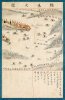
According to the recorded deer hunt in Jeju Island, 70 deer were caught in Hangyeong-myeon, Jeju Island for two days from January 25 to 26, 1680. And on October 11, 1702, in Gyorae-ri, Jeju Island, 177 deer, 11 boars, 101 roe deer, and 22 pheasants were caught during a day with a hunt involving 200 cavalry, 400 beaters and 120 gunners, this hunt in Gyorae-ri remains a documentary painting named "Gyorae-daeryeop."


001.jpg

The whole image of Gyorae-daeryeop. Can see sika deer being chased by cavalry.

As these hunting continued, the number of sika in Jeju continued to decrease, and eventually became extinct during Japanese colonial era.

According to "Introduction to land animals in Jeju Island,"(濟州島の陸産動物槪論) published in a education magazine named "Mun-gyo-ui Joseon"(文敎의朝鮮) October 1928 by Mori Tamezo, a Japanese zoologist who studied various animals in Korea during the period, the last record of sika deer in Jeju was a Japanese man lived in Jeju island named "Kabajima" caught sika deer around 1915-1916.

Unfortunately, I can't know the exact content because I couldn't read the Mun-gyo-ui Joseon directly. The above is what I checked through Internet articles.


The writing is longer, so I'll stop here for now. Next, I will explain the deer currently living in Jeju Island.
 

Attachments

  • 001.jpg
    001.jpg
    114.7 KB · Views: 19
Back
Top