What happened to the other two?all five continents if they want to...
I'm assuming you are excluding Europe and Antarctica here?
What happened to the other two?all five continents if they want to...

What happened to the other two?
I'm assuming you are excluding Europe and Antarctica here?
The five continets. Americas, eurasia, Africa, Australia, and Cold Land.

I'm not mad at executives for not knowing how to care for an animal never held in captivity, what I'm saying is that it was the aquarists who learned how to care for baleen whales, they innovated so don't give executives credit for what aquarists did.That's exactly what I said in that post you just quoted! That post was in response to you being mad at the executives for not knowing how to care for an animal that had never been kept in captivity before.
They could revamp Wild Arctic (bring back Polar Bears), Aquaria World of Fishes, pinniped point, and Shark Encounter. All of those exhibits I just mentioned currently have size issues or are detiorating and could use a facelift. They could add new Aquariums on the Nautilus Theater site, in the 3D theater, or in the are between Cirque and Manta. The park does need a physical aquarium with some sort of theme. They could add a freshwater or Amazon Gallery. They could add an Australian or Indonesian exhibit. They could have a Californian area with kelp forests Sea Lions and Sea Otters.Where would they put a decent new exhibit at SeaWorld SD? What would they even add? They already have pretty much all the marine life bases covered. And their focus is not on land animals.
Well yeah they're phasing out Orca, there's nothing they can do with them! Thanks to PETA's garbage laws were enacted that now SeaWorld cannot breed them, transport them across state lines, or take in new ones. Once they all eventually die that's the end of the species in captivity here in the US. The higher ups didn't make than decision, it was handed to them. I've heard there's an attempt to get the other cetacean species pinned the same way, at least in California. (Which is downright garbage in my opinion)
No I do not have SeaWorlds official autopsy for the many Commersons Dolphins that died in their care. The only animal there is an official public consensus for is Betsy who died due after being moved from San Diego to Aquatica Orlando.Do I think it was the best dolphin exhibit? Not particularly. But can you prove that the deaths were related to the size of the exhibit? I'd be interested to see any information you have proving that. And I mean something you can link, not just "Oh I heard this."
Do the penguins jump out? I've seen more than one penguin exhibit with low glass/fencing. Also I know that exhibit is one of most successful breeders of Subantarctic penguins in the US.
They have a deeper part in the back. Given i have seen Bottlenose Dolphins chasing prey onto beaches and following them, and hunting in fairly shallow water I doubt having a shallow end of the pool affects them much.
Here is my source for the Rescues Operating Costs (go to the bottom): All About the Animal Rescue & Rehabilitation Program - Results of Rescue Program | SeaWorld Parks & Entertainment.Yet you still haven't proven where you got that figure. Two of us now have questioned the figure after looking over the publicly visible report. Unless you have a different report you can link that shows that figure, it's not legitimate.
You said you were going to address that this morning and you have not.
They fought to keep the Orcas because Orcas bring people to the parks to buy tickets, go watch a show, buy things like blankets and Hot Cocoa (which is wildly overpriced). The Orcas generate revenue, Orcas that do tricks create revenue which is why the entire SeaWorld Orca family tree is based on the original trainable Orca Shamu (don't ask me for a source because I got that one straight from the trainers). One other thing about the rescue center don't forget they tried to capitalize on that too with the SeaWorld rescue TV show. And they did not start they continue to fund it for good PR.I give them credit for hiring good people. They have some of the best animal care staff around. Do they help with the day to day care of the animals? No. But they do fight to keep their marine mammals, they fought against the orca legislation. Theme parks they may be but SeaWorlds, Busch Gardens, and Discovery Cove are all AZA. Six Flags isn't, and I don't think they have been. The higher ups fund one of the biggest rescue and rehab programs in North America. And on top of that they still donate conservation money elsewhere too.
Yes. I am talking about the five continents frequently featured in American Zoos- Africa, Asia, Oceania/Australia, South America, and North America. I know that there are seven (or six depending on who you talk to) continents, yet Europe and Antarctica seldom get dedicated zones in American zoos.What happened to the other two?
I'm assuming you are excluding Europe and Antarctica here?

Because European animals are either too similar to North American animals, protected in their home range, or not as interesting as animals from other continents.Yes. I am talking about the five continents frequently featured in American Zoos- Africa, Asia, Oceania/Australia, South America, and North America. I know that there are seven (or six depending on who you talk to) continents, yet Europe and Antarctica seldom get dedicated zones in American zoos.
Yes, I am aware of these reasons and do believe it is justified for zoos to "ignore" European wildlife. My original opinion was that I'd rather see zoos focus on making geographical exhibits more representative of an area as opposed to having more areas that have a less diverse collection for each reason.Because European animals are either too similar to North American animals, protected in their home range, or not as interesting as animals from other continents.
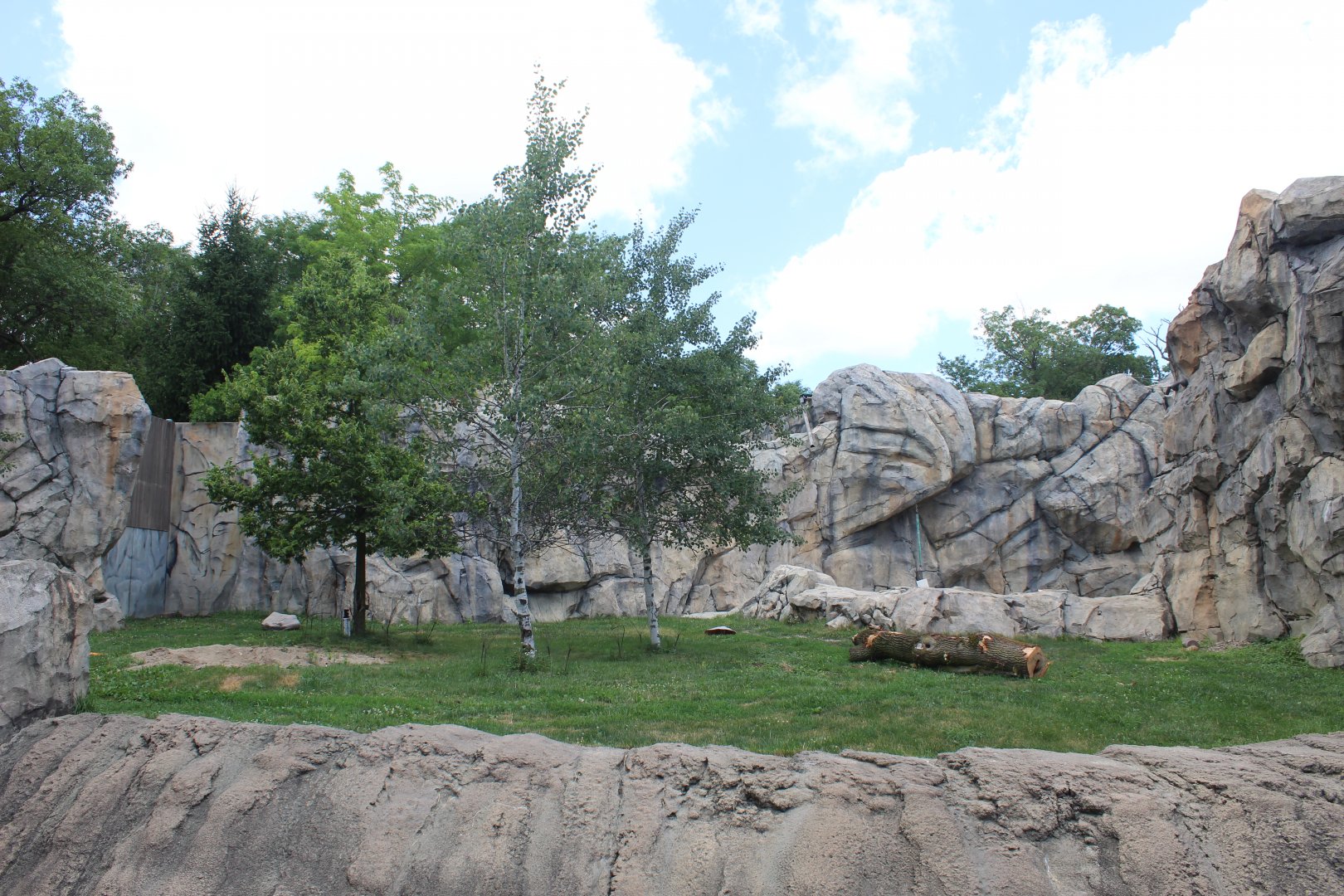
Honestly, I would really like to see new takes on grottos. The idea is somewhat simple so there's room for improvement and innovation in the design. This is in no way me calling it a bad design or unfit to hold animals, I would just like to see a modernization of the design.As long as there is adequate space, a proper substrate, and good enrichment opportunities, grottoes are still a good style of zoo exhibit and provide better viewing opportunities than many of the modern trends.
As long as there is adequate space, a proper substrate, and good enrichment opportunities, grottoes are still a good style of zoo exhibit and provide better viewing opportunities than many of the modern trends.
Honestly, I would really like to see new takes on grottos. The idea is somewhat simple so there's room for improvement and innovation in the design. This is in no way me calling it a bad design or unfit to hold animals, I would just like to see a modernization of the design.

Brookfield Zoo's Great Bear Wilderness features bear exhibits that have been described as modern day grottos. They feature modern elements like underwater viewing, grass and live trees but still feature a grotto set up with a moat and surrounding walls.Honestly, I would really like to see new takes on grottos. The idea is somewhat simple so there's room for improvement and innovation in the design. This is in no way me calling it a bad design or unfit to hold animals, I would just like to see a modernization of the design.
Why those 3 specifically?
"They don't live as long as they would in the wild"
According to a quick google search, the median lifespan for African Elephants in captivity is 17 years old, and the median lifespan for Asian Elephants in captivity is 19 years old, well under the respective 56 and 41 year medians in the wild. If one considers that elephants have been kept in captivity for literally hundreds of years longer than cetaceans, why are we not giving up the ghost (so to speak) on elephants as well?

By which you mean....?Honestly, I would really like to see new takes on grottos. The idea is somewhat simple so there's room for improvement and innovation in the design. This is in no way me calling it a bad design or unfit to hold animals, I would just like to see a modernization of the design.
Your elephant data is outdated, due to the lack of elephant deaths in recent years and the relatively high infant mortality and stillbirths.
How Zoos Kill Elephants

Your point about birds and elephants having large areas is very flawed because they don’t use these areas to the extent that many cetaceans use their environments. Sure, elephants travel over large territories and some birds migrate very long distances, but with birds such a wide range of animals can’t be defined with such simple terms. After all, the space an arctic tern needs is surely very different than that of a quail.They have the whole ocean- no enclosure could be big enough."
I disagree with the premise, but by the same logic, birds have the whole sky, and elephants have the whole continent, so why isn't it cruel to keep them?
Well elephants are now living equally long, if not longer, in captivity than in the wild. The data just skews to them dying earlier because of infant mortality and a small sample pool, since very few elephants have died in zoos during recent years.Unless captive elephants now exceed wild elephants in terms of lifespan, this is irrelevant to my overall point.
By which I mean that seeing variations or new takes on the old design would be very interesting. It's not an opinion if that's what you mean it's more of a side note on to the opinion @Neil chace gave.By which you mean....?
But it brings up questions:By which I mean that seeing variations or new takes on the old design would be very interesting. It's not an opinion if that's what you mean it's more of a side note on to the opinion @Neil chace gave.
1. A grotto exhibit is any exhibit of the traditional pit style in which people look at animals from a distance, usually over a moat or ditch.But it brings up questions:
- What do we mean exactly by a "grotto" exhibit?
- Why are they what they are? (What functions are they fulfilling?)
- How else might those requirements be met? (After all, it ain't cheap)