The Cape mountain zebra intrigued me as well
You are using an out of date browser. It may not display this or other websites correctly.
You should upgrade or use an alternative browser.
You should upgrade or use an alternative browser.
A Guide to the Rarities of Europe
- Thread starter amur leopard
- Start date

Sorry, could this be moved to a new thread? I agree that it is interesting but not sure this is the right place for it.
Yes, it is better moved to another thread.
But looking at their website makes it clear that they operate as an intermediary between recognized zoos and game ranches. I guess they make money on locating animals and organizing the transport and paperwork.
About us – A worldwide network | International Zoo Services
But looking at their website makes it clear that they operate as an intermediary between recognized zoos and game ranches. I guess they make money on locating animals and organizing the transport and paperwork.
About us – A worldwide network | International Zoo Services
Right, I'm back. The Chester Zoo map issue hasn't been solved yet but I'll get around to that as soon as possible. Anyway, here is the next installment of Germany. An interesting one, as it is based on a bracket which is just as large as the rest but the number of zoos with rarities is much smaller, with Stuttgart being the only big name in the bracket. A few nice surprises though.
Tiergarten Peine - Cactus deermouse, Chinese hamster, Matthey's mouse, Barred tiger salamander, Palmate newt, Alpine newt (NS).
Potsdam Naturhistorischesmuseum - Eurasian brook lamprey.
Potsdam Biosphare - Lined day gecko, South American green iguana.
Reichshof-Eckenhagen - Eastern paradise whydah, Southern masked weaver, Taveta golden weaver, White-bellied go-away bird.
Terrazoo Rheinberg
Fairly small reptilarium with a fair few interesting venomous snake species in particular.
Reptiles: Arabian cobra, Bibron's thick-toed gecko, Children's python, Cuban giant dusky dwarf boa, Dusky pygmy rattlesnake, Massassauga, Siamese green-eyed gecko, Shield-nose snake, Southern copperhead, Transcaucasian long-nosed viper, Western pygmy rattlesnake.
Amphibians: Two-toed amphiuma.
Tierpark Riesa - European great spotted woodpecker.
Tierpark Donnersberg
A fairly small collection but crammed to the brim with rarities, particularly of the small carnivore variety! Should be up there on the list for those who like such species .
.
Mammals: Bearded capuchin, Black-rumped agouti, Common rock squirrel, Gordon's wildcat, Hoffmann's two-toed sloth, Lesser bamboo rat, Little grison, Marsh mongoose, Philippine palm civet, Screaming hairy armadillo, Sumatran common palm civet, Two-spotted palm civet.
Zoo Rostock - Graell's tamarin, Harris's antelope squirrel, Grey slender loris, Spectacled eider, Southern brown tortoise, Black rockfish, Boadzulu cichlid, Mosquito rasbora, Painted greenling, Peppered moray, Randall's prawn-goby,
Rubeland - Olm
Saarbrucken - Eastern ring-tailed vontsira, Children's python, Four-lined girdled lizard, Mediterranean house gecko.
Reptilienzoo Scheidegg
Another small reptile collection but with lots of unique species, particularly rattlesnake species.
Reptiles: Baird's rat snake, Carrot-tail viper gecko, Isla Angel rattlesnake, Oaxacan black-tailed rattlesnake, Southern American rattlesnake, Southwestern speckled rattlesnake, Western Russell's viper.
Schillingsfurst - Western saker falcon.
Schangenfarm Schladen - Black-headed royal snake, Dusky pygmy rattlesnake, Pacific boa.
Tiergarten Bierer Berg (Schonebeck)
Another small(ish) collection, this time with a fair few rodent rarities.
Mammals: Coruro, Eurasian water vole, Greater grison, Levant vole, Northern mountain viscacha, Palestine spiny mouse, Plains viscacha, Smith's bush squirrel, Typical striped grass mouse, Woodchuck, Yucatan squirrel.
Birds: Hooded siskin.
Zoo Schwerin - Kane's cory.
Senftenberg - African grass rat, Persian jird (rossicus).
Solingen-Ohligs - Common aztec parakeet.
Aquarium Sonneberg - Gray short-tailed opossum, Angolan walking catfish, Castelnau's jawfish, Twobar anemonefish.
Terrazoo Sontra - Black tree snake, Blanding's turtle, Desert cobra, Eastern brown snake, Mauretanian toad, Narrow-bridged musk turtle, Timber rattlesnake.
St Leon-Rot - Hooded siskin.
St Peter Ording - African grey-headed gull, Great black-backed gull, Mediterranean gull, Northern gannet, Spotted turtle, Wagner's viper.
Staßfurt - Costa Rica variegated squirrel.
Freiland Terrarium Stein - Danube crested newt.
Aquarium Stralsund - 34 fish species (see earlier posts for explanations of what will be done about this).
Zoo Stralsund - North American deermouse.
Tiergaten Straubing - Brook's house gecko, MacDougall's spiny lizard.
Vogelpark Friedrichstal Stutensee - Eurasian blackcap (NS).
Wilhelma (Stuttgart)
The only big name in this bracket, Stuttgart has a lot of rarities, more than I thought at first. This is mainly bolstered by a good fish collection. Some really nice rarities here, North Island kaka, Yellow oriole, Bioko munia etc.
Mammals: Greater slow loris, Matthey's mouse.
Birds: Bay-headed tanager, Bioko munia, Black-bellied sandgrouse, Blue ground dove, Blue-cheeked amazon, Chilean tinamou, Collared grosbeak, Greater roadrunner, Green oropendola, Green twinspot, Green-mantled tanager, Grey wagtail, Kenyan variable sunbird, Kittlitz's plover, Layard's black-headed weaver, Lesser Antillean bullfinch, North Island kaka, Northern gannet, Pacific hornero, Picazuro pigeon, Purple grenadier, Rose-crowned fruit dove, Ruddy quail-dove, Spectacled parrotlet, Uganda red-billed firefinch, Violaceous euphonia, White-eared catbird, White-winged grosbeak, Yellow oriole, Yellow-faced grassquit, Yellow-throated bunting.
Reptiles: Baslisk rattlesnake, Cotinga river toadhead turtle, Daan's hardim, Eastern shingleback, Gillen's pygmy mulga, Ornate spiny lizard, Thai bamboo ratsnake, Yellow-backed spiny lizard, Yellow-blotched map turtle, Yellow-headed gecko.
Amphibians: Peruvian marsupial frog, Riobamba marsupial frog.
Fish - 61 rarities.
In summary, 106 rarities, much more than I first thought. Of these, 12 are bolded and 6 are underlined.
Sydower Fließ - Banded palm civet, Egyptian mongoose, Honey badger, Rusty-spotted genet, White-bearded masked pal civet.
Only one installment remaining on Germany! Featured zoos are Wuppertal and Walsrode among others. Thanks for bearing with me over the past few weeks. Should have the final installment out within the next couple of weeks once exams are over and I can work properly on this and other things .
.
Tiergarten Peine - Cactus deermouse, Chinese hamster, Matthey's mouse, Barred tiger salamander, Palmate newt, Alpine newt (NS).
Potsdam Naturhistorischesmuseum - Eurasian brook lamprey.
Potsdam Biosphare - Lined day gecko, South American green iguana.
Reichshof-Eckenhagen - Eastern paradise whydah, Southern masked weaver, Taveta golden weaver, White-bellied go-away bird.
Terrazoo Rheinberg
Fairly small reptilarium with a fair few interesting venomous snake species in particular.
Reptiles: Arabian cobra, Bibron's thick-toed gecko, Children's python, Cuban giant dusky dwarf boa, Dusky pygmy rattlesnake, Massassauga, Siamese green-eyed gecko, Shield-nose snake, Southern copperhead, Transcaucasian long-nosed viper, Western pygmy rattlesnake.
Amphibians: Two-toed amphiuma.
Tierpark Riesa - European great spotted woodpecker.
Tierpark Donnersberg
A fairly small collection but crammed to the brim with rarities, particularly of the small carnivore variety! Should be up there on the list for those who like such species
.Mammals: Bearded capuchin, Black-rumped agouti, Common rock squirrel, Gordon's wildcat, Hoffmann's two-toed sloth, Lesser bamboo rat, Little grison, Marsh mongoose, Philippine palm civet, Screaming hairy armadillo, Sumatran common palm civet, Two-spotted palm civet.
Zoo Rostock - Graell's tamarin, Harris's antelope squirrel, Grey slender loris, Spectacled eider, Southern brown tortoise, Black rockfish, Boadzulu cichlid, Mosquito rasbora, Painted greenling, Peppered moray, Randall's prawn-goby,
Rubeland - Olm
Saarbrucken - Eastern ring-tailed vontsira, Children's python, Four-lined girdled lizard, Mediterranean house gecko.
Reptilienzoo Scheidegg
Another small reptile collection but with lots of unique species, particularly rattlesnake species.
Reptiles: Baird's rat snake, Carrot-tail viper gecko, Isla Angel rattlesnake, Oaxacan black-tailed rattlesnake, Southern American rattlesnake, Southwestern speckled rattlesnake, Western Russell's viper.
Schillingsfurst - Western saker falcon.
Schangenfarm Schladen - Black-headed royal snake, Dusky pygmy rattlesnake, Pacific boa.
Tiergarten Bierer Berg (Schonebeck)
Another small(ish) collection, this time with a fair few rodent rarities.
Mammals: Coruro, Eurasian water vole, Greater grison, Levant vole, Northern mountain viscacha, Palestine spiny mouse, Plains viscacha, Smith's bush squirrel, Typical striped grass mouse, Woodchuck, Yucatan squirrel.
Birds: Hooded siskin.
Zoo Schwerin - Kane's cory.
Senftenberg - African grass rat, Persian jird (rossicus).
Solingen-Ohligs - Common aztec parakeet.
Aquarium Sonneberg - Gray short-tailed opossum, Angolan walking catfish, Castelnau's jawfish, Twobar anemonefish.
Terrazoo Sontra - Black tree snake, Blanding's turtle, Desert cobra, Eastern brown snake, Mauretanian toad, Narrow-bridged musk turtle, Timber rattlesnake.
St Leon-Rot - Hooded siskin.
St Peter Ording - African grey-headed gull, Great black-backed gull, Mediterranean gull, Northern gannet, Spotted turtle, Wagner's viper.
Staßfurt - Costa Rica variegated squirrel.
Freiland Terrarium Stein - Danube crested newt.
Aquarium Stralsund - 34 fish species (see earlier posts for explanations of what will be done about this).
Zoo Stralsund - North American deermouse.
Tiergaten Straubing - Brook's house gecko, MacDougall's spiny lizard.
Vogelpark Friedrichstal Stutensee - Eurasian blackcap (NS).
Wilhelma (Stuttgart)
The only big name in this bracket, Stuttgart has a lot of rarities, more than I thought at first. This is mainly bolstered by a good fish collection. Some really nice rarities here, North Island kaka, Yellow oriole, Bioko munia etc.
Mammals: Greater slow loris, Matthey's mouse.
Birds: Bay-headed tanager, Bioko munia, Black-bellied sandgrouse, Blue ground dove, Blue-cheeked amazon, Chilean tinamou, Collared grosbeak, Greater roadrunner, Green oropendola, Green twinspot, Green-mantled tanager, Grey wagtail, Kenyan variable sunbird, Kittlitz's plover, Layard's black-headed weaver, Lesser Antillean bullfinch, North Island kaka, Northern gannet, Pacific hornero, Picazuro pigeon, Purple grenadier, Rose-crowned fruit dove, Ruddy quail-dove, Spectacled parrotlet, Uganda red-billed firefinch, Violaceous euphonia, White-eared catbird, White-winged grosbeak, Yellow oriole, Yellow-faced grassquit, Yellow-throated bunting.
Reptiles: Baslisk rattlesnake, Cotinga river toadhead turtle, Daan's hardim, Eastern shingleback, Gillen's pygmy mulga, Ornate spiny lizard, Thai bamboo ratsnake, Yellow-backed spiny lizard, Yellow-blotched map turtle, Yellow-headed gecko.
Amphibians: Peruvian marsupial frog, Riobamba marsupial frog.
Fish - 61 rarities.
In summary, 106 rarities, much more than I first thought. Of these, 12 are bolded and 6 are underlined.
Sydower Fließ - Banded palm civet, Egyptian mongoose, Honey badger, Rusty-spotted genet, White-bearded masked pal civet.
Only one installment remaining on Germany! Featured zoos are Wuppertal and Walsrode among others. Thanks for bearing with me over the past few weeks. Should have the final installment out within the next couple of weeks once exams are over and I can work properly on this and other things
.
wilhelma is my home zoo and i think it will be even better when the small mammal and bird house aswell as the australia house are open.

wilhelma is my home zoo and i think it will be even better when the small mammal and bird house aswell as the australia house are open.
That'll be sometime before the End Times then
 it was originally due to re-open not long after my first (and so far only) visit, and that was more than six years ago now!
It seems wrong. I've looked ZTL and based on their data Zoo Leipzig doesn't keep Malayan tigers. They have Siberians.Zoo Leipzig
Malayan tiger,
It seems wrong. I've looked ZTL and based on their data Zoo Leipzig doesn't keep Malayan tigers. They have Siberians.
Indeed, not sure how that came up, I'll have to have a look at my original notes. Thanks for bringing it up though, much appreciated.
Germany - Part 6
I'm back, and here is the final installment for Germany!
Tierpark Hexentanzplatz - Hazel grouse.
Vogelpark Timmendorfer Strand
A fairly large collection I had only heard of a couple of times, this is actually a really nice bird collection, possibly second or third best of the bird parks in Germany, behind Walsrode of course and perhaps places like Olching. The African woollyneck stands out as a big rarity.
Birds: African woollyneck, American barn owl, Arabian reef egret, Aymara parakeet, Black-throated magpie jay, Buffy fish owl, Eastern grey-cheeked hornbill, Eastern vasa parrot, Eastern yellow-billed hornbill, European great spotted woodpecker, Florida sandhill crane, Goliath heron, Oriental bay owl, Peruvian thick-knee, Philippine rufous night heron, Rufescent tiger heron, Solomon hornbill, Sumatran white-throated magpie jay, Sri Lankan spot-bellied eagle owl, Sri Lankan wood owl, Sunda scops owl, Western reef egret, Whimbrel.
In total, 23 rarities, of which 5 are bolded and 1 is underlined.
SeaLife Timmendorfer Strand - Hampala barb
Trettau - Nicaraguan slider, Black wood turtle, Broad-banded copperhead.
Uberlingen-Bambergen - Malacca Prevost's squirrel.
Ulm - Red-flanked parakeet, Branderhorst's snapping turtle, Chinese tree viper, Freckled monitor, Speckled rattlesnake, Sapphire damsel.
Unteruhldingen - Trans Pecos copperhead.
Weltvogelpark Walsrode
I reckon this place needs no introduction.
Birds: African golden oriole, African grey-headed gull, Amazilia hummingbird, Andean cock of the rock, Arabian patridge, Bar-backed partridge, Bianchi's pheasant, Barred cuckoo dove, Black-chinned fruit dove, Black-faced spoonbill, Black-faced tanager, Black-fronted piping guan, Black-headed sibia, Black-necked weaver, Black-tailed gull, Black-throated toucanet, Blue dacnis, Blue-backed manakin, Blue-crowned lory, Blue-billed curassow, Blue-fronted fig-parrot, Blue-necked tanager, Blue-throated toucanet, Broad-billed roller, Brolga, Brown-throated barbet, Brown-mandibled aracari, Buffy fish owl, Buru king parrot, Capuchinbird, Chestnut and black weaver, Chestnut-backed scimitar babbler, Cochin Chinese red junglefowl, Collared trogon, Crestless curassow, Crimson-rumped toucanet, Cuban parakeet, Cuban trogon, Cuckoo roller, Curl-crested aracari, Deplanche's lorikeet, Double-eyed fig parrot, Dunnock, Eastern purple heron, Eastern vasa parrot, Eastern wild turkey, Edwards's fig parrot, Egyptian plover, Fawn-breasted bowerbird, Fire-tufted barbet, Flame-faced tanager, Fulvous-crested tanager, Giant coua, Gilded barbet, Golden-bellied grosbeak, Golden-headed quetzal, Golden-winged magnificent bird of paradise, Great grey shrike, Great kiskadee, Greater bird of paradise, Greater roadrunner, Green oropendola, Green woodhoopoe, Green-backed trogon, Green-tailed trainbearer, Guianan cock of the rock, Horned guan, Horned screamer, Javan brown wood owl, Jonquil parrot, Kagu, King bird of paradise, Kuhl's brown-necked parrot, King eider, Lesser adjutant, Lesser bird of paradise, Lesser Brazilian teal, Little chachalaca, Long-tailed duck, Long-toed lapwing, Long-wattled umbrellabird, Madagascar blue pigeon, Madagascar pond heron, Madagascar sacred ibis, Magpie shrike, Malay spotted dove, Malayan peacock pheasant, Maleo, Mindanao wrinkled hornbill, Moluccan metallic pigeon, Montezuma oropendola, Mount Goliath stella lory, Northern black-necked aracari, Oriental bay owl, Pale-billed aracari, Pale-headed lorikeet, Pale-winged trumpeter, Papuan mountain pigeon, Paradise tanager (ssp. paradisea), Peruvian pelican, Pesquet's parrot, Philippine metallic pigeon, Philippine rufous night heron, Piapiac, Pin-tailed sandgrouse (caudacutus), Pink-headed imperial pigeon, Pink-spotted fruit dove, Pinon's imperial pigeon, Purple-bellied lory, Racket-tailed treepie, Raggiana bird of paradise, Red bird of paradise, Red and white crake, Red-backed shrike, Red-billed curassow, Red-necked cassowary, Red-throated bee eater, Rock pratincole, Salvadori's pheasant, Scaled pigeon, Scarlet-headed blackbird, Shoebill, Silver-beaked tanager, Slaty-headed parakeet, Southern pied hornbill, Southern Sulawesi hornbill, Sparkling violetear, Spectacled eider, Sudan golden sparrow, Sulawesi black-naped oriole, Sulawesi collared kingfisher, Sulawesi knobbed hornbill, Sumatran fairy bluebird, Thick-billed euphonia, Thick-billed ground pigeon, Twelve-wired bird of paradise, Wattled guan, Westerman's cassowary, Western large fig parrot, White-bearded manakin, White-breasted kingfisher, White-breasted woodswallow, White-crested guan, White-crowned manakin, White-crowned shama, White-eared brown dove, White-tailed jay, White-throated bee eater, Wompoo fruit dove, Yellow-breasted fruit dove, Yellow-crowned gonolek, Yellow-faced myna, Yellow-hooded blackbird.
In total, 136 rarities, of which 39 are unique and 26 are underlined.
Wassenberg - Centralian rough knob-tailed gecko, Hammerhead bat, Masobe Madagascar ground gecko, New Zealand tree gecko, Northland green gecko, Western smooth knob-tailed gecko.
Weissenhauser Strand - Antongil velvet gecko, Bosk's fringe-toed lizard, Brown banana frog, Gibba toadhead turtle, Northern Italian wall lizard, Olive tree skink, Oriental brown-sided skink, Red rubber frog, Red-legged pan frog, Side-blotched lizard, Yellow-throated plated lizard.
Weisswasser - American grizzly bear, Black-horned capuchin.
Wilhelmshaven - 25 fish rarities.
Tiergarten Worms - Taiwan Reeves' muntjac, Beaver-tailed agama.
Zoo Wuppertal
Famous for the only Indian leopard in Europe or NA, Wuppertal has a much more expansive collection than this. A good collection of birds in particular is backed up with some nice mammal rarities and a small but nice herp collection.
Mammals: Ansell's mole rat, Baird's tapir, Gordon's wildcat, Indian leopard, Yellow-backed duiker.
Birds: Andean cock of the rock, Bay-headed tanager, Blue manakin, Dark-bellied brent goose, Golden-backed weaver, Great kiskadee, Green-backed trogon, King eider, Lake duck, Lesser kiskadee, Little friarbird, Pacific hornero, Purple-throated fruitcrow, Red-backed shrike, Silver-throated tanager, Sunda hooded pitta, Thick-billed euphonia, Vermilion flycatcher, Violaceous euphonia, White-browed robin chat, White-spectacled bulbul.
Reptiles: Armadillo lizard, Elliptical eye skink, Pasteur's day gecko.
Amphibians: Painted mantella.
Fish: Cuban gar, Paletail chromis, Red arc pencilfish, Schwartz's catfish, Sumatran halfbeak.
In total, 35 rarities, of which 8 are bolded and 6 are underlined.
Zella-Mehlis - Mugger crocodile + 33 fish rarities.
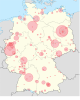
And that is Germany done and dusted and all 1238 collections covered. Below is the map of collections with rarities.

So, I'll take a small break for now, but will be moving on to Greece, Hungary, Italy etc. shortly.
Thanks for reading,
AL
I'm back, and here is the final installment for Germany!
Tierpark Hexentanzplatz - Hazel grouse.
Vogelpark Timmendorfer Strand
A fairly large collection I had only heard of a couple of times, this is actually a really nice bird collection, possibly second or third best of the bird parks in Germany, behind Walsrode of course and perhaps places like Olching. The African woollyneck stands out as a big rarity.
Birds: African woollyneck, American barn owl, Arabian reef egret, Aymara parakeet, Black-throated magpie jay, Buffy fish owl, Eastern grey-cheeked hornbill, Eastern vasa parrot, Eastern yellow-billed hornbill, European great spotted woodpecker, Florida sandhill crane, Goliath heron, Oriental bay owl, Peruvian thick-knee, Philippine rufous night heron, Rufescent tiger heron, Solomon hornbill, Sumatran white-throated magpie jay, Sri Lankan spot-bellied eagle owl, Sri Lankan wood owl, Sunda scops owl, Western reef egret, Whimbrel.
In total, 23 rarities, of which 5 are bolded and 1 is underlined.
SeaLife Timmendorfer Strand - Hampala barb
Trettau - Nicaraguan slider, Black wood turtle, Broad-banded copperhead.
Uberlingen-Bambergen - Malacca Prevost's squirrel.
Ulm - Red-flanked parakeet, Branderhorst's snapping turtle, Chinese tree viper, Freckled monitor, Speckled rattlesnake, Sapphire damsel.
Unteruhldingen - Trans Pecos copperhead.
Weltvogelpark Walsrode
I reckon this place needs no introduction.
Birds: African golden oriole, African grey-headed gull, Amazilia hummingbird, Andean cock of the rock, Arabian patridge, Bar-backed partridge, Bianchi's pheasant, Barred cuckoo dove, Black-chinned fruit dove, Black-faced spoonbill, Black-faced tanager, Black-fronted piping guan, Black-headed sibia, Black-necked weaver, Black-tailed gull, Black-throated toucanet, Blue dacnis, Blue-backed manakin, Blue-crowned lory, Blue-billed curassow, Blue-fronted fig-parrot, Blue-necked tanager, Blue-throated toucanet, Broad-billed roller, Brolga, Brown-throated barbet, Brown-mandibled aracari, Buffy fish owl, Buru king parrot, Capuchinbird, Chestnut and black weaver, Chestnut-backed scimitar babbler, Cochin Chinese red junglefowl, Collared trogon, Crestless curassow, Crimson-rumped toucanet, Cuban parakeet, Cuban trogon, Cuckoo roller, Curl-crested aracari, Deplanche's lorikeet, Double-eyed fig parrot, Dunnock, Eastern purple heron, Eastern vasa parrot, Eastern wild turkey, Edwards's fig parrot, Egyptian plover, Fawn-breasted bowerbird, Fire-tufted barbet, Flame-faced tanager, Fulvous-crested tanager, Giant coua, Gilded barbet, Golden-bellied grosbeak, Golden-headed quetzal, Golden-winged magnificent bird of paradise, Great grey shrike, Great kiskadee, Greater bird of paradise, Greater roadrunner, Green oropendola, Green woodhoopoe, Green-backed trogon, Green-tailed trainbearer, Guianan cock of the rock, Horned guan, Horned screamer, Javan brown wood owl, Jonquil parrot, Kagu, King bird of paradise, Kuhl's brown-necked parrot, King eider, Lesser adjutant, Lesser bird of paradise, Lesser Brazilian teal, Little chachalaca, Long-tailed duck, Long-toed lapwing, Long-wattled umbrellabird, Madagascar blue pigeon, Madagascar pond heron, Madagascar sacred ibis, Magpie shrike, Malay spotted dove, Malayan peacock pheasant, Maleo, Mindanao wrinkled hornbill, Moluccan metallic pigeon, Montezuma oropendola, Mount Goliath stella lory, Northern black-necked aracari, Oriental bay owl, Pale-billed aracari, Pale-headed lorikeet, Pale-winged trumpeter, Papuan mountain pigeon, Paradise tanager (ssp. paradisea), Peruvian pelican, Pesquet's parrot, Philippine metallic pigeon, Philippine rufous night heron, Piapiac, Pin-tailed sandgrouse (caudacutus), Pink-headed imperial pigeon, Pink-spotted fruit dove, Pinon's imperial pigeon, Purple-bellied lory, Racket-tailed treepie, Raggiana bird of paradise, Red bird of paradise, Red and white crake, Red-backed shrike, Red-billed curassow, Red-necked cassowary, Red-throated bee eater, Rock pratincole, Salvadori's pheasant, Scaled pigeon, Scarlet-headed blackbird, Shoebill, Silver-beaked tanager, Slaty-headed parakeet, Southern pied hornbill, Southern Sulawesi hornbill, Sparkling violetear, Spectacled eider, Sudan golden sparrow, Sulawesi black-naped oriole, Sulawesi collared kingfisher, Sulawesi knobbed hornbill, Sumatran fairy bluebird, Thick-billed euphonia, Thick-billed ground pigeon, Twelve-wired bird of paradise, Wattled guan, Westerman's cassowary, Western large fig parrot, White-bearded manakin, White-breasted kingfisher, White-breasted woodswallow, White-crested guan, White-crowned manakin, White-crowned shama, White-eared brown dove, White-tailed jay, White-throated bee eater, Wompoo fruit dove, Yellow-breasted fruit dove, Yellow-crowned gonolek, Yellow-faced myna, Yellow-hooded blackbird.
In total, 136 rarities, of which 39 are unique and 26 are underlined.
Wassenberg - Centralian rough knob-tailed gecko, Hammerhead bat, Masobe Madagascar ground gecko, New Zealand tree gecko, Northland green gecko, Western smooth knob-tailed gecko.
Weissenhauser Strand - Antongil velvet gecko, Bosk's fringe-toed lizard, Brown banana frog, Gibba toadhead turtle, Northern Italian wall lizard, Olive tree skink, Oriental brown-sided skink, Red rubber frog, Red-legged pan frog, Side-blotched lizard, Yellow-throated plated lizard.
Weisswasser - American grizzly bear, Black-horned capuchin.
Wilhelmshaven - 25 fish rarities.
Tiergarten Worms - Taiwan Reeves' muntjac, Beaver-tailed agama.
Zoo Wuppertal
Famous for the only Indian leopard in Europe or NA, Wuppertal has a much more expansive collection than this. A good collection of birds in particular is backed up with some nice mammal rarities and a small but nice herp collection.
Mammals: Ansell's mole rat, Baird's tapir, Gordon's wildcat, Indian leopard, Yellow-backed duiker.
Birds: Andean cock of the rock, Bay-headed tanager, Blue manakin, Dark-bellied brent goose, Golden-backed weaver, Great kiskadee, Green-backed trogon, King eider, Lake duck, Lesser kiskadee, Little friarbird, Pacific hornero, Purple-throated fruitcrow, Red-backed shrike, Silver-throated tanager, Sunda hooded pitta, Thick-billed euphonia, Vermilion flycatcher, Violaceous euphonia, White-browed robin chat, White-spectacled bulbul.
Reptiles: Armadillo lizard, Elliptical eye skink, Pasteur's day gecko.
Amphibians: Painted mantella.
Fish: Cuban gar, Paletail chromis, Red arc pencilfish, Schwartz's catfish, Sumatran halfbeak.
In total, 35 rarities, of which 8 are bolded and 6 are underlined.
Zella-Mehlis - Mugger crocodile + 33 fish rarities.
And that is Germany done and dusted and all 1238 collections covered. Below is the map of collections with rarities.
So, I'll take a small break for now, but will be moving on to Greece, Hungary, Italy etc. shortly.
Thanks for reading,
AL
Attachments
So, Greece - not exactly known for its zoos, but it does have a few nice rarities of the bird variety. Hungary of course is home to Budapest, a fairly large rarity collection but then is fairly light when it comes to the other zoos. And Iceland is... Iceland.
Greece
Heraklion Aquarium - Atlantic lizardfish, Blue runner, Cobia, Dogtooth grouper, Reticulated leatherjacket, Silver-cheeked toadfish, Tiger moray, White grouper.
Aquaworld Hersonissos - Balkan emerald lizard, Balkan whip snake, Mexican milksnake, Rough ray.
Rhodos Aquarium - Mottled grouper, Silver-cheeked toadfish.
Rhodos Zoo - Anatolian wild boar.
Attica Zoo
By far the best collection in Athens, formerly home to Mediterranean monk seals but still retaining a nice bird collection.
Mammals: Anatolian wild boar.
Birds: Black-throated magpie-jay, Brown jay, Coleto, Gang-gang cockatoo, Golden-crested myna, Greek rock partridge, Hair-crested drongo, Orange-backed thrush, Palawan hornbill, Purple roller, Torresian imperial pigeon.
Reptiles: African chameleon.
Hungary
Agard - Bighead carp
Balatonfured - Bighead carp, Monkey goby, Volga pikeperch.
Budapest Tropicarium - Black-banded hogfish, Black-naped oriole, Brichard's cichlid, Butter hamlet, Clarion damselfish, Giant trevally, Indian moth catfish, Mauritius flasher wrasse, Petzea rudd, Sixbarred angelfish.
Zoo Budapest
A major European collection, with a good array of rodent, herptile and fish rarities in particular. Good place to see East European and West Asian vipers. Two unique grosbeak species and a strong amphibian collection in addition. Definitely should be in consideration on any East European zoo trip.
Mammals: Baluchistan dwarf gerbil, Common vole, Eurasian field mouse, Greater Egyptian jerboa, Kowari, Northern white-breasted hedgehog, Wagner's gerbil, Yellow-necked field mouse.
Birds: Black-necked lapwing, Blue-black grosbeak, Crested oropendola, East Asian eagle owl, Green honeycreeper, Maranon pigeon, Northern white-cheeked pintail, Ring-necked dove, White-winged grosbeak, Yellow-green grosbeak.
Reptiles: Banded hognose snake, Cape girdled lizard, Cook's tree boa, Diving lizard, Giant ameiva, Haitian curly-tailed lizard, Haitian giant galliwasp, Hungarian meadow viper, Indigo snake, Levantine viper, Madagascar ground gecko, Mexican moccasin, Northern velvet gecko, Red-sided curly-tailed lizard, Reunion day gecko, Russian blunt-nosed viper, Steppe viper, Termite-hill gecko.
Amphibians: Eastern dwarf clawed frog, Guibe's mantella, Madagascar golden frog, Red-tailed knobby newt, Rococo toad, Tungara frog, Two-toed amphiuma, Yellow-striped poison frog.
Fish: Australian spotted gudgeon, Blue stingray, Cardinal brachy, Cloudy damselfish, Dwarf corydoras, Ecuador banjo catfish, Elegant poecilid, Emerald dwarf rasbora, Flag-tailed prochilodus, Flying minnow, Golden spadefish, Golden-headed dwarf cichlid, Guianacara cichlid, Pacific creole fish, Pacific seahorse, Petzea rudd, Red-barred hawkfish, Reticulated moray, Smudge spot moray, South-east Asian carp, Spotted rose snapper, Tawny nurse shark. Western rainbowfish.
In summary, 67 rarities, of which 15 are bolded and a further 15 are underlined.
Zoo Debrecen - Madagascar ground gecko, Palawan leopard cat.
Erdosmecske - Arabian small-spotted genet, Brown water python, Four-lined girdled lizard, Gray short-tailed opossum, Ornate monitor, Southern African spiny mouse.
Jaszbereny - Golden-backed weaver, Orange weaver, Jumbie teta bristle-nosed pleco.
Kereki - Black francolin.
Keszthely - Jumbie teta bristle-nosed pleco.
Nyiregyhaza
Hungary's second best collection has a couple of unique pigeon species, African leopards and Malayan tigers.
Mammals: African leopard, Malayan tiger.
Birds: Ashy woodpigeon, East Asian eagle owl, Golden-backed weaver, Green twinspot, Martial eagle, Pale-capped pigeon, Red-billed firefinch, White-headed pigeon.
Reptiles: Termite hill gecko, Three-keeled land tortoise.
Fish: Cobia, Itaituba freshwater stingray, Lyre-tail dart goby, Pinkbar goby, Steinitz's prawn goby.
In summary, 17 rarities, of which 3 are bolded and a further 3 are underlined.
Zoo Pecs - Key Island blue-tongued skink, Southeastern girdled lizard, Christy's cichlid, Chizumulu cichlid, Jumbie teta bristle-nosed pleco, Rainbow haplochromis, Red-striped earth-eater, Twospot astyanax.
Poroszlo - Mudminnow.
Rakoczifalva - Bar-shouldered dove.
Szantod - Tubenose goby.
Szeged - Ashy starling, Hungarian meadow viper, Koch's day gecko, Meller's chameleon.
Iceland
Reykjavik - Blue skate.
Next up, Italy, Latvia and Lithuania.
Greece
Heraklion Aquarium - Atlantic lizardfish, Blue runner, Cobia, Dogtooth grouper, Reticulated leatherjacket, Silver-cheeked toadfish, Tiger moray, White grouper.
Aquaworld Hersonissos - Balkan emerald lizard, Balkan whip snake, Mexican milksnake, Rough ray.
Rhodos Aquarium - Mottled grouper, Silver-cheeked toadfish.
Rhodos Zoo - Anatolian wild boar.
Attica Zoo
By far the best collection in Athens, formerly home to Mediterranean monk seals but still retaining a nice bird collection.
Mammals: Anatolian wild boar.
Birds: Black-throated magpie-jay, Brown jay, Coleto, Gang-gang cockatoo, Golden-crested myna, Greek rock partridge, Hair-crested drongo, Orange-backed thrush, Palawan hornbill, Purple roller, Torresian imperial pigeon.
Reptiles: African chameleon.
Hungary
Agard - Bighead carp
Balatonfured - Bighead carp, Monkey goby, Volga pikeperch.
Budapest Tropicarium - Black-banded hogfish, Black-naped oriole, Brichard's cichlid, Butter hamlet, Clarion damselfish, Giant trevally, Indian moth catfish, Mauritius flasher wrasse, Petzea rudd, Sixbarred angelfish.
Zoo Budapest
A major European collection, with a good array of rodent, herptile and fish rarities in particular. Good place to see East European and West Asian vipers
. Two unique grosbeak species and a strong amphibian collection in addition. Definitely should be in consideration on any East European zoo trip. Mammals: Baluchistan dwarf gerbil, Common vole, Eurasian field mouse, Greater Egyptian jerboa, Kowari, Northern white-breasted hedgehog, Wagner's gerbil, Yellow-necked field mouse.
Birds: Black-necked lapwing, Blue-black grosbeak, Crested oropendola, East Asian eagle owl, Green honeycreeper, Maranon pigeon, Northern white-cheeked pintail, Ring-necked dove, White-winged grosbeak, Yellow-green grosbeak.
Reptiles: Banded hognose snake, Cape girdled lizard, Cook's tree boa, Diving lizard, Giant ameiva, Haitian curly-tailed lizard, Haitian giant galliwasp, Hungarian meadow viper, Indigo snake, Levantine viper, Madagascar ground gecko, Mexican moccasin, Northern velvet gecko, Red-sided curly-tailed lizard, Reunion day gecko, Russian blunt-nosed viper, Steppe viper, Termite-hill gecko.
Amphibians: Eastern dwarf clawed frog, Guibe's mantella, Madagascar golden frog, Red-tailed knobby newt, Rococo toad, Tungara frog, Two-toed amphiuma, Yellow-striped poison frog.
Fish: Australian spotted gudgeon, Blue stingray, Cardinal brachy, Cloudy damselfish, Dwarf corydoras, Ecuador banjo catfish, Elegant poecilid, Emerald dwarf rasbora, Flag-tailed prochilodus, Flying minnow, Golden spadefish, Golden-headed dwarf cichlid, Guianacara cichlid, Pacific creole fish, Pacific seahorse, Petzea rudd, Red-barred hawkfish, Reticulated moray, Smudge spot moray, South-east Asian carp, Spotted rose snapper, Tawny nurse shark. Western rainbowfish.
In summary, 67 rarities, of which 15 are bolded and a further 15 are underlined.
Zoo Debrecen - Madagascar ground gecko, Palawan leopard cat.
Erdosmecske - Arabian small-spotted genet, Brown water python, Four-lined girdled lizard, Gray short-tailed opossum, Ornate monitor, Southern African spiny mouse.
Jaszbereny - Golden-backed weaver, Orange weaver, Jumbie teta bristle-nosed pleco.
Kereki - Black francolin.
Keszthely - Jumbie teta bristle-nosed pleco.
Nyiregyhaza
Hungary's second best collection has a couple of unique pigeon species, African leopards and Malayan tigers.
Mammals: African leopard, Malayan tiger.
Birds: Ashy woodpigeon, East Asian eagle owl, Golden-backed weaver, Green twinspot, Martial eagle, Pale-capped pigeon, Red-billed firefinch, White-headed pigeon.
Reptiles: Termite hill gecko, Three-keeled land tortoise.
Fish: Cobia, Itaituba freshwater stingray, Lyre-tail dart goby, Pinkbar goby, Steinitz's prawn goby.
In summary, 17 rarities, of which 3 are bolded and a further 3 are underlined.
Zoo Pecs - Key Island blue-tongued skink, Southeastern girdled lizard, Christy's cichlid, Chizumulu cichlid, Jumbie teta bristle-nosed pleco, Rainbow haplochromis, Red-striped earth-eater, Twospot astyanax.
Poroszlo - Mudminnow.
Rakoczifalva - Bar-shouldered dove.
Szantod - Tubenose goby.
Szeged - Ashy starling, Hungarian meadow viper, Koch's day gecko, Meller's chameleon.
Iceland
Reykjavik - Blue skate.
Next up, Italy, Latvia and Lithuania.

JoJo22
Well-Known Member
Right, I'm back. The Chester Zoo map issue hasn't been solved yet but I'll get around to that as soon as possible. Anyway, here is the next installment of Germany. An interesting one, as it is based on a bracket which is just as large as the rest but the number of zoos with rarities is much smaller, with Stuttgart being the only big name in the bracket. A few nice surprises though.
Tiergarten Peine - Cactus deermouse, Chinese hamster, Matthey's mouse, Barred tiger salamander, Palmate newt, Alpine newt (NS).
Potsdam Naturhistorischesmuseum - Eurasian brook lamprey.
Potsdam Biosphare - Lined day gecko, South American green iguana.
Reichshof-Eckenhagen - Eastern paradise whydah, Southern masked weaver, Taveta golden weaver, White-bellied go-away bird.
Terrazoo Rheinberg
Fairly small reptilarium with a fair few interesting venomous snake species in particular.
Reptiles: Arabian cobra, Bibron's thick-toed gecko, Children's python, Cuban giant dusky dwarf boa, Dusky pygmy rattlesnake, Massassauga, Siamese green-eyed gecko, Shield-nose snake, Southern copperhead, Transcaucasian long-nosed viper, Western pygmy rattlesnake.
Amphibians: Two-toed amphiuma.
Tierpark Riesa - European great spotted woodpecker.
Tierpark Donnersberg
A fairly small collection but crammed to the brim with rarities, particularly of the small carnivore variety! Should be up there on the list for those who like such species
Mammals: Bearded capuchin, Black-rumped agouti, Common rock squirrel, Gordon's wildcat, Hoffmann's two-toed sloth, Lesser bamboo rat, Little grison, Marsh mongoose, Philippine palm civet, Screaming hairy armadillo, Sumatran common palm civet, Two-spotted palm civet.
Zoo Rostock - Graell's tamarin, Harris's antelope squirrel, Grey slender loris, Spectacled eider, Southern brown tortoise, Black rockfish, Boadzulu cichlid, Mosquito rasbora, Painted greenling, Peppered moray, Randall's prawn-goby,
Rubeland - Olm
Saarbrucken - Eastern ring-tailed vontsira, Children's python, Four-lined girdled lizard, Mediterranean house gecko.
Reptilienzoo Scheidegg
Another small reptile collection but with lots of unique species, particularly rattlesnake species.
Reptiles: Baird's rat snake, Carrot-tail viper gecko, Isla Angel rattlesnake, Oaxacan black-tailed rattlesnake, Southern American rattlesnake, Southwestern speckled rattlesnake, Western Russell's viper.
Schillingsfurst - Western saker falcon.
Schangenfarm Schladen - Black-headed royal snake, Dusky pygmy rattlesnake, Pacific boa.
Tiergarten Bierer Berg (Schonebeck)
Another small(ish) collection, this time with a fair few rodent rarities.
Mammals: Coruro, Eurasian water vole, Greater grison, Levant vole, Northern mountain viscacha, Palestine spiny mouse, Plains viscacha, Smith's bush squirrel, Typical striped grass mouse, Woodchuck, Yucatan squirrel.
Birds: Hooded siskin.
Zoo Schwerin - Kane's cory.
Senftenberg - African grass rat, Persian jird (rossicus).
Solingen-Ohligs - Common aztec parakeet.
Aquarium Sonneberg - Gray short-tailed opossum, Angolan walking catfish, Castelnau's jawfish, Twobar anemonefish.
Terrazoo Sontra - Black tree snake, Blanding's turtle, Desert cobra, Eastern brown snake, Mauretanian toad, Narrow-bridged musk turtle, Timber rattlesnake.
St Leon-Rot - Hooded siskin.
St Peter Ording - African grey-headed gull, Great black-backed gull, Mediterranean gull, Northern gannet, Spotted turtle, Wagner's viper.
Staßfurt - Costa Rica variegated squirrel.
Freiland Terrarium Stein - Danube crested newt.
Aquarium Stralsund - 34 fish species (see earlier posts for explanations of what will be done about this).
Zoo Stralsund - North American deermouse.
Tiergaten Straubing - Brook's house gecko, MacDougall's spiny lizard.
Vogelpark Friedrichstal Stutensee - Eurasian blackcap (NS).
Wilhelma (Stuttgart)
The only big name in this bracket, Stuttgart has a lot of rarities, more than I thought at first. This is mainly bolstered by a good fish collection. Some really nice rarities here, North Island kaka, Yellow oriole, Bioko munia etc.
Mammals: Greater slow loris, Matthey's mouse.
Birds: Bay-headed tanager, Bioko munia, Black-bellied sandgrouse, Blue ground dove, Blue-cheeked amazon, Chilean tinamou, Collared grosbeak, Greater roadrunner, Green oropendola, Green twinspot, Green-mantled tanager, Grey wagtail, Kenyan variable sunbird, Kittlitz's plover, Layard's black-headed weaver, Lesser Antillean bullfinch, North Island kaka, Northern gannet, Pacific hornero, Picazuro pigeon, Purple grenadier, Rose-crowned fruit dove, Ruddy quail-dove, Spectacled parrotlet, Uganda red-billed firefinch, Violaceous euphonia, White-eared catbird, White-winged grosbeak, Yellow oriole, Yellow-faced grassquit, Yellow-throated bunting.
Reptiles: Baslisk rattlesnake, Cotinga river toadhead turtle, Daan's hardim, Eastern shingleback, Gillen's pygmy mulga, Ornate spiny lizard, Thai bamboo ratsnake, Yellow-backed spiny lizard, Yellow-blotched map turtle, Yellow-headed gecko.
Amphibians: Peruvian marsupial frog, Riobamba marsupial frog.
Fish - 61 rarities.
In summary, 106 rarities, much more than I first thought. Of these, 12 are bolded and 6 are underlined.
Sydower Fließ - Banded palm civet, Egyptian mongoose, Honey badger, Rusty-spotted genet, White-bearded masked pal civet.
Only one installment remaining on Germany! Featured zoos are Wuppertal and Walsrode among others. Thanks for bearing with me over the past few weeks. Should have the final installment out within the next couple of weeks once exams are over and I can work properly on this and other things
I just discovered this thread, and the idea is really interesting! Just wanted to add some info if someone is interested in visiting some of these, I don't know all, but for example in Rheinberg, the collection changes very often, so I wouldn't be sure about which species are actually there at the moment. Additionally, some species mentioned are not on public display, such as the red birds-of-paradise in Walsrode.
Again, I'm not sure if this is helpful, just don't want anyone to be disappointed.
I just discovered this thread, and the idea is really interesting! Just wanted to add some info if someone is interested in visiting some of these, I don't know all, but for example in Rheinberg, the collection changes very often, so I wouldn't be sure about which species are actually there at the moment. Additionally, some species mentioned are not on public display, such as the red birds-of-paradise in Walsrode.
Again, I'm not sure if this is helpful, just don't want anyone to be disappointed.
Of course input is very much welcome, particularly from those who have visited the collections in question and can give an accurate representation of the place.
Here is an updated 'leaderboard', including collections I have not yet posted about but have done the counts and list for (aquaria in blue):
1 - Zoo Plzen CZ 384
2 - Zoo Berlin GE 199
3 - Zoo Praha CZ 185
4 - Zoo Koln GE 184
5 - Zoo Wroclaw PO 160
6 - Den Bla Planet DE 157
7 - Walsrode GE 136
8 - Tierpark Berlin GE 120
9 - Wilhelma Zoo GE 106
10 - HdM Vienna AU 92
11 - Porte Doree FR 81
12 - Zoo Leipzig GE 80
13 - Nockalm AU 75
14 - Beauval FR 73
15 - Frankfurt GE 73
Here is the next installment:
Italy
A rather large country in terms of tourism, Italy has a somewhat disappointing record in zoological terms. With a pattern somewhat akin to that of Southern France as one might expect, most zoos are somewhat ABC-focused with the odd rarity thrown in rather than the other way around like in Czechia for example. That said, there are a few intriguing collections which are well worth a visit, so here we go.
Bordano - Lined flat-tail gecko
Bosen - Marbled trout
Cartigliano - African swamphen, Buff-necked ibis, Kori bustard, Painted stork.
Cecina - White-bearded masked palm civet.
Genova Aquarium
The first fairly large Italian collection in this thread with a few rarities but nothing to rival the juggernauts in Kastrup, Valencia and Paris really. I have heard good things about it though, and it is likely worth a look if one is in the vicinity and has a bit of time to spare.
Birds: Red-browed firetail
Reptiles: Dumeril's Madagascar swift, Ligurian pond turtle, Ornate girdled lizard, Scorpion mud turtle.
Fish: Atlantic goliath grouper, Blue runner, Cloudy damselfish, Green sawfish, Marbled spinefoot, Mediterranean starry ray, Sailfin plunderfish, Spotted seabass, Thornback catfish, Whitespotted devil.
In summary, 15 rarities of which 3 are bolded and a further 3 are underlined.
Introd - Arctic char, Pyrenean red squirrel
Jesolo Tropicarium
An interesting collection I'd never heard of before doing this.
Reptiles: Blue-throated agama, Boulenger's pricklenape, Cape Verde giant gecko, Diamondback terrapin.
Amphibians: Asiatic toad, Northern barred frog, Two-toed amphiuma.
Fish: Harlequin snake eel, Japanese bullhead shark, Titan triggerfish.
Livorno - Brown ray, Caesar grunt, Giant goby, White grunt.
Milano - Italian barbel.
Murazzano - Pyrenean red squirrel.
Napoli - Eastern white-bearded wildebeest.
Peschiera la Garda - Bengal sergeant, Italian barbel, Peacock flounder, Reef squirrelfish, Striped large-eye bream.
Poggio San Lorenzo - Tonkean macaque.
Pombia - Palestine saw-scaled viper, Sahara rock viper.
Poppi - Corsican hare.
Riva del Garda - Banded rock rattlesnake, Gade's viper, Great Basin rattlesnake, Indonesian cobra, Lowland corn snake, Malagasy speckled hognose snake, Mexican moccasin, Sahara rock viper.
Rocca San Giovanni - Southern smooth snake.
Bioparco di Roma - Bosnian wolf, White-throated magpie-jay, Chiapas giant musk turtle, Pacific boa, Appenine yellow-bellied toad, Common mudpuppy, Malayan leaf frog, Sardinian brook salamander.
Parco Faunisto Oasi di Sant Alessio
The most interesting collection in Italy by a country mile, this place is really quite interesting, particularly its bird collection, which is unrivalled in the country and perhaps most of Southern Europe if one excludes Tenerife of course. Particularly of note of course is its hummingbird collection.
Mammals: Elbe European beaver, Pyrenean red squirrel.
Birds: Amazilia hummingbird, Andean cock of the rock, Azure tit, Black-necked grebe, Central European long-tailed tit, Common kingfisher, Common snipe, Common tern, Cuban emerald, Diademed tanager, Eastern greylag goose, European great spotted woodpecker, Great crested grebe, Green-crowned brilliant, Green-throated carib, King bird of paradise, Lesser bird of paradise, Purple heron, Sparkling violetear, Velvet-purple coronet, Violet-tailed sylph, Wallcreeper, White-whiskered hermit.
Reptiles: False coral snake, Franco-Italian pond turtle.
Amphibians: Tiger-striped leaf frog.
Fish: Giant mudskipper, Italian nase, Marbled trout.
In summary, 31 rarities, of which 9 are bolded and 6 are underlined.
Santa Maria al Bagno - Giant goby.
Torino - Southern pine snake.
Udine - Amazilia hummingbird, Purple-throated carib, Rufous-tailed hummingbird.
Valbrembo - Black-rumped waxbill, Cape giraffe, Eastern paradise whydah.
Zelo Buon Persico - Bighead carp, Biwa trout, Italian barbel, Marbled trout.
Cala Gonone - Exquisite wrasse.
Carini - Cuban parakeet.
Sorry for the short posts, next up will be a longer one including Latvia, Lithuania, Monaco and the Netherlands.
Italy
A rather large country in terms of tourism, Italy has a somewhat disappointing record in zoological terms. With a pattern somewhat akin to that of Southern France as one might expect, most zoos are somewhat ABC-focused with the odd rarity thrown in rather than the other way around like in Czechia for example. That said, there are a few intriguing collections which are well worth a visit, so here we go.
Bordano - Lined flat-tail gecko
Bosen - Marbled trout
Cartigliano - African swamphen, Buff-necked ibis, Kori bustard, Painted stork.
Cecina - White-bearded masked palm civet.
Genova Aquarium
The first fairly large Italian collection in this thread with a few rarities but nothing to rival the juggernauts in Kastrup, Valencia and Paris really. I have heard good things about it though, and it is likely worth a look if one is in the vicinity and has a bit of time to spare.
Birds: Red-browed firetail
Reptiles: Dumeril's Madagascar swift, Ligurian pond turtle, Ornate girdled lizard, Scorpion mud turtle.
Fish: Atlantic goliath grouper, Blue runner, Cloudy damselfish, Green sawfish, Marbled spinefoot, Mediterranean starry ray, Sailfin plunderfish, Spotted seabass, Thornback catfish, Whitespotted devil.
In summary, 15 rarities of which 3 are bolded and a further 3 are underlined.
Introd - Arctic char, Pyrenean red squirrel
Jesolo Tropicarium
An interesting collection I'd never heard of before doing this.
Reptiles: Blue-throated agama, Boulenger's pricklenape, Cape Verde giant gecko, Diamondback terrapin.
Amphibians: Asiatic toad, Northern barred frog, Two-toed amphiuma.
Fish: Harlequin snake eel, Japanese bullhead shark, Titan triggerfish.
Livorno - Brown ray, Caesar grunt, Giant goby, White grunt.
Milano - Italian barbel.
Murazzano - Pyrenean red squirrel.
Napoli - Eastern white-bearded wildebeest.
Peschiera la Garda - Bengal sergeant, Italian barbel, Peacock flounder, Reef squirrelfish, Striped large-eye bream.
Poggio San Lorenzo - Tonkean macaque.
Pombia - Palestine saw-scaled viper, Sahara rock viper.
Poppi - Corsican hare.
Riva del Garda - Banded rock rattlesnake, Gade's viper, Great Basin rattlesnake, Indonesian cobra, Lowland corn snake, Malagasy speckled hognose snake, Mexican moccasin, Sahara rock viper.
Rocca San Giovanni - Southern smooth snake.
Bioparco di Roma - Bosnian wolf, White-throated magpie-jay, Chiapas giant musk turtle, Pacific boa, Appenine yellow-bellied toad, Common mudpuppy, Malayan leaf frog, Sardinian brook salamander.
Parco Faunisto Oasi di Sant Alessio
The most interesting collection in Italy by a country mile, this place is really quite interesting, particularly its bird collection, which is unrivalled in the country and perhaps most of Southern Europe if one excludes Tenerife of course. Particularly of note of course is its hummingbird collection.
Mammals: Elbe European beaver, Pyrenean red squirrel.
Birds: Amazilia hummingbird, Andean cock of the rock, Azure tit, Black-necked grebe, Central European long-tailed tit, Common kingfisher, Common snipe, Common tern, Cuban emerald, Diademed tanager, Eastern greylag goose, European great spotted woodpecker, Great crested grebe, Green-crowned brilliant, Green-throated carib, King bird of paradise, Lesser bird of paradise, Purple heron, Sparkling violetear, Velvet-purple coronet, Violet-tailed sylph, Wallcreeper, White-whiskered hermit.
Reptiles: False coral snake, Franco-Italian pond turtle.
Amphibians: Tiger-striped leaf frog.
Fish: Giant mudskipper, Italian nase, Marbled trout.
In summary, 31 rarities, of which 9 are bolded and 6 are underlined.
Santa Maria al Bagno - Giant goby.
Torino - Southern pine snake.
Udine - Amazilia hummingbird, Purple-throated carib, Rufous-tailed hummingbird.
Valbrembo - Black-rumped waxbill, Cape giraffe, Eastern paradise whydah.
Zelo Buon Persico - Bighead carp, Biwa trout, Italian barbel, Marbled trout.
Cala Gonone - Exquisite wrasse.
Carini - Cuban parakeet.
Sorry for the short posts, next up will be a longer one including Latvia, Lithuania, Monaco and the Netherlands.
Next update:
Latvia:
Apgulde: Reddish rat snake
Daugavpils: Humboldt's night monkey, Javelin sand boa, Ornate monitor.
Zoo Riga
Located in the country's capital, this is also the country's biggest and best zoo, with a nice collection and a particularly impressive array of amphibians and rare mammals.
Mammals: Garnett's greater galago, Northern white-breasted hedgehog, Siberian flying squirrel, Tadjik urial, Unstriped tamandua.
Reptiles: Common variable skink, Eastern slowworm, Mexican kingsnake, Santa Cruz giant tortoise.
Amphibians: Chapa bug-eyed toad, Eastern newt, Guangxi warty newt, Marbled Madagascan rainfrog, Western clawed frog.
Fish: Asian redtail catfish, Black-band catfish, Blackfin goodea, Chinese sleeper, Slender rainbowfish, Spotted blue-eye.
In summary, 20 rarities, of which 3 are bolded and 4 are underlined.
Skredeli: Northern palm squirrel.
Lithuania
Kaunas Zoo
The biggest and best zoo in Lithuania, this zoo has the best bird collection of the three Baltic states.
Mammals: Hispid cotton rat
Birds: Crimson-browed finch, Eyebrowed thrush, Hodgson's redstart, Himalayan white-browed rosefinch, Rufous-vented yuhina, Orange-bellied leafbird, West African helmeted guineafowl.
Reptiles: Desert kingsnake, Haitian giant galliwasp, Western whip snake.
Fish: Lesser spiny eel.
In summary, 12 rarities, of which 6 are bolded and 1 is underlined.
Vilnius: Splendid leaf frog, Virginia opossum.
Luxembourg
Bettembourg: Black-backed jackal, Northern black-bellied whistling duck, Red-winged tinamou, Tataupa tinamou, Aripuana eartheater, Baensch's damsel, Common damsel, Dotted corydoras, Gilded catfish, Queen Arabesque pleco.
Malta
Bahar: Eastern mud turtle, Maltese wall lizard, Northern red-bellied turtle.
Burmarrad: Bare-eyed pigeon.
Siggiewi: Indian tawny eagle.
San Pawl il-Bahar: Blue runner, Bluelined surgeonfish, Cloudy damselfish, Mediterranean horse mackerel, Mottled grouper, Panther grouper, Picarel, Spotted torpedo, Starck's demoiselle, Vietnamese rat snake, Yellowtail damselfish.
Wied il Buzbiez: Black-horned capuchin.
Victoria: Bank myna.
Moldova
Chisinau: Caspian Sea wolf, White-bearded masked palm civet, Mexican burrowing python.
Monaco
Monaco Zoo: Malay crestless fireback, Blue beauty ratsnake, Coastal carpet python.
Monaco Aquarium
A fairly large aquarium with some lovely rarities, most notably the Jewel moray and Eritrean butterflyfish, two beautiful species.
Fish: Barrier reef chromis, Bicolor cleaner wrasse, Checked swallowtail, Cloudy damselfish, Eritrean butterflyfish, Giant goby, Greensnout parrotfish, Jewel moray, Lined combtooth blenny, Lunar fusilier, One-stripe anthias, Peppermint goby, Picarel, Seram blenny, Starck's demoiselle, Yellowcheek wrasse.
In summary, 16 rarities, of which 6 are bolded and 5 are underlined.
Montenegro
Blizna: Northern white-breasted hedgehog.
Netherlands
Vogelpark Avifauna
A fairly comprehensive place with from what I've heard mediocre exhibits but a nice collection with a couple of nice rarities and 1 unique species: the White-winged tanager.
Birds: Amazilia hummingbird, Cinnamon ground dove (NS), Coleto, Egyptian plover, Golden-crested myna, Guianan cock of the rock, Korean ring-necked pheasant, Malay crestless fireback, Nocturnal curassow, Northern brown kiwi, Pesquet's parrot, Picazuro pigeon, Red-billed starling, Ruddy ground dove, Scarlet-headed blackbird, Siberian rubythroat, Southern Sulawesi hornbill, Tataupa tinamou, White-eared brown dove, White-eared bulbul, White-winged tanager, Yellow-faced myna.
In summary, 22 rarities, of which 1 is bolded and a further 2 are underlined.
Stichting Schildpaddencentrum
Or at least I think that's how you spell it - appears to have a fantastic collection of turtles from several different families. Unfortunately, the species are pretty much all put together into one massive tank, so good luck finding and IDing them all.
Reptiles: Asian yellow pond turtle, Beal-four-eyed turtle, Black wood turtle, Boulenger's cape tortoise, Brown roofed turtle, East African black mud turtle, Eastern painted turtle, Flattened musk turtle, Florida cooter, Forsten's tortoise, Gaboon mud turtle, Hispaniolan slider, New Guinean snake-necked turtle, Ornate slider, Pacific pond turtle, Southern painted turtle, Southern Vietnamese box turtle, Spotted turtle, Taiwan yellow-margined box turtle, Texas map turtle, Western box turtle.
In summary, 21 rarities, of which 5 are bolded and 3 are underlined.
Amersfoort: Chapa bug-eyed frog.
Artis
The oldest zoo in the Netherlands by a margin and one of the oldest on mainland Europe, Artis was founded in 1838. It has perhaps fewer rarities than it did 50 years ago but still has a few nice fish rarities and a unique sugar glider subspecies.
Mammals: Northern sugar glider, Pontianak Prevost's squirrel.
Birds: Collared kingfisher, Northern gannet.
Reptiles: Guatemalan spiny-tailed iguana, South American green iguana, Speckled cape tortoise, Zoutpansberg girdled lizard.
Fish: Blackbelly limia, Burton's mouthbrooder, Chequered perchlet, Clown panaque, Coppename corydoras, McCosher's flasher, Siamese halfbeak, Suriname corydoras, Tapanahony corydoras, Whiptail catfish.
In summary, 18 rarities, of which 7 are bolded and a further 1 is underlined.
Hoenderdaell: Golden-necked cassowary, Guyana toucanet.
Apenheul: Crowned sifaka, Saharan barbary sheep, Venezuelan red howler, Woolly monkey.
Arnhem (Burgers' zoo)
Without a doubt one of the zoos with the greatest standard of exhibitry worldwide, Burgers' prides itself primarily on its enclosure quality. However, it does also have a great collection with numerous rarities, particularly when it comes to birds and fish.
Mammals: Cactus deermouse, California bighorn sheep, Dusky langur, Eastern white-bearded wildebeest, Hispid cotton rat, Merriam's kangaroo rat, Ringtail.
Birds: Blue ground dove, Chestnut-bellied seed finch, Crested bobwhite, Eastern superb fruit dove, Gambel's quail, Golden-fronted leafbird, Greater roadrunner, Indigo bunting, Lawrence goldfinch, Orange-fronted fruit dove, Oriental white eye, Painted bunting, Pinon's imperial pigeon, Red-rumped cacique, Rose-bellied bunting, Screaming piha, Violaceous euphonia, White-eared catbird, White-winged dove, Yellow grosbeak.
Reptiles: Allison's anole, Guadeloupean anole (NS), Red diamond rattlesnake, White-throated gecko.
Amphibians: Red-legged pan frog.
Fish: Blacktip shark, Blue-eyed cichlid, Buan goby, Double-lined fusilier, Eight-lined wrasse, Fathead minnow, Giant sweetlips, Golden angelfish, Honeycomb moray, Long-finned corydoras, Lunar fusilier, Mangrove molly, Mangrove whipray, Moontail bullseye, Reticulated puffer, Smallmouth yellowfish, Striated wrasse, Striped monocle bream, Top minnow, Tropical gar, Two-lined monocle bream, Yellowbreasted wrasse, Yellowtail amberjack, Yucatan gambusia.
Sorry for the posts being so short recently, trying not to lose work so I'm posting fairly frequently.
Latvia:
Apgulde: Reddish rat snake
Daugavpils: Humboldt's night monkey, Javelin sand boa, Ornate monitor.
Zoo Riga
Located in the country's capital, this is also the country's biggest and best zoo, with a nice collection and a particularly impressive array of amphibians and rare mammals.
Mammals: Garnett's greater galago, Northern white-breasted hedgehog, Siberian flying squirrel, Tadjik urial, Unstriped tamandua.
Reptiles: Common variable skink, Eastern slowworm, Mexican kingsnake, Santa Cruz giant tortoise.
Amphibians: Chapa bug-eyed toad, Eastern newt, Guangxi warty newt, Marbled Madagascan rainfrog, Western clawed frog.
Fish: Asian redtail catfish, Black-band catfish, Blackfin goodea, Chinese sleeper, Slender rainbowfish, Spotted blue-eye.
In summary, 20 rarities, of which 3 are bolded and 4 are underlined.
Skredeli: Northern palm squirrel.
Lithuania
Kaunas Zoo
The biggest and best zoo in Lithuania, this zoo has the best bird collection of the three Baltic states.
Mammals: Hispid cotton rat
Birds: Crimson-browed finch, Eyebrowed thrush, Hodgson's redstart, Himalayan white-browed rosefinch, Rufous-vented yuhina, Orange-bellied leafbird, West African helmeted guineafowl.
Reptiles: Desert kingsnake, Haitian giant galliwasp, Western whip snake.
Fish: Lesser spiny eel.
In summary, 12 rarities, of which 6 are bolded and 1 is underlined.
Vilnius: Splendid leaf frog, Virginia opossum.
Luxembourg
Bettembourg: Black-backed jackal, Northern black-bellied whistling duck, Red-winged tinamou, Tataupa tinamou, Aripuana eartheater, Baensch's damsel, Common damsel, Dotted corydoras, Gilded catfish, Queen Arabesque pleco.
Malta
Bahar: Eastern mud turtle, Maltese wall lizard, Northern red-bellied turtle.
Burmarrad: Bare-eyed pigeon.
Siggiewi: Indian tawny eagle.
San Pawl il-Bahar: Blue runner, Bluelined surgeonfish, Cloudy damselfish, Mediterranean horse mackerel, Mottled grouper, Panther grouper, Picarel, Spotted torpedo, Starck's demoiselle, Vietnamese rat snake, Yellowtail damselfish.
Wied il Buzbiez: Black-horned capuchin.
Victoria: Bank myna.
Moldova
Chisinau: Caspian Sea wolf, White-bearded masked palm civet, Mexican burrowing python.
Monaco
Monaco Zoo: Malay crestless fireback, Blue beauty ratsnake, Coastal carpet python.
Monaco Aquarium
A fairly large aquarium with some lovely rarities, most notably the Jewel moray and Eritrean butterflyfish, two beautiful species.
Fish: Barrier reef chromis, Bicolor cleaner wrasse, Checked swallowtail, Cloudy damselfish, Eritrean butterflyfish, Giant goby, Greensnout parrotfish, Jewel moray, Lined combtooth blenny, Lunar fusilier, One-stripe anthias, Peppermint goby, Picarel, Seram blenny, Starck's demoiselle, Yellowcheek wrasse.
In summary, 16 rarities, of which 6 are bolded and 5 are underlined.
Montenegro
Blizna: Northern white-breasted hedgehog.
Netherlands
Vogelpark Avifauna
A fairly comprehensive place with from what I've heard mediocre exhibits but a nice collection with a couple of nice rarities and 1 unique species: the White-winged tanager.
Birds: Amazilia hummingbird, Cinnamon ground dove (NS), Coleto, Egyptian plover, Golden-crested myna, Guianan cock of the rock, Korean ring-necked pheasant, Malay crestless fireback, Nocturnal curassow, Northern brown kiwi, Pesquet's parrot, Picazuro pigeon, Red-billed starling, Ruddy ground dove, Scarlet-headed blackbird, Siberian rubythroat, Southern Sulawesi hornbill, Tataupa tinamou, White-eared brown dove, White-eared bulbul, White-winged tanager, Yellow-faced myna.
In summary, 22 rarities, of which 1 is bolded and a further 2 are underlined.
Stichting Schildpaddencentrum
Or at least I think that's how you spell it
- appears to have a fantastic collection of turtles from several different families. Unfortunately, the species are pretty much all put together into one massive tank, so good luck finding and IDing them all.Reptiles: Asian yellow pond turtle, Beal-four-eyed turtle, Black wood turtle, Boulenger's cape tortoise, Brown roofed turtle, East African black mud turtle, Eastern painted turtle, Flattened musk turtle, Florida cooter, Forsten's tortoise, Gaboon mud turtle, Hispaniolan slider, New Guinean snake-necked turtle, Ornate slider, Pacific pond turtle, Southern painted turtle, Southern Vietnamese box turtle, Spotted turtle, Taiwan yellow-margined box turtle, Texas map turtle, Western box turtle.
In summary, 21 rarities, of which 5 are bolded and 3 are underlined.
Amersfoort: Chapa bug-eyed frog.
Artis
The oldest zoo in the Netherlands by a margin and one of the oldest on mainland Europe, Artis was founded in 1838. It has perhaps fewer rarities than it did 50 years ago but still has a few nice fish rarities and a unique sugar glider subspecies.
Mammals: Northern sugar glider, Pontianak Prevost's squirrel.
Birds: Collared kingfisher, Northern gannet.
Reptiles: Guatemalan spiny-tailed iguana, South American green iguana, Speckled cape tortoise, Zoutpansberg girdled lizard.
Fish: Blackbelly limia, Burton's mouthbrooder, Chequered perchlet, Clown panaque, Coppename corydoras, McCosher's flasher, Siamese halfbeak, Suriname corydoras, Tapanahony corydoras, Whiptail catfish.
In summary, 18 rarities, of which 7 are bolded and a further 1 is underlined.
Hoenderdaell: Golden-necked cassowary, Guyana toucanet.
Apenheul: Crowned sifaka, Saharan barbary sheep, Venezuelan red howler, Woolly monkey.
Arnhem (Burgers' zoo)
Without a doubt one of the zoos with the greatest standard of exhibitry worldwide, Burgers' prides itself primarily on its enclosure quality. However, it does also have a great collection with numerous rarities, particularly when it comes to birds and fish.
Mammals: Cactus deermouse, California bighorn sheep, Dusky langur, Eastern white-bearded wildebeest, Hispid cotton rat, Merriam's kangaroo rat, Ringtail.
Birds: Blue ground dove, Chestnut-bellied seed finch, Crested bobwhite, Eastern superb fruit dove, Gambel's quail, Golden-fronted leafbird, Greater roadrunner, Indigo bunting, Lawrence goldfinch, Orange-fronted fruit dove, Oriental white eye, Painted bunting, Pinon's imperial pigeon, Red-rumped cacique, Rose-bellied bunting, Screaming piha, Violaceous euphonia, White-eared catbird, White-winged dove, Yellow grosbeak.
Reptiles: Allison's anole, Guadeloupean anole (NS), Red diamond rattlesnake, White-throated gecko.
Amphibians: Red-legged pan frog.
Fish: Blacktip shark, Blue-eyed cichlid, Buan goby, Double-lined fusilier, Eight-lined wrasse, Fathead minnow, Giant sweetlips, Golden angelfish, Honeycomb moray, Long-finned corydoras, Lunar fusilier, Mangrove molly, Mangrove whipray, Moontail bullseye, Reticulated puffer, Smallmouth yellowfish, Striated wrasse, Striped monocle bream, Top minnow, Tropical gar, Two-lined monocle bream, Yellowbreasted wrasse, Yellowtail amberjack, Yucatan gambusia.
Sorry for the posts being so short recently, trying not to lose work so I'm posting fairly frequently
.
Excellent additions, as is the whole topic.
I think you can add Chilean Tinamu Nothoprocta perdicaria to Bettembourg: it has only 4 holders in Europe (Bettembourg, Brno, Stuttgart and Best Zoo)
I think you can add Chilean Tinamu Nothoprocta perdicaria to Bettembourg: it has only 4 holders in Europe (Bettembourg, Brno, Stuttgart and Best Zoo)

I explained a bit about this up thread but essentially there are a number of factors at play. When I make these lists I have to sift through hundreds, sometimes thousands of species. As I progress, I can now tell immediately whether a mammal or bird is a rarity or not, making the process a lot faster in that regard. I can also get a fair few of the herps as well. The problem with fish is fourfold:
I will however at least try to get these fish lists done for the collections in Germany that are owed them, whether by long hours of trawling or another method is yet to be seen. You query is fair and hopefully I have answered it satisfactorily
- The fish lists are much longer on average than any other class.
- I don’t really know anything about fish so can only really recognise a few rarities, unlike in the other classes.
- I don’t have the time or motivation. This whole process is massively time consuming. I can’t do everything perfectly, particularly if the framework I am largely working off (ZTL) is inaccurate for fish. Much as I find fish fascinating in their own way, the reality is that most zoochatters will be looking at mammals and birds, perhaps herps, to decide which zoo to visit. Only massive ‘landmark’ fish species like whale sharks or manta rays get much attention on the whole. So as you can imagine it isn’t terribly motivating to be sinking two thirds of one’s time into lists most people won’t even give a second glance.
- As I have posted above quite a few times, ZTL’s system is set up in such a way that a species not found in Germany has a star next to it. Previously, I have been using these stars as a reference point for my fish lists since it guarantees that I get all the unique species down. However, when I am going through German fish lists there are no stars of course so I can’t do the lists in that manner.
It's also worth pointing out that many fish taxa are rare in zoos but common in the trade. An example you've already cited - Otocinclus vittatus - is found in only one European zoo but can be seen in virtually every aquarium shop in Europe.
Anyway, many thanks for the hard work here.

Kakapo
Well-Known Member
Otocinclus vittatus - is found in only one European zoo but can be seen in virtually every aquarium shop in Europe.
I think you're mistaking with Otocinclus affinis. I never saw other Otocinclus than O. affinis in aquarium shops.
As far as I know the fish that sells under the name of Otocinclus affinis is usually vittatus or the bastard of the two.I think you're mistaking with Otocinclus affinis. I never saw other Otocinclus than O. affinis in aquarium shops.
As far as I know the fish that sells under the name of Otocinclus affinis is usually vittatus or the bastard of the two.
Yes indeed. The aquarist who finds a genuine O. affinis in a shop is lucky indeed. Otocinclus affinis • Loricariidae • Cat-eLog
Kakapo
Well-Known Member
That's very interesting, thanks! It's fairly frequent the fact that a fish species is universally sold under the name of a different yet very similar species in the aquarium hobby. And undoubtely the 18 EAZA zoos holding supposedly Otocinclus affinis according to Zootierliste ZootierlisteHomepage holds actually O. vittatus then, instead. Which would made O. vittatus not a rarity in European zoos.