ZooChat Big Year 2021

Brunch yesterday at Half Moon Bay in the bayside suburb of Black Rock. Walked along the pier afterwards and picked up the following new invertebrates:

91. Carpet sea star Meridiastra calcar (new Family)
92. Eleven-armed sea star Coscinasterias muricata (new Order and Family)
93. Blue mussel Mytilus galloprovincilais

Afterwards dropped by a local bookshop and picked up "The Urban Sanctuary - Algae and Marine Invertebrates of Ricketts Point Marine Sanctuary". Ricketts Point is a couple of kilometres down the coast however of course such a guide will be useful throughout the region. Very well done, spiral bound so it lays flat with a description and photo of each species as well as graphics displaying depth found, habitats, distribution and abundance. Half an A5 page for each species, and 128 pages long. A great publication from a local group.
 
birds
171 caspian tern Hydroprogne caspia
172 rosy starling Pastor roseus
as great of a birding day this was i alost got beter
after twiching the starling i wen to one of my local birding are. me and anoter found a american green winged teal or so we thout. the bird diseperid fast and nobody else saw it that day. but today they found it agian and it turned out to be a hybird amerikan/european teal. stil cool but i cant count that:(
 
Last edited:
First a few more of those neat dragon/damselflies from Toubouzar identified by one of the leader experts on them in Morocco:

INVERTS:
*32 - Northern banded groundling, Brachythemis impartita
33 - Goblet-marked damselfly, Erythromma lindenii
34 - Broad scarlet, Crocothemis erythraea


* 32 instead of 31 because I noticed I counted Red-veined darter twice

Been a while since I have updated but I had some great birding lately accentuated by an absolutely amazing weekend of birding nearly two weeks ago today which is always what happens when I meet up with one of the best birders in Morocco who's also a friend of mine now.

01/05/2021 (Tildi, Morocco)
BIRDS:
142 - Black-crowned night-heron, Nycticorax nycticorax
143 - Short-toed snake-eagle, Circaetus gallicus
144 - Western black-eared wheatear, Oenanthe hispanica

02/05/2021 (Sidi Wassay & Aghorimze, Morocco)
BIRDS:
145 - Greater short-toed lark, Calandrella brachydactyla
146 - Rufous-tailed scrub-robin, Cercotrichas galactotes

08/05/2021 (Embouchure de l'Oued Souss, Morocco)
BIRDS:
147 - Lesser crested tern, Thalasseus bengalensis
148 - Common tern, Sterna hirundo

14/05/2021 (Cap Ghir, Morocco)
BIRDS:
149 - Cory's shearwater, Calonectris borealis
150 - Great skua, Stercorarius skua
151 - Manx shearwater, Puffinus puffinus (former rarity in Morocco)

(Plage d'Anza, Morocco)
152 - Little gull, Hydrocoloeus minutus (2 late birds including a great summer plumage male)

15/05/2021 (Plage d'Anza, Morocco)
BIRDS:
153 - Little tern, Sternula albifrons

16/05/2021 (Embouchure de l'Oued Souss, Morocco)
BIRDS:
154 - Eleonora's falcon, Falco eleonorae

The European shag is one of the rarest breeding birds (and one of the rarest native birds in general) in Morocco having known a decline of 90% of its population over the last few years. The local breeding subspecies, P. aristotelis riggenbachi, is a Moroccan endemic and is thus a very endangered taxon (with some studies saying it would meet critically endangered criteria if it was elevated to species level). The last reliable spot for this latter in the whole of Morocco (and thus the world) is the coastal cliffs between Tamri and Imsouane, which are also known to be the nesting site for the biggest wild colony of Northern bald ibises in the world.

Said spot isn't too far from where I live (about 70km north) and is a few km up north from one of my main birding spots so I thought I would go there for the first time yesterday to try my luck and hopefully see a shag, which would be a Moroccan lifer (though I definitely was pessimistic over my chances). Surely enough, after walking through the dunes to the last breeding colony know,n I stumbled upon one of them lying on a rocky outcrop in the ocean, a mere hundred meters in front of me.

What a sighting! Certainly one of my biggest finds to date (as it is one of the few taxa I've found myself that needs to be registered by the local rare bird committee) and I'm glad I could see one of these cormorants before they, sadly but probably, disappear from the country.

20/06/2021 (Cliffs between Tamri and Imsouane, Morocco)
BIRDS:
155 - European shag, Phalacrocorax aristotelis ssp. riggenbachi
156 - Northern raven, Corvus corax

A pair of ravens on the road were also a definitely welcome addition as it was probably the most common species I was still missing for the year. Many peregrine falcons (including one of the brookei ssp.) as well as two species of wheatears (Black-eared and Black) on the road and at the shag spot were not additions but still very fun nonetheless.
 
After picking up a few more chance birds, I took this weekend to visit a wetland preserve and nab some lowland species before the summer heat really takes off. Not only was I successful in finding many of my targets, but I also got a lifer in the form of my first wild river otter! I was able to watch it swimming in a slough for 10-15 minutes, with nobody else around, before it finally disappeared from view on a far bank.

Birds
97. Mountain Quail (Oreortyx pictus)
98. Olive-sided Flycatcher (Contopus cooperi)
99. Hairy Woodpecker (Leuconotopicus villosus)
100. Western Bluebird (Sialia mexicana)
101. Tree Swallow (Tachycineta bicolor)
102. Bullock's Oriole (Icterus bullockii)
103. Green Heron (Butorides virescens)
104. American Goldfinch (Spinus tristis)
105. Downy Woodpecker (Dryobates pubescens)
106. Swainson's Hawk (Buteo swainsoni)
107. House Wren (Troglodytes aedon)
108. Oak Titmouse (Baeolophus inornatus)

Mammals
12. North American River Otter (Lontra canadensis)
13. Fox Squirrel (Sciurus niger)

Biweekly update:

Birds
109. Nashville Warbler (Leiothlypis ruficapilla)
110. Red-breasted Sapsucker (Sphyrapicus ruber)
111. Hermit Warbler (Setophaga occidentalis)
112. Black-headed Grosbeak (Pheucticus melanocephalus)
113. Northern Rough-winged Swallow (Stelgidopteryx serripennis)
 
Herptiles:

13. Painted Turtle (Chrysemys picta)

Mammals: 8
Birds: 106
Herptiles: 13
Fish: 4
Invertebrates: 28
Total: 157
Mammals:

9. Eastern Chipmunk (Tamias striatus)

Birds:

107. Wood Duck (Aix sponsa)


Mammals: 9
Birds: 107
Herptiles: 13
Fish: 4
Invertebrates: 28
Total: 159
 
  • Like
Reactions: MRJ
Catch-up update after a week off work, covering a day out mostly invert-ing at Strumpshaw in Norfolk (with a quick seal stop) and some incidental wildlife from a highly-enjoyable six-day zoo trip in the south-west of England - the wild highlight of which was a stop to finally pick up Cirl Bunting on the Devon coast.

Birds:
154. Cirl Bunting - Emberiza cirlus

Mammals:
19. Common Seal - Phoca vitulina
20. House Mouse - Mus musculus

Invertebrates:
30. Norfolk Hawker - Aeshna isosceles
31. Hairy Dragonfly - Brachytron pratense
32. Black-tailed Skimmer - Orthetrum cancellatum
33. Soldier Beetle - Cantharis rustica
34. Red Admiral - Vanessa atalanta
35. Red-headed Cardinal Beetle - Pyrochroa serraticornis
36. Harlequin Ladybird - Harmonia axyridis
37. Wasp Beetle - Clytus arietus
38. Common Tiger Hoverfly - Helophilus pendulus
39. Common Swallowtail - Papilio machaon
40. Broad-bodied Chaser - Libellula depressa
41. Banded Demoiselle - Calopteryx splendens
42. Thick-legged Flower Beetle - Oedemera nobilis
43. Large Pine Weevil - Hylobius abietis
44. Beautiful Demoiselle - Calopteryx virgo
45. Holly Blue - Celastrina argiolus
46. Beadlet Anemone - Actinia equina
47. Scarlet Tiger Moth - Callimorpha dominula
48. Painted Lady - Vanessa cardui

:)
 
G'day everyone. Due to internet dramas I've been off line for the last 5 weeks. I've been out and about in the meantime. I great couple of days up in Sturt National Park in North Western NSW and an overnight trip to Gundabooka National Park near Bourke with my son. Both great spots.
18/5/2021
190. Diamond Firetail
28/5/21
191. Plum-Headed Finch
29/5/2021
192. Jacky Winter
193. CHESTNUT-BREASTED QUAIL-THRUSH* ( thanks to my young bloke for pointing them out and asking, "what are those birds, Dad?". I probably would have wallked straight past them.)
194. Singing Honeyeater
7/6/2021
195. Little Eagle
11/6/2021
196. Hooded Robin
12/6/2021
197. Mulga Parrot
198. Black-faced Woodswallow
199. White-Fronted Chat
200. Red-Backed Kingfisher
201. Orange Chat
202. Pied Honeyeater
203. Crimson Chat
204. Bourke's Parrot
13/6/2021
205. WHITE-BACKED SWALLOW*
206. Weebill
207. Horsfield's Bronze-Cuckoo
208. Banded Lapwing
 
I have been so slack this year...

Birds:
1- Australasian Shoveler
2- Pacific Black Duck
3- Grey Teal
4- Chestnut Teal
5- Pink-eared Duck
6- Hardhead
7- Australasian Grebe
8- Spotted Dove
9- Crested Pigeon
10- Eurasian Coot
11- Little Pied Cormorant
12- Galah
13- Crimson Rosella
14- Red-rumped Parrot
15- Rainbow Lorikeet
16- Superb Fairywren
17- Australian Magpie
18- Willie Wagtail
19- Magpie-lark
20- Australian Reed Warbler
21- Welcome Swallow
22- Common Starling
23- House Sparrow
24- Laughing Kookaburra
25- White-throated Treecreeper
26- Red Wattlebird
27- White-browed Scrubwren
28- Brown Thornbill
29- White-throated Gerygone
30- Pied Currawong
31- Grey Fantail
32- Australian Wood Duck
33- Dusky Moorhen
34- Spotted Pardalote
35- Great Crested Grebe
36- Masked Lapwing
37- Silver Gull
38- Australasian Darter
39- Eastern Rosella
40- Yellow-faced Honeyeater
41- Noisy Miner
42- White-faced Heron
43- Common Blackbird
44- Nankeen Kestrel
45- Black-faced Cuckooshrike
46- Pied Butcherbird
47- Australian Raven
48- Australian King-Parrot
49- White-plumed Honeyeater
50- Grey Shrikethush
51- Dusky Woodswallow

Mammals:
1- European Rabbit
2- House Mouse
3- Brown Rat
4- Brown Hare
5- Eastern Grey Kangaroo
6- Red-necked Wallaby
7- Sugar Glider

Herptiles:

1- Peron's Tree Frog
2- Eastern Brown Snake
3- Eastern Bearded Dragon
4- Eastern Water Skink
5- Australian Water Dragon
6- Delicate Garden Skink
7- Marsh Snake

52- Australian White Ibis
53- Common Myna
54- Common Bronzewing
55- Fan-tailed Cuckoo
56- Brown Falcon
57- Brown-headed Honeyeater
58- Speckled Warbler
59- Inland Thornbill
60- Yellow-rumped Thornbill
61- Yellow Thornbill
62- Southern Whiteface
63- Rufous Whistler
64- Grey Butcherbird
65- Jacky Winter
66- Silvereye
67- Red-browed Finch
 
Insect/Invertebrate:
104. Three-spotted fillip (Heterophleps triguttaria)
105. Double-banded grass-veneer (Crambus agitatellus)
106. Four-toothed mason wasp (Monobia quadridens)
107. Common eastern firefly (Photinus pyralis)
108. Wood soldier fly (Xylomya aterrima)
Some additional observations from my Cincinnati trip, many of which were at the zoo and repeated at the riverfront park.

Bird:
74. Black Vulture (Coragyps atratus)

Insect/Invertebrate:
109. European paper wasp (Polistes dominula) (Wild)
110. Blue-fronted dancer (Argia apicalis) (Wild)
111. European drone fly (Eristalis arbustorum) (Wild)

Herptiles
7. Common/European wall lizard (Podarcis muralis) (Wild)
------------------------
Reptiles
4. Common/European wall lizard (Podarcis muralis) (Wild)
------------------------
 
  • Like
Reactions: MRJ
- the wild highlight of which was a stop to finally pick up Cirl Bunting on the Devon coast.


:)

Don't know where you saw your Cirl Buntings, Maguari, but you can find them 'just up the road' from Paignton Zoo entrance(!);) at the back of the carpark at Broadsands beach. In winter someone puts out seed for them and quite big flocks occur, but they are present there all year round too and easy to see. Other well-known sites are at Prawle Point, Labrador Bay, the Exe Estuary etc. They are spreading their range too.
 
Don't know where you saw your Cirl Buntings, Maguari, but you can find them 'just up the road' from Paignton Zoo entrance(!);) at the back of the carpark at Broadsands beach. In winter someone puts out seed for them and quite big flocks occur, but they are present there all year round too and easy to see. Other well-known sites are at Prawle Point, Labrador Bay, the Exe Estuary etc. They are spreading their range too.

We were staying in a Premier Inn near Paignton Zoo - Broadsands was the backup option but the ones we saw were at Labrador Bay, post-Shaldon visit. ;)
 
I visited Kedron Brook Wetlands Reserve a few days ago which is an incredibly impressive place that has a variety of habitats all along the track – open grassland, mangroves and wetlands namely. The reserve can be accessed via crossing a road from a very busy shopping centre and walking through a series of parks. The land is wedged within the industrial heartland of Brisbane’s northern suburbs and also serves as a bike track. It makes for an interesting experience as the birdlife often comes closely into human contact more so than in other places I have seen. Everything from Brahminy kites and sea eagles flying over trainlines, scrubwrens raising young near a bike rack and stilts sharing the wetlands with the highway backdrop. Planes from the nearby airport regularly fly over yet that doesn’t seem to disturb the birds generally.

I only had an hour to go around the track and I managed to pick up four lifers thanks to the open country. I hadn’t had a chance to visit this type of grassland habitat before so I quickly picked up some new species. The striped honeyeater was an added bonus in a patch of bush. What really struck me about the Kedron Brook was the diversity. In my short hour there I saw everything from the more traditional bushland birds (whistlers, drongos, bee-eaters, pardalotes, fairy-wrens) to open grassland birds (pipits, cisticolas, grassbirds) to wetland species (kingfishers, herons, egrets, cormorants, darters, spoonbills, stilts) to the mangrove specialists (mangrove gerygones and honeyeaters). I counted eight mangrove honeyeaters and they were much showier than the ones at Nudgee Beach!

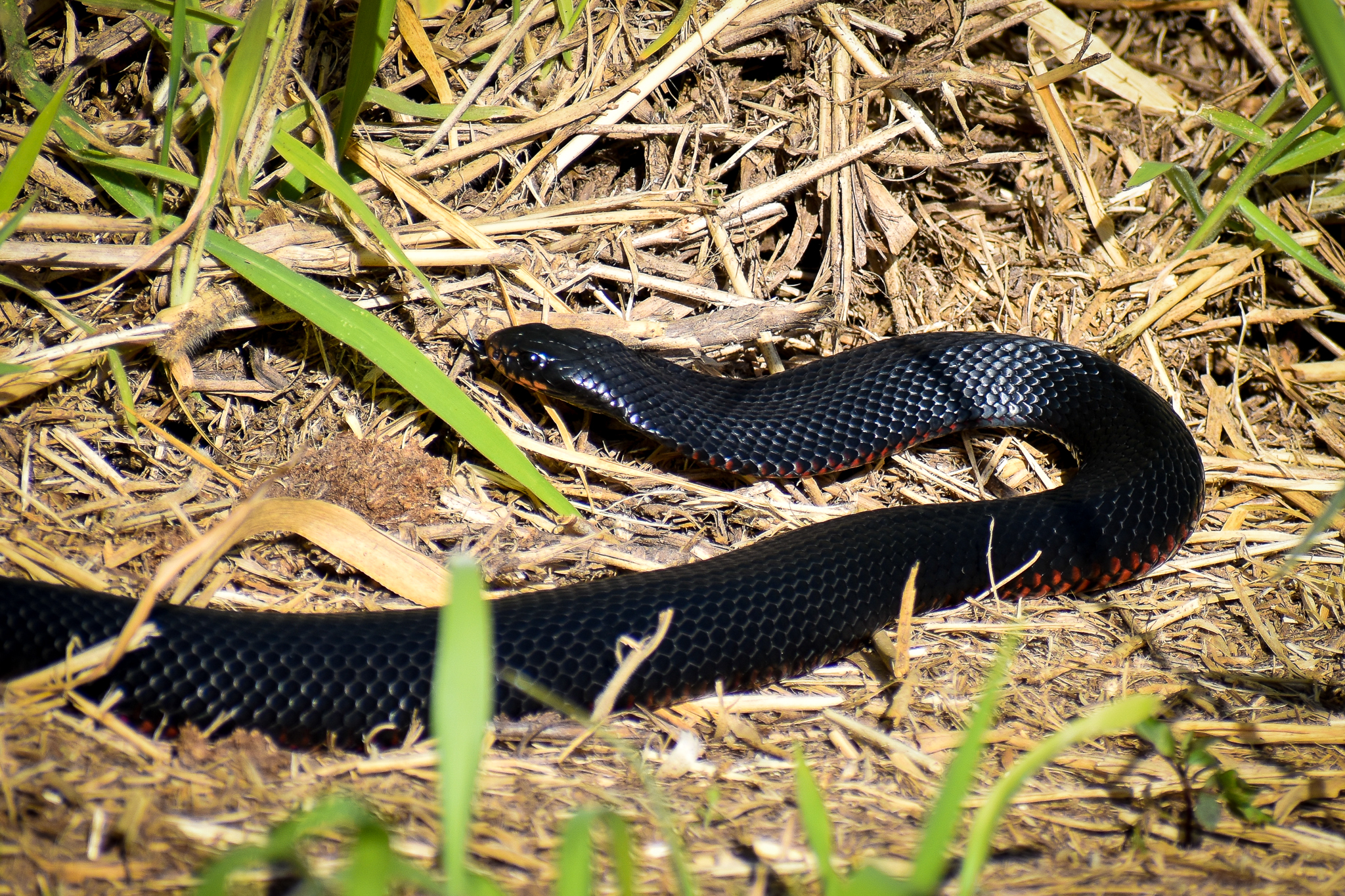
I today returned to the Kedron Brook for a second visit and found some dotterels notably. I also heard a loud rustle in the grass along the path. I paused and watched as the noise grew closer. I took a step back not knowing what it was and out emerged an absolutely beautiful Red-bellied Black Snake! It was incredibly shy retreating as soon it saw humans were out and about. A gorgeous reptile!

Birds
121) Golden-headed Cisticola Cisticola exilis
122) Striped Honeyeater Plectorhyncha lanceolata
123) Australian Pipit Anthus australis

124) Pied Stilt Himantopus leucocephalus
125) Royal Spoonbill Platalea regia
126) Tawny Grassbird Cincloramphus timoriensis
127) Olive-backed Oriole Oriolus sagittatus
128) Grey Teal Ana gracilis
129) Black-fronted Dotterel Elseyornis melanops

Herptiles
13) Red-bellied Black Snake Pseudechis porphyriacus


Invertebrates
54) Black Jezebel Delias nigrina


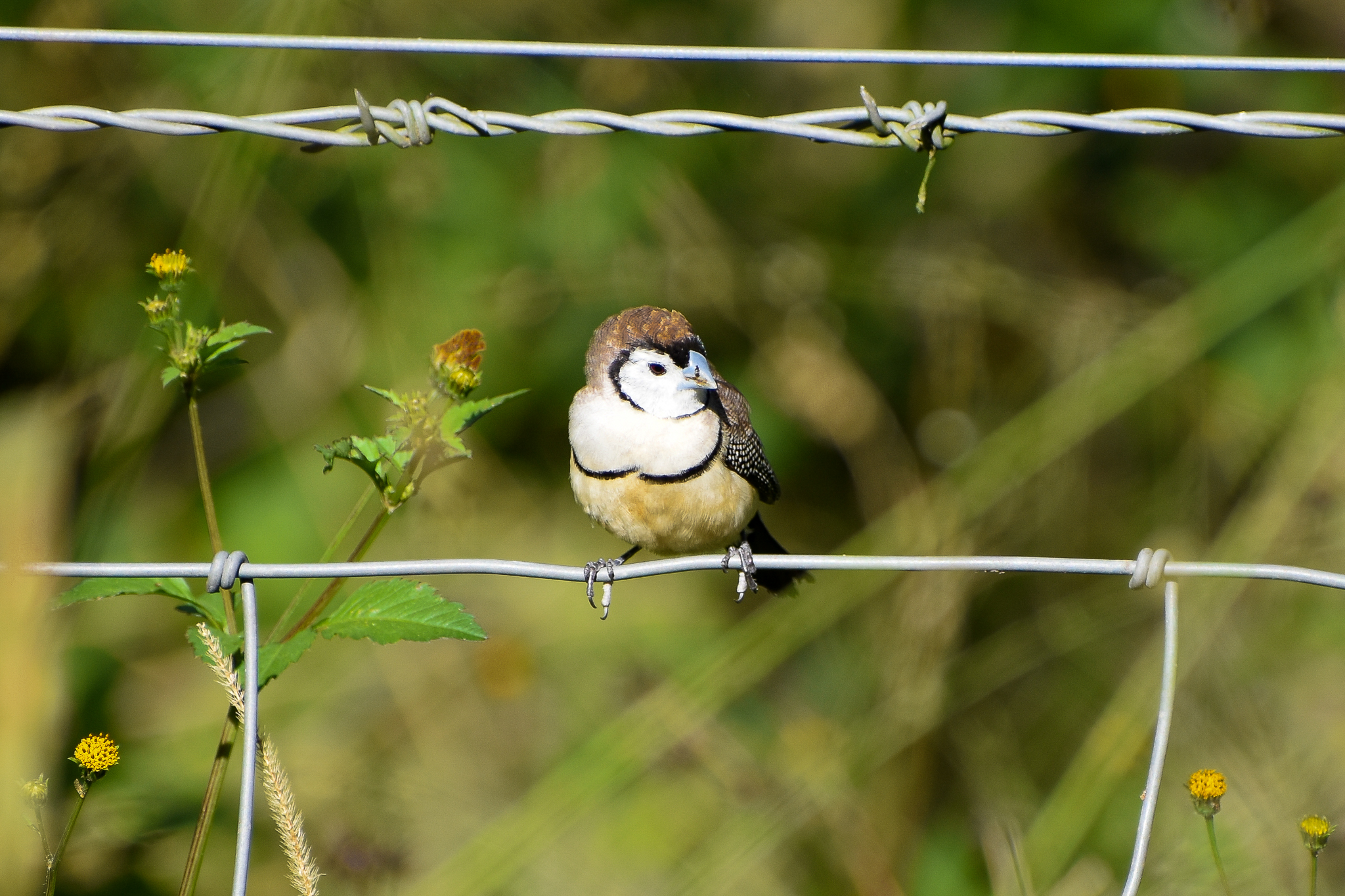
I briefly popped into Oxley Creek Common just to tick off one main target species – Brown Quail. They are weeny little things! The whole bushland area is covered with them. Flocks of them regularly cross the path and chances are if you see something move in the undergrowth, it’s a Brown Quail. Another species I was hoping to see were Double-barred Finches and fortunately within a minute of being there I came across a group of five. They are gorgeous little birds. While it’s a bit more awkward to get to in comparison to the other birdy places I have been to this year, the place itself seems excellent. I will have to return at an earlier time for a proper visit.

I have also now surpassed my 2020 total of 132 birds with 21 bird lifers and 3 reptile lifers for the year thus far (which is unprecedented for me)!

Birds
130) Wedge-tailed Eagle Aquila audax
131) Red-rumped Parrot Psephotus haematonotus
132) Brown Quail Synoicus ypsilophorus
133) Double-barred Finch Taeniopygia bichenovii

134) Pacific Heron Ardea pacifica

 
Now for the mammals and herps:

Mammals
6) Eastern Cottontail Sylvilagus floridanus
7) Groundhog Marmota monax
8) Coyote Canis latrans
9) Northern Raccoon Procyon lotor
10) Fox Squirrel Sciurus (Parasciurus) niger

Reptiles
3) Red-Eared Slider Trachemys scripta elegans
4) Broad-Headed Skink Plestiodon laticeps

Amphibians
2) American Bullfrog Lithobates catesbeianus
3) Blanchard's Cricket Frog Acris blanchardi

Thanks to @Ituri and @jayjds2 for the fun trip and good company :)

~Thylo

The snake is from my mother's house here in CT while the birds are from a short weekend trip to my girlfriend's grandmother's in New Jersey. I've also decided to try my hand at bees this year.

Birds
110) Laughing Gull Leucocephaeus atricilla
112) American Oystercatcher Haematopus palliatus

Reptiles
5) Eastern Black Ratsnake Pantherophis alleghaniensis

Apidae
1) Eastern Carpenter Bee Xylocopa virginica
2) Common Eastern Bumblebee Bombus impatiens

Cicacidae
1) Cassin's 17-Year Periodic Cicada Magicicada cassinii

~Thylo
 
The snake is from my mother's house here in CT while the birds are from a short weekend trip to my girlfriend's grandmother's in New Jersey. I've also decided to try my hand at bees this year.

Birds
110) Laughing Gull Leucocephaeus atricilla
112) American Oystercatcher Haematopus palliatus

Reptiles
5) Eastern Black Ratsnake Pantherophis alleghaniensis

Apidae
1) Eastern Carpenter Bee Xylocopa virginica
2) Common Eastern Bumblebee Bombus impatiens

Cicacidae
1) Cassin's 17-Year Periodic Cicada Magicicada cassinii

~Thylo
Bees and wasps are fun, enjoy!
 
Wow, are you able to identify Magicicada to species-level? I have a photo of a pinned one that never was solved with ID, maybe you could help?
I found a nice website specifically about Magicicada one time that had a helpful ID key. Forgot to save the link, though.
 
Some additional observations from my Cincinnati trip, many of which were at the zoo and repeated at the riverfront park.

Bird:
74. Black Vulture (Coragyps atratus)

Insect/Invertebrate:
109. European paper wasp (Polistes dominula) (Wild)
110. Blue-fronted dancer (Argia apicalis) (Wild)
111. European drone fly (Eristalis arbustorum) (Wild)

Herptiles
7. Common/European wall lizard (Podarcis muralis) (Wild)
------------------------
Reptiles
4. Common/European wall lizard (Podarcis muralis) (Wild)
------------------------
Rounding out the Cincinnati observations and some new ones from when I got back home. I'm surprised but the herp additions just keep coming. Didn't think I would get this far but I may get more than 10, probably more if I travel down south this year.

Bird:
75. Northern Mockingbird (Mimus polyglottos)

Insect/Invertebrate:
112. Bicolored striped sweat bee (Agapostemon virescens)
113. Oblique streaktail (Allograpta obliqua)
114. Japanese beetle (Popillia japonica)
115. Brown wasp mantidfly (Climaciella brunnea)
116. Squash vine borer moth (Melittia cucurbitae)
117. Eastern calligrapher (Toxomerus geminatus)
118. Garganus plant bug (Garganus fusiformis)
119. Orange sulphur (Colias eurytheme)
120. Carabid ground beetle (Lebia analis)
121. Helmeted squash bug (Euthochtha galeator)

Herptiles
8. American toad (Anaxyrus americanus)
------------------------
Amphibians
4. American toad (Anaxyrus americanus)
------------------------
 
  • Like
Reactions: MRJ
Went up for crepuscular birding at Budby Heath in Sherwood Forest last night - there are three targets at that site and that time of night (and year)- woodcock are as close to guaranteed as anything in wildlife can be, normally you get nightjar and sometimes Long-eared Owl. This time out I heard all three and saw two, but the nightjars just wouldn't get up and fly where they were visible. It's only 30 minutes up the road though, so I'll probably give it a week and have another go. Best view I've had of the owl, though, so certainly not complaining!

Birds:
155. Eurasian Woodcock - Scolopax rusticola
156. Long-eared Owl - Asio otus

Invertebrates:
49. Bishop's Mitre Shieldbug - Aelia acuminata

:)
 
Last edited:
Back
Top