Day 9: Zoo Berlin (1899) - Der Naturgeschichtlicher Führer durch den Berliner Zoologischer Garten
Page count: 154
Photographs: N/A
Illustrations/diagrams: c.60
Layout: Comprehensive walkthrough account of collection.
Map: Included as part of body of guidebook
Another very old and unusual item from my guidebook collection today, and much like the previously-discussed Zoo Berlin guidebook which opened this thread an incredibly fragile item indeed; my copy lacks the front and rear covers, the title page and much of the binding, and has several loose pages. As such, it must be noted that the above images of the front cover and title page do not correspond to my copy of the guidebook, but rather were very kindly provided to me by Dr. Leszek Solski - a senior scientific researcher and zoo historian employed at Zoo Wroclaw who possesses the world record for the largest collection of zoo guidebooks and memorabilia, and who is well-known to many of us in the zoo enthusiast community - when I originally obtained my copy and was attempting to ascertain the age and provenance of the item in question, although context clues made me fairly certain that it was published in 1899 even before this fact was confirmed.
Again, very much like the previously-discussed Zoo Berlin guidebook, this item fell into my hands through sheer serendipity - I spotted it listed on the German iteration of eBay, and the photograph of the accompanying map did not match any early edition I was familiar with, leading me to take a gamble on bidding for the guidebook. Presumably due to the fragile condition of the item, and therefore a sense of urgency by the seller to make a sale, within hours the seller ended the listing early and confirmed my successful bid - to my deep surprise, but also gratification as it meant I obtained this rarity for only around £20 including postage! Due to the fragile nature of the item, and the fact that my father has developed an amateur interest in book-binding and repair, it is currently kept at my parent's house, where my father has already repaired several of the loose pages and (when he has the free time) intends to create a protective acid-free slipcase for the fully-repaired guidebook. This guidebook was actually randomly selected a few days ago, but as I knew I would be visiting my family this weekend I deferred the post until now, in order that this post dropped at a time when I have access to the guidebook and can therefore better answer any and all questions which may result!
So, to begin discussing the guidebook itself; unlike the 1866 edition, this is a guide *
book* in all senses of the word, with a fully numbered contents page setting out the layout and presentation of the guidebook, and it is this which is the first surviving page in my personal copy:
As was the case with the 1866 edition, and would continue to be the case for some decades to come, the typeface used in this guidebook is - as one can see - fairly ornate and tricky to read if one has not come across it in the past. As I noted last week, I have been slowly practicing my ability at understanding and interpreting this typeface, as best as my (shaky at the best of times) grasp of written German allows, and the very first segment of the guidebook beyond the contents page gives some indication as to why this might be a particular target on my part -
Zur Geschichte des Gartens, or About the History of the Gardens.

This comprises a fairly-lengthy summary - eight pages in total - of the development of Zoo Berlin over the fifty years which had elapsed since it first opened in 1844, written by the director of the time Dr Ludwig Heck - father of the famous (or infamous) Heck brothers. Although several excellent books on the history of Zoo Berlin *have* been published in German-language, I am inclined to suspect that some of the details and subjects discussed within these eight pages may well remain unpublished in the English language.... which is by no means a suggestion that the information within will be unknown in Anglophone circles, of course, merely not necessarily collected together in the one location. As such, I would dearly love to learn how to read and interpret the ornate typeface used in this guide adequately enough to try my hand at translating this segment of the guide one day, in order that it may be posted on Zoochat and anywhere else interested zoo-enthusiasts may gather.
Beyond this point, the guidebook enters into the main body of the text - as has been the case with several of the items we have discussed in this thread so far, most notably the aforementioned 1866 guidebook from Zoo Berlin, this comprises a methodical and detailed walkthrough account of the collection, detailing all major exhibits and houses and providing copious information on the species held within. Three key differences between this edition of the guidebook and the one which was published over 30 years previously are, however, immediately worth noting; firstly, the guidebook goes into a lot more detail on this subject, and discusses rather a lot more species in total; secondly, the collection had grown and expanded over the decades, and therefore there are a much larger number of exhibits and houses which are discussed overall; and finally, whilst the lavish full-page illustrations of the houses and exhibits found in the earlier guidebook are absent, they have been replaced by numerous equally-detailed illustrations of key species, scattered throughout the text. Within this guidebook, mention is made of many taxa which are now either lost forever (including Javan and Caspian Tiger, and Bubal Hartebeest) and many others which are entirely-absent or vanishingly-rare in captivity now, such as Lichtenstein's Hartebeest, African Golden Cat, Somali Ostrich and Mountain Tapir.
There follows, then, a selection of pages from throughout the guidebook showing the level of detail and care which has gone into the book as a whole; firstly, the concluding paragraphs of the zoo-history segment, and the opening page of the subsequent walkthrough account, containing discussion of the Pferdhaus (Horse House) and a rather attractive drawing of a Plains Zebra:
Secondly, a double-page spread from the prolonged discussion of the wild sheep and goat exhibits visible at the collection, citing such species as Markhor, Himalayan Tahr, East Caucasian Tur, Siberian Ibex and Alpine Chamois to name but a few, and accompanied by an illustration of the lattermost species:
Thirdly, the closing portions of a segment on the Kleine Raubtier-Haus (Small Carnivore House, which in context I think refers to the size of the house rather than the carnivores, given the presence of species such as Striped Hyena and African Golden Cat) and the opening of a segment discussing the exhibits for birds of prey and carnivorous mammals native to Germany and Central Europe, both of which are accompanied by rather attractive illustrations of key taxa:
Finally, a page taken from a wider discussion of the exhibits for aquatic mammals such as beavers, otters and seals at the collection; here I have scanned only one page as the following pages are some of the most fragile and have come away from the main body of the book entirely, although fortunately the pages themselves are still intact:

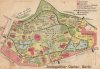
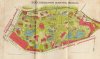
Beyond the various species and exhibit accounts, the guidebook closes with a truly-excellent map - the item which, as I already noted, is what immediately alerted me to the fact that this was something unusual, and not merely one of the various Zoo Berlin guidebooks from the opening decades of the 20th century which I am more familiar with. In general format and style, the map found here looks very much akin to those found in editions released throughout the years leading up to the Great War - all of which are wonders to behold as objects of art and aesthetics, as historical documents, and as informative material showing the state of the collection at the time they were released - but a number of subtle differences to the maps I had already encountered in exhibit location, shape or labelling
immediately caught my interest. Given the age and fragility of the guidebook as a whole, I am incredibly happy that the map has survived in such good condition - looking at it and trying to mentally position myself in the modern-day collection, visualising the location of the myriad structures which are no longer present either through the ravages of time or (in the majority of cases) the devastation of World War II feels incredibly fulfilling. It is noteworthy that there *are* some structures visible on this map which survive in some form to this day, such as some of the smaller buildings in the deer area - although the recent redevelopment for Giant Panda in recent years led to the loss of others - and the famed Antelope House.
And so concludes the longest post in this thread to date! I certainly hope that those reading this thread find this item just as fascinating and wonderful as I do, and that a myriad of questions, discussion and feedback awaits me

given the significantly longer and more in-depth nature of this guidebook, a full transcription of species of the sort I undertook for the 1866 guide is probably beyond me at present, but I would most certainly be happy to transcribe the species cited for given taxonomic groups or exhibits on request!
Either way, I open the floor to all of you!


 if I need to quote key statements and posts made elsewhere on the forum I will, naturally, but it's worth waiting to see if any first-hand accounts are forthcoming first!