A Guidebook Library: TLD's year-long randomised walkthrough of zoo guides

...or the bird cage museum which was present at Walsrode at the time....
That sounds like an interesting concept... did anyone on the forum get to see it, and if so what was it like?
Yes, I saw the Bird Cage Museum several times on my first few visits to Walsrode but haven't anything to add to @vogelcommando's description of it.

Does anybody know what happened to the Bird Cage Museum? I know the contents were sold but did somebody buy the entire collection or were the individual cages sold separately?

(Walsrode is definitely the finest bird collection I've ever seen. I am much more interested in mammals than birds but, nevertheless, Walsrode is one of my favourite European zoos; it is a very special place.)
 
Day 7 - Riber Castle Wildlife Park (1971) - Fallow Deer

full

full


Page count: 16
Photographs: 8
Illustrations/diagrams: N/A
Layout: Numbered summary of species/exhibits corresponding to map, plus brief introduction to collection and assorted notes.

Map: Located in centre pages of guidebook.

This next item represents an interesting landmark in the thread, and one which I didn't entirely expect to reach quite this soon; the first guidebook which originates from a collection which no longer exists. Riber Castle Wildlife Park was a collection located just outside Matlock, Derbyshire within the grounds of a crumbling Victorian folly (the titular castle) which was built in a faux-Gothic style. At the time this guidebook was published in 1971, the collection was focused almost entirely on native European fauna, but in later years it diversified somewhat, keeping a more "standard" selection of species such as meerkats, zebra, wallabies and so forth; however, probably the main reason anyone is liable to mention the collection in the present day is to recollect the fact that it became particularly well-known for regularly breeding several different varieties of lynx, even contributing to the captive breeding and reintroduction programme for the Eurasian Lynx. Ultimately, the financial cost of maintaining the (Grade II listed) castle ruins, and negative publicity directed at the poor welfare standards at the collection, took their toll and the zoo finally closed down in September 2000. There has been intermittent talk of redeveloping the ruined castle as luxury apartments in the intervening time, but as far as I have been able to tell these have as-yet come to naught.

full


Riber Castle Wildlife Park was not, by all accounts, a particularly good collection - elsewhere on the forum @sooty mangabey has gone on the record to state that it was "frankly fairly awful" - but as the childhood local collection of @Maguari he has expressed fond memories of the place. Several other UK Zoochatters visited the collection over the years; hopefully some of these will potter into this thread and share what thoughts, recollections and insights they can - in the meantime I shall share a selection of further images from the guidebook in question, as I know little-to-naught about the collection other than the odds and ends posted elsewhere on the forum by those who knew it through personal experience :p if I need to quote key statements and posts made elsewhere on the forum I will, naturally, but it's worth waiting to see if any first-hand accounts are forthcoming first!

full


The guidebook opens with the above introduction to the zoo, along with the accompanying potted history of Riber Castle itself, before moving into a methodical species-by-species and enclosure-by-enclosure walkthrough account of the collection, split into two rough categories - the "British Section" and the "European Section". Each entry is numbered (corresponding to the numbers on the map present within the centre pages of the guidebook) and briefly mentions some noteworthy fact or other about each species or exhibit; some more useful, or grounded in truth, than others! For instance, the entry for the waterfowl and flamingo ponds makes the fairly-outrageous claim that the reason the flamingos held at the collection are not pink is that they are "simply a different species" rather than the fact, one would presume, that their diet was not supplemented with food dye to replace the carotenoid pigment in their natural diet!

full


However, overall this segment of the guidebook is pretty good for what it is; a short handful of pages providing - essentially - a more in-depth key to the map of the collection. The map itself seems fairly decent, if uninspiring, showing the location of each species/exhibit clearly and indicating the general layout of the collection - although naturally, given the fact that I have never visited the collection in question, I cannot entirely judge how accurate it actually *is* to the layout of the collection "in life" as it were.

full


The guidebook continues with a set of notes covering, in turn, the policy at the zoo prohibiting the feeding of animals by the public, a pair of attractions newly opened at the collection in order to increase visitor numbers (a model railway and a collection of vintage cars), several paragraphs discussing the fact that the zoo would never keep non-European species barring the handful (flamingos, peafowl and pheasants) already present.

Finally, the guidebook concludes with a map of the surrounding area, giving directions on how to reach the collection - a scan of which I already included in this post given the fact that it gave useful context on the location of Riber Castle and hence suited the introductory paragraphs as illustration - along with further belabouring of the "European natives only" policy held by the collection..... - something which, as noted, ceased to be true given time! The fact that the guidebook includes directions on how to reach the collection does make me wonder, incidentally, whether it was available in the wider Matlock area as a promotional tool, given the fact that one presumes anyone buying the guidebook on-site already knew how to get there.

So, a fairly quick and cheerful post this time, and one which I feel I was able to do less justice to - but who knows, perhaps others who knew the collection better may be able to flesh my words out!
 
Wow, I'm blown away by these guidebooks you have! The photo of the Wolverine was quite interesting.
Unfortunately I have nothing else to add other than fascination!
 
Day 7 - Riber Castle Wildlife Park (1971) - Fallow Deer

full

full


Page count: 16
Photographs: 8
Illustrations/diagrams: N/A
Layout: Numbered summary of species/exhibits corresponding to map, plus brief introduction to collection and assorted notes.

Map: Located in centre pages of guidebook.

This next item represents an interesting landmark in the thread, and one which I didn't entirely expect to reach quite this soon; the first guidebook which originates from a collection which no longer exists. Riber Castle Wildlife Park was a collection located just outside Matlock, Derbyshire within the grounds of a crumbling Victorian folly (the titular castle) which was built in a faux-Gothic style. At the time this guidebook was published in 1971, the collection was focused almost entirely on native European fauna, but in later years it diversified somewhat, keeping a more "standard" selection of species such as meerkats, zebra, wallabies and so forth; however, probably the main reason anyone is liable to mention the collection in the present day is to recollect the fact that it became particularly well-known for regularly breeding several different varieties of lynx, even contributing to the captive breeding and reintroduction programme for the Eurasian Lynx. Ultimately, the financial cost of maintaining the (Grade II listed) castle ruins, and negative publicity directed at the poor welfare standards at the collection, took their toll and the zoo finally closed down in September 2000. There has been intermittent talk of redeveloping the ruined castle as luxury apartments in the intervening time, but as far as I have been able to tell these have as-yet come to naught.

full


Riber Castle Wildlife Park was not, by all accounts, a particularly good collection - elsewhere on the forum @sooty mangabey has gone on the record to state that it was "frankly fairly awful" - but as the childhood local collection of @Maguari he has expressed fond memories of the place. Several other UK Zoochatters visited the collection over the years; hopefully some of these will potter into this thread and share what thoughts, recollections and insights they can - in the meantime I shall share a selection of further images from the guidebook in question, as I know little-to-naught about the collection other than the odds and ends posted elsewhere on the forum by those who knew it through personal experience :p if I need to quote key statements and posts made elsewhere on the forum I will, naturally, but it's worth waiting to see if any first-hand accounts are forthcoming first!

full


The guidebook opens with the above introduction to the zoo, along with the accompanying potted history of Riber Castle itself, before moving into a methodical species-by-species and enclosure-by-enclosure walkthrough account of the collection, split into two rough categories - the "British Section" and the "European Section". Each entry is numbered (corresponding to the numbers on the map present within the centre pages of the guidebook) and briefly mentions some noteworthy fact or other about each species or exhibit; some more useful, or grounded in truth, than others! For instance, the entry for the waterfowl and flamingo ponds makes the fairly-outrageous claim that the reason the flamingos held at the collection are not pink is that they are "simply a different species" rather than the fact, one would presume, that their diet was not supplemented with food dye to replace the carotenoid pigment in their natural diet!

full


However, overall this segment of the guidebook is pretty good for what it is; a short handful of pages providing - essentially - a more in-depth key to the map of the collection. The map itself seems fairly decent, if uninspiring, showing the location of each species/exhibit clearly and indicating the general layout of the collection - although naturally, given the fact that I have never visited the collection in question, I cannot entirely judge how accurate it actually *is* to the layout of the collection "in life" as it were.

full


The guidebook continues with a set of notes covering, in turn, the policy at the zoo prohibiting the feeding of animals by the public, a pair of attractions newly opened at the collection in order to increase visitor numbers (a model railway and a collection of vintage cars), several paragraphs discussing the fact that the zoo would never keep non-European species barring the handful (flamingos, peafowl and pheasants) already present.

Finally, the guidebook concludes with a map of the surrounding area, giving directions on how to reach the collection - a scan of which I already included in this post given the fact that it gave useful context on the location of Riber Castle and hence suited the introductory paragraphs as illustration - along with further belabouring of the "European natives only" policy held by the collection..... - something which, as noted, ceased to be true given time! The fact that the guidebook includes directions on how to reach the collection does make me wonder, incidentally, whether it was available in the wider Matlock area as a promotional tool, given the fact that one presumes anyone buying the guidebook on-site already knew how to get there.

So, a fairly quick and cheerful post this time, and one which I feel I was able to do less justice to - but who knows, perhaps others who knew the collection better may be able to flesh my words out!
Sounds like Dudley if Dudley is good. :D
 
On the face of it Riber seems like an interesting collection, one that if I'd heard about it I'd be interested in visiting. They seem almost ahead of their time in some ways. It seems a shame that it may have fallen over in the execution!
 
Found some more information about Riber Castle Fauna Reserve and Wildlife Park in the book "Wildlife in Britain" which I will citate here :
" This collection was opened in 1963 and it specialises in European and British animals. You can see Red and Fallow Deer, Wild Boar, Scottish Wild Cats, Polecats and an interesting group of Pine Martens, among other British species. One foreign exhibit here is the Raccoon, a North American species. There are aviaries for seabirds, owls and birds of prey, ornamental pheasants and waterfowl, rare breeds of poultry and farm livestock. Riber Castle is now a ruin, but the view from Riber Hill is worth seeing. "
 
Day 8 - Exmoor Zoo (2013) - Home of the Exmoor Beast

full

full


Page count: 22 (including inside covers)
Photographs: c.60
Illustrations/diagrams: N/A
Layout: Introduction to zoo, followed by summary of highlight species at collection (classified by rough taxonomic groups) then information on conservation, keeper duties and promoting ways to support collection.
Map: Loose sheet provided with guidebook on purchase


A fairly straight-forward one today, dealing with a UK collection which seems to be discussed more often in recent years, and in my opinion rightly so; Exmoor Zoo. This collection seldom releases guidebooks, and at the time of my first visit in 2012 had not done so in nearly two decades; however, a year or so later, this long dry spell was broken and a new guidebook was released - the one which I shall discuss anon. As such, although I was not able to obtain the guidebook from the source, as it were - which led to one minor frustration as I shall relate - this represents the first guidebook to be discussed in this thread which entered my possession as a newly-released item, courtesy of one of the various Zoochatters to visit the collection that year.

Although - with some notable exceptions, which we shall hopefully discuss at some point or another during the course of this thread - the levels of excellence reached by zoo guidebooks in the UK these days seldom hit the highs reached by some of the collections which I have already lauded elsewhere in this thread, this guidebook is definitely one of the better quality items released in the UK within the last decade or so; not only are the production standards pretty high, as I shall relate, but it also provided a decent level of information and assistance to the visitor purchasing the guidebook on arriving at Exmoor Zoo - quite literally, helping to guide them around the collection. For instance, the guidebook opens by going into a reasonable amount of detail about various aspects of the informational signage dotted around the collection, drawing attention to aspects such as conservation status, diet, habitat, natural range and the activity period of the species listed, therefore priming the visitor to interpret the signage to the best possible effect. This section also calls attention to the fact that each species mentioned in the main body of the guidebook is labelled with a map reference to correspond to the map provided as a loose insert.... which is where we come to the minor frustration I mentioned above :P to wit, my copy lacks the aforementioned map!

full


Beyond this point, and a short segment introducing the zoo and giving further tips and key points for the attention of visitors, the guidebook enters into the main body of the text; a series of lavishly-illustrated pages discussing the various species held in the collection, classified roughly into groups such as "Felids, Our Wild Cats", "Small Carnivores", "Primates", "Invertebrates and Reptiles" and so forth. As can be seen in the above scan of one of the pages relating to the small cats displayed at Exmoor Zoo at the time of publication, each entry provides a colour photograph and key points of interest relating to each of the species under discussion, and often information about the specific individuals at Exmoor. In many ways, one could potentially view the general style and format of this guidebook as being in a very similar vein to that of the Riber Castle guide I discussed yesterday; giving the overall effect that the guidebook almost acts as an expanded key to the map.... although naturally this is a far superior item in terms of production value, as well as a far superior collection. Another aspect I rather like is the fact that although - as one can imagine - not every single species held at the collection at the time is highlighted or mentioned, the guidebook does not shy away from mentioning the more unusual and less stereotypically crowd-pleasing species in the collection, with mention being made of seldom-seen species such as Maned Wolf, New Guinea Singing Dog, Tayra and Potto - all of which are given just as much attention and detail as more impressive species such as leopards, cheetahs and puma!

full


Beyond the species accounts, the guidebook closes with three short but rather excellent sections; a segment mentioning the conservation and botanical efforts of the zoo, the latter of which is particularly interesting to highlight - as anyone familiar with Exmoor can relate, in the summer and autumn the grounds are thick with vegetation and contain several areas allowed to "run wild" and provide valuable natural habitat for local wildlife; a segment giving a few brief insights into the behind-the-scenes work of the keepers at the zoo; and finally a promotional segment relating various ways that the zoo-visiting public could support the collection, from memberships and adoptions to volunteering, corporate sponsorships and outreach education at schools.

full


Overall, then, this is a pretty good guidebook - especially given the fact the collection had not released one in quite some time, and that the general trajectory of such things in UK collections is to either cease producing guidebooks entirely, or produce material which is overpriced and superficial. The collection would not leave things anywhere as long before releasing another, even better guidebook.... but that is a discussion best left to the vagaries of random chance :p

In the meantime, any and all questions about the contents of this guidebook - and discussion of Exmoor Zoo at the time it was produced - would be very much appreciated and welcome!
 
ZTL says Exmoor is one of 3 ZTL zoos with the following species: Californian red-sided garter snake and ring-tail.
 
Day 9: Zoo Berlin (1899) - Der Naturgeschichtlicher Führer durch den Berliner Zoologischer Garten


full


full


Page count: 154
Photographs: N/A
Illustrations/diagrams: c.60
Layout: Comprehensive walkthrough account of collection.
Map: Included as part of body of guidebook

Another very old and unusual item from my guidebook collection today, and much like the previously-discussed Zoo Berlin guidebook which opened this thread an incredibly fragile item indeed; my copy lacks the front and rear covers, the title page and much of the binding, and has several loose pages. As such, it must be noted that the above images of the front cover and title page do not correspond to my copy of the guidebook, but rather were very kindly provided to me by Dr. Leszek Solski - a senior scientific researcher and zoo historian employed at Zoo Wroclaw who possesses the world record for the largest collection of zoo guidebooks and memorabilia, and who is well-known to many of us in the zoo enthusiast community - when I originally obtained my copy and was attempting to ascertain the age and provenance of the item in question, although context clues made me fairly certain that it was published in 1899 even before this fact was confirmed.

Again, very much like the previously-discussed Zoo Berlin guidebook, this item fell into my hands through sheer serendipity - I spotted it listed on the German iteration of eBay, and the photograph of the accompanying map did not match any early edition I was familiar with, leading me to take a gamble on bidding for the guidebook. Presumably due to the fragile condition of the item, and therefore a sense of urgency by the seller to make a sale, within hours the seller ended the listing early and confirmed my successful bid - to my deep surprise, but also gratification as it meant I obtained this rarity for only around £20 including postage! Due to the fragile nature of the item, and the fact that my father has developed an amateur interest in book-binding and repair, it is currently kept at my parent's house, where my father has already repaired several of the loose pages and (when he has the free time) intends to create a protective acid-free slipcase for the fully-repaired guidebook. This guidebook was actually randomly selected a few days ago, but as I knew I would be visiting my family this weekend I deferred the post until now, in order that this post dropped at a time when I have access to the guidebook and can therefore better answer any and all questions which may result!

So, to begin discussing the guidebook itself; unlike the 1866 edition, this is a guide *book* in all senses of the word, with a fully numbered contents page setting out the layout and presentation of the guidebook, and it is this which is the first surviving page in my personal copy:

full


As was the case with the 1866 edition, and would continue to be the case for some decades to come, the typeface used in this guidebook is - as one can see - fairly ornate and tricky to read if one has not come across it in the past. As I noted last week, I have been slowly practicing my ability at understanding and interpreting this typeface, as best as my (shaky at the best of times) grasp of written German allows, and the very first segment of the guidebook beyond the contents page gives some indication as to why this might be a particular target on my part - Zur Geschichte des Gartens, or About the History of the Gardens.

full


This comprises a fairly-lengthy summary - eight pages in total - of the development of Zoo Berlin over the fifty years which had elapsed since it first opened in 1844, written by the director of the time Dr Ludwig Heck - father of the famous (or infamous) Heck brothers. Although several excellent books on the history of Zoo Berlin *have* been published in German-language, I am inclined to suspect that some of the details and subjects discussed within these eight pages may well remain unpublished in the English language.... which is by no means a suggestion that the information within will be unknown in Anglophone circles, of course, merely not necessarily collected together in the one location. As such, I would dearly love to learn how to read and interpret the ornate typeface used in this guide adequately enough to try my hand at translating this segment of the guide one day, in order that it may be posted on Zoochat and anywhere else interested zoo-enthusiasts may gather.

Beyond this point, the guidebook enters into the main body of the text - as has been the case with several of the items we have discussed in this thread so far, most notably the aforementioned 1866 guidebook from Zoo Berlin, this comprises a methodical and detailed walkthrough account of the collection, detailing all major exhibits and houses and providing copious information on the species held within. Three key differences between this edition of the guidebook and the one which was published over 30 years previously are, however, immediately worth noting; firstly, the guidebook goes into a lot more detail on this subject, and discusses rather a lot more species in total; secondly, the collection had grown and expanded over the decades, and therefore there are a much larger number of exhibits and houses which are discussed overall; and finally, whilst the lavish full-page illustrations of the houses and exhibits found in the earlier guidebook are absent, they have been replaced by numerous equally-detailed illustrations of key species, scattered throughout the text. Within this guidebook, mention is made of many taxa which are now either lost forever (including Javan and Caspian Tiger, and Bubal Hartebeest) and many others which are entirely-absent or vanishingly-rare in captivity now, such as Lichtenstein's Hartebeest, African Golden Cat, Somali Ostrich and Mountain Tapir.

There follows, then, a selection of pages from throughout the guidebook showing the level of detail and care which has gone into the book as a whole; firstly, the concluding paragraphs of the zoo-history segment, and the opening page of the subsequent walkthrough account, containing discussion of the Pferdhaus (Horse House) and a rather attractive drawing of a Plains Zebra:

full


Secondly, a double-page spread from the prolonged discussion of the wild sheep and goat exhibits visible at the collection, citing such species as Markhor, Himalayan Tahr, East Caucasian Tur, Siberian Ibex and Alpine Chamois to name but a few, and accompanied by an illustration of the lattermost species:

full


Thirdly, the closing portions of a segment on the Kleine Raubtier-Haus (Small Carnivore House, which in context I think refers to the size of the house rather than the carnivores, given the presence of species such as Striped Hyena and African Golden Cat) and the opening of a segment discussing the exhibits for birds of prey and carnivorous mammals native to Germany and Central Europe, both of which are accompanied by rather attractive illustrations of key taxa:

full


Finally, a page taken from a wider discussion of the exhibits for aquatic mammals such as beavers, otters and seals at the collection; here I have scanned only one page as the following pages are some of the most fragile and have come away from the main body of the book entirely, although fortunately the pages themselves are still intact:

full


Beyond the various species and exhibit accounts, the guidebook closes with a truly-excellent map - the item which, as I already noted, is what immediately alerted me to the fact that this was something unusual, and not merely one of the various Zoo Berlin guidebooks from the opening decades of the 20th century which I am more familiar with. In general format and style, the map found here looks very much akin to those found in editions released throughout the years leading up to the Great War - all of which are wonders to behold as objects of art and aesthetics, as historical documents, and as informative material showing the state of the collection at the time they were released - but a number of subtle differences to the maps I had already encountered in exhibit location, shape or labelling immediately caught my interest. Given the age and fragility of the guidebook as a whole, I am incredibly happy that the map has survived in such good condition - looking at it and trying to mentally position myself in the modern-day collection, visualising the location of the myriad structures which are no longer present either through the ravages of time or (in the majority of cases) the devastation of World War II feels incredibly fulfilling. It is noteworthy that there *are* some structures visible on this map which survive in some form to this day, such as some of the smaller buildings in the deer area - although the recent redevelopment for Giant Panda in recent years led to the loss of others - and the famed Antelope House.

full


And so concludes the longest post in this thread to date! I certainly hope that those reading this thread find this item just as fascinating and wonderful as I do, and that a myriad of questions, discussion and feedback awaits me :) given the significantly longer and more in-depth nature of this guidebook, a full transcription of species of the sort I undertook for the 1866 guide is probably beyond me at present, but I would most certainly be happy to transcribe the species cited for given taxonomic groups or exhibits on request!

Either way, I open the floor to all of you!
 
Last edited:
Unsurprisingly as a casual history nerd, I'm very much enjoying these historical guidebooks. A few questions bubbled up in my psyche as I read:

Page count: 154
Illustrations/diagrams: c.60
So, to begin discussing the guidebook itself; unlike the 1866 edition, this is a guide *book* in all senses of the word, with a fully numbered contents page setting out the layout and presentation of the guidebook

Within the zoo staff/support structure, who are the ones that have historically - and presently, if different - been responsible for producing the guidebooks? It seems like a guidebook of that size would have taken a considerable amount of time to write and illustrate, and knowing how busy keepers and other zoo staff generally are with their day-to-day work I'm curious who would have dedicated a significant amount of time to it as their job. Today it would make sense for the zoo's marketing/PR department to produce it (or maybe for a contracted company to do so?) but I'm unsure if zoos had such a thing back in the 19th century.

looking at it and trying to mentally position myself in the modern-day collection, visualising the location of the myriad structures which are no longer present either through the ravages of time or (in the majority of cases) the devastation of World War II feels incredibly fulfilling. It is noteworthy that there *are* some structures visible on this map which survive in some form to this day, such as some of the smaller buildings in the deer area - although the recent redevelopment for Giant Panda in recent years led to the loss of others - and the famed Antelope House.

As an estimate, how many of the structures in that 1899 map still survive in some form or another today, and what proportion of them were destroyed as a result of WWII? I'd assume the war affected the structures of some German zoos more than others, but I've never been quite sure on the details or extent of that damage... this is an area I've been mildly curious about since researching German zoos last year but that I never got around to learning more about.

As another historical question, how would the Berlin collection in 1899 compare to other German and worldwide zoos at that time? Was Berlin one of the premier zoological collections in that time period as well or was it more comparable to other zoos around?
 
Within the zoo staff/support structure, who are the ones that have historically - and presently, if different - been responsible for producing the guidebooks? It seems like a guidebook of that size would have taken a considerable amount of time to write and illustrate, and knowing how busy keepers and other zoo staff generally are with their day-to-day work I'm curious who would have dedicated a significant amount of time to it as their job. Today it would make sense for the zoo's marketing/PR department to produce it (or maybe for a contracted company to do so?) but I'm unsure if zoos had such a thing back in the 19th century.
An interesting question. Of course zoos have always marketed themselves but I doubt the guide book would have been the product of an in-house marketing person, if such existed. Likewise I doubt keepers would have got anywhere near it, at this time they were regarded as a form of agricultural labourer. Perhaps curators might have contributed however it seems to have a consistent style which suggests one author. I'm thinking a zoologist, maybe from the university, may have been contracted to write the content. Production would have been contracted out to a publishing house.
 
Riber Castle Wildlife Park was not, by all accounts, a particularly good collection - elsewhere on the forum @sooty mangabey has gone on the record to state that it was "frankly fairly awful" - but as the childhood local collection of @Maguari he has expressed fond memories of the place. Several other UK Zoochatters visited the collection over the years; hopefully some of these will potter into this thread and share what thoughts, recollections and insights they can - in the meantime I shall share a selection of further images from the guidebook in question, as I know little-to-naught about the collection other than the odds and ends posted elsewhere on the forum by those who knew it through personal experience :p if I need to quote key statements and posts made elsewhere on the forum I will, naturally, but it's worth waiting to see if any first-hand accounts are forthcoming first!

The Riber I knew was in many ways quite a different beast from the one in this guide. in the seventies it was strongly-themed; by the time I knew it in the early nineties it was a generic small zoo with generic 'small zoo' animals.

The big thing were always the lynx - at one point they had European, Siberian, Canadian, Bobcat and (no longer considered a lynx!) Caracal. In later years they simply had lots of European.

My favourites were always Zola and Zabre the Grant's Zebras and, above all, George the Griffon Vulture. In front of the castle were the Derwent View Paddocks (Guanaco and Collared Peccary for most of the time I was visiting), which had glorious views out across Matlock and the Derwent Valley. They also had a few old dinosaur models and other assorted oddities.

I actually went up to the zoo site after it closed, as it had open days while bits of the zoo (including animals!) were being auctioned off. We were able to walk around most of it; a rather melancholy experience. The post-closure zoo can be seen in climactic scenes of the Shane Meadows film 'Dead Man's Shoes' - a good film, but be warned - the zoo sequences are not the most pleasant, to put it mildly (though not for any animal-related reasons). For those who have seen it, the space where that attack happens is the old Red-necked Wallaby house..!


Sounds like Dudley if Dudley is good. :D

Dudley has a stonking, genuine, 11th century fortress - Riber Castle is a Victorian folly built by a family with delusions of grandeur. Dudley wins there..!


On the face of it Riber seems like an interesting collection, one that if I'd heard about it I'd be interested in visiting. They seem almost ahead of their time in some ways. It seems a shame that it may have fallen over in the execution!

The execution was always... basic!
 
From my own notes at the time this was the species line-up at Riber shortly before it closed - which if nothing else shows how far it strayed from publishing a stern notice explaining why the animals it has were definitely British..!


African Crested Porcupine
Arctic Fox
Asian Short Clawed Otter
Black-tailed Prairie Dog
Brazilian Agouti (probably hybrids)
Capybara
Chinchilla
Collared Peccary
Domestic Goat
Domestic Pig
Domestic Rabbit (Several breeds kept in a large building know as the Rabbit Patch - billed as the largest Rabbit Hutch in Britain..!)
Dwarf Zebu
European Lynx
Fallow Deer (the park also held Sika and Reindeer during the 1990s)
Fancy Mouse
Fancy Rat
Geoffroy's Cat
Gerbil
Guanaco
Guinea Pig
Jird sp.
Jungle Cat
Mara
Meerkat
Parma Wallaby
Grant's Zebra
Red-necked Wallaby
Reeves' Muntjac
Ring-tailed Coati
Roborovski's Dwarf Hamster
Scottish Wildcat
Shetland Pony
Siberian Chipmunk
Soay Sheep
Spiny Mouse sp.
Wild Boar

American Bald Eagle
Barn Owl
Black-capped Conure
Blue Peafowl
Budgerigar
Chinese Painted Quail
Cockatiel
Collared Dove
Diamond Dove
Domestic Duck
Domestic Chicken
Domestic Guinea Fowl
Domestic Pigeon
Egyptian Goose
Emu
European Buzzard
European Eagle Owl
European Jay
Ferruginous Hawk
Fischer's Lovebird
Golden-mantled Rosella
Golden Pheasant
Great Horned Owl
Greater Rhea
Griffon Vulture
Gyr x Peregrine Falcon
Harris Hawk
Kestrel
Lanner Falcon
Little Owl
Mallard
Muscovy Duck
Peach-faced Lovebird
Pennant Parakeet
Red-fronted Amazon
Red-rumped Parakeet
Ring-necked Parakeet
Saker Falcon
Saker x Peregrine Falcon
Common Scops Owl
Short-eared Owl
Silver Pheasant
Snowy Owl
Steppe Eagle
Tawny Owl
Yellow Golden Pheasant
Zebra Finch

Bosc's (Savanna) Monitor
California King Snake
Corn Snake
European Pond Terrapin
Green Iguana
Hermann's Tortoise
Mexican King Snake
Red-eared Slider
Royal Python
Spur-thighed Tortoise

Eastern Giant African Land Snail
Vietnamese Stick Insect
Mexican Rose-haired Tarantula

:)
 
From my own notes at the time this was the species line-up at Riber shortly before it closed - which if nothing else shows how far it strayed from publishing a stern notice explaining why the animals it has were definitely British..!


African Crested Porcupine
Arctic Fox
Asian Short Clawed Otter
Black-tailed Prairie Dog
Brazilian Agouti (probably hybrids)
Capybara
Chinchilla
Collared Peccary
Domestic Goat
Domestic Pig
Domestic Rabbit (Several breeds kept in a large building know as the Rabbit Patch - billed as the largest Rabbit Hutch in Britain..!)
Dwarf Zebu
European Lynx
Fallow Deer (the park also held Sika and Reindeer during the 1990s)
Fancy Mouse
Fancy Rat
Geoffroy's Cat
Gerbil
Guanaco
Guinea Pig
Jird sp.
Jungle Cat
Mara
Meerkat
Parma Wallaby
Grant's Zebra
Red-necked Wallaby
Reeves' Muntjac
Ring-tailed Coati
Roborovski's Dwarf Hamster
Scottish Wildcat
Shetland Pony
Siberian Chipmunk
Soay Sheep
Spiny Mouse sp.
Wild Boar

American Bald Eagle
Barn Owl
Black-capped Conure
Blue Peafowl
Budgerigar
Chinese Painted Quail
Cockatiel
Collared Dove
Diamond Dove
Domestic Duck
Domestic Chicken
Domestic Guinea Fowl
Domestic Pigeon
Egyptian Goose
Emu
European Buzzard
European Eagle Owl
European Jay
Ferruginous Hawk
Fischer's Lovebird
Golden-mantled Rosella
Golden Pheasant
Great Horned Owl
Greater Rhea
Griffon Vulture
Gyr x Peregrine Falcon
Harris Hawk
Kestrel
Lanner Falcon
Little Owl
Mallard
Muscovy Duck
Peach-faced Lovebird
Pennant Parakeet
Red-fronted Amazon
Red-rumped Parakeet
Ring-necked Parakeet
Saker Falcon
Saker x Peregrine Falcon
Common Scops Owl
Short-eared Owl
Silver Pheasant
Snowy Owl
Steppe Eagle
Tawny Owl
Yellow Golden Pheasant
Zebra Finch

Bosc's (Savanna) Monitor
California King Snake
Corn Snake
European Pond Terrapin
Green Iguana
Hermann's Tortoise
Mexican King Snake
Red-eared Slider
Royal Python
Spur-thighed Tortoise

Eastern Giant African Land Snail
Vietnamese Stick Insect
Mexican Rose-haired Tarantula

:)
Sounds all british to me
 
Within the zoo staff/support structure, who are the ones that have historically - and presently, if different - been responsible for producing the guidebooks? It seems like a guidebook of that size would have taken a considerable amount of time to write and illustrate, and knowing how busy keepers and other zoo staff generally are with their day-to-day work I'm curious who would have dedicated a significant amount of time to it as their job.

Perhaps curators might have contributed however it seems to have a consistent style which suggests one author. I'm thinking a zoologist, maybe from the university, may have been contracted to write the content. Production would have been contracted out to a publishing house.

In many cases, these historical guidebooks were often written by the directors of the zoological collections in question, or other senior management figures - for instance, I have already mentioned the fact that the 1989 guidebook to Tierpark Berlin covered some days ago was written by the director at the time Heinrich Dathe, the 1877 guidebook for London Zoo was (as can be seen from the information on the front cover) written by the secretary of the Zoological Society of London, Philip Lutley Sclater, and in this particular case the guidebook was written by the director, Dr Ludwig Heck.

As for publication and production, this was done in-house by Aktien-Verein des Zoologischen Gartens zu Berlin, which also published the postcards and other printed material issued by Zoo Berlin at the time. When I have the opportunity, I intend to share some photographs of a rather excellent "coffee-table" style book also published by the zoo in 1899, which comprises over a hundred pages of photographic material showing species held at the zoo. Not to get too far ahead of myself - I may well end up posting about the guidebooks in question at some point, after all - but the guidebooks issued by Zoo Berlin in the first decade or so of the 20th century incorporated many of these photographs.
 
As an estimate, how many of the structures in that 1899 map still survive in some form or another today, and what proportion of them were destroyed as a result of WWII? I'd assume the war affected the structures of some German zoos more than others, but I've never been quite sure on the details or extent of that damage... this is an area I've been mildly curious about since researching German zoos last year but that I never got around to learning more about.

Fewer than half a dozen I think, and possibly as few as three or four - as noted, most of the oldest surviving structures were located in the complex of deer paddocks and enclosures which was largely demolished a few years ago to allow the construction of the Giant Panda exhibit, although I have a feeling at least one or two survived. It should also be noted that the Antelope House was completely gutted by the events of WWII, and subsequently repaired and rebuilt - as such only the overall shell of the building is original to this time.

As for the extent of the damage to the zoo as a whole, it is no overstatement to say total destruction; using some of my guidebooks from the time period immediately prior to WWII, during the war, and subsequent to the war I wrote a fairly substantial thread on the subject a year or so ago, with the central focus of the thread being a full translation of the German-language account of the war years which was published in the 1951 guidebook written by the post-war director Katharina Heinroth.

As such, I won't overly repeat myself here, but rather will link to the thread in question:

The Impact Of WWII on Berlin Zoo - as illustrated by maps of the time [Berlin Zoo]

However, I *will* repost two specific aspects of the aforementioned thread; firstly, an extract from the account written by Heinroth detailing the final days of WWII:

The final battles at the end of April 1945 were devastatingly big; at the bitter end of the war, our wonderful zoo was turned into a desolate battlefield, littered with bomb craters, criss-crossed by trenches and battered by the constant onslaught of tank warfare. All of the larger houses and buildings had variously been bombed, incinerated or hit by artillery fire, and not a single roof remained intact in the entire zoo. In the place of animal houses and enclosures stood mountains of rubble, the perimeter wall was pockmarked with gigantic holes and gaps, and piles of human and animal corpses lay scattered among masonry debris and the remains of fallen trees; in short, the zoo was a picture of horror.

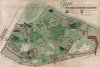
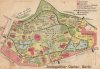
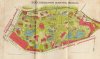
Secondly, the following maps provided in the 1931, 1941 and 1951 guidebooks respectively show the extent of the destruction pretty starkly - note that the footplan of the zoo was somewhat larger by 1931, and that many of the remaining structures visible in the 1951 map represent ruined, empty shells awaiting demolition:

IMG_20201004_0001.jpg

IMG_20201004_0002.jpg

IMG_20201004_0003.jpg
 

Attachments

  • IMG_20201004_0003.jpg
    IMG_20201004_0003.jpg
    254.1 KB · Views: 66
  • IMG_20201004_0002.jpg
    IMG_20201004_0002.jpg
    246.8 KB · Views: 65
  • IMG_20201004_0001.jpg
    IMG_20201004_0001.jpg
    161.4 KB · Views: 65
and in this particular case the guidebook was written by the director, Dr Ludwig Heck.

I would have suggested the Director, except you mentioned he had written the introductory history, so I assumed that the remainder was by another. But that certainly makes sense.

As for publication and production, this was done in-house by Aktien-Verein des Zoologischen Gartens zu Berlin, which also published the postcards and other printed material issued by Zoo Berlin at the time.
"Akien-Verein" translates as "Share-Association", in other words the organization that own/runs the zoo. Of course they would be the legal publishers, but that still begs the question did they produce it internally or contract it out.
 
I would have suggested the Director, except you mentioned he had written the introductory history, so I assumed that the remainder was by another. But that certainly makes sense.

As a matter of fact, the authorship of the guidebooks for Zoo Berlin continued to be the responsibility of the Director in more-or-less unbroken sequence until the final guidebook (written by the recently-deceased Bernhard Blaszkiewitz) was published in 2013; given the previously-discussed antipathy which the current director is said to hold for the concept of zoological guidebooks, this perhaps is another reason they are no longer produced :P

Of course they would be the legal publishers, but that still begs the question did they produce it internally or contract it out.

If *anywhere* would have done it, I imagine Berlin in their literal "Imperial phase" - to pinch a term from Neil Tennant of the Pet Shop Boys - would have been the place to do it!
 
Back
Top