Day 18: Highland Wildlife Park (2006) - Explorers Guide
Page count: 15 (including rear cover)
Photographs: 27
Illustrations/diagrams: 24 (including two large diagrams showing relative size of species in collection)
Layout: Comprehensive walkthrough account of collection.
Map: Double-page map within centre of guidebook
This time round we come to a guidebook for one of my favourite UK collections - and, indeed, the first I ever visited. This particular item originates from a fairly significant point in the history of Highland Wildlife Park, being issued in the final year or so before the focus of the collection was significantly retooled, from strictly displaying species which were native to Scotland - whether present-day, historic or prehistoric - to the display of species native to mountainous and boreal habitats throughout the world. As such, it provides a rather interesting look at the status of HWP immediately before these massive changes took place, and does so in a rather appealing fashion; as I shall demonstrate anon, the best way to describe this guidebook is "
short but choice" methinks.
This guidebook - as with many of the items I have discussed thus far - more or less comprises a walkthrough account of the species and exhibits within the collection in question, in this case divided into various ecological sub-sections and biomes, preceded by a general introduction to the collection. Given the relative brevity of this guidebook, the aforementioned significance it holds as a record of Highland Wildlife Park immediately before it ceased to focus purely on native fauna, and the fact that this collection is both one of the more highly-regarded amongst European zoo enthusiasts yet also one of the least-visited in relative terms due to how remote it is, I feel it is reasonably justified to discuss the individual segments of this guidebook in more detail than I have for some of the preceding items in this thread. This will, I think, allow me to fully illustrate the quality in content and presentation visible within. I will also list each of the species mentioned in the text, highlighting in bold italics those which are still displayed at Highland Wildlife Park now.

The guidebook opens with a brief summary detailing the focus of Highland Wildlife Park at the time of release, before noting the fact that the guidebook segments and the map within are all colour-coded to match the signposts and educational material within the collection; this is stated to be a deliberate choice to allow the reader of the guidebook to quite literally use it as a guide around the collection during their visit, something which several zoo guides attempt to do but due to either the length of the guidebook, or the quality of the contents within, is easier said than done. Having never visited the collection during this timespan, with all of my visits coming either significantly earlier or rather later, I can only make an educated guess at how well it would have achieved this objective; however, given the brevity of the guidebook, the format and presentation, and the content of the text I suspect it probably served this purpose well.
Beyond here, the text moves onto discussion of various aspects of the "
Main Reserve" of Highland Wildlife Park; that is to say, the sizeable drive-through area which was, and is, stocked with the larger hoofstock within the species collection at HWP. This segment is a particular highlight of the guidebook I feel, pointing out the glacial features dotted throughout the reserve (erratic boulders, morraines and drumlins), discussing the native vegetation and forest which once blanketed the Scottish Highlands, and highlighting the various species of wild birds - especially waders such as curlew, redshank and woodcock - which breed within the reserve over the summer months.

Overleaf, this section of the guidebook contains a rather excellent diagram of the various hoofstock species held within the reserve with a human figure to scale, along with short descriptions of the various species in question; these make note of various aspects of their behaviour and biology, discuss their place within the native fauna of Scotland, and in some cases make allusions to the extinct taxa they are standing-in for.
Species held within the Main Reserve at this time were as follows:
- Domestic Reindeer
- Red Deer
- Mouflon
- Highland Cattle
- Przewalski's Horse
- Soay Sheep
- European Bison.
The next pair of exhibit complexes discussed are "
Animals Of The Past", a segment devoted to species which had once been native to Scotland but which had been extirpated over the centuries; and "
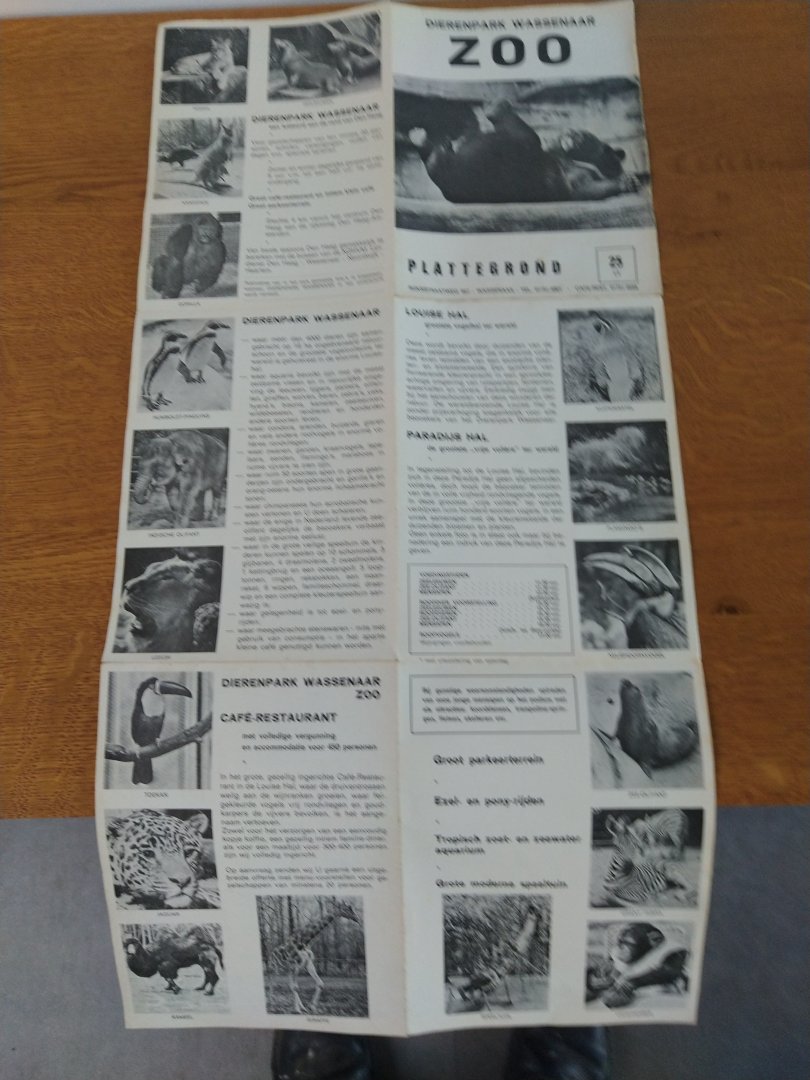
Forest Habitat", which as the name would tend to suggest focused on various species native to the ancient Caledonian forest which once covered vast stretches of the Scottish Highlands,. Each species account - as is the case throughout the remainder of this guidebook - is accompanied by a small cartoon symbol which is replicated on the collection map within the centre pages, and much like the accounts within the "Main Reserve" segment of the text are short - seldom more than a sentence or so - but provide a pretty good range of information detailing key features of the species in question. Given the fact that this general layout is replicated throughout the species and exhibit accounts within the guidebook, the below image of these particular pages can be taken as a fairly good representation of those that follow.
Species held within "Animals Of The Past" are listed as follows:
- Eurasian Lynx
- Red-billed Chough
- European Wolf
- European Forest Reindeer
- Wild Boar
Incidentally, this area of the collection was located in the general area where Snow Leopard, Markhor and Polar Bear can be found now, as far as can be judged from the map.
Species held within "Forest Habitat" are listed as follows:
- European Polecat
- Scottish Wildcat
- European Eagle-owl
- Pine Marten
- Red Squirrel (wild)
- Capercaillie
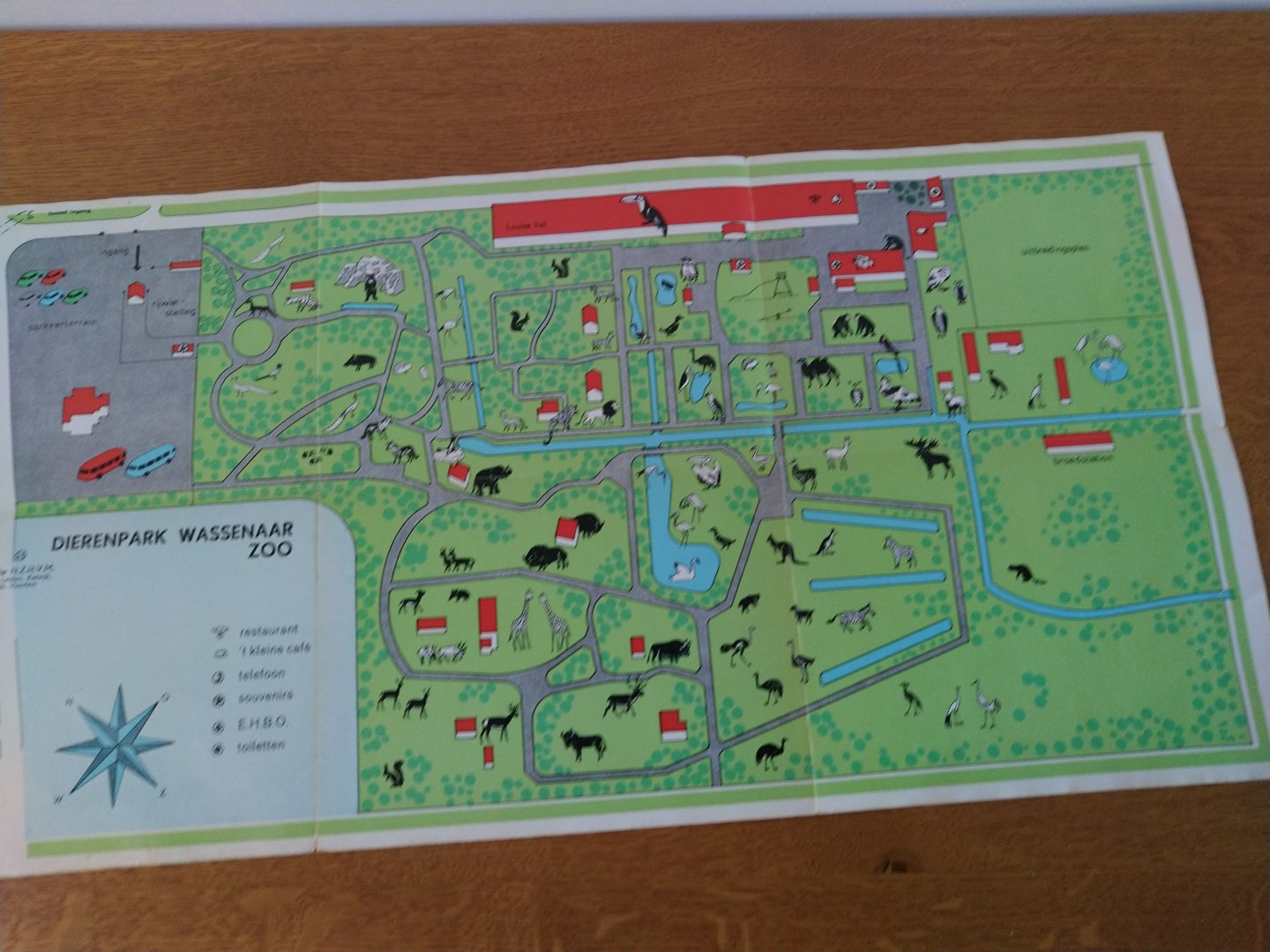
Beyond this point, we reach the central pages, where the above map can be found; as can be seen it is somewhat more stylised and cartoonish than the current map, but nonetheless is clearly labelled with key information - including the aforementioned symbols for each species discussed within the guidebook - and suits the overall aesthetic of the guidebook well.
The next sub-section of the guidebook pertains to an area of the collection which, as far as I can tell, is now located somewhere in the rough vicinity of the Siberian Tiger exhibit complex and was devoted to "
Moorland Habitat" - judging from the text, this area contained a small area of strip-burned heather used as an educational tool for discussing this particular ecological biome within the Scottish Highlands, along with an exhibit for the native Red Grouse. The guidebook then discusses the
"Tundra Habitat" found within the various high plateaux of the Cairngorms, within which the two species displayed in this area at the time of publication - and uniquely for this guidebook, still displayed in the exact same area of the collection today - are cited as
Arctic Fox and
Snowy Owl.
The guidebook then continues the walkthrough account of the collection with discussion of the "
Wetland Habitat" of Scotland; as can be seen from the map, this was not one discrete area of Highland Wildlife Park but represented two or three sections within the site, all broadly linked by the ecosystem which they represented. For instance, mention is made here of a large lochan running alongside the Visitor Centre which was used by various species of wintering and breeding waterfowl - the current location of the Japanese Macaque exhibit - and of a small vivarium exhibit containing a number of native reptiles and amphibians, designed to resemble the source of a river.
Species held within "Wetland Habitat" are listed as follows:
- European Otter
- Slow Worm
- Common Lizard
- Palmate Newt
- Beaver
- European Elk
The final ecosystem discussed within the guidebook represents the "Woodland Habitat", an area which appears to have been located within the general footprint of the current Red Panda exhibit and its environs, and which was devoted to the species native to the broadleaf woodland which once covered the vast majority of the UK; it is noted within the text that whilst very little native broadleaf woodland survives in Scotland, as recently as the 1950s almost the entire site on which Highland Wildlife Park is located was covered by such habitat.
Species held within "Woodland Habitat" are listed as follows:
- Tawny Owl
- European Badger
- Red Fox
- Black Grouse
Beyond here, the walkthrough account of the collection ends with a second diagram, very much akin to that shown within the account of the "Main Reserve", showing the relative sizes of several of the species discussed over the preceding pages - both in comparison to one another and to a human being - after which the guidebook itself concludes with a rather attractive segment showing a compilation of various photographs taken at Highland Wildlife Park at different points across the year, alongside brief sentences explaining the images in question, with the general aim of depicting the wide range of captive and wild life-cycles taking place within the collection.

As I noted at the start of this particular review, I am rather taken with this guidebook; although it is not very long, and the species accounts are the very opposite of detailed, it nonetheless performs the task at hand - promoting the collection, guiding the visitor throughout the collection and helping to give an insight into the motivation and focus of the collection... and thus, the wide variety of interlinked ecosystems which once spanned Scotland, along with the rest of the UK, and which now survive only in a stunted and impoverished form. Much as I very much like the "new" Highland Wildlife Park, and think that it is a better collection now in all relevant aspects, reading this guidebook does make me wish that more collections like *
this* Highland Wildlife Park still existed now.
As ever, any questions, remarks or observations are very much welcome!

I have never been 100% certain whether it's a golden cat or not; the adult looks pretty good for GC but the cub slightly less so.