Please note: The Pongidae was incorporated into the Hominidae several years ago.EASTERN GORILLA - Gorilla beringei
Short taxonomy: Synapsida > Primates > Pongidae
You are using an out of date browser. It may not display this or other websites correctly.
You should upgrade or use an alternative browser.
You should upgrade or use an alternative browser.
Kakapo's Photographic Collection of Endangered Species
- Thread starter Kakapo
- Start date

Please note: The Pongidae was incorporated into the Hominidae several years ago.
He knows; he just doesn't care
 despite the fact he is the same age as me, he refuses to accept any taxonomic system which is even as young as *you* are.
Kakapo
Well-Known Member
Please note: Why should I accept such nonsensic change without reasoning, just because someone else said it and fighting against scientific consensus?
(p. s. to the other guy, I ignore trolling and continuous lies and harassing, in case you realize your endless efforts for pursue everyone that uses it's brain are futile).
(p. s. to the other guy, I ignore trolling and continuous lies and harassing, in case you realize your endless efforts for pursue everyone that uses it's brain are futile).

Please note: Why should I accept such nonsensic change without reasoning, just because someone else said it and fighting against scientific consensus?
Who is fighting against scientific consensus? You would be hard-pressed to find any scientists still advocating the use of Pongidae, since it has been proven conclusively that Pan is the extant sister genus to Homo. Can you given any example of a scientist who still uses Pongidae?
(p. s. to the other guy, I ignore trolling and continuous lies and harassing, in case you realize your endless efforts for pursue everyone that uses it's brain are futile).
Out of curiosity, which bit is the lie, that you are the same age as me, or that you have gone on the record several times that only taxonomy older than the 1950s and the birth of DNA research is the only true "scientific consensus" in your eyes?
Kakapo
Well-Known Member
I have no idea of why you use the word "still", looks like you think all knowledge in mankind was acquired just a while ago and all the previous knowlegde is invalid? Anyway there is a list of scientists that uses Pongidae as family, much shorter than would be the total list (because there are toooooo many pages of results for include all), not including publications from institutions without concrete authors (f. e. British Museum (Natural History), Wistar Institute of Anatomy and Biology, U.S. Fish and Wildlife Service, the Smithsonian, etc) (despite I realize these have the most of the publications!) and not including countless equally valid non-scientific media such as infinite divulgative natural history books/encyclopedias, sheets, virtual media, etc.
-Alfred Edmund Brehm
-Armando Bilardo
-C S Churcher
-Clifford J Jolly
-Colin P Groves
-Daniel Giraud Elliot
-Duane A Schlitter
-Edward Ottway Dodson
-Erich Thenius
-F I B Kayanja
-F Krapp
-F Müller
-Francis George Allman Barnard
-Frank W Gorham
-Frederick Charles Bawden
-Frederick Nutter Chasen
-Frederick Tilney
-G Lampel
-George Henry Hamilton Tate
-Gerrit Smith Miller
-Glover Morrill Allen
-Gordon Floyd Ferris
-H W Ludwig
-Hans-Reiner Simon
-Henry Aslop Riley
-Homer William Smith
-Hugh H. Genoways
-I Tekkaya
-J Kälin
-J. Knox Jones
-Jack Fooden
-James Richard Ewart Mills
-Jane Thornback
-Jean-Lou Jutine
-John Eric Hill
-John Maxwell Anderson
-John Reeves Ellerman
-John Zachary Young
-K N Prasad
-Ke Chung Kim
-Kristina M. Adams
-L Martin
-Loris Shano Russell
-M Genoud
-M R Hone
-M R Stanley Price
-Mary Jane Guthrie
-O Kieschnick
-Otto Appel
-Otto Zur Strassen
-Paul Amos Moody
-Paul Sorauer
-Percy Milton Butler
-Peter Andrews
-Peter John Andrews
-Peter Vogel
-Phillip V Tobias
-Raymonde Cintract
-René Laubach
-Richard Eliot Blackwelder
-Richard Pearson Strong
-Robert D. Adlard
-Roger D Price
-Ronald Hamlyn-Harris
-Ruth M. Blackwelder
-S R K Chopra (describer of Gigantopithecus)
-Samuel Charles Kendeigh
-Samuel F Hildebrand
-Seth Eugene Meek
-Stephen L Williams
-Suzanne B Mclaren
-Sydney Anderson
-T I Molleson
-Terence Charles Stuart Morrison-Scott
-Theodore Cedric Ruch
-Thomas Donald Carter
-William D Turnbull
-Wolfbernhard B Spatz
--------------------------------
I really don't believe that you are not enough intelligent as for know which is true and which is the lie, so clearly this is a retoric question did for the only purposing bullying once more. I don't waste my time in replying bullys.
Railing again the thread and hoping that no other trolls derail it:
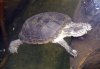
VIETNAMESE POND TURTLE - Mauremys annamensis

Photo taken at: Plzen zoo, Czech republic
Short taxonomy: Sauropsida > Chelonia > Emydidae (please note, if I include the "short taxonomy" section is for teach zoochatters the most logical and widely accepted taxonomy for each, so don't start telling me that this belong to Geoemydidae instead Emydidae, that the genus should be Annamemys instead Mauremys (as was signaged in Plzen zoo), that the valid name for the order is Testudines and not Chelonia, or that I considere groups as even-toed mammals, or monocotyledons, or birds, or mammals (all of these already stated in this thread and nobody said that they're incorrect), and these groups are invalid and doesn't exists because we all are bony fishes according to modern "taxonomy". If you want you can said instead that YOU want to change Mauremys from Emydidae to Geoemydidae, being that your personal opinion, and not that "please note: Mauremys was incorporated into the Geoemydidae several years ago". But of course this will not contribute in nothing to the thread nor to the forum, so the best way is keep silent and learn or instead tell only constructive things)
Native range: central Vietnam
Ex-situ frequence: Common
Danger factors: Main threat is excessive harvest for its meat (and in a lesser exent for supposed medicinal purposes and the pet trade). This is a problem that comes mainly by the demand from China, and affects all Asian turtles to the point it was given a name: the Asian Turtle Crisis (Hendrie 2000). The quick expansion of rice fields and urban settlements also destroyed a lot of the former habitat of this species.
Other comments: The area of occupance is tiny and all field surveys after 1941 failed in finding wild individuals. However it was seen from time to time in the local markets sold as food, what means that wild individuals were present. In 2006 was discovered again a wild population. The Cuc Phuong Turtle Conservation in Viernam keeps a captive breeding program and other institutions too, and as the species is very close to be extinct in the wild, reintroduction programs are on way.
-Alfred Edmund Brehm
-Armando Bilardo
-C S Churcher
-Clifford J Jolly
-Colin P Groves
-Daniel Giraud Elliot
-Duane A Schlitter
-Edward Ottway Dodson
-Erich Thenius
-F I B Kayanja
-F Krapp
-F Müller
-Francis George Allman Barnard
-Frank W Gorham
-Frederick Charles Bawden
-Frederick Nutter Chasen
-Frederick Tilney
-G Lampel
-George Henry Hamilton Tate
-Gerrit Smith Miller
-Glover Morrill Allen
-Gordon Floyd Ferris
-H W Ludwig
-Hans-Reiner Simon
-Henry Aslop Riley
-Homer William Smith
-Hugh H. Genoways
-I Tekkaya
-J Kälin
-J. Knox Jones
-Jack Fooden
-James Richard Ewart Mills
-Jane Thornback
-Jean-Lou Jutine
-John Eric Hill
-John Maxwell Anderson
-John Reeves Ellerman
-John Zachary Young
-K N Prasad
-Ke Chung Kim
-Kristina M. Adams
-L Martin
-Loris Shano Russell
-M Genoud
-M R Hone
-M R Stanley Price
-Mary Jane Guthrie
-O Kieschnick
-Otto Appel
-Otto Zur Strassen
-Paul Amos Moody
-Paul Sorauer
-Percy Milton Butler
-Peter Andrews
-Peter John Andrews
-Peter Vogel
-Phillip V Tobias
-Raymonde Cintract
-René Laubach
-Richard Eliot Blackwelder
-Richard Pearson Strong
-Robert D. Adlard
-Roger D Price
-Ronald Hamlyn-Harris
-Ruth M. Blackwelder
-S R K Chopra (describer of Gigantopithecus)
-Samuel Charles Kendeigh
-Samuel F Hildebrand
-Seth Eugene Meek
-Stephen L Williams
-Suzanne B Mclaren
-Sydney Anderson
-T I Molleson
-Terence Charles Stuart Morrison-Scott
-Theodore Cedric Ruch
-Thomas Donald Carter
-William D Turnbull
-Wolfbernhard B Spatz
--------------------------------
I really don't believe that you are not enough intelligent as for know which is true and which is the lie, so clearly this is a retoric question did for the only purposing bullying once more. I don't waste my time in replying bullys.
Railing again the thread and hoping that no other trolls derail it:
VIETNAMESE POND TURTLE - Mauremys annamensis
Photo taken at: Plzen zoo, Czech republic
Short taxonomy: Sauropsida > Chelonia > Emydidae (please note, if I include the "short taxonomy" section is for teach zoochatters the most logical and widely accepted taxonomy for each, so don't start telling me that this belong to Geoemydidae instead Emydidae, that the genus should be Annamemys instead Mauremys (as was signaged in Plzen zoo), that the valid name for the order is Testudines and not Chelonia, or that I considere groups as even-toed mammals, or monocotyledons, or birds, or mammals (all of these already stated in this thread and nobody said that they're incorrect), and these groups are invalid and doesn't exists because we all are bony fishes according to modern "taxonomy". If you want you can said instead that YOU want to change Mauremys from Emydidae to Geoemydidae, being that your personal opinion, and not that "please note: Mauremys was incorporated into the Geoemydidae several years ago". But of course this will not contribute in nothing to the thread nor to the forum, so the best way is keep silent and learn or instead tell only constructive things)
Native range: central Vietnam
Ex-situ frequence: Common
Danger factors: Main threat is excessive harvest for its meat (and in a lesser exent for supposed medicinal purposes and the pet trade). This is a problem that comes mainly by the demand from China, and affects all Asian turtles to the point it was given a name: the Asian Turtle Crisis (Hendrie 2000). The quick expansion of rice fields and urban settlements also destroyed a lot of the former habitat of this species.
Other comments: The area of occupance is tiny and all field surveys after 1941 failed in finding wild individuals. However it was seen from time to time in the local markets sold as food, what means that wild individuals were present. In 2006 was discovered again a wild population. The Cuc Phuong Turtle Conservation in Viernam keeps a captive breeding program and other institutions too, and as the species is very close to be extinct in the wild, reintroduction programs are on way.
Attachments
I have no idea of why you use the word "still", looks like you think all knowledge in mankind was acquired just a while ago and all the previous knowlegde is invalid? Anyway there is a list of scientists that uses Pongidae as family, much shorter than would be the total list (because there are toooooo many pages of results for include all), not including publications from institutions without concrete authors (f. e. British Museum (Natural History), Wistar Institute of Anatomy and Biology, U.S. Fish and Wildlife Service, the Smithsonian, etc) (despite I realize these have the most of the publications!) and not including countless equally valid non-scientific media such as infinite divulgative natural history books/encyclopedias, sheets, virtual media, etc.
To be clear: we are not trolling you. But you do realize that basically everyone you cite was publishing before 1998, the year that good studies started appearing that questioned the validity of Pongidae (and to be fair the first indications of this were already published decades earlier). I am not googling everyone on your list, as many of them appear to be long dead.
But let's stick to a familiar name: Colin Groves. He did indeed use Pongidae in his earlier work, as that was the scientific consensus at the time. But in 1998 and in 2001 he (co-)authored papers (links below), that argue for the use of Hominidae. The good thing about science is that it is an iterative process where old dogmas are constantly questioned in the face of new evidence. And a good scientist adapts if new evidence becomes available that invalidates the old status quo. That is exactly the case here, in light of the evidence at the time all the people you list were right, as it was the best guess that Pongidae was valid. But in light of all the current evidence, we now know for a fact that they were wrong. And there is nothing wrong with that, as long as the old practice is not used anymore (and thankfully all current scientists use Hominidae).
With the reasoning you apply, we would still be using Aristotle as our biological genius (and he was far ahead of his time, but with new evidence often wrong), as in your realm it seems that science is not an constantly evolving thing, but rather static to a period of your choosing. Fortunately that is not how scientists work!
Toward a Phylogenetic Classification of Primates Based on DNA Evidence Complemented by Fossil Evidence - ScienceDirect
https://pdfs.semanticscholar.org/a5ac/c36577d5f9576f4665f80b3d2b20c5f394da.pdf#page=294
Last edited:

The very first name on the list, Alfred Edmund Brehm, was instantly familiar to me as the author of Brehms Tierleben. I assume he is equally familiar to a lot of European Zoochatters. He died in 1884...I am not googling everyone on your list, as many of them appear to be long dead.
Desmond Morris's 'The Mammals' classified the Hominidae and Pongidae separately in the 1960s. Since then, studies have shown that the chimpanzees are more closely related to humans than they are to gorillas and that humans, gorillas and chimpanzees are more closely related to each other than they are to orang-utans. The Pongidae could be retained for the orang-utans with the chimpanzees, humans and perhaps the gorillas being included in the Hominidae. Alternatively, there could be separate families of orang-utans, gorillas, chimpanzees and humans. Placing all the great apes in one family, Pongidae, and humans in another family, Hominidae, no longer makes scientific sense. There are also claims to including birds within the Class Reptilia or in a separate Class, Dinosauria. Neither scenario would retain the Class Aves.
Please note that I think all these comments about taxonomy should be moved to a separate page, away from Kakapo's photographic collection.
Please note that I think all these comments about taxonomy should be moved to a separate page, away from Kakapo's photographic collection.
Kakapo
Well-Known Member
First of all, I'm thankful for your ponderate, educated and respectful reply. I wish others moderators would have the same abilities as you.
Your reasoning is really good as well as complete. Altough you seem to be still missing a major point, that is that scientific publications are always based on evidences as interpreted by a particular person. Since long ago and much before the Taxonomic Revolution we all know that the universal definition of a species is "what an expert said that is an species" (this extending to any other kind of taxa). But then, experts contradice themselves along the history.So it's up to each one with knowledge skills about taxonomy to interpret the taxonomic school that he consider the most correct. This is how always worked and there is no other option that continue working this way. Otherwise you're taking the "evidences" of the last fashion as the only valid one and discarding all the (much more numerous usually) evidences before that. So not, I'm not (despite some bullies says) using the science from a static period of time, but instead I analyze case by case and choose the most reasonable option within the many valid ones. That doesn't mean, as some person assumes, that I reject all post-(X-date) taxonomy. I accepted several changes when I found both the evidences and the long-standing consensus and absolute abandonement of old consensus enough strong. For example I accepted separating Tayassuidae from Suidae, or Mitu, Pauxi from Crax, or even Hylobatidae from Pongidae, the unification of Asclepiadaceae inside Apocynaceae and many (but not all) of the post-Cronquist angiosperm classification. But that doen't mean that I must accept blindly and without think every "last fashion" that the last publication purposed forgeting that it's always a purpose and cannot be taken as a statement. Because I constantly question dogmas in favour of evidences is precisely the reason that I use the logic and knowlegde for selecting what is acceptable and what not in taxonomy, something that many (maybe most?) of Zoochatters fails to do, either by lacking of knowledge, lacking of logic, or both. And not, Aristotles never could be "our biological genius", but was and still is one of the hundreds of biological genius. The ability of interprete, question and think in biological studies including taxonomy, make the intelligent persons to realize that Aristotles said many thinks that are correct, alongside others wrong, instead thinking that because he's from a so old time all he said is wrong or that because that's the latter theory about A or B taxa, all previous dogmas are wrong.
I hope all this ends finally here at this exact point, and nobody talks anymore about off-topic things in this thread. Thanks in advance for those that observe that.
Your reasoning is really good as well as complete. Altough you seem to be still missing a major point, that is that scientific publications are always based on evidences as interpreted by a particular person. Since long ago and much before the Taxonomic Revolution we all know that the universal definition of a species is "what an expert said that is an species" (this extending to any other kind of taxa). But then, experts contradice themselves along the history.So it's up to each one with knowledge skills about taxonomy to interpret the taxonomic school that he consider the most correct. This is how always worked and there is no other option that continue working this way. Otherwise you're taking the "evidences" of the last fashion as the only valid one and discarding all the (much more numerous usually) evidences before that. So not, I'm not (despite some bullies says) using the science from a static period of time, but instead I analyze case by case and choose the most reasonable option within the many valid ones. That doesn't mean, as some person assumes, that I reject all post-(X-date) taxonomy. I accepted several changes when I found both the evidences and the long-standing consensus and absolute abandonement of old consensus enough strong. For example I accepted separating Tayassuidae from Suidae, or Mitu, Pauxi from Crax, or even Hylobatidae from Pongidae, the unification of Asclepiadaceae inside Apocynaceae and many (but not all) of the post-Cronquist angiosperm classification. But that doen't mean that I must accept blindly and without think every "last fashion" that the last publication purposed forgeting that it's always a purpose and cannot be taken as a statement. Because I constantly question dogmas in favour of evidences is precisely the reason that I use the logic and knowlegde for selecting what is acceptable and what not in taxonomy, something that many (maybe most?) of Zoochatters fails to do, either by lacking of knowledge, lacking of logic, or both. And not, Aristotles never could be "our biological genius", but was and still is one of the hundreds of biological genius. The ability of interprete, question and think in biological studies including taxonomy, make the intelligent persons to realize that Aristotles said many thinks that are correct, alongside others wrong, instead thinking that because he's from a so old time all he said is wrong or that because that's the latter theory about A or B taxa, all previous dogmas are wrong.
I hope all this ends finally here at this exact point, and nobody talks anymore about off-topic things in this thread. Thanks in advance for those that observe that.
Thanks for your kind comments, Kakapo.
I read the link posted by lintworm and I wouldn't place chimpanzees in the same genus as humans. I also think that some animals have been placed in separate species and genera for rather spurious reasons.
I read the link posted by lintworm and I wouldn't place chimpanzees in the same genus as humans. I also think that some animals have been placed in separate species and genera for rather spurious reasons.
Kakapo
Well-Known Member
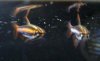
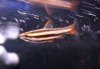
CORAL RED PENCILFISH - Nannostomus mortenthaleri


Photos taken at: a pet shop in Duisburg, Germany
Short taxonomy: Osteichthyes > Characiformes > Anostomidae
Native range: Nanay river, northern Peru
Ex-situ frequence: Common to Rare
Danger factors: Overfishing for the aquarium trade
Other comments: This species was discovered recently (2000), initially tought to be a subspecies of Nannostomus marginatus, it was subsequently elevated to species range. Just next year (2001) it was already bred in captivity. The species is not proliferous, each female producing maximum of 20 eggs and it's difficult to breed because parents eat the eggs just after the spawn, so eggs should be removed inmediately for breeding purposes. Probably these issues with captive breeding are what keep high the pressure of harvest on wild populations.

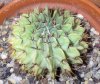
Photo taken at: private collection in Saragossa, Spain
Short taxonomy: Magnoliopsida > Caryophyllales > Cactaceae
Native range: northern Uruguay and southern Brazil
Ex-situ frequence: Common to Rare
Danger factors: Grazing by livestock, illegal harvest, and habitat destruction for implement gum tree plantations.
Other comments: It's a rather easy species in cultivation, but it only can reproduce by seeds as it don't form offsets, so it's not so widespread in collections.
Photos taken at: a pet shop in Duisburg, Germany
Short taxonomy: Osteichthyes > Characiformes > Anostomidae
Native range: Nanay river, northern Peru
Ex-situ frequence: Common to Rare
Danger factors: Overfishing for the aquarium trade
Other comments: This species was discovered recently (2000), initially tought to be a subspecies of Nannostomus marginatus, it was subsequently elevated to species range. Just next year (2001) it was already bred in captivity. The species is not proliferous, each female producing maximum of 20 eggs and it's difficult to breed because parents eat the eggs just after the spawn, so eggs should be removed inmediately for breeding purposes. Probably these issues with captive breeding are what keep high the pressure of harvest on wild populations.
Photo taken at: private collection in Saragossa, Spain
Short taxonomy: Magnoliopsida > Caryophyllales > Cactaceae
Native range: northern Uruguay and southern Brazil
Ex-situ frequence: Common to Rare
Danger factors: Grazing by livestock, illegal harvest, and habitat destruction for implement gum tree plantations.
Other comments: It's a rather easy species in cultivation, but it only can reproduce by seeds as it don't form offsets, so it's not so widespread in collections.
Attachments

CORAL RED PENCILFISH - Nannostomus mortenthaleri
View attachment 530328
View attachment 530329
Photos taken at: a pet shop in Duisburg, Germany
Short taxonomy: Osteichthyes > Characiformes > Anostomidae
Native range: Nanay river, northern Peru
Ex-situ frequence: Common to Rare
Danger factors: Overfishing for the aquarium trade
Other comments: This species was discovered recently (2000), initially tought to be a subspecies of Nannostomus marginatus, it was subsequently elevated to species range. Just next year (2001) it was already bred in captivity. The species is not proliferous, each female producing maximum of 20 eggs and it's difficult to breed because parents eat the eggs just after the spawn, so eggs should be removed inmediately for breeding purposes. Probably these issues with captive breeding are what keep high the pressure of harvest on wild populations.
View attachment 530330
Photo taken at: private collection in Saragossa, Spain
Short taxonomy: Magnoliopsida > Caryophyllales > Cactaceae
Native range: northern Uruguay and southern Brazil
Ex-situ frequence: Common to Rare
Danger factors: Grazing by livestock, illegal harvest, and habitat destruction for implement gum tree plantations.
Other comments: It's a rather easy species in cultivation, but it only can reproduce by seeds as it don't form offsets, so it's not so widespread in collections.
I'm afraid you forgot to include the common and scientific name for the cactus in the post.
That said, I am enjoying these posts, you are covering some interesting species.
Kakapo
Well-Known Member
Oooops! Thanks a lot, my fault, some day I will forget my head somewhere. Sadly more than half an hour passed since my post and hence I'm unable to edit. Maybe some mod can do it.
The species have apparently no common name. BALL CACTUS is a name used for the whole genus Parodia. A good common name for this species could be BUINING'S BALL CACTUS - Parodia buiningii
The species have apparently no common name. BALL CACTUS is a name used for the whole genus Parodia. A good common name for this species could be BUINING'S BALL CACTUS - Parodia buiningii
Kakapo
Well-Known Member
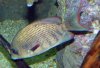
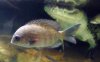
PINSTRIPE DAMBA - Paretroplus menarambo


Photos taken at: Zaragoza Fluvial Aquarium, Spain and Bronx zoo, New York, USA
Short taxonomy: Osteichthyes > Perciformes > Cichlidae
Native range: northern Madagascar
Ex-situ frequence: Common
Danger factors: Habitat destruction by logging, and competence/predation by introduced snakeheads, largemouth bass, African arowanas, carps, tilapias and others. Snakeheads in particular are aggresive and competitive top predators that threaten many Madagascar endemic fishes.
In the past, it was also threatened by overfishing but look alike the species is not targeted currently.
Other comments: It was considered as extinct in the wild, until 2011, when a tiny remnant wild population was found still thriving in the Lake Tseny. The species is present at several worlwide collections, some of which runs a captive breeding program, such as London Zoo and Bolton Museum in UK. Bronx zoo even allow themselves to mix a critically endangered prey in same exhibit as their main predator, as seen in the photo! In situ, the NGO "Madagasikara Voakajy" works hardly in captive breeding in the Lake Tseny.
Photos taken at: Zaragoza Fluvial Aquarium, Spain and Bronx zoo, New York, USA
Short taxonomy: Osteichthyes > Perciformes > Cichlidae
Native range: northern Madagascar
Ex-situ frequence: Common
Danger factors: Habitat destruction by logging, and competence/predation by introduced snakeheads, largemouth bass, African arowanas, carps, tilapias and others. Snakeheads in particular are aggresive and competitive top predators that threaten many Madagascar endemic fishes.
In the past, it was also threatened by overfishing but look alike the species is not targeted currently.
Other comments: It was considered as extinct in the wild, until 2011, when a tiny remnant wild population was found still thriving in the Lake Tseny. The species is present at several worlwide collections, some of which runs a captive breeding program, such as London Zoo and Bolton Museum in UK. Bronx zoo even allow themselves to mix a critically endangered prey in same exhibit as their main predator, as seen in the photo! In situ, the NGO "Madagasikara Voakajy" works hardly in captive breeding in the Lake Tseny.
Attachments

So what would be the chances that we could actually see a kakapo show up in this thread?
So what would be the chances that we could actually see a kakapo show up in this thread?
Almost none I think given that he wants to post his own photos. Even in New Zealand no kakapos are publicly displayed in zoos, and I'm pretty sure any areas with kakapo populations are entirely off-limits for tourists.
Kakapo
Well-Known Member
Haha, good one! None, I have seen taxidermized kakapos in several museums and photographed some of them, but for this thread I only use photos of alive animals and plants and I never have been in New Zealand!
But I can show a self portrait instead here is a younger me
  (I'm the one in the left )

But I can show a self portrait instead
here is a younger me (I'm the one in the left )Attachments


Bengal Tiger
Well-Known Member
Oh, I see, you certainly do bear a semblance to the one in the rightHaha, good one! None, I have seen taxidermized kakapos in several museums and photographed some of them, but for this thread I only use photos of alive animals and plants and I never have been in New Zealand!
But I can show a self portrait instead
View attachment 530454
, I guess that means you are an endangered species. I’m just waiting to see when I show up 
All jokes aside, I would like to thank you for this thread @Kakapo, it is quite fun to read!!!
Kakapo
Well-Known Member
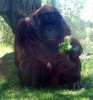
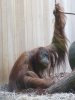
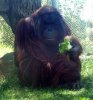
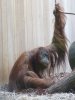
ORANGUTAN - Pongo pygmaeus


Photos taken at: Madrid Zoo-Aquarium, Spain and Wuppertal Zoo, Germany
Short taxonomy: Synapsida > Primates > Pongidae
Native range: Sumatra and Borneo
Ex-situ frequence: Very common
Danger factors: Of all the animals in the world this is probably the one whose threats are best known. Even people not especially interested in zoology or wildlife are aware of the problem with oil palm plantations in Indonesia. More than one million hectareas of rainforest are cleared every year in Indonesia, both for implant palm plantations as for obtain pulp and paper. The rainforest remnants are tiny, and orangutans are forced to move to crops for obtain food. Consequently, native population often see them as crop pests and kill them. I remember vividly a paragraph from the David Attemborough's book "A dragon for the zoo" that I have. David asked guidance for see the orangutans in the wild and film them. They found one, and then the guide asked Sir David's if he already finished. As the reply was positive, the guide lifted his rifle and shooted the orangutan, fortunately failing as David went horrorized and asked why he shooted the animal. The reply of the guide was simple: "Sir, this is a bad animal. He eats my bananas and steal my rice". David had no other option that comprend that as a foreigner, he have none right to juzge the actions of those that must gain its daily substent by fighting with the wild animals for the resources.
Orangutans mothers with infants are also killed for the live pet trade of the babies. The confiscation of live orangutans inside baggage in Indonesian and Malaysian airports is rather usual.
Other comments: While this is one of the megafauna whose threat of extinction is more inminent, it's also one of the most heavily protected and helped and surveyed by infinite zillions of people and organizations. The palm oil plantation problem became archifamous in whole world and since not many years ago, several food products and cosmetics use the "Oil palm free" or maybe "Sustainable oil palm" slogans. The species breeds in countless places over the world, there are several rehabilitation centers and reintroduction programs. Rehabilitation of orphaned orangutans is tricky and hard but many people in these organizations give them the love they need. Orangutan is the best example of an "umbrella species", being extremely charismatic and iconic and loved by many of the worldwide human population, the protection of the rainforest where it lives serves for lifeguard many thousands of much less known animals that share the same habitat and that are not less endangered.
With this animal I made an exception, as the whole orangutan species is not classified under any threat category in IUCN because they considere subtaxa separatedly. However I'm pretty sure that being all subtaxa critically endangered, the whole species should be considered as critically endangered too.
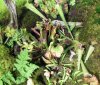
GREEN PITCHER PLANT - Sarracenia oreophila

Photo taken at: Berlin botanical garden, Germany
Short taxonomy: Magnoliopsida > Ericales > Sarraceniaceae
Native range: Alabama, North Carolina and Georgia (USA)
Ex-situ frequence: Rare
Danger factors: Habitat destruction/degradation due to crop/urban/recreational area expansion, competence with invasive plants (kuzdu, Chinese privet and Japanese honeysuckle), herbicide drifts.
Other comments: This is the most endangered of all the pitcher plants, and it's distribution area is severely fragmented with very small total occupance area. The species is rarely seen in carnivorous plant collections, that favours other more showy species and hybrids of Sarracenia instead. Sarracenia oreophila has been hybridized with Sarracenia leucophylla for the ornamental plant trade.
Photos taken at: Madrid Zoo-Aquarium, Spain and Wuppertal Zoo, Germany
Short taxonomy: Synapsida > Primates > Pongidae
Native range: Sumatra and Borneo
Ex-situ frequence: Very common
Danger factors: Of all the animals in the world this is probably the one whose threats are best known. Even people not especially interested in zoology or wildlife are aware of the problem with oil palm plantations in Indonesia. More than one million hectareas of rainforest are cleared every year in Indonesia, both for implant palm plantations as for obtain pulp and paper. The rainforest remnants are tiny, and orangutans are forced to move to crops for obtain food. Consequently, native population often see them as crop pests and kill them. I remember vividly a paragraph from the David Attemborough's book "A dragon for the zoo" that I have. David asked guidance for see the orangutans in the wild and film them. They found one, and then the guide asked Sir David's if he already finished. As the reply was positive, the guide lifted his rifle and shooted the orangutan, fortunately failing as David went horrorized and asked why he shooted the animal. The reply of the guide was simple: "Sir, this is a bad animal. He eats my bananas and steal my rice". David had no other option that comprend that as a foreigner, he have none right to juzge the actions of those that must gain its daily substent by fighting with the wild animals for the resources.
Orangutans mothers with infants are also killed for the live pet trade of the babies. The confiscation of live orangutans inside baggage in Indonesian and Malaysian airports is rather usual.
Other comments: While this is one of the megafauna whose threat of extinction is more inminent, it's also one of the most heavily protected and helped and surveyed by infinite zillions of people and organizations. The palm oil plantation problem became archifamous in whole world and since not many years ago, several food products and cosmetics use the "Oil palm free" or maybe "Sustainable oil palm" slogans. The species breeds in countless places over the world, there are several rehabilitation centers and reintroduction programs. Rehabilitation of orphaned orangutans is tricky and hard but many people in these organizations give them the love they need. Orangutan is the best example of an "umbrella species", being extremely charismatic and iconic and loved by many of the worldwide human population, the protection of the rainforest where it lives serves for lifeguard many thousands of much less known animals that share the same habitat and that are not less endangered.
With this animal I made an exception, as the whole orangutan species is not classified under any threat category in IUCN because they considere subtaxa separatedly. However I'm pretty sure that being all subtaxa critically endangered, the whole species should be considered as critically endangered too.
GREEN PITCHER PLANT - Sarracenia oreophila
Photo taken at: Berlin botanical garden, Germany
Short taxonomy: Magnoliopsida > Ericales > Sarraceniaceae
Native range: Alabama, North Carolina and Georgia (USA)
Ex-situ frequence: Rare
Danger factors: Habitat destruction/degradation due to crop/urban/recreational area expansion, competence with invasive plants (kuzdu, Chinese privet and Japanese honeysuckle), herbicide drifts.
Other comments: This is the most endangered of all the pitcher plants, and it's distribution area is severely fragmented with very small total occupance area. The species is rarely seen in carnivorous plant collections, that favours other more showy species and hybrids of Sarracenia instead. Sarracenia oreophila has been hybridized with Sarracenia leucophylla for the ornamental plant trade.
Attachments
-
 Pongo pygmaeus 1 (23-7-17 Zoo Madrid).jpg211.2 KB · Views: 1
 -
 Pongo pygmaeus 3 (7-8-17 Zoo Wuppertal).jpg254.9 KB · Views: 1
 -
 Pongo pygmaeus 1 (23-7-17 Zoo Madrid).jpg211.2 KB · Views: 46
 -
 Pongo pygmaeus 3 (7-8-17 Zoo Wuppertal).jpg254.9 KB · Views: 46
 -
 Sarracenia oreophila (19-8-11 Botánico de Berlín).jpg127.4 KB · Views: 46