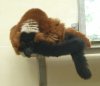
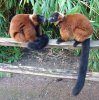
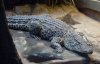
ORANGUTAN -
Pongo pygmaeus
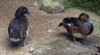
View attachment 530513
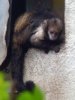
View attachment 530514
Photos taken at: Madrid Zoo-Aquarium, Spain and Wuppertal Zoo, Germany
Short taxonomy: Synapsida > Primates > Pongidae
Native range: Sumatra and Borneo
Ex-situ frequence: Very common
Danger factors: Of all the animals in the world this is probably the one whose threats are best known. Even people not especially interested in zoology or wildlife are aware of the problem with oil palm plantations in Indonesia. More than one million hectareas of rainforest are cleared every year in Indonesia, both for implant palm plantations as for obtain pulp and paper. The rainforest remnants are tiny, and orangutans are forced to move to crops for obtain food. Consequently, native population often see them as crop pests and kill them. I remember vividly a paragraph from the David Attemborough's book "A dragon for the zoo" that I have. David asked guidance for see the orangutans in the wild and film them. They found one, and then the guide asked Sir David's if he already finished. As the reply was positive, the guide lifted his rifle and shooted the orangutan, fortunately failing as David went horrorized and asked why he shooted the animal. The reply of the guide was simple: "Sir, this is a bad animal. He eats my bananas and steal my rice". David had no other option that comprend that as a foreigner, he have none right to juzge the actions of those that must gain its daily substent by fighting with the wild animals for the resources.
Orangutans mothers with infants are also killed for the live pet trade of the babies. The confiscation of live orangutans inside baggage in Indonesian and Malaysian airports is rather usual.
Other comments: While this is one of the megafauna whose threat of extinction is more inminent, it's also one of the most heavily protected and helped and surveyed by infinite zillions of people and organizations. The palm oil plantation problem became archifamous in whole world and since not many years ago, several food products and cosmetics use the "Oil palm free" or maybe "Sustainable oil palm" slogans. The species breeds in countless places over the world, there are several rehabilitation centers and reintroduction programs. Rehabilitation of orphaned orangutans is tricky and hard but many people in these organizations give them the love they need. Orangutan is the best example of an "umbrella species", being extremely charismatic and iconic and loved by many of the worldwide human population, the protection of the rainforest where it lives serves for lifeguard many thousands of much less known animals that share the same habitat and that are not less endangered.
With this animal I made an exception, as the whole orangutan species is not classified under any threat category in IUCN because they considere subtaxa separatedly. However I'm pretty sure that being all subtaxa critically endangered, the whole species should be considered as critically endangered too.
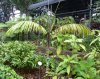
GREEN PITCHER PLANT -
Sarracenia oreophila
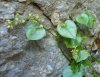
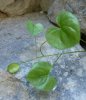
View attachment 530515
Photo taken at: Berlin botanical garden, Germany
Short taxonomy: Magnoliopsida > Ericales > Sarraceniaceae
Native range: Alabama, North Carolina and Georgia (USA)
Ex-situ frequence: Rare
Danger factors: Habitat destruction/degradation due to crop/urban/recreational area expansion, competence with invasive plants (kuzdu, Chinese privet and Japanese honeysuckle), herbicide drifts.
Other comments: This is the most endangered of all the pitcher plants, and it's distribution area is severely fragmented with very small total occupance area. The species is rarely seen in carnivorous plant collections, that favours other more showy species and hybrids of
Sarracenia instead.
Sarracenia oreophila has been hybridized with
Sarracenia leucophylla for the ornamental plant trade.


 (No way he treat orangutan as one species)