Kakapo's Photographic Collection of Endangered Species

ORANGUTAN - Pongo pygmaeus
View attachment 530513
View attachment 530514

Photos taken at: Madrid Zoo-Aquarium, Spain and Wuppertal Zoo, Germany

Short taxonomy: Synapsida > Primates > Pongidae

Native range: Sumatra and Borneo

Ex-situ frequence: Very common

Danger factors: Of all the animals in the world this is probably the one whose threats are best known. Even people not especially interested in zoology or wildlife are aware of the problem with oil palm plantations in Indonesia. More than one million hectareas of rainforest are cleared every year in Indonesia, both for implant palm plantations as for obtain pulp and paper. The rainforest remnants are tiny, and orangutans are forced to move to crops for obtain food. Consequently, native population often see them as crop pests and kill them. I remember vividly a paragraph from the David Attemborough's book "A dragon for the zoo" that I have. David asked guidance for see the orangutans in the wild and film them. They found one, and then the guide asked Sir David's if he already finished. As the reply was positive, the guide lifted his rifle and shooted the orangutan, fortunately failing as David went horrorized and asked why he shooted the animal. The reply of the guide was simple: "Sir, this is a bad animal. He eats my bananas and steal my rice". David had no other option that comprend that as a foreigner, he have none right to juzge the actions of those that must gain its daily substent by fighting with the wild animals for the resources.
Orangutans mothers with infants are also killed for the live pet trade of the babies. The confiscation of live orangutans inside baggage in Indonesian and Malaysian airports is rather usual.

Other comments: While this is one of the megafauna whose threat of extinction is more inminent, it's also one of the most heavily protected and helped and surveyed by infinite zillions of people and organizations. The palm oil plantation problem became archifamous in whole world and since not many years ago, several food products and cosmetics use the "Oil palm free" or maybe "Sustainable oil palm" slogans. The species breeds in countless places over the world, there are several rehabilitation centers and reintroduction programs. Rehabilitation of orphaned orangutans is tricky and hard but many people in these organizations give them the love they need. Orangutan is the best example of an "umbrella species", being extremely charismatic and iconic and loved by many of the worldwide human population, the protection of the rainforest where it lives serves for lifeguard many thousands of much less known animals that share the same habitat and that are not less endangered.

With this animal I made an exception, as the whole orangutan species is not classified under any threat category in IUCN because they considere subtaxa separatedly. However I'm pretty sure that being all subtaxa critically endangered, the whole species should be considered as critically endangered too.

GREEN PITCHER PLANT - Sarracenia oreophila
View attachment 530515

Photo taken at: Berlin botanical garden, Germany

Short taxonomy: Magnoliopsida > Ericales > Sarraceniaceae

Native range: Alabama, North Carolina and Georgia (USA)

Ex-situ frequence: Rare

Danger factors: Habitat destruction/degradation due to crop/urban/recreational area expansion, competence with invasive plants (kuzdu, Chinese privet and Japanese honeysuckle), herbicide drifts.

Other comments: This is the most endangered of all the pitcher plants, and it's distribution area is severely fragmented with very small total occupance area. The species is rarely seen in carnivorous plant collections, that favours other more showy species and hybrids of Sarracenia instead. Sarracenia oreophila has been hybridized with Sarracenia leucophylla for the ornamental plant trade.
I really don't think the general public is aware of the environmental impacts of palm oil or even what it is.
 
I'm not sure about that. It is one of the more well known issues in my opinion.

Btw, the Pongidae strikes again :D (No way he treat orangutan as one species)
You're a lot closer to the issue in Hong Kong, so that might be part of it. Here is America I doubt more than 10% of people (and probably less than that) even know that palm oil exists, and most of those people will be people who know it as a food ingredient and nothing more.
 
You're a lot closer to the issue in Hong Kong, so that might be part of it. Here is America I doubt more than 10% of people (and probably less than that) even know that palm oil exists, and most of those people will be people who know it as a food ingredient and nothing more.
I think it's likely to be an American thing. It is a well-known concern throughout Australasia. I'm guessing also Europeans know the issue well.
 
From my American perspective, it's fairly well known. I see a lot of non-zoo friends sharing the concerns about chocolate around easter and halloween, for example. It's a common mention at AZA zoos.
 
Interesting to see how the perception of this problem varies geographically. Thanks for your participation! :)

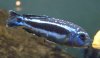
ELECTRIC BLUE MBUNA - Pseudotropheus cyaneorhabdos
Pseudotropheus cyaneorhabdos (7-7-16 Seaworld, det yo).jpg

Photo taken at: Seaworld San Diego, California, USA

Short taxonomy: Osteichthyes > Perciformes > Cichlidae

Native range: Likoma island, Lake Malawi, Tanzania

Ex-situ frequence: Common

Danger factors: Overfishing for the aquarium trade. In a lesser exent, soil erosion caused by agricultural/forestry activities that cause sedimentation which diminish the photosynthetic surface of the algae that this fish feeds on.

Other comments: Malawi lake, also known as Nyassa lake, is the home of more than 850 different species of cichlids, an example of extreme evolutive radiation where many species live together and survive by exploiding different ecological niches for avoid interspecific competence. Most cichlids are widespread across the whole sea-sized lake, but this one is restricted to the northern tip of a small island in it. The species was comercialized even before having a scientific description (this is rather usual in freshwater fishes), and known first in aquarium trade as Melanochromis sp. 'Maingano', being Maingano a village in Likoma island around which were discovered the species.
 

Attachments

  • Pseudotropheus cyaneorhabdos (7-7-16 Seaworld, det yo).jpg
    Pseudotropheus cyaneorhabdos (7-7-16 Seaworld, det yo).jpg
    86.6 KB · Views: 35
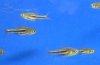
SIAMESE DWARF RASBORA - Rasbora somphongsi
Rasbora somphongsi (5-8-17 Zoo Zajac, det as Trigonostigma).jpg

Photo taken at: A pet shop in Duisburg, Germany

Short taxonomy: Osteichthyes > Cypriniformes > Cyprinidae

Native range: Maeklong river, Thailand (the exact location is unknown or maybe secret)

Ex-situ frequence: Rare

Danger factors: Habitat destruction for urban/farm expansion. Three large dams disrupted the flooding regime of the river and already caused the local extinction of some native fishes (Balantiocheilos melanopterus, Botia sidthimunki) in the same collection area where this rasbora lives.

Other comments: Long ago it was considered as extinct during a time lapse of 12 years, but it was rediscovered in 2006 as three individuals (called "contaminants"!) were found mixed in a batch of Rasbora urophthalmoides imported from Thailand to Germany. Thanks to the captive breeding both in Thailand and in Germany, now is available in the aquarium trade but still quite rare to find in captive stock. The species is easy to breed often even without human intervention, but only aged individuals breeds well, so hobbyist trying that with young ones can say that it's difficult to breed. There is no plans about a reintroduction program because the habitat requeriments and the causes of the decline of the species are not well known.

DIMAKA PALM - Tahina spectabilis
Tahina spectabilis (22-3-15 Palmetum).jpg

Photo taken at: Palmetum Santa Cruz, Canary Islands, Spain

Short taxonomy: Liliopsida > Arecales > Arecaceae

Native range: Analavava district, northeastern Madagascar

Ex-situ frequence: Rare to Very rare

Danger factors: Habitat destruction caused by fires, logging and land clearing for agriculture (slash-and-burn agriculture in Madagascar strikes again...)

Other comments: There are various genus of palms that are strictly monocarpic, that means, they bloom just once in life and after die, leaving all its hope in the seeds. Caryota and Corypha are famous genus of palms that do it. Tahina spectabilis, sole member of its genus, is strictly monocarpic too but this palm do it in a spectacular way as the palm itself is small and compact but the inflorescence is gigantic and larger than the palm, blomming palms of this species are even visible from satellites!! The species is so rare that was not discovered by science as recently as 2007 (I remember also the news about it!). Next year, in february 2008, Kew Royal Botanical Gardes sowed some seeds of it and obtained great success of germination. Now the palm can be found in about 11 botanical gardens and palm collections worldwide. In the wild there were counted less than 100 mature individuals plus about other 100 seedlings. Wild Tahina fruits must be eaten and defecated by lemurs for dispersion and propagation, so the disappareance of lemurs also affect this species.
 

Attachments

  • Rasbora somphongsi (5-8-17 Zoo Zajac, det as Trigonostigma).jpg
    Rasbora somphongsi (5-8-17 Zoo Zajac, det as Trigonostigma).jpg
    230.5 KB · Views: 35
  • Tahina spectabilis (22-3-15 Palmetum).jpg
    Tahina spectabilis (22-3-15 Palmetum).jpg
    106.4 KB · Views: 32
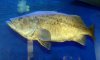
BOCACCIO - Sebastes paucispinis
Sebastes paucispinis (12-7-16 Birch Aquarium).jpg

Photo taken at: Bich aquarium, California, USA

Short taxonomy: Osteichthyes > Scorpaeniformes > Sebastidae

Native range: Pacific coast of North America

Ex-situ frequence: Very rare

Danger factors: Overfishing

Other comments: It's still a very famous species in recreational fishing, being caught frequently in a legal way with a limit of 2 individuals for day! Could you imagine the same for, say, black rhinos or gorillas??
Oil platforms in southern California increased sligthtly the population of this fish as they provide a refuge for juveniles. The adults were forced to evolve into more deep water preferences because the legal limit to fishing is 73 meters deep.

However, the IUCN status for this species has not been updated since 1996 and there is absolutely zero details about its population, ecology, threats, uses and conservation actions in the page for this species. It's possible that an update downgrade the species at a lesser threat category.
 

Attachments

  • Sebastes paucispinis (12-7-16 Birch Aquarium).jpg
    Sebastes paucispinis (12-7-16 Birch Aquarium).jpg
    77.1 KB · Views: 34
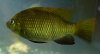
OTKIJOTO TILAPIA - Tilapia guinasana
Tilapia guinasana (17-9-21 Haus des Meeres).jpg

Photo taken at: Haus des Meeres, Austria

Short taxonomy: Osteichthyes > Perciformes > Cichlidae

Native range: Guinas lake, Namibia

Ex-situ frequence: Very rare

Danger factors: Subterranean water extraction for agriculture, and competence/hybridation with introduced species of tilapias.

Other comments: This fish is an specialist inhabitant of deep sinkhole lakes and subterranean rivers, hence the groundwater extraction affects it very directly. Despite the common name of Otjikoto tilapia, this species is introduced in Otjikoto lake, being naturally endemic of Guinas lake area. It was also introduced in several reservois in Namibia. Is precisely in Otjikoto lake where other introduced species, namely Tilapia sparrmannii, can pose a threat for T. guinasana, howevers hybrids between both are fertile, maybe both should be downgraded as subspecies of the same species.

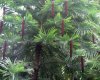
WOLLEMI PINE - Wollemia nobilis
Wollemia nobilis 6 (19-8-11 Botánico de Berlín).jpg

Photo taken at: Berlin botanical garden, Germany

Short taxonomy: Pinopsida > Pinales > Araucariaceae

Native range: Wollemi National Park, Blue Mountains, Australia

Ex-situ frequence: Common

Danger factors: Introduction of pathogenic fungus (Phytophthora cinnamomi), competence with introduced weeds, climatic change.

Other comments: Maybe the most spectacular plant that will ever appear in this thread, the archifamous Wollemi pine, sole member of it's very distinctive primitive genus, revolutioned science and media in my lifetime, in 1994, when it was discovered in an inaccesible canyon in northern Australia as other related genus were only known from a fossil print. This conifer is "the coelacanth of the plants". With very unique morphology amongst all conifers, this tree soon reached international fame and the first time I saw one, a very small unlabelled young one in a pot over a table in Madrid botanical garden, far from the public path, I could not believe it. But after that I've seen it in several additional botanical gardens. The tree grows quickly and easily, so the times that I remember well, when seeds and seedlings were available only for accredited botanical institutions and costing big amounts of money, have passed. Since 2006, the species is commercially available in Australia, Europe and USA for general people and not only botanical gardens.

Genetic research showed that every tree in the Wollemi National park is a clon of each other, with the exact same genotipe. The science concluded that the species passed by a extremely thin bottleneck, leaving maybe one or two individuals in the whole world, hence the very poor genetic diversity.
 

Attachments

  • Tilapia guinasana (17-9-21 Haus des Meeres).jpg
    Tilapia guinasana (17-9-21 Haus des Meeres).jpg
    509.3 KB · Views: 37
  • Wollemia nobilis 6 (19-8-11 Botánico de Berlín).jpg
    Wollemia nobilis 6 (19-8-11 Botánico de Berlín).jpg
    121.3 KB · Views: 31
RED RUFFED LEMUR - Varecia rubra
Varecia rubra 1 (6-8-17 Zoo Köln).jpg
Varecia rubra 2 (24-9-18 Artis).jpg

Photos taken at: Cologne zoo, Germany and Artis royal zoo, Netherlands

Short taxonomy: Synapsida > Primates > Lemuridae

Native range: Masoala peninsula, northeastern Madagascar

Ex-situ frequence: Very common

Danger factors: Habitat destruction (clearance of forests by subsistence agriculture and logging), direct hunt for bushmeat

Other comments: After certain political events in 2009, the illegal logging in protected areas of Madagascar went much more intense and the Masoala national park is the most affected of all. The species is very common in zoos worldwide, is easy to care and breeds very well, but captive red varis have low genetic diversity. To prevent problems associated with this, some zoos import from time to time wild animals to their breeding programs,
 

Attachments

  • Varecia rubra 1 (6-8-17 Zoo Köln).jpg
    Varecia rubra 1 (6-8-17 Zoo Köln).jpg
    163.9 KB · Views: 30
  • Varecia rubra 2 (24-9-18 Artis).jpg
    Varecia rubra 2 (24-9-18 Artis).jpg
    291.7 KB · Views: 37
STARRY STURGEON - Acipenser stellatus
Acipenser stellatus.jpg

Photo taken at: Apeldoorn Apenheul, Netherlands

Short taxonomy: Osteichthyes > Acipenseriformes > Acipenseridae

Native range: Caspian sea and the rivers that feed it

Ex-situ frequence: Common

Danger factors: Overfishing. It already went extinct in the Aegean sea. The illegal fishing in in marine water for this species is estimated to be up to 10 times heavier than the legal fishing. Like all sturgeons, dams also damaged severely populations by preventing migration to spawning places.

Other comments: It's one of the three most important sturgeon species as source of caviar, and it's meat is considered a deluxe delicatessen in the Caspian region. So a critically endangered species is hunted and commercialized often, a thing that would be unbelievable if instead a fish it was a mammal.

Several countries where this fish is native release millions of juvenile individuals from hatcheries, but overfishing prevented hatcheries from obtaining enough reproductive individuals to restock. Unlike other sturgeons, this one is strictly anadromous so mature individuals are difficult to keep in freshwater ponds.

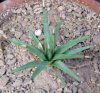
WHITE HAIR AGAVE - Agave albopilosa
Agave albopilosa.jpg
Photo taken at: a private collection in Saragossa, Spain

Short taxonomy: Liliopsida > Asparagales > Asparagaceae

Native range: Sierra Madre Oriental, Mexico

Ex-situ frequence: Very rare

Danger factors: Urban development and illegal harvesting

Other comments: Another species recently discovered as new for science, in 2007, it's discovery was shocking for all succulent enthusiast for the incredible and unique appareance of this species. One of the describers, Dr. Ismael Cabral Cordero, first found in the year 2000 a dead specimen in the middle of the path, as it has fallen from the cliffs where this plant grow due to a land slide. When he returned to place, he needed the use of binoculars for be able to find the first alive individuals.

This is arguably the most beautiful and distinctive of all Agave when adult (my photo is still a young one that didn't developed the white hair tufts in the leaf tips). This leaded to intense illegal collection in the tiny native range of the species, limited to a high mountain range in La Huasteca reserve. All the population in achievable places is completely depleted now, and only the ones growing in the most unaccesible parts of the cliffs are still thriving.

Evolved 12-8 million years ago, shortly after the last glaciation, this is probably the most primitive of all the 330 species of Agave.
 

Attachments

  • Acipenser stellatus.jpg
    Acipenser stellatus.jpg
    264.8 KB · Views: 33
  • Agave albopilosa.jpg
    Agave albopilosa.jpg
    90.2 KB · Views: 32
AXOLOTL - Ambystoma mexicanum
Ambystoma mexicanum 1.jpg
Ambystoma mexicanum 2.jpg

Photos taken at: Cosmocaixa Barcelona, Spain and Faunia Madrid, Spain

Short taxonomy: Amphibia > Urodela > Plethodontidae

Native range: surroundings of Xochimilco, Mexico city, Mexico

Ex-situ frequence: Extremely common

Danger factors: Habitat degradation due to water contamination, competence and predation by introduced fishes

Other comments: This is maybe the most common of all the critically endangered animals in captivity. Most pet shops have available ones and any person cat get one easily and for cheap. Domestic morphotypes have been created and the albino or leucistic forms are in fact more common than the wild morphotype. The species is also very common in laboratories as it is widely used in scientific research as a model organism. Since 1989, there are farms in several countries that breeds intensively this species for the pet and lab supplies.
However, the wild populations are severely damaged and it disappeared from many sites. For example the Chalco lake, once home of this species, was drainaged as a measure of flooding control, and the Xochimilco, once a big lake, is severely reduced and transformed into a canal system. The population decreased very strongly: in 2003 were found about a thousand axolotls by square kilometer, while in 2008, only a hundred of them by km2. In 2013, a four month survey was unable to find any surviving wild individual, but two months later two individuals were found.
 

Attachments

  • Ambystoma mexicanum 1.jpg
    Ambystoma mexicanum 1.jpg
    113 KB · Views: 33
  • Ambystoma mexicanum 2.jpg
    Ambystoma mexicanum 2.jpg
    90.4 KB · Views: 35
As the main threat is habitat destruction and degradation, there is no sense in reintroducing them when habitat has still not been restored.
 
BAER'S POCHARD - Aythya baeri
Aythya baeri.jpg
Photo taken at: Bronx zoo, New York, USA

Short taxonomy: Aves > Anseriformes > Anatidae

Native range: breeding in eastern temperate Asia and wintering in southeast Asia

Ex-situ frequence: Common

Danger factors: Wetland destruction and degradation (mainly drainage, and extension of rice paddles), and direct hunt

Other comments: Unconfirmed reports estimated that in eastern China about 3000 individuals were hunted each year. Usually hunt does not impact animals as much as habitat destruction, but in this species it does. Also the eggs are heavily harvested. It seems than the long-term slow decline was caused by habitrat loss, while hunt became a main threat just once the duck have a much more reduced and localized population. Until 2008 it was considered Vulnerable, but new census found an alarming steep decline in populations. China is the only country within breeding grounds that don't consider the species as legally protected, altough it is in some of its provinces. The species breeds quite well in captivity and there are several European and North American zoos holding about 300 birds in total.

(no common name) - Borderea chouardii
Borderea chouardii 4.jpg
Borderea chouardii 5.jpg
Photos taken at: Jánovas, Spain

Short taxonomy: Liliopsida > Dioscoreales > Dioscoreaceae

Native range: Just a small section of a canyon near Escales pool in Sopeira municipe, Spain. A small population introduced in nearby Jánovas where habitat is similar.

Ex-situ frequence: Very rare

Danger factors: Habitat loss due to road construction and other infrastructures

Other comments: This extremely special plant is a living fossil, relic from Tertiary, before Miocene, when Europe was subtropical. It survived glaciations hidden in the protected unfreezed canyon and thrived until now. The atonishing biological features of this plant allowed it to survive for so long: the tubercle, hidden in a rock crevice, is able to live up to three centuries!!!! So it's the longest-lived non-woody plant on Earth. It has one of the smallest native ranges of all plants. It's whole population was about to disappear from Earth due to the plan of doubling a nearby road that just was planned to pass by this locality, fortunately the plan was abandoned due to the presence of this plant. Also the occasional flooding from Escales pool by opening the dam that retains it, eliminated some of the plants that grew in the lowest parts of the cliffs. There are very exhaustive plans for recovering and protecting the species that is intensively surveyed and guarded, and some people (that I met in real) dedicated its life to protect it. My first contact with the species was in an ex-situ forestry municipal non-public nursery specialized in endangered native plant restoration, that allowed my FP2 class of environmental studies to visit the place and even gave each us a native plant in a pot (mine was a Ephedra nebrodensis that I planted in my garden and now is inmense). But despite I almost died of emotion knowing that this plant is growing in this nursery, it was winter so all what I saw is a pot with peebles, not even dead remains of the plant were visible. Many years later, the introduction of a population in Jánovas allowed me to met the plant properly and take several photos. The species is one of only two in this genus, both relic and endangered and exclusive from Spanish Pyrenees mountains but the other species, Borderea pyrenaica, is much less endangered and more common, Borderea chouardii depends entirely on ants for surviving: some species pollinate their flowers, wandering from male to female plants that otherwise would never meet, and other different ant species carry its seeds, that are especially adapted for that. Percentage of germination in seeds not hidden by ants is very low while those hidden by ants have much greater success.
 

Attachments

  • Aythya baeri.jpg
    Aythya baeri.jpg
    417.8 KB · Views: 34
  • Borderea chouardii 4.jpg
    Borderea chouardii 4.jpg
    291.5 KB · Views: 33
  • Borderea chouardii 5.jpg
    Borderea chouardii 5.jpg
    258.3 KB · Views: 31
I seem to remember reading something about the genetics of captive axolotls that could impact the possibilities for that, but I don't remember where or exactly what the issue was.
Most of the captive population have some introgression from tiger salamanders. In particular I seem to recall that all leucistic axolotls have a degree of tiger salamander ancestry to them. In the grand scheme of things, however, this is a relatively minor problem (similar hybridisation has occurred in other ex-situ bottlenecked populations, e.g. Przewalski's horse and wisent, with little impact of subsequent reintroductions.

But yes, until the pollution into Xochimilco is stopped or greatly reduced, the invasive species removed, and the wetlands restored, any such reintroduction is an entirely academic discussion, anyway.
 
YELLOW-BREASTED CAPUCHIN - Cebus xanthosternos
Cebus xanthosternos.jpg

Photo taken at: Apenheul, Apeldoorn, Netherlands

Short taxonomy: Synapsida > Primates > Cebidae

Native range: northern Brasil

Ex-situ frequence: Common

Danger factors: Habitat loss and direct hunt are the main threats, in a lesser degree also pet trade and disease transmision (yellow fever).

Other comments: Only about 300 individuals survive in the wild, and almost 200 of them are restricted to a single reserve. The Atlantic Forest of Brazil is the region with more extremely rich biodiversity and endemism degree in the whole country and at same time one of the most heavily exploided and destroyed ecosystems in it, due to logging and agricultural expansion. In 1992, the Brazilian Institute for the Environment organized a commitee for the protection of these monkeys that include plans for the reunion of the several individuals that people keep as pets here, so they can form breeding groups with these former pets. However, nowadays this plan is more or less abandoned and substituted by different actions from other institutions.
 

Attachments

  • Cebus xanthosternos.jpg
    Cebus xanthosternos.jpg
    257.6 KB · Views: 35
CUBAN CROCODILE - Crocodylus rhombifer
Crocodylus rhombifer.jpg

Photo taken at: Bronx zoo, New York, USA

Short taxonomy: Sauropsida > Crocodilia > Crocodylidae

Native range: Zapata peninsula, Cuba

Ex-situ frequence: Rare

Danger factors: Illegal hunting for meat, hybridation with American crocodiles

Other comments: This is the crocodilian with smallest native range of all. However, in prehistoric times they were widespread in all Caribbean islands and even reached Florida coasts. They're illegally hunted for meat that is served in local restaurants. As often happens with endangered species that shares habitats with related ones, hybridation was not a threat until the species became enough endangered, having a weak an small population. In the 70's, whole world population was captured and put into captivity for save the species from inminent extinction. Semi-wild colonies can be seen in Lanier marsh in Cuba and in Gatorland, Florida. Thanks to the continuous efforts of captive breeding and reintroduction, the species numbers recovered to about 6000 individuals. This is, however, much more inusual than other crocodilian species in zoos and croc farms over the world. They're present in only a bunch of holders in Europe and North America and one zoo in India. The temperament of the species, much more aggresive than other crocodilians (what allows it dominate over the much bigger American crocodile in native range), contributed to the scarcity in captivity.

TEDDY BEAR PALM - Dypsis leptocheilos
Dypsis leptocheilos.jpg

Photo taken at: Orotava botanical garden, Canary Islands, Spain

Short taxonomy: Liliopsida > Arecales > Arecaceae

Native range: northwestern Madagascar

Ex-situ frequence: Common

Danger factors: Logging and fires caused by slash-and-burn agriculture. Also, horticultural trade as some people, for harvest the seeds, cut down the trees.

Other comments: Only five wild individuals have been found, all in a single location, after long time of being a species totally unknown in the wild. However, there is photographic evidence of the presence of the species in nearby locations. The spectacular colouring of adult individuals, with a deep rusty crown over a chalky white trunk, guarantees to be widespread in several collections and gardens in tropics, so it have a safe ex-situ population.
 

Attachments

  • Crocodylus rhombifer.jpg
    Crocodylus rhombifer.jpg
    322.5 KB · Views: 33
  • Dypsis leptocheilos.jpg
    Dypsis leptocheilos.jpg
    162.4 KB · Views: 34
Back
Top