Day 33: Vogelpark Walsrode (1982) - Great Grey Owl

Page count: 144 (including index)
Photographs: c.190 colour images, including c. 25 full page or double-page images.
Illustrations/diagrams: N/A
Layout: Introduction and brief photographic walkthrough, followed by around 100 pages discussing the various bird species held in the collection variously classified by family or order.
Map: Located on fold-out inside rear cover.
This time round, we return to Walsrode to discuss a guidebook published two decades prior to the last edition covered in this thread; as such, when reading this guidebook and looking through the photographs and collection map within, there are a number of noticeable differences between the collection recorded here when compared to the one we discussed last time. I have a feeling that this particular edition may have been issued during the timespan when @vogelcommando worked at the collection - in which case he may hopefully be able to shed some light on what the collection was like at this point in time. However, in many ways the guidebook itself is very much akin to the 2003 edition we have already discussed, as regards format, presentation and overall quality, as I shall relate.

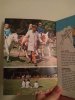
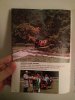
Unlike the later guidebook, this particular edition opens with several pages of text discussing the history of Walsrode and giving a general background to the "current" state of affairs there, detailing factors such as the number of species and individual birds held at the collection, the size and dimensions of certain exhibits, and even the estimated number of flowers and other botanical displays. This is followed by a series of double-page photographic montages supplemented with minimal text, of the sort we discussed in the previous post, which taken together form a general walkthrough of Walsrode, highlighting key exhibits such as the free-flight hall, the Parrot and Lory houses and the Paradise Hall, the playgrounds and restaurants on-site, and the botanical displays found throughout the collection, with a particular focus on the rhododendrons which form the largest portion of the flower displays at Walsrode even now. This section of the guidebook is both informative and aesthetically-appealing, with the bright and colourful photographs catching the eye and giving a good overall impression of the collection; as I have noted previously, one of the least-cited reasons why Walsrode is such an attractive and enjoyable place to visit and read about is the fact that whole swathes of the collection feel more like a botanical garden which happens to contain a variety of aviaries, rather than a zoological collection which happens to contain a lot of plant beds, and these photographic montages display this aspect of the collection very well. From a zoo historian point of view, the montages also provide a very interesting look at the physical appearance of those exhibits and aviaries highlighted; given the fact that the main focus of many zoo guidebooks is the animals displayed within a given collection, being provided with high-quality images of a given exhibit is rarer than one would think!

Beyond here, we reach the detailed species accounts; as is the case for most of the guidebooks published by Walsrode both before and after this point in time, these comprise a methodical and comprehensive run-through of the various major groups of birds held at the collection, discussing many (but by no means all) of the species displayed within the collection and illustrating these accounts with copious colour photographs - both full-page and smaller images - which depict particular highlights. As I have bemoaned previously, one of the few real problems inherent to these accounts is the fact that they refer only to the common names of species, with their scientific names remaining unmentioned; as such, some level of fluency in German, or at the very least the ability to decipher the name of a given species through context clues, is rather helpful when reading this section of the guidebook as a whole.
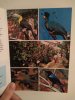
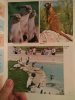
As one can imagine, a major attraction of reading older guidebooks from a collection such as Walsrode is the allure of seeing and reading about species which have long-since ceased to be kept within European collections - such as wattle-eyes, resplendent quetzal and coral-billed cuckoo - or which are now significantly rarer than they once were; as such, the fact that these accounts are so attractively presented is a definite bonus, allowing the aforementioned shortfalls where the labelling of species is concerned to be very much counterbalanced. Naturally, if one *is* familiar with German, or with the common names of birds in said language, this section is even better; I think that the balance between presenting visual and textual information is well-met here, overall. The following scans provide a pretty good overview of the general style and presentation of the species accounts, methinks - and as one might be able to guess, i have specifically curated them to highlight particularly interesting species which are photographed within - although given the wide variety of unusual and attractive species illustrated within this guidebook, the main issue at hand in writing this post is narrowing down the number of examples to merely two or three!


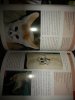
Beyond here, very much like the 2003 guidebook which we have discussed previously, a substantial and methodical index provides a full list of each and every bird species mentioned within the main body of the text; bearing in mind the fact that it is highly unlikely that this list comprises a full inventory of taxa held at Walsrode at the time of publication, and even taking the possibility that some species might be mentioned by multiple common names within the text into account, it is nonetheless rather impressive that (at a rough estimate) this index names over a thousand species! The below scan not only shows the opening page of this index, but also an example of the advertisement material which occurs sparsely across these final handful of pages; a total of only three or four adverts in total, rather less than is the case within the equivalent section in the 2003 guidebook.

The guidebook concludes with a rather attractive and copiously-labelled fold-out map of the collection within the inside back cover; this is presented in a faux-isometric format, rather than the top-down plan found in the later edition we have already discussed, and as such arguably is slightly more awkward to reference and use as a map whilst being significantly more visually attractive. However, when directly comparing the two maps I actually feel that the older item performs the task at hand better - whilst in the 2003 map it is not always clear which structures are aviaries and exhibits, and which are supplementary structures of no consequence to the visitor, the nature of structures on this map is much clearer. It is notable, I feel, that (as we may well cover in a future post) the most recent guidebooks and maps published by Walsrode have returned to the general format and style presented here. Another notable difference between the two maps, of course, is the fact that the collection presented here is distributed across a rather smaller site, with several significant houses, exhibits and aviary blocks yet to have been constructed; for instance, the Tropenwaldhalle and the various aviaries situated around the central lake east of the Rosenanlage and free-flight house are entirely absent. As such, this map is also highly interesting on the grounds of zoo history, as a record of the development and expansion of Walsrode in the decades that followed its opening.

In conclusion, then, this is an extremely attractive and high-quality guidebook which is interesting both as a record of the collection at the time of publication, as an attractive and well-presented document in its own right, and when taken alongside the other guidebooks issued by Walsrode over the decades as a key part of the overall picture; the latter of these enhanced by the fact that, as I have noted in the past, the guidebooks published by Walsrode represent some of the very best issued by *any* zoological collection, showing just how good such documents can be.
Given the wide range of interesting and unusual species held at Walsrode at the time this guidebook was published, the fact that the collection is still one of the most-discussed German zoos on this forum, and the fact that this is probably a *significantly* more interesting and appealing item than the last few I have highlighted as far as the readers of this thread are concerned, I hope that this post provokes plenty of discussion, feedback and questions!
Page count: 144 (including index)
Photographs: c.190 colour images, including c. 25 full page or double-page images.
Illustrations/diagrams: N/A
Layout: Introduction and brief photographic walkthrough, followed by around 100 pages discussing the various bird species held in the collection variously classified by family or order.
Map: Located on fold-out inside rear cover.
This time round, we return to Walsrode to discuss a guidebook published two decades prior to the last edition covered in this thread; as such, when reading this guidebook and looking through the photographs and collection map within, there are a number of noticeable differences between the collection recorded here when compared to the one we discussed last time. I have a feeling that this particular edition may have been issued during the timespan when @vogelcommando worked at the collection - in which case he may hopefully be able to shed some light on what the collection was like at this point in time. However, in many ways the guidebook itself is very much akin to the 2003 edition we have already discussed, as regards format, presentation and overall quality, as I shall relate.
Unlike the later guidebook, this particular edition opens with several pages of text discussing the history of Walsrode and giving a general background to the "current" state of affairs there, detailing factors such as the number of species and individual birds held at the collection, the size and dimensions of certain exhibits, and even the estimated number of flowers and other botanical displays. This is followed by a series of double-page photographic montages supplemented with minimal text, of the sort we discussed in the previous post, which taken together form a general walkthrough of Walsrode, highlighting key exhibits such as the free-flight hall, the Parrot and Lory houses and the Paradise Hall, the playgrounds and restaurants on-site, and the botanical displays found throughout the collection, with a particular focus on the rhododendrons which form the largest portion of the flower displays at Walsrode even now. This section of the guidebook is both informative and aesthetically-appealing, with the bright and colourful photographs catching the eye and giving a good overall impression of the collection; as I have noted previously, one of the least-cited reasons why Walsrode is such an attractive and enjoyable place to visit and read about is the fact that whole swathes of the collection feel more like a botanical garden which happens to contain a variety of aviaries, rather than a zoological collection which happens to contain a lot of plant beds, and these photographic montages display this aspect of the collection very well. From a zoo historian point of view, the montages also provide a very interesting look at the physical appearance of those exhibits and aviaries highlighted; given the fact that the main focus of many zoo guidebooks is the animals displayed within a given collection, being provided with high-quality images of a given exhibit is rarer than one would think!
Beyond here, we reach the detailed species accounts; as is the case for most of the guidebooks published by Walsrode both before and after this point in time, these comprise a methodical and comprehensive run-through of the various major groups of birds held at the collection, discussing many (but by no means all) of the species displayed within the collection and illustrating these accounts with copious colour photographs - both full-page and smaller images - which depict particular highlights. As I have bemoaned previously, one of the few real problems inherent to these accounts is the fact that they refer only to the common names of species, with their scientific names remaining unmentioned; as such, some level of fluency in German, or at the very least the ability to decipher the name of a given species through context clues, is rather helpful when reading this section of the guidebook as a whole.
As one can imagine, a major attraction of reading older guidebooks from a collection such as Walsrode is the allure of seeing and reading about species which have long-since ceased to be kept within European collections - such as wattle-eyes, resplendent quetzal and coral-billed cuckoo - or which are now significantly rarer than they once were; as such, the fact that these accounts are so attractively presented is a definite bonus, allowing the aforementioned shortfalls where the labelling of species is concerned to be very much counterbalanced. Naturally, if one *is* familiar with German, or with the common names of birds in said language, this section is even better; I think that the balance between presenting visual and textual information is well-met here, overall. The following scans provide a pretty good overview of the general style and presentation of the species accounts, methinks - and as one might be able to guess, i have specifically curated them to highlight particularly interesting species which are photographed within - although given the wide variety of unusual and attractive species illustrated within this guidebook, the main issue at hand in writing this post is narrowing down the number of examples to merely two or three!
Beyond here, very much like the 2003 guidebook which we have discussed previously, a substantial and methodical index provides a full list of each and every bird species mentioned within the main body of the text; bearing in mind the fact that it is highly unlikely that this list comprises a full inventory of taxa held at Walsrode at the time of publication, and even taking the possibility that some species might be mentioned by multiple common names within the text into account, it is nonetheless rather impressive that (at a rough estimate) this index names over a thousand species! The below scan not only shows the opening page of this index, but also an example of the advertisement material which occurs sparsely across these final handful of pages; a total of only three or four adverts in total, rather less than is the case within the equivalent section in the 2003 guidebook.
The guidebook concludes with a rather attractive and copiously-labelled fold-out map of the collection within the inside back cover; this is presented in a faux-isometric format, rather than the top-down plan found in the later edition we have already discussed, and as such arguably is slightly more awkward to reference and use as a map whilst being significantly more visually attractive. However, when directly comparing the two maps I actually feel that the older item performs the task at hand better - whilst in the 2003 map it is not always clear which structures are aviaries and exhibits, and which are supplementary structures of no consequence to the visitor, the nature of structures on this map is much clearer. It is notable, I feel, that (as we may well cover in a future post) the most recent guidebooks and maps published by Walsrode have returned to the general format and style presented here. Another notable difference between the two maps, of course, is the fact that the collection presented here is distributed across a rather smaller site, with several significant houses, exhibits and aviary blocks yet to have been constructed; for instance, the Tropenwaldhalle and the various aviaries situated around the central lake east of the Rosenanlage and free-flight house are entirely absent. As such, this map is also highly interesting on the grounds of zoo history, as a record of the development and expansion of Walsrode in the decades that followed its opening.
In conclusion, then, this is an extremely attractive and high-quality guidebook which is interesting both as a record of the collection at the time of publication, as an attractive and well-presented document in its own right, and when taken alongside the other guidebooks issued by Walsrode over the decades as a key part of the overall picture; the latter of these enhanced by the fact that, as I have noted in the past, the guidebooks published by Walsrode represent some of the very best issued by *any* zoological collection, showing just how good such documents can be.
Given the wide range of interesting and unusual species held at Walsrode at the time this guidebook was published, the fact that the collection is still one of the most-discussed German zoos on this forum, and the fact that this is probably a *significantly* more interesting and appealing item than the last few I have highlighted as far as the readers of this thread are concerned, I hope that this post provokes plenty of discussion, feedback and questions!





 which were initially halted by seasonal depression, and then subsequently halted more conclusively by