A Guidebook Library: TLD's year-long randomised walkthrough of zoo guides

Day 33: Vogelpark Walsrode (1982) - Great Grey Owl

full


Page count: 144 (including index)
Photographs: c.190 colour images, including c. 25 full page or double-page images.
Illustrations/diagrams: N/A
Layout: Introduction and brief photographic walkthrough, followed by around 100 pages discussing the various bird species held in the collection variously classified by family or order.
Map: Located on fold-out inside rear cover.


This time round, we return to Walsrode to discuss a guidebook published two decades prior to the last edition covered in this thread; as such, when reading this guidebook and looking through the photographs and collection map within, there are a number of noticeable differences between the collection recorded here when compared to the one we discussed last time. I have a feeling that this particular edition may have been issued during the timespan when @vogelcommando worked at the collection - in which case he may hopefully be able to shed some light on what the collection was like at this point in time. However, in many ways the guidebook itself is very much akin to the 2003 edition we have already discussed, as regards format, presentation and overall quality, as I shall relate.

full


Unlike the later guidebook, this particular edition opens with several pages of text discussing the history of Walsrode and giving a general background to the "current" state of affairs there, detailing factors such as the number of species and individual birds held at the collection, the size and dimensions of certain exhibits, and even the estimated number of flowers and other botanical displays. This is followed by a series of double-page photographic montages supplemented with minimal text, of the sort we discussed in the previous post, which taken together form a general walkthrough of Walsrode, highlighting key exhibits such as the free-flight hall, the Parrot and Lory houses and the Paradise Hall, the playgrounds and restaurants on-site, and the botanical displays found throughout the collection, with a particular focus on the rhododendrons which form the largest portion of the flower displays at Walsrode even now. This section of the guidebook is both informative and aesthetically-appealing, with the bright and colourful photographs catching the eye and giving a good overall impression of the collection; as I have noted previously, one of the least-cited reasons why Walsrode is such an attractive and enjoyable place to visit and read about is the fact that whole swathes of the collection feel more like a botanical garden which happens to contain a variety of aviaries, rather than a zoological collection which happens to contain a lot of plant beds, and these photographic montages display this aspect of the collection very well. From a zoo historian point of view, the montages also provide a very interesting look at the physical appearance of those exhibits and aviaries highlighted; given the fact that the main focus of many zoo guidebooks is the animals displayed within a given collection, being provided with high-quality images of a given exhibit is rarer than one would think!

full


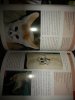
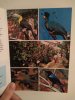
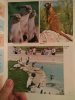
Beyond here, we reach the detailed species accounts; as is the case for most of the guidebooks published by Walsrode both before and after this point in time, these comprise a methodical and comprehensive run-through of the various major groups of birds held at the collection, discussing many (but by no means all) of the species displayed within the collection and illustrating these accounts with copious colour photographs - both full-page and smaller images - which depict particular highlights. As I have bemoaned previously, one of the few real problems inherent to these accounts is the fact that they refer only to the common names of species, with their scientific names remaining unmentioned; as such, some level of fluency in German, or at the very least the ability to decipher the name of a given species through context clues, is rather helpful when reading this section of the guidebook as a whole.

As one can imagine, a major attraction of reading older guidebooks from a collection such as Walsrode is the allure of seeing and reading about species which have long-since ceased to be kept within European collections - such as wattle-eyes, resplendent quetzal and coral-billed cuckoo - or which are now significantly rarer than they once were; as such, the fact that these accounts are so attractively presented is a definite bonus, allowing the aforementioned shortfalls where the labelling of species is concerned to be very much counterbalanced. Naturally, if one *is* familiar with German, or with the common names of birds in said language, this section is even better; I think that the balance between presenting visual and textual information is well-met here, overall. The following scans provide a pretty good overview of the general style and presentation of the species accounts, methinks - and as one might be able to guess, i have specifically curated them to highlight particularly interesting species which are photographed within - although given the wide variety of unusual and attractive species illustrated within this guidebook, the main issue at hand in writing this post is narrowing down the number of examples to merely two or three!

full


full


full


Beyond here, very much like the 2003 guidebook which we have discussed previously, a substantial and methodical index provides a full list of each and every bird species mentioned within the main body of the text; bearing in mind the fact that it is highly unlikely that this list comprises a full inventory of taxa held at Walsrode at the time of publication, and even taking the possibility that some species might be mentioned by multiple common names within the text into account, it is nonetheless rather impressive that (at a rough estimate) this index names over a thousand species! The below scan not only shows the opening page of this index, but also an example of the advertisement material which occurs sparsely across these final handful of pages; a total of only three or four adverts in total, rather less than is the case within the equivalent section in the 2003 guidebook.

full


The guidebook concludes with a rather attractive and copiously-labelled fold-out map of the collection within the inside back cover; this is presented in a faux-isometric format, rather than the top-down plan found in the later edition we have already discussed, and as such arguably is slightly more awkward to reference and use as a map whilst being significantly more visually attractive. However, when directly comparing the two maps I actually feel that the older item performs the task at hand better - whilst in the 2003 map it is not always clear which structures are aviaries and exhibits, and which are supplementary structures of no consequence to the visitor, the nature of structures on this map is much clearer. It is notable, I feel, that (as we may well cover in a future post) the most recent guidebooks and maps published by Walsrode have returned to the general format and style presented here. Another notable difference between the two maps, of course, is the fact that the collection presented here is distributed across a rather smaller site, with several significant houses, exhibits and aviary blocks yet to have been constructed; for instance, the Tropenwaldhalle and the various aviaries situated around the central lake east of the Rosenanlage and free-flight house are entirely absent. As such, this map is also highly interesting on the grounds of zoo history, as a record of the development and expansion of Walsrode in the decades that followed its opening.

full


In conclusion, then, this is an extremely attractive and high-quality guidebook which is interesting both as a record of the collection at the time of publication, as an attractive and well-presented document in its own right, and when taken alongside the other guidebooks issued by Walsrode over the decades as a key part of the overall picture; the latter of these enhanced by the fact that, as I have noted in the past, the guidebooks published by Walsrode represent some of the very best issued by *any* zoological collection, showing just how good such documents can be.

Given the wide range of interesting and unusual species held at Walsrode at the time this guidebook was published, the fact that the collection is still one of the most-discussed German zoos on this forum, and the fact that this is probably a *significantly* more interesting and appealing item than the last few I have highlighted as far as the readers of this thread are concerned, I hope that this post provokes plenty of discussion, feedback and questions!
 
Today's post (which will discuss Vogelpark Walsrode, incidentally) is coming along a little slower than I'd like, so just in case I can't get it polished off to my satisfaction over the course of this afternoon, I thought I would make use of some photographs I already have to hand in order to provide a general talking point and focus for questions and discussion :)

The following are images showing my collection of post-WWII German-language guidebooks from Zoo Berlin; they were originally uploaded to Facebook a year ago as part of a larger post highlighting the entirety of my Zoo Berlin collection, made within a group for the discussion of zoo guidebooks and maps started by Leszek Solski (the previously-discussed zoo historian based at Wroclaw). As I have added several guidebooks to my pre-1945 collection in the intervening time (including the two guidebooks which we have discussed within this thread), along with a substantial number of English-language guidebooks, the relevant images are now significantly out-of-date and therefore I am omitting them from *this* post. Conversely, as the post-WWII German collection was near-complete at the time I took these photographs, with only a single guidebook from 2011 missing, those images are worth highlighting here. The 2011 guidebook in question *has* now entered my collection, incidentally, so when I have an opportunity I intend to re-take the photograph concerned.

full


full


full


Hopefully the above will provide material of interest and discussion, and supplement my prior post highlighting my collection of Tierpark Berlin guidebooks, whilst I get the next daily post finished!

That bongo cover is my favorite. I love the consistency between most of them. Are the ones with significantly different covers - flamingos in the second image, archway and second hippos in the third image - significantly different inside, too? Was there a change to the contents when they switched from illustrated to photographic covers?
 
Day 33: Vogelpark Walsrode (1982) - Great Grey Owl

full


Page count: 144 (including index)
Photographs: c.190 colour images, including c. 25 full page or double-page images.
Illustrations/diagrams: N/A
Layout: Introduction and brief photographic walkthrough, followed by around 100 pages discussing the various bird species held in the collection variously classified by family or order.
Map: Located on fold-out inside rear cover.


This time round, we return to Walsrode to discuss a guidebook published two decades prior to the last edition covered in this thread; as such, when reading this guidebook and looking through the photographs and collection map within, there are a number of noticeable differences between the collection recorded here when compared to the one we discussed last time. I have a feeling that this particular edition may have been issued during the timespan when @vogelcommando worked at the collection - in which case he may hopefully be able to shed some light on what the collection was like at this point in time. However, in many ways the guidebook itself is very much akin to the 2003 edition we have already discussed, as regards format, presentation and overall quality, as I shall relate.

full


Unlike the later guidebook, this particular edition opens with several pages of text discussing the history of Walsrode and giving a general background to the "current" state of affairs there, detailing factors such as the number of species and individual birds held at the collection, the size and dimensions of certain exhibits, and even the estimated number of flowers and other botanical displays. This is followed by a series of double-page photographic montages supplemented with minimal text, of the sort we discussed in the previous post, which taken together form a general walkthrough of Walsrode, highlighting key exhibits such as the free-flight hall, the Parrot and Lory houses and the Paradise Hall, the playgrounds and restaurants on-site, and the botanical displays found throughout the collection, with a particular focus on the rhododendrons which form the largest portion of the flower displays at Walsrode even now. This section of the guidebook is both informative and aesthetically-appealing, with the bright and colourful photographs catching the eye and giving a good overall impression of the collection; as I have noted previously, one of the least-cited reasons why Walsrode is such an attractive and enjoyable place to visit and read about is the fact that whole swathes of the collection feel more like a botanical garden which happens to contain a variety of aviaries, rather than a zoological collection which happens to contain a lot of plant beds, and these photographic montages display this aspect of the collection very well. From a zoo historian point of view, the montages also provide a very interesting look at the physical appearance of those exhibits and aviaries highlighted; given the fact that the main focus of many zoo guidebooks is the animals displayed within a given collection, being provided with high-quality images of a given exhibit is rarer than one would think!

full


Beyond here, we reach the detailed species accounts; as is the case for most of the guidebooks published by Walsrode both before and after this point in time, these comprise a methodical and comprehensive run-through of the various major groups of birds held at the collection, discussing many (but by no means all) of the species displayed within the collection and illustrating these accounts with copious colour photographs - both full-page and smaller images - which depict particular highlights. As I have bemoaned previously, one of the few real problems inherent to these accounts is the fact that they refer only to the common names of species, with their scientific names remaining unmentioned; as such, some level of fluency in German, or at the very least the ability to decipher the name of a given species through context clues, is rather helpful when reading this section of the guidebook as a whole.

As one can imagine, a major attraction of reading older guidebooks from a collection such as Walsrode is the allure of seeing and reading about species which have long-since ceased to be kept within European collections - such as wattle-eyes, resplendent quetzal and coral-billed cuckoo - or which are now significantly rarer than they once were; as such, the fact that these accounts are so attractively presented is a definite bonus, allowing the aforementioned shortfalls where the labelling of species is concerned to be very much counterbalanced. Naturally, if one *is* familiar with German, or with the common names of birds in said language, this section is even better; I think that the balance between presenting visual and textual information is well-met here, overall. The following scans provide a pretty good overview of the general style and presentation of the species accounts, methinks - and as one might be able to guess, i have specifically curated them to highlight particularly interesting species which are photographed within - although given the wide variety of unusual and attractive species illustrated within this guidebook, the main issue at hand in writing this post is narrowing down the number of examples to merely two or three!

full


full


full


Beyond here, very much like the 2003 guidebook which we have discussed previously, a substantial and methodical index provides a full list of each and every bird species mentioned within the main body of the text; bearing in mind the fact that it is highly unlikely that this list comprises a full inventory of taxa held at Walsrode at the time of publication, and even taking the possibility that some species might be mentioned by multiple common names within the text into account, it is nonetheless rather impressive that (at a rough estimate) this index names over a thousand species! The below scan not only shows the opening page of this index, but also an example of the advertisement material which occurs sparsely across these final handful of pages; a total of only three or four adverts in total, rather less than is the case within the equivalent section in the 2003 guidebook.

full


The guidebook concludes with a rather attractive and copiously-labelled fold-out map of the collection within the inside back cover; this is presented in a faux-isometric format, rather than the top-down plan found in the later edition we have already discussed, and as such arguably is slightly more awkward to reference and use as a map whilst being significantly more visually attractive. However, when directly comparing the two maps I actually feel that the older item performs the task at hand better - whilst in the 2003 map it is not always clear which structures are aviaries and exhibits, and which are supplementary structures of no consequence to the visitor, the nature of structures on this map is much clearer. It is notable, I feel, that (as we may well cover in a future post) the most recent guidebooks and maps published by Walsrode have returned to the general format and style presented here. Another notable difference between the two maps, of course, is the fact that the collection presented here is distributed across a rather smaller site, with several significant houses, exhibits and aviary blocks yet to have been constructed; for instance, the Tropenwaldhalle and the various aviaries situated around the central lake east of the Rosenanlage and free-flight house are entirely absent. As such, this map is also highly interesting on the grounds of zoo history, as a record of the development and expansion of Walsrode in the decades that followed its opening.

full


In conclusion, then, this is an extremely attractive and high-quality guidebook which is interesting both as a record of the collection at the time of publication, as an attractive and well-presented document in its own right, and when taken alongside the other guidebooks issued by Walsrode over the decades as a key part of the overall picture; the latter of these enhanced by the fact that, as I have noted in the past, the guidebooks published by Walsrode represent some of the very best issued by *any* zoological collection, showing just how good such documents can be.

Given the wide range of interesting and unusual species held at Walsrode at the time this guidebook was published, the fact that the collection is still one of the most-discussed German zoos on this forum, and the fact that this is probably a *significantly* more interesting and appealing item than the last few I have highlighted as far as the readers of this thread are concerned, I hope that this post provokes plenty of discussion, feedback and questions!

This is indeed the guidebook from around 1986 and indeed it's at the beginning of the time I worked at the park so any questions can ( should ) be answered by me.
On the map we can find 1 of-show breeding area ( nr. 38 on the map ) but there was also a second ofshow crane-breeding area which is not on the map which covered the right-site of the map on the place were the second row of the index is found. Later the public crane-section was constructed here as well as the Bird-cage museum / humming-bird house.
Construction of the new Penguin-enclosures ( with also some stork- and owl enclosures ) began shortly after this map was printed ( left of nr. 11 on the map ).
Any furter questions are welcome !
 
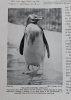
Of particular note in the above image is the reference to the Yellow-eyed Penguin held at the collection at the time of publication; 115 years on, this is still the last time the species was held in a European collection to the best of my knowledge, and it is also probably the most unusual species mentioned in the text which *was* held within the collection at the time without any shadow of a doubt.
I have a set of animal encyclopedias from c.1920 which includes a photo of that bird at the zoo.
Could you post this?
From "Hutchinson's Animals Of All Countries":
 

Attachments

  • IMG_9922 (2).JPG
    IMG_9922 (2).JPG
    87.6 KB · Views: 5
That bongo cover is my favorite. I love the consistency between most of them. Are the ones with significantly different covers - flamingos in the second image, archway and second hippos in the third image - significantly different inside, too? Was there a change to the contents when they switched from illustrated to photographic covers?

The first two of the guidebooks you highlight do not differ terribly much to the other guidebooks issued around that time as regards internal contents, barring the inclusion of a substantial historical section in both prior to the main body of the guidebook; the 1987 Flamingo guide was released around the time the newly-rebuilt Elephant Gate first opened, after the original was destroyed in WWII, whilst the 1994 Elephant Gate guide was released to mark 150 years since the collection first opened.

Conversely, the 2007 Hippo guidebook is *significantly* different internally from those guides which came before, or indeed after; something of a failed experiment I feel. As far as the occasion for such a drastic change goes, the only pretext I can discern is that (although very different from all prior ediitons) it was theoretically the 50th revised edition of that interaction of the guidebook.

I've taken a quick photo of the guidebook in question:

IMG_20220208_022712978.jpg

There was no real change in contents whatsoever when the cover images changed to photographs, however.
 

Attachments

  • IMG_20220208_022712978.jpg
    IMG_20220208_022712978.jpg
    84.1 KB · Views: 59
The first two of the guidebooks you highlight do not differ terribly much to the other guidebooks issued around that time as regards internal contents, barring the inclusion of a substantial historical section in both prior to the main body of the guidebook; the 1987 Flamingo guide was released around the time the newly-rebuilt Elephant Gate first opened, after the original was destroyed in WWII, whilst the 1994 Elephant Gate guide was released to mark 150 years since the collection first opened.

Conversely, the 2007 Hippo guidebook is *significantly* different internally from those guides which came before, or indeed after; something of a failed experiment I feel. As far as the occasion for such a drastic change goes, the only pretext I can discern is that (although very different from all prior ediitons) it was theoretically the 50th revised edition of that interaction of the guidebook.

I've taken a quick photo of the guidebook in question:

View attachment 531108

There was no real change in contents whatsoever when the cover images changed to photographs, however.

The inside of that one looks really nice, what a shame. My guess would be they went with a different publisher, for whatever reason? Really interesting.
 
The inside of that one looks really nice, what a shame. My guess would be they went with a different publisher, for whatever reason? Really interesting.

Yeah, it's nice enough as a guidebook interior (as we may or may not cover at some point) but the main issue is that it has a completely different feel and effect when compared to the guidebooks which came before, and after. Given how longstanding the basic "Zoo Berlin" guidebook format was - in terms of post-WWII guidebooks, only this edition and the first two subsequent to the war do not match the overall style - it really does stick out like a sore thumb!

It wasn't a different publisher; however on a hunch I just double-checked the credits of this edition and the one that followed, which returned to the prior style and format, and I think I have a working theory about what happened. This particular edition is the last written by the director of the time, Dr Jürgen Lange, with the handful of following editions having been produced by Bernhard Blaszkiewitz during his tenure as director of Zoo Berlin; as I have previously noted, Blaszkiewitz was obviously quite partial to the aforementioned "Zoo Berlin" guidebook style given the fact all his guidebooks for Tierpark Berlin matched this style. Therefore I imagine that he deliberately chose to reject the "new" style presented in the final Lange guidebook.

The odds of either collection producing a guidebook are now vanishingly small, given all that I have mentioned previously, but I think we can be fairly certain that if they *do* produce a guidebook again at an unknown point in the future, they will represent an entirely different style and format.... and likely be much shorter!
 
Day 34: Belle Vue Zoo Park (1967) - Giraffe Head

full


Page count: 48 (including numerous advertisement pages)
Photographs: c.60 black-and-white images
Illustrations/diagrams: c.24, most of which are within advertisements
Layout: Introduction, general overview of collection and summary of various entertainment features and venues located within site.
Map: Fold-out map within central pages


A very interesting item from a long-since closed collection today, which represents a valuable document of late-1960s Manchester and the commercial landscape of the time just as much as it does a record of zoo history; this guidebook was released ten years prior to the final closure of Belle Vue, and as such in many ways depicts a collection which, although already in significant decline, was still a noteworthy figure on the UK zoo landscape.

This guidebook is also one of the most recent additions to my collection, having arrived in the post quite literally three days before my most recent batch of random guidebook-selection and scanning ended up picking it out for this point in the thread. Given the cross-section of interest which this collection has for collectors of zoo guidebooks, circus memorabilia, documents from the local history of Manchester, and motor racing memorabilia, the various guidebooks and othr such items published by Belle Vue tend to be much sought-after - a guidebook I recently attempted to bid on from the late 1950s ultimately sold on eBay for over £50 - and therefore I was very lucky to track this particular item down as part of a job-lot of assorted natural history books for only £15 in total. I rather suspect that the fact the job-lot contained a Belle Vue guidebook was not immediately-apparent is the sole reason I managed to pick it up so cheaply!

full


The main body of the guidebook can be roughly separated into two distinct segments; firstly, a general discussion of the various exhibits and animal houses which were situated throughout the zoo; and secondly an overview of the various amusement attractions located at Belle Vue, and which represented a major aspect of the overall collection - for a long time probably being of equal importance to the zoo itself, and by the time this guidebook was published quite possibly of greater importance. The first of these sections opens with a brief introduction to the zoo, relating some of the most recent developments at the collection and those planned for the future; not knowing as much about the history of Belle Vue as I would like, I do not know offhand whether or not the expanded and modernised Elephant and Tropical House cited here was ever built, although I suspect that it is doubtful. Beyond here, the species and exhibit accounts begin with discussion of the Lion and Tiger House - as can be seen above, the text is fairly generalised and discusses the species in question in broad terms, not going into much detail about the actual exhibits or the individual animals within. Some sections are even more generalised; for instance, overleaf the entire tropical bird collection at the zoo is summarised thus: "Until new accommodation is found for the tropical birds they will continue to occupy the northern section of the old Lion and Tiger House. Here you will see - and hear - the talkative mynahs, clownish toucans, colourful cardinals, aristocratic Touracous and the fantastic Indian hornbills. These brilliantly coloured birds give a raucous welcome to visitors as the panorama of Belle Vue begins to unfold".

full


This general layout and style occurs throughout the species and exhibit accounts - however, it should be noted that some sections *do* go into somewhat more detail about both the houses and exhibits, and the specific animals held within them. For instance, the above section discussing the Aquarium and Reptile House is one of the more in-depth segments of the guidebook as a whole; as one can see, it makes a point of making specific mention of individual areas within the houses in question and detailing the species within, in a very rough and simplified walkthrough-account. Furthermore, and more importantly from the point of view of someone interested in zoo history, this section discusses the fact that the American Alligators held within this area were the first recorded individuals in a UK (not European, as it claims) collection to attempt breeding; although this particular occasion was unsuccessful and the resulting eggs were infertile, I am given to understand at least one further breeding led to live young.

The other major feature that should be noted throughout these species/exhibit accounts - and the discussion of non-zoological attractions which follows - is the fact that scarcely a single page passes without at least one advertisement for some product or other; in point of fact, a total of 15 pages across the guidebook, close to one-third of the total, comprise either full-page advertisements or pages containing only advertisements. These cover a wide range of products and services, from various companies and suppliers - both local and national -responsible for providing food, drink and other services to Belle Vue, a variety of hotels, service stations and attractions within the Manchester area, and general advertisements from both local and national companies; as such, as I suggested at the start of this post, this guidebook represents an interesting insight into the commercial landscape of the time.

full


The historical value of this guidebook, beyond the value it represents to individuals such as ourselves as a record of a zoological collection which no longer exists, is not merely limited to the aforementioned advertisement material. For many decades, the various attractions at Belle Vue beyond the zoo itself were a major focus of tourism and commercial activity within Manchester and the surrounding regions of north-west England - as such the final third of this guidebook, covering as it does these attractions and leisure activities, represents an important record of social and local history. It is also, unfortunately, a record of certain things which are incredibly uncomfortable to view with the eyes of hindsight, but which should not be whitewashed; when initially reading this guidebook a few weeks ago when it first entered my possession, on reaching the below segment discussing the New Elizabethan Ballroom - a venue for evening ballroom dancing and other events - I felt an immediate sense of revulsion on spotting the advertisement for the weekend dancing club for young teenagers.

full


Fortunately, not all of the material within this section of the guidebook is so disturbing to read. For instance, a substantial discussion of the amusement park located at the collection (comprising a variety of rollercoasters, carousels and other such rides, a Tussaud's Waxworks, slot machines and other such attractions) is followed by a photographs depicting various famous figures of the time within the park, including Morecambe and Wise at a Chimp's Tea Party and Max Bygraves on the Water Chute. One of the most noteworthy attractions discussed at some length within this section of the guidebook is the Kings Hall - a large indoor arena capable of seating around 6500 people, and used for a wide range of activities including wrestling and boxing matches, orchestra events and, perhaps of most interest to those reading this post, live music concerts; over the decades preceding the closure of Belle Vue, this venue was the site of concerts by bands and artists as widely-varied as Led Zeppelin, The Who and Jimi Hendrix on one hand, and Johnny Cash, Leonard Cohen and Nat King Cole on the other hand. Some of the attractions discussed in this section - including the Kings Hall - survived for a time beyond the closure of the zoo itself; the last of these, ultimately closing in 1987, was the Speedway and Stockcar Racing Stadium.

full


A fairly-comprehensive and well-labelled fold-out map of the collection is located within the central pages of this guidebook; as seems to have been something of a trend at the time - see, for instance, the map within the Chessington Zoo guidebook we discussed some weeks ago - it is surrounded by rather garish blocks of colour which are somewhat distracting to the eye and detract from the map itself, but overall this is a pretty good map which reflects the layout of the collection at the time of publication pretty well, and moreover demonstrates just how important the non-zoological attractions at Belle Vue were overall, given the fact more of the labels on the map pertain to these attractions than the zoo!

full


Overall, then, an interesting and significant guidebook from a collection which several of our number may well remember from personal experience, and which played an important role in the historical zoo landscape of the UK in its time; although perhaps not mourned for what it was at the time it closed, I suspect it *is* still mourned for what it could have become had it survived to the present day, and for the impact it had on the population of Manchester for generations.

I've definitely skipped over a lot of content here, so there are rich grounds for questions methinks!
 
With all this place had to offer, why did it end up closing?
Corporate owned, it was in todays money loosing something like $1 million per year, and much of the infrastructure was outdated even then. It would have compared poorly with Chester Zoo which was known at the time as "the zoo without bars", and was only about 40 miles away. Most likely, the land would have been the only valuable asset.
 
Last edited:
Most likely, the land would have been the only valuable asset.

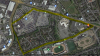
And not even that, really - until recently much of the land remained a brown-field site, intermittently developed with one thing or another and then demolished. In recent years a housing estate and a car auction lot have been built over the majority of the site, and to the best of my knowledge the latter is still present now and hasn't been abandoned as so many other things were, but various cinemas, bingo halls and other such buildings have come and gone.

There are a few structures visible on this Google Maps image which no longer exist, but for a good impression of what the site looks like now.....

upload_2022-2-9_11-57-37.png

---

On another note, does anyone have any general feedback on what I could be doing better with these posts? Engagement and interest seem to have dropped through the floor in the last week or so, which to some extent always happens with a long-running thread but - given the fact my primary objective in writing this thread is to provide a useful and interesting resource for the forum, and to stimulate discussion and conversation among the users of the forum - I'd like to do the best job I possibly can at maintaining the quality and value of the thread!

@TinoPup and @Coelacanth18 have suggested I should be *less* random with my selection of guidebooks, and where I have large numbers of guidebooks for a collection "stick with it" in order to show the development of said collection; I rather wanted to avoid this, as I think it would swamp the thread and actively drive people *away* who didn't just want to read me talking about a small handful of collections, and I also didn't want to end up solely talking about the highlights of my guidebook collection. However, if the interest *is* there for me to do something like that, rather than the randomised approach I have followed so far, I could always attempt a hybrid blend of the two approaches. Also, would it be of interest if I occasionally opened up the floor for a day or two for people to make general requests for collections they would like to see discussed, and then (subject to my owning anything from said collections) doing a week or so covering items which fit some of the requests received?

Similarly, @Coelacanth18 and @CGSwans have suggested I am posting *too* regularly, and that despite my (near-daily) assurances that people can and should return to older posts to ask questions and make remarks, people feel put off from doing so once a new post has been uploaded - so what does everyone else think? Should I be taking my foot off the pedal a little and allowing the thread time to breathe, or is the pace of content fine - and the issue being the content itself? It is a tricky balance - I've been trying not to feel obliged to post on a daily basis (hence the occasional more general posts I have made to keep things bubbling along when circumstances have got in the way) but equally, as everyone is aware I am *very* good at maintaining a high output of writing when I have built up a head of steam, but also fairly prone to being completely knocked-off my rhythm and motivation once I let the steam dissipate! One of my secondary goals for this thread, incidentally, is to get my writing pace and motivation back up to the point where I can resume the "Last-Chance Saloon" reviews :P which were initially halted by seasonal depression, and then subsequently halted more conclusively by @snowleopard visiting 90% of the collections I planned to write about in the short-term, having the "spoons" to write a vast amount on each collection whilst still travelling, and being a more engaging writer in the process. Given my long-term plan for that thread covers a lot of material he *didn't* cover, I really want to get that thread resumed sometime.
Finally, how has my writing style been in general? Too detailed, not detailed enough, too personal, not personal enough, too long, too short...... you get the picture :)
 

Attachments

  • upload_2022-2-9_11-57-37.png
    upload_2022-2-9_11-57-37.png
    1.1 MB · Views: 61
Day 35: Cotswold Wildlife Park (1976) - Red Panda

full


Page count: 34 (including inner front and rear covers)
Photographs: c.35 colour images and 10 black-and-white images
Illustrations/diagrams: 18 drawings/illustrations
Layout: General overview of collection and species held.
Map: Fold-out map within inner front cover.


From discussing a guidebook from the final years of a large, garish and over-commercialised collection which has long-since ceased to exist, to one of the earliest guidebooks from a rather smaller and more low-key collection which remains a popular and highly-regarded part of the UK zoological landscape; this particular guidebook was published a mere six years after Cotswold Wildlife Park first opened, and therefore represents a rather interesting look at the early days of the collection.

full


The general layout of this guidebook follows a fairly standard approach, giving a general overview of the various exhibits at the collection and the species held within, preceded by a brief introduction and various key points of information for visitors; as can be seen in the above image, the first area discussed within the main body of the guidebook is the attractive walled garden which still represents the heart of the collection to this day, along with the tropical house and other exhibits within. This section is followed by discussion of certain key species within the collection at the time of publication, including both those found within the walled garden and those displayed throughout the wider grounds of the collection; among the points of particular interest here is the statement - very bizarre though it may seem to a modern audience - that the meerkats held at the collection "have bred at the Park on two occasions, but this is rare in zoos", and the presence of Smooth-coated Otter (the Indus Valley race, I believe, although this is not specifically cited within the text) within the collection at the time of publication.

full


Beyond here, several pages cover the various houses and exhibits located within the old stable blocks and supplementary buildings surrounding the old manor house, such as the Reptile House and Aquarium, discussing the various species held within in fairly generalised and loose terms alongside colour photographs of select taxa; it is here worthwhile noting that the entire guidebook is richly illustrated with a wide variety of colour photographs depicting various species and exhibits throughout the collection, some of which represent images which would later be used as the cover artwork for some of the guidebooks to follow. The most impressive of these photographs is reserved for the central pages of the guidebook, where - perhaps unsurprisingly - a large image of the iconic Cotswold Wildlife Park view takes up much of the double-page spread; White Rhinoceros on the lawn in front of the Victorian manor house. At the time of publication, this exhibit contained several other species native to Africa which would later move elsewhere in the collection, or cease to be kept entirely; as such, the view in question was probably even more impressive in 1976 than it is now!

full


full


Further sections highlighting the variety of exhibits and species found throughout the grounds of the collection, the narrow-gauge railway - still present to this day - which had been installed in the years immediately-preceding the publication of this guidebook, and other general remarks on features of the wider collection conclude the main body of the text; however, one of the most unusual and interesting of these segments is, I feel, worth drawing attention to. One of the key features of Cotswold Wildlife Park which adds to its charm and makes it so unique among UK collections to this day is, as I have already alluded, its setting within the carefully-planted and landscaped grounds of the manor estate; although to nowhere near the level of a Wilhelma or a Walsrode, therefore, the flora visible within the collection is very important to the overall feel and impression that one obtains from visiting CWP, as well as the fauna. This is one reason the Walled Garden of which I spoke is so important to the collection as a whole, and it is also why I am so taken with the presence within this guidebook of a segment devoted to discussing the variety of trees and plants located within the grounds of the estate.

full


The map of the collection, located within the inner front cover of this guidebook, is both attractive and easy-to-interpret, with an informative and unobtrusive key providing labels for each major exhibit or area; in many ways, looking at this map it is clear that Cotswold Wildlife Park has changed very little over the years where general footprint and collection design is concerned, as I can very easily read the map and "see" the collection that I have grown to know and love within.

full


This particular item is not as detailed as some of the guidebooks which followed it, nor as lushly illustrated, but it does represent a strong start both for the collection and the zoo guidebooks published there. In fact, the guidebooks produced by CWP - although nowhere near the equal of the guidebooks produced by the two Berlin collections, Walsrode, or London at its height - are some of the best produced by a UK collection in my opinion, and given the fact they continue to be published to this day it is perhaps unsurprising that a large number are present within my collection. As such, this will quite possibly not be the last time I discuss a guidebook from Cotswold Wildlife Park.... it will be interesting to show you where they developed from here!
 
One of my secondary goals for this thread, incidentally, is to get my writing pace and motivation back up to the point where I can resume the "Last-Chance Saloon" reviews :p which were initially halted by seasonal depression, and then subsequently halted more conclusively by @snowleopard visiting 90% of the collections I planned to write about in the short-term, having the "spoons" to write a vast amount on each collection whilst still travelling, and being a more engaging writer in the process. Given my long-term plan for that thread covers a lot of material he *didn't* cover, I really want to get that thread resumed sometime.

Finally, how has my writing style been in general? Too detailed, not detailed enough, too personal, not personal enough, too long, too short...... you get the picture :)

I think that your zoo guidebook thread is wonderful and I always read everything you write. Your attention to detail is extraordinary and you must be spending many hours compiling all the information and typing it onto ZooChat. Keep rolling along! As much as I am enjoying the guidebook material, without a doubt I do prefer 'road trip reviews' of zoos and so I would urge you to finish your Last-Chance Saloon write-ups as well.
 
Day 35: Cotswold Wildlife Park (1976) - Red Panda

full


Page count: 34 (including inner front and rear covers)
Photographs: c.35 colour images and 10 black-and-white images
Illustrations/diagrams: 18 drawings/illustrations
Layout: General overview of collection and species held.
Map: Fold-out map within inner front cover.


From discussing a guidebook from the final years of a large, garish and over-commercialised collection which has long-since ceased to exist, to one of the earliest guidebooks from a rather smaller and more low-key collection which remains a popular and highly-regarded part of the UK zoological landscape; this particular guidebook was published a mere six years after Cotswold Wildlife Park first opened, and therefore represents a rather interesting look at the early days of the collection.

full


The general layout of this guidebook follows a fairly standard approach, giving a general overview of the various exhibits at the collection and the species held within, preceded by a brief introduction and various key points of information for visitors; as can be seen in the above image, the first area discussed within the main body of the guidebook is the attractive walled garden which still represents the heart of the collection to this day, along with the tropical house and other exhibits within. This section is followed by discussion of certain key species within the collection at the time of publication, including both those found within the walled garden and those displayed throughout the wider grounds of the collection; among the points of particular interest here is the statement - very bizarre though it may seem to a modern audience - that the meerkats held at the collection "have bred at the Park on two occasions, but this is rare in zoos", and the presence of Smooth-coated Otter (the Indus Valley race, I believe, although this is not specifically cited within the text) within the collection at the time of publication.

full


Beyond here, several pages cover the various houses and exhibits located within the old stable blocks and supplementary buildings surrounding the old manor house, such as the Reptile House and Aquarium, discussing the various species held within in fairly generalised and loose terms alongside colour photographs of select taxa; it is here worthwhile noting that the entire guidebook is richly illustrated with a wide variety of colour photographs depicting various species and exhibits throughout the collection, some of which represent images which would later be used as the cover artwork for some of the guidebooks to follow. The most impressive of these photographs is reserved for the central pages of the guidebook, where - perhaps unsurprisingly - a large image of the iconic Cotswold Wildlife Park view takes up much of the double-page spread; White Rhinoceros on the lawn in front of the Victorian manor house. At the time of publication, this exhibit contained several other species native to Africa which would later move elsewhere in the collection, or cease to be kept entirely; as such, the view in question was probably even more impressive in 1976 than it is now!

full


full


Further sections highlighting the variety of exhibits and species found throughout the grounds of the collection, the narrow-gauge railway - still present to this day - which had been installed in the years immediately-preceding the publication of this guidebook, and other general remarks on features of the wider collection conclude the main body of the text; however, one of the most unusual and interesting of these segments is, I feel, worth drawing attention to. One of the key features of Cotswold Wildlife Park which adds to its charm and makes it so unique among UK collections to this day is, as I have already alluded, its setting within the carefully-planted and landscaped grounds of the manor estate; although to nowhere near the level of a Wilhelma or a Walsrode, therefore, the flora visible within the collection is very important to the overall feel and impression that one obtains from visiting CWP, as well as the fauna. This is one reason the Walled Garden of which I spoke is so important to the collection as a whole, and it is also why I am so taken with the presence within this guidebook of a segment devoted to discussing the variety of trees and plants located within the grounds of the estate.

full


The map of the collection, located within the inner front cover of this guidebook, is both attractive and easy-to-interpret, with an informative and unobtrusive key providing labels for each major exhibit or area; in many ways, looking at this map it is clear that Cotswold Wildlife Park has changed very little over the years where general footprint and collection design is concerned, as I can very easily read the map and "see" the collection that I have grown to know and love within.

full


This particular item is not as detailed as some of the guidebooks which followed it, nor as lushly illustrated, but it does represent a strong start both for the collection and the zoo guidebooks published there. In fact, the guidebooks produced by CWP - although nowhere near the equal of the guidebooks produced by the two Berlin collections, Walsrode, or London at its height - are some of the best produced by a UK collection in my opinion, and given the fact they continue to be published to this day it is perhaps unsurprising that a large number are present within my collection. As such, this will quite possibly not be the last time I discuss a guidebook from Cotswold Wildlife Park.... it will be interesting to show you where they developed from here!

Some of the terminology in this one is interesting to read now, like "invalid chair". And a bar, too!
If you feel like it, could you share any other photos that contain exhibit/broader images? Always looking to trigger memories of this place.
 
If you feel like it, could you share any other photos that contain exhibit/broader images? Always looking to trigger memories of this place

Certainly :)

IMG_20220210_015931098.jpg
IMG_20220210_015949060.jpg
IMG_20220210_020036134.jpg
IMG_20220210_020148446.jpg
 

Attachments

  • IMG_20220210_015931098.jpg
    IMG_20220210_015931098.jpg
    93.3 KB · Views: 59
  • IMG_20220210_015949060.jpg
    IMG_20220210_015949060.jpg
    70.5 KB · Views: 57
  • IMG_20220210_020036134.jpg
    IMG_20220210_020036134.jpg
    96.9 KB · Views: 57
  • IMG_20220210_020148446.jpg
    IMG_20220210_020148446.jpg
    108.8 KB · Views: 57
Day 36: Sunshine Aquarium (1982) - Clownfish

full


Page count: 22 (including inner front and rear covers)
Photographs: c.46 colour images
Illustrations/diagrams: c.22 diagrams showing species held in each exhibit
Layout: Introduction to aquarium, walkthrough account of species and exhibits, and discussion of unusual ecological niches and behaviours represented within the aquarium.
Map: Map of collection within inside-front cover, and map of the Sunshine City complex.


This one - relating to the first guidebook from Asia to be covered in this thread - might be a little shorter, given the fact that I have literally zero knowledge of Japanese and precious little knowledge of the collection to which this guidebook pertains, but on having this one pop up in the random selection I knew it was worth tackling nonetheless; quite apart from anything else, @aardvark250 has been trying and failing to guess which Japanese collections are represented among my guidebooks for a while now! As such I have taken more scans than usual, to compensate for the relative paucity in discussion, and have used the camera-translation tool on my phone to get a rough idea of what certain sections of the guidebook cover where the photographs, diagrams or very limited English text does not shed enough light. There are several Zoochatters who have visited Sunshine Aquarium, and who may hopefully be able and willing to discuss their thoughts on the collection in order to supplement this post - although of course, it is doubtless a very different animal now when compared to the collection represented within this guidebook, and two of the members to have uploaded photographs to the gallery have not been present on the forum for quite some time!

full


Perhaps the best place to start is - paradoxically - with the very *end*; the back cover of the guidebook displays the above map of the wider Sunshine City complex in Tokyo, within which the aquarium is located, and which also contains various shopping centres, offices, restaurants, a museum and various other attractions. At the time of publication, I believe that the central Sunshine 60 skyscraper was the tallest building in Asia. The Sunshine Aquarium itself occupies the top floors of the smaller World Import Mart building within the complex; although it now covers three floors and the roof of the building, I presume that at the time of publication it covered only the 10th and 11th floors per the collection map within the inner-front page of the guidebook.

full


The guidebook itself is very well-illustrated, with numerous colour photographs showing various of the species inhabiting the aquarium at the time of publication, along with small thumbnail images of each of the major tanks and exhibits. Moreover, as I shall illustrate anon, in the main body of the guidebook there are numerous diagrams showing the species occupying each exhibit, with the aforementioned thumbnail photographs and labels in both Japanese and English supplementing each of these. The central pages of the guidebook contain a large fold-out photograph (covering the equivalent of four pages) showing a diver swimming with various of the species occupying what I presume to be the main tank within the Sunshine Aquarium; unfortunately this is too large and unwieldy to scan, however the following photograph hopefully gives a general impression of the whole. Also included below are images of the two full-page photographic discussions of the garden eel species displayed within the collection which comprise the outer sections of this fold-out central spread.

full


full


full


The main body of the guidebook more or less comprises three distinct sections; the first of these, as far as I have been able to tell, is a general introduction written by the director of the aquarium, followed by a short discussion of selected highlights and the background to the collection.

full


Beyond here, the second and lengthiest section of the guidebook comprises a comprehensive exhibit-by-exhibit account of the species held within the aquarium, with the aforementioned central photographic spread forming the dividing point between the discussion of the exhibits on each of the two floors. As the following example images show, each exhibit is represented by a diagram showing the species within, a small thumbnail image of the exhibit/tank in question alongside its name, and numbered labels giving the names of each species in both Japanese and English; the translations into English are somewhat inaccurate in some parts, however, and therefore it would be unwise for me to transcribe the full species list presented without first double-checking the translations manually! For instance, in the first of the images below the second exhibit is labelled as containing Commerson's Dolphin; however, the diagram itself - and photographs further into the guidebook - make it apparent that the species in question was in fact Pacific White-sided Dolphin, as does checking the Japanese label using the aforementioned translation tool on my phone.

full


However, the quality of this section is nonetheless rather high in my opinion, given the fact that even now it is somewhat unusual for a guidebook pertaining to an aquarium - which by their very nature tend to be very speciose - to give a comprehensive species-by-species account of the collection; were it not for the awkward format of the guidebook making it difficult to scan the pages within, I would have been very tempted to scan this section in its entirety given the valuable resource it represents both as a document of the species held at the time of publication, and (despite the small format of the photographs presented) the exhibits within which they were housed. As it stands, despite the aforementioned translation errors, I intend to transcribe the species list presented in a supplementary post or thread at some point; I will merely have to double-check each label as noted.

full


The final section of the guidebook contains, as far as I can tell, a general discussion of key oceanic ecosystems and niches represented within the Sunshine Aquarium, focusing particularly on species displaying particularly unusual or noteworthy features; for instance, species such as oarfish and splitfin flashlight-fish are discussed within judging from the photographs and illustrations present, and there is fairly substantial discussion of the lungfish held in the collection - per the text of this section, at the time of publication all six extant species were present - alongside the various marine mammals displayed. Given how relatively in-depth the latter segments appear to be, when compared to the more fleeting discussions elsewhere in this section, I have elected to scan these particular pages for the purposes of this discussion.

full


full


Overall then, a *very* interesting and unusual little item, even if the level to which an Anglophone reader can appreciate and understand the contents is somewhat limited. As noted, I intend to post a species list from this guidebook once I have the time and patience to work through the translation and double-checking process, but in the meantime hopefully some of those Zoochatters familiar with the present-day incarnation of this collection may wish to chime in with their thoughts!
 
Last edited:
Were they actually keeping that species? :eek:

It's certainly not mentioned within the main exhibit/species accounts, and as far as I know there have been no records of the species surviving more than a few hours in captivity, so I strongly suspect the reference within the guidebook section in question must pertain to an individual that died immediately upon arrival!
 
Back
Top