PS : same question for the Cocopeel angelfish (Centropyge cocosensis).
I have three images labelled as Lemonpeel Angelfish in the Christmas Island Wildlife folder. They were recently re-classified as the Cocopeel Angelfish.

Hix
PS : same question for the Cocopeel angelfish (Centropyge cocosensis).

Yes these are bred in private hands, where I also saw Naultinus grayii, Rhacodactylus trachyrhynchus and other endemics of the islands along New Zealand.Also I didn't know there were any breeding pops of nz forest geckos in Europe, private breeder I assume?
As @vogelcommando explained, they are kept in private hands as well where breeders do a great effort to build a strong population as one cat can wipe out the wild population on Union Island. Tho he was very lucky to see it in a shop as they are almost only exchanged between professional breeders. The blind skink I saw behind the scenes in Plzen zoo two years ago, it took a great effort catching one in their sandy enclosure so I assume not too many people had seen this one.Although where'd you see the union gecko and blind skink? Also how much do you know of the husbandry of the blind skink?
I can unfortunately not say where I saw both these species, but I have pictures for sure. The one from my profile picture is the debelius actually@Jo Kuyken : where did you see this species and did you make any photos of it because in "my" thread Butterflyfishes of the genus Chaetodon this species is still missing.
PS : same question for the Cocopeel angelfish (Centropyge cocosensis).

I can unfortunately not say where I saw both these species, but I have pictures for sure. The one from my profile picture is the debelius actually
Thank a lot for this info Hix !I have three images labelled as Lemonpeel Angelfish in the Christmas Island Wildlife folder. They were recently re-classified as the Cocopeel Angelfish.
Hix
I'm new to this discussion but I just read all 55 pages out of interest. Such an impressive lists! @Giant Eland probably knows how much I hate him for that, haha!
I know this is an old comment, but I just wanted to inform you that the captive population is not really Ducula pistrinaria. The original birds are hard to trace back but they are most likely a subspecies of Ducula aenea. My bet is on sylvatica.
Considering the fact that I'm only doing this for a few years, here are a few examples of rare species that most of you will probably not have seen before. I know these are random, not mammals only, but I would be very interested in seeing how many you guys have. I chose 50 random and less occurring species, all of them were photographed in captivity.
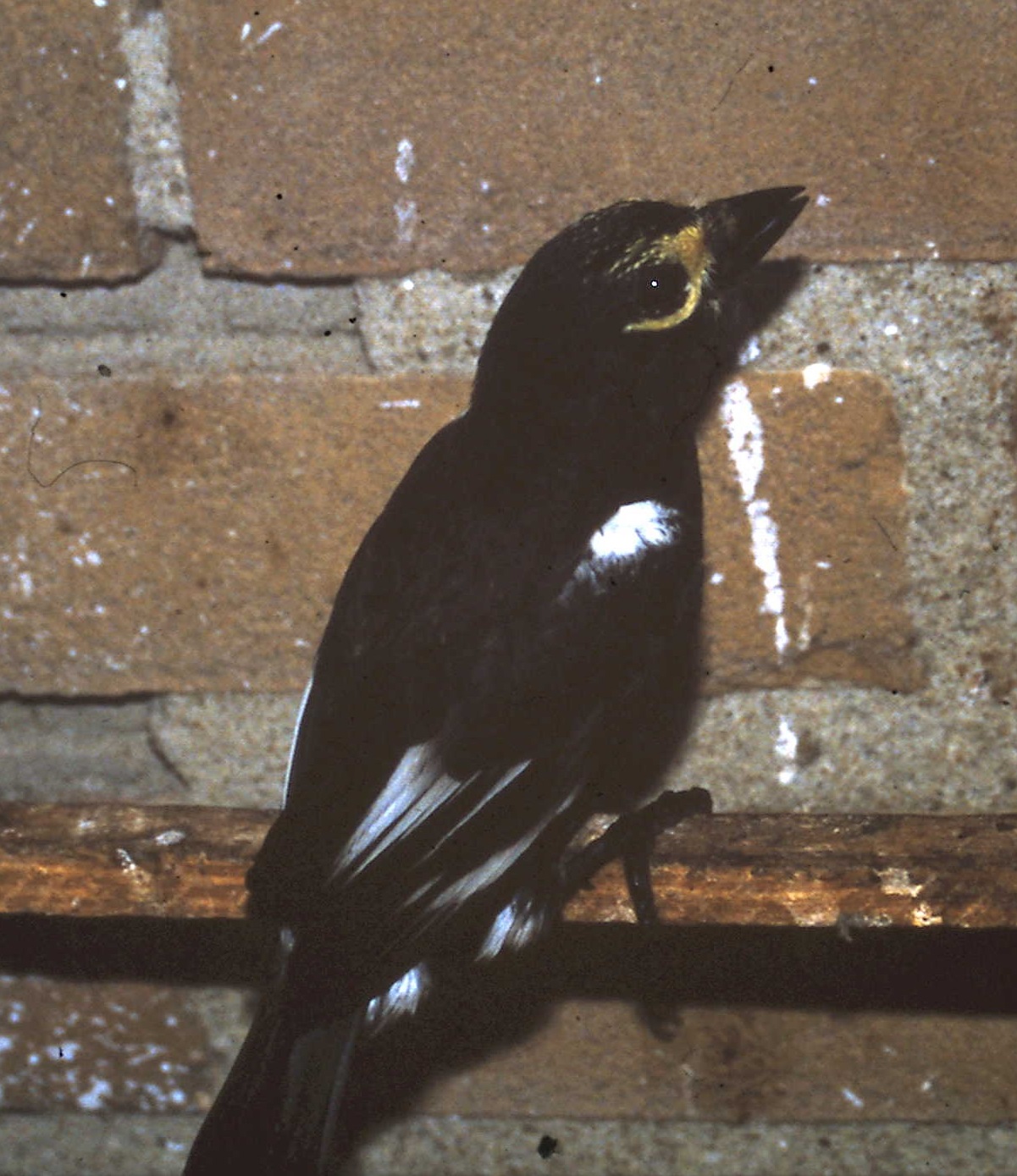
1) Toucan barbet (Semnornis ramphastinus ramphastinus)
2) Emperor shrimp (Zenopontonia rex)
3) Dragon mantis (Stenophylla lobivertex)
4) Long-nosed elephant-trunkfish (Campylomormyrus numenius)
5) Thick-billed weaver (Amblyospiza albifrons albifrons)
6) White-fronted manakin (Lepidothrix serena)
7) Madagascar blind burrowing skink (Grandidierina fierinensis)
8) Large bamboo rat (Rhizomys sumatrensis)
9) Red-naped ibis (Pseudibis papillosa)
10) Enigmatic leaf turtle (Cyclemys enigmatica)
11) Oren's tilefish (Hoplolatilus oreni)
12) Key deer (Odocoileus virginianus clavium)
13) Yellow hawkfish (Paracirrhites xanthus)
14) Striped brook snake (Pseudoxyrhopus quinquelineatus)
15) Blue Mauritius angelfish (Centropyge debelius)
16) Bearded leatherjacket (Anacanthus barbatus)
17) Rufous treepie (Dendrocitta vagabunda)
18) South-east Australian short-beaked echidna (Tachyglossus aculeatus aculeatus)
19) Western red-legged thrush (Turdus plumbeus cf. rubripes)
20) Grey-headed imperial-pigeon (Ducula radiata)
21) Red treefrog (Leptopelis rufus)
22) Confusing egg-eating snake (Dasypeltis confusa)
23) Mimic octopus (Thaumoctopus mimicus)
24) Small-billed tinamou (Crypturellus parvirostris)
25) New Zealand forest gecko (Mokopirirakau granulatus)
26) Capuchin barbler (Phyllanthus atripennis)
27) Flat-headed perch (Rainfordia opercularis)
28) Collared laughingthrush (Trochalopteron yersini)
29) Network wobbegong (Orectolobus reticulatus)
30) Japanese long-legged centipede (Thereuopoda clunifera)
31) Bornean peacock-pheasant (Polyplectron schleiermacheri)
32) Javan ferret-badger (Melogale orientalis)
33) Union Island gecko (Gonatodes daudini)
34) Masked angelfish (Genicanthus personatus)
35) Steller's eider (Polysticta stelleri)
36) Red-headed barbet (Eubucco bourcierii aequatorialis)
37) Imperial amazon (Amazona imperialis)
38) Thekla's lark (Galerida theklae)
39) Green thornytail iguana (Uracentron azureum)
40) Rough-throated leaf-tailed gecko (Saltuarius salebrosus)
41) Bicolor basslet (Lipogramma klayi)
42) Tanzanian montane dwarf chameleon (Trioceros sternfeldi)
43) Cocopeel angelfish (Centropyge cocosensis)
44) Rosa's round ray (Heliotrygon rosai)
45) Pethiyagoda's crestless lizard (Calotes pethiyagodai)
46) Red-and-white giant flying squirrel (Petaurista alborufus castaneus)
47) Roseate tern (Sterna dougalli)
48) French Guianan red and black curtain web spider (Harmonicon oiapoqueae)
49) Himalayan bulbul (Pycnonotus leucogenys)
50) Dongola small-spotted genet (Genetta genetta dongolana)
I'm very curious to see more lists! Sidenote: Does anyone have an idea how often bobbit worms (Eunice aphroditois) are kept in captivity with the intention of keeping them? (so not as a pest).
 . For the amphibians, fishes and invertebrates : I didn't check these because for a good number of species I'm not completly sure.


I don't have many interesting rarely seen animals, and much less captive-wise as the facilities I visited are all well known amongst Zoochatters. But I just remembered that I organized a trip the last year to see my favourite insect in the world and I and another person (Josefina) are together the third persons to see it alive in the world. I'm talking about this critter, Lertha sofiae.
View attachment 541349

Where would one see this insect>
It's endemic of a very narrrow area in the south of my country. For long time the only person that saw it alive was its discoverer Victor Monserrat, that is an excellent person and a good virtual friend of mine tough I never met him in person. Their type locality was destroyed by greenhouse expansion and the species given as extinct (not officially). The second person to see it was its rediscoverer, my very friend Faluke (in another place with similar habitat, still not engulfed by the endless greenhouses), and then I organized a trip hosted in the rediscoverer's house who did all things needed for seeing the species, to see it for photograph, knowing that it's still alive, and it was a great success. He, me and Josefina were here where the insect appeared. I also tried to invit the discoverer to the trip, but sadly he was unable to join.
Maybe the largest-most rarely seen animal I've seen is the Formosan serow (Capricornis swinhoei), as they're not found outside Taipei zoo and this is not a zoo so widely visited by Zoochatters. In the same zoo I saw Taiwan macaque, Macaca cyclopis that I think is in a similar situation. And not endemic but I think also very rarely seen the Asian black eagle (Ictinaetus malayensis). I also saw many small birds in Zwolse Vogelmarket that are very rare to entirely absent to most collections. For example Psarisomus dalhousiae, Sitta frontalis & azurea, and many others. Being Spanish, some endemic critters rarely seen or entirely absent out of rescue centers, private collections and such kind of things can also count from my side, such as Iberian newt Triturus boscai or Iberian blind worm Blanus cinereus. I also saw many rare herptiles and fishes in a specialized pet shop that have usually many rarities absent from zoos, it comes to my mind for example the gourami Ctenops nobilis or the gecko Ptyodactylus hasselquisti? but I talk only from memory and didn't investigated about the rarity of these.

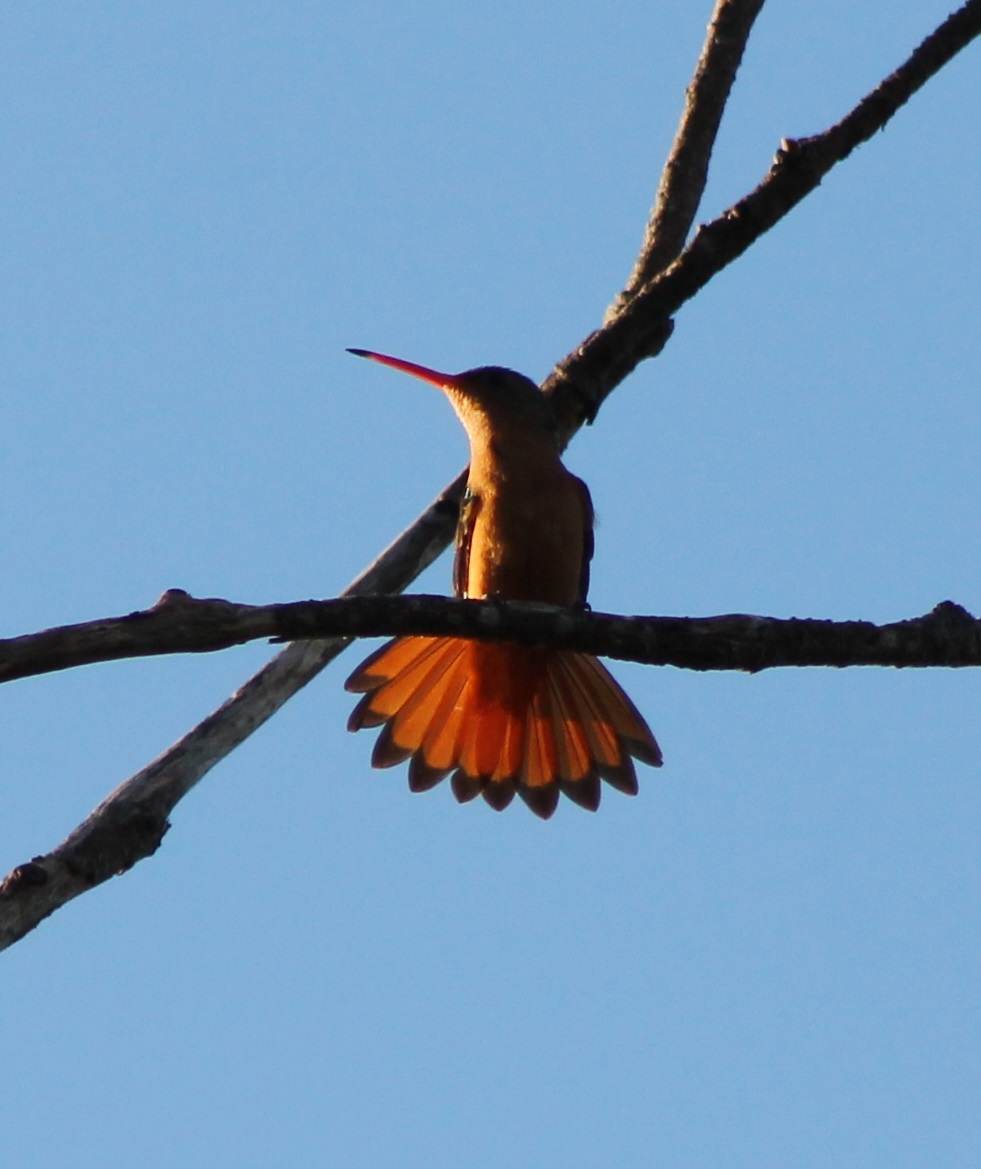
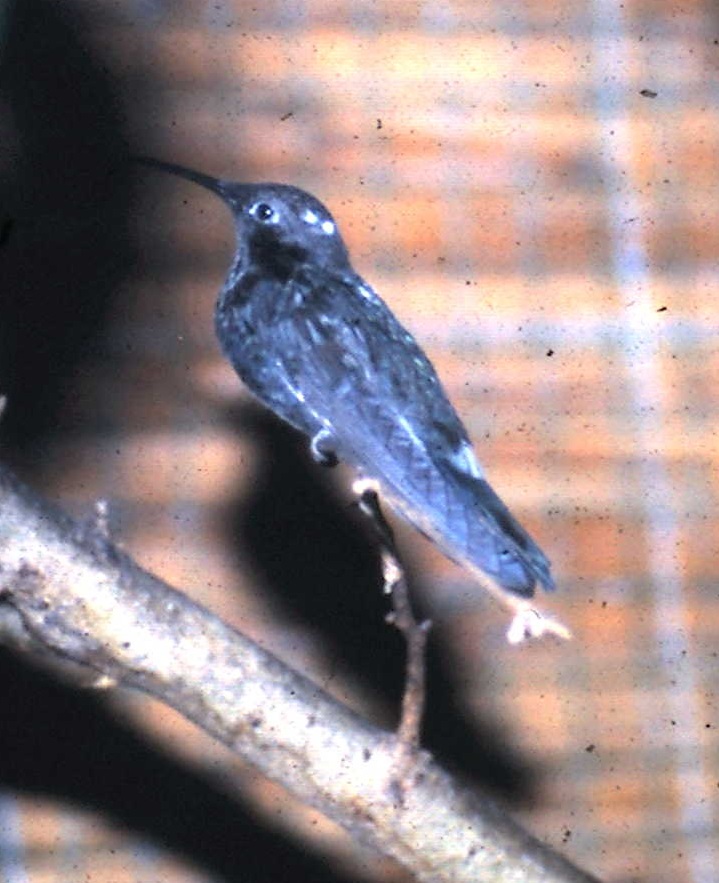


My Hummingbird list , 128 species, all in the wild
White-necked Jacobin
Band-tailed Barbthroat
Black-throated Hermit
Stripe-throated Hermit
Porculla Hermit
Reddish Hermit
Planalto Hermit
Pale-bellied Hermit
White-bearded Hermit
White-whiskered Hermit
Green Hermit
Tawny-bellied Hermit
Koepcke’s Hermit
Long-billed Hermit
Ecuadorean Hermit
Green-fronted Lancebill
Blue-fronted Lancebill
Eastern Wedge-billed Hummingbird
Brown Violet-ear
Green Violet-ear
Sparkling Violet-ear
Purple-crowned Fairy
Black-throated Mango
Green-throated Carib
Purple-throated Carib
Gorgeted Sunangel
Tourmaline Sunangel
Purple-throated Sunangel
Royal Sunangel
Green Thorntail
Wire-crested Thorntail
Rufous-crested Coquette
Butterfly Coquette
Ecuadorean Piedtail
Speckled Hummingbird
Long-tailed Sylph
Violet-tailed Sylph
Red-tailed Comet
Ecuadorean Hillstar
Mountain Avocetbill
Black-tailed Trainbearer
Green-tailed Trainbearer
Purple-backed Thornbill
Rufous-capped Thornbill
Olivaceous Thornbill
Rainbow-bearded Thornbill
Eastern Mountaineer
Tyrian Metaltail
Greenish Puffleg
Black-breasted Puffleg
Glowing Puffleg
Sapphire-vented Puffleg
Golden-breasted Puffleg
Emerald-bellied Puffleg
Marvellous Spatuletail
Shining Sunbeam
Bronzy Inca
Brown Inca
Collared Inca
Buff-winged Starfrontlet
Mountain Velvetbreast
Sword-billed Hummingbird
Great Sapphirewing
Buff-tailed Coronet
Chestnut-bellied Coronet
White-booted Racket-tail
Rufous-booted Racket-tail
Purple-bibbed Whitetip
Gould’s Brilliant
Green-crowned Brilliant
Empress Brilliant
Fawn-breasted Brilliant
Violet-fronted Brilliant
Giant Hummingbird
Garden Emerald
Western Emerald
Glittering-bellied Emerald
Blue-headed Hummingbird
Violet-headed Hummingbird
Antillean Crested Hummingbird
Scaly-breasted Sabrewing
Grey-breasted Sabrewing
Violet Sabrewing
Stripe-tailed Hummingbird
Black-bellied Hummingbird
White-vented Plumeleteer
Bronze-tailed Plumeleteer
Crowned Woodnymph
Fork-tailed Woodnymph
Many-spotted Hummingbird
White-throated Hummingbird
Tumbes Hummingbird
Spot-throated Hummingbird
White-bellied Hummingbird
Green-and-white Hummingbird
Rufous-tailed Hummingbird
Amazilia Hummingbird
Andean Emerald
Blue-chested Hummingbird
Azure-crowned Hummingbird
Spot-vented Emerald
Snowy-bellied Hummingbird
Golden-tailed Sapphire
Pirre Hummingbird
Violet-capped Hummingbird
Sapphire-throated Hummingbird
Violet-bellied Hummingbird
White-chinned Sapphire
Gilded Hummingbird
White-eared Hummingbird
Talamanca Hummingbird
Long-billed Starthroat
Blue-tufted Starthroat
Green-throated Mountain-gem
White-bellied Mountain-gem
Purple-throated Mountain-gem
White-throated Mountain-gem
Peruvian Sheartail
White-bellied Woodstar
Little Woodstar
Gorgeted Woodstar
Purple-throated Woodstar
Ruby-throated Hummingbird
Anna’s Hummingbird
Broad-tailed Hummingbird
Rufous Hummingbird
Volcano Hummingbird
Scintillant Hummingbird
Not too shabby a list!

Relatable. But i see red whiskered bulbul every day so guess who's the real winner here huh, tetzoo quizzer?And there I am with no hummingbirds...