I recently made my way to Attleboro, Massachusetts, to visit the Capron Park Zoo and the WWI Memorial Park and Zoo. I already wrote about my experience at the WWI Memorial Park and Zoo, and if you would like to hear more about the place, you can read my review here. This thread contains my review of the Capron Park Zoo—a zoo which vastly outshines its competitor in the Attleboro area.
Background
The Capron Park Zoo is an 8-acre zoo in Attleboro, Massachusetts. The zoo opened in 1937 and is one of 6 Massachusetts zoological institutions to be currently accredited by the AZA. The zoo is set in Capron Park in a great community location, right by Attleboro’s farmer’s market, elementary school, and high school. The town must be an amazing place to live for young animal lovers-- I wish my old high school was within walking distance of a zoo back when I was younger!
My visit was on a Saturday, which is Farmer’s Market Day, and so I arrived to see the park packed with food trucks, shoppers, and bustling groups of children, all engaging in the community event. The park felt really charming and quaint between the schools, the zoo, the farmer’s market, the nice fields, and the crowds of local community members having fun on a Saturday morning. I’d never been to Capron before, but the community felt so nice and endearing, and the park gave me a great feeling of childlike nostalgia.
This sense of charm continued when I entered the zoo itself, as the facility has a lot of personality. The zoo has a sound system which plays light background music throughout the park, creating a nice ambient effect. The zoo has a lot of funny signage, including signs warning visitors about climbing on exhibit barriers because the “animals could eat you and that might make them sick”. The zoo has a unique “splash pad” structure (instead of a regular playground), and many local families would bring children in their bathing suits to play in the fountains of water. And as a small zoo catered to a more local population, Capron gives visitors the chance to get to know the animals well, fostering a greater sense of sentimentality and connection among their regular returning visitors. I’d seen some videos and images of Capron online before my visit, but none captured these wonderful aspects of the zoo’s (and park’s) charming atmosphere and personality.
Foreground
Having discussed the atmosphere and background of the Capron Park Zoo, I also wanted to touch more on the facility itself. The zoo is laid out in a round web of paths, with a good mix of outdoor and indoor exhibits. In fact, Capron has 3 main animal houses: the tropical house (which mostly contains tropical birds and was closed during my visit due to avian flu), the nocturnal house (which contains animals like fennec foxes and bush-tailed bettongs), and the Sadler building (which is a nonthematic building that houses animals like servals, De Brazza’s monkeys, bats, and meerkats). Strewn along the paths between these 3 buildings is an array of outdoor exhibits, including a habitat by the zoo entrance for North American river otters, a pair of lemur islands, some smaller exhibits for animals like red pandas and African spurred tortoises, and two grottoes for Sloth Bears and Lions.
Some of Capron’s exhibits, like the otter and water monitor exhibits, seemed perfectly fine for their inhabitants. But I have to admit that I was pretty unimpressed with the habitats for many of the zoo’s large and/or tropical animals. The sloth bear and lion exhibits were both unnaturalistic and gave their animals way less space than I expected. The lemur islands were also small and had no trees or tall climbing structures, being vastly outshined by comparable exhibits like the capuchin islands at the Denver Zoo. The worst exhibit was for an amur leopard, who seemed to have roughly the same amount of space as the African spurred tortoise and red pandas. She spent almost my entire two-hour visit pacing back and forth.
As I looked at Capron’s animals and exhibits, I thought a lot about how the zoo compares to the Stone Zoo—another small Massachusetts zoo which I am more familiar with. Capron has the advantage over Stone when it comes to ABC animals (Capron has African lions while Stone has mountain lions), but Stone has the clear advantage when it comes to exhibit naturalism. While both zoos have some exhibits that need work, Stone also has some incredible exhibits like Himalayan Highlands and their large wolf habitat. Many of Capron’s exhibits were perfectly fine for their animals, but unlike Stone, Capron had no single exhibit that really blew me away.
Now, while many of Capron’s exhibits lack quality and immersion, I will acknowledge that some of the zoo’s animals appeared to be completely unbothered by this. I had never seen a white lion before this visit, and I really enjoyed my time at the habitat for the big cats. The lion pair was active in the morning, and I observed no stereotypic behavior from either of them in spite of their habitat’s small size. My favorite animal in the entire zoo was Vicky, the sloth bear. She was also really active, and spent her time foraging, climbing, and playing with her enrichment. When I first saw her, she was lazily lying on her back with food in her paws, slowly working away at it with her tongue. At one point she climbed all the way up her tower in search of more enrichment, and upon reaching the top, charismatically looked out from her perch onto the rest of the zoo, watching over. She was so cute, shaggy, and funny looking with her long fur, and was a complete joy to watch.
The fact that Capron’s low exhibit quality did not generally have an inordinate impact on their animals’ quality of life can likely be owed to the zoo’s dedicated keeper staff, who must put a lot of effort into giving their animals the attention and enrichment they need and deserve. In the future, the zoo should still obviously invest in higher quality habitats for their animals. But in the meantime, Capron seems to be doing a nice job making do with what they are given. And as a lifelong visitor to the underfunded Franklin Park Zoo, this was something I could really sympathize with.
Capron did have some other smaller issues, in addition to their exhibit quality. Capron has a pretty unorganized layout, with multiple exhibits grouped together with no cohesive geographic or taxonomic theming. The zoo also has a pretty ugly map, which I hope they replace with a sleeker, modern design. Obviously, the issues with zoo layout and map design are not as important as the issues with exhibit quality and animal welfare, and so these complaints are not as serious as my previous ones. But going forward, it would be nice for Capron to think more about layout, immersion, and theming as they implement their masterplan.
Overall Thoughts
Overall, I would describe Capron as a nice, quaint, small local zoo. The zoo clearly has a lot of work to do in the future with integrating their masterplan, but I still enjoyed my time here. The place has a great atmosphere and personality and some really charismatic animals. And it is always fun to experience a zoo that you have never been to before for the first time.
If you visit, I’d recommend squeezing the trip in with another zoo on the same day. Depending on how much you’re willing to drive, Capron can be combined with several nearby zoological institutions, including the Roger Williams Park Zoo, Buttonwood Park Zoo, Southwick’s Zoo, the WWI Memorial Park and Petting Zoo, and some of Rhode Island’s small science centers and aquariums.
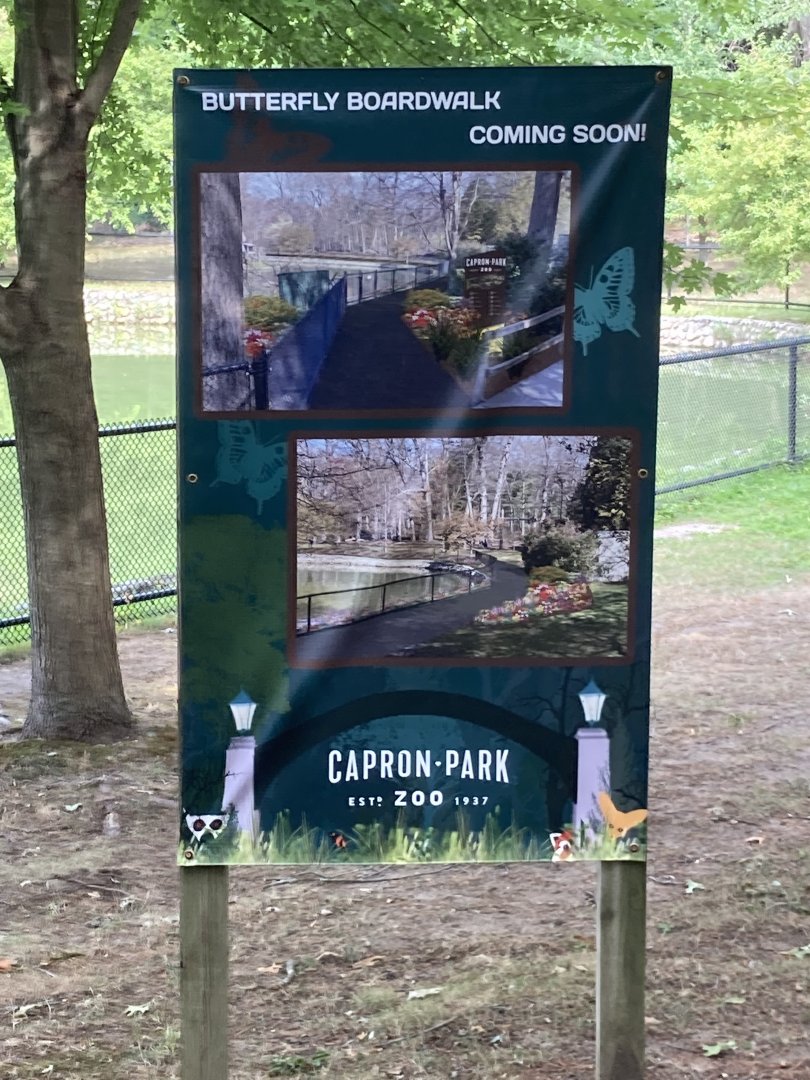
As previously mentioned, there were some aspects of Capron that I did not get to fully experience on my visit, like the temporarily closed rainforest building. And looking towards the future, the zoo is currently developing a new entrance and pollinator garden, which will hopefully come out well (source). So, I am looking forward to seeing how these changes develop over the ensuing months. And I will be excited to return to this charming zoo in the spring or summer of next year, when I may be able to get an even fuller picture of what Capron has to offer.
Background
The Capron Park Zoo is an 8-acre zoo in Attleboro, Massachusetts. The zoo opened in 1937 and is one of 6 Massachusetts zoological institutions to be currently accredited by the AZA. The zoo is set in Capron Park in a great community location, right by Attleboro’s farmer’s market, elementary school, and high school. The town must be an amazing place to live for young animal lovers-- I wish my old high school was within walking distance of a zoo back when I was younger!
My visit was on a Saturday, which is Farmer’s Market Day, and so I arrived to see the park packed with food trucks, shoppers, and bustling groups of children, all engaging in the community event. The park felt really charming and quaint between the schools, the zoo, the farmer’s market, the nice fields, and the crowds of local community members having fun on a Saturday morning. I’d never been to Capron before, but the community felt so nice and endearing, and the park gave me a great feeling of childlike nostalgia.
This sense of charm continued when I entered the zoo itself, as the facility has a lot of personality. The zoo has a sound system which plays light background music throughout the park, creating a nice ambient effect. The zoo has a lot of funny signage, including signs warning visitors about climbing on exhibit barriers because the “animals could eat you and that might make them sick”. The zoo has a unique “splash pad” structure (instead of a regular playground), and many local families would bring children in their bathing suits to play in the fountains of water. And as a small zoo catered to a more local population, Capron gives visitors the chance to get to know the animals well, fostering a greater sense of sentimentality and connection among their regular returning visitors. I’d seen some videos and images of Capron online before my visit, but none captured these wonderful aspects of the zoo’s (and park’s) charming atmosphere and personality.
Foreground
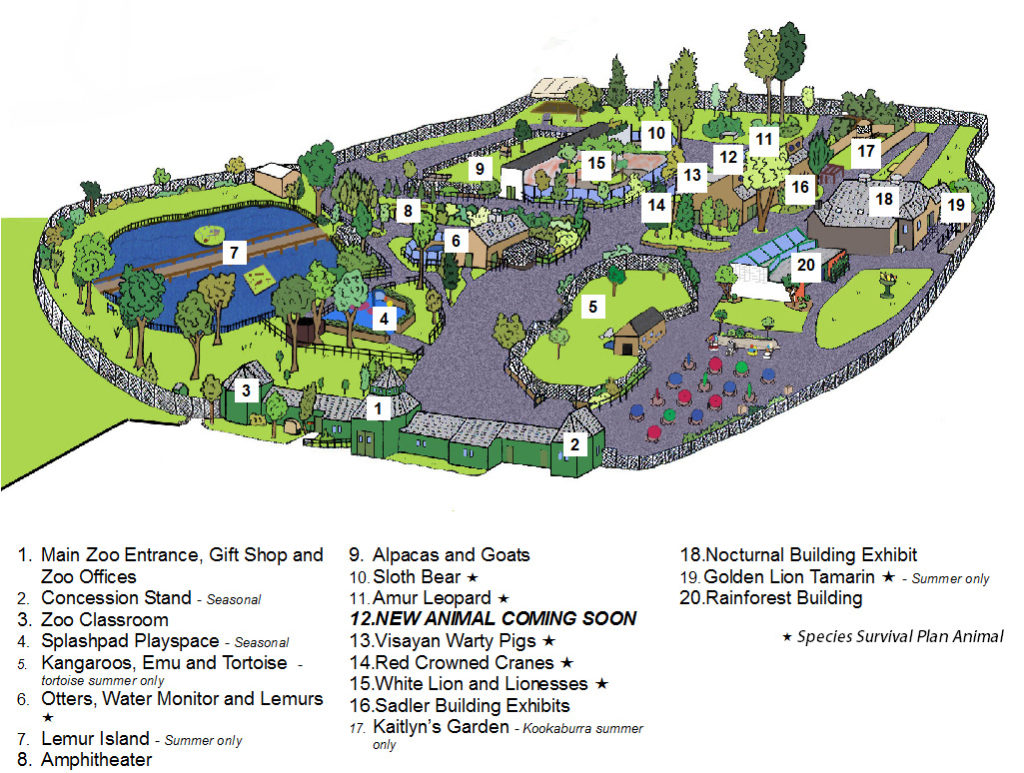
Having discussed the atmosphere and background of the Capron Park Zoo, I also wanted to touch more on the facility itself. The zoo is laid out in a round web of paths, with a good mix of outdoor and indoor exhibits. In fact, Capron has 3 main animal houses: the tropical house (which mostly contains tropical birds and was closed during my visit due to avian flu), the nocturnal house (which contains animals like fennec foxes and bush-tailed bettongs), and the Sadler building (which is a nonthematic building that houses animals like servals, De Brazza’s monkeys, bats, and meerkats). Strewn along the paths between these 3 buildings is an array of outdoor exhibits, including a habitat by the zoo entrance for North American river otters, a pair of lemur islands, some smaller exhibits for animals like red pandas and African spurred tortoises, and two grottoes for Sloth Bears and Lions.
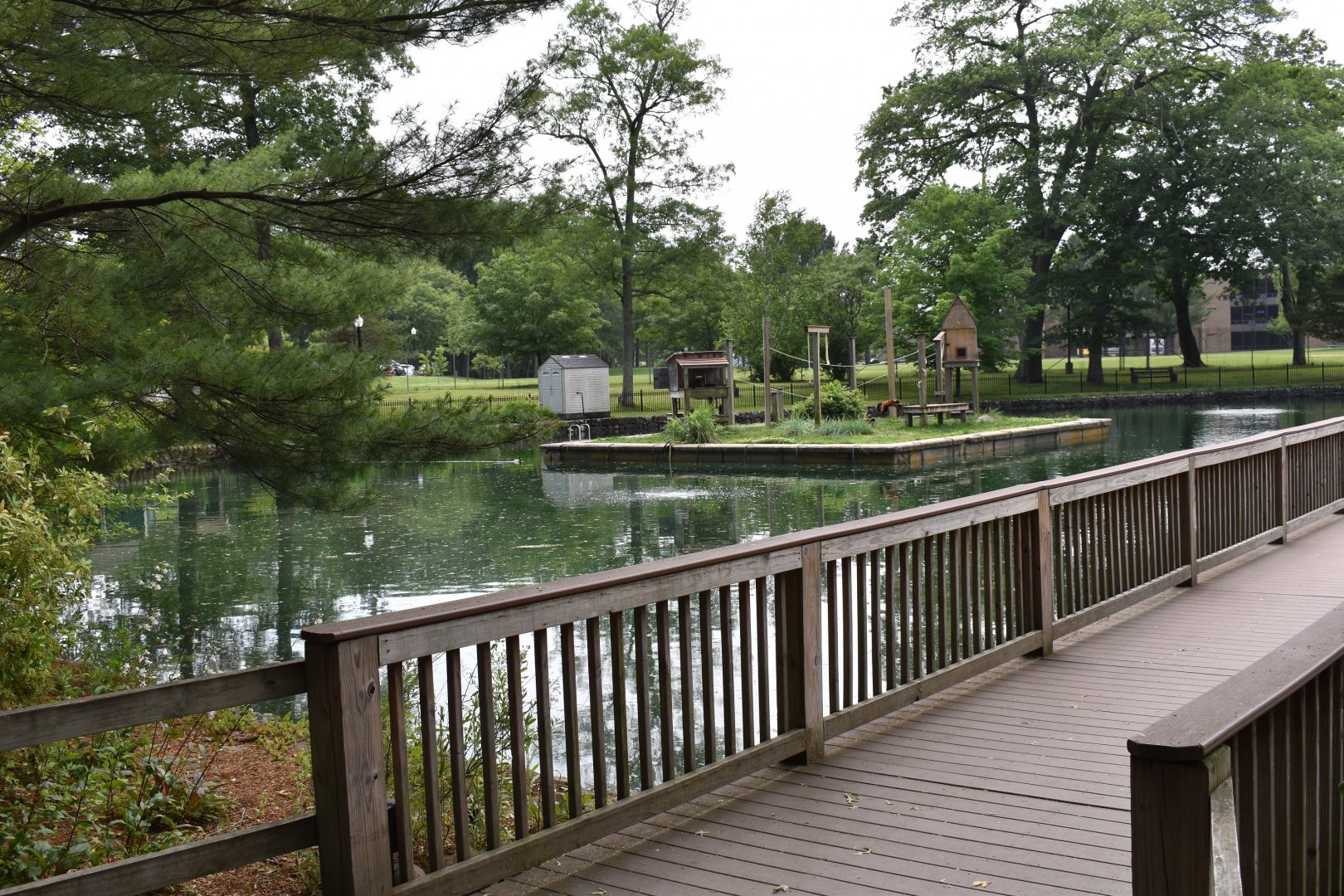
Some of Capron’s exhibits, like the otter and water monitor exhibits, seemed perfectly fine for their inhabitants. But I have to admit that I was pretty unimpressed with the habitats for many of the zoo’s large and/or tropical animals. The sloth bear and lion exhibits were both unnaturalistic and gave their animals way less space than I expected. The lemur islands were also small and had no trees or tall climbing structures, being vastly outshined by comparable exhibits like the capuchin islands at the Denver Zoo. The worst exhibit was for an amur leopard, who seemed to have roughly the same amount of space as the African spurred tortoise and red pandas. She spent almost my entire two-hour visit pacing back and forth.
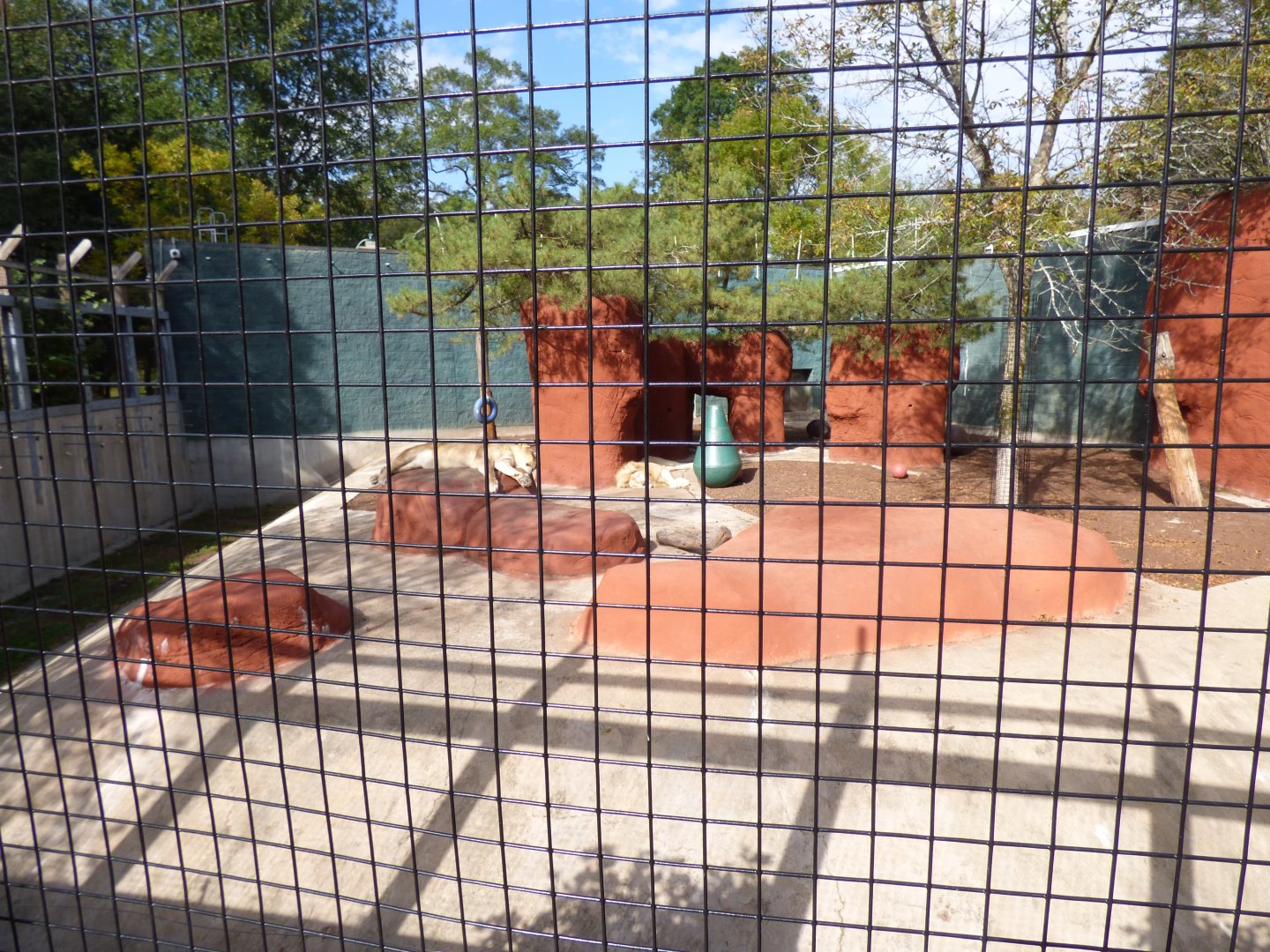
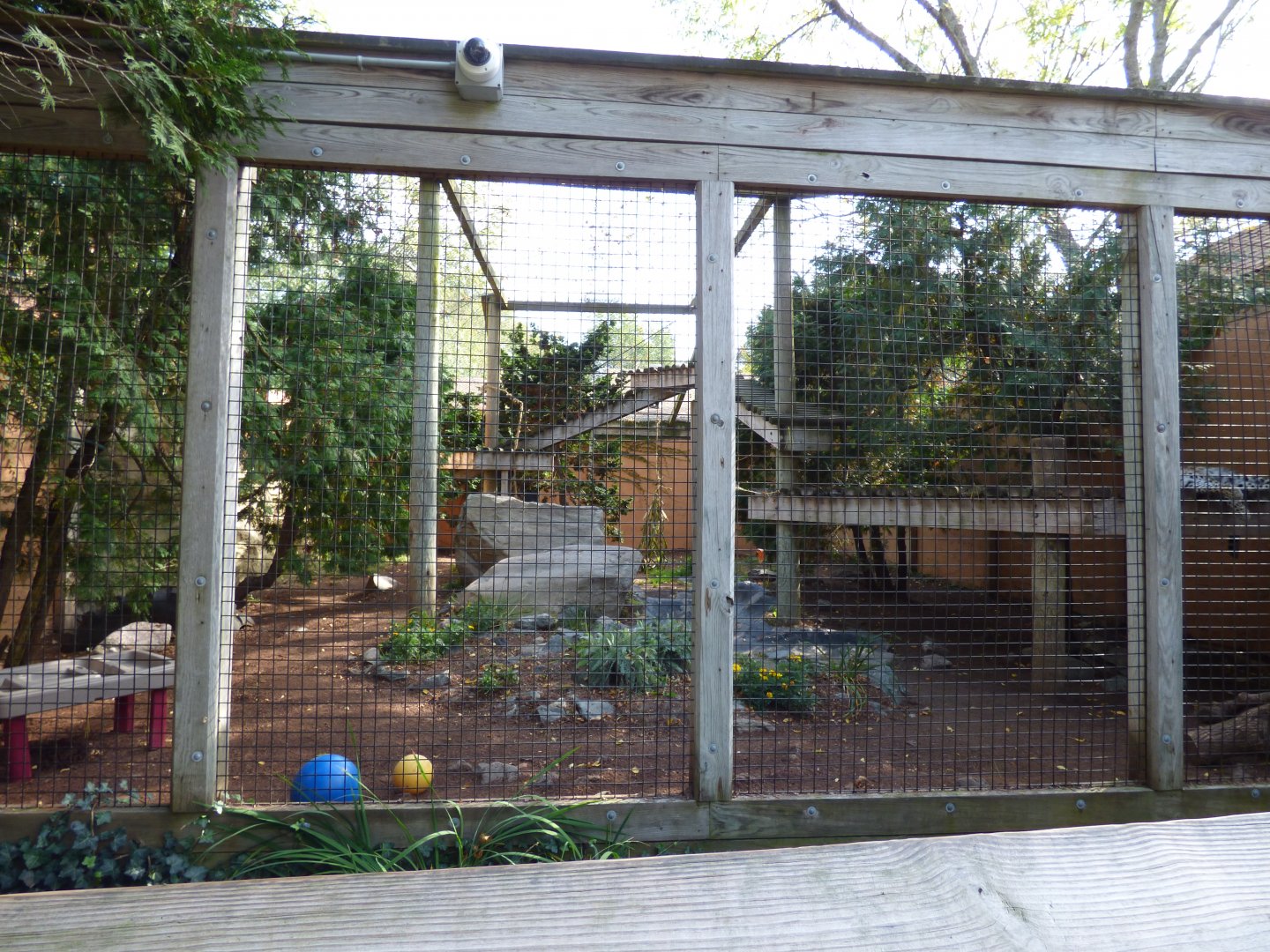
As I looked at Capron’s animals and exhibits, I thought a lot about how the zoo compares to the Stone Zoo—another small Massachusetts zoo which I am more familiar with. Capron has the advantage over Stone when it comes to ABC animals (Capron has African lions while Stone has mountain lions), but Stone has the clear advantage when it comes to exhibit naturalism. While both zoos have some exhibits that need work, Stone also has some incredible exhibits like Himalayan Highlands and their large wolf habitat. Many of Capron’s exhibits were perfectly fine for their animals, but unlike Stone, Capron had no single exhibit that really blew me away.
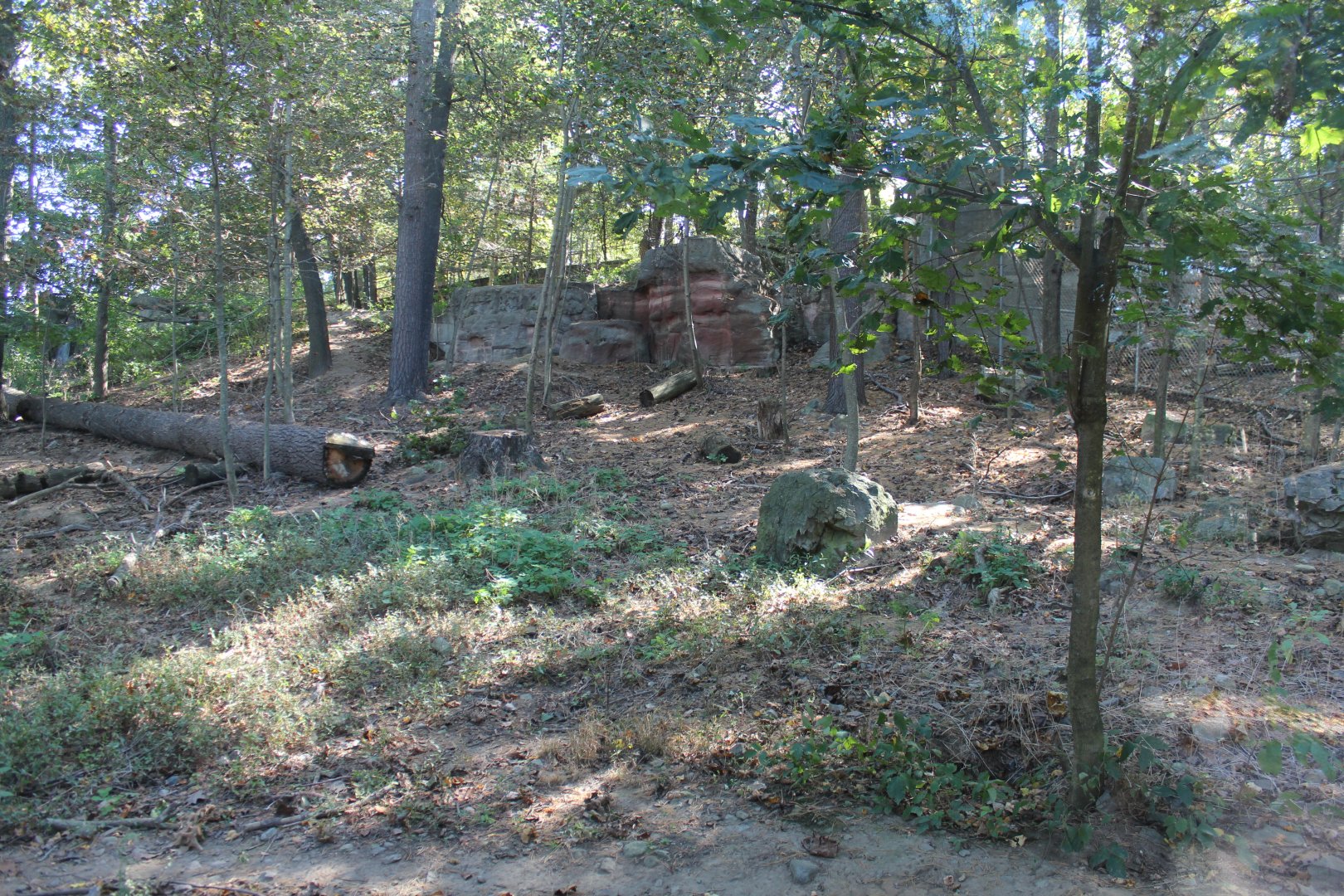
Now, while many of Capron’s exhibits lack quality and immersion, I will acknowledge that some of the zoo’s animals appeared to be completely unbothered by this. I had never seen a white lion before this visit, and I really enjoyed my time at the habitat for the big cats. The lion pair was active in the morning, and I observed no stereotypic behavior from either of them in spite of their habitat’s small size. My favorite animal in the entire zoo was Vicky, the sloth bear. She was also really active, and spent her time foraging, climbing, and playing with her enrichment. When I first saw her, she was lazily lying on her back with food in her paws, slowly working away at it with her tongue. At one point she climbed all the way up her tower in search of more enrichment, and upon reaching the top, charismatically looked out from her perch onto the rest of the zoo, watching over. She was so cute, shaggy, and funny looking with her long fur, and was a complete joy to watch.

The fact that Capron’s low exhibit quality did not generally have an inordinate impact on their animals’ quality of life can likely be owed to the zoo’s dedicated keeper staff, who must put a lot of effort into giving their animals the attention and enrichment they need and deserve. In the future, the zoo should still obviously invest in higher quality habitats for their animals. But in the meantime, Capron seems to be doing a nice job making do with what they are given. And as a lifelong visitor to the underfunded Franklin Park Zoo, this was something I could really sympathize with.
Capron did have some other smaller issues, in addition to their exhibit quality. Capron has a pretty unorganized layout, with multiple exhibits grouped together with no cohesive geographic or taxonomic theming. The zoo also has a pretty ugly map, which I hope they replace with a sleeker, modern design. Obviously, the issues with zoo layout and map design are not as important as the issues with exhibit quality and animal welfare, and so these complaints are not as serious as my previous ones. But going forward, it would be nice for Capron to think more about layout, immersion, and theming as they implement their masterplan.
Overall Thoughts
Overall, I would describe Capron as a nice, quaint, small local zoo. The zoo clearly has a lot of work to do in the future with integrating their masterplan, but I still enjoyed my time here. The place has a great atmosphere and personality and some really charismatic animals. And it is always fun to experience a zoo that you have never been to before for the first time.
If you visit, I’d recommend squeezing the trip in with another zoo on the same day. Depending on how much you’re willing to drive, Capron can be combined with several nearby zoological institutions, including the Roger Williams Park Zoo, Buttonwood Park Zoo, Southwick’s Zoo, the WWI Memorial Park and Petting Zoo, and some of Rhode Island’s small science centers and aquariums.
As previously mentioned, there were some aspects of Capron that I did not get to fully experience on my visit, like the temporarily closed rainforest building. And looking towards the future, the zoo is currently developing a new entrance and pollinator garden, which will hopefully come out well (source). So, I am looking forward to seeing how these changes develop over the ensuing months. And I will be excited to return to this charming zoo in the spring or summer of next year, when I may be able to get an even fuller picture of what Capron has to offer.