Australasian Asian Elephant Population 2023

I figured if they wanted to bring back the "walking trail" idea for the elephants, they could have a crossing that leads to another paddock. Said paddock would take up the space of the Aldabra giant tortoise habitat up to the bird show, and potentially the condor aviary as well if they had a new space for the condors in mind. (perhaps closer to the bird show area?), along with a trail/series of paddocks that would run past the harbor view lawns, akin to National's Elephant Trek/Cheyenne Mountain's elephant walkway. Maybe even a "private" paddock near the bus/ferry station (which could also add additional acreage), and you'd have about 2.3-2.5 acres for the elephants in total! Honestly, I could see Taronga either taking Burma in and having these multiple paddocks, and/or taking in a bachelor group to fulfill the Australasian elephant program's needs, if they do decide to keep elephants long-term.
Dude, you gotta tell them this. These are all amazing ideas
 
I figured if they wanted to bring back the "walking trail" idea for the elephants, they could have a crossing that leads to another paddock. Said paddock would take up the space of the Aldabra giant tortoise habitat up to the bird show, and potentially the condor aviary as well if they had a new space for the condors in mind. (perhaps closer to the bird show area?), along with a trail/series of paddocks that would run past the harbor view lawns, akin to National's Elephant Trek/Cheyenne Mountain's elephant walkway. Maybe even a "private" paddock near the bus/ferry station (which could also add additional acreage), and you'd have about 2.3-2.5 acres for the elephants in total! Honestly, I could see Taronga either taking Burma in and having these multiple paddocks, and/or taking in a bachelor group to fulfill the Australasian elephant program's needs, if they do decide to keep elephants long-term.

The idea of connecting Gung’s habitat with the cows has been floated for a while now (and I believe was in their 2015 masterplan until being removed a few years ago).

I’m of the opinion that should still be considered as the Gung’s enclosure currently houses Camel, which are only a temporary move to my understanding.

Right now it would be best for Taronga to potentially consider holding some of the regions geriatric females in the meantime in their current complex. Their current pair are amiable but adding more elephants would greatly benefit them socially and Burma and Permai would both be theoretical fits.

Considering Taronga don’t have plans to move Pak Boon and Tang Mo anytime soon, that only makes me further believe they will no longer use Pak Boon for breeding again. Whilst it would benefit them socially being sent over to Dubbo, there’s really no benefit otherwise and Dubbo with their limited space wouldn’t be looking to add two non breeding cows.
 
The idea of connecting Gung’s habitat with the cows has been floated for a while now (and I believe was in their 2015 masterplan until being removed a few years ago).

I’m of the opinion that should still be considered as the Gung’s enclosure currently houses Camel, which are only a temporary move to my understanding.

Right now it would be best for Taronga to potentially consider holding some of the regions geriatric females in the meantime in their current complex. Their current pair are amiable but adding more elephants would greatly benefit them socially and Burma and Permai would both be theoretical fits.

Considering Taronga don’t have plans to move Pak Boon and Tang Mo anytime soon, that only makes me further believe they will no longer use Pak Boon for breeding again. Whilst it would benefit them socially being sent over to Dubbo, there’s really no benefit otherwise and Dubbo with their limited space wouldn’t be looking to add two non breeding cows.

It would be great if Taronga could commit to holding the region’s two older females (Burma and Permai) as a geriatric facility is what Australasia really needs right now - on a long term, but temporary basis.

Burma and Permai are the remnants of the 20th century protocol of keeping cows in pairs at small, city zoos. All cows going forward will be accommodated for life in large herds as they would in the wild; but for now these two cows are left in isolation.

Taronga could acquire them (to house with their two) on the understanding it’d be a 20-25 year commitment to these elephants. Upon their deaths, they could renew this commitment to see Pak Boon and Tang Mo through or relocate them to Dubbo. Either way, there’s options.
 
It would be great if Taronga could commit to holding the region’s two older females (Burma and Permai) as a geriatric facility is what Australasia really needs right now - on a long term, but temporary basis.

Burma and Permai are the remnants of the 20th century protocol of keeping cows in pairs at small, city zoos. All cows going forward will be accommodated for life in large herds as they would in the wild; but for now these two cows are left in isolation.

Taronga could acquire them (to house with their two) on the understanding it’d be a 20-25 year commitment to these elephants. Upon their deaths, they could renew this commitment to see Pak Boon and Tang Mo through or relocate them to Dubbo. Either way, there’s options.
That could work, or, not to sound greedy, the geriatrics could go to Werribee which will have more than ample space to hold a matriarchal herd, independent bills, and geriatric cows.
 
That could work, or, not to sound greedy, the geriatrics could go to Werribee which will have more than ample space to hold a matriarchal herd, independent bills, and geriatric cows.

That’s also a good idea as Werribee’s complex will have six large interconnected paddocks. This addresses the main point of contention of whether Burma and Permai will assimilate into Werribee’s herd as there’s a contingency for if they don’t (and will be for the next 25 years).

The Werribee complex won’t be even close to capacity (40 elephants) for decades as they currently require space to accomodate up to three groupings (depending on if the bulls can be integrated) and this will only expand to five groupings over the next decade (if they acquire Putra Mas and as Roi-Yim grows). There may also be exports (e.g. to North America).

While the sixth paddock will be needed for stand down/recovery time, it should also be noted that the paddocks are serviced by off display yards, which though a fraction of the size of the paddocks, some of which aren’t far off city zoo exhibits in size!
 
Auckland Zoo - a Century of Elephants (1923-2023)

In June 2023, Auckland Zoo will celebrate a century of holding elephants (1923-2023).

It’s a milestone they almost didn’t reach - with initial plans to export Burma to Australia in April 2022; but the last minute cancellation means Burma will be around to see them celebrate a century of holding this iconic species.

Complete History:

Auckland Zoo has held nine elephants over the past 100 years. To celebrate this milestone, I thought I would re-share the complete history of these elephants plus a couple of historical photos.

0.1 Jamuna (Indian elephant)
Born in the wild (India) 00/00/1917
Arrived at Auckland Zoo 07/06/1923
Died at Auckland Zoo 02/09/1965

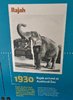
1.0 Rajah (Indian elephant)
Born in the wild (Myanmar) 00/00/1917
Arrived at Auckland Zoo 00/06/1930
Died at Auckland Zoo 09/03/1936

0.1 Kassala (Indian elephant)
Born in the wild (Unknown) 00/00/1945
Arrived at Auckland Zoo 01/05/1952
Sent to Bullens Circus 30/12/1957

0.1 Malini (Indian elephant)
Born in the wild (India) 00/00/1953
Arrived at Auckland Zoo 04/08/1961
Died at Auckland Zoo 27/02/1971

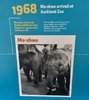
0.1 Ma Schwe (Indian elephant)
Born in the wild (Thailand) 00/00/1964
Arrived at Auckland Zoo 30/10/1968
Died at Auckland Zoo 02/08/1982

0.1 Kashin (Indian elephant)
Born at Dusit Zoo (Thailand) 00/00/1968
Arrived at Auckland Zoo 00/00/1972
Died at Auckland Zoo 24/08/2009

0.1 Koru (African elephant)
Born in the wild (Unknown) 00/00/1980
Arrived at Auckland Zoo 04/04/1983
Died at Auckland Zoo 26/07/1983

0.1 Burma (Indian elephant)
Born at a logging camp (Myanmar) 00/00/1982
Arrived at Auckland Zoo 18/05/1990
Still at Auckland Zoo

0.1 Anjalee (Sri Lankan elephant)
Born at Pinnewala (Sri Lanka) 23/08/2006
Arrived at Auckland 21/06/2015
Still at Auckland Zoo

Historical Photos:

The photos below were taken from a signage board displayed outside Auckland Zoo’s elephant exhibit. I thought they would be of interest to people as there’s only a handful of photos of these two particular elephants (due to their short time at Auckland Zoo) and I personally hadn’t seen these photos before.

Rajah (1917-1936):

upload_2023-4-30_18-1-3.jpeg
Photo by @Zoofan15 of Auckland Zoo Signage Board

Ma Schwe (1964-1982):

upload_2023-4-30_17-58-22.jpeg
Photo by @Zoofan15 of Auckland Zoo Signage Board
 

Attachments

  • upload_2023-4-30_17-58-22.jpeg
    upload_2023-4-30_17-58-22.jpeg
    103.2 KB · Views: 30
  • upload_2023-4-30_18-1-3.jpeg
    upload_2023-4-30_18-1-3.jpeg
    81.8 KB · Views: 28
Auckland Zoo - a Century of Elephants (1923-2023)

In my second post celebrating Auckland Zoo’s century of holding elephants, I thought I’d detail the relationships between Auckland Zoo’s elephants.

The zoo has never held more than two elephants at one time and aimed to hold pairs - with one sometimes left on their own while they awaited the import of a companion.

Their year of birth and their years together are listed below, but for full details, refer to the post above.

Jamuna (1917) and Rajah (1917):

Jamuna and Rajah were both the same age when Rajah arrived as a 13 year old in 1930. Early reports noted he was a good companion to Jamuna and they got on well. There are several photos of them together throughout the years.

Though Rajah’s aggression to staff and visitors is well documented (and led to him being shot in 1936), I’ve found no reports he was aggressive to Jamuna during their six years together.

Jamuna (1917) and Kassala (1945):

Little is known about Kassala, who arrived as a seven year old in 1952 and was sold to a circus five years later.

Jamuna, then aged 35 years, had been on her own for 16 years since the death of Rajah and may or may not have welcomed her arrival.

Jamuna (1917) and Malini (1953):

Malini arrived as a nine year old in 1961 and Jamuna initially snubbed her.

Then aged 44 years, Jamuna had lived on her own for the past four years and didn’t welcome the arrival of this adolescent female. Her dislike for Malini was partly attributed to her dislike for Malini’s trainer.

Their relationship ended four years later when Jamuna died in 1965. Photos of the two of them together imply they were getting on well by the time Jamuna died.

Malini (1953) and Ma Schwe (1964):

Malini and Ma Schwe were together just three years and little is known about their relationship.

Since Ma Schwe arrived as a juvenile of four years, it’s reasonable to assume Malini, then aged 15 years, took on a nurturing role and they got on well.

Malini’s premature death at the age of 18 years was both tragic and unavoidable (she ate a can of paint). It came just six years after the death of Jamuna - who had lived to 48 years.

Ma Schwe (1964) and Kashin (1968):

Kashin arrived as a four year in 1972, where she was introduced to Ma Schwe, who was eight years old. It was the second closest age gap Auckland Zoo has ever had between two elephants (the other being Jamuna and Rajah, who born the same year).

Initial reports state Kashin found Ma Schwe’s attempts to befriend her overwhelming. Ma Schwe was an adolescent and her relationship with Kashin was typical of a sibling dynamic - complete with sibling rivalry. Ma Schwe was possessive of toys and refused to let Kashin play with them, but on the whole they got on well.

Like Malini, Ma Schwe died unexpectedly aged 18 years. It’s a great tragedy as like with the Malini and Ma Schwe pairing, Auckland Zoo had no reason to believe with two young elephants, they shouldn’t have had this pair for decades to come.

Kashin (1968) and Koru (1980):

Koru died just three months after her arrival and is notable for being the zoo’s only African elephant. An interview with a keeper, which featured footage of Kashin and Koru together detailed how the then 15 year old doted on the juvenile and grieved her death.

Kashin (1968) and Burma (1982):

Burma arrived as an eight year old in 1990 and in contrast to Koru, was not welcomed by the then 22 year old Kashin, who snubbed her. They ignored each other for close to two years, with an improvement in their relationship coinciding with them being relocated to the current elephant exhibit in 1992.

Kashin and Burma later formed a close relationship, but were very different in personality and their difference in age and Kashin’s arthritis meant she struggled to keep up with Burma’s enthusiasm to play.

Burma (1990) and Anjalee (2006):

Anjalee arrived as a nine year old and Burma, in contrast to Jamuna and Kashin before her, welcomed this adolescent female from the beginning.

Burma and Anjalee got on well, but had different energy levels (due to their age difference) and this ultimately justified the decision to send them to different zoos.

Following Anjalee’s departure to Dubbo in 2022, Burma is currently living alone awaiting placement at another zoo.
 
Australia Zoo to Cease Protected Contact

@RafikiKnowsTheWay has been advised by staff that Australia Zoo intend to phase out protected contact with their elephants.

They current hold four female Sumatran elephants:

0.1 Megawati (19/07/1999) Imported 2019
0.1 Widya (21/05/2001) Imported 2019
0.1 Christina (01/12/2009) Imported 2019
0.1 Raflesia (00/11/2014) Imported 2019

It’s an unsurprising move considering zoos like Taronga and Melbourne made the change several years ago; and considering the risks involved to staff by having free contact with these animals.

Melbourne Zoo staff noted following the shift to PC, the elephants became more interactive with each other - deriving their social interactions from herd mates, rather than keepers on which they’d come to rely on to make decisions. I don’t doubt this will become even more prevalent following their transfer to Werribee.

Importing Sumatran bulls:

With regards to Australia Zoo, I’m hopeful this will give them motivation to finally import bull elephants, now free contact cows will no longer be the drawcard they once were.

Bulls were always going to require facilities for protected contact and now the cows will also no longer have direct human interaction, developing a multigenerational herd is in their best welfare interests.
 
I think you might want to have a second go over of your post ;) Surprised to hear they’re phasing out PC, considering they’re a FC facility to begin with!

And the transfer to another facility? I was under the impression the zoo wants to hold on to those four cows.
 
And the transfer to another facility? I was under the impression the zoo wants to hold on to those four cows.

The reference to a transfer to another facility was in the paragraph discussing Melbourne’s herd (which are transferring to Werribee next year).

Australia Zoo intend to retain their four females. The original plan was to import Sumatran bulls - and later on in my post, I expressed hopes that will happen. It’d be nice to see them build up a multigenerational herd at Australia Zoo.
 
The reference to a transfer to another facility was in the paragraph discussing Melbourne’s herd (which are transferring to Werribee next year).

Australia Zoo intend to retain their four females. The original plan was to import Sumatran bulls - and later on in my post, I expressed hopes that will happen. It’d be nice to see them build up a multigenerational herd at Australia Zoo.

Oh! Thanks. I thought you were referring to the Australian herd. It was still too early for me. :-)
 
Melbourne Zoo Elephant Update:

I was at Melbourne today, and they have just completed the installation of two crates behind the main cow paddock (right next to the cow barn). They were putting finishing touches on these crates, ensuring they're in the right condition for the elephants to begin training; and they plan to begin training within the coming weeks.


The process isn't considered to take very long; but they do expect to have some challenges training the calves of course. The plan is (at the moment) to send the elephants in four shipments using these two crates. Mums and calves will share the same crate. So it seems to be that Dokkoon/Aiyara and Mali/Roi Yim will be first, followed by Num/Oi and Kati and then Mek Kapah and Man Jai, with Luk Chai then going last or first; it hasn't necessarily been completely worked out yet.

Calves:

I also had the opportunity to learn a bit more about the young trio who are now all around six months old (or almost, in Kati's case).

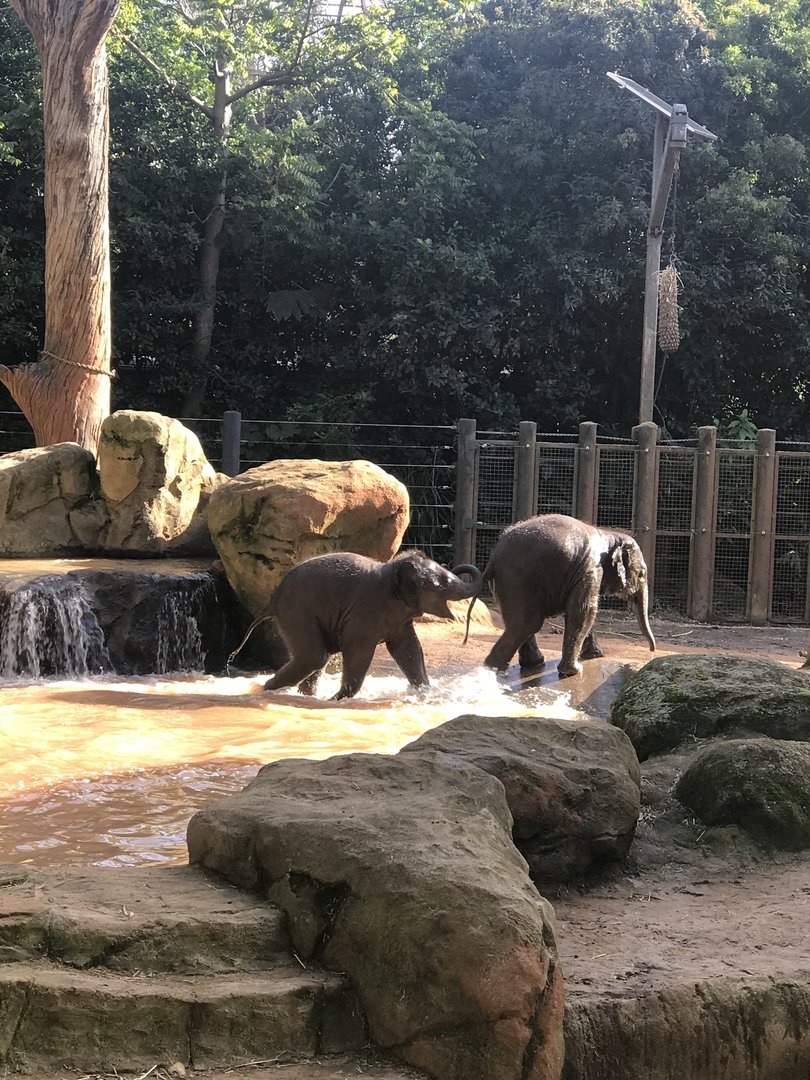
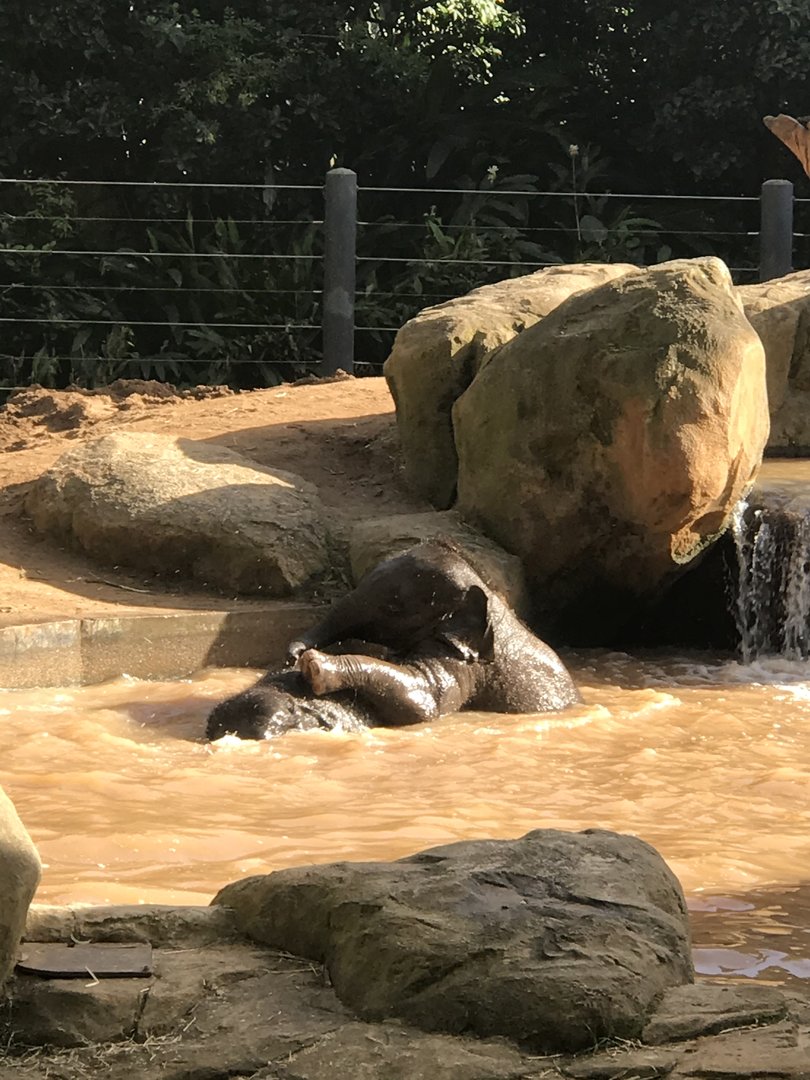
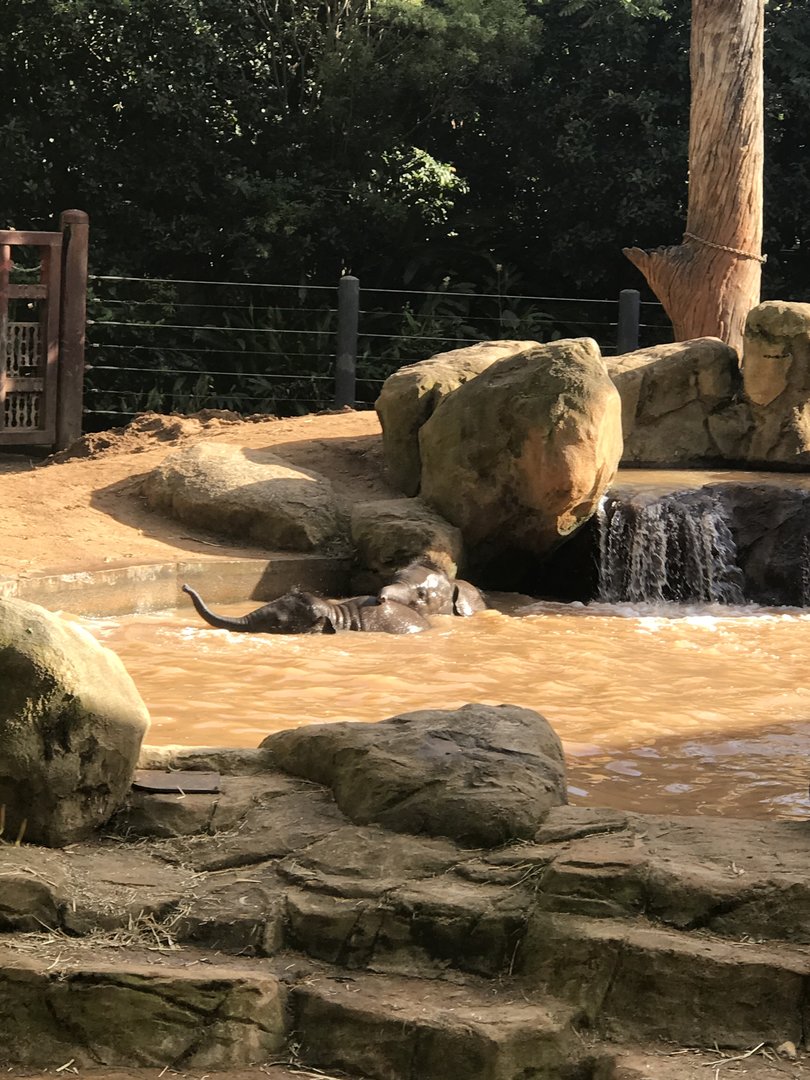
Aiyara's definitely the biggest calf out of all three, and the chunkiest too. She's the most adventurous too and very independent from mum, Dokooon. Apparently, she's been like that right from birth, and spends most of her time socialising with all members of the herd. Aiyara is a very active female; always running around. She's very close with Kati, and also sometimes follows big sister, Mali and half brother, Roi Yim around. She'll often gravitate to Roi when Kati's had enough of playing, and it'll end up with Aiyara chasing Roi around the enclosure attempting to get him to play.

Roi Yim on the other hand, is very reserved, shy and not that confident. He tends to stick around Mali most of the time like her shadow, and will follow her wherever she goes. Mali dosen't seem to mind this, and often pushes Aiyara out the way when she gets too close to Roi who seems to like his personal space. Only recently, Roi's begun to play with the other calves, beginning with Kati, and has begun to do so with Aiyara too, although at times she can be 'a little too much' for him.

Kati, despite being the youngest, is a very confident female. In saying that, she's still very close with mum, and also still sticks by her side a lot. It did take her some time though to develop this, initially she stayed quite close to mum, Num Oi, but it only took weeks before she was hanging out with Aiyara and Roi. She's since become very vocal and playful, and really enjoys her play sessions with Aiyara. She's apparently still adapting to this, and will return to Num Oi after some time, presumably as she's exhausted from all the playing. Aiyara is a very 'go-go-go' female. Kati's also very large, despite being the youngest. At the moment, she's about the same size as Roi which is surprising, but Roi is a very skinny male (much like his grandfather, Bong Su).
 
Melbourne Zoo Elephant Update:

I was at Melbourne today, and they have just completed the installation of two crates behind the main cow paddock (right next to the cow barn). They were putting finishing touches on these crates, ensuring they're in the right condition for the elephants to begin training; and they plan to begin training within the coming weeks.


The process isn't considered to take very long; but they do expect to have some challenges training the calves of course. The plan is (at the moment) to send the elephants in four shipments using these two crates. Mums and calves will share the same crate. So it seems to be that Dokkoon/Aiyara and Mali/Roi Yim will be first, followed by Num/Oi and Kati and then Mek Kapah and Man Jai, with Luk Chai then going last or first; it hasn't necessarily been completely worked out yet.

Calves:

I also had the opportunity to learn a bit more about the young trio who are now all around six months old (or almost, in Kati's case).

Aiyara's definitely the biggest calf out of all three, and the chunkiest too. She's the most adventurous too and very independent from mum, Dokooon. Apparently, she's been like that right from birth, and spends most of her time socialising with all members of the herd. Aiyara is a very active female; always running around. She's very close with Kati, and also sometimes follows big sister, Mali and half brother, Roi Yim around. She'll often gravitate to Roi when Kati's had enough of playing, and it'll end up with Aiyara chasing Roi around the enclosure attempting to get him to play.

Roi Yim on the other hand, is very reserved, shy and not that confident. He tends to stick around Mali most of the time like her shadow, and will follow her wherever she goes. Mali dosen't seem to mind this, and often pushes Aiyara out the way when she gets too close to Roi who seems to like his personal space. Only recently, Roi's begun to play with the other calves, beginning with Kati, and has begun to do so with Aiyara too, although at times she can be 'a little too much' for him.

Kati, despite being the youngest, is a very confident female. In saying that, she's still very close with mum, and also still sticks by her side a lot. It did take her some time though to develop this, initially she stayed quite close to mum, Num Oi, but it only took weeks before she was hanging out with Aiyara and Roi. She's since become very vocal and playful, and really enjoys her play sessions with Aiyara. She's apparently still adapting to this, and will return to Num Oi after some time, presumably as she's exhausted from all the playing. Aiyara is a very 'go-go-go' female. Kati's also very large, despite being the youngest. At the moment, she's about the same size as Roi which is surprising, but Roi is a very skinny male (much like his grandfather, Bong Su).

Thanks for the comprehensive update. It’s interesting to hear how the calves have progressed since their births - especially since Zoos Victoria have shared so little on them (besides their usual soft news posts on socials).

The dynamic between the older two calves sounds very similar to Luk Chai and Pathi Harn as calves, with Aiyara confident and active like her father; and Roi-Yim reserved like his mother’s half brother.

Being born first has surely given Aiyara an edge, which combined with the freedom she has, means she’s developing skills and confidence beyond her peers. Luk Chai maintained this advantage over Pathi Harn for many years; but the close age gap between Aiyara and Roi-Yim, combined with him being a bull should level the playing field much sooner.

It’s good to hear Aiyara and Kati are forming a close bond. As they enter adolescence, Roi-Yim will leave the herd; but they’ll have each other’s companionship for life - as well as being the youngest cows in the herd by over a decade.
 
Thanks for the comprehensive update. It’s interesting to hear how the calves have progressed since their births - especially since Zoos Victoria have shared so little on them (besides their usual soft news posts on socials).

The dynamic between the older two calves sounds very similar to Luk Chai and Pathi Harn as calves, with Aiyara confident and active like her father; and Roi-Yim reserved like his mother’s half brother.

Being born first has surely given Aiyara an edge, which combined with the freedom she has, means she’s developing skills and confidence beyond her peers. Luk Chai maintained this advantage over Pathi Harn for many years; but the close age gap between Aiyara and Roi-Yim, combined with him being a bull should level the playing field much sooner.

It’s good to hear Aiyara and Kati are forming a close bond. As they enter adolescence, Roi-Yim will leave the herd; but they’ll have each other’s companionship for life - as well as being the youngest cows in the herd by over a decade.
I definitely think Aiyara takes after her father in that aspect, she's a very confident youngster and I can definitely see a lot of Luk Chai in her. It's very interesting for me to see, as Melbourne's previous three calves have all been very Roi Yim like (as in very shy, and less active) so it's good to see Melbourne finally have a cohort of calves that are active and engaging.

I certainly can see Roi beginning to develop his skills and confidence very soon. When I was watching he was definitely showing promise of it; venturing off to explore or engage with Aiyara before getting spooked by something and running back to mum. Hopefully his confidence builds further going forward.

Aiyara and Kati are also the first duo of female calves apart of a cohort ever born in the region, so I was always excited to see how they would turn out and how they would get along with one another and it seems like they get along very very well. Definitely the closest I've seen two calves (although I'm not sure about Taronga's initial trio; Pathi Harn and Luk Chai might rival them).
 
I definitely think Aiyara takes after her father in that aspect, she's a very confident youngster and I can definitely see a lot of Luk Chai in her. It's very interesting for me to see, as Melbourne's previous three calves have all been very Roi Yim like (as in very shy, and less active) so it's good to see Melbourne finally have a cohort of calves that are active and engaging.

I certainly can see Roi beginning to develop his skills and confidence very soon. When I was watching he was definitely showing promise of it; venturing off to explore or engage with Aiyara before getting spooked by something and running back to mum. Hopefully his confidence builds further going forward.

Aiyara and Kati are also the first duo of female calves apart of a cohort ever born in the region, so I was always excited to see how they would turn out and how they would get along with one another and it seems like they get along very very well. Definitely the closest I've seen two calves (although I'm not sure about Taronga's initial trio; Pathi Harn and Luk Chai might rival them).

Hopefully Roi-Yim will get his confidence up in the coming months. It’s not a big exhibit, so one can only imagine how overwhelmed he’d be with the Werribee complex. That’s still a year away, so there’s plenty of time for him to grow into an assertive young bull. It won’t be long before he has a weight advantage over Aiyara.

The three calves at Taronga had a lot of fun together. Tukta was the most extroverted despite being the youngest and would climb all over the male calves. Luk Chai being other oldest/largest calf would dominate, but was placid and allow them both to climb all over him. Pathi Harn was the lowest ranking of the three for some time and was initially a shy and reserved young bull.

This may have been influenced by Porntip’s helicopter parenting versus Luk Chai being given freedom to explore by Thong Dee. She relied a lot more on support from the herd, though the same could be said with Dokkoon/Mali.

It’ll be interesting to see how the transfer to Werribee affects the leadership within the herd.
 
The three calves at Taronga had a lot of fun together. Tukta was the most extroverted despite being the youngest and would climb all over the male calves. Luk Chai being other oldest/largest calf would dominate, but was placid and allow them both to climb all over him. Pathi Harn was the lowest ranking of the three for some time and was initially a shy and reserved young bull.

This may have been influenced by Porntip’s helicopter parenting versus Luk Chai being given freedom to explore by Thong Dee. She relied a lot more on support from the herd, though the same could be said with Dokkoon/Mali.

It’ll be interesting to see how the transfer to Werribee affects the leadership within the herd.

That's interesting as now Pathi Harn is definitely the larger and more assertive bull compared to Luk Chai. I wonder if this was to do with him being more helicoptered and restricted so now he's a bit more rebellious and reactive (similar to people :D)

Hopefully, they never split Kati and Aiyara if they form a strong bond. If Melbourne's herd was to ever be split I imagine it would be on genetic lines. It will be a long time though before we see, Dokkoon's line get large enough to start dominating the herd structure.
 
That's interesting as now Pathi Harn is definitely the larger and more assertive bull compared to Luk Chai. I wonder if this was to do with him being more helicoptered and restricted so now he's a bit more rebellious and reactive (similar to people :D)

Hopefully, they never split Kati and Aiyara if they form a strong bond. If Melbourne's herd was to ever be split I imagine it would be on genetic lines. It will be a long time though before we see, Dokkoon's line get large enough to start dominating the herd structure.

Yes, Pathi Harn finally got there in the end. I thought he would eventually overtake Luk Chai in size, considering both his parents were larger than Luk Chai’s parents. Interestingly both Thong Dee’s sons seem placid; whereas Pathi’s half brother at Melbourne has a bit of a spark in him.

It could be something genetic, after all Porntip is the dominant cow in Dubbo’s herd; whereas Thong Dee has always gone with the flow. She was Gung’s favourite from early on due to being submissive to him versus Tang Mo, who intimidated him.

I’m hoping the size of Werribee’s complex means a split is decades off. I’ve heard sometimes elephant herds split themselves if the herd gets too large, though this is typically associated with an overpopulation putting a stain on resources.

Werribee may even manage a split themselves - they have six paddocks and a capacity of 40 elephants!

If the species coordinator/management decided on a split of the herd, I’d propose at this point in time a split of one of Dokoon’s daughters would be the way to go. The daughter could transfer out with her daughter/daughters; leaving the other daughter and her family to support Dokkoon into old age.
 
That's interesting as now Pathi Harn is definitely the larger and more assertive bull compared to Luk Chai. I wonder if this was to do with him being more helicoptered and restricted so now he's a bit more rebellious and reactive (similar to people :D)

Hopefully, they never split Kati and Aiyara if they form a strong bond. If Melbourne's herd was to ever be split I imagine it would be on genetic lines. It will be a long time though before we see, Dokkoon's line get large enough to start dominating the herd structure.

Yes, Pathi Harn finally got there in the end. I thought he would eventually overtake Luk Chai in size, considering both his parents were larger than Luk Chai’s parents. Interestingly both Thong Dee’s sons seem placid; whereas Pathi’s half brother at Melbourne has a bit of a spark in him.

It could be something genetic, after all Porntip is the dominant cow in Dubbo’s herd; whereas Thong Dee has always gone with the flow. She was Gung’s favourite from early on due to being submissive to him versus Tang Mo, who intimidated him.

I’m hoping the size of Werribee’s complex means a split is decades off. I’ve heard sometimes elephant herds split themselves if the herd gets too large, though this is typically associated with an overpopulation putting a stain on resources.

Werribee may even manage a split themselves - they have six paddocks and a capacity of 40 elephants!

If the species coordinator/management decided on a split of the herd, I’d propose at this point in time a split of one of Dokoon’s daughters would be the way to go. The daughter could transfer out with her daughter/daughters; leaving the other daughter and her family to support Dokkoon into old age.

Man Jai's a very boisterous male, being the daughter of the matriarch (which is to be expected), whereas Ongard was much more placid. I find this interesting, but I think it does come down to the mother. Dokkooon's has a very laid back parenting style and so naturally, her calves are more independent and outgoing from a much younger age and this usually carries on into adulthood. On the other hand, Kulab was much more protective over Ongard, and even as he grew he was always less of an active male (compared to Man Jai).

It's also interesting to see the parenting styles of new mums this time around. Mali likes to keep Roi around her, and has quite the opposite of her mother's parenting style. Mali was Melbourne's first and only calf for a while though, so I imagine this might reflect from the fact that even though Dokkoon never paid her much attention, there was always another herd member watching over her. Num Oi defenitely has the most similar parenting style to Porntip's imo. 'Helicoptering' is the perfect word to describe it. She followed Kati around, although allowing her to play with Aiyara. When the two girls were in the pool, Num Oi stood right poolside watching them for a while. On the other hand, Dokkoon was standing at the opposite end of the exhibit not even batting an eye to Aiyara.:p

If Werribee were to split the herd, I'd imagine they would probably go with Num Oi's subgroup, which would be her, Kulab, Kati plus any future female calves with the other group being, Dokkoon, Mali, Mek Kapah and Aiyara plus any future female calves. Considering the incredible size of Werribee's exhibit, I'd imagine they would be able to split the herd and retain both.

During my visit, I did notice Mali was off on her own (with Roi) for a lot more time than usual. It was interesting to see, probably as a result of her being protective of Roi. If Werribee were to split using one of Dokkoon's daughter's lines, I can see it being Mali plus any daughters.
 
Man Jai's a very boisterous male, being the daughter of the matriarch (which is to be expected), whereas Ongard was much more placid. I find this interesting, but I think it does come down to the mother. Dokkooon's has a very laid back parenting style and so naturally, her calves are more independent and outgoing from a much younger age and this usually carries on into adulthood. On the other hand, Kulab was much more protective over Ongard, and even as he grew he was always less of an active male (compared to Man Jai).

It's also interesting to see the parenting styles of new mums this time around. Mali likes to keep Roi around her, and has quite the opposite of her mother's parenting style. Mali was Melbourne's first and only calf for a while though, so I imagine this might reflect from the fact that even though Dokkoon never paid her much attention, there was always another herd member watching over her. Num Oi defenitely has the most similar parenting style to Porntip's imo. 'Helicoptering' is the perfect word to describe it. She followed Kati around, although allowing her to play with Aiyara. When the two girls were in the pool, Num Oi stood right poolside watching them for a while. On the other hand, Dokkoon was standing at the opposite end of the exhibit not even batting an eye to Aiyara.:p

If Werribee were to split the herd, I'd imagine they would probably go with Num Oi's subgroup, which would be her, Kulab, Kati plus any future female calves with the other group being, Dokkoon, Mali, Mek Kapah and Aiyara plus any future female calves. Considering the incredible size of Werribee's exhibit, I'd imagine they would be able to split the herd and retain both.

During my visit, I did notice Mali was off on her own (with Roi) for a lot more time than usual. It was interesting to see, probably as a result of her being protective of Roi. If Werribee were to split using one of Dokkoon's daughter's lines, I can see it being Mali plus any daughters.

It’s easy to see the positive affect that a relaxed parenting style has within a captive environment. As with chimpanzee infants, elephant calves given the freedom to explore are given more opportunities to build social skills and learn from their experiences.

In the wild, there’s endless hazards that warrant protection from and a helicopter mother would be advantageous. A captive environment eliminates a great number of those hazards and a helicopter parenting style can range from redundant to detrimental.

The transfer to Werribee will undoubtably affect the herd’s parenting styles. Allowing her daughter to run the length of the exhibit at Melbourne, means Aiyara is still within sight of Dokkoon; at Werribee, she could be over a kilometre away!
 
Back
Top