You are using an out of date browser. It may not display this or other websites correctly.
You should upgrade or use an alternative browser.
You should upgrade or use an alternative browser.
ZooSC at Myrtle Beach: A New Spec Zoo Project
- Thread starter Van Beal
- Start date

you will have competition with alligator adventure. your fanticy is unrealistic.

Van Beal
Well-Known Member
I’d just like to point out that zoos in close vicinity can both succeed (thinking of Bronx and Central Park zoos specifically, but I’m sure there are others) so I wouldn’t yet decide that it is unrealistic, if I were others viewing this thread.you will have competition with alligator adventure. your fanticy is unrealistic.
As well, just on some research, Alligator Adventure looks like a great facility, but (correct me if I’m wrong, as I’ve never visited) the species list according to their website does not seem at all near the magnitude of my planned list, so I’d make a hopefully safe assumption that my facility would be larger.
Van Beal
Well-Known Member
District of Europe and West Asia -> Part One
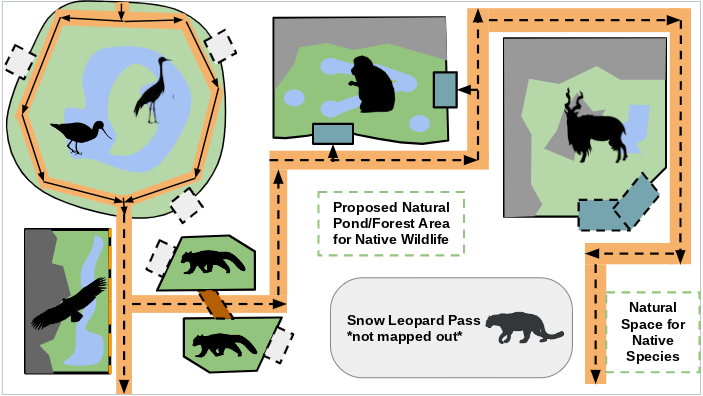 I have returned from my vacation, and will now be starting the display of the first of the eight major zoo-geographical regions of the zoo: the District of Europe and West Asia.
You begin this sector at the entrance to a massive 4,500 sq. meter walkthrough aviary (top-left corner of the map attached above) Initially meant to be designed around the same principles as the gigantic aviary at Munich Zoo Hellabrunn, however this design has been scrapped for a more simplistic aviary design, combining wire-mesh and glass, the former of which prevents the birds from reaching the support system for the latter. Visitors enter the aviary through a pair of staff-watched doors, and are immersed into the Eurasian Wetlands. The path visitors walk goes around the perimeter of the aviary, allowing a wonderful view into the marshes of the aviary. The following bird species can be found in this aviary:
- Smew Mergellus albellus (2.9)
- Marbled Teal Marmaronetta anguisirostris (5.12)
- Demoiselle Crane Grus virgo (2.2)
- Pied Avocet Recurvirostra avosetta (1.1)
- our larger flock of Bearded Reedling Panurus biarmicus (16.16)
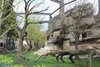
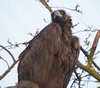
Exiting this aviary, visitors can either look into the 475 sq. meter aviary through a 2m-longx1.5m-high panel of glass, which visitors cannot press up against due to the secondary, waist-height picket fence. The glass has decals of trees to prevent the birds colliding with it. The aviary's back wall is a massive, nearly sheer cliff-face, with various ledges and alcoves appropriate for possible nesting. Meanwhile, carrion tables and roosting posts can be spotted amid the bushes and trees that shroud parts of the aviary's front region. Our pair of Cinereous Vulture Aegypius monachus (1.1) calls this naturalistic aviary home.

Possible Look of Vulture Aviary -> Image courtesy of @pachyderm pro

Cinereous Vulture -> image courtesy of @KevinB
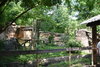
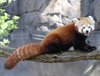
From the viewing window, visitors can duck down a side path, and are soon able to view into either of the twin 150 sq. meter spaces that can be found on either side of the path. The highlight of this enclosure, however, is the mesh-enclosed walkway stretching over the path, connecting the two halves of the enclosure. The bamboo groves and tall trees in the enclosures may be more popular to the inhabitants, but the wooden climbing structures are hoped to bring 'Pyro' and 'Paprika,' our breeding pair of Red Pandas Ailurus fulgens (1.1) into guest view more often.
 Possible View of Red Panda Habitats -> image courtesy of @Captain Callum
 Red Panda -> image courtesy of @vogelcommando
A winding path past an inviting wild space for native species of waterfowl, herptiles, pollinators, and small mammals leads us into the Asiatic Highlands. This is where things become foggy. Literally. The 1,050 sq. meter habitat to your left produces large amounts of steam due to the various hot springs of various sizes dotted through the enclosure. The backdrop of the enclosure is a cliff face, featuring various levels accessible to the inhabitants. Two viewing shelters are accessible, one on this stretch of the enclosure, and the other accessible via the path leading to the next enclosure. The whole of the exhibit is meshed in, preventing the escape of our troop of snow monkeys, or Japanese Macaques Macaca fuscata (4.12).
The final enclosure is visible as soon as you take a left turn from the path you currently walk along. It is here that you get your first glimpse into an enclosure that covers 3,750 sq. meters. Your initial view is from the top of the 'valley' our herds of Markhor Capra falconeri (1.4) and Japanese Serow Capricornis crispus (1.4) inhabit. As you walk around the habitat, the area you walk along gradually becomes lower until you reach the restaurant 'Tibatta Dinara,' which has a patio dining area that allows you to eat on the level of the ungulates.
From here, guests pass the Snow Leopard Pass (which will be covered in more detail in the next post) and eventually reach the District Vivarium before rejoining the path that you didn't take from the Vulture Aviary.
ZooSC at Myrtle Beach -> District of Europe and West Asia
First part of the map for the first of eight zoogeographical sections of the zoo, this being the...
You begin this sector at the entrance to a massive 4,500 sq. meter walkthrough aviary (top-left corner of the map attached above) Initially meant to be designed around the same principles as the gigantic aviary at Munich Zoo Hellabrunn, however this design has been scrapped for a more simplistic aviary design, combining wire-mesh and glass, the former of which prevents the birds from reaching the support system for the latter. Visitors enter the aviary through a pair of staff-watched doors, and are immersed into the Eurasian Wetlands. The path visitors walk goes around the perimeter of the aviary, allowing a wonderful view into the marshes of the aviary. The following bird species can be found in this aviary:
- Smew Mergellus albellus (2.9)
- Marbled Teal Marmaronetta anguisirostris (5.12)
- Demoiselle Crane Grus virgo (2.2)
- Pied Avocet Recurvirostra avosetta (1.1)
- our larger flock of Bearded Reedling Panurus biarmicus (16.16)
Exiting this aviary, visitors can either look into the 475 sq. meter aviary through a 2m-longx1.5m-high panel of glass, which visitors cannot press up against due to the secondary, waist-height picket fence. The glass has decals of trees to prevent the birds colliding with it. The aviary's back wall is a massive, nearly sheer cliff-face, with various ledges and alcoves appropriate for possible nesting. Meanwhile, carrion tables and roosting posts can be spotted amid the bushes and trees that shroud parts of the aviary's front region. Our pair of Cinereous Vulture Aegypius monachus (1.1) calls this naturalistic aviary home.
Possible Look of Vulture Aviary -> Image courtesy of @pachyderm pro
Cinereous Vulture -> image courtesy of @KevinB
From the viewing window, visitors can duck down a side path, and are soon able to view into either of the twin 150 sq. meter spaces that can be found on either side of the path. The highlight of this enclosure, however, is the mesh-enclosed walkway stretching over the path, connecting the two halves of the enclosure. The bamboo groves and tall trees in the enclosures may be more popular to the inhabitants, but the wooden climbing structures are hoped to bring 'Pyro' and 'Paprika,' our breeding pair of Red Pandas Ailurus fulgens (1.1) into guest view more often.
Possible View of Red Panda Habitats -> image courtesy of @Captain Callum Red Panda -> image courtesy of @vogelcommando A winding path past an inviting wild space for native species of waterfowl, herptiles, pollinators, and small mammals leads us into the Asiatic Highlands. This is where things become foggy. Literally. The 1,050 sq. meter habitat to your left produces large amounts of steam due to the various hot springs of various sizes dotted through the enclosure. The backdrop of the enclosure is a cliff face, featuring various levels accessible to the inhabitants. Two viewing shelters are accessible, one on this stretch of the enclosure, and the other accessible via the path leading to the next enclosure. The whole of the exhibit is meshed in, preventing the escape of our troop of snow monkeys, or Japanese Macaques Macaca fuscata (4.12).
The final enclosure is visible as soon as you take a left turn from the path you currently walk along. It is here that you get your first glimpse into an enclosure that covers 3,750 sq. meters. Your initial view is from the top of the 'valley' our herds of Markhor Capra falconeri (1.4) and Japanese Serow Capricornis crispus (1.4) inhabit. As you walk around the habitat, the area you walk along gradually becomes lower until you reach the restaurant 'Tibatta Dinara,' which has a patio dining area that allows you to eat on the level of the ungulates.
From here, guests pass the Snow Leopard Pass (which will be covered in more detail in the next post) and eventually reach the District Vivarium before rejoining the path that you didn't take from the Vulture Aviary.
Attachments

You begin this sector at the entrance to a massive 4,500 sq. meter walkthrough aviary (top-left corner of the map attached above) Initially meant to be designed around the same principles as the gigantic aviary at Munich Zoo Hellabrunn, however this design has been scrapped for a more simplistic aviary design, combining wire-mesh and glass, the former of which prevents the birds from reaching the support system for the latter. Visitors enter the aviary through a pair of staff-watched doors, and are immersed into the Eurasian Wetlands. The path visitors walk goes around the perimeter of the aviary, allowing a wonderful view into the marshes of the aviary. The following bird species can be found in this aviary:
- Smew Mergellus albellus (2.9)
- Marbled Teal Marmaronetta anguisirostris (5.12)
- Demoiselle Crane Grus virgo (2.2)
- Pied Avocet Recurvirostra avosetta (1.1)
- our larger flock of Bearded Reedling Panurus biarmicus (16.16)
Pied avocets are usually kept in larger groups of multiple pairs, given that they are fairly social and nest in group. Especially in aviary that size I would keep a much larger group than just a pair of avocets.

Conversely, two breeding pairs of Demoiselle Cranes almost certainly won’t coexist. AND they’ll eat the ReedlingsPied avocets are usually kept in larger groups of multiple pairs, given that they are fairly social and nest in group. Especially in aviary that size I would keep a much larger group than just a pair of avocets.

Van Beal
Well-Known Member
Was not aware of the latter fact, so thanks. Most sources I read didn’t have that information, so I thought it would be fine given the cranes were kept well-fed.Conversely, two breeding pairs of Demoiselle Cranes almost certainly won’t coexist. AND they’ll eat the Reedlings
Van Beal
Well-Known Member
Population of Pied Avocet shall be increased to 5.5, while Demoiselle Crane population will be dropped to 1.1, and the cranes may be moved to an alternative site deeper in the section or phased out of this plan altogether.The following bird species can be found in this aviary:
- Smew Mergellus albellus (2.9)
- Marbled Teal Marmaronetta anguisirostris (5.12)
- Demoiselle Crane Grus virgo (2.2)
- Pied Avocet Recurvirostra avosetta (1.1)
- our larger flock of Bearded Reedling Panurus biarmicus (16.16)
Thanks to @KevinB and @FBBird for making helpful points!
Pied avocets are usually kept in larger groups of multiple pairs, given that they are fairly social and nest in group. Especially in aviary that size I would keep a much larger group than just a pair of avocets.
Conversely, two breeding pairs of Demoiselle Cranes almost certainly won’t coexist. AND they’ll eat the Reedlings
Van Beal
Well-Known Member
Snow Leopard Pass

This enclosure, mentioned briefly earlier, is first visible from the main entrance of the restaurant 'Tibatta Dinara,' which is attached to the Markhor and Serow habitat. Guests can catch a glimpse of the habitat through the corner window (cut corners on enclosure perimeter) or they can walk along to the glass-surrounded semi-circle that pushes you inside the perimeter of the enclosure.
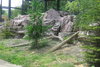
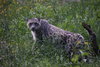
Generally, the back and right-hand walls from the viewing areas are entirely rocky cliff faces, while the front and left-hand walls are glass and chain-link, with the glass being closest to the visitors. The barrier is separated from the guests by way of rock-and-shrub planters on the 'curb' of the walkway. The enclosure is entirely meshed over, which is the reason for the large stone pillar in the relative center of this 2,250 sq. meter space. The plant life in the enclosure is mostly conifer trees, with sparse low-growing plants. All in all, a well-suited environment for a breeding pair of Snow Leopard Panthera uncia (1.1).

Possible look into Snow Leopard Enclosure -> image courtesy of @aardvark250

Snow Leopard -> image courtesy of @Gavial
From here, the path takes you around the exhibit to the District Vivarium, and from there deeper into the District of Europe and West Asia.
This enclosure, mentioned briefly earlier, is first visible from the main entrance of the restaurant 'Tibatta Dinara,' which is attached to the Markhor and Serow habitat. Guests can catch a glimpse of the habitat through the corner window (cut corners on enclosure perimeter) or they can walk along to the glass-surrounded semi-circle that pushes you inside the perimeter of the enclosure.
Generally, the back and right-hand walls from the viewing areas are entirely rocky cliff faces, while the front and left-hand walls are glass and chain-link, with the glass being closest to the visitors. The barrier is separated from the guests by way of rock-and-shrub planters on the 'curb' of the walkway. The enclosure is entirely meshed over, which is the reason for the large stone pillar in the relative center of this 2,250 sq. meter space. The plant life in the enclosure is mostly conifer trees, with sparse low-growing plants. All in all, a well-suited environment for a breeding pair of Snow Leopard Panthera uncia (1.1).
Possible look into Snow Leopard Enclosure -> image courtesy of @aardvark250
Snow Leopard -> image courtesy of @Gavial
From here, the path takes you around the exhibit to the District Vivarium, and from there deeper into the District of Europe and West Asia.
Attachments

Van Beal
Well-Known Member
Notice- Smew Mergellus albellus (2.9)
- Marbled Teal Marmaronetta anguisirostris (5.12)
- Demoiselle Crane Grus virgo (2.2)
- Pied Avocet Recurvirostra avosetta (1.1)
- our larger flock of Bearded Reedling Panurus biarmicus (16.16)
The Demoiselle Cranes will remain in this aviary, while the Bearded Reedlings will a) have the size of their flock cut down significantly, and b) find a new home that will be discussed tomorrow.
Van Beal
Well-Known Member
Sorry for the delay on this post, mapped some new things out over the last couple of days, but we are finally where I'd like to be!

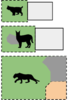
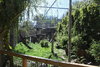
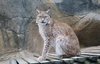
These next three habitats are visible as you round the corner from the viewing area of the Snow Leopard Pass, with the smallest of the three (the top one) being the first visible. This is a 250 sq. meter habitat with 3m in vertical space from the floor to the ceiling of the habitat. Behind this habitat and the second habitat are the indoor quarters for the inhabitants. This habitat is dense in foliage, while some artificial climbing structures are designed to blend in with this environment. The sole inhabitant of this habitat is one Eurasian Lynx Lynx lynx (0.1), a creature that is adept at avoiding detection in dense forest.

Possible view of Lynx Habitat -> image courtesy of @zoo_enthusiast

Eurasian Lynx -> image courtesy of @RatioTile
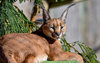
The second habitat mentioned is larger than the first, at 400 sq. meters, and the same height. This habitat is much more open, featuring just a few scraggly bushes and trees around the perimeter and shrouding the face of the indoor quarters. A rock protrusion sits in the middle, allowing our pair of Caracal Caracal caracal (1.1) to bask in the warmth of the sun whenever they decide to. These cats will likely be the easiest of the three species to spot.

Caracal -> image courtesy of @WhistlingKite24
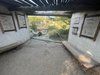
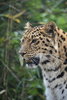
The final habitat in this stretch before the Vivarium is a 1,250 sq. meter enclosure which is 5m high from floor to ceiling, though it is planted more similarly to the lynx habitat. This habitat has climbing structures and feeding tables that aren't nearly as well-concealed as the lynx's, though this is more for the benefit of the visitors, as without these being obvious, visitors would never see our solitary Amur Leopard Panthera pardus orientalis (0.1), given her favourite spot is on top of her shelter (the orange in the bottom right corner of her habitat) which is shrouded by trees.

Possible view into Amur Leopard habitat -> image courtesy of @snowleopard

Amur Leopard -> image courtesy of @amur leopard (rly enjoyed that they had a picture of the species)
I will cover the District Vivarium later today, assuming I remember to do so.
These next three habitats are visible as you round the corner from the viewing area of the Snow Leopard Pass, with the smallest of the three (the top one) being the first visible. This is a 250 sq. meter habitat with 3m in vertical space from the floor to the ceiling of the habitat. Behind this habitat and the second habitat are the indoor quarters for the inhabitants. This habitat is dense in foliage, while some artificial climbing structures are designed to blend in with this environment. The sole inhabitant of this habitat is one Eurasian Lynx Lynx lynx (0.1), a creature that is adept at avoiding detection in dense forest.
Possible view of Lynx Habitat -> image courtesy of @zoo_enthusiast
Eurasian Lynx -> image courtesy of @RatioTile
The second habitat mentioned is larger than the first, at 400 sq. meters, and the same height. This habitat is much more open, featuring just a few scraggly bushes and trees around the perimeter and shrouding the face of the indoor quarters. A rock protrusion sits in the middle, allowing our pair of Caracal Caracal caracal (1.1) to bask in the warmth of the sun whenever they decide to. These cats will likely be the easiest of the three species to spot.
Caracal -> image courtesy of @WhistlingKite24
The final habitat in this stretch before the Vivarium is a 1,250 sq. meter enclosure which is 5m high from floor to ceiling, though it is planted more similarly to the lynx habitat. This habitat has climbing structures and feeding tables that aren't nearly as well-concealed as the lynx's, though this is more for the benefit of the visitors, as without these being obvious, visitors would never see our solitary Amur Leopard Panthera pardus orientalis (0.1), given her favourite spot is on top of her shelter (the orange in the bottom right corner of her habitat) which is shrouded by trees.
Possible view into Amur Leopard habitat -> image courtesy of @snowleopard
Amur Leopard -> image courtesy of @amur leopard (rly enjoyed that they had a picture of the species)
I will cover the District Vivarium later today, assuming I remember to do so.
Attachments
Van Beal
Well-Known Member
District Vivarium

The District Vivarium is the first of two buildings in this region of the zoo, and focuses on the smaller, ectothermic species of Eurasia inside. However, the exterior habitats begin with warm-blooded creatures.
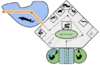
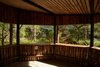
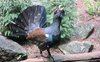
The outdoor habitats at the entrance to the building make up our 'Pheasantry,' which is simply a small stone-brick building connected to a pair of 75 sq. meter aviaries. This building does act as the indoor holding, with 25 sq. meter spaces for the inhabitants of the aviaries on days where weather conditions are poor, and the building is connected to the rest of the Vivarium. Both of these aviaries host a trio of Western Capercaillie Tetrao urogallus (1.2 per aviary). The aviary on the left from the entrance to the building also houses a small flock of Bearded Reedling Panurus biarmicus (5.5), while the one on the right houses a flock of European Goldfinch Carduelis carduelis (3.9).

Possible View into Aviaries from outside-> image courtesy of @lintworm

Western Capercaillie -> image courtesy of @RatioTile


Bearded Reedling (first) and European Goldfinch -> both courtesy of @Kakapo
Due to being currently limited on time, I will sadly be forced to do the interior of the Vivarium tomorrow when I return home from work. However, over the next couple of days I should be posting more often and (here's hoping) I may even finish posting this section over the weekend, and be able to move on to my personal favourite (and the only other completed) section of the zoo, themed around Southeast Asia.
The District Vivarium is the first of two buildings in this region of the zoo, and focuses on the smaller, ectothermic species of Eurasia inside. However, the exterior habitats begin with warm-blooded creatures.
The outdoor habitats at the entrance to the building make up our 'Pheasantry,' which is simply a small stone-brick building connected to a pair of 75 sq. meter aviaries. This building does act as the indoor holding, with 25 sq. meter spaces for the inhabitants of the aviaries on days where weather conditions are poor, and the building is connected to the rest of the Vivarium. Both of these aviaries host a trio of Western Capercaillie Tetrao urogallus (1.2 per aviary). The aviary on the left from the entrance to the building also houses a small flock of Bearded Reedling Panurus biarmicus (5.5), while the one on the right houses a flock of European Goldfinch Carduelis carduelis (3.9).
Possible View into Aviaries from outside-> image courtesy of @lintworm
Western Capercaillie -> image courtesy of @RatioTile
Bearded Reedling (first) and European Goldfinch -> both courtesy of @Kakapo
Due to being currently limited on time, I will sadly be forced to do the interior of the Vivarium tomorrow when I return home from work. However, over the next couple of days I should be posting more often and (here's hoping) I may even finish posting this section over the weekend, and be able to move on to my personal favourite (and the only other completed) section of the zoo, themed around Southeast Asia.
Attachments
Van Beal
Well-Known Member
I probably would have finished the Vivarium had I not decided to replace a species I had orginally had in the second habitat (the Daurian Pika) for the European Goldfinch, but I thought an enclosure that was a direct mirror of the first aviary was excessively large for pikas, so I'm going with the twin aviaries, both housing capercaillies and another smaller bird.
Van Beal
Well-Known Member
Part Two of the Vivarium -> the actual indoor partDistrict Vivarium

Upon passing through the Pheasantry, visitors enter the main Vivarium, and can immediately view a meshed-in enclosure of 100 sq. meters surface area, with about 3m in height from floor to ceiling. The first meter or so in height is made up of a glass barrier, framed with pieces of old driftwood that has been treated so as to avoid rotting. The exhibit itself has a back wall made entirely from a meticulously designed artificial stone cliff face, even featuring shallow caves for our pair of Pallas' Cat Otocolobus manul (1.1) to hide in when they need separation from visitors. The low-lying shrubs in the front of the exhibit also provide privacy.
 Possible look of Pallas' Cat enclosure -> image courtesy of @Tomek
  Pallas' Cat -> image courtesy of @pendraig_milnerae
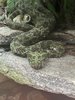
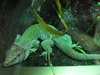
 Continuing along the route through the building (designated by the arrows in the image), you will come across the first of eight terrariums, this one being 6 sq. meters in size, and representing a shrubby highland which would possibly harbor Scheltopusik, or European Glass Lizard Pseudopus apodus (1.1) in the wild. As you pass the scheltopusik tank, a second tank, this one about halfway aquatic and terrestrial, is better suited to the amphibian it hosts. The 5 sq. meter tank represents Europe's southern wetlands, and houses our Iberian Ribbed Newts Pleurodeles waltl (2.6). Next to this exhibit, located against the back of the Pallas' Cat cliff, a 15 sq. meter glass exhibit can be seen, this one representing the mountains of Central Asia, and featuring a small flowing stream, low-growing ferns and other plants, and branches and rocks for the inhabiting Mangshan Pit Viper Protobothrops mangshanensis (1.1) to explore, hide in, and bask on.

Scheltopusik -> image courtesy of @NigeW

Iberian Ribbed Newt -> image courtesy of @vogelcommando

Mangshan Pit Viper -> image courtesy of @Azamat Shackleford
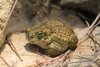
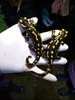
From here, you have reached a corner which features four terrariums, one on the same wall as the newt tank, one directly in the corner, and two on the adjacent wall. All four of these tanks are 5 sq. meters, as with the newt tank. The tank that shares a wall with the newt tank houses our European Jewelled Lizard Timon lepidus (1.2) in a simple vineyard-replicating tank. The tank in the corner, like the newt tank, is a paludarium, with the exhibit being humid, and a decent portion being shallow water, allowing the pair of Fire Salamander Salamandra salamandra (1.1) to soak themselves without having to display their poor swimming abilities. The first tank on the adjacent wall also has a shallow pool, though the exhibit is much more dry altogether, featuring a few abandoned and slowly rotting logs, and lots of moss and low-lying brush to conceal our European Green Toad Bufotes viridis (5.5) from view, and force a much closer look. The final of these four tanks is themed around a Mediterranean windowsill, with potted plants and a white-plaster back wall, providing our Mediterranean House Gecko Hemidactylus turcicus (1.4) with a unique environment to explore.

Jewelled Lizard -> image courtesy of @Chlidonias

Fire Salamander -> image courtesy of @JigerofLemuria
 European Green Toad -> image courtesy of @Ituri
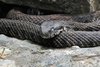
 The final indoor habitat of the Vivarium is to your left just before you exit, and is the same size and ecosystem represented as in the Scheltopusik tank. This 6 sq. meter habitat houses a pair of Armenian Viper Vipera raddei (1.1), who may provide a challenge to spot.

Armenian Viper -> image courtesy of @Ituri
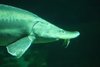
The final habitat of the Vivarium is under your feet as you exit. Below is a pond of over 500,000 gallons of water, flowing beneath the bridge you walk along. Though many native waterfowl, such as ducks, geese and waders, can often be found on and around the surface of the pond, the main attraction is actually beneath the surface, though our Beluga Sturgeon Huso huso (0.0.20) do come to the surface from time to time.

Beluga Sturgeon -> image courtesy of @Hanjo
After all of this, the Vivarium has finally been completed. The next posts of the second half of this first zoogeographical region will either come later today or early tomorrow.
Attachments
-
 IMG_97972.JPG270.5 KB · Views: 186
 -
 3989424A-3906-4018-A63A-015211D9AAED.jpeg226.1 KB · Views: 179
 -
 6J0A7122.JPG436 KB · Views: 178
 -
 20161022_151054_001 iberian ribbed newt.jpg99 KB · Views: 173
 -
 IMG_7593.jpeg160.8 KB · Views: 174
 -
 IMG_5618.JPG124.7 KB · Views: 183
 -
 IMG_36452.JPG191.7 KB · Views: 191
 -
 IMG_20181117_211642862.jpg73.1 KB · Views: 181
 -
 IMG_2887.JPG192.7 KB · Views: 193
 -
 16.JPG61.2 KB · Views: 182
Van Beal
Well-Known Member
I'm back, after a longer-than-expected break. This post will (hopefully) round out the District of Europe and West Asia.
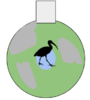
I have not updated the general map, as it was becoming increasingly difficult to keep things laid out in the way I wanted. Anyways, today we continue along from the bridge crossing over the pond for our Beluga Sturgeons. The first exhibit is to your left, shrouded slightly by forest, and acting as a concealer for the BTS areas of the feline enclosures mentioned previously. This exhibit is a 300 sq. meter aviary, with a maximum 'ceiling' mesh height of 4.5 meters. The exhibit features a central, near-perfect circular pond, as well as various rock formations and small stands of trees and bushes to provide our bachelor trio of Northern Bald Ibis Geronticus eremita (3.0) with numerous perches and shelters, including their BTS area located at the back of the aviary.

(Very) basic map of Bald Ibis Aviary

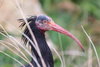
Northern Bald Ibis -> image courtesy of @Prochilodus246
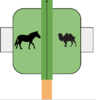
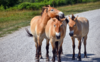
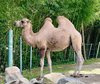
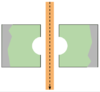
Beyond the aviary, the path slowly curves and rises, eventually placing you at the top of a land bridge where the path is a full 3m from the ground. Beneath the path, there is an open archway of earth that allows passage between two yards, each 3,000 sq. meters in area. On the end of each yard are stables for our herds of Przewalski's Horse Equus ferus przewalskii (1.9) and Bactrian Camel Camelus bactrianus (1.5) to stay in at night, while they can roam their expansive fields during the day.

Camel/Horse Enclosure General Map

Przewalski's Horses -> image courtesy of @Moebelle

Bactrian Camel -> image courtesy of @Pleistohorse
My internet unfortunately cut out moments after this hastily assembled closing paragraph, so I do apologize for not finishing, however I should manage to get down to the final exhibit (or rather, exhibit complex) by tomorrow.
I have not updated the general map, as it was becoming increasingly difficult to keep things laid out in the way I wanted. Anyways, today we continue along from the bridge crossing over the pond for our Beluga Sturgeons. The first exhibit is to your left, shrouded slightly by forest, and acting as a concealer for the BTS areas of the feline enclosures mentioned previously. This exhibit is a 300 sq. meter aviary, with a maximum 'ceiling' mesh height of 4.5 meters. The exhibit features a central, near-perfect circular pond, as well as various rock formations and small stands of trees and bushes to provide our bachelor trio of Northern Bald Ibis Geronticus eremita (3.0) with numerous perches and shelters, including their BTS area located at the back of the aviary.
(Very) basic map of Bald Ibis Aviary
Northern Bald Ibis -> image courtesy of @Prochilodus246
Beyond the aviary, the path slowly curves and rises, eventually placing you at the top of a land bridge where the path is a full 3m from the ground. Beneath the path, there is an open archway of earth that allows passage between two yards, each 3,000 sq. meters in area. On the end of each yard are stables for our herds of Przewalski's Horse Equus ferus przewalskii (1.9) and Bactrian Camel Camelus bactrianus (1.5) to stay in at night, while they can roam their expansive fields during the day.
Camel/Horse Enclosure General Map
Przewalski's Horses -> image courtesy of @Moebelle
Bactrian Camel -> image courtesy of @Pleistohorse
My internet unfortunately cut out moments after this hastily assembled closing paragraph, so I do apologize for not finishing, however I should manage to get down to the final exhibit (or rather, exhibit complex) by tomorrow.
Attachments

biggest_dreamer
Well-Known Member
The mere thought of having this many rarities in my home state is making my head spin, in a good way. Myrtle Beach (or more broadly, the coastal region, extending down through Charleston) really does seem like an area that could support a very solid zoo, so it's a real shame that only really dingy roadside-quality places seem capable of existing there (with the notable exception of Lowcountry Zoo, but it's tiny).
Van Beal
Well-Known Member
Exactly what I noticed. The entire coastal region of SC is tourist haven year-round, so I assume it could support a sizeable zoo, hence why I'm doing the project hereThe mere thought of having this many rarities in my home state is making my head spin, in a good way. Myrtle Beach (or more broadly, the coastal region, extending down through Charleston) really does seem like an area that could support a very solid zoo, so it's a real shame that only really dingy roadside-quality places seem capable of existing there (with the notable exception of Lowcountry Zoo, but it's tiny).
 glad you're enjoying the concept.
Van Beal
Well-Known Member
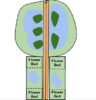
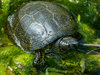
Continuing right along from where I left off, visitors walk from the natural bridge over the Przewalski's Horse and Bactrian Camel fields, and end up surrounded on both sides by gardens of European plants. In the center of these gardens are 45 sq. meter areas, centered around twin ponds of 20 sq. meters surface area. These ponds allow our visitors to get (sort of) up close and personal visit with our European Pond Turtles Emys orbicularis (2.6 per pond) who can often be found basking on the rocks in the center of the ponds or the logs along the shores.

European Pond Turtle -> image courtesy of @Otorongo
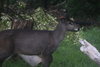
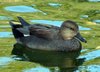
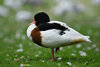
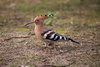
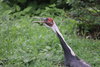
From here, guests enter the second large walkthrough aviary of the sector (map including gardens below) of 4,000 sq. meters in area, and a maximum height of around 9.5 meters. The aviary, much like the first, is a wetland replication, though the guest path is straight through and elevated about 2m from the ground level of the aviary. The viewpoints are shrouded by willows planted on small islands throughout the marshy waters, until the center of the aviary, where views open on both sides to reveal the grassy meadows available on either side for our herd of Tufted Deer Elaphodus cephalophus (1.4) to explore, while the other species sharing the aviary, namely flocks of Common Shelduck Tadorna tadorna (4.7) and Gadwall Mareca strepera (3.6), a small grouping of Eurasian Hoopoe Upupa epops (2.4) and a group of White-naped Crane Antigone vipio, that after the mentioned issues with Demoiselle Cranes, may be decreased from the originally planned 3.3 individuals, to a more appropriate 1.1 (or possibly remove just the two additional males should a group of mostly females be low-risk).

Image of the Aviary and Gardens

Tufted Deer -> image courtesy of @Brayden Delashmutt

Gadwall -> image courtesy of @Kakapo

Common Shelduck -> image courtesy of @Therabu

Eurasian Hoopoe -> image courtesy of @Ding Lingwei

White-naped Crane -> image courtesy of @Brayden Delashmutt
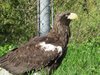
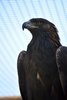
After exiting this wonderful walkthrough experience, visitors walk between two aviaries of identical size and design, 350 sq. meters of space excluding the cliffs that provide a backdrop to these exhibits. To your left is a more forested aviary, with various natural and artificial perches for the pair of Steller's Sea Eagles Haliaeetus pelagicus (1.1), and a water feature that houses live fish at specific times during the day. The opposite aviary is more open, featuring various rock perches for our solitary Golden Eagle Aquila chrysaetos (1.0) to explore.

Map view of Aviaries

Steller's Sea Eagle -> image courtesy of @TheGerenuk

Golden Eagle -> image courtesy of @Gavial
European Pond Turtle -> image courtesy of @Otorongo
From here, guests enter the second large walkthrough aviary of the sector (map including gardens below) of 4,000 sq. meters in area, and a maximum height of around 9.5 meters. The aviary, much like the first, is a wetland replication, though the guest path is straight through and elevated about 2m from the ground level of the aviary. The viewpoints are shrouded by willows planted on small islands throughout the marshy waters, until the center of the aviary, where views open on both sides to reveal the grassy meadows available on either side for our herd of Tufted Deer Elaphodus cephalophus (1.4) to explore, while the other species sharing the aviary, namely flocks of Common Shelduck Tadorna tadorna (4.7) and Gadwall Mareca strepera (3.6), a small grouping of Eurasian Hoopoe Upupa epops (2.4) and a group of White-naped Crane Antigone vipio, that after the mentioned issues with Demoiselle Cranes, may be decreased from the originally planned 3.3 individuals, to a more appropriate 1.1 (or possibly remove just the two additional males should a group of mostly females be low-risk).
Image of the Aviary and Gardens
Tufted Deer -> image courtesy of @Brayden Delashmutt
Gadwall -> image courtesy of @Kakapo
Common Shelduck -> image courtesy of @Therabu
Eurasian Hoopoe -> image courtesy of @Ding Lingwei
White-naped Crane -> image courtesy of @Brayden Delashmutt
After exiting this wonderful walkthrough experience, visitors walk between two aviaries of identical size and design, 350 sq. meters of space excluding the cliffs that provide a backdrop to these exhibits. To your left is a more forested aviary, with various natural and artificial perches for the pair of Steller's Sea Eagles Haliaeetus pelagicus (1.1), and a water feature that houses live fish at specific times during the day. The opposite aviary is more open, featuring various rock perches for our solitary Golden Eagle Aquila chrysaetos (1.0) to explore.
Map view of Aviaries
Steller's Sea Eagle -> image courtesy of @TheGerenuk
Golden Eagle -> image courtesy of @Gavial
Attachments
-
 Screenshot 2023-08-14 9.13.57 PM.png27.4 KB · Views: 176
 -
 Screenshot 2023-08-14 9.14.09 PM.png7.4 KB · Views: 171
 -
 20220425_Calarasi_EuropSumpfschildkröte13kl.jpg722.3 KB · Views: 169
 -
 IMG_8849.JPG100.4 KB · Views: 180
 -
 Anas strepera (17-10-20 Cañada de los Pájaros).jpg307.7 KB · Views: 188
 -
 Clères - Tadorna tadorna.JPG103.9 KB · Views: 182
 -
 IMG_5203.JPG134.1 KB · Views: 182
 -
 IMG_6946.JPG114.9 KB · Views: 177
 -
 IMG_5137 (2).JPG195 KB · Views: 179
 -
 Sciez (3).JPG46.8 KB · Views: 179
Van Beal
Well-Known Member
Sorry, had to make it a second post to get all the media in lol.
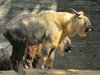
Anyways, the penultimate enclosure of the area, which will be followed by a sizeable complex to close the sector, is identical in size and general formation to the Tibetan Heights exhibit seen earlier for the Markhor and Japanese Serow. The flora of the exhibit, however, is more mountainous China, featuring large bamboo groves and conifers throughout. The exhibit is viewable through four windows, each on different levels of terrain, creating unique viewpoints from each window. These views can allow a unique view of our herds of Sichuan Takin Budorcas taxicolor tibetana (1.5) and Chinese Goral Naemorhedus griseus (1.3).

Sichuan Takin -> image courtesy of @Rhino0118

Chinese Goral -> image courtesy of @Ding Lingwei
Tomorrow... well hopefully tomorrow I can finish this section off. Knowing me, I'll end up splitting it up but for now the hope if to finish the Tiger House, or 'Dom Tigra' as it would be in Russian (according to Google Translate, at least) posts tomorrow.
Anyways, the penultimate enclosure of the area, which will be followed by a sizeable complex to close the sector, is identical in size and general formation to the Tibetan Heights exhibit seen earlier for the Markhor and Japanese Serow. The flora of the exhibit, however, is more mountainous China, featuring large bamboo groves and conifers throughout. The exhibit is viewable through four windows, each on different levels of terrain, creating unique viewpoints from each window. These views can allow a unique view of our herds of Sichuan Takin Budorcas taxicolor tibetana (1.5) and Chinese Goral Naemorhedus griseus (1.3).
Sichuan Takin -> image courtesy of @Rhino0118
Chinese Goral -> image courtesy of @Ding Lingwei
Tomorrow... well hopefully tomorrow I can finish this section off. Knowing me, I'll end up splitting it up but for now the hope if to finish the Tiger House, or 'Dom Tigra' as it would be in Russian (according to Google Translate, at least) posts tomorrow.
Attachments
Van Beal
Well-Known Member
The Tiger House -> Dom Tigra
The latter name is supposedly an accurate Russian translation of the former, but anyways, as the name most likely implies, this exhibit complex that closes the District of Europe and West Asia will feature a large feline species (but more on that later). The architecture of the building is very much themed around buildings in Russia, specifically the design of the Kremlin.
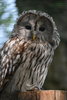
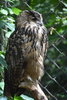
The complex features outdoor habitats for six species, and indoor habitats for those six as well as three others. We will begin with the outdoor habitats, which begin to the left of the main entrance (which also serves as the exit) to the building. These first two exhibits are 200 sq. meter, 4m-high steel-mesh aviaries, both very well-planted with coniferous foliage. Rocks and artificial perches on either end of each aviary and a solid dividing wall allow our pair of Eurasian Eagle-owl Bubo bubo (1.1) and our solitary Ural Owl Strix uralensis (0.1) to live side-by-side with little to no conflict.


Ural Owl (top) and Eurasian Eagle-owl -> both images courtesy of @Gavial
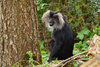
Continuing to the left, visitors will soon reach one large glass viewing window, split down the middle, creating two separate 500 sq. meter exhibits, each with a 'ceiling' over 8m high. Both enclosures heavily feature natural and artificial climbing enrichments, allowing our troops of Spectacled Langur Trachypithecus obscurus (1.5) and Lion-tailed Macaque Macaca silenus (2.4) to display their arboreal prowess.

Spectacled Langur -> image courtesy of @Kudu21

Lion-tailed Macaque -> image courtesy of @Therabu
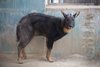
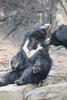
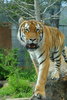
The last two enclosures before you complete a full loop around the building are each 800 sq. meters in overall area, with approx. 3.5m in height from the ground level (which is about 1/2-meter from the path level) to the ceiling. Both enclosures are visible through double-thick glass windows, and chain-link behind the glass. The two enclosures are both relatively open, with one having a cliff featuring an arching opening that leads to the indoor habitat attached. The other features a cave which then connects to their indoor quarters. The cave exhibit is home to a pair of Sloth Bear Melursus ursinus (1.1), while the other enclosure is home to our pair of Amur Tiger Panthera tigris altaica (1.1), though only one tiger is visible from outside at any given time.

Sloth Bears -> image courtesy of @Andrew_NZP

Amur Tiger -> image courtesy of @Veno
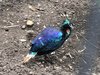
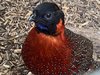
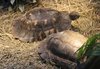
Visitors can then enter the building, and, beginning from the left, view the 100 sq. meter indoor spaces for the aforementioned owl species, the 275 sq. meter indoor of the primate species mentioned earlier, and the 550 sq. meter indoor exhibits for the bears and tigers, the latter of which rotate the male and female between the indoor and outdoor spaces every three hours. However, there is a space in the center of the complex which features two aviaries and a smaller open-topped enclosure. The two aviaries are each 75 sq. meters and about 1.5 meters high, and are designed to replicate the environment of the Himalayan foothills. The aviaries respectively house a pair of Himalayan Monal Pheasant Lophophorus impejanus (1.1) and a small flock of Satyr Tragopan Tragopan satyra (1.3), while the open-topped, 25 sq. meter enclosure replicating the ecosystem of the Balkans for our group of Marginated Tortoise Testudo marginata (1.2).

Himalayan Monal -> image courtesy of @Mr.Weasel

Satyr Tragopan -> image courtesy of @gulogulogulo

Marginated Tortoises -> image courtesy of @vogelcommando
And as you exit the Tiger House (or Dom Tigra), and head the opposite way from the Sichuan Cliffs (takin and goral) enclosure into the forest, you will leave the District of Europe and West Asia behind, and begin your trek through Southeast Asia with our next sector: China and the Islands. But first, a singular exhibit acts as the divide between these two sectors. More on that exhibit coming tomorrow. But for now, we bid farewell to the first sector of the zoo.
The latter name is supposedly an accurate Russian translation of the former, but anyways, as the name most likely implies, this exhibit complex that closes the District of Europe and West Asia will feature a large feline species (but more on that later). The architecture of the building is very much themed around buildings in Russia, specifically the design of the Kremlin.
The complex features outdoor habitats for six species, and indoor habitats for those six as well as three others. We will begin with the outdoor habitats, which begin to the left of the main entrance (which also serves as the exit) to the building. These first two exhibits are 200 sq. meter, 4m-high steel-mesh aviaries, both very well-planted with coniferous foliage. Rocks and artificial perches on either end of each aviary and a solid dividing wall allow our pair of Eurasian Eagle-owl Bubo bubo (1.1) and our solitary Ural Owl Strix uralensis (0.1) to live side-by-side with little to no conflict.
Ural Owl (top) and Eurasian Eagle-owl -> both images courtesy of @Gavial
Continuing to the left, visitors will soon reach one large glass viewing window, split down the middle, creating two separate 500 sq. meter exhibits, each with a 'ceiling' over 8m high. Both enclosures heavily feature natural and artificial climbing enrichments, allowing our troops of Spectacled Langur Trachypithecus obscurus (1.5) and Lion-tailed Macaque Macaca silenus (2.4) to display their arboreal prowess.
Spectacled Langur -> image courtesy of @Kudu21
Lion-tailed Macaque -> image courtesy of @Therabu
The last two enclosures before you complete a full loop around the building are each 800 sq. meters in overall area, with approx. 3.5m in height from the ground level (which is about 1/2-meter from the path level) to the ceiling. Both enclosures are visible through double-thick glass windows, and chain-link behind the glass. The two enclosures are both relatively open, with one having a cliff featuring an arching opening that leads to the indoor habitat attached. The other features a cave which then connects to their indoor quarters. The cave exhibit is home to a pair of Sloth Bear Melursus ursinus (1.1), while the other enclosure is home to our pair of Amur Tiger Panthera tigris altaica (1.1), though only one tiger is visible from outside at any given time.
Sloth Bears -> image courtesy of @Andrew_NZP
Amur Tiger -> image courtesy of @Veno
Visitors can then enter the building, and, beginning from the left, view the 100 sq. meter indoor spaces for the aforementioned owl species, the 275 sq. meter indoor of the primate species mentioned earlier, and the 550 sq. meter indoor exhibits for the bears and tigers, the latter of which rotate the male and female between the indoor and outdoor spaces every three hours. However, there is a space in the center of the complex which features two aviaries and a smaller open-topped enclosure. The two aviaries are each 75 sq. meters and about 1.5 meters high, and are designed to replicate the environment of the Himalayan foothills. The aviaries respectively house a pair of Himalayan Monal Pheasant Lophophorus impejanus (1.1) and a small flock of Satyr Tragopan Tragopan satyra (1.3), while the open-topped, 25 sq. meter enclosure replicating the ecosystem of the Balkans for our group of Marginated Tortoise Testudo marginata (1.2).
Himalayan Monal -> image courtesy of @Mr.Weasel
Satyr Tragopan -> image courtesy of @gulogulogulo
Marginated Tortoises -> image courtesy of @vogelcommando
And as you exit the Tiger House (or Dom Tigra), and head the opposite way from the Sichuan Cliffs (takin and goral) enclosure into the forest, you will leave the District of Europe and West Asia behind, and begin your trek through Southeast Asia with our next sector: China and the Islands. But first, a singular exhibit acts as the divide between these two sectors. More on that exhibit coming tomorrow. But for now, we bid farewell to the first sector of the zoo.
Attachments
-
 DSC_0272.JPG90.7 KB · Views: 178
 -
 Villard les Dombes.JPG98.8 KB · Views: 178
 -
 19247651_1565218263509166_2277594844700334877_n.jpg91.4 KB · Views: 176
 -
 Apenheul - Macaca silenus (15).JPG256 KB · Views: 184
 -
 IMG_3405.JPG103 KB · Views: 183
 -
 20230730164154_IMG_0743.JPG120.6 KB · Views: 176
 -
 IMG_3214.JPEG317 KB · Views: 179
 -
 IMG_7108.JPG216 KB · Views: 184
 -
 IMG_2323 marginated tortoises.jpg178 KB · Views: 178