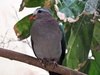
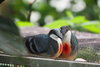
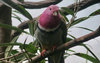
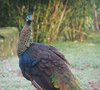
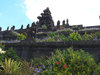
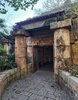
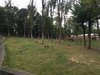
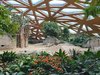
ZooSC at Myrtle Beach: A New Spec Zoo Project

Indian Subcontinent 'Complex'
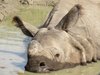
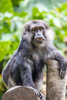
Between the District of Europe and West Asia and the next sector (China and the Islands), visitors will find a pair of 2,500 sq. meter yards, each of which also has a connected 650 sq. meter area that the larger of the two inhabitants can't access. These smaller areas feature climbing structures which connect to a high, enclosed bridge between them, allowing the troop of Rhesus Macaques Macaca mulatta (3.9) to access both areas, each of which are fenced in with mesh 'ceilings' of approximately 8.5 meters from the ground and mesh walls for the top 5.5 meters, double-layered chain-link and wood log fencing the remaining 3 meters, and large glass viewing windows in both walls. The wooden walls of the left-hand enclosure feature large murals of the macaques and their habitat-mates, while the right-hand enclosure walls give conservation information about the Indian Rhinoceros Rhinoceros unicornis (1.2), the two females living in the right-hand enclosure, and the male living in the left-hand enclosure. These main areas, accessible to the primates and the rhinos, are relatively open, with a few trees, both natural and artificial, breaking up sightlines on both sides, and shallow mud pools for the rhinos to lounge in.


Polish_20220423_200141942.jpg
Rhesus Macaques -> image courtesy of @GiraffeJack10

IMG_5042 (2).JPG
Indian Rhinoceros -> image courtesy of @TheGerenuk

This is the Indian Subcontinent exhibit done now, and we officially move off toward China and the Islands, which I should start to post sometime tomorrow or Sunday, depending on how busy I get.
 

Attachments

  • Polish_20220423_200141942.jpg
    Polish_20220423_200141942.jpg
    115.8 KB · Views: 183
  • IMG_5042 (2).JPG
    IMG_5042 (2).JPG
    189.7 KB · Views: 186
China and the Islands
This is not an exhibit post, but rather a general post on how the area is laid out.

Due to my newfound struggles to make my maps interesting, I have stopped making them for the time being. Therefore, this 'description' is hopefully going to be detailed enough to give a general idea of how the section will be laid out.

You begin from the Indian Subcontinent exhibit, and walk toward the main building of the section, called the 'Rumah Pulau' which roughly translates from Indonesian to English as "Islands House."
This building acts as the main attraction of the section, and is very much inspired by the architectural designs of the African Rainforest and Indo-Malaya Pavilions at the Toronto Zoo, which is where the idea for the pyramid-like glass roof sections is taken from. Three of these glass pyramids are present, with one smaller one providing the first exhibit of the building with natural light, while the other two do the same for the larger section of the building. After you've wandered through the building and viewed the various species who call it home, you can view our six outdoor habitats before the end of the section.

A secondary thing to add is the species count for each section of the zoo. Below will be the sections for the combined open areas (Plaza Ponds, Nocturnal House, and Conservation, Invasion, and Extinction Centre) as well as the Europe and West Asia sector and the upcoming China and the Islands.

Opening Areas
Mammals: 24
Birds: 4
Herptiles: 12
Invertebrates: 7
Fish: 2
Total: 49

Europe and West Asia
Mammals: 18
Birds: 19
Herptiles: 10
Fish: 1
Total: 48

Indian Subcontinent
Mammals: 2

China and the Islands
Mammals: 17
Birds: 17
Herptiles: 13
Invertebrates: 6
Fish: 7
Total: 60

Totals (so far)
Mammals: 61
Birds: 40
Herptiles: 35
Invertebrates: 13
Fish: 10
Grand Total: 159

One final statement. The major continent-themed sections will now make up greater groupings called 'trails' together. The three major 'trails' are listed below:

The Austral-Eurasia Trail
District of Europe and West Asia
China and the Islands
Australasia

The Americas Trail
Native Lands
Amazonia
Patagonian Trek
Polar Reaches

The African Trail
African Wilds
Madagascar/Malagasy Lemur House

Tune in tomorrow for the display of the first major enclosure in the Rumah Pulau Pavilion!
 
Rumah Pulau -> Part One

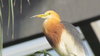
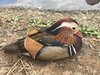
The Islands House, or 'Rumah Pulau,' begins with visitors walking on a raised boardwalk into a 6,500 sq. meter free-flight hall. This massive hall features eleven different species, of which eight are avian. The room itself is very lush with Southeast Asian foliage, and features a slow-flowing river from the northeast corner down to the southwest corner. This river's shores are the likeliest locations you will spot our lone Javan Pond Heron Ardeola speciosa (1.0) or our relatively small flock of the extravagant Mandarin Duck Aix galericulata (1.5).

C756E551-5FE1-458F-BC38-AE5E5A6E6746.jpeg
Javan Pond Heron -> image courtesy of @DesertTortoise
F40DB515-0854-480B-92D5-BEEA6C99D49F.jpeg
Mandarin Duck -> image courtesy of @BerdNerd

Of course, these two birds are not the only ones you can find in this aviary. Visitors can look to the trees and probably spot any combination of the following species:
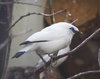
- 2.2 Bali Myna Leucospar rothschildi
- 6.6 Common Emerald Dove Chalcophaps indica
- 6.8 Luzon Bleeding-heart Gallicolumba luzonica
- 4.6 Pink-headed Fruit Dove Ptilinopus porphyreus
- 13.14 Red-billed Leiothrix Leiothrix lutea

167 Bali myna.jpg
Bali Myna -> image courtesy of @KevinB
187-chalcophaps indica.JPG
Common Emerald Dove -> image courtesy of @Mo Hassan
P5030107.JPG
Luzon Bleeding-hearts -> image courtesy of @evilmonkey239
pink-headed fruit dove (male).JPG
Pink-headed Fruit Dove -> image courtesy of @RatioTile
P1030940.JPG
Red-billed Leiothrix -> image courtesy of @kermodei

The final four inhabitants of the room are all more terrestrial species, being as follows:
- 2.6 Green Peafowl Pavo muticus
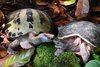
- 2.2 Asian Forest Tortoise Manouria emys
- 1.1 Greater Malayan Chevrotain Tragulus napu
- 1.3 Reeves' Muntjac Muntiacus reevesi

13 Green peafowl.jpg

Green Peafowl -> image courtesy of @KevinB

*no image selected for Asian Forest Tortoise*
WechatIMG896.jpeg
Greater Malayan Chevrotain -> image courtesy of @Lucas Lang
IMG_5040 reeves muntjac.jpg
Reeves' Muntjac -> image courtesy of @vogelcommando

This ends the Free-Flight Hall of Rumah Pulau. The next area of the building, the Crocodilian Hall, will be up at some point this week, earliest would be tomorrow before I head to work, latest would be sometime Saturday, depending on my baseball schedule for the weekend. Anyway, enjoy!
 

Attachments

  • C756E551-5FE1-458F-BC38-AE5E5A6E6746.jpeg
    C756E551-5FE1-458F-BC38-AE5E5A6E6746.jpeg
    77.8 KB · Views: 178
  • F40DB515-0854-480B-92D5-BEEA6C99D49F.jpeg
    F40DB515-0854-480B-92D5-BEEA6C99D49F.jpeg
    263.5 KB · Views: 188
  • 167 Bali myna.jpg
    167 Bali myna.jpg
    76.7 KB · Views: 193
  • 187-chalcophaps indica.JPG
    187-chalcophaps indica.JPG
    103.8 KB · Views: 188
  • P5030107.JPG
    P5030107.JPG
    86.3 KB · Views: 186
  • pink-headed fruit dove (male).JPG
    pink-headed fruit dove (male).JPG
    125.5 KB · Views: 185
  • 13 Green peafowl.jpg
    13 Green peafowl.jpg
    120.9 KB · Views: 175
  • WechatIMG896.jpeg
    WechatIMG896.jpeg
    127.9 KB · Views: 187
  • IMG_5040 reeves muntjac.jpg
    IMG_5040 reeves muntjac.jpg
    167.8 KB · Views: 175
  • P1030940.JPG
    P1030940.JPG
    134.9 KB · Views: 189
Rumah Pulau -> Crocodilian Hall *edit->* Pt. 1

The next stretch of exhibits is called the Crocodilian Hall, however most of the inhabiting species aren't crocodilians (or even reptiles)!
The first two exhibits are 350 sq. meters in area, with an approximate 80/20 ratio of land to water in each. Both exhibits are lowered down approximately 2ft below the guest path level, and separated from the guests by way of a 1m-high glass barrier around the perimeter. With the ratio of land to water, the water features in the first exhibit, which is off to your left, is only about 2.5ft deep, while the right-hand exhibit's water feature is double that, at 5ft deep. Both habitats have sandy areas along the shores of the water features, but become more densely planted toward the back, where their covered shelter and heat lamp are located. The left-hand exhibit is home to our brotherly pair of Chinese Alligators Alligator sinensis (2.0), while the right-hand exhibit features a mixed exhibit for our bachelor male False Gharial Tomistoma schlegelii (1.0) and our group of Spiny Turtles Heosemys spinosa (2.4).

FB_IMG_1691210096338.jpg
Possible view of smaller Crocodilian enclosures -> image courtesy of @twilighter
IMG_0051.JPG
Chinese Alligator -> image courtesy of @Andrew_NZP
spiny turtle.jpeg
Spiny Turtle -> image courtesy of @RatioTile
DSC02594.JPG
False Gharial -> image courtesy of @ronnienl

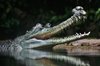
Further along this dimly-lit stretch, beside the alligator enclosure, visitors can view into a much larger, 1,550 sq. meter exhibit, this one level with the guest path, unlike the previous two. The 1m-high glass barrier remains around the perimeter of this habitat, making visibility great even for the younger guests. The ratio of land to water is slightly different, at 75/25 rather than 80/20. This water feature is around 2.5m deep, and very nearly crystal-clear in the areas that aren't grown over by pond lilies and reeds. The land portion of the exhibit is mostly the same as the previous two, with lush foliage toward the back, transitioning to a sandy beach before the water's edge. This exhibit provides a home to a pair of Indian Gharial Gavialis gangeticus (1.1), a species well-known for it's unique elongated snout.

IMG_5536.jpg
Possible View into Gharial Enclosure -> image courtesy of @Pleistocene891
DSC_4403.JPG
Indian Gharial -> image courtesy of @Zooish

Part two of this room will be released very quickly after the completion of this post, so stay tuned!
 

Attachments

  • IMG_0051.JPG
    IMG_0051.JPG
    135.6 KB · Views: 187
  • spiny turtle.jpeg
    spiny turtle.jpeg
    141.2 KB · Views: 184
  • DSC02594.JPG
    DSC02594.JPG
    138.7 KB · Views: 181
  • FB_IMG_1691210096338.jpg
    FB_IMG_1691210096338.jpg
    255.8 KB · Views: 181
  • IMG_5536.jpg
    IMG_5536.jpg
    195.6 KB · Views: 182
  • DSC_4403.JPG
    DSC_4403.JPG
    101.6 KB · Views: 188
Last edited:
Rumah Pulau -> Crocodilian Hall Pt. 2
Sorry to make two posts, ran out of media space on the last one, so decided to bring the second 'half' (really about a quarter overall) of the Crocodilian Hall into a second post. Anyway, now that I've gotten this out of the way...

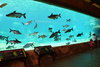
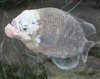
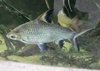
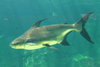
Visitors can also view a trio of tanks along the wall beside the false gharial habitat. The smallest of these three is a 1,050-gallon tank featuring various rock formations and sunken logs which provide our pair of Northern Snakeheads Channa argus (1.1) places to avoid visitor view. The next tank, however, is quite a bit more visitor-friendly in terms of visibility. The tank is a 450,000-gallon display, decorated with low-lying marine foliage, logs and rocks, but the main focus is the fish themselves. The tank features a pair of Giant Gourami Osphronemus gouramy (2.2) alongside a large school of Tricolor or Bala Sharks Balantiocheilos melanopterus (0.0.80), a group of Giant Pangasius Pangasius sanitwongsei (0.0.18) and a school of Tinfoil Barbs Barbonymus schwanenfeldii (0.0.80).

IMG_02841.JPG
Imagined View into Asiatic River Tank -> image courtesy of @Zooish
IMG_7985 giant gourami.jpg
IMG_7987 tricolor shark minnow.jpg
Giant Gourami (top) and Tricolor Shark-> images courtesy of @vogelcommando
IMG_5572.JPG
Giant Pangasius -> image courtesy of @Zooish
IMG_0956 (2).JPG
Tinfoil Barb -> image courtesy of @TheGerenuk

And with this post the Crocodilian Hall is (completely) posted. Sometime in the next week I will put myself under the mental strain of posting the massive final area of Rumah Pulau: the Asian Rainforest Trek. Until then, feel free to discuss, and let me know any different decisions you'd have made with the exhibits so far. Enjoy!
 

Attachments

  • IMG_02841.JPG
    IMG_02841.JPG
    140.7 KB · Views: 184
  • IMG_7985 giant gourami.jpg
    IMG_7985 giant gourami.jpg
    122.2 KB · Views: 189
  • IMG_7987 tricolor shark minnow.jpg
    IMG_7987 tricolor shark minnow.jpg
    118.5 KB · Views: 183
  • IMG_5572.JPG
    IMG_5572.JPG
    78.1 KB · Views: 188
  • IMG_0956 (2).JPG
    IMG_0956 (2).JPG
    112.5 KB · Views: 186
Rumah Pulau -> Asian Rainforest Trek Pt. 1

I'm on a roll, so I don't want to stop posting. This means that the first part of the Asian Rainforest Trek is being posted!

The rainforest space covers a total of 30,000 sq. meters, of which 17,500 sq. meters is open for our free-roamers, a large secondary flock of Red-billed Leiothrix (24.24) and a flock of Spotted Laughingthrushes Garrulax ocellatus [Ianthocincla ocellata?] (10.15), to fly around.

DSCN6200.JPGSpotted Laughingthrush -> image courtesy of @gulogulogulo

Now for the first exhibits. There are three habitats, two of 300 sq. meters area, and one of 100 sq. meters area. The two larger exhibits are well-designed to contain birds, because, well, that's what they house. Perches and dense foliage provide shelter for the pairs of Rhinoceros Hornbill Buceros rhinoceros (2.2), with one breeding pair living in each aviary. The third exhibit, while smaller and made of more sturdy and 'rodent-proof' material, is planted in a very similar manner, and is home to a small group of Prevost's Squirrel Calliosciurus prevostii (2.4).

20230613_120834.jpg
Possible look of Hornbill Aviary and Squirrel Habitat Interiors -> image courtesy of @TinoPup
DSC_8229.jpeg
Rhinoceros Hornbill -> image courtesy of @Julio C Castro
DSC01258.JPG
Prevost's Squirrel -> image courtesy of @Kalaw

The trail winds through the forest, leading you onto an elevated section over the shores of a small pool, which is part of two exhibits for carnivores that are more adept at hunting and thriving around water. These exhibits, much like the crocodilian habitats earlier, are lowered by 2ft, and are viewed over a 1m-high glass barrier, which found on both sides of the path, as can the divider separating the two exhibits. Both exhibits' main portions are 350 sq. meters, and are both about a 90/10 ratio of land to water. The left-hand exhibit (when viewing straight-on) is more lush right to the shores, featuring a small grove of mangroves against the opaque divider between the two habitats. These mangroves, along with the rocky formations and logs leading out over the water, provides a nice home for our Fishing Cats Prionailurus viverrinus (1.1). The right-hand habitat is more bare, besides some high growing trees. Flat rock platforms are positioned perfectly to find the midday sunbeams for our pair of Asian Small-clawed Otters Aonyx cinereus (1.1) to laze about in. Both species have access to the area on the opposite side of the elevated path, meaning they can pass beneath the bridge, but cannot interact with one another when under the bridge or on the opposite side. This pool is also stocked with hundreds of Japanese Koi on either side, however these fish will be more of a focus later on.

DB75249C-8F99-4166-A0CC-A00D4305BCEF.jpeg
Possible Waterside Carnivore Habitat View -> image courtesy of @Zoofan15
Fishing cat.JPG
Fishing Cat -> image courtesy of @Prochilodus246
DSCN9787.JPG
Asian Small-clawed Otter -> image courtesy of @gulogulogulo

The final exhibits I will be covering in this post are both for mammals of arboreal nature. The exhibits can be found to your left, and to your right as the path rises up or stays the same elevation. The two exhibits to your left are each 400 sq. meters in size, while the lone exhibit to your right is 300 sq. meters.

DSCN8771.JPG
Possible Look of Arboreal Exhibits -> image courtesy of @gulogulogulo

All three exhibits are mesh-topped, and made up of 4m-high glass and steel-mesh walls, and guests view them from either 2m above the ground level of the habitats or from the ground level, however the animals are very often visible at each level depending on the weather and time of day. In the morning, our pair of Clouded Leopard Neofelis nebulosa (1.1) can be seen toward the lower half of their two exhibits, one of which houses our unnamed male, the other housing 'Nebula,' our female. The two habitats can be conjoined when breeding is desired. The leopards can often be seen sunning themselves on their higher platforms when the sun reaches its peak during the day.

FB_IMG_1689575491672.jpg
Clouded Leopard -> image courtesy of @dhaire

The other exhibit also sees their inhabitants, these a pair of Binturong Arctictis binturong (1.1), hiding in the lower reaches of the exhibit during much of the day, and only climbing to the higher portions when the sun begins to sink below the edge of the glass roof, due to their mostly nocturnal nature.

00202983.JPG
Binturong -> image courtesy of @twilighter

And with this, I wrap up part one of the Asian Rainforest Trek. Part two (time permitting) might very well be posted tonight, and if not, sometime tomorrow or Thursday. Until then, enjoy!
 

Attachments

  • DSCN6200.JPG
    DSCN6200.JPG
    226.7 KB · Views: 188
  • 20230613_120834.jpg
    20230613_120834.jpg
    209.2 KB · Views: 340
  • DSC_8229.jpeg
    DSC_8229.jpeg
    112.4 KB · Views: 189
  • DSC01258.JPG
    DSC01258.JPG
    134.3 KB · Views: 183
  • DB75249C-8F99-4166-A0CC-A00D4305BCEF.jpeg
    DB75249C-8F99-4166-A0CC-A00D4305BCEF.jpeg
    195.4 KB · Views: 191
  • DSCN9787.JPG
    DSCN9787.JPG
    144 KB · Views: 191
  • Fishing cat.JPG
    Fishing cat.JPG
    95.5 KB · Views: 185
  • DSCN8771.JPG
    DSCN8771.JPG
    211 KB · Views: 184
  • FB_IMG_1689575491672.jpg
    FB_IMG_1689575491672.jpg
    155.8 KB · Views: 189
  • 00202983.JPG
    00202983.JPG
    175.3 KB · Views: 180
Visitors can also view a trio of tanks along the wall beside the false gharial habitat.
Before we get into the Asian Rainforest Trek's second part, a quick note: the above quote should say duo of tanks rather than trio.

Rumah Pulau -> Asian Rainforest Trek Pt. 2

Continuing along from the binturong and clouded leopard habitats, the raised path comes back down to the main path level, and brings you alongside a pair of 750 sq. meter mixed aviaries to your left, and a more marshy aviary of 1,250 sq. meters to your right. This marshy aviary is connected to an offshooting stream from the main pool, and a secondary, smaller pool as well, creating the marshy environment in the otherwise open aviary that houses our small flock of Sarus Crane Grus antigone/Antigone antigone (1.4), separately from the other birds found in our left-hand aviaries.

66 Indian Sarus crane exhibit.jpg
Possible Look of Sarus Crane Aviary -> image courtesy of @KevinB
DSC_8602.JPG
Sarus Crane -> image courtesy of @Zooish

Of course, the aviaries to your left make up for what they lack in size, with the variety and coloration of their inhabitants. Previously mentioned, these 750 sq. meter aviaries are both lush with low-lying foliage, as well as some taller trees to provide natural roosts for the more 'showboating' aerialists of the aviaries. Artificial perches and feeders are placed around the guests' main viewpoints, drawing the more airborne birds into view.
20230518_123700.jpg
Possible View into Twin Aviaries -> image courtesy of @TinoPup

The first of the twin aviaries boasts the following species:
- 1.1 Great Argus Pheasant Argusianus argus
- 1.4 Crested Wood Partridge Rollulus rouloul
- 2.2 Chestnut-breasted Malkoha Phaenicophaeus curvirostris
-
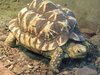
4.4 Burmese Star Tortoise Geochelone platynota

DSCN8931.JPG

Great Argus -> image courtesy of @Great Argus (I knew he had at least one so I had to use it)
IMG_0973 (2).JPG
Crested Wood Partridge -> image courtesy of @TheGerenuk
chestnut-breasted malkoha (female) 5.jpeg
Chestnut-breasted Malkoha -> image courtesy of @RatioTile
IMG_0965 (2).JPGBurmese Star Tortoise -> image courtesy of @TheGerenuk

The second of these aviaries houses the following trio of species:
- 1.1 Siamese Fireback Lophura diardi
- 6.6 Golden-fronted Leafbird Chloropsis aurifrons
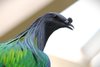
- 5.6 Nicobar Pigeon Caloenas nicobarica

F10A7010-EB95-4568-88C6-40F28B990925.jpeg
Siamese Fireback -> image courtesy of @BerdNerd
DSCN6040.JPG
Golden-fronted Leafbird -> image courtesy of @TheoV
IMG_2851.JPG
Nicobar Pigeon -> image courtesy of @red river hog

And with that, another (small) portion of the Asian Rainforest Trek is completed. Tomorrow's portion will take up TWO posts, purely due to the large species content in what is admittedly not a large space overall. Either way, something to look forward to, and until then, hope you enjoy!
 

Attachments

  • 66 Indian Sarus crane exhibit.jpg
    66 Indian Sarus crane exhibit.jpg
    350.5 KB · Views: 190
  • DSC_8602.JPG
    DSC_8602.JPG
    126.6 KB · Views: 180
  • 20230518_123700.jpg
    20230518_123700.jpg
    301.8 KB · Views: 188
  • DSCN8931.JPG
    DSCN8931.JPG
    280.1 KB · Views: 187
  • IMG_0973 (2).JPG
    IMG_0973 (2).JPG
    145.4 KB · Views: 178
  • chestnut-breasted malkoha (female) 5.jpeg
    chestnut-breasted malkoha (female) 5.jpeg
    85.2 KB · Views: 178
  • IMG_0965 (2).JPG
    IMG_0965 (2).JPG
    177.1 KB · Views: 194
  • F10A7010-EB95-4568-88C6-40F28B990925.jpeg
    F10A7010-EB95-4568-88C6-40F28B990925.jpeg
    168.1 KB · Views: 176
  • DSCN6040.JPG
    DSCN6040.JPG
    126.5 KB · Views: 185
  • IMG_2851.JPG
    IMG_2851.JPG
    62.5 KB · Views: 178
I may have said tomorrow, but with my baseball tournament, I had no time, so here is the aforementioned portion (and yes, it will most definitely be two, at most three, different posts).

Rumah Pulau -> Asian Rainforest Trek Pt. 3: Terrarium Rotunda Part 1

The Terrarium Rotunda is without much doubt the most species-dense area of Rumah Pulau (I'd say the entire zoo, but that wouldn't necessarily be true). The entire area is meshed in, which will be explained later on.
The exhibits we will first discuss, however, are not terrariums at all. They are a series of ponds, four total, raised about 2ft from the ground level. All four ponds have a 30 sq. meter surface. Two of the ponds also features a small, 5 sq. meter island in the center. The two ponds at either end of the arching row of terrariums, featuring these islands, act as small homes for respective groups of Malaysian Painted River Terrapin Batagur borneoensis (1.2) and Asian Leaf Turtle Cyclemys dentata (2.5). The remaining ponds, one in the center of the rotunda and one between two rows of five tanks, are both covered with glass to discourage both the hands of small children, and the bills of our two duck species that call this rotunda home. Both ponds, holding 4,800 gallons of water, are home to respective schools of Japanese Koi Cyprinus rubrofuscus koi (0.0.30 per pond).

IMG_6449.jpegPossible Look of Turtle Ponds -> image courtesy of @snowleopard
DSC_4213.JPG
Malaysian Painted River Terrapin -> image courtesy of @Zooish
DSCF8946.JPG
Asian Leaf Turtle -> image courtesy of @zoogiraffe (account won't link for some reason)
IMG_2323.JPG
Koi Fish -> image courtesy of @red river hog

Of course, as I mentioned, there are birds around this area as well, hence the mesh covering and the glass over the fish habitats. Both are duck species, so you may well spot them in the ponds with the turtles more often than not. Our (currently) small flocks of Philippine Duck Anas luzonica (1.3) and Indian Spot-billed Duck Anas poecilorhyncha (1.3) may be a little bit loud, but will do no harm to the testudine inhabitants of the two ponds they can access.

74 Philippine ducks.jpg
Philippine Duck -> image courtesy of @KevinB
DSC_8607.JPG
Indian Spot-billed Duck -> image courtesy of @Zooish

The entire Terrarium Rotunda covers just 240 sq. meters of space accessible to the above species of ducks, including the two open-topped pools and the guest-traversable areas. From here, I will cover the actual terrariums themselves, which will be covered in the next post. Enjoy!
 

Attachments

  • IMG_6449.jpeg
    IMG_6449.jpeg
    266.9 KB · Views: 184
  • DSC_4213.JPG
    DSC_4213.JPG
    182.2 KB · Views: 182
  • DSCF8946.JPG
    DSCF8946.JPG
    230.5 KB · Views: 178
  • IMG_2323.JPG
    IMG_2323.JPG
    94.2 KB · Views: 178
  • 74 Philippine ducks.jpg
    74 Philippine ducks.jpg
    118.8 KB · Views: 185
  • DSC_8607.JPG
    DSC_8607.JPG
    142 KB · Views: 179
Last edited:
Terrarium Rotunda Part Two

Now we turn our focus to the terrariums, specifically the row arching from the right side of the river terrapin pool. These five terrariums vary in size, and house five different species of herptile (specifically one amphibian and four reptiles) in different environments. The first of these, in the tank closest to the terrapin pool, and the smallest of the five tanks, (a 3 sq. meter habitat with about 1m of vertical space) is a paludarium rather than a traditionally all-terrestrial tank. This paludarium represents a mossy and foggy flooded forest, creating the ideal environment for our Vietnamese Mossy Frogs Theloderma corticale (3.6), while the water (about 4in depth) houses a small school of Zebra Danios, a species not officially labelled on the counted species list.

20230408_073952023_iOS (1).jpg
Possible View of Mossy Frog Paludarium -> image courtesy of @DannySG
IMG_8680.JPG
Vietnamese Mossy Frog -> image courtesy of @gulogulogulo

Guests can, from here, view into a 10 sq. meter, 1.5m high, and very near entirely aquatic tank, planted with lots of aquatic plants as well as a decorative branch spanning from the bottom left to the top right of the tank. Very little will be seen moving in this tank unless food is nearby, which will make our solitary male Tentacled Snake Erpeton tentaculatum (1.0) rather active. Otherwise, the snake will often be seen hiding under the branch, or basking above the water's surface on a small rocky outcropping along the back of the exhibit.

IMG_4462.JPG
Possible View of Tentacled Snake Tank (water about halfway up glass in my vision)-> image courtesy of @Arizona Docent
Chester143Bb044.jpg
Tentacled Snake -> image courtesy of @gentle lemur

The third tank is sizewise almost identical to the tentacled snake exhibit, however it is 2m vertically, rather than the 1.5m of the tentacled snake habitat. This is the first fully terrestrial tank of the five, and the smallest of these terrestrial tanks. The exhibit is quite generic, designed to resemble the rainforests of Southeast Asia. The inhabitants of this exhibit are a little more difficult to find, as our pair of Red-tailed Green Ratsnakes Gonyosoma oxycephalum (1.1) are perfectly colored for blending into this lush ecosystem.

IMG_2174.JPG
Possible look of Ratsnake Tank -> image courtesy of @Hipporex
DSCN2951.JPG
(Slightly shrouded) Red-tailed Green Ratsnake -> image courtesy of @TZFan

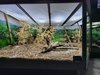
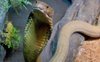
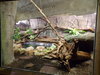
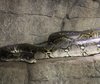
The fourth and fifth tanks are both the same size, at 30 sq. meters of surface space and 2m of vertical space. The first is a rather open tank, walls crawling with vines, a few trunks rising from the bottom of the tank up to the top, and the ground scattered with leaf litter, rocks, and a log shelter. All this provides climbing and hiding opportunities for a rather formidable serpent in the Malayan subspecies of the King Cobra Ophiophagus hannah (1.0). The second enclosure is a bit more lush, though not by much, and focused around the massive rock outcropping dominating the space. Vines crawling across the rocks and well-placed ferns, leaf litter and logs make spotting 'Kaa' the lone Reticulated Python Malayopython reticulatus (1.0) a chore even for the sharpest eyes.

20230613_144042.jpg
Possible Look of Cobra Terrarium -> image courtesy of @TinoPup
Malayan king cobra .jpeg
King Cobra (Malayan subspecies) -> image courtesy of @RatioTile
101_1178.jpeg
Possible View of Python Exhibit -> image courtesy of @felis silvestris
IMG_2077 reticulated python.jpg
Reticulated Python -> image courtesy of @vogelcommando

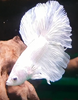
One final tank can be found just between the python and the koi pool dividing the two sets of terrariums. This tank is a 1mx1mx1m tank for a small group of female Siamese Fighting Fish Betta splendens (0.6), often simply called 'betta' in the pet trade.
*Note due to media limits I do not have images of the imagined tank for the betta*
The next post (and the final for the Rotunda) will cover the five terrariums for the invertebrate species that call the Rotunda home. For now, enjoy, and I will be back later with the final post for the Rotunda!
 

Attachments

  • 20230408_073952023_iOS (1).jpg
    20230408_073952023_iOS (1).jpg
    195.2 KB · Views: 182
  • IMG_8680.JPG
    IMG_8680.JPG
    112.4 KB · Views: 189
  • IMG_4462.JPG
    IMG_4462.JPG
    189 KB · Views: 181
  • Chester143Bb044.jpg
    Chester143Bb044.jpg
    98.1 KB · Views: 185
  • IMG_2174.JPG
    IMG_2174.JPG
    133.3 KB · Views: 181
  • DSCN2951.JPG
    DSCN2951.JPG
    149.6 KB · Views: 179
  • 20230613_144042.jpg
    20230613_144042.jpg
    218 KB · Views: 184
  • Malayan king cobra .jpeg
    Malayan king cobra .jpeg
    112.1 KB · Views: 181
  • 101_1178.jpeg
    101_1178.jpeg
    175.9 KB · Views: 183
  • IMG_2077 reticulated python.jpg
    IMG_2077 reticulated python.jpg
    170 KB · Views: 190
Terrarium Rotunda Part 3 and Continuing the Rainforest Trek

Yes, I know, another post about the Terrarium Rotunda. I did say it was the most species-dense area of Rumah Pulau (technically).
Anyways, the next five tanks, sitting between the koi pool (the one that divides this terrarium bank from the previous, reptilian-focused one) and the leaf turtle pool, house various invertebrate species.
Before I detail these five tanks however, images for the betta tank at the end of the last post are attached below.

26735446-7A12-4C15-B617-8D890EDE4F2D.jpeg
Possible look of Betta Tank -> image courtesy of @Azamat Shackleford
witte kampvis.png
Siamese Fighting Fish/Betta -> image courtesy of @vogelcommando

Now back to the invertebrate terrariums.
All five invertebrate tanks are 1mx1mx1m in total size, and all five are designed to replicate the rainforests of Southeast Asia. The majority of the species housed have evolved to blend into their surroundings, whether by using their coloration, utilizing the unique shapes of their bodies, or by just hiding out in the leaf litter substrate of the tanks. One of the species, however, stands out strikingly against the greens and browns of their home, which is why the Gooty Sapphire Tarantula Poecilotheria metallica (0.0.1) is much easier to spot than the other four invertebrates here. It's also the only one with signs warning arachnophobes to avoid a glimpse into the terrarium.

IMG_6929.jpeg
Probable Look of the Invert. Tank Interior (excl. pitcher plants) -> image courtesy of @felis silvestris
20210603_132957.jpg
Gooty Sapphire Tarantula -> image courtesy of @ChunkyMunky pengopus

The remaining four terrarium exhibits all feature some invertebrates with a less... striking contrast against their environments. The species are as follows:
- 0.0.3 Giant Malaysian Leaf Insect Phyllium gigantea
- 0.0.3 Asian Forest Centipede Scolopendra subspinipes
- 0.0.1 Dead Leaf Mantis Deroplatys desiccata
- 0.0.5 Dragon-headed Katydid Lesina intermedia

20220104_134940.jpg
Giant Malaysian Leaf Insect -> image courtesy of @TinoPup
Scolopendra subspinipes (24-9-18 Artis).jpg
Scolopendra subspinipes -> image courtesy of @Kakapo
423C33FA-27B1-44FF-8875-7E97B099DB35.jpeg
Dead Leaf Mantis -> image courtesy of @BerdNerd
20211126_101557-01.jpeg
Lesina intermedia -> image courtesy of @Moebelle

This (finally) brings an end to the Terrarium Rotunda, a small area with a large variety of species within. From this meshed-in area, visitors can walk to a larger meshed-in habitat, this one not designed for housing birds, however. A large panoramic glass window spans across the entire front of a 1,750 sq. meter habitat which reaches 6m up toward the roof of Rumah Pulau. Combinations of natural and artificial trees along with some log-and-plank climbing structures scatter the back half of the exhibit, while a wet moat reaching a maximum of 2ft depth and mud wallows make up much of the front of the exhibit, along with low-lying bushes, rocks, and uprooted stumps. These may seem like enrichments for two entirely different animals, and well, you'd be correct! This exhibit is home to a troop of Tonkean Macaque Macaca tonkeana (2.5) which utilize the trees and climbing structures, while our pair of North Sulawesi Babirusa Babyrousa celebensis (1.1) spend their time rolling in the mud or bathing in the shallower parts of the moat.
*Note: could not find an image depicting anything near what I have in mind, so there is no enclosure inspiration image for the babirusa/macaque enclosure*
521A1503_filtered.jpg
Tonkean Macaque -> image courtesy of @DannySG
Cerza - Babyroussa celebensis (51).JPG
North Sulawesi Babirusa -> image courtesy of @Therabu

A pair of posts tomorrow will round out the entirety of China and the Islands, with the first finishing Rumah Pulau with the Red Ape Range's indoor and outdoor portions (what that entails, you'll discover tomorrow!) and the second post will round the entire section out with five final outdoor exhibits (including one for a species that is more often kept indoors than outdoors, but we'll get to that). Anyway, enjoy what's been posted, and see you all tomorrow for the finale of China and the Islands, as well as an updated species count (because the ducks in the Rotunda weren't written down in my count, silly me:oops:)
 

Attachments

  • 26735446-7A12-4C15-B617-8D890EDE4F2D.jpeg
    26735446-7A12-4C15-B617-8D890EDE4F2D.jpeg
    71 KB · Views: 183
  • witte kampvis.png
    witte kampvis.png
    377.7 KB · Views: 196
  • IMG_6929.jpeg
    IMG_6929.jpeg
    234 KB · Views: 184
  • 20210603_132957.jpg
    20210603_132957.jpg
    183.7 KB · Views: 188
  • 20220104_134940.jpg
    20220104_134940.jpg
    127.2 KB · Views: 192
  • Scolopendra subspinipes (24-9-18 Artis).jpg
    Scolopendra subspinipes (24-9-18 Artis).jpg
    297.3 KB · Views: 184
  • 423C33FA-27B1-44FF-8875-7E97B099DB35.jpeg
    423C33FA-27B1-44FF-8875-7E97B099DB35.jpeg
    162.7 KB · Views: 179
  • 20211126_101557-01.jpeg
    20211126_101557-01.jpeg
    56.5 KB · Views: 176
  • 521A1503_filtered.jpg
    521A1503_filtered.jpg
    111.8 KB · Views: 182
  • Cerza - Babyroussa celebensis (51).JPG
    Cerza - Babyroussa celebensis (51).JPG
    98.3 KB · Views: 181
China and the Islands
Mammals: 17
Birds: 17
Herptiles: 13
Invertebrates: 6
Fish: 7
Total: 60

Totals (so far)
Mammals: 61
Birds: 40
Herptiles: 35
Invertebrates: 13
Fish: 10
Grand Total: 159
To update these:
China and the Islands
Mammals: 17
Birds: 19
Herptiles: 13
Invertebrates: 6
Fish: 7

Totals (so far)
Mammals: 61
Birds: 42
Herptiles: 35
Invertebrates: 13
Fish: 10

*bolded values are updated*
 
I have returned, after my championship baseball game was ended early following an unfortunate and terrible injury. Anyhow, I will now round out Rumah Pulau and begin the discussion of our outdoor exhibits which will round out China and the Islands. Below is a detailed report on the subsection guests enter to view the final exhibits inside the immersive Rumah Pulau.

Subsection: The Red Ape Range
Inspiration: Outdoor portions inspired by Chester Zoo's 'Realm of the Red Ape' (which was almost the name for this exhibit) as well as (somewhat) the Smithsonian National Zoo in Washington DC, indoor portions were really uninspired, just a conjuring of my imagination with bits of Toronto's white-handed gibbon habitat

IMG_1825.JPG DSCN0991.JPG
The Realm of the Red Ape -> images courtesy of @gulogulogulo

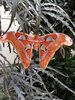
Species: Malayan Tapir Tapirus indicus, Sumatran Orangutan Pongo abelii, Mueller's Gibbon Hylobates muellerii, Atlas Moth Attacus atlas
Enclosure Capacities (what they currently hold): tapir enclosure -> 1.1 tapir and 0.0.6 atlas moth; primate enclosure -> 1.5 orangutan and 1.1 gibbon
Enclosure Sizes: tapir enclosure -> 1,100 sq. meters (indoor), 800 sq. meters (outdoor); primate enclosure -> 2,750 sq. meters (indoor), 2,250 sq. meters (outdoor)
Fencing:
Tapir Enclosure (indoor and outdoor)-> simple 2ft-high stone brick barrier, topped with 2ft-high glass panes across guest path, mesh from top of glass to ceiling to prevent Atlas Moth escapes, wet moat of 1.5m width and 1ft depth between fence and enclosure more for tapir enrichment
Primate Enclosure Indoor -> 2m-high glass viewing windows along visitor path, mesh from top of glass right to ceiling of building to prevent primates escaping; Primate Enclosure Outdoor -> guests separated by 3ft-high stone brick barrier topped with 1.5ft glass panes, 2m-wide and 2ft-deep 'moat' surrounding islands
General Layout:
Tapir Enclosure -> Indoor floor entirely covered in sandy substrate with artificial trees dotting the space and a covered area toward the back acts as a sleeping area; Outdoor exhibit mainly grassy and clear with decorative foliage along fence on both sides and trees becoming denser toward the back of the exhibit
Primate Enclosure -> Indoor space floor covered by combination substrate of leaf litter, dirt, and mulch, which allows the zoo to plant live trees in the exhibit alongside a series of poles (much like the brachiation poles from Planet Zoo) to provide climbing opportunities for the primates. Webcams are connected around the exhibit, some of said cameras are visible from the guest viewing area; Outdoor space made up of two islands, each planted with live trees, while also featuring orangutan lines (like Los Angeles Zoo or Toronto Zoo) with towers on each of the two islands as well as on the small piece of land outside the building.
Management: Restricted Access gates can be found beside the indoor portions of both enclosures, not directly connected to the exhibits. Keepers enter these gates and can then access all of tapir indoor and outdoor quarters, or the entirety of the primate indoor quarters, of course depending on which enclosure they intend to enter. A separate staff entry point can be found in the form of a 'pillbox' (concrete building for animal medical care and food storage) attached to the back of the orangutan outdoor portion. Staff members can access the islands by way of a stepping stone path in the water.
Visitor Facilities: There is very little in terms of 'specialized' visitor facilities in this portion of the zoo, though guests do have the opportunity to try a pair of 'tree-top' ropes courses which also allow a unique view into both enclosures. A small restaurant, name pending, can also be found connected to the wall of the tapir enclosure, providing a nice view while you dine.

DSC_0361.jpg
Malayan Tapir -> image courtesy of @dhaire
IMG_20190801_142209.jpg
Atlas Moth -> image courtesy of @German Zoo World
P2280527.JPG
Sumatran Orangutan -> image courtesy of @MagpieGoose
1BAF7293-DC62-48AA-879B-93605AED3427.jpeg
Mueller's Gibbon -> image courtesy of @DesertTortoise

Overall, something I believe to be an amazing finish to the immersive Rumah Pulau. And with that I will post the final five enclosures of the sector, which are all animals commonly held indoors, quite unlike what I said in the previous post, which I defend by stating that I initially forgot one of the larger species and was going to house the Atlas Moths in an outdoor aviary-like enclosure. However, there are five mammalian species that will round out the zone in the next post, so stay tuned and enjoy!
 

Attachments

  • P2280527.JPG
    P2280527.JPG
    232.8 KB · Views: 183
  • 1BAF7293-DC62-48AA-879B-93605AED3427.jpeg
    1BAF7293-DC62-48AA-879B-93605AED3427.jpeg
    91.6 KB · Views: 173
  • DSC_0361.jpg
    DSC_0361.jpg
    78.4 KB · Views: 191
  • IMG_20190801_142209.jpg
    IMG_20190801_142209.jpg
    130.7 KB · Views: 182
  • IMG_1825.JPG
    IMG_1825.JPG
    242.2 KB · Views: 187
  • DSCN0991.JPG
    DSCN0991.JPG
    198.6 KB · Views: 184
China and the Islands: The Final Enclosures

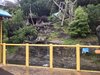
The final five enclosures are hidden in the forest that follows the outdoor portion of the Red Ape Range and the ropes courses. The first of these exhibits is the smallest of the five, at 450 sq. meters area, and very flat, planted with well-manicured grass and small clusters of ferns and low-lying bushes. A small cave acts as a sleeping area for the inhabitants, while a one-way window allows guests to view into this den while not stressing the animals too much. Most of the front wall of the exhibit is also a large pane of glass, approximately 15m across and 6ft in height framed by 1ft-thick logs on all four sides. Small raised wooden platforms can also be found near the front of the exhibit, allowing the inhabiting group of Dhole Cuon alpinus (1.4) to sunbathe on the warm days of summer.

DSCN1520 (2).JPG
Inspiration for Dhole Enclosure -> image courtesy of @PossumRoach
Dhole 1.jpg
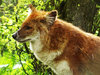
Dhole -> image courtesy of @Daubentoniidae

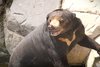
The next of the enclosures is actually two, rather than just one. A pair of 550 sq. meter habitats stands a little walk down from the dhole enclosure, and features a difference in elevation, with a waterfall flowing from the top of each exhibit into a shared moat. The habitats are separated from guests by manner of a waist-height, wood-and-mesh fence and a 5ft-high glass barrier, marked by decals of predatory birds to hopefully limit the collisions native birds have with the barrier. Both these barriers sit ahead of the moat, which is 1m wide and 1.5ft deep, and is just an extra precautionary measure. The enclosures are divided by a more regimented concrete barrier, with steel 'cattle' gates in the middle which are opened when breeding of our Malayan Sun Bear Helarctos malayanus (1.1) is attempted. Branches of both the artificial and natural variety provide easy movement from the lower parts of the habitat to the higher parts. The more arboreal nature of the bears makes this design optimal for their enrichment and natural behaviours.

0D1A2C62-6AF2-4F5F-AC9B-791B5A24AF3D (1).jpeg
Possible View into Sun Bear Habitat(s) -> image courtesy of @Zoofan15
IMG_2600.JPG
Malayan Sun Bear -> image courtesy of @red river hog

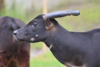
The third enclosure is about as basic as it gets, in all honesty. Well actually, like the sun bears, this next species is divided into two yards until breeding season. A smaller, 450 sq. meter yard houses a lone male, and the 900 sq. meter yard next door houses a herd of females. The yards themselves are really nothing special, with mostly open grass, a few trees dotted across, and Southeast Asian themed stables in the back of each. The guests view these yards through chain-link fencing, which has cattle-guards across the entirety of the portion that borders the guest path (on the inside). The Lowland Anoa Bubalus depressicornis (1.4) that call this exhibit home are not the most exciting animal in this part of the sector, but are definitely a species that deserves attention, as it is endangered.

IMG_0773.JPG

IMG_0773.JPG
Ideal Look of Anoa Yards -> image courtesy of @Robaque
image (8).png
Lowland Anoa -> image courtesy of @twilighter

The final two exhibits of the sector are part of a heavily-themed complex which will have a design overview similar to what I did for the Red Ape Range, therefore requiring one final post to finally round out the area. For now, enjoy!
 

Attachments

  • DSCN1520 (2).JPG
    DSCN1520 (2).JPG
    205.7 KB · Views: 192
  • Dhole 1.jpg
    Dhole 1.jpg
    284.4 KB · Views: 180
  • 0D1A2C62-6AF2-4F5F-AC9B-791B5A24AF3D (1).jpeg
    0D1A2C62-6AF2-4F5F-AC9B-791B5A24AF3D (1).jpeg
    248 KB · Views: 187
  • IMG_2600.JPG
    IMG_2600.JPG
    116.3 KB · Views: 187
  • IMG_0773.JPG
    IMG_0773.JPG
    269.9 KB · Views: 179
  • image (8).png
    image (8).png
    867.1 KB · Views: 180
Guests will now enter the Temple of Ganesha, an Asian god depicted with the head of an elephant. More details on the temple are found below.

Complex Name: Temple of Ganesha
Inspiration: Pairi Daiza's Flower Temple (exterior and interior) and orangutan temple at Greenville Zoo (exterior)
398 Exterior of flower temple.jpg
Pairi Daiza Flower Temple -> image courtesy of @KevinB
g11.jpg
Greenville Zoo Orangutan Temple -> image courtesy of @SusScrofa

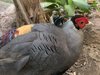
Species: Asian Elephant Elephas maximus, Malayan Tiger Panthera tigris jacksoni

image_2023-08-09_171429694.png

Asian Elephant -> image courtesy of @DaLilFishie
WechatIMG636.jpeg
Malayan Tiger -> image courtesy of @Lucas Lang

Enclosure Capacities: Planned 2.8 elephants over four yards (two bull separation paddocks and two larger paddocks for females) and 1.1 tigers (separately from elephants, in two separate enclosures)
Enclosure Sizes:
Elephant Outdoor Yards -> four separate yards, the two female yards each covering 1 acre of land, the two bull yards covering half an acre each
Elephant Indoor Area -> (female accessible only) entry points from both ends of the Temple, entering 1,250 sq. meter indoor/night quarters
Tiger Outdoor Areas -> both enclosures are 875 sq. meters in size
Tiger Indoor Quarters -> two separate areas, each approx. half the size of the outdoor quarters at only 400 sq. meters in surface area
Fencing:
Elephant Outdoor -> double fencing, guests view female elephant yards through a window along the topiary path outside the entrance and exit of the Temple, with secondary knee-high concrete barrier and a shallow ditch behind it
Elephant Indoor -> waist-high concrete mural-painted barrier, glass from top of concrete to just above the eyeline of the average visitor
Tiger Outdoor -> log fencing, glass beginning (about a foot from corners of fence) from waist height up to just above average standing eyeline, viewable from topiary path outside entrance and exit (female from entrance, male from exit)
General Layout:
Elephant Female Yards -> Rather open, only elephant yards that are visible to guests, trees sparse at front of enclosure, become denser toward the back connector fence separating bull yards. water features of various depths found throughout the exhibit, making spotting the pachyderms harder from time to time. Lines of browse and decorative shrubs and flowers line the edge of the ditch, hopefully hinting to elephants that ditch should not be entered.
Elephant Bull Yards -> Essentially identical to female yards, not visible to visitors. Structurally sound stables located toward far end of each enclosure (left end from entrance topiary path).
Elephant Indoor Quarters -> Sandy floor throughout, twin pools located in eyeline of visitors.

FECE23AB-C0A3-43C2-961F-9916C4DC4F35.jpeg
Possible Look of Elephant Outdoor Yards -> image courtesy of @Pig-nosed turtle 20200726_115953.jpg
Possible Look of Elephant Indoor Quarters (of course minus the extravagant dome that Zurich Zoo has constructed over it) -> image courtesy of @Gil

Tiger Outdoor Enclosures -> Open toward guests' viewing windows, foliage becomes denser toward the dividing wall between the two enclosures. High log-and-rock formations give the tigers a change of elevation, and shallow pools give them a chance to swim, something they enjoy, quite unlike the cats you have at home.
Tiger Indoor Quarters -> Very similar in design to the clouded leopard exhibit, allowing the tigers to showcase their climbing prowess, utilizing thick branches at different levels to elevate themselves from the stony floor of the habitat. Smaller water features can be found in these quarters, as can lots of low-lying ferns, and plenty of vines and creeping plants.

P1400562.JPG
Possible View of Outdoor Tiger Enclosures -> image courtesy of @MagpieGoose
IMG_36406.JPG
Possible Look of Indoor Tiger Quarters (perhaps a bit larger) -> image courtesy of @lintworm

Management: Elephant indoor quarters accessed through the open entrances into the outdoor yards, which are in turn accessed through the large but well-hidden Elephant Care Building which is connected to the bull stables, and has access points to all four elephant yards. Tiger outdoor quarters accessed by simple Staff Only gates in back walls and dividing wall (which is capable of being opened when breeding is attempted), while indoor quarters are accessed through side doors on the Temple's exterior, which remain locked to prevent tampering with the exhibit spaces.

And, once you pass through the Temple of Ganesha, you have officially completed the second major sector of the zoo! You will almost immediately spot the signs pointing you onward to your next stop: Australasia! But, that remains a piece of the unknown for the time being, and we will begin coverage on this small but punch-packing sector. So for now, enjoy, and stay tuned for what is hopefully the only truly stereotypical exhibit plan I have!
 

Attachments

  • 398 Exterior of flower temple.jpg
    398 Exterior of flower temple.jpg
    250.4 KB · Views: 193
  • g11.jpg
    g11.jpg
    165.7 KB · Views: 170
  • FECE23AB-C0A3-43C2-961F-9916C4DC4F35.jpeg
    FECE23AB-C0A3-43C2-961F-9916C4DC4F35.jpeg
    240.1 KB · Views: 193
  • 20200726_115953.jpg
    20200726_115953.jpg
    285.5 KB · Views: 190
  • IMG_36406.JPG
    IMG_36406.JPG
    107.6 KB · Views: 182
  • P1400562.JPG
    P1400562.JPG
    203.6 KB · Views: 176
  • WechatIMG636.jpeg
    WechatIMG636.jpeg
    119.1 KB · Views: 180
  • image_2023-08-09_171429694.png
    image_2023-08-09_171429694.png
    1.2 MB · Views: 189
endangered.

img_0773-jpg.651135


img_0773-jpg.651135

Ideal Look of Anoa Yards -> image courtesy of @Robaque
image-8-png.651136

Lowland Anoa -> image courtesy of @twilighter

The final two exhibits of the sector are part of a heavily-themed complex which will have a design overview similar to what I did for the Red Ape Range, therefore requiring one final post to finally round out the area. For now, enjoy!
I have just realized I duplicated the picture of the Anoa yard by accident. :oops:
 
Australasia -> Part One

I have returned, and today will be covering the Australasian sector of my speculative zoo!
First, the species count for the sector, and updated zoo totals:

Australasia
Mammals: 10
Birds: 15
Herptiles: 14
Fish: 2
Invertebrates: 3
Total: 44

Totals
Mammals: 71
Birds: 57
Herptiles: 49
Invertebrates: 16
Fish: 12
Grand Total (so far): 205

Now, to display the three outdoor enclosures before entering the Australasia Biomes Pavilion.

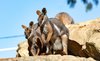
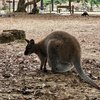
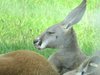
The first of these three enclosures is admittedly the most stereotypical Australian zoo display I have done, and hopefully the only truly stereotypical zoo enclosure throughout my facility. The Macropod Walkabout immerses visitors into a 6,500 sq. meter walkthrough replication of the Australian temperate regions. The path features no barriers, simply sign-posts placed at 3m intervals along the path telling guests to stick to the path rather than wandering off trying to photograph our macropods up close. The furthest part of the enclosure is very rocky, which will likely draw our mob of Yellow-footed Rock-wallaby Petrogale xanthopus (4.10) away from guest eyes, but there will be another opportunity to view these small macropods. In the meantime, visitors can also view our mobs of Bennett's or Red-necked Wallaby (Nota)Macropus rufogriseus (3.9) and Red Kangaroo Macropus rufus (2.4).

20220523_140838.jpg
Possible Look of Macropod Walkabout -> image courtesy of @TinoPup
61.jpg
Yellow-footed Rock-wallaby -> image courtesy of @Hix
36-.jpg
Bennett's Wallaby -> image courtesy of @SivatheriumGuy
IMG_6076 (2).JPG
Red Kangaroo -> image courtesy of @TheGerenuk

As guests exit the walkthrough, the path beneath their feet becomes two different colors, a more Outback-esque orange color on the right side, and a gray-stone on the left with vines painted onto it. Visitors can view an enclosure on either side of this path. To the left, guests can look into an exhibit which is lowered down about 1.5ft below the level of the path. Guests view through a chest-high glass barrier into the 550 sq. meter environment which is rather lush, and features a pool of about 4m deep, which allows access to a smaller indoor area for our flock of Little Blue Penguin Eudyptula minor (3.6), which can often be seen swimming on hot days.

BD4920B8-672F-45C1-8977-E7E6838BFE96.jpeg
Possible Outdoor View of Little Blue Penguin Habitat -> image courtesy of @Zoofan15
IMG_1598.JPG
Possible Indoor View of Little Blue Penguin Habitat -> image courtesy of @Coelacanth18
IMG_1613.JPG
Little Blue Penguin -> image courtesy of @Coelacanth18

On the more desert side of the path, visitors can view into the 200 sq. meter mesh-topped enclosure that acts as the outdoor portion of the total space for our solitary male Perentie Varanus giganteus (1.0). Guests view this outdoor portion through a 1m x 1.5m glass pane embedded in a sandstone wall. The enclosure itself is bare, with a singular dead tree providing climbing space (hence the mesh) and various rock outcroppings providing both shade and basking space for the lizard.

DSC_0673.jpg
Possible Look of Perentie Enclosure -> image courtesy of @WhistlingKite24
20210914105019_IMG_0469.JPG
Perentie -> image courtesy of @robreintjes

And with that, visitors are at the doors to the Australasian Biomes Pavilion, which I will begin to cover in my next post, which should come sometime either tomorrow or Saturday. For now, enjoy and stay tuned!
 

Attachments

  • 20220523_140838.jpg
    20220523_140838.jpg
    287.3 KB · Views: 186
  • 61.jpg
    61.jpg
    125.5 KB · Views: 184
  • 36-.jpg
    36-.jpg
    283.4 KB · Views: 181
  • IMG_6076 (2).JPG
    IMG_6076 (2).JPG
    114.8 KB · Views: 187
  • BD4920B8-672F-45C1-8977-E7E6838BFE96.jpeg
    BD4920B8-672F-45C1-8977-E7E6838BFE96.jpeg
    235.4 KB · Views: 191
  • IMG_1598.JPG
    IMG_1598.JPG
    178.2 KB · Views: 180
  • IMG_1613.JPG
    IMG_1613.JPG
    118.4 KB · Views: 185
  • DSC_0673.jpg
    DSC_0673.jpg
    213.5 KB · Views: 180
  • 20210914105019_IMG_0469.JPG
    20210914105019_IMG_0469.JPG
    102.1 KB · Views: 178
Australasian Biomes Pavilion -> Part One

Visitors enter the pavilion with a lush rock wall to your right, and the 350 sq. meter indoor quarters for our little blue penguins to your left. Continuing past this indoor space, you come across five terrariums, varying in size depending on their inhabitants. The first two are 2 sq. meters and 2 meters high, and both planted rather densely throughout, with small logs and rocks peeking through the dense growth, and shallow pools visible in the front of the tanks. The first also features a fake tree growing from the terrarium's floor to ceiling, providing our Solomon Island Leaf Frog Cornufer/Ceratobatrachus guentheri (3.8) with multiple elevations and eyelines to hide on. The other tank provides similar opportunities for our White's Tree Frogs Litoria caerula (3.8).

full

Possible Leaf and Tree Frog Tank -> image courtesy of @zoo_enthusiast
full

full

Solomon Island Leaf Frog -> image courtesy of @zoo_enthusiast
full

White's Tree Frog -> image courtesy of @Jude T

*Before continuing on to the last three tanks, I'd like to say that if the images are not appearing or aren't appearing like they have in previous posts, I apologize, I was trying another method of attaching images that did not require me to download them all to my laptop.*
The next three tanks are each 3 sq. meters, with the first being just a meter high, and the others matching the two frog tanks at 2 meters high. The first tank is very ground-focused, with just a single tree sprouting up toward the ceiling, otherwise just fallen logs, rocks, and very few dense plants, providing a more unobstructed view of a rarity outside of its home range, the Tuatara Sphenodon punctatus (1.0), a species native to the North Island and islands of the Cook Strait in New Zealand.

full
full

Possible Look of Tuatara Exhibit -> image courtesy of @Zoofan15
full

Tuatara -> image courtesy of @Ding Lingwei

The last two tanks are more arboreally focused (I know, arboreally isn't an actual word. Well suck it up.) than the tuatara tank, and for good reason. These lush terrariums are designed for respective groupings of Prehensile-tailed Skink Corucia zebrata (1.1) and New Caledonian Giant Gecko Rhacodactylus leachianus (1.2).

full
full

Possible Look of Skink and Gecko Tanks -> image courtesy of @TinoPup
full

Prehensile-tailed Skink -> image courtesy of @Breckenridge
full
full

New Caledonian Giant Gecko -> image courtesy of @ThylacineAlive

Thus ends this small stretch of the Australasian Biomes Pavilion, which leads us to the entry point of the first of two consecutive walkthrough aviaries, separated by a viewing area to an outdoor exhibit. But those are all for next time, until then, enjoy!

*Also ignore those weird image things with an X beside them, I cannot seem to be rid of them but now that I've figured out this new way of putting images in (thanks @Haliaeetus for the help) there shouldn't be any issues in figuring things out in future posts.
 
Last edited:
Australasian Biomes Pavilion -> Part Two

Continuing right along, this post will focus on the two walkthrough aviaries, as well as the viewing area for an outdoor enclosure that separates the two aviaries. I might also dive into the exhibits that follow the second aviary, but that entirely depends on how much time I have and how much media space I have on this post.
The first of these two walkthrough aviaries has guests raised above the ground level of the aviary, allowing a river to flow beneath the path across the aviary.

full

Possible View of Walkthrough Aviary -> image courtesy of @WhistlingKite24

This first walkthrough aviary is 3,500 sq. meters in size, and very lushly planted throughout, with the exception of the shores of the river flowing through the area. Various artificial perches and enrichment items are hidden among the bushes and trees, where our flocks of Pied Imperial Pigeon Ducula bicolor (4.16) and Australian King Parrot Alisterus scapularis (2.6) spend most of their time. A flock of Victoria Crowned Pigeon Goura victoria (2.8) and a trio of Masked Lapwing Vanellus miles (1.2) are more often found on the forest floor of this aviary.

full

Pied Imperial Pigeon -> image courtesy of @KevinB
full

(Male) Australian King Parrot -> image courtesy of @vogelcommando
full

Victoria Crowned Pigeon -> image courtesy of @Haliaeetus
full

Masked Lapwing -> image courtesy of @KevinB

Guests exit the aviary, and are immediately greeted with a small plaza which features a series of benches lined up at different heights in front of a 6mx6m window into a 350 sq. meter outdoor habitat, which is planted with a combination of local and exotic foliage. Signs tell guests not to lean on or knock on this window, and this measure is strengthened by the placement of a waist-height fence made of driftwood and chicken-wire. Artificial climbing structures are visible through the foliage, as is the mesh that covers the top of this enclosure, acting in dual measure to prevent the escape of our Matschie's Tree-kangaroo Dendrolagus matschiei (1.1), while also preventing our small mob of Brush-tailed Bettong or Western Woylie Bettongia penicillata (1.5) from falling prey to native raptors.

full

Possible View into Tree-kangaroo Habitat -> image courtesy of @WhistlingKite24
full

Matschie's Tree-kangaroo -> image courtesy of @DesertTortoise
full

Brush-tailed Bettong -> image courtesy of @StellarChaser

After this viewing opportunity, guests can enter the second walkthrough aviary, this one being smaller than the first, at just 2,950 sq. meters in total area. This one is more open than the previous as well, and features climbing structures on both sides of the path. These climbing structures look like those you've seen in previous primate habitats (the Tonkean and Rhesus macaques come to mind), however they are not intended for primates. Nor are they intended for the trio of Galah Eolophus roseicapilla (1.2) or the large flock of Gouldian Finch Erythrura gouldiae (12.12) that call the space home. Rather, these climbing structures are meant for the Australian icon, the gum tree gobbler, none other than the Queensland Koala Phascolarctos cinereus (1.1) that has access to the entire space. Guests are invited (and encouraged, actually) to touch and hold our koalas in the situation that they end up on the guest path. If this does happen, please move the koala(s) off the path to their climbing structures, which also feature their sleeping area in the top.

full

Possible Look of Koala Aviary -> image courtesy of @Mr.Weasel
full

Queensland Koala -> image courtesy of @jayjds2
full

Galah -> image courtesy of @WhistlingKite24
full

Gouldian Finch -> image courtesy of @KevinB

Guests exit this second aviary, and what they find themselves facing will remain a surprise until (likely) tomorrow either bright and early or later into the evening. For now, enjoy!
 
Australasian Biomes Pavilion -> Part Three

The view visitors get upon exiting the Koala Aviary is one into a split mangrove paludarium display. Both halves of the display have views into the terrestrial part and the aquatic part. The portion on to the left when viewed straight on is 50 sq. meters surface, with about 40 sq. meters being land, and the remaining 10 sq. meters being water, varying in depth between 0.5 feet and 3 feet. This portion is home to our single Fly River or Pig-nosed Turtle Carretochelys insculpta (0.1) alongside a small school of Banded Archerfish Toxotes jaculatrix (0.0.4) and a small pod of Red Claw Yabby Cherax quadricarinatus (0.3.2). The second half of this display is only 20 sq. meters, and only 4 sq. meters is taken up by water, which sits at a consistent 0.5ft depth. This half of the display houses a group of Pearse's Mudskipper Periophthalmus novemradiatus (1.3.3), a species originally planned to be mixed with the species of the display's other half, but this mix was abandoned after initial tests led to numerous mudskippers falling prey to the turtle and the yabbies.

full

Imagined Look of Mangrove Display -> image courtesy of @Zooish
full

Fly River or Pig-nosed Turtle -> image courtesy of @RatioTile
full

Banded Archerfish -> image courtesy of @Coelacanth18
full

Red Claw Yabby -> image courtesy of @KevinB
full

Pearse's Mudskipper -> image courtesy of @Goura

Beside this mangrove display, guests can find twin terrariums, each 10 sq. meters and 2.5 meters high. The terrariums can become one larger exhibit simply by removing the temporary but sturdy opaque divider between the two exhibits. Both terrariums are taken up majorly by 'live' trees, by which I mean they are parts of live trees, and dense vines and creepers, making spotting either of our Black Tree Monitor Varanus beccarii (1.1) that much more challenging. The two terrariums house one individual each, the left-hand tank holding the male, and the right-hand tank holding the female.

full

Possible Look of Tree Monitor Exhibit -> image courtesy of @Coelacanth18
full

Black Tree Monitor -> image courtesy of @Mr Wrinkly

Now sure, the arboreal nature of this monitor lizard is exciting, but the size of the one living right next door would surely strike awe into any viewer, child and adult alike... that is, if it wasn't one of the most common reptiles in zoos on the continent, of course. But it is, so not nearly as exciting, but still a formidable reptilian indeed. Our solitary male Komodo Dragon Varanus komodoensis (1.0) by the name of 'Peleke' calls this 350 sq. meter space his home. Or at least, the indoor portion of it, but more on what lies outside later. The interior is not lavishly designed, a simple soil and mulch substrate allows real plants to grow, and a shallow pool allows 'Peleke' to bathe when he desires.

full

Possible View of Indoor Komodo Dragon Area -> image courtesy of @Fresco3
full

Komodo Dragon -> image courtesy of @KevinB

Next door to Peleke's indoor quarters are the indoor quarters for another likely descendant of the dinosaurs, though this one is a bit more feathered than our massive monitor. Well, that and the Southern Cassowary Casuarius casuarius (1.0) named 'Indy' who lives next door has a striking blue head and a massive head crest. The indoor quarters for this massive ratite are equal in size and general design to those of Peleke, though without the pool.

full

Possible Look of Indoor Cassowary Habitat -> image courtesy of @WhistlingKite24
full

Southern Cassowary -> image courtesy of @MagpieGoose

Sadly, I do have to cut this post shorter than I intended, but I will post the last half of the Biomes Pavilion tomorrow at some point, so stay tuned and enjoy in the meantime!
 
Australasian Biomes Pavilion -> Part Four (I think?)

Sorry for the delay on this, getting back into school again so it's been hard to find the time to post the remainder of the pavilion, but alas, better late than never.

We begin by looking directly across from the cassowary habitat we ended with last post. Here we find a 250 sq. meter, mesh-surrounded habitat centered on a circular pond, where guests can often find our pair of Magpie Goose Anseranas semipalmata (1.1) as well as a small four-bird flock of Radjah Shelduck Tadorna radjah (1.3). The former was originally planned to live alongside our blue penguins (see the first and second posts of Australasia to see the penguins) but those plans were abandoned following the male goose's aggression toward the smaller penguins. The shelducks were brought in to provide our geese with an aviary-mate that wouldn't be bothered by their fellow anseriformes.

full

Possible Look of Goose and Shelduck Home -> image courtesy of @WhistlingKite24
full

Magpie Goose -> image courtesy of @MagpieGoose (at this point anyone whose name is an animal species, if I have that species I'm using one of their images)
full

Radjah Shelduck -> image courtesy of @DannySG

After this exhibit, guests face a stark transition into the iconic Red Center of Australia. The stretch guests walk along to start this portion replicates a desert canyon, with terrariums embedded into the sandstone walls on either side of the guests. Four tanks can be found in the right-hand wall, three in the left wall. The first two tanks in each wall are all 5 sq. meters and 1.5 meters high, the first in each wall housing a lizard, and the second housing a snake. To the right guests can find the Common Blue-tongued Skink Tiliqua scincoides (1.1) and the deadly Inland Taipan Oxyuranaus microlepidotus (0.1), while guests can find our Frilled Lizard Chlamydosaurus kingii (1.0) and our Rough-scaled Death Adder Acanthophis rugosus (0.1) in the left wall.

full

Likely View into Reptilian Terrariums -> image courtesy of @ralph
full

Common Blue-tongued Skink -> image courtesy of @DaLilFishie
full

Inland Taipan -> image courtesy of @WhistlingKite24
full

Frilled Lizard -> image courtesy of @TheGerenuk
full

Rough-scaled Death Adder -> image courtesy of @jayjds2

The next two tanks, one on each wall, are only 2 sq. meters and 1m high. Each of these tanks is dominated by a large dead tree stump, and each exhibit houses 10 unsexed Thorny Devil Stick Insect Eurycantha calcarata and MacLeay's Spectre Extatosoma tiaratum, respectively. The final tank on the right-hand wall is 15 sq. meters and 2 meters high, and looks very much like the prior reptilian tanks in the canyon. This larger exhibit is home to a pair of Woma Python Aspidites ramsayi (1.1). From in front of this tank, you can also view into the 100 sq. meter indoor portion of the perentie enclosure we covered in the first post of the sector.

full

Possible Look of Woma Exhibit (minus plastic dividers) -> image courtesy of @WhistlingKite24
full

Woma Python -> image courtesy of @DesertTortoise

Rounding the corner visitors can view the final two enclosures of the pavilion. The first of these was briefly mentioned in the first post of the sector, however it was not detailed all too much. This 500 sq. meter exhibit acts as the indoor (and more common) space used by our mob of Yellow-footed Rock Wallabies (mob sits at 4.10 currently), however these macropods share the space with three species, one of which utilizes the tree that centers the habitat, while the other two can often be found in the dens at the base of the rock face along the back of the habitat. Our flock of Budgerigar Melopsittacus undulatus (12.12) are often seen roosting above the ground, while 'Canberra' and 'Victoria', our pair of Southern Hairy-nosed Wombat Lasiorhinus latifrons (1.1) and our lonely 'Lena' the Short-beaked Echidna Tachyglossus aculeatus (0.1) can often be found in the dens mentioned before. Between this enclosure and the last enclosure, guests can look through a large semi-circle window into the 1,400 sq. meter barren grassland that provides a home to our pack of Dingo Canis lupus dingo (1.5).

full

Possible Look of Indoor Marsupial Habitat -> image courtesy of @Swanson02
full

Budgerigars -> image courtesy of @vogelcommando
full

Southern Hairy-nosed Wombat -> image courtesy of @TheGerenuk
full

Short-beaked Echidna -> image courtesy of @Osedax

full

Possible Dingo Exhibit Look -> image courtesy of @Abbey
full

Dingo -> image courtesy of @Hix

The final indoor habitat isn't fully indoor, but rather like four of the previous pavilion displays, is simply the indoor and night quarters for one of the more exciting species in the area. This 450 sq. meter sand-floored exhibit is meshed in, as it acts as the permanent home to a flock of Crested Pigeon Ocyphaps lophotes (1.4), while being the indoor quarters, as I mentioned, to a trio of Emu Dromaius novaehollandiae (1.2), the females named 'Taronga' and 'Sydney', while the male is named 'Irwin'.

full

General Idea of Indoor Emu Habitat -> image courtesy of @snowleopard
full

Crested Pigeon -> image courtesy of @WhistlingKite24 (someone who has been a common media source for this sector)
full

Emu -> image courtesy of @Prochilodus246

From here guests exit the Pavilion, and can find themselves on a path which has access to the viewing windows for the 750 sq. meter outdoor habitats for our trio of emus to the right, or 'Indy' the Southern Cassowary to your left.

And with that, I round out this post, so enjoy! Tomorrow will be the final post of this sector, covering the final few enclosures that lead guests toward a three-way conversion of path, where you can currently only go to the Native Lands sector, though in a future plan (2025 likely, as this version will cover 2023 and 2024) guests will be able to visit what is currently being built at the end of the second path, but that is for later...
 
Back
Top