Van Beal
Well-Known Member
Indian Subcontinent 'Complex'
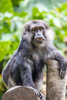
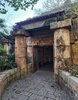
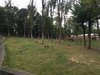
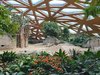
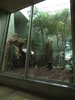
Between the District of Europe and West Asia and the next sector (China and the Islands), visitors will find a pair of 2,500 sq. meter yards, each of which also has a connected 650 sq. meter area that the larger of the two inhabitants can't access. These smaller areas feature climbing structures which connect to a high, enclosed bridge between them, allowing the troop of Rhesus Macaques Macaca mulatta (3.9) to access both areas, each of which are fenced in with mesh 'ceilings' of approximately 8.5 meters from the ground and mesh walls for the top 5.5 meters, double-layered chain-link and wood log fencing the remaining 3 meters, and large glass viewing windows in both walls. The wooden walls of the left-hand enclosure feature large murals of the macaques and their habitat-mates, while the right-hand enclosure walls give conservation information about the Indian Rhinoceros Rhinoceros unicornis (1.2), the two females living in the right-hand enclosure, and the male living in the left-hand enclosure. These main areas, accessible to the primates and the rhinos, are relatively open, with a few trees, both natural and artificial, breaking up sightlines on both sides, and shallow mud pools for the rhinos to lounge in.

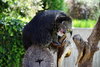
Rhesus Macaques -> image courtesy of @GiraffeJack10

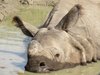
Indian Rhinoceros -> image courtesy of @TheGerenuk
This is the Indian Subcontinent exhibit done now, and we officially move off toward China and the Islands, which I should start to post sometime tomorrow or Sunday, depending on how busy I get.
Between the District of Europe and West Asia and the next sector (China and the Islands), visitors will find a pair of 2,500 sq. meter yards, each of which also has a connected 650 sq. meter area that the larger of the two inhabitants can't access. These smaller areas feature climbing structures which connect to a high, enclosed bridge between them, allowing the troop of Rhesus Macaques Macaca mulatta (3.9) to access both areas, each of which are fenced in with mesh 'ceilings' of approximately 8.5 meters from the ground and mesh walls for the top 5.5 meters, double-layered chain-link and wood log fencing the remaining 3 meters, and large glass viewing windows in both walls. The wooden walls of the left-hand enclosure feature large murals of the macaques and their habitat-mates, while the right-hand enclosure walls give conservation information about the Indian Rhinoceros Rhinoceros unicornis (1.2), the two females living in the right-hand enclosure, and the male living in the left-hand enclosure. These main areas, accessible to the primates and the rhinos, are relatively open, with a few trees, both natural and artificial, breaking up sightlines on both sides, and shallow mud pools for the rhinos to lounge in.
Rhesus Macaques -> image courtesy of @GiraffeJack10
Indian Rhinoceros -> image courtesy of @TheGerenuk
This is the Indian Subcontinent exhibit done now, and we officially move off toward China and the Islands, which I should start to post sometime tomorrow or Sunday, depending on how busy I get.



























 )
)