Brookfield Zoo Master Plan Discussion and Speculation

I feel like the most likely course of action is to bring in two new habitats for the Koalas and Tree Kangaroos, perhaps as another building or an annex to the existing building. Seeing as they are planning for as soon as next year, I don't think the additions will mean a complete revamp of the entire building and may not be too extensive.

Being Brookfield, I think it is very likely that some new and interesting herps will be brought in to fill in space near wherever the indoor areas for the two new marsupials will go. I can also see one or two new indoor bird enclosures being made. There are many nice Australasian birds to select from, but a BOP species is what I'd hope the most for.

I think one or two new outdoor yards could happen as well, in the space the camel exhibits currently occupy. I would absolutely love for something like Cassowary to be brought back. I'm doubtful about the space for Dingoes or Singing dogs, but it is possible. How is the Tasmanian Devil population in NA doing?

I still wonder about this time frame and how large the additions will end up being. It seems the zoo has been running a little late on its schedule, but all the planned additions are very much welcomed.
 
I feel like the most likely course of action is to bring in two new habitats for the Koalas and Tree Kangaroos, perhaps as another building or an annex to the existing building. Seeing as they are planning for as soon as next year, I don't think the additions will mean a complete revamp of the entire building and may not be too extensive.

Being Brookfield, I think it is very likely that some new and interesting herps will be brought in to fill in space near wherever the indoor areas for the two new marsupials will go. I can also see one or two new indoor bird enclosures being made. There are many nice Australasian birds to select from, but a BOP species is what I'd hope the most for.

I think one or two new outdoor yards could happen as well, in the space the camel exhibits currently occupy. I would absolutely love for something like Cassowary to be brought back. I'm doubtful about the space for Dingoes or Singing dogs, but it is possible. How is the Tasmanian Devil population in NA doing?

I still wonder about this time frame and how large the additions will end up being. It seems the zoo has been running a little late on its schedule, but all the planned additions are very much welcomed.
I do indeed love Brookfield's habit of filling space with interesting herps. It makes the zoo feel more dense and means the zoo has a massive herp collection even beyond the two reptile buildings.
 
How is the Tasmanian Devil population in NA doing?
There are currently only four holders: San Diego, Columbus, Toledo, and Albuquerque, but that doesn't impact the possibility of more facilities getting onboard. All of the devils in the US were acquired as part of the Tasmanian Devil Ambassador Program which sends devils to overseas zoos for exhibition purposes. They are quite short-lived so I wouldn’t count on any breeding. Saint Louis is already planning obtaining the species for their new children’s zoo, so if interest is there Brookfield could certainly get them.
I feel like the most likely course of action is to bring in two new habitats for the Koalas and Tree Kangaroos, perhaps as another building or an annex to the existing building. Seeing as they are planning for as soon as next year, I don't think the additions will mean a complete revamp of the entire building and may not be too extensive.
I’m speculating something similar; minor renovations to the current building while adding various new outdoor and indoor habitats where the camels currently are. This could create a loop with a single entry/exit point, sectioning off the area from the remaining hoofstock paddocks. I don’t envision major changes to the macropod yards as they are already really good as is.

Finishing this project by next year seems a bit ambitious, but I’ll wait and see just how much is being done before passing judgement. I do hope the existing house gets at least a few enhancements: adding substrate to existing enclosures, filling in empty spaces, aesthetic touch-ups, etc. At minimum they should fill that empty aviary in the nocturnal hall that’s been an eyesore for years.
I do indeed love Brookfield's habit of filling space with interesting herps. It makes the zoo feel more dense and means the zoo has a massive herp collection even beyond the two reptile buildings.
Completely agree. Veering a bit off-topic from current discussion, but one of my biggest hopes for the master plan as a whole is the continued inclusion of smaller species to supplement larger megafauna. In an age where a number of US zoos are only focusing on star species in newer exhibits (although there has been some noticeable improvement as of late), Brookfield’s approach is refreshing and adds an extra layer of depth to the collection. It would be really neat if a new rhino house (for example) also contained a couple herps and maybe a small mammal or two similar to the kopje building.
 
There are currently only four holders: San Diego, Columbus, Toledo, and Albuquerque, but that doesn't impact the possibility of more facilities getting onboard. All of the devils in the US were acquired as part of the Tasmanian Devil Ambassador Program which sends devils to overseas zoos for exhibition purposes. They are quite short-lived so I wouldn’t count on any breeding. Saint Louis is already planning obtaining the species for their new children’s zoo, so if interest is there Brookfield could certainly get them.

The lifespan is concerning. We’ve already seen LA zoo go out of the species in recent years due to this. Has this happened to any other zoo that has been part of the programme?

There has been a recent expansion of the number of zoos keeping the species in Europe. Is Brookfield involved heavily in the conservation of devils in the wild? Other members on this forum has speculated that those institutions who have been have gotten priority access to the animals sent abroad. (Although it’s worth mentioning that the two largest for profit institutions in Europe have managed to secure them..)

It has been suggested on this forum recently that soon we will see some breading animals go abroad so the population can become more self sustaining but there’s been no official confirmation that’s the case.

I’m not fully familiar with Brookfield Zoo so apologies if this has been asked on this thread already but are there any plans for them to go back into elephants?
 
I know Fort Wayne has been trying to get devils for some time but is being held up on the export side. I don’t have all the details but I’m assuming that kind of problem would apply to other prospective holders. Probably worth at least building a devil yard and then, if need be, filling it with another species for a while.
 
*Reposted from news thread, but it makes sense to add it here as well.

The zoo is holding a master plan town hall at 5:30 PM on Tuesday, July 25th. It will include new details on the immediate plans for the next two years including: Tropical Forests, Australia House expansion, Seven Seas renovation, prairie dog exhibit, native bird aviaries, and Eurasian eagle owl aviary. There will also be an open-mic session for attendees to share thoughts and ideas for new animal exhibits, conservation projects and community partnerships.

For those unable to attend in-person but want to make their voice heard, you can email your input at PlanYourZoo@CZS.org

Brookfield Zoo invites public to master plan town hall - Riverside Brookfield Landmark
 
September has arrived and if what we’ve been hearing is true, by the end of the month we should finally know everything planned for the future of Brookfield Zoo as part of the Next Century Campaign Master Plan. Just to give some perspective on how long I’ve been waiting for this day, when it was first revealed that the zoo would be developing a new master plan leading up to their centennial, I was a freshman in high school. Now I’m a freshman in college. Anticipation has been building for more than three and a half years and I’m so beyond ready to see this thing. Now I just have to hope they don't push it back any further given some other recent delays...

Now that we’ve entered the home stretch, this seems like a good time to discuss possibilities for what will certainly be one of, if not the, single biggest development of this whole plan: the Africa project. It’s entirely likely that this will be the next big exhibit following Tropical Forests and while details are still a bit vague, Dr. Mike has been teasing it for over a year now. I’ve compiled all the quotes regarding this mega project below from numerous interviews since May 2022:

“Another huge project on the drawing board, one that’ll be addressed after the Tropic World project, is reimagining the northwest corner of the zoo, which is now a disjointed collection of areas that include the Pachyderm House, the Habitat Africa yards, The Australia House and the hoofstock yards along 31st Street.”

“Adkesson said he sees the area as a huge, integrated African safari habitat that will emphasize habitat over the traditional, geometric layout of the park, with its long vistas and open lawns.”

“One big priority: re-creating a mixed-species savanna in the northwest section of the campus. The Pachyderm House, one of the oldest zoo buildings, would turn into more of a gallery with savanna views.”

"You'd have giraffes and zebras and some hoofstock species all out together and commingled in that space, so it would be more reflective of what you would see in the wild," Adkesson said.

“In the northwest section of a re-imagined zoo, ostriches, antelope and zebra would roam around new savanna landscapes re-creating the grasslands of Africa. Zoo officials also are looking at new rhino habitats.”

"We'd love to bring Nile hippo back in an underwater viewing experience," Adkesson said.”

“It’s hard to replicate the experience of seeing an elephant up close,” he said. “If we were to bring elephants back, we would want to house them in a dynamic environment where they are truly comfortable. We want to replicate how they live in the wild.”


So to recap the possible inhabitants: elephants, giraffes, rhinos, hippos, zebras, antelope, ostriches, and while it hasn’t been mentioned yet I’d be shocked if the lions aren’t relocated here as well. That is a lot and while it’s exciting to see such an impressive lineup of popular species, I’d be lying if I said I wasn’t a little concerned about how they intend to execute. Few zoos are able to manage all four of the big megafauna nowadays and the ones do often see at least one of them getting the short end of the stick (see Cincinnati or Copenhagen). I was underwhelmed by Milwaukee’s newer exhibits for elephants and hippos, but considering how terrible their previous accommodations were I can cut them some slack for cutting corners a bit to get the new stuff done. Brookfield doesn’t have that excuse and has no reason to rush new habitats for species not currently in the collection. If they really want to bring elephants and hippos back, they better do them justice.

By the way, I still can’t believe they really intend on bringing elephants and hippos back. I thought at most we would get one or the other and even that felt like a long shot, but getting both seemed like a total pipe dream. Who knows what the final outcome will be and obviously this won’t happen for several more years, but I give the zoo credit for daring to be so ambitious in the first place.

The big emphasis thus far seems to be on the mixed-species savanna habitats of which I have mixed feelings. No denying that a well done multi-species savanna is spectacular and with enough thought these could be great enclosures. However, the more I learn about ungulate husbandry, the more I can appreciate individual hoofstock paddocks. Having separate enclosures, proper separation areas and minimal interference from other animals is much more conducive to herd management and breeding. I’m particularly concerned about the nature of a certain black-and-white equid. Zebras don’t play nice with other hoofstock, especially Grevy’s zebra which the zoo currently holds. If they truly intend on mixing them with the giraffes and antelope, I sincerely hope the zoo will switch to Hartman’s mountain zebra which has proven to cause the least amount of problems in mixed-species environments and is in need of new holders.

Based on the wording, it sounds like a vast majority of the existing Habitat Africa footprint is being completely reworked. This makes me wonder about the fate of the kopje house which is one the more underappreciated buildings the zoo has to offer. It sounds like there is a very real chance that it may go under which would see the loss of many smaller birds, herps and mammals. With that said, if it goes a new giraffe house will need to be constructed - as will elephant and rhino houses presumably. Small exhibits could very easily be included within these buildings and would more than compensate for the loss of the kopje. While the focus of this project is very clearly on large ungulates, fingers crossed the zoo will sneak a few small things in there as well.

While my inner pessimist has some worries of how this will all work out, I’m also confident this will be a worthwhile development. Habitat Africa has always felt incomplete as only small portion of the original plan for the complex ever materialized. The rest - which would've included pachyderms, big cats, primates and additional hoofstock - never came to fruition which resulted in lots of dead space in the surrounding area. Filling in those gaps, restructuring the layout to be more efficient, and consolidating the collection of large African megafauna to one part of the zoo is a great move. The idea of using the pachyderm house as a viewing gallery is brilliant and very much inspired from what Lincoln Park did with their lion house. I was fully expecting the building to bite the dust, but considering its fascinating history and stunning architecture I’m thrilled the zoo has found a way to adapt it. That concept alone is something that will help this stand out from being just another African Savanna exhibit.
 
I do feel some concern about the emphasis on a mixed savanna, as it feels so often I hear of older mixed savannas being pared down eventually to fewer inhabitants. Both Brookfield and Lincoln Park at one point exhibited giraffe in larger mixed exhibit settings that eventually declined to holding only giraffe, although Lincoln Park subsequently introduced Plains Zebra, and the other mixed antelope habitats at Brookfield have also been pared down. I worry about watching this sort of process repeat - although at once, Habitat Africa was thirty years ago and African Journey was twenty - perhaps starting fresh with new knowledge and new advances, Brookfield can accomplish something the mixed savanna that has eluded this city's zoos for so long. There is obviously a ton of space to play with and therefore possibility. The introduction of hippopotamus and elephant would also go a long, long way to restoring Brookfield's value with casual guests, and I am positive the space is available to develop exhibits for these animals.

I really do love the re-adaption of the Pachyderm House. The unique architecture stood out to me from childhood and while I accepted long ago the building would eventually need to go, the idea it could be preserved while still part of an improved complex is incredibly exciting.

In addition, raising funds to bring back hippopotamus, elephants and build new homes for lions and rhinoceros will no doubt bring in big dollars and a ton of funding that can then be spread across the overall project. I think it is a no-brainer to bring back ostrich for one thing, and two species I would love to see in Chicago would be gazelles of some kind and cheetah. I love ther zoo's ungulate collection but it does feel like it needs something in the niche between duikers/dik-diks/klipspringer and addax/nyala, and cheetah are such a unique, beautiful and charismatic species... and unlike some of my wishlist species, these are AZA SSP species and should be relatively available.

My hope is the existing kopje structure (the main atrium, at least) and African Wild Dog viewing bunker can be repurposed with new surroundings.

I'm also hopeful the zoo can find a new home for Addax, they're much more of a desert than savanna species, but the zoo has such a long history breeding them I would just hate to see them go. I keep wanting to say a new small desert complex could be a great thing for the zoo's more ambitious Africa plans, especially with the aardvark house likely to go, but obviously nobody has mentioned that concept.
 
I wish zoos wouldn't get too enamored with chasing ways to keep elephants. Not everyone needs to have them, and zoos can be plenty interesting without. Same with hippos. Both species have very expensive requirements in terms of habitat design that sometimes seem to take a toll on the cumulative zoo when put into a budget.

I've seen these massive long term projects at my home zoo in Cincinnati, and the excitement fades quickly when construction starts and plans become more real and less theoretical.

I was at Brookfield last year, and I was there when Habitat Africa opened. I didn't fee like it was an exhibit that had declined that significantly. The forest area still seemed quite nice and the savannah is adequate at worst.

I think people are justified in being leery of the mixed savannah. The really successful ones work, generally speaking, due to sheer size and usable area. Columbus is the obvious example. It's a stunning field exhibit that you only really see in a Safari park otherwise. I know Brookfield has space, but probably not on that scale.

As far as ungulate collections, the overall antelope collections tend to go downhill when these projects come into being. The days of fascinating antelope species of several sizes are long gone. What seems to happen most is that a zoo prioritizes the big megafauna, then tosses in one or two antelope species as a token occupant. When a species has to be moved out, the antelope will almost always be the first to go.

I'd be completely unsurprised if antelope didn't get left out completely in the final product.

This is not to say that I don't think there can be a great outcome for Brookfield. They certainly have been a holdover in prioritizing interesting species in recent years, so maybe they will be more of an outlier.

Either way, I'm going to have to visit again if they plan to start tearing up that end of the zoo. I'd like to see it again before it changes drastically.
 
I wish zoos wouldn't get too enamored with chasing ways to keep elephants. Not everyone needs to have them, and zoos can be plenty interesting without. Same with hippos. Both species have very expensive requirements in terms of habitat design that sometimes seem to take a toll on the cumulative zoo when put into a budget.

I've seen these massive long term projects at my home zoo in Cincinnati, and the excitement fades quickly when construction starts and plans become more real and less theoretical.

I was at Brookfield last year, and I was there when Habitat Africa opened. I didn't fee like it was an exhibit that had declined that significantly. The forest area still seemed quite nice and the savannah is adequate at worst.

I think people are justified in being leery of the mixed savannah. The really successful ones work, generally speaking, due to sheer size and usable area. Columbus is the obvious example. It's a stunning field exhibit that you only really see in a Safari park otherwise. I know Brookfield has space, but probably not on that scale.

As far as ungulate collections, the overall antelope collections tend to go downhill when these projects come into being. The days of fascinating antelope species of several sizes are long gone. What seems to happen most is that a zoo prioritizes the big megafauna, then tosses in one or two antelope species as a token occupant. When a species has to be moved out, the antelope will almost always be the first to go.

I'd be completely unsurprised if antelope didn't get left out completely in the final product.

This is not to say that I don't think there can be a great outcome for Brookfield. They certainly have been a holdover in prioritizing interesting species in recent years, so maybe they will be more of an outlier.

Either way, I'm going to have to visit again if they plan to start tearing up that end of the zoo. I'd like to see it again before it changes drastically.
I mean, when Omaha acquired elephants again they still kept antelope - impala, bongo and sable antelope to name a few - and even acquired lesser kudu. At the end of the day, someone on ZooChat said it best - the ABCs pay for the XYZs, and if the zoo's objective on maintaining a biodiverse collection is any indication, they'll absolutely make it work. I get not bringing elephants back to Lincoln Park, but Brookfield *absolutely* has the space to do elephants and hippos justice without sacrificing other animals.
 
I mean, when Omaha acquired elephants again they still kept antelope - impala, bongo and sable antelope to name a few - and even acquired lesser kudu. At the end of the day, someone on ZooChat said it best - the ABCs pay for the XYZs, and if the zoo's objective on maintaining a biodiverse collection is any indication, they'll absolutely make it work. I get not bringing elephants back to Lincoln Park, but Brookfield *absolutely* has the space to do elephants and hippos justice without sacrificing other animals.

I get the gist of your argument, but having all 4 of the big megafauna is far from being a need for a zoo to be financially salient. Most zoos do not, and that includes some of the very best ones in the country.

Also agree that a zoo can do both the megafauna and some antelope, but the rule seems to lean toward them choosing not to. Omaha is a spectacular exception.
 
I wish zoos wouldn't get too enamored with chasing ways to keep elephants. Not everyone needs to have them, and zoos can be plenty interesting without. Same with hippos. Both species have very expensive requirements in terms of habitat design that sometimes seem to take a toll on the cumulative zoo when put into a budget.
I agree strongly that not every zoo needs to have them - but I think Brookfield has more incentive than most. Lincoln Park Zoo is also a black rhinoceros/pygmy hippo facility and overall both facilities share a tremendous amount of charismatic megafauna, with chimpanzee-orangutan and tigers being the biggest area of direct difference, maybe bison. Many of the species unique to Brookfield are not known to the typical guest, which is good for zoochatters, but fails to make an impression to guests. Brookfield could really use at least one big charismatic animal that can help it stand out as a unique destination in Chicago.

I've seen these massive long term projects at my home zoo in Cincinnati, and the excitement fades quickly when construction starts and plans become more real and less theoretical.
I definitely think there's a lot of truth to this, especially thinking back to Milwaukee's recent construction, where a lot of upgrades that were pretty major leaps for that specific facility met a chilly reception because they were not innovative in the grand scheme of things, not to say this is entirely unjustified - furthermore, I also recall making fewer visits to Lincoln Park Zoo between 2001-05 because there was such a flurry of construction and I was too young to understand why they were closing exhibits.

I was at Brookfield last year, and I was there when Habitat Africa opened. I didn't fee like it was an exhibit that had declined that significantly. The forest area still seemed quite nice and the savannah is adequate at worst.
During previous conversations about the idea of revising the Africa quadrant of the zoo, I was truly mystified as I felt the existing exhibits made up the zoo's strongest area by a landslide. I still think the giraffe Savannah exhibit is one of the best outdoor habitats at the entire facility. In terms of construction quality, I don't think there's been any decline. The loss of mixed species in the giraffe exhibit (excluding small tortoises) and the Aardvark House stings a heck of a lot even if it doesn't undercut the exhibit.

I think people are justified in being leery of the mixed savannah. The really successful ones work, generally speaking, due to sheer size and usable area. Columbus is the obvious example. It's a stunning field exhibit that you only really see in a Safari park otherwise. I know Brookfield has space, but probably not on that scale.
Yeah, and isn't Colombus controversial in that not all animals are out at once in some of the Savanna habitats with some on rotation?

As far as ungulate collections, the overall antelope collections tend to go downhill when these projects come into being. The days of fascinating antelope species of several sizes are long gone. What seems to happen most is that a zoo prioritizes the big megafauna, then tosses in one or two antelope species as a token occupant. When a species has to be moved out, the antelope will almost always be the first to go.

I'd be completely unsurprising if antelope didn't get left out completely in the final product.
The loss of hoofstock and savanna yards would lose the zoo on nyala, dik-dik, and addax. I think nyala could make it to a mixed savanna setting, but I do worry about addax for reasons previously stated. I agree the antelope would be one of the first animals to go, unfortunately, but I also can't see much reason to invest in a mixed savanna exhibit without some kind of antelope/gazelle present. It seems like the only place where the zoo can 'gain' from this, maybe ground birds as well?
 
So this is roughly the area the zoo has to work with for Africa, although I think we can safely assume The Forest will be left alone and we it looks like the new Australia renovations will probably stretch into the former camel habitat.

savanna2.png

We already know the Pachyderm House will become part of the Savanna, so let's make some changes. I also removed more animals so we can focus on the land area and converted the area surrounding the current aardvark building into possible exhibit space. I left the building, as well as the kopje building, in tact for now.

savanna3.png

Now, one more time... this is the maximum possible land area that is available, I think, with ambiguity regarding the section between hoofstock yards and Habitat Africa - the Forest so I left it alone. The existing structures are still preserved except one of the hoofstock barns was lost behind the hoofstock label.

savanna4b.png

So the part I think is interesting here is the southern part of Pachyderm House will probably have to be a focus area for a single species, maybe eastern black rhinoceros can be moved down there since it's well-known they can't integrate in savanna habitats.

There's still a lot of wiggle room to build new paths in this area and build new habitats without having to dismantle the kopje. I think based on this that the kopje and African Wild Dog exhibit can be largely preserved, with qualify of life changes, without affecting other construction. The Small Antelope House/Aardvark House is a little in the way but as a historic building I can see an effort being made to preserve it with a new purpose

I'm not sure how many acres this space is, which could allow us to confirm with existing savanna complexes, but there is room to play.. but also, a lot of narrow space because of Australia and the Forest, rather than a big circle or rectangle. Hopefully these areas can be reserved for especially unique animals not simply the limits of giant savanna paddocks.

Hopefully, they turn most of this into mixed space for giraffe, ostrich and antelope. It's very forgivable if the zoo doesn't want to waste money on elephants and hippos but they definitely will need something new to put alongside what little savanna animals they have.
 

Attachments

  • savanna2.png
    savanna2.png
    365 KB · Views: 95
  • savanna3.png
    savanna3.png
    288.1 KB · Views: 97
  • savanna4b.png
    savanna4b.png
    218.4 KB · Views: 99
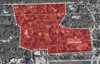
The spaces you’ve highlighted (entirety of Savannah, pachyderm house, non-camel hoofstock yards) is about 13.5 acres on Google MyMaps. This includes building space. There’s an additional eight acres of apparently unused city owned land across the road by the north parking lot. For reference, Indianapolis’s Africa area is about eleven acres. Fort Wayne’s is a little shy of 20. Lincoln Park’s is 4 acres. The combined giraffe / predator-prey / elephant complex at Milwaukee is about 12 acres. Toledo Zoo’s Savannah / cheetah area is 10 acres. Columbus’s Heart of Africa is 20 acres. Cincinnati’s Africa complex is 7 acres.

Brookfield has some decent space to work with, even without the potential expansion plot.
 
I've attached the MyMaps view of the same 13.5 acres (588,060sqft). I don't see any reason why they couldn't stretch this area north of Habitat Africa! The Forest, but I decided to just stick with the paths in place now, as I'm assuming @Persephone did.

I tried finding the sizes of modern exhibits for the megafauna being discussed, specifically elephants. Some of these exhibits in include other species and visitor spaces, so it's very hard to narrow down what space the elephants specifically have without drawing maps all day.
  • Cincinnati's new Elephant Trek will be 5 acres (217,800sqft)
  • San Diego's Elephant Odyssey is listed as 3 acres of indoor/outdoor for elephants (130,680sqft)
  • Cleveland's Elephant Crossing is listed as 5 acres (217,800sqft)
  • Henry Doorly's Elephant Habitat is listed as 4 acres outdoor plus ~.5 acres indoor (196,020sqft total).
From that list, I'd say 4-5 acres for elephants is what's to be expected. However, the same can't be said for giraffes, hippos and/or rhinos. Personally, I'd love something like Cheyenne's Water's Edge: Africa for hippos, but that's completely different in size to a hippoquarium type exhibit. Toledo, Columbus and Cincinnati all have "savannas" but are all wildly different sizes with different arrays of species.

So the best comparison for the zoo's current ambition that I could find would probably be Birmingham's Trails of Africa which comes in at 14 acres (609,840sqft.) I think a more harmonious exhibit like this (or Denver's Elephant Passage but with an African twist) should be the goal.
 

Attachments

  • Brookfield Overlay.jpg
    Brookfield Overlay.jpg
    416.3 KB · Views: 17
Back
Top