September has arrived and if what we’ve been hearing is true, by the end of the month we should finally know everything planned for the future of Brookfield Zoo as part of the Next Century Campaign Master Plan. Just to give some perspective on how long I’ve been waiting for this day, when it was first revealed that the zoo would be developing a new master plan leading up to their centennial, I was a freshman in high school. Now I’m a freshman in college. Anticipation has been building for more than three and a half years and I’m so beyond ready to see this thing. Now I just have to hope they don't push it back any further given some other recent delays...
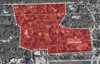
Now that we’ve entered the home stretch, this seems like a good time to discuss possibilities for what will certainly be one of, if not the, single biggest development of this whole plan: the Africa project. It’s entirely likely that this will be the next big exhibit following Tropical Forests and while details are still a bit vague, Dr. Mike has been teasing it for over a year now. I’ve compiled all the quotes regarding this mega project below from numerous interviews since May 2022:
“Another huge project on the drawing board, one that’ll be addressed after the Tropic World project, is reimagining the northwest corner of the zoo, which is now a disjointed collection of areas that include the Pachyderm House, the Habitat Africa yards, The Australia House and the hoofstock yards along 31st Street.”
“Adkesson said he sees the area as a huge, integrated African safari habitat that will emphasize habitat over the traditional, geometric layout of the park, with its long vistas and open lawns.”
“One big priority: re-creating a mixed-species savanna in the northwest section of the campus. The Pachyderm House, one of the oldest zoo buildings, would turn into more of a gallery with savanna views.”
"You'd have giraffes and zebras and some hoofstock species all out together and commingled in that space, so it would be more reflective of what you would see in the wild," Adkesson said.
“In the northwest section of a re-imagined zoo, ostriches, antelope and zebra would roam around new savanna landscapes re-creating the grasslands of Africa. Zoo officials also are looking at new rhino habitats.”
"We'd love to bring Nile hippo back in an underwater viewing experience," Adkesson said.”
“It’s hard to replicate the experience of seeing an elephant up close,” he said. “If we were to bring elephants back, we would want to house them in a dynamic environment where they are truly comfortable. We want to replicate how they live in the wild.”
So to recap the possible inhabitants: elephants, giraffes, rhinos, hippos, zebras, antelope, ostriches, and while it hasn’t been mentioned yet I’d be shocked if the lions aren’t relocated here as well. That is a lot and while it’s exciting to see such an impressive lineup of popular species, I’d be lying if I said I wasn’t a little concerned about how they intend to execute. Few zoos are able to manage all four of the big megafauna nowadays and the ones do often see at least one of them getting the short end of the stick (see Cincinnati or Copenhagen). I was underwhelmed by Milwaukee’s newer exhibits for elephants and hippos, but considering how terrible their previous accommodations were I can cut them some slack for cutting corners a bit to get the new stuff done. Brookfield doesn’t have that excuse and has no reason to rush new habitats for species not currently in the collection. If they really want to bring elephants and hippos back, they better do them justice.
By the way, I still can’t believe they really intend on bringing elephants and hippos back. I thought at most we would get one or the other and even that felt like a long shot, but getting both seemed like a total pipe dream. Who knows what the final outcome will be and obviously this won’t happen for several more years, but I give the zoo credit for daring to be so ambitious in the first place.
The big emphasis thus far seems to be on the mixed-species savanna habitats of which I have mixed feelings. No denying that a well done multi-species savanna is spectacular and with enough thought these could be great enclosures. However, the more I learn about ungulate husbandry, the more I can appreciate individual hoofstock paddocks. Having separate enclosures, proper separation areas and minimal interference from other animals is much more conducive to herd management and breeding. I’m particularly concerned about the nature of a certain black-and-white equid. Zebras don’t play nice with other hoofstock, especially Grevy’s zebra which the zoo currently holds. If they truly intend on mixing them with the giraffes and antelope, I sincerely hope the zoo will switch to Hartman’s mountain zebra which has proven to cause the least amount of problems in mixed-species environments and is in need of new holders.
Based on the wording, it sounds like a vast majority of the existing Habitat Africa footprint is being completely reworked. This makes me wonder about the fate of the kopje house which is one the more underappreciated buildings the zoo has to offer. It sounds like there is a very real chance that it may go under which would see the loss of many smaller birds, herps and mammals. With that said, if it goes a new giraffe house will need to be constructed - as will elephant and rhino houses presumably. Small exhibits could very easily be included within these buildings and would more than compensate for the loss of the kopje. While the focus of this project is very clearly on large ungulates, fingers crossed the zoo will sneak a few small things in there as well.
While my inner pessimist has some worries of how this will all work out, I’m also confident this will be a worthwhile development. Habitat Africa has always felt incomplete as only small portion of the original plan for the complex ever materialized. The rest - which would've included pachyderms, big cats, primates and additional hoofstock - never came to fruition which resulted in lots of dead space in the surrounding area. Filling in those gaps, restructuring the layout to be more efficient, and consolidating the collection of large African megafauna to one part of the zoo is a great move. The idea of using the pachyderm house as a viewing gallery is brilliant and very much inspired from what Lincoln Park did with their lion house. I was fully expecting the building to bite the dust, but considering its fascinating history and stunning architecture I’m thrilled the zoo has found a way to adapt it. That concept alone is something that will help this stand out from being just another African Savanna exhibit.