Primis Zoo: A scep. zoo project

Newt

Well-Known Member
The Primis Zoo is a speculative zoo design I've had planned for a little over a year now, and I'm glad I finally have somewhere to put it. This project is very heavily inspired off the Bronx Zoo, so many things may sound similiar to it.

The Primis Zoo (or Primis Zoological Park) is a zoo situated in upstate New York, US, on a mere 294 acres (119 ha) of land. The zoo has a general diverse and varied collection of animals, all of which displayed in natural exhibits and habitats, further enhancing the zoos design. It's made up of 13 main sections, which include:
African Plains
African Rocks
The Kustawi Village
The Okavango Delta
World Of Birds
World Of Reptiles
Rainforest World
The Bird House
The Aquatic Bird House
Expedition Madagascar
Expedition Congo
Andes Reserve
Wild Asia
The Zoo Centre

(I suck at names so excuse the repetitive naming, if you have suggestions feel free to share!)

After entering the zoo, your journey begins in Primis Court, holding the zoos historic permanent buildings, most of which served as animal houses. However now, many have been re-purposed for staff buildings and education centers. Only one of the permanent buildings remains, the Zoo Centre. It was originally made in 1920 with the opening of the zoo. Today, it displays a variety of small mammal species, most of which are rodents, aswell as displaying the history of the zoo, basic information, maps, guides, and more. The main building (mid sections) are very dimly lit, with most (if not all) of the light being provided from the exhibits. The floor is a rough, black carpet, to further enhance the darkness of the building. Upon entering the zoo centre, you're met with two exhibits on your left and right. To your left, a pair of Northern Treeshrew, Tupaia Belangeri (1.1) is found. Their exhibit is around 25 sq. ft (5x5x8), displaying a naturlistic background, leaf-littered floor, and many branches, hides, hammocks, and other climbing structures for the animals.
full

Northern Treeshrew | Picture by @red river hog

Across from them, to your right, is the Siberian Flying Squirrel, Pteromys Volans (1.1). Their exhibit is the same in dimensions (5x5x8), and rather than rainforests, replicates the semi-dense woodlands of Siberia, with assorted birch branches, ropes, and few enrichment items. These animals are crepuscular, meaning they are active during the day and night hours, so there's a general 50/50% chance of seeing one. However, nothing is guaranteed.
full

Siberian Flying Squirrel | Picture by @GregOz

Past these entrance exhibits, is two main halls displaying a total of 8 more exhibits, each exhibit on the left side of the hall being 15 sq. ft (5x3x8), and on the right side one mega-exhibit spanning around 100 sq. ft (10x10x8). The left hall contains well-known domesticated rodents, including the Degu, Octodon Degus (0.3), Long-Tailed Chinchilla, Chinchilla Lanigera (0.2), and Mongolian Gerbil, Meriones Unguiculatus, (0.4). The degu and chinchilla exhibits are very similiar, with a very thin layer of sand placed on the floor, blending with eachother. Additonally, rock formations, branch systems, wheels, and various other enrichment items are provided to keep the animals happy and healthy. Meanwhile, the gerbils have a more arid, desert-like landscape, with a sand subtrate, assorted rocks, and few small branches scattered throughout. Wheels, tunnels, and other items exoected of a pet animal are also provided.

full

Common Degu | Picture by @Andrew_NZP

full

Long-Tailed Chinchillas | Picture by @red river hog

full

Mongolian Gerbil | Picture by @Giant Eland

Across from these, is a 100 sq. ft (10x10x8) exhibit for the Prevost's Squirrel, Callosciurus Prevostii, (1.1). Their exhibit features a large faux tree sporuting in the middle, which is a connecting point to a variety of ropes, branches, and other climbing structures for the squirells, aswell as hides, hammocks, balls, and other enrichment items.

full

Prevost's Squirrel | Picture by @KevinB

In the right hall, on right side, the Striped Grass Mouse, Lemniscomys Rosalia (0.5), Cairo Spiny Mouse, Acomys Cahirinus, (1.1) and Golden Spiny Mouse, Acomys Russatus (1.2) are on display. The grass mouse have a grasslands-themed exhibit, with much grass and other sparse vegetation surround them, aswell, as thick branches, and assorted rocks throughout. Both spiny mice species have an desert-like exhibit, with a sand-dirt substrate, branches, and many rocks to hide amongst, awell as as a few sparsley placed desert grasses.

full

Striped Grass Mice | Picture by @Andrew_NZP

full

Cairo Spiny Mouse | Picture by @Maguari

full

Golden Spiny Mouse | Picture by @Giant Eland

Finally, to end the Zoo Centre off, is another species of squirrel, the American Red Squirrel, Tamiasciurus Hudsonicus, (1.1). Although a very common species across the U.S, this exhibit allows you to get up-close and personal with these backyard friends. They have the same general theme as the flying squirrels, however, more open and less temperate, with branches, tree stumps, a leaf-littered floor, and more.

full

American Red Squirrel | Picture by @TNT
 
The Primis Zoo is a speculative zoo design I've had planned for a little over a year now, and I'm glad I finally have somewhere to put it. This project is very heavily inspired off the Bronx Zoo, so many things may sound similiar to it.

The Primis Zoo (or Primis Zoological Park) is a zoo situated in upstate New York, US, on a mere 294 acres (119 ha) of land. The zoo has a general diverse and varied collection of animals, all of which displayed in natural exhibits and habitats, further enhancing the zoos design. It's made up of 13 main sections, which include:
African Plains
African Rocks
The Kustawi Village
The Okavango Delta
World Of Birds
World Of Reptiles
Rainforest World
The Bird House
The Aquatic Bird House
Expedition Madagascar
Expedition Congo
Andes Reserve
Wild Asia
The Zoo Centre

(I suck at names so excuse the repetitive naming, if you have suggestions feel free to share!)

After entering the zoo, your journey begins in Primis Court, holding the zoos historic permanent buildings, most of which served as animal houses. However now, many have been re-purposed for staff buildings and education centers. Only one of the permanent buildings remains, the Zoo Centre. It was originally made in 1920 with the opening of the zoo. Today, it displays a variety of small mammal species, most of which are rodents, aswell as displaying the history of the zoo, basic information, maps, guides, and more. The main building (mid sections) are very dimly lit, with most (if not all) of the light being provided from the exhibits. The floor is a rough, black carpet, to further enhance the darkness of the building. Upon entering the zoo centre, you're met with two exhibits on your left and right. To your left, a pair of Northern Treeshrew, Tupaia Belangeri (1.1) is found. Their exhibit is around 25 sq. ft (5x5x8), displaying a naturlistic background, leaf-littered floor, and many branches, hides, hammocks, and other climbing structures for the animals.
full

Northern Treeshrew | Picture by @red river hog

Across from them, to your right, is the Siberian Flying Squirrel, Pteromys Volans (1.1). Their exhibit is the same in dimensions (5x5x8), and rather than rainforests, replicates the semi-dense woodlands of Siberia, with assorted birch branches, ropes, and few enrichment items. These animals are crepuscular, meaning they are active during the day and night hours, so there's a general 50/50% chance of seeing one. However, nothing is guaranteed.
full

Siberian Flying Squirrel | Picture by @GregOz

Past these entrance exhibits, is two main halls displaying a total of 8 more exhibits, each exhibit on the left side of the hall being 15 sq. ft (5x3x8), and on the right side one mega-exhibit spanning around 100 sq. ft (10x10x8). The left hall contains well-known domesticated rodents, including the Degu, Octodon Degus (0.3), Long-Tailed Chinchilla, Chinchilla Lanigera (0.2), and Mongolian Gerbil, Meriones Unguiculatus, (0.4). The degu and chinchilla exhibits are very similiar, with a very thin layer of sand placed on the floor, blending with eachother. Additonally, rock formations, branch systems, wheels, and various other enrichment items are provided to keep the animals happy and healthy. Meanwhile, the gerbils have a more arid, desert-like landscape, with a sand subtrate, assorted rocks, and few small branches scattered throughout. Wheels, tunnels, and other items exoected of a pet animal are also provided.

full

Common Degu | Picture by @Andrew_NZP

full

Long-Tailed Chinchillas | Picture by @red river hog

full

Mongolian Gerbil | Picture by @Giant Eland

Across from these, is a 100 sq. ft (10x10x8) exhibit for the Prevost's Squirrel, Callosciurus Prevostii, (1.1). Their exhibit features a large faux tree sporuting in the middle, which is a connecting point to a variety of ropes, branches, and other climbing structures for the squirells, aswell as hides, hammocks, balls, and other enrichment items.

full

Prevost's Squirrel | Picture by @KevinB

In the right hall, on right side, the Striped Grass Mouse, Lemniscomys Rosalia (0.5), Cairo Spiny Mouse, Acomys Cahirinus, (1.1) and Golden Spiny Mouse, Acomys Russatus (1.2) are on display. The grass mouse have a grasslands-themed exhibit, with much grass and other sparse vegetation surround them, aswell, as thick branches, and assorted rocks throughout. Both spiny mice species have an desert-like exhibit, with a sand-dirt substrate, branches, and many rocks to hide amongst, awell as as a few sparsley placed desert grasses.

full

Striped Grass Mice | Picture by @Andrew_NZP

full

Cairo Spiny Mouse | Picture by @Maguari

full

Golden Spiny Mouse | Picture by @Giant Eland

Finally, to end the Zoo Centre off, is another species of squirrel, the American Red Squirrel, Tamiasciurus Hudsonicus, (1.1). Although a very common species across the U.S, this exhibit allows you to get up-close and personal with these backyard friends. They have the same general theme as the flying squirrels, however, more open and less temperate, with branches, tree stumps, a leaf-littered floor, and more.

full

American Red Squirrel | Picture by @TNT
Great work! Looking forward to the rest.
 
Across from them, to your right, is the Siberian Flying Squirrel, Pteromys Volans (1.1). Their exhibit is the same in dimensions (5x5x8), and rather than rainforests, replicates the semi-dense woodlands of Siberia, with assorted birch branches, ropes, and few enrichment items. These animals are crepuscular, meaning they are active during the day and night hours, so there's a general 50/50% chance of seeing one. However, nothing is guaranteed.
full

Siberian Flying Squirrel | Picture by @GregOz

A more revised version for the Siberian Flying Squirrel, Pteromys Volans (1.1); Their exhibit contains multiple thin, long trees (most likely birch) ascending from the ground and up into the ceiling. The floor is littered with temperate leaves and a few branches. A series of birch branches create a climbing system, with a few hammocks and other hides the squirrels can use effectively. The backdrop is a realistic mural painted to replicate the squirrels natural environment.
 
Also, a description for the Cairo Spiny Mouse, Acomys Cahirinus, (1.1) and Golden Spiny Mouse, Acomys Russatus (1.2). Both exhibits hold a general similiairty with eachother, with an aird-like landscape to replicate the deserts they typically inhabit. As mentioned before, both exhibits are 15 sq. ft in size (5x3x8). A large, 3D rock backdrop allows for climbing space and a few hiding structures, which blend well with generally thick branches and sticks used for clmbing. Other rocks are placed throughout the exhibit for added detail, whilst the mice themselves have many toys and other enrichment to keep them busy. A few desert grasses and plants sprawl over the sides and back of the exhibit, which adds a sense fo security and protection for the animals.
 
Upon departing the building, and walking back out and around towards the front of the centre, where you entered from, you'll be stepping foot in Andes Reserve. The section features a plethera of animals native to the Andes region of South America, and totals 6 seperate species. After passing the overhang for the Andes Reserve, you're presented with a drop-down exhibit, with a drop of around 10ft. The habitat gradually rises from where the drop takes place, and is filled dirt sand, and few grasses growing along the edge of the dropdown wall. Many scattered rock and branch piles can also be seen on the exhibit, with small rock clusters being present throughout. Huge, thick branches sprawl out from the ground, which could represent that of broken or generic trees. This is home to a herd of Vicuna, Vicugna Vicugna, (1:8), containing one bachelor (breeding male), and the rest being females and their young. Their habitat is a little more than 3/4 of an acre (32,700 sq. ft).
full

Vicuna | Picture by @MagpieGoose

-3/4 acre (32,700 sq. ft)
-Many large and small rock clusters
-Scattered branches, large-thick branches sprawled out

full

Vicuna Habitat possibility | Picture by @Gil

Another animal, located directly across from them, with the same general design and a little larger in area, is the Guanaco, Lama Guanicoe (1.5), with a slightly smaller herd than the vicuna. However, the dynamics of the herd remain the same, with one bachelor male and his harem of females. Unlike their neighbors, their landscape is more open, with less large rocks and branches. The space just nears an acre, with 43546 sq. ft of land to raom upon.

full

Guanaco | Picture by @Gil

-3/4 acre (43546 sq. ft)
-Little to no grasses and vegeation
-Many small rock clusters, with little branches

full

Guanaco Habitat possiblity | Picture by @Gil
 
Love the ideas so far. Names being repetitive is not an issue, at least not for me. My one statement is that the Vicũna is afaik not kept in North America, so may be difficult to acquire for realism’s sake. Otherwise, great start to your zoo, and I am very excited to see more!
 
Love the ideas so far. Names being repetitive is not an issue, at least not for me. My one statement is that the Vicũna is afaik not kept in North America, so may be difficult to acquire for realism’s sake. Otherwise, great start to your zoo, and I am very excited to see more!

Yeah, I'm aware. I was debating removing them but at the same time I had such a good image in my head I didn't really wanna un-add them. I also looked at your myrtle beach zoo and it's definitely a big inspiration here. It's actually what made me make this since I wasn't really sure if I was gonna put the whole Primis Zoo project here, so thanks!
 
Yeah, I'm aware. I was debating removing them but at the same time I had such a good image in my head I didn't really wanna un-add them. I also looked at your myrtle beach zoo and it's definitely a big inspiration here. It's actually what made me make this since I wasn't really sure if I was gonna put the whole Primis Zoo project here, so thanks!
I’m glad to be an inspiration. As for the vicũnas, I am definitely not opposed to them being there. Personally wish they were kept in North America. As for my own project, I’m finishing it up in the meantime but I’m not sure I have the time or mental consistency to do a 2025 version like I planned.
 
Venturing past the twin habitats, and wrapping around the guanacos, a large, moat-based 1/2 acre (21835 sq. ft) exhibit houses an active pair of Spectacled Bear, Tremarctos Ornatus (1.1). Their exhibit features a semi-lush landscape, with a mixed terrain of grass, dirt, and rocky formations, which allow for climbing space and vantage points. The bears also have acess to many climbing structrues which include large, thick branches.

full

Spectacled Bear | Photo by @red river hog

-1/2 acre (21835 sq. ft)
-Mixed grass and dirt, few vegetation
-Large, thick branches and rock formations

full

Spectacled Bear Habitat possiblity | Picture by @TinoPup
 
I'm looking at this, and seeing thirteen sections I am legitimately curious a) how many total species does the zoo have; and b) where have you written this out, as I would truly love to see the diversity of the zoo?
 
I'm looking at this, and seeing thirteen sections I am legitimately curious a) how many total species does the zoo have; and b) where have you written this out, as I would truly love to see the diversity of the zoo?

Currently, I've listed 807 species including mammals, birds, reptiles, amphibians, and insects (no hate to fish I just dont wanna waste my time with them). I wanna make it smaller as it sounds somewhat unreliastic in my opinion, but maybe it's just me. I have it written down mostly in Google Docs and Google Slides, so I can list and write stuff down :)

Also, some sections are fairly small but are still prominent enough to be considered a section, if that makes sense
 
Although it's been little of a day, I've decided to restart what I have here, as I feel it's too rushed and choppy to be official. When I started this it was more of a pass the time thing, and I was very sleep deprived. However now, I plan on putting much more detail and consideration into the Primis Zoo. The species amount and plans will still stick around, just in a more elaborate and detailed style.
 
The Primis Zoo is a speculative zoo design I've had planned for a little over a year now, and I'm glad I finally have somewhere to put it. This project is very heavily inspired off the Bronx Zoo, so many things may sound similar to it.


Nestled in upstate New York, USA, the Primis Zoo, also known as the Primis Zoological Park, sprawls across a modest 294 acres (119 hectares) of land. This zoological haven is renowned for its commitment to showcasing a diverse and varied collection of animals in environments that mirror their natural habitats, contributing to the overall authenticity of the zoo's design. The zoo is thoughtfully organized into 13 main sections, each offering a unique and immersive experience, as visitors traverse the grounds to encounter the wonders of the animal kingdom. These sections include:

  • African Plains
  • African Rocks
  • The Kustawi Village
  • The Okavango Delta
  • World Of Birds
  • World Of Reptiles
  • Rainforest World
  • The Bird House
  • The Aquatic Bird House
  • Expedition Madagascar
  • Expedition Congo
  • Andes Reserve
  • Wild Asia
  • Himalayan Exploration
  • The Zoo Centre

(I’m not very good with names, so I’ll gladly take suggestions and recommendations!)


Embarking on your journey in Primis Court, you'll find yourself surrounded by the zoo's historic permanent buildings, most of which were originally designed as animal houses and displays. These beaux-art pavilions boast impressive exterior and interior designs, showcasing the architectural grandeur of their time. Over the years, these iconic structures have undergone a transformation, now serving as staff buildings, education centers, and spaces for up-close animal encounters. Amidst this evolution, the Zoo Centre stands as the sole remaining permanent building, inviting visitors to explore its captivating exhibits and embark on a journey through the rich history and vibrant present of Primis Zoo.

ZOO CENTRE
-------------------------------------------------------------------------------------------------------------------------------
The bustling heart of the Primis Zoo, the Zoo Centre, beckons you to embark on an adventure through a rich tapestry of small mammal species, predominantly belonging to the rodent family. Upon entering this building, you're greeted by a display of free maps, guides, and information books, providing valuable resources for your exploration. Your attention is immediately captivated by two twin 25 sq. ft (5x5x8) enclosures that stand proudly on either side of the entrance hall. To the left, the Northern Treeshrew, Tupaia Belangeri (1.1), introduces you to the enchanting forests of Southeast Asia. An intricately detailed backdrop mural sets the scene, accompanied by a leaf-strewn floor that mimics the forest bed. The exhibit boasts an elaborate network of branches and ropes, forming an engaging climbing haven for the tree shrews. Observing their natural behavior, you'll witness these agile creatures skillfully navigate their habitat, utilizing strategically placed balls, hides, and hammocks for both play and comfort. This immersive environment not only reflects the habitat of the Northern Treeshrew but also provides visitors with a deeper understanding of the species' behavior and preferences.

full

Northern Treeshrew | Photo by @red river hog

To the right of the entrance, a mesmerizing duo of Siberian Flying Squirrels, Pteromys Volans (1.1), takes center stage within their exhibit. This unique addition to the zoo's diverse collection unveils a carefully crafted portrayal of the woodlands and forests of Siberia. Replicated birch trees reach skyward from the ground, extending seamlessly into the ceiling, creating an immersive atmosphere. The floor beneath is strewn with temperate leaves, completing the picturesque woodland scene. The habitat of these flying squirrels is further enriched by an intricate network of ropes and birch branches, forming a dynamic climbing complex. This thoughtful design not only replicates the natural environment of the Siberian Flying Squirrels but also serves as a canvas for their awe-inspiring aerial acrobatics. As you observe, you'll witness these delightful creatures effortlessly traverse their habitat, showcasing their unique behaviors and acrobatic prowess. This exhibit aims to transport visitors to the captivating landscapes that these Siberian inhabitants call home, offering an intimate glimpse into the daily lives of these charming flying squirrels.

full

Siberian Flying Squirrel | Photo by @GregOz

Beyond these enclosures, the left hall unveils a trio of distinctive 15 sq. ft (5x3x5) habitats along the left wall. Each enclosure offers a unique perspective into the lives of the zoo's more well-known domesticated species. The first exhibit introduces visitors to the Common Degu, Octodon Degus (0.3). An intricately designed 3D rock backdrop not only replicates a natural environment but also provides engaging climbing opportunities for these lively rodents. Carefully placed sparse vegetation adorns the edges and corners, while sturdy branches enhance the exhibit's aesthetic and offer additional climbing spaces. Continuing the journey, the Long-Tailed Chinchilla, Chinchilla Lanigera (0.2), enjoys a more expansive and vertically oriented space. The exhibit's design caters to the chinchillas' size and spirited energy levels. Maintaining a constant 3D rock backdrop, the open layout allows the chinchillas to showcase their agility and playfulness, providing visitors with a delightful spectacle. Adjacent to this, the Mongolian Gerbil, Meriones Unguiculatus (0.4), transports observers to the arid deserts of Mongolia. The sandy landscape, accompanied by a realistic 3D rock backdrop and scattered small branches, expertly recreates the natural habitat of these gerbils. Assorted rock piles, meticulously positioned for added detail, contribute to the overall desert-like ambiance. Each of these thoughtfully designed exhibits is equipped with enrichment and husbandry elements, including wheels, hides, huts, and treats. These features ensure the well-being and contentment of the zoo's small rodent residents, creating an immersive and educational experience for all visitors.

full

Common Degu | Photo by @Andrew_NZP

full

Long-Tailed Chinchillas | Photo by @red river hog

full

Mongolian Gerbil | Photo by @Giant Eland

Within this vibrant collection of enclosures, a notably more expansive 100 sq. ft (10x10x8) habitat takes center stage, featuring the Prevost’s Squirrel, Callosciurus Prevostii (1.2). Inhabited by an adult pair and their kit, this carefully crafted exhibit seeks to replicate the lush rainforests of Sumatra. The landscape is adorned with various tropical ground plants, complemented by scattered fallen leaves, contributing to the authentic ambiance of the environment. Positioned at the heart of the scene are two substantial branches emerging from the ground, guiding visitors' eyes upward to a dynamic climbing complex. Comprising slender branches and ropes, this intricate structure provides the resident squirrels with an engaging space to showcase their acrobatic prowess. The climbing complex ensures a fulfilling environment, offering the squirrels ample opportunities for physical activity and exploration.

full

Prevost's Squirrel | Photo by @KevinB

As you embark on your journey through the hall, the right-side corridor unveils a symmetrical layout, featuring three 15 sq. ft (5x3x5) exhibits and a prominent 100 sq. ft (10x10x8) enclosure. This side hosts an array of three rodent species: the Barbary Striped Grass Mouse, Lemniscomys Barbarus (0.5), Cairo Spiny Mouse, Acomys Cahirinus (1.1), and Golden Spiny Mouse, Acomys Russatus (1.2). Inhabitants of the grass mouse enclosure find themselves in an environment crafted to mimic the expansive grasslands. At its center, a large log takes prominence, surrounded by strategically placed rocks and complemented by a realistic 3D rock backdrop. Sparse plants and grasses accentuate the sides, back, and edges of the enclosure, creating a dynamic and visually appealing landscape for the grass mice. For the spiny mice, both species share a habitat nearly identical in replication. Thin branches sprawl from the top corners of the enclosure, creating a visually striking and dynamic scene against a 3D rock backdrop. Ample small logs and hides are thoughtfully positioned on the enclosure floor, providing the mice with opportunities for protection and security. The sandy substrate, adorned with a few small rocks, completes the bottom landscape. This carefully designed habitat not only caters to the unique needs of its inhabitants but also offers visitors an immersive and educational experience, allowing them to connect with these fascinating rodent species.

full

Barbary Striped Grass Mice | Photo by @Andrew_NZP

full

Cairo Spiny Mouse | Photo by @Maguari

full

Golden Spiny Mouse | Photo by @Maguari

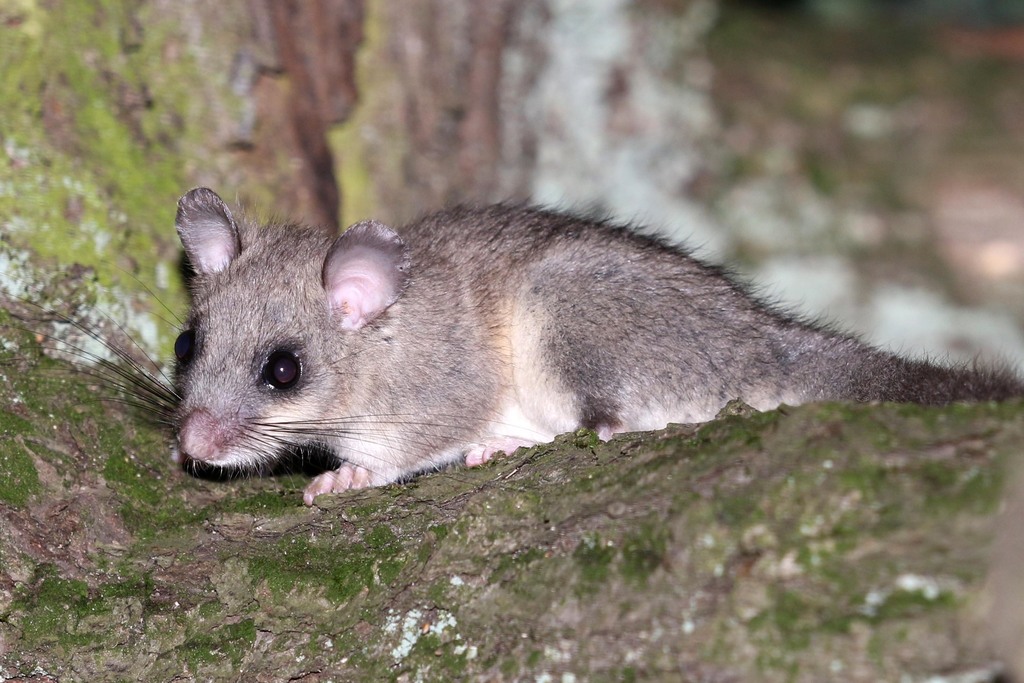
As you conclude your journey through the Zoo Centre, the final enclosure on the left side of the right hall is home to the Edible Dormouse, Glis Glis (1.1). This expansive 100 sq. ft (10x10x8) habitat transports you to the mountainous woodlands of Iran, where replicated oak and beech trees create an authentic environment. Scattered throughout the floor are dumped wooden planks, subtly suggesting human activity within the habitat. Adding a unique touch to this exhibit, a distinctive climbing system unfolds within the enclosure. Thin, almost cylindrical branches connect to wooden planks attached to each tree trunk, forming small decks that provide the dormice with an unconventional and engaging climbing experience.

large.jpg

Edible Dormouse | No Photo Credit
 
As you venture from the Zoo Centre and circle back to the front, a new spectacle awaits: the World of Reptiles.

WORLD OF REPTILES
-------------------------------------------------------------------------------------------------------------------------------
This facility, strategically designed in conjunction with its avian counterpart, the World of Birds, serves as an enlightening hub where visitors can delve into the world of reptiles. Immerse yourself in an educational journey that underscores the significance of reptilian species and highlights the ongoing efforts in their conservation. The World of Reptiles building stands as a testament to the zoo's commitment to education and conservation. Its architecture seamlessly blends with the surrounding landscape, offering an inviting entrance for curious guests. The exterior design incorporates elements that evoke a sense of adventure, hinting at the diverse and fascinating reptilian wonders that await inside. As you step through its doors, the building comes to life with vibrant exhibits, engaging displays, and valuable information that invites you to explore the captivating realm of reptiles and contribute to their preservation.

As you step into the World of Reptiles building, the first captivating inhabitant to greet you is the Eastern Hellbender, Cryptobranchus Alleganiensis (1.0). Within its 700-gallon enclosure, a singular female gracefully navigates her aquatic domain. The exhibit features a smooth, round rock bottom, creating a naturalistic aquatic environment. Scattered flat rocks adorn the floor, offering both aesthetic appeal and functional spaces for the Hellbender to explore. Against a 3D rocky backdrop, a large log is thoughtfully placed, partially submerged in the water. Its roots extend across the backdrop and spill onto the sides of the tank, providing a visually immersive and dynamic landscape. Additional fallen branches and smaller logs are strategically positioned on the floor, enhancing the overall habitat complexity and providing the Hellbender with diverse surfaces for exploration. Clusters of faux aquatic plants add a touch of realism to the exhibit, contributing to the immersive environment.

full

Eastern Hellbender | Photo by @Moebelle

On the opposite wall, mirroring the Hellbender's aquatic domain, is a dedicated 700-gallon exhibit for another endangered species of salamander, the Axolotl, Ambystoma Mexicanum (0.2). Distinctive in its design, this tank is divided at approximately the halfway mark, offering a unique habitat for the axolotls. Above the waterline, lush tropical plants cascade over a meticulously crafted 3D backdrop, creating an enchanting terrestrial environment. Below the water's surface, the axolotls navigate a carefully arranged landscape. Several large logs and pieces of driftwood are strategically placed, providing both shelter and opportunities for the axolotls to display their characteristic behaviors. Similar to the hellbender exhibit, the bottom substrate is embellished with smaller rocks, prioritizing the safety of these delicate creatures. This intentional design choice ensures a harmonious and secure environment for the axolotls, allowing visitors to witness their fascinating behaviors.

full

Axolotl | Photo by @Julio C Castro

As you venture deeper into the main building, an abundance of exploration awaits. This particular chamber hosts only two amphibians, while the remainder of the room is dedicated to poignant sculptures adorning the walls. These sculptures represent species that, unfortunately, couldn't be saved in time. The somber list includes the Golden Toad, Gastric-Brooding Frog, Southern Gastric-Brooding Frog, Pinta Island Tortoise, Christmas Island Skink, and various other extinct reptiles and amphibians. Informative billboards and signs throughout the room passionately educate guests about the urgent need for reptile conservation and the critical importance of protecting these species before they face irreversible consequences. Once you conclude your reading, the focus shifts to the captivating Panamanian Golden Frog, Atelopus Zeteki (0.5). This ensemble of frogs resides in a 60-gallon space, featuring a large faux tree trunk emerging from the ground and seamlessly cut off at the top of the exhibit. The terrestrial section is adorned with small pebbles, leading to a water feature with a smooth rock bottom, surrounded by a 3D backdrop suitable for climbing and basking. Lush tropical plants of considerable size enhance the overall aesthetic, while roots elegantly sprawl down the backdrop for added visual effect.

full

Panamanian Golden Frogs | Photo by @RatioTile

Sharing the same meticulously designed space and attention to detail are the Kihansi Spray Toads, Nectophrynoides Asperginis (0.6). These toads, classified as highly endangered and driven to extinction in the wild, require an environment that mirrors their natural habitat. Although their exhibit bears some resemblance to that of the Panamanian Golden Frogs, it distinguishes itself with a lack of a water feature and an increased emphasis on climbing opportunities. The floor is thoughtfully adorned with smooth pebbles, from which vibrant plants gracefully emerge. In lieu of a water feature, the exhibit focuses on providing ample climbing opportunities. Similar to their froggy counterparts, the Kihansi Spray Toads enjoy the backdrop of a realistic 3D mural, catering to their climbing instincts. Thin branches artfully sprawl horizontally throughout the enclosure, adding both intricate detail and a climbing complex for these rare and precious amphibians.

full

Kihansi Spray Toad | Photo by @Ding Lingwei

In the following expansive hall, two colossal reptilian inhabitants take center stage. To your right, an expansive 200 sq. ft enclosure (20ftx10ftx8ft) unveils the Green Anaconda, Eunectes Murinus (0.1). Though not yet fully mature, the female requires substantial space to fulfill her basic needs. The exhibit, uniquely lacking a confining wall, offers unobstructed views both above land and underwater. A singular, massive branch extends from the right side of the enclosure, reaching over the water for the anaconda's exploration. On the land, a mixture of dirt substrate, scattered leaf litter, and strategically placed rocks recreates a naturalistic rainforest setting. Lush rainforest vegetation graces the edges, sides, and rear of the enclosure, contributing to the overall immersive experience. To complete the ambiance, each wall within the exhibit features a realistic mural. Underwater, a concrete floor provides a suitable foundation. While it may seem unconventional, rest assured it aligns seamlessly with the anaconda's health and care requirements, ensuring a well-rounded and comfortable environment.

full

Green Anaconda | Photo by @cloudedleopard611

On the opposing side of the hall, another titan emerges—the Reticulated Python, Malayopython Reticulatus (0.1), sprawled majestically within her temple-inspired domain. This expansive 200 sq. ft (20ftx10ftx8ft) exhibit is meticulously designed to mimic the atmosphere of a lost temple, creating a rich and forested environment. The flooring, composed of cracked stone, supports temple walls and various ruins such as pillars and stones, all seamlessly claimed by the encroaching forest. Large tropical plants dominate the landscape, covering extensive portions of the floor and walls, depicting the relentless force of nature reclaiming the ancient temple. Unlike the anaconda's exhibit, there is no underwater viewing for the python. The water feature, positioned toward the back of the enclosure, serves as a focal point for the python's exploration. Even without underwater visibility, visitors can witness the snake's occasional ventures, showcasing its impressive body length and mesmerizing tapestry of patterns amid the lush temple setting.

full

Reticulated Python | Photo by @robreintjes

Entering the next chamber, aptly named the Venom Room, guests encounter an impressive display of various venomous snakes and other captivating reptilian species. Suspended across the ceiling, a colossal replica of a rattlesnake skeleton descends in the center, inviting observers to marvel at its intricate details. Initiating the serpent showcase from the left, the first of four 900-gallon (6ftx4ftx8ft) exhibits introduces the Eastern Diamondback Rattlesnake, Crotalus Adamanteus (0.2). The desert-themed environment is meticulously crafted, featuring naturalistic rocks, caves, branches, and faux desert flora such as cacti and grasses.

full

Eastern Diamondback Rattlesnake | Photo by @Therabu

Adjacent to them, the Timber Rattlesnake, Crotalus Horridus (0.2), inhabits a distinct landscape. A mix of dirt and white sand provides the base, complemented by scattered pine branches, pine needles, cones, and a small pond in the corner. Naturalistic pebbles, rocks, and leaf litter enhance the exhibit's authenticity.

full

Timber Rattlesnake | @RatioTile

In a nearly replicated environment, the Eastern Massasauga, Sistrurus Catenatus (1.1), finds refuge among leaf litter and logs, capturing the essence of their natural habitat. Transitioning to the dense woodlands of Pennsylvania, the Copperhead, Agkistrodon Contortrix (1.0), boasts a space adorned with dense leaf litter, a tree stump, and scattered logs.

full

Eastern Massasauga | Photo by @cloudedleopard611

full

Copperhead | Photo by @Therabu

Continuing the journey, twin 1000-gallon (15ftx10ftx8ft) exhibits house the Black Mamba, Dendroaspis Polylepis (0.3), and the Eastern Green Mamba, Dendroaspis Angusticeps (1.2). While sharing a general design, the black mamba's enclosure features more open ground with a sandy-rock terrain, savanna plants, grasses, and scattered branches. In contrast, the green mambas' habitat boasts a lush landscape with dense plant cover, extensive branch systems, and large scattered rocks. Both exhibits utilize realistic 3D backdrops to provide climbing opportunities.

full

Black Mamba | Photo by @StellarChaser

full

Eastern Green Mamba | Photo by @StellarChaser

Diving into African territories, two more 900-gallon (6ftx4ftx8ft) exhibits are tailored for the Gaboon Viper, Bitis Gabonica (0.2), and the Saharan Horned Viper, Cerastes Cerastes (0.3). The gaboon vipers enclosure mirrors an abundant forestry habitat, featuring vibrant tropical plants, fallen branches, logs, and scattered rocks, all complemented by a recurring 3D rocky backdrop. Meanwhile, the horned vipers inhabits a starkly different terrain with thick sand, sparse rocks, and a nearly barren enclosure, complemented by a light-colored 3D backdrop.

full

Gaboon Viper | Photo by @MagpieGoose

full

Desert Horned Viper | Photo by @Antoine

Concluding the enthralling journey, a colossal 10,000-gallon (20ftx10ftx8ft) exhibit hosts the King Cobra, Ophiophagus Hannah (1.0). The lush rainforest theme, inspired by the heart of Indonesia, encompasses lush tropical plants, fallen trees, branches, a dark leaf-littered floor, and multiple rocks, along with a small pond—crafting an environment that fulfills the cobras' well-being and essential needs.

full

King Cobra | Photo by @Julio C Castro

Entering the final chamber, characterized by its circular structure, guests are greeted by an eclectic mix of reptiles and amphibians. Embarking from the left, a trio of (4ftx2ftx2ft) exhibits unveils three distinct species of newts: the Emperor Newt, Tylototriton Shanjing (1.1), Eastern Newt, Notophthalmus Viridescens (1.1), and California Newt, Taricha Torosa (1.2). The emperor newts inhabit a comparatively dense space, featuring a small waterfall cascading into a serene stream adorned with small rocks and pebbles. A substantial log drapes from the top-right corner into the stream, while sparse moss, particularly on the 3D backdrop, offers both security and climbing opportunities for these fascinating amphibians.

full

Emperor Newt | @Andrew_NZP

Transitioning to the eastern newt, the landscape takes on a markedly different character. Evoking the ambiance of a damp woodlands setting, the exhibit boasts a leaf-littered floor, two moistened logs, and a small puddle-like water feature near the center. A matching 3D backdrop complements the scene, with large rocks scattered throughout.

full

Eastern Newt | Photo by @Andrew_NZP

Concluding the newt trio, the california newts thrive in a mossy and dense environment. A pile of large rocks ascends to the top-right side of the exhibit, engulfed by moss and a sprawling branch. The land below is strewn with scattered leaves, and a small pond offers an inviting water space for the newts to explore and, perhaps, engage in breeding activities.

full

California Newt | Photo by @CMP

Wrapping up the amphibian journey, your exploration into the realm of reptiles commences with the Texas Horned Lizard, Phrynosoma Cornutum (1.1), granted a slightly more expansive (4ftx4ftx2ft) space to traverse. Reveling in a sand-rock mix, these lizards engage in basking and digging activities. The exhibit is adorned with a scattering of branches, sparse grasses, and small sedges. Thoughtful placement of nooks and crannies provides these lizards with hiding spots as needed. In their environment, the backdrop serves as both an available basking spot and a vantage point to survey their domain. Additionally, strategically placed rocks further contribute to their natural behaviors, offering additional opportunities for basking and observation.

full

Texas Horned Lizard | Photo by @RatioTile

Continuing the exploration of desert-themed habitats, the Western Collared Lizard, Crotaphytus Collaris Baileyi (1.0), finds solace in a similarly designed (4ftx4ftx2ft) enclosure. However, this habitat boasts additional features, including more branches and enhanced plant coverage courtesy of larger grasses and arid plants.

full

Western Collared Lizard | Photo by @RatioTile
 
Within the confines of four miniature exhibits (1ftx1ftx2ft), a collection of petite gecko species finds their carefully crafted homes. These exhibits, tailored for the families Sphaerodactylus and Gonatodes, boast intricate designs featuring a complex climbing system adorned with delicate sticks and branches. Lush tropical plants, vibrant and verdant, not only add aesthetic appeal but also contribute to the well-being of their inhabitants. As you peer into these miniature worlds, you'll encounter the elusive Sphaerodactylus Rosaurae (1.1), Sphaerodactylus Ocujal (1.1), Gonatodes Fuscus (1.1), and the charming Sphaerodactylus Macrolepis (1.1). Though their diminutive size might make them challenging to spot, the reward of witnessing these creatures in their meticulously designed habitats is truly gratifying. The exhibit floors, adorned with scattered leaves, enhance the authenticity of the miniature ecosystems. Completing the scene is the renowned 3D backdrop, providing not just visual interest but additional climbing opportunities and security for these delicate inhabitants.

20230423170143.945-20230422_172349-1420x1420h.jpeg

Sphaerodactylus Ocujal | No Photo Credit.

Moving forward, a dedicated space introduces you to the mesmerizing world of the Mexican Alligator Lizard, Abronia Graminea (1.1). This arboreal lizard duo thrives in a spacious (2ftx2ftx4ft) enclosure, carefully crafted to mimic their native habitat. Rich, vibrant tropical plants adorn the environment, offering a lively backdrop to their daily activities. Multiple branches intricately connect, providing ample opportunities for these lizards to showcase their impressive climbing skills. Strewn across the floor are scattered leaves and plant pods, adding a naturalistic touch to the scene. The renowned 3D backdrop, a hallmark of these exhibits, extends the visual space, allowing the lizards to explore, roam, and immerse themselves in their lush surroundings.

full

Mexican Alligator Lizard | Photo by @DannySG

Continuing the exploration, an equally captivating (2ftx2ftx4ft) enclosure hosts the Cuban Knight Anole, Anolis Equestris (1.0). This arboreal lizard species finds solace amidst the branches and vibrant foliage of its carefully designed habitat. Diverging from conventional setups, a water feature graces the enclosure's floor, boasting faux aquatic plants and a smooth rock bottom. A generously sized branch, partially submerged in the water, serves as both a perch and access point to an elevated system above. This upper realm is a favored spot for the anole's perching activities. Visitors may also catch glimpses of the lizard exploring the lush tropical plants or basking against the backdrop, adding an extra layer of intrigue to this dynamic exhibit.

full

Cuban Knight Anole | Photo by @ro6ca66

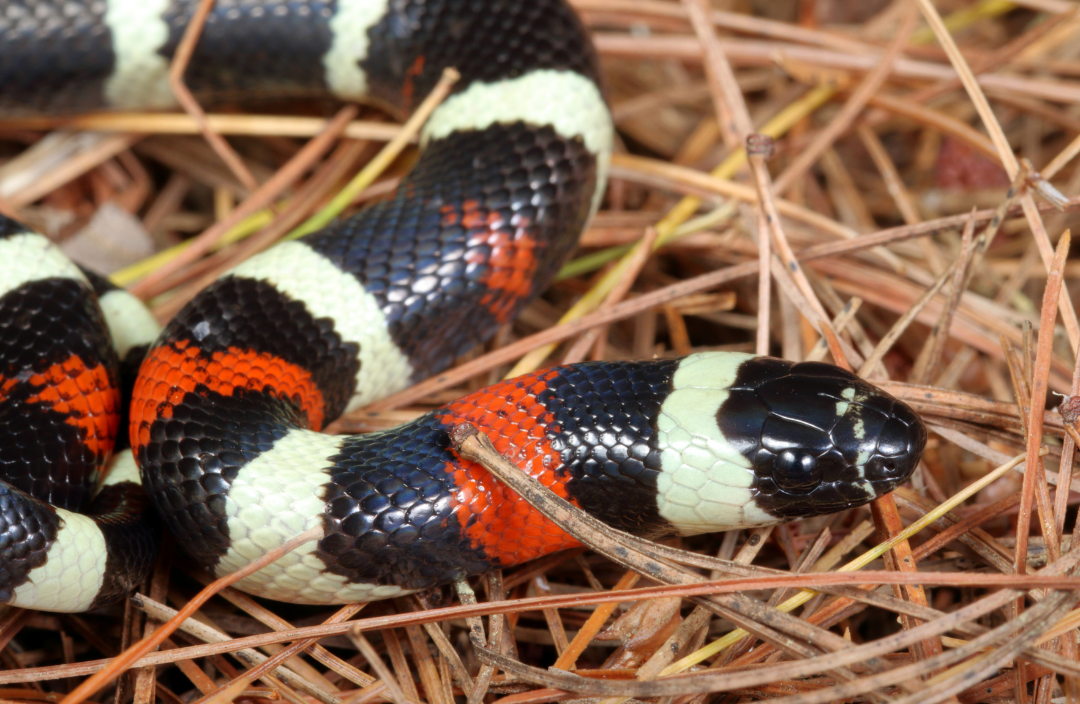
Concluding the reptilian journey, the final two enclosures, each measuring (4ftx4ftx2ft), showcase two distinctive snake species: the California Kingsnake, Lampropeltis Getula Californiae (0.1), and the Pueblan Milk Snake, Lampropeltis Triangulum Campbelli (1.1). The kingsnake's enclosure features a carefully curated blend of sand and dirt, adorned with strategically placed large plants and grasses for both aesthetic detail and essential coverage. A centrally positioned large log, complemented by scattered rocks and pebbles, provides an enriching environment for the snake.

full

California Kingsnake | Photo by @vogelcommando

On the other hand, the milk snakes enjoy a habitat that seamlessly blends elements of both desert and woodland landscapes. The substrate, a mixture of dirt and white sand, adds visual interest and serves as an ideal surface for the snakes. Scattered pine needles and leaves grace the floor, enhancing the naturalistic appeal. Large rocks and thoughtfully placed branches offer the milk snakes various points for exploration and basking, creating a habitat that reflects the diversity of their ecological preferences.

Pueblan-Milk-Snake-2.png

Pueblan Milksnake | No Photo Credit.
 
the Eastern Hellbender, Cryptobranchus Alleganiensis (1.0). Within its 700-gallon enclosure, a singular female gracefully navigates her aquatic domain.
I'll admit, this may be a little nitpicky and too late to fix, but it'd either be 0.1 individuals or it'd be a male.
the elusive Sphaerodactylus Rosaurae (1.1), Sphaerodactylus Ocujal (1.1), Gonatodes Fuscus (1.1), and the charming Sphaerodactylus Macrolepis (1.1).
I must say, I've never heard of these species in captivity before, but I quite enjoy the concept of displaying them. Very unique species choice here.
 
I'll admit, this may be a little nitpicky and too late to fix, but it'd either be 0.1 individuals or it'd be a male.

Did I write something down wrong? Or is the second number the amount of males? I hope not because that could really screw up this whole thing

I must say, I've never heard of these species in captivity before, but I quite enjoy the concept of displaying them. Very unique species choice here.

Definitley! They're actually somewhat common within the pet trade, not sure how much they are or how difficult they are to keep but definitely a sight to see in a zoo
 
Definitley! They're actually somewhat common within the pet trade, not sure how much they are or how difficult they are to keep but definitely a sight to see in a zoo
A pet store near me actually has a couple Gonatodes fuscus last time I checked.
 
Also, this collection is definitely inspiring some drastic changes I now plan to make to the roster of my own spec zoo :p
 
Back
Top