
cerperal
Well-Known Member
They must be the first collection to house them!Roloway meerkat:
Unsure of exactly how many (or what species) but several pelican chicks hatched around the new year as well.
They must be the first collection to house them!Roloway meerkat:

They must be the first collection to house them!
Unsure of exactly how many (or what species) but several pelican chicks hatched around the new year as well.
Monkeys yes (and I'm pretty sure we're still part of Europe). These new Roloway meerkats, however...Surely one-of-a-kind?There are actualy 14 holders of Roloway monkeys in Europe, 16 if you include the UK, according to ZTL. So I am not really sure what you mean with "the first collection to house them".
This is however a zoo first breeding for Tierpark Berlin, but they have been bred before in other European zoos.

Monkeys yes (and I'm pretty sure we're still part of Europe). These new Roloway meerkats, however...Surely one-of-a-kind?

Guenons are called Meerkatzen in German, so not really funny just a translation error.
According to Zootierliste, the male Javan leopard Arjuna has returned to Tierpark Berlin.
Construction delays are always frustrating but it’s crucial they get things right - onwards and upwards!

Source: Wer zieht in das Elefantenhaus?BUILDING SITE UPDATE from 29th of February 2024
WHO WILL MOVE INTO THE ELEPHANT HOUSE?
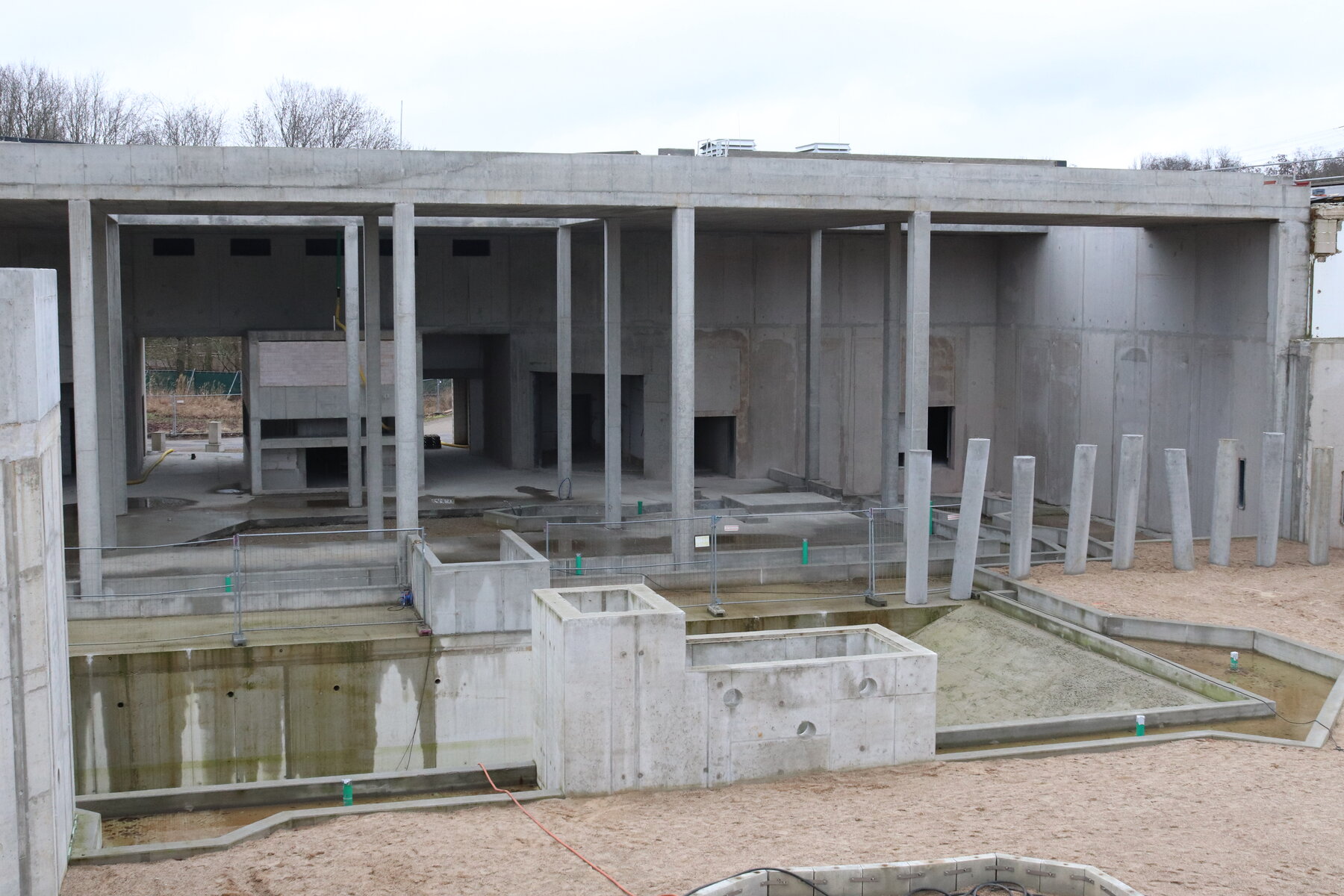
It still looks rather spartan on the site of the former pachyderm house at the zoo, but the next stage is about to begin.
The building shell of Europe's largest elephant house is almost complete and the 3500 square metre foil cushion roof is due to be finished in spring. In addition to elephants, honey badgers, rock hyraxes, weaver birds and various reptiles will move into the elephant house.
Picture: Tierpark Berlin
Habitats for reptiles and weaverbirds are located in the centre of the entrance hall. Guests will be able to observe the latter building their typical spherical nests. A large water basin is located in the centre of the elephant complex - here visitors can watch elephants splashing and swimming at close range.
Picture: Tierpark Berlin
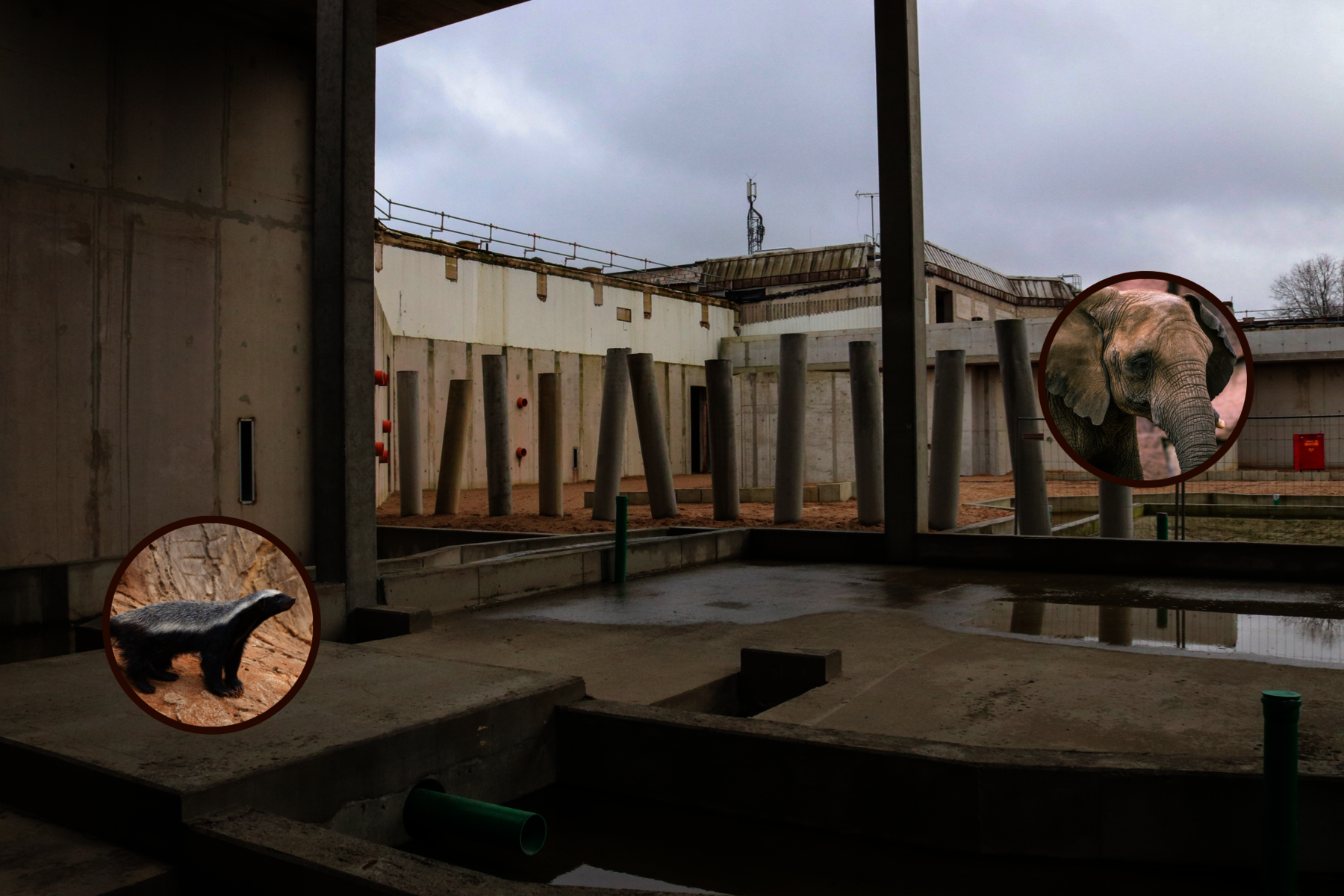
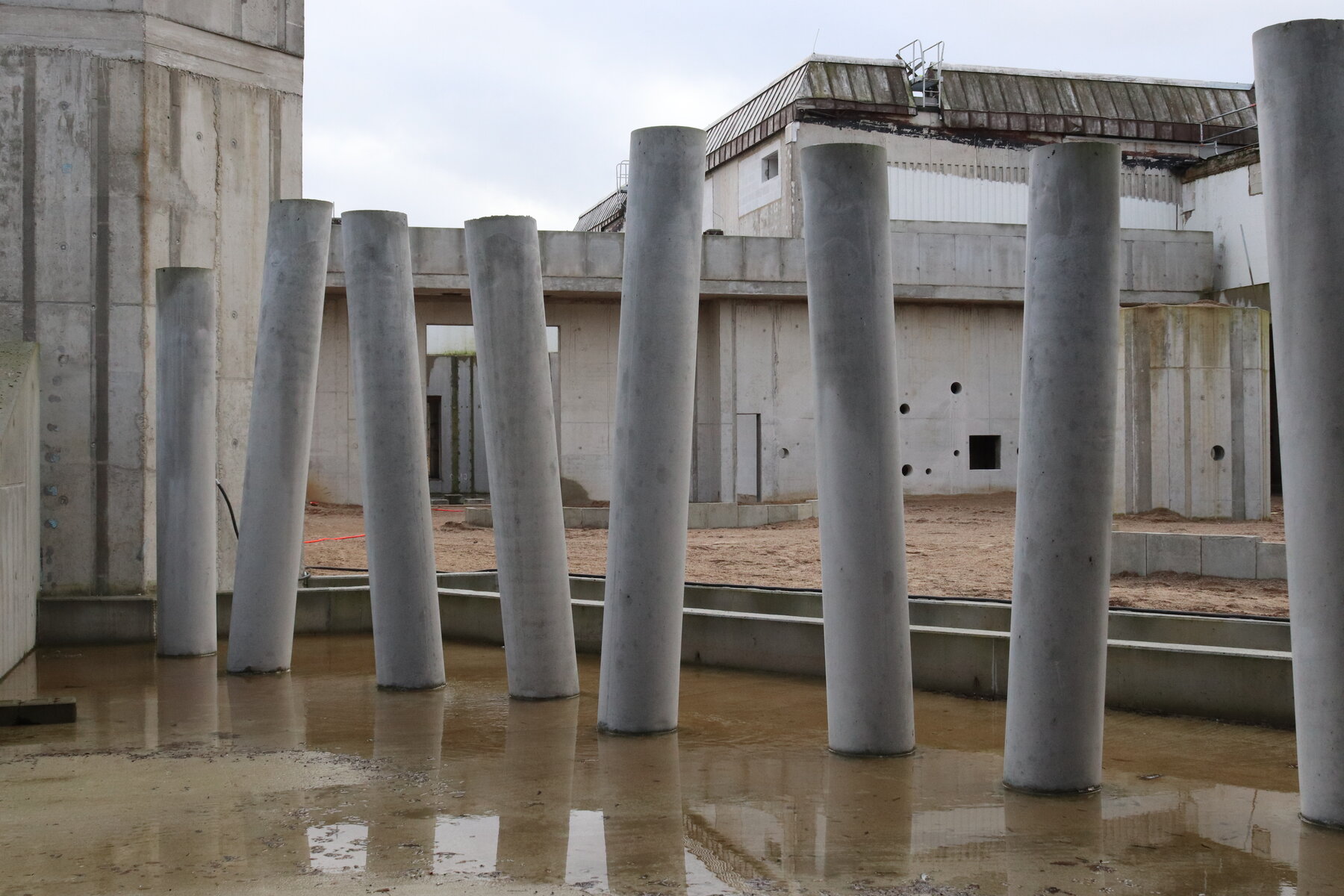
The honey badger - which eats far more than honey and is considered an omnivore - has found a new habitat in the elephant house. In future, the elephants will be kept in protected contact and animal keepers will not stand together with elephants in the same enclosure. The large concrete pillars serve as a barrier between guests and elephants.
Picture: Tierpark Berlin
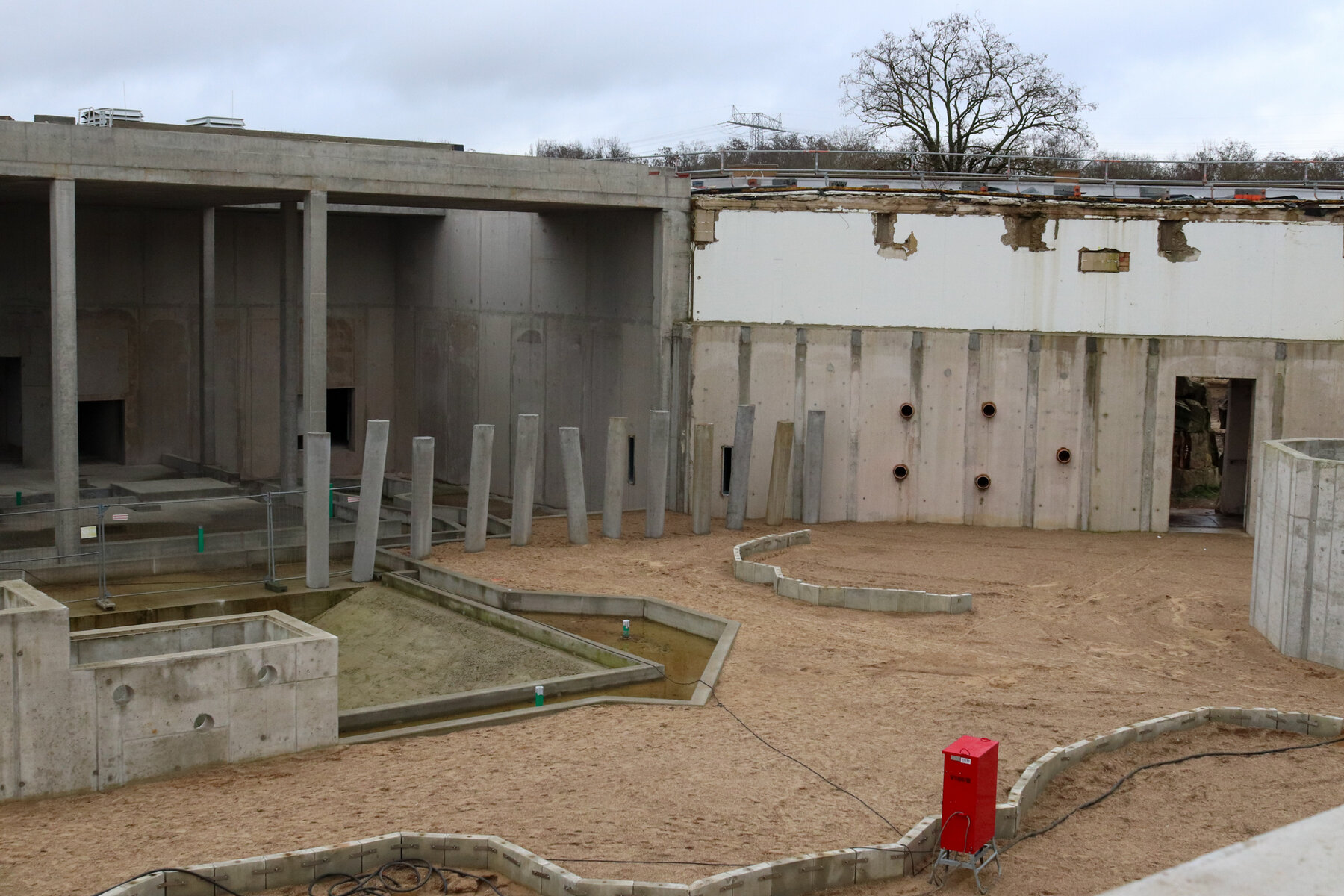
The natural sand floor for the elephants has already been laid out. And the first preparatory work for the animals' activities can also be seen on the walls. With their trunks, the grey giants will be able to find one or two hidden delicacies here.
Picture: Tierpark Berlin
A near-natural design with plant islands and artificial rocks is being planned, and the outdoor facilities have also been merged, thus expanding the area for the elephants. A total area of 7000 square metres is being created.

Picture: Tierpark Berlin
