Philippine eagle spotted above the Alpes

Day 10 #24 Wildnispark Zurich Langenberg

So after the Mythenquai aviary, I took the train to visit the Wildnispark Zürich. Wikipedia taught me that this park aims to provide nature experience and recreation for the population from the urban conurbation of Zurich, Zug and Lucerne. It offers courses, tours and workshops for groups, schools and individual visitors.

The park consists of 2 spaced-out sections: Wildpark Langenberg (80 ha) and the Sihlwald (1100 ha), both in the Sihl valley south of Zurich. I only visited the former, the Sihlwald is actually more of a nature park where you can take long walks through mountain forests and across moors. Otters, European crayfish and fish are the only animals on display there; there is also a restaurant and a nature museum.

Wildpark Langenberg is about 15 minutes from Zurich by train. The park is located on and around the Langenberg in the municipality of Langnau am Albis. The park itself (Langeberg Ost) is free and accessible 24 hours a day (the - few - buildings do close), the extended part (Langenberg West) is also free but does close in the evening.

The Langenberg Widnispark is a member of the Swiss Association of scientific zoos and claims to be the oldest zoo in the country (it opened as early as 1869). It exhibits only native animals, including species that have since become extinct in Switzerland (e.g. moose and wisents), as well as introduced species such as sikadeer. The odd ones out were the Prezwalskii horses, but they of course refer to the tarpan, a wild European horse that became extinct (in 1887).

From the train station, it's a solid 3km uphill walk before you get to the actual animal enclosures. I had completely misjudged it (I had undergone knee surgery 2 months before this trip).

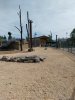
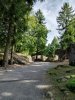
Langenberg-Ost consists of a forested hill with large natural enclosures for wolves, lynx and brown bears. It has steep climbs in dense forest with viewing platforms here and there. At the bottom of the valley is a large restaurant and shop. Here is also the visitor bridge to Landenberg-West.

upload_2024-1-18_17-22-45.jpeg
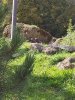
Eurasian wolf enclosure and viewing point

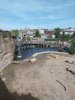
In the valley we find a lookout point for brown bears, wild boars, hares and 2 visitable buildings.

upload_2024-1-18_17-18-51.jpeg
Eurasian brown bear enclosure seen from the restaurant

Here I saw the first wild boar walk through (mandatory with a park ranger), I wonder what our American friends will think of that. :)

The Müsli-Hüzli Haus is a building dedicated to rodents. Seven sleepers, house mice and brown rats can be seen. The enclosures are decorated like a real (human) house.

upload_2024-1-18_17-20-7.jpeg
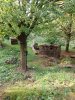
Müsli-Hüzli - Brown rat enclosure

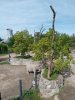
The Wildkatzenhaus visitor gallery gives a good insight into a spacious enclosure for European wild cats.

upload_2024-1-18_17-20-56.jpeg
Wildkatzenhaus

Neighbouring enclosures include red deer, Alpine ibex, Alpine marmot, European fallow deer and Sika deer.

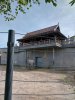
Langenberg-West consists of more open terrain on another hill. This was the only moment of the trip where I had to decide not to visit this part of the zoo. Knowing that I still had to cross the first hill back to get to the station, I didn't see the Urzeitrundweg as a good idea. I therefore only saw the enclosures for moose, wisents and foxes. Higher up live roe deer and Prezwalski horses, so no great loss as both species are very abundant in European zoos.

upload_2024-1-18_17-21-34.jpeg
Moose house

After a long day, I decided to walk around downtown Zurich before heading to my hotel. It was an almost perfect day, unaware that the next morning would start with some calamity.
 

Attachments

  • upload_2024-1-18_17-18-51.jpeg
    upload_2024-1-18_17-18-51.jpeg
    160.9 KB · Views: 194
  • upload_2024-1-18_17-20-7.jpeg
    upload_2024-1-18_17-20-7.jpeg
    80.1 KB · Views: 203
  • upload_2024-1-18_17-20-56.jpeg
    upload_2024-1-18_17-20-56.jpeg
    236.9 KB · Views: 213
  • upload_2024-1-18_17-21-34.jpeg
    upload_2024-1-18_17-21-34.jpeg
    173.7 KB · Views: 202
  • upload_2024-1-18_17-22-45.jpeg
    upload_2024-1-18_17-22-45.jpeg
    235.7 KB · Views: 207
Thanks for the review of this zoo as it brought back some nostalgia for me. Before my two big European zoo trips (2019 and 2022), I went to Europe once before and it was in October-November 2003. I spent 3 weeks between Switzerland and Italy and visited only two zoos...scandalous! ;) One was Zurich, a few months after the Masoala Rainforest complex opened, and the other was Langenberg. Zurich didn't have as many exhibits back then and I saw both zoos on the same day and didn't get back to my place of residence until very late in the night with aching legs due to so much walking. I do recall Langenberg being like a typical German 'wildpark', or similar to Northwest Trek Wildlife Park near Seattle, and I enjoyed it immensely. They didn't have a walk-through Wild Boar exhibit back then!
 
Day 11 #25 Knie’s Kinderzoo – Rapperswill

The morning started fairly disastrously with a dead car battery. The hotel staff were not very helpful and I could barely use the wifi to top up my roaming. Via a friend in Belgium, I was eventually able to reach the Swiss TCS service after which a very friendly man helped me excellently (which did cost me a staggering 500 euro). On that Sunday morning, neither of us were really in a hurry, so there was time for a little chat. It took a while for him to grasp the concept of my trip, as "visiting zoos is what you do with your children". He was surprised to learn that there was such a thing as Zoochat, where enthusiasts (he didn’t say ‘nerds’ ) could go on endlessly about how things would be now with young gorilla Okabe, or how awfull that new building at zoo X does look like, or where members post endless boring reports about their zoo visits.

Rapperswill is the headquarters of the well-known circus Knie. The zoo opened back in 1962 and already a year later it was able to celebrate the very first birth of an Asian elephant in Switzerland.

Only 11 mammal species, 6 birds and 1 reptile species, domestic ones not counted. One of these mammals was a mouse and 2 others were suricate and ringtailed lemur, 2 very common species. Still, I was looking forward to my first visit here, as each place can hold surprises.

It is probably no surprise to anyone that this is a very commercial zoo where hands-on contact with animals because of its circus background, is very common.

The zoo is literally crammed with catering outlets, pony and camel rides, and therefore fully aims for direct interaction between animals and the public. The feeding and info moments are uncountable. So with a farm section with domesticated animals, elephants, giraffes and zebra’s, lemurs and squirrel monkeys, some parrots, pinguins and cheetah, most children are in no need of more species. In the 70-80-90 of the past century it had a dolphinarium on the zoo grounds. Nowadays, kiddies can ride pony’s, camels and even elephants, so this place is on the thin line for me. For such a small place it has an amazing 7 food locations.

So why did I visit it? It was on my itinerary and this zoo is listed with no less than 3 appaerances in Natschja Meuser's excellent book, Construction and Design Manuel. Zoo Buildings. However, this place is not a paragon of beautiful architecture. It often reminded me of Rhenen, with its mishmash of strange structures and styles.

I had noticed before that Swiss zoos are particularly well visited, and it was no different here, on a Sunday. It was a long search to find a parking space.

Of the buildings mentioned in Meuser's book, both the Giraffe Building and Himmapan (Asian elephant and Bactrian camels) do not appeal to me at all. The giraffe enclosure is crammed into a corner of the zoo, and also includes an unsightly overlook that almost cuts the enclosure in half.

upload_2024-1-20_9-30-12.jpeg
Giraf building and enclosure with vantage point

The term 'beauty' has a different meaning here than in other places.

Knie's Himmapan exhibit for Asian elephants is the zoo's showpiece. It is spacious and well-structured with 2 outdoor enclosures along which visitors walk via a bailey bridge through a rocky landscape, but it is a pity that the stables are not visitable. It is a meticulously themed chain of Thai restaurants, lodges and takeaway points but there is little added value for the zoo visitor. It is mainly a venue for events and allows the zoo to remain partly operational during the winter closure months.
upload_2024-1-20_9-30-56.jpeg
Bailey bridge between the 2 enclosures for elephants

upload_2024-1-20_9-31-10.jpeg

upload_2024-1-20_9-31-24.jpeg
Himmapan, Thai restaurant and elephant stables

The zoo’s primate enclosures are probably the best exhibits here. The ringtailed lemurs live on a island connected with their night building by a sky bridge. The Bolivian squirrel monkeys have a spacious outdour aviary, shared with common red-rumped agouti.

upload_2024-1-20_9-32-32.jpeg
Ringtailed lemur island

Cheetahs and Humboldt penguin live side by side in decent enclosures with some vantage points for visitors. Elsewhere are macaw aviaries and the inevitable flamingos and meerkats.

upload_2024-1-20_9-33-4.jpeg
African pinguin enclosure

A strange tower dominates the view everywhere. It is the former dolphinarium that closed its doors in 1998 when the last animals moved to Benidorm. In its place came Californian sea lions but anno 2023 the building is used for group shows.

upload_2024-1-20_9-33-30.jpeg
Bolivian squirrel monkey aviary

I would describe Knie's Kinderzoo as a bit boring and rather ugly, but with decent enclosures and enough entertainment for visitors. It's not a bad zoo, but it's not exactly a place I'll be visiting again anytime soon. Since none of the buildings described are visitable, it is also a bit disappointing on that side.

After just over an hour, I was back in the car and driving across the bridge separating the Zurichersee and the Obersee to my next destination, located in the heart of the financial variant of the Sillicon Valley.
 

Attachments

  • upload_2024-1-20_9-30-12.jpeg
    upload_2024-1-20_9-30-12.jpeg
    137.1 KB · Views: 179
  • upload_2024-1-20_9-30-56.jpeg
    upload_2024-1-20_9-30-56.jpeg
    109.5 KB · Views: 178
  • upload_2024-1-20_9-31-10.jpeg
    upload_2024-1-20_9-31-10.jpeg
    130.5 KB · Views: 178
  • upload_2024-1-20_9-31-24.jpeg
    upload_2024-1-20_9-31-24.jpeg
    111.9 KB · Views: 182
  • upload_2024-1-20_9-32-32.jpeg
    upload_2024-1-20_9-32-32.jpeg
    164 KB · Views: 180
  • upload_2024-1-20_9-33-4.jpeg
    upload_2024-1-20_9-33-4.jpeg
    206.8 KB · Views: 180
  • upload_2024-1-20_9-33-30.jpeg
    upload_2024-1-20_9-33-30.jpeg
    144 KB · Views: 181
Day 11 #25 Knie’s Kinderzoo – Rapperswill

The morning started fairly disastrously with a dead car battery. The hotel staff were not very helpful and I could barely use the wifi to top up my roaming. Via a friend in Belgium, I was eventually able to reach the Swiss TCS service after which a very friendly man helped me excellently (which did cost me a staggering 500 euro). On that Sunday morning, neither of us were really in a hurry, so there was time for a little chat. It took a while for him to grasp the concept of my trip, as "visiting zoos is what you do with your children". He was surprised to learn that there was such a thing as Zoochat, where enthusiasts (he didn’t say ‘nerds’ ) could go on endlessly about how things would be now with young gorilla Okabe, or how awfull that new building at zoo X does look like, or where members post endless boring reports about their zoo visits.

Rapperswill is the headquarters of the well-known circus Knie. The zoo opened back in 1962 and already a year later it was able to celebrate the very first birth of an Asian elephant in Switzerland.

Only 11 mammal species, 6 birds and 1 reptile species, domestic ones not counted. One of these mammals was a mouse and 2 others were suricate and ringtailed lemur, 2 very common species. Still, I was looking forward to my first visit here, as each place can hold surprises.

It is probably no surprise to anyone that this is a very commercial zoo where hands-on contact with animals because of its circus background, is very common.

The zoo is literally crammed with catering outlets, pony and camel rides, and therefore fully aims for direct interaction between animals and the public. The feeding and info moments are uncountable. So with a farm section with domesticated animals, elephants, giraffes and zebra’s, lemurs and squirrel monkeys, some parrots, pinguins and cheetah, most children are in no need of more species. In the 70-80-90 of the past century it had a dolphinarium on the zoo grounds. Nowadays, kiddies can ride pony’s, camels and even elephants, so this place is on the thin line for me. For such a small place it has an amazing 7 food locations.

So why did I visit it? It was on my itinerary and this zoo is listed with no less than 3 appaerances in Natschja Meuser's excellent book, Construction and Design Manuel. Zoo Buildings. However, this place is not a paragon of beautiful architecture. It often reminded me of Rhenen, with its mishmash of strange structures and styles.

I had noticed before that Swiss zoos are particularly well visited, and it was no different here, on a Sunday. It was a long search to find a parking space.

Of the buildings mentioned in Meuser's book, both the Giraffe Building and Himmapan (Asian elephant and Bactrian camels) do not appeal to me at all. The giraffe enclosure is crammed into a corner of the zoo, and also includes an unsightly overlook that almost cuts the enclosure in half.

View attachment 680832
Giraf building and enclosure with vantage point

The term 'beauty' has a different meaning here than in other places.

Knie's Himmapan exhibit for Asian elephants is the zoo's showpiece. It is spacious and well-structured with 2 outdoor enclosures along which visitors walk via a bailey bridge through a rocky landscape, but it is a pity that the stables are not visitable. It is a meticulously themed chain of Thai restaurants, lodges and takeaway points but there is little added value for the zoo visitor. It is mainly a venue for events and allows the zoo to remain partly operational during the winter closure months.
View attachment 680833
Bailey bridge between the 2 enclosures for elephants

View attachment 680834

View attachment 680835
Himmapan, Thai restaurant and elephant stables

The zoo’s primate enclosures are probably the best exhibits here. The ringtailed lemurs live on a island connected with their night building by a sky bridge. The Bolivian squirrel monkeys have a spacious outdour aviary, shared with common red-rumped agouti.

View attachment 680836
Ringtailed lemur island

Cheetahs and Humboldt penguin live side by side in decent enclosures with some vantage points for visitors. Elsewhere are macaw aviaries and the inevitable flamingos and meerkats.

View attachment 680837
African pinguin enclosure

A strange tower dominates the view everywhere. It is the former dolphinarium that closed its doors in 1998 when the last animals moved to Benidorm. In its place came Californian sea lions but anno 2023 the building is used for group shows.

View attachment 680838
Bolivian squirrel monkey aviary

I would describe Knie's Kinderzoo as a bit boring and rather ugly, but with decent enclosures and enough entertainment for visitors. It's not a bad zoo, but it's not exactly a place I'll be visiting again anytime soon. Since none of the buildings described are visitable, it is also a bit disappointing on that side.

After just over an hour, I was back in the car and driving across the bridge separating the Zurichersee and the Obersee to my next destination, located in the heart of the financial variant of the Sillicon Valley.

This place is really weird. For such a tiny place it receives a lot of visitors (close to 400.000 per year) and it advertises regularly throughout Switzerland. So apparently there are enough people that go for a 2 hour one-way trip for a zoo with nearly as many enclosures as restaurants. When I visited I purposely hadn't looked up anything before to have at least some surprise element and while I expected it to be small, it is really tiny. It felt like a zoo designed by kids, but the animal exhibits tended to be of quite a high quality. That is something not always a given at such commercial places...

Maybe @zoomaniac can enlighten us on why this place is so popular when there are far better zoos around in the area. Has nostalgia anything to do with it?
 
Last edited:
The last two reviews have been very interesting. I wish we had wild parks in the UK, although I suppose Highland Wildlife Park isn’t too far off. A former circus now children’s zoo still keeping elephants and giraffes is equally shocking, as in the UK, ‘children’s zoo’ brings to mind images of the one hectare Battersea Park, whose biggest animal is a rhea. Even more shocking is that the elephant enclosure actually looks more than decent.

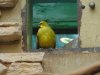
Regarding Mythenquai (I was wrong in my previous post, as I have visited here as well as Zurich), the outdoor area was closed on my visit, so it is nice to know that it is open now, and that you enjoyed your visit as much as I did. I thought the aviaries weren’t too small for the most part, but the honeycreepers were an unfortunate exception. It’s interesting to note how, in both our photos, the Yellow Cardinal was perched in the doorway connecting the indoor and outdoor enclosures - certainly seems to be its preferred spot:

upload_2024-1-20_13-57-3.jpeg
 

Attachments

  • upload_2024-1-20_13-57-3.jpeg
    upload_2024-1-20_13-57-3.jpeg
    141 KB · Views: 178
. I wish we had wild parks in the UK, although I suppose Highland Wildlife Park isn’t too far off.

I mean, there's a pretty good approximation not all that far from your neck of the woods - Wildwood in Kent. I've not managed to visit British Wildlife Centre as yet so can't speak to whether that fits the wildpark "feel" too, but Wildwood definitely does!
 
Unfortunately, I was the only visitor booked for the Welt der Gifte, while the minimum number of visitors for a tour is 2. So I should have got married after all. I took a look around the place, not too long in case someone calls the police 'because of a suspicious car with strange plates'. It is in an industrial area and it remained a mystery to me.
Too bad; you could have contacted me directly beforehand, like previous ZooChatters. Feel free to do so next time, if only to solve that mystery. ;)
Given that there are plenty of cars & trucks with foreign license plates in that industrial area, the local police doesn't bat an eyelid for just another one.
 
Last edited:
I mean, there's a pretty good approximation not all that far from your neck of the woods - Wildwood in Kent. I've not managed to visit British Wildlife Centre as yet so can't speak to whether that fits the wildpark "feel" too, but Wildwood definitely does!
Definitely a collection that I would love to visit, although the lack of sufficient public transport links has always been an issue. It did remind me, however, of when I visited Wildwood Devon, although at the time it was known as Escot and much more focused on the historic and natural elements on the site without the captive collection (this was long before the arrival of the bears, although there were wolves and lynxes by my second visit, and it had always had the otters, birds of prey, squirrels and wild boars). I suppose that Escot (as I still call it, although I really shouldn’t) does indeed match the description, as does Wildwood from what I have heard, and what I am really jealous of is the scenery in continental zoos which, from pictures and with HWP being an exception, always seems to be immensely more beautiful than anything in the UK.
 
Definitely a collection that I would love to visit, although the lack of sufficient public transport links has always been an issue.

Wildwood is actually very easy to reach by public transport - there's a bus every ten minutes from Canterbury bus station, which itself is only about 10-15 minutes walk from both Canterbury East and Canterbury West railway stations.

what I am really jealous of is the scenery in continental zoos which, from pictures and with HWP being an exception, always seems to be immensely more beautiful than anything in the UK.

There's definitely more "epic natural beauty" to be found on the continent, HWP and - to a lesser degree - Whipsnade excepted, but I reckon there's a few places here in the UK with their own kind of beautiful scenery... not least Cotswold Wildlife Park.
 
Day 11 #26 Volière Zug

The old cantonal capital Zug, situated on the shores of the lake of the same name, is not a big city with its 30 000 inhabitants, but as the centre of the Crypto Valley Association and with numerous headquarters of companies active in the financial sector, it is one of the richest cities in Switzerland.

This is perhaps why the Ornithologischer Verein der Stadt Zug manages not 1 but 2 aviaries 50 metres apart in the heart of the city, on Vorstadtquai. From the lake shore, you have a beautiful view of the mountains of the Bernese Ober Alps.

Although these aviaries are quite old, they do not seem architecturally valuable.

The Fasanerie is the oldest (1897) and is completely surrounded by good-sized aviaries. They are not high, but have good depth and are quite charming. I saw Eurasian nutcracker, crested partridge, Wonga pigeon, little owl, satyr tragopan, grey peacock pheasant, laughing kookaburra and a good range of wading birds. These are all meticulously maintained aviaries, perhaps a little uninspired when it comes to planting.

upload_2024-1-21_10-55-57.jpeg
European nutcracker, waldrapp, Greater Bornean crested fireback

upload_2024-1-21_10-57-24.jpeg
Wading birds aviary (scarlet ibis, little egret, African sacred ibis, etc.

The 'Neue Voliere' was established as a parrot house and has retained that function to this day, although other species are kept there these days. I saw Europe’s only piping hornbills (Bycanistes fistulator), red-necked Sulawesi ground pigeons, Bali mynas and a communal aviary for grey-capped emerald dove, Luzon bleeding heart, crested partridge and eastern hill myna. This construction does not get a beauty prize as far as I am concerned.

upload_2024-1-21_10-56-13.jpeg
Neue volière

upload_2024-1-21_11-7-38.jpeg
Piping hornbill (Bycanistes fistulator)

upload_2024-1-21_10-56-42.jpeg
Red-necked Sulawesi ground-dove

Unfortunately, I did not see the black francolin, bronze-winged parrot and white-eyed parakeet, all of which are on ZTL.

It was, again, unseasonably hot, and I would not have cared to enjoy a drink here on the banks of the lake, under the shade of the trees. The old town centre is very cosy with its traffic-free streets, craftsman's houses, bars and restaurants. The Vorstadtquai has a bar with beer, a public toilet for those in need, an ice cream stand, and 2 aviaries with beautiful birds, what more could a Belgian zoo nerd want? Nevertheless, I am visiting another, more famous, place this afternoon, which is highly regarded amongst Zoochatters.
 

Attachments

  • upload_2024-1-21_10-55-57.jpeg
    upload_2024-1-21_10-55-57.jpeg
    216.6 KB · Views: 164
  • upload_2024-1-21_10-56-13.jpeg
    upload_2024-1-21_10-56-13.jpeg
    257.7 KB · Views: 170
  • upload_2024-1-21_10-56-42.jpeg
    upload_2024-1-21_10-56-42.jpeg
    189.6 KB · Views: 157
  • upload_2024-1-21_10-57-24.jpeg
    upload_2024-1-21_10-57-24.jpeg
    225 KB · Views: 167
  • upload_2024-1-21_11-7-38.jpeg
    upload_2024-1-21_11-7-38.jpeg
    169.8 KB · Views: 162
The last two reviews have been very interesting. I wish we had wild parks in the UK, although I suppose Highland Wildlife Park isn’t too far off. A former circus now children’s zoo still keeping elephants and giraffes is equally shocking, as in the UK, ‘children’s zoo’ brings to mind images of the one hectare Battersea Park, whose biggest animal is a rhea. Even more shocking is that the elephant enclosure actually looks more than decent.

Regarding Mythenquai (I was wrong in my previous post, as I have visited here as well as Zurich), the outdoor area was closed on my visit, so it is nice to know that it is open now, and that you enjoyed your visit as much as I did. I thought the aviaries weren’t too small for the most part, but the honeycreepers were an unfortunate exception. It’s interesting to note how, in both our photos, the Yellow Cardinal was perched in the doorway connecting the indoor and outdoor enclosures - certainly seems to be its preferred spot:

View attachment 680870

Your shot of the yellow cardinal indeed, and also the ibis aviary near the Exotarium are almost identical.

If you like wildparks, my next post will make you more than happy.
 
Too bad; you could have contacted me directly beforehand, like previous ZooChatters. Feel free to do so next time, if only to solve that mystery. ;)
Given that there are plenty of cars & trucks with foreign license plates in that industrial area, the local police doesn't bat an eyelid for just another one.

Will do that, thx!
 
Piping hornbills are nowhere common, but there are at least a couple other zoos in Europe with the species. I saw them twice in 2023; in Veldhoven (NL) and Dvur Kralove (CZ)
 
Piping hornbills are nowhere common, but there are at least a couple other zoos in Europe with the species. I saw them twice in 2023; in Veldhoven (NL) and Dvur Kralove (CZ)

You're right, I only looked for Bycanistes fistulator without checking the subspecies.
 
Day 11 #27 Natur- und Tierpark Goldau

After Zug I drove to the heartland of the Swiss confederation, the canton of Schweiz, one of the founders of modern Switserland. Surrounded by lakes and mountains lies the small town of Goldau, home to the Natur- und Tierpark Goldau.

I don't frequently visit wildlife parks. Life is too short to pay much attention to wild boar and red deer, I see them often enough in the wild, which I prefer.

Nevertheless, this location was duly noted in my diary. After all, the park enjoys great fame among zoo-trippers for its excellent enclosures and stunning views.

I did not regret it; Goldau is a wonderful location.

Its history cannot be separated from the 1806 natural disaster, when heavy rains caused a landslide of Mount Rossberg and therefor the deaths of 457 people. Amid this wild landscape the tierpark was established in 1925, focusing on native and European fauna. The 42 hectares are divided in two by a busy road, but visitors can cross via a wide wildlife crossing.

The car parks were again completely full and the terraces of the zoo restaurant 'Der Grüne Gans' near the temporary entrance were also packed with hundreds of visitors, enjoying the sunshine and their drinks.

The park map reveals 3 visitor tours: fish and birds, rock and forest, bear and wolf. All three take visitors through an impressive landscape of mountain forests, large boulder formations and ponds. Together with the stunning views and spacious animal enclosures, they create an impressively charming atmosphere.

upload_2024-1-22_18-1-58.jpeg

It is true that the landscape is a gift and not the result of a vision. But it requires an excellent understanding of landscape architecture to integrate all these enclosures into the environment. And here they have done so magisterially.

The 'fish and birds' tour is the smallest of the three. It has a nice enclosure for European otters and some aviaries for Alpine birds.

upload_2024-1-22_18-2-26.jpeg
Eurasian otter enclosure

But the biggest surprise is a small underground building where 2 large windows provide views into a large pond respectively a large aquarium dedicated to life in the upper reaches of the Rhine. Simple design, beautifully executed.

upload_2024-1-22_18-3-2.jpeg
Pond view and Upper Rhine aquarium

The ‘rock and forest’ tour is the longest and goes up and down a steep moutain, through impressive mountain forests and between giant boulder formations. It starts near the brand-new entrance building, with a enclosure for European bison, but it otherwise consists almost entirely of an animal free-range walk through area with sika deer and mouflon. There’s an aviary for bearded vultures, excellent enclosures for Alpine chamois, ibex and marmot, and a new raven-owl aviary complex.

upload_2024-1-22_18-4-5.jpeg
Bearded vulture aviary

upload_2024-1-22_18-4-33.jpeg
Visitor's path

At the highest point of the zoo, is a building for pine marten and several mouse species, and an observation tower.

upload_2024-1-22_18-5-13.jpeg

Then it goes down again, carefully avoiding crossing sika deer, past a badger den and a nice enclosure for red foxes, to the Eurasian lynx and a truly outstanding exhibit for European wild cats. There is not 1 negative comment to make about this tour, which is consistently of very high quality from start to finish.

upload_2024-1-22_18-5-45.jpeg
Red fox enclosure

upload_2024-1-22_18-6-6.jpeg
European wild cat enclosure

The final tour 'bear and wolf' speaks for itself, it contains first and foremost a large bear-wolf complex, where there are both communal sections and seclusion areas. There’re several vantage points giving visitors good view on all sections, and a Bear and Wolf exhibition building. The Grosswijer is the other main exhibit and is a large farm with both utility animals and wild species that live close to humans. In addition to domestic breeds, storks, cranes and native amphibians are on display here.

upload_2024-1-22_18-6-36.jpeg
Syrian brown bear and Eurasian wolf communal enclosure

Some will call Gossau the Swiss answer to Innsbruck’s Alpenzoo. That is probably to much credit, but it’s certainly an excellent zoo.

That evening, I drove to Engelberg, a place full of childhood memories. It had been more than 25 years since I had last been there, and I was thoroughly enjoying the beautiful sunset over the 3,000m high ridges surrounding the cirque valley.
 

Attachments

  • upload_2024-1-22_18-1-58.jpeg
    upload_2024-1-22_18-1-58.jpeg
    146.1 KB · Views: 136
  • upload_2024-1-22_18-2-26.jpeg
    upload_2024-1-22_18-2-26.jpeg
    156.8 KB · Views: 135
  • upload_2024-1-22_18-3-2.jpeg
    upload_2024-1-22_18-3-2.jpeg
    92.9 KB · Views: 137
  • upload_2024-1-22_18-4-5.jpeg
    upload_2024-1-22_18-4-5.jpeg
    195.3 KB · Views: 129
  • upload_2024-1-22_18-4-33.jpeg
    upload_2024-1-22_18-4-33.jpeg
    178.3 KB · Views: 139
  • upload_2024-1-22_18-5-13.jpeg
    upload_2024-1-22_18-5-13.jpeg
    233 KB · Views: 135
  • upload_2024-1-22_18-5-45.jpeg
    upload_2024-1-22_18-5-45.jpeg
    224.1 KB · Views: 135
  • upload_2024-1-22_18-6-6.jpeg
    upload_2024-1-22_18-6-6.jpeg
    232.7 KB · Views: 137
  • upload_2024-1-22_18-6-36.jpeg
    upload_2024-1-22_18-6-36.jpeg
    165.5 KB · Views: 136
Day 12 #28 Volière Stansstadt

It was literally supposed to be the highlight of my trip. I had stayed overnight in Engelberg specifically to take the cable lift to the Titlis mountain on Monday morning.

Unfortunately, I got up and everything was covered in fog and rain clouds. While I arrived the previous evening with a brilliant evening sun shining over the mountain ridges, it was now raining steadily and there was nothing to see. I had bought the €105 ticket in advance, so I was hoping to be at 3,000m above the clouds. Alas. It could not spoil the fun of my fellow Chinese passengers in the cable lift: they were extremely enthusiastic and elated. It never ceases to amaze me why people must necessarily storm a Swarovskishop at 3000m altitude to buy a far too expensive watch.

Oh well, never mind. Time for the next location.

‘Its close to the lake and the birds enjoy the view’, said the flyer; I think they would far more enjoy a larger aviary. Certainly parrots and turacos have tiny cages, cramped between the building and a road viaduct.

upload_2024-1-24_17-54-1.jpeg

At the back of the building are 5 small aviaries for ararunas, two subspecies of green and a red-crested turaco, Timeh parrots, yellow-winged blue-fronted and orange-winged amazons, sun parakeets and zebra finches.

upload_2024-1-24_17-59-14.jpeg
Red-crested, Guinea and Buffon's green turaco


To the side and front of the building is a larger aviary with a smaller water feature. It had mandarin duck, white-cheeked pintail, Amethyst and purple-glossy starlings.

upload_2024-1-24_18-0-58.jpeg
Largest aviary

In addition, there are six other aviaries here for Bali myna, golden-breasted and purple-glossy starlings, sun and Alexander parakeets, budgerigar, cockatiel and domestic canary birds.

upload_2024-1-24_18-2-32.jpeg
Sun conure

A very friendly police officer then empathically understood why I had 'forgotten' to take a parking ticket. It would otherwise have been a very expensive 24 hours.
 

Attachments

  • upload_2024-1-24_17-54-1.jpeg
    upload_2024-1-24_17-54-1.jpeg
    162 KB · Views: 120
  • upload_2024-1-24_17-59-14.jpeg
    upload_2024-1-24_17-59-14.jpeg
    159.3 KB · Views: 121
  • upload_2024-1-24_18-0-58.jpeg
    upload_2024-1-24_18-0-58.jpeg
    135.9 KB · Views: 118
  • upload_2024-1-24_18-2-32.jpeg
    upload_2024-1-24_18-2-32.jpeg
    176.8 KB · Views: 115
Switzerland is unusual in that many towns have aviaries open to the pubic in city parks. I think no other country has such a tradition, and I would be quite interested how it came to be.
 
Switzerland is unusual in that many towns have aviaries open to the pubic in city parks. I think no other country has such a tradition, and I would be quite interested how it came to be.

You are absolutely right, and as I wrote in #20, I have the same question. Couldn't immediately find a clear answer.

In no other country is this expressed so well as in Switzerland, where more than 15 such urban public city aviaries can be found.

All are concerned with the care of tropical birds and run by an ornithological society (with or without financial intervention from the city), but it is a mystery to me why they are so numerous just in this country (there are more than 15), while these are completely absent in f.e. Austria.
 
In southern Germany there are small bird parks run by local bird keeping associations. I almost written cagebird keepers, but some are respectable collections with larger and scarce species. But they have the form of a small fenced bird park, not an aviary in the city center.
 
Back
Top