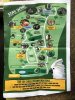
Call of the Wild Zoo New collection in Essex: Call of the Wild Zoological Park

Visited 4/11
Lots changed since my last visit at the beginning of this year.
Animals on show in the area between the reception and the rainforest corner are:
Caiman lizard
False water cobra
Spectacled caiman

In the rainforest corner were exhibits for:
Cuvier's dwarf caiman
Chinese crocodile lizard
(a pair)
Biak tree monitor
Philippine sailfin lizard
Blue tongued skink
Reticulated python

Straight ahead in the tropical house (where Digby used to be) was the Burmese python.
On the left as you enter was a netted viewing area for the False gharial and seemingly the only area with butterflies, although only 2 were seen.
Just past this, in the main tropical house was an open top mixed exhibit for Red-footed tortoise and Green Iguana.
The aviary previously home to Java sparrow was empty with the sparrows freeroaming in the tropical house alongside:
Victoria crowned pigeon
Diamond dove
Gouldian finch
Roul-roul
Red crested turaco
Black-cheeked lovebird
Goldies lorikeet

A single unidentified conure who seemed to be bonded to the Goldies lorikeet
Rainbow lorikeet (alot!)
The ponds in the centre of the tropical house each held Goldfish and Koi, the goldfish pond seemed to have basking areas for turtles but none were seen.
In the end aviary was the Nile monitor.
The exit to the tropical house was still through the rainforest corner.
Upon exiting the viewing windows are separate exhibits, the left holding Digby, the Six-banded armadillo, and more Conures. The right held Common marmoset, although only one was seen. Opposite this was the enclosure for a very active Common genet. In the discovery kingdom I only saw Giant day gecko, mixed with Madagascar hissing cockroach and two small exhibits for both Sun beetle and a Stick insect sp.

In the area beyond the tropical house, the aviary formerly housing umbrella cockatoo now housed a single Red-tailed black cockatoo, a single Australian king parrot and a single Ringneck parakeet. Of the two aviaries behind, the right was empty and the left housed a single Green-winged macaw and a single Blue-and-gold macaw together.

In this same area was exhibits for Domestic rabbits, Guineapigs, Kune kune pigs and Striped skunk. As well as aviaries for American red squirrel and Umbrella cockatoo. Behind them a walkthrough for first Pygmy goats and then Bennetts wallaby. The exit to this opposite to aviaries for Hyacinth macaw and Blue-throated macaw. Aviaries further along this path housed Ring-tailed coati, Bolivian squirrel monkey and Striated caracara. The new bird of prey aviaries housed Laughing kookaburra, Turkey vulture, Bengal eagle owl and Harris' hawk. The old bird-of-prey corner housed 2 Barn owl subspecies (guttata and alba), the second Laughing kookaburra, Tawny owl and Chaco owl.

The zoo beyond this had not much changed, apart from ongoing developments to the former Crested porcupine and Yellow mongoose exhibit and the new arrivals of the Greater flamingo.
The new flamingo enclosure is a large netted aviary with great viewing, including a 'walk-in' area. This area housed Meerkat, Ring-tailed lemur, Brown lemur, Black-and-white colobus monkey, Serval, African grey parrot, Black-and-white ruffed lemur, African civet and the Greater flamingo.

The large walkthrough at the far end of the zoo was likewise very much unchanged with the right-side housing Domestic chickens, a single Kune kune pig, a single Domestic goat and a small group of Patagonian mara. On the left was a single Llama and a single Greater rhea.

In the 'Asia' area by the exit, both the Binturong and Asco were very active. The two small aviaries by the playpark housed Red fox (signed but not seen) and Great horned owl.

Species listed on ZTL but not seen:
Crested porcupine
Red fox (signed)
Yellow mongoose
Black-headed parrot
Brown wood owl
Guineafowl
Sulcata tortoise (signed)
Central american wood turtle
Central bearded dragon
Corn snake
Green tree python
Horsfield's tortoise
Red-tailed ratsnake
Ball python
Veiled chameleon
Golden poison frog
Green-and-black poison frog
Ornate horned frog
Splashback poison frog

Re, the Yellow Mongooses. I have not seen them for over a year. The porcupines took over the enclosure that the Yellow Mongooses were in, and yesterday that was empty too. It looked very muddy and with all the burrows, possible waterlogged, so perhaps the porcupine's have been moved to a drier, off show, enclosure.
 
Went for a visit to Call of the Wild Zoo this morning, and had a pretty good visit (by the end, it was siling with rain). These are the animals I noticed:

Rainforest Corner
  • Caiman lizard, false water cobra, spectacled caiman, Cuvier's dwarf caiman, Chinese crocodile lizard (three individuals), Biak tree monitor, sailfin lizard and reticulated python
  • Blue-tongued skink was off-show (but will be mentioned later)
  • The pool in the dwarf caiman tank was home to, I think, two new species of tetra - one of them I think was the serpae tetra. The other looked similar but was silvery in colour. The fish were unsigned.
Tropical House
  • A large sign has been placed by the entrance of the Tropical House explaining that, in winter, the butterflies will not be displayed so that the money can be spent heating the rest of the house.
  • The free-roaming birds were the same ten mentioned in post #56 (the conures are green-cheeked conures).
  • The separate enclosures were home to goldfish and koi carp (in ponds), common marmoset, Nile monitor (unseen) and false gharial.
  • The enclosure formerly for armadillo (and since then, the Burmese python) was empty.
Discovery Kingdom and Jungle Room
  • All but one of the Discovery Kingdom tanks were occupied (although most were unsigned) - in them were Indian common stick insect, Mexican redknee tarantula, sun beetle, African giant land snail, Asian forest scorpion, Anthony's poison-dart frog, the mix of Madagascar day gecko and Madagascar hissing cockroach and an unidentified species of tarantula.
  • Managed to visit the Jungle Room and look at the four tanks there - they were home to royal python, corn snake, an unidentified uromastyx and red-tailed ratsnake.
  • Behind the Discovery Kingdom tanks, through the partially sheer hessian sacking, some off-show tanks could be seen. In those, I could see a second red-tailed ratsnake and the blue-tongued skink.
First outdoor section
  • Outside the exit of the Tropical House and Rainforest Corner, the three enclosures featured a mix of the six-banded armadillo and black-headed caiques, the common genet and the red-tailed black cockatoo and Australian king-parrot (only the indoor area was visible for the latter species).
  • The old black cockatoo and king-parrot aviary was now home to the blue-throated macaws.
  • The domestics in this section included the donkeys, kunekune pigs (in a paddock formerly for male goats), two separate enclosures for different rabbit breeds and guinea pigs.
  • The bird of prey aviaries were now home to the mix of green-winged and blue-and-gold macaws and the red fox.
  • The American red squirrels, umbrella cockatoo, striped skunk, ring-tailed coati and hyacinth macaws were all in the same enclosures as before.
  • The old blue-throated macaw aviary was now home to a pair of scarlet macaws.
  • The bird of prey corner was home to two types of barn owl, a laughing kookaburra, a tawny owl and a Chaco owl.
  • The goat and wallaby walkthrough paddocks were now finished and both occupied by their respective animals.
Second outdoor section
  • Bolivian squirrel monkeys are now mixed with a pair of Patagonian mara.
  • Birds of prey in the aviaries in this zone included the striated caracara, turkey vulture, another laughing kookaburra and Bengal eagle owl - the Harris's hawks were not visible.
  • The two aviaries behind the show area had great horned owls and, replacing the red fox, domestic chickens.
  • The Asian small-clawed otters and binturong were both visible.
  • The African section now featured the greater flamingos, colobus monkeys, common brown lemurs, African grey parrot (not seen), the mix of ring-tailed lemurs, helmeted guineafowl and African spurred tortoise (all visible), meerkats, servals, African civets, black-and-white ruffed lemurs and Chapman's zebra (the enclosure combines the wallaby half of the walkthrough area with a new section between the serval enclosure and the car park). The male goats and another pig were in paddocks within the zebra enclosure.
Some of the newer developments (especially the flamingo aviary) are of a pretty high standard. Also, I have to say that I have almost never seen such thorough signage as that for the Colobus Canopy display - there was a new solid wall covering part of the flamingo aviary that had practically everything you would ever want to know about colobus monkeys; their distribution, habitat, adaptations, diet, conservation, differences between Old and New World monkeys, the different genera of colobus monkeys and information about the three individuals and their daily captive diet. Really quite impressive, all things considered.

So to sum up, the new species I noticed that are not on Zootierliste:
  • Serpae tetra
  • Anthony's poison-dart frog
  • Scarlet macaw
  • Unidentified uromastyx and an additional unidentified tetra
 
First visit of the year 26.01.2024. Weather very bright, cold, and windy so most of the feathered exhibits were sheltering in corners or in their houses. Noticeably, a few are moulting and are feather plucking. Hope it's just seasonal!
Major changes going on where the porcupines used to be, the area is closed off, and the diggers are in. I believe this is where the penguins will eventually be housed.
In the tropical house, just opposite from the Reticulated Python, I noticed a sign for a Mexican Beaded Lizard where the Blue tongued Skink used to be, I didn't see either animal, however this is a new sign, perhaps it's coming?. The Biak Tree Monitor, False Water Cobra, Sailfin, Cuvier's Dwarf Caiman, Chinese Croc lizard, were all present.
In the main area of the tropical house, the old Burmese Python, exhibit is still empty. The lorikeets, Java Sparrows, Turaco and other birds (not sure of species) free fly in the house. The 3 Victoria Crowned Pigeons dominate the ground level, along with the smaller 'quail type' birds. (No species again, sorry).
I was extremely privileged to witness the weekly feeding (guinea pig) of the Tomistoma, and watched for quite sometime as she played with her meal before consuming it.
The Nile Monitor, Common Marmosets, Red Footed Tortoises and Common Iguana were all present.
Outside again, and as it was windy, the flying display was shortened to only the Striated Caracara (Stacey) and Tango the Barn Owl. Later I was to learn that the younger barn owl (Hamilton) had sadly passed away.
A bit later in the afternoon, I watched a training session with the two, hand reared, Serval kittens, now 8 months old. These are unrelated to the adults already in the zoo. Hopefully when/if ready, these will be part of the animal display.
As previously stated, the weather was pretty cold/windy and 50% of the outside exhibits were empty, with inhabitants being in their cosy houses.
Animals/Birds outside and seen (in short) were, Flamingos, Donkeys, Otters, Binturong, B&W Ruffed Lemur, Ring-Tail Lemur, Wallaby, Goats, Black -Headed Parrot, Hyacinth Macaws, Squirrel Monkeys, American Red Squirrel, few other Macaw species, Genet, Flemish Giant Rabbit, Horned Owl, African Grey, Umbrella Cockatoo, Kookaburra, Turkey Vulture, Mara, Colobus, & 6 Bd Armadillo.
Unfortunately I didn't have time to check the indoor houses.
Problems with camera lenses fogging up, so only a few shots, which I will upload later.
 
I noticed a sign for a Mexican Beaded Lizard where the Blue tongued Skink used to be, I didn't see either animal, however this is a new sign, perhaps it's coming?

Just to confirm, they are on display! Just take a little luck in spotting them

Also worth noting that at the moment an annual pass is only £30 which is only the cost of two visits so anyone local may want to make the most of this offer. I certainly have!
 
First visit of the year 26.01.2024. Weather very bright, cold, and windy so most of the feathered exhibits were sheltering in corners or in their houses. Noticeably, a few are moulting and are feather plucking. Hope it's just seasonal!
Major changes going on where the porcupines used to be, the area is closed off, and the diggers are in. I believe this is where the penguins will eventually be housed.
In the tropical house, just opposite from the Reticulated Python, I noticed a sign for a Mexican Beaded Lizard where the Blue tongued Skink used to be, I didn't see either animal, however this is a new sign, perhaps it's coming?. The Biak Tree Monitor, False Water Cobra, Sailfin, Cuvier's Dwarf Caiman, Chinese Croc lizard, were all present.
In the main area of the tropical house, the old Burmese Python, exhibit is still empty. The lorikeets, Java Sparrows, Turaco and other birds (not sure of species) free fly in the house. The 3 Victoria Crowned Pigeons dominate the ground level, along with the smaller 'quail type' birds. (No species again, sorry).
I was extremely privileged to witness the weekly feeding (guinea pig) of the Tomistoma, and watched for quite sometime as she played with her meal before consuming it.
The Nile Monitor, Common Marmosets, Red Footed Tortoises and Common Iguana were all present.
Outside again, and as it was windy, the flying display was shortened to only the Striated Caracara (Stacey) and Tango the Barn Owl. Later I was to learn that the younger barn owl (Hamilton) had sadly passed away.
A bit later in the afternoon, I watched a training session with the two, hand reared, Serval kittens, now 8 months old. These are unrelated to the adults already in the zoo. Hopefully when/if ready, these will be part of the animal display.
As previously stated, the weather was pretty cold/windy and 50% of the outside exhibits were empty, with inhabitants being in their cosy houses.
Animals/Birds outside and seen (in short) were, Flamingos, Donkeys, Otters, Binturong, B&W Ruffed Lemur, Ring-Tail Lemur, Wallaby, Goats, Black -Headed Parrot, Hyacinth Macaws, Squirrel Monkeys, American Red Squirrel, few other Macaw species, Genet, Flemish Giant Rabbit, Horned Owl, African Grey, Umbrella Cockatoo, Kookaburra, Turkey Vulture, Mara, Colobus, & 6 Bd Armadillo.
Unfortunately I didn't have time to check the indoor houses.
Problems with camera lenses fogging up, so only a few shots, which I will upload later.
Sorry but as this is a website of learning, I must respectfully remind you that birds are animals. I did enjoy reading your post though
 
Apparently a Turkey Vulture named Harold has gone missing during a bird display on Monday. A gust of wind took him off direction, he has a tracker fitted but the zoo still hasn't located him
 
A rare Sunday (I usually go in the week) trip to the zoo on the 3rd March, and was pleased to see that there was little space in the 3 car parks. The zoo has again changed it's exit (entrance the same). Now, you go towards the discovery centre, and out via the enlarged gift shop (Zootique). Much preferred than the tiny gift shop previously, and now stocking logo T shirts and Hoodys along with the other usual zoo memorabilia.
I saw the Mexican Beaded lizard (not seen on last visit) and was also introduced to Peggy (or Penny?) a beautiful American Kestrel, that once trained, will be joining the flying display. Harold the turkey vulture was back safely in his enclosure.
The penguin pool is still undergoing construction, and not much has happened there since the last visit. No sign of the porcupines that inhabited that space, so I can only assume they have been moved to another holding, or off show until another enclosure is ready.
It was nice to see the zoo busy, however, it breaks my heart to hear parents telling their kids the wrong species of animal, even with a perceptible sign right next to them. I even heard one little girl aged about 10 saying that a Genet was a baby Serval! Still that's covered on another post I believe?
The new Joey didn't put in an appearance, and remained firmly in mum's pouch in the Wallaby/Goat walkthrough, nor did I see the 2 juvenile servals, although the resident male and female were huddled in their den.
There are still offers on their season ticket prices, and two new animal experiences, Squirrel Monkeys, and Reptiles.
 
Went for a morning visit to Call of the Wild today - these are some of the new things I noticed:
  • Saw the two Mexican beaded lizards for the first time.
  • Development on the new penguin enclosure has really taken off, with what will presumably be the pool area dug out around a central island (formerly the fake termite mound in the old porcupine enclosure); the two public viewing shelters are currently being constructed.
  • New species - the leftmost of the four bird of prey aviaries next to the display area is home to an as-yet-unsigned red kite.
  • The old armadillo enclosure in the tropical house now has a sign that reads 'New enclosure coming soon'.
  • The tropical house birds seem to have been mostly cleared out - the rainbow lorikeets were in the butterfly section near the entrance of the tropical house, while the larger main area seemed to only have the Victoria crowned pigeons, crested wood partridges and black-cheeked lovebirds in evidence. No idea what has happened to any of the other birds.
  • The wall of tanks in the Discovery Centre now has the following species on display: a mix of Indian common and black beauty stick insects, Mexican redknee tarantula, Asian forest scorpion, assassin bugs, the day gecko and hissing cockroach mix, ornate horned frog, Anthony's poison-dart frog and a pair of red-tailed green rat snakes.
  • The hessian sacking behind these tanks has been removed, so all of the off-show tanks are visible. They are only labelled with the scientific names, but the following species were all signed or visible:
  1. Florida ivory millipede, Chicobolus spinigerus (new species) and giant African land snail, Lissachatina fulica
  2. Golden mantella (new species)
  3. Golden poison-dart frog and splashback poison-dart frog
  4. Green tree python
  5. Brazilian salmon pink tarantula, Lasiodora parahybana
  6. Giant African millipede, Archispirostreptus gigas and sun beetle, Pachnoda marginata peregrina
  7. A second false water cobra
  8. Blue-tongued skink
  • Perhaps most exciting of all, in the corridor between the Discovery Centre and the new exit, in the entrance building, there are boards up over a large open area saying that it is being developed into an aquarium. If the signage on these boards is accurate, it may include marine coral reef tanks.
 
  • The tropical house birds seem to have been mostly cleared out - the rainbow lorikeets were in the butterfly section near the entrance of the tropical house, while the larger main area seemed to only have the Victoria crowned pigeons, crested wood partridges and black-cheeked lovebirds in evidence. No idea what has happened to any of the other birds.

I also visited this morning and did happen to notice a Diamond(?) Dove in there as well. But yeah the numbers did seem a bit low. Also it appears the Wood Turtle has also gone from the pool in the middle.

Was very excited and surprised to see the sign for the Aquarium. Look forward to seeing how that develops.
 
Went for a morning visit to Call of the Wild today - these are some of the new things I noticed:
  • Saw the two Mexican beaded lizards for the first time.
  • Development on the new penguin enclosure has really taken off, with what will presumably be the pool area dug out around a central island (formerly the fake termite mound in the old porcupine enclosure); the two public viewing shelters are currently being constructed.
  • New species - the leftmost of the four bird of prey aviaries next to the display area is home to an as-yet-unsigned red kite.
  • The old armadillo enclosure in the tropical house now has a sign that reads 'New enclosure coming soon'.
  • The tropical house birds seem to have been mostly cleared out - the rainbow lorikeets were in the butterfly section near the entrance of the tropical house, while the larger main area seemed to only have the Victoria crowned pigeons, crested wood partridges and black-cheeked lovebirds in evidence. No idea what has happened to any of the other birds.
  • The wall of tanks in the Discovery Centre now has the following species on display: a mix of Indian common and black beauty stick insects, Mexican redknee tarantula, Asian forest scorpion, assassin bugs, the day gecko and hissing cockroach mix, ornate horned frog, Anthony's poison-dart frog and a pair of red-tailed green rat snakes.
  • The hessian sacking behind these tanks has been removed, so all of the off-show tanks are visible. They are only labelled with the scientific names, but the following species were all signed or visible:
  1. Florida ivory millipede, Chicobolus spinigerus (new species) and giant African land snail, Lissachatina fulica
  2. Golden mantella (new species)
  3. Golden poison-dart frog and splashback poison-dart frog
  4. Green tree python
  5. Brazilian salmon pink tarantula, Lasiodora parahybana
  6. Giant African millipede, Archispirostreptus gigas and sun beetle, Pachnoda marginata peregrina
  7. A second false water cobra
  8. Blue-tongued skink
  • Perhaps most exciting of all, in the corridor between the Discovery Centre and the new exit, in the entrance building, there are boards up over a large open area saying that it is being developed into an aquarium. If the signage on these boards is accurate, it may include marine coral reef tanks.
Did you happen to see the Chinese Crocodile Lizards, only their enclosure was empty on the last visit? I wondered if they had been moved off show or replaced?
 
Did you happen to see the Chinese Crocodile Lizards, only their enclosure was empty on the last visit? I wondered if they had been moved off show or replaced?

On both my visits to their tank yesterday, I saw just the one individual (first time it was hiding under a leaf hanging over its pool, the second time it had moved out into the open part of the pool).
 
On both my visits to their tank yesterday, I saw just the one individual (first time it was hiding under a leaf hanging over its pool, the second time it had moved out into the open part of the pool).
Thanks. Good to know they're (or maybe just the one is) still there.
 
I have just noticed that this article, from Call of the Wild Zoo's owner about the opening and subsequent running of the collection, has made the top ten most read articles on the BBC news website.

The one piece of news mentioned is that the penguins, nineteen of them in total, are said to be arriving in May.

The article can be read here:
'We bought a zoo and our lives turned upside down'
 
The zoo has announced the arrival of the African penguins just in time for World Penguin Day, a month earlier than the above article said they would. They are still currently settling into their enclosure. The photograph on the zoo's Facebook page announcing their arrival shows at least thirteen birds.
 
Bit of a flying visit to Call Of The Wild on Friday. 26th April. I wanted to check out the new African penguin enclosure. Unfortunately as the penguins were still settling in, the main viewing platform was closed (opens 1st May) to give them some privacy. However you could still see the enclosure from behind glass, and although the penguins were extremely shy hiding behind their waterfall, a head would pop up every so often, so they are definitely there. (Pics will be uploaded soon).
Not sure if the African Civet is still there, as this is twice now I've not seen him?
The Red-tailed Black Cockatoos are no longer at the zoo, apparently they were on loan and have been returned to their owner.
The 2 juvenile servals have moved into an enclosure near the flying display. Personally I thought it was a bit small considering the size of the adult serval enclosure, but they do get exercise outside as they are used to going on walks/training etc with the keepers.
The female Victoria Blue Crowned Pigeon is nesting again in the tropical house, so hopefully another chick is on it's way.
One of the Bennetts' Wallaby Joeys, is now fully out of the pouch but the other is younger and the occasional glimpse of a head is all you can see.
Although visiting in the week, it was nice yet again, to see the main (A) car park full, and the overflow (B) nearly full.
A softplay kiddie area is coming soon, and an aquarium, towards the gift shop.
 
Back
Top