Taronga Zoo Future of Taronga Zoo (Speculation / Fantasy)

"A new giraffe house structure was constructed between 1943 and 1950; most likely in the post war period. By 1943 a high wall had been constructed at the southern edge of the original Giraffe Enclosure (Figure 19) and by 1950 a new pyramidally roofed Giraffe House had been constructed south of that southern wall, although the wall remained in place, suggesting two giraffe ‘yards’ were in operation."

Judging by this sub-paragraph, the former zebra exhibit, now combined with the main yard, was originally intended to hold Giraffe as well. I would think in order to setup a breeding hub in the small site, but plans appeared to flail, and Giraffe never inhabited the lower yard.

"Although the s170 inventory noted Tahr Mountain as in good condition, an inspection in July 2016 undertaken for this project by the heritage specialists, the design team and structural engineers revealed that water ingress into the structure though the imitation rock cladding has resulted in significant corrosion and deterioration most particularly to the imitation rock cladding layer but also to the supporting concrete frame. In some areas light was visible through the cladding layer indicating areas of water ingress.

The report concluded that the extent of spalling damage observed to the structural framing of the mountain has not yet severely compromised the structural integrity. However, if the damage is left untreated and allowed to continue, it will eventually result in localised beam/column failures, which could compromise the stability of the structure and necessitate extensive remedial works or demolition. The report identifies action to repair the reinforced concrete frame. In relation to the ferro-concrete cladding the report states that it is generally in very poor condition, and localised failures could occur at any time where, dependent on their extent, could result in the injury/death of animals on the mountain. The report recommends that internal repair of the cladding be undertaken, using temporary propping of cladding panels between supporting columns to allow for drummy material and heavily corroded reinforcement to be cut back and removed, prior to installing new reinforcement and reinstating the original surface profile by spraying with shotcrete.


This makes it sound like Tahr were already on their way out prior to the reintroduction of Lions to the site. They had to be moved nevertheless however in order to accommodate the Pride, so it's not as alarming a move as it could have potentially been, had the structural engineers not caught wind of it.
 
View attachment 682798
I'm assuming the "Hippopotami House" depicted here was demolished in it's entirety but it would have done so 80 years after it's inception, so I'm wondering if it was heritage listed, and merely moved out of the way. It's also interesting to know Taronga once held 1.1 Hippopotamus, especially in a rocky, uneven terrain such is the old habitat. It also doesn't mention in the document anything about the viewable backstage on the east end, or the Guenon exhibit, despite the document labelling it as 'subsumed'.

"A substantial remnant of the Angophora costata shrubby woodland type (Heritage Item 189L) occurs at the western end of the proposed African Waterhole site while part of this community also demonstrates some intergrading characteristics with the former Eucalyptus botryoides/Glochidion/ Elaeocarpus open forest that once adjoined it.

Both the sandstone outcropping and the remnant natural vegetation are regarded as important local features of the Mosman harbourside landscape and should be conserved as much as possible."

I'm surprised Taronga did not list these gardens as untouchable, given their cultural and environmental importance. I'm also assuming the area they are talking about was the ex-Ostrich/Camel exhibit in the top north-western corner of the zoo, where the current Lion BOMA sits, looking back at images.

Edit: I only needed to read another sentence to get my answer, "The only substantial occurrence of locally indigenous vegetation (Angophora costata woodland) within the proposed African precinct relates to its western end. This coincides with where a large area is planned for a new exhibit for lions.".
Nice find! The hippos actually remained in those two enclosures up until the 90's when the last ones moved to Dubbo in 1992 (Billy and Lindy). The enclosures were located just below where the current Lemurs are kept, so on a very steep terrain. From photos that I remember seeing, the exhibits sloped down from the BOH to the pools, and most of the viewing was in fact looking down on the hippos.
 
"A new giraffe house structure was constructed between 1943 and 1950; most likely in the post war period. By 1943 a high wall had been constructed at the southern edge of the original Giraffe Enclosure (Figure 19) and by 1950 a new pyramidally roofed Giraffe House had been constructed south of that southern wall, although the wall remained in place, suggesting two giraffe ‘yards’ were in operation."

Judging by this sub-paragraph, the former zebra exhibit, now combined with the main yard, was originally intended to hold Giraffe as well. I would think in order to setup a breeding hub in the small site, but plans appeared to flail, and Giraffe never inhabited the lower yard.
I think that paragraph was in reference to the former giraffe yards located there back in the 50's.

I don't believe Taronga have planned to breed giraffe again for many many years.
This makes it sound like Tahr were already on their way out prior to the reintroduction of Lions to the site. They had to be moved nevertheless however in order to accommodate the Pride, so it's not as alarming a move as it could have potentially been, had the structural engineers not caught wind of it.
The Tahr moved circa 2016 to Hunter Valley alongside majority of the other animals in that area to make way for the pridelands construction. It's a shame imo as Tahr Mountain still remains in the background of the lion exhibit and seeing some Tahrs there would've been a nice addition.
 
The Tahr moved circa 2016 to Hunter Valley alongside majority of the other animals in that area to make way for the pridelands construction. It's a shame imo as Tahr Mountain still remains in the background of the lion exhibit and seeing some Tahrs there would've been a nice addition.
I agree it would have been nice to see them still in the grounds, but as I have been informed by Keepers and overheard on numerous occasions telling other guests, it would not have worked out as the Lions would have been able to hear and smell the Tahr, setting them off several times throughout the day and causing disturbances within the herd.

upload_2024-1-31_11-26-31.png

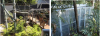
In the right image is the Orangutan 'exercise yard' from which they had access via an path venturing under the guest path. I previously thought it once contained Gibbons, but would never have thought of an underground path linking to the exhibit. It is now unused and incredibly dirty and dusty, but you can see upon closer inspection why it was an exercise pod, boasting an array of climbing frames, ropes and enrichment items intended to stimulate them, being the incredibly smart, intuitive animals they are.
 

Attachments

  • upload_2024-1-31_11-26-31.png
    upload_2024-1-31_11-26-31.png
    163.5 KB · Views: 48
In the right image is the Orangutan 'exercise yard' from which they had access via an path venturing under the guest path. I previously thought it once contained Gibbons, but would never have thought of an underground path linking to the exhibit. It is now unused and incredibly dirty and dusty, but you can see upon closer inspection why it was an exercise pod, boasting an array of climbing frames, ropes and enrichment items intended to stimulate them, being the incredibly smart, intuitive animals they are.
That's incredibly interesting, Melbourne have a similar enrichment cage which is adjacent to one of their enclosures and connected via a tunnel. It's also long been abandoned from what it looks like and although it was built when the complex opened in 2006 doesn't look like it was used for long (if at all!).
 
"A new giraffe house structure was constructed between 1943 and 1950; most likely in the post war period. By 1943 a high wall had been constructed at the southern edge of the original Giraffe Enclosure (Figure 19) and by 1950 a new pyramidally roofed Giraffe House had been constructed south of that southern wall, although the wall remained in place, suggesting two giraffe ‘yards’ were in operation."

Judging by this sub-paragraph, the former zebra exhibit, now combined with the main yard, was originally intended to hold Giraffe as well. I would think in order to setup a breeding hub in the small site, but plans appeared to flail, and Giraffe never inhabited the lower yard.

"Although the s170 inventory noted Tahr Mountain as in good condition, an inspection in July 2016 undertaken for this project by the heritage specialists, the design team and structural engineers revealed that water ingress into the structure though the imitation rock cladding has resulted in significant corrosion and deterioration most particularly to the imitation rock cladding layer but also to the supporting concrete frame. In some areas light was visible through the cladding layer indicating areas of water ingress.

The report concluded that the extent of spalling damage observed to the structural framing of the mountain has not yet severely compromised the structural integrity. However, if the damage is left untreated and allowed to continue, it will eventually result in localised beam/column failures, which could compromise the stability of the structure and necessitate extensive remedial works or demolition. The report identifies action to repair the reinforced concrete frame. In relation to the ferro-concrete cladding the report states that it is generally in very poor condition, and localised failures could occur at any time where, dependent on their extent, could result in the injury/death of animals on the mountain. The report recommends that internal repair of the cladding be undertaken, using temporary propping of cladding panels between supporting columns to allow for drummy material and heavily corroded reinforcement to be cut back and removed, prior to installing new reinforcement and reinstating the original surface profile by spraying with shotcrete.


This makes it sound like Tahr were already on their way out prior to the reintroduction of Lions to the site. They had to be moved nevertheless however in order to accommodate the Pride, so it's not as alarming a move as it could have potentially been, had the structural engineers not caught wind of it.

I’m not surprised to hear Taronga dedicated a significant amount of space (two yards and considering a third) to breeding giraffe. Like their chimpanzee colony was once one of the most successful breeding colonies in the world; they were once the giraffe breeding hub of the region, producing over 90 calves up until 1992.

There was a note regarding Jan Smut’s in his mid-20’s being with females, but no longer siring calves. The additional yard would have been used to manage multiple bulls on site.
 
Does anybody know the location of Turner House? If it even is still standing. I've been desperately trying to find more information on it but it is one of the foggier parts of Taronga's history. Supposedly the building was erected sometime between 1935-1940, but the details have never been made apparent, supposedly used as a residency for Harry Turner, whom it was named after following his passing sometime between 1947-1955. There are records from 1956 showing it was used as a "Kindergarten Zoo", with records showing 'Turner House' on a zoo guide. As of the time the article was written, it was being used as an Animal Enrichment Facility(Animal Behavioural Unit).
If anyone has more information on it, or even dates it would be interesting to see.
 
Does anybody know the location of Turner House? If it even is still standing. I've been desperately trying to find more information on it but it is one of the foggier parts of Taronga's history. Supposedly the building was erected sometime between 1935-1940, but the details have never been made apparent, supposedly used as a residency for Harry Turner, whom it was named after following his passing sometime between 1947-1955. There are records from 1956 showing it was used as a "Kindergarten Zoo", with records showing 'Turner House' on a zoo guide. As of the time the article was written, it was being used as an Animal Enrichment Facility(Animal Behavioural Unit).
If anyone has more information on it, or even dates it would be interesting to see.

My understanding is that Turner House has been demolished (in the late 2010s, I think), but I could be wrong. I have some heritage docs saved somewhere which give a bit more of the history and have more specific dates (they might be the same ones you've already read, though). If/when I find them, I'll post them.

It was located in the area of the zoo between giraffes and seal pools (former orang, now lemur area), but I'm not sure of the exact location. Harry Turner (who was a significant zoo employee, not sure of his official title) died by suicide in the house. There would be records somewhere, as I'm pretty sure that was one of the conditions of demolishing it.
 
My understanding is that Turner House has been demolished (in the late 2010s, I think), but I could be wrong. I have some heritage docs saved somewhere which give a bit more of the history and have more specific dates (they might be the same ones you've already read, though). If/when I find them, I'll post them.

It was located in the area of the zoo between giraffes and seal pools (former orang, now lemur area), but I'm not sure of the exact location. Harry Turner (who was a significant zoo employee, not sure of his official title) died by suicide in the house. There would be records somewhere, as I'm pretty sure that was one of the conditions of demolishing it.
Thanks, my records state he was a Senior Keeper and primarily looked after their African Elephants when he wasn't travelling, sourcing exotic wildlife. To clarify, his role in the zoo grounds was Senior Keeper, but he flew all over the world retrieving exotic wildlife for the zoo's collection, including a White Rhino, and a few Giraffe from South Africa.
 
My understanding is that Turner House has been demolished (in the late 2010s, I think), but I could be wrong. I have some heritage docs saved somewhere which give a bit more of the history and have more specific dates (they might be the same ones you've already read, though). If/when I find them, I'll post them.
It was located in the area of the zoo between giraffes and seal pools (former orang, now lemur area), but I'm not sure of the exact location. Harry Turner (who was a significant zoo employee, not sure of his official title) died by suicide in the house. There would be records somewhere, as I'm pretty sure that was one of the conditions of demolishing it.

Thanks, my records state he was a Senior Keeper and primarily looked after their African Elephants when he wasn't travelling, sourcing exotic wildlife. To clarify, his role in the zoo grounds was Senior Keeper, but he flew all over the world retrieving exotic wildlife for the zoo's collection, including a White Rhino, and a few Giraffe from South Africa.

I’ve found records of a W Turner from 1946, who along with Edward Hallstrom and two other Taronga staff made an eight month long expedition to Africa and returned with the following:

One baby elephant
Two baby rhinoceroses
One leopard
Eight cheetahs
Two adult chimpanzee
Two baby chimpanzee
One ostrich
Wildcats, hyenas, jackals and bat-eared foxes
A bird collection including a shoe-bill stork

The elephant was the first African elephant at the zoo.
 
I’ve found records of a W Turner from 1946, who along with Edward Hallstrom and two other Taronga staff made an eight month long expedition to Africa and returned with the following:

One baby elephant
Two baby rhinoceroses
One leopard
Eight cheetahs
Two adult chimpanzee
Two baby chimpanzee
One ostrich
Wildcats, hyenas, jackals and bat-eared foxes
A bird collection including a shoe-bill stork

The elephant was the first African elephant at the zoo.
Call me weird or cruel but it would be extremely satisfying to go to Africa and return with all that wildlife
 
Call me weird or cruel but it would be extremely satisfying to go to Africa and return with all that wildlife

So many captive populations (gorillas, tigers etc). are becoming increasingly inbred because since 1975, we’ve had scarcely any wild born founders join the captive population. I’m not saying the legislation is a bad thing (far from it); but it’s undeniable the benefits wild founders would bring to the captive population and were there ethical solutions to obtaining them (injured, unreleasable etc). then that would surely be the happy medium.
 
So many captive populations (gorillas, tigers etc). are becoming increasingly inbred because since 1975, we’ve had scarcely any wild born founders join the captive population. I’m not saying the legislation is a bad thing (far from it); but it’s undeniable the benefits wild founders would bring to the captive population and were there ethical solutions to obtaining them (injured, unreleasable etc). then that would surely be the happy medium.
I suppose it depends on the situation. For instance, when America imported 17 African Elephants however many years ago, yes they were genetically valuable, but their complex and misunderstood social structures fell apart at the seams, leaving a lot of the Elephants depressed and resulted in minimal breeding, if at all.

If you look at the statistics(from 2021), since November 2017, there have been 91 African Elephant calves born in Europe as opposed to the 17 in America since 1990 when the original 17 were imported. Looking at these statistics you could determine the ethics, but also the practicality of importing animals, especially a species with such a complicated social structure.

I agree genetically speaking importing wild founders would answer a lot of unanswered questions, but at the end of the day is it really worth it?

Also you said it was a W. Turner? The documents say H. Turner(Harry).
 
I suppose it depends on the situation. For instance, when America imported 17 African Elephants however many years ago, yes they were genetically valuable, but their complex and misunderstood social structures fell apart at the seams, leaving a lot of the Elephants depressed and resulted in minimal breeding, if at all.

If you look at the statistics(from 2021), since November 2017, there have been 91 African Elephant calves born in Europe as opposed to the 17 in America since 1990 when the original 17 were imported. Looking at these statistics you could determine the ethics, but also the practicality of importing animals, especially a species with such a complicated social structure.

I agree genetically speaking importing wild founders would answer a lot of unanswered questions, but at the end of the day is it really worth it?

Also you said it was a W. Turner? The documents say H. Turner(Harry).

The mortality rate of great apes was extremely high. The majority arrived as infants and many died the year they arrived. The conditions they had been subjected to including long journeys by sea would have contributed to this; as well as a comparative lack of knowledge around their husbandry in the early to mid-20th Century. The small percentage that survived became founders of the population we have today.

Very little thought would have gone into genetic diversity, so species that bred more readily (and had a higher post-capture survival rate) like tigers would have been bred and dispersed between zoos minimising the number of founders. Factor in the holding of different subspecies and the elimination of some founder lines due to hybridisation.

We would undoubtedly consider wild founders as valuable additions to our breeding programme. The Sumatran tiger imports from Indonesia for example were a major asset to our regional breeding programme.

Yes, the article said W. Turner. It was common last name, but might have been a relative of H. Turner. It was the same era and W. Turner must have been somebody of note to be undertake the expedition.
 
I’ve found records of a W Turner from 1946, who along with Edward Hallstrom and two other Taronga staff made an eight month long expedition to Africa and returned with the following:

One baby elephant
Two baby rhinoceroses
One leopard
Eight cheetahs
Two adult chimpanzee
Two baby chimpanzee
One ostrich
Wildcats, hyenas, jackals and bat-eared foxes
A bird collection including a shoe-bill stork

The elephant was the first African elephant at the zoo.
I do wonder what happened to the Shoebill. I’ve never read anything to that said the zoo held them, and if the zoo sent an expedition to Africa in order to obtain them you would think they held a higher pretence than some of the other species at the time, so would have been a big announcement even for the time.

It wouldn’t surprise me if W. Turner and H. Turner were related seeing as they worked vaguely the same job.
 
I do wonder what happened to the Shoebill. I’ve never read anything to that said the zoo held them, and if the zoo sent an expedition to Africa in order to obtain them you would think they held a higher pretence than some of the other species at the time, so would have been a big announcement even for the time.

It wouldn’t surprise me if W. Turner and H. Turner were related seeing as they worked vaguely the same job.

Like most birds of that era, it probably died within a few years of arriving at the zoo. It was noted to be rare and in any case, the only one, so the emphasis would have been on displaying something unusual rather than building up a breeding population of them.

Edit: I’ve since found an article from 1951, which mentions the bird in question (named Choo-ee). It’s noted to be one of two in captivity (worldwide).
 
I suppose it depends on the situation. For instance, when America imported 17 African Elephants however many years ago, yes they were genetically valuable, but their complex and misunderstood social structures fell apart at the seams, leaving a lot of the Elephants depressed and resulted in minimal breeding, if at all.

If you look at the statistics(from 2021), since November 2017, there have been 91 African Elephant calves born in Europe as opposed to the 17 in America since 1990 when the original 17 were imported. Looking at these statistics you could determine the ethics, but also the practicality of importing animals, especially a species with such a complicated social structure.
I know this doesn't relate to Taronga but I thought I'd clear some things up quickly.

Firstly, those said elephants were going to be culled, so zoos by far were the best option for them. There was no question of them perhaps being able to be left in the wild.

There's also nothing to suggest the elephants social structures fell apart as a result of them moving into captivity. Obviously with any animal, they'd have to adapt to the new environment and this resulted in some changes but nothing that left them to be 'depressed'.

There's also been the direct opposite of minimal breeding. It's really not relevant to bring up the statistics of the total breeding as of late when the 11 elephants imported do not even compromise one tenth of the whole population. Out of those 11 elephants, the eight cows have all had reasonable breeding success thus far.

Europe's had a far better success population wise as they have almost double the population compared to North America, and a lot of North America's individuals are all older (besides the recent populations descending from the South African imports). So comparing the birth rates isn't really a valid argument there too.

Not trying to discredit your stance but was just looking to perhaps yield a better understanding of the above situation as it sounds like you've just read something straight from an anti cap website.:p
 
I’ve been misinformed it would appear, I was told prior to their move to the US they were a family in itself, but I did minimal research especially in comparison to other topics I’ve discussed. Although my point does stand, moving Elephants in and out of social structures cause some problems, same goes for when they die. Although they are nowhere near the intellectual level as, for instance, chimps, they are capable of feeling and expressing general emotions.
 
There's also been the direct opposite of minimal breeding. It's really not relevant to bring up the statistics of the total breeding as of late when the 11 elephants imported do not even compromise one tenth of the whole population. Out of those 11 elephants, the eight cows have all had reasonable breeding success thus far.

I think that it is also relevant to add that the North American African Elephant population [thanks in part to these imported animals] is on the cusp of a baby boom. What could have have been perceived as minimal breeding historically is rapidly being reversed.
 
I think that it is also relevant to add that the North American African Elephant population [thanks in part to these imported animals] is on the cusp of a baby boom. What could have have been perceived as minimal breeding historically is rapidly being reversed.
Essentially this is a result of the recent acquisitions from the 2016 import finally breeding; and whilst it did take them a few years to do so, the results are finally showing.

Similarly, the initial import from 2003 also had their fair share of results around the same time (late 2000s, early 2010s) but this has since dropped off somewhat due to the founder bulls being sent to other institutions.
 
Last edited:
Back
Top