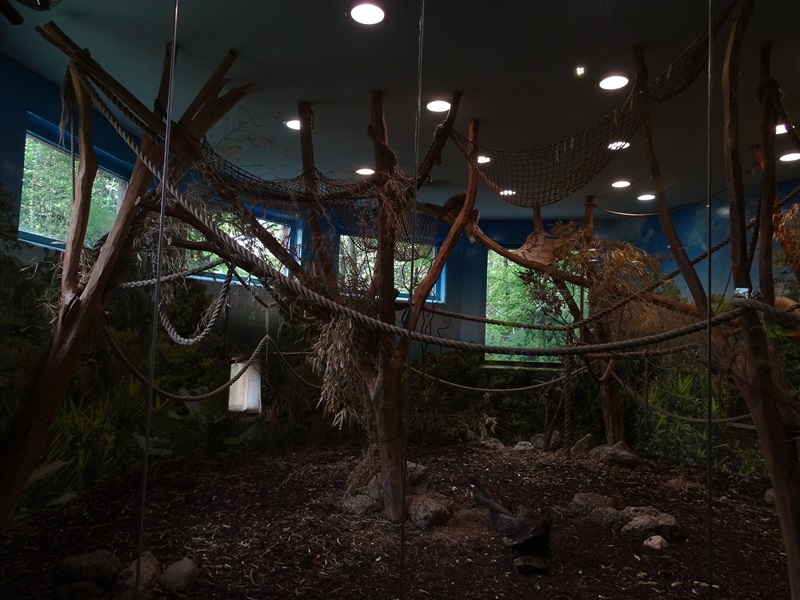
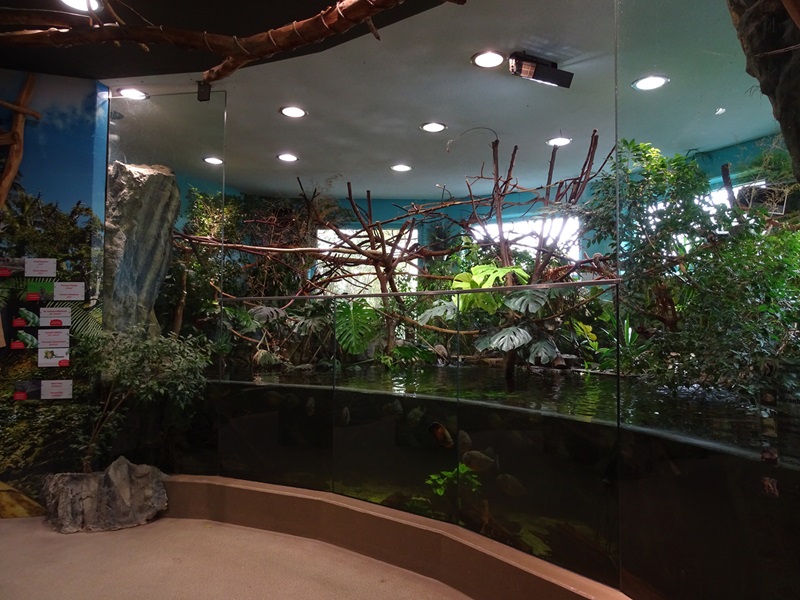
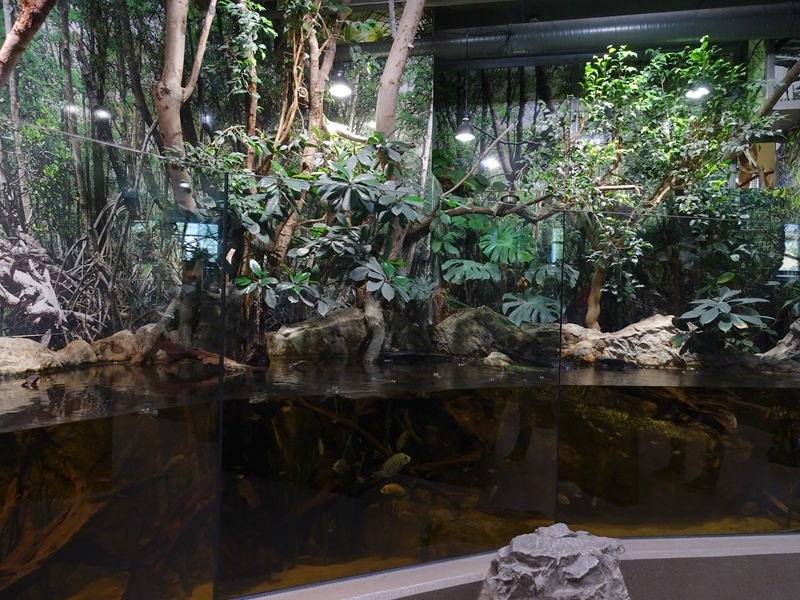
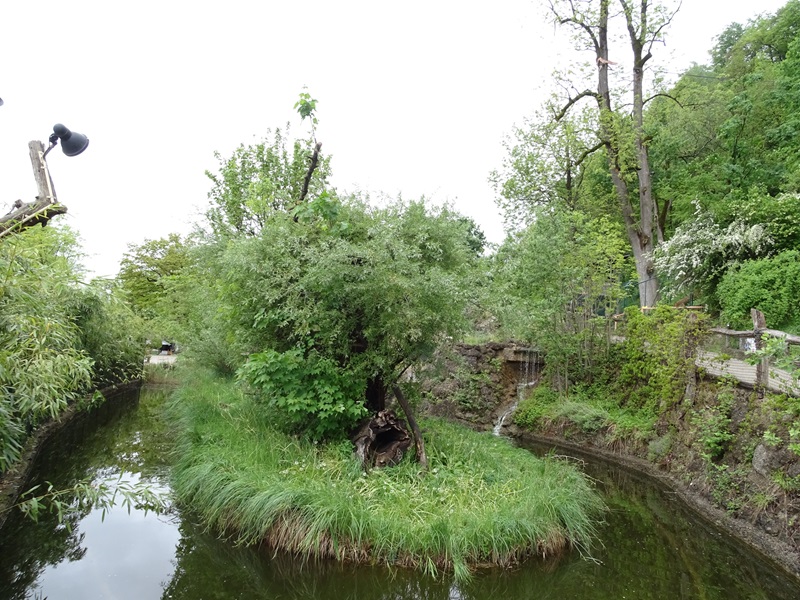
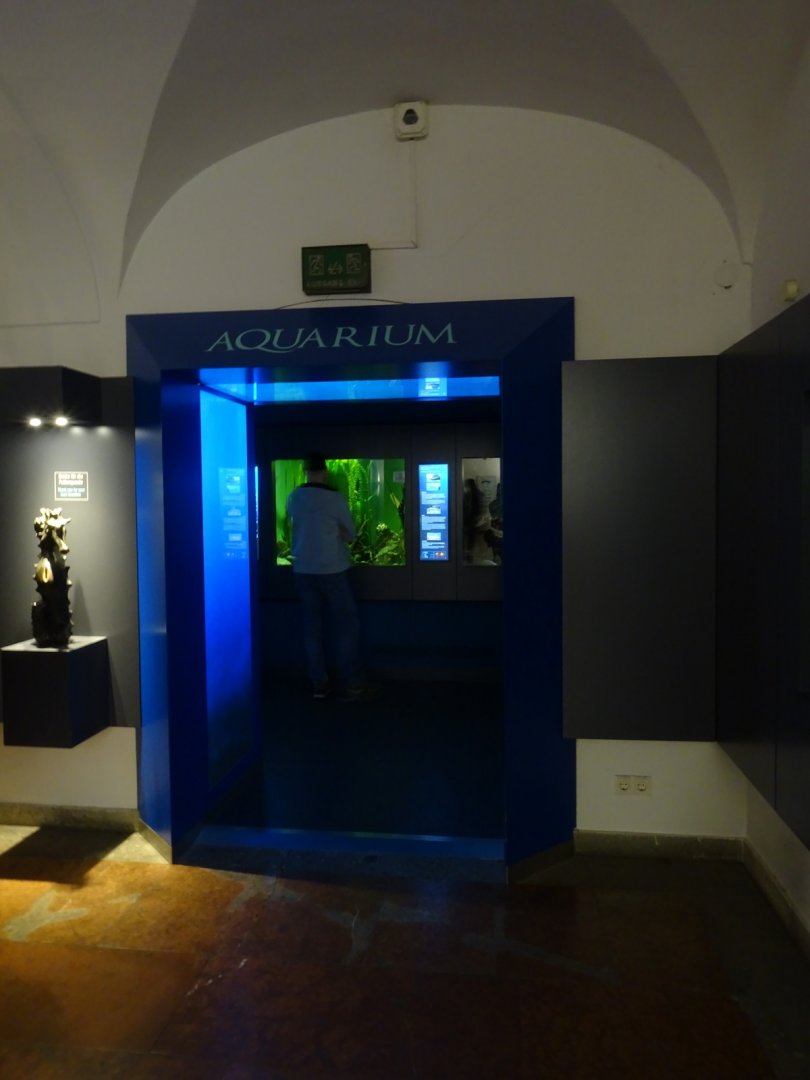
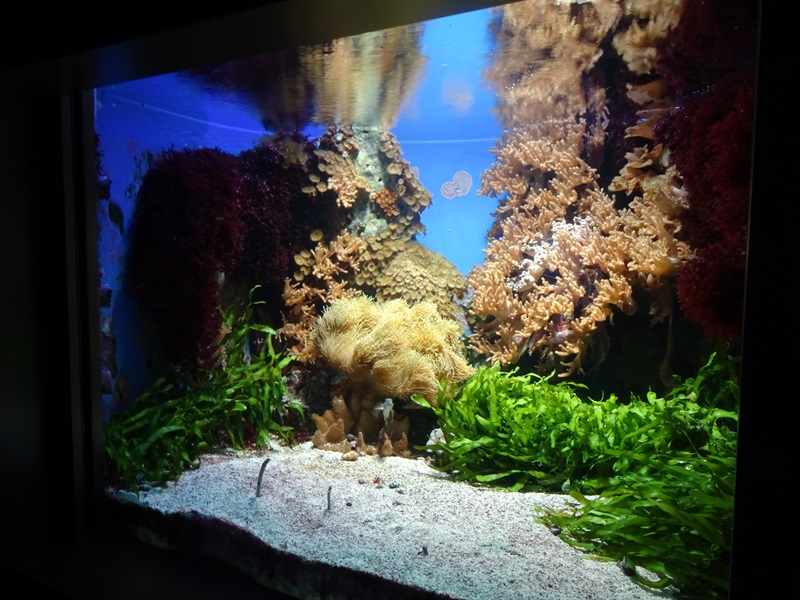
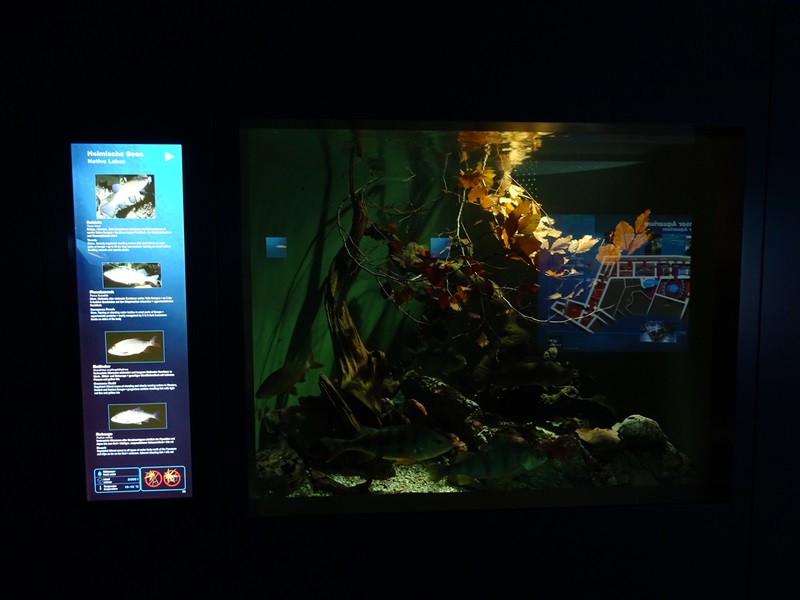
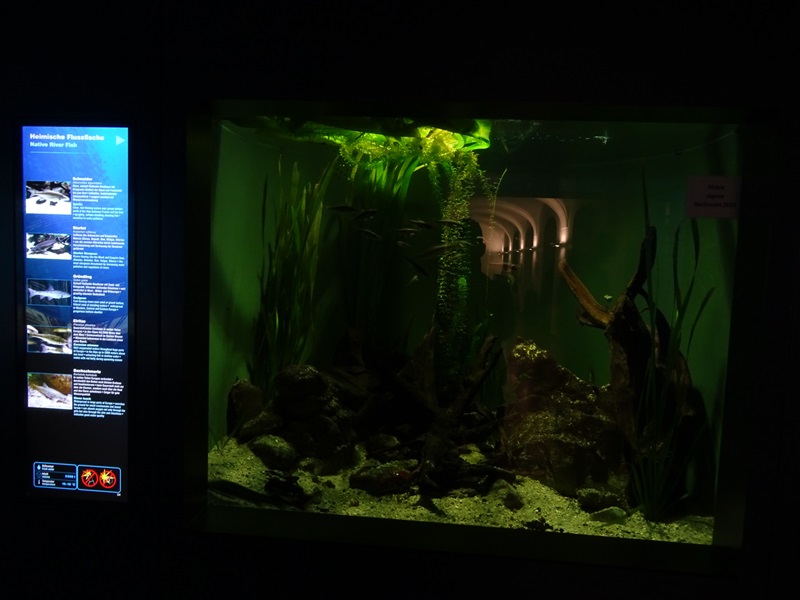
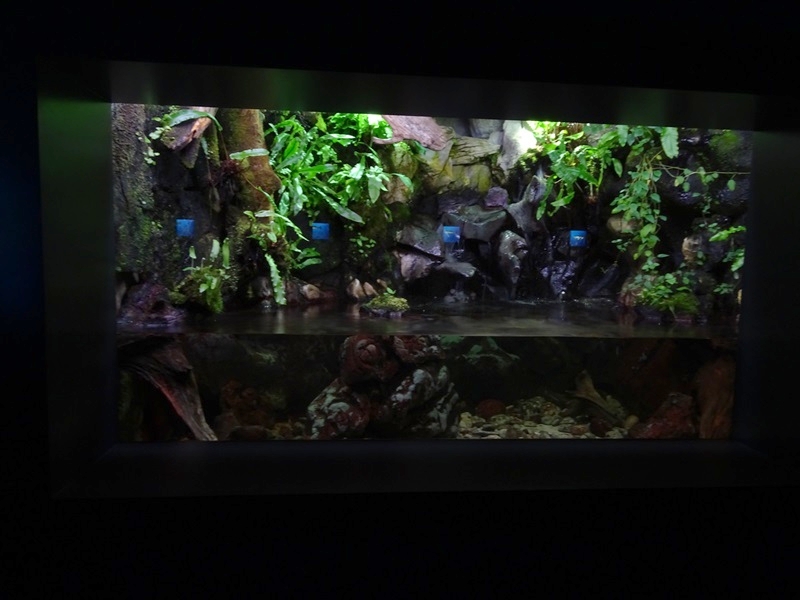
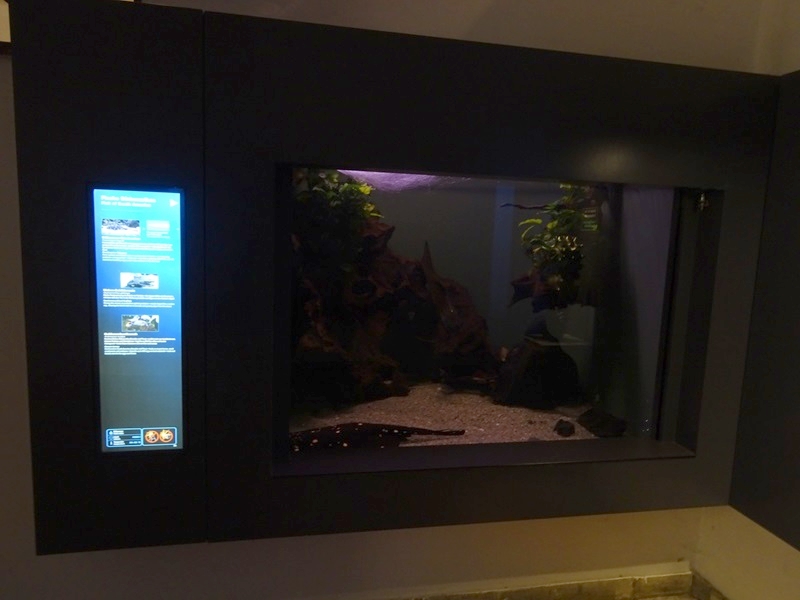
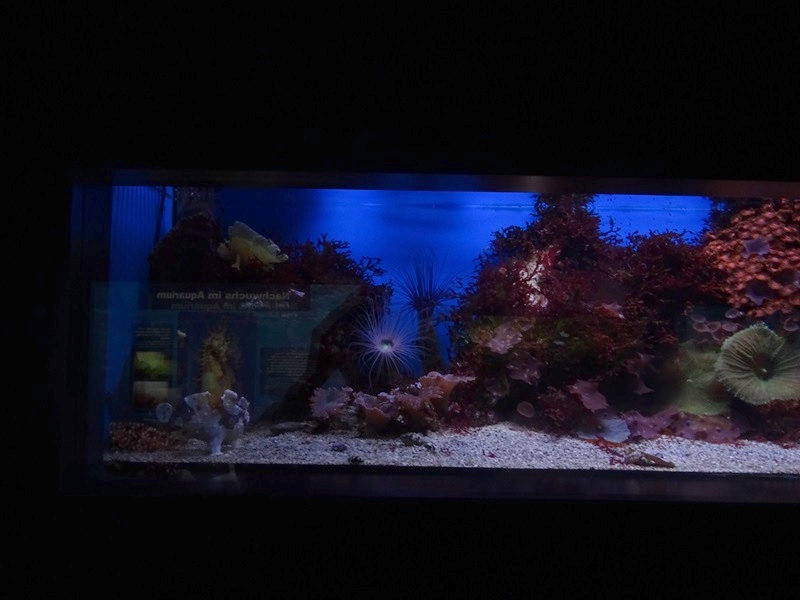
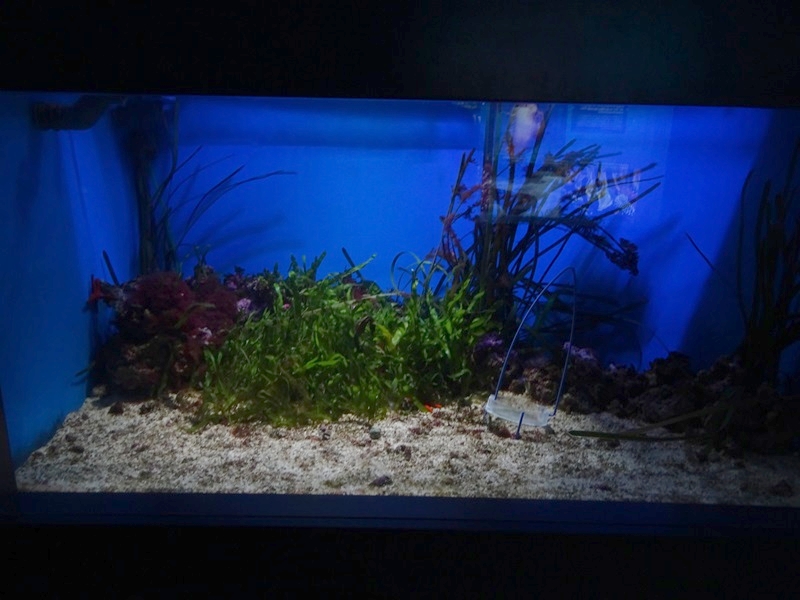
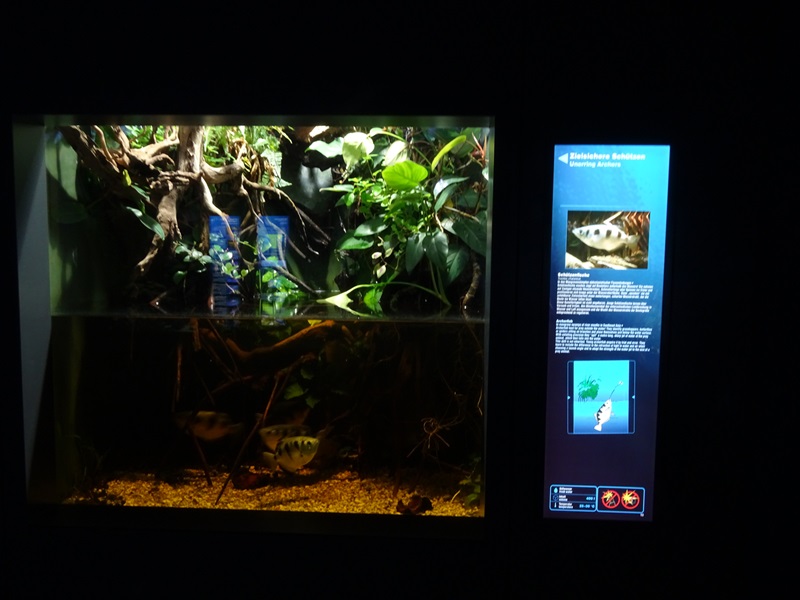
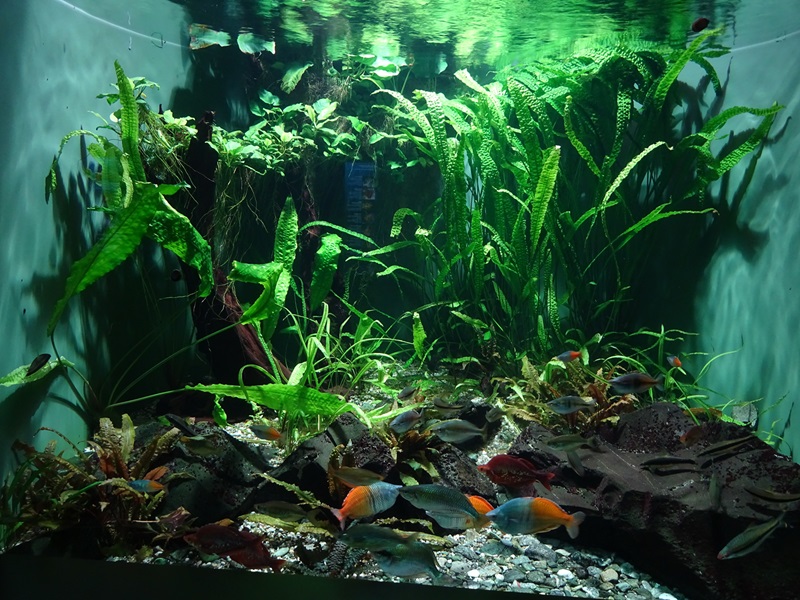
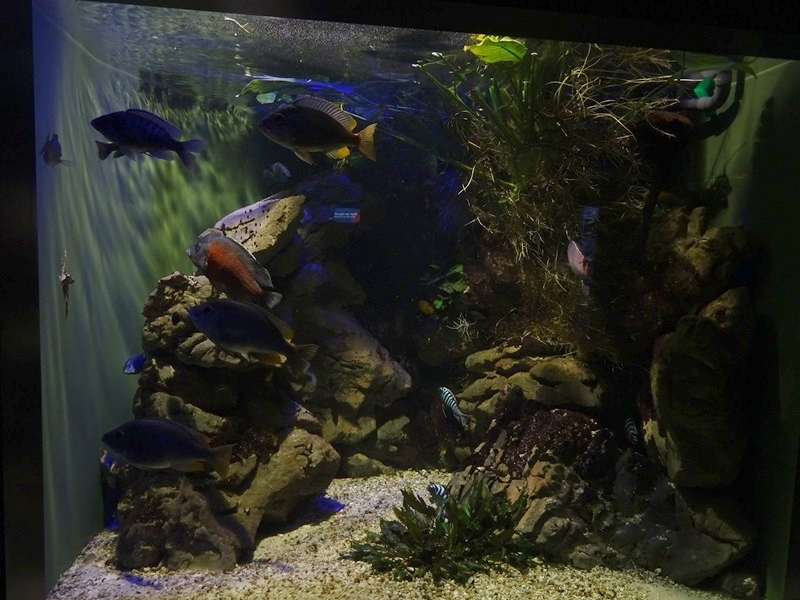
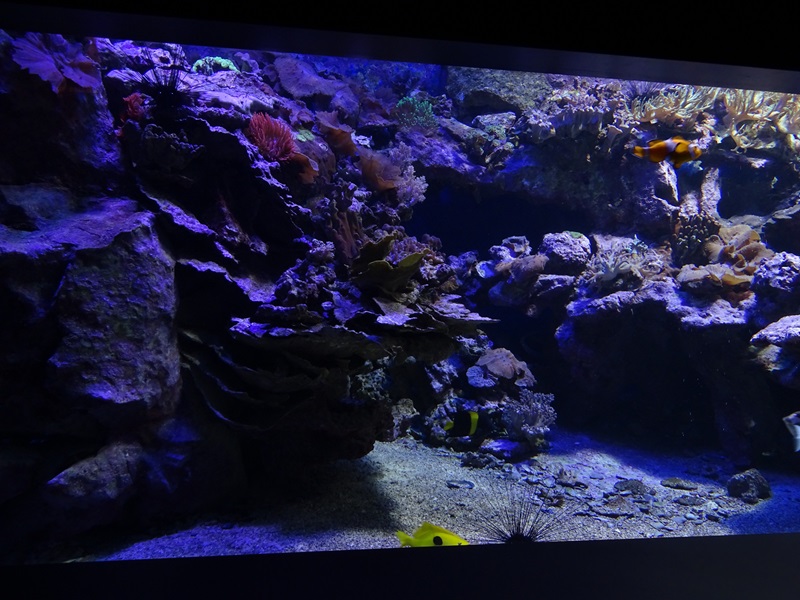
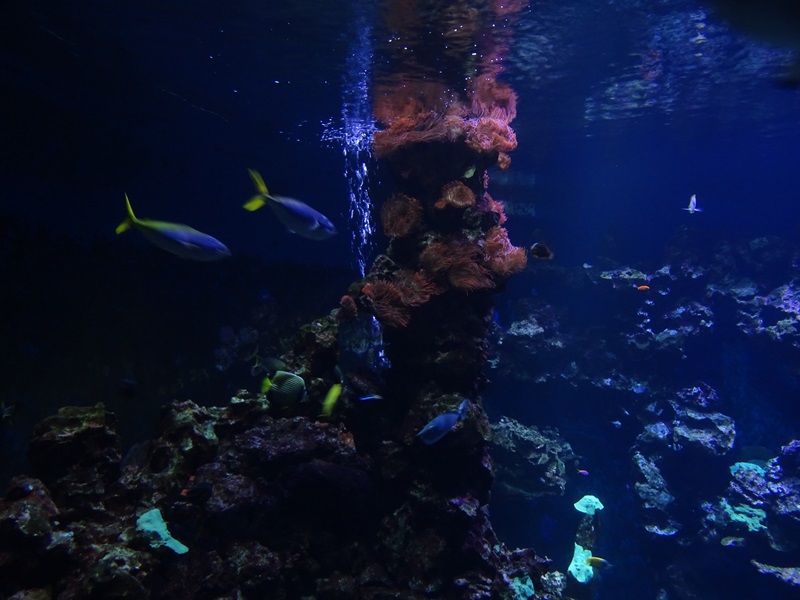
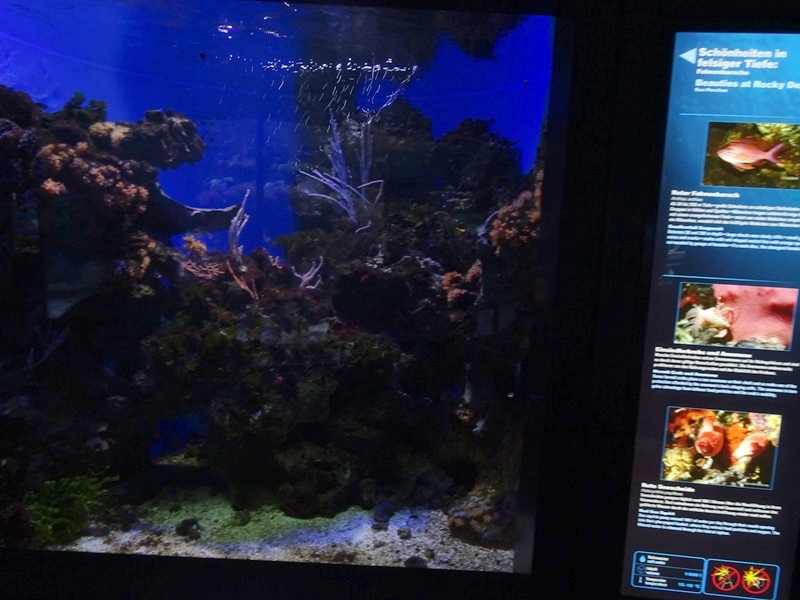
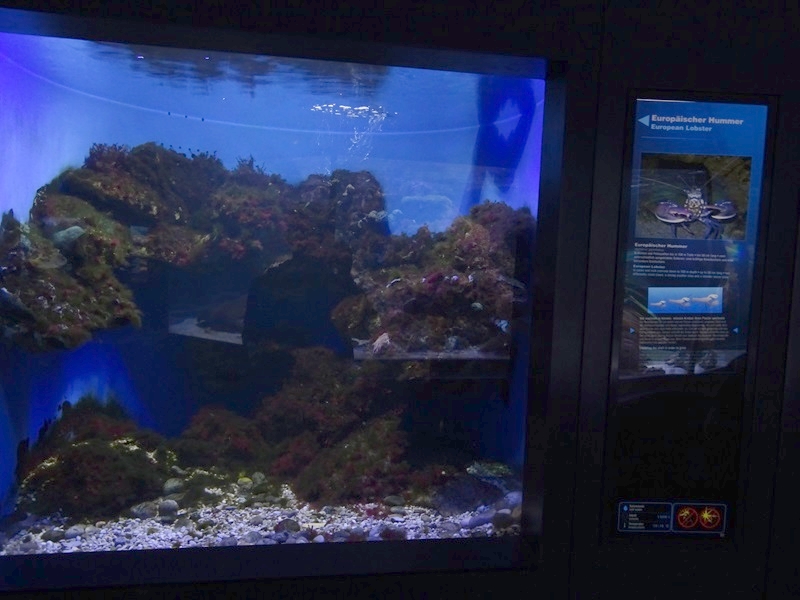
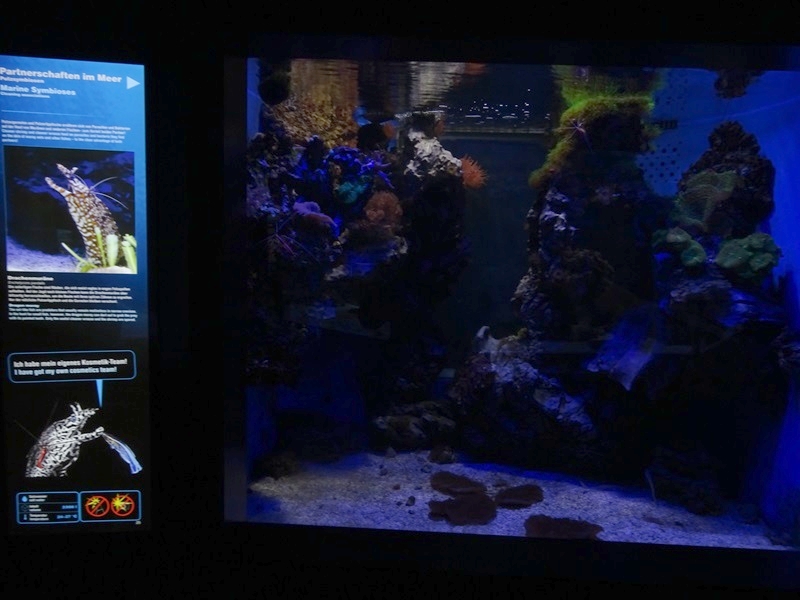
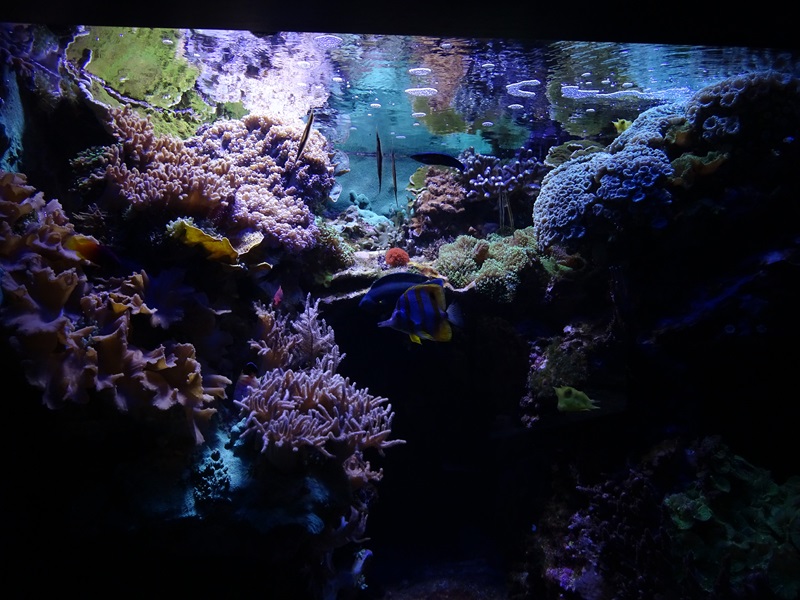
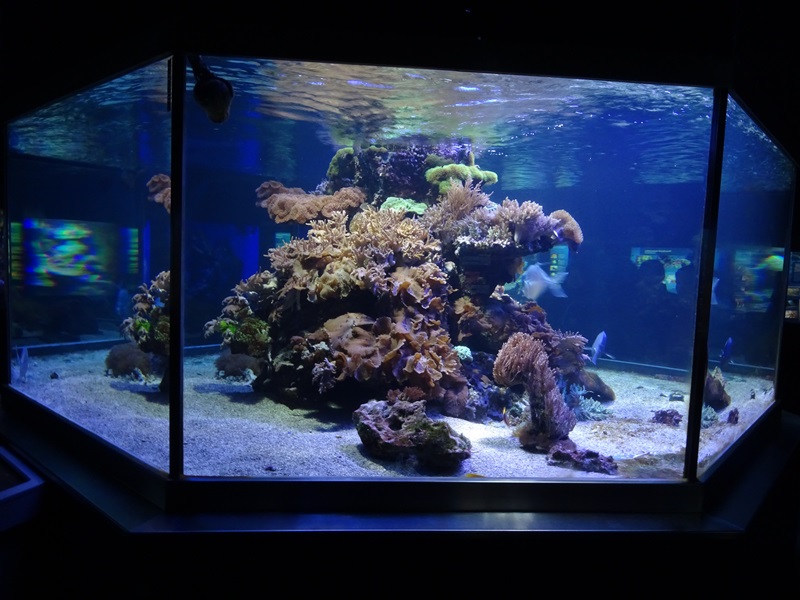
It's not terribly difficult - especially at the current point in time, when large portions of the animal collection at HdN are off-display!
I'm sure its possible, but I don't like being pressured for time when visiting a zoo. I had Sea Life München as a possible destination as well, but eventually didn't get to it because I didn't want to shorten my visit to Tierpark Hellabrunn or Zoo Augsburg in order to make it there in time.
Also, I had train delays pretty much every day, so any margin I would have had was gone either way.
DAY 4. 17-04-2024.
ZOO SALZBURG
PART 3
Europe done, Asia done, South America done. The next area is Australia, by far the smallest section of the zoo with just two enclosures. There’s a walkthrough aviary that’s nothing special or unique but still nicely done, although it is a bit disappointing that budgerigars are the only species in here.
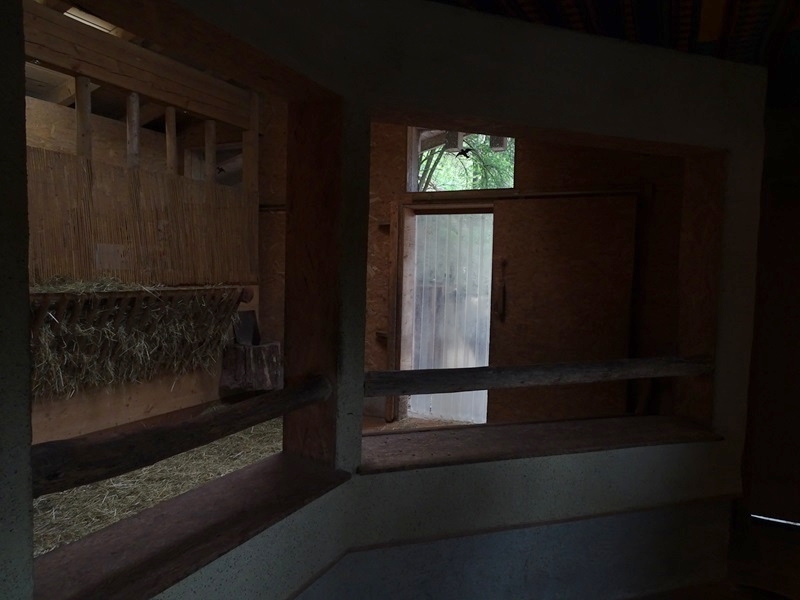
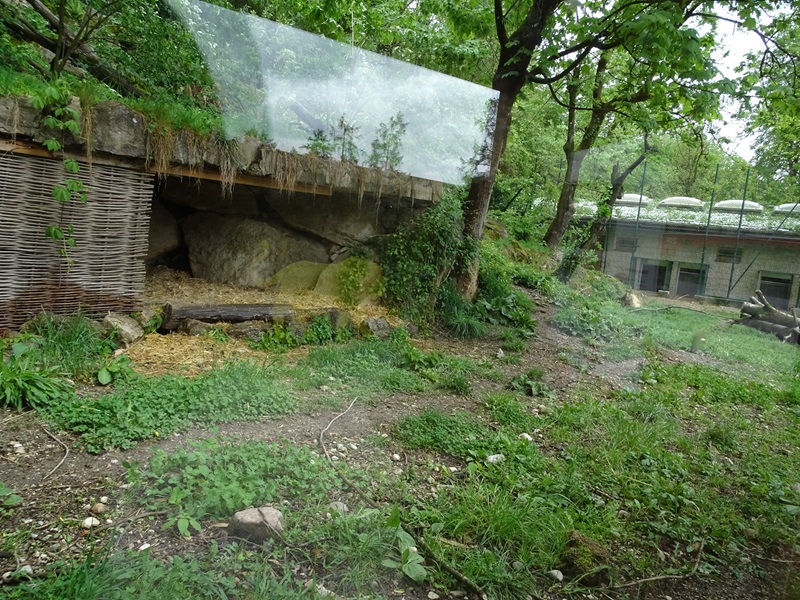
The other species here are parma wallabies, who have a spacious wooded enclosure. A modest wooden building has viewing windows into the indoor enclosure for the wallabies, which has natural substrate, sunlight and hiding spots. Another above average enclosure.
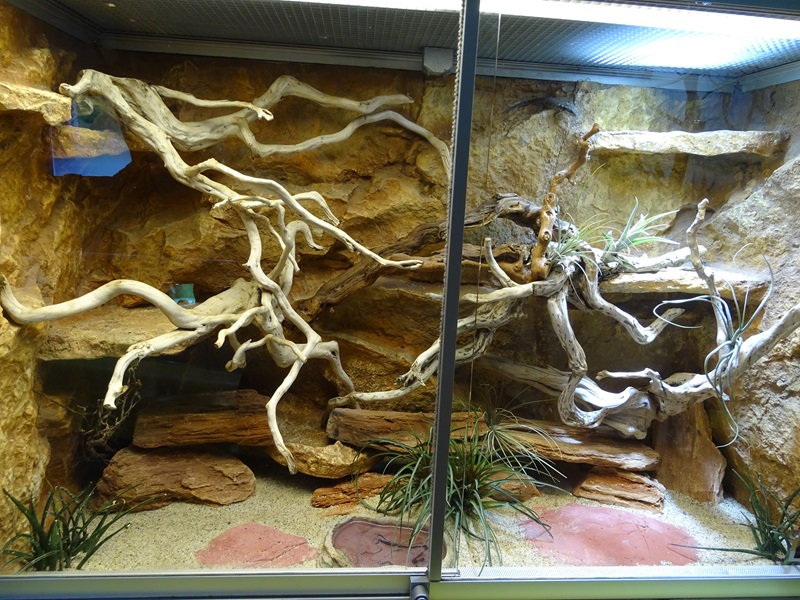
There is also a terrarium for bearded dragons build in the same enclosure, but that seemed to be vacant at the moment.
This just leaves the African area, which is mostly a loop with the main savannah (/rhino) enclosure on the inside and additional enclosures on the outside. The first thing I passed in the African area is the Rhino House, of which I somehow missed the entrance because I believe this should be a visitable building.
Across from that is an enclosure for banded mongooses that is much more lush than the usual desert-y enclosures in other zoos. It might have been too cold for the mongooses though as I did not see any. I also didn’t see any ring-tailed lemurs, a species that is roaming around the zoo freely but has their indoor enclosure in the rhino house.
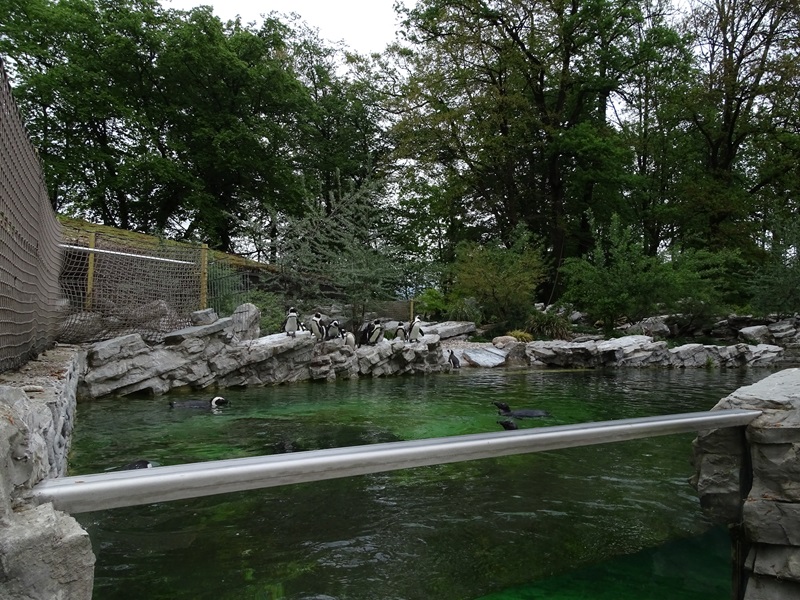
One of the newest enclosures in the zoo is the one for African penguins. It’s a typical penguin enclosure with some nicely done rockwork and underwater viewing, and the education displays are really well done as well.
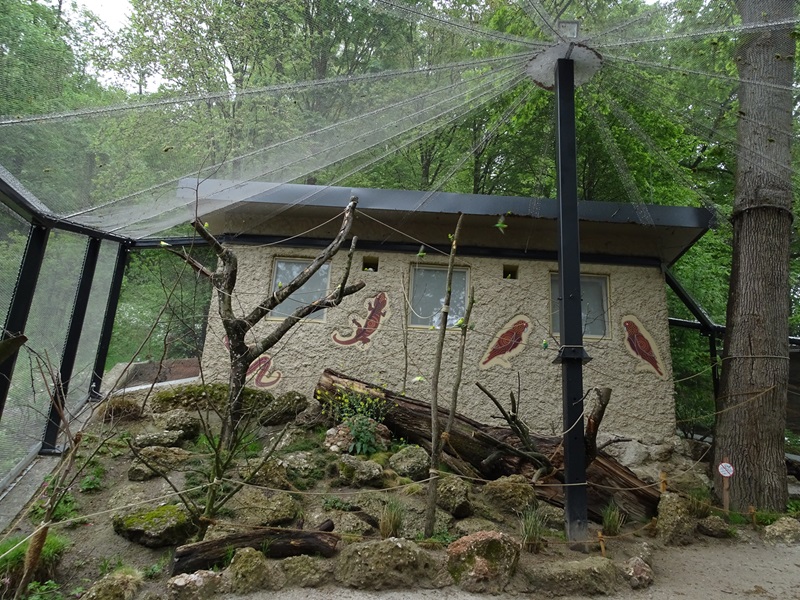
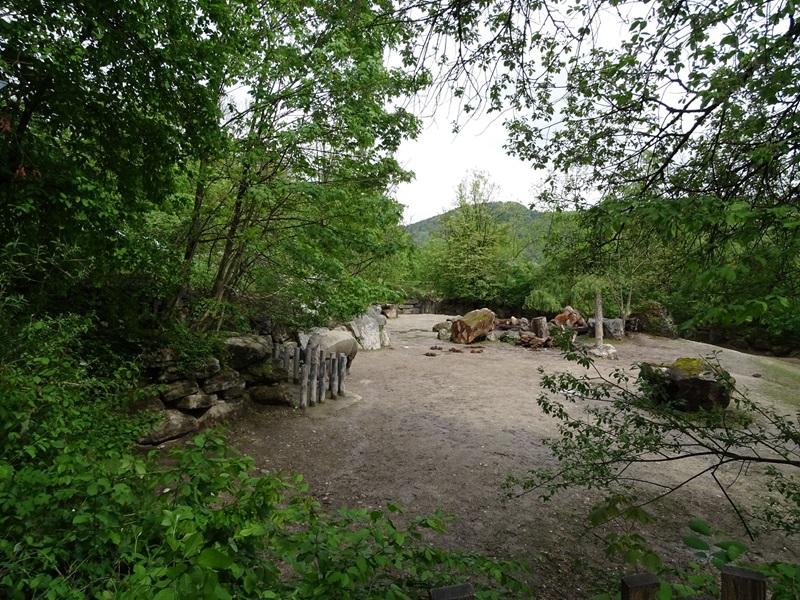
Across from the penguins is the enclosure for white rhino’s. The rhinos should also have access to the large savannah enclosure I believe, but during my visit, the rhino’s were in their own enclosure. The rhino enclosure is rocky and sandy with foliage surrounding it. There is also a second stable building, this one also for rhino’s but for the other savannah animals as well. This building has three small windows on the visitor side, but they are too far from the path to provide decent views into the stables. The roof of this building is made up of grass while most of its outer walls are large rocks, meaning it blends in well with the natural surroundings and it prevents the building for being an eye-sore. Well done, Zoo Salzburg.
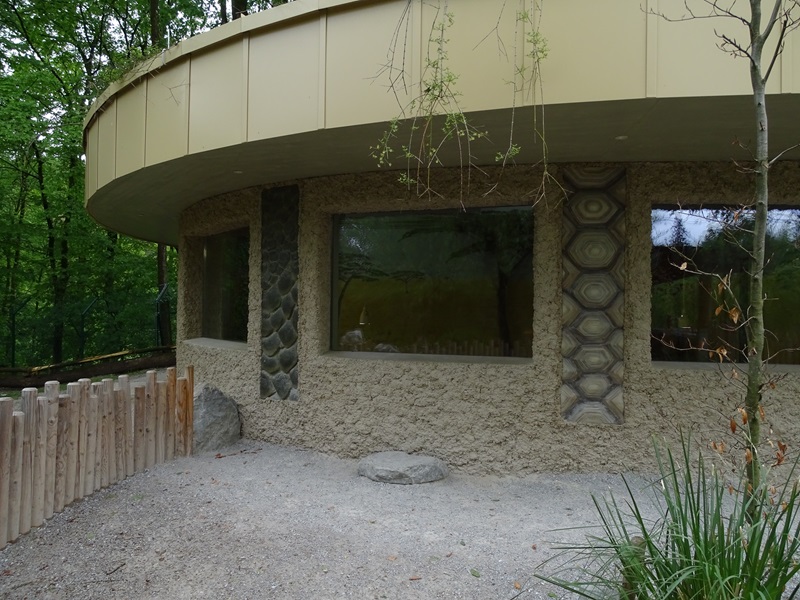
Close to the penguins is the enclosure for spurred tortoises and the tortoise house. The outdoor enclosure is a spacious paddock with low fencing and consisting of both grass and sand. Simple but perfect for the species. The turtle house is not a visitable building but rather an indoor enclouse for the turtles that can be looked into through windows. I saw four large adults inside.
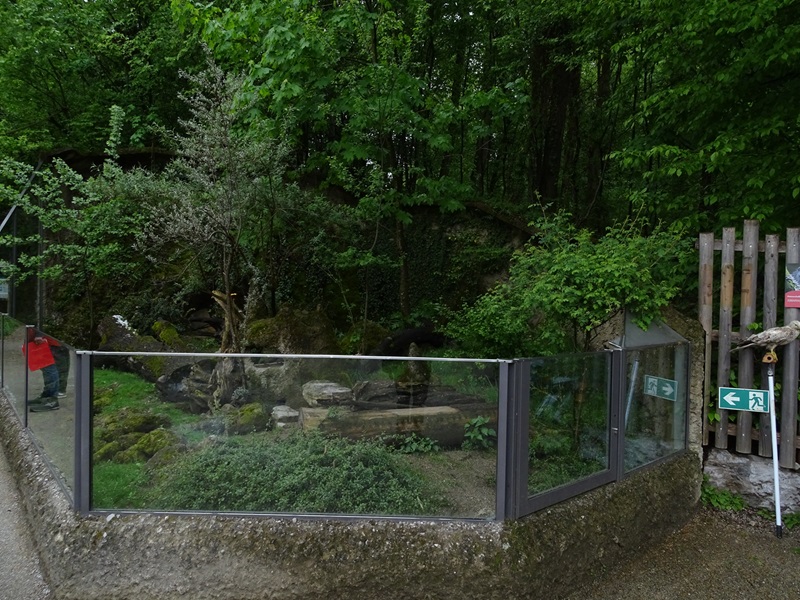
A smaller terrarium is build into the turtle house, but I couldn’t find the African bull frog that lives in there.
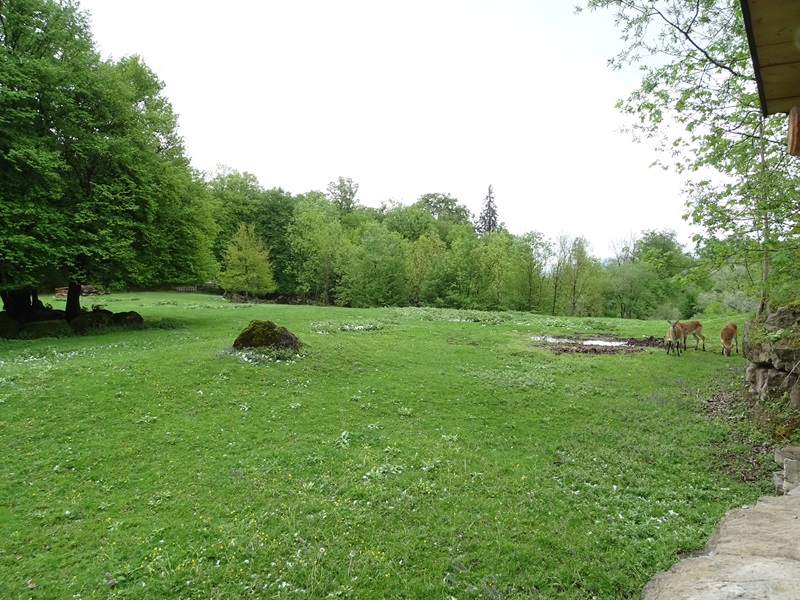
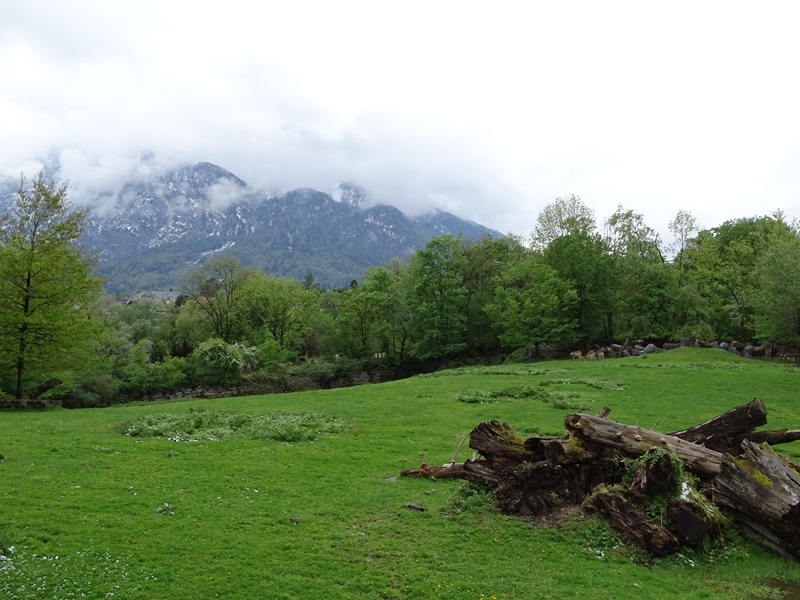
Across rom the turtle house is also the first view into the large savannah enclosure. This enclosure is world-famous due to the amazing backdrop which are the Alps! The savannah enclosure itself is very lush and green, with foliage surrounding it on all sides. Behind it all, the alps can be seen, making this one of the best views in any zoo! Does it make sense to have snow-topped mountains as a backdrop for a savannah enclosure? Perhaps not, but I don’t care one bit. This enclosure and these views are amazing! The savannah is used by the rhino’s on some occassions, although I’m not sure when or how that works exactly. Like stated previously, those animals also have their own seperate enclosure which they were currently using. Besides the rhino’s, the savannah is home to lechwes and sable antelopes and both species were fortunately outdoors because their indoor quarters can not be visited.
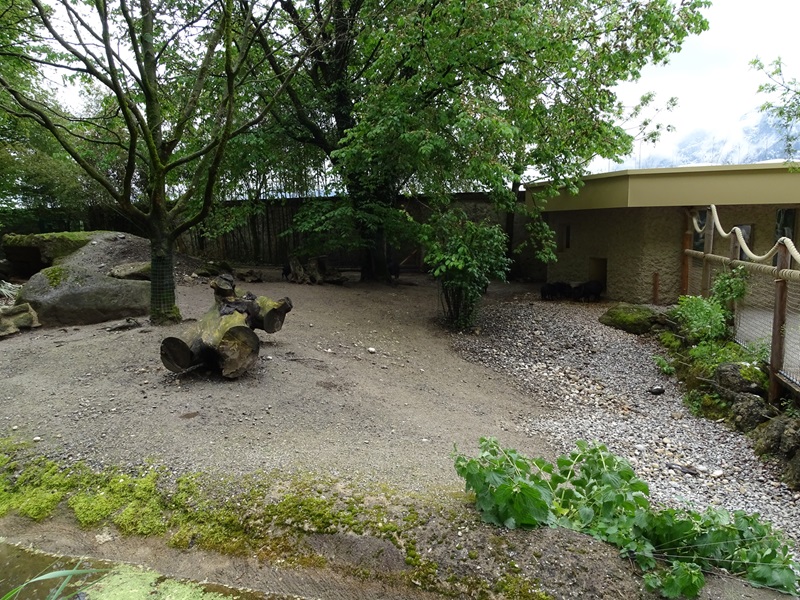
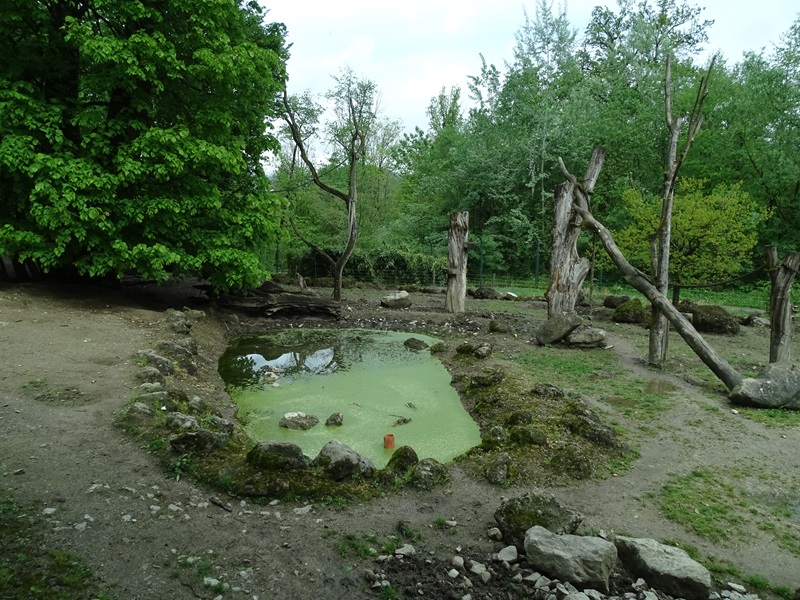
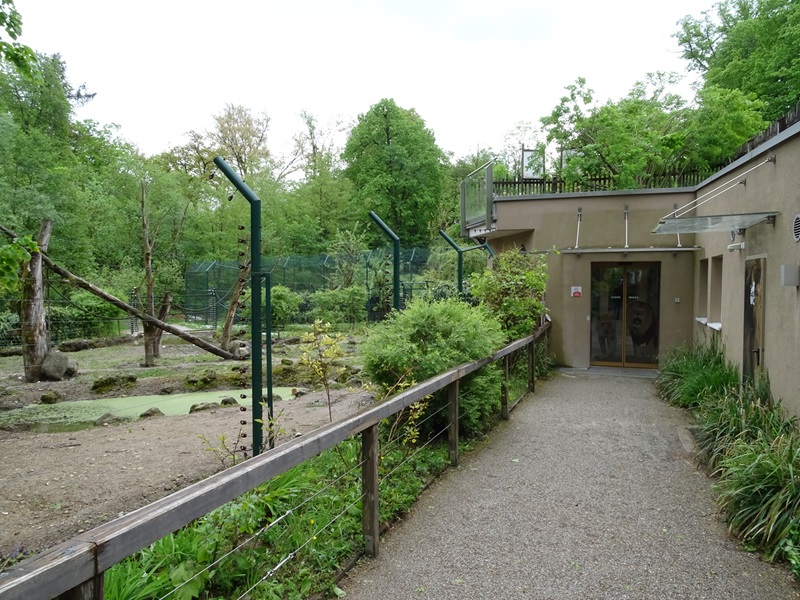
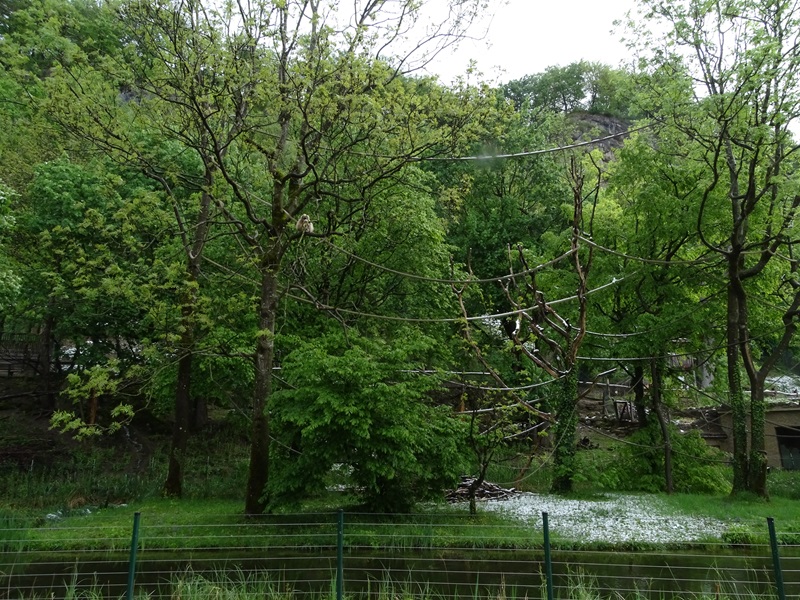
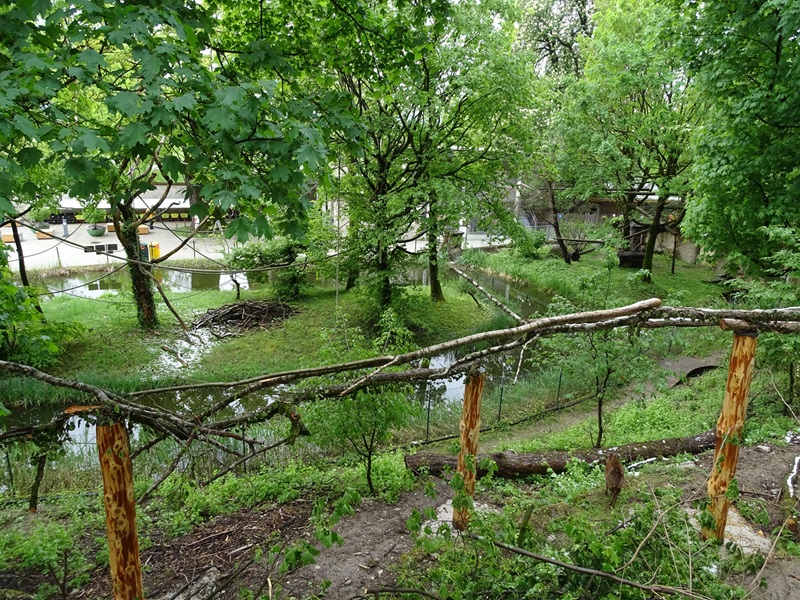
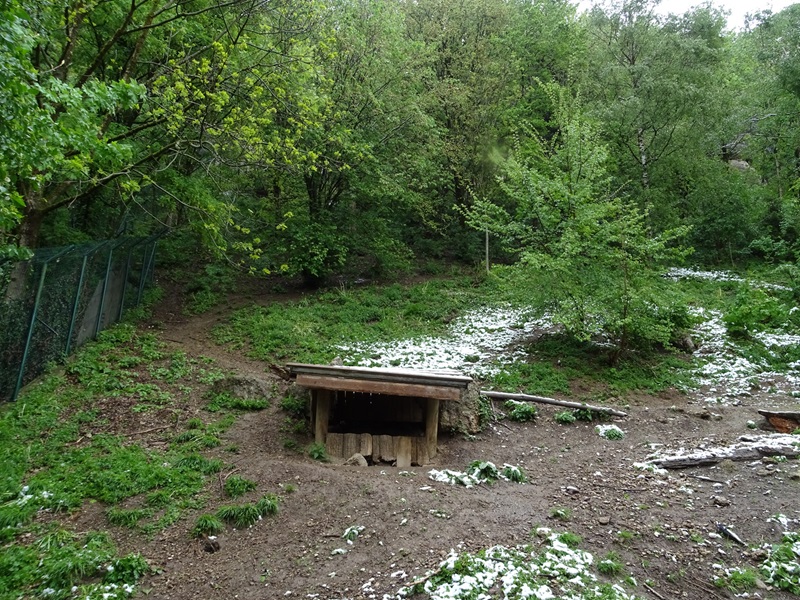
The final animal house of this zoo is the lion house, which features two large outdoor enclosures and a good variety of indoor enclosures. When arriving at this building, the path splits into two; one goes upwards and goes on top of the building, the other goes downhill and passes the first outdoor enclosuresbefore reaching one of the entrances to the building. I did the latter first, passing the large outdoor enclosure for red river hogs and diana monkeys. It’s a very spacious enclosure with lots of room for the hogs to walk around in and ponds and mud baths to wallow in. For the monkeys there are living trees as well as climbing structures for climbing. To keep the animals in, the entire enclosure is fenced off with conspicuous electric fences, but that didn’t botter me too much. It was a real shame that neither species was out as I would have loved to see them actually use this superb enclosure!
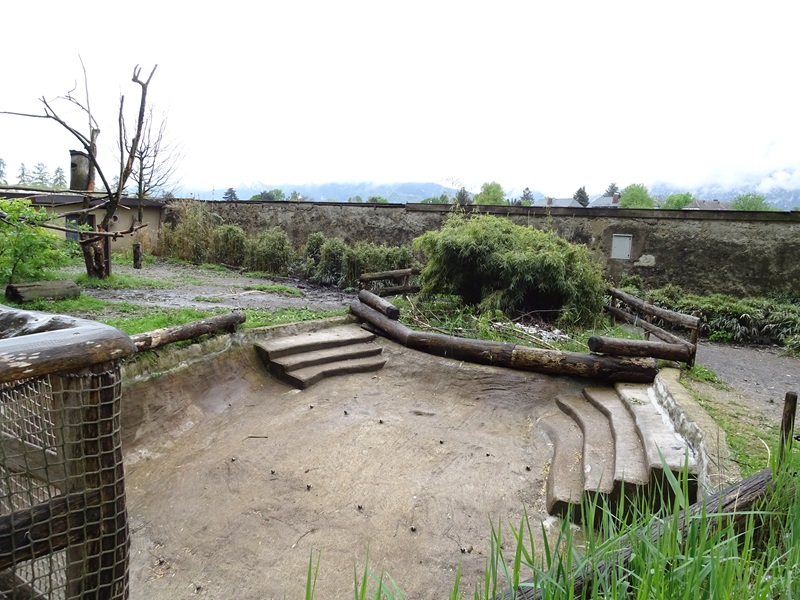
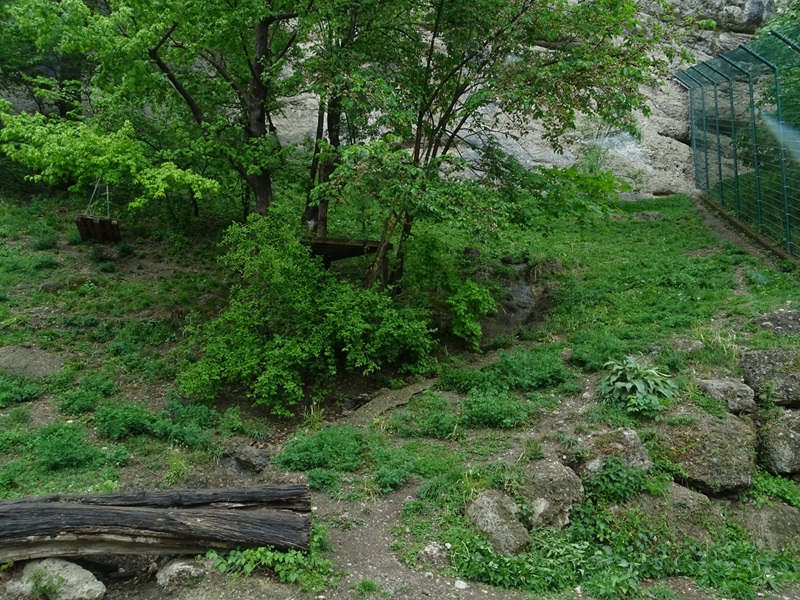
Instead of entering the building here, I backtracked a bit and took the upwards path to enjoy some even better views of the savannah and mountain backdrop. At the other side of the building is another path going down that leads to the other entrance, and this paths goes along the outdoor enclosure for the lions. Except for the fencing (that can be looked over from the upper path), this enclosure is almost exclusively natural elements and it looks quite nice, although it could be improved a bit by adding some more climbing frames or other enrichment for the lions.
[
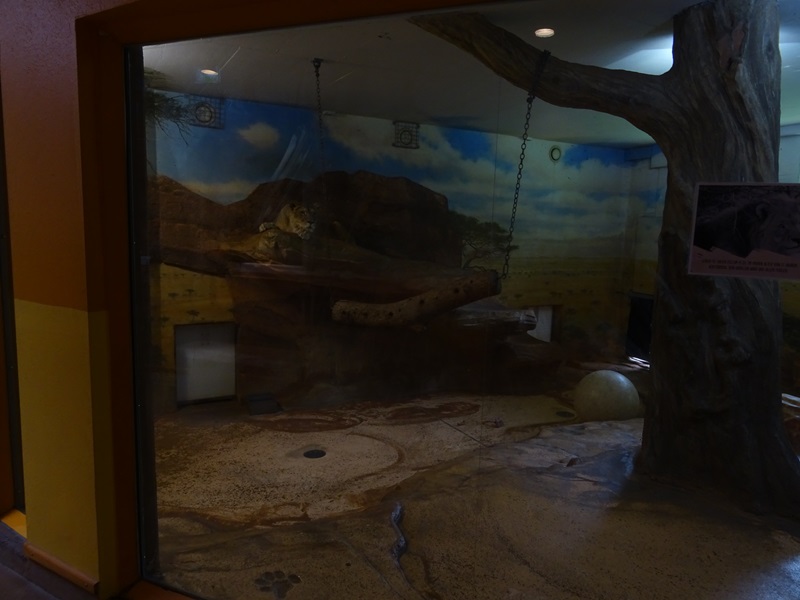
This time I did go into the lion house, and the first thing I encountered an viewing window into the lion enclosure which could come in nicely during rainy days. The only remaining lion, a female, (as the male recently passed) was not ouside however but I was able to see her in her indoor enclosure. It’s not really large and even though the zoo added some (mock) natural elements and enrichment, is mostly hard surface. Since there is no barrier between the visitors and the windows, there is nothing stopping unbehaved kids and adults from knocking on the glass. So, not the biggest fan of the indoor enclosure for lions although there’s plenty worse enclosures. A similar situation is happening at the other side of the Lion House, with the indoor enclosure for the diana monkey and red river hogs, although I liked that one better.
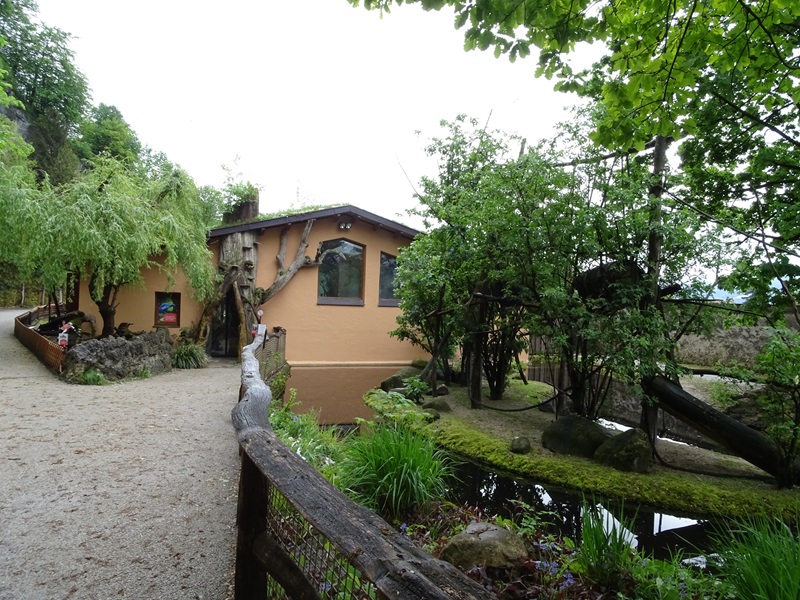
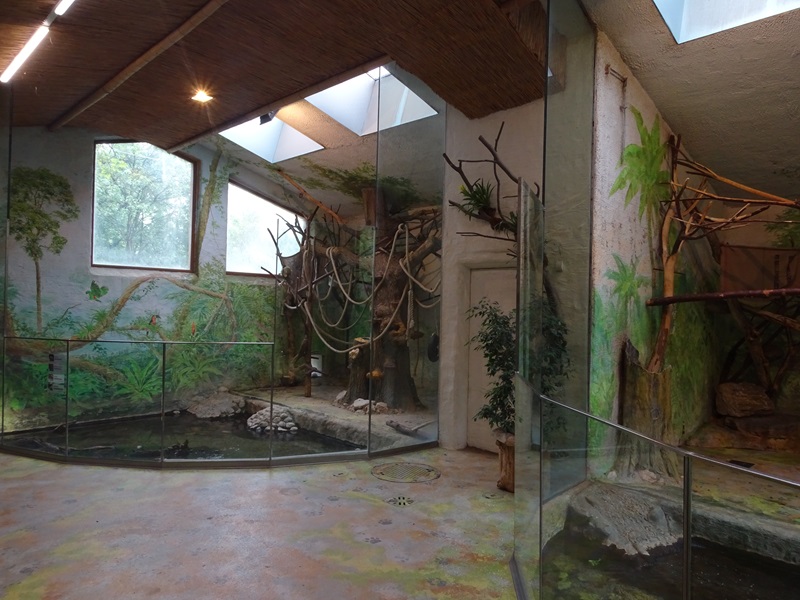
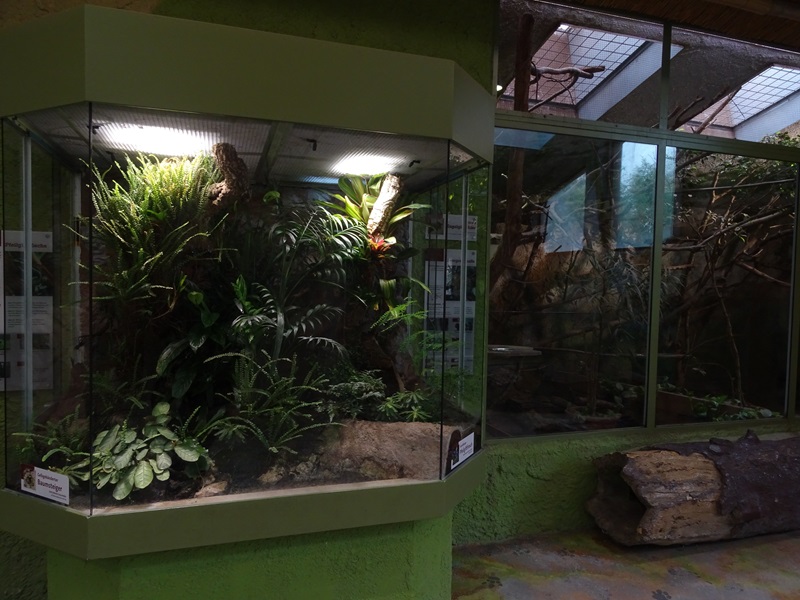
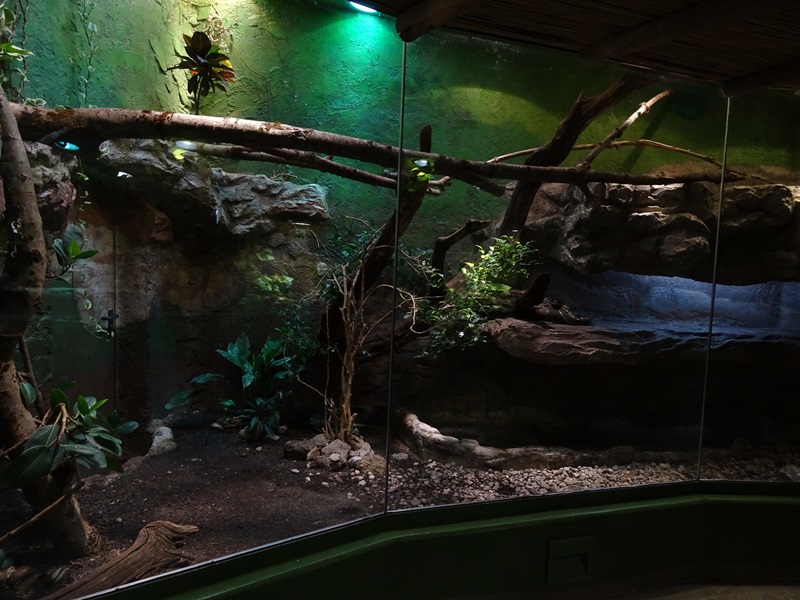
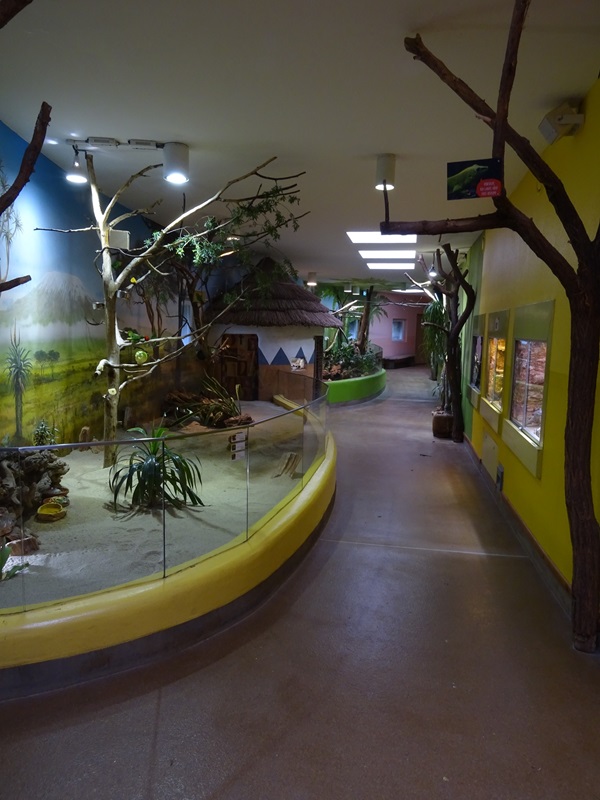
The Lion House has lot more to offer than those two indoor enclosures though! In the walls between the lion and meerkat/hog indoor enclosures are a bunch of well designed medium-sized terraria for small reptiles and amphibians. There’s marbled reed frogs in one of those, and Brongersma’s toads in another, although unfortunately I saw neither (marbled reed frog would have been a few species). Three terraria all have a single lizard species; tropical girdled lizard, electric blue gecko and green keel-bellied lizard. Finally the aquarium is home to a bunch of cichlids (forgot to photograph the signage and they are no African cichlids listed on ZTL so I can’t say which species). There is also a terrarium for giant snails inside of a hole in a tree and nother terrarium near the entrance/exit (hog/guenon entrance) is made of out a hollow tree and has a Madagascar ground boa.
On the other side of the paths are two larger, open-topped enclosures. The first one is desert-themed with mostly sand; short-nosed elephant shrews live in here. There are also some small trees in here that serve as the main perches for black-winged lovebirds, who are free-roamers in the House. Another free-roamer in the Lion House is the greater Madagascar gecko, of which I was able to find one.
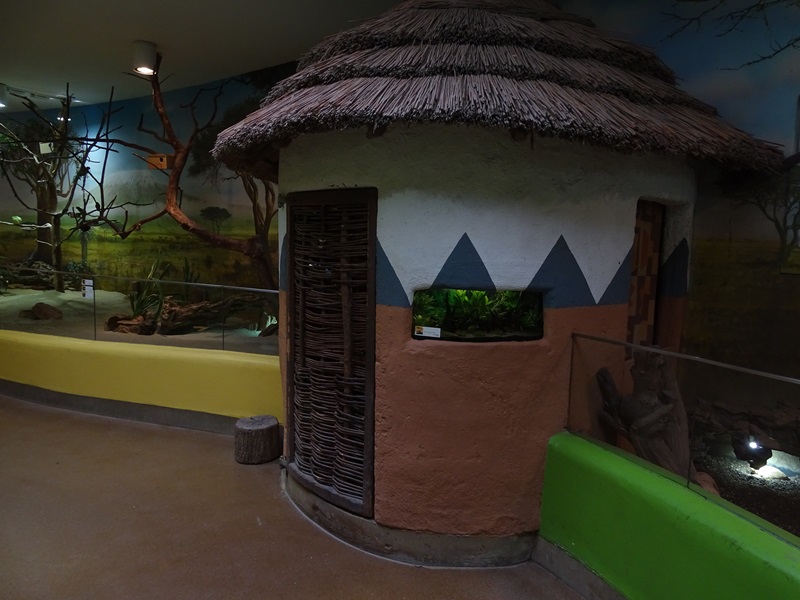
The other open-topped enclosure, this one much more tropical, has another species that is basically a free-roamer as it has the ability to fly; harlequin quails. Both the shrew and quail enclosure are very nicely done and offer the animals more than enough space. Between both of those is a small hut-looking structure that has a tiny aquarium for equally tiny freshwater shrimps.
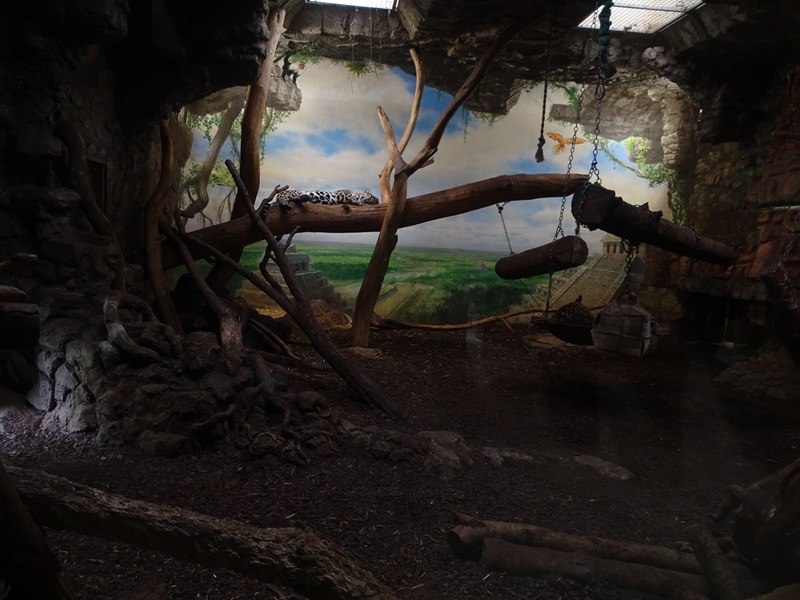
Overall, I think the Lion House is a fantastic piece of zoo design. Despite it’s small footprint, it manages to showcase mammals, birds, reptiles, amphibians, fishes and invertabres, all from Africa. The indoor-only species have very decent to great enclosures, and even though the indoor enclosures for lions, guenons and river hogs are limited, that is compensated by their outdoor enclosures. Salzburg Zoo really excells in their animal houses, and I would love to see more zoos follow their example of designing themed buildings around a headliner species (Gibbon, Jaguar, Lion) with smaller enclosures for additional species thrown in. (It’s also one of the main reasons I love Prague Zoo so much as they’ve mastered this tecnique!)
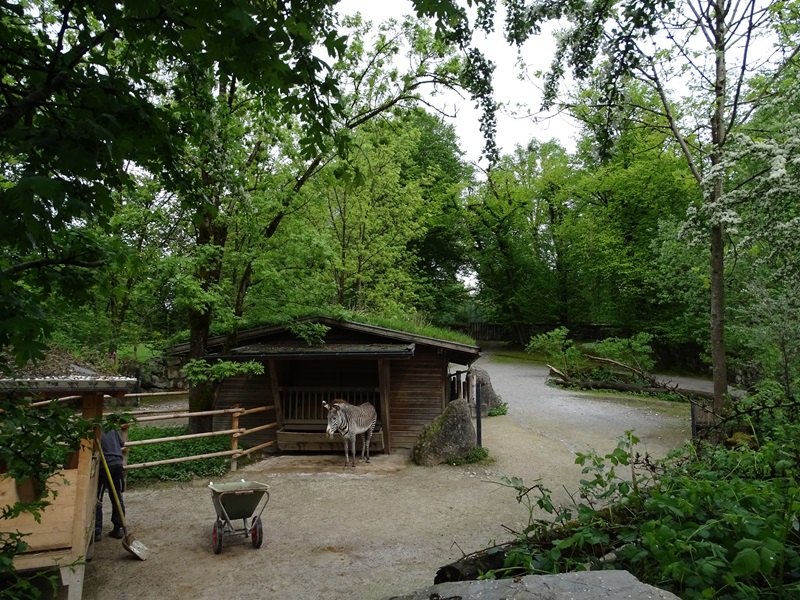
Anyway, time to move on as there are still a few other enclosures to be visited. Firstly, the Grevy zebras in an enclosure that’s mostly a sandy paddock surrounded by a wall made out of rocks, with a small grass-roofed shelter building in the middle.
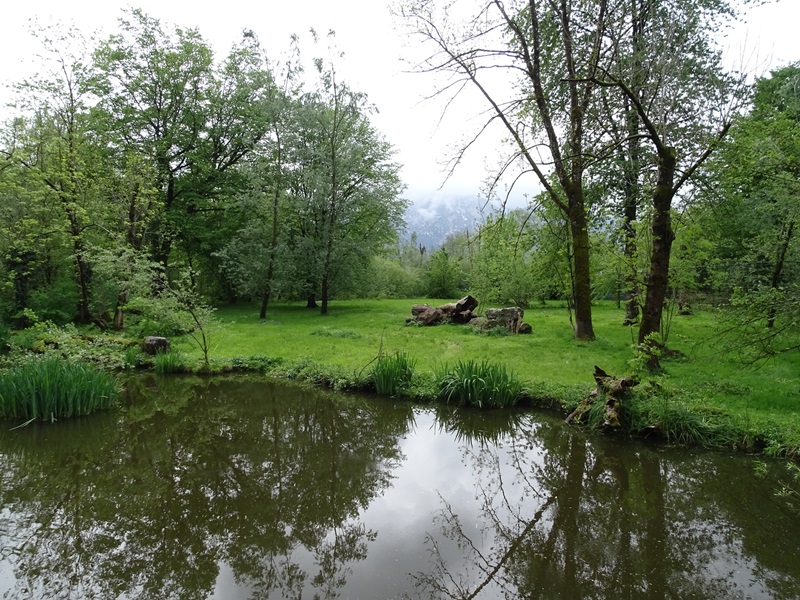
A path that splits of from the main loop takes you to the cheetah enclosure. From behind a wooden fence or from the small observation hut, you can look over a natural pond into this very pretty enclosure which also has the mountain backdrop. Unfortunately the cheetah was another species that apparently didn’t like the cold and since there is no viewable indoor quarters for these animals, they were another no-show. This part of the zoo borders a beautiful piece of nature, where lucky visitors might even spot wild beavers!
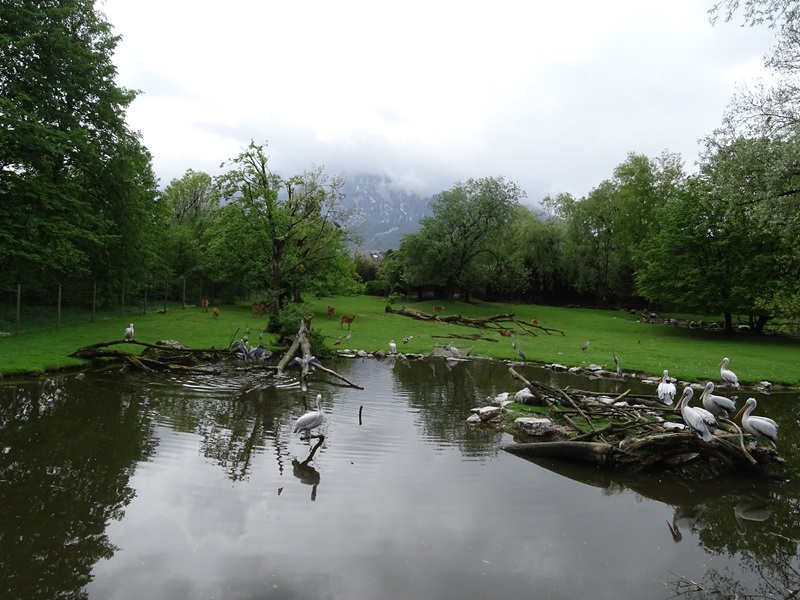
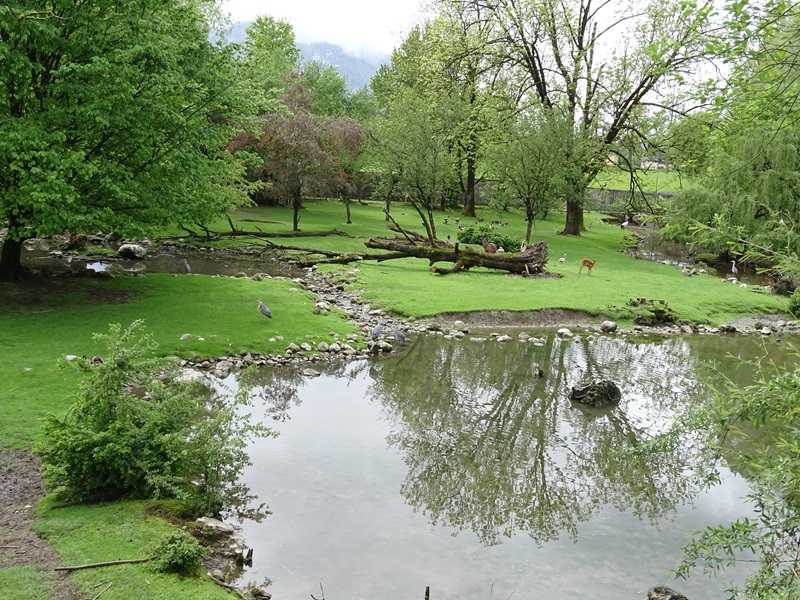
Something else this zoo is well-known for is the meadow for sitatungas and pelicans. A huge and absolutely beautiful enclosure that is equal parts land and water, that’s almost as green as the color green itself. It’s a wonderful experience to watch the large herd of sitatunga graze while in the foreground the pelicans (Dalmatian and pink-backed) preen their feathers or relax on their islands. In addition to those, I also saw red-crowned cranes, helmeted guineafowl and bar-headed geese here, as well as wild greylag geese and a massive colony of wild blue herons. Wild animals love it here! Neither Dalmatian pelicans nor red-crowned cranes are African, but that’s really the only negative thing I can think off here. This enclosure is perfection! Across from the sitatunga’s in an addition viewing into the rhino enclosure and I got some really good views of them here.
Because time was starting to become an issue, I decided to skip another dead-end path that leads to the African village, where domesticed animals and porcupines can be found. I made my way back to the entrance/exit, without seeing any species out that weren’t out before (cougar, maned wolf) and I was just in time to catch the 3 pm bus back to Salzburg. I would get out a few stops later, in the city centre, ready to go to my second destination of that day.
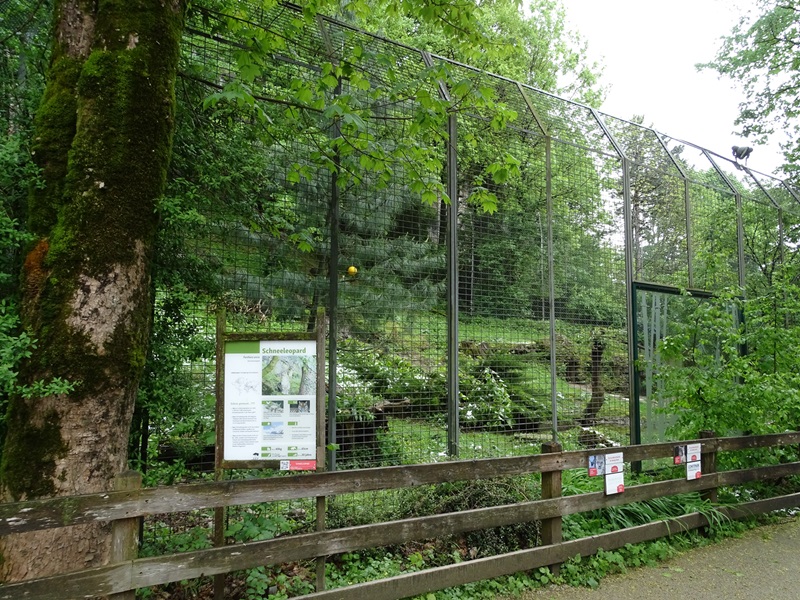
In conclusion, I adored Zoo Salzburg! This was my first zoo in Austria outside of Vienna, and my first zoo in a mountainous area. I did know what to expect from this zoos from photos I’d seen, but everything looks so much more beautiful when you’re actually there in person. Walking around in Zoo Salzburg is a treat even without the animals! Speaking of animals, I did really enjoy seeing some very active bears, jaguars, chamois and many others. It was a shame many of the carnivores were no-shows (wolf, maned wolf, corsac fox, cougar, binturong, even the banded mongoose) or inactive (lion, otter). As for the enclosures, they were all decent, good or fantastic. I really loved the animal houses (especially Gibbon House, Jaguar House and Lion House) and the wonderful savannah. I’m really glad I decided to add Salzburg to my itinerary.
(again, more photos on the gallery)
4 down, 6 to go. Next up: Haus der Natur (Natural History Museum), Salzburg




 If you want to see a poisonous snake, you'd have had to visit WdG during your Salzburg visit.