Zootrip report 2024; southern German and Austria

@PossumRoach thanks for your reply. I'm glad the lemurs and spider monkeys are outside again. I wonder why the same isn't true for the siamang

I did see the epaulet sharks, I just wasn't sure anymore which tank they were in. I'm sure there's some stuff I missed in the aquarium as I didn't spend too much time here. I took some photo's of the enclosures and signage which helped while writing this report, but I'm sure I forgot to mention a lot of species.

I also noticed ZTL is quite outdated for the Hellabrunn aquarium. I had to add a few species after my visit (the epaulet shark wasn't mentioned for example). There are also still a lot of species mentioned that I didn't see and weren't signed, with sources from over 5 years ago. But because my visit was so short, I'm just gonna leave most of those on because maybe I just missed them. Among them are electric eel, ribbon moray, comet, European parrotfish, birdmouth wrasse and white-spotted puffer. All of those are on ZTL for this zoo, but I didn't see any of them nor did I notice signage for them. A species like comet or ribbon moray is easy to miss if they're not signed, but I'm pretty sure the zoo currently doesn't keep electric eels.
 
I can’t speak for the other fish but I did see an electric eel, and a small one at that, on my visit on 11th of February. Maybe the animal may have been gone by then. I also might be misidentifying it but I do recall seeing birdmouth wrasse in the Urwaldhaus a few times.
 
I can’t speak for the other fish but I did see an electric eel, and a small one at that, on my visit on 11th of February. Maybe the animal may have been gone by then. I also might be misidentifying it but I do recall seeing birdmouth wrasse in the Urwaldhaus a few times.

Right, there's another aquarium in the Urwaldhaus. Again not something I spend a lot of time at , so I have probably just missed a bunch of species here!
 
DAY 3. Tierpark Hellabrunn, Munich. 16-04-2024.

PART 3

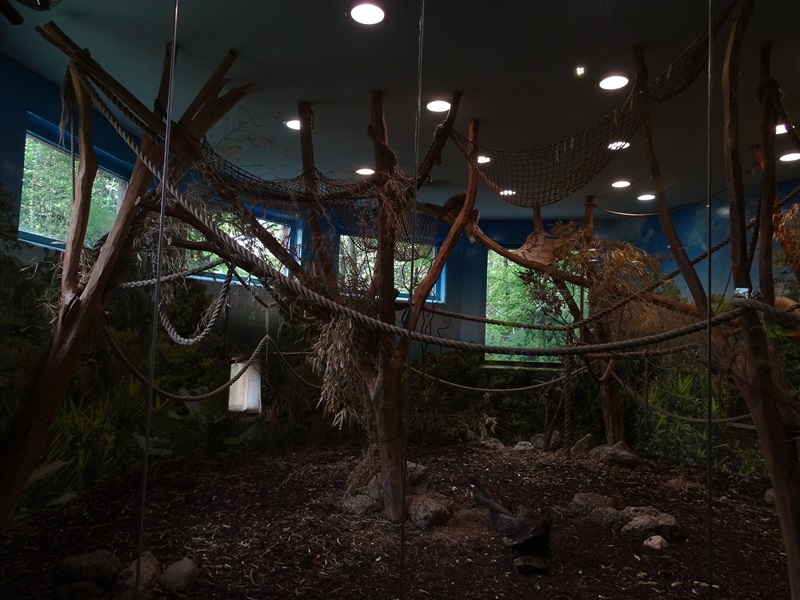
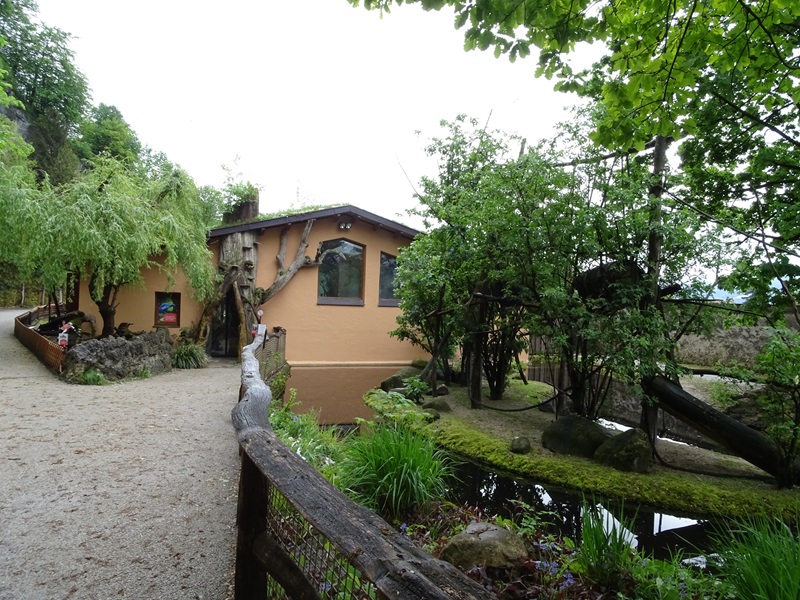
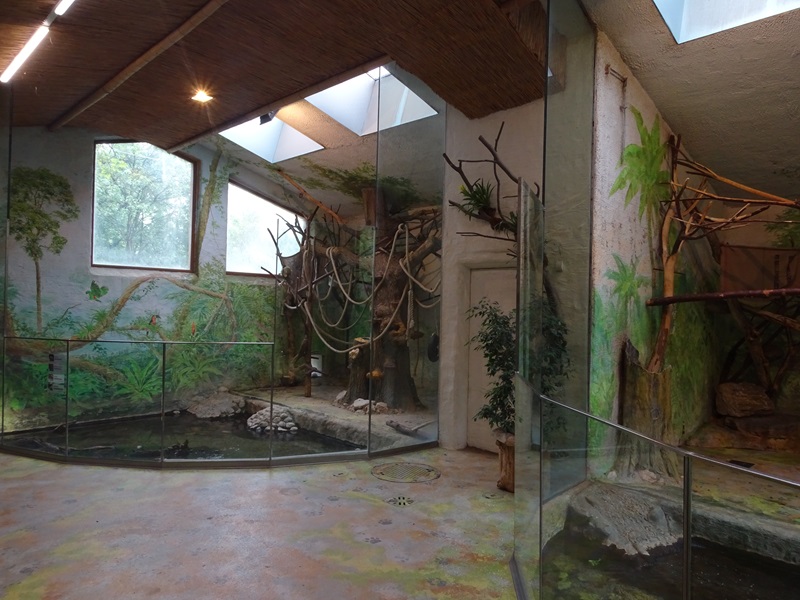
The Urwaldhaus, like it names suggests, is a building with a tropical theme. It’s not a rainforest house per se; it’s not a lush jungle with free-flying birds and high humidity. Instead it is more like an animal house in lay-out, with several seperate enclosures, all surrounding a visitor path in the centre. The roof and parts of the walls are glass, which means a lot of light enters the building. The hause has two entraces/exits, and since I came in from the ‘east entrance’ right after the aquarium, the first thing I saw was the indoor enclose for gorilla’s. I think it’s really well done. The enclosure looks quite natural, with a good looking mockrock backdrop, natural substrate for the gorilla’s to walk on and forage in, a bunch of rockwork and many logs with ropes and netting for the gorilla’s to climb on. Tennis ball puzzle boxes provide the apes with some additonal enrichment. Large glass panels give an excellent viewing of these magnificent animals, but I did notice the gorilla’s had access to their backstage area in case they want to avoid prying eyes! After the concrete disaster that was the Ape House in Heidelberg, and the underwhelming gorilla house in Nürnberg, I was happy to finally see a indoor gorilla enclosure I really liked.


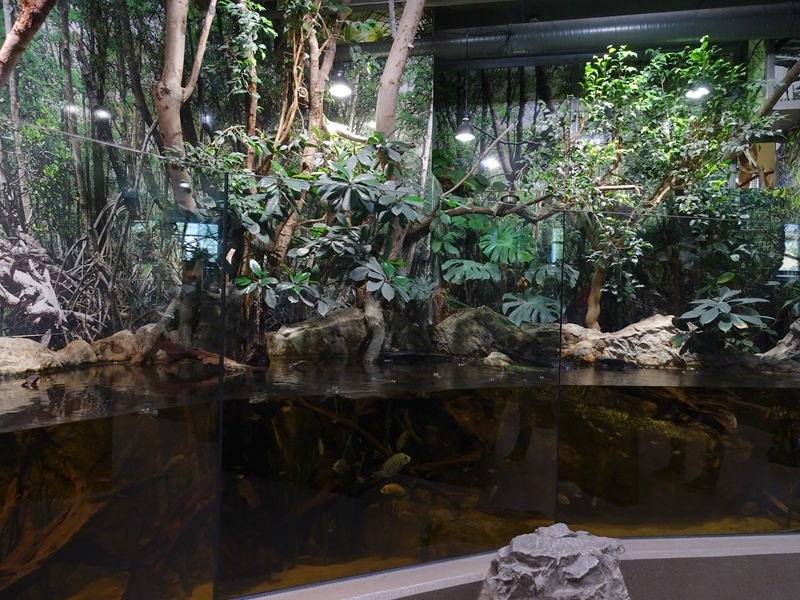
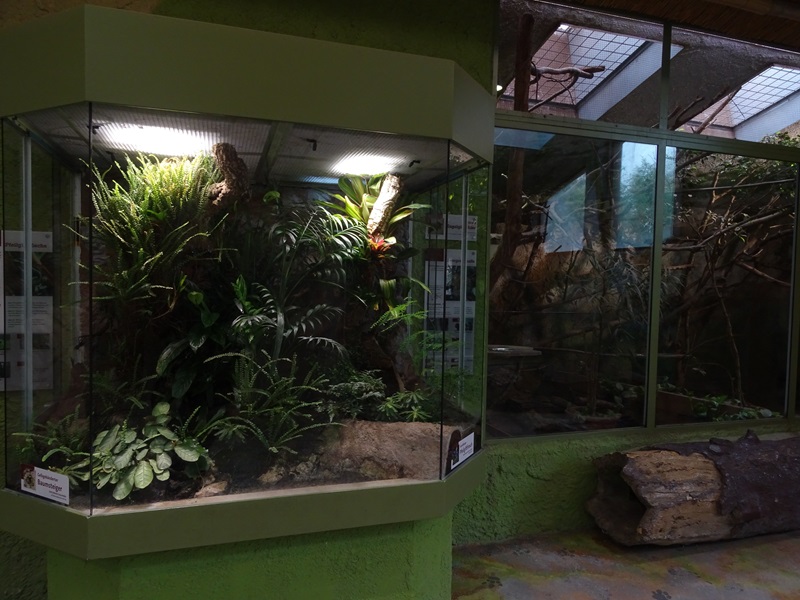
At the other side of the building, across from the gorilla’s, are two vivariums. There’s a rounded tank themed around a mangrove forest, in which I found mudskippers and archer fishes. Four-eyed fish was signed, but I didn’t see any.

The second vivarium is a long but narrow enclosure for green anaconda, which shares the water part with some fishes like red hook silver dollar and silver arowana. I was not able to find an anaconda in here though!


In the back part of the building are two more mammal enclosures. The largest of those, immediately next to the gorilla’s, has the final primate species of the park; Red-tailed moustached monkeys. This was my first time seeing the species in a zoo that is not Gelsenkirchen! The monkey enclosure is somewhat of a smaller version of the gorilla enclosure, with some living grass and bushes added. This enclosure does have one downside to it though; it is entirely indoors. The monkeys share their home with cape hyraxes, a really fun combo! Like the gorilla’s, these animals had access to their backstage area and initially neither species was visible, but luckily I saw them both out at my second attempt.

A small enclosure all the way in the back of the building has another lovely species that were a recent addition to the zoo; black-and-rufous elephant shrews! I really enjoyed watching 2 elephant shrew walk around their enclosure, appearing from and disappearing into the foliage.

Between the elephant shrew and the anaconda’s is a windows that gives an additional view into the outdoor enclosure for the gorilla’s.

Having seen the back half of the building, I made my way to the front half. Right next to the gorilla’s are the chimpanzees in their indoor enclosure, which is a bit smaller and somewhat less impressive than the gorilla one, but still very decent and defenitely not bad for an indoor enclosure. There is also a smaller enclosure that I assume can be used for seperation purposes.

Where the ape enclosures somewhat mirror eachother, the same could be said for the mangrove/anaconda enclosure and the dwarf crocodile/cichlid enclosure. Those also consist of a rounded crocodile enclosure with a land and a water part, as well as a long, narrow enclosure that is mostly water which has a lot of cichlid species in it. Unlike the anaconda/mangrove tanks though, I believe the crocodile enclosure and cichlid tank can be connected to create one larger enclosure.

Next to this large enclosure are two smaller terraria, one for green tree python and one for panther chameleon. The latter was off display due to maintanance.

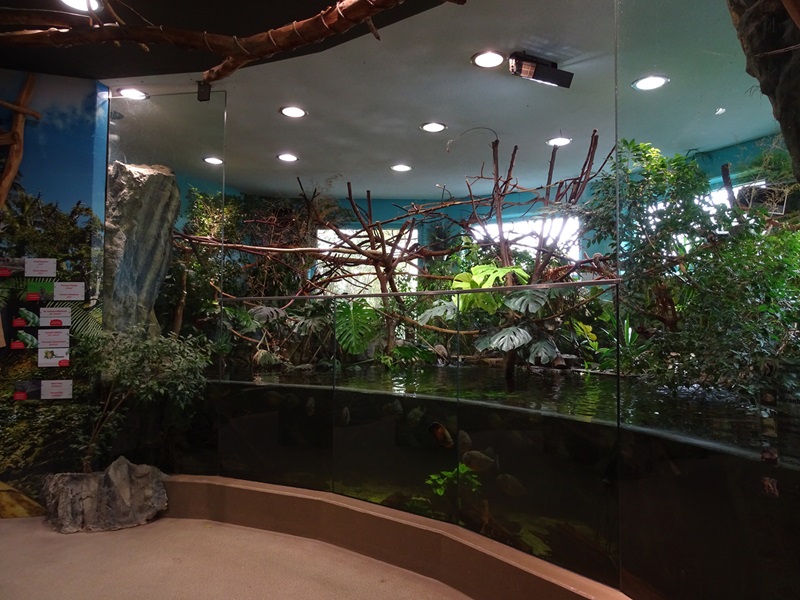
Finally, this building also has a single large coral reef aquarium, featuring a variety of species. I did not spend much time here, but I defenitely saw lyretail anthias, yellow tang, yellow-tailed tang, Pacific sailfin tang, clown surgeonfish, bignose unicornfish, blotched foxface, blue-spotted spinefoot, brownspotted spinefoot, Klein’s butterflyfish, bluering angelfish, three-spot angelfish, red-tooth triggerfish and yellow blueback fusilier in this tank.

And with this aquarium, I had reached the southern entrance/exit of the Urwaldhaus. I really enjoyed this building. It has a good combination of popular animals (great apes) and rarities (guenon, elephant shrew) as well as balancing mammals with reptiles and fishes. It’s also a good continuation of both the aquarium (more fishes) and the Welt der Affen (more primates). I would have loved to see some tropical birds here since Hellabrunn is sincerely lacking in that department, but that’s just a minor complain.

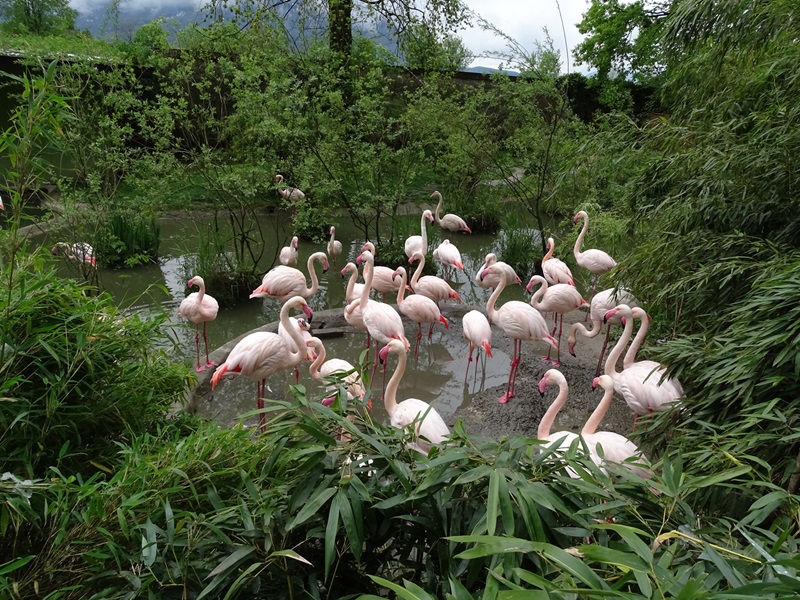
I exited the Urwaldhaus from the southern entrance and here I found the other entrance/exit of the park called the ‘Flamingo-Eingang’. The name makes sense because right after the entrance is an actual flamingo enclosure. What was formerly an open-topped enclosure for greater and American flamingo’s is now an aviary for only the former species.

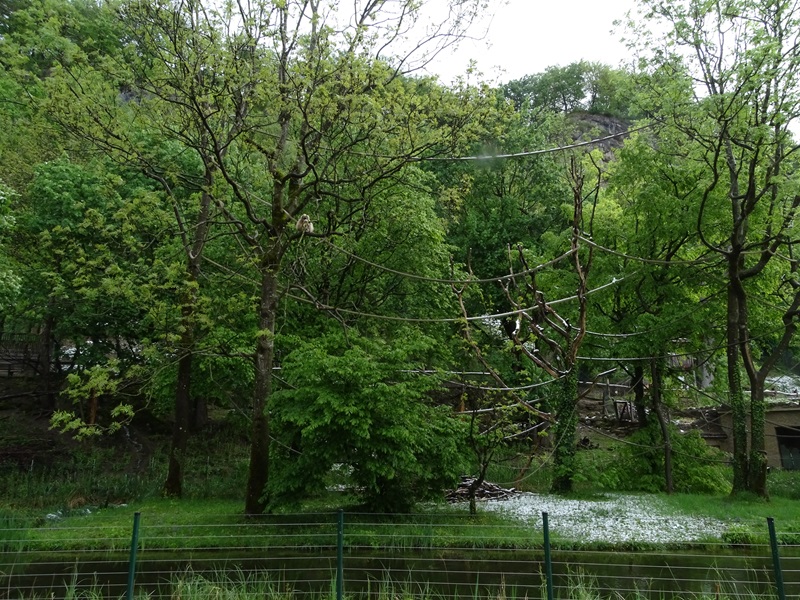
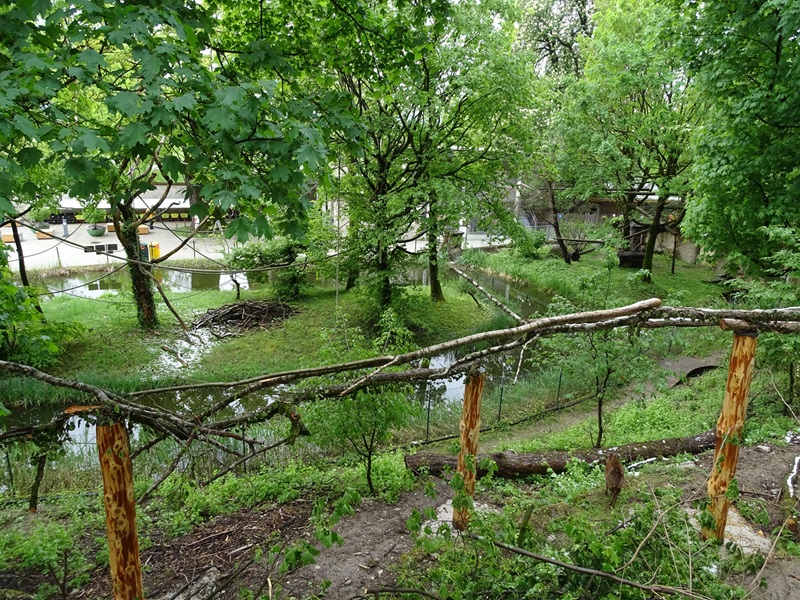
I made my way back to the gibbon enclosure, and from here took a look into the huge South American mixed enclosure across from it. This enclosure also borders the natural stream of Isar water, and I saw some capybara’s enjoying a resfreshing dip in a shallow pool.

After this I took a new path that gave me another look into the enclosure. Here is where I saw the lesser rhea, greater mara and vicuna that are mixed with the capybaras. I was still missing one species here, but I would see it later.

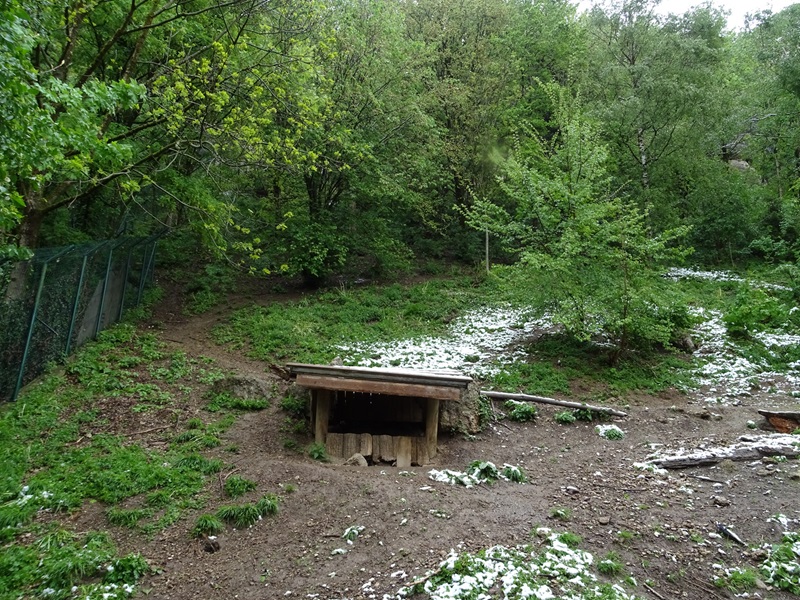
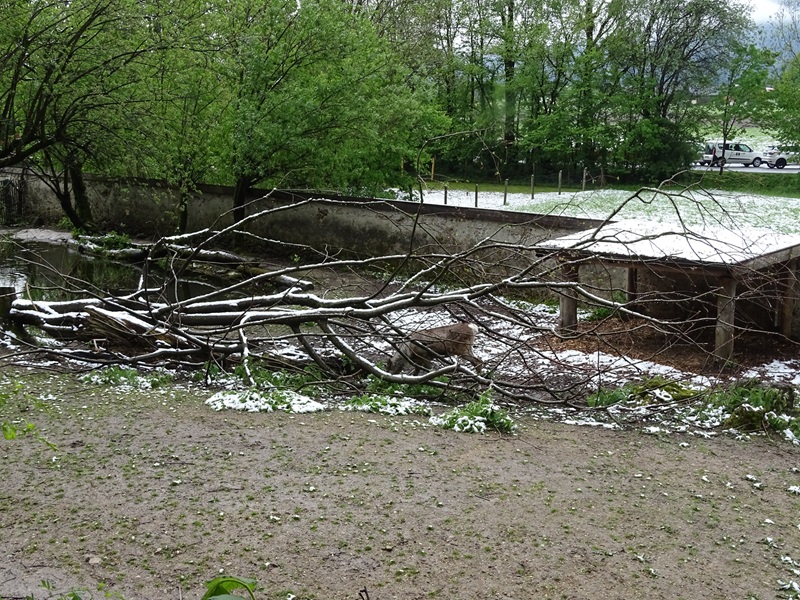
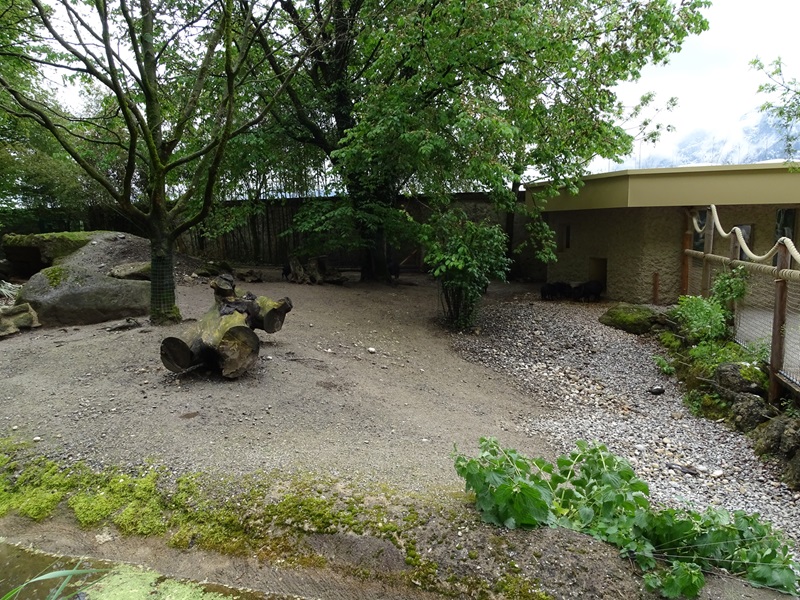
Across from the South America enclosure was a simple yet effictive paddock for wood bisons. I arrived at a T-junction, where the wolf enclosure is located. It was a good-looking, densly vegetated and natural enclosure with a wooden observation hut, but unfortunately the wolves were off display due to works in their enclosure. From here, I decided to take the path to the giraffe house first, which ment the paddock for Heck cattle and heck horses wasup next, followed a simple enclosure for porcupines on the other side of the path. Due to even more construction/maintainance works, the porcupines were off display.

The giraffe enclosure is a pretty good one. Surrounded on all sizes by lots of foliage, it’s gives of a very natural feeling, not unlike the enclosure in Nürnberg. Also like Nürnberg, the giraffes in Munchen do not share their enclosure with any other species. Unlike that zoo though, the giraffe huse here is located behind the enclosure so it partially functions as a backdrop, but not in a bad way. Speaking of that house, this one is also accessible to visitors, so I made my way to the entrance. Another similarity with Nürnberg is that here too, meerkats are kept right next to the giraffes. In this zoo though the meerkats are located right in front of the giraffes, with the former in the foreground while the latter can be seen walking in the background. Nicely done!

The Hellabrunn giraffe house is quite a lot different from the one I saw a day earlier in Nürnberg. The indoor enclosures for the giraffes is a lot larger here, and instead of viewing them through bars there are large glass panels seperating the visitors from these giants. With both the roof and the back wall being all glass, there’s a lot of natural light coming in. During my visit, the giraffes were outside, but I’m sure the views of these animals are just as good when they are inside.

Where Nürnberg has striped weasels in the giraffe house, Munchen has two other species; you will find a set of smaller enclosures here, one with a spiny-tailed lizard, the other with round-eared elephant shrew. The latter was off display due to maintainance/construction works. At this point the amount of species currently off-display was getting quite noticable. Takins, penguins, tamarins, chameleons, wolves, porcupines and now the elephant shrews.

I backtracked a little bit, past the porcupines, to take a path to the central part of the zoo. The first animals I came across here were the Przewalski’s wild horses and Bactrian camels. The former were held in a large, grassy/sandy paddock, while the latter were currently in a much smaller enclosure. I am not sure if these species rotate, or if they are sometimes kept together, or if the camels are permanently kept in this underwhelming enclosure while the horses get to enjoy the large paddock every day.

Across from the horses is an sizable aviary with two species that are somewhat from the same part of the world as the horses and camels; the Temminck’s tragopan and the Derbyan parakeet. This aviary isn’t op the zoo map. Next to this is the former batcave, which was closed in 2020.

The next enclosure I stumpled upon was a large, perhaps somewhat old-fashioned cage. If I wouldn’t have already seen them pictured on the map, I would have been quite surprised to see raccoons in this enclosure. It’s quite obvious this used to keep some sort of (large) cat like leopard or cougar, but I’m happy the zoo replaced those with a smaller species. Across from the raccoons are some European white storks in an enclosure that’s neither bad nor very interesting.

Other than the lions I saw in the morning, this day was severly lacking in felines so far, but that was about to change as I had now arrived at the section of the zoo that, perhaps unintentionally, focuses on cold-climate carnivores, three of which are cats. The first enclosure is the smallest and least impressive but still pretty decent for its inhabitant; the Pallas’ cat. This is a species I’ll never get bored of and I was happy to see a very active cat here. It would sometimes go into its indoor enclosure, but it always came back out. The indoor enclosure for the Pallas’ cat is not viewable by the public.

Next to the Pallas’ cat are the lynxes. I really liked their enclosure as well. Sure, Munchen’s lynx enclosure can’t match the one I saw in Nürnberg that’s an actual piece of forest, but this might have been the best cage-type enclosure I’ve seen for this species. It’s large, offers plenty of shade and has a nice amount of rocks, foliage and logs. From a visitors perspective, it’s also really nicely landscaped. Again, I found myself lucky with 2 very active lynxes that didn’t display any pacing or other steorotypical behavior during the time I observed them.

Unlike the Pallas’ cat, the indoor enclosures for the lynxes can be seen by the visitors from a covered walkway along a L-shaped building, which means technically these indoor enclosures aren’t really indoors at all. The indoor enclosures, which were currently linked together and accessible by the cats, aren’t particulary large, but do contain tree bark, rocks and even foliage to give it a more natural look. The biggest downside to these enclosures is that they do not provide much privacy for the lynxes. Luckily their main enclosure has plenty of cover, so it’s not too big of an issue. The second half of this L-shaped building has a similar set-up for Siberian tigers, there were no tigers inside however.

Across from the lynx/tiger ‘indoor’ enclosures are two large and one smaller wolverine enclosures. Both large enclosures looked fantastic, with lots of rocks, logs and foliage as well as some water. The third enclosure is much smaller and more barren and is probably used as a seperation cage and not a permanent enclosure. At the time of my visit, all three enclosures were linked together, providing a whole lot of space for the wolverine. I did not see one during my first visit, but I saw a very active wolverine on my second visit. Awesome! My only complain is that these enclosures are not very photography-friendly.

I backtracked a tiny bit and made my way around the cat building so I could take a look at the outdoor enclosure for the tigers (which is situated across from the Indian rhino enclosure). This enclosure is a typical tiger enclosure with a moat around it. It has a pretty good size and plenty of cover and shade, so this is one of the better enclosures of its kind.

Between the lynxes and tigers is a small path that is now a dead-end. Along this path are a few aviaries that are attached to the former bat house. Inhabitants here are red-billed magpie jay, barn owl (not seen), little owl, grey partrigde (not seen) and rock partrigde. Back on the main path I found a now empty enclosure that kept markhors in the past. Too bad this species is gone now.

If I would take a right turn from here, I’d be back at the moose enclosure that I has already seen, so I turned left and came across a simple enclosure for bantengs on my right hand side, while in front of me was the enclosure for Mhorr gazelles that I had seen from the other side earlier that day. At the next T-section I choose to go left, as the right path would eventually take me along the enclosure for yaks that I had already seen.

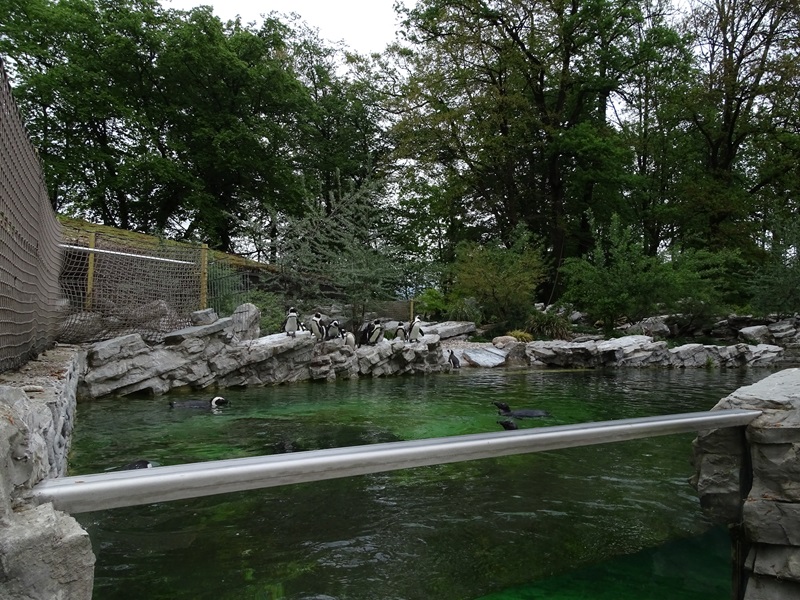
Immediately after going left is a lovely enclosure for Humboldt penguins. The path then continues along the wolverine enclosure, meanwhile passing a couple of paths in directions of areas I’d already seen, until it reaches the final two enclosures of the zoo I had yet to see. On the right side a simple, long enclosure for maned wolves (I found one curled up in the bushes). Next to this is the indoor enclosure for the final species of the South American mixed enclosure, the giant anteater. I saw a single animal inside, which was surprisingly active.

I didn’t delibaretely save it for last, but the final enclosure of the day just happened to be the ‘Grossvoliere’, the great aviary. I always enjoy large aviaries where you need to look for the birds, so this one was right up my alley. First off, the aviary looks fantastic, partially due to the natural stream of flowing water coming directly from the Isar. This aviary has a good mix of species from temperate parts of the world that would probably be able to stay out year-round, and tropical species to spice things up. Ironically, I wasn’t able to locate the largest species in this aviary; the black stork. I did however see both species of gull (hering and grey), demoiselle cranes and all 4 species of ibis (straw-necked, scarlet, glossy and northern bald). The bulk of the bird collection is made up of ducks; I saw red-breasted geese, white-faced whistling ducks, black-bellied whistling ducks, common shellducks, Australian wood ducks, American wood ducks, ringed teals, northern shovelers, white-cheeked pintails, chilean pintails, red-crested pochards, goldeneyes, ruddy ducks, smews and hooded mergansers. At least 10 additional species were signed, but as I didn’t see them I can’t confirm if they’re still part of the collection and I just missed them or if the signage is simply outdated (probably a mix of both).

After visiting the great aviary, I still had time for a partial re-walk. As the major no-shows of the day had been the siamang, guenon+hyrax and the wolverine, I revisited their enclosures and got lucky two times, only missing out the siamang again.


And that concludes my visit to Tierpark Hellabrunn. I really liked the zoo! Even though the zoo doesn’t have lot that truly stands out, almost everything is really well done. The zoo remains a high standard all around. Sure, I found the aquarium a bit underwelming, and I think the drill enclosure is below average, but overall, this zoo doesn’t have a lot of real flaws and nothing is terrible. Well… maybe except for the rhino house.

The zoo has a good and varied collection of ABCs and some rareties, only lacking in the tropical bird department. Tierpark Hellabrunn is defenitely a zoo I’d recommend any zoo enthusiast!

Next up will be Salzburg (the Zoo as well as the aquarium in the natural museum). Luckily these aren’t as large as the previous zoos as these reports are quite time-confusing to write!

(I’ve been steadily uploading photo’s to the gallery for those who like visuals in addition to written words)
 
Last edited:
I really enjoyed your review of Hellabrunn. Before I first visited it, I didn’t initially have high expectations of what is now my local zoo but now I really do appreciate having it as my local zoo. It ain’t a Berlin or Prague, but it’s definitely better than what I had in my childhood.
 
DAY 4. 17-04-2024.

ZOO SALZBURG

PART 1

Note: I decided that from this zoo onwards, I will upload photo’s to the gallery before posting the reports because it just makes more sense that way! This way I can also actually add photo’s to these reports instead of just words! Should have done this earlier…

For my second day while staying in Munchen, I had two options; a day trip to Augsburg to visit the local zoo, or a visit to Salzburg to visit the zoo and the museum, which has an aquarium. Because the weather forecast predicted a rainy day, I opted for the latter as rain wouldn’t be an issue in a museum and the zoo is small so I would only need an estimated hour or two to visit between downpours.

Because I was quite tired from all the travelling and walking, I decided to leave one hour later than originally planned. Delays added an additional hour which ment it was already 11.30 when I arrived at the zoo. This could have been really annoying, but it just so happened it had been raining all morning anyway, and the rains stopped around 11.45. So, this was unintentionally the perfect timing to arrive at the zoo. Especially since it remained mostly dry during my 3 hour visit to the zoo. Lucky break!

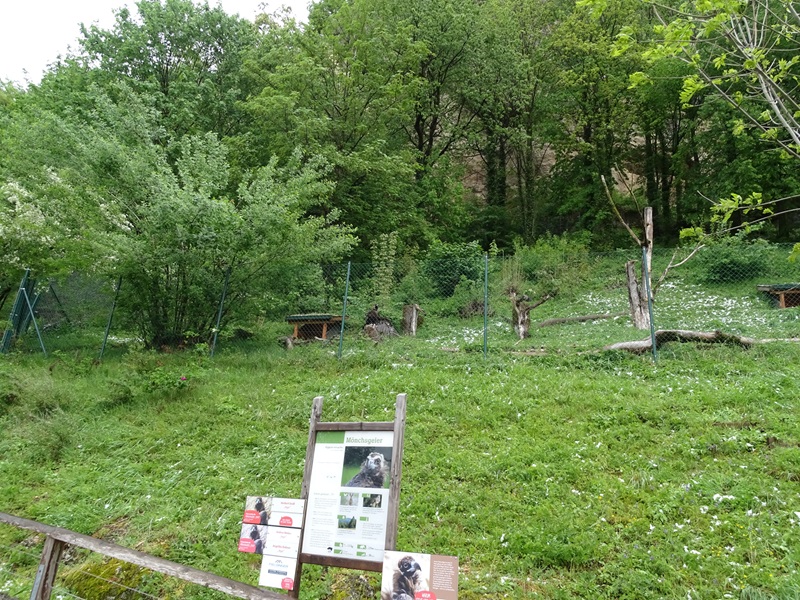
My main reason for a visit tothis zoo is its location: The entire zoo is build at the foot of a large cliff, giving it truly an unique appearance. Honestly the train journey from München to Salzburg was already a treat as the alpine landscapes that I passed were gorgeous! When I arrived at the bus stop in front of the zoo, I was immediately impressed by the rock formations that make up the backdrop of the zoo. I made my way to the main entrance and noticed the first animal before even getting there; a griffon vulture flying over the zoo grounds and landing op top of a large tree. This is not a wild vulture however; it’s a free-roamer that is still part of the zoo’s collection. These vultures not only have the freedom to roam around as they please, they can do so in their natural environment. Cool! (I did see a wild kestel though)

Zoo Salzburg is a very narrow zoo, with one main path going from the western corner to the eastern corner, with a small loop in the entrance place and a larger loop at the eastern side. The zoo is divided into geographical zones, although there is some overlap in a few places. Immediately after the entrance is the Asian area, which consists of a enclosure for red panda and muntjac, and the gibbon house with adjacant outdoor enclosures; the smaller loop goes around the gibbon house and these enclosures.


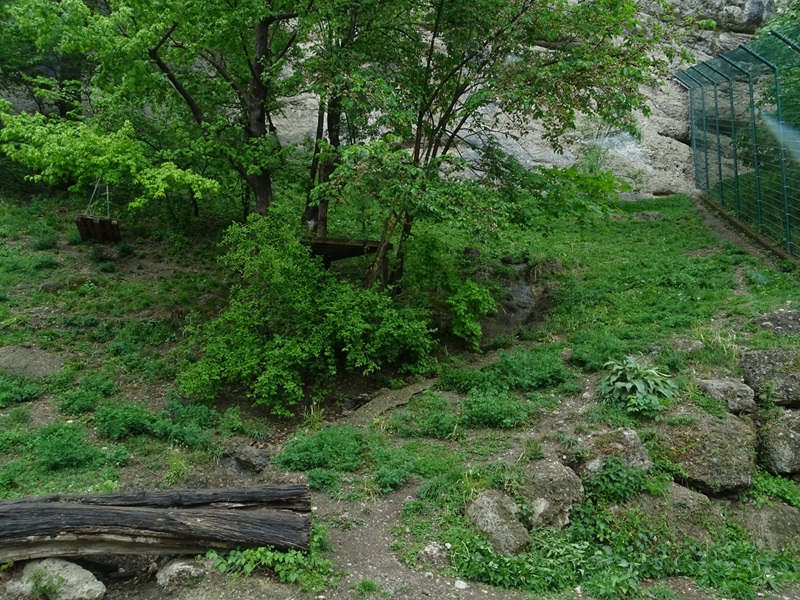
The gibbon enclosure and the red panda enclosure are both spectacular. The island for white-handed gibbons doesn’t have any climbing frames or logs; it doesn’t need to, because here the gibbons have actual large, living trees to climb in, although the zoo did add ropes to connect those trees to one another. Despite the low temperatures (there was still some snow!) I saw two gibbons outdoors, both in the same tree but one up much higher than the other. The gibbons have their indoor enclosure in the Gibbon House, but I would visit that a little later during my visit.


From the main entrance, the red panda enclosure might look like many others of its kind, but it is much bigger than I noticed at first, and it wasn’t until I walked to the backside of the enclosure that I noticed it continues behind the gibbon enclosure (a moat seperates the two). Not only is this enclosure large, it is stacked with trees and other foliage providing not just climbing opportunities, but shade and privacy as well. The large ground area doesn’t go to waste either, as the panda’s share their home with Reeves’ muntjac. A flawless enclosure! (it was a bit unfortunate the panda was curled up in a tree however, but that’s kinda their thing)


Behind the red panda’s, on the other side of the path, is a large wooded enclosure for wolves. Like many enclosures at this zoo, it is build against the hillside so there is a lot of variation in elevation. An elevated observation hut gives you a good overview of the front half of the enclosure, which is more open than the densly forested backpart. Unfortunately the wolves were no-shows, and continued to be during the rest of my visit.


I could have continued the path around the gibbon house here, but I decided to go to take the path to the west corner of the zoo first, which is also the European area. I skipped past the small petting zoo area to the enclosures for chamois and forest reindeer. The reindeer enclosure is the least impressive of this area as it doesn’t benefit from the hillside because it’s on the opposite side of the path. It’s very basic, but offers these non-demanding animals all they need.


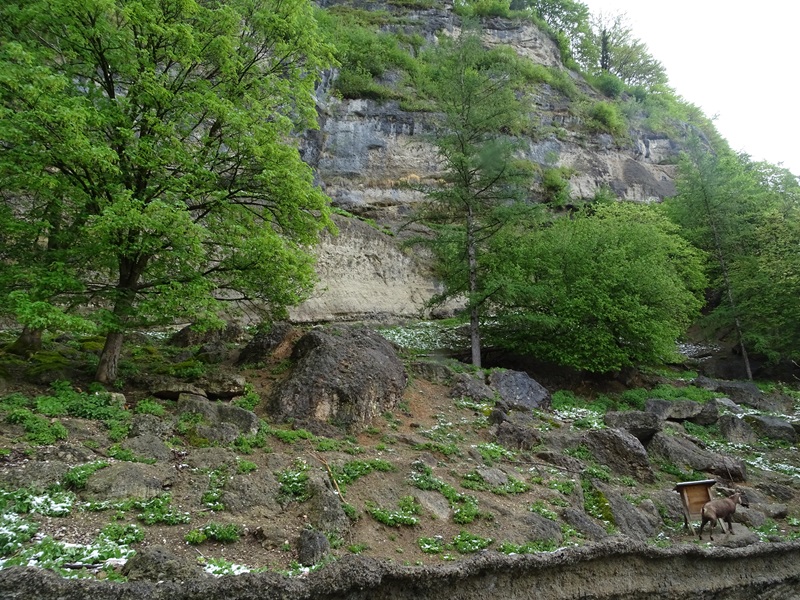
The chamois enclosures is something else entirely. There’s actually three interconnected enclosures, with one of the 3 located behind one of the others, with partly obstructed views. The two front enclosures are amazing though, with the chamois living on an actual cliffside with a mountain backdrop! A small part of the enclosure is behind a fence, but most of it is behind a moat, which gives you unobscured views of these mountain ungulates as they climb and clamber. When I first arrived at the enclosure, I only saw a few of them in the back enclosure, but one of then soon went into the left enclosure, proving me with excellent views of it. This was only my second time ever seeing this species (after Berlin TP in 2014) so I was really excited to see them again and the enclosure and backdrop added a lot to the experience. Amazing!


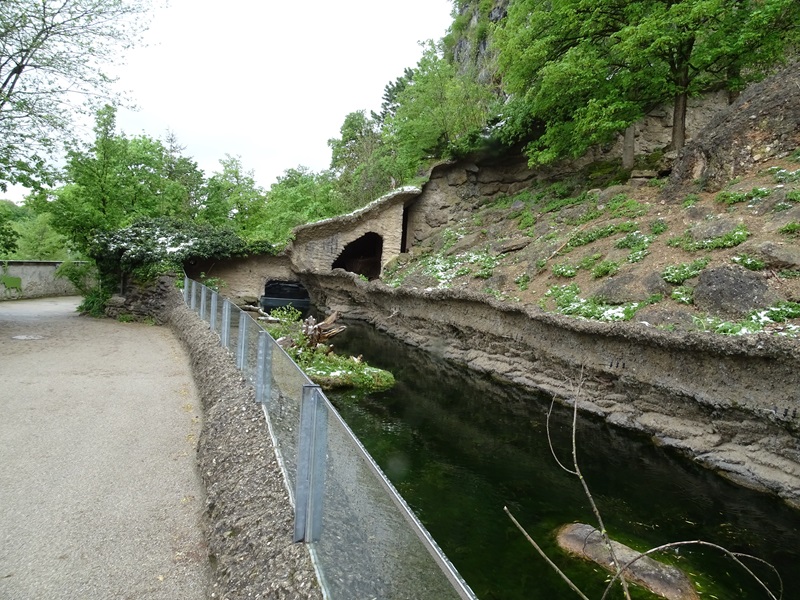
The moat between the visitor path and the chamois enclosure is not just a moat, it’s actually the enclosure for European otters. This long and narrow enclosure consisting mostly of water, runs almost entirely along the entire chamois enclosure, providing the opportunity to see otters in the foreground and chamois in the background if both happen to be at the right place at the right time. Unfortunately for me, the otters did not come out to play and/or swim during my visit.


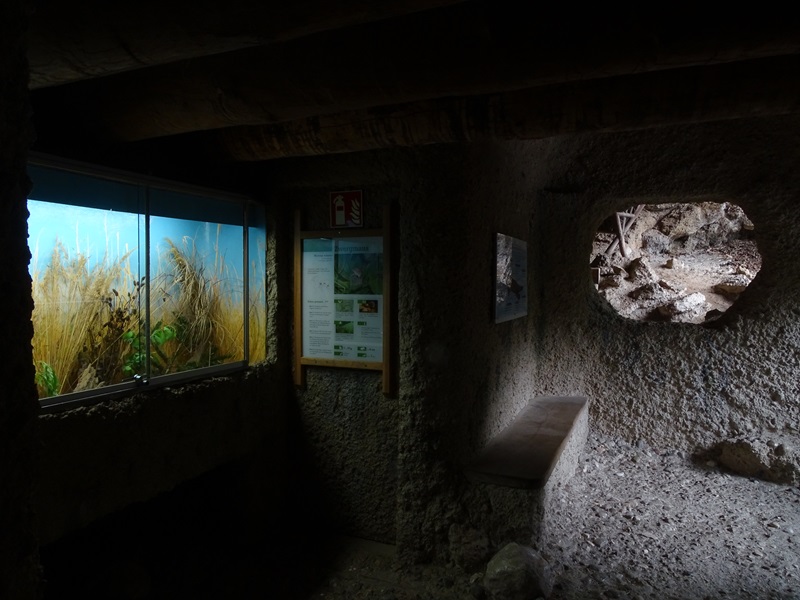
At the end of the otter/chamois enclosure is a small ‘cove’ that visitors can enter. At the right side of this cove are viewing windows into the otter enclosure; one window looks into the otter pond, providing an underwater viewing if the otters happen to swim closeby. Through some smaller windows, the otters can be seen in their den when they decide to not be outside, and sure enough here is were I found them, curled up together. In the backside of the cove is a window that looks into the far left end of the chamois enclosure; a food through is placed here to increase the chances of the animals actually going here. Lastly, on the left side of the cove is a small enclosure for a tiny creature; harvest mice. They were initially a no-show but when I returned to the enclosure about 30 minutes later, I did see a couple of mice in here.


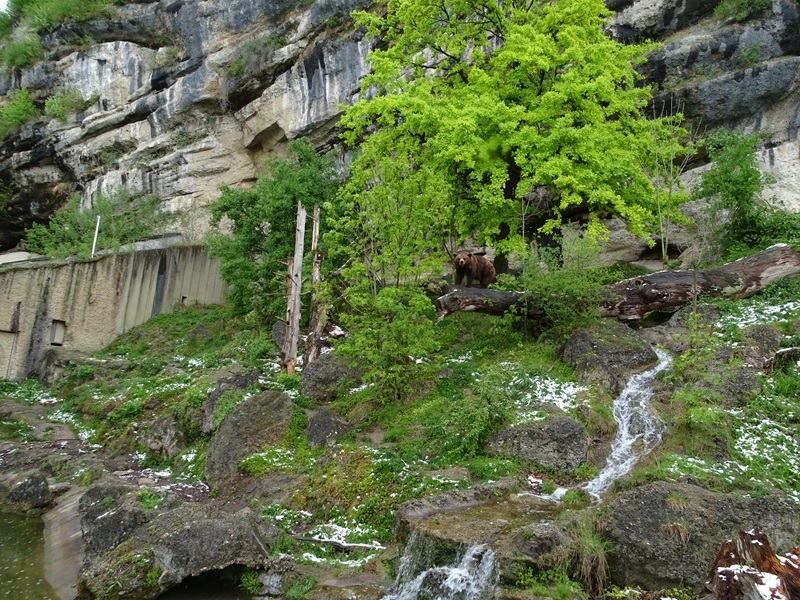
The next enclosure in the European area was that of the brown bears and corsac foxes and it’s a great one. Even though it’s not huge for bears (it is for foxes though) it is very natural and looks like a slice of forested hillside with actual living trees. There’s a small stream of flowing water that goes down into the moat, where the bears can also swim in if they want to. Along the visitor paths are some glass viewing windows that are low enough to be looked over, giving yet again unobstructed views of the animals. I was quite disappointed to initially see neither species out, and the foxes remained no-shows during the day, but on my walk back to the entrance the bears were walking around and being very photogenic. I made some of my favorite photo’s of the trip there and then. A highlight of the day!


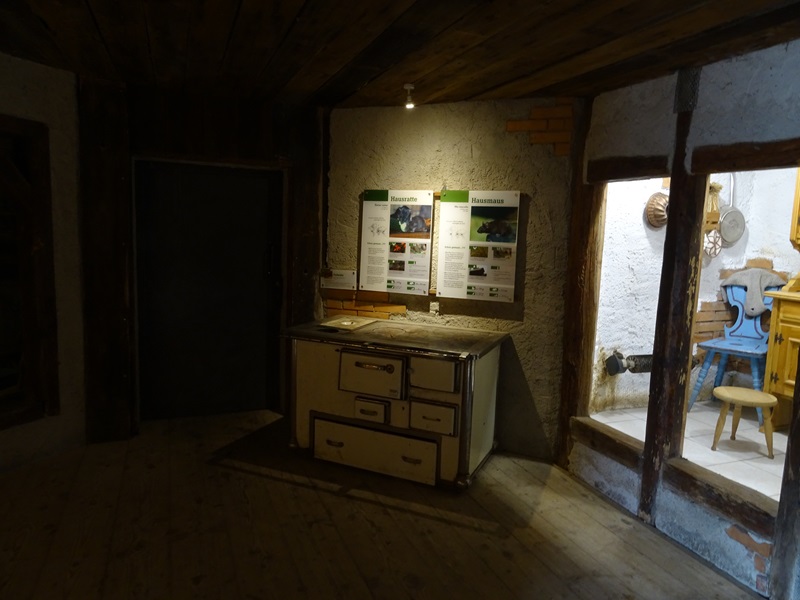
Between the bears and the next enclosure is a small building called the ‘Mouse House’, which unsurprisingly showcases house mice as well as black rats in enclosures with a domestic setting. Interestingly this was the third zoo of the trip to have a mouse house after Heidelberg and München, but this one is the only one that is entirely indoors.


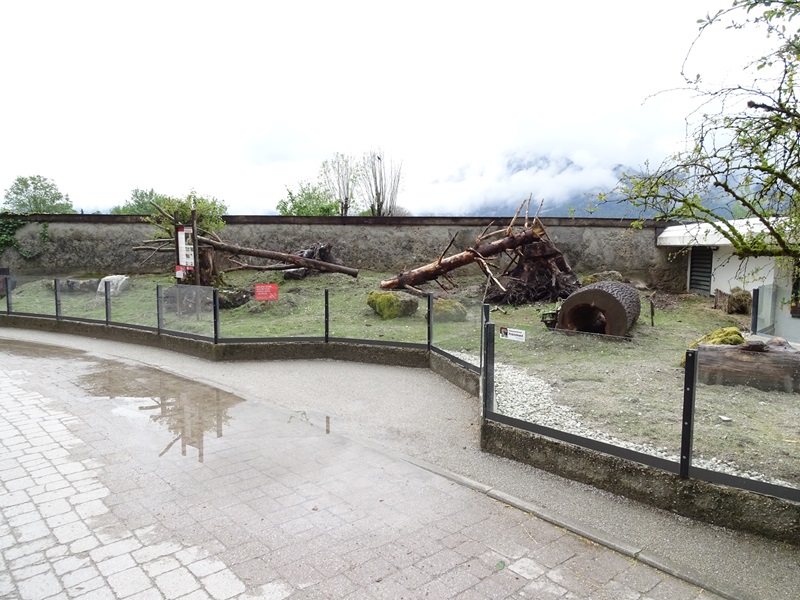
The wolverine enclosure is up next, and I’m not really sure if I like this one. It’s somewhat elongated, with the height steadily increasing the farther back it goes. The ground is quite barren compared to previous enclosures, consisting of rocks, logs and low plants, but there is only a single dead tree in there which means limited climbing opportunities for the wolverine. There’s also no privacy at all except for the indoor enclosure. I did see a wolverine being very pre-occupied with pulling on a horse carcass that was chained to the dead tree. (Unfortunately it faced away from my camera for most of it.) Overall a decent enclosure that could be better with some adjustments.


The enclosure for domesticated goats might be the best I’ve seen. Even though these were African pygmy goats, their enclosure is a large piece of forest with real rocks and trees and some added climbing frames, instead of the typical African village-themed sandbox that are so common in other zoos. Before visiting the goat’s wild relatives, I first took a look at a small building that has two enclosures build into it. The first is a typical small-rodent enclosure for the steppe lemming, which was knibbling on a carrot. Cute! The second, much larger one is for ocellated lizards. I wasn’t able to find a lizard, partly because the windows were foggy.

Lemming enclosure with part of the ibex enclosure in the back

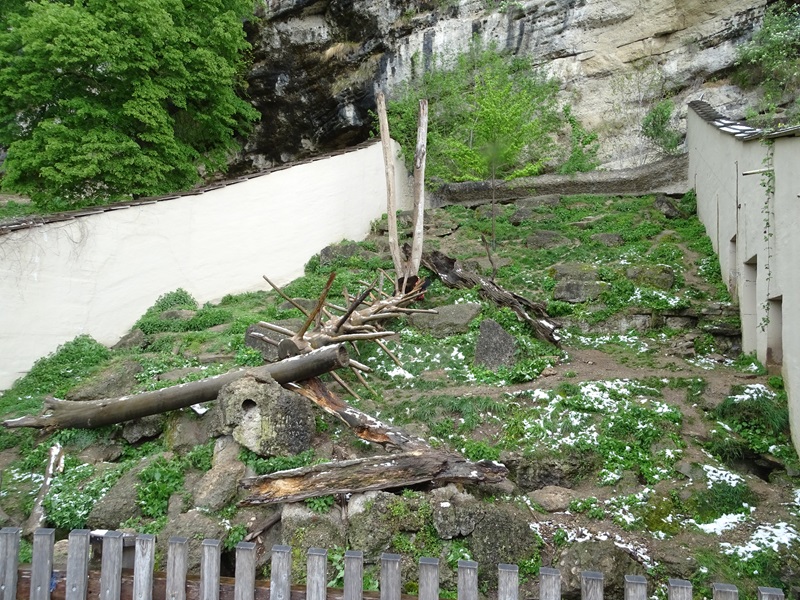
Behind the lemming/lizard building I could already see part of the ibex enclosure. I really liked the ibex enclosures in Nürnberg and München, but I might like the one in Salzburg even better. Visitors walk on a wooden walkway, with the lower part of the enclosure seperated by a moat. The rocky cliffside serves as a backdrop, but a big chuck of it is also accessible to the ibexes. In addition to all the rockwork, logs provide even more climbing opportunities while shelters provide shade . Another top-notch enclosure!


A the end of the walkway, which is the western-most corner of the zoo, is a stand-alone terrarium for fire salamanders, which I wasn’t unable to find. At this point, I had completed the European section, and with that the left part of the zoo. I walked back to the entrance, fortunately seeing the bears and harvest mice this time around, and made my way to the Gibbon House.

(More photos on the gallery)
 
Last edited:
DAY 4. 17-04-2024.

ZOO SALZBURG

PART 1

Note: I decided that from this zoo onwards, I will upload photo’s to the gallery before posting the reports because it just makes more sense that way! This way I can also actually add photo’s to these reports instead of just words! Should have done this earlier…

For my second day while staying in Munchen, I had two options; a day trip to Augsburg to visit the local zoo, or a visit to Salzburg to visit the zoo and the museum, which has an aquarium. Because the weather forecast predicted a rainy day, I opted for the latter as rain wouldn’t be an issue in a museum and the zoo is small so I would only need an estimated hour or two to visit between downpours.

Because I was quite tired from all the travelling and walking, I decided to leave one hour later than originally planned. Delays added an additional hour which ment it was already 11.30 when I arrived at the zoo. This could have been really annoying, but it just so happened it had been raining all morning anyway, and the rains stopped around 11.45. So, this was unintentionally the perfect timing to arrive at the zoo. Especially since it remained mostly dry during my 3 hour visit to the zoo. Lucky break!

My main reason for a visit tothis zoo is its location: The entire zoo is build at the foot of a large cliff, giving it truly an unique appearance. Honestly the train journey from München to Salzburg was already a treat as the alpine landscapes that I passed were gorgeous! When I arrived at the bus stop in front of the zoo, I was immediately impressed by the rock formations that make up the backdrop of the zoo. I made my way to the main entrance and noticed the first animal before even getting there; a griffon vulture flying over the zoo grounds and landing op top of a large tree. This is not a wild vulture however; it’s a free-roamer that is still part of the zoo’s collection. These vultures not only have the freedom to roam around as they please, they can do so in their natural environment. Cool! (I did see a wild kestel though)

Zoo Salzburg is a very narrow zoo, with one main path going from the western corner to the eastern corner, with a small loop in the entrance place and a larger loop at the eastern side. The zoo is divided into geographical zones, although there is some overlap in a few places. Immediately after the entrance is the Asian area, which consists of a enclosure for red panda and muntjac, and the gibbon house with adjacant outdoor enclosures; the smaller loop goes around the gibbon house and these enclosures.


The gibbon enclosure and the red panda enclosure are both spectacular. The island for white-handed gibbons doesn’t have any climbing frames or logs; it doesn’t need to, because here the gibbons have actual large, living trees to climb in, although the zoo did add ropes to connect those trees to one another. Despite the low temperatures (there was still some snow!) I saw two gibbons outdoors, both in the same tree but one up much higher than the other. The gibbons have their indoor enclosure in the Gibbon House, but I would visit that a little later during my visit.


From the main entrance, the red panda enclosure might look like many others of its kind, but it is much bigger than I noticed at first, and it wasn’t until I walked to the backside of the enclosure that I noticed it continues behind the gibbon enclosure (a moat seperates the two). Not only is this enclosure large, it is stacked with trees and other foliage providing not just climbing opportunities, but shade and privacy as well. The large ground area doesn’t go to waste either, as the panda’s share their home with Reeves’ muntjac. A flawless enclosure! (it was a bit unfortunate the panda was curled up in a tree however, but that’s kinda their thing)


Behind the red panda’s, on the other side of the path, is a large wooded enclosure for wolves. Like many enclosures at this zoo, it is build against the hillside so there is a lot of variation in elevation. An elevated observation hut gives you a good overview of the front half of the enclosure, which is more open than the densly forested backpart. Unfortunately the wolves were no-shows, and continued to be during the rest of my visit.


I could have continued the path around the gibbon house here, but I decided to go to take the path to the west corner of the zoo first, which is also the European area. I skipped past the small petting zoo area to the enclosures for chamois and forest reindeer. The reindeer enclosure is the least impressive of this area as it doesn’t benefit from the hillside because it’s on the opposite side of the path. It’s very basic, but offers these non-demanding animals all they need.


The chamois enclosures is something else entirely. There’s actually three interconnected enclosures, with one of the 3 located behind one of the others, with partly obstructed views. The two front enclosures are amazing though, with the chamois living on an actual cliffside with a mountain backdrop! A small part of the enclosure is behind a fence, but most of it is behind a moat, which gives you unobscured views of these mountain ungulates as they climb and clamber. When I first arrived at the enclosure, I only saw a few of them in the back enclosure, but one of then soon went into the left enclosure, proving me with excellent views of it. This was only my second time ever seeing this species (after Berlin TP in 2014) so I was really excited to see them again and the enclosure and backdrop added a lot to the experience. Amazing!


The moat between the visitor path and the chamois enclosure is not just a moat, it’s actually the enclosure for European otters. This long and narrow enclosure consisting mostly of water, runs almost entirely along the entire chamois enclosure, providing the opportunity to see otters in the foreground and chamois in the background if both happen to be at the right place at the right time. Unfortunately for me, the otters did not come out to play and/or swim during my visit.


At the end of the otter/chamois enclosure is a small ‘cove’ that visitors can enter. At the right side of this cove are viewing windows into the otter enclosure; one window looks into the otter pond, providing an underwater viewing if the otters happen to swim closeby. Through some smaller windows, the otters can be seen in their den when they decide to not be outside, and sure enough here is were I found them, curled up together. In the backside of the cove is a window that looks into the far left end of the chamois enclosure; a food through is placed here to increase the chances of the animals actually going here. Lastly, on the left side of the cove is a small enclosure for a tiny creature; harvest mice. They were initially a no-show but when I returned to the enclosure about 30 minutes later, I did see a couple of mice in here.


The next enclosure in the European area was that of the brown bears and corsac foxes and it’s a great one. Even though it’s not huge for bears (it is for foxes though) it is very natural and looks like a slice of forested hillside with actual living trees. There’s a small stream of flowing water that goes down into the moat, where the bears can also swim in if they want to. Along the visitor paths are some glass viewing windows that are low enough to be looked over, giving yet again unobstructed views of the animals. I was quite disappointed to initially see neither species out, and the foxes remained no-shows during the day, but on my walk back to the entrance the bears were walking around and being very photogenic. I made some of my favorite photo’s of the trip there and then. A highlight of the day!


Between the bears and the next enclosure is a small building called the ‘Mouse House’, which unsurprisingly showcases house mice as well as black rats in enclosures with a domestic setting. Interestingly this was the third zoo of the trip to have a mouse house after Heidelberg and München, but this one is the only one that is entirely indoors.


The wolverine enclosure is up next, and I’m not really sure if I like this one. It’s somewhat elongated, with the height steadily increasing the farther back it goes. The ground is quite barren compared to previous enclosures, consisting of rocks, logs and low plants, but there is only a single dead tree in there which means limited climbing opportunities for the wolverine. There’s also no privacy at all except for the indoor enclosure. I did see a wolverine being very pre-occupied with pulling on a horse carcass that was chained to the dead tree. (Unfortunately it faced away from my camera for most of it.) Overall a decent enclosure that could be better with some adjustments.


The enclosure for domesticated goats might be the best I’ve seen. Even though these were African pygmy goats, their enclosure is a large piece of forest with real rocks and trees and some added climbing frames, instead of the typical African village-themed sandbox that are so common in other zoos. Before visiting the goat’s wild relatives, I first took a look at a small building that has two enclosures build into it. The first is a typical small-rodent enclosure for the steppe lemming, which was knibbling on a carrot. Cute! The second, much larger one is for ocellated lizards. I wasn’t able to find a lizard, partly because the windows were foggy.

Lemming enclosure with part of the ibex enclosure in the back

Behind the lemming/lizard building I could already see part of the ibex enclosure. I really liked the ibex enclosures in Nürnberg and München, but I might like the one in Salzburg even better. Visitors walk on a wooden walkway, with the lower part of the enclosure seperated by a moat. The rocky cliffside serves as a backdrop, but a big chuck of it is also accessible to the ibexes. In addition to all the rockwork, logs provide even more climbing opportunities while shelters provide shade . Another top-notch enclosure!


A the end of the walkway, which is the western-most corner of the zoo, is a stand-alone terrarium for fire salamanders, which I wasn’t unable to find. At this point, I had completed the European section, and with that the left part of the zoo. I walked back to the entrance, fortunately seeing the bears and harvest mice this time around, and made my way to the Gibbon House.

(More photos on the gallery)
This is a nice review! Do the vultures leave the zoo boundaries and if so do they return? And do the otters have access to the rest of the chamois enclosure?
 
I'm not sure about the vultures, but I imagine they stick around for the food. The zoo has a small footprint so the vultures surely leave the boundaries all the time, but I'm not sure as to how far they venture.

No, the otters do not have access to the chamois enclosure.
 
does have a few terraria for poisonous snakes
venomous, not poisonous. ;) If you want to see a poisonous snake, you'd have had to visit WdG during your Salzburg visit.:cool:

Depending on the season, the griffon vultures tend to stay around the zoo, but also travel further.
 
Last edited:
venomous, not poisonous. ;) If you want to see a poisonous snake, you'd have had to visit WdG during your Salzburg visit.:cool:

Oops, sorry for the mistake. It's an easy one to make for a Dutch person since we use the same word for both poisonous and venomous.

I considered doing WdG instead of HdN, but the irregular opening times just weren't convenient, especially since I didn't decide in which order to visit Munchen, Salzburg and Augsburg until the day before. Also, Haus der Natur was much more practical geographically as the bus from the zoo to the train station practically passes by the museum.
 
It's an easy one to make for a Dutch person since we use the same word for both poisonous and venomous.
No worries; it's the same situation in various other languages, including my native tongue.

I considered doing WdG instead of HdN, but the irregular opening times just weren't convenien
Thanks for the consideration. WdG actually has regular opening hours, as stated on the website, but only if booked in advance. Maybe you'll manage to pay us a visit during another zoo tour.
Yeah, we're bit further away from the historical city centre than HdN. But unlike HdN, we don't have to rehabilitate some dark Nazi history...;)
 
Thanks for the consideration. WdG actually has regular opening hours, as stated on the website, but only if booked in advance. Maybe you'll manage to pay us a visit during another zoo tour.
Yeah, we're bit further away from the historical city centre than HdN. But unlike HdN, we don't have to rehabilitate some dark Nazi history...;)

Booking in advance is something I didn't want to do though because it would make my travels plans less flexible. I decided that in this case flexibility would be a priority over quantity of zoos, as a trip shouldn't be too stressful.
WdG would have given me a few new rare species for my list so it was not an easy decision. But I think combining all 3 of Salzburg collections on a single day, even without public transport delays, would have ment rushing through all of them.

Salzburg is defenitely a destination I could see myself returning to in the future.
 
venomous, not poisonous. ;) If you want to see a poisonous snake, you'd have had to visit WdG during your Salzburg visit.:cool:

Depending on the season, the griffon vultures tend to stay around the zoo, but also travel further.

Glad I'm not the only one to make that mistake :)
 
DAY 4. 17-04-2024.

ZOO SALZBURG

PART 1

Note: I decided that from this zoo onwards, I will upload photo’s to the gallery before posting the reports because it just makes more sense that way! This way I can also actually add photo’s to these reports instead of just words! Should have done this earlier…

Very nice to read your experiences.

You can also add very easily photos from your personal device into your report: it's literally copy+paste.
 
DAY 4. 17-04-2024.

ZOO SALZBURG

PART 2

The Gibbon House is one of the zoos various small animal houses, which combine indoor enclosures with terraria and aquaria. The Gibbon House is the only one of those which doesn’t focus on one continent; instead, it has both southeast Asian and South-American species. This building could be considered the transition from the Asian to the (South) American area. Like the name implies, the gibbon indoor enclosure is situated inside this building and I have to see I quite like it. There is a lot of things for the gibbons to climb on, natural substrate, rocks and some bamboo, and plenty of natural light coming in through the windows. At this point the gibbons had gone inside, and beside the two adults I saw outside earlier, there was also a young gibbon.


The second largest enclosure has a double function; the lower part is an aquarium for red piranha, demon eartheater (not seen), tiger oscar and ocellated river stingray (seen elsewhere in the zoo but not here). Above the water emperor tamarins have their indoor enclosure here as well. This is a good-sized nicely planted enclosure that really captures the tropical feeling and the many trees and twigs offer the tamarins a whole lot of climbing opportunties. I love that the viewing window has a large hole in the middle so you can watch these little monkeys unobstructed.


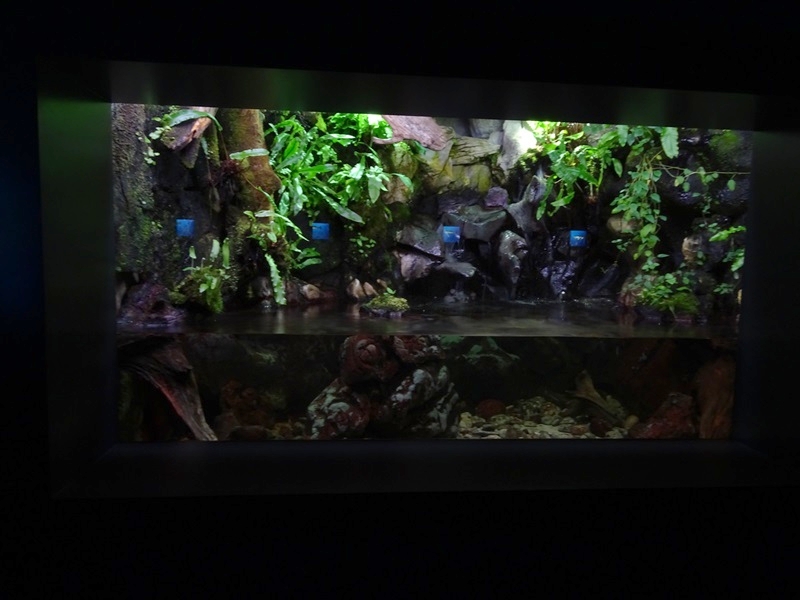
The next 3 paludariums are open-topped as well and are designed in a way these seem like one larger enclosure. The largest of these holds Fiji banded iguana in the trees, while four-eyed fishes, pearlscale cichlids, bumbleebee gobies (not seen) and sailfin mollies (also not seen) inhabit the water. The middle paludarium is home to Pearse’s mudskipper, land hermit crabs and red-clawed crabs. Finally the last one houses mourning gecko, silver moony, silver scat. I did not see the gecko, but I can imagine this species is able and allowed to leave their enclosure and roam around the entire building as a pest control.
In the middle of the building is a final terrarium for Tonkin bug-eyed frog (which was recently added to the collection.
The final animal is the Gibbon house is the two-toed sloth. They have access to a big part of the building by means of a network of branches that hang from the ceiling. The sloths also have access to an off-show area, were they were most likely hanging out as there was no sloth to be seen.


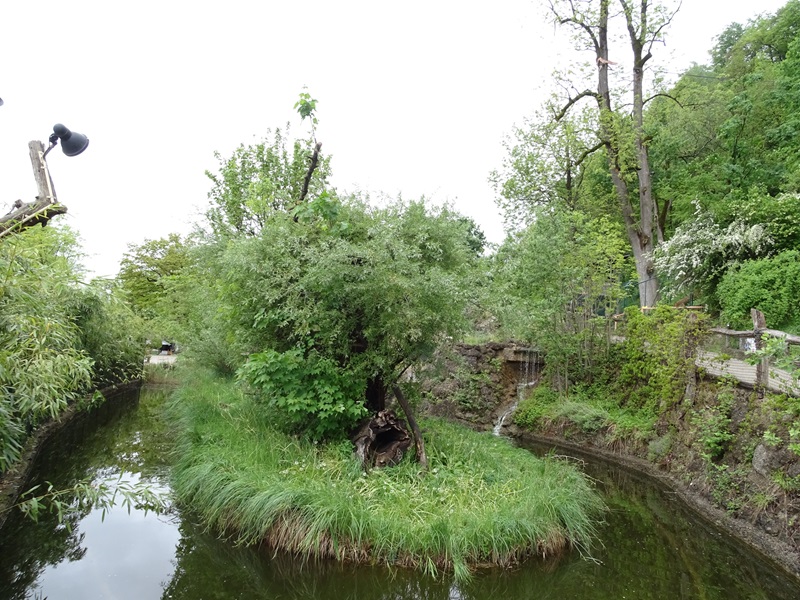
In addition to the gibbons, the emperor tamarins also have an outdoor enclosure, a small but lush island, that is connected to their indoor enclosure via a bridge. Next to to that is a similar but larger island enclosure for binturong. This species also has its indoor enclosure in the Gibbon House, but it is not viewable. Because the binturong(s) wasn’t outside, I therefor didn’t see it/them. Going around the binturong enclosure will bring you back to the wolves, but not before going past 2 more enclosures. One one side of the path is a simple enclosure for tortoises that is actually build on roof of the Gibbon House. Great use of the limited space! On the other side is a flowery meadow which keeps an European black vulture that has lost its ability to fly due to previous injuries.


After visiting the Gibbon House went to explore the eastern part of the park, which is about double in size of the western part. The first half focuses on South America, while the latter would be African area. However I would find a few non-South American species in the former as well.

The first enclosure I encountered here was a simple but large and nice enclosure for prairie dogs. Across from here is the second animal house, the tropical house, which was unfortunately closed to due some extensive construction works; when I peeked inside, I saw the entire building had been completely empied out, including all paths. Previously it would held species like green iguana and cottontop tamarin, species that are now either off-show or gone from the collection. I skipped the restaurant because I didn’t feel the need to consume anything. It was only when I checked the map when I got back to my hotel that I realized there were some animals in the restaurant. This means I missed the green tree python, the black-tailed freshwater stingrays and some other not-specified fishes. The ray would have been a new species so that kinda sucks!


Even though it’s located in the South American area, the flamingo enclosure is home to greater flamingo’s. Salzburg still keeps their flamingo’s in an open-topped enclosure, which must be the most densely vegetated one for this species that I’ve seen so far; I looks more like a standard Asiatic crane enclosure.


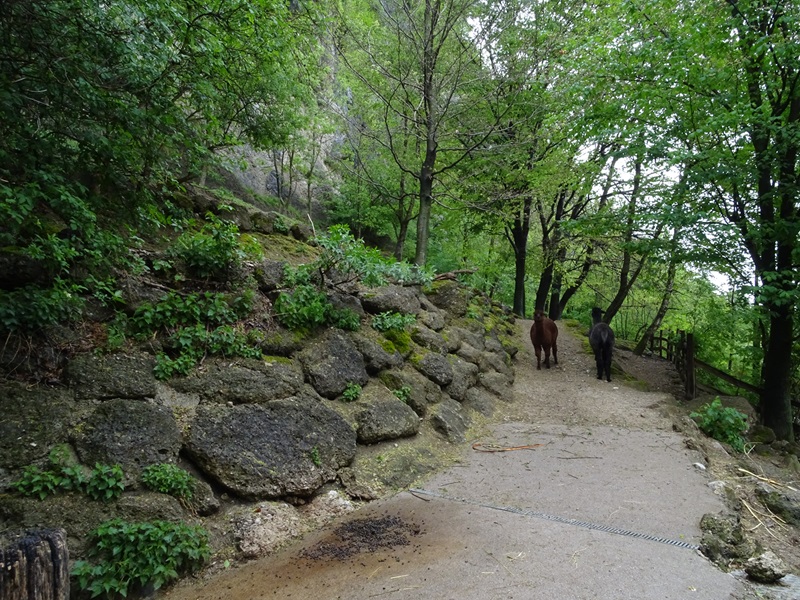
The next few animals are some of the most commonly kept South American species, devided between a couple of enclosures. One the hilly side of the path is the Alpaca House, but the name ‘House’ might make it sound more interesting than it is. On each side of the building is an outdoor enclosure, with greater rhea and greater mara on the left side, and alpaca’s on the right side. The rhea/mara enclosure is just a fenced-off piece of nature which is great for the animals. The enclosure is quite dense and it might actually take some effort to get good views of the animals. The alpaca enclosure is more rocky and more open, and looks better overall.


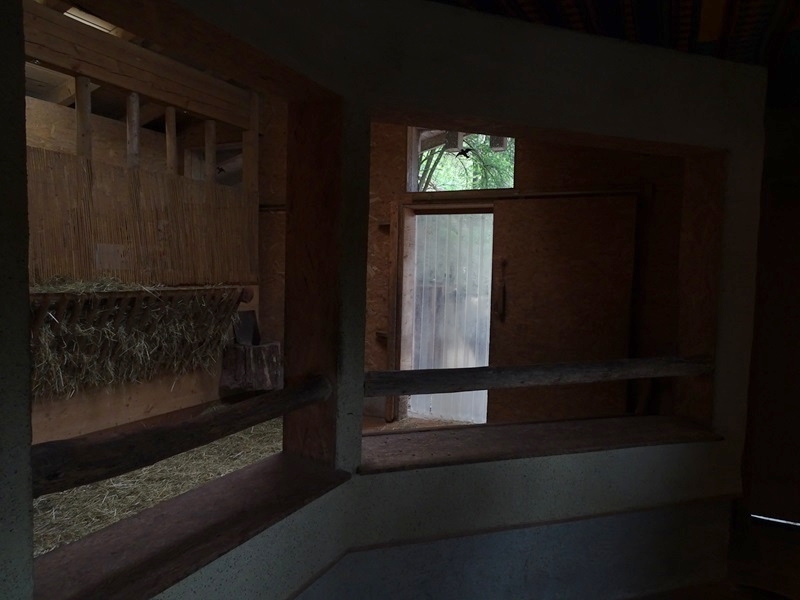
The alpaca house itself is basically just a tiny shed-like building the visitors can enter and from which they can look into the indoor enclosures for the rhea’s and greater mara, as well as the alpaca’s. It’s really small and not impressive, but since these are animals that can stay outdoors even with low temperatures, it’s not really an issue. One difference between both indoor enclosures is that the rhea and mara can be seen behind glass, while there’s just a low fence as a barrier for the alpaca.


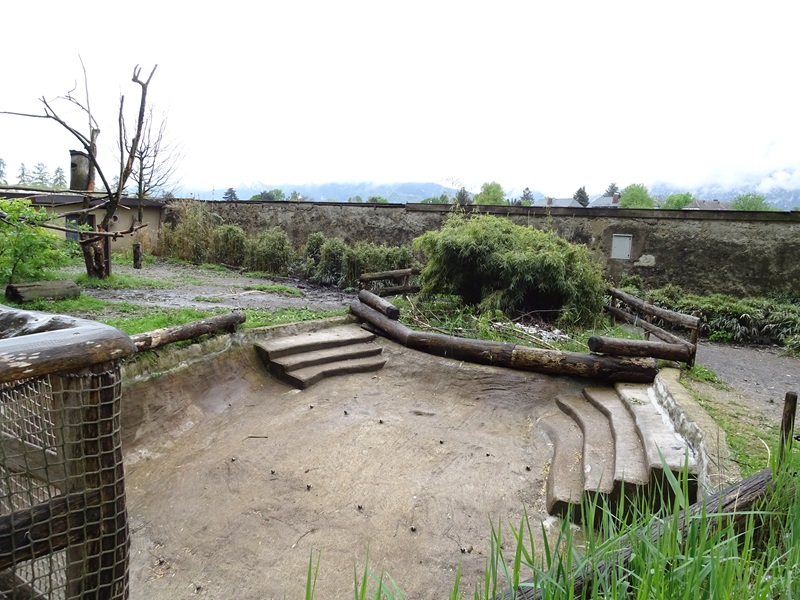
One the other side of the paths are the enclosures for tapirs, and for capuchin monkeys with capybaras. The Brazilian tapir paddock is quite basic, with a bit of foliage, a wooden shelter and a pool that currently had no water in it. A few logs inside of this enclosure are apparantly home to flightless green-winged macaws in warmer weather. I was somewhat surprised the tapirs are not viewable indoors, as that would surely mean they’d be off-display during winter. The same is true for the flamingo and the capibara, but luckily all of these were out during my visit.


Speaking of capybara’s, they are up next and they share their enclosure with tufted capuchin monkeys. I really liked this enclosure; they monkeys have access to two islands with a lot of wooden climbing frames, ropes and living trees. The moat around those islands gives swimming opportunities for the capybara, which of course also have a land part. (The snowy mountain backdrop of the zoo adds a real nice toch to it as well)


The capuchin monkeys can be viewed indoors, in the small but nicely done South America House. I really like the entrance of this building as the doors are decorated do be between some tree branches. The house falls a bit short when it comes to decoration on the inside; the concrete is a bit too present, and the wall paintings of a tropical jungle is not enough to make you feel like you’re actually in a jungle. The South America House consists of 5 enclosures. Firstly there’s the aforementioned indoor enclosure for capuchin monkeys, and there’s a similar enclosure for squirrel monkeys next to it. Both enclosures are designed in the same way; the back part is for the monkeys, there’s a fake tree in both of them, with plenty branches and ropes. Neither enclosure is very large, but I’m willing to excuse that because of the quality of the outdoor enclosures. The front part of the monkey enclosures are shallow ponds, surrounded by a low glass wall, which once again means unobstructed views of the animals. The ponds are inhabited as well; in case of the capuchin pond by an ocellated stingray and chinese pond turtle (not seen), while in the other one lives a red-bellied short-necked turtle, a false map turtle and a suckermouth catfish.


The other three enclosures are all located on the other side of the visitor path. The first is an aquarium with a few small fish species (angelfish, silvertip tetra, lemon tetra, firehead tetra) and land hermit crabs. The second is a terrarium for yellow-banded and blue poison dart frogs.
Finally there is a mixed enclosure for pygmy marmosets and three-banded armadillo (not seen). This enclosure is also quite small, but it’s not really an issue for the marmosets as they too do have an outdoor enclosure that you will find after you exit the building.


Next to the squirrel monkeys is an enclosure for collared peccaries. It’s quite simple, but really nice nonetheless. There’s viewing into the indoor enclosures through some small windows.


Across from this is one of the highlights of the zoo; the jaguar enclosure and the Jaguar House. The outdoor enclosure isn’t really pretty to look at from a distance; it is fenced off with ugly, high, green fencing with large windows for viewing that unfortunately suffer from glare. That does not make it a bad enclosure. As the matter of fact, it’s one of the best for the species I’ve seen when looking at it from an animals perspective. The jaguars have access to a large and lush hill, with a small pond at the bottom. There’s enough cover for them to hide from view and find shade.


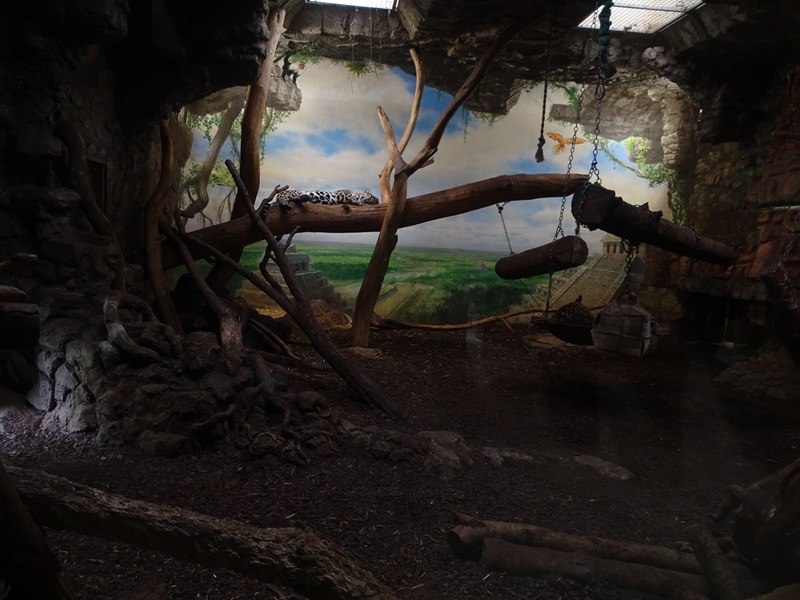
The Jaguar House is a modest but nice animal house, with a slight Mayan theming on the outside. Inside you will obviously find the main indoor enclosure for the jaguars, with some seperation cages off-show. The indoor enclosure for the jaguars is nicely themed, with a Mayan wall painting, but more importantly offers the animals natural substrate and logs and branches for climbing. It does a good job of creating a jungle feeling while also offering the cats more than most other zoos do. I saw two jaguars getting along really well, playfighting and cuddling with each other. They were both indoors initially, but on my way back one of them was walking around in the outdoor enclosures. Luckily, I didn’t see any pacing.

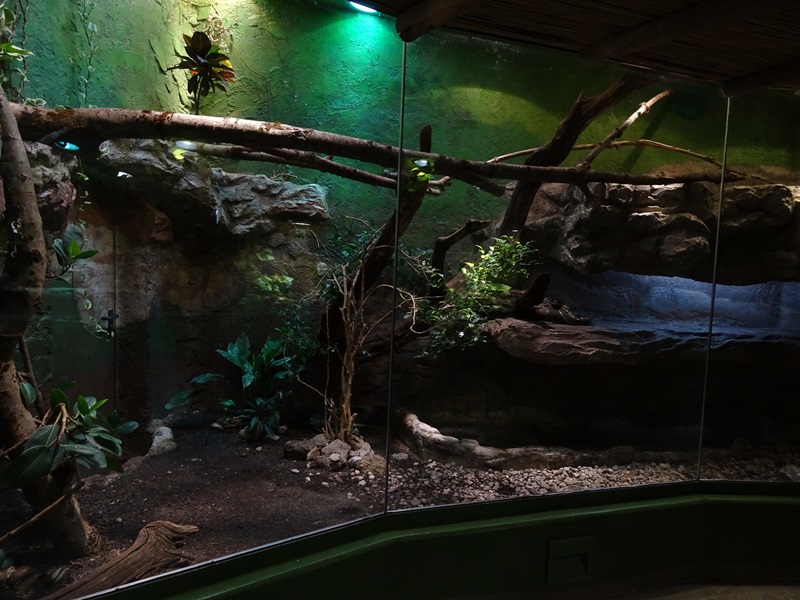
Besides the indoor enclosure for jaguars, the Jaguar House also has an terrarium and a paludarium, both of which are South American as well. The terrarium is home to a boa constrictor, and is above average in size as well as nicely decorated. The paludarium is home to Schneider’s dwarf caiman, green basilisks, common severums and redhead cichlids. This one is also really nicely done. The Jaguar House gets my seal of approval for sure!


The zoo is also home to the second largest cat of the America’s: the cougar. Their enclosure is smaller than the jaguar one, and the viewing into the enclosure is also more limited due to the fencing being all iron with no glass windows. I think this enclosure is ok, but not outstanding. The cougar(s) was/were unfortunately a no-show, and it’s too bad they can not be seen indoors.

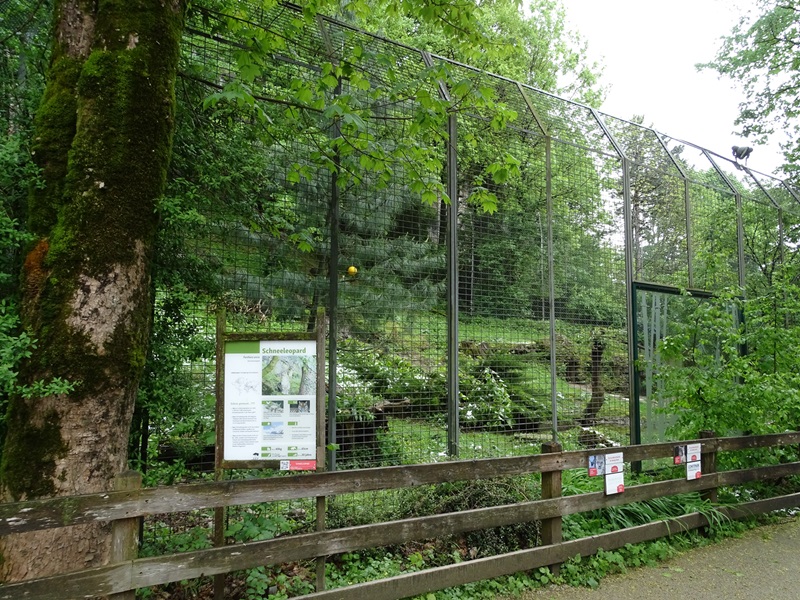
The third cat in a row is the snow leopard, They have two enclosures and they’re both spacious and well-suited for mountain cats. This is another instance where the zoo is really able to make good use of the natural environment. Europe has quite a few zoos with good snow leopard enclosures (they’re often luckier than other spotted large cats) and Salzburg is one of those zoos. Glass viewing is present but more limited than with the jaguar enclosure. I did manage to find two snow leopards in one of the enclosures, but none in the other. Minor complain: Snow leopards are ofcourse not South American so the geography is very off here.


The South American sections concludes with a personal favorite of mine: Maned wolves. This is once again a really nice enclosure that really suits the species well, even though it is a bit more forested than most maned wolves enclosures. The maned wolves recently had offspring and were no-shows, and since the maned wolf house was currently off-limits to visitors due to the births, I wasn’t able to view them indoors.


Europe done, Asia done, South America done. Still up: Australia and Africa...
 
Last edited:
But I think combining all 3 of Salzburg collections on a single day, even without public transport delays, would have ment rushing through all of them.

It's not terribly difficult - especially at the current point in time, when large portions of the animal collection at HdN are off-display!
 
It's not terribly difficult - especially at the current point in time, when large portions of the animal collection at HdN are off-display!

I'm sure its possible, but I don't like being pressured for time when visiting a zoo. I had Sea Life München as a possible destination as well, but eventually didn't get to it because I didn't want to shorten my visit to Tierpark Hellabrunn or Zoo Augsburg in order to make it there in time.
Also, I had train delays pretty much every day, so any margin I would have had was gone either way.

DAY 4. 17-04-2024.

ZOO SALZBURG

PART 3

Europe done, Asia done, South America done. The next area is Australia, by far the smallest section of the zoo with just two enclosures. There’s a walkthrough aviary that’s nothing special or unique but still nicely done, although it is a bit disappointing that budgerigars are the only species in here.


The other species here are parma wallabies, who have a spacious wooded enclosure. A modest wooden building has viewing windows into the indoor enclosure for the wallabies, which has natural substrate, sunlight and hiding spots. Another above average enclosure.
There is also a terrarium for bearded dragons build in the same enclosure, but that seemed to be vacant at the moment.


This just leaves the African area, which is mostly a loop with the main savannah (/rhino) enclosure on the inside and additional enclosures on the outside. The first thing I passed in the African area is the Rhino House, of which I somehow missed the entrance because I believe this should be a visitable building.

Across from that is an enclosure for banded mongooses that is much more lush than the usual desert-y enclosures in other zoos. It might have been too cold for the mongooses though as I did not see any. I also didn’t see any ring-tailed lemurs, a species that is roaming around the zoo freely but has their indoor enclosure in the rhino house.


One of the newest enclosures in the zoo is the one for African penguins. It’s a typical penguin enclosure with some nicely done rockwork and underwater viewing, and the education displays are really well done as well.


Across from the penguins is the enclosure for white rhino’s. The rhinos should also have access to the large savannah enclosure I believe, but during my visit, the rhino’s were in their own enclosure. The rhino enclosure is rocky and sandy with foliage surrounding it. There is also a second stable building, this one also for rhino’s but for the other savannah animals as well. This building has three small windows on the visitor side, but they are too far from the path to provide decent views into the stables. The roof of this building is made up of grass while most of its outer walls are large rocks, meaning it blends in well with the natural surroundings and it prevents the building for being an eye-sore. Well done, Zoo Salzburg.


Close to the penguins is the enclosure for spurred tortoises and the tortoise house. The outdoor enclosure is a spacious paddock with low fencing and consisting of both grass and sand. Simple but perfect for the species. The turtle house is not a visitable building but rather an indoor enclouse for the turtles that can be looked into through windows. I saw four large adults inside.
A smaller terrarium is build into the turtle house, but I couldn’t find the African bull frog that lives in there.


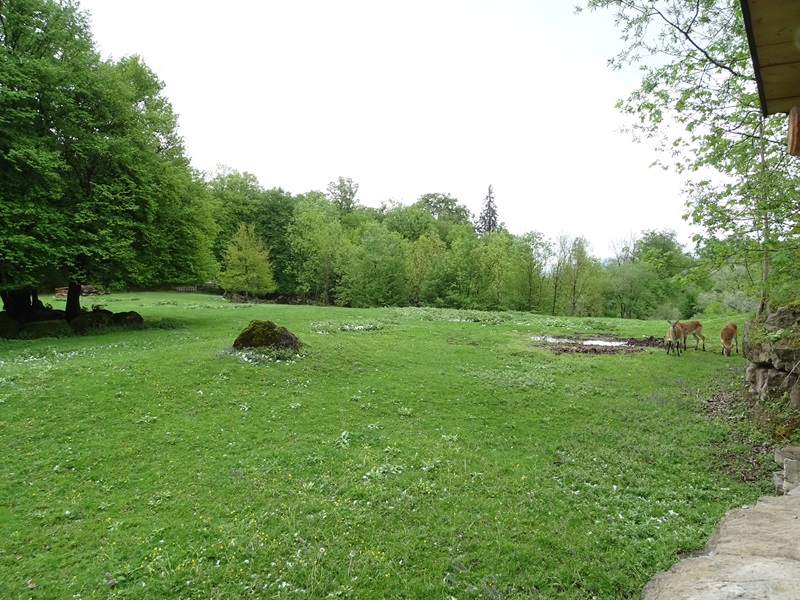
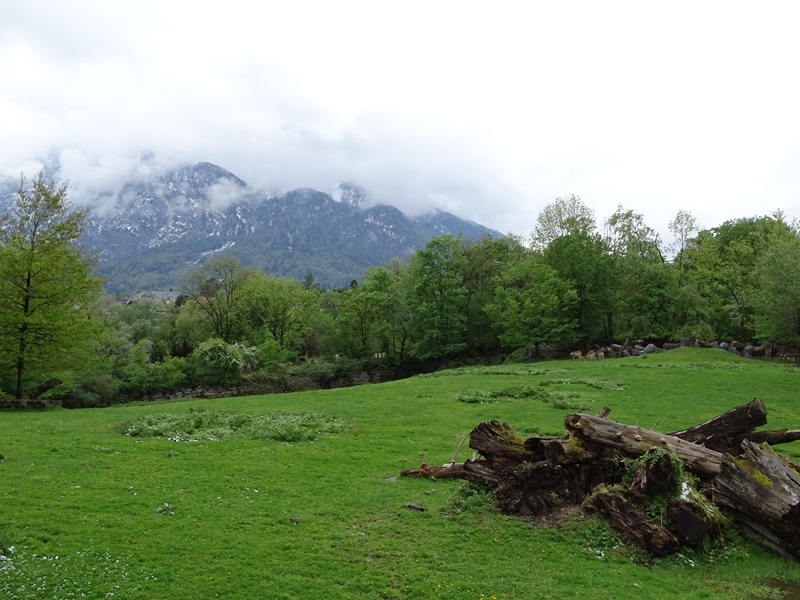
Across rom the turtle house is also the first view into the large savannah enclosure. This enclosure is world-famous due to the amazing backdrop which are the Alps! The savannah enclosure itself is very lush and green, with foliage surrounding it on all sides. Behind it all, the alps can be seen, making this one of the best views in any zoo! Does it make sense to have snow-topped mountains as a backdrop for a savannah enclosure? Perhaps not, but I don’t care one bit. This enclosure and these views are amazing! The savannah is used by the rhino’s on some occassions, although I’m not sure when or how that works exactly. Like stated previously, those animals also have their own seperate enclosure which they were currently using. Besides the rhino’s, the savannah is home to lechwes and sable antelopes and both species were fortunately outdoors because their indoor quarters can not be visited.


The final animal house of this zoo is the lion house, which features two large outdoor enclosures and a good variety of indoor enclosures. When arriving at this building, the path splits into two; one goes upwards and goes on top of the building, the other goes downhill and passes the first outdoor enclosuresbefore reaching one of the entrances to the building. I did the latter first, passing the large outdoor enclosure for red river hogs and diana monkeys. It’s a very spacious enclosure with lots of room for the hogs to walk around in and ponds and mud baths to wallow in. For the monkeys there are living trees as well as climbing structures for climbing. To keep the animals in, the entire enclosure is fenced off with conspicuous electric fences, but that didn’t botter me too much. It was a real shame that neither species was out as I would have loved to see them actually use this superb enclosure!


Instead of entering the building here, I backtracked a bit and took the upwards path to enjoy some even better views of the savannah and mountain backdrop. At the other side of the building is another path going down that leads to the other entrance, and this paths goes along the outdoor enclosure for the lions. Except for the fencing (that can be looked over from the upper path), this enclosure is almost exclusively natural elements and it looks quite nice, although it could be improved a bit by adding some more climbing frames or other enrichment for the lions.

[
This time I did go into the lion house, and the first thing I encountered an viewing window into the lion enclosure which could come in nicely during rainy days. The only remaining lion, a female, (as the male recently passed) was not ouside however but I was able to see her in her indoor enclosure. It’s not really large and even though the zoo added some (mock) natural elements and enrichment, is mostly hard surface. Since there is no barrier between the visitors and the windows, there is nothing stopping unbehaved kids and adults from knocking on the glass. So, not the biggest fan of the indoor enclosure for lions although there’s plenty worse enclosures. A similar situation is happening at the other side of the Lion House, with the indoor enclosure for the diana monkey and red river hogs, although I liked that one better.


The Lion House has lot more to offer than those two indoor enclosures though! In the walls between the lion and meerkat/hog indoor enclosures are a bunch of well designed medium-sized terraria for small reptiles and amphibians. There’s marbled reed frogs in one of those, and Brongersma’s toads in another, although unfortunately I saw neither (marbled reed frog would have been a few species). Three terraria all have a single lizard species; tropical girdled lizard, electric blue gecko and green keel-bellied lizard. Finally the aquarium is home to a bunch of cichlids (forgot to photograph the signage and they are no African cichlids listed on ZTL so I can’t say which species). There is also a terrarium for giant snails inside of a hole in a tree and nother terrarium near the entrance/exit (hog/guenon entrance) is made of out a hollow tree and has a Madagascar ground boa.


On the other side of the paths are two larger, open-topped enclosures. The first one is desert-themed with mostly sand; short-nosed elephant shrews live in here. There are also some small trees in here that serve as the main perches for black-winged lovebirds, who are free-roamers in the House. Another free-roamer in the Lion House is the greater Madagascar gecko, of which I was able to find one.

The other open-topped enclosure, this one much more tropical, has another species that is basically a free-roamer as it has the ability to fly; harlequin quails. Both the shrew and quail enclosure are very nicely done and offer the animals more than enough space. Between both of those is a small hut-looking structure that has a tiny aquarium for equally tiny freshwater shrimps.


Overall, I think the Lion House is a fantastic piece of zoo design. Despite it’s small footprint, it manages to showcase mammals, birds, reptiles, amphibians, fishes and invertabres, all from Africa. The indoor-only species have very decent to great enclosures, and even though the indoor enclosures for lions, guenons and river hogs are limited, that is compensated by their outdoor enclosures. Salzburg Zoo really excells in their animal houses, and I would love to see more zoos follow their example of designing themed buildings around a headliner species (Gibbon, Jaguar, Lion) with smaller enclosures for additional species thrown in. (It’s also one of the main reasons I love Prague Zoo so much as they’ve mastered this tecnique!)

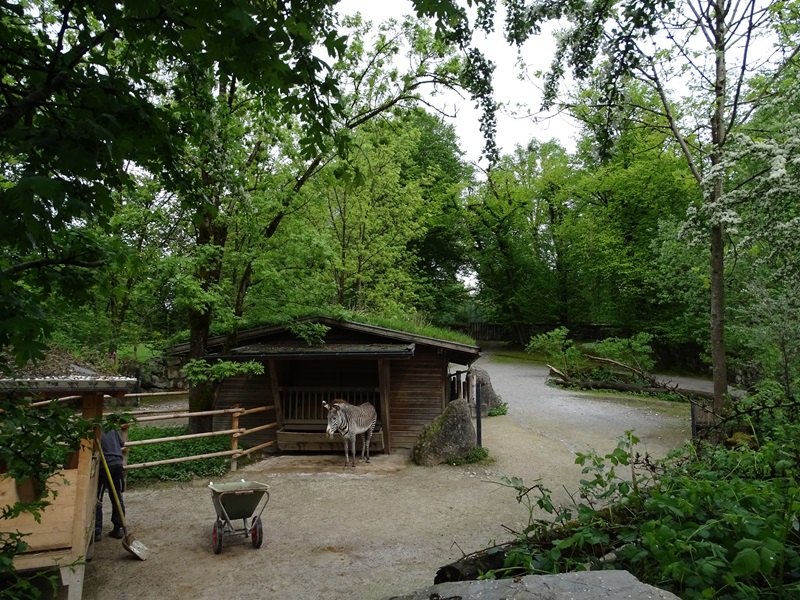
Anyway, time to move on as there are still a few other enclosures to be visited. Firstly, the Grevy zebras in an enclosure that’s mostly a sandy paddock surrounded by a wall made out of rocks, with a small grass-roofed shelter building in the middle.


A path that splits of from the main loop takes you to the cheetah enclosure. From behind a wooden fence or from the small observation hut, you can look over a natural pond into this very pretty enclosure which also has the mountain backdrop. Unfortunately the cheetah was another species that apparently didn’t like the cold and since there is no viewable indoor quarters for these animals, they were another no-show. This part of the zoo borders a beautiful piece of nature, where lucky visitors might even spot wild beavers!


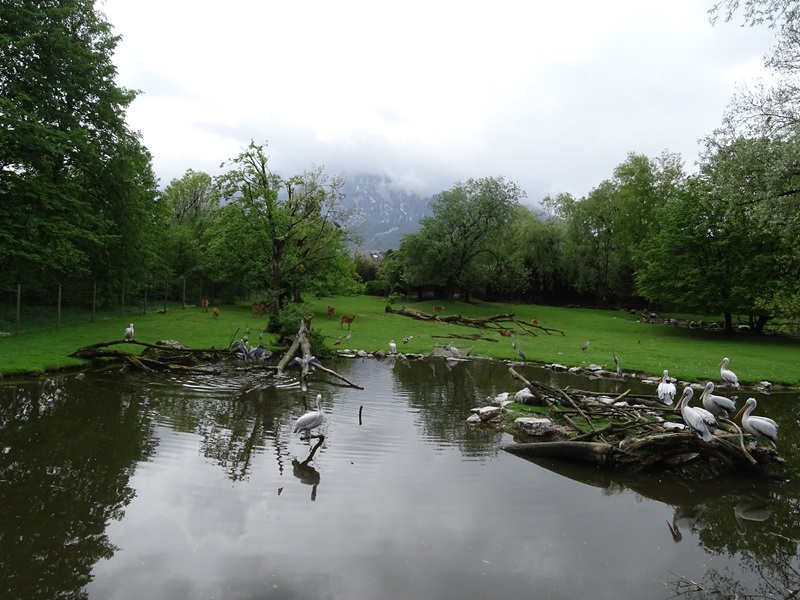
Something else this zoo is well-known for is the meadow for sitatungas and pelicans. A huge and absolutely beautiful enclosure that is equal parts land and water, that’s almost as green as the color green itself. It’s a wonderful experience to watch the large herd of sitatunga graze while in the foreground the pelicans (Dalmatian and pink-backed) preen their feathers or relax on their islands. In addition to those, I also saw red-crowned cranes, helmeted guineafowl and bar-headed geese here, as well as wild greylag geese and a massive colony of wild blue herons. Wild animals love it here! Neither Dalmatian pelicans nor red-crowned cranes are African, but that’s really the only negative thing I can think off here. This enclosure is perfection! Across from the sitatunga’s in an addition viewing into the rhino enclosure and I got some really good views of them here.


Because time was starting to become an issue, I decided to skip another dead-end path that leads to the African village, where domesticed animals and porcupines can be found. I made my way back to the entrance/exit, without seeing any species out that weren’t out before (cougar, maned wolf) and I was just in time to catch the 3 pm bus back to Salzburg. I would get out a few stops later, in the city centre, ready to go to my second destination of that day.

In conclusion, I adored Zoo Salzburg! This was my first zoo in Austria outside of Vienna, and my first zoo in a mountainous area. I did know what to expect from this zoos from photos I’d seen, but everything looks so much more beautiful when you’re actually there in person. Walking around in Zoo Salzburg is a treat even without the animals! Speaking of animals, I did really enjoy seeing some very active bears, jaguars, chamois and many others. It was a shame many of the carnivores were no-shows (wolf, maned wolf, corsac fox, cougar, binturong, even the banded mongoose) or inactive (lion, otter). As for the enclosures, they were all decent, good or fantastic. I really loved the animal houses (especially Gibbon House, Jaguar House and Lion House) and the wonderful savannah. I’m really glad I decided to add Salzburg to my itinerary.

(again, more photos on the gallery)

4 down, 6 to go. Next up: Haus der Natur (Natural History Museum), Salzburg
 
It’s a wonderful experience to watch the large herd of sitatunga graze while in the foreground the pelicans (Dalmatian and pink-backed) preen their feathers or relax on their islands.
This might have an obvious answer, but are the pelicans flighted like the vultures?
 
The Rhino house has also free-roaming ringtailed-lemurs.

Hellbrunn's cat houses (jaguar, mountain lion and snowlepard) got a detailed description in Natasja Meuser superb book. In origin all had 2 double back-to-back rooms, housing male and female from 2 species. As it is built into the mountain, all rooms have skylights and tunnels with access to the outside enclosures.
I believe the Jaguar House in it's present lay-out has sacrificed both front rooms for visitor space and additional animal displays.

Glad you enjoyed the stunning sitatunga wetland enclosure, imo by far the best thing in the excellent Salzburger zoo.
 
DAY 4. 17-04-2024.

HAUS DER NATUR, SALZBURG

(Please not that a lot of this report is based on photo's I took of signage, and it's almost guaranteed I missed some signs/species)


I took the 15.15 bus from Salzburg Zoo and got out after a few stops at the Marktplatz bus stop, in the city centre. After taking in some of the city’s beautiful scenery, it was just a short walk to the Haus of Natur, Salzburg’s natural museum. Besides exhibitions about natural history, this museum also has an aquarium section and a terrarium section. However, due to construction works the latter was currently closed. I still figured the museum would be worth a visit, so at around 15.35 I entered the museum which ment I had a little under an hour and a half for my visit. Also it had started to rain again at this point, so this was again great timing to visit an indoor attraction!
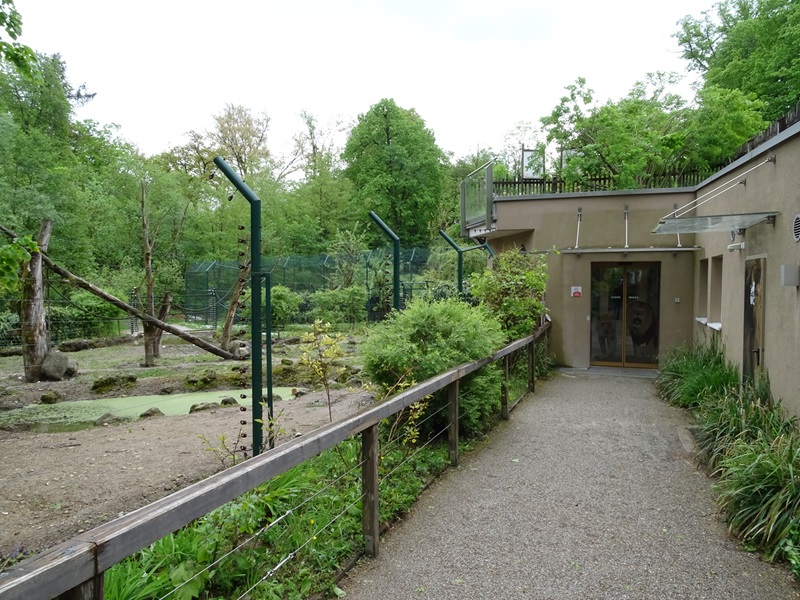
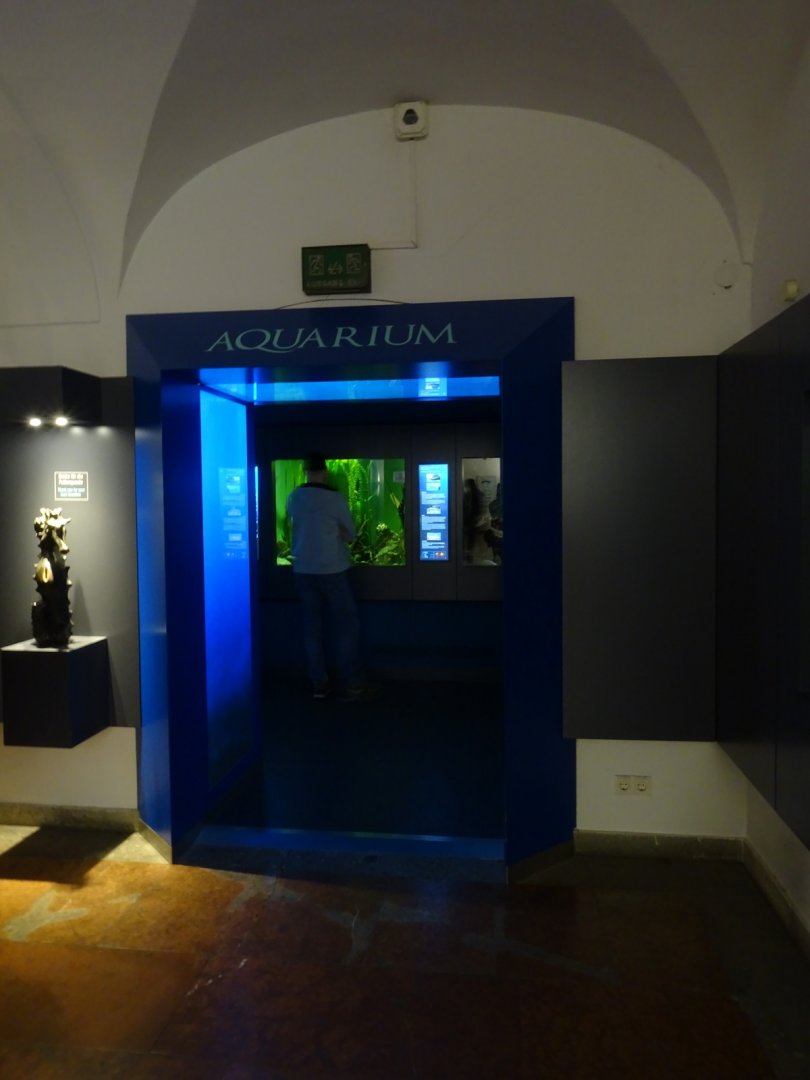
I made my way to the aquarium immediately, which is located really close to the entrance. The aquarium is quite straighforward; you enter a corridor with tanks build in the walls. It was quite dark in the building, which made photography not really an option for any of the tanks that were not well-lit from inside. As to be expected from a museum, there was plenty of signage (although not rarely incomplete), and a lot of the tanks had a certain theme, mostly geographical.


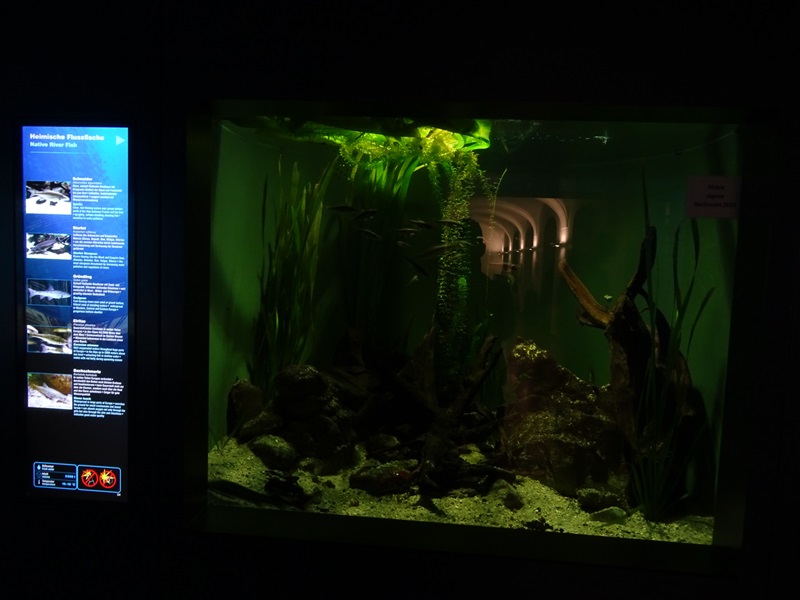
The first tank I encountered was a well-lit tank for spotted garden eels. No other species were signed here, but I also saw picturesque dragonet, threadfin cardinalfish and banded sleeper-goby. The next tank had a few species from the Mediterrenean; cardinalfish, European spiny lobster and slipper lobster.


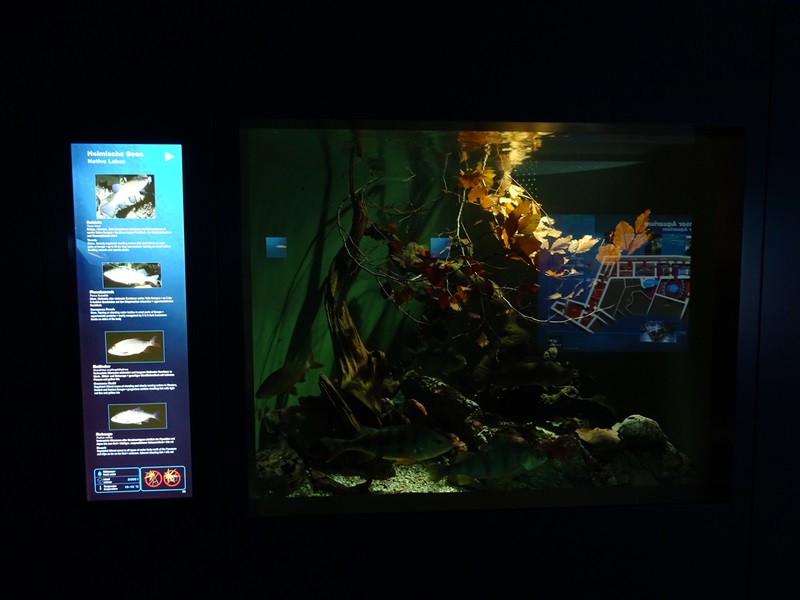
Three generic European freshwater tanks follow. Because I photographed the signage, I can give a line-up of each of them. Tank 1: Lake chub, common nase and danube bleak, the first and latter of which are only kept here and in Innsbruck. Tank 2: Sterlet, schneider, European minnow, European gudgeon and stone loach. Tank 3: European perch, tinch, rudd and roach. Around the corner is another European freshwater tank with a single brown troat, which was really nicely landscaped.


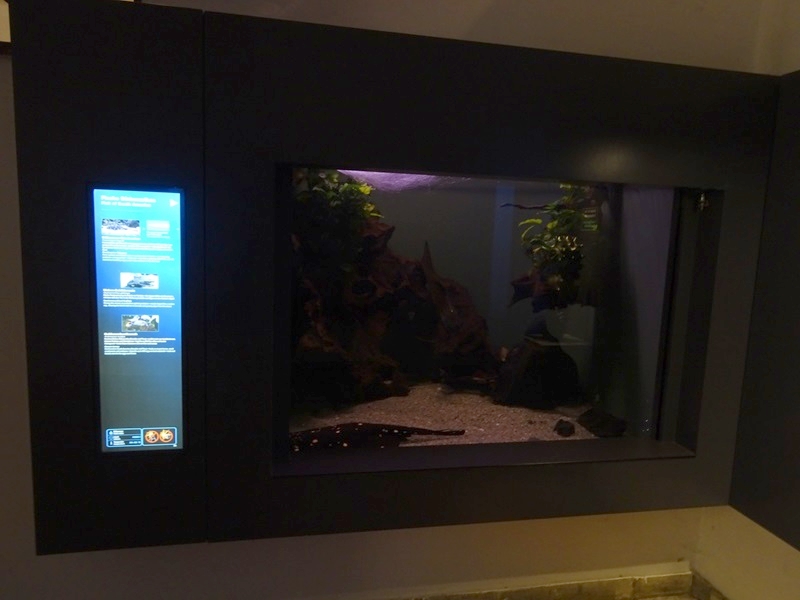
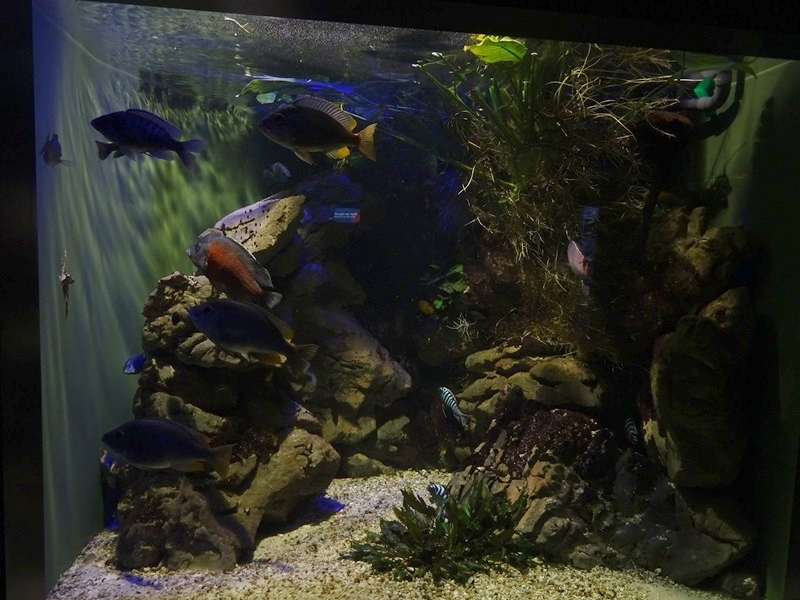
There’s no logic in the order these tanks are presented as we have a South American freshwater tank across from the troat. Similary to the aquarium in München, a white-blotched stingray is kept in a tank that doesn’t offer it a lot of space. Spotted sailfin suckermouth catfish and green terror share this aquarium with the stingray. Right next to that is an African freshwatertank, featuring Peter’s elephant fish, freshwater butterflyfish, Congo tetra and banded ctenopoma.
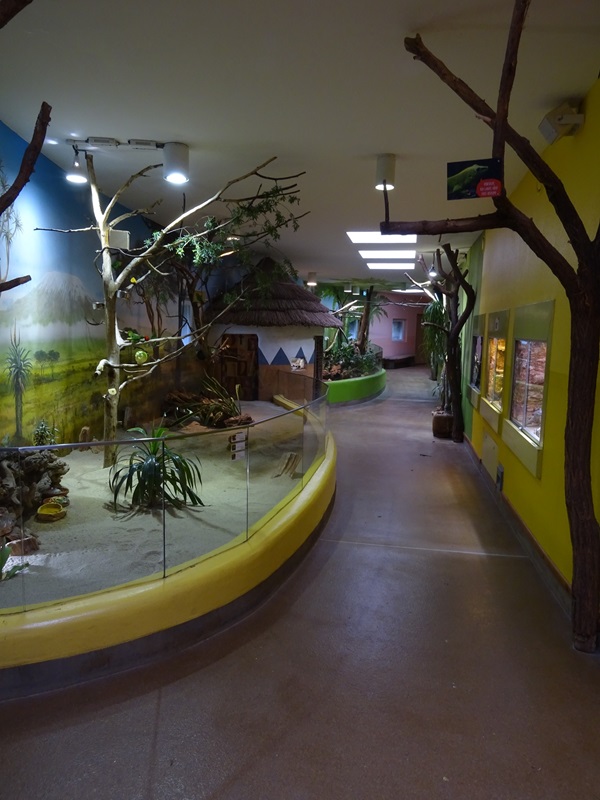
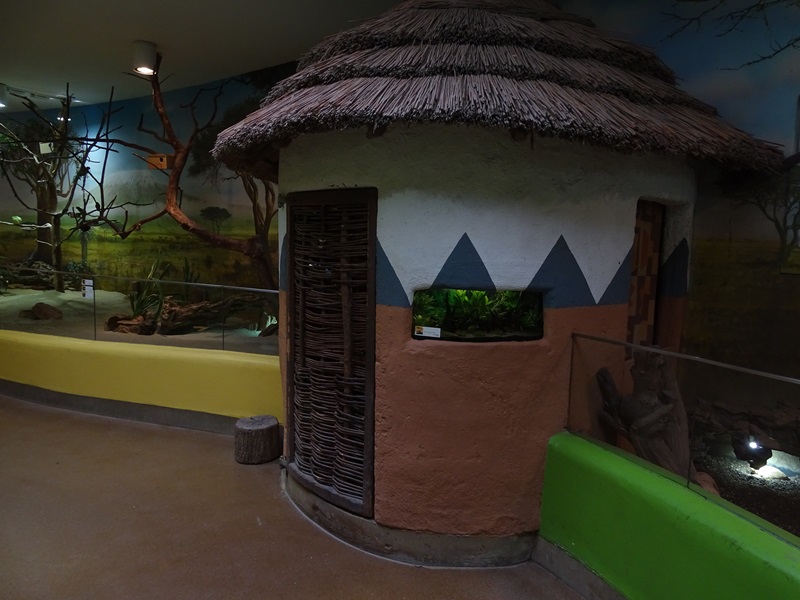

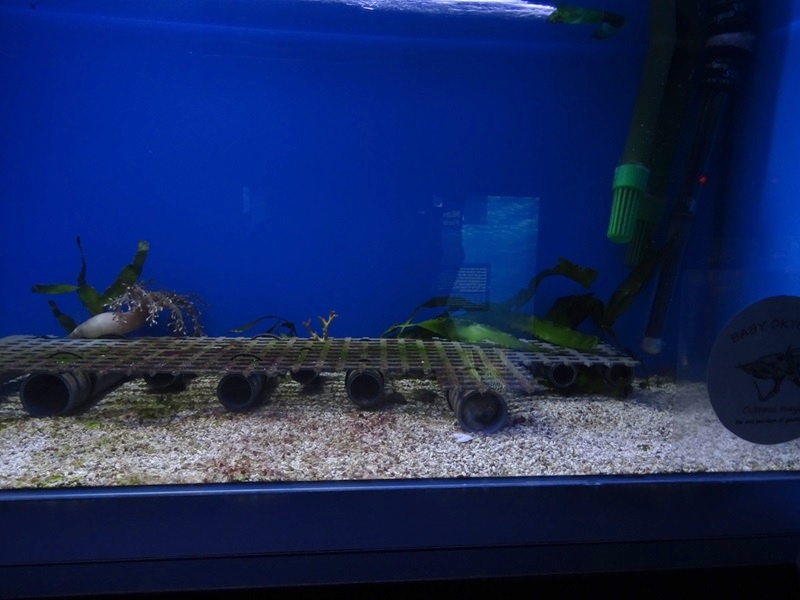
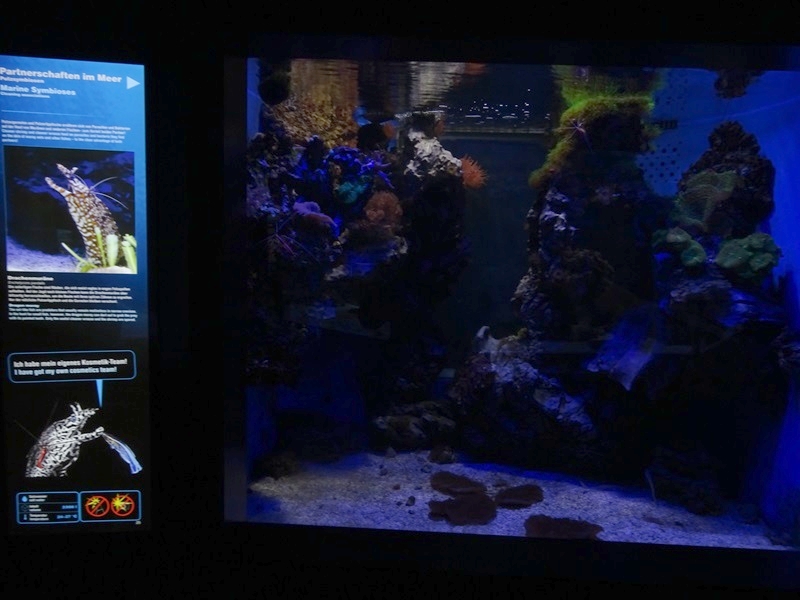
A row of four smaller tanks are next, with the first one focusing on camouflage, displaying leaf scorpionfish and warty frogfish. The second tank has a collection of tubes which serve as hiding spots for a juvenile Mexican four-eyed octopus (so cute!), a species of cephalopod that I had never seen before. The third tank is a typical sea horse tank, with pot-bellied sea horses. The final tank educates about symbionism, and has the famous combination of prawn-goby and snapping shrimp, in this case Amblyeleotris steinitzi (which I don’t remember seeing before) and Alpheus bellulus. Harlequin shrimps were signed for this tank as well, but I did not find any.


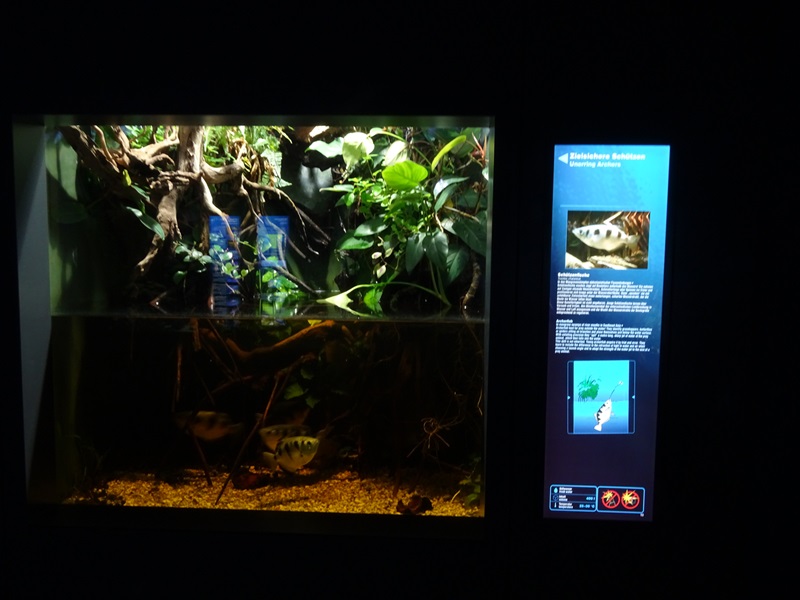
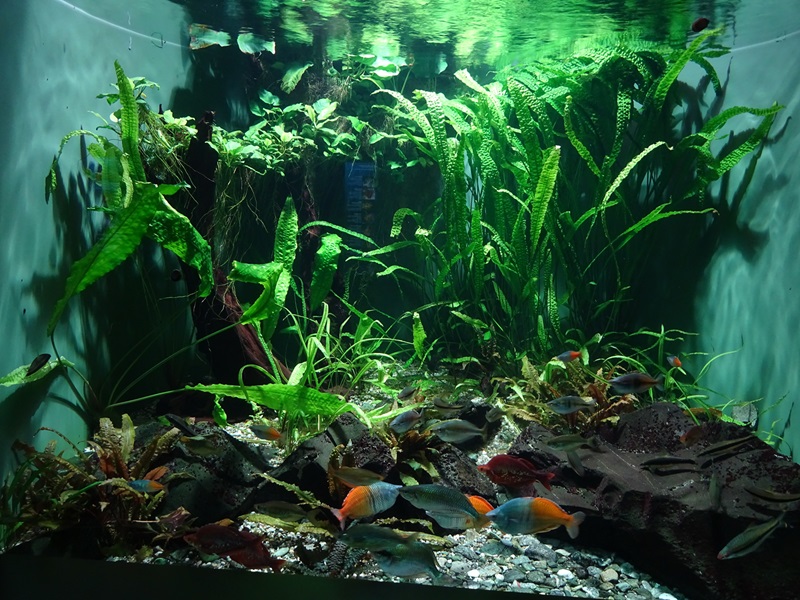
There’s a tank for archerfish, and a second Asian themed tank is home to different kind of rainbowfishes, red line torpedo barbs and gray flying foxes while a third features tinfoil barb, clown loach and apricot crayfish. Of course there’s a tank for different kinds of African cichlids as well. Another tank has spotted gars as its inhabitants. A second Amazon-themed tank has freshwater angelfish, spotted hatchetfish, firehead tetra, cardinal tetra, royal whiptail catfish and Sterba’s corydoras while red-bellied piranhas have an aquarium to themselves. A second tank with a Mediterranean theme houses red hermit crab, spider crab and red scorpionfish. A tank with a variety of anemones and corals is also home to boarfish.


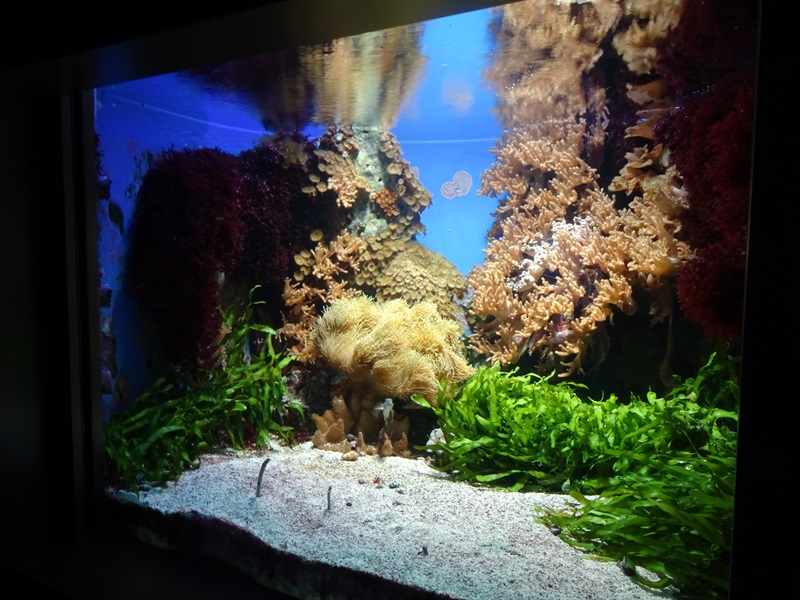
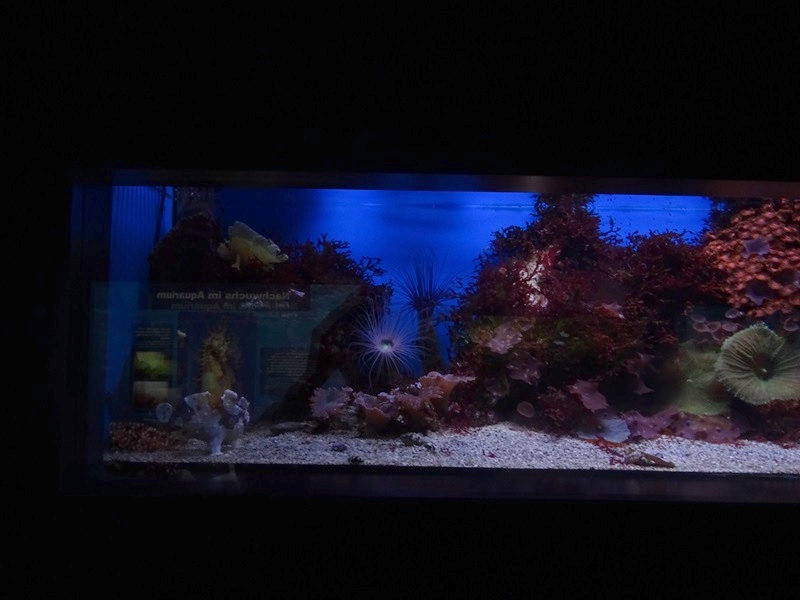
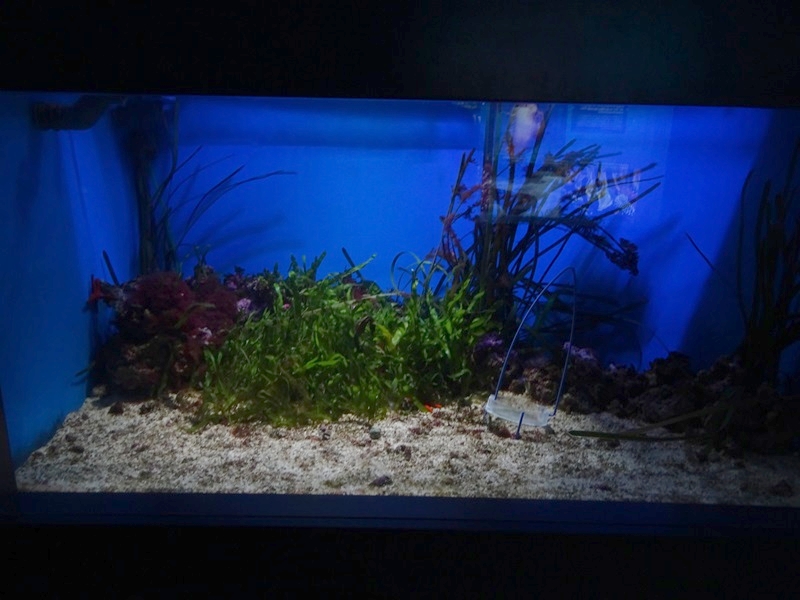
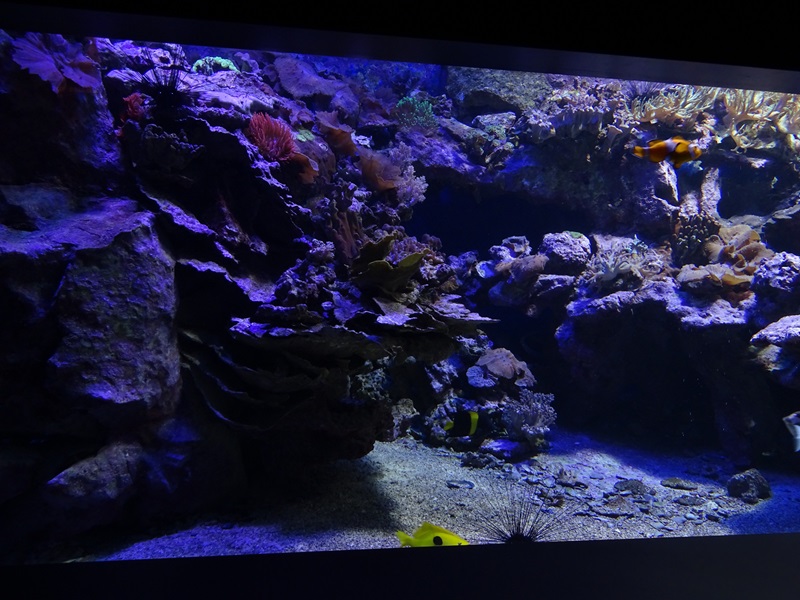
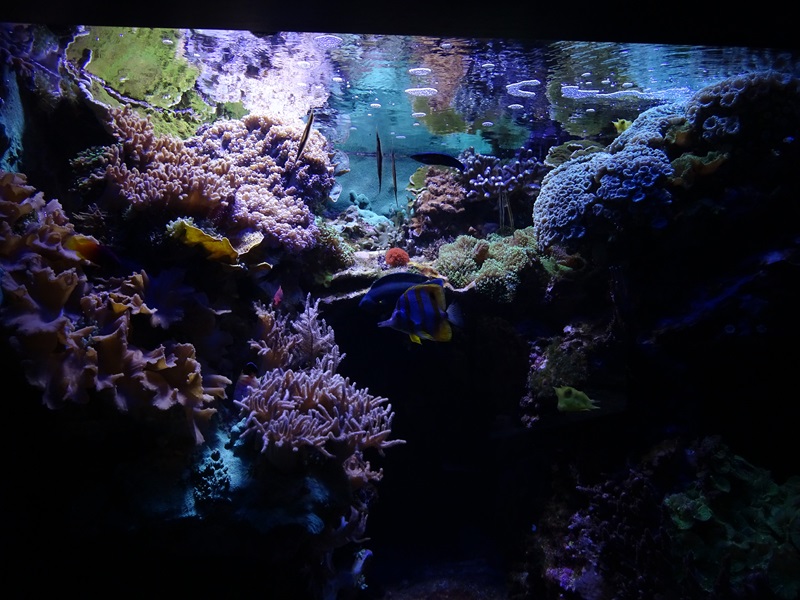
The first tropical coral reef tank I encounterd is medium sized and includes species as red knob sea star, spiny lobster, pyjama cardinalfish, banggai cardinalfish, spinecheek anemonefish, clown anemonefish, ternate chromis, cleaner wrasse, sixline wrasse, blotched foxface, white-cheeked surgeonfish, orange-tipped bristletooth, longfin bannerfish, vermiculated angelfish and peppered butterflyfish, with the latter being a new species for me.


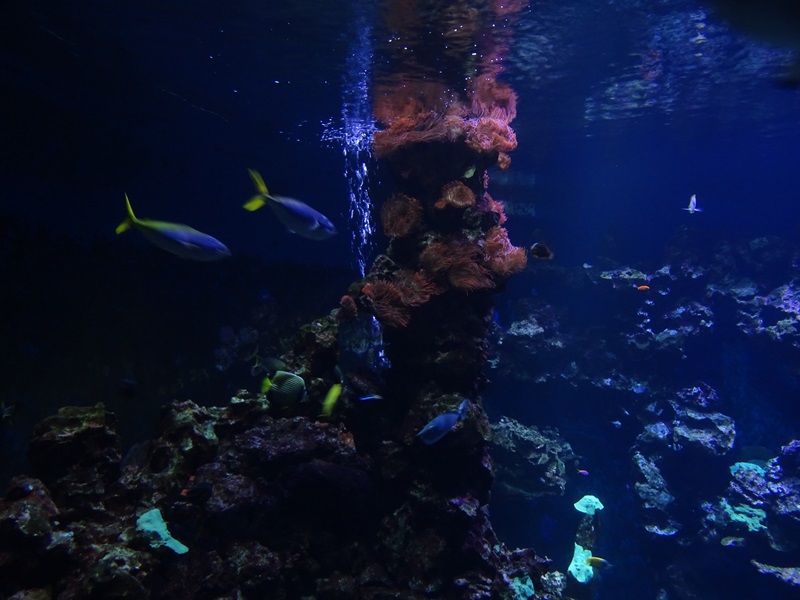
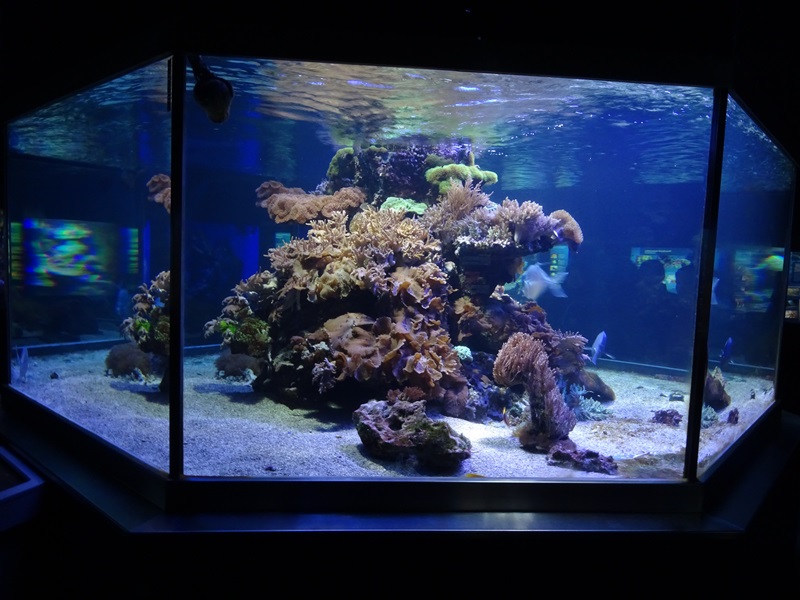
The largest aquarium in the building is also a tropical reef tank. The biggest inhabitant here is a single black-tipped reef shark for which the space is probably insufficient. Other species in here are lyretail anthias, purple queen anthias, yellow and blueback fusilier, whitetail damselfish, goldtail demoiselle, tomato anemonefish*, yellowtail anemonefish*, pyramid butterflyfish, atoll butterflyfish*, brown-and-white butterflyfish*, bluecheek butterflyfish, redtail butterflyfish, threadfin butterflyfish (not seen), emperor angelfish*, blue-girdled angelfish, yellowface angelfish, six-barred angelfish, Klunzingers’ wrasse, cleaner wrasse, green birdmouth wrasse, pastel ringwrasse (a new species for me), yellow tang*, mimic surgeonfish, sohal surgeonfish, palette surgeonfish, sleek unicornfish, spotted unicornfish, stripe-faced unicornfish and streaked spinefoot*. (* = species not signed)


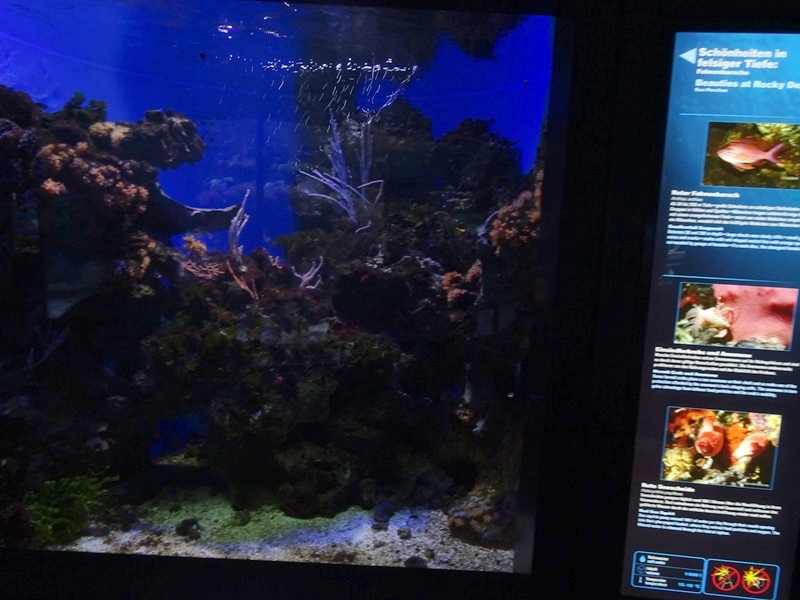
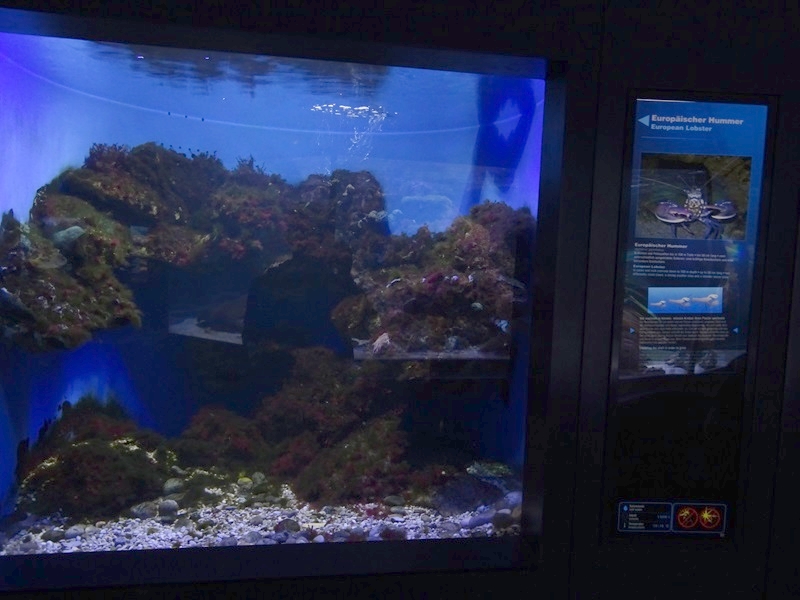
After this, there is just one ‘donut-shaped’ hallway left with a large tropical tank in the middle and a variety of smaller tanks on the outside. One side of the room are a bunch of cold saltwater tanks, the first of those with 3 species of wrasse (rainbow, ornate, long-snouted) and red see squirts. One tank displays a rocky shore with various species of invertabrates (beadlet anemone, snakelocks anemone, tubular sea cucumber, smooth brittle star, black sea urchin). Another features different kinds of gobies (red-mouthed goby, rock goby (not seen) and incognitus goby (not seen)) and annular sea bream while a fourth tank is home to a single European lobster. Red striped mullet, wide-eyed flounder, swallowtail seaperch, goose foot star, long-spine slate penchil urchin and shame-faced crab (not seen) all share another tank. Another tank has wide-eyed flounder as well, together with longspine spinefish, small scorpionfish, red sea star and common antlers sponge. A second species of octopus, the common octopus, is found in another one of these tanks as well.

\
There are also a few tropical tanks on the other side of the room. The first has a leopard moray, a wonderful species that unfortunately was hiding with only the tip of its tail showing. One of my favorite tanks has a nice selection of interesting species; gold-specs jawfish (signed as yellow-headed jawfish), blacktail angelfish, razorfish, royal gramma, copperband butterflyfish, sixline wrasse, dusky wrasse and two very cute juvenile horned boxfishes. There’s a very dark tank with three species of lionfish (red lionfish, radiated lionfish and twospot turkeyfish) as well as a pineconefish. The final small tank, another tropical coral reef one, has azure demoiselle, sunburst butterflyfish, longnose butterflyfish, mandarinfish, yellow tang and canary wrasse.


As for the large tank in the middle, here you can see lookdown, Spanish hogfish, spotfin hogfish, sunburst butterflyfish, porkfish, Atlantic blue tang and blue-spotted ribbontail ray.


After visiting the aquarium part of the museum it was getting close to closing times, but I did have some time to visit the dino hall and some of the diaramas. There’s much more to this museum though, and I would have loved to see more of it if I had the time, but my main reason to visit was the aquarium and I got to see that. Overall I have to say I was not super impressed by the aquarium. The tanks themselves were mostly fine, but I didn’t care much for the the dark, barren corridors in which these aquaria were located. I spent about one hour in the aquarium and by itself, the aquarium might be an underwhelming attraction, but combined with the much larger museum I think it adds up to an attraction worth visiting.

I had a great day in Salzburg. The zoo was amazing and the museum/aquarium was a good way to shelter from the rains. At this point I was about halfway through my trip. 4 zoos and a museum done, still 4 zoos (one of which really small though) and a museum to go.

Next up: Zoo Augsburg!
 
Back
Top