Brookfield Zoo Master Plan Discussion and Speculation

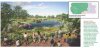
Gateway to Africa: Pachyderm Building | The renovated Pachyderm Building reverses the current animal-guest relationship by replacing indoor animal space with exciting guest and event space and offering expansive views to the flexible, mixed species habitat north of the building. Large picture windows create a seamless integration of human and animal spaces, while the Savannah Passage that links multiple habitats across the northwest quadrant of the Zoo facilitates a changing view of animals on view and an exciting habitat for the species to engage with.

The part in bold at the end makes me think the Savannah Passage is actually part of the habitat or living space for the animals, not just something they will quickly pass through.
 
upload_2024-7-25_21-14-11.jpeg
Like pachyderm pro said this image shows giraffes moving through the Savannah Passage and it clearly isn't underground.
 

Attachments

  • upload_2024-7-25_21-14-11.jpeg
    upload_2024-7-25_21-14-11.jpeg
    159 KB · Views: 179
Then the problem must be in the Brookfield Riverside-Landmark's reporting then.

I didn't personally assume the background savannah animals were in the Passage when I saw the art, rather that it was to show how close the exhibits would be, but I now think you're correct that it's depicting the Passage. I was thrown as background giraffes are also shown in the Hippopotamus exhibit, which isn't connected to the Passage.
 
The animals will not be moving underground, that's almost certainly a typo in the article.
View attachment 719342
Like pachyderm pro said this image shows giraffes moving through the Savannah Passage and it clearly isn't underground.
For what it’s worth, I did not believe that the passageways were genuinely underground — I only referenced it to emphasize that I think this is a bad idea, in general. Underground, above ground, lowered, rock passageway, cable fence passageway… No matter how you shake it, it is going to be dangerous for the animals and extremely difficult logistically for the care staff.

Also worth noting the longest portion of the passage will just be for the elephants and rhinos who will be much easier to move through the system.
That is what I would have assumed; however, the drawings do make this immediately clear, as the passageways link exhibits in multiple areas and the barns are not labeled. I would also not say that rhinos will be easier to shift through these passageways. Maybe easier than the other ungulates, but the bar is very low :p Less likely to break a neck or leg, sure, but rhinos have very poor eyesight, and as such are very wary and easily spooked. Yes, they’re large and powerful animals, but they are still quite nervous. Having them in such a contained space for an extended period of time is still increasing the chance of injury. They’re also not going to be as motivated to move such distances as elephants are going to be.
 
This is going to sound a bit conspiratorial -- but I do wonder if the mixed savannas may be more for advertising/funding purposes, to make the project sound more exciting to potential donors, and that in the final reality, we may simply see a couple of mixed savanna habitats without much movement between them. A lot of famous 'rotational' exhibits seem to end up mostly becoming standardized over time.
 
This is my speculation of species that could be housed in Phase II for the Gateway to Africa

South African Forests animal species list
  • African Bush elephant
  • Eastern black rhino
  • African Lion
  • Bontebok
  • African forest buffalo (replace with Cape buffalo if not able to obtain)
  • Aardvark
  • Common Impala
  • Greater Kudu
  • Grevy's Zebra
  • Gerenuk
  • African silverbill
  • Helmeted guineafowl
  • Blue-naped mousebird
  • Emerald-spotted wood dove
  • Golden-breasted starling
  • Namaqua dove
  • Orange-breasted waxbill
  • Purple grenadier
  • Red-cheeked cordon-bleu
  • Red-faced lovebird
  • Splendid sunbird
  • Violet-backed starling
  • White-bellied go-away-bird
  • White-headed buffalo-weaver
  • Von Der Decken’s hornbill
  • Meller’s Chameleon
  • Mozambique Spitting Cobra
  • Black-throated Monitor
African Savannah animal species list
  • Generic Giraffe
  • Blue wildebeest
  • Cheetah
  • Common Dwarf Mongoose
  • Lowland Nyala
  • Southern White Rhino
  • Addax
  • Hartman's Mountain zebra
  • Common Waterbuck
  • Springbok
  • Common Ostrich
  • Bat-eared Fox
  • Cape Porcupine
  • Damaraland Mole-Rat
  • Naked Mole-Rat
  • Kirk's Dik-Dik
  • Klipspringer
  • Violet-backed Starling
  • Taveta Golden Weaver
  • East African gray crowned crane
  • Emerald Starling
  • Common Bulbul
  • Red-crested Turaco
  • Speckled Mousebird
  • Blue-bellied Roller
  • Violaceous Turaco
  • Eastern Paradise Whydah
  • Pancake Tortoise
  • Giant Plated Lizard
  • African Spurred Tortoise
  • Leopard Tortoise
  • White-throated Monitor
East African Forest animal species list
  • Nile hippopotamus
  • Nile tilapia
  • African cichlid
  • Red empress cichlid
  • Red fin hap
  • Cape teal
  • Fulvous whistling duck
  • Hadada ibis
  • Blue-billed teal
  • African sacred ibis
  • Nile Crocodile
Central African Forest animal species list
  • Mountain Bongo
  • Okapi
  • Yellow-backed Duiker
  • African Dwarf Crocodile
  • Blue-bellied Roller
  • Red-billed Hornbill
  • Congo Peafowl
  • Home's Hinge-backed Tortoise
  • White-bellied Pangolin
  • Red-flanked Duiker
  • Yellow-backed Duiker
  • Red River Hog
  • Pygmy Hippopotamus
  • Slender-snouted crocodile
  • West African mud turtle
  • West African cichlid
  • Lake Oku clawed frog
  • African bullfrog

I may sound like a broken record, but I doubt getting all these animals will be possible.

Good as speculation, but not fully realistic on a financial and captivity import scale.
 
Stumbled upon a recent interview with Dr. Mike in regards to the master plan. When discussing Gateway to Africa he mentions that there is potential to not just rotate, but actually mix elephants and rhinos together in the same space.

“We’re really looking ahead to an Australian expansion and a Gateway to Africa area. That Gateway to Africa is conceived around the idea of these large herds of different antelope together. You may see rhinos and giraffes together in a savanna habitat. You may see elephants mixed in with rhinos in a forest habitat. The constant changing of animals in their spaces is not just enriching for the animals but it also makes for a more exciting journey for our guests.”

Afaik this has only been attempted once before in recent memory at Birmingham Zoo. Unsure how often it was done or how successful it was.
 
It's a bold move indeed, although one would have to wonder how often elephants and rhinos interact with one another without getting into conflict. Especially knowing just how solitary and less social the latter are compared to the former.
 
After a month of this being out, I think I've finally figured out how to form my thoughts on the master plan. There are areas without any renderings or details that I simply have no input on. There are also some things left out of the master plan that I do have thoughts on!

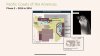
PACIFIC COASTS OF THE AMERICAS
Quoted my full thoughts on this below, but just want to reiterate how important it is to have charismatic species immediately upon entry.
Lot’s of skepticism on relocating penguins to the front. Denver just did this and it’s incredibly smart, especially for what the zoo is going for - “Connect. Care. Conserve.”

In most job interviews for keeper positions, they’ll ask, “if you were to start a zoo tomorrow, what three animals would you start with?” Penguins should always be on that list.

Incredibly charismatic and something almost every guest is going to look out for on their visit. Putting them by the gate starts the visit off on the right foot with a positive experience and connection. Outdoor penguin exhibits at the entrance have been becoming more of the norm (already mentioned Denver plus Akron and Cheyenne). That’s your “connect.”

Building a new exhibit also gives the zoo the opportunity to create a better encounter space. You have a better chance of filling that encounter space if it’s the first thing people are upsold at the start of the day, and more of the morning slots will be full when the afternoons are already sold out from people who pre-booked. That’s your “care.”

Finally, penguins have some of the easiest conservation messaging. What can people do right now to help? Shop sustainable fish. Donate. SANCCOB (for African penguins of course) or whatever organization the zoo supports/donates. Brookfield also does plenty of their own field work with Humboldt’s that they can reference. That’s your “conserve.”

I love The Living Coast. I remember its opening year and its true glory days with the water wall and moon jellies in the first large tank. It’s not getting back to that. I’m glad there’s an emphasis on giving animals outdoor access and that should include the penguins. The Living Coast will be a tough loss for my nostalgia, but it’s a no-brainer for a zoo that only has a carousel and a gift shop at the entrance.

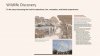
WILDLIFE DISCOVERY (NORTH)
Our Rivers to the Gulf has the potential to be one of the best exhibits of the century. It’s reminiscent of SeaWorld San Diego’s “Blue World” project. Obviously not to the same scale, but the intent is there. What really has the potential to set this apart is if it can connect to Seven Seas. Looking at the map, it appears there is a separate building connected to the dome, but I don’t see any connection to the Seven Seas show building. I’m hopeful there is a solution to this, as they should all have access to both areas in the name of welfare. This could single-handedly change what cetaceans look like in captivity and maybe even some opinions on the practice.

What disappoints me about this area is the amphitheater's proximity to Fragile Desert/Clouded Leopard Rain Forest. I was very hopeful to see the clouded leopards get something out of this master plan, and it appears their current exhibit and the potential for any outdoor space has been completely left out. While I personally feel like it’s the best indoor clouded leopard exhibit, at least on this side of the Mississippi, it stinks to see them left out.

In general, I understand the need for the amphitheater and the desire to keep the historical core in tact immediately to the south of it. I do think there are better locations for it, but in the name of ingress/egress and a central location, it makes sense.

WILDLIFE DISCOVERY (SOUTH)
Seems to be some skepticism around using the bear grottos, but I am interpreting it as only using the current rockwork as a backdrop. From the renderings, it appears as though the guest paths will be where the moats are currently with the entirety of the exhibits gutted. I believe there used to be five total grottos (two sets of connected exhibits and one solo), and this would be reducing that number to four.

I am disappointed there is still nothing in the southeast corner of the zoo. I don’t know what I was expecting, but it seems like a wasted opportunity. The renderings show a new path, so maybe some sort of additional green space? Regardless, we could still be ten years away from this area of the zoo feeling any sort of new life which is a bummer.

SOUTHWEST AUSTRALIAN PROVINCES (Going exhibit by exhibit now instead of paragraphing all of the Immersive Ecoregions)
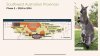
This sounds great from the description. As much as I was hoping they could find a way to put Australia in the southeast corner of the zoo, I’ll echo my previous sentiments that it is very important to have charismatic species near the entrance. Koalas and kangaroos check that box. It is very surprising to me that we have no exhibit renderings when this is slated for Phase II. The map doesn’t suggest much, so I’m very curious to see what comes of this.

SOUTH AFRICAN FORESTS
Back before we had any inkling, I remember sizing up the Pachyderm House plot and comparing the square footage to Elephant Passage at Denver Zoo. Little did I know, they’d take that concept and put it on steroids. The renderings are very exciting and it’s encouraging to see the zoo be this ambitious. However, I’m so curious how this will be pulled off and what population of each species we’ll see when, if taking the map to scale, it seems like there isn’t enough off-exhibit space to hold what the outdoor spaces are capable of. It’s also concerning to see how much of this will not be available to view in the winter. If anything, Very curious to see this plays out in Phase II.

EAST AFRICAN FORESTS
Quoting some previous thoughts below on hippo/Nile crocodile exhibits. These will be great. I think a lot of people are overestimating what it takes to make a great hippo exhibit when the bar has been so low in recent years.
The outdoor exhibit space on the south side of the Pachyderm House as it's currently set up from the actual building to the edge of the walkway is around 71,000 square feet. On the new map, they show these exhibits taking up less of that space.

View attachment 718060

Comparing the new map to the current setup (not a perfect overlay by any means), Nile crocodile would get the former elephant exhibit, while the hippos would get the remaining two enclosures to the left. Knowing that, the 71,000 square feet is divided up with 40,000 square feet to hippos and 31,000 square feet to Nile crocodile. Now if I measure according to the new map and the new exhibit boundaries, it's around 21,5000 square feet for hippos and 14,500 square feet for Nile crocodile.

I was hopeful that the remaining strip of the West Mall might be included in this space, but it appears from the new map, along with with the Tropical Forest and hippo/Nile crocodile renderings that this is not the case.

My most generous estimate has Cincinnati's hippo exhibit is at 9,000 square feet of outdoor space. Not going to account for their indoor space because I can't account for Brookfield's indoor plans. I'd certainly hope there'd be something other than the current indoor stalls.

PACHYDERM BUILDING/AFRICAN SAVANNAH
I don’t know the intricacies of shifting ungulates, so I won’t pretend to have any knowledge on the topic. All I can really say is I appreciate that the zoo is trying to use as much existing infrastructure as they can with the Pachyderm House and current Habitat Africa! Savannah building. While I know it’s probably going to be a pretty penny to redo the Pachyderm House, it’s great to see them simply expanding and/or repurposing a lot of this when it could have just been bulldozed completely. If they can pull off what sounds to be a difficult shifting process, it will be very neat to see these animals in such a wide variety of spaces, making for a different experience every single zoo visit. Also great to see cheetah in the mix.

HIMALAYAN AND CENTRAL ASIAN STEPPE
This seems like an upscale version of what Cleveland did in 2018. It should be absolutely stunning with with the Forest Preserve as a backdrop, I appreciate the new space for the snow leopards, but again, I wish the clouded and Amur leopards were included in this as well.

ODDS AND ENDS
  • I think the addition of North American Prairie gives the zoo a second chance Great Bear Wilderness with Tundra-Taiga. I can’t track down an original set of plans for that, but I know it really didn’t come close to what we were all hoping for.
  • I wish there was even the smallest peak at some renderings for the South American exhibits. Not even a suggestion on the map for the Atlantic Forest & Pantanal.
  • Conservation Campus is much needed to keep up with other zoos. Denver and Nashville come to mind with some recent award-winning additions simply allowing guests to see behind the curtain. It goes a long way in showing the general public how important these institutions are.
  • Reiterating my disappointment that Australia was the only Phase II project without any renderings.
  • Also wish there was consistency among the Phase III details. I know we can’t know everything right now, but I’d just like a clearer picture.
CONCLUSION
This is bold. I have my doubts but I am at least very excited they are being bold. If even 50% of this comes to fruition, that is a huge win for the zoo and will put it back on the map. I think it’s the additional 50% where I truly have my doubts.

We should have a clearer picture after Tropical Forests is complete. If it’s relatively true to form and they deliver on that first promise, we should all be able to confidently expect a good majority of what they are dreaming to become reality.
 
Our Rivers to the Gulf has the potential to be one of the best exhibits of the century. It’s reminiscent of SeaWorld San Diego’s “Blue World” project. Obviously not to the same scale, but the intent is there. What really has the potential to set this apart is if it can connect to Seven Seas. Looking at the map, it appears there is a separate building connected to the dome, but I don’t see any connection to the Seven Seas show building. I’m hopeful there is a solution to this, as they should all have access to both areas in the name of welfare. This could single-handedly change what cetaceans look like in captivity and maybe even some opinions on the practice
Page 39 of the executive summary refers to Our Rivers to the Gulf as an expansion, so presumably it will be connected to the existing Seven Seas building in come capacity. There's also plans for outdoor pools which are not outlined on the current map, so I imagine the design will be modified once this exhibit starts getting closer to reality.
I am disappointed there is still nothing in the southeast corner of the zoo. I don’t know what I was expecting, but it seems like a wasted opportunity. The renderings show a new path, so maybe some sort of additional green space?
This will be the location of some sort of new aerial adventure course. Not the most exciting thing for zoo nerds, but it makes sense to include a new revenue generator in this part of the zoo and this is a location that's tucked away from most other exhibit areas as to not be obtrusive.
However, I’m so curious how this will be pulled off and what population of each species we’ll see when, if taking the map to scale, it seems like there isn’t enough off-exhibit space to hold what the outdoor spaces are capable of. It’s also concerning to see how much of this will not be available to view in the winter. If anything, Very curious to see this plays out in Phase II.
I agree that current off-exhibit and indoor housing in Gateway to Africa appears rather limited. This is something that I anticipate will be improved once official blueprints and final designs are released. In particular I'd like to see a larger elephant house and a larger barn for the savanna hoofstock.
HIMALAYAN AND CENTRAL ASIAN STEPPE
This seems like an upscale version of what Cleveland did in 2018. It should be absolutely stunning with with the Forest Preserve as a backdrop, I appreciate the new space for the snow leopards, but again, I wish the clouded and Amur leopards were included in this as well.
The Amur leopards are getting a new exhibit in this complex. See the Twilight Safari/Winter Plan maps on page 31 of the executive summary.

Largely in agreement with everything you said here. I also wrote up some additional thoughts on the plans that I've been meaning to share, I’ll hopefully post those within the next week.
 
Page 39 of the executive summary refers to Our Rivers to the Gulf as an expansion, so presumably it will be connected to the existing Seven Seas building in come capacity. There's also plans for outdoor pools which are not outlined on the current map, so I imagine the design will be modified once this exhibit starts getting closer to reality.

Good eye! Additional outdoor pools is even better news. Fingers crossed this sees the light of day.
The Amur leopards are getting a new exhibit in this complex. See the Twilight Safari/Winter Plan maps on page 31 of the executive summary.
Again, good eye. The rendering made the other leopard look like an Amur but I didn't know if the artist was going for shade. Didn't want to assume and look silly :D

One more criticism of the master plan is that I wish it was more a concise and better structured document!
 
The master plan was presented to the Riverside Board of Trustees a few days ago. Some new details and graphics were revealed during the presentation:

-Site plan for Southwest Australian Provinces shown at 9:55. It's noted that Australia may be completed before Gateway to Africa.
-Site plan for Pacific Coasts of the Americas shown at 10:18.
-Concept art for the revitalized Bear Grottos shown at 11:13, depicting sun bear and red panda exhibits.
-Site Plan for Conservation Campus shown at 13:26.
-At 15:53, it's noted that additional small-scale projects (agile initiatives) will roll out between major developments. This presumably will include the prairie dog and eagle owl exhibits discussed previously.
-New five-year strategic plan will be released in February.

 
The master plan was presented to the Riverside Board of Trustees a few days ago. Some new details and graphics were revealed during the presentation:

-Site plan for Southwest Australian Provinces shown at 9:55. It's noted that Australia may be completed before Gateway to Africa.
-Site plan for Pacific Coasts of the Americas shown at 10:18.
-Concept art for the revitalized Bear Grottos shown at 11:13, depicting sun bear and red panda exhibits.
-Site Plan for Conservation Campus shown at 13:26.
-At 15:53, it's noted that additional small-scale projects (agile initiatives) will roll out between major developments. This presumably will include the prairie dog and eagle owl exhibits discussed previously.
-New five-year strategic plan will be released in February.


Something I was hoping to get was an explanation of the penguin habitat. I understand this is an outdoor netted aviary, but I'm trying to figure out the significance of the "winter viewing" label on the layout. Any ideas?
 
One detail I found interesting about the Australia plan is that there will be two aviaries for kookaburra. Seems like an odd species choice to designate two exhibits for. It would be far more appropriate to give duel aviaries to the birds-of-paradise so they can demonstrate proper lekking behavior. Otherwise this plan looks terrific and may be the most holistic Australian exhibit anywhere in the western world.

I wonder if the zoo will begin tearing up the entire Northwest quadrant all at once considering how interlinked everything is currently and then gradually reopen it in phases. They'll need to empty the macropod yards so that Africa can be expanded into that space, so it makes sense to do Australia first and then follow that up with Gateway to Africa which I'm assuming will be a two phase project. My hope is it'll look something like this

2027/2028: Australia
2028/2029: Gateway to Africa Phase I (Savanna/Pachyderm House)
2029/2030: Gateway to Africa Phase II (Forest)

Slightly optimistic timeline, but you get the idea. That would be followed up the Pacific Coasts and the new North Entrance which I speculate will be done in tandem with one another. Could definitely envision that being a fitting centennial project.
Something I was hoping to get was an explanation of the penguin habitat. I understand this is an outdoor netted aviary, but I'm trying to figure out the significance of the "winter viewing" label on the layout. Any ideas?
There used to be a room in the Living Coast that had viewing windows looking into the penguin burrows connected to the main exhibit; perhaps it may be something like that? Could also be a new penguin encounter room.
 
Back
Top