Orana Wildlife Park Orana Wildlife Park Review (June 2024)

Zoofan15

Well-Known Member
10+ year member
Orana Wildlife Park Review (June 2024)

Introduction

Welcome to my review of Orana Wildlife Park, which I visited on June 29, 2024. This was my third visit, having previously visited as a child in 2003; and then again in 2015. This time I visited with one of my sons (aged two and a half); and his extended family, who live in Christchurch and all visit regularly.

Orana Wildlife Park opened in 1976. It’s the youngest of New Zealand’s four main zoos and the only open range zoo in the country. The zoo is fully walkable, though the park provides a free shuttle bus service for those who require it. We chose to walk it as it gave us more freedom to explore the park at our pace; and my son was happy to alternate between riding in his pushchair and walking.

Part One - Entry Precinct

Orana has a loose entry precinct, which is based around a handful of buildings (including the entrance/administration building and gift shop, cafe, information centre and toilets); the safari shuttle terminal; and a cluster of small mammal exhibits.

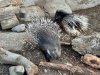
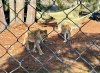
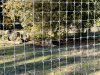
Kopje Rock opened in 1991, with the import of Slender-tailed meerkats from the US; while exhibits opened the same year at Auckland and Wellington Zoo. Considering the age of the exhibit, I think it’s aged remarkably well. Kopje Rock also includes exhibits housing Cape porcupine and Crested porcupine. The Crested porcupine are sisters named Hapana and Tuli; and were imported from Basle Zoo in 2013. I don’t recall seeing them on my 2015 visit, so this was the first time I’d seen this species. To my delight, the Cape porcupine were equally active, scurrying around the exhibit at high speed; in contrast to the usual view I get of them at other zoos asleep in their burrows. Revisiting this exhibit at the end of the day (as the sun was setting) no doubt played a part in this given they’re nocturnal.

Slender-tailed meerkat exhibit:

upload_2024-8-18_16-11-22.jpeg

Cape porcupine exhibit:

upload_2024-8-18_16-16-2.jpeg

Crested porcupine exhibit:

upload_2024-8-18_16-16-39.jpeg

Cape porcupine:

upload_2024-8-18_16-17-36.jpeg

Crested porcupine:

upload_2024-8-18_16-18-3.jpeg

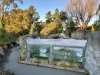
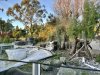
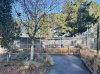
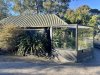
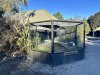
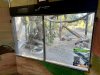
Adjacent to Kopje Rock is an Asian small-clawed otter exhibit. The exhibit has changed little from my memory of seeing it as a child in 2003; though it remains a suitable exhibit, with the highlight being an underwater viewing window. It’s not a large exhibit, but is well presented nonetheless. The park holds a bachelor group of four otters named Ikan, Tiga, Siak and Tuk. The otters were born 2018 at Perth Zoo across two different litters and are the great-great grandsons of regional founders, Wono and Jaya (Auckland Zoo’s breeding pair during the 1990’s).

Asian small-clawed otter exhibit:

upload_2024-8-18_16-19-57.jpeg

Asian-small clawed otter exhibit (viewing window):

upload_2024-8-18_16-19-20.jpeg
 

Attachments

  • upload_2024-8-18_16-11-22.jpeg
    upload_2024-8-18_16-11-22.jpeg
    295.2 KB · Views: 152
  • upload_2024-8-18_16-16-2.jpeg
    upload_2024-8-18_16-16-2.jpeg
    300 KB · Views: 148
  • upload_2024-8-18_16-16-39.jpeg
    upload_2024-8-18_16-16-39.jpeg
    293.9 KB · Views: 146
  • upload_2024-8-18_16-17-36.jpeg
    upload_2024-8-18_16-17-36.jpeg
    222.2 KB · Views: 150
  • upload_2024-8-18_16-18-3.jpeg
    upload_2024-8-18_16-18-3.jpeg
    317.8 KB · Views: 155
  • upload_2024-8-18_16-19-20.jpeg
    upload_2024-8-18_16-19-20.jpeg
    262.2 KB · Views: 145
  • upload_2024-8-18_16-19-57.jpeg
    upload_2024-8-18_16-19-57.jpeg
    304.1 KB · Views: 147
Part Two - Lion Reserve and Springbok

We took the most direct route to the Lion Reserve, zipping past the playground and farmyard which were on route (sorry son).

Along with the gorillas, the lions were the species I was most interested in seeing. Orana Wildlife Park have a fascinating history with lions. From 1976 to 1995, they operated a drive through lion park; and over the past two decades, have run two breeding prides, a rarity within Australasian zoos. The founders of their two prides were a male named Toby (1998) and two females named Priscilla (1998) and Kiara (1998). The original intention was to run them as an integrated pride; but it was decided instead the females would head up their own prides and so “Priscilla’s Pride” and “Kiara’s Pride” were formed. Toby died in 2006, leaving each lioness with three young adult offspring. Two males were loaned from Wellington Zoo from 2008-2010, during which time they sired a total of seven offspring across the two prides.

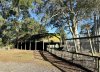
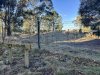
Upon arriving at the Lion Reserve, I was intrigued to come across the old Lion House. Being a recent zoo, you won’t find relics from the early 20th Century like you will at Auckland or Wellington Zoo; but it was intriguing to see this now abandoned brick building that once held lions (and prior to this, tigers). The adjoining exhibit was overgrown and I recalled memories of seeing hand-raised Cheetah cubs in there in 2015; and in 2003, one of Priscilla’s cubs laying in the doorway.

Old Lion House:

upload_2024-8-25_20-20-56.jpeg

Old lion exhibit:

upload_2024-8-25_20-21-41.jpeg

Orana’s lion facilities are undoubtedly the best in New Zealand; and even regionally, would be considered impressive. The first lion exhibit is 3 acres in size; and the second is 1.5 acres. The latter opened in 2008 (along with the new Lion House, which features eight dens) and was designed to manage the aforementioned expansion of the prides, with the loan of the males from Wellington for breeding. Kiara’s Pride, which at its height numbered nine lions, inhabit the larger exhibit. It now contains Kiara’s sons, Kairangi (2009) and Tawhiri (2009); and Kiara’s grandaughter, Tama (2009). Priscilla’s Pride, which once peaked at six lions, inhabits the smaller exhibit. The pride has since been further subdivided into two with one of Priscilla’s daughters, Leah (2004), housed alone; and Priscilla’s other daughter, Meeka (2004) housed with her own son, Mambila (2011).

Large lion exhibit (Kiara’s Pride):

upload_2024-8-25_20-22-24.jpeg

Large lion exhibit (Kiara’s Pride):

upload_2024-8-25_20-23-26.jpeg

Small lion exhibit (Priscilla’s Pride):

upload_2024-8-25_20-24-31.jpeg

New Lion House:

upload_2024-8-25_20-27-54.jpeg

It was interesting to note Priscilla’s daughters and grandson have inherited her dark honey coloured coat; a shared trait with Priscilla’s half sister, Sheeka, who previously lived at Auckland Zoo. Like their mother, Priscilla’s daughters have also grown manes in their old age and I enjoyed explaining to my son’s family how the ‘small male lions’ were in fact elderly females; while the ‘massive lionesses’ were castrated males.

Kairangi and Tawhiri:

upload_2024-8-25_20-25-37.jpeg

Leah:

upload_2024-8-25_20-26-58.jpeg

While my group headed off to see the Tasmanian devils, I doubled back to check out the Springbok exhibit. The exhibit is very easy to miss and their significance as the only Springbok herd in Australasia was undoubtedly lost on almost every other visitor to the park. The herd contains 1.2 ageing Springbok; with a second male housed off display with an elderly zebra mare. It appears inevitable they will be the last of their species housed in the region (at least for the foreseeable future); and so I took a brief moment to pause by the exhibit and appreciate them.

Springbok exhibit:

upload_2024-8-25_20-29-19.jpeg

Springbok:

upload_2024-8-25_20-28-50.jpeg
 

Attachments

  • upload_2024-8-25_20-20-56.jpeg
    upload_2024-8-25_20-20-56.jpeg
    358.9 KB · Views: 144
  • upload_2024-8-25_20-21-41.jpeg
    upload_2024-8-25_20-21-41.jpeg
    351.1 KB · Views: 143
  • upload_2024-8-25_20-22-24.jpeg
    upload_2024-8-25_20-22-24.jpeg
    297.7 KB · Views: 133
  • upload_2024-8-25_20-23-26.jpeg
    upload_2024-8-25_20-23-26.jpeg
    327.5 KB · Views: 136
  • upload_2024-8-25_20-24-31.jpeg
    upload_2024-8-25_20-24-31.jpeg
    300.7 KB · Views: 140
  • upload_2024-8-25_20-25-37.jpeg
    upload_2024-8-25_20-25-37.jpeg
    237.6 KB · Views: 145
  • upload_2024-8-25_20-26-58.jpeg
    upload_2024-8-25_20-26-58.jpeg
    256.6 KB · Views: 133
  • upload_2024-8-25_20-27-54.jpeg
    upload_2024-8-25_20-27-54.jpeg
    334.9 KB · Views: 136
  • upload_2024-8-25_20-28-50.jpeg
    upload_2024-8-25_20-28-50.jpeg
    287.2 KB · Views: 136
  • upload_2024-8-25_20-29-19.jpeg
    upload_2024-8-25_20-29-19.jpeg
    322.9 KB · Views: 133
Thank you for your review, I've been enjoying it so far! I've never been to Orana personally, so this helps me to build a mental picture of the zoo. I wonder if the old lion exhibit could be repurposed for another, smaller species, like hyena or caracal (although the latter may climb too much for the fencing to be suitable), at some stage.
 
Thank you for your review, I've been enjoying it so far! I've never been to Orana personally, so this helps me to build a mental picture of the zoo. I wonder if the old lion exhibit could be repurposed for another, smaller species, like hyena or caracal (although the latter may climb too much for the fencing to be suitable), at some stage.

Thank you for your kind words.

Considering the age of the lions, it’s easy to see Priscilla’s pride reduced to Mambila (2011) within the next few years, who unfortunately would be extremely difficult to merge with the three ageing lions in Kiara’s pride. My assumption is they’ll wait for one of the prides to die out and house the ageing individual/indivudals in the 1.5 acre exhibit; while receiving the founders of a new breeding pride to live in the 3 acre exhibit.

It’s been incredible to see them manage two breeding prides over the past two decades and although I’d love to see them undertake the same again, I believe it’s unlikely. After all, the original intention was to run an integrated pride of Toby, Priscilla, Kiara and their cubs. Whether this means they’d use the second exhibit to manage surplus from the main/breeding pride; or consider using it to house a species like hyena remains to be seen.

Personally, I think Orana’s Lion Reserve surpasses even Melbourne Zoo’s legendary Lion Park, so I would prefer to see it remain a lion complex in its entirety.
 
Part Three - Tasmanian Devils and Tigers

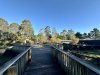
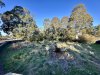
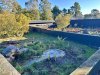
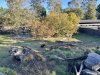
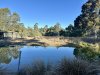
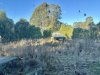
After the excitement of the Lion Reserve, the Tasmanian devil exhibit had a hard act to follow. I somehow missed this exhibit on my 2015 visit and so I went with the expectation of seeing an exhibit similar to those I’ve seen at other zoos in the region including Auckland, Wellington, Melbourne and Ballarat (which have exhibits ranging from small to medium in size). To my surprise, Orana Wildlife Park had a huge complex consisting of four large interconnected exhibits (one subdivided into two), with an overhead boardwalk, terminating in a panoramic viewpoint.

Tasmanian devil panorama:

upload_2024-9-8_21-39-52.jpeg

Tasmanian devil exhibit:

upload_2024-9-8_21-42-0.jpeg

Tasmanian devil exhibit:

upload_2024-9-8_21-43-6.jpeg

Tasmanian devil exhibit:

upload_2024-9-8_21-43-52.jpeg

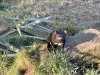
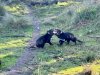
Like how in 1991, Orana Wildlife Park, Auckland Zoo and Wellington Zoo all imported Slender-tailed meerkats for the first time; these three zoos all imported Tasmanian devils in 2014, opening new exhibits for them. For Orana Wildlife Park, it was the first time they’d ever held the species. New Zealand zoos hold ambassador/non-breeding devils and as of last year, Orana held nine devils. We saw similar numbers and as a result, the complex was a hive of activity. Devils were running the full length of their exhibits and posturing at each other in dominance battles. They were easily the most active of their species I’ve seen in any zoo and I found their exhibits to be an accurate representation of their natural habitat of open woodlands. To say I was impressed was an understatement.

Tasmanian devil:

upload_2024-9-8_21-44-31.jpeg

Tasmanian devils posturing:

upload_2024-9-8_21-44-56.jpeg

Continuing on to the tiger complex, we passed decent sized grassy exhibits for Emu and wallaby. As with the devil exhibit, the exhibits perfectly encapsulated the Australian grasslands biome.

The Sumatran tiger complex opened in 2006, with the import of two Sumatran tigers from Taronga Zoo (brothers Dumai and Sendiri). The return of tigers to Orana was much welcomed by both the staff and public, with tigers originally held from the opening year of 1976 until the 1990’s. After the passing of Dumai and Sendiri, the complex underwent renovations ahead of the arrival of two male Sumatran tigers from Australia Zoo (cousins Scout and Reggie). Scout has since transferred to Hamilton Zoo, recently fathering two cubs of his own; leaving Reggie as the sole occupant of this complex.

The Sumatran tiger complex consists of three exhibits and three dens and is built on 6000 square metres of land. The largest exhibit has a climbing platform and pool, with a viewing tower overlooking the exhibit. The middle exhibit is the smallest and comparatively bare. It’s viewable from a large viewing window inside an observation hut. The last exhibit (or first, depending which way you enter) also has a pool and is inbetween the other two exhibits in size; fronted by a boardwalk. We didn’t actually see Reggie, who I believe was participating in an encounter at the time; but it was interesting to see the exhibit nonetheless. Though lacking the lushness of Auckland’s new complex, Orana’s Sumatran tiger complex was a decent size and I liked the variation between the exhibits. The park plan to acquire a female for breeding in the future (my prediction is Cahya from Auckland Zoo) and it’s not hard to imagine the middle exhibit being perfect for cubs given the lack of neonatal hazards (pools, high platforms) found in the other exhibits. I therefore look forward to revisiting this complex in the future.

Sumatran tiger exhibit (large) - viewing tower:

upload_2024-9-8_21-46-0.jpeg

Sumatran tiger exhibit (large):

upload_2024-9-8_21-46-48.jpeg

Sumatran tiger exhibit (large) - pool:

upload_2024-9-8_21-47-31.jpeg

Sumatran tiger exhibit (small):

upload_2024-9-8_21-48-43.jpeg
 

Attachments

  • upload_2024-9-8_21-39-52.jpeg
    upload_2024-9-8_21-39-52.jpeg
    174.3 KB · Views: 110
  • upload_2024-9-8_21-42-0.jpeg
    upload_2024-9-8_21-42-0.jpeg
    280.8 KB · Views: 109
  • upload_2024-9-8_21-43-6.jpeg
    upload_2024-9-8_21-43-6.jpeg
    293.7 KB · Views: 111
  • upload_2024-9-8_21-43-52.jpeg
    upload_2024-9-8_21-43-52.jpeg
    339.2 KB · Views: 113
  • upload_2024-9-8_21-44-31.jpeg
    upload_2024-9-8_21-44-31.jpeg
    310.7 KB · Views: 110
  • upload_2024-9-8_21-44-56.jpeg
    upload_2024-9-8_21-44-56.jpeg
    295 KB · Views: 111
  • upload_2024-9-8_21-46-0.jpeg
    upload_2024-9-8_21-46-0.jpeg
    309.9 KB · Views: 112
  • upload_2024-9-8_21-46-48.jpeg
    upload_2024-9-8_21-46-48.jpeg
    255.2 KB · Views: 111
  • upload_2024-9-8_21-47-31.jpeg
    upload_2024-9-8_21-47-31.jpeg
    221.6 KB · Views: 117
  • upload_2024-9-8_21-48-43.jpeg
    upload_2024-9-8_21-48-43.jpeg
    253.7 KB · Views: 117
Part Three - Tasmanian Devils and Tigers

After the excitement of the Lion Reserve, the Tasmanian devil exhibit had a hard act to follow. I somehow missed this exhibit on my 2015 visit and so I went with the expectation of seeing an exhibit similar to those I’ve seen at other zoos in the region including Auckland, Wellington, Melbourne and Ballarat (which have exhibits ranging from small to medium in size). To my surprise, Orana Wildlife Park had a huge complex consisting of four large interconnected exhibits (one subdivided into two), with an overhead boardwalk, terminating in a panoramic viewpoint.

Tasmanian devil panorama:

View attachment 728838

Tasmanian devil exhibit:

View attachment 728839

Tasmanian devil exhibit:

View attachment 728840

Tasmanian devil exhibit:

View attachment 728841

Like how in 1991, Orana Wildlife Park, Auckland Zoo and Wellington Zoo all imported Slender-tailed meerkats for the first time; these three zoos all imported Tasmanian devils in 2014, opening new exhibits for them. For Orana Wildlife Park, it was the first time they’d ever held the species. New Zealand zoos hold ambassador/non-breeding devils and as of last year, Orana held nine devils. We saw similar numbers and as a result, the complex was a hive of activity. Devils were running the full length of their exhibits and posturing at each other in dominance battles. They were easily the most active of their species I’ve seen in any zoo and I found their exhibits to be an accurate representation of their natural habitat of open woodlands. To say I was impressed was an understatement.

Tasmanian devil:

View attachment 728842

Tasmanian devils posturing:

View attachment 728843

Continuing on to the tiger complex, we passed decent sized grassy exhibits for Emu and wallaby. As with the devil exhibit, the exhibits perfectly encapsulated the Australian grasslands biome.

The Sumatran tiger complex opened in 2006, with the import of two Sumatran tigers from Taronga Zoo (brothers Dumai and Sendiri). The return of tigers to Orana was much welcomed by both the staff and public, with tigers originally held from the opening year of 1976 until the 1990’s. After the passing of Dumai and Sendiri, the complex underwent renovations ahead of the arrival of two male Sumatran tigers from Australia Zoo (cousins Scout and Reggie). Scout has since transferred to Hamilton Zoo, recently fathering two cubs of his own; leaving Reggie as the sole occupant of this complex.

The Sumatran tiger complex consists of three exhibits and three dens and is built on 6000 square metres of land. The largest exhibit has a climbing platform and pool, with a viewing tower overlooking the exhibit. The middle exhibit is the smallest and comparatively bare. It’s viewable from a large viewing window inside an observation hut. The last exhibit (or first, depending which way you enter) also has a pool and is inbetween the other two exhibits in size; fronted by a boardwalk. We didn’t actually see Reggie, who I believe was participating in an encounter at the time; but it was interesting to see the exhibit nonetheless. Though lacking the lushness of Auckland’s new complex, Orana’s Sumatran tiger complex was a decent size and I liked the variation between the exhibits. The park plan to acquire a female for breeding in the future (my prediction is Cahya from Auckland Zoo) and it’s not hard to imagine the middle exhibit being perfect for cubs given the lack of neonatal hazards (pools, high platforms) found in the other exhibits. I therefore look forward to revisiting this complex in the future.

Sumatran tiger exhibit (large) - viewing tower:

View attachment 728844

Sumatran tiger exhibit (large):

View attachment 728845

Sumatran tiger exhibit (large) - pool:

View attachment 728846

Sumatran tiger exhibit (small):

View attachment 728847
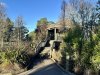
The Tasmanian devil complex is phenomenal! A good reflection of how, often, everything at an open range zoo is on a bigger scale, even the exhibits for small animals.
 
Part Four - Reptile House, Islands and Aviaries

Adjacent to the Sumatran tiger complex is the Reptile House, which opened in 1987. It reminded me a lot of Hamilton Zoo’s old Reptile House in aesthetics, though it’s slightly bigger and had more exhibits. The Reptile House has six sides of varying length, each with glass fronted exhibits; and there’s a tank housing Falla’s skink in the centre of the room. This is in contrast to most reptile houses I’ve been in where you follow a corridor and enter/exit out of separate doors. Like Hamilton Zoo’s Reptile House, Orana’s had an indoor/outdoor flow, with exhibits for some of the larger species dual viewable from the inside and outside.

Reptile House species list:

Reptile House Species List

Wall One (Indoor/Outdoor):

Exhibit 1: Cook Straight tuatara (Sphenodon punctatus)

Wall Two (Indoor/Outdoor):

Exhibit 2: Lace monitor (Varanus vanus)

Wall Three (Indoor/Outdoor):

Exhibit 3: Spur thighed tortoise (Testudo graeca)

Wall Four (Indoor):

Exhibit 4: Northern spotted skink (Oligosoma kokowai)

Exhibit 5: Duvaucel’s gecko (Hoplodactylus duvaucelii)

Exhibit 6: Bearded dragon (Pogona vitticeps)

Exhibit 7: Goldstripe gecko (Woodworthia chrysosirectica)

Wall Five (Indoor):

Exhibit 8: Northland green gecko (Naultinus grayi) and Falla’s skink (Oligosoma fallai)

Exhibit 9: Forest gecko (Mokopirirakau granulatus) and Elegant gecko (Naultinus elegans)

Wall Six (Indoor):

Exhibit 10: Rough gecko (Naultinus rudis)

Exhibit 11: Elegant gecko (Naultinus elegans) and Goldstripe gecko (Woodworthia chrysosirectica)

Exhibit 12: Elegant gecko (Naultinus elegans)

Exhibit 13: Forest gecko (Mokopirirakau granulatus)

Centre (Indoor):

Exhibit 14: Falla’s skink (Oligosoma fallai)

Reptile House:

upload_2024-9-15_11-35-0.jpeg

Reptile House:

upload_2024-9-15_11-35-40.jpeg

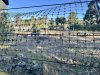
Lace monitor exhibit:

upload_2024-9-15_11-36-19.jpeg

Adjacent to the Reptile House was two moated exhibits, one housing lemurs; and the other housing spider monkeys. Orana have held spider monkey since 1981 and currently hold 1.4 named Tostada (male); and Belize, Merida, Maya and Juquila (females). Tostada arrived in 2019 from Hamilton Zoo, where he sired young before his transfer, so there was hope he might sire Orana’s first infant since 2005. Both exhibits provide the inhabitants with a stimulating environment and epitomise the zoo without bars image you’d expect from an open range zoo.

Spider monkey exhibit:

upload_2024-9-15_11-37-27.jpeg

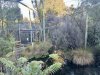
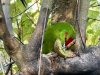
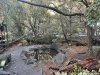
Next up was the Lowlands Aviary. It’s a medium sized walk-through aviary, with a boardwalk that winds through a grove of native trees. Though dwarfed by the freeflight aviaries at Auckland and Hamilton Zoo, I throughly enjoyed this aviary as there was bird life at every point and turn. The species listed were New Zealand pigeon, Red-crowned parakeet, Tui, New Zealand bellbird and Blue duck; and we were lucky enough to see all of them.

Lowlands Aviary:

upload_2024-9-15_11-38-29.jpeg

Red-crowned parakeet:

upload_2024-9-15_11-39-17.jpeg

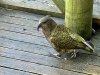
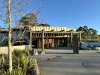
Exiting out of the Lowlands Aviary, we walked past a wire fronted aviary holding Brown teal; before entering the Kea walk-through aviary. In contrast to Auckland and Wellington’s Kea exhibits, which are inspired by their alpine biome; Orana’s is planted with trees, but it was interesting to see them in a different style of exhibit and they were typically unphased by the crowds, even curious.

Kea Aviary:

upload_2024-9-15_11-40-5.jpeg

Kea:

upload_2024-9-15_11-40-33.jpeg

Due to having my two and half year old son with us (who was wanting to run around and make noise), we opted to skip the Kiwi House and the Frog House for both his sake and that of the inhabitants of those buildings; but I look forward to revisiting these one day.

Frog House:

upload_2024-9-15_11-42-49.jpeg

As we bgeun our walk over to the main trail of ungulate paddocks, we passed the old lemur exhibit. The moat has been drained and the exhibit is no longer in use; but like the old Lion House, it was interesting to see nonetheless.

Old lemur exhibit:

upload_2024-9-15_11-46-51.jpeg
 

Attachments

  • upload_2024-9-15_11-35-0.jpeg
    upload_2024-9-15_11-35-0.jpeg
    304.1 KB · Views: 96
  • upload_2024-9-15_11-35-40.jpeg
    upload_2024-9-15_11-35-40.jpeg
    238.1 KB · Views: 97
  • upload_2024-9-15_11-36-19.jpeg
    upload_2024-9-15_11-36-19.jpeg
    196.2 KB · Views: 101
  • upload_2024-9-15_11-37-27.jpeg
    upload_2024-9-15_11-37-27.jpeg
    252.1 KB · Views: 98
  • upload_2024-9-15_11-38-29.jpeg
    upload_2024-9-15_11-38-29.jpeg
    307.8 KB · Views: 101
  • upload_2024-9-15_11-39-17.jpeg
    upload_2024-9-15_11-39-17.jpeg
    232.5 KB · Views: 97
  • upload_2024-9-15_11-40-5.jpeg
    upload_2024-9-15_11-40-5.jpeg
    352.6 KB · Views: 103
  • upload_2024-9-15_11-40-33.jpeg
    upload_2024-9-15_11-40-33.jpeg
    258.5 KB · Views: 92
  • upload_2024-9-15_11-42-49.jpeg
    upload_2024-9-15_11-42-49.jpeg
    235.7 KB · Views: 97
  • upload_2024-9-15_11-46-51.jpeg
    upload_2024-9-15_11-46-51.jpeg
    367 KB · Views: 97
Part Four - Reptile House, Islands and Aviaries

Adjacent to the Sumatran tiger complex is the Reptile House, which opened in 1987. It reminded me a lot of Hamilton Zoo’s old Reptile House in aesthetics, though it’s slightly bigger and had more exhibits. The Reptile House has six sides of varying length, each with glass fronted exhibits; and there’s a tank housing Falla’s skink in the centre of the room. This is in contrast to most reptile houses I’ve been in where you follow a corridor and enter/exit out of separate doors. Like Hamilton Zoo’s Reptile House, Orana’s had an indoor/outdoor flow, with exhibits for some of the larger species dual viewable from the inside and outside.

Reptile House species list:

Reptile House Species List

Wall One (Indoor/Outdoor):

Exhibit 1: Cook Straight tuatara (Sphenodon punctatus)

Wall Two (Indoor/Outdoor):

Exhibit 2: Lace monitor (Varanus vanus)

Wall Three (Indoor/Outdoor):

Exhibit 3: Spur thighed tortoise (Testudo graeca)

Wall Four (Indoor):

Exhibit 4: Northern spotted skink (Oligosoma kokowai)

Exhibit 5: Duvaucel’s gecko (Hoplodactylus duvaucelii)

Exhibit 6: Bearded dragon (Pogona vitticeps)

Exhibit 7: Goldstripe gecko (Woodworthia chrysosirectica)

Wall Five (Indoor):

Exhibit 8: Northland green gecko (Naultinus grayi) and Falla’s skink (Oligosoma fallai)

Exhibit 9: Forest gecko (Mokopirirakau granulatus) and Elegant gecko (Naultinus elegans)

Wall Six (Indoor):

Exhibit 10: Rough gecko (Naultinus rudis)

Exhibit 11: Elegant gecko (Naultinus elegans) and Goldstripe gecko (Woodworthia chrysosirectica)

Exhibit 12: Elegant gecko (Naultinus elegans)

Exhibit 13: Forest gecko (Mokopirirakau granulatus)

Centre (Indoor):

Exhibit 14: Falla’s skink (Oligosoma fallai)

Reptile House:

View attachment 730412

Reptile House:

View attachment 730413

Lace monitor exhibit:

View attachment 730414

Adjacent to the Reptile House was two moated exhibits, one housing lemurs; and the other housing spider monkeys. Orana have held spider monkey since 1981 and currently hold 1.4 named Tostada (male); and Belize, Merida, Maya and Juquila (females). Tostada arrived in 2019 from Hamilton Zoo, where he sired young before his transfer, so there was hope he might sire Orana’s first infant since 2005. Both exhibits provide the inhabitants with a stimulating environment and epitomise the zoo without bars image you’d expect from an open range zoo.

Spider monkey exhibit:

View attachment 730415

Next up was the Lowlands Aviary. It’s a medium sized walk-through aviary, with a boardwalk that winds through a grove of native trees. Though dwarfed by the freeflight aviaries at Auckland and Hamilton Zoo, I throughly enjoyed this aviary as there was bird life at every point and turn. The species listed were New Zealand pigeon, Red-crowned parakeet, Tui, New Zealand bellbird and Blue duck; and we were lucky enough to see all of them.

Lowlands Aviary:

View attachment 730416

Red-crowned parakeet:

View attachment 730417

Exiting out of the Lowlands Aviary, we walked past a wire fronted aviary holding Brown teal; before entering the Kea walk-through aviary. In contrast to Auckland and Wellington’s Kea exhibits, which are inspired by their alpine biome; Orana’s is planted with trees, but it was interesting to see them in a different style of exhibit and they were typically unphased by the crowds, even curious.

Kea Aviary:

View attachment 730418

Kea:

View attachment 730419

Due to having my two and half year old son with us (who was wanting to run around and make noise), we opted to skip the Kiwi House and the Frog House for both his sake and that of the inhabitants of those buildings; but I look forward to revisiting these one day.

Frog House:

View attachment 730420

As we bgeun our walk over to the main trail of ungulate paddocks, we passed the old lemur exhibit. The moat has been drained and the exhibit is no longer in use; but like the old Lion House, it was interesting to see nonetheless.

Old lemur exhibit:

View attachment 730421

Thank you for this latest update of your review. The reptile house sounds very interesting and I appreciate your photos and descriptions of older exhibits which are no longer in use, showcasing the history of Orana even though it isn't as old as some of the other zoos in the region.
 
Part Four - Reptile House, Islands and Aviaries

Adjacent to the Sumatran tiger complex is the Reptile House, which opened in 1987. It reminded me a lot of Hamilton Zoo’s old Reptile House in aesthetics, though it’s slightly bigger and had more exhibits. The Reptile House has six sides of varying length, each with glass fronted exhibits; and there’s a tank housing Falla’s skink in the centre of the room. This is in contrast to most reptile houses I’ve been in where you follow a corridor and enter/exit out of separate doors. Like Hamilton Zoo’s Reptile House, Orana’s had an indoor/outdoor flow, with exhibits for some of the larger species dual viewable from the inside and outside.

Reptile House species list:

Reptile House Species List

Wall One (Indoor/Outdoor):

Exhibit 1: Cook Straight tuatara (Sphenodon punctatus)

Wall Two (Indoor/Outdoor):

Exhibit 2: Lace monitor (Varanus vanus)

Wall Three (Indoor/Outdoor):

Exhibit 3: Spur thighed tortoise (Testudo graeca)

Wall Four (Indoor):

Exhibit 4: Northern spotted skink (Oligosoma kokowai)

Exhibit 5: Duvaucel’s gecko (Hoplodactylus duvaucelii)

Exhibit 6: Bearded dragon (Pogona vitticeps)

Exhibit 7: Goldstripe gecko (Woodworthia chrysosirectica)

Wall Five (Indoor):

Exhibit 8: Northland green gecko (Naultinus grayi) and Falla’s skink (Oligosoma fallai)

Exhibit 9: Forest gecko (Mokopirirakau granulatus) and Elegant gecko (Naultinus elegans)

Wall Six (Indoor):

Exhibit 10: Rough gecko (Naultinus rudis)

Exhibit 11: Elegant gecko (Naultinus elegans) and Goldstripe gecko (Woodworthia chrysosirectica)

Exhibit 12: Elegant gecko (Naultinus elegans)

Exhibit 13: Forest gecko (Mokopirirakau granulatus)

Centre (Indoor):

Exhibit 14: Falla’s skink (Oligosoma fallai)

Reptile House:

View attachment 730412

Reptile House:

View attachment 730413

Lace monitor exhibit:

View attachment 730414

Adjacent to the Reptile House was two moated exhibits, one housing lemurs; and the other housing spider monkeys. Orana have held spider monkey since 1981 and currently hold 1.4 named Tostada (male); and Belize, Merida, Maya and Juquila (females). Tostada arrived in 2019 from Hamilton Zoo, where he sired young before his transfer, so there was hope he might sire Orana’s first infant since 2005. Both exhibits provide the inhabitants with a stimulating environment and epitomise the zoo without bars image you’d expect from an open range zoo.

Spider monkey exhibit:

View attachment 730415

Next up was the Lowlands Aviary. It’s a medium sized walk-through aviary, with a boardwalk that winds through a grove of native trees. Though dwarfed by the freeflight aviaries at Auckland and Hamilton Zoo, I throughly enjoyed this aviary as there was bird life at every point and turn. The species listed were New Zealand pigeon, Red-crowned parakeet, Tui, New Zealand bellbird and Blue duck; and we were lucky enough to see all of them.

Lowlands Aviary:

View attachment 730416

Red-crowned parakeet:

View attachment 730417

Exiting out of the Lowlands Aviary, we walked past a wire fronted aviary holding Brown teal; before entering the Kea walk-through aviary. In contrast to Auckland and Wellington’s Kea exhibits, which are inspired by their alpine biome; Orana’s is planted with trees, but it was interesting to see them in a different style of exhibit and they were typically unphased by the crowds, even curious.

Kea Aviary:

View attachment 730418

Kea:

View attachment 730419

Due to having my two and half year old son with us (who was wanting to run around and make noise), we opted to skip the Kiwi House and the Frog House for both his sake and that of the inhabitants of those buildings; but I look forward to revisiting these one day.

Frog House:

View attachment 730420

As we bgeun our walk over to the main trail of ungulate paddocks, we passed the old lemur exhibit. The moat has been drained and the exhibit is no longer in use; but like the old Lion House, it was interesting to see nonetheless.

Old lemur exhibit:

View attachment 730421
It would be nice if they fixed up the old lemur exhibit, and put ring-tails back in that exhibit, have two lemur species back on display,
 
Thank you for this latest update of your review. The reptile house sounds very interesting and I appreciate your photos and descriptions of older exhibits which are no longer in use, showcasing the history of Orana even though it isn't as old as some of the other zoos in the region.

Cheers @Abbey. As you know, I have a great interest in historical zoo buildings/exhibits. I’ve visited serval city zoos including London, Melbourne, Auckland and Wellington; which have a vast array of historic buildings and features between them.

Considering Orana is a comparatively young zoo (1976) and an open range zoo, it was therefore a pleasant surprise to find the old Lion House and yards; and the disused Ring-tailed lemur exhibit. I accept in many cases (especially in city zoos, where space is at a premium) that some people resent impractical structures which no longer support the management of the species they were designed for; but in Orana’s case, these exhibits aren’t in anyone’s way and do nothing to hinder the progress of the zoo.

The retention of the old Lion House and yards is particularly poignant as it’s adjacent to the world class Lion Reserve (which includes a new Lion House), making for a fascinating compare and contrast.
It would be nice if they fixed up the old lemur exhibit, and put ring-tails back in that exhibit, have two lemur species back on display,

It would be nice to see Ring-tailed lemurs on display again; but I don’t believe it will be in that exhibit from what I’ve heard. It’s also a little of the small side by today’s standards.
I really hoped that Orana would have Tasmanian Tigers

Nope, just regulation tigers I’m afraid.
 
Part Five - African Plains Precinct

The African Plains precinct was a 40 hectare expansion of the park that begun in 1978, initially with the construction of an antelope house to receive incoming imports; and a 12 hectare grazing paddock, which was intended as a holding area for stock. The African Plains precinct was planned to encompass three habitats - desert, savannah and marshlands; and would ultimately feature seven on display paddocks, which have predominantly held ungulates over the years; and a Cheetah breeding facility. The first of these exhibits (Dromedary camel, Chapman’s zebra and Scimitar-horned oryx) opened in 1981; with the final exhibits (including Cheetah complex) opening in 1988.

The first paddock originally held Dromedary camel. Camels had been held at Orana since opening day in 1976; and the first camel was born in 12/09/1977, with several calves born in the decade that followed. Sahara, who was born at Orana on 11/08/1987 to Sampson and Sheba was transferred to Hamilton Zoo and was the last of her species held in New Zealand. Orana’s last camel died in October 2003, six months after my first visit; and both Llama and Tibetan yak have since been housed in this exhibit. On this visit, I saw ostrich in this paddock, which have been held there since June 2023. It was exciting to see a male ostrich considering New Zealand’s other three main zoos only hold females. In addition to the male, I saw at least two females in the exhibit. The flock is 18 months old and approaching maturity, so it will be interesting to see if Orana breed them.

Ostrich exhibit:

upload_2024-9-22_12-31-31.jpeg

Zebra originally occupied the second paddock, as they do in the present day; though the maps throughout the years show zebra housed in various other paddocks, including integrated with the rhinoceros at one stage. The zebra has been Orana’s logo since the park’s genesis; but the species didn’t arrive until August 1980, with the arrival of a two year old Chapman’s colt named Fred from Wellington Zoo. Two Chapman’s fillies named Tana and Tina were imported from the UK the following month and the first foal, a filly named JaJa, was born 27/04/1983 to Fred and Tana. Other births followed in due course; though the park now hasn’t bred zebra foals in over 30 years. There’s hope that will change with the trio that were on display on my visit. The stallion, Malawi, was born 2012 at the National Zoo and Aquarium and was previously Hamilton Zoo’s breeding stallion. The mares are Asale, born 2009 at Hamilton Zoo; and Eve, born 2018 at Auckland Zoo. Malawi has a breeding recommendation to breed with both mares, though due to Asale’s being a nulliparous 15 year old mare, it’s possible she’s sterile. The zebras had a decent sized paddock and were actively exploring the exhibit when we passed. It was nice to see them in a grassed exhibit versus the more traditional barren substrate seen in city zoos. An additional three zebras are held off display, including two young stallions in a bachelor herd (Okavango and Zambia); and an elderly mare (Zelda), who is held with a male Springbok.

Plains zebra exhibit:

upload_2024-9-22_12-31-8.jpeg

The third paddock originally housed Scimitar-horned oryx, which were first imported from Marwell Zoo in December 1978. The first calf was born January 1980; and 55 more births followed, with the last born February 2008. Orana has unfortunately phased this species out; though the American bison that now occupy this spacious paddock are by no means common in New Zealand, with Hamilton being the only other zoo to exhibit them. Orana’s bison herd arrived in 2014.

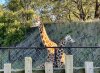
The Giraffe paddock followed and is the largest exhibit for this species in New Zealand. The exhibit consists of a large grass paddock; a giraffe house; and an adjoining yard, overlooked by a viewing platform. I have fond childhood memories from my 2003 visit of feeding the herd, which included the then calf, Armani. Armani was sent to Perth Zoo, where he sired several calves, including a female named Kamili. Kamili came to Orana in 2019 and is the mother of their latest calf, Kevin; while Harriet, who was the youngest female on my 2015 visit, is now the oldest giraffe in the herd. Orana has held giraffes since the import of the first pair in 1982; with the current exhibit and giraffe house opening in 1988. When I visited in 2003, I saw a plaque dedicated to Nathalie, which was the name of a giraffe calf, born at Orana in July 1988. I didn’t take much notice of it as a kid, but thought to ask when I returned in 2015 and noticed it was missing. Apparently it was in commendation of a young girl, who passed away; with Nathalie the giraffe being named in her honour. Nathalie died in 2015; but is well represented regionally, with her descendants including the aforementioned Kamili and Kevin.

Mdomo and Kevin:

upload_2024-9-22_12-30-35.jpeg

In the adjacent paddock, which is the largest within the African Plains precinct, is the Southern white rhinoceros exhibit. 1.2 white rhinos were imported from the San Diego Wild Animal Park in 1986; and a further 1.0 from Taronga Western Plains Zoo in 1988. 3.1 were imported from the US in 1990, with all but one of bulls then sent on to Australian facilities. This bull (Cyrano) sired New Zealand’s first rhinoceros calf to one of the San Diego cow’s (Utani). The male calf, born August 1999, was exported to Australia; which in turn has been the destination for the further two surviving calves born at Orana in 2010 and 2015. The youngest, Tino, was only a month old on my last visit; and on this visit, I saw Orana’s all female herd - consisting of Utani (1984), Katala (1997) and Tamu (2002). Tamu is the park’s only reproductively viable cow and was born at Perth Zoo to Memphis and Sabie; with Memphis being one of the bulls that came to Australia via Orana in 1990. Orana’s rhino exhibit is immense in size and provides a great habitat for its inhabitants. They were particularly interested in a grove of trees planted in the exhibit; and while we unfortunately missed the keeper talk that last time allowed me to see the herd up close (behind a barrier of course), I greatly enjoyed seeing this species in such a spacious habitat. I was assured the Australian Rhino Project is still in the works; and I know this exhibit will become even more exciting as the herd expands. Orana are planning to keep a handful of rhino from the import; as well as planning to receive a bull from Hamilton Zoo.

Southern white rhinoceros exhibit:

upload_2024-9-22_12-30-16.jpeg

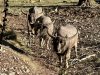
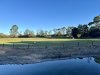
The next paddock contained Asian water buffalo, which like bison, are scarce in Zealand collections; with Orana being the only New Zealand zoo to hold them. I saw three on my visit and since to my knowledge, Orana has no plans to breed from them, I made the most of viewing this exhibit. I was especially impressed by the large water at the front of the exhibit, which I can only imagine how much they enjoy on hot todays. Like the bison, the Asian water buffalo are a detraction from the African theme; but I doubt the average visitor gives it a moment’s thought and in any case, I was grateful to see them.

Asian water buffalo exhibit:

upload_2024-9-22_12-29-5.jpeg

Asian water buffalo:

upload_2024-9-22_12-29-24.jpeg

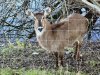
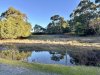
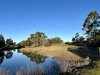
The Waterbuck exhibit represented the original plans to feature the marshlands biome in the African Plains precinct. Articles from January 1987, detail a pair of Waterbuck having recently arrived from Auckland Zoo. Initially planned to be exhibited in the old giraffe compound, they subsequently moved to the current exhibit. Like the others that preceded it, I was highly impressed with this exhibit, which provided the ungulates with a small lake to submerse themselves in. The herd are very relaxed around people and one of the females came right up to the fence line, which was exciting to see. Numbers of this species have dwindled regionally; but I hope Orana are considering holding them long term.

Waterbuck exhibit:

upload_2024-9-22_12-28-38.jpeg

Female Waterbuck:

upload_2024-9-22_12-28-17.jpeg

The Cheetah complex is one of Orana’s most spectacular features. It was opened on Boxing Day 1988, following the import of two male Cheetah from Taronga Western Plains Zoo in October. Two females were imported from Scotland and Ireland in 1991 and a breeding programme begun. The first litter was born in 1993 and to date, 24 cubs have been raised to adulthood. The complex features one of the largest exhibits in the region, which includes a retractable pulley to showcase the speed of the Cheetah. Seeing one of the brothers from the December 1993 litter chase after the lure on my 2003 childhood visit was a highlight. Orana’s success in breeding Cheetah is attributed to the absence of apex predators in the immediate vicinity (the lions and tigers are housed on the opposite side of the park); and the provision of multiple males for the females to choose from. The latter is facilitated by the park having multiple smaller exhibits that interconnected to a central raceway. The female is allowed to walk down the raceway and initiate contact with the male of her choice in the adjoining exhibits. Two females have recently been imported from Taronga Western Plains Zoo, which I saw in two of the smaller exhibits; and among their prospective mates are two of the males from the last litter of cubs born at Orana. These males, Gorse and Matata, are the fifth generation of their family to live at Orana; and it would be incredible to see them sire the sixth generation.

Main Cheetah exhibit:

upload_2024-9-22_12-27-45.jpeg

Cheetah holding yards:

upload_2024-9-22_12-27-23.jpeg
 

Attachments

  • upload_2024-9-22_12-27-23.jpeg
    upload_2024-9-22_12-27-23.jpeg
    339.9 KB · Views: 64
  • upload_2024-9-22_12-27-45.jpeg
    upload_2024-9-22_12-27-45.jpeg
    235.3 KB · Views: 61
  • upload_2024-9-22_12-28-17.jpeg
    upload_2024-9-22_12-28-17.jpeg
    374.7 KB · Views: 65
  • upload_2024-9-22_12-28-38.jpeg
    upload_2024-9-22_12-28-38.jpeg
    267.3 KB · Views: 64
  • upload_2024-9-22_12-29-5.jpeg
    upload_2024-9-22_12-29-5.jpeg
    174.3 KB · Views: 67
  • upload_2024-9-22_12-29-24.jpeg
    upload_2024-9-22_12-29-24.jpeg
    372.9 KB · Views: 64
  • upload_2024-9-22_12-30-16.jpeg
    upload_2024-9-22_12-30-16.jpeg
    150.8 KB · Views: 61
  • upload_2024-9-22_12-30-35.jpeg
    upload_2024-9-22_12-30-35.jpeg
    318.9 KB · Views: 63
  • upload_2024-9-22_12-31-8.jpeg
    upload_2024-9-22_12-31-8.jpeg
    272.5 KB · Views: 61
  • upload_2024-9-22_12-31-31.jpeg
    upload_2024-9-22_12-31-31.jpeg
    321.9 KB · Views: 59
Part Six - Great Ape Centre, Antelopes and African Wild Dog

The Great Ape Centre opened in June 2015 and houses New Zealand’s only gorillas. Great apes were first proposed for Orana in the 1980’s, with plans for a chimpanzee island exhibit; but this never eventuated. The idea of Orana holding a bachelor troop of chimpanzees was still being floated in the early 1990’s; but these were abandoned long before Orana made the announcement in 2010 that they would be building a gorilla complex. Due to the Canterbury earthquakes, the project was delayed a further two years; while the construction costs increased from $2 million to $6 million. During that time it was announced the complex would be housing orangutans as well as Western lowland gorillas.

The complex consists of two large outdoor grassed exhibits with high concrete walls and wooden climbing structures placed in each. The exhibits are reminiscent of Auckland Zoo’s Orangutan Park (1987-2017), though the undulating topography was designed with the gorillas in mind. A central building containing the day rooms, dens and indoor visitor viewing area connects the two exhibits; and allows the visitors to see the apes up close. It’s a sizeable building capable of accomodating large crowds and indeed it was packed with people on our visit.

The gorillas are Fataki and Fuzu, brothers born at Taronga Zoo to Kibabu and Frala in 2003 and 2007 respectively. I’ve followed Taronga’s gorillas since I was a child and so it was especially exciting to see these two in particular. The original intention had been for their father to accompany them to Christchurch; but a change of plan saw their younger half-brother, Mahale, come instead. Unfortunately, Mahale died in 2021. Fataki was foraging for food near the viewing window; while Fuzu browsed branches on one of the platforms. It was encouraging to see the brothers relaxed in each other’s company and unphased by the crowds.

Orana held orangutans from September 2017 to January 2020. A pair of Bornean orangutans (Charlie and Melur); and a hybrid female (Wanita) were loaned from Auckland Zoo, while they built a new complex. The initial plans were for the trio to be replaced by Sumatran orangutans; and then a breeding troop of gorillas from Europe. Unfortunately neither of these plans eventuated and the second exhibit has housed Black and white ruffed lemur; and then more recently, Siamang, over the past four years. The zoo’s Siamang pair (Suka and Basuki) were grooming each other on the climbing tower in their exhibit on my visit; and I was excited to hear they’d welcomed their first infant not long after my visit - the first infant of this species born at Orana since Basuki in 2014.

Great Ape Centre:

upload_2024-9-29_17-41-26.jpeg

Great Ape Centre (Paddock One):

upload_2024-9-29_17-42-6.jpeg

Great Ape Centre (Paddock Two):

upload_2024-9-29_17-41-48.jpeg

Fataki:

upload_2024-9-29_17-42-23.jpeg

Three large paddocks were adjacent to the Great Ape Centre. The first housed a small herd of Addax, which I was excited to see as it was my first time seeing this critically endangered species. Addax have been held at Orana since 2018 with the import of a male (Marrakesh) from Werribee Open Range Zoo; and three females (Sahara, Zola and Mali) from Taronga Western Plains Zoo. Sahara and Zola gave birth to the herd’s first calves in July 2019, which were thought to have been the first born in a New Zealand zoo; followed by three more calves in 2020. Six Addax were on exhibit on my visit; though additional may have been held off display (separation of bulls etc). The second and third paddock were signed for Lowland nyala, but I only saw one nyala (an adult bull), which was in the third paddock. Like the ungulate paddocks in the African Plains precinct; the exhibits were simple, yet spacious.

Addax herd:

upload_2024-9-29_17-40-42.jpeg

Lowland nyala exhibit:

upload_2024-9-29_17-41-4.jpeg

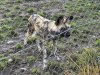
Orana have an impressive African wild dog exhibit that I remember well from my visit as a child in 2003. The exhibit consists of natural grassland, dotted with trees; with a large hill in the centre of the exhibit. The grass is so long, it easy to imagine the dogs camouflaging effortlessly; but we were lucky to see them active and running around the exhibit. The alpha female developed an obsession with my son and began stalking him from behind the fence line. It was inspiring to see a captive animal display such natural behaviour and the exhibit remains one of the best I’ve seen in any zoo.

Orana has held African wild dog since 1998, with the import of three males from Perth Zoo (George, Julius and Kaz). Two females (Shira and Mwenzi) were imported from South Africa in 2002; and the park expressed hopes for pups in 2003, but sadly no successful breeding ever occurred. After the death of the last male in 2006, the two females were transferred to Hamilton Zoo with the intention of breeding; and Orana received a same sex sibling pack of seven females in exchange (Moya, Mbili, Nne, Sita, Sabba, Nane and Tisa). Only two of these females were alive when I returned in 2015; and all had died by 2017. In 2018, the current park was imported from Taronga Western Plains Zoo (Azizi; and her seven nieces Kumi, Lady, Pat, Tybo, Makena, Tamu and Tisa). Of this pack, four dogs survive: Kumi, Pat, Tybo and Makena; with the pack recently subdivided into pairs. Two were on exhibit on my visit; and the other two were off exhibit in off display enclosure, which is approximately 3/4 the size of the on display exhibit.

African wild dog exhibit:

upload_2024-9-29_17-39-4.jpeg

African wild dog (watching my son):

upload_2024-9-29_17-38-42.jpeg

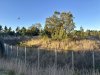
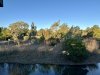
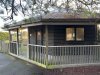
The last exhibit is a large island, overlooked by a viewing platform, which originally housed Patas monkey. Patas monkeys were first imported by Orana in 1981, with a pair imported from Taronga Zoo; and four more imported from San Fransisco Zoo. Further US imports followed. Patas monkey were originally exhibited on one of the small island exhibits on the other side of the zoo (near the exisiting tiger complex); before moving to this exhibit. Given the size of this island, I wouldn’t be surprised if this was originally intended for the aforementioned chimpanzees; but Patas monkey became its inhabitants instead and lived here until their phase out in 1997. A pair of Siamang were the most recent inhabitants, but unfortunately the exhibit now sits vacant. The water in the moat isn’t holding to sufficient levels, which makes it unsuitable for primates in the current state. The old Siamang night house, which adjoins this exhibit, is currently being redeveloped for Lace monitor, which have outgrown their exhibit in the Reptile House.

Old Siamang exhibit (vacant exhibit):

upload_2024-9-29_17-39-46.jpeg

Old Siamang night house:

upload_2024-9-29_17-40-17.jpeg

Conclusion

I throughly enjoyed my visit to Orana Wildlife Park. Due to Orana being located on the South Island, I visit it less frequently (this being my third visit) than New Zealand’s other three main zoos, so the novelty factor was there; as well as Orana being New Zealand’s only open range zoo. Despite receiving a fraction of the funding the other zoos receive, Orana has excelled in creating exhibits to a high standard; with spaciousness being their main appeal. The Lion Reserve has remained my favourite from childhood through to adulthood; though seeing the Great Ape complex and the gorillas was undoubtedly a highlight. Additional species highlights included seeing the region’s only population of Springbok and Crested porcupine; as well as seeing Addax for the first time.

In closing, I would like to express my appreciation for Orana’s staff. The lady working at the information centre on my visit was one of the most knowledgeable visitors services staff I’ve met at any zoo. I called in with a raft of detailed questions and she knew the answer to every single one. I’ve since had a few follow up questions for the team, which they’ve kindly taken the time to answer. I’ve been able to research a wealth of information on the history of Orana from old articles online, which has assisted me in the writing this review; but special thanks must also go to @snowleopard and @Chlidonias for the old maps they’ve uploaded in the gallery, which have proved invaluable in confirming information I’ve found online, especially with regards to locations of old exhibits etc.

Orana Wildlife Park is a fantastic zoo and I would encourage anyone visiting Christchurch to check it out. It’s fully walkable in a day/afternoon (even with a stroller/push chair), though I would recommend a day to get the full experience and attend all the keeper talks. Thank you to everyone who’s followed my review.
 

Attachments

  • upload_2024-9-29_17-38-42.jpeg
    upload_2024-9-29_17-38-42.jpeg
    306.4 KB · Views: 53
  • upload_2024-9-29_17-39-4.jpeg
    upload_2024-9-29_17-39-4.jpeg
    231.7 KB · Views: 53
  • upload_2024-9-29_17-39-46.jpeg
    upload_2024-9-29_17-39-46.jpeg
    177.3 KB · Views: 53
  • upload_2024-9-29_17-40-17.jpeg
    upload_2024-9-29_17-40-17.jpeg
    258.5 KB · Views: 53
  • upload_2024-9-29_17-40-42.jpeg
    upload_2024-9-29_17-40-42.jpeg
    323.4 KB · Views: 53
  • upload_2024-9-29_17-41-4.jpeg
    upload_2024-9-29_17-41-4.jpeg
    204.1 KB · Views: 51
  • upload_2024-9-29_17-41-26.jpeg
    upload_2024-9-29_17-41-26.jpeg
    229.3 KB · Views: 51
  • upload_2024-9-29_17-41-48.jpeg
    upload_2024-9-29_17-41-48.jpeg
    246.2 KB · Views: 55
  • upload_2024-9-29_17-42-6.jpeg
    upload_2024-9-29_17-42-6.jpeg
    202.9 KB · Views: 54
  • upload_2024-9-29_17-42-23.jpeg
    upload_2024-9-29_17-42-23.jpeg
    239.7 KB · Views: 53
Thanks for another highly informative review. Orana Wildlife Park has been in the news for having financial issues and with only around 200,000 annual visitors there's not a huge influx of money each year. It would be interesting to know how many more people visit the zoo now since the $6 million addition of the Gorilla complex. Speaking of the Gorillas, the great ape building obviously accounted for most of the cost as the two outdoor yards are quite basic. If there was no context to the images, I would have estimated that the two enclosures had been built in the 1980s or 1990s!
 
Back
Top