Orana Wildlife Park Review (June 2024)
Introduction
Welcome to my review of Orana Wildlife Park, which I visited on June 29, 2024. This was my third visit, having previously visited as a child in 2003; and then again in 2015. This time I visited with one of my sons (aged two and a half); and his extended family, who live in Christchurch and all visit regularly.
Orana Wildlife Park opened in 1976. It’s the youngest of New Zealand’s four main zoos and the only open range zoo in the country. The zoo is fully walkable, though the park provides a free shuttle bus service for those who require it. We chose to walk it as it gave us more freedom to explore the park at our pace; and my son was happy to alternate between riding in his pushchair and walking.
Part One - Entry Precinct
Orana has a loose entry precinct, which is based around a handful of buildings (including the entrance/administration building and gift shop, cafe, information centre and toilets); the safari shuttle terminal; and a cluster of small mammal exhibits.
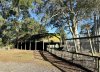
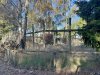
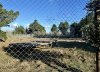
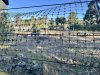
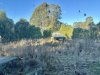
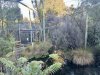
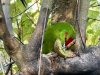
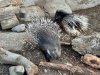
Kopje Rock opened in 1991, with the import of Slender-tailed meerkats from the US; while exhibits opened the same year at Auckland and Wellington Zoo. Considering the age of the exhibit, I think it’s aged remarkably well. Kopje Rock also includes exhibits housing Cape porcupine and Crested porcupine. The Crested porcupine are sisters named Hapana and Tuli; and were imported from Basle Zoo in 2013. I don’t recall seeing them on my 2015 visit, so this was the first time I’d seen this species. To my delight, the Cape porcupine were equally active, scurrying around the exhibit at high speed; in contrast to the usual view I get of them at other zoos asleep in their burrows. Revisiting this exhibit at the end of the day (as the sun was setting) no doubt played a part in this given they’re nocturnal.
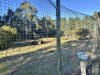
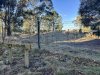
Slender-tailed meerkat exhibit:

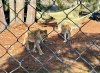
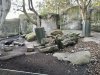
Cape porcupine exhibit:

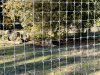
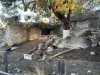
Crested porcupine exhibit:

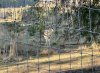
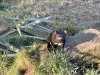
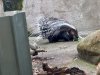
Cape porcupine:

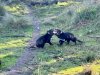
Crested porcupine:

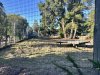
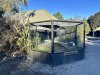
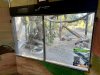
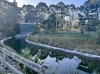
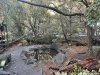
Adjacent to Kopje Rock is an Asian small-clawed otter exhibit. The exhibit has changed little from my memory of seeing it as a child in 2003; though it remains a suitable exhibit, with the highlight being an underwater viewing window. It’s not a large exhibit, but is well presented nonetheless. The park holds a bachelor group of four otters named Ikan, Tiga, Siak and Tuk. The otters were born 2018 at Perth Zoo across two different litters and are the great-great grandsons of regional founders, Wono and Jaya (Auckland Zoo’s breeding pair during the 1990’s).
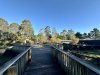
Asian small-clawed otter exhibit:

Asian-small clawed otter exhibit (viewing window):

Introduction
Welcome to my review of Orana Wildlife Park, which I visited on June 29, 2024. This was my third visit, having previously visited as a child in 2003; and then again in 2015. This time I visited with one of my sons (aged two and a half); and his extended family, who live in Christchurch and all visit regularly.
Orana Wildlife Park opened in 1976. It’s the youngest of New Zealand’s four main zoos and the only open range zoo in the country. The zoo is fully walkable, though the park provides a free shuttle bus service for those who require it. We chose to walk it as it gave us more freedom to explore the park at our pace; and my son was happy to alternate between riding in his pushchair and walking.
Part One - Entry Precinct
Orana has a loose entry precinct, which is based around a handful of buildings (including the entrance/administration building and gift shop, cafe, information centre and toilets); the safari shuttle terminal; and a cluster of small mammal exhibits.
Kopje Rock opened in 1991, with the import of Slender-tailed meerkats from the US; while exhibits opened the same year at Auckland and Wellington Zoo. Considering the age of the exhibit, I think it’s aged remarkably well. Kopje Rock also includes exhibits housing Cape porcupine and Crested porcupine. The Crested porcupine are sisters named Hapana and Tuli; and were imported from Basle Zoo in 2013. I don’t recall seeing them on my 2015 visit, so this was the first time I’d seen this species. To my delight, the Cape porcupine were equally active, scurrying around the exhibit at high speed; in contrast to the usual view I get of them at other zoos asleep in their burrows. Revisiting this exhibit at the end of the day (as the sun was setting) no doubt played a part in this given they’re nocturnal.
Slender-tailed meerkat exhibit:
Cape porcupine exhibit:
Crested porcupine exhibit:
Cape porcupine:
Crested porcupine:
Adjacent to Kopje Rock is an Asian small-clawed otter exhibit. The exhibit has changed little from my memory of seeing it as a child in 2003; though it remains a suitable exhibit, with the highlight being an underwater viewing window. It’s not a large exhibit, but is well presented nonetheless. The park holds a bachelor group of four otters named Ikan, Tiga, Siak and Tuk. The otters were born 2018 at Perth Zoo across two different litters and are the great-great grandsons of regional founders, Wono and Jaya (Auckland Zoo’s breeding pair during the 1990’s).
Asian small-clawed otter exhibit:
Asian-small clawed otter exhibit (viewing window):
Attachments
-
 upload_2024-8-18_16-11-22.jpeg295.2 KB · Views: 152
 -
 upload_2024-8-18_16-16-2.jpeg300 KB · Views: 148
 -
 upload_2024-8-18_16-16-39.jpeg293.9 KB · Views: 146
 -
 upload_2024-8-18_16-17-36.jpeg222.2 KB · Views: 150
 -
 upload_2024-8-18_16-18-3.jpeg317.8 KB · Views: 155
 -
 upload_2024-8-18_16-19-20.jpeg262.2 KB · Views: 145
 -
 upload_2024-8-18_16-19-57.jpeg304.1 KB · Views: 147