ZSL Whipsnade Zoo ZSL Whipsnade Zoo News 2024

I visited today, glad to be back, and in much better weather (thanks to the different time of year) this time.

Firstly I had my premier experience of the aquarium, and was thoroughly impressed with what it had to offer (given before I have only experienced full on zoo aquariums at Bristol Zoo and Chester Zoo). The species and their tanks were great and it was interesting to see a large number of the displays also having terrestrial portions with reptile inhabitants to further engage visitors. I was also a fan of the lighting/colours/theming in the visitor space and the signage adorning the walls. The only was it being a bit crowded, but this was also the case to an extent in the other two aforementioned zoo aquariums.
At the elephants I got my first view of the bull, Ming Jung in his area before going on to watch the rest of the herd enjoying the pleasant weather, including 2 year old Nang Phaya getting up to her antics.
The Visayan Warty piglets were visible with their mum in the bark section of their enclosure, but 3 adults seemed to be separated from them in the main paddock, I guess for safety as the youngsters are still small?
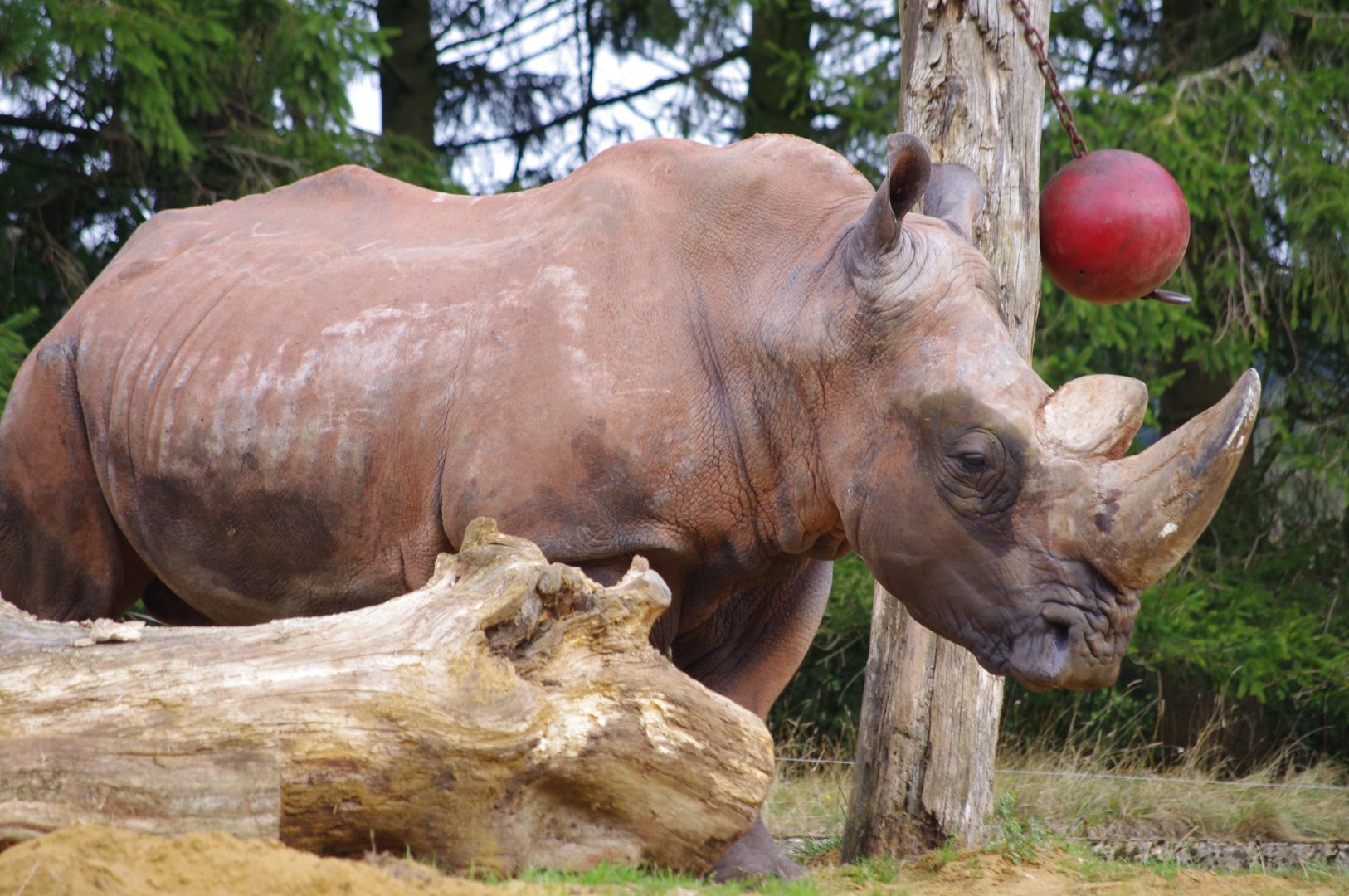
It was nice to see the impressive White Rhino bull Mazungu in his temporary home, it is very interesting how much soil colour can have an impact on the shade of large mammals like elephants and rhinos.
I also made out a young Yak that wasn't much taller than some of the other members of the herd sitting down when it was standing up in the paddock opposite, and a young camel was visible with its family on the path to Monkey Forest.
Speaking of the new exhibit, I found it also to be of very good quality and appreciated the animal enclosures as well as many other aspects of the area, just as was the case with the aquarium. I got good views of both Anoas in the wooded paddocks with the Sulawesi Crested Macaques visible further away behind, though the open enclosure nearest to the house seemed uninhabited by either on my visit. Also the substrate seems to have been removed from the macaque on show indoors, is this new or has it been the case for a while?
While the Babirusa weren't visible in the second mixed species exhibit, it was good to see the langurs jumping around their climbing structures and putting on a show as a nice group.
It was nice to see many young Flamingos in the flock, as well as the new trio of lions for the first time, and both adorable Giraffe calves together in their house.
I had good views of the otters and red pandas being active towards the end of the day which was great after not having paid a visit to them at Whipsnade last time.

Overall it was a good visit and while it was not the longest thankfully there was little that I missed and many highlights.
 
I visited today, glad to be back, and in much better weather (thanks to the different time of year) this time.

Firstly I had my premier experience of the aquarium, and was thoroughly impressed with what it had to offer (given before I have only experienced full on zoo aquariums at Bristol Zoo and Chester Zoo). The species and their tanks were great and it was interesting to see a large number of the displays also having terrestrial portions with reptile inhabitants to further engage visitors. I was also a fan of the lighting/colours/theming in the visitor space and the signage adorning the walls. The only was it being a bit crowded, but this was also the case to an extent in the other two aforementioned zoo aquariums.
At the elephants I got my first view of the bull, Ming Jung in his area before going on to watch the rest of the herd enjoying the pleasant weather, including 2 year old Nang Phaya getting up to her antics.
The Visayan Warty piglets were visible with their mum in the bark section of their enclosure, but 3 adults seemed to be separated from them in the main paddock, I guess for safety as the youngsters are still small?
It was nice to see the impressive White Rhino bull Mazungu in his temporary home, it is very interesting how much soil colour can have an impact on the shade of large mammals like elephants and rhinos.
I also made out a young Yak that wasn't much taller than some of the other members of the herd sitting down when it was standing up in the paddock opposite, and a young camel was visible with its family on the path to Monkey Forest.
Speaking of the new exhibit, I found it also to be of very good quality and appreciated the animal enclosures as well as many other aspects of the area, just as was the case with the aquarium. I got good views of both Anoas in the wooded paddocks with the Sulawesi Crested Macaques visible further away behind, though the open enclosure nearest to the house seemed uninhabited by either on my visit. Also the substrate seems to have been removed from the macaque on show indoors, is this new or has it been the case for a while?
While the Babirusa weren't visible in the second mixed species exhibit, it was good to see the langurs jumping around their climbing structures and putting on a show as a nice group.
It was nice to see many young Flamingos in the flock, as well as the new trio of lions for the first time, and both adorable Giraffe calves together in their house.
I had good views of the otters and red pandas being active towards the end of the day which was great after not having paid a visit to them at Whipsnade last time.

Overall it was a good visit and while it was not the longest thankfully there was little that I missed and many highlights.

That’s interesting about the Anoa, I didn’t see them last time I visited but I didn’t make it down to the wooded paddock.

I suspect the young warty pigs are probably being introduced slowly and for varied lengths of time to the rest of the group.

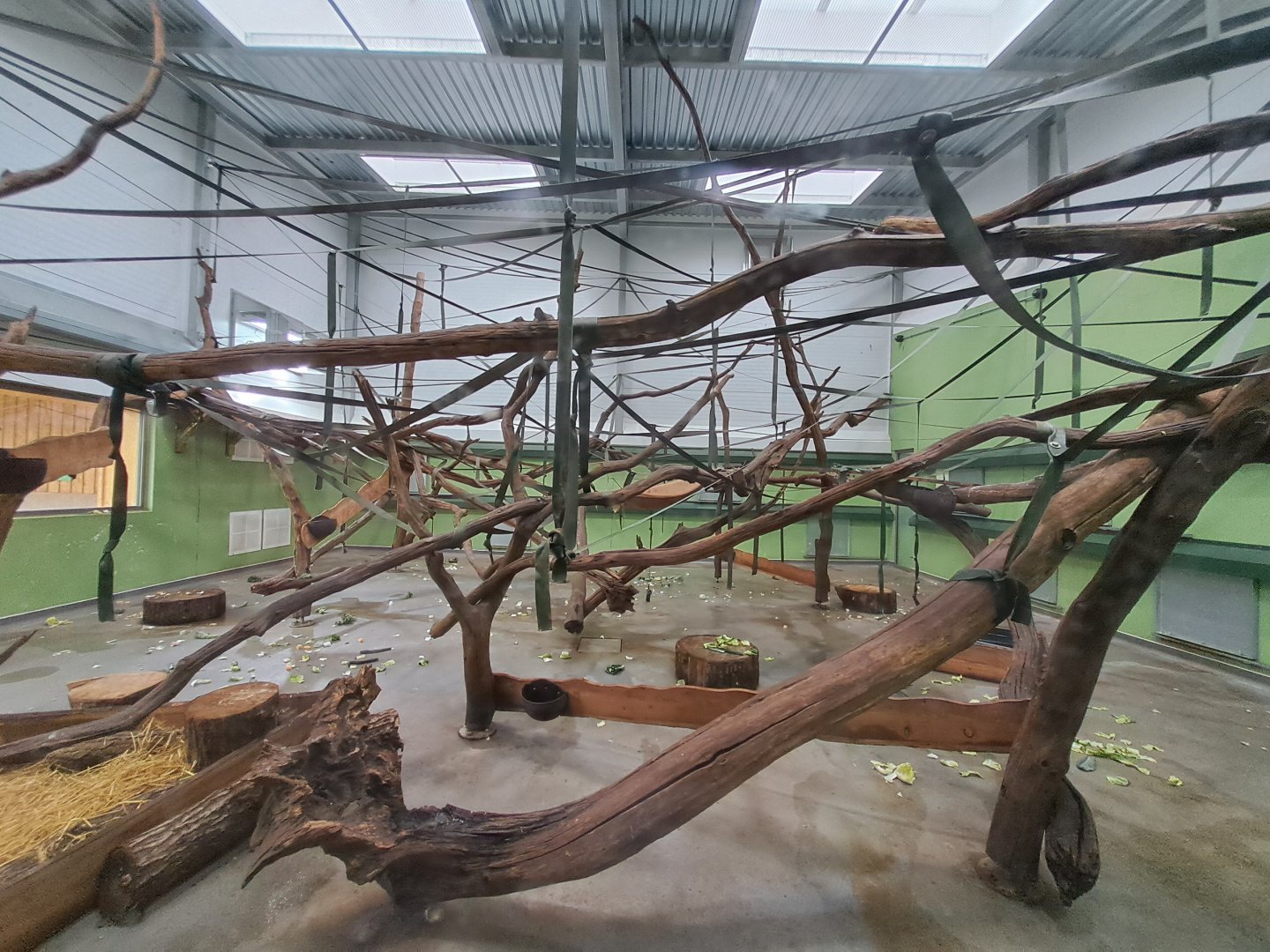
I think the substrate in the macaque house has been reduced I think, think to separate boxes on the ground
 
That’s interesting about the Anoa, I didn’t see them last time I visited but I didn’t make it down to the wooded paddock.

I suspect the young warty pigs are probably being introduced slowly and for varied lengths of time to the rest of the group.

I think the substrate in the macaque house has been reduced I think, think to separate boxes on the ground
On the Anoa the one in the paddock closer to the langur and babirusa was a male and darker in colouration compared to the other.
That would make sense regarding the Warty pigs.

Here is a photo of the macaque house:
 
On the Anoa the one in the paddock closer to the langur and babirusa was a male and darker in colouration compared to the other.
That would make sense regarding the Warty pigs.

Here is a photo of the macaque house:

Last few times I’ve been both Anoa have been mixed in the paddock with indoor viewing. Maybe just moving them around to get used to both enclosures together
 
That’s interesting about the Anoa, I didn’t see them last time I visited but I didn’t make it down to the wooded paddock.

I suspect the young warty pigs are probably being introduced slowly and for varied lengths of time to the rest of the group.

I think the substrate in the macaque house has been reduced I think, think to separate boxes on the ground

Re: the warty pigs - when I went in August, they were all in together in the barked area, but were separated yesterday so I think they're mixing it up.
 
One more question I had after my visit yesterday, what has happened to the Grevy's Zebra herd in recent years? I recall on my visit in 2019 there was a reasonably sized herd (4-7?), which would make sense given the large space dedicated to them, as well as name boards detailing each individual. Now, from what I understand, there is a breeding male who is separated, and I saw him in his paddock next to the European Bison, as well as one breeding female and her son, who are the only animals in the main zebra enclosure. If the numbers have reduced over the last half-decade I hope they can increase again as it would be nice to see a larger herd especially with the paddock they have available.
 
One more question I had after my visit yesterday, what has happened to the Grevy's Zebra herd in recent years? I recall on my visit in 2019 there was a reasonably sized herd (4-7?), which would make sense given the large space dedicated to them, as well as name boards detailing each individual. Now, from what I understand, there is a breeding male who is separated, and I saw him in his paddock next to the European Bison, as well as one breeding female and her son, who are the only animals in the main zebra enclosure. If the numbers have reduced over the last half-decade I hope they can increase again as it would be nice to see a larger herd especially with the paddock they have available.

You may have noticed work going on at the zebra paddock, I think the idea will be so they can manage the zebras better and have the male at the zebra house
 
One more question I had after my visit yesterday, what has happened to the Grevy's Zebra herd in recent years? I recall on my visit in 2019 there was a reasonably sized herd (4-7?), which would make sense given the large space dedicated to them, as well as name boards detailing each individual. Now, from what I understand, there is a breeding male who is separated, and I saw him in his paddock next to the European Bison, as well as one breeding female and her son, who are the only animals in the main zebra enclosure. If the numbers have reduced over the last half-decade I hope they can increase again as it would be nice to see a larger herd especially with the paddock they have available.
I also have noticed this decline. A few years ago there was a decent sized herd, I think I counted nine. By 2020 it was just 3 + the seperate stallion. Now just three in total. What happened?
 
I also have noticed this decline. A few years ago there was a decent sized herd, I think I counted nine. By 2020 it was just 3 + the seperate stallion. Now just three in total. What happened?
I believe it's literally just down to a lack of facilities to support breeding, as well as a lack of success in that area - the renovations to the paddock and housing should hopefully solve this.

Has anyone got a photo of the new rhino?
 
I believe it's literally just down to a lack of facilities to support breeding, as well as a lack of success in that area - the renovations to the paddock and housing should hopefully solve this.

Has anyone got a photo of the new rhino?
I have just added some of my photos of him to the gallery:
 
I believe it's literally just down to a lack of facilities to support breeding, as well as a lack of success in that area - the renovations to the paddock and housing should hopefully solve this.

Has anyone got a photo of the new rhino?

I still don't understand how they built the herd up to the size it was then later it declined again, unless the original larger group were brought in, not homegrown.
 
On the Anoa the one in the paddock closer to the langur and babirusa was a male and darker in colouration compared to the other.
That would make sense regarding the Warty pigs.

Here is a photo of the macaque house:
When I saw this new enclosure in the summer I was amazed by the size of the outdoor area, its a whole wood... I think the colony needs to grow to around forty or even fifty in group size for the macaques to be more easily visible and make up a real display. Ten (or is it 14 yet?) look rather lost in here though its a great enclosure for them. I hope the zoo allow them to expand and don't control the numbers. I also thought the paths around the wood were a long trek for visitors and without any guarantee of seeing anything if the monkeys are hidden in the trees or suddenly choose to go indoors. A great enclosure but not the most visitor friendly.
 
When I saw this new enclosure in the summer I was amazed by the size of the outdoor area, its a whole wood... I think the colony needs to grow to around forty or even fifty in group size for the macaques to be more easily visible and make up a real display. Ten (or is it 14 yet?) look rather lost in here though its a great enclosure for them. I hope the zoo allow them to expand and don't control the numbers. I also thought the paths around the wood were a long trek for visitors and without any guarantee of seeing anything if the monkeys are hidden in the trees or suddenly choose to go indoors. A great enclosure but not the most visitor friendly.
I had similar thoughts and remember thinking how astonishing it would be if the troop was at least triple the size. As it stands, a good enclosure, but I felt underwhelmed. I almost felt that if I were visiting Whipsnade without any context (as in, I wasn’t a regular and didn’t realise it was new) then it would be one of the more forgettable areas of the zoo, the type of thing where I would applaud certain elements but not think much of it in hindsight.

Asides from troop expansion, the other solution would be to add some more enclosures to the visitor path which as you say, feels quite long for little reward. The Banteng would solve this if Monkey Forest is indeed where they go onshow, but some nice Southeast Asian aviaries would do the job very well, too. Perhaps even a walkthrough aviary, something that Whipsnade completely lacks at the moment.
 
That’s why we now cheat and go in to monkey temple the back way by the house with the langurs and Babirusa reside as we feel it’s too long a walk with barely an animal visible! And most of the time they langurs are inside so you can see the adults and the orange babies!
Apparently all that extra land is for wildlife to grow and wildflowers to grow and thrive so they don’t want to add anymore inclosure they like it as it is!
 
I had similar thoughts and remember thinking how astonishing it would be if the troop was at least triple the size. As it stands, a good enclosure, but I felt underwhelmed. I almost felt that if I were visiting Whipsnade without any context (as in, I wasn’t a regular and didn’t realise it was new) then it would be one of the more forgettable areas of the zoo, the type of thing where I would applaud certain elements but not think much of it in hindsight.

Asides from troop expansion, the other solution would be to add some more enclosures to the visitor path which as you say, feels quite long for little reward. The Banteng would solve this if Monkey Forest is indeed where they go onshow, but some nice Southeast Asian aviaries would do the job very well, too. Perhaps even a walkthrough aviary, something that Whipsnade completely lacks at the moment.

It was a warm day when I went and with now reduced mobility I gave that long path a miss. I saw some people over on the raised watchpoint but doubt they saw anything much as the macaques were on the house side. So you can use up a lot of time with nothing to see. The langur enclosure is far better in that respect.
 
The macaques are definitely getting more used to using the whole space. When I was last there they were down by the viewing areas for quite a while. I do agree it can be a long walk, especially for people with mobility issues. I have wondered about maybe having some cameras set go by the house so you know if to walk down or not. It’s definitely one of my favourite exhibits to visit at the zoo though.
 
The macaques are definitely getting more used to using the whole space. When I was last there they were down by the viewing areas for quite a while. I do agree it can be a long walk, especially for people with mobility issues. I have wondered about maybe having some cameras set go by the house so you know if to walk down or not. It’s definitely one of my favourite exhibits to visit at the zoo though.

Yes same experience, of course their use of it might reduce in the colder weather, but Whipsnade is a lot large spaces and I think it works well. In time the troop should be larger. The langurs have been regularly outside in all the good weather too.

They could do some more with access for everyone to enjoy it but now they have the new electric bus that should help a bit with accessing the areas rather than having to get there and walk all the way around it too.

A couple of exhibits along the way would help with seeing things, but I am the odd one out in this as I enjoy the walk anyway and think the enclosure and the views of Passage Through Asia are worth it and well done. I also support zoos doubling down on native plants and wildlife, vs sticking buildings everywhere, our native wildlife needs more support, not less.
 
Caught the wolverine talk yesterday and found out that a change has taken place recently with Bodie, the male wolverine, being exchanged for a new male wolverine, 6 year old Nova. Fi and Bodie weren't getting on so Nova has been brought in with the hope they will now have some kits. Early indications are good as Fi and Nova seem to interacting well.
 
Back
Top