Zootrip report 2024; southern German and Austria

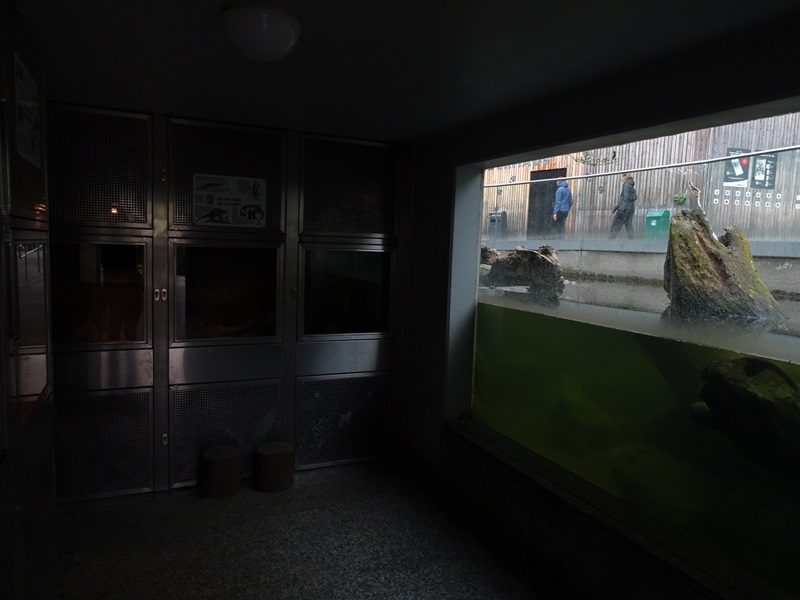
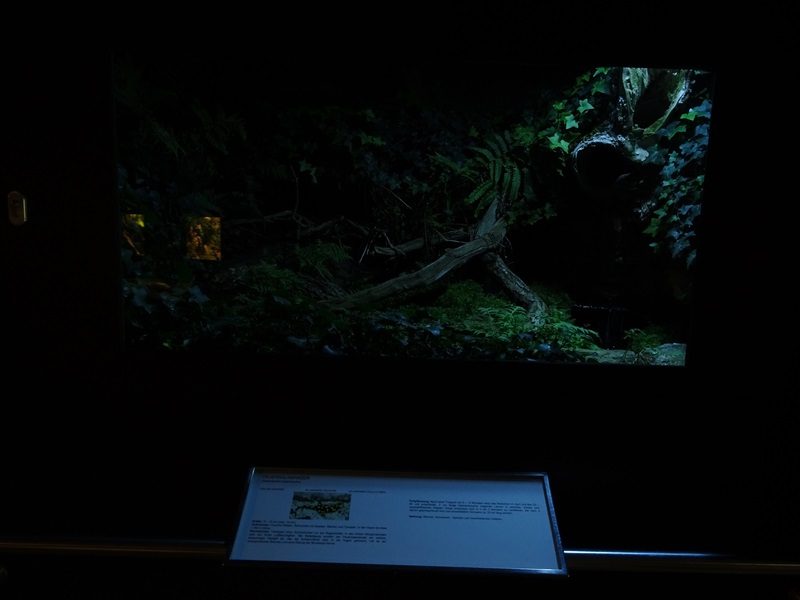
Similary to the aquarium in München, a white-blotched stingray is kept in a tank that doesn’t offer it a lot of space.
In both cases, it's a zoological "Altlast" (inherited problem); both institutions have been trying to transfer their white-blotched river stingrays to other zoos or public aquaria. However, so far, to no avail; there seems to be little interest in this species among most suitable institutions. I wish I had the capacity to keep them at WdG...

The biggest inhabitant here is a single black-tipped reef shark for which the space is probably insufficient.
Not according to local legislation (2. Tierhaltungsverordnung Anhang 5, 2.2). It's also another "Altlast" looking for a new home.
 
DAY 5. 18-04-2024.

ZOO AUGSBURG

PART 1

Zoo Augsburg was not necessarily a zoo that was high on my wishlist, but since it is a very convienient day trip from München, where I was staying a few days, it would have been a missed opportunity not to include this zoo in my itenerary.

The day didn’t start out great; there were problems with the usually very reliable U-Bahn, which ment having to wait 20 minutes for the next metro and missing my connecting train to Augsburg. And of course, the next train to Augsburg had a big delay because the Deutsche Bahn is terrible.
It was almost 11 am when I arrived at the zoo, which was more than an hour later than planned.
But during the rest of the day, luck was once more on my side as the heavy rains that were predicted didn’t come until 5 pm, just when I left the zoo.

Zoo Augsburg is not as famous or popular as some other German zoos, but that doesn’t mean it’s not worth a visit. I deliberately didn’t look up too much about this zoo, although I did study the map beforehand and did look up the species list at Zootierliste. There was one species in particular I really wanted to see; the pink-headed fruit dove. I’d never seen species before due to fascinating streak of near-misses; In the last few years, different European zoos (Stuttgart, Walsrode and Plzen) added this species to collection áfter I visited them.

Zoo Augsburg only has a single entrance, so I made my way to the modest main entrance.
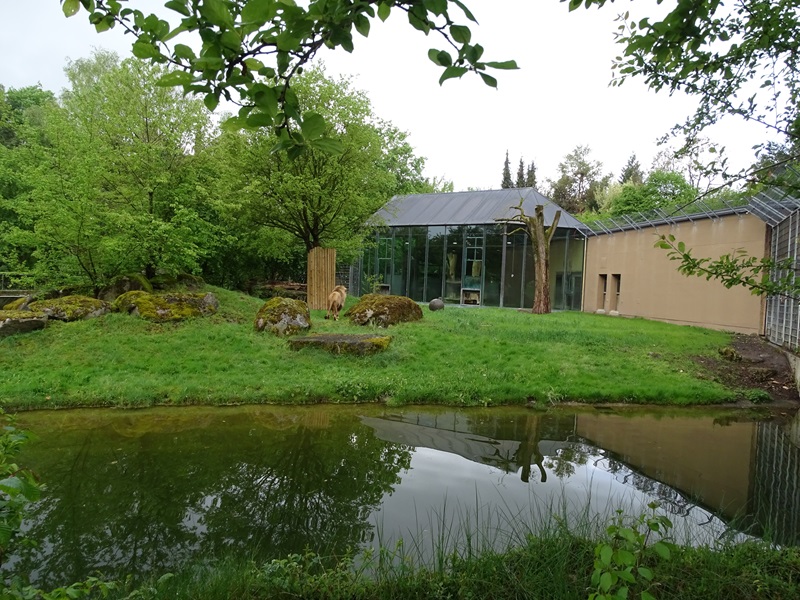
Immediately after going through, you’ll find the enclosure for lions, which is an open enclosure surrounded by a moat. This was my 5th lion enclosure of the trip, and this must have been the smallest of them all so far. It’s green with some low trees and mossy rocks, but not just lacks in space but in climbing and enrichment as well. Not the worst lion enclosure, but defenitely not great. The zoo might also be aware this enclosure isn’t suited to house a pride of lions, and that might be why it is now home to two males, which were both new arrivals to the zoo.


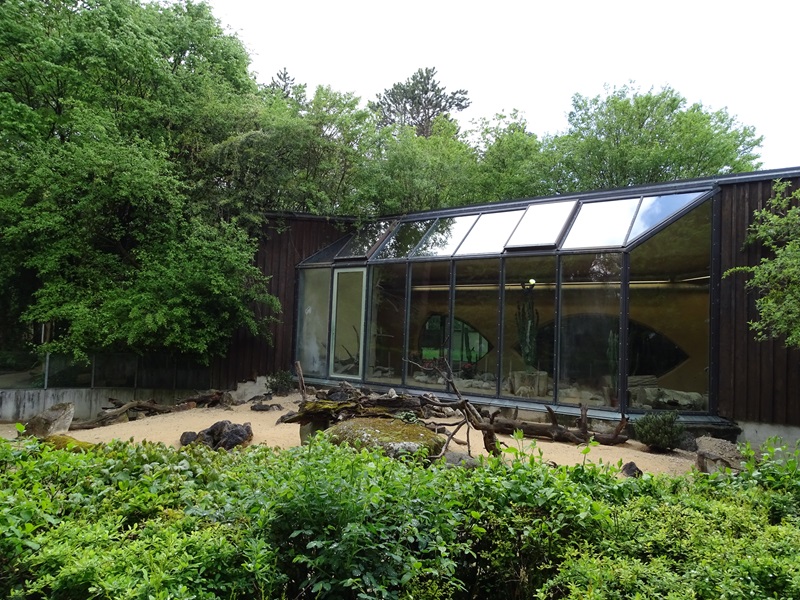
The lion enclosure is part of the Lion House, the first of this zoos’ animal houses. You can walk around this building and its outdoor enclosures, and I decided to do so clockwise. The next enclosure I came across is the outdoor enclosure for fennec foxes. For such a small creature, it’s a spacious enclosure, with lots of sand as well as some rocks and logs.


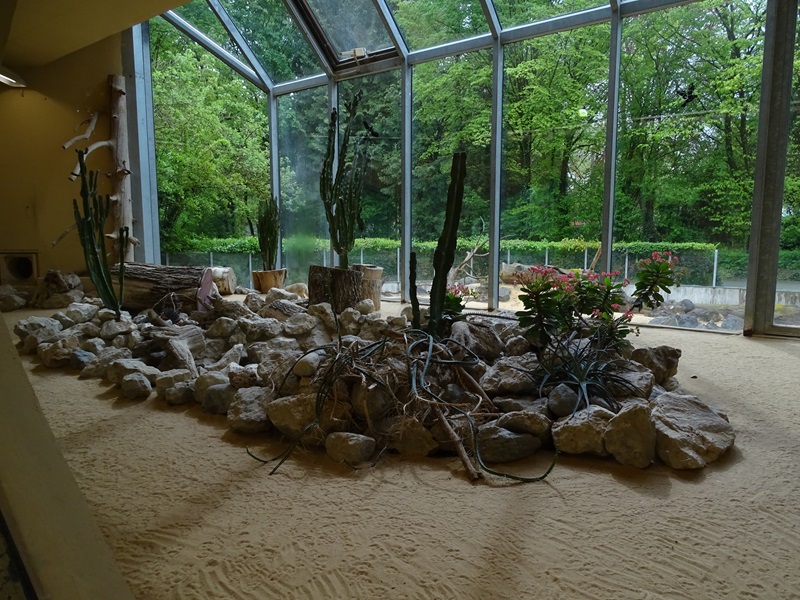
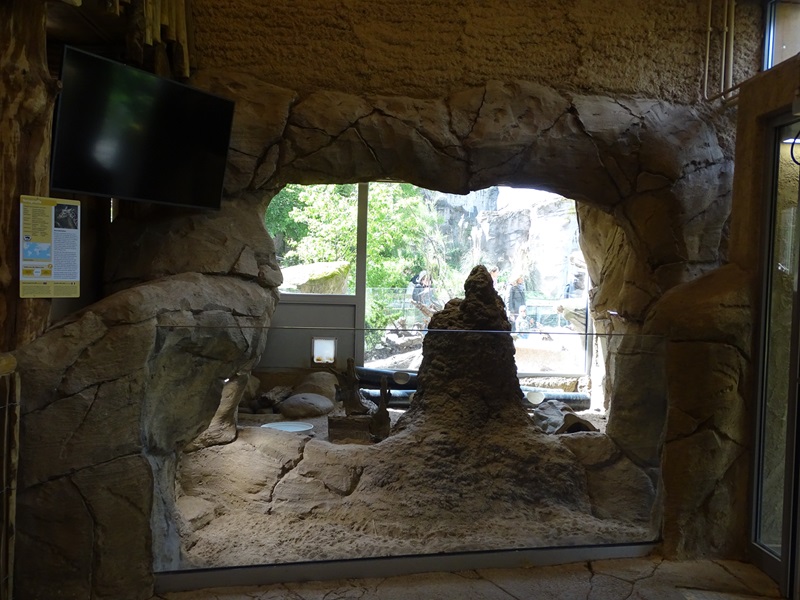
The indoor enclosure for the fennec foxes can be also be seen from outside, through large windows behind the outdoor enclosure, and since I could see a fennec walking here, I entered the Lion House to get a better look. The indoor enclosure for the fennec fox is spacious as well, withs piles of rocks and a few cacti to make sure people know this is a desert species! I only saw a single fennec throughout the day, but it did have access to an off-show part of the enclosure so it’s possible there are more than 1.


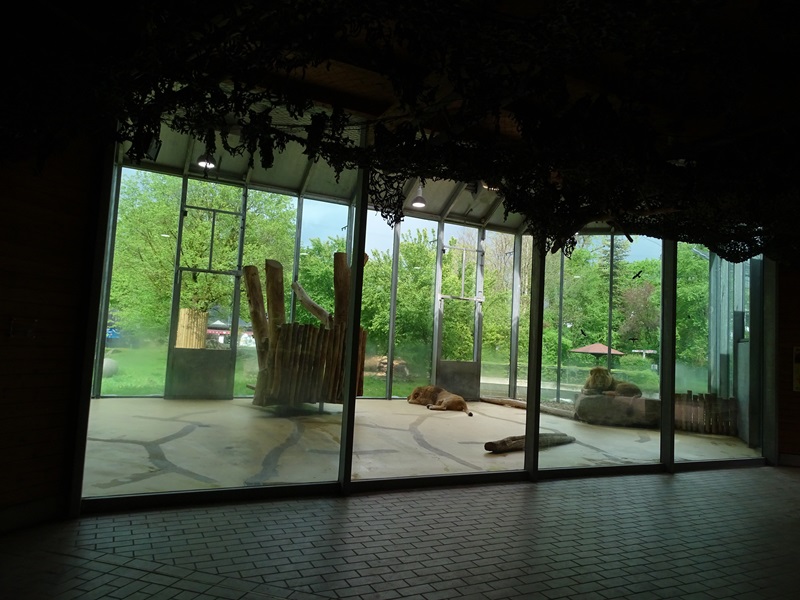
Also inside this building is the lion indoor enclosure; however restrictive tape prevented people from getting to close to it as the lions were new and still getting used to their surroundings. This indoor enclosure is surrounded by glass on almost all sides (must get hot during sunny summer days) and there’s no secondary barrier between them and the visitors, which will means lots of glass-knocking once the tape is removed. The indoor enclosure only has hard surface and doesn’t offer the lion much beside one rock to lay on and some poles for scratching.


The third and final indoor enclosure in the Lion House is for a species that I will never get bored of seeing: the striped hyena. Like with the foxes and the lions, the hyena indoor and outdoor enclosures are seperated by large glass windows as well, meaning you can view the outdoor enclosure from inside the building, and vice versa. I appreciate Zoo Augsburg has an opportunity to see their hyena indoors as viewable indoor enclosures for hyenas are quite rare. The indoor enclosure is a bit barren, but defenitely large enough and it has sand as a natural substrate. I saw the single hyena indoors when I entered the building, but she immediately went outside. The outdoor enclosure it quite large, bigger than the lion enclosure even. It’s very green as well, with multiple trees, some small bushes and a small pond. Not bad.


I walked around the hyena enclosure and took a look at the tiger enclosure on the other side of the paths. There were no tigers out, so I continued the loop around the Lion House. On the other side of the building was an enclosure for another catlike creature according the map. However when I came to the enclosure, it was inhabited by brown wood owls. This must have been a recent change, as the enclosure looked like it was designed for a small mammalian carnivore. (I checked out old maps, and the feline kept here was the manul)


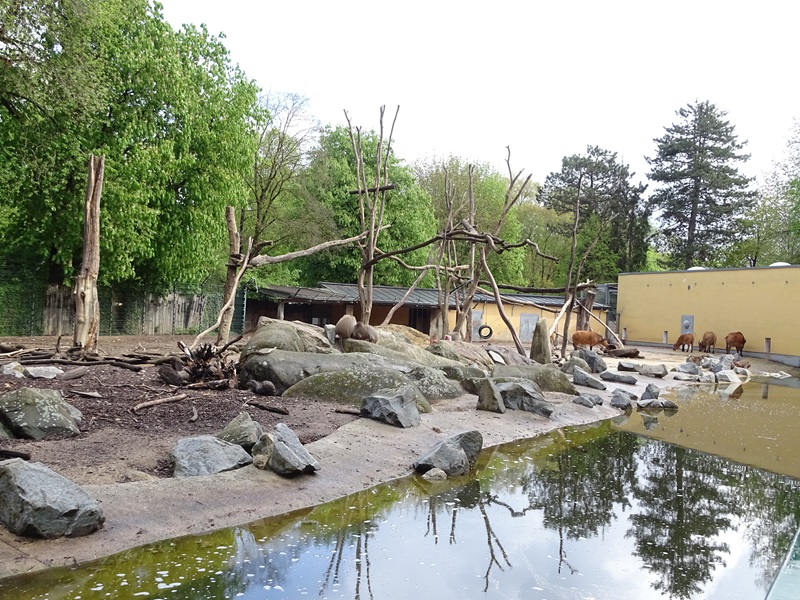
Across from the hyena and owls is a simple hoofstock paddock like I’ve seen dozens times before. In it inhabited by onagers. Another hoofstock enclosure is designed in a different way, with lots more rockwork and logs, because it is not just home to red forest buffalos, but hamadryas baboons as well. The stables for buffalos are in the back of the enclosure, but the baboon enclosure is on the right side and is viewable by the public. It’s actually located right next to the entrance to the zoo, as I had now walked the entire loop around the lion house.


I made my way back to the tiger enclosure, where there were still no tigers out (but they would finally be out at the end of the day). The tiger enclosure is similar to the lion enclosure in a lot of ways, but has a lot more greenery.


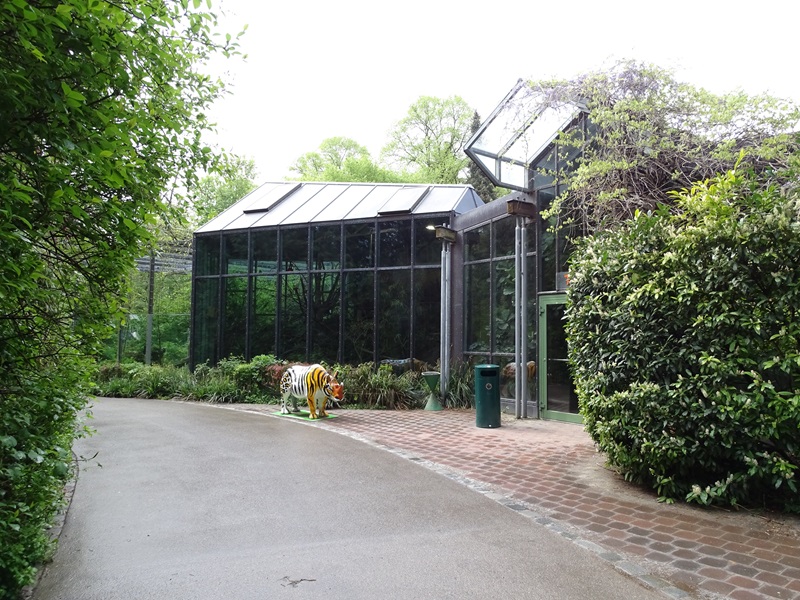
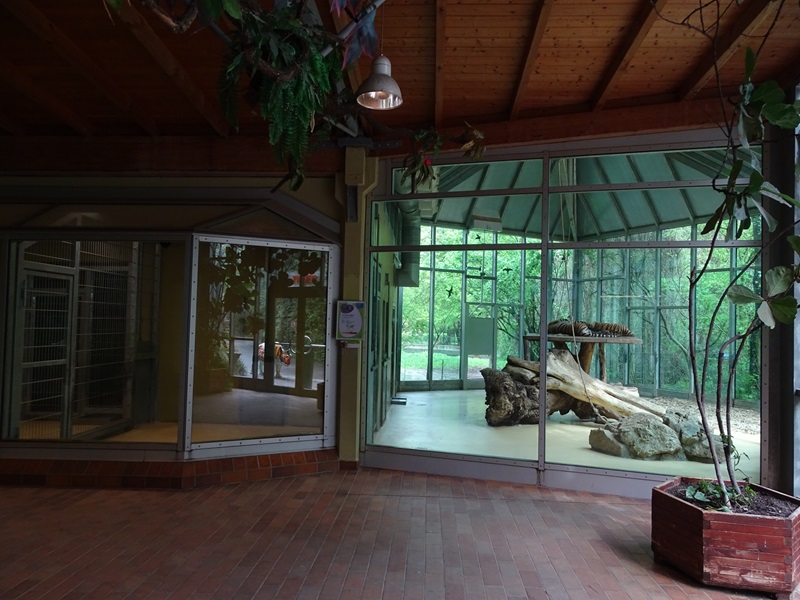
Just like the lion enclosure was part of the Lion House, here the tiger enclosure is part of the Tiger and Nocturnal House, which I was going to visit next. It is not a pretty building; the outside is mostly made up of glass windows, while the visitor area is quite barren with its brick floor. There is also no theme, concept or cohesity to be expected from the building; the enclosures and species it are complety random. First there is obviously the indoor enclosure for tigers, which is small and has a concrete floor with only a small bit of natural substate. There is a rock, a log and a platform for sleeping on, but absolutely zero privacy and no enrichment. And again, here and in the rest of the building there’s nothing stopping people for knocking on windows.


Another big cat has its indoor enclosure in this building; the Sri Lanka leopard. This one has a bit more privacy and offers a some climbing, so it is somewhat better.


The third enclosure is an all-indoor enclosure that still gets lots of sunlight due to the glass walls. Four species call this enclosure home, and since they are all small species, this enclosure is defenitely more than adequate. It has decent ground space with natural substrate for the Azaris agouti roam around, the green-cheeked conures can spread their wings due the height of the enclosure, and the Goeldis marmosets and pygmy marmosets can use almost the entire space due to all the many opportunities for climbing. The latter 3 species can also access a smaller enclosure, and I saw the pygmy marmosets do so; due to its size this enclosure gives much better viewing when the animals are in there. There are lots of plants in pots in the enclosure, which gives it somewhat of an amateuristic feel, but from an animal perspective, this enclosure is pretty good!


The building is called ‘Tiger and Noctural House’ for a reason; in the back of the building is another room that is accessible by going through some curtains that keep most of the light out. Once inside, you’ll find yourself in a dark room where three nocturnal enclosures can be found. On the left, the largest enclosure is home to a breeding pair of grey-handed night monkeys (currently with a young). The middle enclosure is home to sugar gliders. One the right, you can find Senegal bushbabies in an enclosure that seemed a bit small to me. I saw a group of squirrel gliders, but the bushbaby seemed to be alone. The owl monkeys were initially a no-show, but came out at the end of the day. (No photo's of this part because obvious reasons)

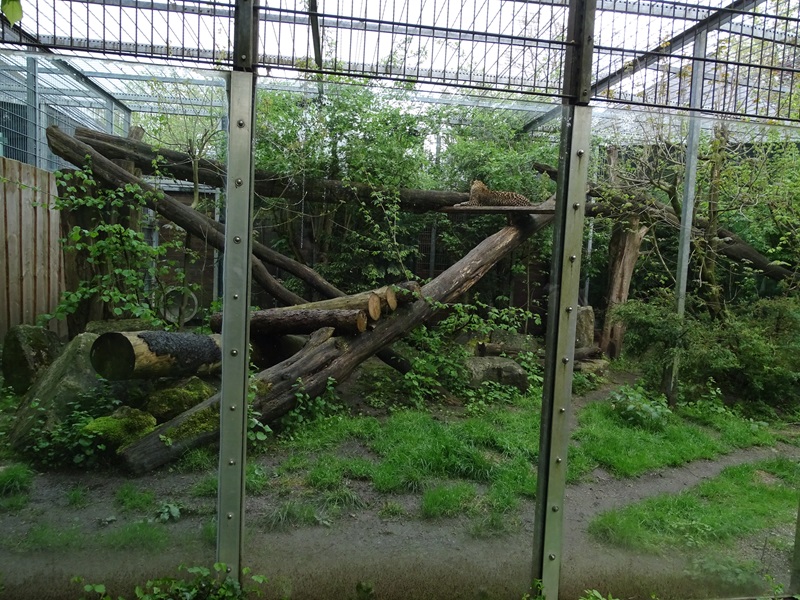
I exited the building and found myself at the outdoor enclosure for the leopard. It is a cage with the lower half consisting of glass viewing panels. The enclosure isn’t tiny, but it’s not big either. Foliage provides shade and there are some logs and a platform to climb on, but otherwise there is not much for the leopard (I think they have only one) to do. There is also a second, smaller outdoor enclosures that I don’t think was being used at the moment (at least this offers outdoor access for two leopards if/when the zoo has a couple).


I left the Tiger + Noctural House behind me and immediately came across a very simple enclosure blackbucks. These animals are kept behind a chainlink fence that they surely could jump over if they tried. Other than a wooden barn, their paddock is just a piece of grassland.


From here, I decided to walk the small loop that has a playground in the middle (which was actually really nicely done) and the Childrens Zoos enclosures around it. Pygmy goats, Dahomey dwarf cattle, miniature donkeys and rabbits can be found here.


Back at the blackbucks, I continued the path to the enclosure for alpacas and rheas. This is another simple enclosure, but it’s large enough and has shade due to some trees inside. For some reason, only alpaca’s were out while the rheas were confined to a small seperation part. An simple grassy field functions as they outdoor enclosure for spurred tortoises. They weren’t out due to the low temperatures, but could be seen indoors.

 
DAY 5. 18-04-2024.

ZOO AUGSBURG

PART 2

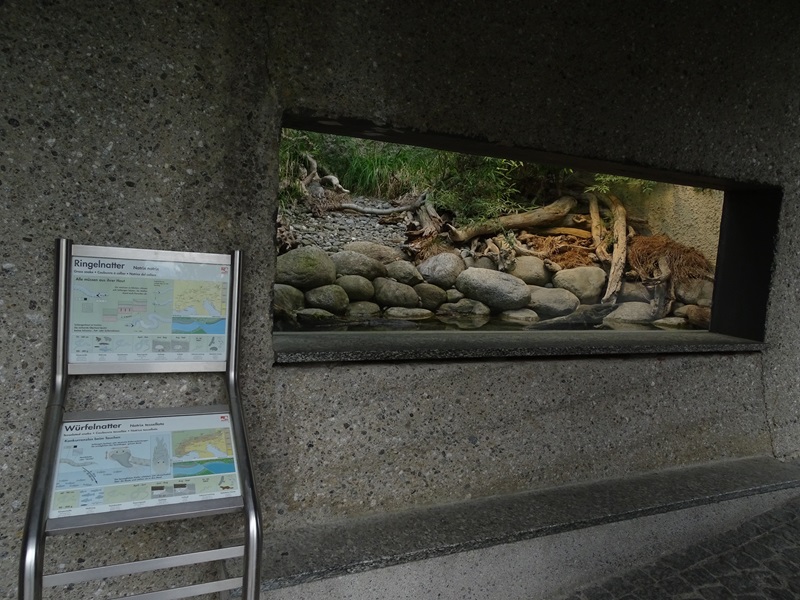
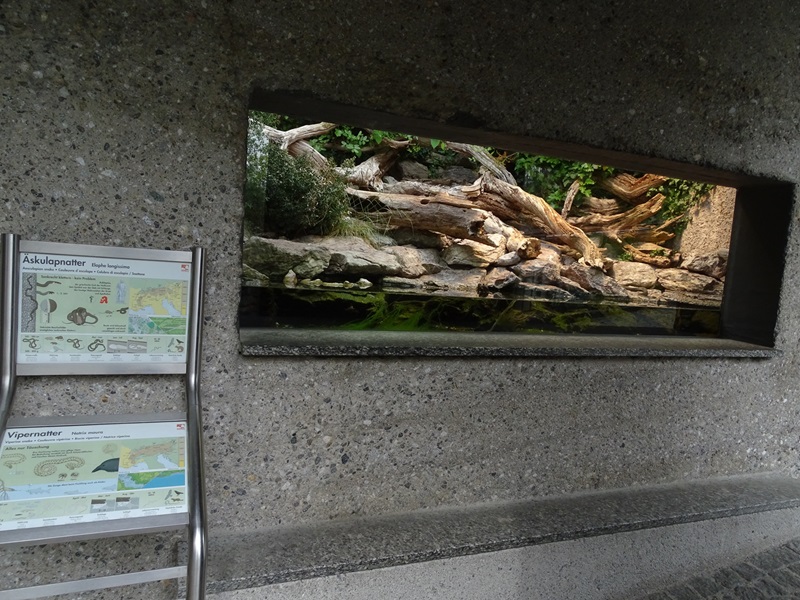
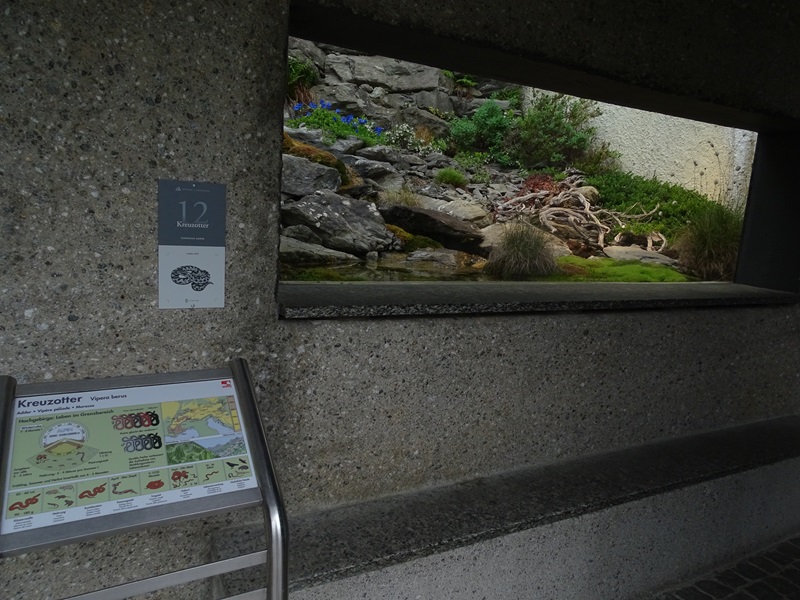
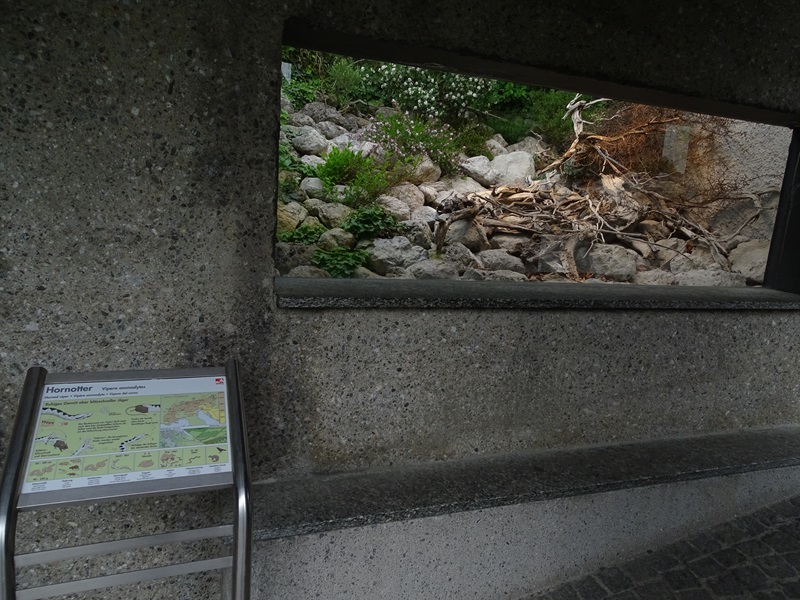
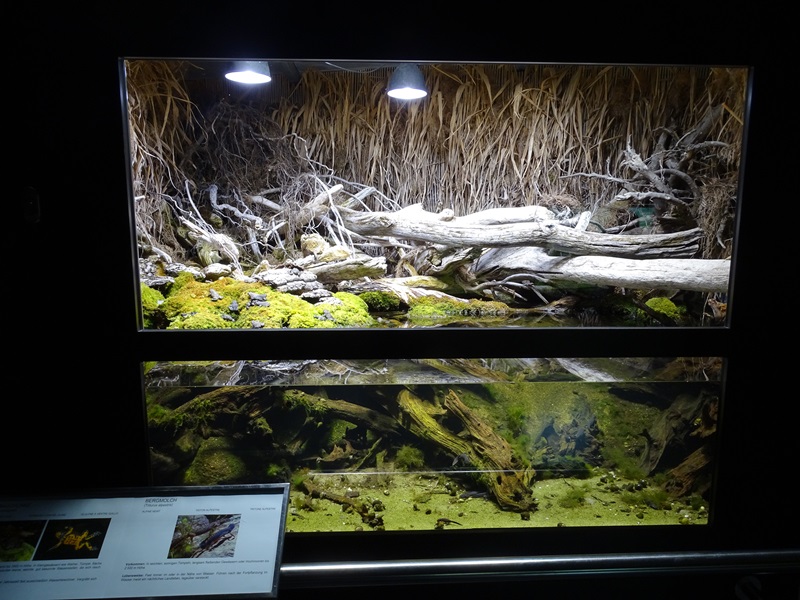
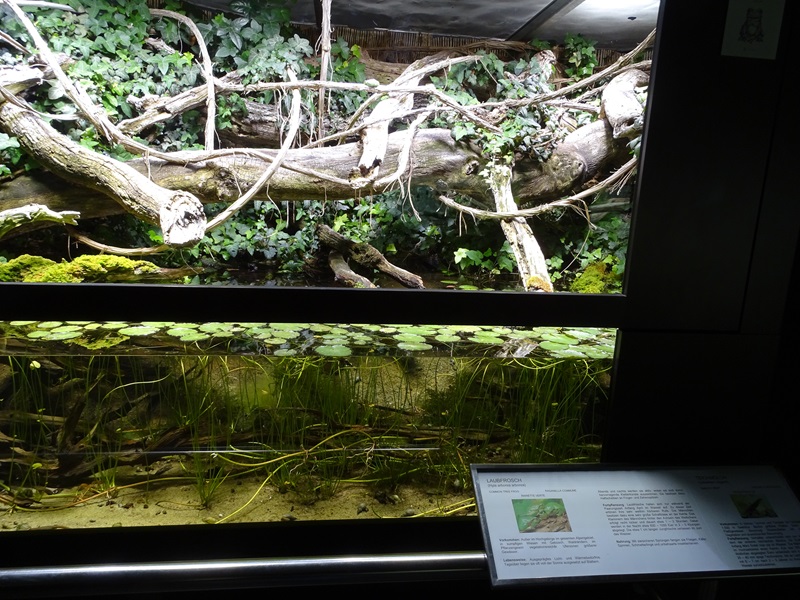
After the spurred tortoises I decided to visit the other herps, some of which are in outdoor enclosure while the others are kept in the reptile house. Two outdoor terraria have amphibians in them; yellow-bellied toads and European tree frogs. I couldn’t find either one and I suspect both species were not on display at the moment, although they were still signed. Across from the frogs is a nicely done pond for European pond turtles. The final two outdoor terraria are for snakes, one for common viper and one for dice snake. I really liked these enclosures, undoubtly helped by the fact I saw both species; the dice snake was basking under a lamp, but the vipers were actively slithering around their enclosure. Cool!


The reptile house is a relatively new building. The current house opened in 2012, although a reptile house was located here before that. The building uses a combination of wood and glass both inside and on the outside that really works for me. Inside, there is a nice variety of different sized and shaped terraria, with he largest terrarium housing a rough-necked monitor and the smallest housing Williams electric blue gecko. I felt like each one of these terraria were well suited for the species within, and all of there were large enough. One point of criticism I have is that almost all terraria hold only a single species, while some could easily be used for multiple. For example, there’s a large terrarium for a (single male) Weber’s sailfin lizard and nothing else. An Asian turtle species would a nice addition to this enclosure, or they could move the Chinese water dragon to this enclosure, which is currently kept in the elephant house (which would also make that terrarium available for a new species). But overall, I think this is a great reptile house. (Species in this building not mentioned before: Australian tree frog, yellow-banded poison frog, green basilisk, Fiji banded iguana, bearded dragon, black hardun+bicolor skink, veiled chameleon, greater Madagascar day gecko, Klemmer’s day gecko, green keel-bellied lizard, tropical girdled lizard, green tree python, Madagascar tree boa)


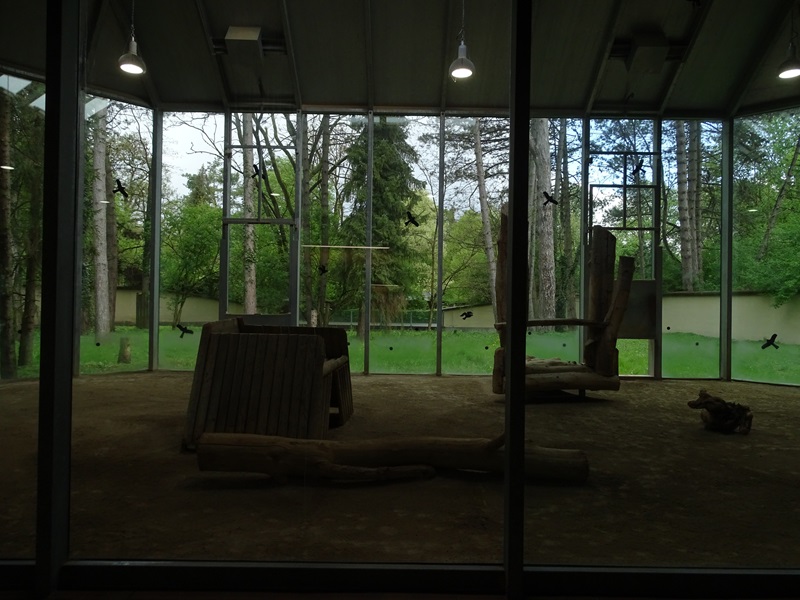
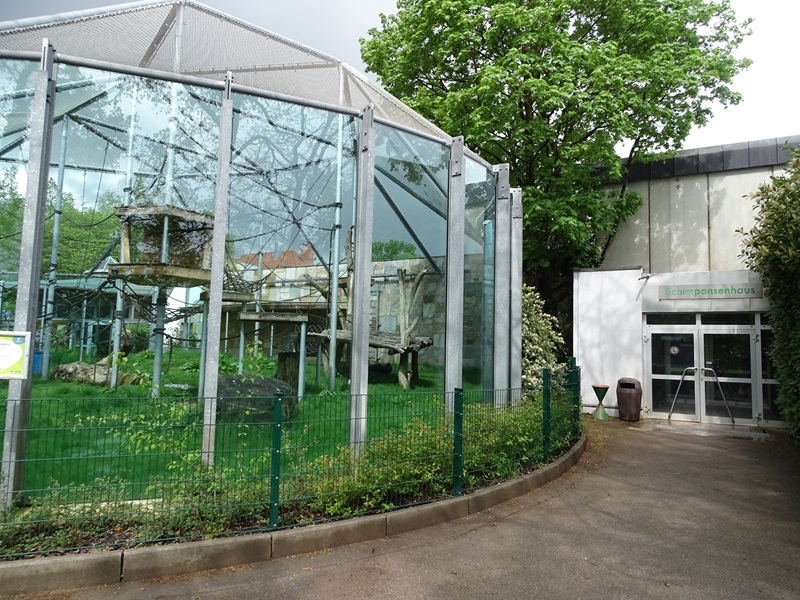
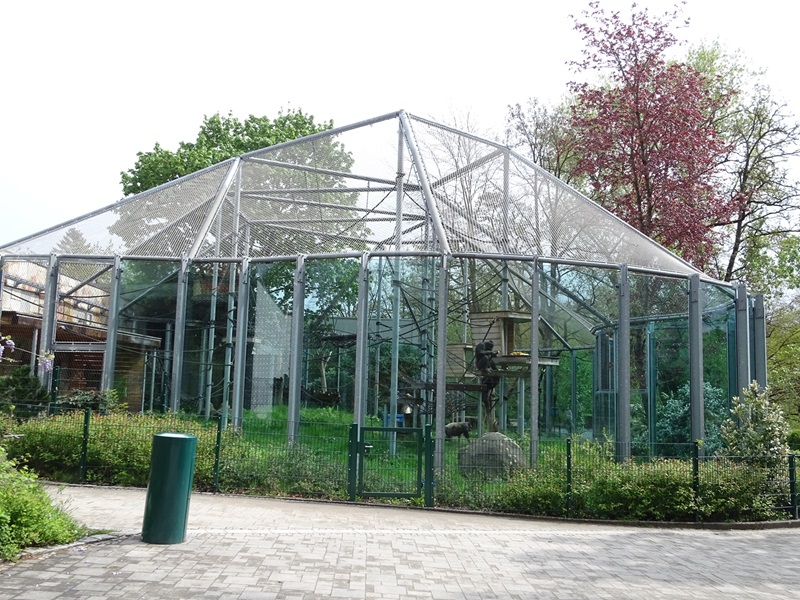
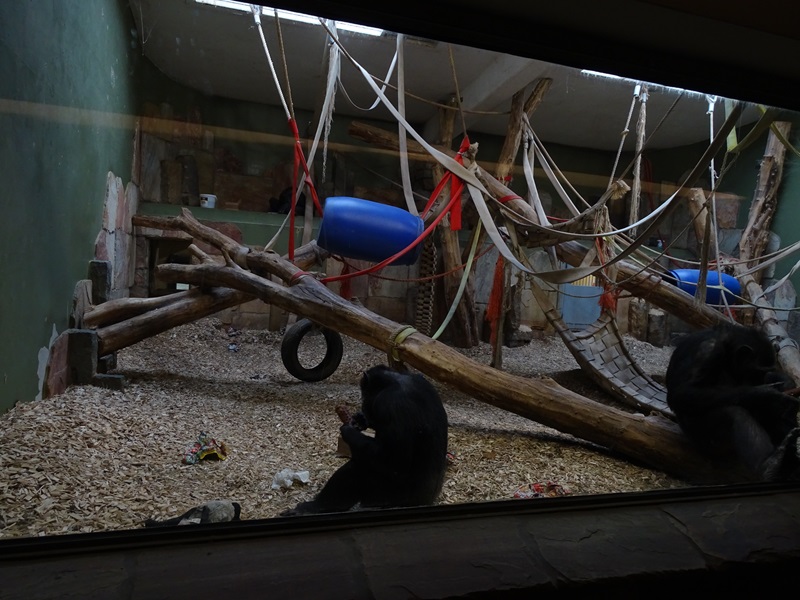
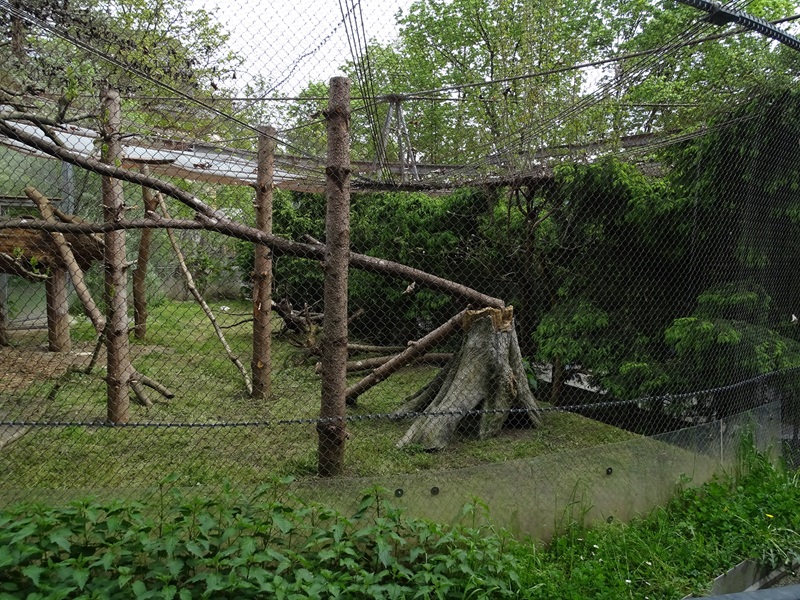
Immediately next to the Reptile House is the outdoor enclosure for chimpanzees, which is part of the Chimpanzee House. Not too many years ago, this enclosure was open-topped, surrounded by large glass windows. Those windows are still here, but since then the zoo added a tent-shaped meshed top. This means the zoo was able to add more climbing frames and ropes in the enclosure, improving immensely. The enclosure is still not fantastic though, as the space for the chimps is still limited, but for 3 chimps it is acceptable.


After entering the Chimpanzee House, you’ll find two small mammal enclosures in the hallway. One of them has a bunch of (sleeping) spinifex hopping mouses, in the other I saw a single round-eared elephant shrew. The main room of the chimpanzee house looks into the indoor enclosure for these apes, and I was kind of shocked by the size of it. Both the ground space and height are severely lacking here! On a postivite note the zoo tried to make it better by adding natural substrate and lots of enrichment. Still, it is kinda weird to see a hammock hanging to low above the floor it actually touches it. Finally, in the back of the building is an nocturnal enclosure for Bengal slow loris. Apparently they have just one, although I didn’t see it during neither of my visits to this building.


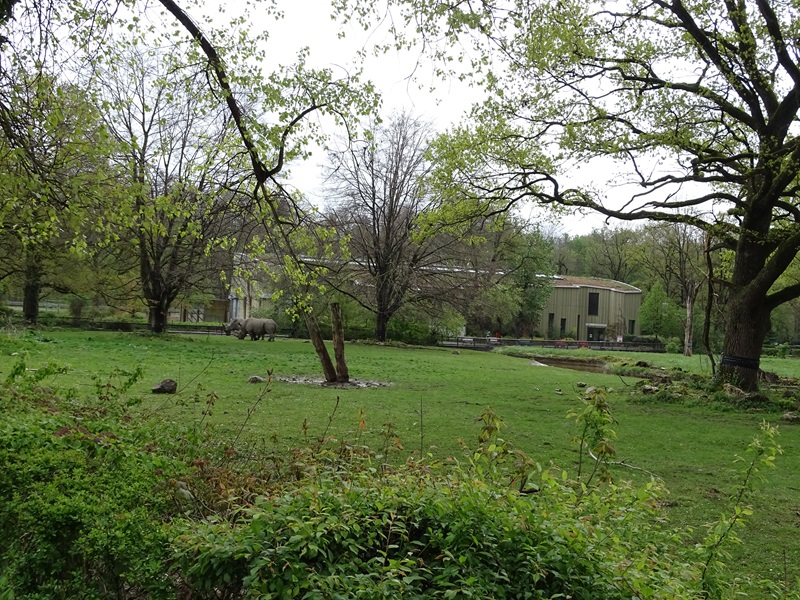
Across from the reptiles and the chimps is the savannah. Or actually three savannahs, as these are actually three paddocks seperated by moats. From the chimpanzee house, there is the optical illusion that these are one. The largest of these three enclosures, and the one immediately in front of you from this spot, has white rhino’s and ostriches. I did see two rhino’s on the savannah, but the ostriches were currently kept in seperation. The middle savannah - the second-largest one - is home to giraffes. The giraffes weren’t out. The third and smallest of the three is home to Grevy’s zebras, of which I saw two.


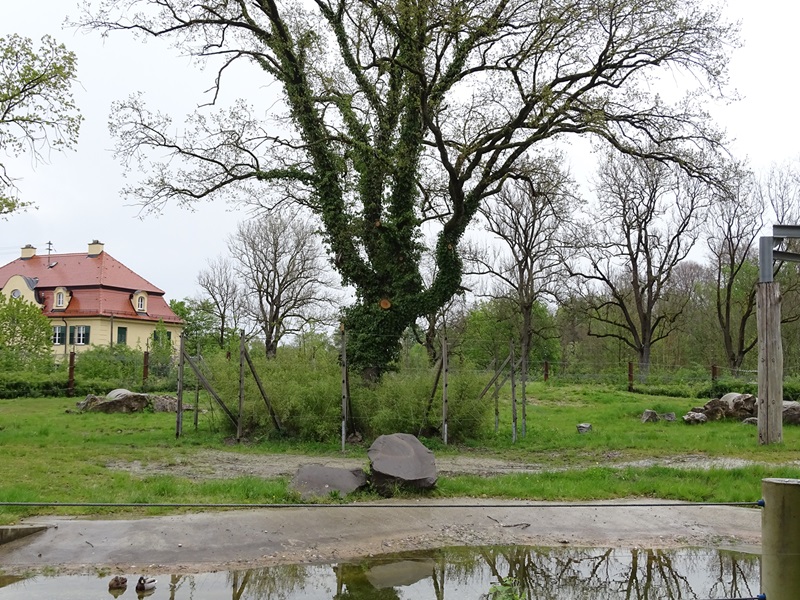
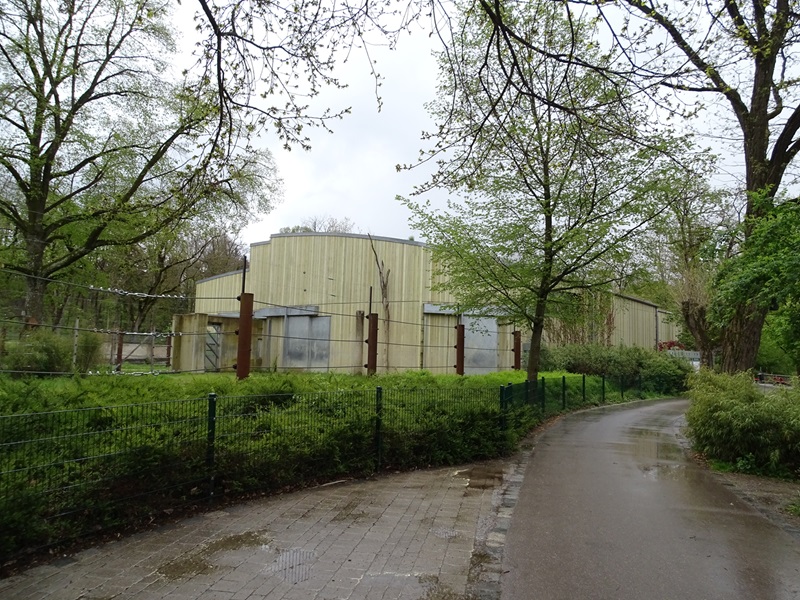
Starting from the reptile and chimpanzee house, it’s possible to walk almost an entire loop around the savannah enclosures. Immediately after the Chimpanzee House is an enclosure that currently is empty; in the past, this used to house elephants and the Chimpanzee house was at one point also the elephant house. The outlines/fences of the old elephant enclosure are still visible and it’s obvious that this space was much too small for elephants. In the near future, it will be refurbished to house water buffalo, a species already present elsewhere in the zoo. Following the former elephant enclosure is the current elephant enclosure (formerly bisons). Visually, it is quite similar to the old one, but it is about triple the size. It’s not a pretty enclosure, and absolutely nothing about it stands out.


There were no elephants to be seen outside, so I figured I would see them inside the Elephant House. The elephant house is the zoos’ most recent new project, as well as their most expensive one so far. The lay-out is straight-forward, with a visitor area looking out over the main indoor paddock, with the seperation boxes mostly off-show. Since this is a new building, there’s of course natural substrate, and there is a pool. Unfortunately, it turned out there hadn’t been any elephants at the zoo for a while, as the last 2 were moved to another zoo in 2023. (At the time I post this report, new elephants have arrived). The Elephant House wasn’t completely deprived of animals though; there are two smaller enclosures in the visitor area. One of these is home to spiny mouses, the other to a Chinese water dragon.


After the elephants are the enclosures for Reeves’ Muntjac and golden takins. The muntjac enclosure is again quite simple, but sufficient with plenty of cover for the animals. The takin enclosure is a long paddock with ample rocks and logs and a backdrop of trees, with a moat in front of it. I think this is one of the more visually pleasing enclosures in the zoo, despite is simplicity. In addition to the takins there’s another couple of muntjacs in here.


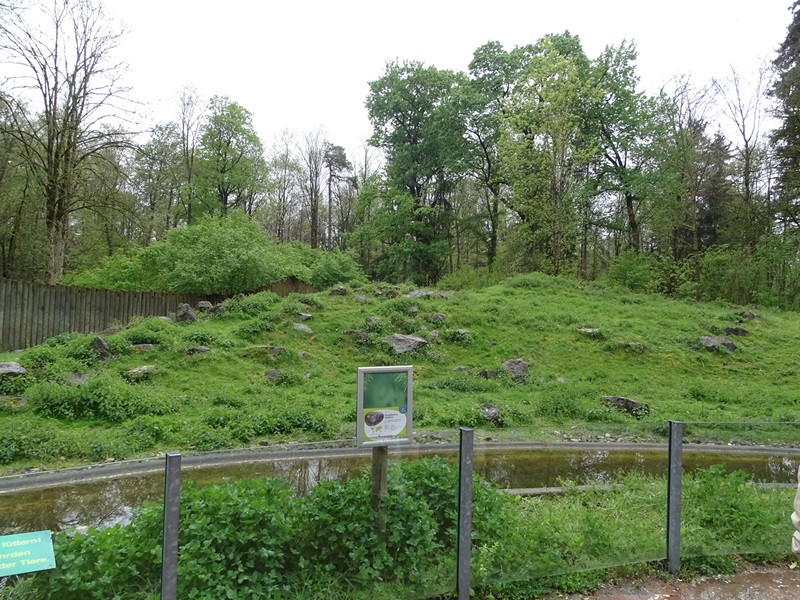
The next enclosure is one of the more natural looking ones, a hilly paddock with lots of grass and rocks and another backdrop of trees. The moat however is obviously man-made. I think this would have made for a good takin enclosure as well, but instead it is home to forest reindeer. I wasn’t surprised though to learn that it used to keep Rocky mountain goats! Unfortunately, the reindeer were badly visible as they were not in the main paddock but right in front of their stables.


From reindeers we’re suddenly back in Africa with the stables for the savannah animals. First are the very old looking stables for zebra’s, which can be looked immediately into through windows from a covered visitor path. Something similar exists for the rhinos. Both species were outisde, but there were still some animals to be seen in a seperate box at the rhino stables; a couple of southern ground hornbills who are apparently kept together with the rhino’s during warmer days.


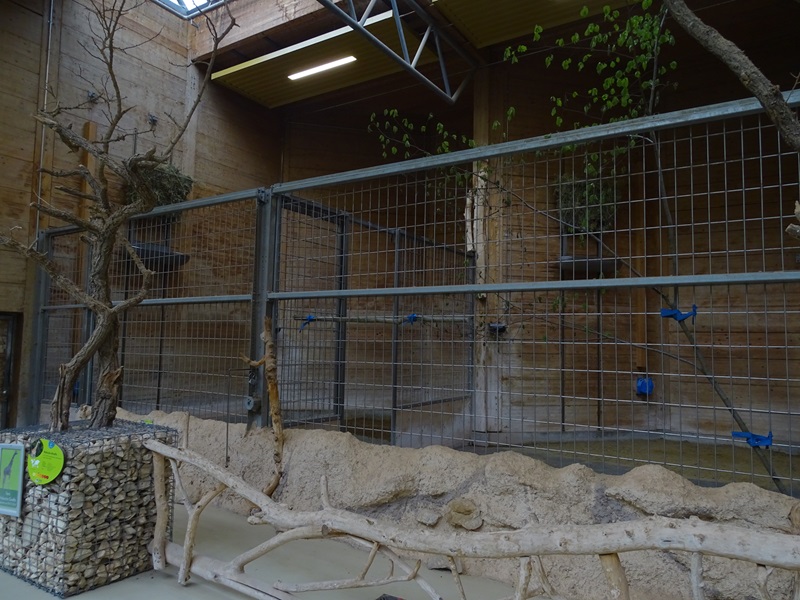
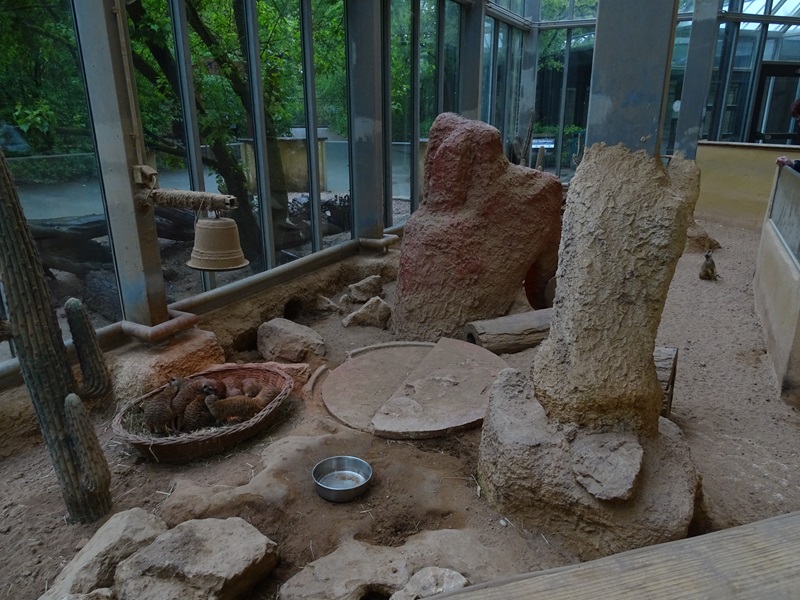
Between the zebra stables and rhino stables is the Giraffe House. The facade of this building is all glass, with a basic and simplistic meerkat enclosure (that opened in 2006) build in front of it, with their indoor inclosure inside the building. (After Nürnberg and München Augsburg is the third zoo of the trip that keeps both species next to each other). The Giraffe House is of course also were you can find the indoor enclosure fort he giraffes; a few small boxes with wooden walls and a steel mesh fence in front. I didn’t care much for it. The giraffes weren’t in here though, and neither did I see them outside. When I exited the building, I noticed a large, wooden gate that was open and let to a small area adjacant to the giraffe house. From here, I could see some large windows into another part of the giraffe house, were they giraffes were. This area somewhat looked like it was a backstage area and I hestitated go walk in here, but then I noticed signage near the windows, which was obviously there for visitors, so it was part of the public space after all. Turns out the small boxes in the giraffe house are only a secondary indoor holding for the girafefs, as they have a larger indoor area as well. The zoos only keeps 2 giraffes at the moment (one reticulated, one rothschilds).

 
One point of criticism I have is that almost all terraria hold only a single species, while some could easily be used for multiple.
Depending on the species and specimen, not every reptile is suited for a mixed species exhibit. Having seen quite a few negative results reptile/amphibian mixing experiments gone wrong (interspecific aggression up to predation, severe, sometimes even fatal injuries, chronic stress, hybridization, disease transfer, dietary imbalances etc.), I can fullheartily understand the reptile keepers at Zoo Augsburg for not mixing species.
 
DAY 5. 18-04-2024.

ZOO AUGSBURG

PART 3

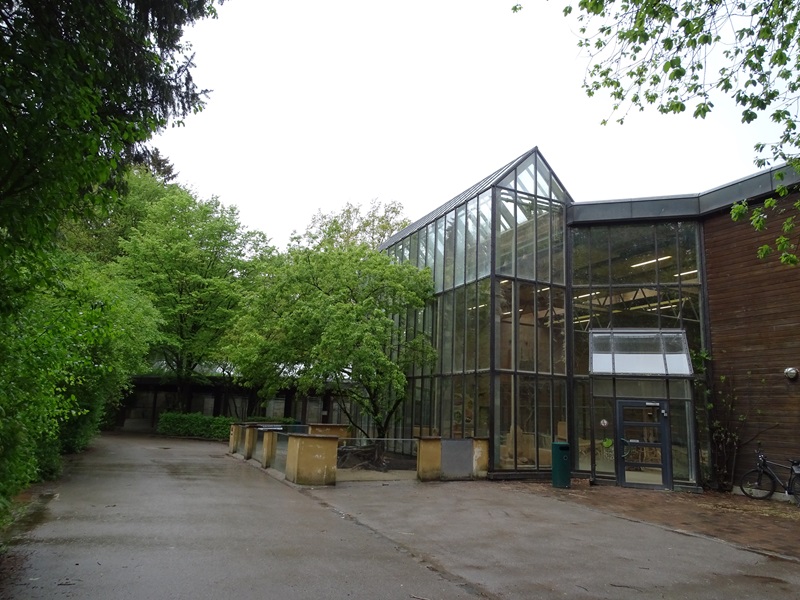
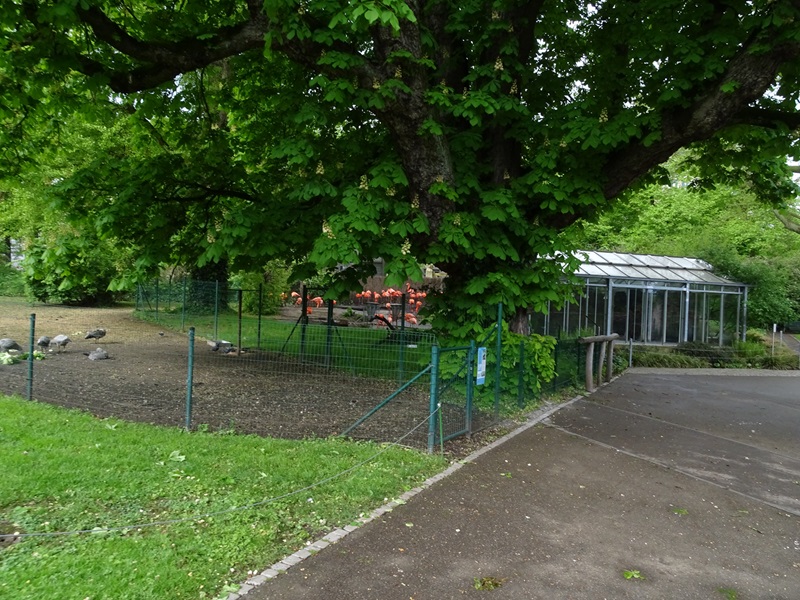
From takins to reindeer to meerkats and giraffes to capybaras. The layout and animal selection of zoo Augsburg are very random! The capibara enclosure was very obviously a flamingo enclosure in the past, as their indoor enclosure is one of those typical glass houses. I quite liked their outdoor enclosure though as it is spacious and natural (with some water of course).


An aviary for waterfowl is next, simple but well-suited for the inhabitants (mandarin duck, American wood duck, ferruginous duck, scaly-sided merganser (not seen). After that is another well-planted aviary, this time for great grey owl.


According to the maps, the next animals are bears. I did indeed find a bear enclosure here, but it has apparantly been empty since 2022, when it held European brown bears. The zoo for some reason never bothered to remove the bear icon from the map (same with the elephants). It’s quite remarkable to have two crowd pleasing animals ‘missing’ from the zoo at the same time. (When this report gets posted, the bear enclosure is inhabitated once again, this time by an Asian black bear)
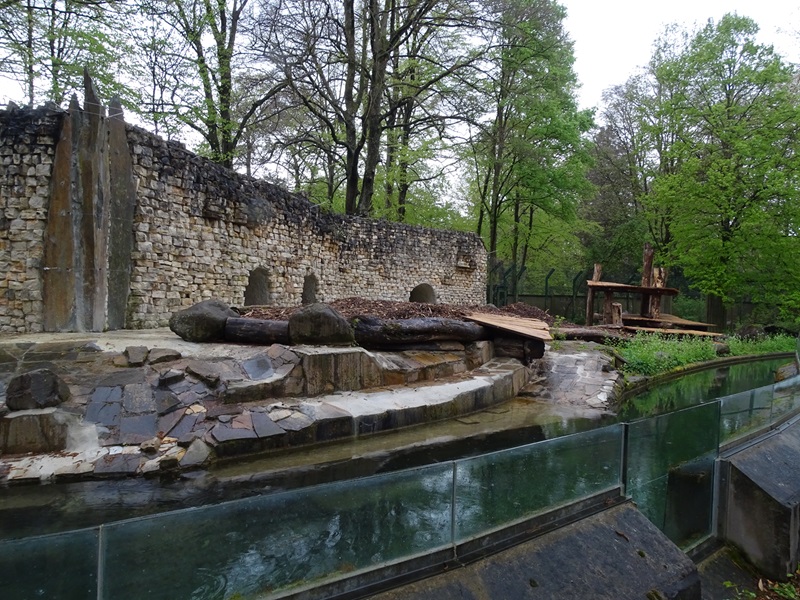
The bear enclosure is an old-looking and outdated grotto; deep moat, stone floor and stone walls. Natural substrate has been added though, and even better in the year 2000 the enclosure was expended (I think) which made it more then double its original size. It’s still a below-average enclosure in my opinion though.


I had now arrived at a large pond, which functions as the enclosure for pelicans (Dalmatian and great white). This offers the birds a whole lot of space tos win, and the land area is ample as well. There didn’t seem to be any pelicans outside, but I did see some other waterfowl including a small flock of emperor geese. At the other side of the pelican pond I came across the indoor enclosure for the pelicans and this is were the birds were currently being held. Compared to other similar indoor enclosures for pelicans, this one was bigger than most others I’ve seen.
On the other side of this building is another similarly sized enclosure for waterfowl, including demoiselle cranes (not seen) and cormorants. The land area is also inhabited my muntjacs, making this the third muntjac enclosure.

Across from the waterfowl is the mandrill enclosure, which is an island surrounded by a moat and concrete wall. The island itself is mostly grass, with some scattered rocks, logs for climbing and a wooden shelter for shade. It’s decent, but not great. The mandrills had access to their indoor enclosure, but that’s not viewable by the public which will probably mean these monkeys will be impossible to see during the coldest and wettest days of the year. During my visit I only saw one mandrill, which stayed at the exact same spot right in front of the access gate to its indoor quarters.


Located in the same building are also the indoor enclosures for lemurs (ring-tailed and black) and these too are not visible to the public. The outdoor enclosure for the lemurs is located at the opposite side of the building. Opened in 2010, it is a large and lush walk-through enclosure. I really liked the design of this enclosure, both from a visitor and an animal perspective. It was very unfortunate that no lemurs were out.


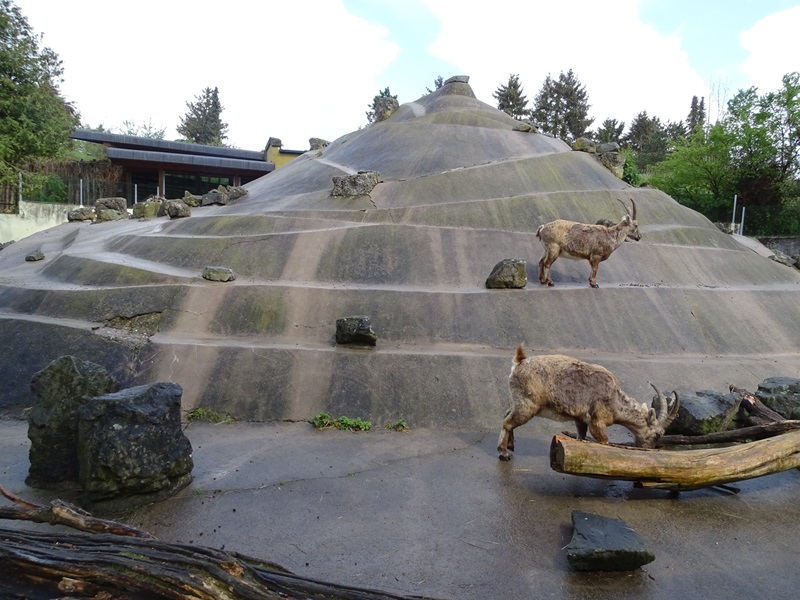
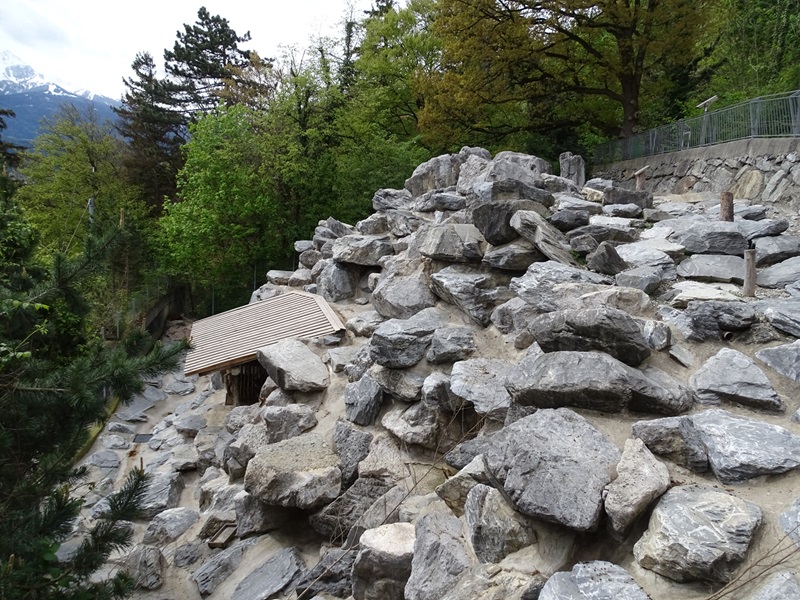
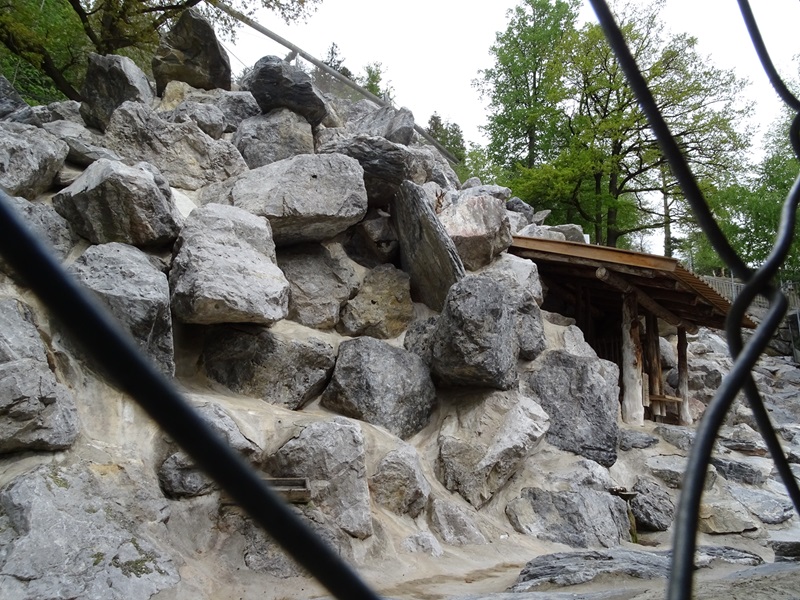
My next stop on the route were the enclosures for mountain ungulates. At some point, there were three, but the markhors have been long gone and their former enclosure is still listed as ‘in Planung’ on the map. This leaves the alpine ibex and Dagestan tur. This was my fourth day in a row visiting a zoo with alpine ibex. Where Nürnberg, München and Salzburg all had fantastic, natural looking enclosures for ibex, the one in Augsburg is much more ugly and artificial. Surrounded by a concrete wall and steel fencing, the enclosure itself is also mostly concrete including the fake ‘mountain’ in the middle. This is indeed one of those typical ‘goat rock’ enclosures. The zoo did add some rocks and logs, but their ibex enclosure can’t even begin to compare to the other ones I saw that week. You can walk around the ibex mountain in its entirety, and if you do so you will also walk along one side of the enclosure for the Dagestan tur, for which viewing opportunites are more limited as you can only see a part of the enclosure. As a matter of fact, I didn’t see a single tur on my first round and only one of my second.


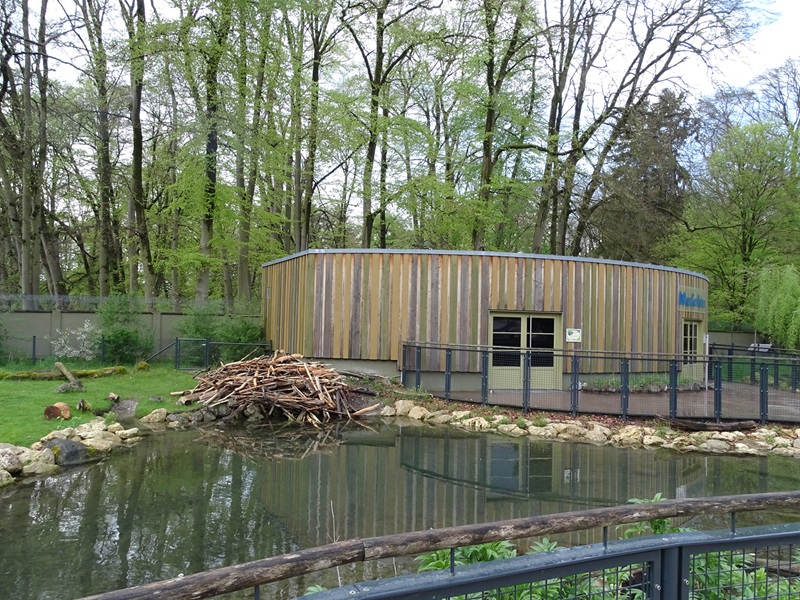
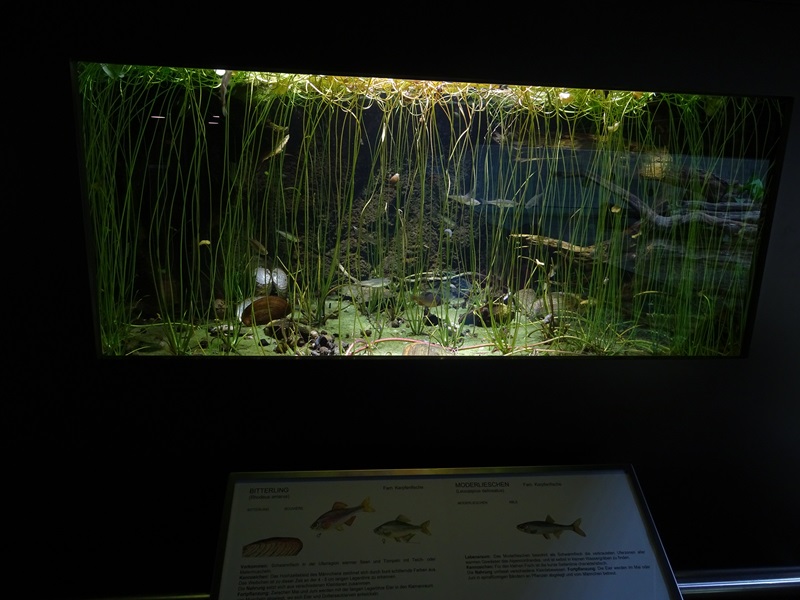
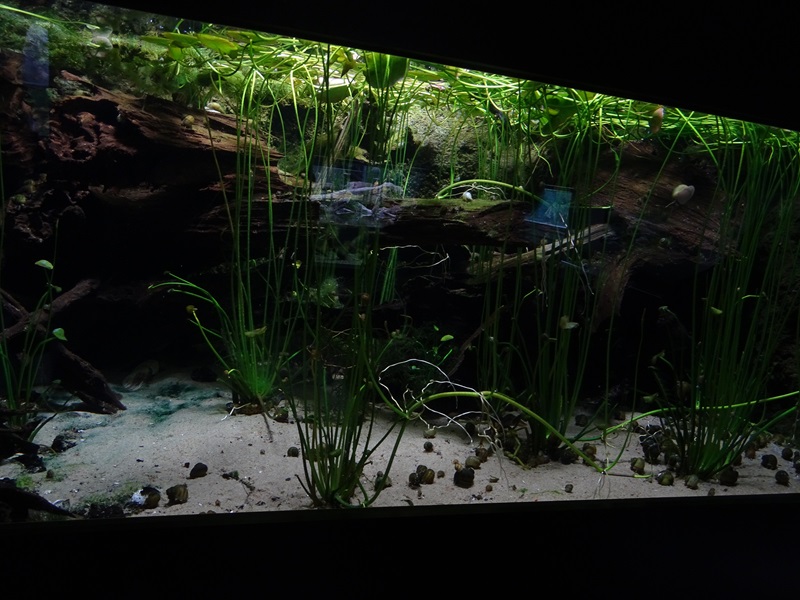
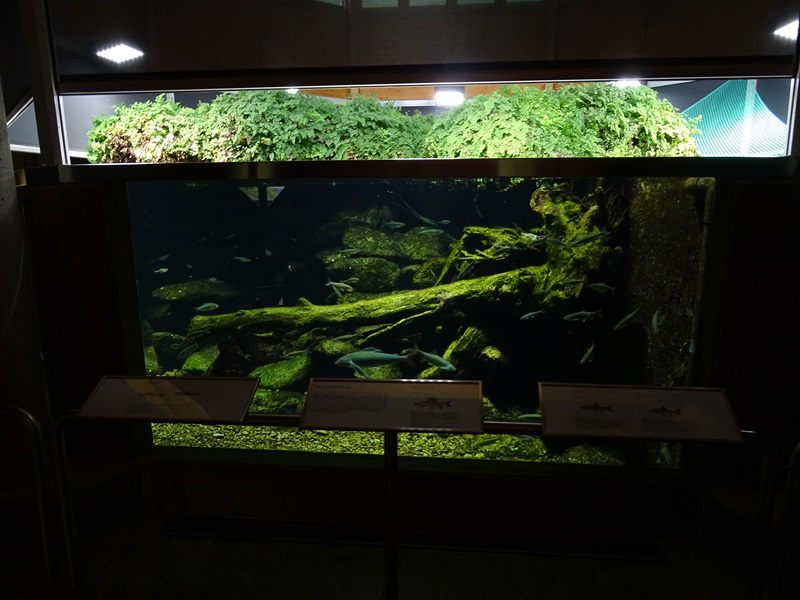
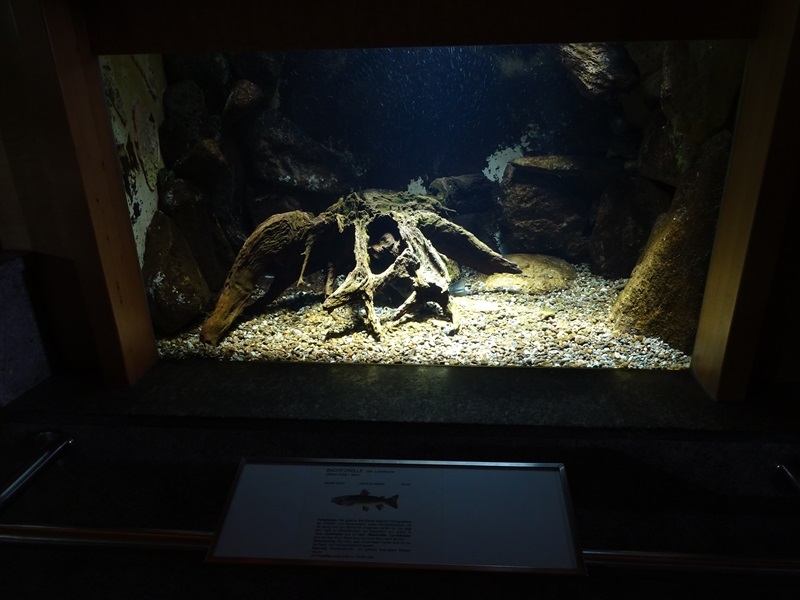
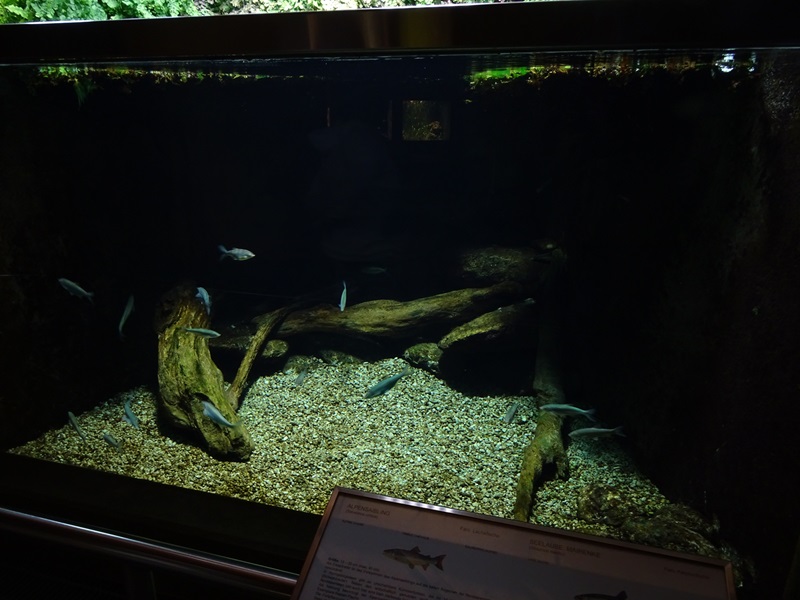
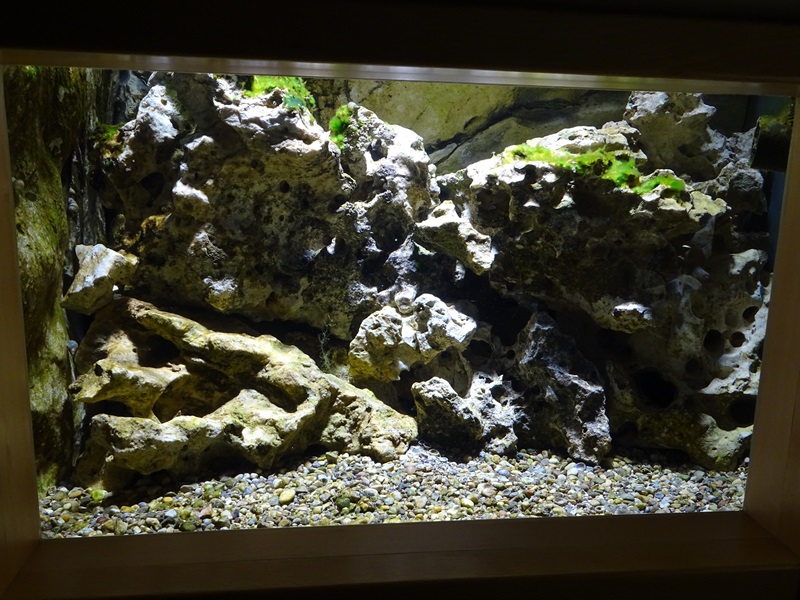
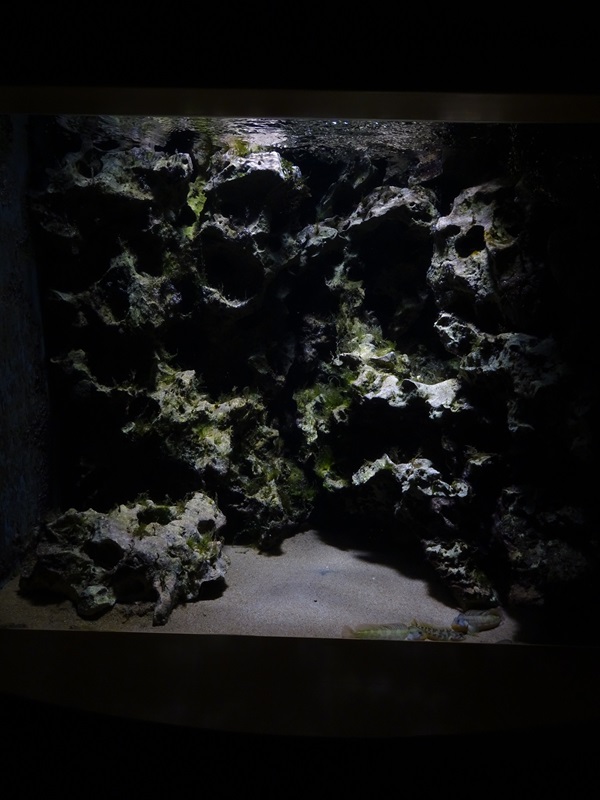
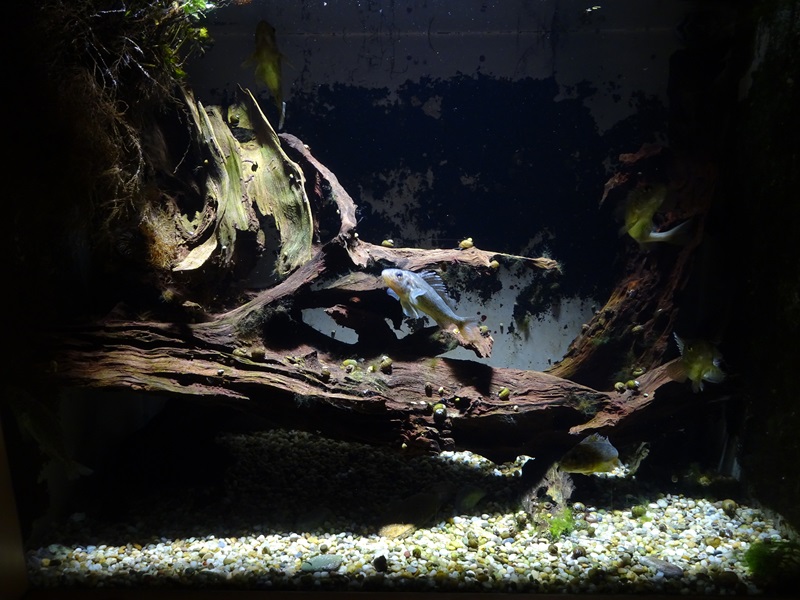
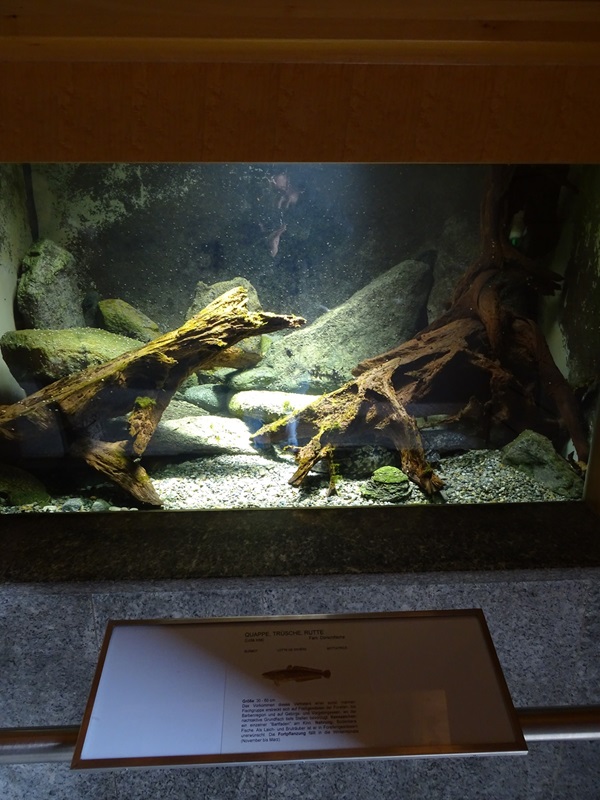
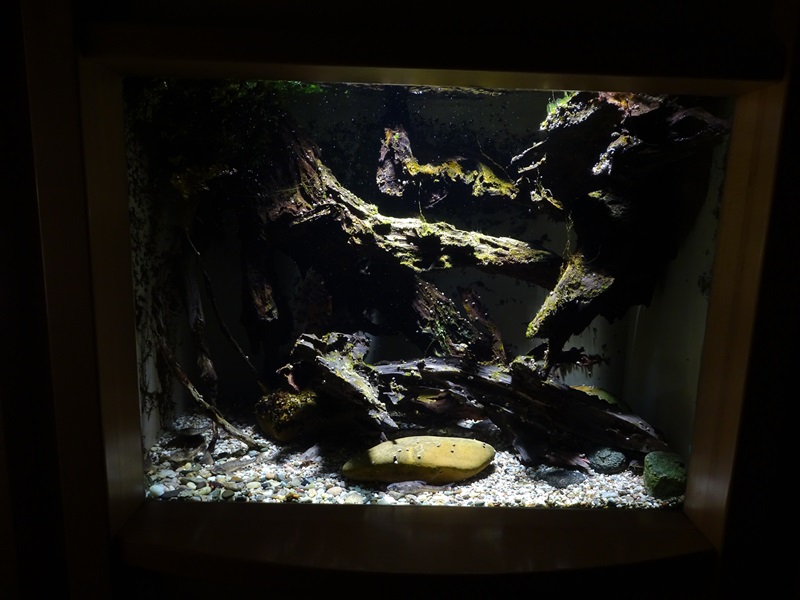
Across from the ibexes is another of the zoos animal houses, the ‘WasSerleben’, the name of which is a play on words (water life + experience). Indeed this building focuses on native flora that lives in and around water. There are two outdoor enclosures, one for European beavers and one for European otters. Both were nicely done and it was disappointing to see neither species out. I did find both (one specimen of each) behind glass inside their indoor enclosures, which can be seen from inside the building. I really liked the designs of these ‘burrow/lodge’ enclosures. In addition to the beaver(s) and otter(s), the building also displays fishes in 3 tanks; one tank has sterlets, one has tench, nase and barbel and the third one has bitterling, spirlin, rudd, minnow and dace. (Zoo Augsburg has no real aquarium building, so these are the only species of fishes in the entire zoo.) Despite its small size and inactive animals, the ‘WasSerleben’ building was one of my favorite parts of the zoo so far.


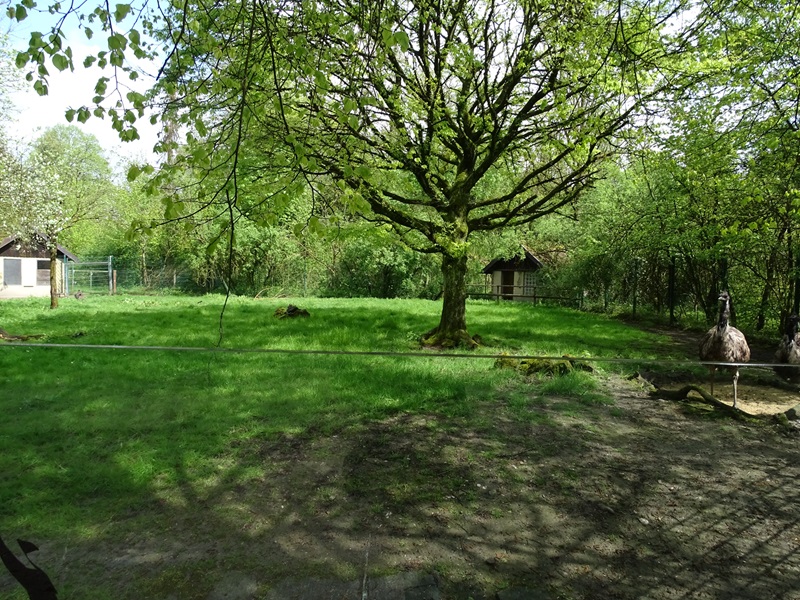
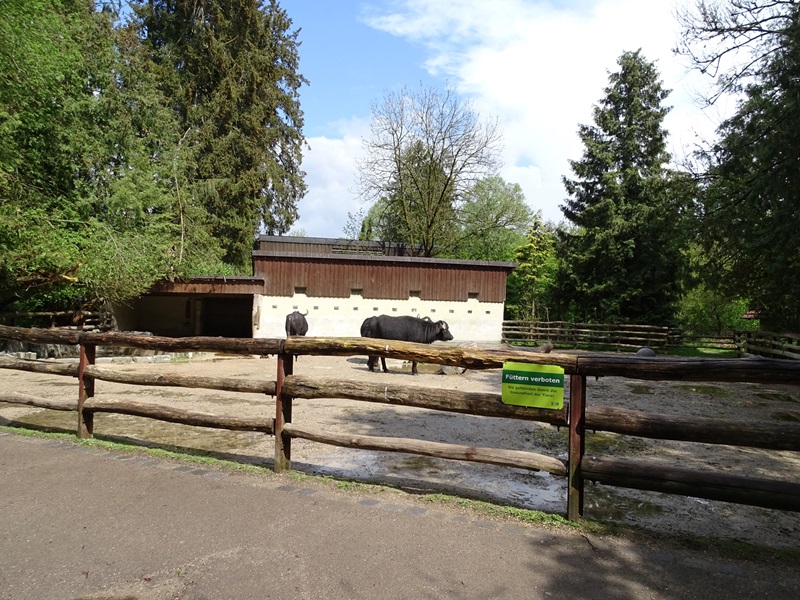
The water theme continues further with yet another large pond for waterfowl. Here I saw European white storks, a black swan, maned wood ducks, Chiloe wigeons, tufted ducks, greater scaups, rosy-billed pochard and eider ducks. There were probaly more species, but I forgot to fotograph the signage for this enclosure. On the other side of the path is a very simple but decent enclosure for red-necked wallabies (I saw only 1) and emus. Next to them live the water buffalos in what is a very small and muddy paddock. One of the worst enclosures I’ve seen on this trip so far. It’s a good thing these animals will receive a new and bigger enclosure at the site of the former elephant enclosure.


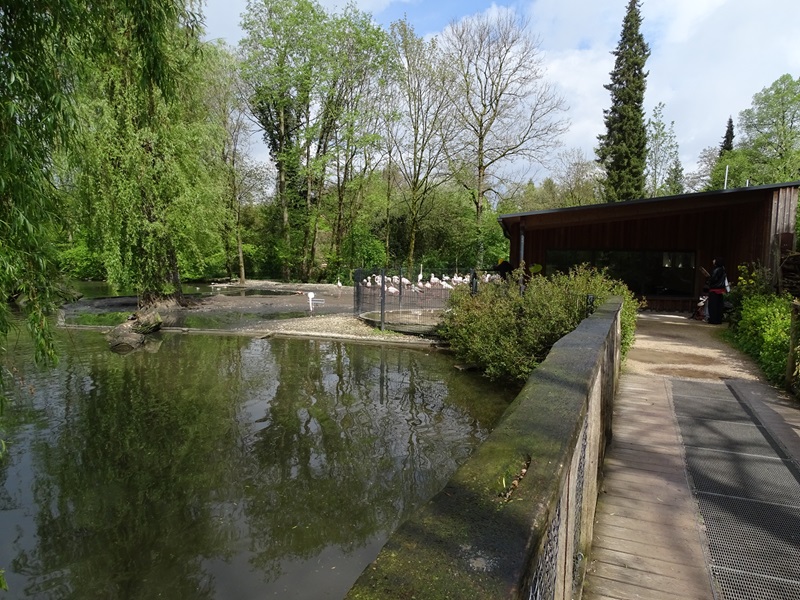
The water in the enclosures of the northern part of the zoo is all connected, starting in the moat of the bear enclosure and going all the way through all of the waterfowl ponds as well as the beaver and otter enclosures. It then continues into the next enclosure, a nicely forested one for red-crowned cranes and paradise shellducks. Finally, the stream of water ends (or begins) in the last of the large waterfowl ponds. Here lives a flock of greater flamingo alongside even more duck and goose species (ruddy shellduck, common shellduck, barnacle goose, mallard, Eurasian wigeon*, northern pintail*, northern shoveler, goldeneye, bufflehead* and unsigned white-cheeked pintail.) (* = signed, but not seen). A small stone brigde takes you to a wooden building that can be viewed into and serves as the indoor enclosure for the flamingo’s.


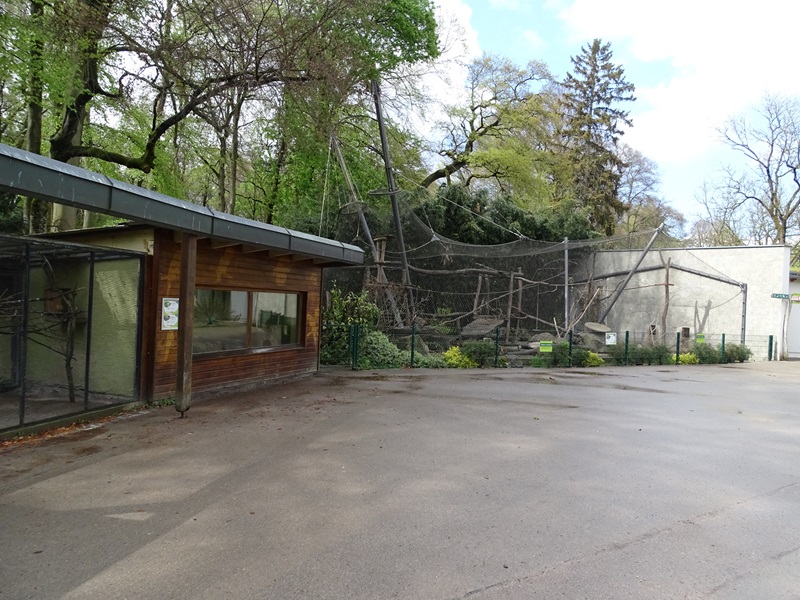
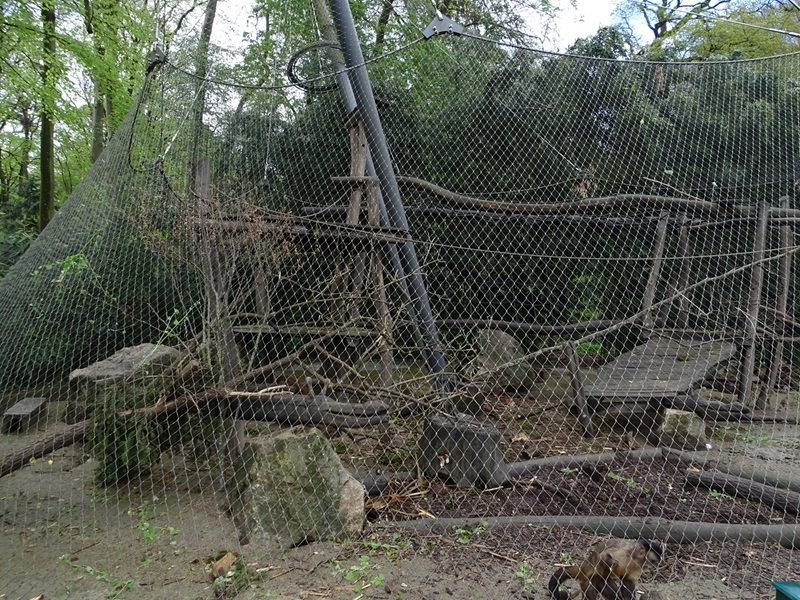
Across from the flamingo’s is a row of enclosures that are, probably coincidentally, all home to South American animals. The first species here is the maned wolf, in a quite spacious, lush enclosure with amply viewing opportunities. I saw a single animal that looked elderly (Note: at the time of posting this, the animal has passed away). The coatis next door also have an enclosure that I quite liked, with plenty of ground space and branches for climbing. Directly bordering the viewable coati indoor enclosure is a small and basic aviary for monk parakeets, which share their indoor space with a southern tree-banded armadillo, which was sleeping. Lastly, there is a netted tent-shaped enclosure for bearded capuchin monkeys. I couldn’t find any information about how old the enclosure is, but it looked relatively new. The enclosure has natural substrate and is packed with branches and rocks for climbing and is overall very decent. It is terrible for photography though, and despite the indoor enclosures being located in the same building as some public toilets, it’s completely off-show.

 
DAY 5. 18-04-2024.

ZOO AUGSBURG

PART 4

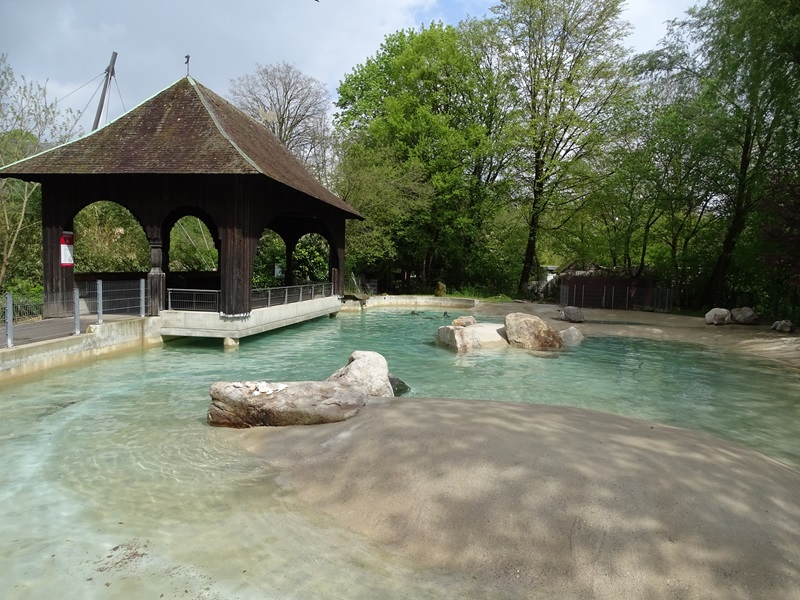
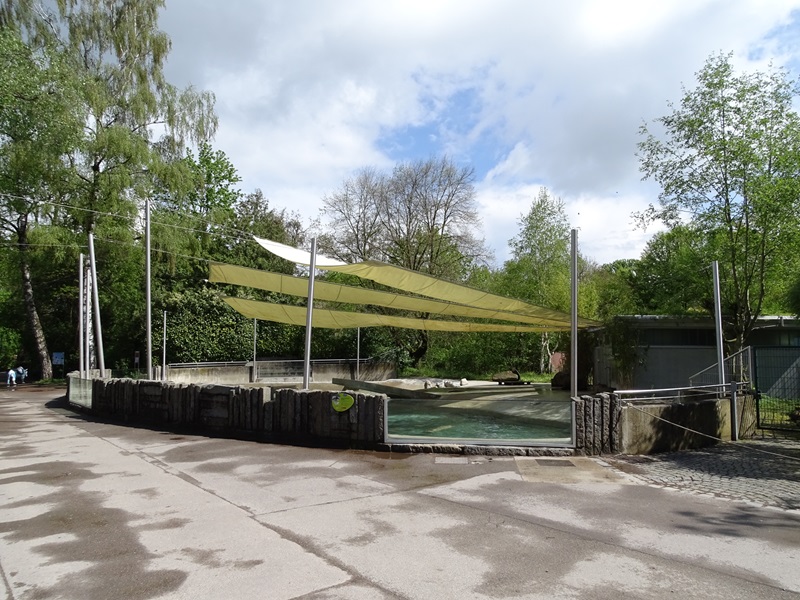
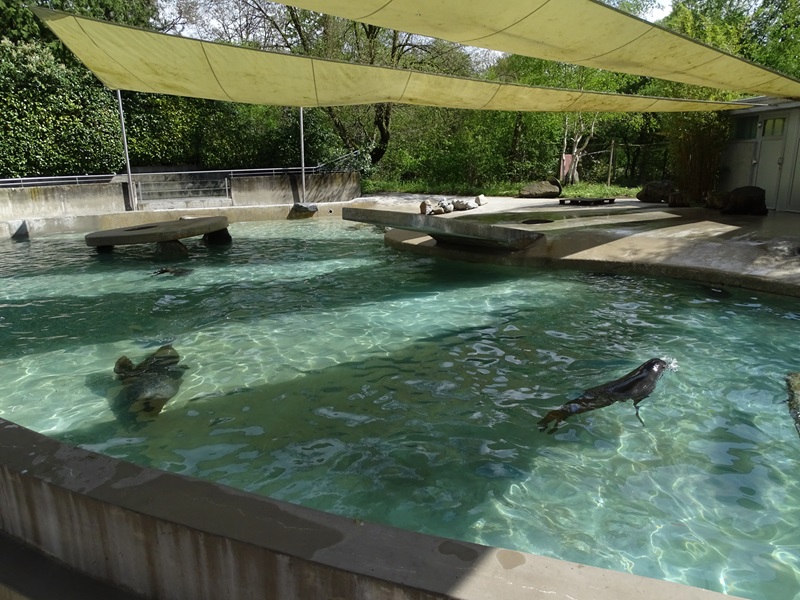
Despite opening only in 2006, the enclosure for harbour seals is really underwhelming. It’s mostly concrete (although the seals do have access to a small back part with some grass and dirt) and the pool is way too shallow. I would have believed it is someone told me this enclosure was much older.


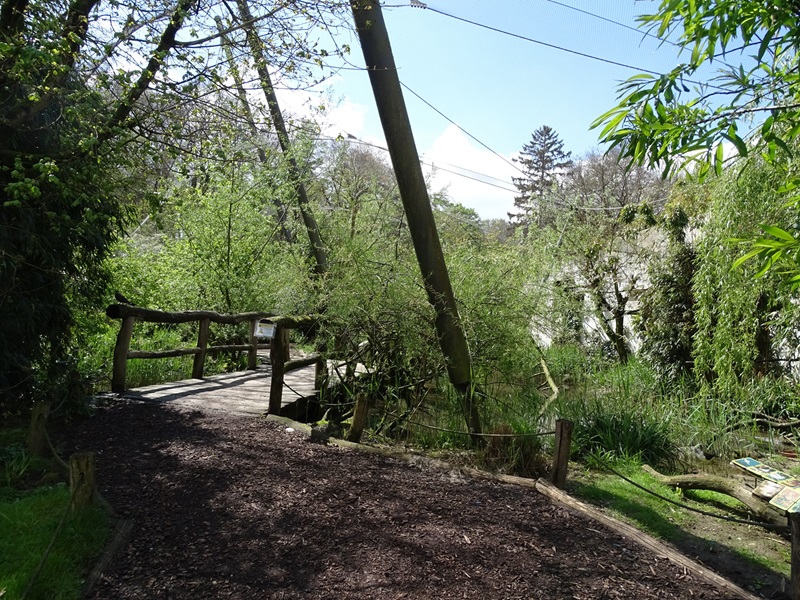
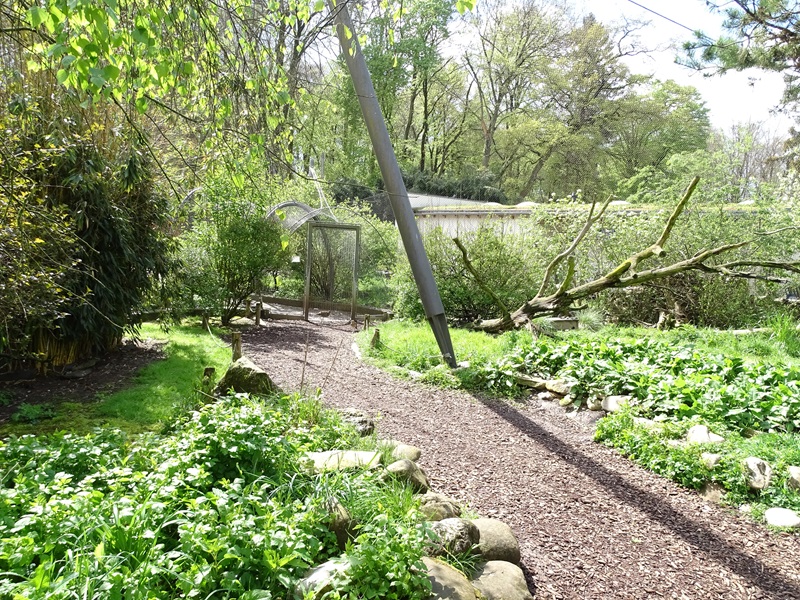
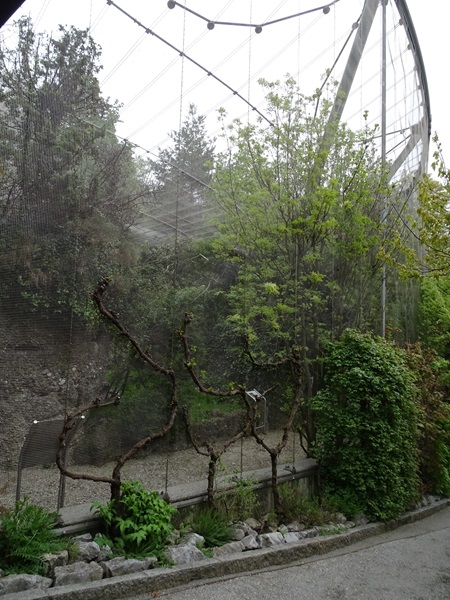
Between the seals and the capuchin monkeys is the entrance to the zoos walkthrough aviary. Size wise, this aviary can’t complete with the ones in Nürnberg or München. This is however not a criticism, as the aviary looks great. I really appreciated the natural looks of the enclosure, thanks to the wood chip path, the shallow pond with wooden bridge, and lots and lots of well-placed foliage. Of course an aviary is nothing without its birds, and this one has plenty of cool and interesting ones. For starters, Zoo Augsburg is one of the very few zoos to keep the black-necked grebe. Even though I did see the species before in Weltvogelpark Walsrode as well as in the wild on multiple occassions, this was the best view I’ve gotten of this species so far. Such a beautiful animal! Inca terns are always a treat to observe, and here too did I get to enjoy their activities from really close by. An aviary as this must of course also have a variety of wading birds: I saw black-crowned night herons, Eurasian oystercatchers, northern lapwings, European thick-knees, black-winged stilts, ruffs, common redshanks and a single curlew. Avocets were signed but unseen. Ducks are respresented by multiple species as well; green-winged teals, garganeys, blue-winged teals, marbled teals and ferruginous ducks. Not all birds in here have a direct link to water and I did not expect to find collared partridges in the aviary. Another pheasant-like bird that lives here is the Temmincks tragopan; I saw a couple, with the male showcasing some of its displaying behavior. Really cool! The final bird is the hoopoe, which will always be a personal favorite of mine. Overall, I think the walkthrough aviary was the highlight of the zoo for me. I loved both the design choices and the species selection.


As I exited the aviary I immediately stumbled upon more birds; Magellanic penguins. I’d seen this species in only 3 zoos before: Karlsruhe, Faunia Madrid and Oceanario Lisbon. I really liked the land area of their enclosure as it is slightly elevated and has lots of burrows as well as boulders, logs, trees and plants for the penguins to use as shelter and/or hiding places. Like with the seals, I found the water area to be lacking depth. I saw around 7 penguins in the enclosure, all on land, with most in of them in a burrow.


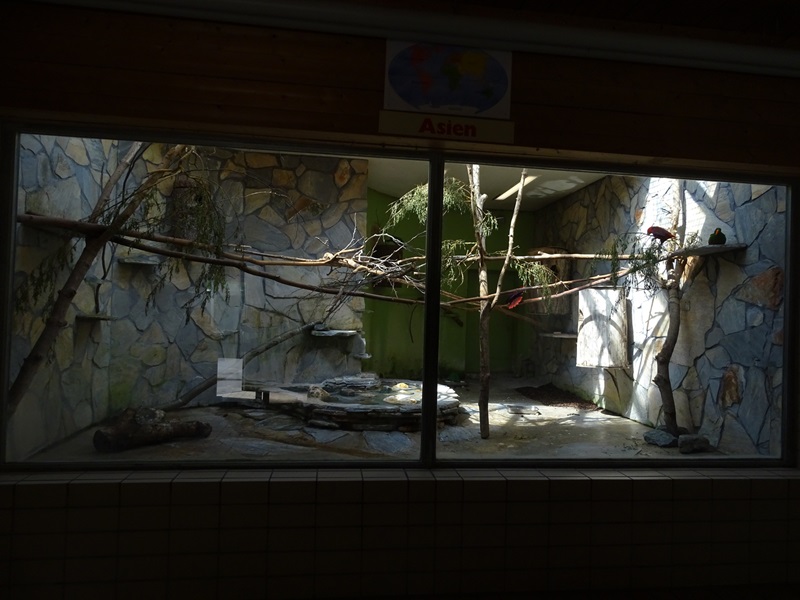
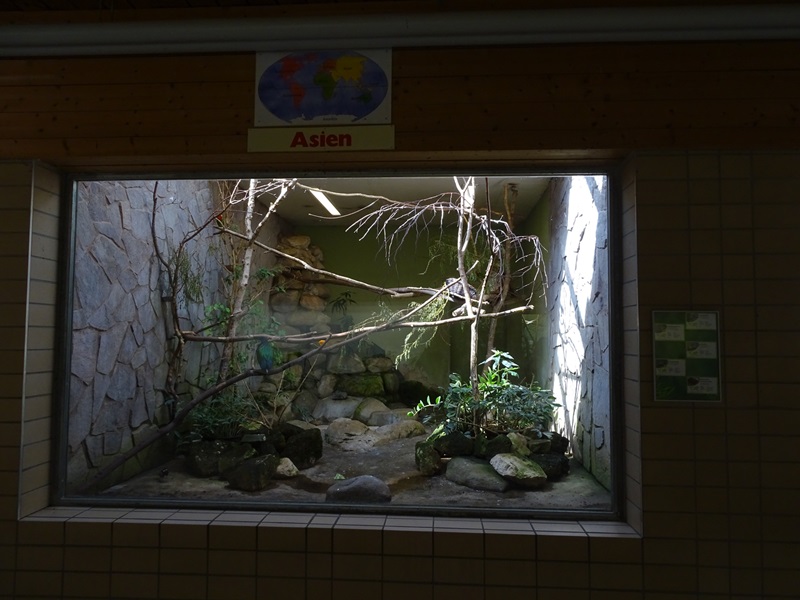
The TropenHaus is the final of Zoo Augsburg’s animal houses. This animal house consists of a single, somewhat L-shaped visitor hallway with several glass-fronted bird aviaries surrounding it, as well as a few small terraria. The visitor area is not at all tropical as the floors and walls are tiled. The bird enclosures are of the typical ‘old school’ bird house type, with all of them sticking to a certain continent and most of them housing multiple species. The first bird enclosure I encountered was the only one with just a single species; eclectus parrots. Next to that is a mixed tropical Asian enclosure (nicobar pigeon, chestnut-backed ground-thrush, Asian blue quail, ornate lorikeet and zebra finch). The next one is double the size and South-America themed; it holds blue-grond doves, sun conures and southern lapwings.


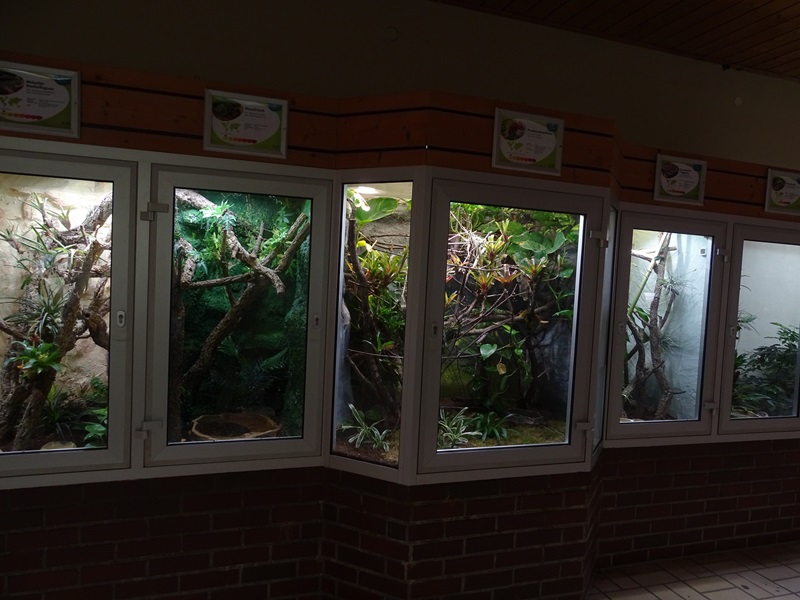
Across from these is a row of 5 small terraria, with the middle one larger than the others. These terraria hold a single species each; from left to right I saw malachite spiny lizard, tonkin-bug eyed frog, panther chameleon, Standing’s day gecko and dying dart frog.


There was construction works going on in the Tropenhaus, which ment some of the bird enclosures were empty. Besides the aforementioned enclosures there were still a few others occupied. A small south American themed enclosure held a lot of smaller species; cuban grassquit, red siskin, purple honeycreeper, turquise tanager and two species of parrotlet, Pacific and spectacled, which were a real challenge to locate due to their size and green colors. A newly arrived species to the zoo, crested bobwhites, were also kept in here, as is a non-American species; the Kilimanjaro white-eye.

A much larger enclosure is home to a bunch of African species; spotted thick-knee, black-headed lapwing, Bruce’s green pigeon, red-crested turaco, white-crowned robin-chat, golden-breasted starling and amethist starling. Another Asian themed enclosure is home pink-headed fruit dove, Mindaonoa bleeding heart pigeon, crested partridge, grosbeak starling and white-eared bulbul. Yet another has both Asian and Australian species, with Chinese bamboo-partridge, emerald dove, swift parrot, Peking robin, red-throated parrotfinch and star finch. Lastly, there is an indoor enclosure for Eurasian spoonbill, roseate spoonbill, little egret, cattle egret and hamerkop. This is the only one of the bird enclosures in this building to also have an outdoor aviary.


I think the Tropenhaus is an ok building. It succeeds in what it wants to do, which is showcase tropical birds to the public. But it doesn’t stand out to me in any way, and after all the tropical/bird houses I’ve seen in zoos, this one is pretty forgettable.

Back outside, build on a corner of the Tropenhalle is an enclosure for Swinhoe's striped squirrels. The enclosure is full of rocks, branches, tubes and other stuff for climbing. For these tiny creatures, the enclosure offers plenty of space and enrichment. Not bad!


Next to the penguins are more marine animals; Cape fur seals. Even though this enclosure originates from 2007, this enclosure looks like it dates from the previous century. It’s mostly concrete (there is a small patch of grass) and like with the harbour seals, the water is much too shallow for animals that love to dive. I was really disappointed in Augsburgs’ pinniped enclosures. Animals as active and intelligent as seals need more than what is offered to them here.


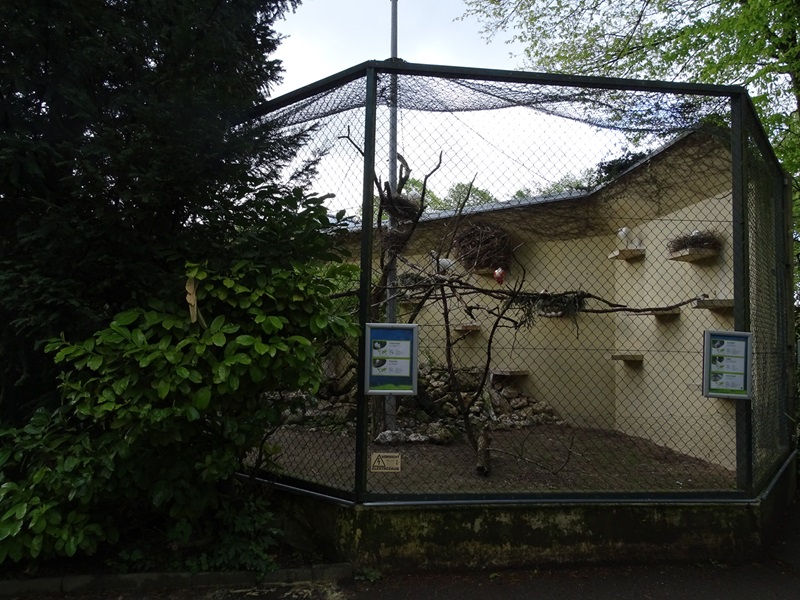
The final enclosure of the day is another aviary with four species of South American waterbirds; roseate spoonbill, scarlet ibis, boat-billed heron and white-faced whistling duck. After this, I found myself back at the tiger, hyena and onager enclosures close to the entrance.


In conclusion, I didn’t love Zoo Augsburg as much as I hoped I would. Of course, it had the impossible task to measure up to Nürnberg, München and Salzburg, which are all great. (I also visited on a cold and mostly dark day, which always unconsciously attributes to how I perceive a zoo.) But even when I compare it to other zoos, like Heidelberg, Augsburg falls short to me. There are defenitely good things about Zoo Augsburg; the modest WasSerleben was really nicely done, and if one is lucky to see active beavers or otters it will surely be a highlight of their day. The walk-through aviary is fantastic, and something I could have easily spend more time in! I also really liked the reptile house, and it’s for sure the best animal house in the zoo. The new elephant house is also quite nice, despite the lack of actual elephants. Lastly, the walk-through lemur enclosure looked great even without the lemurs. Other than those, most of Zoo Augsburg was average at best. The giraffe house, lion house, tiger house and chimpanzee houses all failed to impress, with some questionable indoor holding for some of those species. The pinniped enclosures are really sub-par, especially considering their age. The elephant outdoor enclosure, the mandrill enclosure, ibex enclosure and the nocturnal enclosures, to name a few, all suffer from being very basic. Something that I also noticed is the zoo was less clean and less well maintained than the others. It is obviously not a zoo with a big budget, and it shows. That doesn’t make it a bad zoo, but it does leave it off the ‘must-see’ list. Despite my lists of negatives, I still enjoyed my day in Zoo Augsburg and have no regrets in devoting a day to it. I would probably leave it of my travel plans if I would be to revisit this region in the near future though.

Next up: Alpenzoo Innsbruck
 
I really liked your zoo trip review of Augsburg.
I agree with your assessment, as Augsburg is more designed for families than Wilhelma, for example. It has almost all the animal "highlights" except hippos and crocodiles, and is a very suitable excursion destination for residents of the region. Until I was about 7 years old, I only went to one larger zoo, namely Augsburg, because it was easy to visit in one day. It was first at this age that I started going to Wilhelma. It must also be said that Augsburg has lost a bit of its shine, but in order to offer other animals, like mountain goats, barasinghas, bisons or missisippi alligators, more space.
 
DAY 6. 19-04-2024.

ALPENZOO INNSBRUCK

PART 1

After staying one more night in München, I had some ambitious plans for the next day. I was gonna take a very early train from München to Innsbruck. After arrival, I would make a quick stop at my hotel to drop of my luggage, and than walk to the nearest bust stop that would take me to the Alpenzoo. And after the zoo, I was going to ride the Hungerburgbahn. Fortunately, Austrian trains seemed to be much more reliable than the Deutsche Bahn, and I was delighted not to have any delays that day. I managed to arrive at the zoo at 10.15, giving me plenty of time for a visit.

I was already very familiar with this zoo as it’s one of the zoos that is often stated among zoochatters to be one of the best in Europe. It had been high on my to-do list for a while and I had researced it extensively, so I was really excited to finally be able to visit for myself. Yes, it is a bit unfortunate the zoo no longer keeps some of the rarities it kept in the past (mostly birds like wryneck and dipper) but there are still plenty of interesting species to see. The Alpenzoo is not only located in the Alps, but focuses entirely on species from that area, both current and past. This means the zoo has no lions, monkeys, giraffes or crocodiles, and this could be a deal-breaker for some people. But what the zoo lacks in ABC’s, it very much makes up for with enclosure design, uniqueness and ofcourse, the amazing views! Salzburg Zoo also had great lovely views, but nothing I’ve seen so far even comes to the Alpenzoo. Alpenzoo is one of those zoos that would still be worth a visit after removing all the animals!

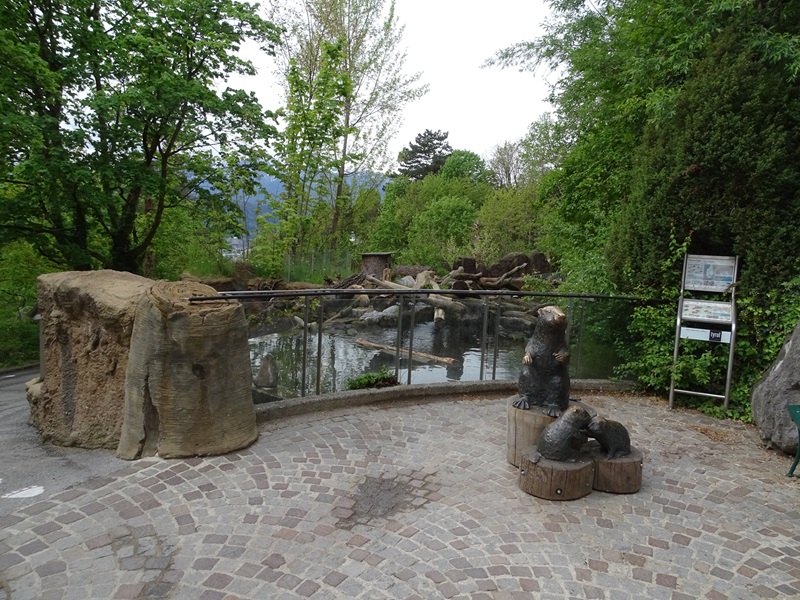
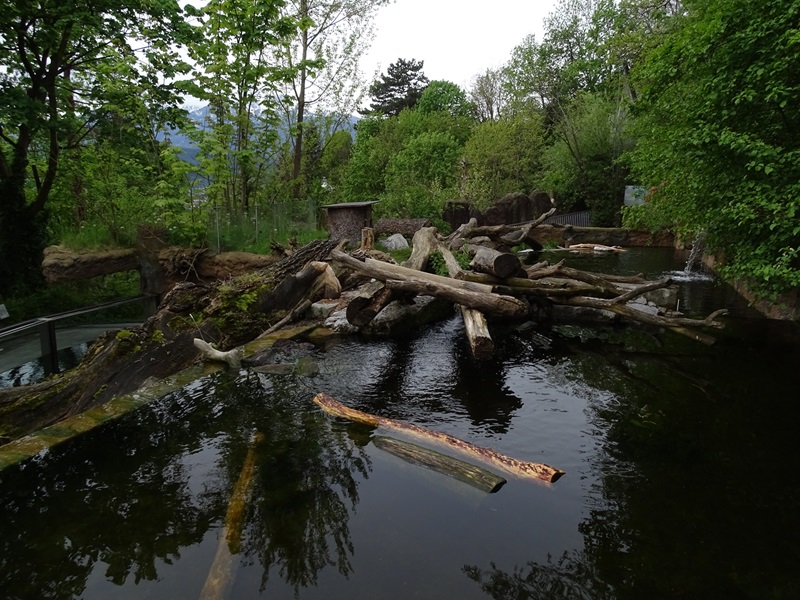
After I entered the zoo, the first enclosure I encountered was the one for beavers. This enclosure immediately sets the tone for the entire zoo; it is multi-leveled, with two water areas for the beavers, of which the lower one has an underwater viewing. There are lots of logs in the enclosure and most of the barriers are made of mock rock. It’s a lovely enclosure for the visitors to see, and great for the beavers as well. Unfortunately, I did not see any beavers out. I did however see a common merganser, a species that shares this exhibit.


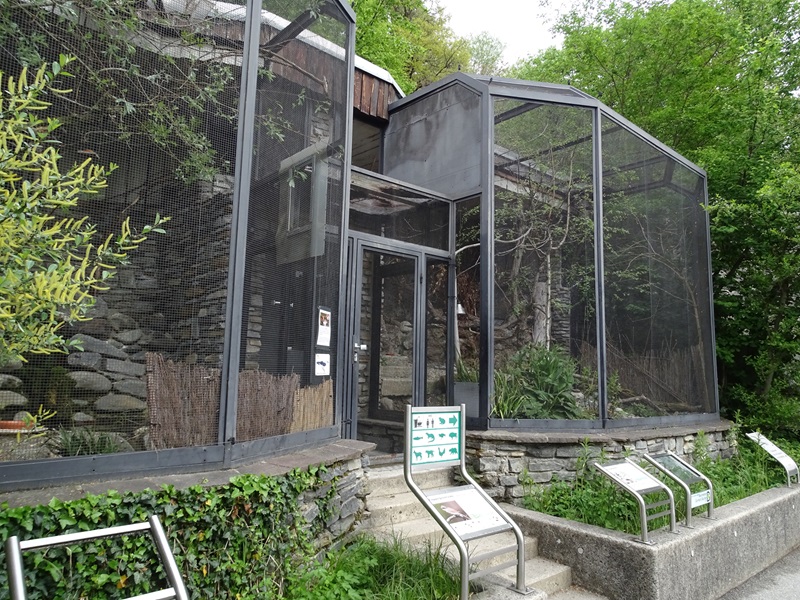
From here, I had to decide which way to go first, down towards the bears and wild cats, or up towards most of the other animals. Since some of my target species were along the path going up, I decided to do that first. Here I quickly found two medium-sized aviaries that can be connected but currently were seperated. The aviary on the left was home to European oriole (saw one female) and green-winged teals (the latter only temporarily, as the ducks were awaiting transfer to another zoo) while the right aviary was home to little ringed plover and lesser whitethroat, the latter of which is unique in an European zoo if you don’t include Russia.


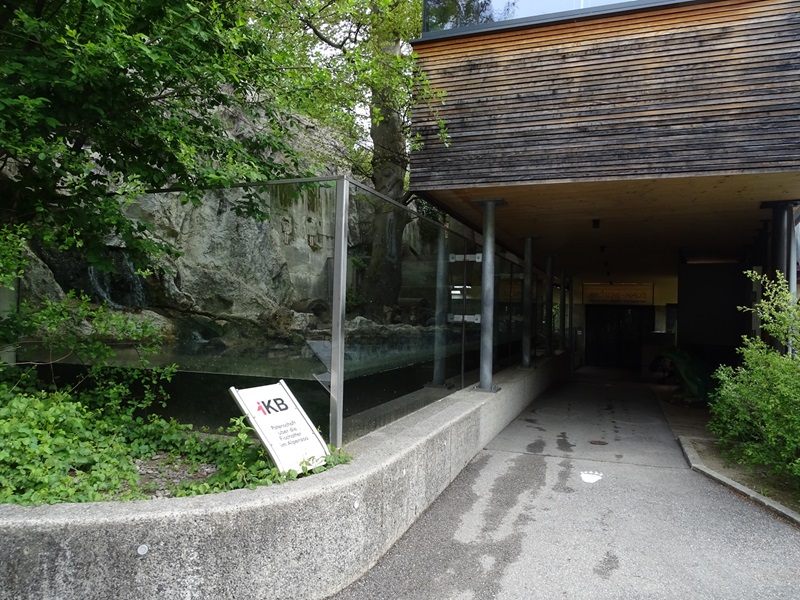
Continueing from here I found myself facing the entrance to the aqua-terrarium building. Bordering the covered path that leads to this building are a few mammal enclosures. The biggest of which is an enclosure for European otters which can be viewed into through large viewing panels that also provide an underwater viewing. The land area of the otter enclosure is mostly rocks (not mock). Next to the otters is another mustelid; the polecat (unfortunately hybrid between wildform and ferret). This open-topped enclosure has height differences, lots of rockwork, a pond and even large living trees inside of it, and is quite spacious for such a small animal. I unfortunately saw neither mustelid species out. On the other side of the path is are two large (relative to the species’ size) enclosures for European harvest mice, which I did see.


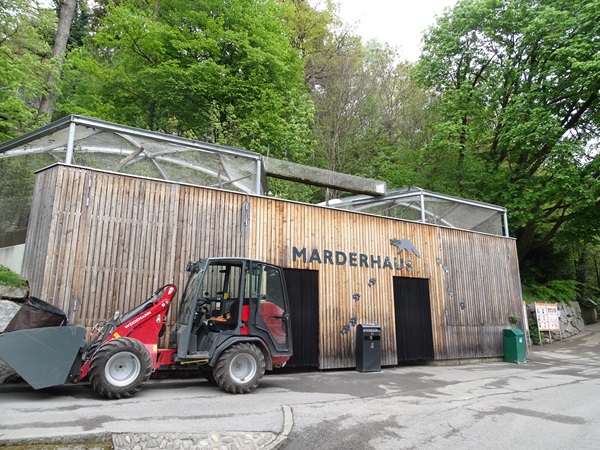
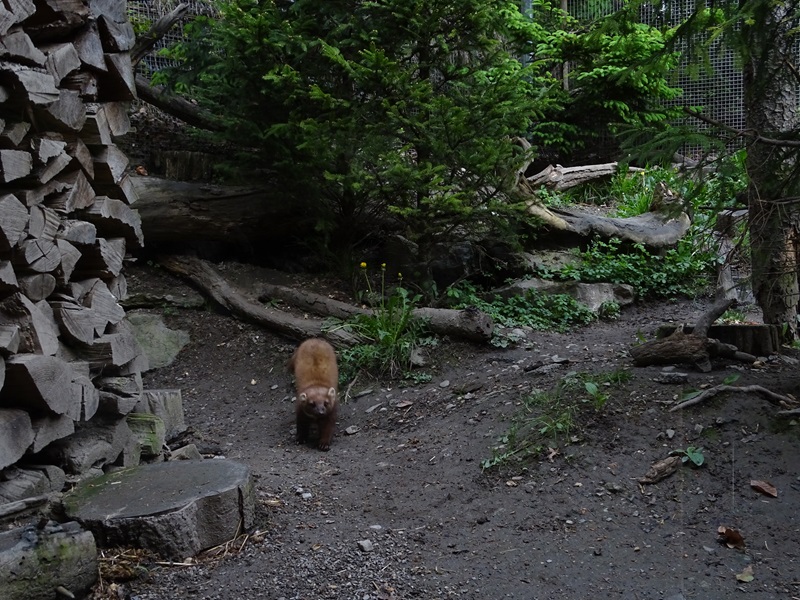
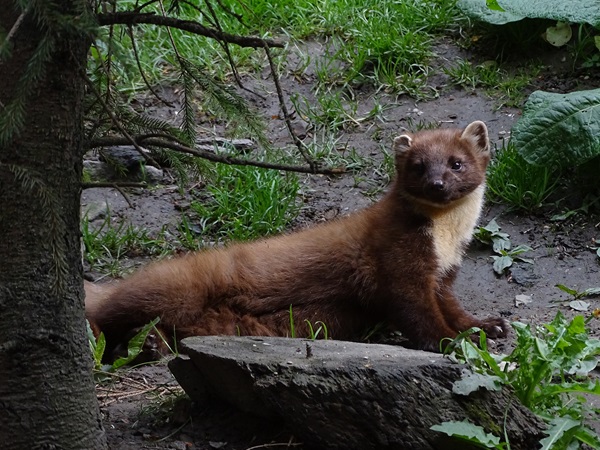
I decided not to visit the aqua-terrarium building just yet, and backtracked a tiny bit to take another path towards the relatively new ‘Marderhaus’ which consists of a wooden cabin from which visitors can look into two enclosures for pine martens. Despite the species not exactly being rare in captivity, I had never seen one before, and if I would see one today it would be my second new species of mustelid in a few days, after Nürnberg’s striped weasel. I entered the cabin and did not see a marten in the left enclosure, but I did see one laying on the ground in the right enclosure. It seemed to have just woken up from a nap and shortly after the marten was walking and climbing around its enclosure. I even managed to take some photo’s! The first of my 4 main targets of this zoo was already in the pocket!


Across from the Marderhaus is a second enclosure for a pair of European otters which is somewhat standard but still really nice. And the end is a small stairs that takes you upon an underwater viewing window. Next to this is a small room with has another window into the enclosure, as well as into the indoor enclosures for the otters and the polecat/ferret. This is were I found both species, sleeping. (I am not quite sure if both otter enclosures can be connected, but I can’t rule it out as they’re adjacent to each other.)


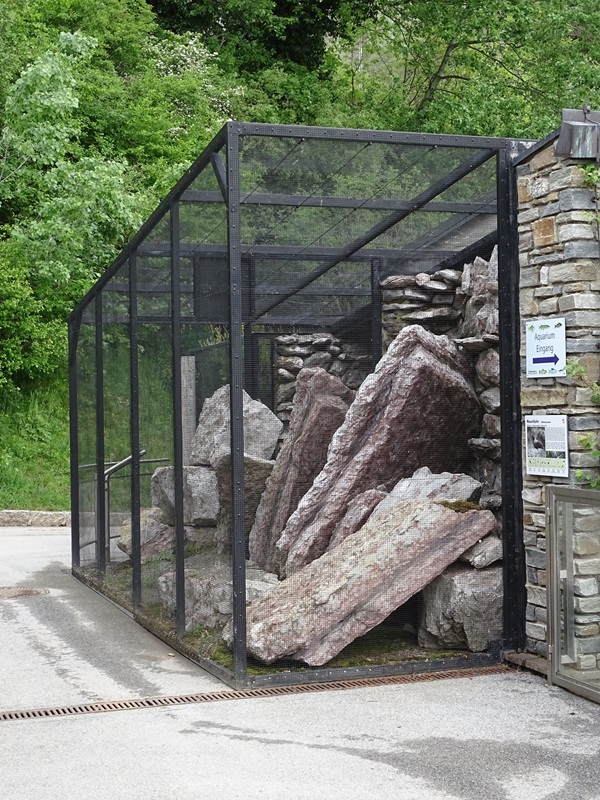
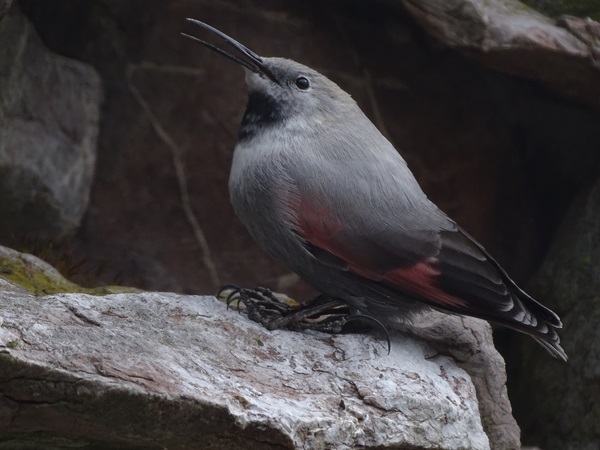
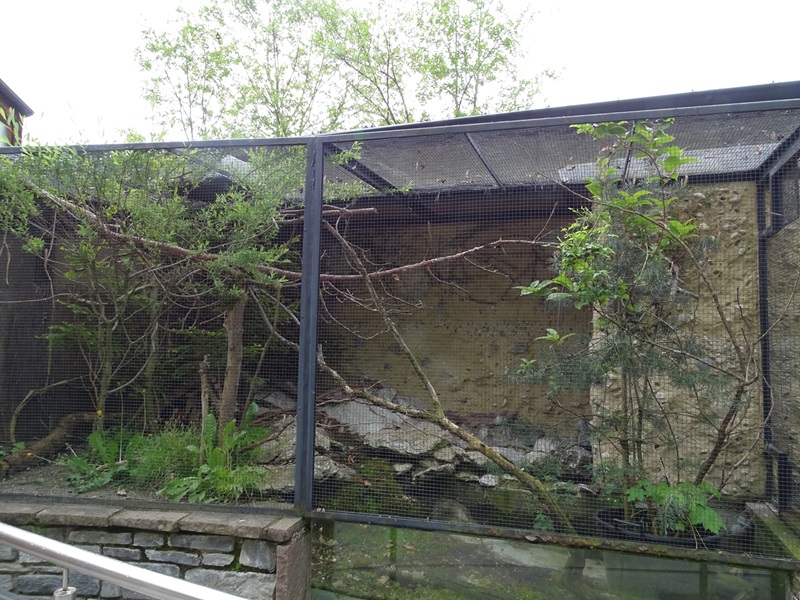
I walked by the restaurant building towards the aviaries for my second target of the day; wall creepers. Alpenzoo Innsbruck is the only zoo worldwide to keep this species, so it was a must-see! There are two seperate aviaries for this species, both very similar in appearance and obviously specifically designed for particular species; it has a lot of rocks and boulders for the birds to perch and climb on. I was very happy to see both the male and the female out and active. Next to the wall creepers is another nice passerine aviary, this one for blackcaps, a species I see in the wild all the time but saw only once or twice in a zoo (Plzen).


Behind the wallcreepers is one of the entrances to the aquarium; you can actually see the largest tank from above here. But like I did with the aqua-terrarium, I decided to skip the aquarium for now. I did however take a took at the duck aviary across from the blackcaps. This aviary proves that the Alpenzoo makes an effort to make every enclosure look great; where most zoos would just provide a bit of grass and a pond for ducks, this aviary has been designed using different types of materials and even has some variation in elevation. It is currently home to four species; tufted duck, red-crested pochard, common pochard and Eurasian golden-eye. (formerly, black storks were kept here as well but that species is no longer part of the zoo collection)


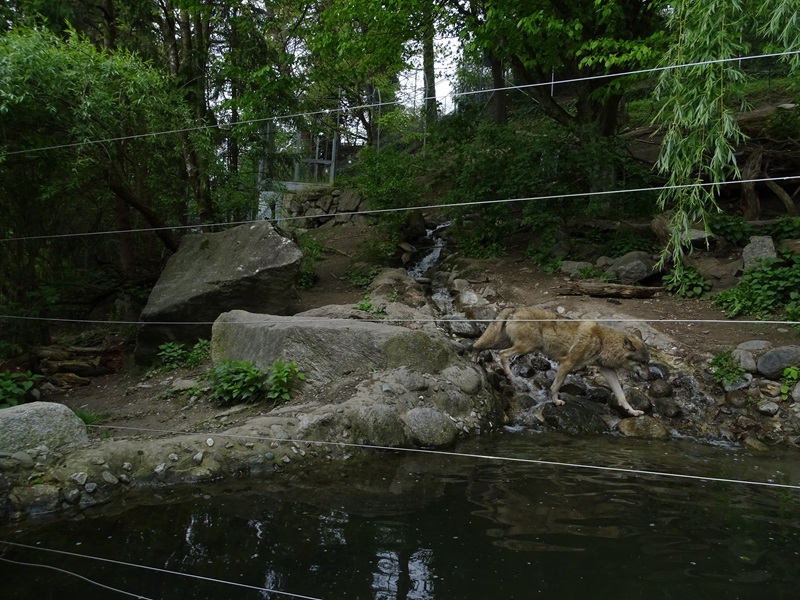
From the ducks I had to backtrack a little bit to get back to the Marderhaus. From there I was going to follow the recommended walking route, which ment going up to the northeast corner (as seen on the map) of the zoo first. The first animals along this path are the wolves. The wolf enclosure was really good and natural, and offers the animal lots of space to roam. It’s situated on a hillside so there’s some good elevation to the enclosure, with a small stream of flowing water leading to a small pond. This part of the enclosure has an electric wire fencing, giving me great views of some very active wolves.

 
DAY 6. 19-04-2024.

ALPENZOO INNSBRUCK

I walked by the restaurant building towards the aviaries for my second target of the day; wall creepers. Alpenzoo Innsbruck is the only zoo worldwide to keep this species, so it was a must-see! There are two seperate aviaries for this species, both very similar in appearance and obviously specifically designed for particular species; it has a lot of rocks and boulders for the birds to perch and climb on. I was very happy to see both the male and the female out and active. Next to the wall creepers is another nice passerine aviary, this one for blackcaps, a species I see in the wild all the time but saw only once or twice in a zoo (Plzen).

Does Alpenzoo promote the fact that it is the only zoo with wallcreepers? I've been to zoos that are the only ones to keep a species, but don't mention the fact
 
DAY 6. 19-04-2024.

ALPENZOO INNSBRUCK

PART 2

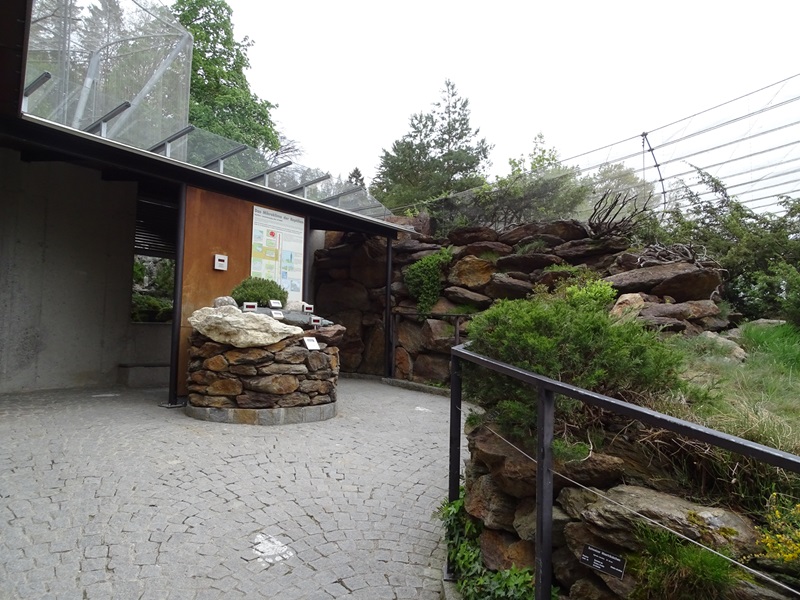
A small paths splits off from the main path and leads into a small plaza surrounded by a bunch of outdoor terraria for native reptiles. These all have a glass roof that can be opened if the temperature/weather allows it, creating open-topped terraria when that is the case. All of these terraria are spacious and beautifully landscaped, and all perfectly suited for the species within. The first species I found here were ladder snakes, which I saw curled up in a crevice. The next species is the smooth snake. After this is a stone wall with a selection of terraria build into it, starting with a large enclosure for a group of ocellated lizards. The next enclosure is a mixed enclosure which also has a water part; it houses viperine water snakes and Aesculapian snakes. While I did see multiple of the former, I saw none of the latter. In this enclosure I also saw a third species; wall lizards. Those are most likely wild specimens that ended up in the enclosure. The next enclosure also has 2 snake species; grass snake and dice snake of which I was only able to find the latter. The two native venemous snake species, the horned viper and the common adder are next, each in their own enclosure. Around the corner, the final tank is an enclosure with a significant water part; it houses the mostly aquatic alpine newt. I really loved this section of the zoo. The quality of the reptile enclosures is very high! The surrounding area is also nicely themed with lots of rockwork, and also has some interesting education about the different types of rocks and how each of those will heat up by the warmth of the sun at different rates (unfortunately I was there on a day without much sun). There is also additional viewing into the wolf enclosure from here.


Back on the main path I found myself at the waldrapp aviary, the first of the large aviaries of the zoo. This aviary is walk-through, but visitors can also choose not to enter and walk around the aviary. Once inside, you will find a beautiful rock wall at the back of the aviary, which the ibises love to use. The rest of the aviary is wonderfully decorated as well, providing both cover for the bids and open areas to for flying. In addition to the conspicious ibisses, this aviary is also home to a few other bird species which might take some more effort to spot; I was happy to find a couple of hoopoos, and also saw the European starlings. I was however not able to find the European thick-knee or the common scops owl.


My next stop was the ‘Haustier-Hof’, the barnyard area. Here you will find three outdoor paddocks, one for goats, one for pigs and one for cattle, who all have their indoor enclosures in the central barn. I liked the goat enclosure, which has plenty of climbing opportunities, but was less impressed by the very basic pig and cattle enclosures. The area as a whole was really well done, and I especially loved the views from here. Not only does this area offer you an amazing view of the town of Innsbruck, you can also see the waldrapp aviary and the yet to be visited griffin vulture aviary from here. Education is this area include a selection of bird houses with signage that explains about the different needs each species of bird has regarding housing.
Adjacent to the Haustier-Hof is a huge enclosure for roe deer; unfortunately, that enclosure has been empty for over a year now and the species is (hopefully temporarily) gone from the collection.


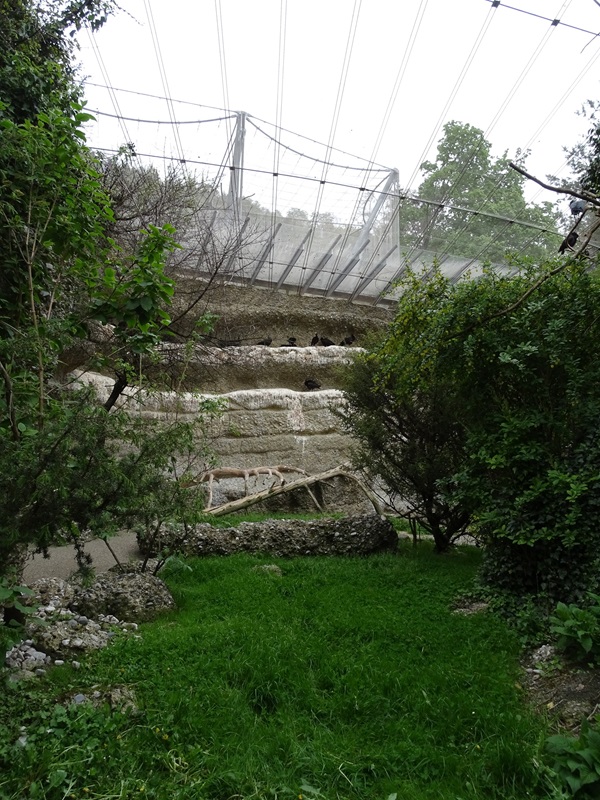
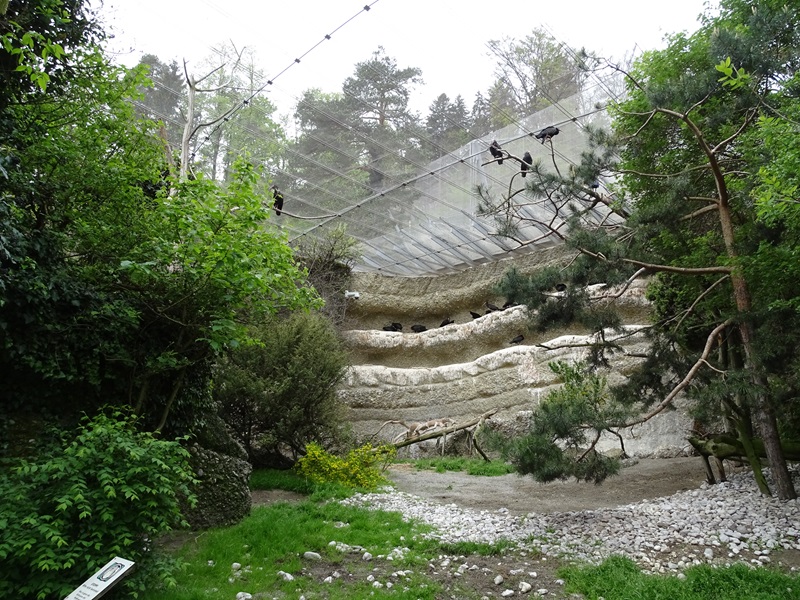
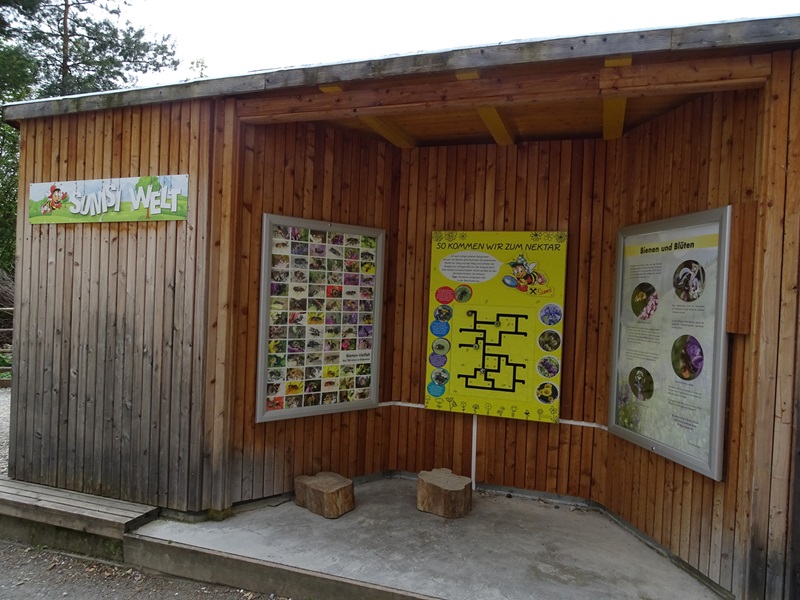
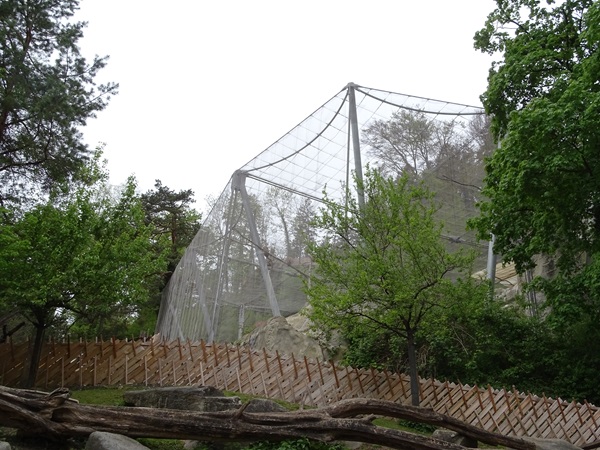
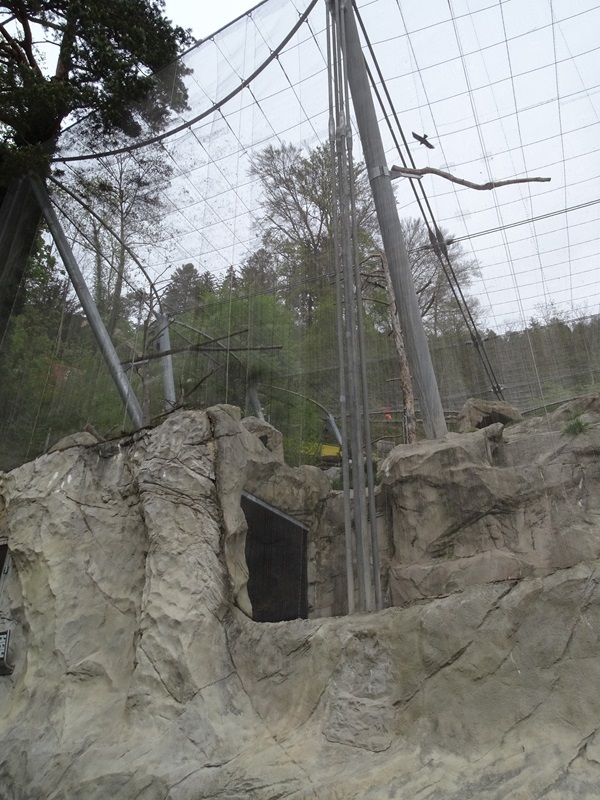
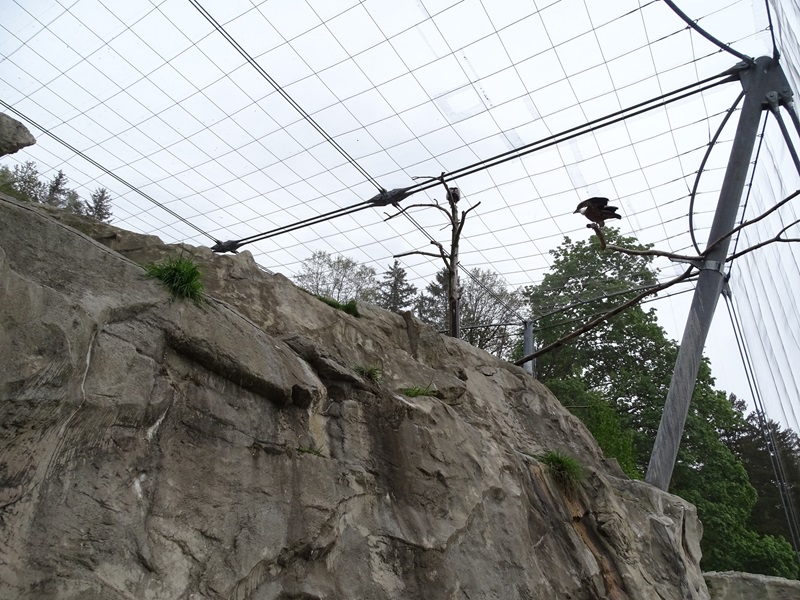
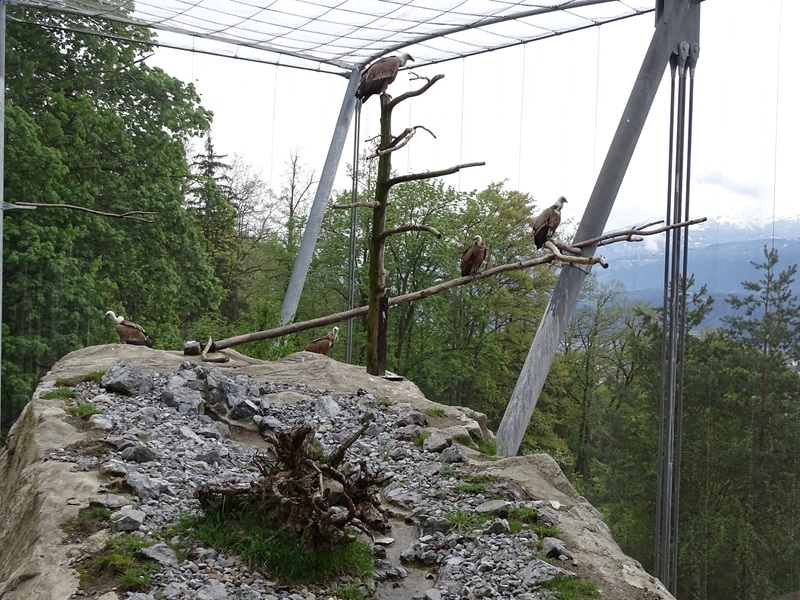
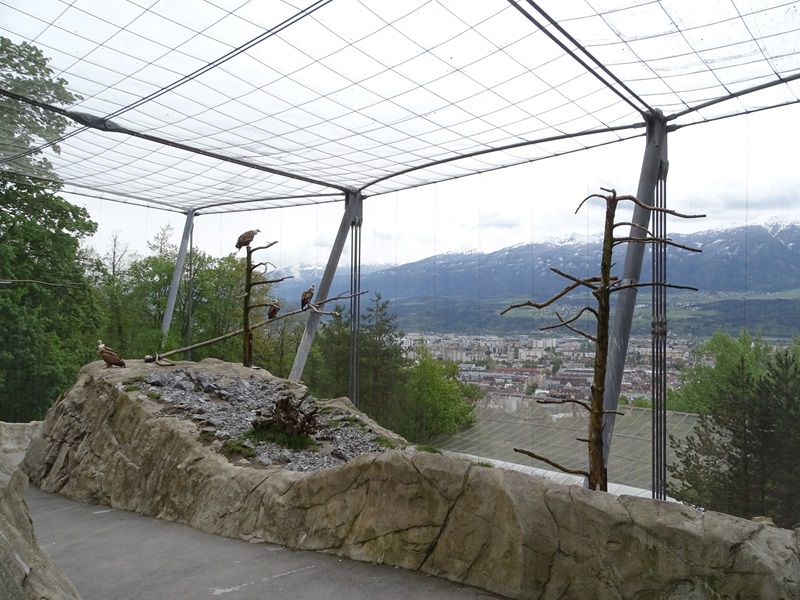
After walking around almost the entire barnyard area, I arrived at the educational station about honey bees. The path then becomes a T-section, and I followed the route and turned right, which took me right into the walk-through griffon vulture aviary. Surely, this must be the best vulture aviary in Europe; for starters, it’s huge. The visitor path meanders through the middle of it, steadily sloping upwards without becoming to steep, surrounded by good looking mock rock formations. In addition to that, tens of thousands of small rocks are scattered around, and the entire things looks phemominal. Best of all, from the vistor path you are able to see the town of Innsbruck in the background, while the vultures fly in front, around and above you. Due to the lay-out of the enclosure, the vultures can get very close to you when they perch on the rocks, and because of the height differences, you will be able to get to eye-level with them as well. The indoor quarters for the vultures are hidden behind the rockwork. In addition to griffon vultures, the aviary also is home to Egyptian vultures and Red-billed choughes. A truly magnifecent enclosure that is indefinetely more impressive in real life than it is on photographs!

 
DAY 6. 19-04-2024.

ALPENZOO INNSBRUCK

PART 3

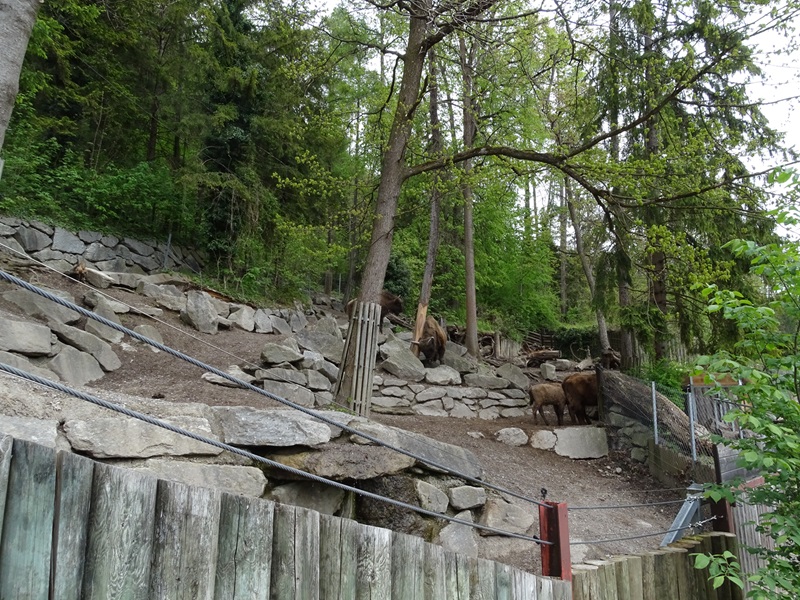
I had now arrived at the top-most enclosure on the map, the mixed enclosure for wisent and wild boars. Again, I was impressed. While these creatures would surely be satisfied with a spacious plot of wooded hillside, Alpenzoo Innsbruck takes it up a notch once more and has carefully landscaped the enclosure with rockwork to please the eyes! There are two connected enclosures, the main enclosure is too large to capture on photo. Recently the boars had offspring, which might be why they were no-shows; I also did not see them in the smaller (seperation?) enclosure.


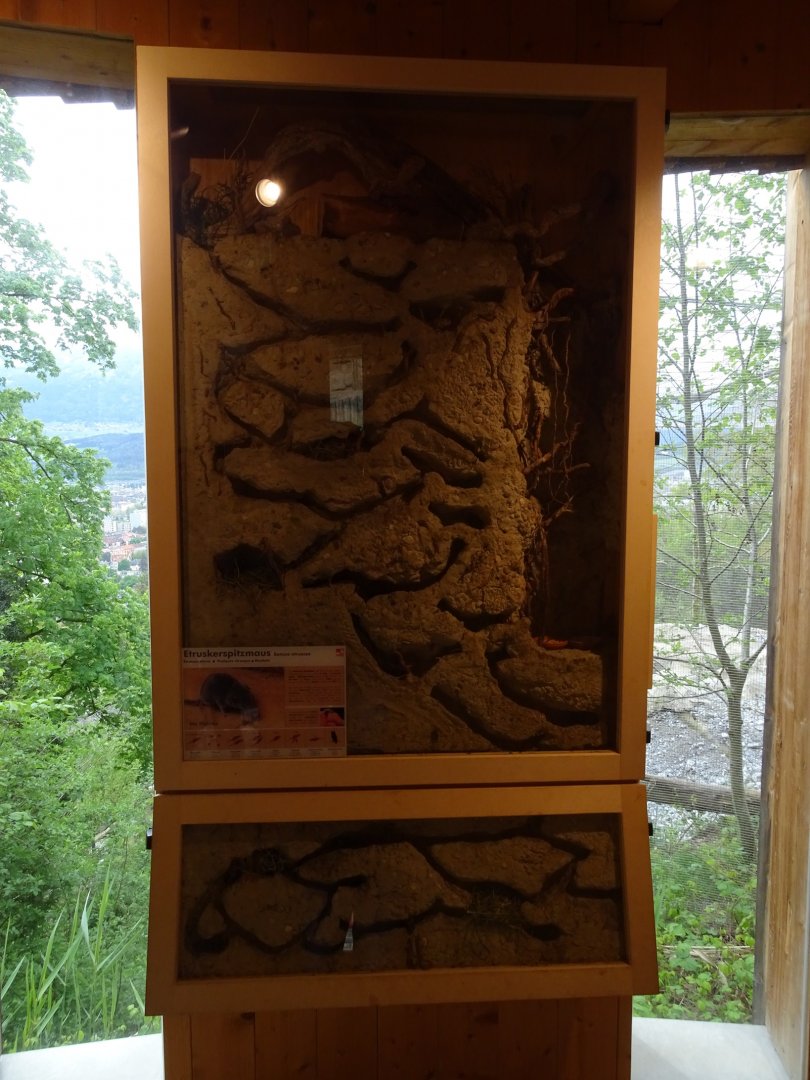
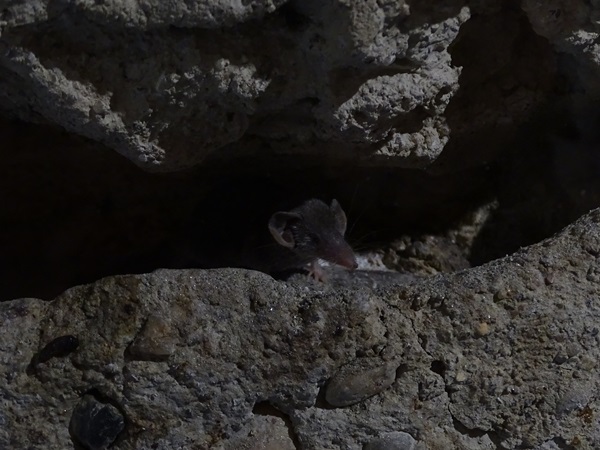
Across from the wisents, Europe’s biggest land animal, is a small building with a single enclosure for Europe’s tiniest mammal; the Etruscan shrew. Not sure if this was intentional, but I love how you can see both within seconds of each other. The shrew enclosure is designed as a ‘slice of earth’ with a bunch of underground rooms and tunnels behind a glass panel. I saw this species for the first time in 2023 in Plzen (behind the scenes) and then a few days later in Liberec, and I was happy to see them for a third time here: I saw two very active shrews!


Normally, the route would then take me from the wisents to the ibexes, but that was was currently blocked due to construction works. A new wolf enclosure was being construced, despite those animals already having a really good enclosure. I bet the new one will be even bette though! Luckily, the obstruction did not mean I had to miss any enclosures or species, and I just had to backtrack a bit through the vulture aviary. From here, I followed the path west towards the lynx enclosure.

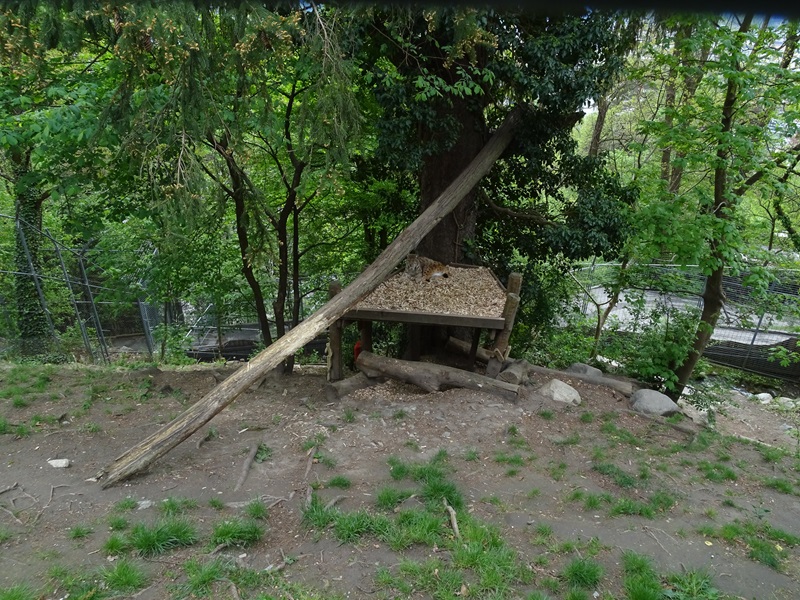
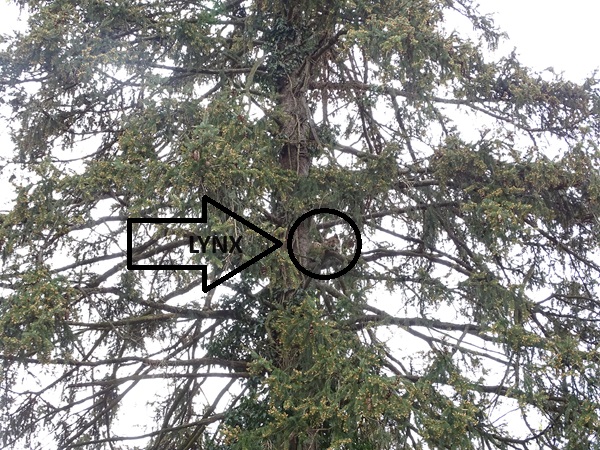
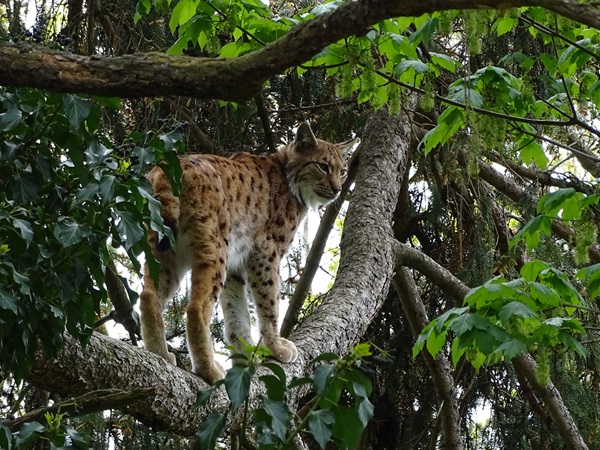
Tierpark Nürnberg had a great lynx enclosure. The one in München was pretty good as well. And I also really liked the one in Alpenzoo! As is to be expected of this zoo by now, the lynx enclosure is spacious, varied and natural. There is plenty of cover for the lynxes, provided by both the foliage and wooden shelters, yet I saw both lynxes out, one resting and one roaming around. I noticed a sign about how the male lynx is often found high up in one of the trees in the enclosure, always on its favorite branch (which was marked on a photo of said tree). Just when I finished reading the sign, the lynx walked up a tree trunk into that tree, climbed up higher and higher and stopped when he reached that exact spot. A truly amazing sight, and I was glad I had timed my visit to this enclosure perfectly! I don’t think I have ever enjoyed watching a lynx as much as I did in Alpenzoo. This zoo never stops to impress!


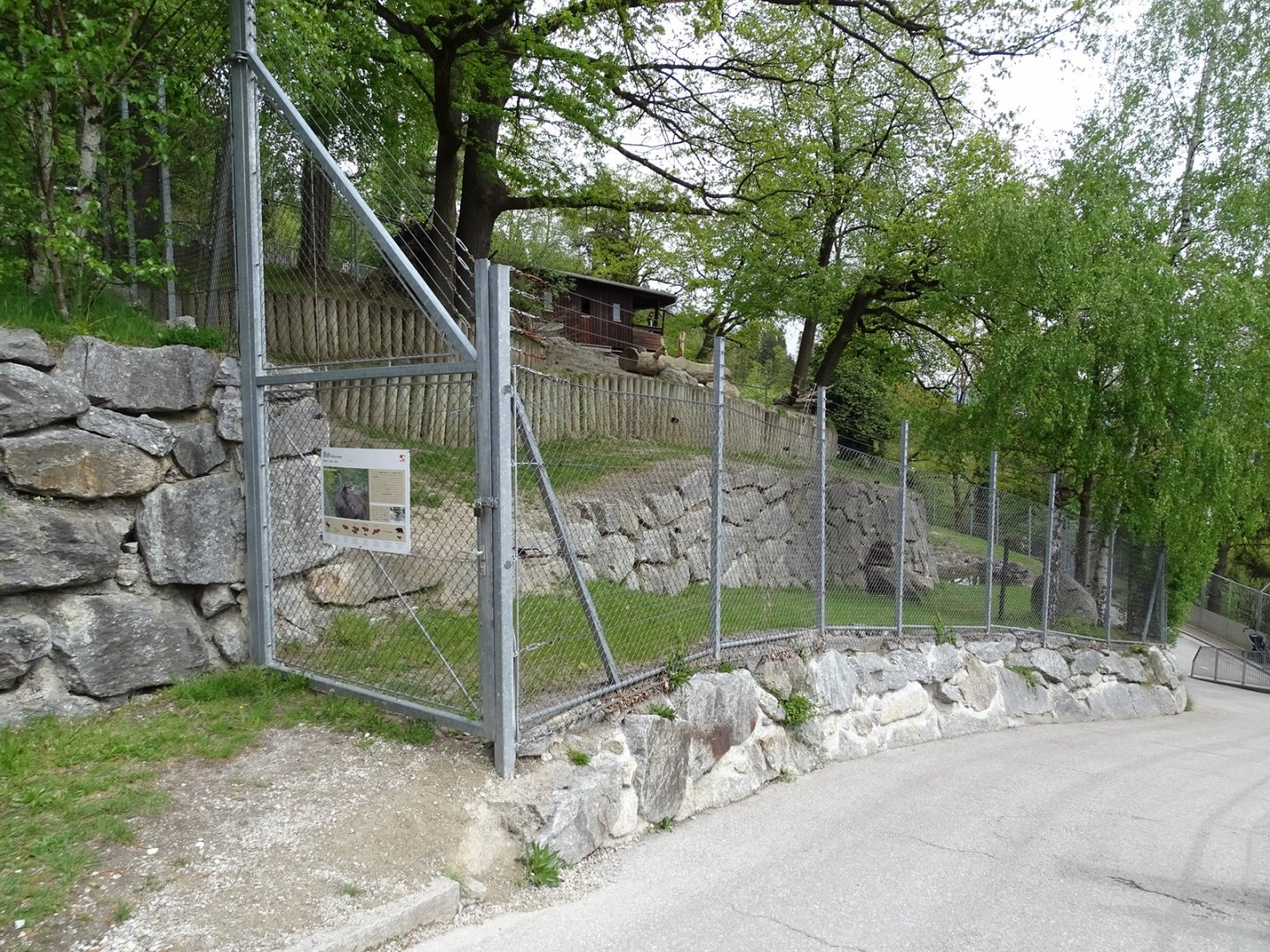
At the other side of the path is the moose enclosure, that you can almost walk around entirely. But before I did so, I wanted to check out some other enclosure in this area first as it has some of my target species. First I took a look into the aviary for black grouse and snow hare. Both are species that I’ve seen on very few occassions, so it was great encoutering them again. This aviary is huge for animals of this size, and again the landscaping is sublime. Usually this is a walk-in aviary, but during my visit the aviary was unfortunately closed to due the grouse showcasing aggressive behavior towards people. The sign mentioned the behavior was relation to courtship, but I did not see any female grouse so I was a bit confused about that. (The enclosure also used to house nutcrackers, but that species left the collection)


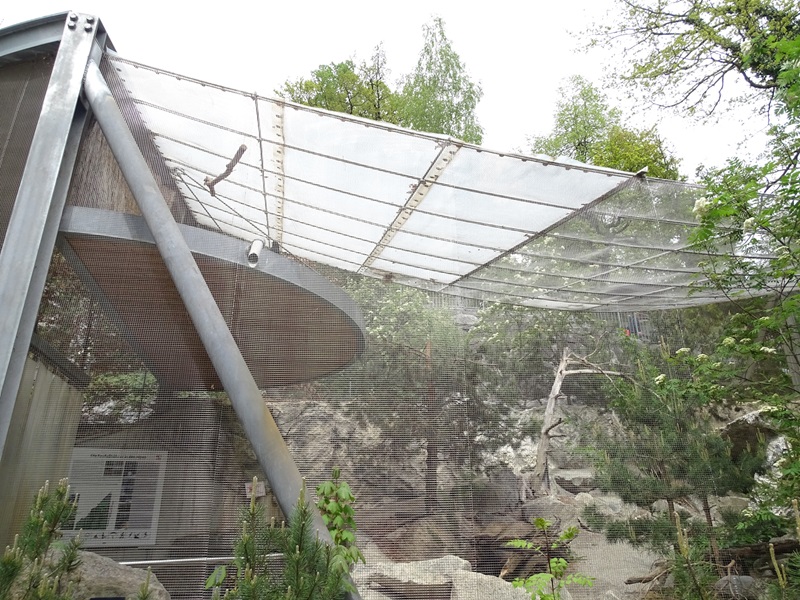
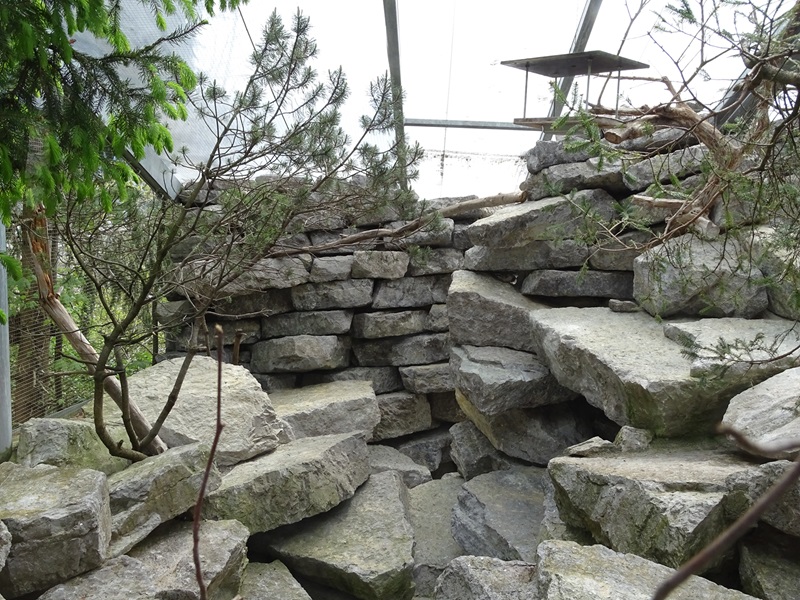
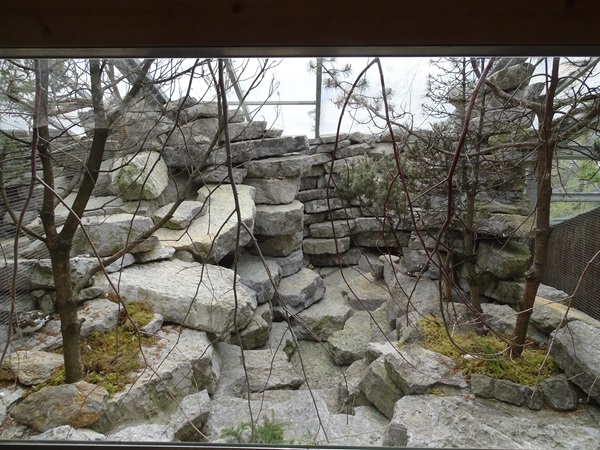
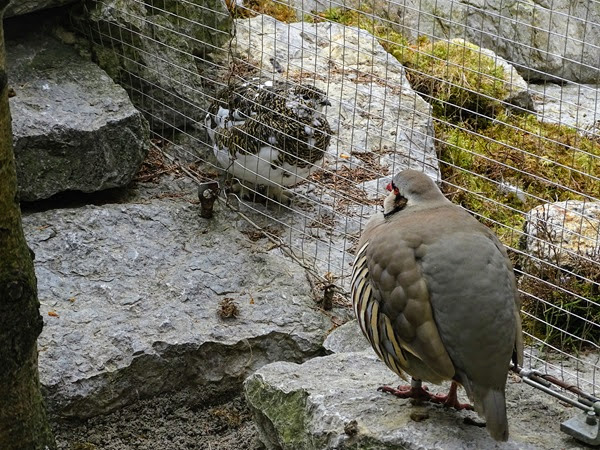
Only a few meters further I arrived at a small viewing hut, which looks into no less than 3 enclosures. On the left side are two (again, very nice) avaries with a glass window on the visitor side. As for the inhabitants, the first of them houses Alpine rock patridge and white-winged snowfinches! Innsbruck is the only zoo worldwide to keep the latter species, so obviously it was a main target for me. Luckily, the couple of finches was very showy and active. The had bred in the previous year, and I did see their offspring in the black grouse enclosure as well! The second aviary is home to my fourth and last main target of that day, rock ptarmigans. This species is very rare in captivity and was another new species for me! While not as huge as the black grouse aviary, the landscaping for this enclosure is once again fantastic. I really love the piles of rocks that gives this aviary a true mountain vibe. Both the male and female ptarmigan showed themselves well. They too had bred the previous year, but unlike the snow finches I don’t think their offspring was on public display.


On the other side of the hut is a viewing into the enclosure for the alpine chamois which could be described as a huge mountain of rocks. Even though I saw this species only 2 days ago, it was only my third time ever! One of them was lying only a meter away from me, I saw one peaking its head from behind some rocks, another one was eating from a trough and a youngster was climbing.


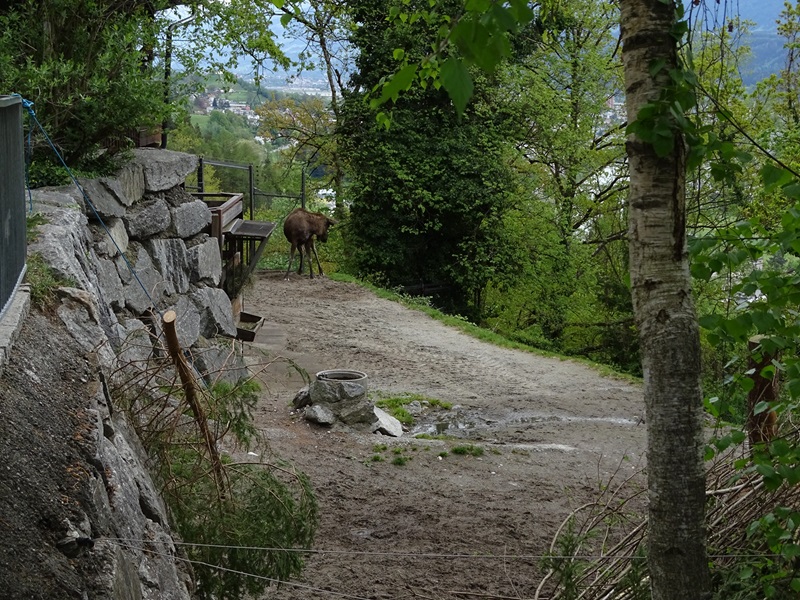
Next I took an upwards sloped path between the chamois and the moose/elk enclosure. From here you will have a top view of the chamois enclosure. If the chamois happen to be at the top of their enclosure, you will be able to see them with the town in the background! On the other side you will also have an observation hut looking over the moose enclosures. These are are also quite hilly, even though moose are not really climbers. The moose were currently at the top part of the enclosure, which is seeminly their favorite spot.


There are three large vulture avaries in this zoo, and I had now arrived at the second one, which has the beautiful bearded vultures. This is also somewhat of a walkthrough enclosure, but unlike the griffon vulture enclosure, the path here runs on the side of the enclosure and is covered, which means you’re still somewhat seperated from the vultures. This is another beautiful aviary, and again you will see the town in the background. There also used to be alpine marmots in here, but the zoo is currently not keeping the species, although they should return at some point (which is why the signage for that species was still there). The vultures had recently bred and the nest with the youngster could be seen if you peeked through a tiny hole in the wall! I love how this provides the vultures with privacy and still gives you the opportunity to view them!


From here I walked straight to yet another walkthrough enclosure, this time for alpine ibexes. This was my fifth time this trip I saw this species, but the first time in a walk-through. The enclosure in Innsbruck is particulary rocky; it’s almost entirely covered in boulders and stones, with a few dead trees thrown in as well, but it lacks greenery. The ibexes also have access to a large wooden shelter building. A minimalistic fence functions to keep people out of the enclosure, but the ibexes could easily enter the visitor are if they want. I did like this enclosure, but the one is Salzburg is still my favorite.

 
DAY 6. 19-04-2024.

ALPENZOO INNSBRUCK

PART 4

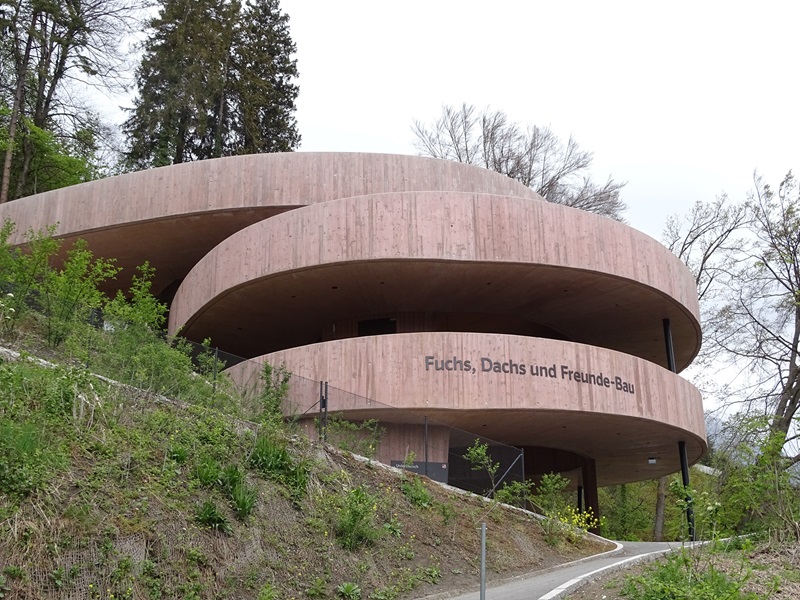
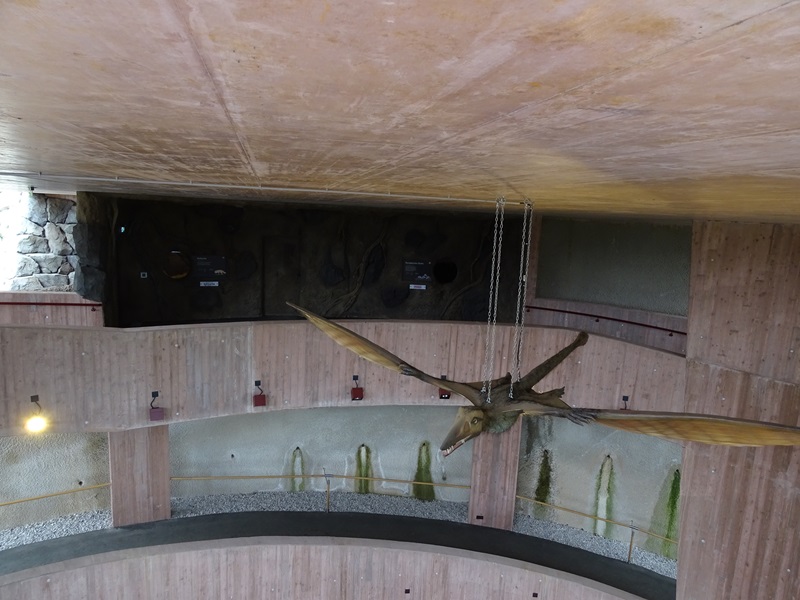
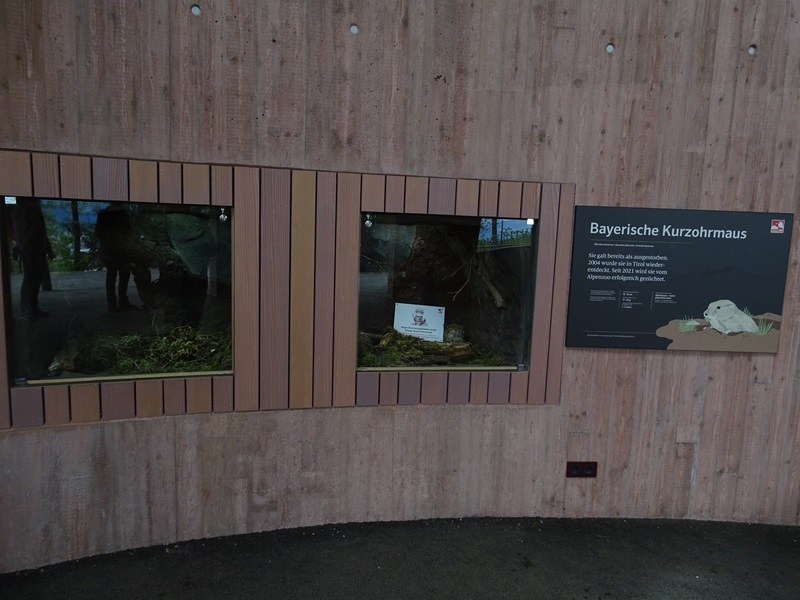
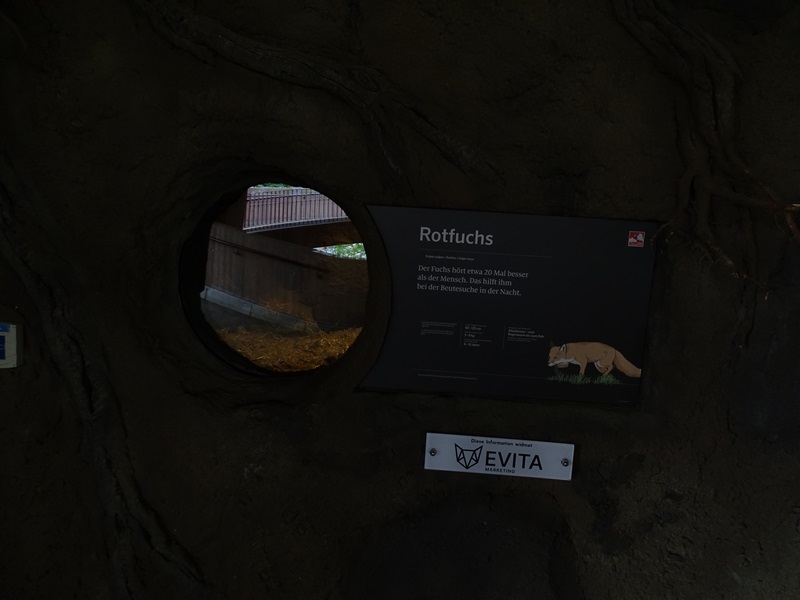
There’s a path that leads from the ibexes back to the wisents, but this is the path I previously mentioned being blocked due to construction works. There is also another path here, the steepest so far, leading to the newest part of the zoo; ‘Fuchs, Dasch and Freunde-Bau’. Like the German name suggests, visitors are able to find foxes and badgers here which were both added to the collection in 2023. At the lowest part is a small enclosure for Bavarian pine vole, a critically endangered rodent. Unfortunately, it was currently empty due to renovations and the species was off-show for the time being. From here, the path goes up in the shape of a spiral, passing some educational displays including an animatronic of a flying pterosaur. On the second level I came across the indoor enclosures/burrows for the red fox and the badger. Unfortunately, I did not see either species. Once I got to the top, I was surprised by the outdoor enclosures of these species; they are huge! Unfortunately, the viewing possibilities are really limited, especially for the fox enclosure; some parts are completely out of view. These animals are not known for their daytime activity, but even if they would be active, getting good views of them would be difficult. From the animals perspective, these are the best fox and badger enclosure I’ve ever seen though!. No voles, no foxes and no badgers… but still I did not regret this climb as the views from the top of this building are phenominal! Also, I believe the fox enclosure must now hold the record for Europe’s highest situated animal enclosure (as it was previously held by the ibex enclosure, and this one is even at an higher altitude)


I had now reached a ‘dead end’ and backtracked past the ibex, moose and chamois back to the black grouse aviary. On the other side of that aviary is a small dot marked on the map as ‘bat motel’, a hut from with visitors can look into an ‘enclosure’ for bats, although there are currently no bats here. Also here is a surprisingly basic and bare indoor enclosure for the lynxes, but I had already seen them outdoors.


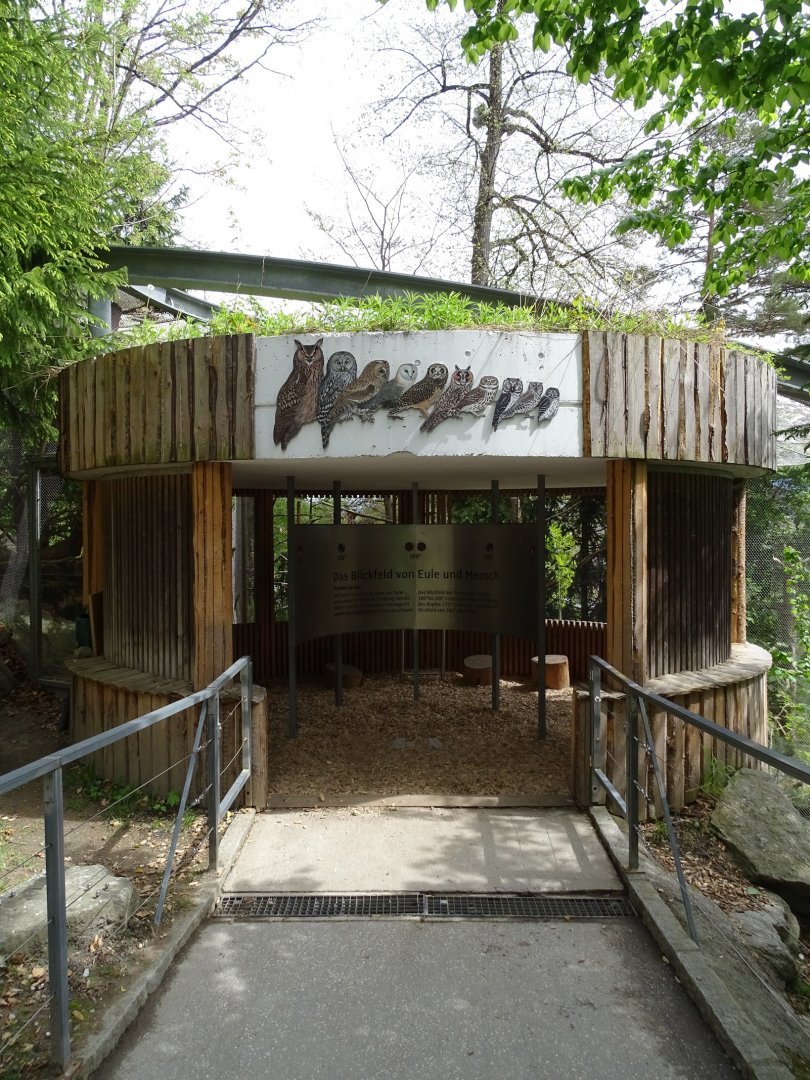
The next stop on the route are the enclosures for owls. From a round wooden observation hut, visitors can look into three different aviaries. Currently, the largest of these is home to European eagle-owl (which was hiding really well), while the two medium sized enclosures are home to tawny owl and boreal owl, the latter of which I was not able to spot.


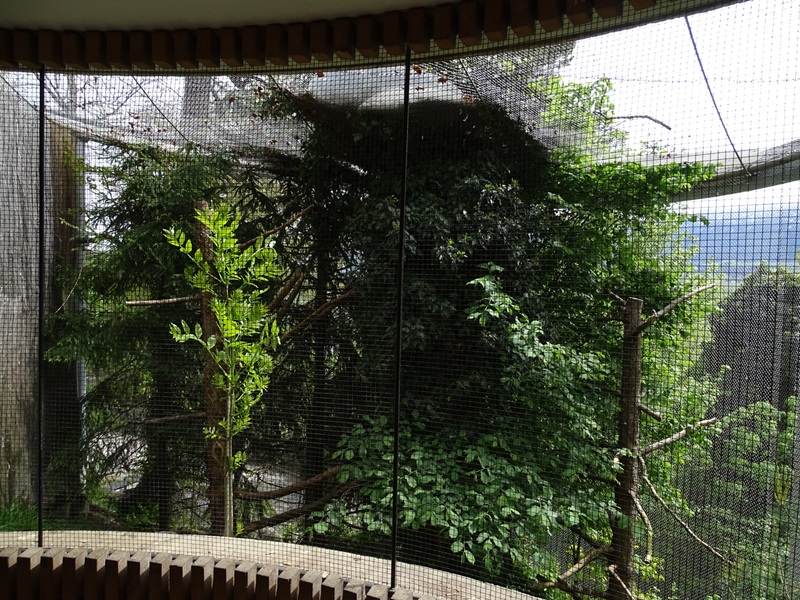
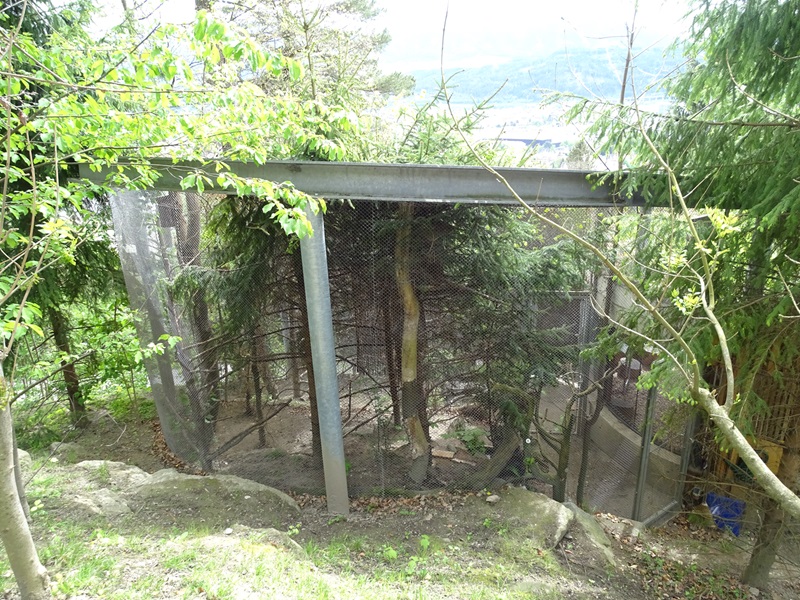
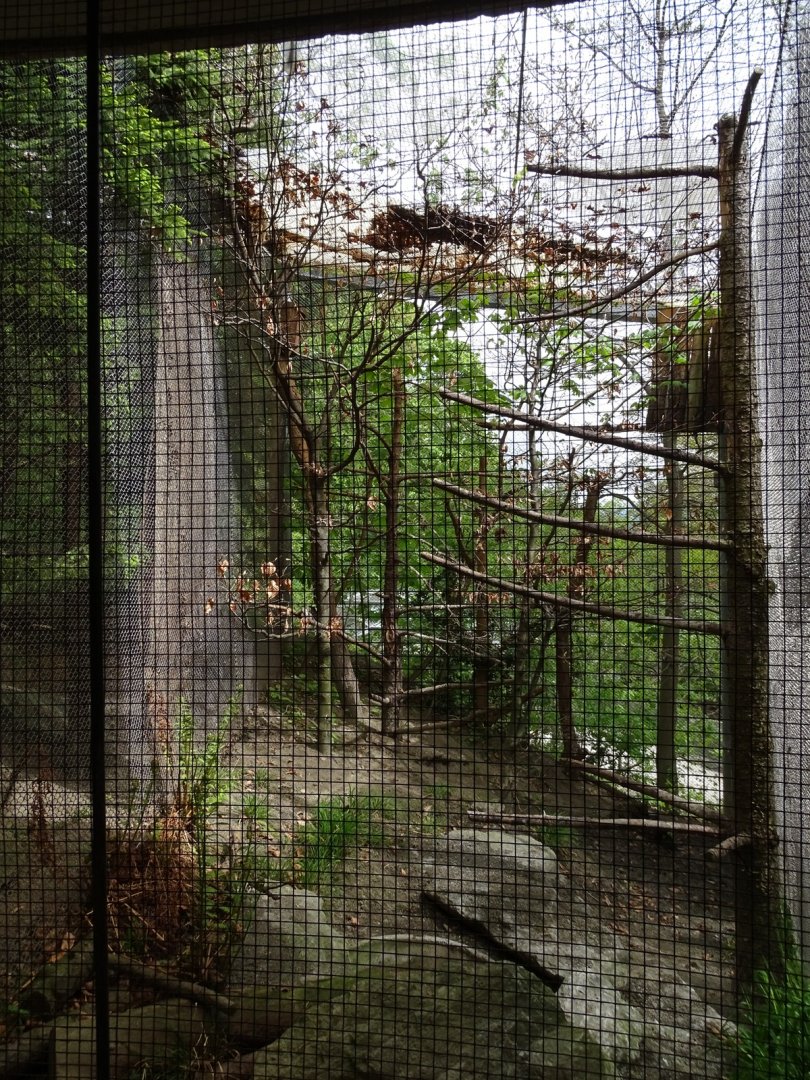
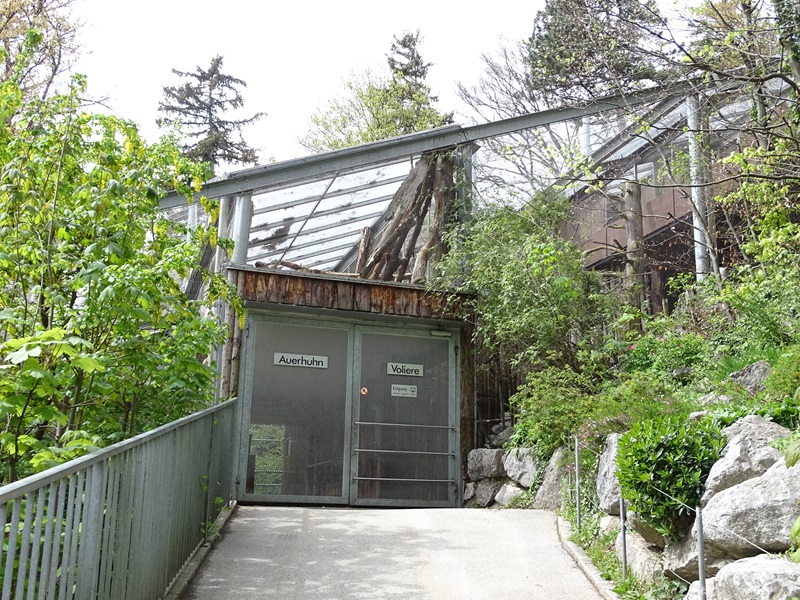
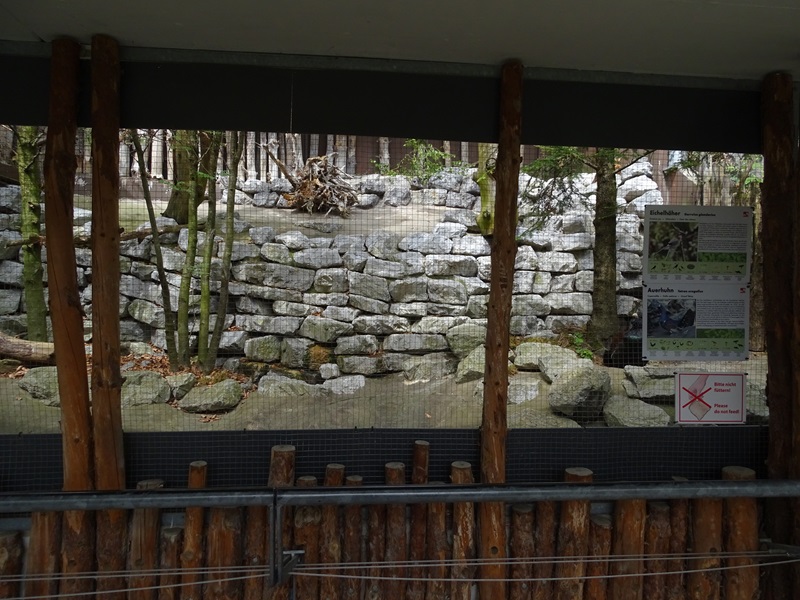
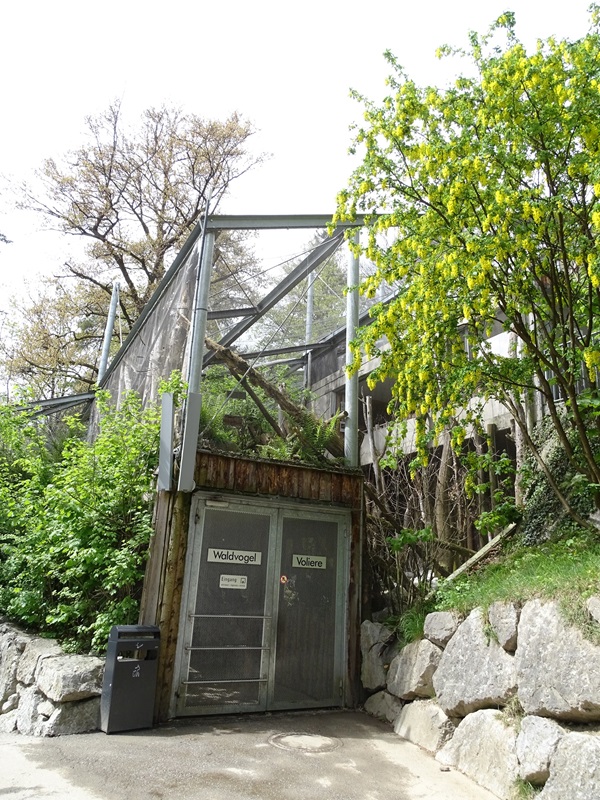
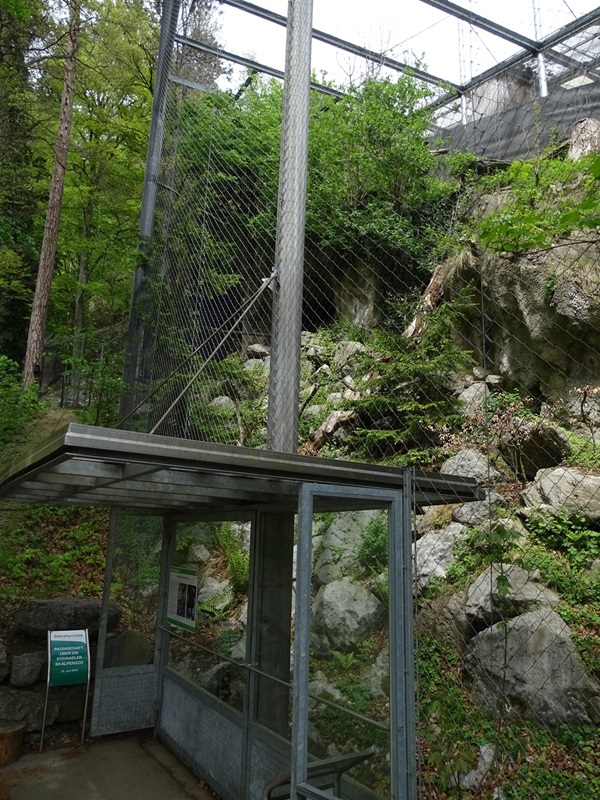
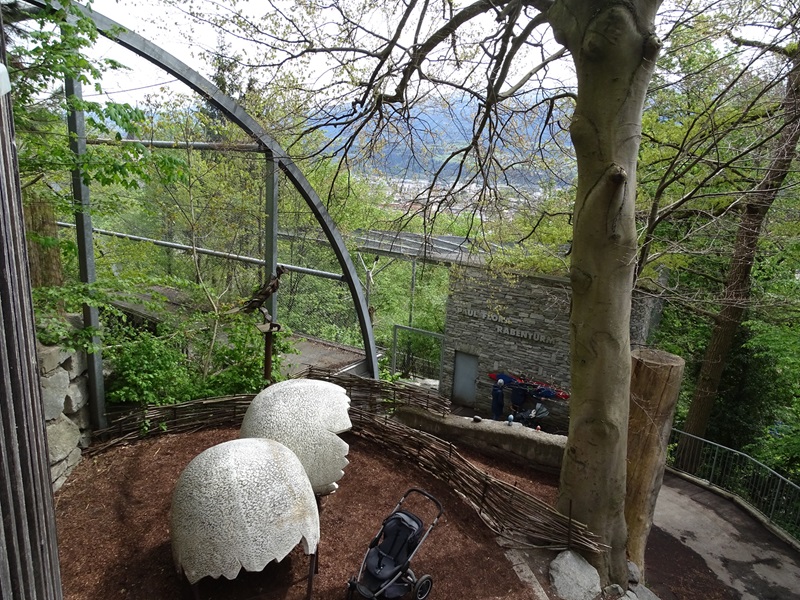
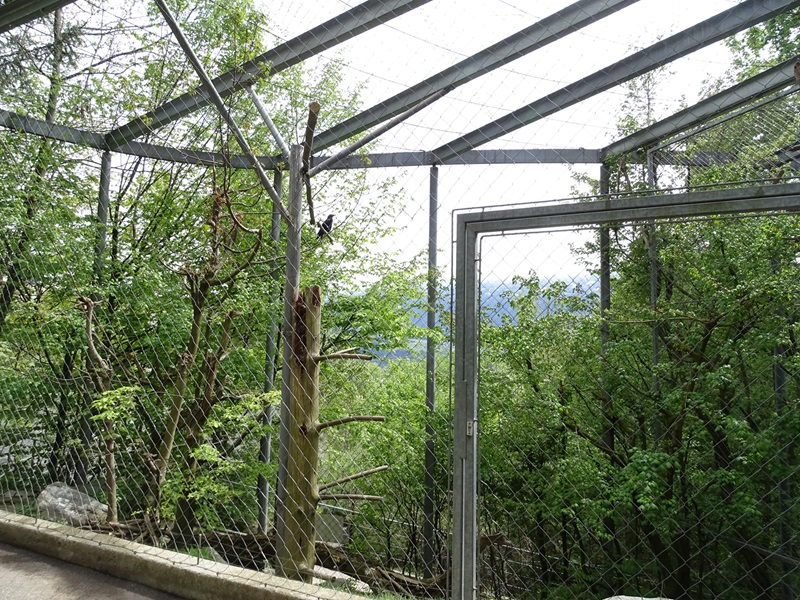
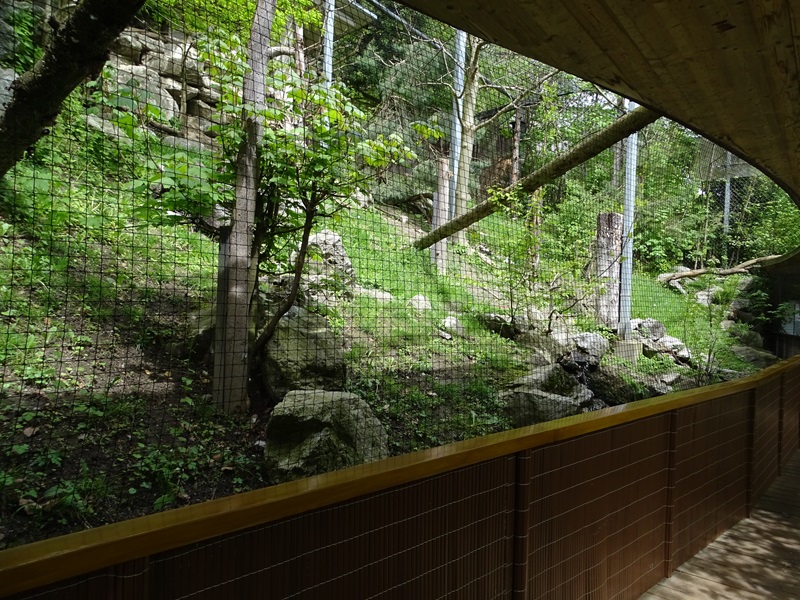
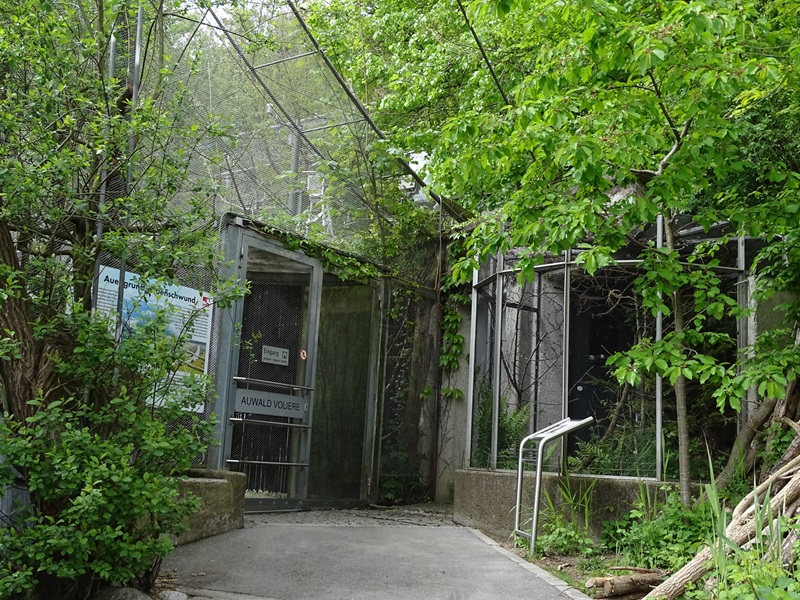
Next I entered the observation hut for the ‘Auerhoen Voliere’ (Capercaillie aviary). This consists of three parts; on the right side is a beautiful two-leveled aviary for the capercaillies, which are behind mesh. I saw one couple in here, who share their space with European jays. In the back is a observation deck into the huge golden eagle aviary, which I somehow missed because I was distracted by what I found on the left side. This is partially a walk-in aviary, and from the observation hut you have an unobstructed top view into the ‘Waldvogel voliere’ (Forest bird aviary). Seeing woodpeckers in a zoo has become a real rare occurance, and so it’s especially unique that Alpenzoo has two species in this aviary. It is the only zoo in the world to display the black woodpecker! Even though I have seen this species on many occassions in the wild, this was the first time I was able to get long and good views of them. And true to it’s name, it was actually pecking wood! The second species is the grey-headed woodpecker, a species currently kept in only 2 zoos worldwide. It was however not a new species for me as I had seen the species before in Plzen as well as in the wild in Thailand. In addition to the woodpeckers, this aviary is also home to a few species of finches; chaffinch, greenfish and bullfinch. After continuing the paths downwards, I came across a second viewing into the forest bird aviary, this time from the ground level and behind mesh.


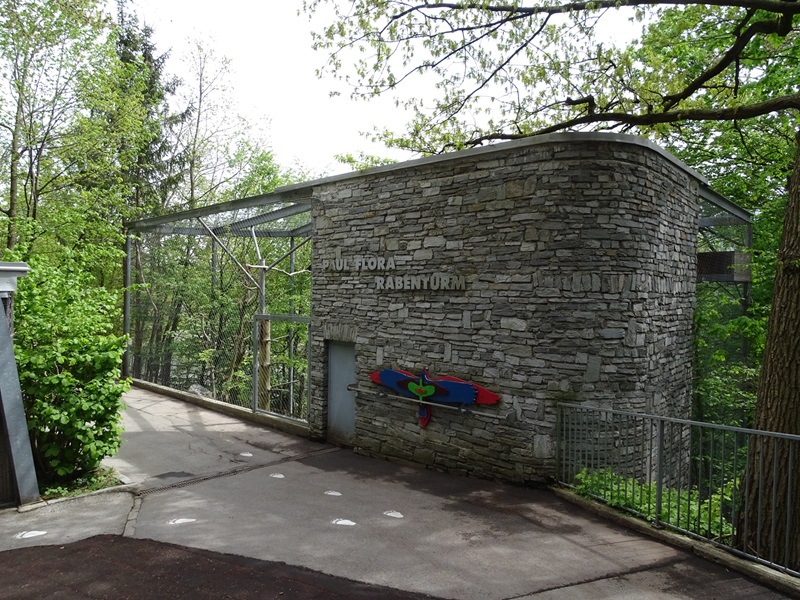
The next stop on the route was the golden eagle aviary, this time seen from the ground. It’s another beautiful and spacious aviary with room for these large birds to fly. A bit further down are two more aviaries. The first one is the ‘Paul Flora Rabenturm, a spacious and really nice enclosure for common ravens. The other is the vulture aviary, this time housing European black vultures. From a covered walkway, visitors can look into this aviary, which is huge and more densely planted than the other vulture aviaries. In addition to a couple of vultures, this aviary is also home to honey-buzzards (not seen) and ural owls.

 
DAY 6. 19-04-2024.

ALPENZOO INNSBRUCK

PART 5

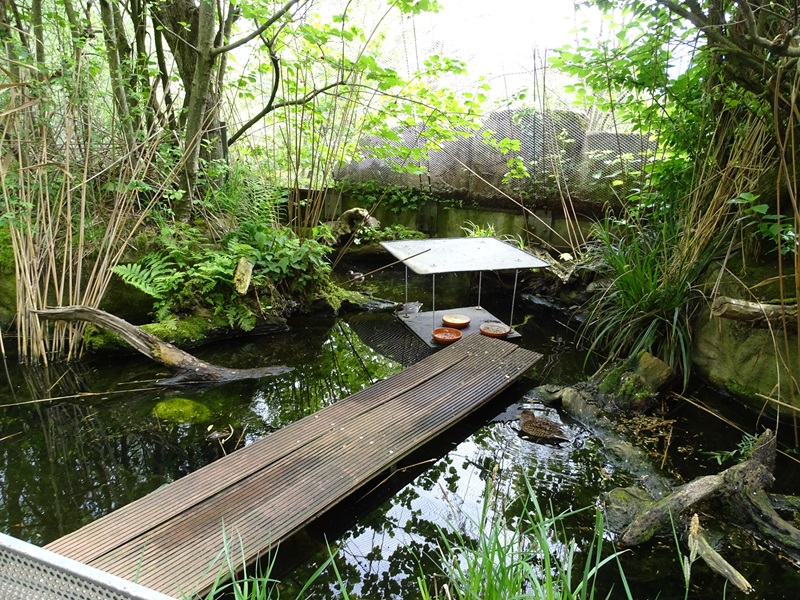
Walking past the ravens, I reached the final aviaries of the zoo; the Riparian forest. The main aviary is a large walkthrough with a bunch of smaller aviaries inside of it. So, aviaries inside a larger aviary (although 2 of them are actually located outside of the walkthrough aviary). Riparian forests are forest that border rivers, lakes, or marshes, and so this aviary is beautifully landscaped with lots of water, reedbeds and other appropiate foliage and features species that strongly rely on water. There was a non-viewable indoor enclosure that was accessible to the birds as well. The first species I found here was a female bearded parrotbill, which kept alternating between the indoor and the outdoor enclose. Also easy to find were the green-winged teals enjoying a swim in the pond and the little grebes. I saw one adult grebe on its nest, and another with two chicks in the pond! This was my first time seeing the young of this species, so cute! With some effort, I also managed to find a little bittern. The only species that eluded me in this large aviary was the barn swallow, a species commonly encountered in the wild, but kept in just 5 zoos worldwide.

The smaller avaries inside of the larger one had a bunch of species that mostly are rarely kept in zoos, although some of them are not hard to see in the wild. One example is the blue tit; in Europe, they are extremely common in the wild yet only 5 zoos worldwide display them. Another is the goldcrest; Innsbruck is the only zoo worldwide with this species, but I’ve seen them in the wild dozens of times. A new species for me was the citril finch; another species kept only in Innsbruck! Three other finch species I saw here are the siskin, European goldfinch and the crossbill. Finally, the only non-passerine in these aviaries was another Innsbruck-exclusive; the lesser spotted woodpecker, the zoos third woodpecker species! I had only seen this species a few times in the wild, so it was great to have a change to observe it again. These birds in these smaller aviaries were quite hard to photograph due to their size and actinevess, as well as the fact that the cages were quite dark and had small mesh.


After exiting the Riparian aviary, I came across a window viewing into the bear enclosure before ending up at the lower level viewing of the beaver enclosure. From this level, you can see into the multi-leveled enclosure through 2 underwater viewing windows. The indoor enclosures for the beavers are viewable here as well and are nicely decorated as a den. This entirely enclosure is really well designed and it was a pity that the beavers were all sleeping inside. I saw three beaver enclosures this trip (Nürnberg, Augsburg, Innsbruck) but not a single active beaver. Side note; the water of the beaver enclosure is also inhabited by common carps.


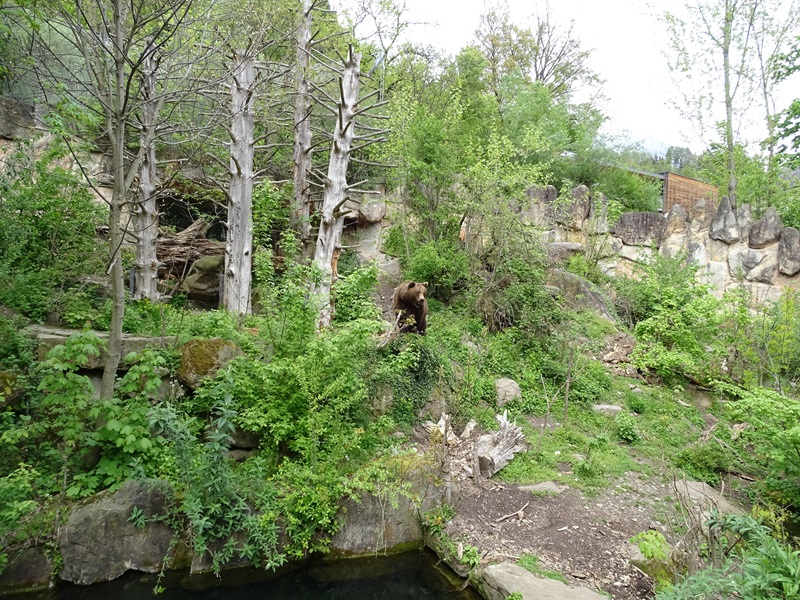
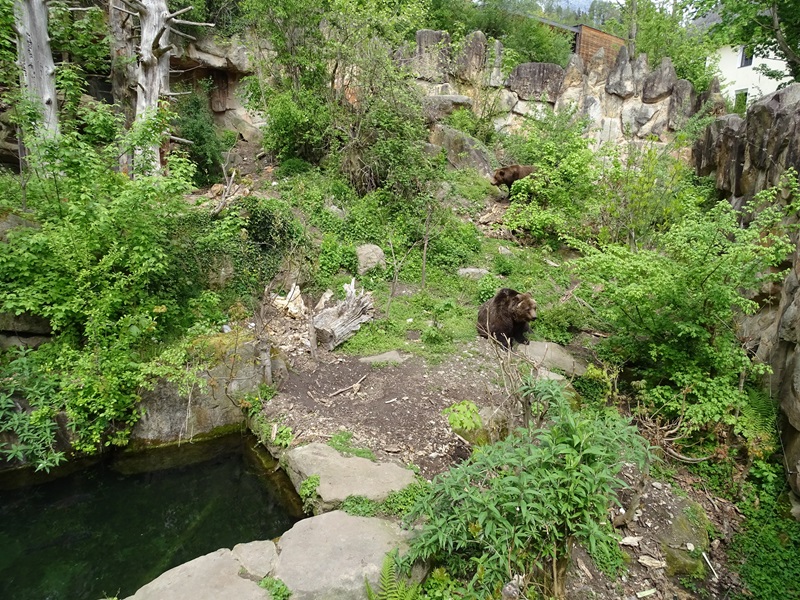
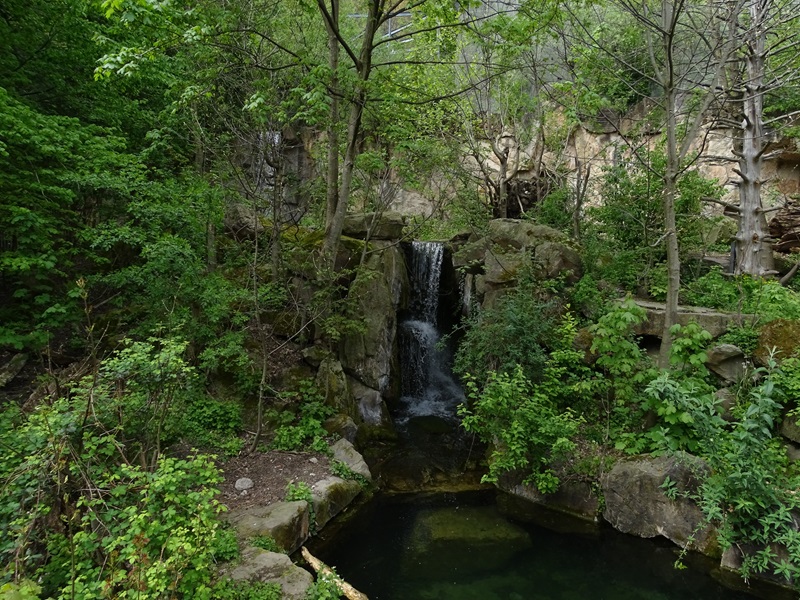
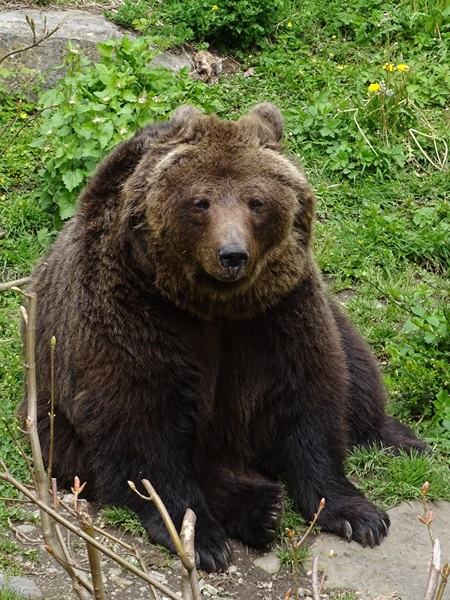
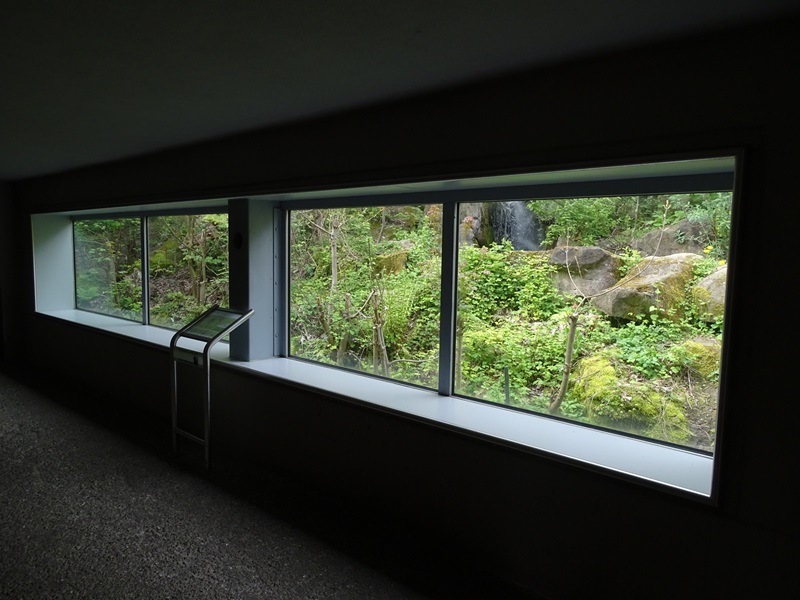
Next I walked up to the main viewing for the bears, from which I got a great, unobstructed view at the enclosure and the bears. The bear enclosure is well sized, but mostly excels at the natural design. The terrain is varied, both in elevation as in surface; the bears have access to grass, sand, rocks, bushes, trees, water and even a waterfall. I saw two very active brown bears and they were a pleasure to watch! (More about this enclosure on zoolex; ZooLex Exhibit - Brown Bear Exhibit)


Besides the aqua-terrarium and aquarium buildings which I had skipped so far, I had only one enclosure to check out in the zoo; the one for the European wild cat. This enclosure has a really interesting design. It’s overal shape is round, but it is devided into a lower part and a higher part that are connected with some logs. The higher part is build on the roof of the indoor enclosure, and it quite open with some dead trees and branches, while the lower part is much more densily vegetated with coniferous trees, making that part a lot darker.. The cat is able to access the higher part through some logs that connect both levels. The indoor enclosure is viewable as well, and it was unfortunate that this is were I found the animal, sleeping. There’s also an additional viewing windows into the bear enclosure from here.


Since I had now seen the entire zoo beside the two attractions I had previously skipped, so I made my way to the Aqua-terrarium, passing the otter enclosure again, this time with some very active otters! Next to the ferret enclosure and before entering the actual building is an outdoor, open-topped (yet covered by the roof) paladarium for marsh frogs (with tadpoles!) and three-spined sticklebacks. A similar enclosure keeps a group of European pond turtles. I really liked the designs of these enclosures, especially the frog one, and they raised expectations for the rest of the aqua-terrarium.

 
DAY 6. 19-04-2024.

ALPENZOO INNSBRUCK

PART 6

I made my way into the actual building and found several nicely done aquaria and vivariums in here, focussing on small fishes and amphibians. The first one I looked at was a tank for sunbleaks and bitterlings. Next up was a paludarium with a whole bunch of yellow-bellied toads as well as alpine newts. A quite large aquarium houses the beautiful great crested newts, as well as weather loaches (not seen). Another large paludarium is home to European tree frogs and smooth newts. The final amphibian is the fire salamander, in a nice nocturnal terrarium. A few invertebrates are displayed as well; there is a tank for crayfish and a tank for dragonfly larvae, and finally a tank with a magnifying glass in front, where one can observe tiny life in the form of water fleas. Overall, the aqua-terrarium is modest in size but great in quality!


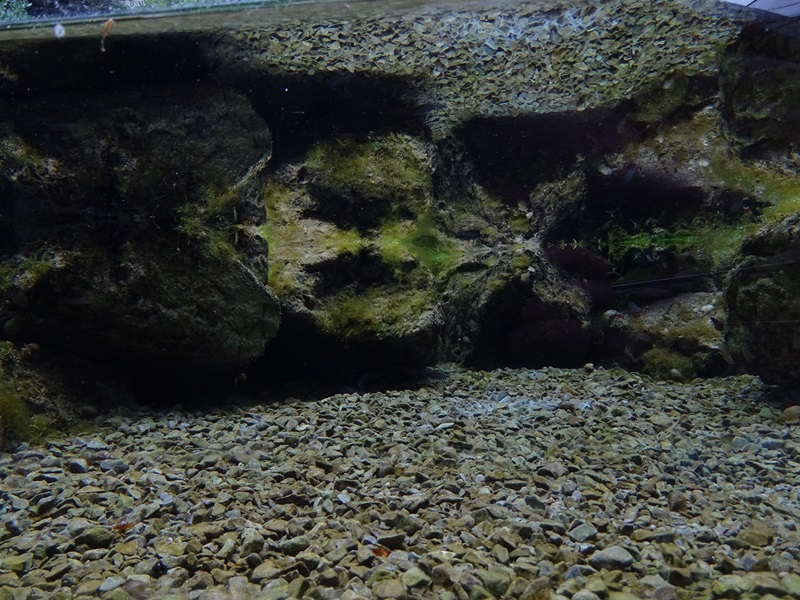
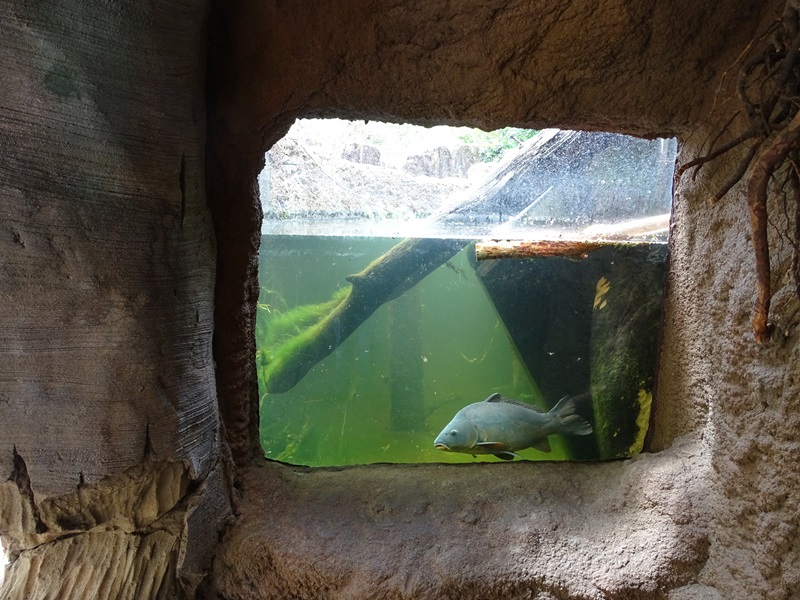
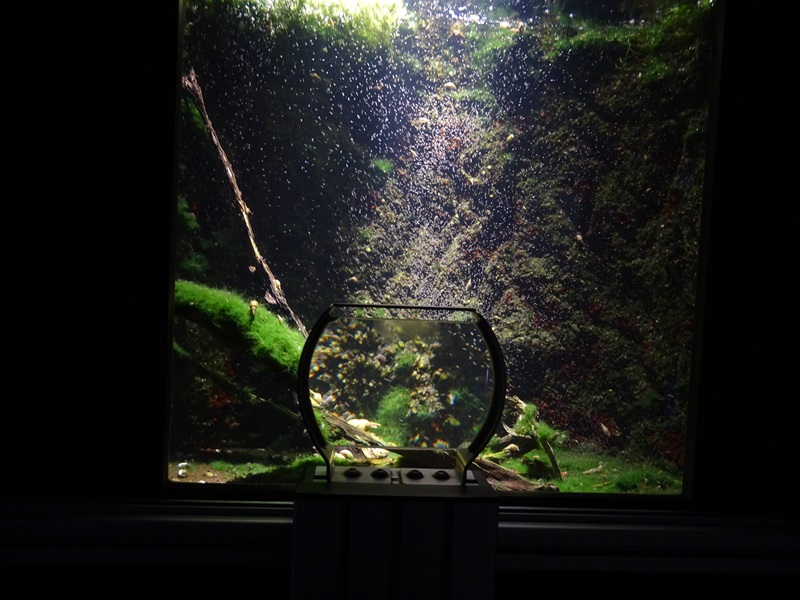
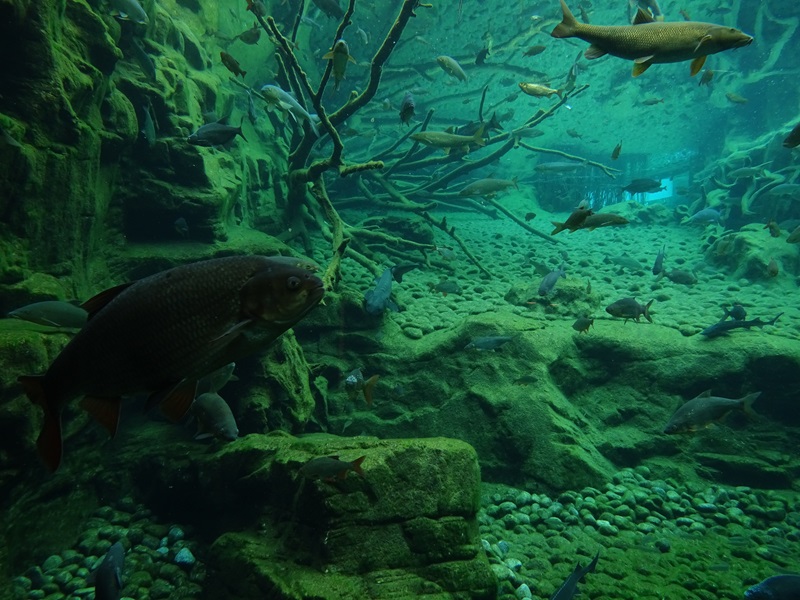
After the Aqua-Terrarium I found myself immediately at the underwater viewing of the Lake Aquarium. To the general public, this tank might not be as appealing as the more popular coral reef tanks or shank tunnels in other zoos. The selection of fish might appear boring at first sight; mostly a bunch of silvery carp-like fishes. However, this aquarium will defenitely be appreciated by most zoo enthusiasts. It’s large and deep, and with its 230,000 litres it is the biggest European freshwater tank in the world! The tank is outdoors/open-topped, meaning it is subject to natural sunlight, rain, snow and all other weather types. I’m sure this tank looks different each time you'd visit, depending on the weather conditions as well as time of day. The design of the tank is amazing; the viewing panel is at the front end, which is its deepest part; the depth gradually decreases until the bottom reaches the water surface at the back of the tank. This gives the visitor the impression they are standing at the bottom of the lake. The water in this tank is crystal clear. Beautiful!
As for the species, the line-up consists of a selection of native fishes, some of them very common and some of them really rare in zoos; Sterlet, Adriatic sturgeon, common carp, rudd, roach, bream, bleak, ide, lake chub, common barbel, nase, Danube roach and vimba.


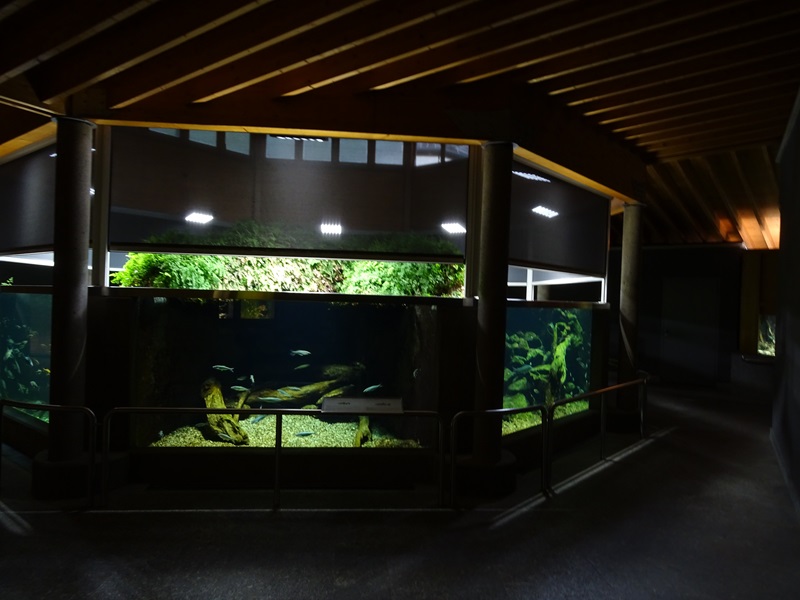
After the main tank, I walked through a short hallway until I reached the other part of the aquarium. In the middle of a subterranean room are a collection of tanks, who together form a round shape the visitors can walk around. Some or most of these represent a different section of a river, so the tanks basically take you on a journey through a river from source to mouth.

The first tank I looked at was signed as the ‘Äschenregion’ and featured four species; common dace, souffia, greyling and another of which I cannot read the signage on my photo (oops).
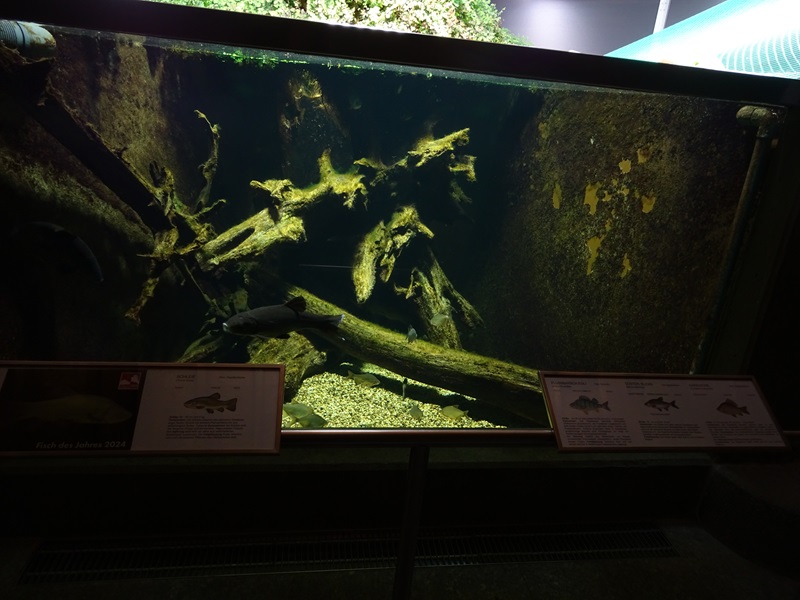
The second tank was home to tench (for some reason awarded ‘fish of the year 2024’), white bream, Crucian carp and European perch (not seen).
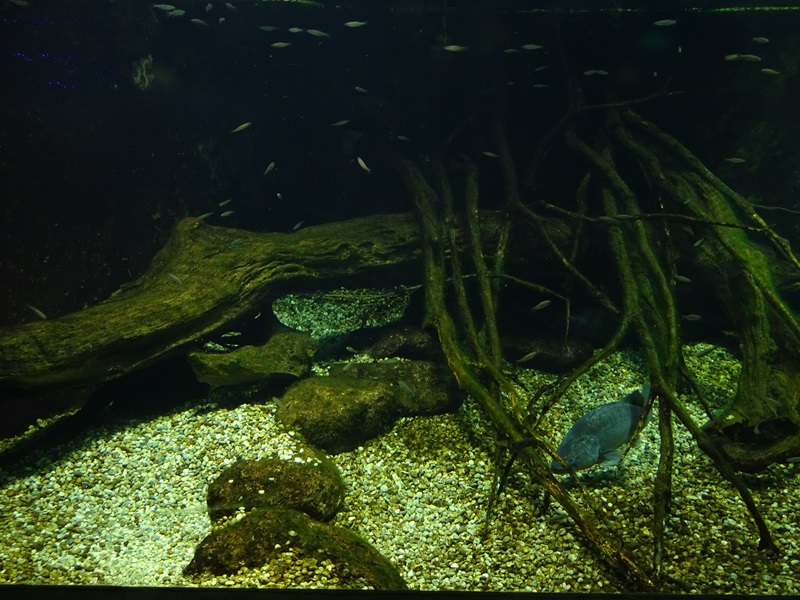
The third tank has a few of the giants of European rivers; one of each of Wels catfish, northern pike and European zander.
In the fourth tank are a few of species of which I forgot to photograph the signage, but I know three of them are the pearl roach (found in just 3 zoos wordwide), Italian soufflia (only 2 zoos) and Italian nase (also 2 zoos). There could have been others.
The fifth tank is home to Danube bleak (3 zoos) and lake char (not seen)
These tanks were not as impressive as the large Lake Aquarium, but still quite nice.


In two of the corners of this hallway are also a few smaller tanks for smaller species of fish. In one corner I found a tank for a single brown troat as well as a tank for a single burbot. A mixed tank keeps schneider, Danube gudgeon and Danube barbel with the latter two species being unique to this zoo!
In the second corner I found a tank for ruffe and a tank for Crussian carp (second holding of this species). Another tank is home to Danube whitefin gudgeons (2 zoos worldwide) and stone loaches (not seen). The final three tanks are all home to a single species of bottom-dwelling fishes; the bullhead, the freshwater blenny and the Padanian goby (3 zoos in Europe). The final tank houses the Italian freshwater loach (2 zoos)(not seen) and the freshwater shrimp Palaemonetes antennarius. All of these smaller tanks looked fantastic and were quite different from each other! Even a species as obsure as a small fish that 99% of people have never heard of gets love and attention at Alpenzoo! Most of them were well-lit as well, making photography possible.


I excited the aquarium building by going up a stairs and found myself back at the large Lake Aquarium, this time admiring it from above. With that, my walk-through of the zoo was concluded. I did a quick resivit of the wallcreepers and pine martens before making my way to the exit. Before leaving, I checked out the souvenir shop and was happy to see the Alpenzoo sells souvenir guide books! I purchased the new guide book as well as an older version they were having on sale. They are the only guide books I was able to buy during the trip as no other zoo sold them. I also quickly checked out the small zoological museum that is located at the exit of the zoo, but I didn’t stay long as I was already 15.15 and I was still planning on riding the Hungerburgbahn to enjoy the views of Innsbruck from higher up.

In conclusion, I absolutely loved Alpenzoo Innsbruck. It is one of the most beautiful zoos I have visited. Of course, the views you get from within the zoo are amazing, but the design of the enclosures and visitor areas is top notch as well. Every single enclosure, aviary, terrarium and aquarium looks great, and you can tell Alpenzoo really cares about quality. Wether its a huge aviary for vultures, an enclosure for tiny shrews, a paddock for wisents or a tank for blennies, the Alpenzoo puts lots of care in every single one of them! From a husbandry perspective, all of the enclosures are at least decent, and a lot of them are great. There’s not a single enclosure I would classify as bad, which is not something a lot of zoos achieve. The Lake Aquarium was the best of its kind I’ve seen, and I can say the same for the griffon vulture aviary or the fox and badger enclosures.

As for the animal collection, I am a huge fan of this zoos focus on native fauna. Lynxes, chamois, ptarmigans and newts might not appeal to the general public as much as lions, giraffes, parrots or clownfishes, but I can appreaciate any species if they’re displayed in an interesting way. Some personal highlighs for me included the pine martens, shrews, chamois, grouses, woodpeckers, rare passerines like the wallcreepers and great crested newts. I saw a bunch of new species in this zoo, as well as a few I had only seen in the wild but never in captivity. It was a bit disappointing that a lot of the mammals were no-shows (fox, badger) or inactive (beaver, ferret, wildcat) but that’s not surprising and I will not hold it against the zoo.
All things combined, Alpenzoo is a serious contender for being in my top 5 of favorite zoos!

Next up: Zoo Karlsruhe
 
I didn’t stay long as I was already 15.15 and I was still planning on riding the Hungerburgbahn to enjoy the views of Innsbruck from higher up.

I'd be interested in your thoughts/opinions on this - I'm very fond of the Hungerburgbahn and the view it allows myself, and last time I visited Innsbruck (shortly after your visit) I actually hiked all the way up the mountain and took the cable-car down :)
 
@TeaLovingDave

I really enjoyed it. I can always appreciate a good view. Unfortunately I did not have time to get all the way to the top of the mountain (and neither was I dressed properly).
I did look around for birds, but saw none.

DAY 7. 20-04-2024.

After 6 consecutive days of zoo visits, day 7 would be zooless, as I needed to make my way back from Innsbruck to München, and then from München to Karlsruhe. This is an entire day worth of travelling (especially with Deutsche bahn and their delays) but an inavoidable necessity. I left Innsbruck in the early morning, and arrived in Karlsruhe in the evening. The Karlsruhe zoo was on the agenda for the next day.

DAY 8. 21-04-2024.

ZOO KARLSRUHE
PART 1

After Zoo Heidelberg, this zoo was the second zoo of my trip I had visited before, all the way back in 2007, when I was still in high school.
I didn’t remember everything about this zoo, but I remembered not being impressed by it and really disliking some of its enclosure. I remembered a concrete polar bear enclosure, a poor monkey house and a poor big cat house. So, why revisit it then? Well, there were a few reasons for me to return to Karlsruhe;

Firstly and foremost, geographical convience. The train journey from Innsbruck back to the Netherlands was too long to make it in a single day, so I had to stop somewhere down the line. Karlsruhe was on the route anyway, wether I would make a stop here or not.
Secondly, like I stated before, my other visit was a long time ago, and my memories of the zoo were vague and in need of being refreshed.
Thirdly, because it had been such a long time, surely the zoo had changed (and hopefully improved) since then, and new stuff has been build. Most significally, the Exotenhaus did not exist yet in 2007, and seemed like it was worth a visit.
Another reason for me to (re)visit the zoo is their collection of frogs; with some luck, I would be able to add 6 new species to my list, with the Rio Pescado stubfoot toad being my main target.
And finally, Karlsruhe doesn’t just have the zoo to offer, but a wildpark (Tierpark Oberwald) and a museum with live animals as well, neither of which I visited before. I ended up visiting all three, and combined they make Karlsruhe a worthy destination for a zoo fan.

My hotel was only a 5 minute tram ride away from the zoo, which is located in the town centre, next to the train station! This very convenient location must partially explain the high number of visitor this zoo gets annualy – over a million!
Zoo Karlsruhe is a city zoo, located within a large city park. The park is divided in two almost equally sized parts by a public bridge, each with its own entrance. Only about a third of the available space is actually used for enclosures and animal houses; the rest of it is mostly a city park with different kinds of gardens (like a Japanese garden) and lakes with a gondeletta ride (for which you need to pay extra). Almost all of the animal enclosures and houses are located in the south half, except for the Exotenhaus and petting zoo which are north from the bridge. I have never seen a city zoo with so much space not utilised for ‘zoo stuff’.
The zoo was founded in 1865 and is entirely under monument protection, which probably explains why it is the way it is; there are probably laws prohibiting the zoo to build animal enclosures on most of the ‘undeveloped’ property.

I entered the zoo through the southern entrance. The first animals you will see here are the Cuban flamingo’s. You can already see (and especially hear) them from the street, without even entering the zoo grounds. There is absolutely nothing noteworthy about the flamingo enclosure; it’s mostly a fenced off, muddy plot of land with some water, that can only be viewed from one side. Their indoor enclosure is a basic glass building; nothing more than some walls, a roof and a few hanging lamps. Very underwhelming. Even less impressive is the enclosure right next to it; a fenced off plot of mostly dirt for some Cape Barren geese with offspring. This zoo is not off to a good start.


Across the flamingo’s is a huge lake (the ‘Schwanensee’ / Swan Lake) with one of two stations for the gondoletta ride. My original plan was to take a boat to the other side of the zoo and start with the Exotenhaus and work my way back from there. However the boats would not be operated until 11 pm, so I decided to just start walking. Because the route from the flamingo’s to the northern half of the zoo would not pass any other enclosures, I backtracked a tiny bit past the entrance until I reached the enclosure for coatis. I did quite like this enclosure. It offers the coatis both plenty of ground space and climbing structures, it is well shaded, has some good elevation and looks natural.


The next animals along this path are the Persian gazelles. They have two enclosures that can be split, but during my visit they were connected. These enclosures are also quite good; plenty of open space, but trees for cover as well. The back part of the enclosure is higher than the front part, providing for some nice elevation. I saw a single male and a large group of females, over 25 of them. It should come as no surprise these gazelles breed well here! (a majority of the male offspring get to live out their days in Tierpark Oberwald)


I had now arrived at the ‘Bergwelt Himalaya’ a small themed area opened somewhere before 2015. The first of two species kept here is the red panda; they have two nicely done enclosures here, with an (partly elevated) path between them. I saw a very active panda in one of the enclosures.


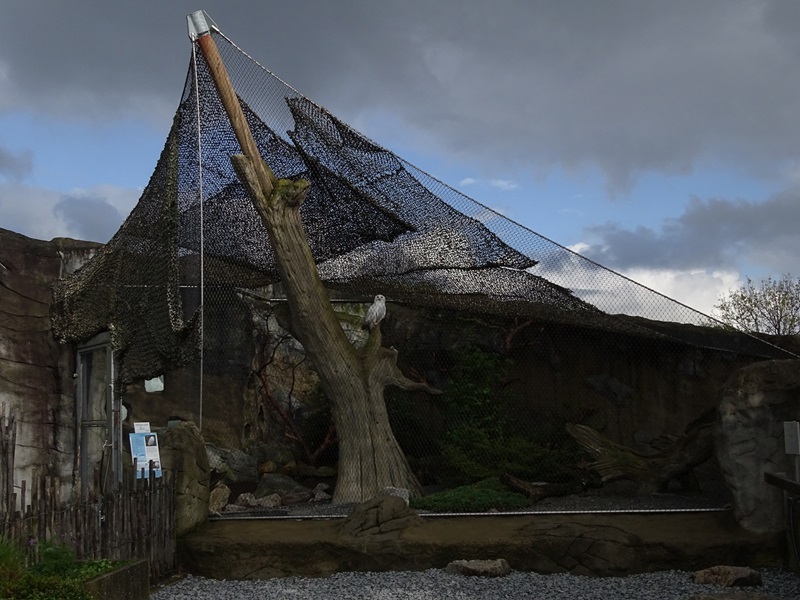
The other species here is the snow leopard. The main snow leopard enclosure is one of the better enclosures of the zoo. It is build on a hill and is lush and spacious. The visitor observation area uses a lot of (mock) rock and large glass viewing windows. I initially did not see a leopard, but on a rewalk I saw one walking around. If my memory serves me right, these animals were kept in a small cage in the carnivore house ih 2007, so this is a huge improvement of living conditions. At the end of the path is a aviary for snowy owls. This is one of the more themed enclosures and it looks quite good being build into a cliff of rock mock. Space wise though, it is not that large.


From the elevated visitor path along the snow leopard enclosure you also have a good overview of the new (opened in intervals between 2022 and 2023 I think) giraffe enclosure and Giraffe House, part of the ‘Afrika-Savanne’. I think this savannah enclosure is quite good; it is large enough for a small group (currently 2) of giraffes, and has some nice green parts (trees and bushes). Appartment buildings are the backdrop here, but it didn’t bother me. In fact, it adds some charm as this is after all a city zoo! According to the map, sable antelopes should be added to the savannah at some point, and signage mentions crowned cranes which I did not see.


The Giraffe House looked nice and modern from the outside. The giraffes also have access to an indoor paddock, which they were in at the start of the day (they were outside during my rewalk). Although significally smaller than their outdoor enclosure, the giraffes have some room to walk when they’re indoors. When indoors, they can be seen through large glass panels that make up a large part of the building’s exterior. There is also a raised platform for eye-level viewing of the giraffes when they are outside.
When walking around the Giraffe house, you will also find a few additional enclosure incorporated into the building. Most significant is a meerkat enclosure, which is dominated by a large tree in the middle and otherwise consits of sand, rocks and a glass wall to keep them in. There is also a large aviary for grey parrots, but those were not out. I did see unsigned crowned lapwings in here though! Lastly, build under the stairs to the raised platform is a steel cage for village weavers which I did not like because of its small size and barren design.


The giraffe house can be entered by visitors. Once inside, I found it to be very small; this won’t be a fun place to be when the zoo is crowded. The visitor area is surrounded by indoor enclosures on all sides; in front are the seperation cages for giraffes, which I did not see being used this day. On the right side is an open-topped indoor enclosure for meerkats. It was nicely decorated but not very large (but the meerkats were outside anyway). On the left, the small indoor aviary for the grey parrots and at the backside, the indoor aviary for the weavers. The aviary for the parrots is particulary small and surrounded by guest path on 3 sides, providing absolutely no privacy or cover. I was disappointed to see the parrots being detained in their indoor aviary for the day because their outdoor aviary is a lot better. Overall, the giraffe house was a mixed bag, being overall much better on the outside.
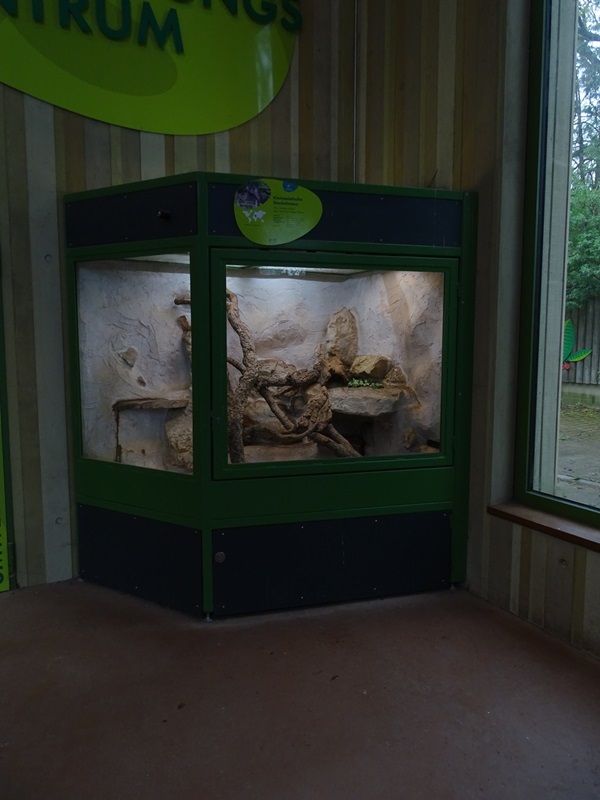
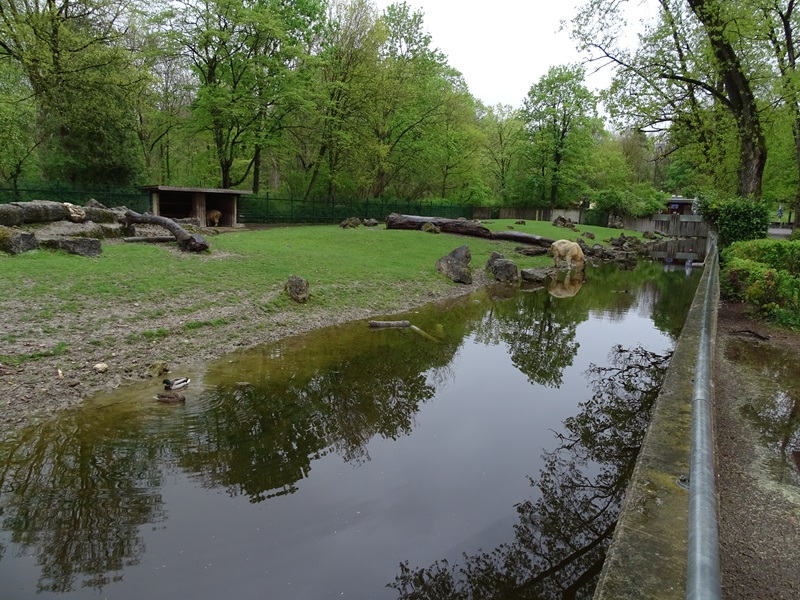
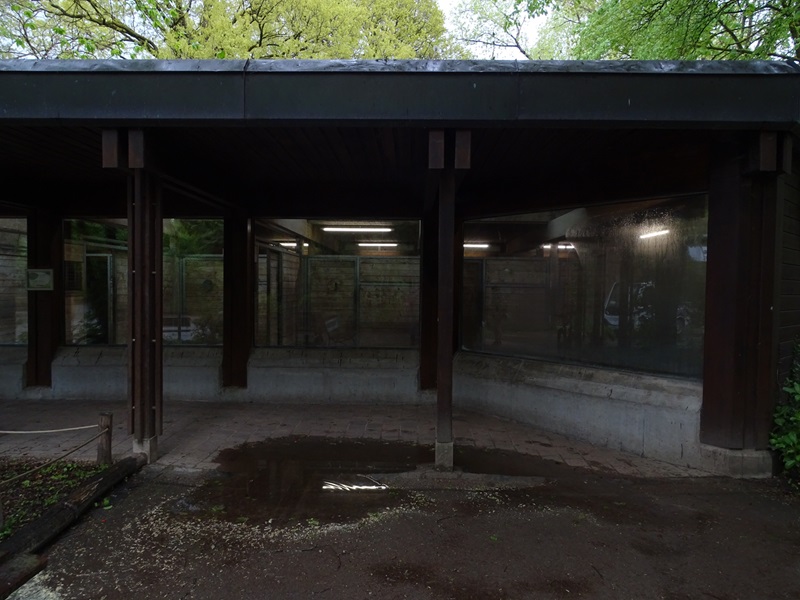
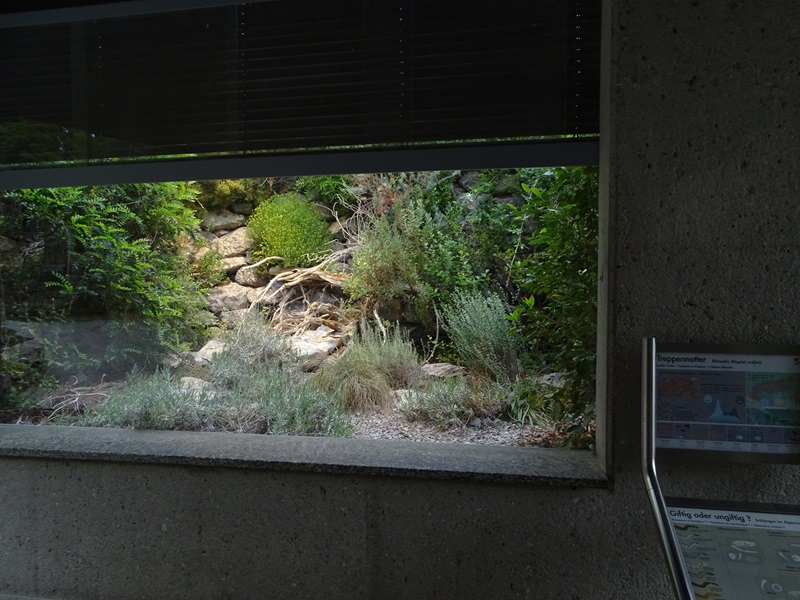
 
Back
Top