Werribee Open Range Zoo Werribee Open Range Zoo Review (November 2023)

Zoofan15

Well-Known Member
10+ year member
Introduction

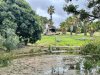
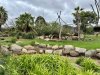
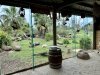
Better late than never, I thought I’d follow on from my review of Melbourne Zoo by reviewing Werribee Open Range Zoo. I visited in November 2023.

Werribee Open Range Zoo comes under the Zoos Victoria umbrella; along with Melbourne Zoo, Healesville Sanctuary and Kyadram Fauna Park. It’s one of four open range zoos in Australasia. The zoo was originally known as Werribee Zoological Park and was established by the Zoological Board of Victoria in 1975. It opened to the public in 1983. The zoo is situated on around 225 ha and is an approximately 30 minute drive from the Melbourne CBD.

The zoo is primarily African themed; though exceptions include the Australian precinct and Werribee River Trail; and a handful of ungulates (Indian antelope, Przewalski’s horse and American bison). The biggest detraction from the African theme will of course be the elephant complex due to open early 2025.

Entrance:

upload_2024-10-20_20-52-39.jpeg

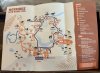
Map (November 2023):

upload_2024-10-20_20-53-24.jpeg
 

Attachments

  • upload_2024-10-20_20-52-39.jpeg
    upload_2024-10-20_20-52-39.jpeg
    211.9 KB · Views: 67
  • upload_2024-10-20_20-53-24.jpeg
    upload_2024-10-20_20-53-24.jpeg
    153.3 KB · Views: 70
Part One - African Lions and African Wild Dogs

I figured the Safari Bus was going to get busier as the day went on, so at the ticket booth, I found out the time for the first main ride (a kid’s session precedes the main rides). It left me with enough time to see a few exhibits first, so I headed straight for the lions. Werribee Open Range Zoo (or more specifically the walking route) was much smaller than I imagined in that within a few minutes I was over the other side of the zoo.

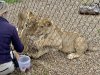
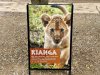
It never ceases to amaze me that this open range zoo had only held lions for 20 years (2003) upon my visit; with the first lions arriving from Melbourne Zoo two decades after the zoo opened to the public. Sisters Jespah (1990) and Gopha (1990) arrived December 2003; along with Jespah’s daughter, Jarrah (2000), who was part of the last litter of cubs born at Melbourne Zoo. All three are long deceased, as are the two males, Tonyi (1996) and Tombo (1996), who arrived from Auckland Zoo via Melbourne to join them the following year. Breeding from this pride was unsuccessful; but the current pride descends from Tonyi’s grandson, Johari (2003). He transferred in from his birthplace of Taronga Zoo to form a pride with two lionesses from Denmark, Nilo (2012) and Nairibi (2012). They produced a total of 11 surviving cubs between 2015-2017 and are now a well represented line regionally. The current pride is headed up by Sheru (2016), who transferred in from Sydney Zoo to form a pride with Nilo (2012) and her daughter, Asali (2017). Asali was the only one of the aforementioned 11 cubs to remain at Werribee. Nilo had given birth to three cubs (Mwezi, Jango and Kianga) five months prior to my visit, which was exciting as it was the first time I’d seen lion cubs this young since 2005.

Nilo:

upload_2024-10-20_21-33-43.jpeg

Nilo and cubs:

upload_2024-10-20_21-34-48.jpeg

Jango and Kianga:

upload_2024-10-20_21-35-20.jpeg

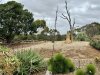
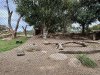
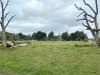
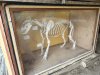
Werribee has two on display lion exhibits (1800 m2 and 2000 m2 in size); though the second one is separated from the first via a ha-ha (very 18th century) and gives the illusion of being an extension of the first. Nilo and her cubs were in the first exhibit as I arrived, with Sheru and Asali later joining them. They’d been held back so the cubs could be fed milk via syringe at the fence line. The cubs had clearly built up a good relationship with the staff and it was great to see them up close. The view points to the exhibit were a combination of open viewing, mesh and viewing windows. The exhibit itself was relatively simple, with a mixture of grass and bark; and a few trees to provide shade cover. It was by no means a bad exhibit, though not as impressive as Orana’s Lion Reserve; or the photos I’ve seen of Monarto and Dubbo’s exhibits. Two small touches I really liked were the signage boards on the way to the lion exhibits denoting the names of each of the triplets; and the exhibition of a lion skeleton in a box. The lion in question was a male named Tsavo, who lived at Melbourne Zoo from 1988 until his death (circa 2001). Tsavo is survived in the region to this day by his great-grandchildren, Mlinzi and Makena.

African lion exhibit (front):

upload_2024-10-20_21-35-56.jpeg

African lion exhibit (front):

upload_2024-10-20_21-36-24.jpeg

African lion exhibit (back):

upload_2024-10-20_21-36-51.jpeg

Lion cub profile (Kianga):

upload_2024-10-20_21-37-26.jpeg

Lion skeleton (Tsavo):

upload_2024-10-20_21-37-58.jpeg

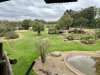
Werribee have a spacious African wild dog exhibit, which I thought was very impressive; albeit greatly under-utilised by the bachelor pack of four that inhabited it. The exhibit was viewable from ground level and a raised viewing platform, which gave greater insight into the extent of the exhibit. Werribee has always held non-breeding packs of African wild dogs, with the three most recent breeders in the region being Altina, Monarto and Perth. Of course, not every holder can breed and so Werribee has played a valuable supportive role as it also does with giraffes and gorillas. At the time of my visit, the pack consisted of four brothers named Neo (2015), Nelson (2016), Ziggy (2016) and Madash (2016). They were born at Taronga Western Plains Zoo across two litters; and I recently enjoyed seeing their sisters at Orana Wildlife Park. Werribee’s pack had since dwindled to three; but the masterplan indicates plans to continue with this species long term.

African wild dog exhibit:

upload_2024-10-20_21-38-21.jpeg

African wild dog exhibit:

upload_2024-10-20_21-38-43.jpeg
 

Attachments

  • upload_2024-10-20_21-33-43.jpeg
    upload_2024-10-20_21-33-43.jpeg
    297 KB · Views: 68
  • upload_2024-10-20_21-34-48.jpeg
    upload_2024-10-20_21-34-48.jpeg
    301.3 KB · Views: 72
  • upload_2024-10-20_21-35-20.jpeg
    upload_2024-10-20_21-35-20.jpeg
    333.9 KB · Views: 67
  • upload_2024-10-20_21-35-56.jpeg
    upload_2024-10-20_21-35-56.jpeg
    262.8 KB · Views: 65
  • upload_2024-10-20_21-36-24.jpeg
    upload_2024-10-20_21-36-24.jpeg
    382.2 KB · Views: 68
  • upload_2024-10-20_21-36-51.jpeg
    upload_2024-10-20_21-36-51.jpeg
    199.3 KB · Views: 65
  • upload_2024-10-20_21-37-26.jpeg
    upload_2024-10-20_21-37-26.jpeg
    288.6 KB · Views: 66
  • upload_2024-10-20_21-37-58.jpeg
    upload_2024-10-20_21-37-58.jpeg
    167.4 KB · Views: 66
  • upload_2024-10-20_21-38-21.jpeg
    upload_2024-10-20_21-38-21.jpeg
    234.6 KB · Views: 73
  • upload_2024-10-20_21-38-43.jpeg
    upload_2024-10-20_21-38-43.jpeg
    319.2 KB · Views: 66
Another great review is rolling along. :) Your reviews are so detailed that you can have a long post talking about only two exhibits! I have been to 20 Australian zoos but never Werribee and so I'm excited to read the rest of your review.

I used to have relatives who lived in Melbourne and they had Zoos Victoria memberships, but wouldn't visit Werribee very often. It was mainly Melbourne Zoo and Healesville Sanctuary for them. They were non-zoo nerds, and thought that the animal exhibits were beautiful, but their overall impression was that there wasn't a significant number of species and the whole zoo could be seen rather quickly. I'll be intrigued to read your impression of Werribee in this thread.
 
Another great review is rolling along. :) Your reviews are so detailed that you can have a long post talking about only two exhibits! I have been to 20 Australian zoos but never Werribee and so I'm excited to read the rest of your review.

I used to have relatives who lived in Melbourne and they had Zoos Victoria memberships, but wouldn't visit Werribee very often. It was mainly Melbourne Zoo and Healesville Sanctuary for them. They were non-zoo nerds, and thought that the animal exhibits were beautiful, but their overall impression was that there wasn't a significant number of species and the whole zoo could be seen rather quickly. I'll be intrigued to read your impression of Werribee in this thread.
They are right - It is a nice zoo, but you can see everything thoroughly by lunchtime. The new elephant complex is a much needed addition, and when the rest of the planned works are completed in the next phases, then it will be a more substantial day-out.
 
Looking forward to reading your review!
This is great, thank you for sharing! I love the way that you weave the history of the respective zoo into your reviews.
Another great review is rolling along. :) Your reviews are so detailed that you can have a long post talking about only two exhibits! I have been to 20 Australian zoos but never Werribee and so I'm excited to read the rest of your review.

Thanks everyone. I always enjoy including a bit of the history where I can as animal histories fascinate me and are something I spend a lot of time researching; as well as historic zoo buildings/exhibits.
I used to have relatives who lived in Melbourne and they had Zoos Victoria memberships, but wouldn't visit Werribee very often. It was mainly Melbourne Zoo and Healesville Sanctuary for them. They were non-zoo nerds, and thought that the animal exhibits were beautiful, but their overall impression was that there wasn't a significant number of species and the whole zoo could be seen rather quickly. I'll be intrigued to read your impression of Werribee in this thread.
They are right - It is a nice zoo, but you can see everything thoroughly by lunchtime. The new elephant complex is a much needed addition, and when the rest of the planned works are completed in the next phases, then it will be a more substantial day-out.

I would throughly agree with this and it was the thing that surprised me most about Werribee. There was so much to see at Melbourne Zoo that if you were visiting for the first time, you could easily spend the whole day there. I like to revisit exhibits etc and I didn’t see every species on the first day, so made additional visits.

I had a half-day to explore Werribee and that was more than enough to see everything (I did rush the Australian precinct a little). If I was a regular visitor, a couple of hours would probably be sufficient.
 
With Werribee, I think another issue they have is the lack of draw of having popular species that Melbourne doesn't have.

Both zoos have Gorillas, Lions, Monkeys, Giraffes, Hippos (albeit Melbourne have Pygmys), and up until a few years ago Melbourne also had African Wild Dogs and Zebra too. So when considering species primarily, the only point of difference Werribee has is simply Cheetahs and Rhinos.

As has been said, the elephant expansion will surely help rectify this issue in the long term as I'd imagine most visitors (like myself) will be visiting Werribee far more often purely to see the elephants.
 
With Werribee, I think another issue they have is the lack of draw of having popular species that Melbourne doesn't have.

Both zoos have Gorillas, Lions, Monkeys, Giraffes, Hippos (albeit Melbourne have Pygmys), and up until a few years ago Melbourne also had African Wild Dogs and Zebra too. So when considering species primarily, the only point of difference Werribee has is simply Cheetahs and Rhinos.

As has been said, the elephant expansion will surely help rectify this issue in the long term as I'd imagine most visitors (like myself) will be visiting Werribee far more often purely to see the elephants.

Also factoring in that Melbourne have bred many of their high profile species with births of Asian elephant, Sumatran tiger, Snow leopard, Western lowland gorilla, Sumatran orangutan and Pygmy hippopotamus all within the past 10-15 years; with recent attempts to breed from their Giraffe (sadly with the calf not surviving).

Werribee have had African lion cubs, Southern white rhinoceros calves and a Common hippopotamus calf within this timeframe; but many of their species are in non-breeding/bachelor groups such as giraffes, gorillas and wild dogs - which provides no greater incentive to visit them over their Melbourne based counter-parts.

The transfer of the elephants will certainly level the playing field; and combined with the recent phase outs of African wild dog and Plains zebra from Melbourne, we’re seeing encouraging signs of the facilities beginning to compliment each other, rather than replicating.
 
Also factoring in that Melbourne have bred many of their high profile species with births of Asian elephant, Sumatran tiger, Snow leopard, Western lowland gorilla, Sumatran orangutan and Pygmy hippopotamus all within the past 10-15 years; with recent attempts to breed from their Giraffe (sadly with the calf not surviving).

Werribee have had African lion cubs, Southern white rhinoceros calves and a Common hippopotamus calf within this timeframe; but many of their species are in non-breeding/bachelor groups such as giraffes, gorillas and wild dogs - which provides no greater incentive to visit them over their Melbourne based counter-parts.

The transfer of the elephants will certainly level the playing field; and combined with the recent phase outs of African wild dog and Plains zebra from Melbourne, we’re seeing encouraging signs of the facilities beginning to compliment each other, rather than replicating.
I'm curious - is Werribee putting the same attention to detail with the elephant exhibit that they did for Kubu Hippo River? So far a lot of it seems pretty industrial compared to the more immersive parts of the zoo... (plus, I'm curious to hear what'll go in the waterhole precinct...)
 
I'm curious - is Werribee putting the same attention to detail with the elephant exhibit that they did for Kubu Hippo River? So far a lot of it seems pretty industrial compared to the more immersive parts of the zoo... (plus, I'm curious to hear what'll go in the waterhole precinct...)

Due to the sheer size of the elephant complex (21 ha), it’ll be comparatively simple; but will still have a number of cool features such as two overpasses and a massive submersible pool. It’ll be a phenomenal complex, but the main attraction will be its spaciousness.

upload_2024-10-21_19-20-0.jpeg
Source: Zoos Victoria

The Waterhole precinct will include Cheetah, housed far away from the lions (apex predators); as well as a number of smaller exhibits. Cape porcupine are a strong likelihood imo. I should note development is on hold until the elephant complex is complete as that’s the main focus of funding etc. due to it’s completion being a necessity at this point.
 

Attachments

  • upload_2024-10-21_19-20-0.jpeg
    upload_2024-10-21_19-20-0.jpeg
    184.1 KB · Views: 63
Part Two - Kubu River Hippos

As I approached the Kubu River Hippos complex, I heard the distinctive roar of a Common hippopotamus. It’s a haunting sound that has long fallen silent at Auckland Zoo; and indeed it had been close to a decade prior (October 2014) that I had last seen a Common hippopotamus.

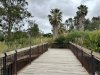
Kubu River Bridge:

upload_2024-10-21_21-6-4.jpeg

Werribee has held Common hippopotamus since the early 1980’s. The first hippopotamus appears to have been Alice (born 1980 at Adelaide Zoo) who arrived 1981; followed by her sister Beatrice (born 1981 at Adelaide Zoo) in 1982. That same year, Melbourne Zoo phased out Common hippopotamus and transferred their remaining 1.2 - a bull of details unknown; and two sisters named Genevieve (1955) and Henrietta (1961), who were both born at Melbourne Zoo. It’s reasonable to assume that bull died soon after; as Harold (1978) was transferred in from Taronga Western Plains Zoo in 1984 and became Werribee’s breeding bull. He bred with Genevieve to produce Primrose (1990); and Beatrice to produce Brindabella (1990). Primrose bred with her sire to produce two surviving calves, Tulip (2003) and Lotus (2008); while Brindabella also bred with Harold to produce one surviving calf, Pansy (2013). To reduce conflict, Primrose and Brindabella were separated many years ago to allow them to focus on their respective families, which has ultimately been successful.

Primrose:

upload_2024-10-21_21-6-46.jpeg

Tulip:

upload_2024-10-21_21-7-8.jpeg

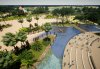
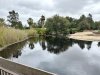
When it opened in 2006, the Kubu River Hippos complex was the first in the world to pioneer a bio-filtered habitat for this species. It features a 5000 m2 reedbed for bio-filtration; a gravity-fed water distribution system to supply the various pools; and a 15 horse power pump to recirculate the water. The complex is designed to replicate the marshlands of Botswana and features grazing paddocks, beaches and multiple pools/observation points.

Kubu Queen barge (observation point):

upload_2024-10-21_21-10-13.jpeg

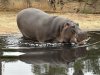
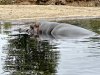
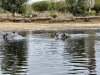
Primrose, Tulip and Lotus inhabit the first pool and made for an active trio. I saw them following each other around the pool; and wading in and out of the water at various times throughout my visit. The second pool, which like the lion exhibits, has a hidden barrier most visitors would overlook, was empty; as was the final exhibit, which until immediately prior to my visit, held Brindabella and Pansy. I later discovered as we passed over it on the Safari Bus that they’d transferred to Monarto Safari Park two days prior.

First hippopotamus exhibit:

upload_2024-10-21_21-14-28.jpeg

First hippopotamus exhibit:

upload_2024-10-21_21-7-59.jpeg

Second hippopotamus exhibit:

upload_2024-10-21_21-8-26.jpeg

Vacant hippopotamus exhibit (view from Safari Bus):

upload_2024-10-21_21-8-56.jpeg

As per above, Brindabella and Pansy, who live at Monarto Safari Park (Zoos SA) are the daughter and granddaughter of Beatrice, who was born at Adelaide Zoo (Zoos SA); while Primrose, Tulip and Lotus, who remain at Werribee Open Range Zoo (Zoos VIC) are the daughter and grandaughters of Genevieve, who was born at Melbourne Zoo (Zoos VIC).

Tulip and Lotus:

upload_2024-10-21_21-11-35.jpeg

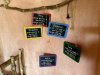
The Kubu River complex continued with an array of themed huts etc. that I paid little attention to, with the exception of one that contained a chalkboard mobile listing the five aforementioned hippo’s weights. I was especially interested to compare contrast their weights and note distinctions between their lineages. Primrose was a heavier female than Brindabella and this was reflected in their respective offspring.

Hippopotamus names/ages/weights:

upload_2024-10-21_21-10-49.jpeg

Overall, I was really impressed with this complex and thrilled to see this magnificent species up close.
 

Attachments

  • upload_2024-10-21_21-6-4.jpeg
    upload_2024-10-21_21-6-4.jpeg
    246.3 KB · Views: 64
  • upload_2024-10-21_21-6-46.jpeg
    upload_2024-10-21_21-6-46.jpeg
    214.5 KB · Views: 60
  • upload_2024-10-21_21-7-8.jpeg
    upload_2024-10-21_21-7-8.jpeg
    244.1 KB · Views: 64
  • upload_2024-10-21_21-7-59.jpeg
    upload_2024-10-21_21-7-59.jpeg
    145 KB · Views: 62
  • upload_2024-10-21_21-8-26.jpeg
    upload_2024-10-21_21-8-26.jpeg
    250.6 KB · Views: 67
  • upload_2024-10-21_21-8-56.jpeg
    upload_2024-10-21_21-8-56.jpeg
    173 KB · Views: 60
  • upload_2024-10-21_21-10-13.jpeg
    upload_2024-10-21_21-10-13.jpeg
    238 KB · Views: 68
  • upload_2024-10-21_21-10-49.jpeg
    upload_2024-10-21_21-10-49.jpeg
    173.5 KB · Views: 62
  • upload_2024-10-21_21-11-35.jpeg
    upload_2024-10-21_21-11-35.jpeg
    286.4 KB · Views: 68
  • upload_2024-10-21_21-14-28.jpeg
    upload_2024-10-21_21-14-28.jpeg
    172.6 KB · Views: 64
Part Three - Safari Bus Tour

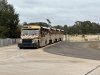
After viewing the lions, wild dogs and hippopotami, I made my way to the Safari Bus. It’s a 40 minute experience that’s completely free, though you can pay $60 do the delux version (smaller group sizes and better photo opportunities). The tour began with the guide pointing out the Asian elephant complex, which was in the early stages of construction. The 21ha habitat will feature six paddocks as of the most recent update will and have a capacity of up to 40 elephants. I can’t wait to see the finished result one day.

Safari Bus:

upload_2024-10-22_19-11-10.jpeg

Asian elephant complex construction:

upload_2024-10-22_19-17-3.jpeg

To the right was a bachelor herd of zebra in a side paddock. They had recently arrived from Melbourne Zoo, who had recently decided to phase the species out.

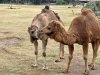
The first drive through paddock was the Arid Zone, inhabited by Dromedary camel and Scimitar-horned oryx. New Zealand’s last camel died in 2005, so it was exciting to see this species again, especially in a small herd; and since my memory of seeing Orana’s Scimitar-horned oryx is so vague, it was like seeing these antelopes for the first time. The exhibit was simple, reminiscent of an arid landscape; and spacious.

Arid Zone:

upload_2024-10-22_19-11-46.jpeg

Dromedary camel:

upload_2024-10-22_19-12-13.jpeg

The tour bus passed over the final Conmon hippopotamus exhibit via a bridge; which until two days prior, had housed mother and daughter, Brindabella and Pansy. As mentioned in the previous post, they were transferred to Monarto Safari Park.

The next drive through paddock followed, which was the Grasslands Zone. It housed large herds of Indian antelope, Lowland nyala and female ostrich, which we saw from a distance; getting much better close up views upon the return. Though none of these three species were a novelty to me, it was great to see such large herds of the two antelopes.

Grasslands Zone:

upload_2024-10-22_19-12-42.jpeg

Indian antelope and Lowland nyala:

upload_2024-10-22_19-13-6.jpeg

Two more side paddocks followed, one housing North American bison; the other housing Przewalski’s horse. It was the first time I’d seen the latter, which was exciting. I’ve been intrigued by the species ever since I read a story as a child about Basil, Marwell Zoo’s first Przewalski’s stallion. Though the bus slowed down, it didn’t stop, so my view of both these exhibits was somewhat fleeting.

North American bison exhibit:

upload_2024-10-22_19-13-29.jpeg

The final drive through is the largest paddock, the Savannah Zone. This exhibit is huge and highly immersive, conjuring up images of the plains of Africa. The species in this habitat were Giraffe, Southern white rhinoceros, Plains zebra, Common eland, Waterbuck and male ostrich. Seeing the zebra herd was especially exciting as one of the mares, Zola (2020), had given birth to her first foal the previous night; and the guide stopped the bus as the herd cantered around us in a circle.

Savannah Zone:

upload_2024-10-22_19-13-52.jpeg

Newborn Plains zebra:

upload_2024-10-22_19-14-15.jpeg

Werribee has held 19 giraffe since 1984. The first five were bulls that arrived as juveniles from Melbourne Zoo between 1984 and 1991. A pair from New Zealand followed with the bull, Oskar (1994) born at Auckland Zoo; and the cow Zawadi (1995) born at Wellington Zoo. Both were imported the year they were born and it appears Werribee planned to hold a breeding pair; alongside their established bachelor herd as Zawadi was their sole female. Sadly Zawadi died in 1996 and Werribee have since continued to hold bachelor bulls. The herd on exhibit considered of four bulls: Amani (2007, Harold (2008), Ajali (2010) and Jelani (2010). All are castrated. Three juvenule bulls had recently arrived and were visible in the holding yards - Jesse (2021) and Dave (2021) came from Australia Zoo; Wayo (2022) from Taronga Western Plains Zoo. They’ve since been integrated with the rest of the herd.

New male giraffes:

upload_2024-10-22_19-14-51.jpeg

Werribee’s first Southern white rhinoceros were a pair named Lee and Alexandra, who were imported as juveniles from Whipsnade in 1981. Like Auckland Zoo, who also imported a pair of juveniles in 1980, Werribee’s pair failed to breed; and the cow was transferred to Dubbo in 1989, where she conceived seven months after arrival. In 1999, Werribee joined several zoos in the region in a mass import of Southern white rhinoceros from Kruger National Park. Werribee received 1.3 white rhinos from this import; and although six calves were born to two cows, only three survived to adulthood and only one of these was female. That female was Kipenzi (2013) and although she had lost her first calf eight months prior to my visit; I later discovered she had been around half-way through a new pregnancy of my visit, delivering a healthy male calf in August 2024. The sire is Kifaru (2009), who I saw as a calf at Hamilton Zoo. Kifaru’s parents were also Kruger imports from the 1999 group import.

All in all, I thought the tour was fantastic. The guide was informative, telling us useful information along the way; as well as being happy to answer my questions afterwards. It would have been nice if the bus could have stopped a few more times to get a better look at the species; but I note this experience is provided via the paid tour and considering the one I took was free, I thought it was excellent.
 

Attachments

  • upload_2024-10-22_19-11-10.jpeg
    upload_2024-10-22_19-11-10.jpeg
    166.4 KB · Views: 59
  • upload_2024-10-22_19-11-46.jpeg
    upload_2024-10-22_19-11-46.jpeg
    180.6 KB · Views: 62
  • upload_2024-10-22_19-12-13.jpeg
    upload_2024-10-22_19-12-13.jpeg
    283.5 KB · Views: 63
  • upload_2024-10-22_19-12-42.jpeg
    upload_2024-10-22_19-12-42.jpeg
    269.3 KB · Views: 61
  • upload_2024-10-22_19-13-6.jpeg
    upload_2024-10-22_19-13-6.jpeg
    288.3 KB · Views: 62
  • upload_2024-10-22_19-13-29.jpeg
    upload_2024-10-22_19-13-29.jpeg
    294.9 KB · Views: 59
  • upload_2024-10-22_19-13-52.jpeg
    upload_2024-10-22_19-13-52.jpeg
    277.6 KB · Views: 62
  • upload_2024-10-22_19-14-15.jpeg
    upload_2024-10-22_19-14-15.jpeg
    313.1 KB · Views: 59
  • upload_2024-10-22_19-14-51.jpeg
    upload_2024-10-22_19-14-51.jpeg
    291 KB · Views: 58
  • upload_2024-10-22_19-17-3.jpeg
    upload_2024-10-22_19-17-3.jpeg
    198.9 KB · Views: 62
Looking at your photos of the lower savannah, I remember in the past thinking it a shame there are so many eucalyptus in view, as I had felt they detract from the immersive experience, however, now that I live in East Africa I have come to realise just how abundant this region is in eucalyptus. This includes plantations, and now also wildly sewn trees!
 
Looking at your photos of the lower savannah, I remember in the past thinking it a shame there are so many eucalyptus in view, as I had felt they detract from the immersive experience, however, now that I live in East Africa I have come to realise just how abundant this region is in eucalyptus. This includes plantations, and now also wildly sewn trees!

It’s funny you should mention that as I can’t imagine the entrance of Auckland Zoo without their iconic eucalyptus trees. The Zoo TV series would often pan over the entrance in the opening shots; and you’d see them in real life when you visited the zoo. They reminded me of umbrella trees you see in Zoo Tycoon and given the first precinct you go into is Pridelands, I believed they were African trees for a while as a kid.
 
Part Four - Western Lowland Gorillas, Vervet Monkeys and Cheetah

I missed the Crazy about Cats presentation due it to it coinciding with the first Safari Bus tour. Had I given this any thought, I would have planned this better as it was the only show of the day and thus the only chance to see the zoo’s Serval. Though I’ve seen this species many times, there’s only two Serval left in New Zealand now (an ageing pair at Auckland Zoo) and once they die, they’ll be the last for the foreseeable future.

The Western lowland gorilla have a spectacular exhibit. The exhibit is partially moated and like Melbourne’s exhibit, has a number of view points. The zoo has a bachelor troop of three males, consisting of a father, Motaba (1983); and his sons, Yakini (1999) and Ganyeka (2000), who are half-brothers born at Melbourne Zoo to Yuska and G-Ann respectively. I was especially excited to see Motaba given his significance to the history of Western lowland gorilla in Australasia. He was imported by Melbourne Zoo a six year old in 1990 and sired the first naturally conceived gorilla infant in the region in 1991, a male named Buzandi; followed by a daughter named Bambuti in 1994. It was testament to his demeanour that he later accepted two hand-raised females into his troop; and mated with both them and Yuska, which led to him siring a further three infants between 1999-2000, two being the aforementioned sons that transferred with him to Werribee. Given the first successful Taronga bred infants weren’t born until 2003, the births of Motaba’s five offspring (and that of Mzuri that preceded them in 1984) were much publicised events.

Motaba:

upload_2024-10-23_19-7-43.jpeg

Yakini:

upload_2024-10-23_19-8-13.jpeg

Western lowland gorilla profiles:

upload_2024-10-23_19-8-43.jpeg

The exhibit photos speak for themselves, but the gorillas were highly active, patrolling the exhibit. The wide open spaces allow them to run at full speed and I can only imagine the use the two younger males got out of this as excitable adolescents. The troop had a calm demeanour and all appear content with their position in the hierarchy (Yakini took over leadership of the troop from Motaba a few years ago). They were all impressive looking silverbacks and it was inspiring to watch them. Though I’ve often mentioned how it’d be great to see a bachelor troop of gorillas housed at Melbourne again; and a large Hamadryas baboon troop accommodated in this exhibit, I can’t deny these great apes are a perfect fit given they’re easily seen at a distance from any of the viewpoints. They’re also Werribee’s only great ape species and I know a number of us feel the absence of a great ape species from Dubbo’s open range zoo (especially considering the other three hold either gorillas or chimpanzees).

Western lowland gorilla exhibit:

upload_2024-10-23_19-9-18.jpeg

Western lowland gorilla exhibit:

upload_2024-10-23_19-9-41.jpeg

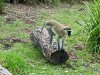
Like Melbourne’s Collared peccaries and Orana’s Springbok, Werribee’s Vervet monkeys are much under appreciated by the general public. They have a small exhibit by open range zoo standards; but it’s an adequate size for the small ageing troop and I appreciated seeing them up close. This was the first time I’d seen this species, which was exciting; as well as fortuitous given they’re likely to follow suit of primate species like the Chamca baboon and Patas monkey in the region in terms of being phased out.

Vervet monkey exhibit:

upload_2024-10-23_19-10-30.jpeg

Vervet monkey viewing window:

upload_2024-10-23_19-10-49.jpeg

Vervet monkey:

upload_2024-10-23_19-11-7.jpeg

The Cheetah exhibit was a good size and greatly under-utilised by the single female that occupied it. Her name is Kulinda and she was born 2012 at Monarto Safari Park. While Auckland’s sisters prove an exception, female Cheetahs typically live solitary lives; whereas males remain in coalitions with male littermates their entire lives. Therefore, a bachelor group would make much better use of this exhibit; especially given pairs of males have been kept in much smaller exhibits at city zoos within the region over the past 2-3 decades, which would have been better suited to a single female.

The Cheetah exhibit is well situated in that it’s a reasonable distance from the lions; and gives Kulinda a view of the ungulates on the Arid Zone. It was clear she found this highly enriching and was watching the oryx on my visit. Cheetah feature in Werribee’s masterplan and they apparently have aspirations to breed them, which would be exciting as Orana, Dubbo and Monarto have previously functioned as the breeding hubs for the region.

Cheetah exhibit:

upload_2024-10-23_19-11-37.jpeg

Kulinda watching oryx:

upload_2024-10-23_19-11-56.jpeg
 

Attachments

  • upload_2024-10-23_19-7-43.jpeg
    upload_2024-10-23_19-7-43.jpeg
    282.7 KB · Views: 46
  • upload_2024-10-23_19-8-13.jpeg
    upload_2024-10-23_19-8-13.jpeg
    278.4 KB · Views: 51
  • upload_2024-10-23_19-8-43.jpeg
    upload_2024-10-23_19-8-43.jpeg
    217.1 KB · Views: 48
  • upload_2024-10-23_19-9-18.jpeg
    upload_2024-10-23_19-9-18.jpeg
    178.9 KB · Views: 47
  • upload_2024-10-23_19-9-41.jpeg
    upload_2024-10-23_19-9-41.jpeg
    315.8 KB · Views: 49
  • upload_2024-10-23_19-10-30.jpeg
    upload_2024-10-23_19-10-30.jpeg
    281.1 KB · Views: 49
  • upload_2024-10-23_19-10-49.jpeg
    upload_2024-10-23_19-10-49.jpeg
    268.3 KB · Views: 51
  • upload_2024-10-23_19-11-7.jpeg
    upload_2024-10-23_19-11-7.jpeg
    385.1 KB · Views: 49
  • upload_2024-10-23_19-11-37.jpeg
    upload_2024-10-23_19-11-37.jpeg
    219.4 KB · Views: 50
  • upload_2024-10-23_19-11-56.jpeg
    upload_2024-10-23_19-11-56.jpeg
    233.2 KB · Views: 49
The gorilla exhibit is fantastic; it would be amazing with a large family group in there, but I love that the three males have so much space to get out of one another’s way as they choose. That’s actually Ghubari/Ganyeka in the second photograph; he’s very like his mother.
 
The gorilla exhibit is fantastic; it would be amazing with a large family group in there, but I love that the three males have so much space to get out of one another’s way as they choose. That’s actually Ghubari/Ganyeka in the second photograph; he’s very like his mother.

The relationship between Motaba, Yakini and Ganyeka has remained cohesive as the young males have matured; which I would say their environment has partly facilitated. As you mention, they have space to escape each other if they wish. The change in leadership a decade ago was near seamless, with Motaba’s placid demeanor no doubt allowing him to step aside with grace.

Yes I can see the resemblance between G-Ann and Ganyeka now you mention it; while Yakini looks a lot like Motaba. The resemblance between parents and offspring in great apes is usually quite marked. Some of the strongest resemblances I’ve seen are: Western lowland gorilla: Mouila (mother) and Mbeli (daughter); Bornean orangutan: Indra (mother) and Intan (daughter); and Common chimpanzee: Lubutu (father) and Furahi (son).
 
@Zoofan15

Not only the amazing review with historical details and individual animals stories, the photos man are just incredible. Am scrolling from beginning again just looking at them all and just wow they are just amazing photos. Those are some very beautiful Hippos (been a long time since seen footage of them, decades personally seeing them, they're just so wonderful), Lions , Camels, Zebras and Giraffes (all <3 too of course) must say (Zola's foal and the Nyalas are so cute too and the others). Really great review man, you really write it where feels like following you through the place with yours words and those awesome photos).

ps your description of the haunting but cool growl Hippos make could hear it again all these years later
 
Last edited:
The relationship between Motaba, Yakini and Ganyeka has remained cohesive as the young males have matured; which I would say their environment has partly facilitated. As you mention, they have space to escape each other if they wish. The change in leadership a decade ago was near seamless, with Motaba’s placid demeanor no doubt allowing him to step aside with grace.

Yes I can see the resemblance between G-Ann and Ganyeka now you mention it; while Yakini looks a lot like Motaba. The resemblance between parents and offspring in great apes is usually quite marked. Some of the strongest resemblances I’ve seen are: Western lowland gorilla: Mouila (mother) and Mbeli (daughter); Bornean orangutan: Indra (mother) and Intan (daughter); and Common chimpanzee: Lubutu (father) and Furahi (son).
Motaba's placid nature certainly assisted with their being no large issues within the group as his sons fought for dominance as they got older. There have been a few issues as the years have gone on between Yakini and Ganyeka but nothing major obviously. The fact that they were pretty much hand raised together has certainly helped. They were and still are quite close.

It's also intriguing to me to see how each male has their own 'area' of the large exhibit. Ganyeka is often found at the front of the exhibit, Motaba on the hill, and Yakini either near the viewing glass or right outside of their indoor quarters. Yakini always has to be first indoors (obviously being the dominant male), but Ganyeka has always had this privilege (being the youngest) and still tries to use it to this day; leading to the occasional dispute. However it's always hilarious to see Motoba just sitting in the distance, just watching. I was told by a volunteer that he does everything he can these days to avoid conflict with his sons and will wait outside for ages until he's sure the other two have gone inside first (I was told this is his 'peace time' away from his sons:p).
 
Back
Top