Taxonomic news on captive animals

This requires confirmation, but it seems that the babirusas in captivity are hybridized. A genetic study showed DNA from Babyrousa celebensis x Babyrousa togeanensis. Unfortunately, no paper has been published on this discovery. There was a presentation online from the lector Peter Galbusera (?) from Antwerp/Planckendael a few years back. All animals within the EEP programme, Singapore and Surabaya were tested. American animals came from the same source and should therefore also be considered unpure.
Still hoping that proper documentation will come out to verify the above information. For now, I have listed my own babirusas in my database as Babyrousa sp.
 
On this topic, another issue is the true identity of Sugar Gliders in Europe and America.
Petaurus breviceps (as originally understood) has now been split into
P. ariel Savanna Glider
P. notatus Krefft's Glider
P. breviceps Sugar Glider sensu stricto (with a small range in coastal forests of Queensland & NSW)
Populations of Petaurus from New Guinea, previously classified under P. breviceps, are now tentatively classed under P. notatus - but more likely represent a complex of distinct species. The American population of 'sugar gliders' apparently originates from western (Indonesian) New Guinea. Has any DNA work been done with European animals?
 
On this topic, another issue is the true identity of Sugar Gliders in Europe and America.
Petaurus breviceps (as originally understood) has now been split into
P. ariel Savanna Glider
P. notatus Krefft's Glider
P. breviceps Sugar Glider sensu stricto (with a small range in coastal forests of Queensland & NSW)
Populations of Petaurus from New Guinea, previously classified under P. breviceps, are now tentatively classed under P. notatus - but more likely represent a complex of distinct species. The American population of 'sugar gliders' apparently originates from western (Indonesian) New Guinea. Has any DNA work been done with European animals?
I still need to investigate, hoping that we have pure animals in Europe but I feel that it is unlikely. I can think of at least two (sub)species that have arrived in Europe over the years. DNA tests will be needed.

Another matter:
- All Amazona oratrix oratrix in captivity outside Mexico are actually Amazona oratrix magna. Some authorities do not recognize the latter as a valid subspecies and lump it with the nominate subspecies. If one is to follow that taxonomy, everything is Amazona oratrix oratrix, but listing them as separate taxa is incorrect. From what I have heard, A.o.magna should definitely be recognized as a true subspecies, so we should start using that name. It's also highly variable, meaning that the amount of yellow can change a lot between birds. This has caused some birds to be labelled as Amazona oratrix tresmariae, which is in basically all cases incorrect. The Tres Marías amazon is a true rarity and there shouldn't be more than a handful around in captivity worldwide. I know of one breeder in Austria and the offshow bird(s) at Loro Parque's La Vera breeding centre.
 
What's the situation with Visayan Warty Pigs? I see on ZTL all European ones are labeled Sus cebifrons negrinus, but all North American ones are labeled Sus cebifrons subspecies nov.?
 
What's the situation with Visayan Warty Pigs? I see on ZTL all European ones are labeled Sus cebifrons negrinus, but all North American ones are labeled Sus cebifrons subspecies nov.?
The European population originates from the island of Negros (subspecies negrinus), whereas the North American animals originate from the island of Panay. The latter are probably a distinct race, which hasn't yet been formally named. The nominate race - Sus cebifrons cebifrons - from the island of Cebu, is believed to be extinct.
 
The Himantura complex.
This genus of stingrays creates lots of confusion because several species have been recognized and mixed up in aquariums worldwide. To my knowledge, this is the current situation:
- Himantura undulata is not kept in captivity (except for one in Cambodia).
- Himantura leoparda is only common in Asia. Its spots are much larger than the commonly kept stingrays in Europe and America. Here's a real leoparda:
Leopard whipray (Himantura leoparda) - ZooChat
- Himantura uarnak should have full spots, no leopard-like or rosette-shaped spots. It's common in captivity outside of Asia.
- The only other commonly held species is Himantura tutul, which does have leopard-like spots but just smaller than leoparda. This species is rather new and not always recognized. A picture: Fine-spotted leopard whipray (Himantura tutul) - ZooChat

The information above is the last I heard about it and I use it as a guideline for this genus. The complexity of the genus is very confusing so there might still be an error in this theory. Keep that in mind.
 
The Himantura complex.
This genus of stingrays creates lots of confusion because several species have been recognized and mixed up in aquariums worldwide. To my knowledge, this is the current situation:
- Himantura undulata is not kept in captivity (except for one in Cambodia).
- Himantura leoparda is only common in Asia. Its spots are much larger than the commonly kept stingrays in Europe and America. Here's a real leoparda:
Leopard whipray (Himantura leoparda) - ZooChat
- Himantura uarnak should have full spots, no leopard-like or rosette-shaped spots. It's common in captivity outside of Asia.
- The only other commonly held species is Himantura tutul, which does have leopard-like spots but just smaller than leoparda. This species is rather new and not always recognized. A picture: Fine-spotted leopard whipray (Himantura tutul) - ZooChat

The information above is the last I heard about it and I use it as a guideline for this genus. The complexity of the genus is very confusing so there might still be an error in this theory. Keep that in mind.
Where does H. australis fit into this? I have the species listed from Cairns Aquarium as that is what signage refers to their specimen as.
 
The famous thick-toed gecko Chondrodactylus bibronii used to be seen in a decent amount of zoos in Europe and in the trade. None of the animals are truly bibronii. This species is restricted to South Africa which does not expert its local fauna. Chondrodactylus laevigatus & turneri are the two species that we can find in human care. Both are almost indistinguishable, so the origin of the animals is of key importance.
 
The Himantura complex.
This genus of stingrays creates lots of confusion because several species have been recognized and mixed up in aquariums worldwide. To my knowledge, this is the current situation:
- Himantura undulata is not kept in captivity (except for one in Cambodia).
- Himantura leoparda is only common in Asia. Its spots are much larger than the commonly kept stingrays in Europe and America. Here's a real leoparda:
Leopard whipray (Himantura leoparda) - ZooChat
- Himantura uarnak should have full spots, no leopard-like or rosette-shaped spots. It's common in captivity outside of Asia.
- The only other commonly held species is Himantura tutul, which does have leopard-like spots but just smaller than leoparda. This species is rather new and not always recognized. A picture: Fine-spotted leopard whipray (Himantura tutul) - ZooChat

The information above is the last I heard about it and I use it as a guideline for this genus. The complexity of the genus is very confusing so there might still be an error in this theory. Keep that in mind.

Oh my god DUDE. These rays drive me absolutely nuts as a taxonomy nerd/aquarium elasmobranch identifier. One little addendum I can maybe make: Georgia Aquarium claimed to have a H. undulata, or at least did when I was there last. It's now not on their website and my last visit was 2022 so it may have passed. Also, Sea Life Carlsbad might have an undulata as well, theirs has much less distinct spots or really none at all, more of an explicitly honeycomb-like pattern. I don't know if your friend who's something of an expert has been there, but I'd love to see their list of which aquariums in America have what - I had an absolute dickens of a time with Baltimore's three Himanturas of possibly various species. Please do DM me with it if you have the chance/would like.

Also, your mileage may vary on this @DaLilFishie but I have heard that H. australis is known to have a generally lighter overall coloration than H. uarnak and also some more linear spot patterns, i.e. longer and more ovular in places. The photos I've found from reputable sources seem to correspond to this.
 
Last edited:
Oh my god DUDE. These rays drive me absolutely nuts as a taxonomist/aquarium elasmobranch identifier. One little addendum I can maybe make: Georgia Aquarium claimed to have a H. undulata, or at least did when I was there last. It's now not on their website and my last visit was 2022 so it may have passed. Also, Sea Life Carlsbad might have an undulata as well, theirs has much less distinct spots and more of a honeycomb like pattern. I don't know if your friend who's something of an expert has been there, but I'd love to see their list of which aquariums in America have what - I had an absolute dickens of a time with Baltimore's three Himanturas of possibly various species. Please do DM me with it if you have the chance/would like.
I can at least confirm that Georgia had a whipray as recently as December 2023, the website honestly is missing quite a few species, but is still one of the better aquariums at listing species.
 
I can at least confirm that Georgia had a whipray as recently as December 2023, the website honestly is missing quite a few species, but is still one of the better aquariums at listing species.
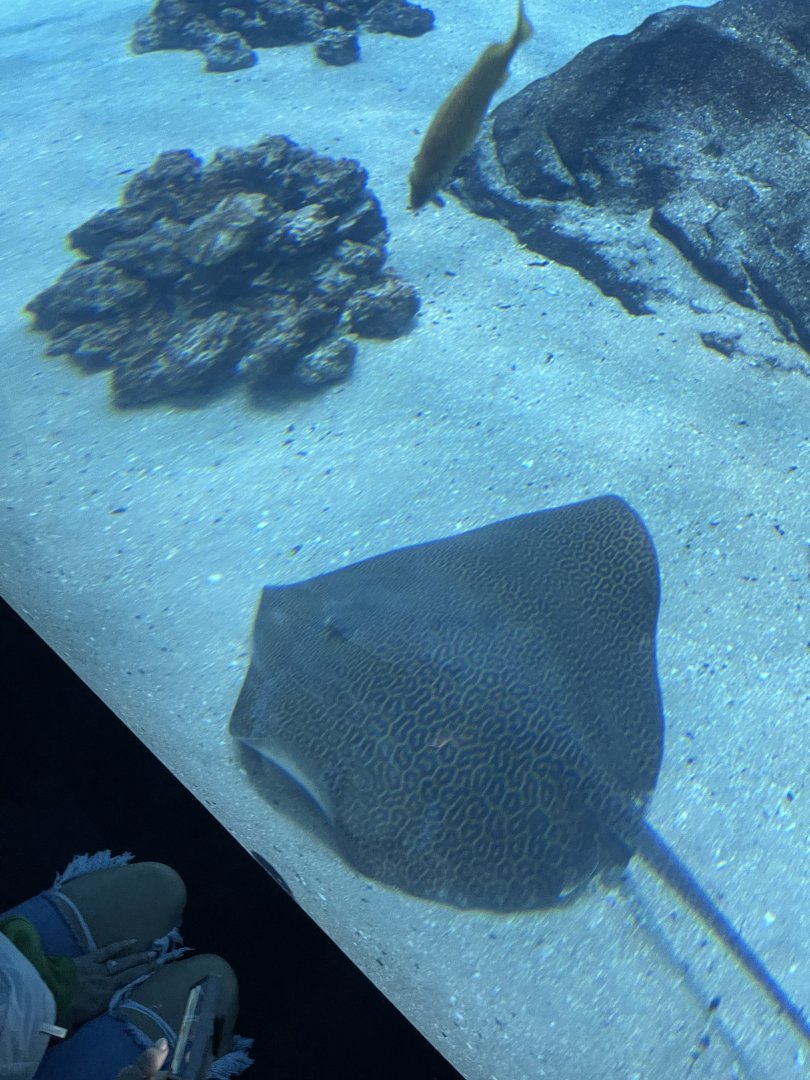
Yeah they still have that listed on there, a leopard whipray specifically. I am not sure if that one is the genuine article - here’s a picture that I believe to be of that individual.

 
Last edited:
Yeah they still have that listed on there, a leopard whipray specifically. I am not sure if that one is the genuine article - here’s a picture that I believe to be of that individual.

yep, the photo you provided seems to match with the individual I have photos of.
 
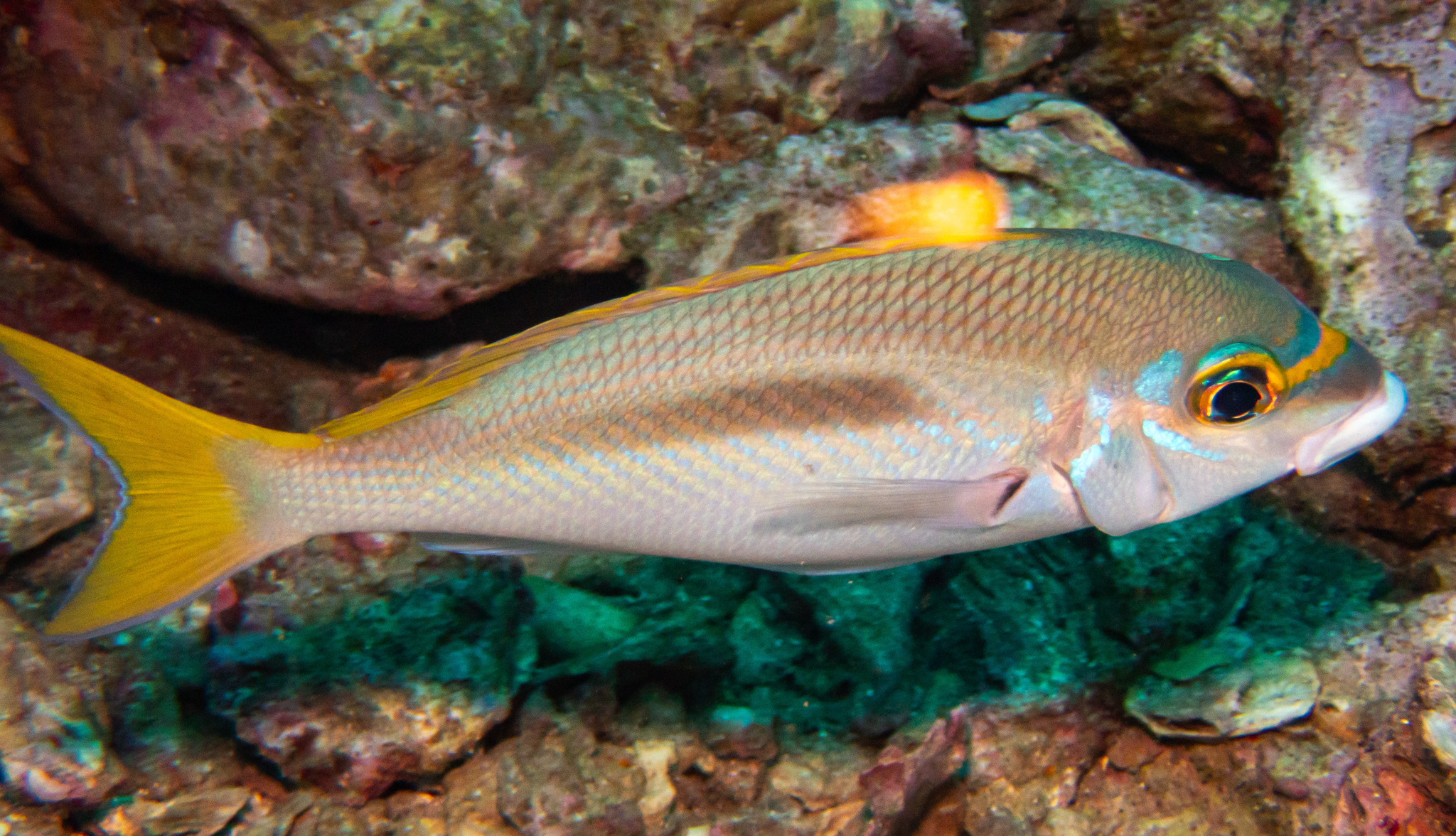
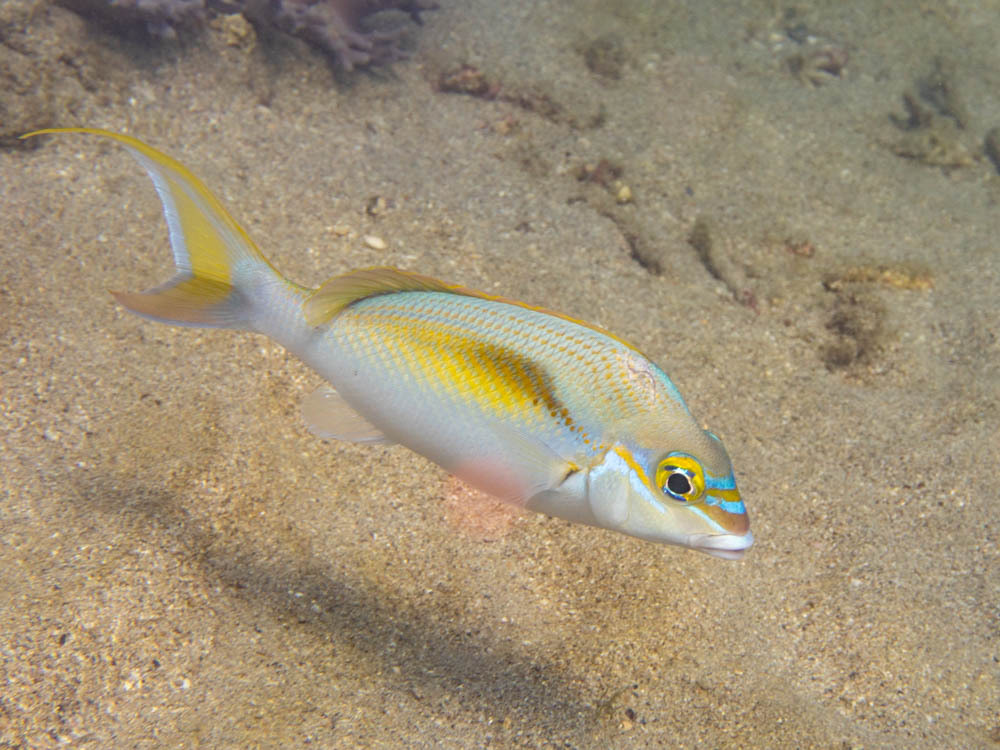
Scolopsis regina redescribed as distinct from the Rainbow Monocle-bream Scolopsis monogramma. Neither are terribly common in captivity, but S. regina at least has been collected (AQWA has a specimen on display), I'm not sure about true S. monogramma, but if anyone has images of captive specimens it's worth double-checking what species they would be considered now. Thankfully, S. regina is easily diagnosable from S. monogramma with decent views/photos, and largely do not co-occur so collection location is also useful.

S. monogramma
- diagnosed by thin blue margin on caudal fin, lack of blue line running from upper lobe of caudal fin to caudal peduncle, tail base yellow, and faint/absent blue line running from snout to upper lip. Occurs in east and southeast Asia.
original.jpg


S. regina
- diagnosed by broad blue margin to caudal fin, presence of blue line running from upper caudal fin lobe to caudal peduncle, tail base blue, and presence of distinct blue line running from eye to upper lip. Occurs in north Australian waters, possibly also in New Guinea.
original.jpg


Images from these iNaturalist observations:
Rainbow Monocle Bream from Southwest Pinnacle, Ko Tao, Surat Thani, Thailand on November 1, 2023 at 08:07 AM by portioid · iNaturalist Australia

Rainbow Monocle Bream from Horseshoe Bay, Bowen, QLD, Australia on June 10, 2024 at 12:59 PM by Terry Farr · iNaturalist Australia

Paper:
Reinstatement and redescription of the monocle bream Scolopsis regina Whitley 1937 (Perciformes: Nemipteridae) - Ichthyological Research
 
Last edited:
Yeah they still have that listed on there, a leopard whipray specifically. I am not sure if that one is the genuine article - here’s a picture that I believe to be of that individual.

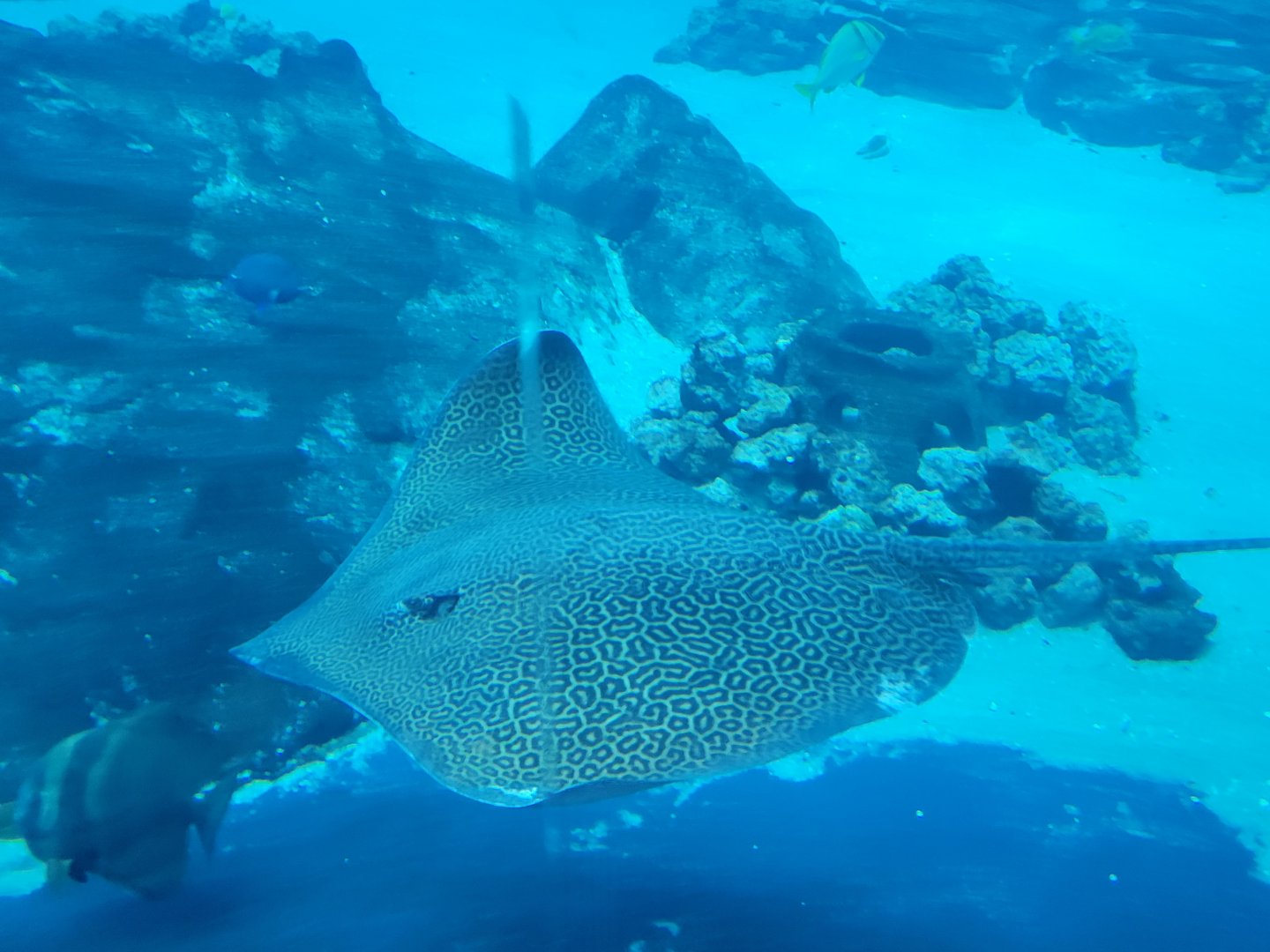
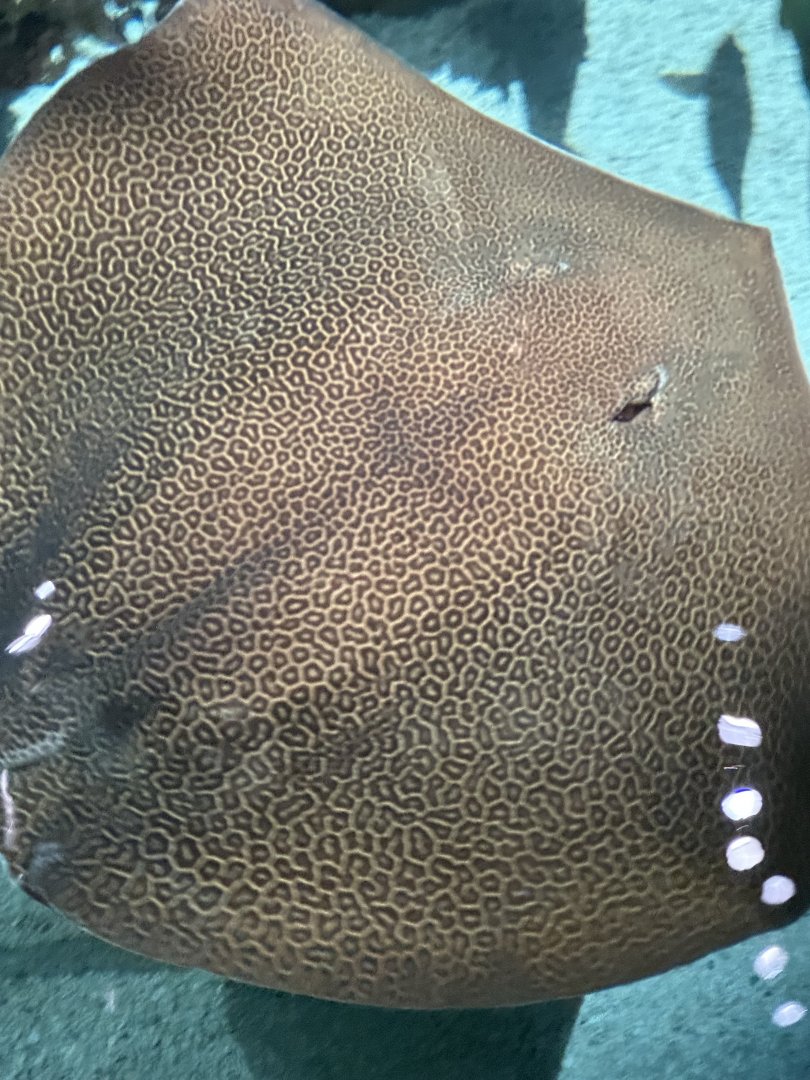
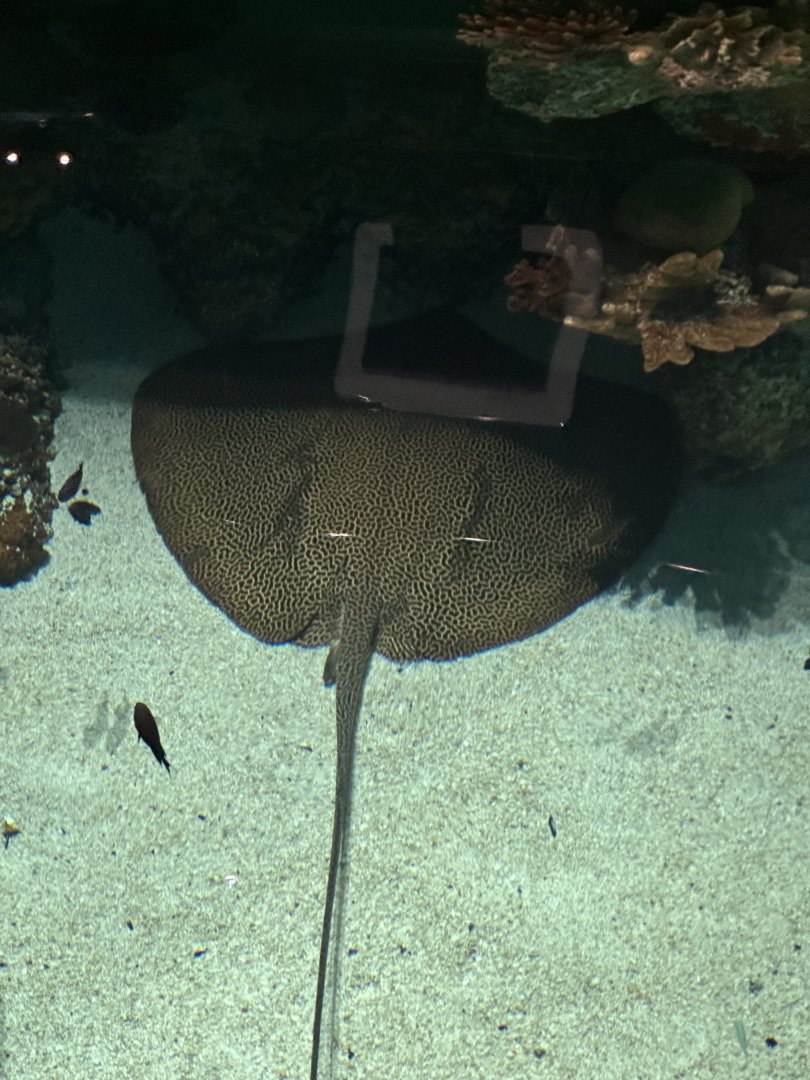
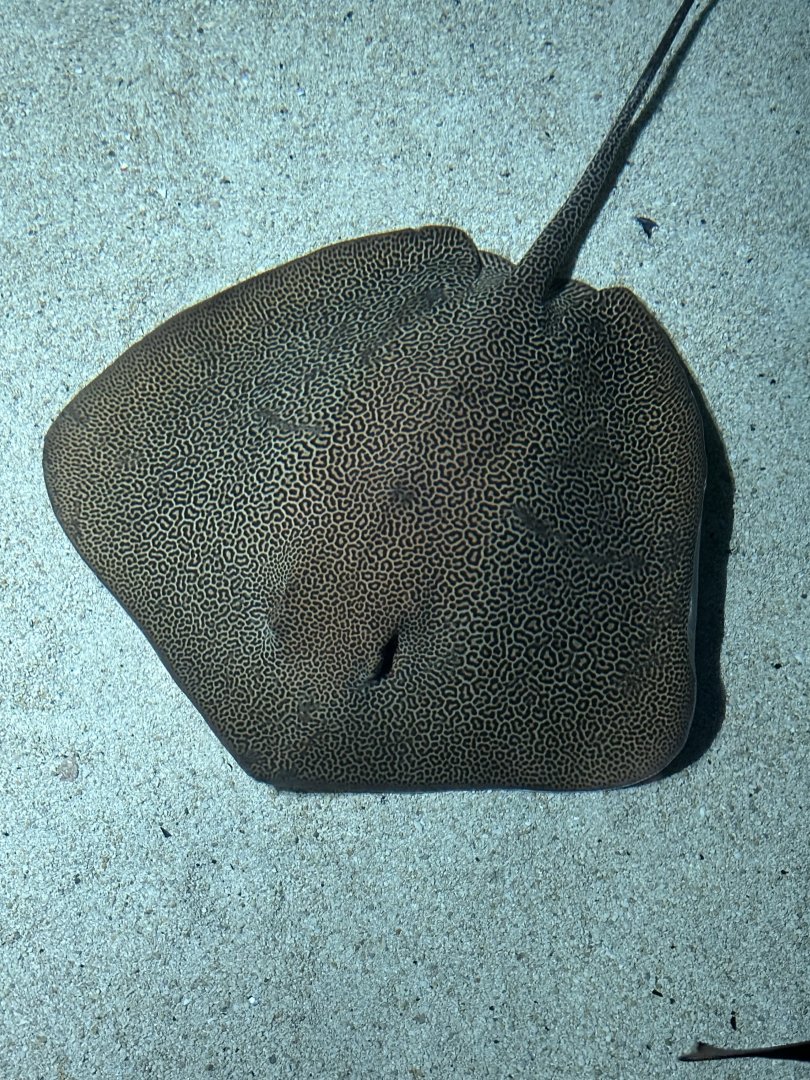
I added a photo I took, hopefully this can help with trying to ID it as a true H. undulata or not.
Seeing this animal, I'm pretty confident that this is Himantura leoparda with the large spots. Rare outside Asia.
Here's how undulata looks like:
workimagethumb.php
 
Last edited:
This requires confirmation, but it seems that the babirusas in captivity are hybridized. A genetic study showed DNA from Babyrousa celebensis x Babyrousa togeanensis. Unfortunately, no paper has been published on this discovery. There was a presentation online from the lector Peter Galbusera (?) from Antwerp/Planckendael a few years back. All animals within the EEP programme, Singapore and Surabaya were tested. American animals came from the same source and should therefore also be considered unpure.
Still hoping that proper documentation will come out to verify the above information. For now, I have listed my own babirusas in my database as Babyrousa sp.
If this genetic study does state the truth, does it mean that every “North Sulawesi” babirusa in North America is really the following?
  • Babyrousa celebensis x togeanensis
 
Seeing this animal, I'm pretty confident that this is Himantura leoparda with the large spots. Rare outside Asia.
Here's how undulata looks like:
workimagethumb.php
Fascinating! So if true, Georgia actually has a leopard. The other one I saw I don’t have very clear pictures of, and it may not be on display anymore, but it does actually look somewhat like your confirmed honeycomb. I suppose that may have to remain a mystery.

Now I’m curious as to what you and/or your friend would think of the three rays in Baltimore. I just uploaded my best images of all three in media, all with distinct patterns - your descriptions make me suspect that at least two are H. tutul but I am not 100% on the third (I have that one labeled as #2, the only male who the aquarists have named “Whippy”).

 
Last edited:
Fascinating! So if true, Georgia actually has a leopard. The other one I saw I don’t have very clear pictures of, and it may not be on display anymore, but it does actually look somewhat like your confirmed honeycomb. I suppose that may have to remain a mystery.

Now I’m curious as to what you and/or your friend would think of the three rays in Baltimore. I just uploaded my best images of all three in media, all with distinct patterns - your descriptions make me suspect that at least two are H. tutul but I am not 100% on the third (I have that one labeled as #2, the only male who the aquarists have named “Whippy”).

Your first two photos also resemble the individuals that SeaWorld Orlando has, so maybe they are H. tutul too. They just listed it as Leopard Stingray with no latin name given.

EDIT: actually looking at my photos it seems Seaworld Orlando might have both leoparda and the possible tutul.
 
Last edited:
Your first two photos also resemble the individuals that SeaWorld Orlando has, so maybe they are H. tutul too. They just listed it as Leopard Stingray with no latin name given.

EDIT: actually looking at my photos it seems Seaworld Orlando might have both leoparda and the possible tutul.

Yeah, I agree, my thinking is the ones that I have labeled as #1 and #3 are possibly both H. tutul (though #3 definitely has a slightly different pattern from #1). Can’t be 100% sure about #2. And as for SeaWorld I definitely saw the individual that Sicarius has as a tutul there, but you may be right.

The worst part is, some of these could totally be hybrids lol. They may be able to breed with one another in captivity even if in the wild they’re separated by habitat regions, and who knows where most of the captive population comes from. The thought has crept into my mind more than once.
 
Back
Top