Local_Shark
Well-Known Member
It really is. If you go to FL Aquarium and see them again I’d love some more pictures. I’m a bit sad they weren’t there when I went haha!Oh wow, that's really cool!
It really is. If you go to FL Aquarium and see them again I’d love some more pictures. I’m a bit sad they weren’t there when I went haha!Oh wow, that's really cool!

Sure thing, I should be back there sometime in the next month or so.It really is. If you go to FL Aquarium and see them again I’d love some more pictures. I’m a bit sad they weren’t there when I went haha!

Thank you for these! I can do my best with them both.
That one at SeaWorld was actually also spotted by Sicarius and posted in his original thread. It’s definitely a fine-spotted leopard whipray (Himantura tutul). They may also have a classic leopard but we cannot find any photos of that one presently - yours is definitely the same tutul individual that both Sicarius and I have images of.
/QUOTE]
Here is the photo of the leoparda from SeaWorld Orlando back in 2022. It's not the best photo but you can still see the rosettes fairly easily.


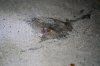
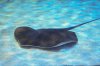
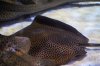
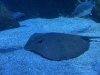
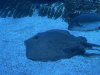
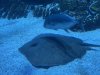
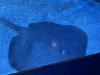
Hahaha…that there is my archnemesis, or really one of my three such nemeses as the aquarium has three specimens. All three are very difficult to identify and signed, I believe incorrectly, as Australians. I believe that this one may be the only true H. australis of the lot, but a reticulate (H. uarnak) is perhaps just as likely with that pattern. The other two I am equally unsure about, but I think they are likely to be fine-spotted (H. tutul). They have bedeviled me since I first saw them in May of this year. Sicarius has a friend who may know more, and I’ve sent my photos to him for further study.Thoughts on this individual from the National Aquarium?

Hahaha…that there is my archnemesis, or really one of my three such nemeses as the aquarium has three specimens. All three are very difficult to identify and signed, I believe incorrectly, as Australians. I believe that this one may be the only true H. australis of the lot, but a reticulate (H. uarnak) is perhaps just as likely with that pattern. The other two I am equally unsure about, but I think they are likely to be fine-spotted (H. tutul). They have bedeviled me since I first saw them in May of this year. Sicarius has a friend who may know more, and I’ve sent my photos to him for further study.
Oh I promise, I will most certainly do so. Hell I’ll probably tell everyone in my life that I finally got an answer lol, it’s been driving me crazy forever. I will say, I even cracked open the actual scientific paper describing the fine-spotted leopard whipray (H. tutul) last night, and there was actually one that had a pattern similar-ish to the one BlobfishBoy posted…so it’s not a complete long shot that all three of their rays are that species. One thing I could never get a handle on in my discussions with Baltimore’s staff about this is whether the three all came from the same location, and thus could be proven to be siblings. That would definitely make them all the same species but sadly no one knew for sure.Please do keep us updated. I've been to NAIB a few times since 2018 so will have presumably seen all three of their animals.
~Thylo
I think it's pretty funny that you have personal beef with these stingrays. I hope you find an answer one day I'm looking forward to it!Hahaha…that there is my archnemesis, or really one of my three such nemeses as the aquarium has three specimens. All three are very difficult to identify and signed, I believe incorrectly, as Australians. I believe that this one may be the only true H. australis of the lot, but a reticulate (H. uarnak) is perhaps just as likely with that pattern. The other two I am equally unsure about, but I think they are likely to be fine-spotted (H. tutul). They have bedeviled me since I first saw them in May of this year. Sicarius has a friend who may know more, and I’ve sent my photos to him for further study.
Lmao yep, it’s probably pretty funny to anyone I’ve talked to. It’s mostly because I spent like 3 hours at the National Aquarium purely on trying to get good photos of them, and see if anyone knew for sure what they actually are. I never got a good answer! Even the education and aquarist staff had no idea, and most ended up just as curious as I was. The vast majority of the time I have been able to resolve any questions about the identities of species within my time at a zoo or aquarium. So this is my white whale of sorts because it’s the only time I haven’t done so.I think it's pretty funny that you have personal beef with these stingrays. I hope you find an answer one day I'm looking forward to it!

 @ThylacineAlive @BlobfishBoy

I was there at the end of July earlier this year and can confirm it's still there, but unfortunately it was surfing the top viewing area of the half tunnel so I couldn't get a picture of the pattern sadly.This is not at all recent and maybe not even relevant anymore, but back in 2014 I visited the Vancouver Aquarium, and saw what I would wager to be another H. tutul there. I have no current pictures of this and have no idea if it’s even still there, but if it is I’d love some more current images from anyone who has any.


I was there at the end of July earlier this year and can confirm it's still there, but unfortunately it was surfing the top viewing area of the half tunnel so I couldn't get a picture of the pattern sadly.
This one is super rough since I haven't seen it in person (whether it's even on exhibit, I have no clue. It's been signed ever since the Tropical Reef Aquarium opened back up earlier this year but it's either BTS or just insanely reclusive which would be rather unusual). I posted this in response to your reply on the PDZA thread but thought it'd be good here too.
The Zoo has this signed as an Australian Whipray (H. Australis), but the only picture I've ever seen of it is this from a blog they put out before the Aquarium re-opened. Interestingly enough, there is an alleged juvenile H. Australis that lives in one of the shallow lagoons. A few volunteers said it should be H. Australis (at least that's what it's signed as), but since it's a juvenile, super hard to tell as the pattern hasn't developed yet. Ill ask again about the status of the Adult on Monday when I visit but that would be crazy to know Washington has both an H. Leoparda and an H. Australis within an hour distance of each other
View attachment 755462
View attachment 755463
Thanks to @Zoological Point , it's confirmed that the Himantura at PDZA is a true Himantura australis, as she came from an Aquarium in Australia. She's still relatively small (looked no larger than 3ft around), and very reclusive since she wasn't added that long ago, but that's nice to confirm there are 2 Himantura species in the state (H. leoparda at Seattle, H. australis at PDZA). Shoutout to PDZA for correctly labeling her as well, their signage being accurate helps a lotAnother revival of this thread to say that I have seen Downtown Aquarium Denver’s current specimen of this complex, a little male named Cerberus. The fine folks up there have done their homework on him and they and I are all fairly convinced that he is a reticulate (H. uarnak).
One mild taxonomic update I have is that apparently, scientists now believe that the entire population of what were thought to be reticulates in Australia are actually the eponymous Australian whiprays. They have a similar pattern, though the Australians seem to have more linear varieties in their morphs. Working on determining whether the Point Defiance Zoo and Aquarium’s ray is an Australian or a reticulate based on the new pictures NWFK took and any info on its origins he can glean.


Hey there! I can do my very best. Without knowing exactly where they came from in the South Pacific, it's pretty difficult to be certain, but one of them (fifth/bottom picture especially) looks like a reticulate (H. uarnak) to me. They usually have more distinct and very small spots. The upper one's more honeycomb-like pattern makes me think that it could be a true honeycomb (H. undulata), which are rare in US aquaria especially but are much more common in their more local range (like Jakarta). However it could also be a fine-spotted leopard (H. tutul). Sorry that I can't be more explicit, but if you have any more info on where they came from, it could help narrow things down!Can someone help me to name the ID of these spotted whiprays? These photos were taken in a local public aquarium called Jakarta Aquarium and Safari that was located in my city. I'll be posting them in Jakarta Aquarium and Safari's media page. Thank you!
View attachment 809299 View attachment 809300 View attachment 809301 View attachment 809302 View attachment 809303
Thank you so much for helping! Most of the rays in Jakarta Aquarium were locally sourced.Hey there! I can do my very best. Without knowing exactly where they came from in the South Pacific, it's pretty difficult to be certain, but one of them (fifth/bottom picture especially) looks like a reticulate (H. uarnak) to me. They usually have more distinct and very small spots. The upper one's more honeycomb-like pattern makes me think that it could be a true honeycomb (H. undulata), which are rare in US aquaria especially but are much more common in their more local range (like Jakarta). However it could also be a fine-spotted leopard (H. tutul). Sorry that I can't be more explicit, but if you have any more info on where they came from, it could help narrow things down!