Tengchong
The bus ride from Dali to Tengchong took five hours exactly, leaving at 10.30am and arriving at 3.30pm. The whole way was hills and mountains, and forest and terraces. I didn’t really like Tengchong much. First impressions at the Tongluo Hotel were bad. The room stinks - I’m not sure what it was, maybe just cigarette smoke - and the carpet is laid in patches and is worn half-through. But is only 70 Yuan a night, and it actually wasn’t bad. The sheets were clean, and there was cleaning every day with the bin emptied, and new water bottles, towels, soap etc added each day. The smell also wasn’t noticeable after getting used to it. Check-in was a bit of a mission because the receptionist didn’t know what to do with my passport and I had to use the translate function on my phone to show her what each part said (e.g. New Zealand, August, etc) so she could enter the details into her computer.
The hotel is only one or two minutes walk from the bus station, so after check-in was completed I went back over there to try and find out where the outbound buses I needed left from. There are four bus stations in town and from the internet my buses all left from different ones. Turned out that, as per usual for the internet and China, that information was wrong and I could catch them all right there so that was handy.
One of the places I would be visiting was a forested hill called Laifengshan which didn’t need a bus because it is right in the middle of Tengchong. In fact I could see it from the hotel just a couple of streets over. There wasn’t time left on arrival day to do anything, so Laifengshan had to wait until morning.
It is actually colder here in the morning than Dali was, which was a surprise because I thought it was going to be much lower in altitude (Dali is at 2000m and Tengchong it turns out is at 1667m, so not a huge difference). Laifengshan was very close to the hotel but walking there took some time, almost an hour including a stop for breakfast along the way, because the entry road was at the far end of the hill and I had to follow the main streets the long way round to get there. I think I didn’t get to the parking area until about 9am. Many little alleys criss-crossed the area but the maps are not reliable for them and I didn’t want to get too lost. Along the way I kept mental notes of where the alleys were, and on the way back in the afternoon took a shorter route via some of them.
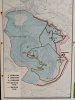
There is no entry fee for Laifengshan, and presumably no open/close times either because there are no gates. I took a photo of a map on a board so I’d know where the paths were and started off along the road a little way until reaching one of the paths leading up the hill through the forest. The paths aren’t trails, they are paved steps, so they are easy but feel more tiring than actual trails.
On the road just before the forest path I had met a small bird-wave of Blue-winged Minlas (which are ubiquitous in every place I’ve been in Yunnan so far), Green-backed and Japanese Tits, Chestnut-vented Nuthatches, and unidentifiable warblers.
Chestnut-vented Nuthatch
Once in the forest I met my usual problem I’ve had in Yunnan, of not being able to see any birds. It is getting very frustrating - I can hear birds all around but they are just invisible. There was one other bird-wave which included a Great Spotted Woodpecker amongst the common birds (“common” as in the Chinese species I am seeing everywhere, just in case any Europeans protest that I have my priorities the wrong way around). Other than that I saw at most fleeting glimpses of birds for most of the way to the top of the hill. Two bright points were Black Bulbuls in both the white-headed and all-black forms, and (after some patient waiting) the appearance of a laughing thrush.
This latter bird was the source of confusion for me for two days. I knew it was a laughing thrush, I got the salient ID points which I thought would make it easy to identify, and I got a bunch of very poor photos which showed the colour and patterning. At the top of the hill is a pavilion with photos of birds inside, and this laughing thrush was featured in one of the photos. Easy. Except no. There are only three laughing thrushes on the eBird list for Laifengshan and this wasn’t one of them. I couldn’t find it in the field guide for Southeast Asia (which I was using for this particular part of the trip because it is much lighter than the field guide for China, which I left in Dali, and most species down here will be in this guide), so I thought it must therefore be a Chinese endemic. I spent a while wondering if it was actually a Grey Treepie, and in one of my photos it was posing like a malkoha, but it clearly wasn’t either of those. The next afternoon I returned to Laifengshan and made a point of looking at the photo in the pavilion. It was labelled in Chinese as being a “grey-winged laughing thrush”. I took a photo of the photo as well, so I could compare it more easily to birds online. When I was back at the hotel I found a list of Yunnan birds online and went through the laughing thrushes one by one until I found my bird – the Moustached Laughing Thrush
Ianothocincla cineracea. And it is in the Southeast Asian field guide, it’s just that the picture in that doesn’t look much like the real bird at all. Once I knew which name to look up I also found a bunch of photos taken at Laifengshan, so I don’t know why it isn’t on the eBird list.
Anyway, after the slow start coming up the hill (on the first day), things turned around at the top where there is an area including signboards of historical wartime information, the aforementioned pavilion, and a pagoda. There was a bit of birdy activity in the top of one tree, including Black-throated Tits, Black-headed Sibias, Orange-bellied Leafbirds, and a Yellow-bellied Fantail (called Yellow-bellied Fairy-Fantail on eBird – it acts just like a fantail but is actually more closely related to tits).
The birds kept flying off to the left so I headed in that direction and found that the trees behind the pavilion were alive with birds. They were swarming everywhere and, noticing that they kept going up and down from the ground area, I realised that there was a little pond down there in which they were bathing. The area was surrounded by a tall fence covered in shade-cloth so it was impossible to get photos of the pond from here but it was clearly set up for photographers, presumably from a paid hide to the side. From over the fence I could see the birds fine as they came and went. There were at least a dozen different species, including Silver-eared Mesias, Pekin Robins, Black-breasted Thrushes, Red-tailed and Blue-winged Minlas, Large Niltava, Swinhoe’s White-eyes, Yunnan Fulvettas, and also some new ones for my year list – Striated and Whiskered Yuhinas, and an Eye-browed Thrush.
Chestnut-tailed Minla
Red-tailed Minla
After about half an hour watching these birds it was starting to feel a bit chilly in the shade so I headed to a large courtyard nearby which was in the sun and overlooked the forest. There were even more birds here, constantly moving through the trees and undergrowth (where they were mostly hidden, their presence shown only by the moving foliage). They were mostly the same species as at the little pond by the pavilion, but there were some additional ones like Rusty-capped Fulvettas, Streak-breasted Scimitar-Babblers and Chestnut-vented Nuthatches.
Yunnan Fulvetta
Red-bellied Squirrel
It was around noon by now and I thought maybe I should try to fit in a visit to the Beihai Wetland Park this afternoon, which would free up the next day for something else. Rather than go back down the path through the forest I instead walked down a paved road which wound down to the start point. This was about 4km but it took two hours because I kept coming across more bird-waves. There were only a few extra birds - Blue-throated Barbet and Himalayan Bluetail being the best-looking, although a Buff-barred Warbler was a lifer - but it was just nice actually being able to see all the birds for once!
Once back on the main street in town I tried to figure out how to get to the Beihai Wetland Park. I knew bus number 13 went there but I didn’t know where the bus stop was and I didn’t really want to pay for a taxi. Luckily all the bus stops on the street have a board with a map of the bus routes which I managed to decipher, and I thus discovered that the number 13 bus goes right past my hotel! By the time I’d had something to eat, walked back to the hotel, and spent much too long trying to find where the bus stop itself was it was a bit late - it takes 40 minutes to Beihai on the bus. So I left it for the next day, figuring I could do Beihai in the morning and then make a return visit to Laifengshan in the afternoon if time.