Chlidonias Goes To Asia, part seven: 2024-2025

Is your trek through southern China mostly birdy in nature, or are you on the look out for some mammals too? What kind of habitat(s) are you in?
It will be mostly birds, although to be fair the birds seem to have other ideas on that so far!

I have only seen three mammal species so far, Red-bellied and Swinhoe's Striped Squirrels, and Northern Tree Shrew (and some rats at Kunming Zoo but I haven't looked at those yet). The day after tomorrow though I go to a town called Mangshi where hopefully I can see Shan State Langurs, which are a split from Phayre's Langurs.

I'm mostly in mountain forest and some wetland areas, but I plan on going to Shangri-La later which will have alpine grassland type habitat.
 
Last edited:
Kunming to Dali

The train to Dali only takes two hours, with a speed of around 195km/h. There are two parts to Dali, the Ancient City (aka Old Town or Old Dali), and Dali City (or New Dali). The former is where the tourists are going, the latter is where the train and bus stations are. I took a local bus from by the train station to Old Dali, which took about an hour and it dropped me at the East Gate of the Ancient City whereas I needed to be at the West Gate which is a couple of kilometres away. I think that was my fault for getting off too early though. I’d booked a hotel through booking. com but I didn’t know exactly where it was, so I asked a person at an “information” stand to call the hotel for the address and then took the local equivalent of a tuktuk there for 20 Yuan.

The hotel turned out to be super nice for 80 Yuan per night, the kind of hotel room you’d probably be paying ten times as much for in NZ. After checking in and getting sorted with information, I took a bus all the way back to New Dali to make an afternoon visit to the Er Hai Moon Wetland Park, on the shore of the large lake which Dali is situated beside.

One of the girls from the hotel had put the walking route from the bus stop to the wetland park into Gaode maps on her phone, which I had taken a photo of to find my way. Just like Google maps does though, the walking route it provided went for a couple of kilometres the long way round instead of what could have been literally a three minute direct walk (I took that street on the way back to the bus stop). However, it was all good because once I got to the lake by the bridge (still a ways south of where I was aiming for) I saw the water was covered in scattered Great Crested Grebes, flocks of Coots, and rafts of dozens of Little Grebes, as well as Black-headed Gulls, and some Greater Scaup and Tufted Ducks. Water birds are so much easier to see than forest birds!

The wetland park itself wasn’t quite what I expected, seemingly consisting of a boardwalk, some patches of reeds, and a park beside the shore. There were a lot of Chinese Pond Herons in non-breeding plumage, a few Great and Little Egrets, Grey Herons, a couple more duck species (Gadwall and Ruddy Shelducks), some Black-winged Stilts, Common Moorhens, and Grey-headed Swamphens, but not much else on this day. Hoopoes walking around on the grass are always a delight though.


full

Great Crested Grebe

full

Little Grebes

full

Coots and Black-headed Gulls
 
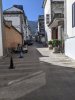
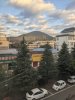
Here are some phone photo attachments, showing my hotel in Dali and the little street it is on. The mountain at the back is Cang Shan, with a touch of snow just visible at top. The cat and dog are at the hotel.PXL_20241203_060322584.MP.jpg PXL_20241203_060143352.jpg PXL_20241203_094718780.jpg PXL_20241203_094739919.jpg
 

Attachments

  • PXL_20241203_060322584.MP.jpg
    PXL_20241203_060322584.MP.jpg
    112.9 KB · Views: 171
  • PXL_20241203_060143352.jpg
    PXL_20241203_060143352.jpg
    105.9 KB · Views: 171
  • PXL_20241203_094718780.jpg
    PXL_20241203_094718780.jpg
    117.6 KB · Views: 173
  • PXL_20241203_094739919.jpg
    PXL_20241203_094739919.jpg
    92.8 KB · Views: 177
Dali

I was only in Dali for three nights because I’ll be coming back here after the southern excursion. Dali is a handy junction point between Tengchong etc to the southish-westish area and Lijiang and Shangri-La to the north. On the first day - arrival day - I made the visit to the Er Hai Moon Wetland Park (in the previous post). The owners of my hotel had said they would take me for lunch at Wuwei Temple on the second day but that ended up being postponed to the following day.

It is cold in Dali at night, about 6 degrees Celsius when I got up in the mornings, but rising to over 20 during the day. Bearing in mind it is currently winter, it must be scorching here in the summer. The hotel owners thought I must be “tough” because I was only wearing a T-shirt during the day and all the locals were wearing jerseys and jackets.

The main birding area in Dali is Cang Shan (shan means “mountain”) which is beside the town. I had been pronouncing it wrong before coming here – it’s not “kang shan” but more like “tung shan”. There are two cable-cars at either end of town, Gontang and Zhonghe, which go up to the midway point at about 2600 metres where there is a paved path (the Jade Road) running the 11.5km between them. Then there is the Ximatan cable-car positioned between the two which goes all the way to the summit at 3900 metres. The town itself sits at around 2000 metres.

The Zhonghe base-station is about 15 minutes walk from my hotel (and the Ximatan station also about 15 minutes in the other direction) so I had a wander along there on the morning of the second day, figuring I could look for some birds in that area, then return to the hotel around 11am for the trip to Wuwei (I didn’t know that had been postponed yet), and then actually go up in the cable-car to the Jade Road in the afternoon.

It doesn’t get light in Yunnan until quite late, between 7.15 and 7.30am, and then you need to find somewhere to have breakfast (usually some sort of noodle soup), so my starts are not as early as I would usually have.

Street signs in Chinese cities are usually in both Chinese and English but curiously other signs are usually not, even for tourist points like the cable-car stations. Granted the majority of tourists are Chinese tourists, but there must still be a lot of foreign tourists who need to know where things are (although, having said that, after ten days I’m still only on one white person seen outside of the hostel in Kunming, and he was at the Wuwei Temple the next day). Nevertheless it was an easy walk from the hotel to the cable-car. Along the way I passed a patch of waste ground on which I saw a Long-tailed Shrike and some Olive-backed Pipits, and on the way back a Hoopoe and the pipits again. A surprise Northern Tree-Shrew in a garden made the second Chinese mammal of this trip (after Red-bellied Squirrel); a second one was seen not long after by the cable-car station.

full

Olive-backed Pipit


I only had about two hours before 11am, not enough time to bother paying to go up to the Jade Road for a look (it is a half-hour ride as I found out in the afternoon), so I just checked out the gardens at the bottom, finding a flock of Black-headed Sibias amongst the usual sort of birds (Swinhoe’s White-eyes, Brown-breasted Bulbuls, wagtails, etc). Then I went back to the hotel where I realised the owners had already sent me a message on WeChat to say they couldn’t go to the Wuwei Temple for lunch after all because it was fully-booked.

full

Black-headed Sibia


Back to the cable-car I went - at least I was going up a couple of hours earlier than I had thought I would be. The one-way fare for the Zhonghe cable-car is 70 Yuan, the return is 95 Yuan. Nobody checked the ticket coming back though, so in theory I could have just paid for the one-way. You can go up at one station and down from the other (e.g. go up at Zhonghe, walk the Jade Road all the way along, and come down on the Gantong cable-car) but I didn’t have time for that today.

I don’t like heights, so the cable-car was kind of scary for me. It’s like a ski-lift, where you’re just sitting in a chair with a bar in front of you. I don’t know how they stop little kids falling out. It’s not really high but certain points are high enough! The ride takes half an hour, and if you start having a panic attack there’s nothing to do except deal with it. Once I saw a hat lying far below on the ground, and I can only assume that was where someone had fallen to their death and the body had been consumed by scavengers.

At the top in the temple area I saw a whole lot of people eating so went inside and found some food, then set off along the path. The forest is mostly Yunnan Pine but there is deciduous growth scattered throughout, especially in the gullies. I found my third Chinese mammal before long, with a couple of Swinhoe’s Striped Squirrels.

full

Swinhoe’s Striped Squirrel


It was a while before I found some identifiable non-invisible birds, but suddenly I was surrounded by them. They were everywhere, in the canopy, on the trunks, in the undergrowth. There were so many and they were moving so fast I could barely focus on any one bird before it was gone. For half an hour I stayed in one spot trying to nail down as many as I could. There were colourful Green-backed Tits, elegant Grey-crested Tits, tiny Yellow-browed Tits, stripy-throated Chestnut-tailed Minlas, Chestnut-vented Nuthatches skittering up and down the trunks, Streak-breasted Scimitar-Babblers with their hooting calls, both Black-browed and Black-throated Tits, and even a Goldcrest amongst the ignorable warblers (because they all look the same unless I can get photos of them!). I managed to identify about a dozen species in the chaos, and there were probably the same number again which I never got good enough looks at.

One of oddest birds up here is the Yellow-browed Tit, which is tiny. It really looks like a warbler with a crest.

full

Yellow-browed Tit


There were a few other bird species seen after this (including more mixed flocks), but most were repeats from this extravaganza. Eurasian Crag-Martins were a lifer, seen swooping alongside a path which ran along a sheer drop. I have no idea how anyone built that path, or indeed why they would think it was a good idea. The cliff-face below went down for approximately an eternity. It was perfectly safe no doubt, with a railing and everything, but I hugged the inside cliff face for fear of becoming the first idiot to fall over the edge.

The cable-cars run between 9am and 4.30pm. I had been up here for about 2.5 hours – it was now around 2pm or so – and I figured I better head back so I didn’t miss the last descent. It only took half an hour to get back. I’d spent so long looking at birds I never made it very far along the Jade Road after all!


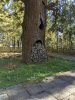
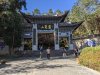
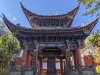
The third day in Dali was a non-birding day (three birds and Red-bellied Squirrel were the total). We were going for lunch at the Wuwei Temple so in the morning I just caught up on notes and photos and such before we left. The Wuwei temple grounds are actually a birding destination in themselves and I will be going back there later (fingers crossed for Lady Amherst’s Pheasant!). The temple was built in the Tang Dynasty in 793AD. There is an ancient tree at the temple which dates from then, its hollow base packed with stones as a sort of shrine.

The lunch has to be booked because each table seats eight people – before entering everybody forms lines of exactly eight, and each line is taken into the dining area individually until everyone is inside. There is to be no noise during the lunch, and everything must be eaten. There is a big bowl of rice of course, and then a selection of vegetarian dishes arranged in a circle around the soup bowl in the middle of the table. It was very good food!

After lunch I then had to bus all the way into New Dali (about an hour) to buy a bus ticket for Tengchong the next day, which took a few minutes, and then got back on the bus to Old Dali. Foreigners can’t buy bus tickets online in China, only physically at the station, and apparently there is only one bus a day so I wanted to make sure I was on it. I’ll be returning to Dali in a week or two depending on how the access to the border areas pans out.
 
Last edited:
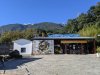
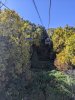
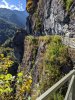
More phone photos: the Zhonghe lower cable-car station, the ascent, and the path on the cliff (much more terrifying in real life).PXL_20241204_015920930.jpg PXL_20241204_033008107.MP.jpg PXL_20241204_064015748.jpg
 

Attachments

  • PXL_20241204_015920930.jpg
    PXL_20241204_015920930.jpg
    216.2 KB · Views: 181
  • PXL_20241204_033008107.MP.jpg
    PXL_20241204_033008107.MP.jpg
    162.8 KB · Views: 177
  • PXL_20241204_064015748.jpg
    PXL_20241204_064015748.jpg
    209.9 KB · Views: 171
And some photos from Wuwei Temple, including the ancient tree.PXL_20241205_033207067.jpg PXL_20241205_044416124.jpg PXL_20241205_031853235.jpg PXL_20241205_043110765.jpg PXL_20241205_044030397.MP.jpg PXL_20241205_044917424.jpg PXL_20241205_033756014.MP.jpg
 

Attachments

  • PXL_20241205_033207067.jpg
    PXL_20241205_033207067.jpg
    189.5 KB · Views: 176
  • PXL_20241205_044416124.jpg
    PXL_20241205_044416124.jpg
    224.1 KB · Views: 174
  • PXL_20241205_031853235.jpg
    PXL_20241205_031853235.jpg
    280.2 KB · Views: 180
  • PXL_20241205_043110765.jpg
    PXL_20241205_043110765.jpg
    242.6 KB · Views: 175
  • PXL_20241205_044030397.MP.jpg
    PXL_20241205_044030397.MP.jpg
    329.3 KB · Views: 171
  • PXL_20241205_044917424.jpg
    PXL_20241205_044917424.jpg
    197.3 KB · Views: 179
  • PXL_20241205_033756014.MP.jpg
    PXL_20241205_033756014.MP.jpg
    212.3 KB · Views: 175
It is cold in Dali at night, about 6 degrees Celsius when I got up in the mornings, but rising to over 20 during the day. Bearing in mind it is currently winter, it must be scorching here in the summer. The hotel owners thought I must be “tough” because I was only wearing a T-shirt during the day and all the locals were wearing jerseys and jackets.

Actually the summer of Dali is not much hotter than its winter. The highest daytime temperature was on average 25 this July and 26 in August, so you'll probably be fine if you visit in summer except it'll be a lot more rainy.:D
 
Tengchong

The bus ride from Dali to Tengchong took five hours exactly, leaving at 10.30am and arriving at 3.30pm. The whole way was hills and mountains, and forest and terraces. I didn’t really like Tengchong much. First impressions at the Tongluo Hotel were bad. The room stinks - I’m not sure what it was, maybe just cigarette smoke - and the carpet is laid in patches and is worn half-through. But is only 70 Yuan a night, and it actually wasn’t bad. The sheets were clean, and there was cleaning every day with the bin emptied, and new water bottles, towels, soap etc added each day. The smell also wasn’t noticeable after getting used to it. Check-in was a bit of a mission because the receptionist didn’t know what to do with my passport and I had to use the translate function on my phone to show her what each part said (e.g. New Zealand, August, etc) so she could enter the details into her computer.

The hotel is only one or two minutes walk from the bus station, so after check-in was completed I went back over there to try and find out where the outbound buses I needed left from. There are four bus stations in town and from the internet my buses all left from different ones. Turned out that, as per usual for the internet and China, that information was wrong and I could catch them all right there so that was handy.

One of the places I would be visiting was a forested hill called Laifengshan which didn’t need a bus because it is right in the middle of Tengchong. In fact I could see it from the hotel just a couple of streets over. There wasn’t time left on arrival day to do anything, so Laifengshan had to wait until morning.

It is actually colder here in the morning than Dali was, which was a surprise because I thought it was going to be much lower in altitude (Dali is at 2000m and Tengchong it turns out is at 1667m, so not a huge difference). Laifengshan was very close to the hotel but walking there took some time, almost an hour including a stop for breakfast along the way, because the entry road was at the far end of the hill and I had to follow the main streets the long way round to get there. I think I didn’t get to the parking area until about 9am. Many little alleys criss-crossed the area but the maps are not reliable for them and I didn’t want to get too lost. Along the way I kept mental notes of where the alleys were, and on the way back in the afternoon took a shorter route via some of them.

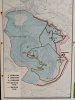
There is no entry fee for Laifengshan, and presumably no open/close times either because there are no gates. I took a photo of a map on a board so I’d know where the paths were and started off along the road a little way until reaching one of the paths leading up the hill through the forest. The paths aren’t trails, they are paved steps, so they are easy but feel more tiring than actual trails.

On the road just before the forest path I had met a small bird-wave of Blue-winged Minlas (which are ubiquitous in every place I’ve been in Yunnan so far), Green-backed and Japanese Tits, Chestnut-vented Nuthatches, and unidentifiable warblers.

full

Chestnut-vented Nuthatch

Once in the forest I met my usual problem I’ve had in Yunnan, of not being able to see any birds. It is getting very frustrating - I can hear birds all around but they are just invisible. There was one other bird-wave which included a Great Spotted Woodpecker amongst the common birds (“common” as in the Chinese species I am seeing everywhere, just in case any Europeans protest that I have my priorities the wrong way around). Other than that I saw at most fleeting glimpses of birds for most of the way to the top of the hill. Two bright points were Black Bulbuls in both the white-headed and all-black forms, and (after some patient waiting) the appearance of a laughing thrush.

This latter bird was the source of confusion for me for two days. I knew it was a laughing thrush, I got the salient ID points which I thought would make it easy to identify, and I got a bunch of very poor photos which showed the colour and patterning. At the top of the hill is a pavilion with photos of birds inside, and this laughing thrush was featured in one of the photos. Easy. Except no. There are only three laughing thrushes on the eBird list for Laifengshan and this wasn’t one of them. I couldn’t find it in the field guide for Southeast Asia (which I was using for this particular part of the trip because it is much lighter than the field guide for China, which I left in Dali, and most species down here will be in this guide), so I thought it must therefore be a Chinese endemic. I spent a while wondering if it was actually a Grey Treepie, and in one of my photos it was posing like a malkoha, but it clearly wasn’t either of those. The next afternoon I returned to Laifengshan and made a point of looking at the photo in the pavilion. It was labelled in Chinese as being a “grey-winged laughing thrush”. I took a photo of the photo as well, so I could compare it more easily to birds online. When I was back at the hotel I found a list of Yunnan birds online and went through the laughing thrushes one by one until I found my bird – the Moustached Laughing Thrush Ianothocincla cineracea. And it is in the Southeast Asian field guide, it’s just that the picture in that doesn’t look much like the real bird at all. Once I knew which name to look up I also found a bunch of photos taken at Laifengshan, so I don’t know why it isn’t on the eBird list.

Anyway, after the slow start coming up the hill (on the first day), things turned around at the top where there is an area including signboards of historical wartime information, the aforementioned pavilion, and a pagoda. There was a bit of birdy activity in the top of one tree, including Black-throated Tits, Black-headed Sibias, Orange-bellied Leafbirds, and a Yellow-bellied Fantail (called Yellow-bellied Fairy-Fantail on eBird – it acts just like a fantail but is actually more closely related to tits).

The birds kept flying off to the left so I headed in that direction and found that the trees behind the pavilion were alive with birds. They were swarming everywhere and, noticing that they kept going up and down from the ground area, I realised that there was a little pond down there in which they were bathing. The area was surrounded by a tall fence covered in shade-cloth so it was impossible to get photos of the pond from here but it was clearly set up for photographers, presumably from a paid hide to the side. From over the fence I could see the birds fine as they came and went. There were at least a dozen different species, including Silver-eared Mesias, Pekin Robins, Black-breasted Thrushes, Red-tailed and Blue-winged Minlas, Large Niltava, Swinhoe’s White-eyes, Yunnan Fulvettas, and also some new ones for my year list – Striated and Whiskered Yuhinas, and an Eye-browed Thrush.

full

Chestnut-tailed Minla

full

Red-tailed Minla

After about half an hour watching these birds it was starting to feel a bit chilly in the shade so I headed to a large courtyard nearby which was in the sun and overlooked the forest. There were even more birds here, constantly moving through the trees and undergrowth (where they were mostly hidden, their presence shown only by the moving foliage). They were mostly the same species as at the little pond by the pavilion, but there were some additional ones like Rusty-capped Fulvettas, Streak-breasted Scimitar-Babblers and Chestnut-vented Nuthatches.

full

Yunnan Fulvetta

full

Red-bellied Squirrel

It was around noon by now and I thought maybe I should try to fit in a visit to the Beihai Wetland Park this afternoon, which would free up the next day for something else. Rather than go back down the path through the forest I instead walked down a paved road which wound down to the start point. This was about 4km but it took two hours because I kept coming across more bird-waves. There were only a few extra birds - Blue-throated Barbet and Himalayan Bluetail being the best-looking, although a Buff-barred Warbler was a lifer - but it was just nice actually being able to see all the birds for once!

Once back on the main street in town I tried to figure out how to get to the Beihai Wetland Park. I knew bus number 13 went there but I didn’t know where the bus stop was and I didn’t really want to pay for a taxi. Luckily all the bus stops on the street have a board with a map of the bus routes which I managed to decipher, and I thus discovered that the number 13 bus goes right past my hotel! By the time I’d had something to eat, walked back to the hotel, and spent much too long trying to find where the bus stop itself was it was a bit late - it takes 40 minutes to Beihai on the bus. So I left it for the next day, figuring I could do Beihai in the morning and then make a return visit to Laifengshan in the afternoon if time.
 
Tengchong: part two

After waiting for sunrise, and finding somewhere to get breakfast, I headed over to the bus stop for bus number 13. It is around the corner from my hotel, opposite the Soft Time Hotel. I got there at 8.45am and waited. And waited. I was passing number twos every fifteen minutes ... hang on, that came out wrong - there were number 2 buses passing by every fifteen minutes. The bus shelters have a list of all the stops for each bus which use the stop you’re at (which is handy because it means you can count off the stops as you go and get off at the right place!), but they don’t have an actual timetable. So I’m wondering if the bus only runs every hour, or maybe it doesn’t run on Sundays at all. I was close to folding and flagging down a taxi, but luckily the bus turned up, at 9.20am. This was the first stop on its route, so it sat there until it was time to leave at 9.35am. It must run only once an hour, I reasoned, which therefore meant I must have just missed one when I first got there.

The bus arrived at the Beihai Wetland Park at 10.10am. There was a 13 bus going in the other direction there. So I figured that if they run every hour I should try to be back at the stop on the hour and I’d be able to catch the bus ten minutes later.

The Beihai Wetland Park features a large lake, partially open water and partially reed beds, and there is a long boardwalk over part of it. The hills all around seem to be well-forested. There are all sorts of “activities” visitors can do there, including various sorts of boat rides, but they are only in a specific part of the wetland and the rest is just for bird viewing from the boardwalk. There are also lots of little restaurants and souvenir stands. The entry fee is 55 Yuan, or more if you want to do any of the boat rides.

Beihai has an eBird list of 149 species but what I’m finding with the lists is that while the bald total makes one think you’ll see loads of birds the reality is that you can expect maybe 10 or 20 species on a single visit and the rest are random chance (or even just totally unlikely in many cases). I saw 20 species exactly at Beihai. Looking at the checklists there are a handful of 30 or so birds recorded in a visit, but most are well under even my 20. What was sort of frustrating was that along the boardwalk there were bird signs with constant reminders about species that were “resident” or “common” and I’m straining my eyes looking in vain for Pheasant-tailed Jacanas and White Pigmy Geese and Watercocks which these signs are telling me are there somewhere. Bah!

Seriously though, it is a really nice wetland and I think regular visits would pay off, especially at different seasons. On my visit the dominant birds were mostly ones I had already seen the other day at Dali’s Er Hai Moon Wetland Park - Ruddy Shelducks, Common Coots, Little Grebes, Grey-headed Swamphens and Common Moorhens - but the most common ducks there (apart for the Ruddy Shelducks) were year-bird-additions Spot-billed Ducks and Eurasian Teals. Scattered about were Gadwalls, and I managed to pick out a few Eurasian Wigeons, a pair of Mallards, and a group of Ferruginous Ducks as well. A couple of Northern Tree Shrews were seen here also, in the gardens edging the footpath along the lake shore.

full

Eurasian Teal

full

Grey-headed Swamphen

I was at the bus stop at 1pm, all ready for no waiting for the bus. Instead I waited. Ten past, no bus. Half-past, no bus. I couldn’t even sit down and wait because where the bus stop was there was a line of parked cars so anywhere I sat the view down the road was blocked, and I didn’t want the bus to zoom past before I realised it was coming. So I just stood there. At 2pm, no bus. So close to accepting a ride from one of the taxi drivers telling me there was no bus. No, I had been waiting so long there must be a bus coming along soon. I wasn’t going to pay for a taxi back to town. Finally, at 2.20pm the bus arrived. Maybe they only run every 1.5 hours or every 2 hours. I have no idea.

It was 3pm when I got back to the hotel, and I set off straight away for another visit to Laifengshan. I got there in 25 minutes this time, taking the short cuts through the alleyways. Straight up the steepest set of steps to the top, with no birds seen along the way, and I arrived at the pavilion where I expected to see hordes of birds. There was not a single bird there. Not just “not many” birds, but actual zero birds. Unbelievable. Perhaps that spot is just a morning thing. I’ll be coming back here when I return through Tengchong, so we’ll see. (Just as an aside, the eBird list for Laifengshan is 303 species!).

I tried the courtyard area and there were some birds here. At least these were “not many” birds instead of zero birds. And one of them was a Yellow-cheeked Tit which was a year-bird. Otherwise just Mountain Bulbuls, Silver-eared Mesias, Chestnut-tailed Minlas, Black-headed Sibias, a White-throated Fantail, and a Great Spotted Woodpecker. I walked the 4km road down, and saw just another Great Spotted Woodpecker. Laifengshan does not seem like a good afternoon spot! I saw seven bird species here today, compared to 35 the previous morning!

Tomorrow I go to Mangshi in search of a new monkey.
 
Bird lists for Dali and Tengchong are here: Zoochat Big Year 2024


Some phone photos:

PXL_20241208_003143640.jpg
Laifengshan as seen from my hotel.

PXL_20241207_003950058.jpg
Map of Laifengshan - the yellow path is the 4km road and where it ends on the right of the map is the entrance area. If my hotel was shown it would be somewhere along the bottom edge of the map I think, so I had to walk all the way around the bottom of the hill to access the paths.

PXL_20241206_100223781.jpg
Just an amusing sign in the bathroom of my hotel.
 

Attachments

  • PXL_20241208_003143640.jpg
    PXL_20241208_003143640.jpg
    110 KB · Views: 151
  • PXL_20241207_003950058.jpg
    PXL_20241207_003950058.jpg
    146.3 KB · Views: 147
  • PXL_20241206_100223781.jpg
    PXL_20241206_100223781.jpg
    204 KB · Views: 154
Last edited:
Tengchong

The bus ride from Dali to Tengchong took five hours exactly, leaving at 10.30am and arriving at 3.30pm. The whole way was hills and mountains, and forest and terraces. I didn’t really like Tengchong much. First impressions at the Tongluo Hotel were bad. The room stinks - I’m not sure what it was, maybe just cigarette smoke - and the carpet is laid in patches and is worn half-through. But is only 70 Yuan a night, and it actually wasn’t bad. The sheets were clean, and there was cleaning every day with the bin emptied, and new water bottles, towels, soap etc added each day. The smell also wasn’t noticeable after getting used to it. Check-in was a bit of a mission because the receptionist didn’t know what to do with my passport and I had to use the translate function on my phone to show her what each part said (e.g. New Zealand, August, etc) so she could enter the details into her computer.

The hotel is only one or two minutes walk from the bus station, so after check-in was completed I went back over there to try and find out where the outbound buses I needed left from. There are four bus stations in town and from the internet my buses all left from different ones. Turned out that, as per usual for the internet and China, that information was wrong and I could catch them all right there so that was handy.

One of the places I would be visiting was a forested hill called Laifengshan which didn’t need a bus because it is right in the middle of Tengchong. In fact I could see it from the hotel just a couple of streets over. There wasn’t time left on arrival day to do anything, so Laifengshan had to wait until morning.

It is actually colder here in the morning than Dali was, which was a surprise because I thought it was going to be much lower in altitude (Dali is at 2000m and Tengchong it turns out is at 1667m, so not a huge difference). Laifengshan was very close to the hotel but walking there took some time, almost an hour including a stop for breakfast along the way, because the entry road was at the far end of the hill and I had to follow the main streets the long way round to get there. I think I didn’t get to the parking area until about 9am. Many little alleys criss-crossed the area but the maps are not reliable for them and I didn’t want to get too lost. Along the way I kept mental notes of where the alleys were, and on the way back in the afternoon took a shorter route via some of them.

There is no entry fee for Laifengshan, and presumably no open/close times either because there are no gates. I took a photo of a map on a board so I’d know where the paths were and started off along the road a little way until reaching one of the paths leading up the hill through the forest. The paths aren’t trails, they are paved steps, so they are easy but feel more tiring than actual trails.

On the road just before the forest path I had met a small bird-wave of Blue-winged Minlas (which are ubiquitous in every place I’ve been in Yunnan so far), Green-backed and Japanese Tits, Chestnut-vented Nuthatches, and unidentifiable warblers.

full

Chestnut-vented Nuthatch

Once in the forest I met my usual problem I’ve had in Yunnan, of not being able to see any birds. It is getting very frustrating - I can hear birds all around but they are just invisible. There was one other bird-wave which included a Great Spotted Woodpecker amongst the common birds (“common” as in the Chinese species I am seeing everywhere, just in case any Europeans protest that I have my priorities the wrong way around). Other than that I saw at most fleeting glimpses of birds for most of the way to the top of the hill. Two bright points were Black Bulbuls in both the white-headed and all-black forms, and (after some patient waiting) the appearance of a laughing thrush.

This latter bird was the source of confusion for me for two days. I knew it was a laughing thrush, I got the salient ID points which I thought would make it easy to identify, and I got a bunch of very poor photos which showed the colour and patterning. At the top of the hill is a pavilion with photos of birds inside, and this laughing thrush was featured in one of the photos. Easy. Except no. There are only three laughing thrushes on the eBird list for Laifengshan and this wasn’t one of them. I couldn’t find it in the field guide for Southeast Asia (which I was using for this particular part of the trip because it is much lighter than the field guide for China, which I left in Dali, and most species down here will be in this guide), so I thought it must therefore be a Chinese endemic. I spent a while wondering if it was actually a Grey Treepie, and in one of my photos it was posing like a malkoha, but it clearly wasn’t either of those. The next afternoon I returned to Laifengshan and made a point of looking at the photo in the pavilion. It was labelled in Chinese as being a “grey-winged laughing thrush”. I took a photo of the photo as well, so I could compare it more easily to birds online. When I was back at the hotel I found a list of Yunnan birds online and went through the laughing thrushes one by one until I found my bird – the Moustached Laughing Thrush Ianothocincla cineracea. And it is in the Southeast Asian field guide, it’s just that the picture in that doesn’t look much like the real bird at all. Once I knew which name to look up I also found a bunch of photos taken at Laifengshan, so I don’t know why it isn’t on the eBird list.

Anyway, after the slow start coming up the hill (on the first day), things turned around at the top where there is an area including signboards of historical wartime information, the aforementioned pavilion, and a pagoda. There was a bit of birdy activity in the top of one tree, including Black-throated Tits, Black-headed Sibias, Orange-bellied Leafbirds, and a Yellow-bellied Fantail (called Yellow-bellied Fairy-Fantail on eBird – it acts just like a fantail but is actually more closely related to tits).

The birds kept flying off to the left so I headed in that direction and found that the trees behind the pavilion were alive with birds. They were swarming everywhere and, noticing that they kept going up and down from the ground area, I realised that there was a little pond down there in which they were bathing. The area was surrounded by a tall fence covered in shade-cloth so it was impossible to get photos of the pond from here but it was clearly set up for photographers, presumably from a paid hide to the side. From over the fence I could see the birds fine as they came and went. There were at least a dozen different species, including Silver-eared Mesias, Pekin Robins, Black-breasted Thrushes, Red-tailed and Blue-winged Minlas, Large Niltava, Swinhoe’s White-eyes, Yunnan Fulvettas, and also some new ones for my year list – Striated and Whiskered Yuhinas, and an Eye-browed Thrush.

full

Chestnut-tailed Minla

full

Red-tailed Minla

After about half an hour watching these birds it was starting to feel a bit chilly in the shade so I headed to a large courtyard nearby which was in the sun and overlooked the forest. There were even more birds here, constantly moving through the trees and undergrowth (where they were mostly hidden, their presence shown only by the moving foliage). They were mostly the same species as at the little pond by the pavilion, but there were some additional ones like Rusty-capped Fulvettas, Streak-breasted Scimitar-Babblers and Chestnut-vented Nuthatches.

full

Yunnan Fulvetta

full

Red-bellied Squirrel

It was around noon by now and I thought maybe I should try to fit in a visit to the Beihai Wetland Park this afternoon, which would free up the next day for something else. Rather than go back down the path through the forest I instead walked down a paved road which wound down to the start point. This was about 4km but it took two hours because I kept coming across more bird-waves. There were only a few extra birds - Blue-throated Barbet and Himalayan Bluetail being the best-looking, although a Buff-barred Warbler was a lifer - but it was just nice actually being able to see all the birds for once!

Once back on the main street in town I tried to figure out how to get to the Beihai Wetland Park. I knew bus number 13 went there but I didn’t know where the bus stop was and I didn’t really want to pay for a taxi. Luckily all the bus stops on the street have a board with a map of the bus routes which I managed to decipher, and I thus discovered that the number 13 bus goes right past my hotel! By the time I’d had something to eat, walked back to the hotel, and spent much too long trying to find where the bus stop itself was it was a bit late - it takes 40 minutes to Beihai on the bus. So I left it for the next day, figuring I could do Beihai in the morning and then make a return visit to Laifengshan in the afternoon if time.
The reason the Moustached Laughingthrush isn't on the eBird list is because it's listed as a Sensitive Species. This means the species is under conservation threat from poaching, and eBird therefore doesn't show this species at finer scales (i.e., it won't show up when looking through hotspot lists, and you can't see the individual pins on the sightings map).
 
Beihai has an eBird list of 149 species but what I’m finding with the lists is that while the bald total makes one think you’ll see loads of birds the reality is that you can expect maybe 10 or 20 species on a single visit and the rest are random chance (or even just totally unlikely in many cases).
As I mentioned earlier, the best way to get an accurate gauge of how many species you may see is to look through the bar-charts for the week of your visit and see roughly how many species are quite likely (75%+) or likely (50%+) and take note of the others that are possible (15-50).

I suppose this isn't as quickly recognized for a New Zealander, where the total possible species list is quite low, so any given site on ebird, even quite good ones, would be in the 50-100 species range. I suspect the number of species you can expect to see visiting a site in NZ wouldn't necessarily be too different to elsewhere, a standard 15-30 species, even though there are way more possible species on other landmasses.

Here in North America, I've had 6 species at a hotspot with 346 and 26 at a site with 64. Those site totals are a lot higher because of infrequent and migratory species, and that 6 species list was at the apparently the worst time of year.
 
Mangshi, part one

Next stop after Tengchong was a town called Mangshi, which I was visiting solely to try and see a species of monkey called the Shan State Langur, which is a split from Phayre’s Langur. The “original” Phayre’s Langur was found from north-eastern India right across southeast Asia to Vietnam and China but it has been split into four different species over time. First split was the Indochinese Grey Langur quite a while ago (in 2009), and then more recently (in 2020) the rest of the population was split into three – the “true” Phayre’s Langur in north-eastern India, Bangladesh and western Burma, the Popa Langur isolated in central Burma, and the Shan State Langur in eastern Burma and the south-western edge of Yunnan. I have seen the Indochinese Grey Langur in the wild (in 2019 in Thailand) but none of the others, although I do have plans.

While researching sites for all three species I found that there is a village near Mangshi where the langurs are a tourist attraction for local (i.e. Chinese) photographers, especially around January when they have bright orange babies. I found a number of translated Chinese media reports about a couple in Mangshi where the husband is a forest ranger who tracks the langurs, and the wife organises taking the tourists to see them. I figured this was probably something well-known in Mangshi so I would just try to arrange it when I arrived. I did also find an older trip report from one of the western birding companies where some langurs were seen in the forest near Nabang, but as this is on the border with Burma and I didn’t know if I’d be able to go there I decided to put my time into paying to see them at Mangshi.

Then fortuitously, just before I left on the trip, I happened to look on Mammalwatching and came across a recently-added trip report specifically about primates in Yunnan. I rarely look at that site any more because it basically just became an advertisement site for tour companies and I gave up on it a long time ago. I emailed the author of the Yunnan report and they gave me some information, the price they paid (200 Yuan – roughly NZ$50), and importantly the phone number of the lady who runs the langur trips. They had also been to see Concolor Gibbons at Wuliangshan and gave me some information and a phone number for that, but I don’t think I’m going to be able to arrange that.

Mangshi was exactly one hour’s ride from Tengchong, and it appeared to be forest most of the way. I’m finding that travel times from internet sources are usually quite wrong, probably through being outdated. As a gauge I’ve been using specifically Chinese (but English-language) information sites like China Bus Guide, Yunnan Exploration, and TravelChinaGuide, but they say that, for example, Dali to Tengchong is seven hours (was actually five hours), and Tengchong to Mangshi is two to three hours (was actually one hour). The roads outside the cities in Yunnan have all been excellent so far, smooth as silk and usually there are two side-by-side roads (one for traffic in one direction, and the other for the other direction, so not so much trouble with head-on collisions with trucks any more). There are also a lot of tunnels. They all have the length signposted at the entrance – there was one called the Nanjingli Tunnel down by Ruili which was 5273 metres long (that’s 3.27 miles for Americans). I suppose these factors have sped up transport between cities now. The traffic now goes through the mountains like dwarves rather than over the mountains like hobbits.

Mangshi is a much nicer town than Tengchong. Something striking overall about China I’ve found is how clean all the cities are. So far I have been in five Chinese cities on this trip - Kunming, Dali, Tengchong, Mangshi, and Ruili (which will be in following posts) - and all of them are so clean. Ruili doesn’t seem as clean as the others but that’s just because it is a dusty place, there wasn’t any rubbish on the streets or anything like that. There are people sweeping streets and picking up rubbish all day long, there are rubbish bins everywhere (almost always paired as “recyclable” and “residual”), I haven’t seen anyone throwing rubbish on the ground like anywhere else in Asia (in fact, I would see people specifically walking over to where-ever a bin was to put their rubbish in), and all the vehicles apart for various old trucks seem to be electric – all the cars are new and quiet, and there is no pollution clouding the air as I found on my last visit to China (albeit in cities in other provinces).

When I arrived at the North Bus Station in Mangshi I saw there was a police post right next door so I dropped in to ask if foreigners are allowed to go to Ruili. The reply I got was that I needed to go to the South Bus Station to buy a ticket. So I guessed that meant there were no restrictions on foreigners (any more). Then I showed him the hotel booking on my phone to see if he knew how far away the address was. He said it was down that street right there. I opened the map on the booking to show the hotel’s location and that was when I discovered that the map actually shows my location in real time and the walking route from said location to the hotel. That would have been helpful to know the other day when I arrived in Tengchong and didn’t know where the hotel was. The things I’m learning that everyone else on the planet already knows!

The hotel is called the Guangdai Hotel, although that English name does not appear on the hotel itself. It’s a good place, literally about three minutes walk from the North Bus Station. The South Bus Station is only 15 minutes walk away as well – I don’t know why they don’t just have one station when they are so close together. Along the street are lots of supermarkets, a bread shop, a fruit market around the corner. I even managed to find a supermarket that sells coffee sachets. I had a bit of trouble finding any in Kunming, only found one place in Dali that sold them, and nowhere at all in Tengchong. It’s like everyone here just drinks tea or something.

People are much friendlier here than in the previous cities. Even in Dali which must see loads of foreigners the people I smiled at or said hello to as I passed usually just looked at me blankly. It might just be me though. I did get asked if I was a soldier in Dali. This seems silly for anyone who has seen me but I get asked this on most trips to Asia, even though I am definitely not a short-back-and-sides, no-earrings, no-big-bushy-beard kind of person. I think it’s because I wear non-traditional-tourist clothes (boots, cargo pants, earth colours). In Mangshi everyone was really friendly and saying hello and waving to me. In Ruili a couple of days later some even wanted photos with me.

The owner of the hotel called the langur lady for me, with the phone number I had, and a trip was arranged for the following morning. Sorted.

On the map of Mangshi I had seen that there was a reservoir by town and I had been going to see about walking out there to see if there were any birds around, but in the end thought it was too far (although looking at the map now it’s not that far past where I did end up going). Instead I chose the Mengba’naxi Zhenqi Park which was closer to the hotel and looked like it might be a botanic gardens sort of place. I found the park, I couldn’t find the entrance! I found a few different gates, all chained shut, but I could see people in the park. After a lot of walking getting nowhere I gave up on it. I did see a Common Tailorbird for the year list. I could see a pagoda sticking up above trees on a nearby hill, so I decided to head in that direction. This was more successful, and I soon found a path leading up the hill.

The pagoda is called Menghuan Dajin Tower and the hill is sort of a mini version of Laifengshan in Tengchong. It is covered in forest, there is a long set of stairs going all the way to the top, and there are dirt paths looping around through the forest as well. There wasn’t much in the way of bird activity in the forest but it was the middle of the afternoon and quite hot (the area is subtropical). I think a morning visit would probably be quite birdy.

On the way back down the steps I heard some rustling in the leaves to the side. I stopped to have a look, and saw leaf litter being tossed about, but I couldn’t actually see what was doing it. I put my binoculars on the spot and discovered a Puff-throated Babbler, looking oddly like a tiny Song Thrush with its streaked breast. It was so well camouflaged that I could hardly see it amongst the leaves without the binoculars. Through the camera lens I couldn’t see it at all, and so just took a bunch of blind shots hoping something would turn out.

full

Puff-throated Babbler
 
Last edited:
The langur post will be next, but for now here are some phone photos of Mangshi.

PXL_20241210_095907090.NIGHT.jpg
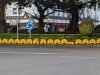
Elephant roundabout.

PXL_20241210_094704128.MP.jpg
A nearly 200 year old jewellers.

PXL_20241210_012328652.jpg
These are rental power banks for if your phone needs charging. They are outside all sorts of shops.

PXL_20241210_012217775.jpg
One of the vehicles which isn't electric... It's like a truck with a lawnmower for an engine.
 

Attachments

  • PXL_20241210_095907090.NIGHT.jpg
    PXL_20241210_095907090.NIGHT.jpg
    208 KB · Views: 130
  • PXL_20241210_094704128.MP.jpg
    PXL_20241210_094704128.MP.jpg
    227.1 KB · Views: 126
  • PXL_20241210_012328652.jpg
    PXL_20241210_012328652.jpg
    92.4 KB · Views: 129
  • PXL_20241210_012217775.jpg
    PXL_20241210_012217775.jpg
    187.6 KB · Views: 128
Last edited:
A very enjoyable read thus far, and glad to see the trip is going well after the rough start!

I'll add a couple things re eBird and hotspots:
The reason the Moustached Laughingthrush isn't on the eBird list is because it's listed as a Sensitive Species. This means the species is under conservation threat from poaching, and eBird therefore doesn't show this species at finer scales (i.e., it won't show up when looking through hotspot lists, and you can't see the individual pins on the sightings map).

For clarification, a species can be marked as sensitive for any number of reasons, not just poaching. Here in the states various species of owls are considered sensitive to help protect them from disturbance from the throngs of birders and photographers.
You can see these species on higher levels of data (eg county/district lists and higher) but they are separately listed down underneath the main list. If you're not seeing a species appearing in a region that can be something to check. The full list of sensitive species is here, a little ways down the page:
Sensitive Species in eBird

As I mentioned earlier, the best way to get an accurate gauge of how many species you may see is to look through the bar-charts for the week of your visit and see roughly how many species are quite likely (75%+) or likely (50%+) and take note of the others that are possible (15-50).
Here in North America, I've had 6 species at a hotspot with 346 and 26 at a site with 64. Those site totals are a lot higher because of infrequent and migratory species, and that 6 species list was at the apparently the worst time of year.

I would like to note you cannot sort eBird data by a week basis, the easiest would be to sort by month. It will still pull up a full yearspan chart, but only includes species seen in the selected month. I assume CMP was referring to this method.
However as you're finding, the bar charts can be a bit misleading. Due to how the system interpets the data, they are often not entirely accurate. A single rarity that sticks around for a while and is reported by many people often skews the apparent likelihood quite a lot. Generally I consider bar charts useful only with consideration.
Similarly it is not uncommon that hotspots with high species tallies have acquired it over the years as 'outlier' species are occasionally spotted, rather than having a high chance of seeing many species on any given day. When looking at a new hotspot to try, I scroll a ways down the most recent sightings list. If the last seen dates are erratic and dropping back in time fairly quickly, that's often a good indicator the site isn't particularly specious - especially if checklists are numerous. Often you never know for sure until you show up and see for yourself! Sometimes it sure seems like the birds enjoy messing around with us. :p
 
I would like to note you cannot sort eBird data by a week basis, the easiest would be to sort by month. It will still pull up a full yearspan chart, but only includes species seen in the selected month. I assume CMP was referring to this method.
You can, in fact, see percent occurrence per week when looking at the bar charts. I suppose it's not exactly a week but rather the 'quarter' of the month, but its close enough.

However as you're finding, the bar charts can be a bit misleading. Due to how the system interpets the data, they are often not entirely accurate. A single rarity that sticks around for a while and is reported by many people often skews the apparent likelihood quite a lot. Generally I consider bar charts useful only with consideration.
Yeah, I mentioned this in my first post. Bar-charts are useful but need to be combined with a quick look at recent sightings to really be useful. A general knowledge of species, such as the fact some birds are nocturnal and other birds are skulky and may be generally heard only is also important. If you become familiar with bar charts and their caveats and considerations, they can become a great way to find spots that could give you a good chance to see particular species.
 
You can, in fact, see percent occurrence per week when looking at the bar charts. I suppose it's not exactly a week but rather the 'quarter' of the month, but its close enough.

Yes, though it can be rather annoying to do on mobile. It also only works on the illustrated bar charts for whatever reason. The point I was trying to clarify is that the data set itself cannot be narrowed down to just a week, you have to work with species seen that month or higher and pick through it. Honestly going off recent sightings is probably more useful than clicking each potential species to see the percentage of probability. A quick skim through the bar chart to see what species have high indication of sightings in the timeframe is typically equally helpful when in conjunction with recent sightings.
 
Mangshi, part two

I was picked up at the hotel at 8.30 am for the trip to see the Shan State Langurs. The lady from the hotel had added both herself and the langur lady to my WeChat so we could communicate easier because the messages can be translated, although the translations are not perfect. The langur lady’s one always called me “Teacher” which I think must have been a mistranslation of “sir” or “Mr”.

We drove for about half an hour through what I guess were the outskirts of Mangshi – perhaps satellite towns? I’m not sure – and then we stopped for breakfast. The langur lady said there was no rush, the langurs wouldn’t be seen until noon, which made me wonder to myself why we started at 8.30am. Then we turned off the main streets onto a narrow brick road which technically was two lanes but each lane was only about two-thirds of a car wide so if passing both cars needed to move off the road. This brick road was followed for about another half-hour, winding up into the mountains through a few villages, then we turned off again onto a one-car-wide side-road of concrete which stopped shortly at a waterfall with a set of wooden stairs leading up the hill.

She said we would wait here and she would hear on the whereabouts of the langurs from the ranger (I assumed her husband, although it turned out not to be on this day). It was a long climb to the top of the stairs, to where there was a viewing platform. Apparently this was where the langurs would come at noon, in the trees on the cliff opposite the platform, where the waterfall came down. I presumed this must be a regular route of the local troop. It was now 10am. I suspect the platform was actually for the waterfall rather than langurs - building it would have taken a while and caused a lot of disruption.

There were very few birds around to pass the time, although a noisy flock of Rusty-fronted Barwings made for a nice distraction while waiting. They passed back and forth three times over the next three hours.

full

Rusty-fronted Barwing

At 1.30pm no langurs had shown up. How much longer would I have to linger to see a langur? We went down to the bottom of the stairs, crossed the little creek where the waterfall flowed out, and went along a trail into the forest. After about ten minutes she stopped and pointed at a tree on the opposite slope and said there was a monkey there, “motionless”. I could see nothing. With the naked eye there were various black and grey shapes which looked sort of monkey-like, but through binoculars they were just holes in the foliage. We waited here for half an hour.

I had earlier asked if there had been any other foreigners who had come here to see the langurs, and she said there had been one. While waiting she said this spot was where that guy had seen them with her. And then suddenly a troop of langurs turned up, crashing through the trees on the opposite side of the valley. Too far away for photos but I could see them through the binoculars okay. They were gone after five minutes.

More waiting, another half an hour. I said that I think the langurs had gone now, and she said that no there were more coming. Then she added that her husband was at a meeting so couldn’t be here, and the ranger they had today “was not good at keeping deadlines”. I rather suspect the langurs are “herded” to where the photographers are, hence the assurance they would be at the viewing platform at noon.

However, sure enough another (or maybe the same) troop came past in the same brief fashion. It was around 3pm by now so we went back to Mangshi. I assured her I was happy enough. Most - perhaps all - of her trips are with photographers rather than just animal-watchers, so she was a bit disturbed that I never got any photos. I would have liked to see them for longer and closer, but I don’t “need” photos of the animals I see so it was fine.

Back in Mangshi she gave me the price of the trip. Sichao Ma from Mammalwatching had said their fee was 200 Yuan (about NZ$50). I hadn’t asked about the price before going because I was definitely going anyway as this seemed like the only likely way I would see them, so if it was a bit over 200 then so be it. The cost was 500 Yuan! That’s about NZ$120! The “looking for langurs” bit was indeed 200 Yuan, but the cost of the car to get out there and back was 300 Yuan. Probably the most expensive monkeys I’ve ever looked at!

Six days later (today, in fact), when I was at the bus station in Yingjiang waiting to go to Nabang, the langur lady messaged me on WeChat asking if I was still in Mangshi because some people “from your country” (i.e. probably just white people) were going to see the langurs with her and I could come with them. I bet it was Jon Hall.
 
Last edited:
Phone photos:

PXL_20241210_021554401.jpg
Looking down the stairs at the langur viewing platform. This is just the top set of stairs - there were more!

PXL_20241209_041806140.jpg
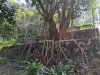
A strangler fig in Mangshi, at the pagoda on the hill. Or a Banyan. Probably a Banyan.
 

Attachments

  • PXL_20241210_021554401.jpg
    PXL_20241210_021554401.jpg
    178.7 KB · Views: 109
  • PXL_20241209_041806140.jpg
    PXL_20241209_041806140.jpg
    293.8 KB · Views: 113
Back
Top