Taronga Western Plains Zoo Taronga Western Plains Zoo history

The baby Peccaries are so cute.
It appears the babies were the ones Melbourne received from Taronga in circa 2007 to help re-establish their breeding program. There are two babies shown in the video (alongside two adults). If we're assuming this was filmed around late 2000/early 2001 it would make sense if the adults had passed come 2007 when the remaining pair were transferred across to Melbourne.
 
Ramalon had moved to Melbourne in 1999 I believe, so he would have been gone by this stage.

I’ve found a December 2003 article stating Ramalon had been at Melbourne Zoo for four years; but he wasn’t there when his grandfather Frank died 20/11/1999.

Based on that, I’d assume Ramalon was transferred over December 1999 (or at least the summer of 2000).
 
I’ve found a December 2003 article stating Ramalon had been at Melbourne Zoo for four years; but he wasn’t there when his grandfather Frank died 20/11/1999.

Based on that, I’d assume Ramalon was transferred over December 1999 (or at least the summer of 2000).
I was studying at the time at Melbourne Uni. I suppose Ramalon did arrive December 1999. It was during semester break so me and a few friends popped into the zoo, I think it was early feb of the new year. Ramalon had recently been put on display just a few weeks earlier. He was a bit of a nervous guy.
 
I was studying at the time at Melbourne Uni. I suppose Ramalon did arrive December 1999. It was during semester break so me and a few friends popped into the zoo, I think it was early feb of the new year. Ramalon had recently been put on display just a few weeks earlier. He was a bit of a nervous guy.

Thanks for sharing!

Ramalon certainly wasn’t an assertive male. There’s an article here which details the personalities of Ramalon and his then intended mate, Binjai:

The Dutch tigress bound for Melbourne

His keeper, Manu Ludden, describes the 117-kilogram Ramalon as a "bit of sook" who loves a squirt of morning milk and the occasional chew on Chinese mint.

Word from Rotterdam is that Binjai is a fiery character who is into tree climbing and duck hunting. It's to be hoped that opposites attract.

By the sounds of it, Ramlon and Binjai had a similar dynamic to Ramalon’s parents, Shiva and Selatan, who were Taronga’s breeding pair in the 1990’s. Shiva was a comparatively docile male; while Selatan was a fiery tigress. Melbourne’s original breeding pair (grandparents of Ramalon) were the opposite - Frank was ferocious; while Poetry was sweet-natured with her keepers.
 
@Zoofan15

Oh cool ok yeah think you have the timeframe pretty spot on (lol the file tries to say 1982, wayyyy off hahaha).

Its interesting too because the zoo still had (hybrid) Asiatic Lions too until they died late 2002 or 2003 think it was; but imagine they were taken off display around the time Jesari arrived (they were the Lions saw there in July '98; still displayed as Asiatic/Asian Lions).
 
@Zoofan15

Oh cool ok yeah think you have the timeframe pretty spot on (lol the file tries to say 1982, wayyyy off hahaha).

Its interesting too because the zoo still had (hybrid) Asiatic Lions too until they died late 2002 or 2003 think it was; but imagine they were taken off display around the time Jesari arrived.
Was the African Lions housed in the same enclosure as what the Asiatic Lions once were?

Females Njeri and Shinganya also arrived in early 2002 to join Jasiri, so this video is obviously filmed prior to that point in time.
 
@Zoofan15

Oh cool ok yeah think you have the timeframe pretty spot on (lol the file tries to say 1982, wayyyy off hahaha).

Its interesting too because the zoo still had (hybrid) Asiatic Lions too until they died late 2002 or 2003 think it was; but imagine they were taken off display around the time Jesari arrived (they were the Lions saw there in July '98; still displayed as Asiatic/Asian Lions).

Asian lions, Kutch and Kandi were born at Zoo Knoxville 01/07/1983 and were imported 31/08/1989. As you know; they transferred between Dubbo and Taronga; with Kutch was one of the last in Australia - dying 15/06/1999.

A further 1.1 died in 2002, though I can’t confirm they were at Dubbo. It would align with the arrival of Njeri and Shiyanga from Taronga Zoo though.
 
@Jambo

Yeah the African Lions were from everything that understand, were in the exhibit the Asian Lions had been in (now a Barbary Sheep exhibit think) up until the opening of the current Lion exhibit(s).

(*funny how in turn Taronga (Sydney)'s Lion family now live in an area that was partially the Barbary Sheep exhibit area of the zoo for many many decades).

@Zoofan15

Yeah pretty certain the other 1.1 who died in 2002 were at Dubbo, but could very likely of been living behind the scenes for last few years of their lives.
 
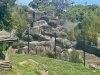
It's awesome to have the Himalayan Tahr mountain still standing behind the current Lion enclosure. It's heritage listed hence it's requirement to be retained.

Your also right, I visited Dubbo few years back and there are a herd of Barbary Sheep in the former Lion enclosure. Interesting choice of display there.
 
It's awesome to have the Himalayan Tahr mountain still standing behind the current Lion enclosure. It's heritage listed hence it's requirement to be retained.

Your also right, I visited Dubbo few years back and there are a herd of Barbary Sheep in the former Lion enclosure. Interesting choice of display there.

It’s a stunning piece of architecture. I too love the contrast against the modern lion exhibit.

Photo from my visit:

upload_2024-12-17_1-8-54.jpeg
 

Attachments

  • upload_2024-12-17_1-8-54.jpeg
    upload_2024-12-17_1-8-54.jpeg
    308.2 KB · Views: 45
@Trua

Oh cool yeah is Barbary Sheep now then cheers,


Yeah its cool to be able to see Tahr mountain from the current Lion exhibit, even though down the next tier area below where Tiger Trek is now (but the setup of down there blocks seeing Tahr mountain right behind it).

When looking around the middle part of the northern boundary area of the Lion exhibit proper can see the sloping rocklines that were the sloping rocky area of the Barbary Sheep exhibit before.
 
It’s a stunning piece of architecture. I too love the contrast against the modern lion exhibit.

Photo from my visit:

View attachment 754499
I've always thought it would've been nice if they gave the Lions access to the mountain. Really reminds me of Wellington's exhibit with the design.

Or even still kept a species like Barbary Sheep there. Would make a nice side to side predator/prey display!
 
I've always thought it would've been nice if they gave the Lions access to the mountain. Really reminds me of Wellington's exhibit with the design.

Or even still kept a species like Barbary Sheep there. Would make a nice side to side predator/prey display!

Wellington’s Lion Kopje remains a stunning exhibit, despite its age. The lions are rarely off the kopje as they love a vantage point. Werribee and Hamilton’s Cheetah enjoy observing hoofstock on the savannah; and Taronga’s lions surely would too via Tahr Mountain (were it structurally sound to accomodate that).

I really hope Taronga considers Sri Lankan leopard long term. They’d be a fantastic addition to the zoo.
 
The decision was made to not keep prey species there anymore as it is directly between the lion and tiger exhibits and the animals on the rock would be constantly stressed.

Interesting to know! Thinking about it, the majority of predator/prey exhibits are arranged so the apex predator (usually a big cat) is looking down on ungulates etc. that wouldn’t naturally be scanning the skies for big cats; or if at eye-level (Werribee and Hamilton’s savannahs), the ungulates have a large paddock where they wouldn’t be in constant focus like they would on Tahr Mountain.
 
I believe they may of been @steveroberts but it's so long ago I can't be 100% sure now!

Yeah true. Just found on Zootierliste that Dubbo had 9 (4.5) Sierra Negra Galapagos tortoises in June 1984 and June 1985. And this map map leaflet donated and archived by Sydney Powerhouse Museum from c1985 has them listed too. Maybe were at Taronga briefly in 1981 perhaps. (CITES mentions 4 were imported in 1978..oddly from Seychelles apparently, Aldabra tortoises home, but not sure if that import ever went through, and perhaps mixing up with Aldabra tortoises. But 10 (6 or possibly 10 were imported in 1982 from the US, am guessing these are the ones who went to Dubbo, probably via Taronga).

n8ufa1%2Fpreview%2F67244826%2Fmain_full.png

j9xfa1%2Fpreview%2F67244829%2Fmain_full.png
 
Last edited:
Yeah true. Just found on Zootierliste that Dubbo had 9 (4.5) Sierra Negra Galapagos tortoises in June 1984 and June 1985. And this map map leaflet donated and archived by Sydney Powerhouse Museum from c1985 has them listed too. Maybe were at Taronga briefly in 1981 perhaps. (CITES mentions 4 were imported in 1978..oddly from Seychelles apparently, Aldabra tortoises home, but not sure if that import ever went through, and perhaps mixing up with Aldabra tortoises. But 10 (6 or possibly 10 were imported in 1982 from the US, am guessing these are the ones who went to Dubbo, probably via Taronga).

n8ufa1%2Fpreview%2F67244826%2Fmain_full.png

j9xfa1%2Fpreview%2F67244829%2Fmain_full.png

Taronga Western Plains Zoo currently has these five Galapagos giant tortoises:

0.1 Audrey Grace (1925) Imported 1936 (Wild)
1.0 Albert (1969) Imported 1982 (Honolulu Zoo)
1.0 Wilbur (1969) Imported 1982 (Honolulu Zoo)
0.1 Molly Mable (1969) Imported 1982 (Honolulu Zoo)
1.0 Franklin (1970) Imported 1982 (Honolulu Zoo)

Note: Year of import = year imported into the region

It’s possible the Honolulu imports (which from their hatch years are likely clutch mates of Auckland’s females) were imported by Taronga Zoo and transferred to Dubbo once of sufficient size to cohabit with their larger tortoises.
 
Yeah true. Just found on Zootierliste that Dubbo had 9 (4.5) Sierra Negra Galapagos tortoises in June 1984 and June 1985. And this map map leaflet donated and archived by Sydney Powerhouse Museum from c1985 has them listed too. Maybe were at Taronga briefly in 1981 perhaps. (CITES mentions 4 were imported in 1978..oddly from Seychelles apparently, Aldabra tortoises home, but not sure if that import ever went through, and perhaps mixing up with Aldabra tortoises. But 10 (6 or possibly 10 were imported in 1982 from the US, am guessing these are the ones who went to Dubbo, probably via Taronga).

n8ufa1%2Fpreview%2F67244826%2Fmain_full.png

j9xfa1%2Fpreview%2F67244829%2Fmain_full.png
I do remember counting 9 on my first visit!
 
Back
Top