Chlidonias Goes To Asia, part seven: 2024-2025

I was picked up at the hotel at 8.30 am for the trip to see the Shan State Langurs. The lady from the hotel had added both herself and the langur lady to my WeChat so we could communicate easier because the messages can be translated, although the translations are not perfect. The langur lady’s one always called me “Teacher” which I think must have been a mistranslation of “sir” or “Mr”.

I guess the langur lady probably used the word "老师", which literally means "teacher" but could be loosely translated as "sir" or "Mr" (in a less formal way) based upon context. The usage gains popularity since the 90s when "comrade" fell out of favor.;)

Back in Mangshi she gave me the price of the trip. Sichao Ma from Mammalwatching had said their fee was 200 Yuan (about NZ$50). I hadn’t asked about the price before going because I was definitely going anyway as this seemed like the only likely way I would see them, so if it was a bit over 200 then so be it. The cost was 500 Yuan! That’s about NZ$120! The “looking for langurs” bit was indeed 200 Yuan, but the cost of the car to get out there and back was 300 Yuan. Probably the most expensive monkeys I’ve ever looked at!

So the price tag was indeed 500! A friend of mine told me the other day he was asked for 500 for the langur tour, and I almost thought he got ripped off when I read your previous post!

Six days later (today, in fact), when I was at the bus station in Yingjiang waiting to go to Nabang, the langur lady messaged me on WeChat asking if I was still in Mangshi because some people “from your country” (i.e. probably just white people) were going to see the langurs with her and I could come with them. I bet it was Jon Hall.

Glad to hear that you made it to the Burmese border after all!:p
 
Last edited:
Ruili, part one

There had been some worry before the trip that, as a foreigner, I wouldn’t be allowed to go to the border areas such as Ruili. I had read various things about this, and as usual it is difficult to know what is real and not, and what is current and not. When I first arrived in Mangshi I asked at a police post next to the North Bus Station if I was allowed to go there and it was fine. After coming back from seeing the Shan State Langurs I had gone to the South Bus Station to buy a ticket and double-checked there as well, just in case, and the girl at the counter assured me I was. The result was that I arrived in Ruili the next day, no police check-points, no problems of any kind. Just like going to any other city.

The bus left Mangshi at 8.50am and I had been told that arrival time was 10.50am (i.e. two hours), so when the bus stopped at 10.10am by the side of the road in a sizeable city and most of the passengers started getting off I was a bit perplexed. Surely we couldn’t have arrived forty minutes early, but equally surely there couldn’t be any other large cities on the route. I checked the map of my Trip hotel booking on my phone, and that said I was only 28 minutes walking time away. This must be Ruili then. I asked the driver and he confirmed it so I got off the bus. I grabbed a taxi to the hotel for 10 Yuan rather than walk it because I’m in a warmer clime now. Kunming was about 1900m altitude, Dali about 2000m, Tengchong about 1667m, Mangshi quite a bit lower at 933m, and Ruili lower still at 763m.

The hotel was called “Orange themed Apartment” (with a small t in the middle). The Chinese name over the door translates on my phone as “Orange fruit theme Apartment”. It’s a curious name, but it is a really nice and very clean and cheap hotel, the owner is super helpful, and it only has excellent reviews on Trip. Best of all there has a coffee machine in the hotel lobby! The greatest thing I have seen in China.

Down the end of the street my hotel is on there is an area of restaurant stalls. Here I saw only the second addition to my free-ranging white person in China list - the first was at Wuwei Temple in Dali, and the second was seen here one evening while I was having dinner. Two weeks, two white people. Maybe I’ll see a third one next week.

There are a few bird sites around Ruili, but most are out of town and require taxis. There is a bus system within the city but not to any of the places I wanted to get to. Because it was already the middle of the day and I wasn’t going to pay for a taxi to somewhere in the afternoon when I knew the bird activity would be low (i.e. lower than in the morning), I used this first day for the two sites within the city, Nongmohu Park and what eBird calls the Ruili River Walk.

First I went to Nanmaohu Park, though, because it was literally just around the corner. The “hu” in both Nongmohu and Nanmaohu means “lake” and both parks are basically large lakes surrounded by a strip of garden. At Nanmaohu Park the lake was devoid of any waterfowl but there were a few birds in the trees, including Red-whiskered and Red-vented Bulbuls (both ever-present down in this part of Yunnan), White-rumped Munias, and Indian White-eyes, and I also saw a Blue-throated Barbet, a Dusky Warbler, and a not-so-crimson Crimson Sunbird.

full

Red-whiskered Bulbul

full

Crimson Sunbird

Nongmohu Park looked quite close on the map but turned out to be much further than expected (about 3km). The lake here was huge but with only a few ducks quite far from shore – the only ones I could identify for sure were the Spot-billed Ducks – and in the middle was a large tree-covered island with a mixed colony of waterbirds including Great and Little Cormorants, Great and Little Egrets, Grey Herons, Chinese Pond Herons, and Black-crowned Night Herons. I spent quite a bit of time here because it took so long to circumnavigate the lake, but there was little of interest at the park other than it being home to a lot of Burmese Shrikes. Also new for the year list were Taiga Flycatcher and Common Iora. Of special mention were numerous Red-eared Terrapins living in the lake.

full

Burmese Shrike

Next I headed to the Ruili River Walk. This was a lot further away than it looked on the map, and it took me a while to get un-lost on the way. The site was definitely not what I expected. The Ruili River forms the border with Burma, so the pleasantly-named “River Walk” is actually a footpath alongside coils of razor-wire atop a fence. The river is on the Burmese side of the fence so I guess I could have included the Red-vented and Red-whiskered Bulbuls on my Burma bird list except they are already on there from when I actually went to Burma. No birds were seen along the river that I hadn’t already seen earlier in the day at the two city parks.

The next posts will be about a couple of out-of-town bird sites.
 
Last edited:
Phone photos from Ruili:

PXL_20241211_074007233.jpg
Orange themed Apartment

PXL_20241211_093255586.jpg
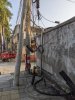
How powerlines go in China

PXL_20241211_085217411.jpg
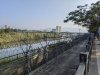
The Ruili River Walk
 

Attachments

  • PXL_20241211_074007233.jpg
    PXL_20241211_074007233.jpg
    129.4 KB · Views: 132
  • PXL_20241211_093255586.jpg
    PXL_20241211_093255586.jpg
    127.6 KB · Views: 138
  • PXL_20241211_085217411.jpg
    PXL_20241211_085217411.jpg
    200.6 KB · Views: 131
Ruili, part two

It gets light even later in Ruili than in the previous cities. Even at 8am it feels like the sun has only barely woken up. It is surprisingly chilly in the mornings as well.

My destination for today was the Moli Rainforest Scenic Area, which is home to the highest waterfall in southwest Yunnan according to the sign there. The sign also says it is 60 metres high, but when I looked it up just now I found two sites which gave it a height of 40 metres and 50 metres respectively, so who knows.

Before heading out there I thought I would have a look for the bus station. As I have mentioned before, foreigners can only buy their bus tickets in person at the station (not online). The bus into Ruili had just stopped by the side of the road, probably opposite the bus station but I didn’t know where, so to get back to Tengchong I would need to find where the bus station actually was. I figured if I could find the bus station that morning I could buy a ticket and then also there should be taxis there to get out to the Moli Rainforest.

The internet had told me that there were two bus stations in Ruili, one in the north of the city and one in the centre. I had asked the owner of the hotel yesterday and he had pointed out on the map where he said the station was. That spot wasn’t far from the hotel, and was also on my route to the Ruili River, but I had not been able to find it that day. I had then found an address online, which on the map looked like it was about where the bus had arrived into town. So this morning I wasted an hour trying to find that. It wasn’t at the address that the map pinpointed. I asked a guy in a shop and he pointed off further down the road – I walked that way for a while then gave up. It was getting too late in the morning, I’d find it later.

I managed to get a taxi and he wanted 120 Yuan to go out to Moli. I told him that was much too expensive – my out-of-date price was 60 Yuan and I knew the increase couldn’t have been that much! We settled on 80 Yuan (which also turned out to be too high - the ride back cost me 70 Yuan). With a twenty minute drive it was actually quite a long way out to Moli, much further than I’d thought and no chance for getting a ride back because it was off the main road. So when we arrived I asked the driver how much it would cost for him to come back at 2pm to pick me up, and he threw a sudden tantrum and started yelling at me (in Chinese obviously, so I don’t know what he was actually saying)! The guy from the ticket counter came over and via phone translation said he would call me a taxi when I was ready to leave. I asked him what the driver was so angry about, but all he responded with was “not angry” so I have no idea what the problem was.

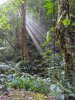
Moli Rainforest is really nice. I’ll put some phone photos in the next post, as usual. From the mock-rock ticket booth (35 Yuan entry) there is a short road, maybe a kilometre or so, which I just walked, to a parking area where there is a little restaurant. The path then leads through some gardens with orchids attached to every tree, little shrines and temples, some souvenir stalls, and a peacock enclosure (they love peacocks down here – several places I went had seemingly random peacock enclosures); and then the path continues through the forest itself until it reaches the waterfall. It was interesting how the plants directly around the fall were obviously well-watered and green from the spray, but the slopes on either side were completely dried out and all the vegetation was brown and withered. There was a White-capped Water Redstart at the waterfall.

The initial walk from the entrance to the car park took me a little while because there were various birds along the way, including (amongst previously-seen species) White-throated and Black-crested Bulbuls, Scarlet Minivets, a Maroon Oriole, and Rufous-backed Sibias which look like they have borrowed their clothes off a Burmese Shrike. Very little was seen on the walk through the forest to the waterfall, with the notable exception of a Blue Whistling Thrush on the stream, but the walk back yielded better results including a brightly-coloured Fujian Niltava which is a type of flycatcher. I also saw Streaked Wren-Babblers twice and thought they would be new for the year but I had already seen them at Bukit Fraser – all the wren-babblers look the same!

Altogether I saw 19 species there, of which 13 were additions to the year list and one (the Fujian Niltava) was a lifer.

Back in town I wasted another hour looking for the second bus station which is supposed to be in the city centre. I had seen older references to it being on Namdao Street and I found it on one map, but when I went there it was nowhere to be seen. I asked in a shop and they pointed across the street but I still couldn’t find it. I saw a traffic-policeman who appeared to be helping a Chinese-tourist-looking couple with directions so I went to see if he knew. He pointed in one direction down the street, the man (of the couple) pointed down the other way. Then they started having a hearty “discussion”, while the wife pointed a taxi out to me as a suggestion to take that instead. After a short while of the two men yelling the couple walked off and the policeman proceeded to ignore me. I went back to the hotel. The bus station could wait some more.
 
Moli Rainforest.

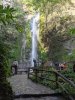
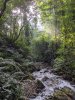
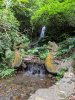
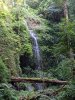
The first photo is the Moli Waterfall, although it looks less impressive in the photo than in real life. I actually preferred the smaller waterfall in the last photo though; it was much more picturesque.

PXL_20241212_024612124.jpg PXL_20241212_021906362.jpg PXL_20241212_030613315.jpg PXL_20241212_032050596.jpg PXL_20241212_032752753.jpg
 

Attachments

  • PXL_20241212_024612124.jpg
    PXL_20241212_024612124.jpg
    188.8 KB · Views: 118
  • PXL_20241212_021906362.jpg
    PXL_20241212_021906362.jpg
    211.4 KB · Views: 119
  • PXL_20241212_030613315.jpg
    PXL_20241212_030613315.jpg
    204.8 KB · Views: 121
  • PXL_20241212_032050596.jpg
    PXL_20241212_032050596.jpg
    211.6 KB · Views: 121
  • PXL_20241212_032752753.jpg
    PXL_20241212_032752753.jpg
    227.2 KB · Views: 125
Ruili, part three

Last day in Ruili I was aiming for the Ruili Botanic Gardens which are out of town a bit to the west. I had been going to stay longer because I did have more sites in mind – the Wanding Botanic Gardens to the east and the Jiele Reservoir in particular – but the cost of getting around was frustrating me. The taxi for Moli Rainforest was around NZ$20 each way, and today’s trip was costing me 200 Yuan return (about NZ$50) because it was two return trips from the driver’s point of view (i.e. taking me there in the morning, then he goes back to town, then he comes back in the afternoon to pick me up again). I don’t mind wandering around not seeing many birds if I’m not paying anything but doing the same thing when it costs a fair bit of money (in backpacking terms) is a bit irksome. As context, NZ$20 is what all of my hotels are costing, so each one of those taxi rides is the equivalent of a night’s accommodation.

The Ruili Botanic Gardens were about twenty minutes drive. We got there at 8.30am and the gates were still closed and chained. There were no opening hours posted, so I used the camera on my phone to translate some of the signs around the gate (really, a phone is such a useful tool to have! Who woulda thunk it). Turned out that the gardens were closed until 31 December due to it being too dangerous with fallen trees and slips.

Luckily I had another site further up the same road, the Nanjingli Ridge. I had favoured the gardens over the ridge for the day because it seemed like an easier destination to explain to a driver - “Nanjingli Ridge” is just the eBird name so it’s not going to mean anything to any local person other than that Nanjingli itself is a place name in the area. However I knew where it was in relation to the gardens, with the initial access point being a hairpin side-road directly before a small road tunnel. We headed up that way for about ten minutes until we saw the tunnel and the driver dropped me off, with the agreement he would return at 2pm to pick me up.

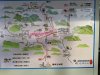
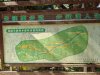
The initial hairpin road is only about a kilometre long, although quite steep, then it meets a three-way intersection. Outside an official-looking building there was a big fancy map-board which I couldn’t get to grips with, and a bit further on a more simple map-board showing a forest trail and other points of interest which I still couldn’t figure out the directions for.

I tried the right hand road for a little ways first, then returned to the intersection and took the main route figuring that was more likely to be the one visiting birders would be driving along. Just past a large white “church” (apparently built for a film according to an old trip report I had read) I happened across what I assume is the forest trail of the map-board. It was old and disused but the paving stones were mostly still visible. The trail followed the road, eventually coming back out onto it.

After an hour I still hadn’t seen any identifiable birds other than Silver-eared Mesias. If you haven’t seen one of these before you should google some photos. A Silver-eared Mesia is like a bird which has won the lottery and decided that now it is rich it is going to wear all the colours. They are beautiful but so common that you start ignoring them.

I was feeling like this was a waste of time and money being up here, but then I hit a magic spot where I spent an hour on a stretch of about 50 metres of road, seeing over twenty species of birds and two squirrels.

I had first heard birds calling from inside a tangle of bamboo right beside the road. A Mountain Bulbul came out and while I was focusing my binoculars on that a Rufous-headed Parrotbill suddenly popped up right next to the bulbul and posed in full view on one of the stems. There are two almost-identical species of parrotbill here - the Rufous-headed and the Pale-billed, the latter of which has a pale bill and a black eyebrow-stripe. Both species regularly forage together in mixed flocks along with White-hooded Babblers (which I also saw) but frustratingly this individual was the only one I saw close up because the flock moved quickly to the trees much further from the road where I could still see them but not with enough detail to tell if both species were present.

Mixing in with the parrotbills were the White-hooded Babblers, Rusty-fronted Barwings, Blue-winged Minlas and Bronzed Drongos. The longer I spent looking at the trees the more birds appeared, with first a Maroon Oriole, then a Lesser Yellownape (woodpecker), then a Lesser Racquet-tailed Drongo. There was even a Black Giant Squirrel.

full

Black Giant Squirrel

After a while the mixed flock moved behind the trees where I couldn’t see them any more, and I became distracted by an Orange-bellied Leafbird and a pair of Long-tailed Sibias feeding in a tree of pink blossoms. While I was trying to photograph the sibias (not entirely successfully!) I heard a noise behind me and saw for the briefest moment a squirrel on the base of a tree.

full

Long-tailed Sibia

One of the mammals I most want to see in Yunnan is Anderson’s Squirrel Callosciurus quinquestriatus, also called the Stripe-bellied Squirrel. It has an extremely restricted distribution, being found only along the Yunnan/Burma border. Its most distinctive feature is its white belly with three black stripes (one along either side and one along the centre of the belly). I didn’t know for sure if the species was found around Ruili but I knew it has been recorded at Nabang and the Tengchong section of the Gaoligongshan, so it probably is.

The squirrel I had just seen vanished immediately - in fact I didn’t even see it vanish because I glanced down while I lifted my camera and it had just disappeared. I hung around for another half an hour but the squirrel was gone. It had clearly been a Callosciurus species, but other than that I couldn’t be sure which species because I never saw its belly. That’s one of the most vexing things about animal-watching, when you see something and you know what it is in general terms - a scimitar-babbler, say, or a Callosciurus squirrel, but you didn’t see it well enough to specifically identify it.

The mixed flock of birds from before reappeared while I was waiting on the squirrel, and now they had been joined by some Red-billed Scimitar-Babblers, Velvet-fronted Nuthatches and Yellow-cheeked Tits. Closer to the road a large fruiting tree was also attracting birds, including White-throated and Striated Bulbuls, Blue-throated Barbets and Black-breasted Thrushes.

full

Striated Bulbul

I felt like the squirrel had long gone, so I moved on. Further up the road I found a Mrs Gould’s Sunbird, a Brown Shrike, some Bar-winged Flycatcher-Shrikes, and a Grey Bushchat amongst other birds seen elsewhere.

It seemed like the road ahead was turning more towards cultivation, and I had to be back at the main road to meet the taxi driver at 2pm, so I headed back the way I had come. When I got to the squirrel spot I paused for a bit, just in case – and there it was! Very briefly, as it fled again. Except this time I managed to get a glimpse of its belly as it dashed through the branches. It was just a Red-bellied Squirrel, which I have seen dozens of. I also saw the Black Giant Squirrel again.

The last bird seen for the day was Green-billed Malkoha on the way back to meet the taxi.
 
Last edited:
Phone photos from Nanjingli Ridge:

PXL_20241213_010405410.jpg
The first map-board I came across.

PXL_20241213_053202562.jpg
The second map-board.

PXL_20241213_015707906.MP.jpg
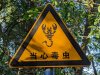
This sign was on the forest trail - my phone could not translate it. I guess it is either a warning about scorpions or Dolph Lundgren. If any of our Chinese readers can translate I would be interested.
 

Attachments

  • PXL_20241213_010405410.jpg
    PXL_20241213_010405410.jpg
    159.7 KB · Views: 118
  • PXL_20241213_053202562.jpg
    PXL_20241213_053202562.jpg
    213.3 KB · Views: 123
  • PXL_20241213_015707906.MP.jpg
    PXL_20241213_015707906.MP.jpg
    234.8 KB · Views: 125
Two posts in a row! Excellent! I have been reading and enjoying your posts and images.
I had no wifi the last couple of days in Nabang so I had the posts written on my laptop but couldn't post. Posts to come (currently unwritten) are for Yingjiang, then Nabang, and today I am back in Yingjiang again.


Birds new for the year from Mangshi and Ruili are here: Zoochat Big Year 2024

The more observant amongst you may have noticed that there are very few lifers on my lists. That’s basically because Yunnan has more of a southeast Asian avifauna. As I have already seen a lot of birds in Sichuan (north of Yunnan), and a lot of birds in Vietnam (south of Yunnan), most of the birds I am seeing here are ones I have seen before. As of leaving Ruili I have seen only 13 lifers in China on this trip. However I have seen 70 more species which are new additions to my China list (having been seen in other countries previously). My China bird list is currently at 293 species. Ebird says there are 1376 bird species in China, so I’m not far off from seeing them all; only another thousand-odd to go.
 
I like that second waterfall better as well.
Nanjingli Ridge sounds like an interesting place for wildlife watching. I feel like forest birding is often oddly specific, for lack of a better word. You can walk half the trail and see next to nothing, and then you round a bend and suddenly there's more wildlife than you can keep track of.

That’s one of the most vexing things about animal-watching, when you see something and you know what it is in general terms - a scimitar-babbler, say, or a Callosciurus squirrel, but you didn’t see it well enough to specifically identify it.

True words - all the more vexing when it may have been something you really wanted to see, yet have no idea if it truly was or not.
 
Phone photos from Nanjingli Ridge:

View attachment 755326
The first map-board I came across.

View attachment 755327
The second map-board.

View attachment 755328
This sign was on the forest trail - my phone could not translate it. I guess it is either a warning about scorpions or Dolph Lundgren. If any of our Chinese readers can translate I would be interested.
The sign mean "beware of poisonous/venomous bugs" (its the same character in chinese), I wouldnt say scorpions are bugs but i guess thats why the logo is on there as well :D
 
Phone photos from Nanjingli Ridge:

View attachment 755326
The first map-board I came across.

View attachment 755327
The second map-board.

View attachment 755328
This sign was on the forest trail - my phone could not translate it. I guess it is either a warning about scorpions or Dolph Lundgren. If any of our Chinese readers can translate I would be interested.

Google image translate suggests it is somewhat mundanely, 'Beware of poisonous insects'.

I too was hoping for Dolph.
 

Attachments

  • insects.jpg
    insects.jpg
    39.6 KB · Views: 10
Google image translate suggests it is somewhat mundanely, 'Beware of poisonous insects'.

I too was hoping for Dolph.
Oh, weirdly enough I just tried it on the photo and it translated as you say. But when I tried it on the actual sign on the day it said it couldn't translate it.
 
Tengchong again

I had asked the owner of my hotel in Ruili to organise a taxi for the morning to get me to the bus station, but instead he took me there for free on his scooter because “the taxi fee is too high”.

The bus back to Tengchong used a different route than my inbound one. When I’d gone from Tengchong to Mangshi (and then on to Ruili) the bus used a road going sort of south-east of Tengchong, but going direct from Ruili back to Tengchong it used a road which curved westwards via the town of Lianghe where there is a police checkpoint. I think they are probably required to go this way so the police can keep tabs on who is coming from the border. It was pretty casual, they scanned the locals ID cards but because I had a foreign passport I had to go into their office so they could fill out a logbook with my details. On a side-note, I can now say “New Zealand” in Chinese (xinxilan) because nobody knows what my passport is.

I stayed at the same hotel in Tengchong, the Tongluo Hotel. Although the first impression of it hadn’t been good it was clean and cheap so it was fine for me. My previous room there had ill-fitting carpet-patching and smelled bad. The room I had this time was the one right next to it and also smelled, although this time it was identifiably cigarette smoke (despite the room description specifying “non-smoking”). The carpet, although still worn, was all in one piece and looked much cleaner. I was the only guest on the floor and all the other rooms’ doors were open for cleaning, and I saw that all of them had the same carpet as my new room - literally the only room on the floor with bad carpet was that first room I stayed in.

I went back to Laifengshan, the forested hill, for the afternoon. It is a bit of a walk to get there. It’s only 25 minutes, but it is all uphill. The first half of the walk, along the main street, is only a little inclined so isn’t that noticeable but as soon as you get off that street the slope suddenly becomes about 40 degrees. It’s also quite warm in the afternoon, so by the time you arrive at the entrance you feel like you need to have a rest before doing anything else.

Last time I was in Tengchong I visited Laifengshan twice, once in the morning when I saw lots of birds (35 species) and once in the afternoon when I saw very few (7 species). This was another afternoon visit so I sort of expected a low result again.

Rather than head straight up the hill I first walked along the road a bit more to the temple area. There are a number of water birds on the eBird list for Laifengshan and I have no idea where these are being seen, so I thought maybe there was a pond at the temple (there was, but only a small goldfish pond). Verditer Flycatchers and Slender-billed Orioles were also supposed to be easily seen at the temple, neither of which were present. I found a set of mud steps up behind the temple and could hear a cacophony of bird calls in the forest, so climbed up there.

The birds were deafening, but just oh so invisible! Finally I managed to spot a bird high in the canopy, and as soon as that one was visible suddenly they started flying back and forth all over the place. They were all Black Bulbuls, dozens and dozens of them. The interesting thing with these is that they come in two distinct colour morphs which look like separate species, either being entirely black or being black with striking pure white heads, and there are intermediate birds as well with smudgy black plumage.

At the top of the hill I had a look at the bird pond area behind the pavilion where there were some birds coming and going, although nothing like the swarms on my original morning visit. There was a Chestnut-vented Nuthatch, a Green-backed Tit, a Large Niltava, and some Pekin Robins. That was about it. Over at the courtyard overlooking the forest, and from the decks of the pagoda, there were also a few birds here and there but not too many. Nothing I hadn’t seen on my previous visits. On the walk down the 4km road back to the entrance I saw a Verditer Flycatcher perched on one of the powerlines.

Total for today at Laifengshan was 17 species - a lot better than the last afternoon here but still only half of the morning visit.
 
Last edited:
Yingjiang Wetland Park

The reason I had come back to Tengchong was that I had been planning on making a day-trip to the nearby town of Yingjiang to visit the Yingjiang Wetland Park. This has a large eBird list but there were two particular birds of interest to me there, the Collared Mynah and the spectacular Rufous-necked Laughing Thrush (the latter of which I did not see). Yingjiang is also on the same road which leads to the border-town of Nabang and seeing as how the visit to Ruili had gone so trouble-free I figured I’d try to get to Nabang as well.

The bus from Tengchong to Yingjiang was a big van rather than an actual bus, and they go every twenty minutes or so through the day. The first one leaves Tengchong at 8am. I had been told the trip takes one hour, so was expecting to be at the Wetland Park by 9.30am at the latest, but instead it’s about 90 minutes. The road goes via Lianghe so once again there was a stop at the police check-point where they wanted to know where I was going and why, although they were very friendly about it. I took the opportunity to ask if foreigners were allowed to go to Nabang, and the answer was yes. Once in Yingjiang I asked in the bus station if there is a bus to Nabang (in older reports people got there by taxi, which would have been expensive!) and was told there are three or four a day. So, it’s a bit back-and-forth but today I would visit the Wetland Park and then go back to Tengchong, and tomorrow I would come back again the same way but continue all the way through to Nabang and stay there for a few nights. Basically I hadn’t wanted to bring all my stuff with me today only to find out I couldn’t get to Nabang.

Because the bus took longer than expected and the day was warming up, I took a taxi to the Wetland Park for 10 Yuan rather than waste more time walking there (although it turned out to be only 15 minutes walk).

The entry fee for the Wetland Park is 30 Yuan. When you enter, to your right is forest with boardwalks, including a treetop one, while to your left the path leads to open gardens and areas of grass and reeds over head-height. There is also a metal walkway leading over the reed-beds which connects to the forest area. The surface of this walkway is covered in slatted bamboo which is both noisy and uncomfortable to walk on, and because the slats are old and broken they keep catching your shoes as you walk along it. As at the Moli Rainforest Scenic Area in Ruili, there is also a peacock enclosure here.

I wasn’t sure of the layout of the park, so I tried the open area for a short while first which didn’t yield much, then headed along the bamboo-slatted walkway. An Osprey was an unexpected sight overhead, and more welcome were two mynahs sitting on a bamboo stem. I got my binoculars on them to check them out - yes, Collared Mynahs! I had cycled for hours around fields in Burma looking unsuccessfully for these, and here they were easy as anything in a city wetland in China. I took some record shots to make sure I wouldn’t start second-guessing myself as to having seen them. There were several fly-bys of mynah flocks as well, but I couldn’t tell what they were - they were possibly all Collared Mynahs but I’m glad I saw the two perched so I wouldn’t have to be left wondering. When I checked eBird later I saw there were no fewer than six checklists posted the day of my visit, on 15 December (although all were labelled as being within a few minutes of each other so it may have been a single group of people). Those lists had Collared Mynah counts of 60, 99, 105, 105, 105 and 110. I do wonder if they actually got identifiable looks at the flocks or just assumed they were all Collared Mynahs. There are other mynah species recorded here. For myself, I have to be sure of what I’m seeing.

full

Collared Mynah

It was very hot today and it felt like there were very few birds around, although by the end of the visit my total was 34 species. The forest area was difficult – the tree canopy wasn’t high but the understory was thick, there were stands of giant bamboo taller than the trees, the undergrowth was dense, and there were also a lot of giant aroids with enormous leaves blocking viewing of the ground. Winter is the dry season in Yunnan so half the leaves on the trees were dead and they kept falling, with either the movement or the noise making me think it was a bird but it would just be another leaf. There were a lot of thrushes scuttling through the undergrowth but I never got a good enough look at one to put it on the day-list. I assumed they were Black-breasted Thrushes as those are the ones I am seeing everywhere in Yunnan. When I came back here a few days later I saw several thrushes and all were indeed Black-breasted Thrushes.

The Wetland Park is situated alongside the Yingjiang River, but I was having difficulty finding viewing areas for it. At the far end of the open areas the paths lead to a part of the river which was dammed into waterfalls where people went to swim and fish, and I saw no birds there. Another small viewable section was where people could take boat rides on the river. I saw no birds there other than swallows. There was a good stretch along the bamboo-slatted walkway but I only saw swallows there as well.

Eventually I found where I think most people see their water birds. At the far end of the forest boardwalks there is a metal gate beyond which is more boardwalk which has obviously been disused for a long time, being covered in leaves and debris. But the gate wasn’t locked so I figured it must just be there to dissuade the general public and birders must surely be allowed to go down there. I had only seen five people on the boardwalk all day anyway. Trees had come down across the boardwalk in several places, bamboo was covering some parts requiring a bit of crouching to carry onwards, and lots of the railings were either lying on the deck or just missing entirely. It was mostly in reasonable condition though. Along here I found several viewing areas for the river which included sand islands, at which I got identifiable looks at Grey-throated Martins, and also spotted a Pied Kingfisher, a Green Sandpiper and a Little Egret. No actual waterfowl though.

On the way out I returned along the bamboo-slatted walkway. A wagtail flew past which I thought would be a White or Grey Wagtail which I see everywhere, but I had a look at it anyway when it landed and it had a yellow head - it was a Citrine Wagtail. As I was watching it walk along the muddy edge of a little pool I saw something moving in the grass beside it. Something small and finchy, and I could see red on the head. While I was looking at it a Common Kingfisher flew through the binocular-view, but I tried to ignore that. The finch hopped out almost into the open and stayed there while I was trying to get in a better position to see it. It was a Common Rosefinch. It was too far for a photo, and then it flew off over my head.

Here are a couple of photos of other birds:

full

Grey-breasted Prinia

full

Puff-throated Babbler
 
Phone photos:

PXL_20241214_003104957.jpg
The van to Yingjiang. (This is actually the van from Ruili to Tengchong, but it is the same kind of van as I caught to Yingjiang).

PXL_20241215_092912065.jpg
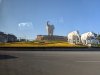
The greatest roundabout I have ever seen. I only got a part of it because I was taking the photo out the window of the van. There is a huge elephant in the middle and four pairs of elephants around the outsides.

PXL_20241219_053105827.jpg
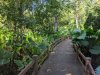
Forest at Yingjiang Wetland Park.
 

Attachments

  • PXL_20241214_003104957.jpg
    PXL_20241214_003104957.jpg
    161.3 KB · Views: 110
  • PXL_20241215_092912065.jpg
    PXL_20241215_092912065.jpg
    90.2 KB · Views: 112
  • PXL_20241219_053105827.jpg
    PXL_20241219_053105827.jpg
    295.7 KB · Views: 113
Last edited:
I wouldnt say scorpions are bugs but i guess thats why the logo is on there as well :D
I'd say 'chong' (虫)/bug is a non descript enough of a term that you can use it on any 'creepy crawly' and the lay person would get it, I assume 'chong' being used as just a general term for insect, like bug is in English would make sense but insect in Chinese is 'kun chong' (昆虫)
 
Nabang, part one

Nabang is a border town with Burma. I had both Nabang and Ruili on my list as places to try to get to, and went for Ruili as the more likely option. Given that I got to Ruili with no issues it seemed silly to pass up the opportunity to get to Nabang as well.

My main reason for wanting to going to Nabang wasn’t birds, it was squirrels. An old birding trip report had mentioned seeing Anderson’s and Phayre’s Squirrels here (and the Shan State Langurs as mentioned in a previous post, although they were still known as Phayre’s Langurs then). I have seen a Phayre’s Squirrel once, in Burma, but it is a beautiful squirrel and I’d like to see it again, and hopefully to get some photos. I have never seen an Anderson’s Squirrel, so that one was my priority.

I caught the first bus (a large car this time rather than a big van) from Tengchong at 8am. The guy sitting next to me farted through the entire 1.5 hour trip. Not inoffensive ones either, the Silent But Deadly type. It was like sitting next to a leak at a chemical factory.

Then I caught the 11am bus to Nabang. I was told it was two hours - it took four hours. First the bus went a couple of streets over to where there was a secondary bus stop, where it spent half an hour while boxes and sacks were loaded. The bus was literally half full of cargo before it had left the main bus station, and even more was packed in here and strapped to the roof. There were only four actual passengers on the bus, all the rest of the space was cargo. The buses we later passed coming the other way just had passengers, so I guess the Yingjiang to Nabang ones are always the ones loaded with goods for delivery.

There was another police checkpoint between Yingjiang and Nabang, and the officer here was a bit more terse than at other checkpoints. Via my phone translation app he wanted to know why I was going to Nabang, wanted to check through my existing camera photos to make sure they were just of birds, and he even flicked through my notebooks. Then I was told “this is the border, you cannot take photos here”, although then he just said okay when I said I only take photos of birds.

I hadn’t booked anywhere to stay in Nabang because the town doesn’t have any options on Trip, so I did my old thing of just turning up and seeing what happens. Without any trouble I found a hotel called Xiang He Jiu Dian which had rooms for 80 Yuan. I think there are only two or three hotels in town - Nabang is not exactly a large place. I could see another hotel sign from the corridor by my room, but it turned out that hotel was in Burma. The entire town is literally only three streets wide. Two of those streets are currently roadwork sites. It is also only about six or so streets long - several of those are also under works. I went for a walk to see if I could find the start-points for the birding locations I had information for, and just one street over I was suddenly at the border faced with a couple of stern officers wanting to know what I wanted.

There was a bit of work involved with checking in to the hotel. The girl at the desk didn’t speak English of course (although a surprising number of people here did know a little bit; or perhaps not surprising because English might be more common in Burma than Chinese is). However when I showed her translations on my phone she just shook her head firmly. “Can I have a room?” Shakes head. “Are you full?” Shakes head. Later I wondered if maybe she was from Burma and didn’t actually know how to read Chinese. Anyway, she had to get the owner to check me in. This involved a few phone calls - I think I may have been the first foreigner to stay there - but that seemed settled eventually and I got my key-card and went up to my room to unpack my bag. Soon afterwards there was a knock on the door and two policemen were standing outside wanting to know why I was in Nabang.

They were both young guys. One looked about twelve and kept offering everyone else cigarettes which they kept refusing. They checked my passport, I told them I was just here looking for birds, and then they drove me to the police station (one street over) where I waited for a while until they had typed up a certificate of residence for the hotel. In China foreigners need this certificate for each place they stay, but generally you don’t need to worry about it because the hotel takes care of it when you check in (I think it is generated automatically when they enter you into their system), but if you are staying at a private residence you have to go to a police station in person for the certificate. In Nabang it might be the case that even at a hotel you need to physically get one, or it could have just been that the one I was at couldn’t accept foreigners outright.

Afterwards they drove me back to the hotel and I was told “this is the border, don’t go out at night, and if you have any trouble come to the police” - not sure if this is because it is actually dangerous at night (which doesn’t seem likely) or more probably because I would be considered suspect by the police for being out at night.

I had a wander round town, which didn’t take long, and then stopped at the one restaurant I found which was open. The chap in there spoke some English and said there was a wetland 3km down the road which headed south out of town. Sounded good but I was actually after forest squirrels. After eating I headed for the north of town (i.e. a couple of streets over) where trip reports said there was a path leading for 3km along the border to the start of the Nabang-Xima Trail. This trail leads up into the forest-covered hills above town and is supposed to be the best birding site in the area. It was too late in the day to get to the trail itself but I was going to have a walk along the path that leads there to see what it was like. However I was stopped almost immediately by a group of men who said I wasn’t allowed that way because it was too dangerous now. I’m not sure of the actual problem because the translation came out on my phone as “there used to be an ice-cream store here but now it is not safe”. I have a feeling the problem was simply that I was a foreigner - certainly there was an eBird checklist from the Nabang-Xima Trail on 10 December which was only six days earlier (although the latest before that one was back in May, so who knows). So that was out. Whatever the issue might be I’m not going to start causing trouble along the China-Burma border by going somewhere I’m told not to go!
 
Back
Top