Liuku and the Pianma Pass
It was really cold in Tengchong this morning! The coldest morning of the trip yet. I headed over to the station for my bus to Liuku, which turned out to be a car and I was the only passenger. The car left the station at 9am, drove around the corner, and I was transferred to a big van that already held a bunch of passengers.
I don’t understand why this is a thing in China (and elsewhere in Asia, but it seems particularly common in China). There is a bus station where passengers get on, then the bus goes to a secondary stop - sometimes it is literally right around the corner or a block or two away - and more people and cargo get loaded. You think your journey is underway when you leave the station but no, you then spend half an hour sitting at this other place. Why can these people not just walk the extra hundred metres to the actual bus station?
It was just under four hours to Liuku, including my expected 15 minute question-and-answer session at a police checkpoint on the way (Liuku is a town on the way to Pianma, which is another border crossing with Burma). It started raining a little bit at the checkpoint which was a surprise. It’s the first rain I’ve seen in China this trip because winter is the dry season in Yunnan.
Place names can be confusing in China. Quite often a city name will also be a county name, which makes it difficult (as a foreigner) trying to find specific information on the internet because the results are mixed. Some cities also have two or more names. Like Liuku. It is also - as far as I could tell - called Liukuzhen (zhen means town), Nujiang Lisu, Lushui, and Lushui City. The bus ticket I had and the road signs along the way all said Liuku (the lady at the bus station in Tengchong didn’t even know what Lushui was), but the city road signs coming into town said South Lushui, Liuku, and North Lushui. I had been calling it Lushui because I was under the impression that was the current name, but everyone in town called it Liuku so that’s what I’ve changed to.
The van dropped me at the side of the road in the middle of town. As it happened this was around the corner from the bus station but I didn’t know this at the time. I was about 3km from the hotel I had booked, the Lishui Lianjiang Hotel, so I took a taxi there for 7 Yuan. I would have had trouble finding it if I’d walked - the pin on the Trip map wasn’t quite right and it was on the opposite side of one of the double-laned roads than I had expected.
The sole reasons I had come to Liuku were to get up to the top of the Pianma Pass to try and see (not exclusively, but certainly in particular) a fabulous little bird called the Fire-tailed Myzornis which is found only in montane forests from this corner of Yunnan across the northern tip of Burma to the Himalayas of northeast India, Nepal and Bhutan; and to try and visit the Yaojiaping Rescue Centre where there was a Myanmar Snub-nosed Monkey.
I would need to hire a driver for both these things, which I was hoping wasn’t going to be too expensive. Normally if I need to do this I can get the person at the hotel to sort it out for me. They usually will know who to call for a driver and can arrange it much easier than I could on my own. Unfortunately the person at the desk of this hotel was a young girl who was very pleasant but endowed of quite some simplicity.
Hoping that there would be someone a bit more capable later in the day I went for a walk to a pagoda on a hill a little way north of the hotel. A “little way” turned out to be an hour’s walk. I saw a White-capped Water Redstart on the Nujiang River as I crossed the bridge, a Red-bellied Squirrel in a tree over the road, and then not a lot after that. It was pretty hot actually, and the road was very steep. Whenever I walk to a pagoda on a hill it is always uphill. Funny that.
Back at the hotel, the girl was still the only person available. I tried asking her about how or where I could organise a driver but she simply didn’t know. “I haven’t been to these places,” she said.
One thing I found interesting, actually, was that the spoken-Chinese translation on my phone’s app has generally worked fine elsewhere in Yunnan, with some random translation mix-ups here and there, but in Liuku it didn’t seem to know what anyone said into it. They must have a weird dialect or something. It wasn’t just the translation into English that was screwy, the words they would say into the phone came out as different words on the screen. They would say something, look at the Chinese characters which came up, shake their head, try again, and often again, until it said what they were actually saying.
I went for a walk back to where the bus had dropped me off to see if there were any drivers in the area I could consult with but there weren’t. I knew there were “buses” (actually shared taxis) which ran from Liuku to the border town of Pianma which is on the other side of the pass, but given that it is a high-altitude pass in wintertime I didn’t think it was a good idea to get a ride up there without knowing how to get back (wise, as it turned out - there was little traffic on the road over the pass and it was mostly going to Pianma not in the other direction; certainly the shared-taxis I saw were all going in that direction and none back the other way).
It seemed like I would have to try my luck with a regular taxi in the morning, and I really didn’t know if they would want to drive that far out of town.
I went to bed feeling like this was going to be the first real fail of the trip. I mean there have been specific lows along the way (not finding this bird or that mammal, for example) but logistically, apart for my bank card being stolen at the start, everything on the trip has gone super smoothly. Even the places I suspected were going to be non-starters (notably, getting to Ruili and Nabang) turned out to be a piece of cake. Liuku felt very much like I wasn’t going anywhere the next day.
To my surprise, finding a taxi driver who would do the trip was much easier than I expected. I walked into the main part of town early in the morning and spotted a taxi by the side of the road, so got in to ask him. Before I left on this trip I had prepared a list of all the places I intended to visit, both cities and sites (e.g. reserves, parks, etc), with their Chinese names alongside. Whenever I am trying to get somewhere I show the relevant word to the person at the bus station or in the hotel or where-ever, and they know exactly what I mean without any trouble. So I just showed the taxi driver the Chinese names for the Yaojiaping Rescue Centre and the Pianma Snow Pass, and he put them into his phone to see where they were.
I asked how much to hire him for the day, but he said the taxis only work via the meter which is 5 Yuan per kilometre outside the city. The Yaojiaping Rescue Centre was showing as being 37km out of town, and the Pianma Pass as 50km. They are on the same road, but that would still be 100km return which would be at least 500 Yuan (about NZ$120). That was a fair bit of money. But you can stay a long time, said the driver, because the fare is per kilometre - although he also was very positive there would be no birds on the pass because it was too cold, and assured me I would be wasting my time by going up there. Rather than try to convince him otherwise I said I could look for birds in the forest along the way, and just go to the top “to look at it”.
I decided to bite the bullet and take the metered ride for the day. 500 Yuan was the same as what I’d ended up paying to see the Shan State Langurs in Mangshi, and this was a whole day in which I could potentially see some cool birds and hopefully a rare monkey (although I was 99% sure that as a foreigner I wouldn’t be allowed to visit the rescue centre). It turned out to be quite a bit more than 500 Yuan - I’m pretty sure he kept the meter ticking the whole time even when waiting while I was birding, rather than it being “just per kilometre”, because it came out at the end at 685 Yuan which is about NZ$180. Still, “it’s only money” as they say, and we were out from 8.30am to 4.30pm and, while I didn’t see a Myzornis, I did see the Myanmar Snub-nosed Monkey and some non-Myzornis birds. This day and the Mangshi day really threw out my average-spend-per-day though. I’m currently sitting on an average of NZ$69 per day while I’ve been in China, which seems very high (together those two excursions have added NZ$12.50 per day onto the average).
I decided we’d drive straight to the pass, and then on the way back down I’d stop at various places to look for birds in the forest and visit the rescue centre.
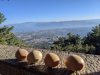
Liuku is at 2425 metres altitude, so is the highest town I’ve stayed at this trip (the next highest was Dali at about 2000 metres), and the Pianma Pass is at 3153 metres. I got to look down upon the world and everyone in it. I mean, I do that every day but this time I could do it physically and not just by being superior.
It was chilly at the top, with ice in some places on the road where water had collected, but it wasn’t bad. I was wearing the same clothes I started the morning in down in town, and just put some gloves on to keep my fingers warm (but took them off again because they interfered with taking photos). When I get to Ice Japan it better be damn cold because if I don’t need to use all the winter clothes I’m lugging around I’m going to be cross!
I had thought Myzornis was going to be a pretty sure bet because everyone says they see it up there. However I think few birders come up here in winter. The rhododendrons weren’t in flower, obviously, so there were no sunbirds at the top and, more importantly, no Myzornis. They were still here somewhere but presumably lower down in the forest where they could find food. I never did see one. I guess going to Nepal is in my future then.
The only birds I saw above the tree-line there were a Eurasian Wren and a female Himalayan Bluetail.
Lower down the road I sent the driver ahead a few kilometres to wait for me and then walked down looking for birds in the forest. Right where I started walking a Yellow-billed Blue Magpie appeared which was a good sign. A little way ahead I saw some large birds darting through the bushes up the slope. It took a while to get a look at them, but they proved to be Assam Laughing Thrushes and I even got a reasonable photo of one of them.
Assam Laughing Thrush
The bushes growing low to the ground under the trees were covered in red berries which were attracting birds. The next ones I saw were Black-faced Laughing Thrushes, of which I only got distant shots because they were quite high up the hill. There was something down in the bushes which they didn’t like because the whole flock was dancing around in the branches above scolding and carrying on. The undergrowth was too thick for me to see what it was, though, and after a while the laughing thrushes moved on.
Black-faced Laughing Thrush
Further along I came across a large bird-wave containing loads of Stripe-throated Yuhinas and Chestnut-tailed Minlas, as well as a few other random birds including a Rusty-flanked Treecreeper; and a while after that managed to find some Beautiful Sibias finally.
Stripe-throated Yuhina
Chestnut-tailed Minla
Black-browed Tit, in hover mode.
Next up was the Yaojiaping Rescue Centre, which has a Myanmar Snub-nosed Monkey. This species is found only in a small area around the Yunnan-Burma border and was only discovered in 2010. The places where the wild ones are found are off-limits so there is zero chance of me getting in to see them. I wasn’t confident that I’d even be allowed in to the rescue centre because I’d heard foreigners have been refused entry. That wasn’t the case today, fortunately. We arrived there, the gates were open and we walked in. The driver was looking around for anyone who worked there, and then I saw a cage with a big black monkey in it - the Myanmar Snub-nosed Monkey.
Myanmar Snub-nosed Monkey
While I was taking photos, a lady appeared who seemed quite happy for me to be there. The monkey had a reasonably-sized cage, although unfortunately the same couldn’t be said for four Asiatic Black Bears around the corner who were each confined to barred cages about twice their body-size. On the other side of the road were big concrete-and-bars cages for a swarm of macaques. The viewing into here was awkward so I didn’t pay much attention to these and didn’t take any photos, which now I wish I had. I’d thought they were Tibetan Macaques but on reflection that seemed unlikely (distribution-wise) so I just looked up which macaques are found in the Gaoligongshan and one of them is the recently-described White-cheeked Macaque. I think the ones at the rescue centre are probably Assamese Macaques, but there could be some White-cheeked Macaques among them.