Chlidonias Goes To Asia, part seven: 2024-2025

Phone photos:

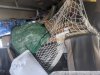
PXL_20241216_032710212.MP.jpg
The interior of the bus to Nabang.

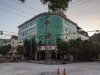
PXL_20241218_235958298.jpg
My hotel in Nabang. The concrete for the intersection was being poured the day I arrived.

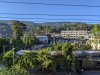
PXL_20241216_093232102.jpg
View from the hotel. The long white building with all the windows is on the Chinese side of the border, everything behind it is on the Burmese side.
 

Attachments

  • PXL_20241216_032710212.MP.jpg
    PXL_20241216_032710212.MP.jpg
    167 KB · Views: 133
  • PXL_20241218_235958298.jpg
    PXL_20241218_235958298.jpg
    171.3 KB · Views: 134
  • PXL_20241216_093232102.jpg
    PXL_20241216_093232102.jpg
    236.3 KB · Views: 130
Nabang, part two

With the Nabang-Xima Trail off, I had a look at some satellite images to see where some other forest nearby might be. The only real options for me without a car were the main road leading into town and the south road which I had been told had a wetland on it. I knew there was forest along the main road but it was quite far away - this end was mostly farms and banana plantations - but the other road might have some. It was difficult to tell from the images what was actually proper forest. I knew there was an eBird site called the “Nabang fields” and looking at that there were quite a lot of forest birds listed.

Early the next morning I set off along the road on the south side of town. The road followed the border, indeed so closely that it was literally running alongside the fence. There was forest of sorts on the uphill (Chinese) side of the road with birds here and there, although I was feeling a bit wary about using my binoculars. There were cameras all along the fence, and recorded announcements in Chinese which seemed to be motion-triggered, so I tried to only point my binoculars up into the trees on the Chinese side and not towards Burma.

It wasn’t long before the forest patch ran out and I was walking instead through cultivation. The “wetlands”, it turned out, were more like wet fields. There were a few new birds along here, including Pied Starlings, Great Mynahs, a Striated Heron perched on the powerlines, and a Blue Rock Thrush on a church-looking building.

The road eventually came out on the main road. It was only 9.30am. I figured I may as well just walk up the main road and see what I could find. Mostly the birds were ones I’d seen earlier in the morning although I did see two Collared Mynahs really close on a wire, but they flew away before I could get a photo.

After some time walking the road crossed a narrow rocky river. I paused here to have a look for Ibisbills which winter in the area. I assume this is where people look out for them because most of the main river is on the Burmese side of the border. No Ibisbills today. I wondered if this was the Mengnai River Valley mentioned in some reports which was apparently 3km long and home to Rufous-necked Laughing Thrushes. There appeared to be a road running up beside the river so I tried it out. At first I thought it might just be a village road which wouldn’t go anywhere, but then I saw a sign on the side of a building which said (in Chinese) something along the lines of “you are now entering the Tongbiguan Nature Reserve” which sounded promising. However the road ended after about a kilometre at a hydroelectric dam.

There was quite a bit of bird activity in the general area of the dam. I managed to get some good views of Red-rumped Swallows. A nearby tree had Hair-crested Drongos, Blue-bearded Bee-eaters, and Blue-winged Leafbirds in it.

While I was watching a Yellow-bellied Fantail, a squirrel suddenly dashed through the tree the fantail was in. It was an extremely brief sighting but I saw the belly - white with black stripes. Anderson’s Squirrel! Probably the briefest I’ve seen a new squirrel but still been able to claim it. I waited there for ages hoping for it to return to have its photo taken but it never reappeared. At least I had seen one, and where there is one there must be others.

There was a road up the other side of the river which I tried as well, which also ended at the dam and along which I didn’t see anything, and then I continued along the main road for a number of kilometres. I never really found any forest, just scraps of it. The proper forest was too far to reach by walking. It took 1.5 hours to walk back to Nabang. I had a better plan for tomorrow.
 
Nabang, part three

The proper forest near Nabang is quite some way from town (if one isn’t allowed to go to the Nabang-Xima Trail!) but I knew that there was one particular spot for a giant banyan tree called Rongshu Wang, which is about 20km back along the main road and is in good forest so there should be squirrels there. It even has its own eBird list. The reason this particular place was convenient for me was because it actually has a name which locals would know (the tree is a tourist attraction, I think mostly for local tourists who drive out from Yingjiang).

When it got light in the morning I went to the “bus station” (i.e. the street directly outside my hotel). There was the usual bus there, which would be leaving at 8.30am, but there was also a shared-car which would be leaving almost immediately. I asked the driver if he could drop me at Rongshu Wang, to which he said the tree was 4km from the road, and was surprised when I said that I would walk to the tree and then walk back to town afterwards. So for 20 Yuan I got to the entry road for Rongshu Wang. The bus the whole way between Nabang and Yingjiang is 35 Yuan, although the shared-car would be more expensive (fewer seats), so 20 Yuan is still quite expensive but I was using a seat he could be using for someone going the entire way and it is only about NZ$5 really.

The way up to Rongshu Wang is a winding narrow cobbled road and is quite steep so its not much fun to walk on. Coming back down was more uncomfortable because the irregular stones of the road kept catching the toes of my shoes. It is through forest most of the way though, with some patches cleared for banana plantations.

I saw a squirrel almost immediately but it was gone before I even got my binoculars to my eyes. Another was seen a bit later, but it was so quick and quite far back in the forest that I never got any ID points. I’m guessing both were Anderson’s Squirrels. Twice on the walk back down I saw Black Giant Squirrels, and both bolted as soon as they saw me. I think the squirrels must be hunted here, so the hope of getting any photos was probably futile.

The bulk of birds around were drongos, of multiple species. The forest was filled with their raucous calls. A pair of Mountain Imperial Pigeons were seen perched quietly in the top of a tree - I had seen this species earlier in the trip at Bukit Fraser. A commotion in a stand of bamboo signalled a bird-wave, and when a Rufous-headed Parrotbill popped into the open my hopes were raised that I would get to see Pale-billed Parrotbills here, but I was foiled again. Literally the only bird I saw out of the flock was that initial Rufous-headed. The other birds remained dark shadows flitting through the bamboo and then they were gone, off down the hill away from me.

Right around the next bend was another bird-wave, this one of warblery things, amongst which were Bianchi’s Warblers and the absurdly-cute Rufous-faced Warbler. A few metres further on, after the warbler-wave had passed, I spotted a Grey-lored Broadbill (a split from the Silver-breasted Broadbill).

Rongshu Wang itself, the giant banyan tree, was indeed quite big. There were birds up in the canopy feeding on the fruit but looking directly up at them against the sky made identifications pretty much impossible. The only one I managed was Blue-throated Barbet.

I was hoping to time my return to the main road to catch the first bus coming in from Yingjiang sometime around 1pm or so but there’s no fixed time it would go past (because it is stopping, loading, unloading along the way) so I must have just missed it. I walked about halfway back to Nabang and then a bus came by and I jumped on. I know it was about halfway because I walked for two hours and reached the spot I walked to yesterday, which took one and a half hours to walk back to Nabang from.

About half an hour before I caught the bus though, I saw some leaves falling from a tree overhanging the road indicating that some animal was inside. The tree was a mess of leaves, vines and flowers, and there was definitely something moving around in there. Even with the binoculars I could only see the movement behind the leaves, not what the animal was. I suspected it was a malkoha, but the more I watched it the more it seemed squirrel-like. Then I saw a fluffy brindled tail. It was a squirrel - an Anderson’s Squirrel! And this one I actually got a decent look at as it came out of the foliage onto the branch. I quickly started snapping away with my camera, thinking there was no way any of the shots were going to turn out with all the leaves and branches and shadows. Surprisingly, one photo did turn out okay. It’s not brilliant and I had to brighten it up, but it shows not just that it is a squirrel but the black and white belly as well. Totally worth walking all that way, and I’d much rather walk two hours to see a squirrel than catch a bus with no squirrels. People thought I would no longer be walking 10km to see an obscure squirrel now that I’m half a century old but I shake my fist at the god of senescence, whatever his name is, I can’t seem to remember right now.

There are sixteen species of Callosciurus and I have now seen thirteen of them in the wild. I’m only missing the Kinabalu Squirrel C. baluensis from Borneo’s Mt Kinabalu (despite having been there several times!), the Hon Khoai Squirrel C. honkhoaiensis from an island off South Vietnam (described in 2018), and the Mentawai Squirrel C. melanogaster from the Mentawai Islands off Sumatra.

full

Anderson’s Squirrel
 
Yingjiang Wetland Park again

Catching the bus back to Yingjiang in the morning I discovered that the little shop directly opposite my hotel is actually the Nabang Bus Station. I had assumed it was such a little town that you’d just pay the driver directly. The shop has some blue seats inside and outside, which in China are a sure sign of a bus station.

At the police checkpoint where on the way into Nabang the officer had been very suspicious of me, on the way out they didn’t even bother looking at my passport, they just asked all the locals questions and checked the cargo.

Rather than go straight through to Tengchong I had decided to stay overnight in Yingjiang in order to make another visit to the Yingjiang Wetland Park. I still wanted to see those Rufous-necked Laughing-Thrushes.

I stayed at the Xinhe Business Hotel, which is about ten minutes walk from the bus station (so about 25 minutes walk from the Wetland Park). It was possibly the nicest room I’ve had so far, but still only cost 80 Yuan. Amongst the usual sundry items hotels provide for guests like toothbrushes, combs, soap, etc, at this hotel there was a little paper packet marked “sewing kit”.

In hindsight I probably should have got an afternoon bus from Nabang to Yingjiang yesterday, because then I could have gone to the Wetland Park first thing the next morning when there would be more bird activity, instead of having to make an afternoon visit.

full

Yellow-bellied Fantail – a small brightly-coloured bird which looks and acts exactly like a fantail but is actually related to tits.

I was mainly wanting to find the laughing thrushes so I stuck to the forested side of the park, creeping along the boardwalks for four hours without any success. I saw 26 species total though. Less than the previous visit (which was 34 species) but it was later in the day and I never went over to the open areas where different species are found. I never saw any Collared Mynahs today either. Three species were new for the year, Greater Coucal being one, and interestingly neither of the other two species are on the eBird list for the park.

The first was a Brown Hawk Owl which was a real surprise while I was trying to see what birds were making all the noise in some long grasses and suddenly saw a pair of owl eyes staring back at me. It was perched low down in a bush, half-hidden, but there was no mistaking what it was because there aren’t any other Ninox in China and the heavily-streaked breast is distinctive in comparison to other Chinese owls. I tried for a couple of photos but they just barely show one eye and part of the breast through all the vegetation.

I’m not that surprised that any particular owl isn’t on the eBird list because the park isn’t open at night, but the other species I saw was a group of Yellow-eyed Babblers which are pretty active and obvious (eBird describes them as “like a prinia on steroids”). When I saw them I immediately thought “Yellow-eyed Babblers” because I’ve seen them before but checked it later against eBird’s checklist anyway, only to find they weren’t on there. The closest is Chestnut-capped Babbler and for a moment I thought I’d made a bad ID. However, luckily I had taken some photos. Yellow-eyed Babblers have bright orange legs and eye-ring, and have brown on the face (Chestnut-capped Babblers have a white face). Most photos online show Yellow-eyed Babblers with full white underparts but Chinese birds actually have buffy bellies, with just the throat being white. There is at least one photo on eBird showing a Chinese bird, and also a video from Baihualing (which is quite near to Yingjiang), and in both the buffy underparts are obvious. I find it difficult to believe that I am the only person to have seen Yellow-eyed Babblers here, so I do wonder if people see them and then because Chestnut-capped Babbler is the closest match on the existing species list simply put them down as that.

full

Yellow-eyed Babbler

Early next morning I returned to the Wetland Park, walking there in the dark to have another attempt at finding those laughing thrushes. They have been recorded there in most months of the year, so they are definitely there somewhere for me to find! The park’s hours are 8am to 6pm, but when I got there at 8am everything was still locked up. I walked along the pedestrian road which runs alongside the forested area (behind a big fence) hoping to see something from there, but all I spotted was a Red-bellied Squirrel. At 8.20am I came back at the entrance and the ticket counter was just being opened up.

I was intending on trying to get all the way to Liuku today, so I didn’t have long to spend at the Wetland Park this morning. I had been going to stay until 9am and then be off back to the hotel and then to the bus station, but stayed a bit longer to 9.30am. Still no luck on the laughing thrushes. At least there were no mosquitoes in the morning! I did, however, spot a flock of Common Mergansers on the river, five males and four females. Mergansers probably aren’t that interesting for Europeans but for me they are cool.

full

Ant nest on a tree at the Wetland Park

I got back to the hotel at 10am. A few minutes after I got to my room there was a knock at the door, and when I opened it there were four policemen standing outside. One of them spoke very good English which made things easier than normal. What, they wanted to know, was I doing in Yingjiang? As it happened I had just been repacking my bags before going to the bus station, so my binoculars, camera, and field guide were all sitting out on the bed in full view. I said I was here looking for birds, and that I had just been at the Wetland Park. The one who spoke English translated this to the others, and then said to me “so we are also aware that you have been to Nabang - that is the border – how long were you there for?” I said I was looking for birds there as well, then I showed him the certificate of residence which I had got from the police there. He photographed it and then said that the border is not safe because there is a civil war in Burma right now. One of the other guys was looking a bit exasperated. He was probably thinking “we brought four guys here because this was supposed to be a dangerous arms dealer or something, and instead he’s just some nerd!” He kept telling the English-speaking officer to ask me specific questions like how long was I going to be in China, and when was my visa valid until, and things like that. It was all very cordial though, and then they thanked me and left.

By the time I got to the station the next available bus was at 11.30am. The ticket was 30 Yuan whereas the previous ones had been 58 Yuan. It turned out that this bus was an actual bus (a 19-seater mini-bus) whereas the other times I’d taken this route it had been either a big van (on the Sunday) or a large car (on the Monday). It was also much slower, taking two hours to get to Tengchong. I got in there at 1.30pm and had just missed a bus to Liuku. There are four buses a day and the next one (also the last one) wasn’t until 4pm. The internet says it is a six hour trip and at the station they told me it would be four hours. I didn’t particularly want to be arriving there after dark - possibly well after dark depending on how long it actually took to get there - so I decided to stay overnight in Tengchong once again. I bought a ticket for tomorrow’s 9am bus, and then for the third time I was back at the Tongluo Hotel. My room this time didn’t smell!
 
Phone photos from Nabang - I forgot to add these earlier.

And year-birds from the latest posts are here: Zoochat Big Year 2024


PXL_20241218_053142099.jpg
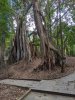
View of forest from the road near Rongshu Wang.

PXL_20241218_030440158.jpg
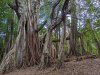
Rongshu Wang, the giant Banyan tree.

PXL_20241218_030235369.jpg
Rongshu Wang, the giant Banyan tree.

PXL_20241219_033240132.jpg
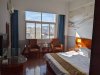
My room at the Xinhe Business Hotel in Yingjiang.
 

Attachments

  • PXL_20241218_053142099.jpg
    PXL_20241218_053142099.jpg
    283.1 KB · Views: 129
  • PXL_20241218_030440158.jpg
    PXL_20241218_030440158.jpg
    329.1 KB · Views: 125
  • PXL_20241218_030235369.jpg
    PXL_20241218_030235369.jpg
    188.6 KB · Views: 128
  • PXL_20241219_033240132.jpg
    PXL_20241219_033240132.jpg
    123.9 KB · Views: 124
Last edited:
I got back to the hotel at 10am. A few minutes after I got to my room there was a knock at the door, and when I opened it there were four policemen standing outside. One of them spoke very good English which made things easier than normal. What, they wanted to know, was I doing in Yingjiang? As it happened I had just been repacking my bags before going to the bus station, so my binoculars, camera, and field guide were all sitting out on the bed in full view. I said I was here looking for birds, and that I had just been at the Wetland Park. The one who spoke English translated this to the others, and then said to me “so we are also aware that you have been to Nabang - that is the border – how long were you there for?” I said I was looking for birds there as well, then I showed him the certificate of residence which I had got from the police there. He photographed it and then said that the border is not safe because there is a civil war in Burma right now. One of the other guys was looking a bit exasperated. He was probably thinking “we brought four guys here because this was supposed to be a dangerous arms dealer or something, and instead he’s just some nerd!” He kept telling the English-speaking officer to ask me specific questions like how long was I going to be in China, and when was my visa valid until, and things like that. It was all very cordial though, and then they thanked me and left.

They didn't even want to see your photo of the Anderson's squirrel?
 
I'm currently in Dali and seeing it's Christmas Day I thought I'd post out of sequence (still have the Pianma Pass part to write). I was hoping to be in ShangriLa on Christmas Day because that seemed pretty cool, but I spent too long in border regions. For today I went up Cang Shan again.

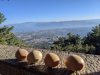
My Christmas meals:

PXL_20241225_000814205.MP.jpg
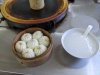
Breakfast was rice porridge and the little bao whatsits.

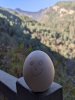
PXL_20241225_013138909.jpg
PXL_20241225_033034480.jpg
Lunch was just boiled eggs. It should have been eggcellent but it was eggything but. A while after lunch I started feeling poorly. I didn't feel sick as such, just a knotty stomach and a headache, and feeling tired. I thought I must have got altitude sickness which would have been pretty lame because I was only at 2500 metres and I've been way higher than that (just the other day I was 700 metres higher!). I headed back slowly to the cablecar and felt a bit better when back down at Dali-level. However once I got back to the hotel I realised my problem was stomach issues, probably from the eggs. And I drew a smily face on Gregory Egg too! It was probably his eggvenge for smashing open his head and eating him and his little friends too.

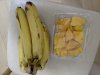
PXL_20241225_102155732.jpg
So I just got some fruit for Christmas dinner because it isn't cooked and if I throw up I'm already in my hotel.
 

Attachments

  • PXL_20241225_000814205.MP.jpg
    PXL_20241225_000814205.MP.jpg
    109.4 KB · Views: 113
  • PXL_20241225_013138909.jpg
    PXL_20241225_013138909.jpg
    148.3 KB · Views: 111
  • PXL_20241225_033034480.jpg
    PXL_20241225_033034480.jpg
    57.9 KB · Views: 111
  • PXL_20241225_102155732.jpg
    PXL_20241225_102155732.jpg
    89.1 KB · Views: 111
Last edited:
I'm currently in Dali and seeing it's Christmas Day I thought I'd post out of sequence (still have the Pianma Pass part to write). I was hoping to be in ShangriLa on Christmas Day because that seemed pretty cool, but I spent too long in border regions. For today I went up Cang Shan again.

So I just got some fruit for Christmas dinner because it isn't cooked and if I throw up I'm already in my hotel.

Merry Christmas. I hope that you are feeling better.
 
Liuku and the Pianma Pass

It was really cold in Tengchong this morning! The coldest morning of the trip yet. I headed over to the station for my bus to Liuku, which turned out to be a car and I was the only passenger. The car left the station at 9am, drove around the corner, and I was transferred to a big van that already held a bunch of passengers.

I don’t understand why this is a thing in China (and elsewhere in Asia, but it seems particularly common in China). There is a bus station where passengers get on, then the bus goes to a secondary stop - sometimes it is literally right around the corner or a block or two away - and more people and cargo get loaded. You think your journey is underway when you leave the station but no, you then spend half an hour sitting at this other place. Why can these people not just walk the extra hundred metres to the actual bus station?

It was just under four hours to Liuku, including my expected 15 minute question-and-answer session at a police checkpoint on the way (Liuku is a town on the way to Pianma, which is another border crossing with Burma). It started raining a little bit at the checkpoint which was a surprise. It’s the first rain I’ve seen in China this trip because winter is the dry season in Yunnan.

Place names can be confusing in China. Quite often a city name will also be a county name, which makes it difficult (as a foreigner) trying to find specific information on the internet because the results are mixed. Some cities also have two or more names. Like Liuku. It is also - as far as I could tell - called Liukuzhen (zhen means town), Nujiang Lisu, Lushui, and Lushui City. The bus ticket I had and the road signs along the way all said Liuku (the lady at the bus station in Tengchong didn’t even know what Lushui was), but the city road signs coming into town said South Lushui, Liuku, and North Lushui. I had been calling it Lushui because I was under the impression that was the current name, but everyone in town called it Liuku so that’s what I’ve changed to.

The van dropped me at the side of the road in the middle of town. As it happened this was around the corner from the bus station but I didn’t know this at the time. I was about 3km from the hotel I had booked, the Lishui Lianjiang Hotel, so I took a taxi there for 7 Yuan. I would have had trouble finding it if I’d walked - the pin on the Trip map wasn’t quite right and it was on the opposite side of one of the double-laned roads than I had expected.

The sole reasons I had come to Liuku were to get up to the top of the Pianma Pass to try and see (not exclusively, but certainly in particular) a fabulous little bird called the Fire-tailed Myzornis which is found only in montane forests from this corner of Yunnan across the northern tip of Burma to the Himalayas of northeast India, Nepal and Bhutan; and to try and visit the Yaojiaping Rescue Centre where there was a Myanmar Snub-nosed Monkey.

I would need to hire a driver for both these things, which I was hoping wasn’t going to be too expensive. Normally if I need to do this I can get the person at the hotel to sort it out for me. They usually will know who to call for a driver and can arrange it much easier than I could on my own. Unfortunately the person at the desk of this hotel was a young girl who was very pleasant but endowed of quite some simplicity.

Hoping that there would be someone a bit more capable later in the day I went for a walk to a pagoda on a hill a little way north of the hotel. A “little way” turned out to be an hour’s walk. I saw a White-capped Water Redstart on the Nujiang River as I crossed the bridge, a Red-bellied Squirrel in a tree over the road, and then not a lot after that. It was pretty hot actually, and the road was very steep. Whenever I walk to a pagoda on a hill it is always uphill. Funny that.

Back at the hotel, the girl was still the only person available. I tried asking her about how or where I could organise a driver but she simply didn’t know. “I haven’t been to these places,” she said.

One thing I found interesting, actually, was that the spoken-Chinese translation on my phone’s app has generally worked fine elsewhere in Yunnan, with some random translation mix-ups here and there, but in Liuku it didn’t seem to know what anyone said into it. They must have a weird dialect or something. It wasn’t just the translation into English that was screwy, the words they would say into the phone came out as different words on the screen. They would say something, look at the Chinese characters which came up, shake their head, try again, and often again, until it said what they were actually saying.

I went for a walk back to where the bus had dropped me off to see if there were any drivers in the area I could consult with but there weren’t. I knew there were “buses” (actually shared taxis) which ran from Liuku to the border town of Pianma which is on the other side of the pass, but given that it is a high-altitude pass in wintertime I didn’t think it was a good idea to get a ride up there without knowing how to get back (wise, as it turned out - there was little traffic on the road over the pass and it was mostly going to Pianma not in the other direction; certainly the shared-taxis I saw were all going in that direction and none back the other way).

It seemed like I would have to try my luck with a regular taxi in the morning, and I really didn’t know if they would want to drive that far out of town.

I went to bed feeling like this was going to be the first real fail of the trip. I mean there have been specific lows along the way (not finding this bird or that mammal, for example) but logistically, apart for my bank card being stolen at the start, everything on the trip has gone super smoothly. Even the places I suspected were going to be non-starters (notably, getting to Ruili and Nabang) turned out to be a piece of cake. Liuku felt very much like I wasn’t going anywhere the next day.

To my surprise, finding a taxi driver who would do the trip was much easier than I expected. I walked into the main part of town early in the morning and spotted a taxi by the side of the road, so got in to ask him. Before I left on this trip I had prepared a list of all the places I intended to visit, both cities and sites (e.g. reserves, parks, etc), with their Chinese names alongside. Whenever I am trying to get somewhere I show the relevant word to the person at the bus station or in the hotel or where-ever, and they know exactly what I mean without any trouble. So I just showed the taxi driver the Chinese names for the Yaojiaping Rescue Centre and the Pianma Snow Pass, and he put them into his phone to see where they were.

I asked how much to hire him for the day, but he said the taxis only work via the meter which is 5 Yuan per kilometre outside the city. The Yaojiaping Rescue Centre was showing as being 37km out of town, and the Pianma Pass as 50km. They are on the same road, but that would still be 100km return which would be at least 500 Yuan (about NZ$120). That was a fair bit of money. But you can stay a long time, said the driver, because the fare is per kilometre - although he also was very positive there would be no birds on the pass because it was too cold, and assured me I would be wasting my time by going up there. Rather than try to convince him otherwise I said I could look for birds in the forest along the way, and just go to the top “to look at it”.

I decided to bite the bullet and take the metered ride for the day. 500 Yuan was the same as what I’d ended up paying to see the Shan State Langurs in Mangshi, and this was a whole day in which I could potentially see some cool birds and hopefully a rare monkey (although I was 99% sure that as a foreigner I wouldn’t be allowed to visit the rescue centre). It turned out to be quite a bit more than 500 Yuan - I’m pretty sure he kept the meter ticking the whole time even when waiting while I was birding, rather than it being “just per kilometre”, because it came out at the end at 685 Yuan which is about NZ$180. Still, “it’s only money” as they say, and we were out from 8.30am to 4.30pm and, while I didn’t see a Myzornis, I did see the Myanmar Snub-nosed Monkey and some non-Myzornis birds. This day and the Mangshi day really threw out my average-spend-per-day though. I’m currently sitting on an average of NZ$69 per day while I’ve been in China, which seems very high (together those two excursions have added NZ$12.50 per day onto the average).

I decided we’d drive straight to the pass, and then on the way back down I’d stop at various places to look for birds in the forest and visit the rescue centre.

Liuku is at 2425 metres altitude, so is the highest town I’ve stayed at this trip (the next highest was Dali at about 2000 metres), and the Pianma Pass is at 3153 metres. I got to look down upon the world and everyone in it. I mean, I do that every day but this time I could do it physically and not just by being superior.

It was chilly at the top, with ice in some places on the road where water had collected, but it wasn’t bad. I was wearing the same clothes I started the morning in down in town, and just put some gloves on to keep my fingers warm (but took them off again because they interfered with taking photos). When I get to Ice Japan it better be damn cold because if I don’t need to use all the winter clothes I’m lugging around I’m going to be cross!

I had thought Myzornis was going to be a pretty sure bet because everyone says they see it up there. However I think few birders come up here in winter. The rhododendrons weren’t in flower, obviously, so there were no sunbirds at the top and, more importantly, no Myzornis. They were still here somewhere but presumably lower down in the forest where they could find food. I never did see one. I guess going to Nepal is in my future then.

The only birds I saw above the tree-line there were a Eurasian Wren and a female Himalayan Bluetail.

Lower down the road I sent the driver ahead a few kilometres to wait for me and then walked down looking for birds in the forest. Right where I started walking a Yellow-billed Blue Magpie appeared which was a good sign. A little way ahead I saw some large birds darting through the bushes up the slope. It took a while to get a look at them, but they proved to be Assam Laughing Thrushes and I even got a reasonable photo of one of them.

full

Assam Laughing Thrush

The bushes growing low to the ground under the trees were covered in red berries which were attracting birds. The next ones I saw were Black-faced Laughing Thrushes, of which I only got distant shots because they were quite high up the hill. There was something down in the bushes which they didn’t like because the whole flock was dancing around in the branches above scolding and carrying on. The undergrowth was too thick for me to see what it was, though, and after a while the laughing thrushes moved on.

full

Black-faced Laughing Thrush

Further along I came across a large bird-wave containing loads of Stripe-throated Yuhinas and Chestnut-tailed Minlas, as well as a few other random birds including a Rusty-flanked Treecreeper; and a while after that managed to find some Beautiful Sibias finally.

full

Stripe-throated Yuhina

full

Chestnut-tailed Minla

full

Black-browed Tit, in hover mode.

Next up was the Yaojiaping Rescue Centre, which has a Myanmar Snub-nosed Monkey. This species is found only in a small area around the Yunnan-Burma border and was only discovered in 2010. The places where the wild ones are found are off-limits so there is zero chance of me getting in to see them. I wasn’t confident that I’d even be allowed in to the rescue centre because I’d heard foreigners have been refused entry. That wasn’t the case today, fortunately. We arrived there, the gates were open and we walked in. The driver was looking around for anyone who worked there, and then I saw a cage with a big black monkey in it - the Myanmar Snub-nosed Monkey.

full

Myanmar Snub-nosed Monkey

While I was taking photos, a lady appeared who seemed quite happy for me to be there. The monkey had a reasonably-sized cage, although unfortunately the same couldn’t be said for four Asiatic Black Bears around the corner who were each confined to barred cages about twice their body-size. On the other side of the road were big concrete-and-bars cages for a swarm of macaques. The viewing into here was awkward so I didn’t pay much attention to these and didn’t take any photos, which now I wish I had. I’d thought they were Tibetan Macaques but on reflection that seemed unlikely (distribution-wise) so I just looked up which macaques are found in the Gaoligongshan and one of them is the recently-described White-cheeked Macaque. I think the ones at the rescue centre are probably Assamese Macaques, but there could be some White-cheeked Macaques among them.
 
Phone photos:

PXL_20241221_013842750.MP.jpg
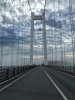
The Longjiang Suspension Bridge outside Tengchong. One of the longest and highest in the world, it is 1196 metres long and is 292 metres above the river below. I crossed this bridge several times when going to other cities from Tengchong, including on the way to Liuku.

PXL_20241221_090612782.jpg
In Wellington in New Zealand, where I have been living, there is a giant sign on a hillside spelling out the name of the city. I thought this would be the only sign on a hill anywhere, but Liuku has one as well!I don't know what it says because the phone can't pick out the characters from the background.

PXL_20241222_023025105.jpg
View from road on the Pianma Pass.
 

Attachments

  • PXL_20241221_013842750.MP.jpg
    PXL_20241221_013842750.MP.jpg
    91.7 KB · Views: 106
  • PXL_20241221_090612782.jpg
    PXL_20241221_090612782.jpg
    223.1 KB · Views: 109
  • PXL_20241222_023025105.jpg
    PXL_20241222_023025105.jpg
    175.7 KB · Views: 105
Last edited:
I don't know what it says because the phone can't pick out the characters from the background.
Plugging the characters into translate it's 'Nujiang Grand Canyon', the first 2 characters stand for Nujiang, the other 3 grand canyon/(a direct translation of 'big gorge').

There was something down in the bushes which they didn’t like because the whole flock was dancing around in the branches above scolding and carrying on. The undergrowth was too thick for me to see what it was, though, and after a while the laughing thrushes moved on.
Did you ever get any idea what it was? Too inaccessible to even try bash up to it? That mobbing behaviour reminds me of what birds do when they see a predator (eg some owl or mammal) but assumedly you already know that.
 
Did you ever get any idea what it was? Too inaccessible to even try bash up to it? That mobbing behaviour reminds me of what birds do when they see a predator (eg some owl or mammal) but assumedly you already know that.
When I say "hill" or "slope" in the post, think of it as off-vertical rather than just a slope. The kind of hill you'd be climbing rather than walking up. The undergrowth is full of thorns as well.

I thought it might have been a Red Panda actually, because I guess they would be down on the ground eating berries given the abundance of them on the bushes. There was nothing to tell me where the animal was though (as in, none of the undergrowth was moving) so I just moved on when the laughing thrushes did because that told me the animal - whatever it was - had probably gone as well.
 
Back to Dali

I figured there would probably be a bus from Liuku to Dali at 8am or thereabouts. I was going to take a taxi so they could drop me directly at the bus station (because I didn’t know where it was) but there were none around, so walked to the place where I’d been dropped off initially. I asked a couple of people and eventually found the entrance for the station (around the corner and under another building). It was just on 8am but the next bus wasn’t until 9.30am, which at least gave me the opportunity to get some breakfast.

The girl at the ticket counter told me that the bus doesn’t go direct to Dali, it goes to Windmill Square and I would then need to get another bus to Dali. I checked Windmill Square on my phone and got a place in Xinjiang in the far northwest of China. That couldn’t be right. I asked her if Windmill Square was in Liuku or Dali, and she said Dali. The actual ticket she gave me said Liuku to Xiaguan - I checked this latter name and found it was an alternative name for New Dali (Dali City). The bus itself said the same thing on its display. That must be where the bus station is then, and when she said I’d need to transfer to a different bus she must have been meaning to get to Old Dali (because where else would a white tourist be going).

The bus was a proper full-size tour-bus, the first one I have been on in Yunnan - all the others have been mini-buses, or vans or cars. There was another police checkpoint on way out of Liuku, which took longer than usual.

After a few hours the bus stopped just after going through a toll gate. Some people got off but most stayed on. There was even a couple of people who got on here. There was a little building I could see outside which was signed as something like “Dali Tourist Information Center”. Was this the stop? Why was everyone else staying on the bus? The bus pulled out, and as it did so I saw on the other side of the road a large structure with windmills on it. That had to be Windmill Square! The bus had done a 360 and was going back through the toll gate. I have no idea where its final destination was, but I jumped downstairs to the driver and asked “Dali?” and he was like “d’oh”.

I got off the bus, and then was left wondering where the heck I was. There were only taxis there. This seemed like the place all the intercity buses deposit their passengers, just beside the road. I didn’t want to ask the taxi drivers if there was a bus station around here, because their answer would of course be “no you need to take a taxi”, so I found a person on the street (who, remarkably, spoke a little English) and asked him. Then I walked up the road a bit, found the bus station (for city buses) and asked the guard there if I could get a bus from here to Old Dali. I couldn’t but he said the number 2 bus which was just leaving could take me to the other bus station from which those buses departed. I didn’t go all the way to the other station though, I just kept an eye on all the bus stops we passed until I saw a bus number I recognised as going to Old Dali (bus number 4) and got off there, then caught that bus to my stop in Old Dali from which I could walk to the hotel I stayed at last time.

If you recall, I left my main pack at the Dali hotel while I travelled around the rest of Yunnan. I enjoyed only having a small bag with me the last couple of weeks. Now I’m going to have to be dragging this damn thing around again. I prefer cold to hot, but when it comes to backpacking I prefer only having to carry the stuff I need for tropical places!

My intention when returning to Dali was to continue on to ShangriLa, because I thought it would be cool to be there for Christmas, but I spent too long in the border areas so I was in Dali for Christmas instead (sick in Dali, as per the out-of-sequence post earlier). And then I’m supposed to be going up to Chengdu in Sichuan, and making my way east looking for various monkeys until I reach Shanghai for my flight to Japan. I haven’t arranged the transport to Chengdu yet because I didn’t know how long I’d be sick for, but the choice is either to fly or train.
 
Dali: Wuwei Temple

The day after getting back to Dali I went to Wuwei Temple. I had been there previously for lunch with the owners of my hotel, but this time I was going back for birds because Wuwei Temple is the place for Lady Amherst’s Pheasant.

There is a bus (the C7) which goes somewhere past the turn-off but I didn’t know where that was or what the walking route was after that to actually get to the temple, so I caught a taxi there for 15 Yuan. I figured then I’d know the way and afterwards could walk back to the main road and catch a bus the rest of the way. It seemed like a long way in the taxi, but the walk back from the temple to the main road only took 15 minutes (but it was all downhill - going the other way would have taken a lot longer). I then discovered there didn’t seem to be any bus stops along the road. I walked to the Three Pagodas where there is an actual bus station, but I was already half way so I just walked the rest. It was about 45 minutes walk (plus the initial 15 minutes to the main road).

Unlike some of the temples around Old Dali, the Wuwei Temple is free entry for everyone. From the entrance there are two stone paths leading quite steeply uphill, one following the course of a little stream and the other on the up-slope side through the trees. Along the stream this morning were singles of Grey Wagtail, White Wagtail, White-capped Water Redstart and White-crowned Forktail, and multiples of Himalayan Bluetails. The latter were everywhere today. They tend to stand beside the path and dart back and forth from their spot grabbing little insects.

full

Himalayan Bluetail

A flock of Pekin Robins was joined by a Eurasian Wren and some kind of squirrel which ran across the ground and disappeared into the undergrowth. I paused at one of the goldfish ponds where there were Rusty-capped Fulvettas, Black-headed Greenfinches and a Blue Whistling Thrush, before continuing on past the temple itself to where there is a road leading up the mountain through forest.

full

Blue Whistling Thrush

This road was where I planned on seeing Lady Amherst’s Pheasants. But it was not to be. There was a guard post at the junction and I was informed with the utmost firmness that I was not allowed on the road. This despite there being a log-book right there for people to note down their details and this being a road that all birders who visit here go on. Honestly, if I’d known I wouldn’t be allowed up there I wouldn’t have bothered going at all, I would have gone up the cablecar to Cang Shan instead because I doubted I’d see pheasants around the temple area (too many people) so the road above was where I’d have needed to be.

I was feeling pretty peeved, but there wasn’t much I could do so I headed back to the top of the temple area. There were Red-bellied Squirrels everywhere, feeding on berries or seeds. I saw a huge flock of small birds darting about in the top of a tree. I thought they must be warblers (which form flocks here in winter), but when I got my binoculars on them I could see they were yellow. Maybe they were Indian White-eyes? I walked closer and saw that some had streaky plumage. Closer still and I could see that they had finch beaks. Hang on - they were Tibetan Serins. They were feeding on seeds in the tree, but swarming back and forth the way insect-eaters do when feeding. When they all erupted from the tree en masse I guessed at there being at least fifty of them.
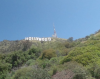
full

Tibetan Serins

I followed them to the next tree hoping for some better photos but they were against the sky now. While trying anyway, three different birds flew past me with flashes of black and orange into the top of a nearby pine tree. I took some quick photos before they moved deeper into the tree. The photo below is really just a record shot, and it’s not actually in focus, but Yellow-throated Buntings are such fabulous birds that I uploaded it anyway. They look like the head of some fancy Neotropical rainforest bird has been grafted onto the body of a boring Palaearctic finch.

full

Yellow-throated Bunting

On the way up to the temple I had seen there were a few dirt tracks leading off the stone path into the trees. I tried a few of these but they petered out quickly. Then I found one which lead to the top of the hill and then followed the ridge all the way down and up. I spent a couple of hours sneaking around up here through the pines hoping to come across a pheasant but the only new addition I got was Long-tailed Minivet.
 
Dali: Cang Shan again

On Christmas Day (yesterday) I returned to the Jade Road via the Zhonghe Cablecar. To save anyone having to look back through all the posts, the Jade Road is an 11.5km pathway which connects the two upper cablecar stations (Zhonghe and Gantong). It is at around 2500 metres altitude and the lower cablecar station for Zhonghe (at about 2000 metres) is only about 15 or 20 minutes walk from my hotel.

Getting to the Jade Road is straightforward but if you have a fear of heights is not a lot of fun. There are two things I particularly don’t like here, apart for the actual height. First is that the death-lift - sorry, chair-lift, my mistake - isn’t stopped so that you can sit down. Instead when the cable of fear - sorry, sorry, cablecar. I keep making typos. I really don’t like heights. So, the cablecars don’t stop so you can sit down, they just smack right into the back of your calves and you involuntarily become seated, except because I’m tall when I’m seated my feet are still planted firmly on the ground, with the result that the cablecar is trying to move forward and I’m trying to lift my feet forward, and the two things don’t connect well (same when getting off – they aren’t stopped, you just sort of stumble off the seat and try to get out of the way of it).

The second thing is that when the cablecar passes one of the towers it tips ever so slightly forward as it goes over the rollers on the cable, and it feels like it’s about to dump me out. They will probably need to replace the cablecar I was in, on account of the bars being crushed by my grip on them!

A very wise man once said “levity is good, it relieves tension and the fear of death”, so I tried to think of things funnier than being on the cablecar, like watching the movie Platoon.

Interestingly, any time I saw an animal from the cablecar I lost the sense of imminent death and tried to see it in my binoculars which I had around my neck. Russet Sparrows were new. Near the top I saw a squirrel on the ground below but couldn’t get onto it in time to identify it. There are three ground squirrels up here, as well as Northern Tree Shrews and the arboreal Red-bellied and Swinhoe’s Striped Squirrels. One of those ground squirrels would be a lifer for me (the Forrest’s Rock Squirrel) and I had expected to see one, but I never did unfortunately.

I had also been intending to go up on the Ximatan Cablecar which goes all the way to the summit of Cang Shan at 3900 metres but it costs 300 Yuan return, and takes twice as long obviously. I can only handle so much terror.

Up until today I had been on a total of four free-ranging white people seen in Yunnan after almost a month (and two of those were yesterday). Up on the Jade Road I must have seen 20 or 30. They were like a plague.

In contrast to the last time I was up here there were few bird-waves (mixed feeding flocks) along the path. There were a couple, but mostly I was seeing individual birds or small one-species flocks spread out along the walk. Some of them were particularly nice birds though, including twice seeing groups of Scaly Laughing Thrushes. These are big birds but skulk through the undergrowth. I almost got photos but every time I went to press the shutter the bird would dip back into the depths of the bushes.

A pair of Alpine Accentors were more obliging, foraging alongside the path.

full

Alpine Accentor

I also managed to finally get an identification on a little bird I had seen in several places. I knew they were fulvettas but couldn’t quite pin them down. The brown crown of the White-browed Fulvetta is obvious in photos (as below) but in life when they are darting through the branches they look like the head is entirely black and white striped. These were the first ones I had got photos of to confirm what they were.

full

White-browed Fulvetta

My plan for today had been to walk the whole Jade Road from the upper Zhonghe cablecar station to the Gantong one, then walk all the way back, and then there was another path going in the opposite direction from the upper Zhonghe station which looked like it went downhill and so I thought that might give me a chance at the Lady Amherst’s Pheasant. However by the time I got to the Qilongnu Pools, about 7km from the Zhonghe station, I was feeling kind of seedy. I sat down for a while but didn’t feel any better. I didn’t feel sick as such, just a bit off and headachy.

I decided it must be altitude sickness. This seemed really lame, given that I was only at 2500 metres, but that’s about the lowest height at which altitude sickness can start affecting people and it is notoriously fickle in who and when it hits people. I decided to head back to the Zhonghe cablecar and go back down to Dali, just in case. It took quite a while because I was walking slowly and had to stop every so often to have a little rest.

I didn’t see many birds on the way back - I was mostly looking at the ground - but one of particular note was a little flock of Golden-breasted Fulvettas. They were inside a tangle of vines, bathing in a trickle of water underneath and popping up and down on the branches. I tried getting a photo but the hole through the bushes was small and the birds were quick. They are like tiny balls of gold. Have a look at what they look like here (https://ebird.org/species/gobful1/) - the Chinese version with a black and white head , not the Indian one with grey head. The Golden-breasted Fulvetta became bird number 1800 on my life list.

When I got back to the hotel I found out that it wasn’t altitude sickness but an upset stomach from bad food. I spent the whole of the next day (today) in my room. I feel better but not totally fine. I’ll probably have tomorrow as a rest day as well, depending on how I feel in the morning.

On the plus side, the thread is now completely up to date with my travels.
 
Back
Top