Due to
@Great Argus 's and
@Hix 's helpful comments, here is an updated post for Koalas
Koalas - Family Phascolarctidae (1 species)
Koala -
Phascolarctos cinereus
The well-known Aussie speciesm often nicknamed "koala bears" is either monotypic or has two subspecies based on their northern and southern populations but there haven't been any major studies proving any side.
Image Credit to
@Valentinoamor, At San Diego Zoo
AZA Abundance: Uncommon
Non-AZA Abundance: Not Present
Overall Abundance: Uncommon
Though it's the poster child of the dangers that Australian wildfires are causing (more recently), koalas haven't really changed that much in terms of holding but a bit in popularity in AZA zoos with some temporary exhibitions in the past (like at Stone Zoo).
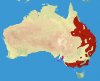
Koalas are only found in the South and Eastern coastal areas of Australia. In captivity, it's often housed outside with easy access to indoor housing, often being housed in tropical or temperate zoos. If you recognize that there are 2 subspecies, there is the Queensland (northern) and the Victoria (southern) populations with all of the koalas (AZA zoos) in the US being Queensland subspecies, owned by the Australian government.
Captive breeding programs have been successful though they are sensitive to stress and diet changes. They survive 12-15 years in captivity with Midori in Japan being the oldest (25+). They are solitary species in the wild but are sometimes in small groups to prevent territorial aggression though in the wild, they do tolerate overlapping territories if the forests are big enough.
Some possible exhibits with this species could be an Australia exhibit, East Australia exhibit, Eucalyptus ecosystems, Dry Forest exhibit, etc. In zoos, this species is often in mixed species exhibits.
Terrestrial Vertebrates: Bare-nosed Wombat (Vombatus ursinus), Parma Wallaby (Notamacropus parma), Red-necked Wallaby (Notamacropus rufogriseus), Short-beaked Echidna (Tachyglossus aculeatus), Western Grey Kangaroo (Macropus fuliginosus)
Arboreal Vertebrates: Galah (Eolophus roseicapilla)
If it wasn't obvious, not all of these species are compatible together but individually as a species, each are compatible. A good enclosure for Koalas should have multiple climbing spots (hopefully trees), live plants, and large-ish space. Having multiple enclosure can be helpful due to their flexible social housing. Indoor enclosures are also typically connected in case of weather changes.
Overall Feasibility for Spec Zoo Usage: Plausible as they are present in AZA-accredited American zoos. They haven't had any major changes in American captivity in the past couple years. However, the AZA had Victorian Koalas on the Phase Out list (Marsupial & Monotreme TAG from 2012) though they aren't found in American captivity.
This animal is the state animal of South Australia.
Oh, I forgot to add the South. It was late when I posted it so I didn't really read over what I said. Though wombats are less commonly in mixed species enclosure rather then just with their species.
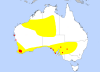
This was posted in relation to Koala exhibits. Woylie are not arboreal, and are found in Western Australia whereas the Koala is found on the East coast. Not are you likely to encounter Gouldian Finches with Koala.
Aren't woylies present, albeit rare in the same places Koalas are (South central-ish) though for both species, it isn't their main range. Also, in the US, there are only western woylies which aren't found where Koalas are but subspecies are occasionally placeholders for their subspecies if they aren't easily accesible
Woylie Distribution Map (top)
Koala Distribution Map (bottom)